Reading view

There are new articles available, click to refresh the page.

The China Commission's Report

The U.S.-China Economic and Security Review Commission late last year released its annual report to Congress. ChinaTalk welcomes two commissioners to the pod to discuss.

Before joining the Hoover Institution, Mike Kuiken spent two decades on the Hill with Senators Schumer and Durbin. He was appointed to the commission by Leader Schumer. Leland Miller, the co-founder and CEO of China Beige Book, was appointed by Speaker Mike Johnson.

We get into…

  • What the U.S.-China Commission does, and why “alligators closest to the boat” explains Congress’s blind spots,

  • The case for an economic statecraft agency, and reorganization lessons from post-9/11 sanctions reform,

  • The year supply chains became sexy — and the best-case scenario for responding to chokepoints like rare earths and pharmaceuticals,

  • Xi’s unresponsiveness to consumer spending concerns, and the military-tech developments he’s targeting instead,

  • The quantum software gap, synthetic biology in space, and Congress’s role in competing with China.

Listen now on your favorite podcast app.

Fishbowl Politics

Jordan Schneider: The U.S.-China Economic and Security Review Commission is out! Christmas has come early for U.S.-China policy nerds. Mike, what is the U.S.-China Commission?

Mike Kuiken: Next year marks the 25th anniversary of the U.S.-China Economic and Security Review Commission. Congress created it around the same time it was debating China’s accession to the World Trade Organization and the establishment of Permanent Normal Trade Relations. Congress approved these measures, but wanted to closely monitor China. The commission was created to keep tabs on both China and the executive branch as events unfolded. That’s our origin story.

Every year, we conduct a series of hearings — usually six — always co-chaired by a Republican and a Democrat in a bipartisan fashion. Then we publish an annual report with recommendations. We also engage regularly with the executive branch, including conversations with figures like Jamison Greer, Undersecretary of Commerce for Industry and Security Jeffrey Kessler, and military leaders. Earlier this year, we met with General Stephen D. Sklenka, among others.

Everyone on the commission brings experience from the Hill, the security space, or the economic policy, like Leland. It’s a fascinating mix of backgrounds, and we have a great team. We produce an 800-page report every year, which dives into a variety of issues. It is the definitive geek-out-on-China document. Our staff does an incredible job. Leland, what did I miss?

Leland Miller: You didn’t do your “alligators closest to the boat” riff. That one’s always good.

Mike Kuiken: Don’t worry, I’ll get to the alligator closest to the boat.

Leland Miller: A million people in D.C. are working on today’s issues. The China Commission focuses on more distant concerns — the ones on the horizon. What should we be paying attention to now? What should Congress be monitoring closely in economics, military affairs, and technology? How do we create smarter policy? We try to look further ahead and recommend ideas that Congress should be considering.

Mike Kuiken: Since Leland decided to trigger me, let me give you the “alligator closest to the boat” analogy. Folks on the Hill deal firsthand every day with the most immediate, pressing issues — the alligators closest to the boat. We’re looking at the horizon or beyond it, focusing on issues that aren’t making headlines yet. We raise awareness and call attention to them. Another part of our work is increasing literacy on these topics.

Vintage alligator hunting near Gainesville, Florida. Source.

Jordan Schneider: As someone who’s been reading this document for a decade now, it’s refreshing. The level of discourse in the American political ecosystem around these topics is often heated and not grounded in evidence. Having this report come out every year offers a different approach — something substantive and measured.

I get a similar feeling listening to nuanced Supreme Court discussions — “Oh, wow, here are people engaging with the world, engaging with facts, and trying to understand things.” You don’t write a 60-page report about China’s ambitions in space without doing research and putting in the work.

We have two commissioners here, and you guys get all the glory, but there’s a large team of staffers putting in the work. From my interactions with them, they take their jobs incredibly seriously. They examine issues in depth. Unlike the intelligence community, where only certain people see the analysis, this is a product for the American people. Thanks, guys, for all your work.

Leland Miller: The staff are the backbone of this operation. The commissioners drive the agenda — we all have our different, overlapping priorities. It’s common for staff to push back and say, “No, I don’t think you can base that on evidence.” We have a discussion, and they do the research — extensive research, constantly. By the time we publish something, it’s not just passing through us. It reflects our perspective, but it’s evidence-based. The report is fundamentally a research document that focuses on policy grounded in real data. The research component is critical.

Mike Kuiken: Before I joined the commission, I spent years with Leader Schumer accessing some of the most sophisticated intelligence in the world. My first year on the commission, as I read through the initial draft our staff put together, I highlighted at least five or ten sections to ask, “Where on earth did you get this?” I was amazed at the amount of information available in open sources and their ability to find and extract it.

Jordan Schneider: We’re not complaining about the seven citations to ChinaTalk this year. That’s how you know it’s good stuff.

Mike Kuiken: Is that too many or too few?

Jordan Schneider: We’ll chart it over time. We’ll have ChatGPT track how we’re doing. Now, make the case for Congress’s influence on U.S.-China issues.

Leland Miller: Start with the guy who’s been on the Hill longer.

Mike Kuiken: If you look at the big moves in U.S.-China policy over the last decade, many have come out of Congress. That includes sanctions bills, the CHIPS and Science Act, and the Foreign Investment Risk Review Modernization Act (FIRRMA), which reformed the Committee on Foreign Investment in the U.S. (CFIUS). The BIOSECURE Act hasn’t passed yet, but the idea for it came from the commission, a legislative branch entity. Outbound investment screening — many of these are ideas that either originated from the commission or from members of Congress.

The CHIPS and Science Act has an interesting origin story. Leader Schumer and Senator Young got together and created the legislation for one of the most significant pieces of industrial policy we’ve seen in a generation. If you look at the last 10 years, Congress has passed incredible, agenda-shaping legislation. The executive branch has broad authority in foreign policy, but many of the guardrails and tools the executive branch uses have been provided by Congress or have been driven by congressional agenda-setting. Leland, what do you think?

Leland Miller: Administrations are fleeting, but Congress is forever. If you want durable, lasting policy, you need Congress involved. Mike gave examples of topics Congress has been essential to. Look at outbound investment — it’s not a success story, at least not yet. It’s something the Biden and Trump administrations handled, but Congress hasn’t cemented the foundation for it in legislation. Right now, you don’t have a durable outbound investment mechanism. This is a call for Congress to constantly be on the tip of the spear, not just reacting to whatever one administration does as Republicans and Democrats alternate in the presidency.

Mike Kuiken: Congress passes a National Defense Authorization Act every year, and that is full of China policy, both on the economic and security side. Pieces of that legislation drive the agenda for both the Department of Defense and the broader executive branch.

Keep in mind that we updated the Taiwan Relations Act three or four years ago, which was also carried by the National Defense Authorization Act. That was driven by Congress, not the executive branch. It was done with a lot of push and pull from the administration, which was saying, “Oh my God, we can’t possibly do this or that.” Ultimately, it was Congress that said, “Yes, we can.”

Jordan Schneider: “Yes, we can.” What a throwback.

There’s this weird dynamic where the executive branch sometimes — perhaps increasingly — doesn’t do what legislation says they have to do. One of your recommendations is to more closely follow the Taiwan Relations Act update. We have the ongoing TikTok saga where both the Biden and Trump administrations have punted, and did not reflect the intent of the votes in the House and Senate. What happens when the executive branch doesn’t follow through on legislation on China-related issues?

Mike Kuiken: I was on the Armed Services Committee in the early days of the wars in Iraq and Afghanistan. Looking back now, I think it was like holding up a fishbowl. If I tilt it this way, the water sloshes one way — if I tilt it that way, it sloshes another. I use that analogy because it’s never perfectly in balance — maybe for brief periods, but not for a sustained time. There’s this historic push-pull relationship between the executive and legislative branches. It’s different with divided government versus one party in power, but there’s always some sloshing around.

Over the years, Congress has provided broad authority to the executive branch. When the executive doesn’t listen, Congress finds ways to put up guardrails, constraints, or funding prohibitions. That’s the tradition of our country. We’re seeing some of that sloshing now. I obviously worked for Democrats, so I see things a particular way, but the fishbowl is never going to sit perfectly settled on the counter. There’s always some rumbling in the water.

Leland Miller: Speaking of rumbling in the water — when administrations come to power, they have a million priorities. Most of the time, they’re not planning to make structural changes to the system. One of our recommendations this year was creating an economic statecraft agency or similar entity to improve coordination and integration among the various entities in government that handle sanctions, export controls, and other tools.

I’m not sure anybody on the Republican or Democrat side would look at that and say it’s a terrible idea. But if for the administration — whatever that administration might be — the last thing they want is to structurally change a bunch of things. What we’re saying is, “We have to focus on the mission, and if the mission is best conducted by restructuring or reintegrating things, then let’s do it.” That’s something an administration focused on getting a million things done in the next 24 hours often can’t do.

“Pulling Thread Through a Needle” 穿针引线

Jordan Schneider: Leland, you jumped the gun here. This is a theme I’ve been writing about and doing shows on for four or five years now — a new reorganization to bring disparate pieces of government that touch the China challenge together. You identify the Bureau of Industry and Security (BIS), the Office of Foreign Assets Control (OFAC), the export control part of the State Department, and the Defense Technology Security Administration (DTSA) — which does export controls for the Defense Department — as pieces that should work together.

During the Biden administration, there was internal disagreement among key officials overseeing economic policy. Each principal controlled different pieces — investment controls, export controls, and so on — and they disagreed about how aggressively to pursue these tools. If cabinet members are already at odds with each other, how would creating a unified economic statecraft entity solve that problem? Would this centralize decision-making in the White House, effectively removing authority from these cabinet-level officials? How exactly would this structure work?

Mike Kuiken: This is something Leland and I worked on together. Beloved Commissioner Randy Shriver and I wrote a piece earlier this year, arguing for reinvigorating the Department of Commerce’s export controls. We argued that similar sanction reforms to the ones at the Treasury Department post-9/11 are needed.

This year, as we held a series of hearings and meetings, I became so frustrated that I almost put my hand on my forehead and said, “Oh my God, we didn’t go big enough.” I’m frustrated that export controls — and also sanctions — happen at a mid-level layer in departments and sometimes don’t reach senior officials. As a result, they often languish — decisions languish — everything languishes. There’s no natural forcing function.

Rather than having these functions sitting at the Assistant Secretary level or below in multiple agencies and departments, you consolidate them. This creates a forcing function not within multiple silos, but in one. Hopefully, you have a senior leader — whether in the Department of Commerce, Treasury, or a standalone entity — that propels the issues to the top. You don’t need to go to the National Security Council every single time to get a resolution.

We’re silent on where this entity should go. The issue of export controls and sanctions is controversial in Congress. The Senate Banking Committee has jurisdiction over export controls and sanctions, while the House Foreign Affairs Committee has jurisdiction in the House. Other committees have significant equities, including the Foreign Relations, Foreign Affairs, and Armed Services Committees, among others. We’re silent on that piece, but we are clear-eyed that we’re in a period of economic statecraft. It’s going to be a cycle of measures and countermeasures between us and China. We need to be thoughtful and strategic in a consolidated way. That was the motivation behind this recommendation. Leland, what did I mess up?

Leland Miller: I’ll offer a pessimistic take. The current structure sets up export controls and sanctions to fail. At the Commerce Department, the undersecretary is in charge of export controls, but the secretary is in charge of promoting U.S. businesses abroad. He is structurally disincentivized from enacting tough policy.

Staffers at the secretary level are patriots and want good policy, but there’s an inherent tension in the system that prevents them from pushing policy if it interferes with their major mandate. The same thing happens at Treasury and, to a degree, at the State Department.

This proposal frees important national security policies from the structural disincentives built into the current system. This is a neglected element of policy we are trying to bring attention to. As long as the top policy is promoting business, it will be hard for a mid-level official to promote a conflicting policy.

Jordan Schneider: Regardless of where you put this entity, there will be counter-forces — parts of the government that want to promote exports, retain global financial stability, keep oil prices low, or other reasonable arguments against coercive actions against Iran, Iraq, Russia, China — pick your country. There is a cost to sharper economic measures the U.S. is considering. Are you arguing for a cabinet position whose job is to push for these tools?

Leland Miller: That would structurally set up the policies to succeed. None of this can succeed without a broader national economic security policy overlaying it. The one thing that administrations — plural — are missing right now is a national economic security strategy that integrates all these different pillars.

There are different reasons why people don’t want to have that — there are many issues in economic foreign policy — trade, investment restrictions, technology controls, supply chain resilience measures, and domestic re-industrialization, whether it’s the defense industrial base or advanced manufacturing. All these pillars are advocated for by people who want their policy to succeed.

Without a broader policy that weaves the pieces together as part of a broader mission, everybody is fighting in parallel for their own piece of the pie and their own resources. The focus on trade and tariffs might siphon focus from export controls and divert all attention from investment restrictions.

With an overarching strategy and structural reform, we could divide economic security issues into those with a national security dimension and those without. For issues with national security implications — supply chain resilience, investment screening, technology controls, trade policy — we need coordination, not competition, between departments. These tools should work in tandem, not against each other. The right policy framework, combined with a structure that doesn’t create conflicting incentives, would make coordination possible.

Jordan Schneider: The catch is that this costs money. Mike made the point earlier that politicians are focused on the alligator closest to the boat.

Mike Kuiken: He’s put it in your mind now. A former colleague of mine on the Armed Services Committee, Tom Goffus, used to talk about the alligator closest to the boat when we were on trips.

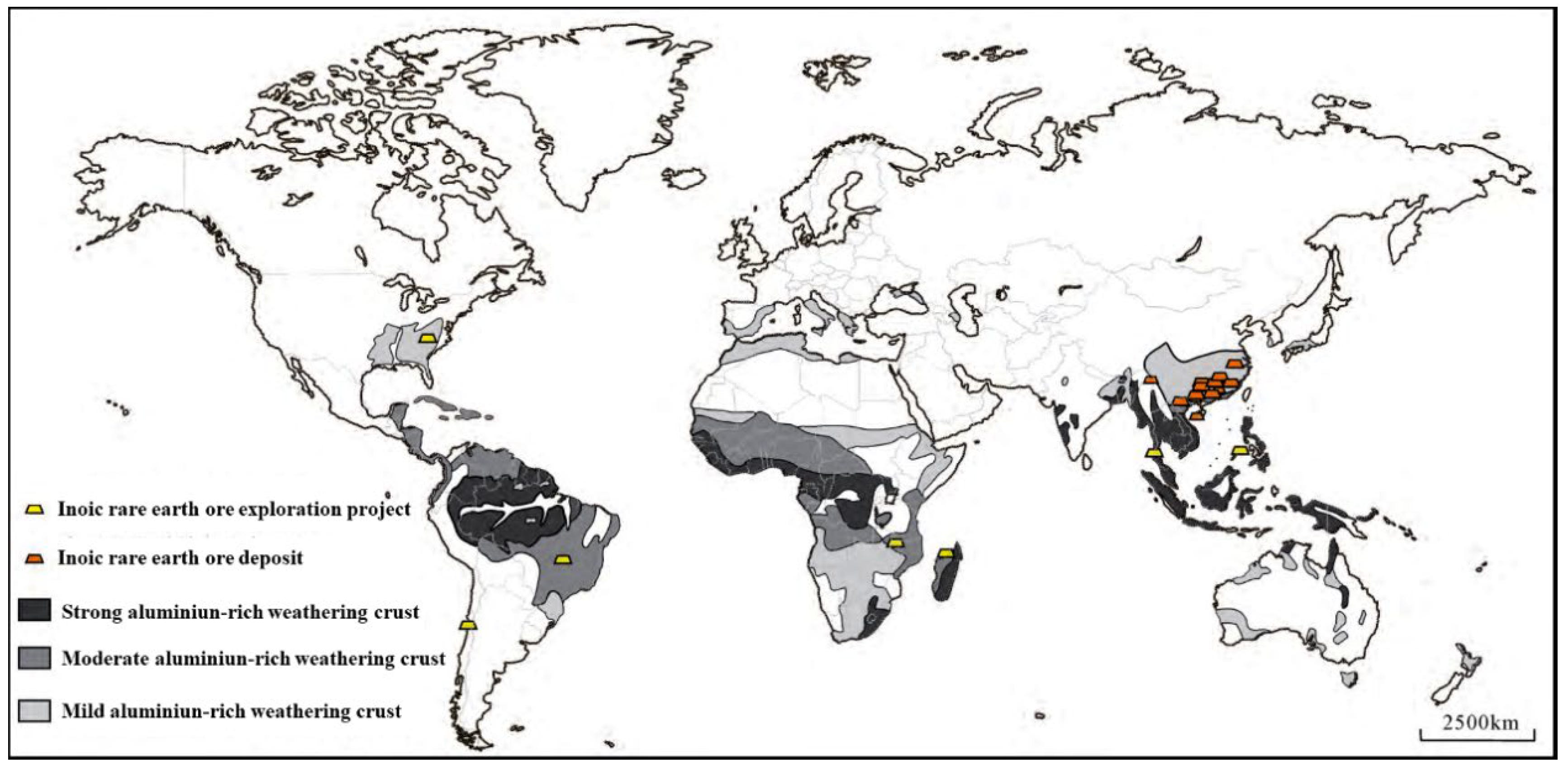
Jordan Schneider: The commission is focused on challenges two to five years out. China’s rare earth export controls this year should have been a massive wake-up call. For years, everyone worried China might use rare earths as leverage — and they finally did.

You’d think that would galvanize action — more funding, serious attention, bureaucratic reorganization, even Congress ceding some turf to address the sharp Sword of Damocles held by the Chinese government. You’d think it would accelerate exactly the kind of supply chain security and resilience measures Leland is pushing for. But I’m not seeing it. The moment that should have changed everything has changed little.

Leland Miller: I’m going to push back on your pessimism. Nobody was talking about supply chains until a few months ago — and now everyone is — because they weren’t seen as a tier-one national security priority. Supply chains are boring. If you had brought us on ChinaTalk a year ago and said, “Let’s talk supply chains,” it would have been a different conversation. Fewer people would have tuned in for a podcast on supply chains. They would think, “Oh, gosh, this is boring.”

The way to elevate supply chain resilience — a top-tier priority — is to make it a core pillar of a national economic security strategy. This strategy would define the five critical things we need to do regarding China and other competitors. Supply chains can’t be left to corporate decision-making — they’re a fundamental element of the U.S.-China relationship and require government attention.

Our sixth hearing this year examined Beijing’s choke points on critical U.S. supply chains. We’d been planning it for months, but by the time we held it, rare earths had finally captured everyone’s attention.

Other vulnerabilities will worsen over time, such as pharmaceuticals. China doesn’t ship many finished drugs to the U.S., but it dominates the active pharmaceutical ingredients (APIs) behind medications and the key starting materials (KSMs) behind those APIs. When you see statistics about U.S. pharmaceutical imports from India, most of those drugs trace back to Chinese source materials. How much exactly? We don’t know — even after months of research with full access to government data, we could only produce ranges. The FDA hasn’t been required to collect this information.

Subscribe now

The same pattern repeats across printed circuit boards and legacy semiconductors — these are potential choke points that Beijing has over the U.S. economy. APIs and KSMs sound technical and boring — until you realize China may control U.S. access to insulin, heparin, and antibiotics for both civilians and troops. That’s an enormous vulnerability. This needs to be part of our national security strategy. This perspective barely existed a year ago, but has finally entered the discussion in DC.

Supply chain resilience needs to be a core pillar of national security strategy, not just a talking point. Frame it that way, and the logic becomes clear — reducing Beijing’s leverage over critical supplies expands U.S. policy options. The goal is to identify five or six tier-one priorities and integrate them into a unified policy framework. You can debate which issues make the list, but they need to be recognized and addressed together to have a coherent China policy.

Mike Kuiken: When we worked on the CHIPS and Science Act in 2018-2019 — long before it was cool — we pushed supply chain issues. This was in the early days of the Endless Frontier Act debate. Industry pushed back hard — supply chains were their domain, and they didn’t want to share information. That resistance shaped Leland’s thinking.

The second formative experience was the post-9/11 integration of sanctions and intelligence. We embedded the sanctions community into the intelligence apparatus, so intelligence actively fueled Treasury’s work. That integration was crucial.

The Bureau of Industry and Security had access to the intelligence community but wasn’t integrated into it. The difference matters — with access, you get information when you ask. With integration, intelligence proactively dedicates resources to meet your needs. Right now, that industrial-scale effort doesn’t exist for export controls. A core part of our recommendation is to deeply integrate this entity into the intelligence community so it can leverage what we know about supply chains.

The U.S. government hasn’t been strategic about supply chains. We might track sensitive materials for specific defense systems, but we’ve never taken a coherent, comprehensive approach. That gap drove both our hearing and the commission’s recommendation.

Strategies for a Two-Speed China

Jordan Schneider: Leland, in 2024, you said, “supply chains weren’t sexy,” but they were in 2020 and 2021. I’m sure Mike can riff about how the chip crunch during COVID helped get the CHIPS Act across the finish line.

This stuff takes money, or does it? Do you need a double-digit-billion-dollar bill to address printed circuit boards (PCBs), active pharmaceutical ingredients (APIs), and rare earths? The executive branch has been creative with loan guarantees and buying small stakes in companies, but Congress has been inactive. Where’s the bill for this? What should it look like?

Mike Kuiken: None of these things run on fairy dust. They all run on money. Ensuring that we are appropriating the necessary funds to the defense side, but also to the non-defense side — which includes the Bureau of Industry and Security (BIS) — is an important piece.

As Congress evaluates our economic statecraft recommendation, it’ll decide whether to provide more resources to implement it, along with a variety of other decisions.

Jordan Schneider: Congress has been vocal in its displeasure with the lack of semiconductor export controls to China, through bipartisan letters and momentum behind the GAIN Act. Integrating intelligence into BIS sounds good in theory, but if the administration has effectively paused new export controls for a year, what’s the point?

A weaponized API crisis would have triggered more public alarm than temporary car factory shutdowns. What’s your read on congressional appetite for these measures more broadly? How are they thinking about economic security tools right now?

Leland Miller: Those in Congress and the administration who support export controls have to make a better case for why they’re important. Industry is arguing that we need to stop provoking China — “don’t poke the bear.” They argue we want better relations, so why are we acting in ways that could bring us closer to war?

A warning sign adorning the Nanjing Zoo bear enclosure. Source: Eleanor Randolph for ChinaTalk.

This perspective forgets the 30,000-foot view of China’s economy. China has a two-speed economy. The broader macroeconomy is slowing down significantly due to slowing domestic demand, weak consumption, and a deflating property bubble. But the national security side of the economy is running at a different pace. Xi Jinping has made it clear in the “Made in China 2025” sectors.

For our policy, we don’t care if China’s middle class gets richer — that might be a good thing if they import more U.S. goods. We should focus on the economic areas with a national security nexus that Xi Jinping is targeting. That requires smart trade policy, smart outbound investment policy, and smart export controls that target the critical inputs for China’s technological and military machine.

A potential nightmare scenario is China breaking quantum cryptography, achieving AGI, or making some other enormous breakthrough in AI first. Imagine they cure cancer. A shock would go through the system as we’ve never seen — our approach would have failed.

Jordan Schneider: I don’t know, if they cure cancer, hats off to them.

Leland Miller: We want someone to cure cancer, but we don’t want China to control the pipeline for that cure. If China has enormous success in AI, quantum, and biotech, it shows we are failing on the national security side.

Xi Jinping largely ignores the broader consumer economy, letting it generate enough growth to fund the technology and manufacturing sectors he cares about. If China achieves a major technological breakthrough using that model, the U.S. reaction would be severe — probably triggering broader decoupling and a more dangerous, confrontational relationship.

Jordan Schneider: The cancer example illustrates the challenge of deciding what counts as national security. In Washington, every issue becomes a “national security problem” when someone wants attention. You could theoretically connect cancer research to bioweapons or enhanced soldiers, but you need to draw a line somewhere.

Where is that line? Are we only restricting China’s access to advanced technology, or is there no space for cooperation on medical breakthroughs that benefit humanity?

Leland Miller: I’m not against cooperation, and obviously, everyone wants cancer cured. But if there’s going to be a winner in that race, U.S. industry — which funds enormous R&D — should be it. The alternative is China controlling those supply chains and the leverage that comes with them. We need a strategic approach, not a scattershot of policies. Identify what’s providing capital or technology to the Party or military, then shut those channels down. The problem isn’t only weak policies — it’s that we refuse to even track these flows.

Take supply chains. The issue isn’t that our policies are bad — it’s that we’ve refused to collect the basic data needed to understand our vulnerabilities. Why? We’re too concerned about encroaching on industry’s turf and potentially hurting companies.

That concern has merit, but national security priorities have to take precedence. The government needs to require the FDA to collect supply chain data from companies so we can see the problem. First get the data, then develop policies. Right now, we’re nowhere close to good policy because we don’t have good data — not only on supply chains, but on investment and technology flows as well.

Mike Kuiken: Let me approach the innovation cycle from a different angle. We can’t have meaningful conversations about supply chains unless we’re actively innovating. Our report makes several recommendations — on quantum computing, biotech, and other areas — that all stress the importance of protecting and nurturing our innovation ecosystem.

The Endless Frontier Act was designed as a $100 billion investment in innovation. For 80 years, America has reaped the benefits of investments we made during World War II. Those investments launched our innovation flywheel and kept it spinning. Now it’s time to fuel that flywheel again, especially given China’s manufacturing capabilities. They’ve built an impressive manufacturing machine. Our innovation machine is remarkably strong — I genuinely believe that — but it needs sustained investment.

Everything runs on money. If we want to plan for supply chains 10, 20, or 30 years down the road, we must invest in the innovation machine today. That means funding foundational science and early-stage development. These investments tell us what will go into future supply chains and what we’ll need to build tomorrow’s technologies. Without them, we’re guessing.

Jordan Schneider: That dynamic reminds me of Mike Kratsios giving speeches about Vannevar Bush while the government cut science funding.

Let’s shift to the parallel between Treasury sanctions and Commerce export controls. One recommendation that caught my eye was creating a whistleblower program for export control violations. That playbook has been incredibly successful for financial sanctions enforcement, but it doesn’t exist for export controls. Why is there a gap? Is it because export controls are harder to enforce — you’re dealing with physical goods across thousands of small companies rather than dollar flows through banks?

Subscribe now

Leland Miller: We have extensive recommendations for bolstering the Bureau of Industry and Security’s export control work. However, BIS is catastrophically under-resourced for the job it’s being asked to do. As export controls expand — especially to the Middle East — the workload grows while staffing remains skeletal. Some countries have one person doing inspections. More funding is coming, but nowhere near enough.

Our recommendations go beyond asking for more money. We focused on force multipliers — how can technology help? What about a whistleblower hotline, like the one that works for sanctions enforcement? Can we shift from a “sale” model to a “rent” model — where U.S. companies and the government maintain ongoing control over how chip technology is used abroad, instead of losing visibility after the initial transaction?

The goal is to make BIS’s job more effective and manageable, in addition to being better funded.

Jordan Schneider: Let’s do a history lesson on financial sanctions. What breakthroughs gave financial sanctions their teeth?

Mike Kuiken: The biggest breakthrough was after 9/11— we began to see how non-state actors were leveraging the financial system, and that invigorated the process. There was also a reorganization in the intelligence community. I don’t remember the exact year, but that allowed for more resources and thoughtfulness in that ecosystem. Those are the big parallels. The current debate isn’t about non-state actors, but a lot of the lessons learned from the post-9/11 sanctions reforms can be applied here.

Finally, the Foreign Investment Risk Review Modernization Act (FIRRMA) did a lot of important work — we need a FIRRMA 2.0 to hit a refresh key. This is a cycle of measure and countermeasure. We need to make sure that the entities involved in the economic statecraft elements of our government are resilient and flexible enough to respond to Chinese actions.

Jordan Schneider: We’ve all been doing this work for a long time. I appreciate Mike’s optimism and Leland’s urgency, but I’m skeptical. This reminds me of defense acquisition reform — everyone thought Ukraine would force fundamental change. Years later, some legislation has been passed, but no paradigm shift.

China’s rare earth controls should have been that catalyst. It wasn’t a surprise threat — it was a threat we’d discussed for years. Yet it hasn’t created a 9/11-style moment — no “enough is enough, we’re spending the money, getting new authorities, and building the government capacity to handle this mission.”

Instead, we have an executive branch divided on what to do. I like these recommendations, but this is the most pessimistic I’ve been in years about whether any of it will happen.

Mike Kuiken: I’ve worked in both the majority and minority in Congress, and I’ve always seen my job the same way — keep pushing. I’ve never been called sunny before, so I’ll take it. Don’t stop when the situation looks bleak.

Someone needs to feed ideas that look beyond the daily crisis — ideas focused on the horizon and beyond. Yes, we can be pessimistic about rare earths and critical minerals. We can also have a strategic conversation — this is happening now, the executive branch has the wheel, so what should we be considering to make ourselves more resilient long-term?

The rare earths problem is serious, but it’s also not going away. We can talk about building mining and processing facilities. We should also ask — what’s the innovation strategy? What alternatives are we investing in to work around this dependency? Are we being thoughtful about diversification, or reactive?

Leland Miller: We are doing that. I’ll be the cheery guy for a change. Let’s enjoy it while it happens. Big things are happening on critical minerals and rare earths. A year ago, nobody was focused on this. Sourcing isn’t the problem — processing is. We’ve all come around to that idea. The rare earth issue has received attention over recent months, partly because it disrupted the President’s trade and tariff agenda. It caught the White House’s attention.

The Pentagon’s response signals a new model — taking equity stakes in companies and establishing price floors. This addresses the fundamental supply chain problem — China has cheaper labor, and massively subsidizes anything it deems a national security priority. That’s why we’ve outsourced so much and become dependent on Chinese imports.

We’re shifting the paradigm. For designated national security priorities, we’re no longer relying on market economics alone. Price floors and equity stakes — like the Mountain Pass rare earths facility or coordination with Australia on processing plants — make sense for these specific cases.

Yes, the U.S. government only reacts to crises. But this mini-crisis has done more than trigger action — it’s prompted genuinely new thinking about economic models for critical supply chains. That’s meaningful progress.

Mike Kuiken: The Chinese are incredibly effective at boiling of the frog or salami-slicing the status quo, right underneath everyone’s nose. I wrote for RealClear about how America’s biotech future is now made in China. China has been steadily acquiring biotech manufacturing and research capabilities, and also the entire infrastructure layer underneath the biotech economy.

When policymakers hear “biotech,” they typically think pharmaceuticals. But it’s much broader — advanced materials, bio-cement from North Carolina companies, even purses made from mushrooms and sawdust in South Carolina.

China has acquired this infrastructure slowly over decades, as it did with rare earths. The spy balloon was unusual — a dramatic moment that broke through the noise. The typical pattern is gradual erosion. They chip away steadily, in Taiwan and across strategic technology sectors, building dependencies before anyone notices the shift.

Leland Miller: Our biggest challenge isn’t convincing Congress to take supply chains or even biotech seriously — those threats are visible. The harder sell is future technologies like quantum computing. Quantum will determine whether we control our own cryptography and digital infrastructure, but the payoff isn’t immediate.

That’s the spectrum we’re dealing with — urgent crises Congress can see versus medium and long-term threats. Quantum sits at the far end. We’ve recommended Congress develop a quantum strategy now, but can we get policymakers focused on tomorrow’s vulnerabilities when today’s are so pressing?

Share

Mike Kuiken: Jordan, I don’t know if you geeked out on quantum, but Leland and I led an incredible commission trip to the West Coast on quantum, and a few things became clear. First, the U.S. is pursuing multiple technological pathways to quantum computing — more diversity than we expected. Second, chemistry and materials science are critical. There’s a physical infrastructure layer to quantum that is often overlooked.

Third, surprisingly, quantum software doesn’t exist yet — not in a meaningful way. People hear “software” and assume Silicon Valley has it. They don’t. None of the major software companies are building software for quantum computers. Both the private and public sectors need to be strategic about these investments now, which is why quantum software made our top 10 recommendations.

Jordan Schneider: The second recommendation says, “See the commission’s classified recommendation annex for a recommendation and discussion related to U.S.-China Advanced Technology Competition.” Mike, blink twice if that’s a Manhattan Project for Unobtainium. Is this how we’re going to solve all our rare earth issues?

Mike Kuiken: I’ve worked in the classified space long enough to know my answer — look at the classified annex. I will note that the commission’s number one recommendation last year — which Cliff Sims and Jacob Helberg worked with me on — was a Manhattan-style project for AGI. We were way ahead of the curve on that conversation.

Jordan Schneider: You called it. Though you didn’t need government action — a few trillion dollars of global capitalism handled it for you.

Space Race 2.0

Jordan Schneider: Let’s close on space, which I know you love. What’s the space recommendation about?

Mike Kuiken: Working with Leader Schumer gave me visibility across all three space communities — civilian (NASA), military, and intelligence. At our hearing, General Salzman spoke more candidly about military space capabilities than I’ve heard from any military leader. We also heard from industry and think tanks on civilian space. You see the enormous public investment over 80 years and what the U.S. government can accomplish.

The problem is that much of that infrastructure, built during the shuttle program and moon race, is aging. Meanwhile, China is accelerating — pouring resources into launch capabilities, infrastructure, and deployable space technology. We’re cruising at 60 miles per hour, but they’re coming up behind us at 100.
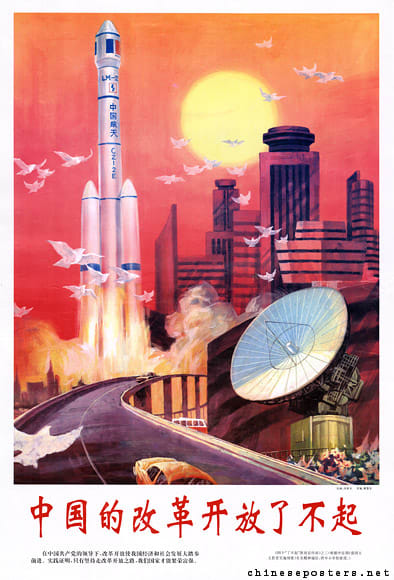
“China’s reform and opening up is amazing,” Liu Xiqi, 1996. Source.

Two weeks ago at the iGEM synthetic biology conference, I had a realization. Sustaining life in space — whether in orbit, on the moon, or on Mars — requires synthetic biology. The biotech ecosystem isn’t only about Earth — it’s foundational for any future space presence, whether sustaining humans, plants, or other life support systems. That’s why we need to be strategic about who’s investing in and controlling these technologies now.

ChinaTalk is a reader-supported publication. To receive new posts and support our work, consider becoming a free or paid subscriber.


Richard Danzig on AI and Cyber

We’re kicking off our Powerful AI and National Security series with the great Richard Danzig. He was Clinton’s Secretary of the Navy, is on the board of RAND, and has done a great many other things. He is also the author of the recent paper, Artificial Intelligence, Cybersecurity and National Security: The Fierce Urgency of Now. What will it take for America to, as Danzig puts it, get out of bed?

Our co-host today is Teddy Collins, who spent five years at DeepMind before serving in the Biden White House and helping to write the 2024 AI National Security Memorandum.

Thanks to the Hudson Institute for sponsoring this episode.

Do note we conducted this interview in July of 2025.

We discuss:

  • Why present bias and slow adaptation leave the national security establishment unprepared, and what real AI readiness requires today,

  • Why relying on a future “messianic” AGI instead of present-day “spiky” breakthroughs is a strategic error,

  • How the Department of War’s rigid, siloed structure chronically underweights domains like cyber and AI,

  • Parallels with the 16th century, including the age of exploration and the jump from feudalism to capitalism,

  • Plus: What AI is doing to expert confidence, Richard Danzig’s advice for parents, and book recommendations.

Listen now in your favorite podcast app.

Richard Danzig speaking at a Pentagon briefing as Secretary of the Navy, December 1999. Source.

A Continuous Revolution

Jordan Schneider: You start this paper with a 10-page section about the sorts of things we can reasonably expect AI to unlock rapidly when it comes to cybersecurity. Why don’t you run through a few of those to give folks a sense of what’s at stake here?

Richard Danzig: As everybody is noting, AI is a vastly transformative technology. Some people analogize it to the development of electricity. One analogy that appeals to me is that it’s like the coming of the market. If people sitting in 1500 tried to anticipate the consequences of the jump from feudalism to capitalism, they’d have an extraordinarily difficult job guessing what the next two centuries might look like. From restructuring of family life because people are no longer apprenticing in the family, to movement to the cities, changes in public health, and the rise of the nation-state — we just couldn’t predict it. In the same way, I don’t think we can predict the consequences of AI with much confidence.

Anticipating the next move, but not the next two centuries. The Game of Chess by Sofonisba Anguissola (1555). Source.

As Polanyi put it, The Great Transformation occurred in Europe between 1500 and 1700 — it took two centuries. Changes from AI are likely to occur in a much more compressed time period, perhaps less than a decade. They’ll have equivalent kinds of influences. My proposition is, in some respects, let’s just take a small corner of that to understand it. The small corner that I’m focused on is intrinsically important. But also, and now this is the context in which I mean it as representative — it’s a representative case. It’s suggestive and important.

The reason it’s important or foundational is that AI automates the capacity to both defend software and to attack it. There’s a lot of debate about which of those dominates over time. But my point is, whether you think our ability to patch exceeds our ability or others’ ability to attack, or vice versa, the thing that’s fundamental is that there’s a first-mover advantage that’s significant but perishable. If you get there first and you defend your systems before others attack them, you’re in a vastly better position. If you get there first and you can embed some exploits in the opponents’ software systems so that you can deter them from attacking you in any number of ways, including through software, you have a huge advantage.

I want to place an emphasis — this is why I speak about the fierce urgency of now — on getting there quickly because I think the existing establishment is quite content to be reactive and passive. I can say more about that, but that may be an overview of my approach.

Jordan Schneider: It’s interesting because on the one hand, you have the reactive and passive approach, assuming that nothing is going to change. Then you have this reactive and passive approach, assuming that AGI is going to solve all and every problem. There’s an interesting parallel going on there.

Richard Danzig: I think that’s right. The relatively passive stance at the moment gets rationalized in part by saying, “Well, everything will change with AGI.” A thing I’m trying to emphasize is no, it’s a continuous revolution, and it’s happening now — as, for example, in the capabilities to attack or defend software — and that’s extremely fundamental.

On top of that, I’m skeptical about the concept of AGI and even superintelligence and argue that AI is “spiky” — a term that Dave Aitel at OpenAI used. It occurs quickly in some particulars and more slowly in others. The coming of AGI or superintelligence will be uneven. Further, not only is it likely to be uneven, but its coming will not be like the coming of the Messiah, where it sweeps away everything in front of it. It’s part of a larger ecosystem, and the way in which it’s assimilated and the other components of that ecosystem are extremely important. For all those reasons, I would strongly urge attention to this now and vastly more effort on quickly assimilating what we are now without deferring to some uncertain future.

Share

Teddy Collins: What you’ve outlined is certainly consistent with the way I see this stuff. I can imagine that given the finite bureaucratic capacity that could be dedicated at a place like DoD for preparing for AI, there may be trade-offs in terms of preparing for scalable near-term automation of stuff that isn’t too crazy and preparing for, let’s set aside the term AGI, but preparing for really transformative capabilities that some people think could emerge in the relatively near future. I wonder if you have any thoughts about what those trade-offs look like and, under the uncertainty of the present day, how we should allocate resources accordingly.

Richard Danzig: Jordan rightly points to the last lines of my paper in which I say, the U.S. Department of Defense doesn’t need a wake-up call about AI — they’re well aware of it. What they need to do is to get out of bed. That’s what I’m urging. They need to get going.

My urging in that regard is to put more emphasis on the present. There’s always the inclination to defer. The future has high degrees of unpredictability, and the best path towards that uncertain future is by developing your expertise, your assimilative capacity, your relationships with the frontier companies, et cetera, with the fierce urgency of now. When you build that platform now, it leads you towards the longer term. There are these lines like, “Brazil is always the country of the future.” DoD has always got capacities on the horizon that look wonderful. I’m for now.

Jordan Schneider: Can you give some historical examples of the type of thinking that AGI is going to solve all of this, or sort of putting your eggs in the basic research, 10-plus years out basket, such that fast forward 10 years and you’re actually, it ends up being more of a crutch to make it easier to not do hard change than something that enables you to be more successful in the future?

Richard Danzig: I’d be interested in your answer to that because you’re a keen student of military history. But the example that most immediately comes to mind is the thought that with the coming of nuclear weaponry, people thought you didn’t have to have such strong conventional capabilities. The realization was no, you need the particular capabilities in the short term and at lower levels of the escalatory ladder. So that’s an example of an effort to kind of say, “Well, I can get by without attending to my near-term conventional needs because I have this ace or trump card in my hand.” I worry about that kind of thinking. If the rules of ChinaTalk permitted, I’d be interested in your answer, Jordan. Teddy, will you maybe put the question to him so he’ll answer it?

Teddy Collins: Yeah, I invoke my co-host privilege to transfer Rich’s question to you, Jordan.

Jordan Schneider: Have to get back to me… I mean, there are the assumptions of primacy that the U.S. had after the Cold War, which comes back to the cyber stuff. It’s like, “Sure, we can build all this stuff in the cloud, and we can have everything run off satellites,” because we’re going to assume that we’re going to have the same ability to act over bombing Iran and bombing the Taliban as we do in any other conflict we might get into in the future. I can’t claim to be a deep student of stealth or air defense in the 1990s and 2000s, but I imagine there was a lot of complacency and a lot of distraction. The sort of technological demands that you needed to track Ayman al-Zawahiri and try to do COIN stuff were different from the type of investments that you would make to really have a higher degree of confidence that you could beat off Russia or China in a conventional conflict.

Richard Danzig: I think that’s a good answer, Jordan. I’m glad that Teddy pressed the question upon you. I would just note that there’s a certain irony in your saying at the outset, “I subscribe vigorously to the fierce urgency of now, and I’ll have to get back to you about what that means.”

Jordan Schneider: Well, no, it’s hard, because you want to win the war you’re in. I imagine if you look at DARPA projects in the 2000s and 2010s, there was a lot more shifting to dealing with IEDs and jamming stuff.

Richard Danzig: Staying with the interesting thing, I think, is that it’s schizophrenic. There’s a tendency, as your comment earlier suggested, to emphasize the present above all. “We’re not going to invest in technology — readiness is what’s most important. I’ve got this urgent need for more munitions to ship to Ukraine, etc.” Those are real imperatives — I honor them. But then the other side of the schizophrenia is the tendency to put off the technology investments for the distant future when you’ll get everything that you need. The technology demands something that isn’t day-to-day now, but isn’t decade-to-decade in the future. It’s month-to-month or year-to-year. Finding that middle position is, as your question implies, challenging.

I remember in the 1990s, as Under Secretary of the Navy, I tried successfully actually to push the Joint Staff towards more attention to biological warfare. One manifestation of this was vaccination against anthrax for some troops. Some members of the Joint Staff thought, “Well, I don’t want to do that because the vaccine against anthrax has these various burdens and disadvantages. I’ll wait till I have a vaccine that manages to counter all possible biological threats.” Fortunately, I had in hand Josh Lederberg, a great figure, Nobel Prize winner, president of Rockefeller University, to say that’s a fantasy. But the tendency to wait for the fantasies is very strong.

Jordan Schneider: I have one more for you. What Japan did in the late 1930s is optimize around the most exquisite version of what a plane and a pilot could be. They had these crazy hazing and training rituals that make SEAL Team 6 look like a walk in the park — where 100 candidates walk in and only one becomes a pilot. Then you have these really high-crafted, very high-risk jets where they couldn’t tolerate a lot of flak hitting them, but they were the fastest and baddest planes on the planet.

A training exercise for aviation students in imperial Japan. Source.

That worked well for a while until you were in this large industrial, national mobilization type conflict, where you really would have rather had 40 people pass that pilot program and have some decently good pilots, and a jet that could be more easily mass-produced and be able to take more damage at the cost of the exquisiteness of its speed and maneuverability. Not being able to conceptualize a war that was not number one on the priority list led you to not have more flexibility when it came to how you could use that force once things started not going entirely according to plan.

Richard Danzig: The general point is that the technological change is continuous, and you can’t take a vacation from it. You can’t say, “Well, it’s summertime — I’ll wait till after Labor Day to come to grips with this.” You don’t ever win. Definitely. And that’s true in cybersecurity. I have a paragraph in the paper where I say, it’s not that AI will end battles over cybersecurity. This is just not the end of history. It’s not a culmination or termination of warfare in this domain. It’s just a new form of armament that will evolve over time.

First Mover Statecraft

Teddy Collins: Well, first, I have one for you. Maybe it’s a bit of a provocation, and it comes from my experience with Biden’s National Security Memorandum, which was a third failure mode. If we think about these two failure modes that you outlined — one of really kicking the can down the road, and the other of being too focused on the really immediate problems — I found another failure mode was something sort of in between, which was limited incrementalist thinking. We would talk to a lot of people in different parts of DoD and the Intelligence Community about AI, and we would get responses along the lines of, “Absolutely, we completely understand AI is going to be a really big deal. There is this discrete, well-defined process, and we think that in the next 18 months, AI could speed that up by 30%.”

If that’s your framework, you’re sort of missing the forest for the trees — especially if we really do believe that this is going to be something on the order of electricity or markets. You wrote in the paper that, “Policymakers must shed a tendency to see AGI or superintelligence as transforming everything upon its appearance.” I think that’s true, but I actually found the opposite failure mode to be more common — I wanted people to think much more expansively about how deep and systematic the changes could be. I felt like people were often blind to the long tail of really transformative possibilities. In your view, is that at odds with what you’re saying, or is this all part and parcel of “getting out of bed”?

Richard Danzig: It’s the latter. You’re correctly observing a problem, and it’s part and parcel of our difficulty. But if you step back and say what is it we might agree on that we need most strongly? Square one from my standpoint would be expertise. Way too little real expertise on AI at senior levels. I’ve just seen too many examples of a lack of understanding about that in depth, the kind of cutting-edge ability. A second thing would be general knowledge and awareness. That is to say, it’s a problem that many senior military officers don’t have a working knowledge of this without deep expertise.

A third problem is the distance from the companies. The companies and the government are doing better about this. As I wrote the paper, various things were occurring over the six months I wrote the paper that improved the situation, but only marginally. It’s a very unusual circumstance that the center of this technology development is in the United States, but it is not substantially integrated with our national security. When you look at the priorities of the companies, national security isn’t terribly high on that. They worry about things like jailbreaks and bio-attacks derived from knowledge in AI, and the like, but they don’t really focus on national security.

I want, first, deep expertise in the government and growth in capacity, and we can talk about how to do that. Second, an enrichment of the general appreciation of the technology amongst the non-experts. Third, closer relationships with companies. And then fourth, I really do believe that the cyber transformations are the cutting-edge case. The general neglect of cyber as a domain within DoD is, to me, extremely troublesome. It’s amplified by the coming of AI.

I suggest in the paper that one of the challenges is that just as we talk about the models’ decision-making being shaped according to weights which are programmed in there, bureaucracies, which are analogous to the models, the mechanisms of group decision-making, and the like, bureaucracies are also weighted, and their decisions are not simply logical consequences. They’re consequences of the weights that they’re pre-programmed to give. So when you have an Army focused on land warfare, and a Navy focused on sea and under-sea and air, and an Air Force focused on air, and a Space Force focused on space, and you don’t have a cyber force focused on cyber, the tendency is to underweight that factor in the decision-making, the budgetary allocations, and the promotional processes, et cetera. That for me is a big problem.

Teddy Collins: Following up on that, this touches on something I find quite interesting. In addition to the challenge of AI being a powerful, dual-use technology that emerged from the private sector — which is historically unusual and makes it difficult for the government to adopt — another thing that seems distinct is the technology’s general purpose nature. Under the current paradigm, one single model tends to be very capable across many tasks.

This fundamentally challenges the organizational structure within government and the military, which tends to divide responsibilities into separate departments. Historically, if the IC or DoD wanted a really good system for Thing X, they would build a narrow, specialized system. If they wanted a system for Thing Y, they built another, entirely different one. We ended up with many bespoke, narrow capabilities.

Having systems that are inherently general-purpose and require immense resources for development (compute power) imposes significant bureaucratic difficulty because it forces different offices to pool resources. What are your thoughts on solving that problem?

Richard Danzig: That’s largely correct. But while the government certainly needs large amounts of compute, they are primarily involved in the work of inference — using pre-trained models — and not in the work of creating those foundational models. The computing power required for inference is notably lower.

The other point I would add is that what tends to happen is that the new technology is thought about in terms of the old techniques. The question is, “How do I do what I’ve always been doing, but do it better with the new technology?” This occurs for all users of all technologies in all circumstances. When IBM introduced the personal computer, I remember I was practicing law at the time, and the attitude in my law firm was, “This will be great for word processing.” It’s very hard to see, “Oh, it’s going to be different and transform all kinds of things.” So the military manifests this, I think, by saying, “Oh well, I’ll use AI to assist the pilot, or in target recognition, or the analyst.” Those are all attractive and meaningful things, but they don’t come to grips with the power of the revolution. I think that’s part of your point.

Jordan Schneider: The sort of forcing function that you get in the private sector or in law firms. You write in your conclusion, “Adapters eventually account for these effects, moderating some and amplifying others. Time eventually levels the field as those who do not adapt die.” But the feedback loops for militaries who fight big wars every, I don’t know, 30 years maybe is very different. The peacetime versus wartime innovation dynamics are just a really tough nut to crack. Aside from writing papers — I mean, we have a big war that is happening right now, and still, you’re unimpressed by what has been transpiring over the past few years with respect to the U.S. defense community. What else can we do, or how much can we even really expect?

Richard Danzig: I put the emphasis elsewhere. It’s true that they only fight the big wars after substantial intervals, but I think the military are very aware of, “Oh my God, I’m deploying ships to the Red Sea, and people are firing missiles at me, and what’s going on in the Ukraine and in Gaza and so on.” It is all very salient for them.

The problem is that to me, the engine of change in the private sector is the nature of competition and of startups. The enterprises that are aged either change or they die because of the internal competition. But in the Defense Department world, you don’t get that. We’re not generating alternative Navies. Nine out of 10 compete and nine out of 10 die and the 10th is better. We have to reform the existing established one. We don’t have the Schumpeterian creative destruction engine that we have in other arenas.

The best substitute for it in our system is when you get civilian leaders who are intense on driving change, and they pair with military leaders who are open-minded and sophisticated and committed to change. But the military leaders themselves can’t do it because of the institutional constraints. They can’t strip money away from the Navy and move it to the Army or whatever. As a former Navy Secretary, there’s such a strong institutional set of boundaries. You have to have that refreshment from strong civilian leadership. That’s part of what I’m preaching. The problem can only be lifted up by two hands. One is the internal military bureaucracy, and the other is the civilian leadership. I’m not seeing that, and that’s deeply troublesome to me.

Jordan Schneider: Okay, so we need the civilians to show up and also some excitement about change bubbling up from the officer side. To what extent is Congress irrelevant? Can Congress be leading on this stuff, or are they always following? What other forces in the system impact the way these developments play out besides folks working in the Pentagon?

Richard Danzig: First off, I don’t think it’s just a question of bubbling up from the military. There are some senior military officers whose capabilities in this arena are considerable, and who get it and are committed. It’s just that the chain of command, the nature of the consensus process, and the competition over resources make them, in my view alone, unlikely to be able to drive this. That is why you need the civilians who stand outside the system, and they have to together form a coalition for change.

Congress is extremely relevant to that, but more as a brake or an accelerator than as a steering wheel. It’s very difficult for Congress to lead the executive branch to dramatically better outcomes. What Congress can do is say, “We’re going to get behind this that these civilian creative leaders or these remarkable military leaders are pressing, and we’re going to validate it, and we’re going to make it easier by providing additional resources for it,” which makes it incomparably easier. Or they can retard it by saying, “We don’t like this, we’re going to under-cut resources,” et cetera. That, to me, is the greatest power of Congress in this arena.

Unfortunately, I just don’t think Congress can actually have the sustained attention and the micromanagement touch that you need to have. Just take one example — who gets promoted? Congress confirms — it can oppose people, it can warmly embrace them, but it can’t generate the choices. The executive branch, if it’s left simply to the military — when you deal with three- and four-star appointments, the Secretaries of the services recommend to the Secretary of Defense, who recommends to the President, who nominates to Congress. Below that rank, you have promotion boards and the like. But who you’re promoting to three and four stars and the commitment you ask of them before you nominate them for promotion, that’s something that only the executive branch can do. That is imperative. You begin to then populate the senior ranks of the military leadership with people who are adept at that, and then the message is transmitted through the ranks — “If you really want to be promoted to the senior levels and you want to participate in what’s happening, you need to get smart in this area and get behind it.” To me, that’s how change happens.

It’s interesting, though. What’s so striking to me is, and this is another theme in the paper, we talk about AI and its impacts, and the tendency for technologists is to think about it as a technology. For people like me who live in a bureaucratic world and worry about those problems, the emphasis is on assimilation in the human context. People like Jeff Ding and his admirable book have studied this and written about it. For me, it’s a phenomenon of co-evolution. The technology develops and changes, and the human adaptation adopts and changes, and the two interact with each other. How the technology will in fact evolve — what we use our models for, where we put our resources, how we invest in data and data centers — all that will be responsive, should be responsive, to the human elements of this, and the two intertwine.

On the risk side, I think it’s also important to recognize that technology has some inherent risks, which people talk about — guardrails and so on, the AI safety institutes — but the human risks are really very substantial, of actual malevolence, but also of accidents. I develop an offensive capability with my AI system and some of our opponents develop that capability and suddenly there is a cyber attack using an AI system. I don’t know whether that’s actually the machinery run awry or the equivalent of a lab escape in the biology arena, or an actual attack. How do humans respond to that and what do we do with the technology?

It’s not just that the technology risks running away on its own — it risks running away because of that co-evolution with the humans. So, both on the positive side (actually getting the benefit of it) and on the risk side, for me, the tale needs to be told in two dimensions. If you look at it one-dimensionally, just the technology or just the assimilation, you’re unfortunately going to arrive at a misunderstanding.

Jordan Schneider: Why don’t you tie that to how you hit really hard in this piece about having a first mover advantage and the importance of doing that adoption quickly as opposed to just being comfortable that it will come to you?

Richard Danzig: Well, if a model’s just out there and announced to the world, or even if it’s held private, and for example, you get the equivalents of DeepSeek or the Kimi model now in China, coming out with much more fast followers when the model’s announced, if everybody has equal access to it, you’re going to very quickly find that whoever is the quickest to pick it up has a substantial advantage because they can, in my example, cyber patch or attack before the other side is really well armed.

It’s astonishing to me that these are American companies at the cutting edge, but we haven’t really forged that national security nexus. We’ll see what the President says today. But the foreshadowing of his AI plan 180 days into his administration is one of emphasis on developing the AI systems and building data centers and the like. But it’s not, so far as I know at the moment, a real integration with the national security establishment.

Teddy, I’m a fan of what the Biden administration did and what you did in those contexts, but I don’t see, again, this strong national security part. I see an emphasis on AI safety and the development of the technology and appropriate concern about its ramifications in a number of dimensions. But from my standpoint — maybe because I’m a national security guy, that’s where I’ve spent my career — this seems pretty elemental and should be featured much more. Am I being unfair, Teddy, in my brief sketch?

Teddy Collins: I completely agree in terms of the fact that a lot more needs to be done. Probably the document that foregrounded this the most during the Biden administration was the National Security Memorandum, which at least as of the time of this recording, remains alive, unlike some of the other documents that we put together. But I think I and anyone else who worked on that would say that that was the first of the baby steps that are needed in order to get in the direction that we want to go and that we are very, very, very far short of where we want to be.

A huge piece of my job was just the most basic translation of taking things that people would say in Silicon Valley-speak and explaining what it meant in national security-speak to policymakers and vice versa. So yeah, I couldn’t agree more that we need these two worlds to be speaking to each other more extensively. We tried to lay a foundation for it in the NSM, but I totally endorse the idea that the government needs to get out of bed because we’re maybe in a slightly better situation than we were a few years ago, but we are not in, I would say, objectively a good situation in terms of the engagement between these two spheres.

The proposition is that AI is a General-Purpose Technology (like electricity or markets) whose impact will be widespread across all areas. Given this, what fundamental organizational and cultural changes are necessary within a large, heavily siloed institution like the Department of Defense (DoD) to ensure AI’s capabilities can be fully adopted and propagated throughout the entire system? This is a unique challenge because AI is not a discrete, specialized piece of equipment.

Jordan Schneider: We do have this thing called the NSA, and you sort of allude to it in your paper, that a lot of times the kind of mid- or senior-level expertise that goes into the Pentagon is detailed over what does and doesn’t work about having that organization as something that I assume folks can think, “Oh, not to worry, they got a handle on it. We don’t need to invest in this stuff at home.” Yeah, let’s do that one.

Richard Danzig: The NSA is just a terrific place. It has huge pools of expertise, but it’s got the same problem. The French call this la déformation professionnelle — the way in which professional identity causes us to narrow our perceptions and our activities.

As you well know, after much discussion, a structural change was made and CYBERCOM was created as a part of NSA and as a part of DoD, and now has increasing degrees of independence. CYBERCOM in its civilian side is staffed in substantial measure by NSA people. But the NSA people tend to be hugely focused on intelligence. They’re trained in that realm, promoted in that realm. They go to CYBERCOM for two or three years, and then they rotate back to NSA. So you don’t create a career force that has extraordinary capability in that regard.

On the military side, you do the same thing. Military are rotated in for two or three years for general purposes and then they go back to their mainstream careers. It doesn’t work for building an institution that would work.

We made it work with Special Operations Command, which is analogous, but that’s because we had previously developed in the services special operations operators and promoted them and developed that expertise. Whereas we’re not doing that with the digital world. Cyber is a manifestation of it. AI is a meta-manifestation of it.

It’s as though we developed airplane flight with propeller airplanes.

Jordan Schneider: Can you explain some more of your historical analogies?

Richard Danzig: Well, the suggestion in the paper is that the national authorities globally now with AI are like the European governments were in 1500 when they looked at the New World. They know it’s extremely important that it’s going to change things, that they have to be engaged with it. But they have fantasies about what it means. Nobody really knows. They think there’s a Northwest Passage and there’s a Fountain of Youth. The people who live there all grew up in India. Our understanding of AI is rather like that.

Therefore my effort to chart a small square of that territory — the cybersecurity — is an effort to try and say, “Hey, I can map this part of the New World and show you something about what it’s like.”

The 1597 Wytfliet map of the Northwest Passage region. Source.

Beyond that, other aspects of the analogy interest me. Two just to mention are the way in which the European powers project onto the New World their rivalries, et cetera. This goes back to my point earlier about co-evolution of the technology. The New World exercises power of its own. The old world shapes the new. That’s the way, in my view, it’ll be with AI as a technology. The technology will shape things by its inherent logic and its capabilities, but the humans will also shape it in the way that the Europeans shaped the New World, including bringing smallpox, et cetera — the equivalent of malevolence in the AI world.

But then the other thing is — and this is what you were referring to, Jordan — the role of private companies in developing the New World, the charters, et cetera. Obviously the expeditions to the Americas, but the example I particularly point to in the paper is the British East India Company founded in 1600, which winds up having an army twice as large as the British government. I quote William Dalrymple, the leading historian of the British East India Company, who says people think that the British conquered India. No, it was the East India Company.

We have this extraordinary complex of private enterprises now and then shaping the exploration and the development of the new territories and complicating and rendering more opaque the interactions of the governments. The whole thing becomes more difficult to predict, more complex, more intricate. Those are some of the aspects of that metaphor that make it instructive for me.

No single metaphor captures AI. I’ve suggested three or four in this call. There are many others that others have advanced, and I’m just contributing my ingredient to the pot.

Teddy Collins: Maybe one question building on this — what should the relationship look like between the government and the companies? This is something that a lot of people have different thoughts on, and I’d love to hear your take.

Richard Danzig: It should be closely collaborative and mutually supportive. The government should be investing more in the companies. There should be more exchange of personnel between the companies and the government. There needs to be more capacity inside the government. But there needs to be more acceptance in the priorities of the companies that national security — U.S. national security — has a front-ranking seat at the table in the discussion about what should be released, how guardrails should be constructed, where the directions of effort ought to be, et cetera.

I’d like to see a lot more of that. In the paper, I suggest if you can’t get it collaboratively, you’re going to get it through the regulatory mechanism. I’m not a fan of that, but I can’t imagine a future for AI in which the extraordinary power of a superintelligence was left in the private hands of leaders of OpenAI or xAI or Anthropic or Microsoft.

If you give me a superintelligence, all else aside, my impact on the political system can be huge through information and disinformation activities. My impact on the financial markets can be fundamentally disorienting because I can engage with way more skill and knowledge in high-frequency trading or other activities that enable me to give myself an advantage in the market. That’s before I even come to the national security point.

My observation in the paper is that it’s elemental that we think governments should have more capability in the domain of violence than any private citizen. We do not want a private citizen to have an army so big that the U.S. government can’t control them. Internationally, we want to be at least as capable as anybody else. AI is at least as powerful in its superintelligence mode as violence. The same principle applies. I don’t think the U.S. government can be secondary to anybody.

Now that still generates a huge amount of problems. How do you make that work? And for that matter, who guards the guardians? How do I feel about the U.S. government having this capability and how do I constrain that? I don’t think I’m offering a satisfying suite of answers, but I’m pretty sure that I’m pointing in the right direction, which is you’ve got to figure out how the government exercises control in this arena. If you don’t figure it out now, you’re going to wind up being desperate to figure it out later when some crisis of one kind or another occurs because you don’t have that government power. It’s private power.

Teddy Collins: Picking up on this question of “Who guards the guardians?” — you mentioned that one reason that it’s important to have government involvement is that there’s an extreme public interest, and we want to make sure that these systems are developed safely. I could also imagine to some extent some governance concerns going the other way, which is if we want to avoid something like Project Maven, is it possible that the companies that might have some ethical concerns about exactly how this stuff is used, if it does get used by the national security state, are there some requirements that they can, that they sort of have leverage to try and put in place as a precursor to any serious engagement with the national security community?

Richard Danzig: It’s an argument for collaboration because if I’m working closely with DoD, I’m arguing with them and saying, “Hey, if you want this, I need reassurance about this other thing.” But if I’m at arm’s length, I don’t have that. Whatever DoD does with its models when it acquires them on the market is opaque to me, and I don’t like that.

I want that. I also value the international aspects of this. It’s tempting to think, “If only the U.S. ruled the world without any opposition, the world would be better.” Well, maybe it would be better, but you’d worry about the unconstrained power of the U.S. government. The fact that other countries — for example, allies like Britain and the AI Safety Institute there — are working on these issues is helpful.

The fact that we have competitors is, in the long term, probably good for humanity, though I would not like those competitors to prevail. But they represent some controls on what we do. The trouble is that, as with anything, you can skew too much in the other direction, and the competition may cause all kinds of bad acts because people are paranoid about what will happen in the competition. “Paranoid” may not be the right word because they may be right.

Teddy Collins: Can you think of previous instances where private sector actors had something that was so potentially valuable to the national security state, but where the business of selling to the national security state represented such a small fraction of the company’s commercial interests?

Richard Danzig: Health supplies, pharmaceuticals are exemplary of that. If you think, for example, about the extraordinary achievements of the COVID time and the development of government incentives for companies to develop a COVID vaccine, you see that on their natural incentives, the companies pursue financial goals that are different. Only a fraction of what the companies do is responsive to the government as a government market. Now the fact that we have regulation in that area changes some of that calculus. Above all, the fact that we have the Medicare insurance schemes and Medicaid are really important. But the health industry in general has that attribute.

When you think about it, it’s true of most industries. The decisions that the energy companies are making about how to proceed show some deference to the government, either as a customer or as a regulator, but the bulk of their thinking is oriented towards the private market. That’s the way I think about this.

There’s a nice report that was just put out by a commission set up by the state of California, supported by some Berkeley folks, on AI. I wasn’t terribly taken with their executive summary or their statement of principles. But if you actually read the text of the report, it’s a pretty richly textured assessment of what’s going on. One of its virtues is that it thinks about analogies to AI in other markets. Whenever it recommends something, it tries to think of an analog in, for example, the way in which the EPA regulates carbon.

I’m absolutely delighted if this program generates some more readership for my piece. If both of you have read it, that in itself may double my readership. But I would recommend this as well.

Writing Well, Life Hacks, and Book Recs

Jordan Schneider: Speaking of writing papers, reading this, I felt like my brain had rotted, and I was very jealous of the sustained thought and attention that you can give to something where you’re both writing about developments that are happening in real-time, but writing for an audience for today and also for five and ten years from now. Going back to some of your other larger national security papers over the past decade, which we’ll link to in the show notes, it’s clear you’re doing is trying to look for what is enduring. Even things you’ve written about 10 years ago with respect to cybersecurity and acquisitions, when it comes to the idea of modularity and driving in the dark and trying to really grapple with the fact that so much about the future is by definition unknown, is a very different modality of thinking and writing than the vast majority of what I see coming out of the think tank and policy community.

Can you offer reflections on that? How about some lessons for folks who are trying to write enduring work in a field that is unfortunately biased toward writing for the present moment only?

Richard Danzig: I appreciate those comments first because I appreciate the compliment and the reinforcement. To the extent it gets people to look back at things like my Driving in the Dark paper, which is called 10 Propositions about Prediction, that’s great. People frequently still assign it or talk to me about it.

Having said that, though, I appreciate that there are just different functions. It’s like some chorus that sings in different voices — there are tenors and there are basses, et cetera. What you are doing, for example, is to cover a very wide area and then have a particular focus on China and technology issues. I think it’s very valuable to have that as well, and you can’t do both. You’re not going to take off six months to do the kind of work I did, and I’m not able to do this if I’m doing what you’re doing. So, I think that they all have a place.

Third and most fundamentally, an interesting thing happened to me at the end of this, which made me reflect about AI in another dimension. I stayed up late one night trying to finish this paper and was working on it toward 1:00 AM when a colleague sent me a paper that another colleague had elicited from a deep research inquiry to an AI model. It was on a related topic, in this case, offense-defense balance and cyber.

I looked at it and thought, “This is a very worthwhile paper.” I didn’t think it captured what for me was central. I had problems with the paper, but if a colleague sent it to me, I would think, “This is a reasonable colleague I want to interact with.” This was in the closing hours of my writing my piece, which piece I wrote essentially without AI involvement. It wasn’t an AI-drafted piece in any way. I used AI a little bit for some of the research.

Then my thought was, “You know, maybe what I’m doing, which you just nicely praised, is anachronistic.” Some of this is just my getting older and reflecting on this. What does it mean to have this capacity for AI? I’ve labored six months on this, and the AI labored six minutes on what it produced, and what it produced was in the ballpark. I’ll claim mine is better, but it’s not in a different league. Then I thought, “Boy, if this is causing me to have these doubts with all the advantages that I’ve had over the decades and the seniority I have with respect to doing projects like this, what is it like if you’re 25 and you’re thinking about doing projects like this?”

It’s a subtle aspect, maybe not so subtle, of AI and the kinds of issues it presents, transmitted in a very personal way for me around the kind of enterprise I’m engaged in. For sure, that enterprise will look different for people who are now undertaking it, and especially for people who are undertaking it for the first time in less mature, developed ways.

I just want to add one other thing, which is, there was a nice piece in the Times by O’Rourke, a woman and a poet, who very thoughtfully came to grips with her use of AI — her initial skepticism, then her appreciation, and then her reservations. It touched on this to some extent.

For me, writing is a way of figuring out for myself. Her point, and one that I also have arrived at, is that the real sacrifice may be not be so much in the product, but in the fact that the human who would learn a lot by developing the product doesn’t have that depth of learning. That’s an extraordinarily important thing that I think we need to grapple with, quite apart from the subject matter of this discussion about national security.

Jordan Schneider: The ability of computers in the summer of 2025 to do 85% of the work of a Richard Danzig 70-page think piece is a remarkable thing. Fast forward three years, and we’ll maybe get to 97%. The computers aren’t going to be making all the decisions. I have this whole riff about an AI President or an AI CEO, where 20 years from now, or even sooner, if you sort of have a president wear glasses and get all the data inputs that someone would have, plus presumably a lot more because there’s more processing power that a computer can do taking in stuff than a president or a Chief Executive, the sort of point decisions that that person will make almost certainly at some point in the future are just going to strictly dominate what a human can do on their own, at least on certain dimensions.

Not all of what happens in the Pentagon or the national security establishment is people thinking about policy papers. But I’m curious, as you sort of meditate on this, where do you think the humans are still going to be useful and relevant? Where does it not matter that we didn’t have someone doing the six months of thought around the topic? And where could it end up being really dangerous if we end up trusting this stuff too much?

Richard Danzig: There’s a lot here that I don’t know. Coming back to, what’s the impact of the market on human psychology in 1500? We’re predicting the next 200 years. You can’t do it.

My view, though, starts from a sense that we exaggerate the role of humans now. If you take an archetypal decision like a president’s decision to unleash nuclear weapons in response to an impending attack, what actually happens? He’s got 30 minutes for a decision, but what is he doing? He’s relying on machine inputs. The machines are telling him the missiles have launched. Does anybody actually see the missile launch? No. Satellites are detecting this through a variety of technologies that the president is unlikely to understand. They transmit that information, it gets introduced into models, and people say, “Here are the results.” It’s extremely unlikely that the underlying nature of the models is understood. By the time he’s got a very few minutes for decision-making, his decisions may be largely shaped already by those machines.

We exaggerate the degree of human opportunity here. Now you can argue that it’s still important that he can have an intuition about whether it is reasonable to expect that somebody would be attacking me in this context, et cetera. But I think the degree to which we allow decisions to be made by bureaucracies and markets — those are impersonal enterprises, but we’re all incredibly shaped by them. We delegate to them large numbers of decisions that affect our everyday lives, and they still occur. They have extra power to shape our judgments.

If you ask how many people go into public school teaching as compared to investment banking when they have an option, the market is shaping the weights that underlie their decisions. We think of it as a wonderful individual human decision. Some human beings have the ability to say, “I’ll ignore the market signals,” but the market signals shape most people most of the time.

I think we’re just going further down this path. What is that like, and where does that leave us as human beings? I just don’t know. I think it’s one of the very important things to be figuring out now and discussing and debating amongst ourselves. I can say more about it, but I don’t think my thoughts are worth any more than anybody else’s on this subject.

Jordan Schneider: Okay, let’s do some life hacks. Fiber One. I got that from you three months ago. Incredible. What else do you have for me?

Richard Danzig: I’m a big advocate of reading fiction. When I was Navy Secretary, the Marine Corps traditionally asked the Secretary to suggest books for Marine officers to read, and traditionally, they’re military histories. Partly for the pleasure of throwing them a curveball, and partly because I believed it, I gave them a list of 10 novels.

My argument was, and is, that if you really want to understand other human beings, the best way to do that is to read creations by other people that get into other people’s heads. I’m just amazed at this capability, so far exceeding anything I could do, to envision what the world looks like from the standpoint of someone else. So, I’m frequently encouraging people to read fiction and the like.

I’m a big fan of parenting. My general view about that is that people with our cultural predispositions are constantly trying to educate their kids and move them along and get them to progress and be more like adults. My view is do everything you can to retard their development. What you really want to do is have pleasure in kids at the age that they’re at, and they’re not going to be at that age in the time ahead. They outgrow their childhood, so enjoy it while you have it and treasure the way they look at the world.

I suppose, up there with Fiber One, are these two recommendations.

Jordan Schneider: All right, so we’re not taking sponsorship from Kellogg’s, but General Mills, if you want to reach out, there’s a conversation to be had.

Richard Danzig: See the power of the market there. Here I’m offering these highfalutin observations, and you’re reducing it to your quest for sponsors.

Jordan Schneider: I had a few points there. The threshold for me of AI writing compelling fiction was crossed only two weeks ago. I would really encourage folks to go to Kimi.com, the latest Chinese model. There’s something about its English that feels a little foreign in a way that ChatGPT and Claude have been honed to a T to not anger you and just be anodyne. That works for some functions, but not when you tell it to write you a Jewish story in the style of Tolstoy or whatever.

Let’s close, Richard, with some book recommendations. Should we spin around? Should we have you walk around with your laptop and give us a little library tour, see what speaks to you, or what’s right for cybersecurity and bureaucratic change?

Richard Danzig: My recommendations might induce a certain amount of queasiness in general, but walking around with my laptop for sure would do that. So I’ll restrain myself on that count.

Some stuff I’ve read recently: You’ve been an enthusiastic supporter of the Apple in China book, which I think is really worth attention. I’m just very impressed with it. I just finished reading Robert Graves’s Goodbye to All That, a memoir of World War I, which I’d never read before. The first 90 pages or so are engaging about his life before World War I, but not particularly special. The descriptions of his experiences during the war, very matter-of-factly delivered, are really worth reading. His post-war tough efforts to adjust, and difficulties with that, both physical and mental, are illuminating about Ukraine now and what people there are going through. So I very much recommend that.

Of novels I’ve read recently, I caught up with Rachel Cusk’s Outline, which I think is a remarkable book. It takes a narrative voice that everybody’s fiddled with — narrative voices for centuries in Western literature — and finds a relatively new way of doing this. The writing is frequently dazzling, and the insight about human relations is terrific. It’s just a few hundred pages. Those are three books that immediately pop into my head sitting here at my desk. I see that I’ve got the Anil Ananthaswamy book Why Machines Learn: The Elegant Math Behind Modern AI, which I think is a masterpiece of exposition. The math is at times beyond my patience or skills, but if you’re mathematically inclined, it’s a book I would definitely recommend on AI. I’m just impressed by it. So those are some diverse things that come to mind.

Jordan Schneider: I want to press you on this one more time because you kind of pivoted to the AIs being able to do the work, but I still want to get one more chance to get in your head. What are the questions you are asking yourself as you’re trying to write things that are both relevant to today and relevant for years from now?

Richard Danzig: I’m not sure I have a good answer for that. I’m pretty incremental. What amazed me in writing this paper is maybe three things.

  1. How much I kept changing my mind. Talking to other people — I cite a number of them in the acknowledgments — it’s really helpful. The driving force for me was trying to understand it better myself. That took me a number of iterations. I look back on where I started, and there were just a lot of things that I was naive about or didn’t understand.

  2. How difficult it was because the field was changing. People keep producing stuff, and you know, O3 comes out and starts doing achievements in math and on coding, and DeepSeek, you name it. I was constantly having to revise things, where I said “AI may be capable of this” into “AI already did this” or whatever.

  3. People are also being very productive in their commentary. Your team here at ChinaTalk, but also Jack Clark and his Substack and various other things, are trying to keep track of the field. I would have some original idea, I thought, and somebody else would publish it. Then I’d spend a while trying to develop the data on something and write it up over the course of three pages, and somebody else would publish 15 pages that did it better. You have this sense, it’s like the tide is rushing in, and you’d better scramble to find some high ground. Eventually, you just have to say, “Stop, I’ll publish it.”

The day I committed the manuscript to being done, the next day, there were two things I thought, “Oh God, I wish I’d known about this. I should have.” I didn’t quite catch up with the developments in that. Just as a concrete example, I talk a little bit about formal methods in the paper and point to the DARPA Hack-A-SAT experiment, where they demonstrate their ability to use formal methods to make helicopters safe against red team cyberattack. I described it briefly, but I hadn’t realized they had actually now completed the experiment. I wish I devoted more time to that, and I’m quite interested in it as a potential additional thing. But it was just on my horizon and not in the center of my focus when I wrote the paper.

There are all too many other examples of that. The world is moving so quickly. In my analogy to the market in 1500, it took two centuries for that to unfold, and it still is unfolding. But what happened in those two centuries will happen in single-digit years with AI in terms of the magnitude of change. We adjust to the speed of change in the same way as we adjust to routinely flying off to Europe in a way that would have been unimaginable to my grandparents. But it’s still astonishing. In a way, we lose track of that astonishment; we lose track of the character of modernity. Anything we grew up with, we take for granted. Anything we didn’t grow up with poses all kinds of challenges of assimilation.

Teddy Collins: Can I throw in one final question, just building on that? I know that this kind of runs up against the caveat that you gave at the beginning, which is it’s very difficult to make predictions in these domains, but I wonder if you have any intuitions about what we expect to see in terms of this magnitude of capability gaps between key players. Let’s say between two countries in terms of AI adoption, taking into account that these capabilities are, as you said, we may end up having technological change of the magnitude that previously took decades being compressed into a much shorter period of time.

Richard Danzig: You’re asking, Teddy, what I think is the likelihood that there are substantial gaps between, for example, the U.S. and China or other competitors?

I think that those gaps tend to be exaggerated and that the fast followers will follow fast. The gaps are short-lived. But there are two important qualifications. One is that a short-lived gap can be critical if the advantaged party knows how to use it.

The second is that it may be that there is the potential for takeoff through recursive self-improvement, so that if you’re in an advantaged position, you can amplify that advantage over the time ahead. You’re very familiar with these ideas. It’s hard for me to weigh them. We’ve talked a little bit, and Jordan rightly points out it’s been a long-standing concern of mine about prediction and the difficulties. I think it’s difficult to predict trends and what’s going to happen, but I think that’s doable and way easier than predicting how much weight to give to the different variables and the timing of the evolution of the different variables. Timing is the most difficult thing to predict.

I point out a little footnote in the paper that if you take the U.S. stock market, it’s so striking. This is an extraordinarily regulated environment with rules and requirements for disgorgement of information and regulation of trading and the like. Nobody’s figured out a way to actually time the market well. The two dominant variables of strategies are to get around that problem either by buying and holding and saying, “I’m indifferent to the timing fluctuations,” or at the opposite end by engaging in high-frequency trading. You trade so much every microsecond that, as a practical matter, you’re not as exposed to the issues of timing. You’re always trying to pair your trades, hedging them, etc.

It interests me that conceptually, I don’t think we’ve come to grips with these three propositions — one, how fast the followers are. Second, how difficult it is to give weight to the different variables we perceive. And third, the difficulties of predicting timing. It seems to me those are a part of the great mystery that I have spent time looking at over the course of my career and many others have grappled with as well, sometimes without realizing that it’s what they’re grappling with.

Jordan Schneider: I think that’s a pretty good articulation of our thesis statement for our Powerful AI and National Security series, which Teddy and I will be continuing throughout the rest of the year — we can’t know anything, but it is a worthwhile effort to try to start from the technologies themselves and build out an understanding of what sort of potential futures of what the technology gives and potential gaps that could be developed between the U.S. and its adversaries.

Richard Danzig: I’m grateful that the two of you are out there exploring this new world and applaud you for doing it. My biggest encouragement is, Teddy, keep asking Jordan questions.

Teddy Collins: I will enthusiastically embrace that mantle.

Jordan Schneider: I want to pick up on the parenting thing because that’s a nicer place to close. My daughter is turning one in a week, and we are at this beautiful, interstitial phase of saying her first words, but not entirely getting their meaning right or understanding what they are all the time. The semantic connections are not totally there. So “baby” is “baby,” but also it is a watch. Anytime someone gives her a watch to play with, that is “baby,” too. “Wow” is now associated with when she turns a light on, and when she sees books, and when she sees the sunlight in the morning. So, we’re watching a model train in real-time. It’s fun to play with the finished model, but it’s also fun to play with these weird artifacts that get spun up over the course of the training run.

Richard Danzig: I encourage you on two counts, Jordan. One is to continue that sense of wonder and not correct her when she sees light and says, “Wow.” Just say “Wow” yourself. The second thing is, you might think about having her keep sharing with the rest of us by having her on ChinaTalk.

Isn’t that really your ambition, that you would ask some question and your guest, in that case your daughter, would say, “Wow”?

Jordan Schneider: Once I had a kid, someone was like, “Jordan, you’re building a dynasty now. You need to inculcate her into the rites of ChinaTalk.” And, “We need to come up with different eras, and they can have another sibling and then battle for the throne.” I’m not sure this is quite the generational business that the New York Times has turned out to be, but anything’s possible in the world where a new printing press hits the planet.

Our Year in Review

In 2025, ChinaTalk’s eighth year of existence and my third doing it full time, we did the thing. We put out on the newsletter over 150 editions that centered on China AI lab, policy, and application coverage.

On the podcast we published a hundred shows about:

  • Chinese elite politics and US-China policy

  • US-China chips and AI

  • Economic statecraft around export controls and tariffs, which made up the majority of our ten emergency pods this year (double 2024’s emergencies!)

  • A growing focus on defense, with the launch of our weekly Second Breakfast show, a good bit of military history and our AI and the Future of War series

ChinaTalk’s substack grew 60% this year to 65k subscribers. This is a really big number. The second largest think tank substack is SCSP, which has 35k. Recent CFR, the Atlantic Council, and Brookings annual reports say that, after two decades of building lists, they each have around 200k total email subscribers. Not a bad showing for ChinaTalk’s $500k budget and three years in the game.

The show gets 10-15k listens per show across the podcast and YouTube, and was downloaded a million times last year. These are also really big numbers. Across all of foreign policy think tank-dom, only one show (CFR’s The President’s Inbox) is bigger. And it’s not like Mass Ave isn’t trying. CSIS has 40 shows alone.

Why do so many people engage with our work?

  1. US-China tech is an covering important, underserved niche. A year after DeepSeek, to my endless surprise there are still only a handful of analysts working in English in public on tech and China. While there is more out there on the defense side, most coverage tends toward SpecOps bro, Zeihan geopolitics bro, or lifeless industry coverage.

  2. We make substantive, engaging content that resonates in today’s media landscape. In traditional think tanks, podcasts, newsletters and responses to news developments are afterthoughts to the long reports and small in-person events funders expect as outputs. Since podcasts and research with outputs under 10,000 words often aren’t directly funded and so happen on fellows’ personal time, talent in these areas isn’t hired for or developed. By only accepting unrestricted funding, we’ve had to limit our headcount growth, but it ensures we’re covering what matters today, not getting stuck writing long reports that won’t matter by the time they’re finished in the extremely fast-moving field of US-China and technology.

  3. Brands matter in DC way less than they used to. Writing a smart newsletter in some ways even gains you credibility vs working at a brand name think tank, university, or news organization. It blew my mind as well to learn that Jasmine Sun wrote that “I was shocked to learn from a senior WaPo reporter that they consider anything over 10,000 views good.” Our worst performing posts do more than this!

2025 was the year to test whether I wanted to grow a research team or continue to float along as an extended Ezra Klein cosplay, podcasting and writing when the mood strikes. The answer to that is a definitive yes to growing a team. It's been a pleasure getting to empower young talent in an open ended, self-driven think tank position I wish existed when I was in my 20s. We’ve brought on some great analysts who have all already contributed to the national conversation: Lily Ottinger, Irene Zhang, Nick Corvino, and Aqib Zakaria.

Unfortunately, funding is still holding us back from the fully humming ChinaTalk as we don’t have the money to grow headcount. If you’re interested in seeing ChinaTalk flourish even more in 2026, please get in touch!

What follows is a rundown of our most memorable podcasts and articles.

Our 10 Most Memorable Podcast Episodes of the Year

Here’s a spotify playlist to listen to them!

Contemporary Politics

PLA Purges with Jon Czin

Jon Czin, longtime CIA China analyst now in the think tank world, chatted PLA purges. I’ve done less domestic chinese political coverage of late, as not much surprising or dramatic has happened since the COVID response drama, but the PLA purges are easily the most interesting domestic elite political development in years.

I’m also pretty proud of my thumbnail for this one…

Jake Sullivan

Felt like I’ve been prepping for this one for five years. All the other podcasts he’s done since leaving government followed the same trajectory of the hosts beating up on him for Gaza/Ukraine leading Sullivan to spend his airtime defending his record. I wanted to do something different, instead trying to explore what the experience is like of serving as NSA. I think we succeeded.

Dan Wang

Dan Wang came over to my house to discuss Breakneck, exploring China’s “engineering state” versus America’s “lawyerly society” through the lens of brutal social engineering projects. Wang argues China’s engineering mindset — treating society “as liquid flows” where “all human activity can be directed with the same ease as turning valves” — enabled four decades of 8-9% growth lifting hundreds of millions from poverty but also created “novel forms of political repression humanity has never seen.” We also did a podcaster all-star show with Dan Wang + Ezra + Derek!

Allied Scale and Net Assessment with Rush Doshi

If America doesn’t use its allies, it will lose the 21st century. This interview with Rush Doshi explores how the U.S. should strategically compete with China by leveraging partnerships with allies. While China faces real challenges like demographics and debt, Doshi argues that China’s scale, manufacturing dominance, and industrial capacity pose enduring strategic threats. He critiques both the Biden and Trump approaches to alliances: Biden’s overemphasis on persuasion and Trump’s heavy-handed use of coercion. Instead, Doshi emphasizes the need for capacity-centric statecraft, where allies help each other build economic, technological, and military strength.

China’s Rare Earth Controls

An emergency pod with the Two Chrises ( and Chris McGuire) after China dropped their rare earth controls for the second time this fall. China successfully backing down the Trump administration by deploying rare earth controls felt like a turning point in the relationship.

Deepseek: What it Means and What Happens Next

Early in the year, and I reflected on the long term implications of the DeepSeek saga, looking into what the firm does and doesn’t illustrate about Chinese innovation and implications for future US policy. It holds up pretty well!

Liberation Day Pod: MAGA: A Guide for the Perplexed with Tanner Greer

In this podcast episode, recorded on Liberation Day, Tanner Greer and I talk through the chaotic dynamics of Trump’s second administration China policy. Greer explains Trump’s unpredictable decision-making style, his use of internal factional conflict as a management tool, and the administration’s disjointed tariff policies. The conversation explores four quadrants of Trump World ideology and how adherents of each quadrant approach trade, industrial policy, and Taiwan.

Trump’s Pivot to Putin + AGI and the Future of Warfare

Recorded the day after Trump’s disastrous meeting with Zelensky in the Oval Office, Mike Horowitz, Shashank and I discussed what the brave new world of Trump’s global diplomacy and just how much war is changing. The second Shashank show of the yar we did following up with Rob Lee exploring to what extent the war in Ukraine is a revolution in military affairs continues the theme.

History

Inside the Soviet Cold War Machine

Sergey Radchenko’s To Run the World explores the Cold War not as a clash of ideologies, but as a tragic and often absurd contest for prestige, legitimacy, and recognition among insecure leaders struggling to validate their power, both externally and at home. In this interview, Radchenko argues that authoritarian regimes, especially the USSR and China, pursued global influence to compensate for internal weakness.

Annihilate the American aggressors
A propaganda poster in support of North Korea. The title reads, “Annihilate the American aggressors!” ca. 1950. Source.

Part two came out in April, and it’s even better than part one! In this deep-dive, Radchenko unravels how personal egos and the battle for international prestige shaped Soviet decision-making — from Khrushchev’s downfall to Brezhnev’s Vietnam gamble, the paranoid Sino-Soviet split, Nixon’s unlikely détente, and the disastrous invasion of Afghanistan. This episode asks the question, what if boredom, not grand strategy, is what starts wars?

The Party’s Interests Comes First

Joseph Torigian’s biography of Xi Zhongxun reveals the CCP as simultaneously a religious organization and mafia — where suffering paradoxically deepens loyalty and persecution is a badge of honor. Our epic two-part interview explores the life of Xi Zhongxun, father of Xi Jinping, from his life as a young revolutionary to his purge and eventual rehabilitation.

The Long Shadow of Soviet Dissent: Disobedience from Moscow to Beijing

This ChinaTalk episode with historian Ben Nathans and longtime reporter Ian Johnson explores how Soviet dissidents built a moral and intellectual movement by demanding that the USSR live up to its own laws — a strategy pioneered by mathematician Alexander Volpin that later echoed in China’s rights-defense (维权) activism. Through episodes like the 1966 Sinyavsky-Daniel trial, dissidents transformed “socialist legality” and show trials into moral theater, using underground samizdat networks to expose the state’s hypocrisy and preserve truth.

The Pacific War

We explore Ian Toll’s incredibly expressive Pacific War trilogy, examining both his innovative narrative techniques and strategic questions about WWII’s Pacific theater. The conversation covers whether Allied victory was predetermined after Pearl Harbor, how Japan’s domestic political instability drove its military aggression abroad, the evolution of kamikaze tactics as a resource-scarcity solution, and the crucial role of media management in shaping military leaders like MacArthur and Halsey into national heroes. Part 1 and Part 2 here.

Most Memorable Articles of the Year

We already recapped our tech coverage in our “China AI in 2025 Wrapped” post, but I wanted to highlight a few more pieces that stood out.

On the travel side, Lily found some fascinating China connections travelling in Kyrgyzstan, Irene and Lily reflected on some Korean makeup and massacres, and I spent some time in Tel Aviv and the Bay Area.

On the war beat, we ran a piece by a Japanese colonel studying at Air War College in Alabama about lessons from how Japan intended to defend Taiwan against an American invasion in WWII.

I also updated my early career guide for folks who are interested in topics adjacent to ChinaTalk themes.

25 Biggest Events in US-China Relations This Century

Stealing ’s listicle format, I ranked the 25 most important events in US-China relations this century. If there’s interest I could explain my reasoning in a full piece. I’d also be interested in taking submissions on this theme!

  1. Xi Jinping becomes CCP General Secretary (18th Congress/1st plenum) — 11/15/2012

  2. China joins the WTO (trade-driven takeoff shorthand) — 12/11/2001

  3. Trump elected U.S. president — 11/08/2016

  4. China abolishes PRC presidential term limits — 03/11/2018

  5. Chen Shui-bian wins Taiwan presidential election — 03/18/2000

  6. Shinzo Abe returns as Japan’s PM (Second Abe Cabinet inaugurated) — 12/26/2012

  7. U.S. “Oct 7” export controls on advanced computing/semiconductor tools to China issued — 10/07/2022

  8. “Liberation Day” tariffs announced (Rose Garden speech) — 04/02/2025

  9. 9/11 attacks — 09/11/2001

  10. Dr. Li Wenliang dies as COVID escalates — 02/07/2020

  11. “Made in China 2025” issued by State Council — 05/19/2015

  12. Huawei added to the U.S. Entity List — 05/16/2019

  13. Tsai Ing-wen wins Taiwan presidential election — 01/16/2016

  14. Trump signs Section 301 action memo (trade war kickoff marker) — 03/22/2018

  15. Lehman Brothers files for bankruptcy (financial crisis kickoff) — 09/15/2008

  16. Hong Kong National Security Law takes effect — 06/30/2020

  17. NYT publishes the “Xinjiang Papers” leak (standing in for Xinjiang repression) — 11/16/2019

  18. DeepSeek releases R1 — 01/20/2025

  19. Bo Xilai sentenced to life imprisonment — 09/22/2013

  20. U.S. SecDef calls for halt to land reclamation/island-building (Shangri-La Dialogue) — 05/30/2015

  21. Tibetan unrest begins with Lhasa protests — 03/10/2008

  22. Beijing 2008 Olympics opening ceremony — 08/08/2008

  23. U.S. BIS issues denial order cutting off ZTE’s export privileges — 04/15/2018

  24. U.S.–China Anchorage talks open (Blinken/Sullivan vs. Yang/Wang) — 03/18/2021

  25. Obama delivers “pivot to Asia” speech (Australia Parliament) — 11/17/2011

Ins and Outs for 2026

And lastly, borrowing the format from , we’re doing some Ins and Outs for 2026. Predictions are NOT endorsements!

ChinaTalk is a reader-supported publication. To receive new posts and support our work, consider becoming a free or paid subscriber.

Ben Buchanan on AI and Cyber

Happy New Year! This is your reminder to fill out the ChinaTalk audience survey. The link is here. We’re here to give the people what they want, so please fill it out! ~Lily 🌸


Ben Buchanan, now at SAIS, served in the Biden White House in many guises, including as a special advisor on AI. He’s also the author of three books and was an Oxford quarterback. He joins ChinaTalk to discuss how AI is reshaping U.S. national security.

We discuss:

  • How AI quietly became a national security revolution — scaling laws, compute, and the small team in Biden’s White House that moved early on export controls before the rest of the world grasped what was coming,

  • Why America could win the AI frontier and still lose the war if the Pentagon can’t integrate frontier models into real-world operations as fast as adversaries — the “tank analogy” of inventing the tech but failing at operational adoption,

  • The need for a “Rickover of AI” and whether Washington’s bureaucracy can absorb private-sector innovation into defense and intelligence workflows,

  • How AI is transforming cyber operations — from automating zero-day discovery to accelerating intrusions,

  • Why technical understanding — not passion or lobbying — still moves policy in areas like chips and AI, and how bureaucratic process protects and constrains national security decision-making,

  • How compute leadership buys the U.S. time, not safety, and why that advantage evaporates without building energy capacity, enforcement capacity, and world-class adoption inside the government.

Listen now in your favorite podcast app.

The Biden Administration’s AI Strategy — A Retrospective

Jordan Schneider: We’re recording this in late 2025, and it’s been a long road. What moments, trends, or events stand out to you looking back at AI and policymaking since you joined the Biden administration?

Ben Buchanan: The biggest thing is that many hypotheses I held when we arrived at the White House in 2021 — hypotheses I believed were sound but couldn’t prove to anyone — have come true. This applies particularly to the importance of AI for national security and the centrality of computing power to AI development.

You could have drawn reasonable inferences about these things in 2021: AI would affect cyber operations, shape U.S.-China competition, and continue improving as computing power scaled these systems. That wasn’t proven in any meaningful way back then. But sitting here in 2025, it feels validated, and most importantly, it will continue in the years ahead.

Jordan Schneider: Maybe there’s a lesson here, going back to the 2015-2020 arc. People think many things will be “the next thing.” Was this just happenstance? Was there some epistemic lesson about how folks who identified AI as the next big thing recognized it?

Ben Buchanan: I’d love to say I knew exactly where this was heading when I started exploring AI in 2014-2015. The truth is, I simply found it intriguing — it raised fascinating questions about what technology could achieve. At the time, I was working extensively on cyber operations, which is interesting in its own right.

Fundamentally, though, cyber operations are a cat-and-mouse game between offense and defense — cops and robbers on the internet. That’s valuable as far as it goes, with plenty of compelling dynamics.

But around 2015, I thought, “AI is conceptually driving toward something bigger, forcing us to grapple with questions about intelligence and humanity, with an impact broader than cyber operations.” That’s what drew me in. Once I started digging deeper, it became clear this technology was improving at an accelerating rate, and we could project forward to see where it was headed.

The real turning point came somewhere in the 2018-2020 period when the scaling laws crystallized. That’s when I developed the conviction that AI would fundamentally matter for international affairs and that computing power was the fulcrum. I wrote a piece in Foreign Affairs in the summer of 2020 called “The U.S. Has AI Competition All Wrong,” which argued that we should stop focusing on data and start focusing on computing power. For the past five years, the scaling laws have held.

Scaling laws on display — more compute, more capability. Source.

Jordan Schneider: Can you reflect on how different pieces of the broader ecosystem woke up to AI? This is now a front-page story constantly. Nvidia is worth $5 trillion. The world has caught on, but looking back, different lights turned on at different times. What’s interesting about how that happened?

Ben Buchanan: Probably the strongest technical signal came in 2020 with the scaling laws paper from Dario Amodei and the team that later founded Anthropic. That paper put real math behind the intuition that a few people had about the importance of computing power in rapidly accelerating AI performance.

Then GPT-3 came out in May 2020 — a crazy time in America with COVID and the George Floyd protests. GPT-3 provided even more evidence that you could make big investments in this technology and see returns in terms of machine capability. That was enough for me and others heading to the Biden administration to have conviction about the importance of computing power.

We spent 2021 and 2022 getting the export controls into place. ChatGPT was released in November 2022. Since then, it’s been a parade of even bigger developments. The Kevin Roose article in the New York Times in 2023 brought AI to a new set of non-technical people. The increasing AI capabilities since then have only accelerated awareness.

I’m proud we got some of the biggest actions done before the whole world woke up. When that happened, we could say truthfully, “We’ve already done some of the most important policies here — there’s much more to do, but we’re already taking big steps.”

Jordan Schneider: The CHIPS Act wasn’t necessarily an AGI-focused policy from the start, was it?

Ben Buchanan: I’d differentiate between the CHIPS Act and the export controls. The CHIPS Act is the legislative step — I get no credit for that. Tarun Chhabra and Saif Khan deserve tremendous credit for working on it. That’s not an AGI-focused policy at all. It’s a supply chain policy recognizing that chips are important for many reasons, and we need domestic chip manufacturing like we had decades ago but no longer have. You can reach that policy outcome without believing in AGI or even really powerful AI systems.

On the chip control side, those policies don’t need AGI assumptions to be smart policies. When we justified them, we talked about nuclear weapons, cryptologic modeling, and all the applications possible with those chips before even considering really powerful AI systems. Everything in that justification is completely true. It’s a robustly good action given the importance of computing power — a long-overdue policy independent of AGI considerations.

Jordan Schneider: We had Jake Sullivan on recently discussing the Sullivan doctrine about maintaining as large a lead as possible. But the implementation wasn’t the maximalist version of “as large a lead as possible” regarding controls. Other considerations mediated where they landed in October 2022 and how they evolved over the following years. What are your reflections on bringing these policies to the table?

Ben Buchanan: The process started in 2021 when a small group of us arrived at the White House. Most of us have been on the ChinaTalk podcast before — folks like Tarun Chhabra, Chris McGuire, Saif Khan, Teddy Collins, and myself. We had these convictions about the importance of computing power.

Jake honestly gave us a lot of rope and deserves tremendous credit. At a time when not many people cared about AI — when the world focused on COVID, Afghanistan, Ukraine — Jake and the senior White House staff heard us out. Eventually in 2022, we reached the point where we were actually going to do it.

Everything in government is a slog sometimes, and this was an interagency process. Something like this shouldn’t be done lightly. It’s good there’s at least some process to adjudicate debates. As you mentioned, Jake gave a speech in September 2022 about maintaining as large a lead as possible in certain areas. My view was always maximalist — we should be very aggressive. But I recognize there are many constraints, and someone in Jake’s chair has to balance different concerns that a dork like me doesn’t have to balance. I’m just focused on AI, chips, and technical issues.

Everyone can draw their own conclusions about what we should have done and when. But I’m very proud we got the system to act even before AI became the mainstream phenomenon it quickly became.

Jordan Schneider: The hypothetical Jake entertained was doing the Foreign Direct Product Rule on semiconductor-manufacturing equipment from the beginning. You wouldn’t have this situation where, for example, BIS lists a company with some subsidiary, and one of their fabs is listed, but the fab across the street isn’t. Ultimately, you have this dramatic chart showing semi-equipment exports actually doubling after the controls came into place. Is that the big fork in the road? What else is contingent when looking at how China can manufacture chips today?

Ben Buchanan: On chip manufacturing equipment, the more aggressive option would have been using the FDPR to essentially blanket ban chip manufacturing equipment to China — rather than negotiating with the Dutch and Japanese — the way we did with chips. That’s probably one option.

If we were doing it again, we probably would have been more aggressive earlier on things like High-Bandwidth Memory. Or we would have used a different parameter. The parameter we used in 2023 related to the performance density of chips we would have targeted in 2022.

Anytime you’re doing something this technical, I’d love mulligans to get technical parameters right. But the core intuition and motivation for the policy has held up well, and most of the execution has been good from a policy perspective. I wouldn’t second-guess much of it. I wouldn’t change much except to say I would have loved to do even more, even faster. But that was my disposition throughout this process.

Jordan Schneider: What are the broader lessons? Is the key just “trust the nerds who are really excited about their niche areas”? Is there anything repeatable about the fact you had a team focused on this back when Nvidia was worth a lowly $500 billion?

Ben Buchanan: This is something I thought about in the White House. Jason Matheny asked this question well — “Okay, we found this one. How many other things like this are out there? Can we do this for 10 other things?” We did do something similar eventually in biology and biology equipment.

There probably were others. But there’s also a power law distribution for this kind of thing. The semiconductors, chip manufacturing equipment, and AI nexus were by far the highest leverage opportunities. I’m glad we found it. I’m glad we acted when we did. But I don’t know of another thing at that level of scale. There were probably others at lower impact levels that we could have pursued, and some we did pursue. But this was the biggest, highest leverage move available to us.

Jordan Schneider: What did you learn about how the world works sitting as a special advisor on AI in those final years?

Ben Buchanan: I learned a lot about process. I had this concept that someone — maybe the president — just makes a decision and then it all happens. Anyone who’s worked in government can tell you there’s much more process involved. Some of that process is good, some is annoying, but there’s a mechanism to it that’s important.

I recall a moment when I made some point in a meeting, and someone said, “Well, that’s great, Professor Buchanan, you’ve worked out the theory, but what we’re doing here is practice.” It turns out in many cases, the theory isn’t that difficult. Many of us had written about this in 2019 and 2020 — the theory was worked out long before. But it was still a cumbersome process to get the system to act. Sometimes for good reason.

Jordan Schneider: Why?

Ben Buchanan: I don’t know what the export market was at the time, but we’re talking about a company worth hundreds of billions of dollars — Nvidia. We’re talking about very important technology. We’re talking about essentially cutting off the world’s largest country by population from that technology. Those aren’t things that should be done lightly. It’s fair that there should be a gauntlet to run before the United States takes a decision like that.

Jordan Schneider: What are your state capacity takes after doing this work, in the vein of Jen Pahlka?

Ben Buchanan: There are real questions on enforcement. The best counterargument I never heard to our policies was simply, “The United States government isn’t capable of doing this. Maybe we could write the policies eventually, but the enforcement isn’t there. There will be subsidiaries. The Bureau of Industry and Security in the Department of Commerce, which carries out enforcement, is chronically underfunded.”

I don’t buy that argument. The U.S. Government should do this and could do this. I’m all for building state capacity in basically every aspect of AI policy. When I moved to one of my later roles in the White House — working with the Chief of Staff’s office and the domestic side where I had more control — this was a big priority. We hired probably more than a thousand people in 2023 and 2024 across a large variety of agencies to build that state capacity.

Jordan Schneider: If you had — maybe not 100% but 65% — the level of top cover that DOGE had in its first few hundred days to take big swings without worrying about getting sued two years later. I know you’ll say rule of law is important, but if you had your druthers and things worked out fine, what directions would you have liked to run harder on?

Ben Buchanan: Rule of law is important, but it’s actually easier to burn things down than build them up. We had substantial top cover — Jake Sullivan, Bruce Reed, and ultimately the President gave us top cover at every turn. But on the China competition front, I would have wanted to do more things faster and more aggressively, especially given what I now know about how correct the general theory was.

You mentioned chip manufacturing equipment — that was one. HBM is another that didn’t come till a couple years later. Obviously I would have bulked up enforcement capabilities with that kind of control. Much of that still holds up. The China Committee in the House did a good report maybe a month or two ago on things that could be done on chip manufacturing equipment. Those are robustly good actions. We should be doing them as soon as possible. If we could have done them earlier, that would have been great, but we certainly should be doing them now. That’s in the Trump AI action plan. This isn’t a partisan issue. They just haven’t done it yet. The Rickover Imperative

Jordan Schneider: Setting what Trump is going to do aside, what do you think the federal government is capable of? What do you think the federal government could really do if they put their mind to it?

Ben Buchanan: Wearing my AI hat more than my China hat, the most fascinating question of the moment is, what is the relationship between the public sector and the private sector here? This is a time when you have a revolutionary technology, probably the first one since the railroad, that is almost exclusively coming from the private sector. Nukes and space and all this other stuff, it’s coming from the government. Maybe the private sector is doing the work, but the government’s cutting the check.

This is a question that we just started to get our hands around, but if I had this level of control you’re talking about and I was still in the government, I’d be going to places like DOD and the intelligence community and saying, “You have to find ways to develop this technology and build it into your workflows and take what the private sector has built and really make sure we are using this for full national security advantage.”

I actually think the analogy there is maybe less like DOGE, though there’s some of that, and more like, who’s the Rickover of this era, and what does that look like? What does the Rickover look like for AI? Someone who’s taking the technology and really integrating it into military operations? The CORONA program and what the American spy agencies did were incredibly impressive, pushing the boundaries of the technological frontier. They basically took early spy satellites and dropped the film canisters from space. It’s just insane that it worked. That’s the kind of stuff that requires a lot of air cover, a lot of money in some cases, and a lot of ambition. I would be really pushing, and we did push to get government agencies to do that kind of work, to have similar levels of ambition, taking a private sector-developed technology and putting it to use for our very important missions.

Admiral Rickover, the “father of the nuclear navy.” January 1954. Source.

Jordan Schneider: Are there too many structural bounds on doing Rickover-type stuff for the national security complex as currently established to take those big swings?

Ben Buchanan: As someone who’s never worked in DOD or the IC, I don’t know that I have a high confidence view. But the answer probably is yes. We worked on the President’s National Security Memorandum on AI, and there’s a line in the introduction of that document which says something like, “This is not just about a paradigm shift to AI, but this is about a paradigm shift within AI.”

I think if you go to DOD or you go to the intelligence community, a lot of folks will say, “No, no, of course we do AI. We’ve done AI for a long time. Don’t you know, we funded a lot of AI research in the 1980s?” But really what we’re talking about is, how quickly after Google drops Gemini 3 or Anthropic drops Claude 4.5 can we get that into the intelligence community and DOD workflows, including classified spaces, and put it to use for the mission? How much can we redesign those workflows to accommodate what the technology can do in the same way that, in the early days of the industrial revolution, everyone had to redesign factories to account for the engines and electricity? I’m not saying I’m qualified to do any of that, but that’s where I’d put a lot of focus if I want to benefit American national security.

Jordan Schneider: Private sector firms will be able to outcompete other private sector firms by doing a better job of employing AI and whatever capabilities it unlocks. If that is automating low-level stuff, if that is informing strategic C-suite decisions, then you have a sort of natural creative destruction element going on. As Sam Altman said at one point, “If OpenAI isn’t the first company in the world to kick its CEO out of a job and hand the reins over to AI, then we’re doing something wrong.”

It is inevitable that governments all around the world are going to be slower adopting that than, you know, the five-person startup that’s worth $5 billion because they can be incredibly nimble and are really technically proficient in working at and even beyond the frontier of what is commercially acquirable. But the question is, aside from people sitting in the White House telling agencies to get their shit together, or just being scared of being outcompeted by China or Mexican cartels or whatever, what could the forcing function be to drive some of the legislative and executive branch action to have that stuff actually happen?

Ben Buchanan: There are a couple of points here.

First, the stakes are higher for DoD in the intelligence community than they are for the five-person startup. It is reasonable that, to some approximation, those places would go a little bit slower because we’re dealing with life and death and not cat yoga or whatever the startup is these days.

Second, the forcing function for students of history should be what you said, which is the fear of being outcompeted.

Jordan, you have sent me enough books on World War II over the years to know that the tank offers a very illustrative analogy here and that it was the British and the French who invented the tank in the waning years of World War I. They didn’t really know what to do with it. They didn’t know how to apply it. And then it was the Germans in the early days of World War II who figured out how to use it. And it offers the lesson that, you know, this technology was invented at the end of World War I and it kind of sits dormant, then the Germans pick it up, and then they use it to just roll across Europe with blitzkrieg. I am deathly afraid of that happening in AI, where it is America that invents this technology, the American private sector, but it is other nations that figure out how to use it for national security purposes and create strategic surprise for the United States. That should be the forcing function.

The first official photograph of a tank, the British-made Mark I, going into military action in September 1916. Source.
A line of German Panzer tanks, 1943. Source.

Realistically, you are going to need significant DoD leadership and intelligence community leadership to drive that. I’m worried we’re going in the wrong direction. Laura Loomer got Vinh Nguyen fired. He was the Chief AI Officer at NSA and one of the best civil servants I ever worked with. So I’m worried we’re going in the wrong direction on that front. But I do think that’s the imperative.

Jordan Schneider: The corollary of that, which makes it scarier, is this — America’s lead in compute suggests a world in which we could get away with not doing a good job on the operational level reimagining of intelligence and defense. But there are also many futures in which, even if America ends up having two or three times the compute power, the downstream creativity when it comes to employing that compute for national security purposes is such that you can’t just rest on your laurels of having more data centers. We aren’t just good because Nvidia makes better and more chips than Huawei.

Ben Buchanan: Emphatically not. Even the best defense of our policy to buy a lead or build a lead over China in terms of computing power is to say it buys us time. And then if we don’t use that time, we get zero points. It’s not like, “Oh, well, you get a B-plus because you built the lead and then you blew it.” You still blew the lead.

I view the AI competition with China as coming down to three parts.

  1. The competition to make the best models, the frontier. This is where compute really helps. The private sector is taking the lead.

  2. The competition to diffuse those capabilities out into the world, to win the global market, to win over developing nations and the like.

  3. National security adoption. To say, “Okay, we’re going to take this technology that we’re inventing, that only we are inventing at the frontier, and we’re going to put it to use our national security missions.”

It is entirely possible that we win the lead to the front, we win the race to the frontier. We have success in that competition. But if we don’t get our act together on the national security side, we still fall behind, just as the French and the British fell behind in the early days of the tank.

Jordan Schneider: The other thing folks don’t necessarily appreciate is that if you just win A, or you win part A and part B, it doesn’t solve everything. There are always other moves you can do if you feel like your adversary is winning in this dimension of the conflict, like data. America has 10 times more data centers. What happens when the lights go out? Or what happens when some drones fly into them? I mean, there’s just so much asymmetrical response. To bank your entire future on superintelligence seems like a rather foolhardy strategic construct.

Ben Buchanan: I would never advise a nation to bank its entire future on superintelligence. On the other hand, I would never advise a nation to cede preeminence in AI. Preeminence in AI is a very important goal for a nation and for the United States in particular, and shows up in all parts of economic and security competition. But definitely it’s not the case that, “Oh, we have more data centers and we’ve cut China off from chips. We’re good.” That is the beginning of the competition. It is far from its end.

AI and the Cyber Kill Chain

Jordan Schneider: All right, let’s do a little case study. Your first two books, The Cybersecurity Dilemma, a bestseller, and The Hacker and the State, which we were almost going to record a show on until Ben got a job. They’re all about cyber. What’s the right way to conceptualize the different futures of how AI could change the dynamics that we currently see?

Ben Buchanan: The intersection of AI and cyber operations is one of the most important and one of the most fascinating things I’ve been writing about for a long time. There’s a bunch of different ways you could break it down. Probably the simplest conceptual one is to say we know what’s sometimes called the kill chain — basically the attack cycle of cyber operations — looks like. We know what the defensive cycle looks like. For each of those steps, how can AI change the game?

There’s been so much hype here over the years, and we should just acknowledge that at the outset. But there is a reality to it, and as these systems continue to get better, we should expect the game of cyber operations will continue to change.

You could break that further into two parts. If you look at the offensive kill chain, I think you could say one key piece of this is vulnerability, discovery, and exploitation. That is a key enabler to many, though certainly not all cyber operations. We’ve seen some data that AI companies like Google are starting to have success doing AI-enabled program analysis and vulnerability research in a way that was just not the case a few years ago. The second one is actually carrying out offensive cyber operations with AI, moving through the attack cycle more quickly, more effectively with AI. We can come back to that, but let’s stick with the vulnerability for a second.

When I was a PhD student, a postdoc, DARPA ran something called the Cyber Grand Challenge in Las Vegas in 2016. It was an early attempt to say, “Could machines play Capture the Flag at the DEF CON competition, the pinnacle of hacking?” And the answer was, “Eh, kind of.” They could play it against each other, but they were not nearly as good as the best humans. This was so long ago, we weren’t even in the machine learning paradigm of AI.

Then, when I was in the government and we were looking for things in 2023 to do on AI, I was a big advocate of creating something called the AI Cyber Challenge, which essentially was the Cyber Grand Challenge again. We were saying, “Now we’re in a different era with machine learning systems, what can be done?” DARPA ran that in ‘24-‘25, and I think that told us a lot. There probably is something there about machine learning-enabled vulnerability discovery and either patching or exploitation. That’s probably where I’d start.

The final event of the Cyber Grand Challenge in Las Vegas, 2016. Source.

Jordan Schneider: Okay, let’s follow your framework. Let’s start on the offensive side of the divide that you gave. What is the right way to conceptualize what constitutes offensive cyber power, and how does AI relate to those different buckets?

Ben Buchanan: At its core, offensive cyber power is about getting into computer systems to which someone does not have legitimate access and either spying on or attacking those systems. A key part of that is this vulnerability research that we were talking about — finding an exploit in Apple iOS to get onto iPhones or in critical infrastructure to get onto their networks.

We are at long last starting to see machine learning systems that can contribute to that work. I don’t want to overhype this — we have a long way to go. But Google has used its AI system called Big Sleep to find significant zero-day vulnerabilities. Now they’re using the systems to patch those vulnerabilities as well. We’re starting to see evidence in 2025 of that kind of capability. It’s reasonable to expect that this is the kind of thing that nations will, if they’re not already interested, will before long be interested in because of how important that vulnerability discovery capability is to offensive cyber operations. That is a key part of national power, insofar as cyber is a key part of national power, getting access to AI systems that can discover vulnerabilities in your adversary networks.

Jordan Schneider: Presumably, this just comes down to talent. Just how many good folks can your government hire and put on the problem?

Ben Buchanan: Before you get to AI, it definitely comes down to talent. These are some of the most important people that work at intelligence agencies, those who can find vulnerabilities. It’s a very, very cognitively demanding, intricate art. Again, I don’t want to overhype it — but the argument goes, “Well, I can start to automate some of that,” and to some degree, that will be true. And to some degree, you’ll still need really high-end talent to manage that automation and to make sure it all actually works.

Jordan Schneider: It’s talent and it’s money, right? Because you can buy them as well. I guess we’re left with a TBD, like we are in many other professions, thinking about to what extent the AI paired with the top humans is going to be more powerful, whether it allows more entry-level people to be more expert, or whether we’ll just be in a world where the AI is doing the vast majority of the work that was previously a very artisan endeavor.

Ben Buchanan: It’s TBD, but there’s also a direction of travel that’s pretty clear here, which is towards increasing automation, increasing capability for vulnerability discovery by machines. And we should expect that to continue. We can debate the timelines and the pace, but I don’t see any reason why it wouldn’t continue.

It is worth saying that it might not be a bad thing. In a world in which we had some hypothetical future machine that could immediately spot insecure code and point out all the vulnerabilities, that would be a great thing to bake into Visual Studio and all the development environments that everyone uses. And then, the theory goes, we’ll never ship insecure code again. It is totally possible that this technology, once we get through some kind of transition period, really benefits the defensive side of cyber operations rather than the offensive.

Jordan Schneider: Staying on the offensive side, though, let’s go to the exploit part. I’m in Ben’s phone. I don’t want to get caught. I want to hang out there for a while and see all the DoorDash orders he’s making. Is that more or less of an AI versus a human game?

Ben Buchanan: Just to make sure we’re teeing the scenario up here — you have a vulnerability in a target, you’ve exploited that vulnerability, you’re on the system, then you want to actually carry out the operation. Can we do that autonomously? We are starting to see some evidence that hackers are already carrying out offensive cyber operations in a more autonomous way. Anthropic put out a paper recently where they attribute to China a set of activities that they say autonomously carried out key parts of the cyber operation.

It’s worth saying here, as a matter of full disclosure, I do some advising for Anthropic and other cyber and AI companies. I had nothing to do with this paper, so I claim no inside knowledge of it, but I think it’s fair to say OpenAI has published threat intelligence reporting as well, about foreign hackers using their systems to enable their cyber operations. There is starting to be some evidence essentially that AI can increase the speed and scale of actually carrying out cyber operations. That totally makes sense to me.

Jordan Schneider: There is a rough parallel between offense and defense — attackers want to find and exploit vulnerabilities, while defenders want to find and patch them. Is there any reason to believe AI will have a different ‘coefficient’ of impact on these distinct phases? Will AI be significantly better at finding flaws than it is at exploiting them, or should we expect these capabilities to develop roughly in parallel?

Ben Buchanan: I think it’ll roughly be in parallel. If we play our cards right, we can get to a defense-dominant world. Because if we had this magic vulnerability finder, we would just run it before we ship the code, and that would make the offense’s job much, much harder. Chris Rohlf of Meta has done good writing on this subject, and has made the case for it most forcefully. But we have to get there.

Best practices would solve so many cybersecurity problems, but no one follows the best practices — or at least, not enough people do. That’s why cybersecurity continues to be an industry, because it’s this cat-and-mouse game. I am cautiously optimistic that we can get to a better world because of AI and cyber operations, offensive and defensive. But I’m very cognizant we’re going to have a substantial transition period before we get there.

Jordan Schneider: Are there countries today that are really good at one half of the equation, but not the other?

Ben Buchanan: There are limits to what we can say in this setting about offensive cyber, but I think America has integrated cyber well into signals intelligence.

Jordan Schneider: I meant the split between finding the exploits and using the exploits. Is that basically the same skill?

Ben Buchanan: I think they’re very highly correlated. If anything, using the exploits is easier than finding them, and finding them is a very significant challenge. There are not that many found per year. But there’s a notion we have in cybersecurity of the script kiddie, someone who can take an off-the-shelf thing and use that themselves without really understanding how it was made. So, yeah, I think that’s the difference.

Jordan Schneider: And then, the net assessment on the defense side?

Ben Buchanan: It’s worth just saying that on the defensive side, huge portions of cyber defense are already automated with varying AI technologies. The reason why the scale of what we ask network defenders to do is so big is that you need to have some kind of machine intelligence doing the triaging. Otherwise, it’s just going to be impossible. This is a huge portion of the cybersecurity industry. It’s a huge portion of things as basic as spam filters and things that are more complex in intrusion detection. The picture you painted before about this race between offense and defense, and both sides using machine learning in the race, I think that’s basically right. It’s even more fundamental to the defensive operations than it is to the offensive side.

Making Tech Policy

Jordan Schneider: Broadening out theories of change for policy. What inputs matter and which ones don’t?

Ben Buchanan: In the current Trump administration or just more generally?

Jordan Schneider: More generally. Well, we’ve already talked about — one is individuals who are really passionate about a thing, get into the government and then convince their principals that their thing is important. But there clearly are other things going on besides staffers’ passions that end up in the policy, right?

Ben Buchanan: You shouldn’t win policy fights based on passion. You should bring some data. On subjects like technology policy, in a normal administration, there is still a lot of alpha in actually understanding the technology, or if you’re in a think tank, teeing up an understanding of the technology for the principal, because it is really complicated. If you’re looking at something like the chip manufacturing supply chain, there are so many components and tools — it’s probably the most complicated supply chain on earth. This is a case where technical knowledge — either on the part of the policymaker or on the part of a think tank author — is just a huge value above replacement. When my students and others come to me and say, “What kind of skills should I develop such that I can make contributions to policy down the line, either in the government or advising the government?” My answer is almost always, “Get closer to the tech.”

Jordan Schneider: It’s kind of a bigger question though. I mean, there’s money, there’s news reporting, etc. but what should you do as an individual? Just reflecting on the way debates have gone over the past five years around this, what is your sense of the pie chart of the different forces that act on these types of questions?

Ben Buchanan: Certainly, other forces include money, lobbying, and inputs from corporations that have vested interests. To some degree, that’s legitimate and part of the democratic process. And to some degree, that can become a corrosion of national security interests. We were able to push back on that a fair amount, and our record shows that. But it’s undeniable that that is a very key part of how the U.S. Government makes its decisions is just the incoming and lobbying from people who have a vested stake in what those decisions turn out to be.

Jordan Schneider: You know, the answer you gave is the one that we want to hear on ChinaTalk, like, “Oh yeah, you just learned the thing, and it’ll be good.” But what else ground your gears then?

Ben Buchanan: Maybe I’m presenting too rosy a view to ChinaTalk, but that was kind of my experience. Again, the process was longer than I would like and so forth, but big companies, Nvidia chief amongst them, were not happy about the policies that we put into place. I get that. But the policy stuck, and there’s becoming a bipartisan consensus on this that even lobbying has not been able to overcome. This is the case where I do think, with important exceptions, the facts have mostly won out, and I think that’s good. Now, there are probably a lot of aspects of national security policymaking where that’s not the case that I didn’t work on. But I feel lucky that I’m speaking about my experience here. And for the most part, my experience has been fair-minded. People in the government heard us out and made the right decision.

Jordan Schneider: What are the other big questions out there? What do you want? What do you want the kids to write their PhDs on?

Ben Buchanan: One of the most important questions at the moment is just how good AI is going to get and when. I see no signs of AI progress slowing down. If anything, AI progress is accelerating. One of the really interesting papers from earlier this year, something called Alpha Evolve from Google, which provided the best evidence we’ve seen thus far of recursive self-improvement, of AI systems enabling better and faster generation of the next generation of AI systems. That is really significant. In that case, the AI system discovered a better way of doing matrix multiplication, one of the core mathematical operations in training AI. No one in humanity expected this. We’ve done matrix multiplications the same way for the last 50-plus years. And this system found a way to do it 23% better. That kind of stuff suggests we are at the cusp of continued progress in AI rather than any kind of meaningful plateau.

Another subject that maybe is a little bit closer to the ChinaTalk reader is energy. You know better than I do the way in which China is just crushing the United States on energy production, which of course is fundamental for AI and data centers. I expected the Trump administration to be much better in this area than they actually were. They talked a very big game. Republicans in general are pro-building and so forth, but Trump has cut a lot of really important power projects, basically because they’re solar projects. Michael Kratsios, Trump’s science advisor, said, “We’re going to run our data centers on coal.” That’s obviously not realistic. That’s another fulcrum of competition with really clear application to AI between the United States and China.

Jordan Schneider: What have you been reading nowadays?

Ben Buchanan: I read a book recently called A Brief History of Intelligence by Max Bennett. It came out a couple of years ago. I thought that was a fascinating book on thinking about intelligence, because it’s not about AI, but basically how human intelligence developed. You can see over hundreds of millions or billions of years, depending on how you count the development of intelligence, you can see how evolution was working through a lot of same ideas that humans had to work through when we were developing AI systems over the last 70 or so years, in some cases picking many of the same solutions to some of the same or similar problems. What is it we’re actually talking about when we talk about intelligence? So much focus is on the artificial part. Let’s put some focus on the intelligence part. That was a great book.

Jordan Schneider: I feel like I would have trusted that book more if it came out in 2020 or 2019. I don’t know the field, and there was a whole lot of, “Oh, look how these models actually worked, just like the organelles.”

Ben Buchanan: I mean, sure, there’s some of that, but I think the bigger point is just put aside the analogy to AI if you want. It’s just a really interesting story of how our own brains developed and how human intelligence developed. I don’t know enough about neuroscience to say — maybe there’s a great rebuttal to it. But I found that history of intelligence development in the biological sense really interesting.

But one question that’s important, maybe for the ChinaTalk reader and analyst, is — what’s the relationship between the Chinese state and the Chinese tech industry? We talked a little bit earlier about how much of a challenge it is to get the U.S. private sector and public sector work together, at least canonically. It is easier for China to achieve that. I would love to know the degree to which that’s true in practice. And to what degree are companies like Alibaba, Tencent, Baidu, and DeepSeek working with the PLA or working with the Chinese state? Or to what degree are they creating some space for themselves? There was some media reporting a week or so ago. I forget exactly about Alibaba working with some part of the military apparatus. I would love the ChinaTalk treatment of the subject.

Jordan Schneider: I mean, my two cents are, it’d be weird if they weren’t. I mean, it’s fair to say that Microsoft and Google are part of the American military industrial complex in one way or another, at least on the cyber side, to be sure.

Ben Buchanan: On offensive cyber?

Jordan Schneider: Well, I think the Ukraine case is a pretty straightforward run about all the work that they ended up doing more on the defense side.

Ben Buchanan: I would draw a distinction because those companies are in the defensive cybersecurity business. But, I would love to know more about a company like Tencent, which is on the 1260H list, basically identified as working with aiding the Chinese military. ChinaTalk readers will be well served by a deep dive into those kinds of companies and what they’re doing for the state over there.

Share

Jordan Schneider: Reflecting back, I think it’s fair to say that the story of export controls was that it took a lot of political appointee expertise to come in and be the subject matter experts. We’ve had a lot of shows, and there have been a lot of papers written about how to build in more of a long-term analytical body to serve both Congress as well as the executive branch to get in front of this stuff. You don’t necessarily need CSET to exist to pay people to do it for you. What are your reflections on the ability for the government to grok emerging technologies? How would you structure this thing?

Ben Buchanan: It’s nascent, and it got better during the four years I was there. I am worried it is getting worse, and I’m worried we’ve bled a lot of talent from the intelligence community, and some of the people who I thought were the sharpest at understanding this technology are no longer there.

The analogy that I often drew upon was if you think about the early days of the Cold War, the United States and Soviet Union were each starting to push into space and spy satellites and all of that. We built entire agencies essentially out of whole cloth to do that analysis and build those capabilities. Getting our own intelligence capabilities up there and then understanding what the Soviets were doing, that was a totally new thing, and I think we basically have to do something like that here. Now I’m not saying it’s a new agency, but I do think it’s that magnitude of community-wide change to respond to just a completely different technical game than the IC is used to playing or historically has been used to playing. And I think we were lucky to work with a fair number of folks in the IC who, at leadership levels, got this. David Cohen at the CIA is one example. Avril Haines and Charles Luftig at ODNI are others. There were people who got it. It’s just a question of time and consistent leadership. The President signed a National Security Memorandum in October 2024 that provided a lot of top cover and direction. And then we were all out by January. I don’t know what the status is now, but a big change is required at the magnitude of what we did during the Cold War to extend the reach of intelligence to space.

The GRAB 1, the first US satellite used to spy on the Soviets, was launched in June 1960. Source.

Jordan Schneider: It’s tricky though, because even the space analogy, that’s a discrete technology. Then, it was like, someone’s going to have to build the satellites, and then we’re going to give the photos to the people who know something about Russian missiles and figure it out. But the sort of technological overhang that AI is presenting is that you have this tactical and operational stuff around our conversation with cyber, but there’s a broader question of how do you set up an organization?

The number of job descriptions that are going to change and the ways that private sector companies are going to evolve in their workflows has the potential to be extremely dramatic. And there is very little in the sort of regulatory or bureaucratic structure that gives me a lot of confidence that just having a sort of body over there is going to do it, and that these organizations have enough capacity for internal renewal to really do the thing.

Ben Buchanan: I agree. The answer I gave you was the answer to how the intelligence community confronts the technology itself, which is different from the question of how they confront their own way of doing business.

You’re right that AI will and should change key parts of organizational structures, including in the intelligence community, in a way that space fundamentally did not. And it is fair to say we articulated that question and sent the very beginnings of gestures of an answer to that question. But first of all, the tech wasn’t there in ’23 and ’24 when we were really working on a lot of stuff. You can only skate to where the puck is going. But it is something that if we were in now, I would hope we were spending a lot of time on.

Jordan Schneider: I had this conversation with Jake Sullivan about experience, and asked him something like, “In what dimensions did you get better in this job in year four than you were in year one?” And on one hand, he was like, “I was burned out. I needed a six-month break somewhere in there.” But also he was like, “Look, if you’re in, living through crises, being in this, there’s just, there’s no way to simulate it.” Then I got to thinking, we’re not that far from a world where I can tell GPT-7 to build me a VR simulation of being Ben Buchanan in the summer of 2021 and try to send some emails and talk in some meetings to convince people to do FDPR on semiconductor manufacturing equipment. From a sort of future policymaker education perspective, beyond doing a PhD, think tank reading, writing, analyzing stuff, what other skills would you have wanted to have come in? And is there a world in which AI can help serve as that educational bridge to allow people to operate at a higher octane than they would be going in cold?

Ben Buchanan: The first half of that question is very easy. The second half is very hard. The first half of the question, essentially, is where did I get better over four years? Or what skills did I wish I had that I didn’t have in 2021? It’s just understanding how the process works, understanding how the U.S. government makes decisions, understanding how you call people, how you run meetings, how you put together an interagency coalition. I was very lucky that I got to learn from some of the best people on earth in doing that. Tarun Chhabra is the obvious archetype. That was a skill that I did not have going in, though I felt confident on the technology side. And when I left, I felt much more confident, like, “Okay, I’ve learned this.” How could you learn that on the front end? I don’t know if it’s an AI thing. I guess you could, you could maybe do it. But there probably is something in there about, you know, role-playing to me always felt kind of hokey, but like, how would you role-play this, and how do you get people to practice this skill and so forth? Maybe there’s something there. I hope there is, because it’d be great if our policymakers could hit the ground running on that skill in a way that I definitely did not. But I don’t know what it looks like.

Jordan Schneider: You’ve had a year or a little less. You’ve had coming up on a year now to just have more time playing around with models. What have you been using this stuff for? What’s different now that you have more bandwidth and more time to read?

Ben Buchanan: It feels longer than a year, Jordan. I can tell you that it hasn’t been the fastest year of my life. I have more time, but also more access to this stuff. It’s crazy that basically for the whole time I was in the White House, this stuff was not accessible on government computers, even on unclassified networks. Again, back to the challenge we were talking about. We tried to make it a little bit better, but this is a heavy lift. I just have much more time to use this stuff now, and I can, I can use this. When I write something, I love giving it to Claude and saying, “Look, you’re a really aggressive editor, tell me all the reasons this is wrong.” And I don’t take all of its edits. But I do find that if you tell Claude to be really aggressive, it’ll go after your sentence structure. It’ll say this is unclear. It’ll say, “Have you thought about this counterpoint?” I really enjoyed just having access to tools like that on a day-to-day basis. I don’t do as much coding and the like as I used to, but if I were doing software development, it really does seem like that has just changed everyone’s workflow. And there’s probably a broader technology lesson from that too.

Jordan Schneider: You’re writing this book about AI. What are the parts that feel easier to write? What are the parts that you’re still noodling on, which feel harder?

Ben Buchanan: Writing about AI as a whole is harder than I expected because of the very same thing that makes AI so interesting — everything is interconnected. You have a technology story that’s unfolded over a couple of decades, but really accelerated in the last decade. That’s an algorithm story, a data story, but it’s also its own computing story and the complexity of the compute supply chain. You have a backward-looking story, but then you also have the forward-looking story of how this is going to get better and recursive self-improvement, etc. You have the core tech, and then you have its application to a bunch of different areas. We talked about cyber. And then you have a bunch of geopolitical questions. The United States, China, national security, adoption, chip controls, all of that. And then you have a bunch of domestic questions. Are AI companies getting too powerful? Will we have new antitrust and concentration of power issues? What’s the trade-off between privacy and security in the age of AI? The jobs question, the disinformation question, so forth.

I love it because it’s this hyper-object where everything is so connected. If I’ve got this huge hand of cards here and they’re all connected, what is the way in which I unfold these cards on the page? That has been the challenge in teaching it in the classroom and in writing about it. And it’s incredibly frustrating, and anyone who tells you otherwise has not done it because there’s no easy way to do it. But it does give me even more appreciation for just the depth and breadth of this subject. This is also why AI policy is so hard — it doesn’t fit in jurisdictional boundaries. All the mechanisms we’ve set up to govern our processes break down when you have something this all-encompassing.

Jordan Schneider: You will have written four books in the time in which I will have written zero. A lot of what ChinaTalk does is kind of live at the frontier of that hyper-object, whether it’s AI or Chinese politics. But the bid to write something more mainstream for a trade press about this is different from your older books. What was the appeal to you of trying to bring a more kind of holistic thesis statement that can be read by more people than already listen to ChinaTalk about this topic?

Ben Buchanan: There are three reasons, and I don’t know the honest weighting of which one’s the most.

  1. This subject is incredibly important. ChinaTalk is going to reach a lot of people. I’m not comparing audience sizes, but I do think a book-length deep dive treatment into this subject that’s accessible to a lot of people has value because it’s going to touch on many aspects of their lives and of policy. In a democracy, we all kind of have to engage with the most pressing issues.

  2. There’s a lot of value in refining my own thinking by trying to get it on the page and structure it in a book. And I think in many cases again, you can live in the milieu and feel like you understand the milieu, but your own thinking just gets so much sharper when you’ve got to structure it across 300 pages and say, “What are all the really important things I’m going to leave out and how do I prioritize this and how do I unfold the different pieces?” So that’s been incredibly frustrating, but I hope it pays off, not just for the reader, but also for me.

  3. I just get great joy out of explaining it or trying to explain it. Insofar as the promotions I got in the White House and the responsibilities I was given by the end being the White House Special Advisor for AI, I don’t think I got that because I had the deepest knowledge of AI in the world. You could take someone from Anthropic who could go much, much deeper into, “How do we do the reinforcement learning step of reasoning models?”

I think my comparative advantage was that I could understand it enough, and then I could explain it to people who don’t work in AI — the President, Jake, Bruce Reed — who have to manage the entire world, but who know this is important and want the crisp explanation. I’ve just gotten a lot of joy from doing that. That’s why I’m a professor, and why I was a professor before the White House.

Jordan Schneider: That’s very wholesome. But on that first point — when do ordinary people actually get a say in all of this? AI went from something only a handful of Bay Area and DC nerds cared about to something that now affects people’s 401ks and is starting to reshape workplaces. Returning to your earlier framework about what drives competition, the potential democratic backlash to the social and economic upheaval AI will cause feels like one of the biggest unknowns in the U.S.–China picture. To get the full benefits of this technology, we’re probably going to go through real social weirdness and real economic dislocation.

Ben Buchanan: It will be a political issue. And I think there’ll be a lot of dimensions of AI policy that show up in the 2028 presidential race. Jobs being one, data center infrastructure being another. Probably some national security dimensions to it as well. Child safety, another really important dimension, not my field, but one that I imagine is going to resonate in 2028. I think this is the case where you will see a lot of this show up in the political discussion. And I claim no ability to actually influence the political discussion, but insofar as I can help make it a little bit more informed by the technical facts, especially on the national security side, where I have a little more expertise, I think that’s a really important thing to do.

Jordan Schneider: Let’s talk a little bit about regulation. Social media came and went without any real kind of domestic regulatory action, and we’re dealing with the consequences of that. The shockwaves that will come if AI hits seem to be an order of magnitude or two larger than what we saw from Facebook and Twitter.

Subscribe now

What are the tripwires where Ben Buchanan wants the government to step in and shape this technology? And on the flip side, what are the tripwires from a public demand perspective — what will it take for the public to insist on regulation?

Ben Buchanan: I think a core purpose of the government is to manage tail risks that affect everyone but maybe no one else has an incentive to address. In AI, that’s things like bioterrorism or cyber risks as the technology continues to get better.

We took steps on that using the Defense Production Act to get companies to turn over their safety test results. President Trump has since repealed those, but I stand by them as robustly good things to do with very low imposition on the companies. One CEO estimated that the total compliance time for our regulation was something like one employee-day per year. Pretty reasonable, but it also had tractable benefits.

Where I don’t think the government should be is in the business of prescribing speech — outside of a national security context — telling companies, “You have to have this political view,” or “You’ve got to have this take when asked this question.” That strikes me as a road we don’t want to go down based on the evidence I’ve seen so far.

We tried to be very clear. Even on the voluntary side, we focused on national security risks and safety risks. That strikes me as the right place to start, and I would be hesitant to go too much further beyond those core, tractable risks.

Jordan Schneider: There’s an interesting U.S.-China dynamic here regarding the AI companion context. That’s where I can see a really dark future where we’re all best friends and lovers with AIs that have enormous power over us. The Chinese system has shown its willingness to ban porn or restrict video games for kids to 30-minute windows. It’ll be interesting to see if we end up having a new version of a temperance movement, or some big public demand for government controls — or even a rejection of what’s on offer in the coming years.

Ben Buchanan: Look, that may happen. I’m not even sure we can debate how it would be good or bad. There is probably some context in which we could say, for example, “AI systems should not be helping teenagers commit suicide.” This is not a complicated thing morally. But there’s a different question — should the federal government be the one doing this, and what does that look like?

We didn’t really go near any of that. We focused on the national security risks where I think we can all agree — yes, it is a core federal responsibility to make sure AI systems don’t build bioweapons. Frankly, the government has expertise around bio that the companies don’t. The companies were the first ones who told us that — they wanted a lot of assistance, which is why we created things like the AI Safety Institute.

Jordan Schneider: Well, that was a punt. But there better be an AI companion chapter in your new book, Ben.

Ben Buchanan: I don’t have developed thoughts on AI companions, except that I absolutely have concerns about the way in which AI will erode fundamental pillars of the social contract and social relationships.

Jordan Schneider: I mean, right now we’re all walking around with AirPods, playing music or books.

Ben Buchanan: And podcasts — mine play ChinaTalk.

Jordan Schneider: Great. But it’s still me on the other side of that, right? I worry about the level of socialization we’re going to end up with when it’s just optimized. Whatever is in your AirPods is perfectly calibrated for scratching that itch, making every neuron in your brain fire. It’s a weird one. But you said you don’t have thoughts on this, so we can move on.

Ben Buchanan: No, I don’t have smart thoughts on it, but I appreciate the concerns about “AI slop.” Ultimately, I think the trusted AI companies will be the ones that are explicitly humanistic in their values. These are questions that aren’t for the U.S. government to answer, but for U.S. society to answer.

Jordan Schneider: Sure. All right, let’s close on AI parenting. I bought the Amazon Alexa Kids the other day. They had some promotion. It was like 20 bucks. And I was so disappointed. You figure it could talk to you in a normal way? It’s still really dumb. It’s kind of shocking that there are not “smart friends” for children yet.

Ben Buchanan: I think there’s a lesson there about AI adoption and diffusion within the economy. You have a few companies — Google, OpenAI, Anthropic — inventing frontier tech, but the actual application of that tech to products is still very nascent, jagged, and uneven. I don’t know what LLM is in the Amazon Alexa, but the general trend is that we are in the very early innings of applying this stuff, even as we’re racing through the movie to invent more powerful versions of it.

Jordan Schneider: Ben, I used to ask people for their favorite songs, but we keep getting copyright struck. So we are now generating customized Suno songs based on the interview. I’m going to do one about creating export controls, but I need you to give me the musical genre.

Ben Buchanan: The musical genre? It has to be jazz. Clearly, there is an element in which every policymaking process is improvisation. You have some sense of where you’re going, but I certainly didn’t feel like I was reading from a sheet of music — not that I can read sheet music anyway. But it has to be jazz, Jordan.

Listen here on Suno.

The All-Star Chinese AI Conversation of 2026

On January 10, Tsinghua University and Zhipu (the Beijing-based foundation model startup that recently went public) co-hosted AGI-Next, a summit for frontier AI, in Beijing.

The event included a series of keynotes by Tang Jie 唐杰 (Zhipu’s founder), Yang Zhilin 杨植麟 (CEO of Moonshot AI, which is behind the Kimi models), Lin Junyang 林俊旸 (tech lead for Qwen at Alibaba), and Yao Shunyu 姚顺雨 (current Principal AI Researcher at Tencent, formerly of OpenAI), followed by a panel.

Cyber Zen Heart 赛博禅心, a well-known tech influencer account (which we previously covered on ChinaTalk), released a transcript of the conversation online, and we’ve translated an abbreviated version into English here (we edited their discussion down to half of what was originally a 40-page Chinese transcript). This is a fascinating conversation on the AI landscape in China, covering the technical side, corporate dynamics, as well as the future as envisioned by China’s most important industry titans. The conversation includes:

  • A honest look at whether China’s open-source leadership has actually narrowed the technology gap with the US;

  • China’s emerging AI-for-business paradigm and why Palantir is an inspiration,

  • And what it will take for Chinese researchers to take riskier bets.

Image

A bit to taste from Tencent’s Yao Shunyu:

So, I think there are several key points. One is whether China can break through on lithography machines. If compute ultimately becomes the bottleneck, can we solve the compute problem? At the moment, we have strong advantages in electricity and infrastructure. The main bottlenecks are production capacity — especially lithography — and the software ecosystem. If these are solved, it would be a huge help.

Another question is whether, beyond the consumer side, China can develop a more mature and robust To-B market — or whether Chinese companies can really compete in international commercial environments. Today, many productivity-oriented or enterprise-focused models and applications are still born in the U.S., largely because willingness to pay is higher and the business culture is more supportive. Doing this purely within China is very difficult, so many teams choose to go overseas or pursue international markets. These are two major structural constraints.

More important are subjective factors. Recently, when talking with many people, our shared feeling is that China has an enormous number of very strong talents. Once something is proven doable, many people enthusiastically try it and want to do it even better.

What China may still lack is enough people willing to break new paradigms or take very risky bets. This is due to the economic environment, business environment, and culture. If we could increase the number of people with entrepreneurial or risk-taking spirit — people who truly want to do frontier exploration or paradigm-shifting work — that would help a lot. Right now, once a paradigm emerges, we can use very few GPUs and very high efficiency to do better locally. Whether we can lead a new paradigm may be the core issue China still needs to solve, because in almost everything else — business, industrial design, engineering — we are already, in some respects, doing better than the U.S.

In China, people still prefer to work on safer problems. For example, pretraining has already been proven to be doable. It’s actually very hard and involves many technical challenges, but once it’s proven doable, we’re confident that within a few months or some period of time, we can basically figure it out. But if today you ask someone to explore long-term memory or continual learning, people don’t know how to do it or whether it can even be done, which is still a tough situation.

And Lin Junyang who works at Alibaba on Qwen:

U.S. compute may overall exceed ours by one to two orders of magnitude. What I see is that whether it’s OpenAI or others, a huge amount of their compute is invested into next-generation research. For us, by contrast, we’re relatively constrained — just fulfilling delivery requirements already consumes the vast majority of our compute. This is a major difference.

Perhaps this is a long-standing question throughout history: is innovation spurred by the hands of hand of the rich or the poor? The poor are not without opportunities. We sometimes feel that the rich waste GPUs, training many things that turn out not to be useful. But when you’re poor, things like algorithm-infrastructure co-optimization become necessary. If you’re very rich, there’s little incentive to do that.

Going one step further, as Shunyu mentioned with lithography machines, there may be another opportunity in the future. From a hardware-software co-design perspective, is it possible to truly build something new? For example, could the next-generation model and chip be designed together?

Americans naturally have a very strong risk-taking spirit. A classic example is early electric vehicles — despite leaking roofs and even fatal accidents, many wealthy people were still willing to invest. In China, I believe wealthy people would not do this; they prefer safe things. But today, people’s risk-taking spirit is improving, and as China’s business environment improves, innovation may emerge. The probability isn’t very large, but it is real.

Comments in brackets [ ] are our clarifying notes


Three of the “Four Heavenly Kings” of open source were present [a Buddhist reference]—DeepSeek couldn’t attend for reasons everyone knows [they’re grinding to drop a new model].

One roundtable, with participants including: Yang Qiang, Tang Jie, Lin Junyang, Yao Shunyu (joining remotely).

The closing remarks came from the highly respected Academician Zhang Bo 张钹.

The event schedule. Source.

The AGI-Next event was convened by Professor Tang Jie—his ability to bring people together is in a league of its own.

Making Machines Think Like Humans

Speaker: Tang Jie (Chief Scientist at Zhipu, Professor at Tsinghua University)

[Note: Zhipu AI/智谱 is one of China’s leading AI companies, which focuses on serving state customers. They’ve had an executive appear on ChinaTalk and their flagship model is GLM.]

...

Starting in 2019, we began thinking: can we make machines truly think, even just a little bit, like humans? So in 2019, we spun off from Tsinghua’s research achievements [成果转化 - “achievement transformation,” is the formal Chinese term for university tech transfer/commercialization]. With strong support from the university at the time, we founded this company called Zhipu. I’m now Chief Scientist there. We’ve also open-sourced a lot — you can see many open-source projects here, and on the left there are various things related to large model API calls.

I’ve been at Tsinghua for about 20 years — I graduated in 2006, so this year marks exactly 20 years. Looking back at what I’ve actually been doing, I’d summarize it as just two things: First, I built the AMiner system back in the day [AMiner is an influential academic search and mining platform]; second, the large models I’m working on now.

I’ve always held a view that has influenced me quite a bit — I call it “doing things with the spirit of coffee.” This actually relates closely to one of our guests here today: Professor Yang Qiang. One time after meeting in the café, I said I’d been drinking way too much coffee lately, maybe I should quit, it can’t be good for my health. Professor Yang’s first response was “Right, you should cut back.” Then he said, actually no—if we could be as addicted to research as you are to coffee, wouldn’t our research be excellent?

This idea of being “addicted to coffee” [喝咖啡上瘾] really struck me at the time, and it’s influenced me from 2008 until now — the idea that doing things well probably means being focused, and just keeping at it. This time I happened to encounter AGI, which is exactly the kind of thing that requires long-term investment and sustained effort. It’s not quick wins — you don’t do it today, see results tomorrow, and wrap up the day after. It’s very long-term, which makes it precisely worth investing in.

In 2019, our lab was actually doing quite well internationally in graph neural networks and knowledge graphs. But at that time, we firmly paused both of those directions — temporarily stopped working on them. Everyone pivoted to large models, everyone started launching research related to large models. And as of today we’ve had some real accomplishments.

Zhongguancun Science and Technology Park (中关村科技园), a tech-industry hub in Beijing where many AI companies have taken root. Source.

Everyone still remembers earlier this year, I think there were two main directions: one was simple programming — doing Coding, doing Agents; the second was using AI to help us do research, similar to DeepResearch, even writing complex research reports. These two paths are probably quite different, and this is also a result of making choices. On one hand, you do Thinking and add some coding scenarios; on the other hand, you might want to interact with the environment, making the model more interactive, more dynamic — how do you do that?

In the end, we chose the path on the left — we gave it Thinking capability. But we didn’t abandon the right side either. On July 28th we did something that was relatively successful: we integrated coding, agentic, and reasoning capabilities together. On July 28th we released GLM 4.5, and got pretty good results in agents, reasoning, and code. All the models — domestically, including today’s Qwen and Kimi — are really chasing each other [a fun idiom 你追我赶 — “you chase me, I chase you”], Sometimes one is ahead, sometimes another is. On that particular day, we were in front.

We opened up this 4.5 for everyone to use — go ahead and code with it, our capabilities are pretty good now. Since we chose Coding and Agent, it could handle many programming tasks, so we let it write these very complex scenarios. Then users came back and told us: for example, if we want to code a Plants vs. Zombies game, this model can’t do it.

Real environments are often very complex. This game is automatically generated from a single prompt — including the whole game being playable, users can click to score, choose which plants, how to fight the zombies, zombies walking in from the right, including the interface, including the backend logic, all automatically written from one sentence by this program. At this point, 4.5 couldn’t do this scenario — lots of bugs appeared. What’s going on?

Later we discovered that in real programming environments, there are many problems inside. For example, in editing environments like the one above, there are many problems that need solving. This is exactly where RLVR [Reinforcement Learning with Verifiable Rewards] comes in — reinforcement learning with verifiable environments. So we collected a large number of programming environments, used the programming environment as reinforcement, plus some SFT data, enabling two-way interaction to improve the model’s effectiveness. Overall, it’s exploring through verification. So at that time we got very good scores on SWE Bench, and recently we’ve gotten very good scores as well.

Next question: can we continue scaling going forward? What’s our next AGI paradigm? We face more challenges ahead.

We just did some open-sourcing, and some people might feel excited, thinking China’s large models seem to have surpassed America’s. Actually, the real answer is probably that our gap might still be widening, because American large models are mostly still closed-source. We’re playing in open source to make ourselves feel good, but our gap hasn’t narrowed the way we imagined. In some areas we might be doing pretty well, but we still need to acknowledge the challenges and gaps we face.

What should we do next? I think from the entire development history of large models, it’s really referencing the human brain’s cognitive learning process. From the earliest large models — you had to memorize all the world’s long-term knowledge, just like children who first read books from a young age, memorize all the knowledge first, then gradually learn to reason, learn math problems, learn more deduction and abstraction.

For the future, it’s the same principle. For human brain cognitive learning, what capabilities exist that current large models don’t have, but humans far exceed us in:

First, 2025 was the year of multimodal adaptation. Many multimodal models including ours haven’t drawn much attention as most are working on improving text intelligence. For large models, how do we collect multimodal information and unify perception — what we often call “native multimodal models.” Later I thought about it, and native multimodal models are quite similar to human “sensory integration” [感统 - short for 感觉统合, sensory integration]. Human sensory integration is: I collect some visual information here, also collect some audio information, also collect some tactile information — how do I integrate all this information together to perceive something? Sometimes when humans have brain issues, often it’s insufficient sensory integration — problems from sensory integration dysfunction. For models, how do we build this next level of multimodal sensory integration capability?

Second, current model memory capability and continuous learning capability are still insufficient. Humans have several levels of memory systems — we have short-term memory, working memory, long-term memory. I even chatted with our students and lab members before, and I said it seems like a person’s long-term memory doesn’t actually represent knowledge. Why? Because we humans only really preserve knowledge when we record it — for example, for me, if my knowledge can’t be recorded on Wikipedia, maybe 100 years later I’ll be gone too, I won’t have contributed anything to this world, it doesn’t seem to count as knowledge. It seems like when training future human large models, my knowledge won’t be useful either, it’ll all become noise. How do we take our entire memory system from an individual’s three levels to humanity’s fourth level of recording? This whole memory system is what we humans need to build for large models in the future.

Finally, reflection and self-awareness. Actually, models already have some reflection capability now, but self-awareness in the future is a very difficult problem. Many people question whether large models can have self-awareness capability. Among us there are also many experts from foundational model labs — some support this, some oppose it. I’m somewhat supportive — I think it’s possible and worth exploring.

We’re teaching machines the capacity for self-reflection and self-learning — through the machine being able to continuously self-critique, to learn which things it should do, which things it could do more optimally.

Looking to the future, we still need to teach machines to learn even more. For instance, learning self-awareness [自我认知] — letting machines explain their own behavior. Say AI generates massive amounts of content: it can self-explain why it generated this content, what it is, what its goals are. At the ultimate level, perhaps one day AI will also have consciousness.

We’ve roughly defined these five layers of thinking.

From a computer science angle, computers wouldn’t frame things this abstractly. In my view, computers have three fundamental capabilities:

First, representation and computation. You represent data, then you can compute on it.

Second, programming. Programming is the only way computers interact with the outside world.

Third, at its core, search.

But when you stack these capabilities together: First, with representation and computation, storage capacity can far exceed humans. Second, programming can produce logic more complex than what humans can handle. Third, search can be done faster than humans. Stack these three computer capabilities together, and you might get so-called “superintelligence” [超级智能] — perhaps exceeding human capabilities in certain areas.

...

For 2026, what’s more important to me is staying focused and doing some genuinely new things.

First, we’ll probably keep scaling. But scaling the known means constantly adding data, constantly probing the ceiling. There’s also scaling the unknown — new paradigms we haven’t discovered yet.

Second, technical innovation. We’re going to do genuinely new model architecture innovation — solving ultra-long context, more efficient knowledge compression. And we’re going to achieve knowledge memory and continuous learning. Put these two together, and it might be an opportunity to make machines just a little bit stronger than humans.

Third, multimodal sensory integration [多模态感统] — this is a hot topic and key priority this year. Because only with this capability can AI enter into long tasks inside machines, time-extended tasks within our human work environments — inside our phones, inside our computers — completing our long tasks. Once it can complete our long tasks, AI will have achieved an occupation [工种, literally “job type” or “trade” — the implication is AI becomes a worker capable of doing a full job, not just discrete tasks]. AI becomes like us, able to help us get things done. Only then can AI achieve embodiment [具身], only then can it enter the physical world.

I believe this year might be an explosive year for AI for Science, because so many capabilities have dramatically improved — we can do so much more.

That concludes my presentation. Thank you, everyone!

Scaling Law, Model Architecture, and Agent Intelligence

Speaker: Yang Zhilin 杨植麟 (Founder of Moonshot AI & Kimi)

Yang Zhilin’s talk was packed with technical details and formulas; here’s a brief summary:

Optimizing along two dimensions — token efficiency and long context — will lead to achieving stronger agent intelligence.

Yang argued that the key reason Transformers outperform LSTMs isn’t in short sequences, but in long-context settings where the loss is significantly lower — which is exactly the core demand in the agent era. The team used the Muon second-order optimizer to achieve a 2× improvement in token efficiency, and addressed training instability with QK-Clip, successfully completing stable training on the trillion-parameter Kimi K2.

Their next-generation architecture, Kimi Linear, uses Delta Attention (a linear attention mechanism). It outperforms full attention for the first time on long-horizon tasks, while delivering a 6–10× speedup. K2 has become China’s first agent model, capable of two to three hundred steps of tool calls, and it surpasses OpenAI on core benchmarks such as Humanity’s Last Exam (HLE).

Yang emphasized that upcoming models will need more “taste”, because intelligence isn’t like electricity that can be exchanged equivalently — tokens produced by different models are inherently not the same. He quoted a conversation with Kimi: the reason to keep developing AGI is that giving it up would mean giving up the upper bound of human civilization — and we cannot allow fear to bring progress to a halt.

Towards a Generalist Agent

Speaker: Lin Junyang (Alibaba Qwen)

Open Source and Products

We’ve been doing open source for quite a while, starting on August 3, 2023. A lot of people ask us: why do open source at all? A lot of things came together through chance and circumstance. In any case, after sticking with open source all the way through, we ended up doing a lot of work that was, at the very least, fairly industrial in nature. There isn’t a lot of “stuff” in the repo — basically just some scripts that people can look at directly. But we do have a lot of models. Why so many, relatively? In the past, a lot of people didn’t understand why we built small models, but today everyone understands that small models are still quite valuable.

Small models ultimately originated from an internal 1.8B model we used for experiments. We were doing pretraining, and resources were limited — you can’t run every experiment on 7B, so we used 1.8B for validation. At the time, a junior labmate told me we should open-source this model, and I really didn’t understand. I said: in 2023 this model is almost unusable — why would we open-source it? He told me 7B consumes too much compute, and many master’s and PhD students don’t have the resources to run experiments. If we open-source 1.8B, a lot of students would finally be able to graduate on time. That was a really good original motivation.

Then as we kept working, phone manufacturers came to us and said 7B is too big and 1.8B is too small — could you make a 3-4B model for us? That’s easy; it’s not a hard thing to do. As we went along, we ended up with more and more variants and types. To some extent, it has to do with serving the needs of users.

A Xiaomi smartphone factory in China. Source.

Qwen3: Our Biggest Improvements This Year

The biggest progress this year is Qwen3. This is the mascot — kind of looks like a bear, but it’s actually a capybara.

When we were building it, I felt our teammates were working too hard; I didn’t want them to suffer so much. In an era that’s this competitive, being a bit more laid-back isn’t necessarily a bad thing. We’re working across relatively more directions, but you can see that each direction has its own internally consistent logic. For example, we work on Text and VL, and Omni; we’ve also spent relatively longer on vision, text, and speech generation. In the process, one thing that’s special about us is that we’re backed by Alibaba Cloud, and a lot of our business is closely related to Alibaba Cloud’s customers. Cloud customers are very diverse, and we also provide services to everyone such as embeddings and guardrails.

Today, we’ll introduce the main line around Text and VL, including Omni; Coder will be included under Text and discussed accordingly.

Text: Qwen3 Series

This year, for text models, it’s mainly the Qwen3 series, and we’ve already reached 3.5. We spent longer on 3, because the previous generation, 2.5, took a very long time, and one of its biggest characteristics was overall capability improvement. What’s more interesting this year is that reasoning capability needed to improve. If I were to add a bit of my personal understanding, I’d say that reasoning is somewhat different from the current straightforward Instruct models.

Second is the languages and dialects we support. The number of languages alone isn’t that large, but including dialects, it totals 119. Why did we do multilingual support? There were also some coincidences. In 2023, we felt that as long as we did Chinese and English well, we could serve the people we needed to serve. But one time I ran into Korean friends and asked them why, when they were working on the Solar model, they didn’t use our model. They said, “your model doesn’t understand any Korean at all.” I felt really hurt, so I went and checked, and later found that [solving this issue] was actually very simple, so I just went ahead and did it. Later we found that our global users were increasing. I remember some friends in Pakistan kept telling me, “hurry up and support Urdu — we really don’t have any large models we can use.” I thought that was indeed a good thing, so we supported more languages.

We still haven’t finished this. Data from Africa is indeed hard to collect, [so] African languages aren’t covered yet. Today I chatted with some phone manufacturers, and there are still many people in Africa using “dumb” feature phones. We’ve already entered the smartphone era, but they’re still dealing with that, so if you want to help all of humanity, the road ahead is truly long and the responsibility is heavy. If your goal isn’t to help all of humanity, I think it might be better not to do it at all. That’s why we will keep going.

Third is that today’s long text and long video may be one example of this. But I find it really interesting: if you truly want to build a model with self-awareness, first your context has to be long enough. Some people previously debated whether there’s any need to stuff lots of junk into a long context, but only after you have that can you achieve the deeper understanding that comes next. So now we’ve pushed it to over 1M; internally we’ve actually reached several million, and it still might not be enough. That’s why today I still want to say this is a very, very long-term undertaking.

Coding: From Olympiad Problems to Software Engineering

Today’s “coder” is different from what we had in the past. For example, last year and the year before, we were mostly solving straightforward competition problems: you’re given a problem and you see whether you can produce the answer. What are we doing today? Software engineering. Back in 2024, people were really surprised by the idea of whether AI could be like a programmer. Today, the task is: maintaining a project is actually pretty hard — if you can just do that, that’s already great.

In actual practice, doing this involves some quite complicated steps for humans. The simplest thing is at least I can open these folders, look at the file names, and know which one I should click into — this is really a multi-turn interaction process. One very important point in building agents today is why everyone talks about multi-turn environment interaction: put plainly, opening a folder and taking a look is itself a way of interacting with the environment. This is important and also very interesting, and it makes us really excited — it can genuinely generate productivity. We want today’s coding models to be productive; the fact that they can write a lot of code is really surprising.

Of course, China and the U.S. are different. I just got back from the Bay Area, and I could feel that the two sides aren’t quite the same. [The difference] is pretty dramatic. Is it that the models aren’t good enough, or that vibe coding still isn’t popular enough? I think the difference is really in how people perceive it. What we want to do is reach the same destination by different paths; everyone wants it to generate productivity.

At the time we paid especially close attention to two benchmarks. One was SWE-bench — can you submit a PR that solves the issue? A score of 70 is a pretty high bar; of course now you can see scores above 75. That was in July; back then, we felt that getting 67 and 69 was already pretty good. Terminal-Bench is also quite hard. Today everyone is using this series of products, and you’ll find that it really does connect directly to your productivity—unlike before. What we’re doing today is tasks that are close to real-world practice. Maybe today it’s only one or two benchmarks, but making it fit real environments and real production tasks better is what we want to do.

When it first came out it was quite popular, but now the competition is too intense. At one point our token consumption even made it to second place on OpenRouter — just to brag a little bit.

Visual Understanding: Equipping Models with Eyes

When you build language models, you also have to think about one question: can it have “eyes” to see the world? For example, we just mentioned wanting to build a coding agent to improve productivity: I have to let it operate a computer and see the computer screen. Without eyes it can’t see, so we worked on this with no hesitation. That’s a huge difference: just go and build visual understanding, don’t question it.

But today, many models can actually see things more clearly than humans. For example, I’m nearsighted and I have astigmatism, so my eyesight basically isn’t that great and there’s a lot that I can’t see clearly. But at least I can distinguish up, down, left, and right very easily. AI is interesting: it can see very fine details very clearly, yet when you ask it about front/back/left/right, it for some reason can’t tell. For a long time we evaluated a case called “live subject orientation.” I even asked our evaluators what “live subject” meant. It couldn’t tell whether something was on the left or the right — I found that pretty strange, but that’s exactly the problem we need to solve.

And it’s not just that. Another thing we need to do is make sure its intelligence doesn’t drop. We don’t expect it to dramatically raise its IQ, but at the very least it shouldn’t get dumber, because a lot of the time when you build VL models, they get dumber. This time, we finally made it stop getting dumber — it’s roughly on par with our 235B language model.

I want to share a more interesting case. People also ask me these days: how exactly did the open-source community help your team develop this model? If the open-source community hadn’t told us, we would never have thought of this issue ever in our daily lives. There was an image where we basically wanted to remove the person on the right side of the picture. You’d find that after [the model] removed them, when you overlaid the two images, the result looks blurry. It has shifted a bit; it’s no longer in the original position, but instead misaligned. For a lot of people who do Photoshop work, this needs to be extremely precise. You can’t just move things around arbitrarily. So the key focus of version 2511 was solving this problem. In version 2511, when I overlay the two images, the person is basically still in the original position. I think developers gave us a really good use case—showing that we can actually build things that genuinely help them

An example of visual understanding: Chinese internet users have been using Doubao’s videochat function to ask it for outfit instructions, to hilarious effect. Source.

Agent: Towards Simulated and Physical Worlds

Agents can actually move toward both the virtual world and the physical world, which is why there’s an approach like embodied reasoning. Internally we discussed a path: even if you’re building VLA models or coding models, when you strip it down, you’re still converting language into an embodied model. From this perspective it’s extremely encouraging, so we felt like going all-in and seeing whether we can move toward a digital agent. Being able to do GUI operations while also using APIs: that would be a truly perfect digital agent.

And if we move toward the physical world, could it pick up a microphone, and could it pour tea and water today? That’s something we really want to do.

Thank you all very much!

Panel: The Next Step for Chinese AI

Moderator: Li Guangmi

Panel Members: Yang Qiang (HKUST), Tang Jie (Zhipu), Lin Junyang (Qwen), Yao Shunyu (Tencent)

Opening Remarks:

Li Guangmi (Moderator): I am the moderator for the next panel, Li Guangmi. … Let’s start with the first — rather interesting — point: the clear fragmentation (分化) of Silicon Valley companies. Let’s start our conversation around this topic of “fragmentation.”

Anthropic’s model has actually been a great source of inspiration for China; in the face of such intense Silicon Valley competition, they didn’t entirely follow the rest and try to do everything. Instead, they focused on enterprise, coding, and agents. I also am wondering: in what directions will Chinese models end up fragmenting? I think this topic of fragmentation is really interesting.

… Shunyu, could you expand your views on this topic of model fragmentation? …

Yao Shunyu (Tencent): I think I have two major impressions: one is the clear divergence between “to consumer” and “to business” models, and the other is divergence between the path of vertical integration and the path of separating the model and application layers [模型和应用分层].

I’ll start with the first point. I think when people think of AI, the two biggest names are ChatGPT and Claude Code. They are both the canonical examples of “to consumer” versus “to business.” What’s really interesting is if you compare ChatGPT today versus ChatGPT from last year, there really isn’t a difference in feeling. On the other hand, Coding — to exaggerate slightly — has already reshaped how the entire coding industry works. People already don’t write code anymore, they instead talk with their computer in plain English.

The core point is that in respect to the “to consumer” models, the majority of people, the majority of the time, just don’t need to use that strong of AI. Maybe compared to last year today’s ChatGPT is stronger at abstract writing and Galois Theory [abstract mathematics], but most people most of the time can’t feel it. The majority of people, especially in China, use it as an enhanced search engine. Most of the time, they don’t know how to properly use it to elicit its “intelligence.”

But for business-facing models, it’s clear that higher intelligence represents higher productivity, which is more and more valuable. These things are all correlated.

There’s also another obvious point about business-facing models: most of the time, people want to use the strongest model. One model might cost $200 a month, and the second-best or slightly weaker model might be $50 or $20 a month. Today, we find that many Americans are willing to pay a premium for the best model. [Suppose] your salary is $200,000, and you have 10 tasks you have to do daily. A really good model can do eight or nine of those, while the weaker one can [only] do five or six. The problem is when you don’t know which five or six tasks they are, you have to spend extra effort monitoring it.

I think regardless of whether it’s people or models, in the “to business” market we’ve realized a really interesting phenomenon: the divergence between strong models and somewhat weaker models will become more and more pronounced. I think that’s the first observation.

The second observation is about the difference between vertically-integrated models and ones that separate the model and application layers. I think a good example is the difference between ChatGPT Agent and Claude or Gemini with an application-layer product like Manus. In the past, everyone thought that vertically-integrated paths would definitely be better, but at least today that’s not certain. First, the capabilities needed at the model layer versus the application layer are rather different. Especially in the case of business-facing or productivity scenarios, larger pre-training is still a key factor, and that’s really difficult for product companies (产品公司) to do. But if you want to use such a good model well, or if this sort of model has overflow capacity (溢出能力), you still need to do a lot of work on the application or environment side.

We also realize that for consumer-facing applications, vertical integration, whether it’s ChatGPT or Doubao (豆包), still holds; models and products are tightly coupled and iterate together. But for business-facing cases, this trend is almost flipped, as models are getting stronger and better, but there will still be models that do many application-layer things well being applied to different productivity workloads.

Li Guangmi (Moderator): Because Shunyu has a new role, what are you thinking about doing next in the Chinese market? Do you have any distinctive characteristics or keywords? Can you share anything with us right now?

Yao Shunyu (Tencent): I think Tencent is definitely a company with stronger consumer-facing genetics. I think we will think deeply about how we can make today’s large models or AI development give users a greater value. A core consideration is that we realize most of the time, in respect to our environment or stronger models, we need additional context.

腾讯元宝回应争议:使用不会改变内容版权归属
The logo for Yuanbao, Tencent’s AI app. Source.

Being business-facing in China is truly difficult. The productivity revolution, including many Chinese companies doing coding agents, requires breaking into foreign markets. We will think deeply about how to serve ourselves well first. The difference between a start-up and a big company doing coding [agents] is that the big company already has many kinds of application scenarios, many places where we need to improve productivity. If our models can do well in those areas, not only will these models have their unique advantages, not only will our company develop well, but, importantly, we will be able to capture data from real-world scenarios, which is really interesting. For example, startups like Claude, if they want more Coding Agent data, they need to find data vendors to label that data, they need to use all kinds of software engineers to think about what data they need to label. The thing is there are only a few data vendors in total, they’ve only hired so many people, so in the end they’re limited. But if you are a company with 100,000 people, there might be a few interesting attempts at trying to use real-world data well, rather than relying on data labellers or agreements.

Topic 2: The Next Paradigm 下一个范式

Li Guangmi (Moderator): Moving to the second interesting question. Today is a special moment in time [时间点特别特殊]. One reason is that pretraining has gone on for the past three years, and many people say we may now have captured 70-80% of the potential gains [“走到了七八成的收益” this is a fractional metaphor, not a literal statistic — the implication here is that the low hanging fruit has already been picked]. Reinforcement learning has also become a consensus, unlocking perhaps 40-50% of the remaining space, with huge room left in data and environment space. So the question of a new paradigm going forward is especially worth discussing. Professor Tang also mentioned autonomous learning and self-learning. Since the theme of today’s event is “Next” I think this is a topic particularly worth digging into.

Let’s start with Shunyu. You’ve worked at OpenAI, which is at the frontier. How do you think about the next paradigm? OpenAI is a company that has advanced humanity through the first two paradigms. Based on your observations, could you share some thoughts on what a third paradigm might look like?

Yao Shunyu (Tencent): Autonomous learning [自主学习] is a very hot term right now. In Silicon Valley — on every street corner and in every café [大街小巷咖啡馆里面] — people are talking about it, and it’s forming a kind of consensus. From my observations, though, everyone defines and understands it differently. I’ll make two points.

First, this is not really a methodology problem, but a data or task problem. When we talk about autonomous learning, the key question is: in what kind of scenario, and based on what kind of reward function, is it happening? When you’re chatting and the system becomes more and more personalized, that’s a kind of autonomous learning. When you’re writing code and it becomes increasingly familiar with each company’s unique environment or documentation, that’s another kind of autonomous learning. When it explores new science — like a PhD student going from not knowing what organic chemistry is to becoming an expert in the field — that’s also autonomous learning. Each type of autonomous learning involves different challenges and, in a sense, different methodologies.

Second — and I’m not sure if this is a non-consensus view — this is actually already happening. Very obviously, ChatGPT is using user data to continuously bridge the gap [the verb here is “弥合” — literally, “to prompt an open wound to heal” — which implies passivity/emergent behavior rather than active design] in understanding what human conversational styles are like, making it feel increasingly good to interact with. Isn’t that a form of self-learning?

Today, Claude has already written 95% of the code for the Claude project itself. It’s helping to make itself better. Isn’t that also a form of self-learning? Back in 2022 and 2023, when I was in Silicon Valley promoting this work, the very first slide I used said that the most important aspect of ASI was autonomous learning. Today’s AI systems essentially have two parts. First, there’s the model itself. Second, there’s a codebase. How you use the model — whether for reasoning or as an agent — depends on the corresponding codebase. If we look at the Claude system today, it essentially consists of two parts: one is a large amount of code related to the deployment environment, and the other is a large amount of code that governs how the system is used — whether that’s GPU-related, frontend-related, or environment-related. I think Claude Code is already doing this at scale today, though people may not fully realize it. These examples of autonomous learning are still confined to very specific scenarios, so they don’t yet feel overwhelmingly powerful.

This is already happening, but there are still efficiency constraints and other limitations — many different issues. Personally, I see this more as a gradual change rather than a sudden leap [更像是一个渐变,不是突变].

Li Guangmi (Moderator): Let me follow up on that. Some people are relatively optimistic about autonomous learning and think we might see signals as early as 2026. In your view, what practical problems still need to be solved before we see those signals? For example, long context, parallel model sampling, or other factors — what key conditions still need to fall into place before these signals really emerge?

Yao Shunyu (Tencent): A lot of people say we’ll see signals in 2026, but I think we’ll see them in 2025. Take Cursor, for example: every few hours they retrain using the latest user data, including new models, and they’re already using real-world environment data to train. People might feel this isn’t yet a “shock to the system” simply because they don’t have pretraining capabilities, and their models are indeed not as strong as OpenAI’s. But clearly, this is already a signal.

The biggest issue is imagination. It’s relatively easy for us to imagine what a reinforcement learning or reasoning paradigm might look like once it’s implemented. We can imagine something like o1: originally scoring 10 points on math problems, then jumping to 80 points thanks to reinforcement learning and very strong chains of thought. But if in 2026 or 2027 a new paradigm emerges — if I announce that a new model or system has achieved self-learning — what kind of task should we use to evaluate it? What kind of performance should it have for you to believe it’s real? Is it a profitable trading system that makes a lot of money? Does it genuinely solve scientific problems that humans previously couldn’t? Or something else entirely? I think we first need to imagine what it would actually look like.

Li Guangmi (Moderator): Shunyu, OpenAI has already driven two paradigm shifts. If a new paradigm emerges in 2027, which company globally do you think has the highest probability of leading that paradigm innovation — if you had to name just one?

Yao Shunyu (Tencent): Probably still OpenAI. Although commercialization and various other changes have weakened its innovative DNA to some extent, I still think it’s the place most likely to give birth to a new paradigm [最有可能诞生新范式的地方].

Li Guangmi (Moderator): Junyang just mentioned initiative, including personalization. Do you think that if we really achieve memory, we’ll see a breakthrough-level technological leap by 2026?

Lin Junyang (Qwen): My personal view is that many so-called “breakthroughs” in technology are really issues of observation. Technologically, things are developing in a linear way; it’s just that humans experience them very intensely. Even the emergence of ChatGPT, for those of us working on large models, was linear growth. Right now everyone is working on “memory.” Is this technology right or wrong? Many solutions aren’t inherently right or wrong, but the results, at least in our own experience, are often disappointing [the word used here is 献丑, a self-depreciating term meaning “to present ugliness; to put one’s own artistic incompetence on display.” You might use this term to describe your poor karaoke abilities.] — our memory knows what I’ve done in the past, but it’s really just recalling past events. Calling my name every time doesn’t actually make you seem very smart. The question is whether memory can reach some critical point where, combined with memory, it becomes like a person in real life. People used to say this about movies — that moment when it really feels human. Understanding memory might be that moment, when human perception suddenly bursts forth [人类的感受突然间迸发].

I think it will still take at least a year. Technology often doesn’t move that fast. Everyone feels very “involuted,” [比较卷] with something new every day, but technologically it’s still linear growth. It’s just that from an observational perspective, we’re in an exponential-feeling phase. For example, a small improvement in coding ability can generate a lot of productive value, so people feel AI is advancing very fast. From a technical standpoint, we’re just doing a bit more work. Every day when we look at what we’re building, it feels pretty crude [“挺土的” — literally, “quite rustic/earthy”] — those bugs are honestly embarrassing to talk about. But if we can achieve these results in this way, I think in the future, with better integration of algorithms and infrastructure, there may be much more potential.

A Chinese tech company’s office. Source.

Li Guangmi (Moderator): Let’s call on Professor Yang Qiang.

Yang Qiang (HKUST): I’ve always worked on federated learning. The core idea of federated learning is collaboration among multiple centers. What I’m seeing more and more now is that many scenarios lack sufficient local resources, yet local data comes with strong privacy and security requirements. So as large models become more powerful, we can imagine collaboration between general-purpose large models and locally specialized small models or domain-expert models. I think this kind of collaboration is becoming increasingly possible.

Take Zoom in the United States — Huang Xuandong and his team built an AI system with a large foundational base. Everyone can plug into this base, and in a decentralized state it can both protect privacy and communicate and collaborate effectively with general large models.

I think this open-source model is especially good: open sourcing knowledge, open sourcing code, and open sourcing at the model level.

In particular, in fields like healthcare and finance, I think we’ll see more and more of this phenomenon.

Tang Jie (Zhipu): I’m very confident that this year we’ll see major paradigm innovations. I won’t go into too much detail, but as I mentioned earlier — continual learning, memory, even multimodality — I think all of these could see new paradigm shifts.

There’s also a new trend I want to talk about: why would such a paradigm emerge? In the past, industry ran far ahead of academia. I remember going back to Tsinghua last year and the year before, talking with many professors about whether they could work on large models. The first issue wasn’t just a lack of GPUs — it was that the number of GPUs was almost zero. Industry had ten thousand GPUs; universities had zero or one. That’s a ten-thousand-fold difference. But now, many universities have a lot of GPUs, and many professors have begun doing large-model research. In Silicon Valley too, many professors are starting to work on model architectures and continual learning. We used to think industry dominated everything, but by late 2025 to early 2026, that gap won’t really exist anymore. Maybe there’s still a tenfold difference, but the seeds have been planted [孵化出种子]. Academia has the genes for innovation and the potential — this is the first point.

Second, innovation always emerges when there is massive investment in something and efficiency becomes a bottleneck. In large models, investment is already enormous, but efficiency isn’t high. If we keep scaling, there will still be gains — early 2025 maybe data went from 10 TB to 30 TB, and maybe we can scale to 100 TB. But once you scale to 100 TB, how much benefit do you get, and at what computational cost? That becomes the question. Without innovation, you might spend one or two billion and get very little return, which isn’t worth it.

On the other hand, for new intelligence innovations, if every time we have to retrain a foundation model and then retrain lots of reinforcement learning — when RL came out in 2024, many people felt continuing training had returns. But today, continuing aggressive RL still has returns, but not that much. It’s an efficiency-of-returns problem. Maybe in the future we need to define two things: one is that if we want to scale up, the dumbest way is just scaling — scaling does bring gains and raises the upper bound of intelligence. The second is defining “intelligence efficiency”: how efficiently we gain intelligence, how much incremental intelligence we get per unit of investment. If we can get the same intelligence gains with less input, especially when we’re at a bottleneck, then that becomes a critical breakthrough.

So I believe that in 2026, such a paradigm will definitely emerge. We’re working hard and hope it happens to us, but it might not.

Li Guangmi (Moderator): Like Professor Tang, I’m also very optimistic. For every leading model company, compute grows by about tenfold each year. With more compute and more talent flowing in, people have more GPUs, run more experiments, and it’s possible that some experimental engineering effort, some key point, will suddenly break through.

Topic Three: Agent Strategy

Li Guangmi (Moderator): Professor Tang just talked about how to measure intelligence. The third topic is Agent strategy. Recently I’ve talked with many researchers, and there’s another big expectation for 2026. Today, agents can reason in the background for 3–5 hours and do the equivalent of one to two days of human work. People expect that by 2026, agents could do one to two weeks of normal human work. This would be a huge change — it’s no longer just chat, but truly automating a full day or even a full week of workflows. 2026 may be a key year for agents to create economic value.

On the agent question, let’s open it up for discussion. Shunyu mentioned vertical integration earlier — having both models and agent products. We’ve seen several Silicon Valley companies doing end-to-end work from models to agents. Shunyu has spent a lot of time researching agents. From the perspective of 2026 — long agents really doing one to two weeks of human work — and from the standpoint of agent strategy and model companies, how do you think about this?

Yao Shunyu (Tencent): I think, as mentioned earlier, To B and To C are quite different. Right now, the To B side seems to be on a continuously rising curve, with no sign of slowing down.

What’s interesting is that there isn’t much radical innovation involved. It’s more about steadily making models larger through pretraining, and diligently doing post-training on real-world tasks. As long as pretraining keeps scaling up and post-training keeps grounding models in real tasks, they’ll get smarter and generate more value.

In a sense, for To B, all goals are more aligned: the higher the model’s intelligence, the more tasks it can solve; the more tasks it solves, the greater the returns in To B scenarios.

Also, I think education is extremely important. From what I observe, the gap between people today is enormous. More often than not, it’s not that AI is replacing human jobs; rather, people who know how to use these tools are replacing those who don’t. It’s like when computers first emerged — if you turned around and learned programming while someone else kept using a slide rule, the gap between you would be massive.

Today, the most meaningful thing China can do is to improve education — teaching people how to better use products like Claude or ChatGPT. Of course, Claude may not be accessible in China, but we can use domestic models like Kimi or Zhipu instead.

Li Guangmi (Moderator): Thank you, Shunyu. Next, we’d like Junyang to share his thoughts on agents. Qwen also has an ecosystem — Qwen builds its own agents and also supports a broader agent ecosystem. You can expand on that as well.

Lin Junyang (Qwen): This may touch on questions of product philosophy. Manus is indeed very successful, and whether “wrapper apps” [套壳] are the future is itself an interesting topic. At this stage, I actually agree with your view — that the model is the product [模型即产品]. When I talk with people at DeepMind, they call what they do “research,” and I really like that framing. From my perspective on OpenAI as well, there are many cases where research itself can become a product—researchers can effectively act as product managers and build things directly. Even internally, our own research teams can work on things that face the real world.

I’m willing to believe that the next generation of agents can do what we just discussed, and that this is closely tied to the idea of proactive or self-directed learning. If an agent is going to work for a long time, it has to evolve during that process. It also has to decide what to do, because the instructions it receives are very general tasks. Our agents have now become more like hosted or delegated agents, rather than something that requires constant back-and-forth iteration [来来回回交互].

From this perspective, the requirements on the model are very high. The model is the agent, and the agent is the product. If they are fully integrated, then building a foundation model is essentially the same as building a product. Seen this way, as long as you keep pushing up the upper bound of model capability — through scaling, for example — this vision is achievable.

Another important point is interaction with the environment. Right now, the environments we interact with aren’t very complex — they’re mostly computer-based environments. I have friends working on AI for Science. Take AlphaFold, for example: even if you achieve impressive results, it still hasn’t reached the stage where it can directly transform drug development. Even with today’s AI, it doesn’t necessarily help that much, because you still need to run experiments and perform physical processes to get feedback.

So the question is: could AI environments in the future become as complex as the real human world—where AI directs robots to run experiments and dramatically increase efficiency? Human efficiency today is extremely low. We still have to hire lots of outsourced labor to conduct experiments in lab environments. If we can reach that point, then that’s the kind of long-horizon work I imagine agents doing — not just writing files on a computer. Some of this could happen quite quickly this year, and over the next three to five years, it will become even more interesting. This will likely need to be combined with embodied intelligence.

Li Guangmi (Moderator): I want to follow up with a sharper question. From your perspective, is the opportunity for building general-purpose agents something for startups, or is it simply a matter of time before model companies inevitably build great general agents themselves?

Lin Junyang (Qwen): Just because I work on foundation models doesn’t mean I should act as a startup mentor — I won’t do that. I can only borrow a line from successful people: the most interesting thing about building general agents is that the long tail is actually where the real value lies. In fact, the greatest appeal of AI today is in the long tail.

If it were just a Matthew effect [that is, a “winners keep winning” dynamic], the head of the distribution [“头部” that is, high-frequency use cases] would be easy to solve. Back when we worked on recommendation systems, we saw how concentrated recommendations were — everything was at the head. We wanted to push items from the tail, but that was extremely difficult. As someone working in multimodality who tried to tackle the Matthew effect in recommendation systems, I was basically sprinting down a dead end [奔着死路去的].

What people now call AGI is really about solving this problem. When you build a general agent, can you solve long-tail problems? A user has a problem that they’ve searched for everywhere and simply cannot find anyone who can help — but at that moment, the AI can solve it. No matter where you look in the world, there’s no solution, yet the AI can help you. That’s the greatest charm of AI [这就是AI最大的魅力].

So should you build a general agent? I think it depends [“见仁见智” means something like, “reasonable people can disagree about this”]. If you’re exceptionally good at building wrapper applications and can do it better than model companies, then go for it. But if you don’t have that confidence, this may ultimately be left to model companies pursuing “model-as-product.” When they encounter a problem, they can just retrain the model or throw more compute at it [“烧卡” — literally, “to burn GPUs”], and the problem may be solved. So ultimately, it depends on the person.

Tang Jie (Zhipu): I think there are several considerations that determine the future trajectory of Agents.

First, does the Agent itself actually solve human problems, and are those problems valuable? How valuable? For example, when GPT first came out, many early Agents were built. But you later discovered that those Agents were extremely simple, and in the end a prompt alone could solve the problem. At that point, most Agents gradually died off. So the first issue is whether the problem an Agent solves is valuable and whether it actually helps people.

Second, how expensive is doing this? If the cost is extremely high, that’s also a problem. As Junyang just mentioned, perhaps calling an API can already solve the problem. But on the flip side, if calling an API can solve it, then when the API provider realizes the problem is very valuable, they might simply build it into the base model themselves. This is a contradiction — a very deep contradiction. The base model layer and the application layer are always in tension.

Finally, there’s the speed of application development. Suppose I have a six-month window and can quickly meet a real application need. Then, six months later, whether you can iterate, how you follow up, and how you keep moving forward all become critical.

Large models today are more oriented towards competing on speed and timing. Maybe our code is correct, maybe that lets us go a bit further — but if we fail, half a year may just be gone. This year we’ve only done a little in coding and Agents, but our coding API call volume is already quite good. I think this points to a new direction, just as working on Agents in the future is also a direction.

Li Guangmi (Moderator): Thank you. In the past, model companies had to chase after general capabilities, so they may not have put as much priority into exploration. After general capabilities catch up, we increasingly expect that by 2026, Zhipu and Qwen will have their own “Claude moments” and “memory moments.” I think that’s worth anticipating.

Topic Four: The Future of Chinese AI

Li Guangmi (Moderator): The fourth question and final question is quite interesting. Given the timing of this event, we need to look ahead. I’d like to ask everyone: three to five years from now, what is the probability that the world’s most advanced AI company will be a Chinese team? What key conditions are required for us to move from being followers today to leaders in the future? In short, over the next 3–5 years, what is the probability, and what key conditions still need to be fulfilled?

You’ve experienced both Silicon Valley and China — what is your judgment on the probability and on the key conditions?

File:Mountain View CA 13.jpg
Downtown Mountain View, California. Source.

Yao Shunyu (Tencent): I think the probability is actually quite high. I’m fairly optimistic. Right now, whenever something is discovered, China can replicate it very quickly and often does better in specific areas. This has happened repeatedly in manufacturing and electric vehicles.

So, I think there are several key points. One is whether China can break through on lithography machines. If compute ultimately becomes the bottleneck, can we solve the compute problem? At the moment, we have strong advantages in electricity and infrastructure. The main bottlenecks are production capacity — especially lithography — and the software ecosystem. If these are solved, it would be a huge help.

Another question is whether, beyond the consumer side, China can develop a more mature and robust To-B market — or whether Chinese companies can really compete in international commercial environments. Today, many productivity-oriented or enterprise-focused models and applications are still born in the U.S., largely because willingness to pay is higher and the business culture is more supportive. Doing this purely within China is very difficult, so many teams choose to go overseas or pursue international markets. These are two major structural constraints.

More important are subjective factors. Recently, when talking with many people, our shared feeling is that China has an enormous number of very strong talents. Once something is proven doable, many people enthusiastically try it and want to do it even better.

What China may still lack is enough people willing to break new paradigms or take very risky bets. This is due to the economic environment, business environment, and culture. If we could increase the number of people with entrepreneurial or risk-taking spirit — people who truly want to do frontier exploration or paradigm-shifting work — that would help a lot. Right now, once a paradigm emerges, we can use very few GPUs and very high efficiency to do better locally. Whether we can lead a new paradigm may be the core issue China still needs to solve, because in almost everything else — business, industrial design, engineering — we are already, in some respects, doing better than the U.S.

Li Guangmi (Moderator): Let me follow up with Shunyu on one question. Do you have anything you’d like to bring to attention regarding research culture in Chinese labs? You’ve experienced OpenAI and also DeepMind in the Bay Area. What differences do you see between Chinese and U.S. research cultures, and how do these research cultures fundamentally affect AI-native companies? Do you have any observations or suggestions?

Yao Shunyu (Tencent): I think research culture varies a lot from place to place. The differences among the U.S. labs may actually be larger than the differences between Chinese and U.S. labs, and the same is true within China.

Personally, I think there are two main points. One is that in China, people still prefer to work on safer problems. For example, pretraining has already been proven to be doable. It’s actually very hard and involves many technical challenges, but once it’s proven doable, we’re confident that within a few months or some period of time, we can basically figure it out. But if today you ask someone to explore long-term memory or continual learning, people don’t know how to do it or whether it can even be done, which is still a tough situation.

This is not only about preferring certainty over innovation. A very important factor is the accumulation of culture and shared understanding, which takes time. OpenAI started working on these things in 2022, while domestic efforts began in 2023, so there are differences in understanding. The gap may not actually be that large — much of it may simply be a matter of time. When cultural depth and foundational understanding accumulate, they subtly influence how people work, but this influence is very hard to capture through rankings or leaderboards.

China tends to place a lot of weight on leaderboard rankings and numerical metrics. One thing DeepSeek has done particularly well is caring less about benchmark scores and more about two questions: first, what is actually the right thing to do; and second, what feels genuinely good or bad in real use. That’s interesting, because if you look at Claude, it may not rank highest on programming or software-engineering leaderboards, yet everyone knows it’s one of the most usable models. I think we need to move beyond the constraints of leaderboards and stick with processes we believe are truly correct.

Li Guangmi (Moderator): Thank you, Shunyu. Let’s now ask Junyang to talk about probability and challenges.

Lin Junyang (Qwen): This is a dangerous question. In theory, at an occasion like this, you’re not supposed to pour cold water over everything. But if we talk in terms of probability, I want to share some differences I’ve felt between China and the U.S.

For example, U.S. compute may overall exceed ours by one to two orders of magnitude. What I see is that whether it’s OpenAI or others, a huge amount of their compute is invested into next-generation research. For us, by contrast, we’re relatively constrained — just fulfilling delivery requirements already consumes the vast majority of our compute. This is a major difference.

Perhaps this is a long-standing question throughout history: is innovation spurred by the hands of hand of the rich or the poor? The poor are not without opportunities. We sometimes feel that the rich waste GPUs, training many things that turn out not to be useful. But when you’re poor, things like algorithm-infrastructure co-optimization become necessary. If you’re very rich, there’s little incentive to do that.

Going one step further, as Shunyu mentioned with lithography machines, there may be another opportunity in the future. From a hardware-software co-design perspective, is it possible to truly build something new? For example, could the next-generation model and chip be designed together?

In 2021, when I was working on large models, Alibaba’s chip team came to me and asked whether I could predict whether three years later the model would still be a Transformer, and whether it would still be multimodal. Why three years? Because they needed three years to roll out a chip. At the time, my answer was: I don’t even know whether I’ll still be at Alibaba in three years! But today I’m still at Alibaba, and indeed it’s still Transformers and still multimodal. I deeply regret that I didn’t push them harder back then.

At that time, our communication was completely misaligned. He explained many things to me that I couldn’t understand at all; when I explained things to him, he also didn’t understand what we were doing. So we missed this opportunity. Could such an opportunity come again? Even though we’re a group of “poor people,” perhaps poverty forces change. Might innovation happen here?

Today, education is improving. I’m from the earlier 1990s generation, Shunyu is from the later 1990s, and we have many post-2000s in our team. I feel that people’s willingness to take risks is getting stronger and stronger. Americans naturally have a very strong risk-taking spirit. A classic example is early electric vehicles — despite leaking roofs and even fatal accidents, many wealthy people were still willing to invest. In China, I believe wealthy people would not do this; they prefer safe things. But today, people’s risk-taking spirit is improving, and as China’s business environment improves, innovation may emerge. The probability isn’t very large, but it is real.

Li Guangmi (Moderator): If you had to give a number?

Lin Junyang (Qwen): You mean a percentage?

Li Guangmi (Moderator): Yes. Three to five years from now, what’s the probability that the leading AI company will be a Chinese one?

Lin Junyang (Qwen): I think it’s 20%. Twenty percent is already very optimistic, because there are truly many historical factors at play here.

Li Guangmi (Moderator): Thank you, Junyang. Let’s invite Professor Yang. You’ve experienced many AI cycles and seen many Chinese AI companies become the strongest in the world. What is your judgment on this question?

Yang Qiang (HKUST): We can look back at how the internet developed. It also began in the United States, but China quickly caught up, and applications like WeChat became world-leading. I see AI as a technology rather than a finished end product. China has many talented people who can push this technology to its limits, whether in consumer or enterprise applications. Personally, I’m more optimistic about the consumer side, because it allows for many different ideas to flourish and for collective creativity to emerge. Enterprise applications may face some constraints—such as willingness to pay and corporate culture—but these factors are also evolving.

I’ve also recently been observing business trends and discussing them with some business school classmates. For example, there’s a U.S. company called Palantir. One of its ideas is that no matter what stage AI development is at, it can always find useful things within AI to apply to enterprises. There will inevitably be a gap, and they aim to bridge that gap. They use a method called ontology. I looked into it, and its core idea is similar to what we previously did with transfer learning — taking a general solution and applying it to a specific practice, using an ontology to transfer knowledge. This method is very clever. Of course, it’s implemented through an engineering approach, sometimes referred to as front-end engineering (FDE).

In any case, I think this is something very much worth learning from. I believe Chinese enterprises — especially AI-native companies — should develop such To B solutions, and I believe they will. So I think To C will definitely see a hundred flowers bloom, and To B will also quickly catch up.

Li Guangmi (Moderator): Thank you, Professor Yang. Let’s bring in Professor Tang.

Tang Jie (Zhipu): First, I think we do have to acknowledge that between China and the U.S., there is indeed a gap in research, especially in enterprise AI labs. That’s the first point.

But I think looking to the future, China is gradually getting better, especially the post-90s and post-2000s generations, who are far better than previous generations. Once, at a conference, I joked that our generation is the unluckiest: the previous generation is still working, we’re also still working, so we haven’t had our moment yet — and unfortunately, the next generation has already arrived, and the world has been handed over to them, skipping our generation entirely. That was a joke.

China may have the following opportunities.

First, there is now a group of smart people who truly dare to do very risky things. I think they exist now — among the post-2000s and post-90s generations — including Junyang, Kimi, and Shunyu, who are all very willing to take risks to do these things.

Second, the overall environment may be improving. This includes the broader national context, competition between large and small firms, challenges facing startups, and the business environment more generally. As Junyang mentioned earlier, he’s still tied up with delivery work. If we can further improve the environment so that smart, risk-taking people have more time to focus on real innovation—giving people like Junyang more space to do creative work—this is something the government and the country may be able to help with.

Third, it comes back to each of us personally: can we push through? Are we willing to stay on one path, dare to act, dare to take risks, and keep going even if the environment isn’t perfect? I think the environment will never be the best. But we are actually fortunate — we’re living through a period where the environment is gradually improving. We are participants in that process, and perhaps we’ll be the ones who gain the most from it. If we stubbornly persist, maybe the ones who make it to the end will be us.

Thank you, everyone.

Li Guangmi (Moderator): Thank you, Professor Tang. We also want to call on more resources and capital to be invested into China’s AGI industry — more compute, so that more young AI researchers can use GPUs, maybe for three to five years. It’s possible that in three to five years, China will have three to five of its own Ilyas [Ilysa Sutskever]. That’s what we’re really looking forward to.

Thank you all very much!

AGI-Next: Outlook
Speaker: Zhang Bo 张钹 (Academician of the Chinese Academy of Sciences, Professor at Tsinghua University)

What is our goal?
In the past, artificial intelligence was simply a tool. Today, we are in a deeply contradictory situation: on the one hand, we want AI to take on more and more complex tasks; on the other, we fear that it may surpass us and become a new kind of subject in its own right. This creates widespread anxiety. In the past, we only had one subject—humanity—and even that was difficult to manage, because humanity is plural rather than singular: each subject has different demands. If non-human subjects emerge, what should we do? How should we coexist with artificial intelligence? And how should we address these concerns?

In fact, future subjects can be divided into three levels.

First, functional or action-oriented subjects.

This is a stage we have already reached — and one we actively welcome— because it can be genuinely helpful to us.

Second, normative or responsibility subjects.
We have not yet reached this stage. One of the greatest difficulties is how to make machines capable of bearing responsibility. This is something we hope to achieve, but from the current situation, it is quite difficult — the technical challenges are very high. But I believe everyone will continue striving toward this.

Third, experiential–conscious subjects.
This is what people fear most. Once machines have consciousness, what should humans do?

If we are people actually running companies, we may not need to think that far ahead — we can focus on the first and second levels. But there are two issues that must be considered: alignment and governance.

The question of alignment has been discussed a lot. Must machines align with humans? This is a question worth discussing. Humans do not only have virtues; humans are also greedy and deceptive — machines originally had none of these traits. If machines align with humans, are humans already the highest standard? Clearly not.

As for governance, I believe the most important governance is not the governance of machines, but the governance of humans — namely, researchers and users.

This involves the responsibilities that enterprises and entrepreneurs in the AI era should bear.

Before large language models appeared, I strongly opposed my students starting businesses. Some students’ parents even agreed with me. But after large language models, I believe the most outstanding students should start businesses because artificial intelligence has redefined what it means to be an entrepreneur. As I mentioned earlier, artificial intelligence will define everything, and it will also define the entrepreneurs of the future.

In the future, entrepreneurs will need to take on six kinds of responsibilities. Let me briefly talk about one of them: redefining how value is created. Artificial intelligence is not simply about delivering products or services. Instead, it transforms knowledge, ethics, and applications into reusable tools that can benefit humanity. This represents a fundamental shift. AI should be treated as a general-purpose technology—like water or electricity—made broadly available to society. That places very high demands on entrepreneurs. Beyond building companies, they must also take responsibility for governance and for advancing inclusive and sustainable growth.

Therefore, entrepreneurs in the AI era carry many new missions. And it is precisely these missions that make entrepreneurship — and entrepreneurs themselves — honorable, even sacred, professions.

Thank you, everyone.

ChinaTalk is a reader-supported publication. To receive new posts and support our work, consider becoming a free or paid subscriber.

How China Courted Iran

Happy New Year! This is your reminder to fill out the ChinaTalk audience survey. The link is here. We’re here to give the people what they want, so please fill it out! ~Lily 🌸


Anti-government protests are tearing through Iran, and the regime has responded with an internet blackout of unprecedented scale. Even Starlink access has been disrupted, thanks to military-grade jammers that may have been supplied by China or Russia. But between China’s insubstantial responses to the bombing of Iranian nuclear sites and Maduro’s kidnapping, has Tehran started to doubt the benefits of partnering with Beijing?

ChinaTalk is a reader-supported publication. To receive new posts and support my work, consider becoming a free or paid subscriber.

For two countries so closely aligned, China and Iran don’t have all that much in common. In theory, Iran’s theocratic government shouldn’t look too kindly on China’s treatment of Uyghur and Kazakh muslims in Xinjiang, and Chinese academics are often skeptical of the reputational costs that come from aligning with a state sponsor of terrorism.

While their relationship has been punctuated by scandals, China has taken them in stride, using a combination of material incentives, narrative control, and appeals to specific power centers within Iran to manage relations, even as China’s favorability declines among the Iranian people.

Today, we’ll explore how China forged a relationship with Iran, how the two countries manage tensions, and the extent to which Beijing can influence Iran’s decision-making.

«بدعهدم اگر ندارم این دشمن دوست»

“With friends like these, who needs enemies?”

~ A Persian proverb from the poet Saadi

China’s favorability in Iran. Each dot represents a public opinion poll. Source: ASPI
China’s favorability globally as of 2024, according to public opinion polls. Red = favorable, blue = unfavorable. Source: ASPI
An October 2024 poll of 1,189 Iranian adults. Source: Middle East Institute

Post-Revolution Tension

After the Islamic Revolution in 1979 — during which protesters shouted slogans denouncing foreign influence, such as “Neither East nor West” («نه شرقی، نه غربی») — Iran’s new government was distrustful of foreign powers that had close relations with the Pahlavi dynasty. This included China, which backed the Shah since Iran and China had a common enemy in the Soviet Union. Chairman Hua Guofeng was among the last foreigners to meet with the Shah before he was deposed by the revolution.

Hua Guofeng visits Shah Mohammad Reza Pahlavi in Iran, 1978. Source.

The story of modern relations begins with the personal charisma of Zhang Guoqing 张国清, who has served as Vice Premier of the PRC since 2023. Beginning in 1987, Zhang Guoqing spearheaded China’s weapon sales to the Middle East, working as a project manager of the arms exporter Norinco. These were the final years of the brutal war between Iran and Iraq, and China capitalized by selling arms to both sides (a fact which Beijing denied at the time). Between 1987 and 1989, Zhang was promoted twice for his work at Norinco. After the end of the war, he moved to Tehran and lived there until 1993, reportedly teaching himself some Farsi to help close deals. In 2004, he cinched a US$836 million deal that saw Norinco build Tehran’s Metro Line 4, outcompeting bidders from Germany, South Korea, and even Iran itself. This was China’s largest ever foreign contract engineering deal at the time.

When the UN Security Council levied sanctions against Iran (which China did not veto), China designated the Bank of Kunlun to handle Iran-linked payments and thereby shield large Chinese banks from secondary sanctions. This strategy worked from 2009 to 2018, and Kunlun processed billions of dollars in payments for Iranian oil. That changed after Huawei’s Meng Wanzhou was arrested for Huawei’s violations of US sanctions on Iran. Today, China uses a system of oil-for-goods bartering that has flooded Iranian markets with cheap manufactured products. To avoid being blacklisted by the US, Chinese buyers use a “dark fleet” of tankers — ships that turn off transponders and conceal their movements — to carry Iranian crude. Ship-to-ship transfers at sea and falsified documentation are common; upon arriving in China, Iranian crude is often rebranded as oil from Malaysia or Oman before being sold to independent refineries known as “teapots.” It’s estimated that China purchased 77% of Iran’s crude oil in 2024, extending a crucial economic lifeline to a regime with few international partners.

Case Studies in Damage Control

Against the backdrop of competition with the United States, Iran and China might seem like natural partners. China has sweetened the deal with economic engagement and technology transfer, and sent top propagandists to help smooth over scandals. But if China asked, would Iran stop supporting Houthi attacks on trade in the Red Sea?

To answer this question, we need to understand how much exactly Iran gains from China.

RMB to Rials

In 2021, Iran and China announced a 25-year partnership agreement that was met with skepticism and protests by the Iranian public. Iranian critics are quick to point out that the text of the partnership agreement still has not been publicly disclosed. As explained by Tehran-based journalist Mohammad Hashemi:

For more than a decade, inexpensive and low-quality Chinese consumer goods—ranging from vehicles to homeware—have flooded Iranian markets, putting local manufacturers and artisans out of business. Although commerce with China has also brought significant economic benefits—the average Iranians can afford goods that they would not have been able to under an autarkic system—Iranian businessmen and consumers alike have voiced persistent complaints about unfavorable terms of trade, shoddy products, and broken promises made under the shadow of a crippling U.S. sanctions regime. While acknowledging China’s growing military and economic might, many Iranians have associated China with censorship, the violent suppression of dissents, and a set of exploitative and self-serving policies. Domestic critics of Beijing also note that the country sided with the United States and its European allies at the UN over the issue of Iran’s nuclear program between 2006 and 2010. Chinese companies have also been involved in exploitative development projects that have severely harmed Iran’s environment.

To evade U.S. sanctions, Iran has provided China with immense quantities of heavily discounted oil. Instead of providing hard cash, however, China has paid for Iranian oil through the provision of cheap consumer items.

A cartoon depicting Wang Yi and Iranian Foreign Minister Mohammad Javad Zarif after the signing of the 25-year partnership deal in 2021. Source.

The deal was controversial on the Chinese side as well. Ma Xiaolin 马晓霖, Professor at Zhejiang University of International Studies and Middle East specialist, has been especially critical of China’s relationship with Iran:

[P]eople can’t help but worry that if China is so closely tied to Iran, it will further “offend” the United States and many Middle Eastern countries.

For China, the economic aspect is particularly worrying. Will the US’s “long-arm jurisdiction” and “secondary sanctions” further harm Chinese companies and capital due to the close trade and investment relations between China and Iran? In this regard, China’s ZTE and Huawei have suffered enough from the US.

Some Iranian nationalists believe that the Iranian government is selling out national interests [by cooperating with China].

This statement is annoying: Who is this agreement more beneficial to? In my opinion, although it is mutually beneficial, it is obviously more conducive to improving Iran’s strategic environment and economic difficulties. Currently, no country dares to promise large-scale investment in Iran like China, and it is for a long period of 25 years and a large amount of US$400 billion. This is undoubtedly a strategic endorsement for the Iranian government to stabilize the economy and politics.

Of course, perhaps they are indeed worried that China will “control” Iran in the future with so much investment? However, the fact is that China bears greater risks.

Nonetheless, China’s investments in Iran grew to US$3.924 billion by the end of 2023 (although this is peanuts compared to China’s other regional investments — for example, China invested $22.5 billion in Saudi Arabia and $13 billion in Iraq between 2018 and 2022).

Under the 25-year pact, six Iranian automakers (including Iran’s two largest) have agreements with Chinese companies to co-produce electric cars. In 2023, nearly 40% of China’s total exports to Iran were vehicles and vehicle components. That prompted Iran to impose a 100% tariff on electric vehicles in 2024, crushing the hope that Persians would be major buyers of Chinese EVs. While Tehran has eagerly agreed to joint ventures like these in pursuit of technology transfer, jobs for Iran’s highly educated population, and a path to reduced air pollution, there is still little incentive to buy an electric vehicle in Iran for now. Charging infrastructure is poor and cheap gasoline is abundant (gas can cost as little as 1,500 toman per liter, or about 36¢). Still, this kind of highly public joint venture is a key part of the Sino-Iranian relationship — even as Tehran couples cooperation with protectionism to appease local industry.

Narrative Control, Xinjiang, and the Virus from Wuhan

In 2020, as Tehran battled deadly outbreaks of the new coronavirus, China was simultaneously facing criticism at the UN and ICC for its treatment of Uyghur muslims in Xinjiang. Relations hit a low point when Iran’s Ministry of Health accused China of lying about the seriousness of COVID and its origins. Maysam Behravesh and Jacopo Scita summarized the incident in the National Interest:

[W]hen the coronavirus public health crisis had reached a critical point across Iran, health ministry spokesman Kianush Jahanpur took to Twitter to denounce Beijing for “mixing” science with politics and producing inaccurate information about the nature of the novel coronavirus threat. “It seems China’s statistics were a bitter joke as many in the world thought this was a flu-like disease with a smaller mortality rate,” he said at a news conference on the same day. “All these [measures] were based on reports from China, [but] now it seems China played a bitter joke with the world.”

Chinese ambassador’s public response was unconventional. “The Ministry of Health of China has a press conference every day. I suggest that you read their news carefully in order to draw conclusions,” Chang Hua [常华] wrote, indicating the extent of influence Beijing wields in the Iranian corridors of power. Unsurprisingly, the rhetoric evoked memories of “capitulation” to foreign powers among many Iranians—which the Islamic Republic had pledged to end after the 1979 revolution—and provoked an unprecedented public outcry over Beijing’s condescending and “colonialist” treatment of Iran.

Yet, the Iranian foreign ministry’s reaction awas one of unmistakable appeasement. In a tweet that was warmly received by the Chinese ambassador, Iran’s foreign ministry spokesman Seyed Abbas Mousavi commended “Chinese bravery, dedication & professionalism” in dealing with the coronavirus pandemic and stressed that Iran “has always been thankful” to China.

China began to roll out damage control measures alongside economic cooperation by sending shipments of masks, COVID tests, ventilators, and eventually vaccines to Iran and other Middle Eastern countries, as well as launching a propaganda campaign about Xinjiang. This bet paid off in 2020, when not a single Muslim-majority country voted to condemn China’s use of re-education camps for Uyghurs. Instead, Iran, Iraq, Saudi Arabia, the UAE, and Bahrain all signed a letter in support of China’s Xinjiang policy.

Iran-bound shipments of Covid-fighting supplies dispatch from Beijing, March 2020. Source.

How did the Chinese line succeed so completely?

The narrative on the Uyghur issue is essentially, “everyone’s war on terror is their own business.” It’s not really a surprise that Iran was able to look the other way and accept this narrative, given that Tehran isn’t exactly a bastion of human rights.

To sweeten that grim reality, both official and unofficial channels have spent resources propagating feel-good stories about Beijing’s development initiatives in Xinjiang. For example,

  • In March of 2021, as Tehran was preparing to battle a fourth wave of COVID caused by Nowruz holiday travel, Iran’s then-ambassador Mohammad Keshavarzzadeh visited Xinjiang to court Chinese officials and tweet about Uyghur food. The resulting Twitter roast failed to alter his positive convictions about the region.

  • Around the same time, Iran’s state-run IRIB aired interviews with Chinese diplomats defending the camps in Xinjiang as mere vocational centers.

  • In May of 2024, Iran’s ambassador to China met with Xinjiang party secretary Ma Xingrui 马兴瑞 to discuss transportation infrastructure and bond over how old their civilizations are.

  • China’s state-run international news platform CGTN frequently publishes stories about Xinjiang in Persian. These include write-ups about smart agriculture, renewable energy, and digitization paired with brightly colored pictures. Similar stories are often posted on CGTN’s Arabic social media — that’s not aimed at Iranians obviously, but given that Tehran just lifted its Instagram ban, I wouldn’t be surprised if CGTN rolls out Farsi social media pages sometime soon.

CGTN’s Arabic reporter Fayha Wang disputes allegations of forced labour on Facebook. Facebook is banned in Iran, but the tactics are similar across platforms. Source.

In exchange for silence, China has cooperated with Iran to oppose the “three evils” of terrorism, separatism, and extremism, including by helping to mediate tensions after Iran conducted strikes on Baloch separatists in Pakistan in 2024. This is a tried and true playbook that China has been using since the 1990s — after the collapse of the Soviet Union, China offered proactive territorial concessions to the newly independent Kazakhstan in order to guarantee Xinjiang was starved of support from pan-Turkic or pan-Islamic sympathizers in Kazakhstan.

Picking Battles

Chinese companies have been embroiled in a number of environmental scandals in Iran. Drilling by a Chinese oil company damaged the al-Azim wetland in 2021, and trawling by Chinese ships in the Persian Gulf led to intense public backlash in 2019. Behravesh and Scita write in 2020:

“The public outcry over the issue gained so much traction that the IRGC was compelled to intervene and limit the operations. “I came to believe that there is a mafia behind bottom trawling [by] Chinese ships,” General Alireza Tangsiri, commander of the IRGC Navy warned in February 2019. “One cannot close their eyes to these realities and we have to stand up firmly against those who seize bread from the table of traditional fishermen.” Echoing similar criticism, Iran’s Minister of Culture Mahmoud Hojjati pointed out in November that Chinese trawlers operating in the southern waters have not secured an official permission from the Iranian government. Yet, it seems the practice still persists”

China’s response to these scandals has been to cultivate closer ties with the Iranian mullah regime, working to become an invaluable partner to the Iranian government even as negative sentiment swells among the Iranian public. This strategy is exemplified by Beijing’s decision to arm Iran’s riot police in the wake of protests following the murder of Mahsa Amini in 2022. Professor Nader Habibi explains in 2023:

First, the Islamic regime has relied heavily on Chinese digital technology and surveillance software to identify and arrest protestors. Face recognition software in particular was very effective in helping the government apprehend large numbers of people. The same technology has been used to identify women who defy the hijab rules. The government has inflicted severe economic and social punishment on these women, such as lack of access to government services and heavy fines. It also uses these technologies to identify businesses and government offices that offer services to women that violate the hijab rules. Street cameras have been used to identify stores and restaurants that have served poorly covered or unveiled women. In addition, China is the main supplier of riot control and urban warfare weapons to the government of Iran.

Huawei has been partnering with the Iranian government to provide protest-busting tools since at least 2011. In this way, China’s slipping favorability rating is a feature, not a bug, of its relationship with Iran.

A Marriage of Convenience

Thus far, China has refrained from flexing its influence over Iran — sure, China has bribed Iran into silence on the Uyghur issue, but using carrots to reward Iran for passivity is fundamentally different from threatening to withhold economic engagement unless Iran changes course. That’s why China has only pressured Iran to rein in Houthi attacks on Chinese shipping vessels in the Red Sea.

This also explains why China didn’t feel the need to offer any material support after the US bombed Iranian nuclear facilities — both parties are aware that their alignment is contingent on convenience, not trust or goodwill.

Sino-Iranian relations are a blueprint for understanding China’s broader messaging goals with respect to the Global South. Since China’s growth strategy is essentially to crowd out burgeoning manufacturing centers in developing countries, these tensions will be inevitable as China deals with international partners. The Iran case indicates that China will respond to such charges with cheap goods, infrastructure deals, no-questions-asked surveillance technology, and diplomatic support on even the ugliest of foreign policy issues — but it remains to be seen how many countries will take that deal.

ChinaTalk is a reader-supported publication. To receive new posts and support our work, consider becoming a free or paid subscriber.

Why Deepseek Appeasing Karens is Key to CCP Stability

Anon contributor “Soon Kueh” occasionally writes about China and delights in bureaucracy. Editor Lily Ottinger provides the voiceover, and welcomes feedback on her delivery!


How do Chinese people complain to the government? Most foreigners assume that showing dissatisfaction towards the Chinese government would be very difficult, if not dangerous. In 2012, there were reports of petitioners being intercepted en route to Beijing and thrown into “black jails 黑监狱”; interceptors were also paid 200 yuan/day for every petitioner withheld back in 2012. However, this high risk only applies to complaints that threaten powerful local officials and party stability. For complaints that pose a lower threat to domestic stability, there are robust complaint mechanisms embedded within China’s authoritarian structure to maintain domestic stability.

Who is Shenzhen Ruler Guy?

I was first exposed to the possibility of thriving Chinese Karens when Shenzhen Ruler Guy 深圳“卷尺哥” appeared on my Instagram feed, tape measure in hand. Ruler Man’s charm lies in his precise critiques quantified with his trusty tape measure. In one video, he uses his bendy ruler to poke through a pothole, lamenting that it is way too deep. A classic Karen who holds incredible sway, his posts expose public infrastructure defects and prompt authorities to fix them quickly. Almost every single critique he has made so far has been heeded by the Shenzhen authorities. His virality has also sparked a national trend of Ruler Guys in cities such as Handan 邯郸 and Fuzhou 福州, although some netizens have criticized them as “Leaders of the Busybody Agency 多管局局长.”

Shenzhen Ruler Guy doing a before and after comparison. Text in video reads: “Before Repair: The right turn on Taining Road that leads to Aiguo Road in the administrative district of Cuizhu Street” (Source)
“This is Shenzhen Speed,” proclaims Shenzhen Ruler Guy

What’s interesting is not Shenzhen Ruler Guy’s Karen-ness per se, but the speedy proactiveness of Shenzhen authorities in fixing these small-potato issues. This story led me into the deep rabbit hole of the Kafkaesque ecosystem of Chinese public service feedback apps and the emerging role of AI in managing them. But before we get into that, we have to start from the beginning and understand why it’s worth fixing these minute defects in the first place.

Why fix it if it ain’t broken?

Media pressure obviously plays a huge role, but the eagerness of Shenzhen officials reveals an underlying desire for containment that is neatly encapsulated by their latest mantra: “Fix it before there’s a complaint” 未诉先修. According to the People’s Daily, a sprawling inter-agency task force has been established to address the complaints of Shenzhen residents: the previous 537 communication channels that residents used for grievances have been streamlined into one unified channel known as “Shenzhen Express Service for Public Feedback 深圳民意速办”. To ensure that all requests can be efficiently categorized to avoid bureaucratic standstills, the task force abides by three key principles. Firstly, all complaints are sorted into 18 main categories with >4,000 sub-categories. Secondly, tasks are delegated to agencies based on the smallest operational granularity. Lastly, the agency responsible for delegating the task must also prepare its own operational report to ensure accountability.

Karen Performance Indicators

While this sounds like a bureaucratic hellscape with endless paperwork, it is consistent with China’s fondness for cutthroat KPIs that are easy to implement and calculate, especially in performance evaluations for local officials. Gao Jie’s prior research showed that local officials adopted gaming strategies to meet their targets and increase their chances of securing promotions. It is not uncommon for local officials to falsify or manipulate GDP data or other relevant statistics to furnish their portfolios.

A diagram of a performance measurement system

AI-generated content may be incorrect.
Gao Jie’s typology of gaming behaviours in performance evaluation of local cadres. (Source, p. 6)

It thus makes perfect sense for this excessive emphasis on KPI to be integrated into the Karen world of minute complaints. As the proverb goes, Rome wasn’t built in a day 冰冻三尺非一日之寒. It’s better to nip small complaints in the bud before they become larger headaches for local officials, as the consequences are much higher for local governments if they do escalate. Social stability is a significant component in the performance evaluation portfolio of local officials — it is not uncommon for local officials to hire thugs to suppress protests or harass grassroots leaders to stifle unrest, according to Cai’s research in 2023. His research also highlights that officials use the legal system to their advantage by accusing protestors of “attack[ing] state agencies” or attempting to “disrupt the social order.” Failing to suppress social unrest would not only result in intervention by senior officials (or worse, the central government), but is also a fireable offense. Such was the case in the 2011 Wukan protest over land expropriation. The extraordinarily high-profile protest was only resolved after intervention by senior Guangdong officials, and many of the local officials involved were punished.

Shenzhen’s centralized platform is thus a smart solution that neatly addresses the concerns of everyone involved. Firstly, residents can efficiently file their complaints. Secondly, local officials can address and prioritise these concerns effectively to lower the risk of escalation. Lastly, local officials can use data from this feedback channel as evidence of fulfilled KPIs in reports to the central government and provincial higher-ups.

The Fengqiao Experience 枫桥经验

While the speedy fix-it mantra of 未诉先修 has been recently popularized by Shenzhen Ruler Guy, Shenzhen is not solely responsible for coining this term. In fact, a cursory search online reveals that various cities such as Xining 西宁市 and Shanghai have long used this term to describe their earnest grassroots efforts, way before Shenzhen Ruler Guy went viral. A further spiral into the bureaucratic rabbit hole reveals a few interesting tidbits. Firstly, the mantra of “Fix it before there’s a complaint 未诉先办” was preceded by “Receive the complaint and immediately fix it 接诉即办.” Here’s where it gets the most interesting. The great originator of these pro-Karen slogans ultimately traces back to the Fengqiao Experience 枫桥经验, a term coined in the early 1960s that was recently resurrected by Xi Jinping.

The Fengqiao Experience refers to a four-pillar ideology of local officials in Fengqiao County, Zhejiang: 1) mobilizing and relying on the masses; 2) settling conflicts immediately and preventing the higher-ups from getting involved; 3) reducing incarceration rates; and finally, 4) improving public security. 发动和依靠群众,坚持矛盾不上交,就地解决。实现捕人少之安好. Although the term has been used by Xi on and off since 2013, the Fengqiao Experience was in fashion again when Xi reiterated its importance during the 2024 Central Agricultural Working Committee Meeting 中央农村工作会议.

In the present day, the direct face-to-face complaints of the 1960s have been replaced with online submission platforms. Based on my own research, all the feedback service platforms are available on WeChat as mini apps. Currently, the official feedback service platform in China is known as “12345.” Just as the name implies, calling “12345” on your mobile phone allows you to immediately get in touch with personnel who can help with your complaint. A quick search on WeChat shows that these feedback service platforms operate in a decentralized manner.

A screenshot of a phone

AI-generated content may be incorrect.
The various 12345 platforms of every city. In the picture, we see Fujian City, Shijiazhuang City, Shanxi Province, Shuozhou City, and Linyi City.

While it appears that there is a 12345 local platform for every city, not every province has a platform. For instance, Ningxia Hui Autonomous Region has a “Yinchuan 12345,” but does not have a provincial-level “Ningxia 12345.” On the other hand, Shaanxi 陕西 has a provincial-level 12345 platform, alongside its city-level platforms. In general, it is more common for cities to service these public feedback platforms, although there are occasionally county- and provincial-level channels. Interestingly, the highly venerated Shenzhen fix-it-platform 民意诉办 is not a 12345 platform but appears to be a uniquely Shenzhen app that provides two key services: 1) addressing citizens’ concerns 民意诉办 and 2) tackling enterprise-related concerns 企业诉办.

A screenshot of a cell phone

AI-generated content may be incorrect.
Shenzhen’s singular fix-it platform that does not seem to be a 12345 offshoot.

Apart from the 12345 feedback service platform, there is a whole cornucopia of feedback service platforms for different purposes. For example:

  1. 12315 caters to consumer-related complaints,

  2. 12333 caters to social security 社保,

  3. 12123 caters to traffic control 交管 (i.e. DMV-type matters),

  4. 12366 caters to tax-related matters,

  5. 12348 caters to legal matters.

For an ordinary Chinese citizen, this can be extremely disorienting because there are so many channels that serve different functions. This is when the mother of all public service platforms comes to the rescue — the PRC Government Service Platform 中国政务服务平台 promises to unify all of these pesky channels into one. The platform is a powerful mini app that encompasses 45 departments, 31 provinces, and a whopping 1,391 administrative duties. According to its website, it has responded to a grand total of 5,212,308 administrative inquiries and 1,367,215,177 complaint cases to date. This number makes sense given the broad scale of issues the platform covers: gaokao 高考, fertility 生育, intellectual property rights 知识产权, trans-provincial matters 跨省通办, and more.

A screenshot of a website

AI-generated content may be incorrect.
The mother of all public service platforms — the PRC Government Service Platform. (Source)

However, more is not necessarily better. In fact, it is easy to get overwhelmed by this cornucopia of apps. In response, Chinese netizens have created various videos sharing their top tips on getting immediate feedback. One suggested directly contacting the State Council’s WeChat account and sending detailed feedback via their service platform. While 12345 is considered the most general platform, it seems generally better to contact specific hotlines for specific issues. Another user even suggested creating a detailed complaint report and mailing a physical hardcopy to the local office in addition to submitting it via 12345. In fact, he suggested that it would be even better to go in person to submit the physical report at the local office to ensure accountability. He instructs viewers to provide explicit instructions in the report, including clear expectations as to when the problem should be resolved by (e.g. “I expect this noise problem, which has been affecting my son’s gaokao revision, to be resolved by 5 January 2026.”)

If anything, these videos show that the Kafkaesque bureaucracy has not been streamlined but merely digitalized. Having access to a plethora of public service platforms is not the same as making sure that your concerns are heard, given how complicated Chinese bureaucracy is.

A person sitting at a desk with a computer

AI-generated content may be incorrect.
Beijing’s 12345 office. (Source)

Moreover, as digitalized as these platforms are, their backend management is still extremely labor-intensive. For instance, Beijing’s 12345 office has a 750-seat capacity and 1700 staff to man the hotline. Apart from listening to complaints, staff must record important information and mobilize relevant personnel while patiently ensuring that callers feel listened to. In 2023, the Beijing office received an average of 40,000 to 50,000 calls per day, with each staff member accepting a few hundred calls daily. Shifts are incredibly long, ranging from 9.5 to 13 hours. There is even a 24h shift team consisting of 119 members. With its ambitious promise to resolve inquiries within 48 hours, it is unsurprising that Beijing’s staff members are swamped.

DeepSeek: 12345’s New Best Friend

Given that 12345 platforms promise to handle everything from noise pollution to scams under immense time pressure, it is unsurprising that localities are turning to AI. Since early 2025, DeepSeek has been gradually integrated into various cities’ 12345 platforms, and feedback has been largely positive. Kunshan City 昆山市 has reported that DeepSeek has been assisting in filing claims, providing appropriate recommendations, and mobilizing relevant personnel. As a result, ticket processing times 制单受理时间 have dropped by 30% and accurate policy response rates 政策直接解答率 have increased by 10%. In Guangdong province, the introduction of an AI-powered ticket dispatch system reportedly increased efficiency from 85% to 95% compared to the traditional system.

How DeepSeek improves the ticket dispatch system on 12345 platforms. (Source)

The Technology Chief of Liaoning’s 12345 platform shared in an interview that the introduction of DeepSeek greatly shortened ticket dispatch timings from 10 minutes to a few seconds. Within a few seconds, it is able to do four things: 1) receive the ticket; 2) understand the key essentials; 3) intelligently identify the category of the ticket; and finally 4) dispatch the ticket to the relevant departments. However, he clarified that DeepSeek is not intended to replace workers, but assist them in improving their quality of service.

With the proliferation of DeepSeek usage, 12345 platforms can now run 24/7 with fewer human resources. Nonetheless, the quality of DeepSeek model deployments across all 12345 platforms varies greatly. In Zhongshan University’s 中山大学 report on the rollout, researchers acknowledge that while DeepSeek’s integration into 12345 platforms is in its “in-depth developmental phase 纵深发展阶段中,” there is still room for improvement. Currently, the problem-solving capabilities of DeepSeek are lacking and contribute to a poor user experience. More fine-tuning is needed to improve response times, tailor responses, and coordinate with human staff.

In their study that covered 36 key cities comprising direct-administered municipalities 直辖市, sub-provincial cities 副省级城市, and prefecture-level cities 地级市, only 14 out of the 36 key cities (40%) provide AI-powered services on their websites. Moreover, out of these 14 cities, while all their models can provide support in customer service, only 35.71% are able to file claims, and 21.43% are capable of intelligent call transfers. The number of cities that can provide AI-powered services on their apps is much lower. Out of the 28 cities that have 12345 apps available, only 9 of them provide AI-powered assistance (32.14%). Only 33.33% of these models can file claims and 11.11% are capable of intelligent call transfers, both of which are statistically lower than that of the models available on the websites.

From this research, it appears that the speedy efficiency of Shenzhen, Guangzhou, and Beijing’s 12345 platforms is an exceptional anomaly. This is not surprising, since richer cities have more resources to improve their public service feedback platforms. With every local government being responsible for designing its own 12345 platform, the results are bound to vary. Considering Shenzhen’s reputation as a tech hub, it would be more surprising if its models weren’t performing better than average. Moreover, wealthier and resourceful cities are also able to leverage existing institutional networks to speed up development — for example, Guangzhou’s “Digital Innovation Lab” 数字广州创新实验室 is collaborating with 17 administrative departments to streamline the city’s workflows using DeepSeek.

In short, multiple disparities emerge from DeepSeek’s lateral development across 12345 platforms. While uneven inter-provincial development is certainly a concern, even cities in the same province may be using different models and exacerbating the disparity. Within this disparity is also the issue of uneven digital platform development, where more resources are currently being channelled towards DeepSeek integration on websites instead of mobile platforms and apps.

For now, it appears that DeepSeek is the preferred AI model for most localities (barring the rogue Youjiang District 右江区 in Baise 百色, Guangxi that uses Qwen3). Since localities are already laterally developing their own models, it is more practical for them to adopt the same LLM so that they can conveniently engage in future resource sharing. Considering China’s fondness for using domestic competition to weed out the weak (as in the case of BYD’s success), it is also possible that the lateral development of DeepSeek in 12345 platforms across localities is intentional, in order to encourage innovation and competition in localities before one best model is unilaterally adopted nationwide. Apart from pragmatic considerations, it is also likely that DeepSeek is favoured because of its image as a national champion in China, paving the way for Chinese tech innovation.

In one of the more offbeat crossovers so far, DeepSeek is now emerging as a promising asset in maintaining authoritarian resilience and improving citizens’ quality of life. While content creators such as Shenzhen Ruler Guy may get a bad rep for being frivolous Karens, it is undeniable that the continuous improvement of China’s 12345 platforms helps create a crucial space for local concerns to be heard — a process that is already challenging in itself.

ChinaTalk is a reader-supported publication. To receive new posts and support our work, consider becoming a free or paid subscriber.

China's Rare Earths Chokehold: A Primer

Farrell Gregory is a nonresident fellow at the Foundation for American Innovation. You can follow his work at @efarrellgregory on X.

Over the course of the last year, we’ve seen China suspend rare earth exports twice, generating a short-lived round of public interest and short-lived “expertise” in America. Each crisis followed a similar progression: an aggrieved China introduces export licensing, effectively suspending US access to certain rare earth elements and downstream products. The American public is subjected to alternating shouts of panic and confident assertions that ‘rare’ is a misnomer and the necessary elements are actually abundant in the Earth’s crust. After a period of confrontation, and likely following concessions on both sides, access is reestablished before too much harm is done.

Examining the differences in each crisis is less important than establishing what is quickly becoming a pattern: China is increasingly willing and able to use its dominance in rare earths as leverage against the U.S. It’s worth noting what a change this is from even five years ago: during the entirety of the 2019-2020 U.S.-China trade war, Beijing never introduced export controls for rare earths, despite making threats to do so. Now China assesses its position differently — they’ve accumulated leverage and they’re willing to use it with increasing frequency.

This frequency might be in part because China’s dominant position in rare earths is a time bomb for both sides. The PRC likely wants to use its REE dominance to extract further concessions before the U.S. manages to defuse this dominance with some combination of reshoring and tech advances.

I think it’s a matter of when — not whether — China decides to activate its standing export control infrastructure. They’ve built up leverage, and over time, that leverage will dissipate. In the near-term future, throttling rare earth and magnet exports is still an effective threat to employ in trade disputes with the U.S. In the medium term, successful reshoring and reliance-decreasing efforts will diminish what concessions China can extract from the U.S.

So, expect the rare earth crisis cycle to play out again. When it does, here are a few clarifications on rare earths that may prove helpful for avoiding the most common misperceptions.

1. They Really Are Rare

You can find trace amounts of the seventeen different elements that we call REEs throughout the Earth’s crust. However, for the purposes of reshoring supply chains, potential mines must meet at least two criteria. First, their deposits of rare earths must be sufficiently concentrated–meaning that the proven reserves yield a much more dense concentration of rare earths compared to the global average. Additionally, the mine must be commercially viable, taking prices, infrastructure, mine life cycle, and financing into account. Rare earth deposits that meet these criteria are, in fact, scarce. One might even say ‘rare.’

This scarcity is demonstrated by the disproportionate output of just a few mines: three in China, one in Australia, and one in California (Mountain Pass). Together, these five mines account for 85% of global output by weight.

The global distribution of weathering crust (a precursor to rare earth deposit formation), ionic rare earth deposits, and exploration projects as of 2019. Source.

But that production is not evenly distributed. While Mountain Pass supplied a majority of the world’s total rare earth oxide (TREO) during the Cold War, it was soon outstripped by Chinese production in the late 20th century. By the 2010s, output from Mountain Pass fell to zero. Even now, with the success of MP Materials, the mine’s new owner, and considerable investment from the federal government, the U.S. accounted for about only about 11% of global TREO output in 2024. Mining rare earth elements at scale in an economically feasible way requires a good site, which is hard to find.

2. Not All Rare Earths Are Created Equal

The reshoring picture gets more complicated from here. The subsection of rare earth elements can be further subdivided into seven light rare earth elements (LREEs) and eight heavy rare earth elements (HREEs). The basis of this distinction varies, although it typically follows the atomic number of the element or its chemical properties. Generally speaking, the full range of REEs is all found together, but in drastically different proportions in different sites. And because the properties and uses of each element vary, a mine that only produces light rare earth elements does not provide the full range of technical capabilities that rare earths enable.

The process of rare earth absorption in clay deposits. Source.

And a LREE-only site is exactly what America has in Mountain Pass. It’s a valuable site that meets critical needs, especially the two most important light rare earth elements, neodymium (Nd) and praseodymium (Pr). When you hear about the importance of rare earths in magnet production, these tend to be NdPr magnets used in automobiles, turbines, robots, and other vital technologies.

But Mountain Pass cannot produce a meaningful supply of heavy rare earths, particularly dysprosium (Dy) and terbium (Tb), which are used in Neodymium Iron Boron (NdFeB) magnets. Utilizing the properties of heavy rare earths, these performance magnets are capable of withstanding more strain and higher temperatures than NdPr magnets. Absent a domestic source, any disruption to America’s heavy rare earth element supply chain leaves us entirely unable to produce a wide range of advanced electronics.

That’s why the last two rounds of Chinese export controls have targeted heavy rare earth exports. It’s well known that China mines 70% and refines 90% of rare earths, but when it comes to heavy rare earths, Chinese production dominance jumps to 99%. Assuming that the DoD bet on MP Materials succeeds and America develops a domestic supply chain for light rare earth mining and NdPr magnet production — a scenario which is far from guaranteed — we would still rely on China for essential heavy rare earths.

3. China’s Dominance is More Than Just Refining

Another common line about China’s rare earth dominance is that they only have an advantage in refining rare earth oxides (the intermediate step between the extracted earth and refined metals). That is where they’ve developed a skilled workforce and proprietary processes since the 1990s. But that’s still an incomplete picture. The primary reason that China is so dominant in rare earths, and especially heavy rare earths, is advantageous geology.

Different concentrations of rare earths tend to occur in different geological and mineral environments. Sites that are disproportionately rich in heavy rare earths tend to be ionic clay deposits. The scientific explanation for why is too long for this article, but in short, Southern China’s topology, geography, and tropical climate proved to be an ideal environment for easily extractable ionic clays to absorb REEs. It’s worth pointing out that these smaller HREE mines are separate from China’s big three (Maoniuping 牦牛坪, Weishan 微山, and Bayan Obo 白云鄂博), which primarily provide LREEs. The southern HREE mines were less regulated, more artisanal, and especially environmentally damaging. The easiest way to extract the elements from the clay is by injecting chemical fluids into the terrain, producing toxic waste, contaminated soil, and an element-rich liquid from which the HREEs are extracted.

Increasingly, this HREE leaching takes place in environmentally similar sites across the border in Myanmar. Not only does this provide a new source of heavy rare earths within easy reach of Chinese companies, but environmental protections are also even lower (or nonexistent) in a country engaged in prolonged civil war. Despite the fact that Myanmar is an unreliable provider of rare earths — the rebels who captured mines in late 2024 temporarily blocked Chinese access — the geology is so ideal that it remains an attractive source.

While the ionic clay environment in Southern China is particularly enviable, it is not the only possible source of heavy rare earths. Back in 2019, the U.S. Geological Survey released a paper examining the viability of American deposits. There are good reasons to assume that any HREE mining in the U.S. would be held to a higher standard than in-ground chemical injection in rebel-controlled Myanmar. However, concern around environmental externalities would still be a substantial barrier to bringing the HREE supply chain fully stateside.

Brazil, with the world’s third-largest REE reserves, has potential, but it would need to dramatically scale its output to replace Chinese supply. In 2024, Brazil mined only 20 tons of rare earth oxide. China mined 270,000. This scaling problem still hasn’t stopped American officials from buying up future production in Brazil(?), at the expense of European access.

Subscribe now

Getting Ready for Round Three

Before the next round of Chinese export controls comes down on the US (we’ve already seen Japan get hit just this week!), these geological dynamics will shape what policies the U.S. could pursue. Since the rare earth détente, the Office of Strategic Capital has invested $1.4 billion in a deal with ReElement Technologies and Vulcan Elements to expand domestic magnet supply chains. The Department of Energy’s Critical Minerals and Energy Innovation is putting $134 million towards rare earth production. That comes in addition to the $1 billion in Congressionally-appropriated funds that are being directed towards REE projects.

The Trump administration is clearly prioritizing reshoring rare earth production over other minerals and materials, in my view a positive development. The broader “critical mineral” category gets a lot of attention and is too frequently treated as a single problem with a single solution. But as the 2025 USGS Critical Mineral List makes clear, some minerals are more critical than others.

USGS: Methodology and Technical Input for the 2025 U.S. List of Critical Minerals —Assessing the Potential Effects of Mineral Commodity Supply Chain Disruptions on the U.S. Economy. Source.

Rare earths, alongside a few other minerals, stand far apart for their strategic value and the likelihood that their supply chain will be disrupted. Dozens of other minerals are either less subject to Chinese manipulation or are less consequential. Ultimately, the U.S. government is working with a fixed pool of capital and expertise to lessen Chinese influence over critical supply chains. Programs that treat all materials as equally consequential, for whatever other benefits they may have, aren’t likely to move the needle. Actually reducing reliance on China for rare earths will require focused investment and accounting for these geological and chemical realities that give China an enduring advantage.

ChinaTalk is a reader-supported publication. To receive new posts and support our work, consider becoming a free or paid subscriber.
China and Taiwan on Venezuela

Happy New Year! ChinaTalk is kicking off 2026 with an audience survey. The link is here. Please fill it out — your feedback is important to us! ~Lily 🌸


We just dropped a Second Breakfast Venezuela emergency podcast for a breakdown of the tactical, strategic, and legal implications of abducting Maduro (listen here). ChinaTalk’s below explores the China angles to this story.


Statements from the Chinese government on the US actions in Venezuela were predictably critical. China’s Foreign Ministry condemned the operation as a violation of international law and the UN Charter, called for the safety and immediate release of Maduro and his wife, and accused Washington of acting like a “world judge” and a “unilateral bully.” Beijing also backed an emergency meeting of the United Nations Security Council, during which they reprimanded the US on their standard grounds of sovereignty, non-interference, and opposition to hegemony.

But beyond official statements, scholars, policy analysts, and online netizens have offered a wide range of interpretations that shed light on how Chinese audiences view US power, international law, and the implications for Taiwan.

Spheres of Influence

Chinese commentators have quickly embraced the neologism “唐罗主义” tángluó zhǔyì, a wordplay riff on Trump’s “Donroe Doctrine,” to frame the US move.

Niu Haibin (牛海彬), director of the Latin America research center at the Shanghai Institutes for International Studies, argued that while oil and sanctions matter, they are secondary: “The main objective is reflected in its new National Security Strategy, which is to rebuild US hegemony in the Western Hemisphere.”

Wang Yiwei (王义桅), the director of the International Affairs Institute at Renmin University, described the operation as evidence that the US is willing to overthrow governments it deems unfriendly to intimidate the region and reassert imperial control.

A key distinction scholars point out is that these actions violate the UN Charter and international law, which matters for Taiwan.

Beijing’s position rests in part on the ambiguity of UN General Assembly Resolution 2758 (1971), which recognized the People’s Republic of China as the sole legitimate representative of “China” at the United Nations and excluded the Republic of China (Taiwan) but did not explicitly resolve Taiwan’s legal status or state that Taiwan is part of the PRC. Chinese analysts invoke this ambiguity to argue that cross-strait issues fall outside the scope of international intervention, whereas US actions in Venezuela fall within that scope. Chinese scholars are therefore not arguing that the US’s actions justify carving out their own Monroe-like sphere of influence in the South China Sea or East Asia, but rather that the situations are disanalogous.

PRC’s UN Delegation celebrating the UN General Assembly Resolution 2758. Source.

On Weibo (Chinese Twitter), some Chinese netizens have openly described the episode as a Taiwan template, arguing that it shows how quickly a great power can act, impose a fait accompli, and only afterward fight over legitimacy:

The situation in Venezuela gives us an idea for unifying Taiwan: We could launch a special forces operation to capture Lai Ching-te, then immediately announce the takeover of Taiwan, change the identity cards the same day, and achieve a quick victory.” Source.

Others, however, pushed back against drawing a direct analogy. Some warned that equating the two cases was strategically reckless, stressing that Beijing claims far stronger legal and historical justification for Taiwan as an internal matter than the US does for intervening in Venezuela:

“Please be reminded that a US military strike against Venezuela would be a serious violation of international law and an act of aggression against a sovereign state. However, any action we take regarding Taiwan is our internal affair, and no other country has the right to interfere. These two situations are not the same, so don’t be misled by certain opinions.” Source.

For many commenters, though, the more salient takeaway was Washington reverting to a colonial or imperial mode of behavior, with netizens invoking histories of Western aggression in Asia and questioning why this intervention is treated differently from Russia’s invasion of Ukraine. In this telling, China’s restraint — whether in Venezuela or Ukraine — is recast as vindication rather than passivity: proof that Beijing, by staying out, avoids exposing the coercive instincts that Western powers reveal when they intervene abroad under ideological pretexts that critics say often mask more material interests, like oil.

On Taiwanese social media, the reaction has been different.

ChinaTalk Taiwan correspondent Lily Ottinger notes that much of the online discussion has focused on military performance. Bloomberg reported — later rewritten with direct quotes by Taiwan’s Central News Agency — that a senior Taiwanese national security official viewed the episode as helpful for deterrence, signaling that President Trump is willing to use force in defense of what he sees as core US interests, and that US forces can overwhelm militaries reliant on Chinese equipment.

From a PTT (Taiwan’s popular Reddit-like forum site) discussion of the comments:

“Chinese radar, Russian missiles, it’s really a joke.”

“It turns out Chinese radar is garbage; air superiority in the Taiwan Strait is basically firmly in Taiwan’s hands.”

“The quality of that Chinese radar makes one wonder if it was bought through Pinduoduo.”

Some Taiwanese legacy media went further. One article by the DPP-leaning Liberty Times (自由時報), titled The Failure of the China Model,” argued that despite Venezuela being one of China’s closest military partners in South America — operating Chinese-made radar systems, K-8 trainer aircraft, and armored vehicles, and reportedly hosting Chinese military advisers — the operation revealed how little that partnership translated into real defensive capability. China’s “defensive shield” collapsed under pressure, and Beijing’s lack of response reinforced the perception that China is a limited security partner when confronted with US forces.

Subscribe now

Venezuela’s Chinese-supplied radar network failed to detect or deter US aircraft and was quickly neutralized, overwhelmed by superior electronic warfare and precision strikes. But this says only so much about the quality of Chinese weapons. China has not supplied Venezuela with its most advanced systems, and many of the country’s more serious air-defense capabilities — such as surface-to-air missile systems — were sourced from Russia and poorly paintained. Seen this way, the episode could reflect less a failure of Chinese hardware than the limits Beijing has deliberately placed on how far it is willing to militarize partners in the Western Hemisphere.

Venezuela-China Relations

Over the past two decades, Beijing has persuaded a steady stream of Latin American countries — including Costa Rica, Panama, the Dominican Republic, El Salvador, Nicaragua, and Honduras — to switch diplomatic recognition from Taiwan to China, often pairing diplomatic pressure with promises of investment and strategic partnership. Venezuela made that switch much earlier, in 1974. Ties deepened after Hugo Chávez took power in 1998, and when Maduro took power in 2013. Maduro even enrolled his son at Peking University in 2016.

Maduro’s son (blue suit) returns to Peking University in 2024. Source.

In 2023, China and Venezuela elevated ties to an “all-weather strategic partnership” during a meeting between Maduro and Xi in Beijing, a designation Venezuela shares with only a few other countries like Pakistan and Belarus. But that distinction apparently excluded taking action to defend Venezuela from the US.

The asymmetry in the relationship was visible even at the end. Maduro’s last publicly reported meeting — just hours before his capture — was with a Chinese special envoy sent to reaffirm Beijing’s support. But the meeting was with a relatively low-level Chinese delegation at a moment of acute crisis for Caracas.

The outcome may not be wholly negative for Beijing’s broader regional position. While China stands to lose a sympathetic government in Venezuela, the US move reinforces perceptions of American hegemony and unpredictability, potentially encouraging other Latin American governments to hedge by deepening ties with China.

Oil

Lots of the China-Venezuela coverage so far has focused on oil. Venezuela’s largest crude export destination has been China, and Chinese firms such as China National Petroleum Corp (中国石油天然气集团有限公司) have long been involved in Venezuelan extraction. After Washington tightened oil sanctions in 2019, China halted direct purchases of Venezuelan crude. The oil did not stop flowing to China altogether; instead, it was rerouted through independent traders via ship-to-ship transfers and often relabeled as Malaysian crude, allowing Chinese refiners to keep importing while giving Beijing plausible deniability.

But Venezuela’s oil importance to China should not be overstated. Venezuela accounts for roughly 4% of China’s crude imports, and the country’s overall economic weight is small relative to Beijing’s core energy interests in the Middle East and elsewhere. A US-approved government in Caracas could also plausibly make Venezuelan oil easier for China to access directly by removing the need for sanctions evasion altogether.

Share

Debt

The more consequential material concern for Beijing is probably debt. Venezuela is estimated to owe China roughly $13-15 billion. That exposure helps explain why, following the US capture of Venezuela’s president, China’s top financial regulator reportedly asked policy banks and major lenders to review and report their Venezuela-related risks.

The risk is not simply default, but reprioritization. As The Guardian noted, a government under heavy US pressure could choose to place American creditors and claimants ahead of Chinese ones, leaving Chinese banks to absorb losses. The situation is further complicated by opaque loan terms, oil-backed repayment structures, and the political leverage that often accompanies debt restructuring.

This is where a US-engineered political transition could become thorny for Beijing. Would a new, US-aligned government honor existing Chinese loans and contracts? Would Chinese firms retain access to assets and projects they financed? Or would they be squeezed out under the banner of political realignment? How these questions are resolved could directly affect the US-China relationship amidst its ongoing trade war.

ChinaTalk is a reader-supported publication. To receive new posts and support our work, consider becoming a free or paid subscriber.
Why Meta's AR/VR Dreams Need China's Goertek

On Tuesday, Meta announced that they would pause the international rollout of their Ray Ban Display AR glasses to focus on fulfilling US orders due to extremely limited inventory. But the component shortages Meta is facing are especially acute, in part because of the company’s ongoing quest to reduce reliance on one particular Chinese supplier.

In September, FT reported that Meta was struggling to decouple from Goertek, the Shandong-based electronics giant that assembles Meta’s Quest headsets and Ray-Ban smart glasses. In that article, Hannah Murphy and Eleanor Olcott wrote that Goertek supplies “some components” for Meta, quoting a Meta representative who told FT, “We have a robust, diversified supply chain so we’re not solely dependent on any one manufacturer, and we’re constantly reviewing and exploring supply chain opportunities around the world.”

But what scale of dependence are we talking about exactly? By some estimates, Goertek only provides 6-7% of the total component value of the Meta Quest 3, so what exactly makes Goertek so difficult to replace?

Today, we’ll explore the partnership between Meta and Goertek, and examine whether decoupling extended reality (XR) supply chains is a serious possibility at all.

Disclaimer: Both Meta and Goertek are quite secretive about their partnership and the provenance of the components in Meta’s headsets, and there is very little official information available publicly. Instead, most information comes from teardowns, in which a third-party disassembles a headset purchased off the shelf to analyze its components. I have analyzed the publicly available information (including teardowns and official Goertek findings), but this analysis is my own. I take responsibility for any inaccuracies and welcome corrections from anyone with insider information!

What does Goertek do?

Goertek 歌尔股份 is the world’s largest XR Original Design Manufacturing (ODM) company, meaning they are the world’s largest manufacturer of AR and VR headsets. Jiang Bin 姜滨, Goertek’s co-founder and chairman, appeared at Xi’s business symposium in February alongside the founders of DeepSeek and Unitree. Here’s a refresher on the company’s history from my write-up of that symposium:

Jiang Bin is the chairman of Goertek, a company he co-founded with his wife, Hu Shuangmei 胡双美, in 2001. Goertek is one of the primary manufacturers of Apple’s AirPods and Vision Pro headsets.

Jiang Bin was born in 1966 in Shandong province. He earned a bachelor’s degree in engineering from the Beijing University of Aeronautics and Astronautics and later an MBA from Tsinghua University​.

With Jiang as chairman, Goertek grew from a small acoustics firm into a global supplier of microphones, speakers, sensors, and other hardware. The company has filed more than 29,000 patent applications and is now the world’s top supplier of micro speakers, MEMS acoustic sensors, and AR/VR headset components.

A Goertek production facility in Vietnam, 2023. Source.

Apart from Apple, Goertek’s clients include Meta, Amazon, Google, Samsung, and Sony — and in turn, the company has been criticized [by Chinese pundits] for relying too much on the patronage of these foreign tech giants. In 2024, the company announced an investment of US$280 million to build new production capacity in Vietnam.

Jiang is currently serving as a deputy to the 14th NPC and regularly participates in government-organized industry forums. He frequently uses these platforms to promote metaverse technology. Jiang’s current net worth is reportedly more than US$5 billion.

Goertek is highly vertically integrated across a sprawling network of subsidiaries, but its hardware business can be broken up into three buckets:

The structure of Goertek. The components that Meta sources from Goertek are mostly listed in the leftmost column, with some other components categorized as VR/AR-specific components. This graphic was translated and reformatted by GPT, but the original image source is this Goermicro filing (hence the green highlight).

Now that we’ve glimpsed the sheer scale of Goertek’s business dealings, we can analyze the specific ways that they provide value to Meta.

Assembly and Partnership Management

Goertek is the primary assembler of the Meta Quest and Ray-Ban smart glasses — in fact, it appears to be Meta’s only assembly partner for finished Quest devices.1 Some of that production is shifting out of China to Goertek facilities in Vietnam, but it’s still Goertek.

Assembly locations of all of the Quest 3S subsystems. Source.

But Goertek’s role doesn’t end here — by nature of handling final device assembly, Goertek likely ends up managing logistical relationships with other Chinese component suppliers.2 As a contract manufacturer for high-profile multinational tech giants like Apple and Sony, Goertek stays extremely tight-lipped about the extent of the services it provides to clients. However, tough bargaining with external suppliers is a key part of how they keep costs low for their clients.

According to Zhu Jia 朱嘉, editor in chief of an award-winning tech industry publication (三川汇文化科技):

“The company has strong bargaining power over the supply chain, enabling it to control costs through centralized procurement and in-house manufacturing of some materials. At the same time, economies of scale dilute fixed costs, allowing Goertek to remain profitable on large-volume orders. …

[Goertek] typically establishes dedicated project teams for important clients, closely coordinating with their R&D and production plans to provide 24/7 technical support and responsiveness.”

It’s possible that Goertek is acting as a gateway to the broader Chinese manufacturing ecosystem. Their role in logistics management could extend to services like negotiating bulk prices, sourcing components that meet Meta’s requirements, and communicating with suppliers on Meta’s behalf.3

I am in no way implying that Meta has relinquished all oversight of its supply chains — rather, Meta likely draws from Goertek’s expertise as a world-dominating XR manufacturer to find the right components at the right price and on the right timelines. Meta doesn’t publicly discuss whether it delegates tasks to Goertek, but the fact that Meta declined to pursue legal action after busting Goertek for selling alleged Quest knockoffs suggests that Goertek is providing services that are not easily replaced.

This expanded role in supplier management means we need to look at Chinese suppliers as a whole in order to understand the value Goertek provides to Meta.

Chinese Components by Value

For reference, here’s a timeline of Meta’s VR product releases:

Quest 2 (Oct 2020–Sept 2024)
Quest Pro (Oct 2022–Sept 2024)
Quest 3 (Oct 2023–present)
Quest 3S (Oct 2024–present)

A March 2023 report by Nikkei Asia found that US-made parts accounted for 34% of the component cost for the Meta Quest Pro (the headset between Quest 2 and Quest 3), while Chinese-made components made up 18% of the bill of materials cost.

But that statistic is misleading at best. If you look at the evolution of Meta headsets, China more than quadrupled its share of component costs between 2020 and 2022, according to Nikkei’s teardown of the headsets.

The Meta Quest Pro (released in 2022) vs its predecessor, the Meta Quest 2 (released in 2020). Source: Nikkei Asia.
The dollar value of components in Meta’s Quest 2 and Quest Pro by country. Source: Nikkei Asia.

At first glance, these graphs seem to indicate that US suppliers hold a dominant position in Meta’s VR supply chain. But I’d be willing to bet that a lot of the components in the “unidentified” category come from Chinese suppliers, including affiliates of Goertek. These components could be unbranded because they come from small suppliers with no international brand recognition,4 or because it’s impractical to put a logo on tiny plastic connectors or minor electronics, which will wind up in another brand’s finished device anyway. At any rate, aggressively pursuing influence over XR supply chains, Goertek has constructed a large network of partners from which it sources components, and access to that network is a significant perk for OEM clients.

This “unidentified” bucket could explain why Chinese analysts estimate that the share of China-made components is much higher than Nikkei reports. A teardown by Wellsenn XR (a Chinese XR consulting firm) found that Chinese suppliers provided 38.5% of the component value of the Meta Quest 2 — the same share as the US. By the next generation (the Quest Pro), Wellsenn alleges that Chinese suppliers had captured 61% of total component costs. However, Meta reportedly brought that figure down to 39.5% for the Quest 3 and 33.49% for the Quest 3S (which weren’t evaluated by the Nikkei teardown).

That’s a drastic reduction, and would indicate that Meta is succeeding at decoupling if we take those figures at face value. A couple of hardware changes are at play here:

  1. Quest Pro used expensive Mini-LED backlights supplied by Chinese companies. Quest 3 uses cheaper, standard LED backlights instead.

  2. The Quest Pro LCD displays were supplied by Beijing-based BOE 京东方, while the Quest 3/3S 120 Hz LCD displays come from JDI, a Japanese supplier.5

Keep in mind, these figures don’t tell us anything about component volume. US suppliers provide (read: design) high-ticket components like processors,6 but those are a small fraction of the total components needed to make a headset.

The ten most expensive components in the Meta Quest 3S. The only Chinese company listed explicitly here is the battery supplier, but the camera subsystems are usually attributed to the Zhejiang-based company Sunny Optical. Source.

As mentioned previously, the total value of components made by Goertek is less than 10% of the total bill of materials for the Quest headsets. But that’s a testament to Goertek’s ruthlessness in cutting costs — and the parts they do provide are not easily sourced elsewhere.

Goertek’s Component Stack + “Design Outsourcing”

Rather than reducing reliance on Goertek, The Information reported in December of 2024 that Meta was farming out some aspects of headset design to Goertek so that, according to a Meta employee, the company could focus more on XR software development. Meta’s CTO vehemently denied this, saying that the headsets have always been designed “in house” and that “[T]his isn’t a change from how we’ve done business with [Goertek.]” But both of these claims can be true — Goertek designs a large number of components that Meta purchases off the shelf (and spends big on R&D to make that possible). In that sense, they do contribute to the design.

Goertek-proper has been confirmed to provide the audio modules for the Quest 3 and the optical engine for Meta Ray-Bans, but Goertek’s warehouse of XR components is much more expansive. It includes:

  1. Electronic parts such as speakers, microphones, and haptic feedback components,

  2. Optical components like eye trackers, pancake lenses, and depth sensors,

  3. Structural parts like the shell, brackets, and the head strap (Meta probably designs these and contracts Goertek to manufacture them, but perhaps feedback from Goertek has started to influence design choices here).

Given the tepid interest in XR products from consumers thus far, Meta’s goal for the Quest 3 was to reduce the sticker price of the final product. That means designing all these components in-house was not an option, but to their credit, Meta has found alternative suppliers for many of the above components. But at what cost?

Many companies can produce optical waveguides (the critical AR component that guides light from the display into the wearer’s eyes), but mass-producing them and achieving high yields is a different matter entirely. Among Chinese manufacturers, only Goertek and Sunny Optical 舜宇光学 (a new partner of Goertek) have mastered waveguide production at scale, which requires the use of lithography machines. These two companies are each capable of producing roughly 10-20 million waveguides per year. By contrast, all other Chinese manufacturers are stalled at an annual production capacity of just ~100,000 units. According to the consulting firm AR Circle AR圈:

[T]he AR glasses industry has shifted from a situation of “insufficient demand” to one of “insufficient production capacity” this year. … [T]he production capacity demand for surface-embossed diffractive waveguides from just six Chinese AR brands next year exceeds 1.6 million units. However, the current domestic production capacity for surface-embossed diffractive waveguides (excluding Goertek and Sunny Optical) is less than 400,000 units, resulting in a capacity gap of over 1.2 million units. If the demand from major international clients is included, the future capacity gap for waveguides could exceed several million units.

Waveguides for Meta Ray-Ban Display come from Lumus, which contracts three manufacturers to produce them — Quanta in Taiwan, SCHOTT in Malaysia, and Crystal-Optech 水晶光电 in Zhejiang — and is still three orders of magnitude behind Goertek’s production capacity. Meta appears to be facing waveguide shortages — Meta’s $800 model with a display (and thus a waveguide) is sold out everywhere, while Meta’s $300 glasses without a display are still available.

In the semiconductor supply chain, lithography is a small fraction of the total cost of manufacturing a chip, yet the process is completely indispensable. Waveguides, and the lithography machines that produce them, play a similar role in XR supply chains.

Pancake lenses are another key area where Goertek excels. The company aggressively pursued mass production of these lenses, becoming one of the first manufacturers globally to master the process. Meta designed the Quest 3’s pancake lenses in-house — reportedly building the entire supply chain for these modules “from scratch” — but they have not disclosed where the modules are actually manufactured. Meta and Apple both source at least some of their lenses from Taiwan-based Genius Electronic Optical 玉晶光 (which has manufacturing facilities in mainland China), but the rest of Meta’s lenses are reported to come from Sunny Optical. Like with waveguides, few players besides Sunny Optical and Goertek have mastered pancake lens production at scale.

Acquisitions

A key facet of Goertek’s business model has been vertical integration, and the company has aggressively acquired rival component manufacturers since its founding in 2001. In the summer of 2025, Goertek helped finance the takeover of the UK-based MicroLED developer Plessey, which is conveniently one of Meta’s suppliers. Another highly publicized deal was the acquisition of OmniLight, a Shanghai-based subsidiary of Sunny Optical that specializes in AR micro-nano optical devices.

But this deal goes beyond a simple acquisition — Sunny Optical transferred 100% of OmniLight’s equity to Goertek in exchange for a 33.33% stake in Goeroptics (the subsidiary of Goertek focused on optical components), building a joint investment platform and ensuring that the futures of the two companies are deeply intertwined. Given that Sunny Optical is Goertek’s only real competitor in waveguide production, some Chinese commentators have begun referring to this partnership as an XR cabal that could approach TSMC proportions.

Even though Goertek doesn’t control Sunny or Plessey outright, these deals add another layer of complexity to Meta’s quest to quit Goertek.

The Quest Continues

Meta’s dependence on Goertek isn’t primarily about the value of the components Goertek contributes, but about the structure of the Chinese manufacturing ecosystem and Goertek’s privileged position inside it. If Goertek disappeared tomorrow, it wouldn’t be as simple as finding another assembly partner to slap parts together. Rather, Meta would be forced to rebuild Goertek’s component supply chains while competing against a dozen Chinese companies for access to yield-constrained parts.

On paper, Meta’s component-level dependence on China is materially lower today than it was in 2022, but decoupling component by component is not the same as decoupling the supply chain. Meta can shift final assembly out of China to Vietnam, and it can gradually peel off high-value components where global alternatives exist. But for now, the underlying structure of the XR supply chain is dominated by China — and Goertek sits at the center of that structure.

ChinaTalk is a reader-supported publication. To receive new posts and support our work, consider becoming a free or paid subscriber.
[Jordan: One final note in light of today’s news that China will review Meta’s Manus purchase. Even if China really doesn’t have any by-the-book jurisdiction over Manus after their move to Singapore, threatening Meta’s hardware supply chain could be a creative way to squeeze.]

1

I was unable to confirm the existence of any other manufacturers of the finished devices, but there are reports that Shenzhen-based Luxshare played some role in the supply chain for Quest 3, and will help assemble some modules for Meta’s next generation of AR glasses as of Q4 2025.

2
The structure of Goertek’s assembly services. Source (translated by Google)
3

This is my analysis of the publicly available evidence, including official Goertek filings such as this one, which says on page 73:

[Goertek] has established a strict supplier management system, including supplier management procedures, raw-material procurement procedures, and related management processes. In order to ensure the quality of procured raw materials, the company has set up a supplier qualification-certification system in accordance with the procedures of the ISO9001 and TS16949 quality-management standards, and conducts specific certifications for products purchased from approved suppliers. The Components & Materials Department and the Finished-Products Materials Department are responsible for organizing the company’s R&D, quality, and other relevant departments to jointly evaluate and certify suppliers or raw materials based on procurement needs. Raw materials for mass production must be purchased from approved suppliers. Afterward, in accordance with the supplier evaluation procedures, the company organizes the Quality Department and others to carry out regular comprehensive assessments of approved suppliers in areas such as quality, pricing, service, environmental compliance, and product-delivery capability. Based on the evaluation results, suppliers are required to make corresponding corrections, and unqualified suppliers are removed from the supplier list. …

The company’s production model primarily relies on order-based manufacturing according to customer customization needs. All production is conducted in-house, comprising three modules: production planning, product manufacturing, and product delivery. The company typically establishes different production lines and areas based on production processes, batch sizes, environmental considerations, and specific customer or consumer requirements. These include mass production lines and large-customer product lines, effectively avoiding time wasted on product model changes, improving production line uptime, and meeting the diverse needs of different customers for dedicated production lines.

公司建立了严格的供应商管理制度,包括供方管理流程、原材料采购流程和管理流程等。公司为了保证采购原材料品质,根据 ISO9001 和 TS16949 质量管理标准的程序,建立了供货商资格认证制度,并对合格供应商的采购产品进行具体认证,器件资材部和整机资材部负责根据原材料需求组织公司的研发、品质等部门一起对供应商或原材料进行认定,批量采购的原材料必须从合格供应商处采购;之后,根据供方考评流程,组织品质部门等一起对合格供应商的质量、价格、服务、环保和产品交付能力等方面进行定期综合考评,根据考评结果要求供应商进行相应的整改,剔除不合格供应商。…

公司所有产品的生产模式主要是根据客户的定制化需求进行接单生产,均为自主生产,包括生产计划模块、产品制造模块与产品交付模块三个部分。公司一般根据生产工艺、批量性、环保性以及客户或消费者的特殊要求设立不同的生产线和生产区域,如批量产品生产线、大客户产品生产线等类型,有效避免了产品型号更换带来的时间浪费,提高了生产线的稼动率,满足了不同客户对专有生产线的要求。

From that same document:

With the rapid pace of upgrades and replacements in consumer electronics, the price of the same product is decreasing at an increasingly faster rate. Therefore, downstream brand manufacturers are highly sensitive to costs, thus requiring consumer electronics component suppliers to have strong cost control capabilities. Economies of scale are a key factor influencing product costs. The larger a company’s production and operation scale, the larger the batch size of raw material purchases, and the stronger the company’s bargaining power with suppliers.

随着消费电子产品升级换代速度的加快,同一产品的降价趋势越来越快,因此下游品牌厂商对成本较敏感,进而要求消费电子元器件供应商的成本控制能力较强。规模效应是影响产品成本的关键因素。企业的生产经营规模越大,原材料采购的批量也就越大,企业与供应商的议价能力越强。

And from this other filing from 2022:

The company primarily adopts an “order-based production” approach, meaning production begins only after a customer places a formal order. During production and operation, the company has established stable cooperative relationships with its customers. Some customers provide long-term forecasts, which the company uses to procure raw materials, upgrade equipment, and schedule production. Simultaneously, the company actively expands its product line, producing some new products in advance to promote them to potential customers.

The company’s product manufacturing mainly includes four stages: production planning, production preparation, production execution, and product warehousing. During the production planning phase, the operations department takes the lead, developing production plans and laying out production layouts based on product order volume and sales forecasts. In the production preparation phase, the operations department formulates raw material requirements and delivery plans based on the production plan; the supply chain management department is responsible for tracking material arrivals; the quality department is responsible for incoming material inspection; and the manufacturing department is responsible for verifying the technical and process documents used in product production and verifying that production equipment and tooling meet requirements. During the production execution phase, the manufacturing department rationally arranges and manages production according to the production plan. Simultaneously, the company has implemented fully digitalized quality control management throughout the entire process, with the quality department leading quality monitoring of the production process. In the product warehousing phase, the quality department inspects finished products, and products that pass inspection are then put into storage. The company has a comprehensive quality assurance system, managing quality in an organization and process-oriented manner to continuously improve customer satisfaction.

公司主要采取“面向订单生产”的方式,即客户释放正式订单后进行投产。在生产经营过程中,公司同客户建立了稳定的合作关系,部分客户向公司释放长周期预测,公司根据该预测进行原材料采购、设备改造并安排投产。同时,公司积极扩展产品线,公司提前生产部分新产品向潜在客户进行市场推广。

公司产品生产主要包括生产策划、生产准备、生产执行以及产品入库等四个阶段。在生产策划阶段,由运营部门进行主导,其根据产品订单量及销售预测制定生产计划,进行产品生产布局;在生产准备阶段,运营部门根据生产计划制定原材料需求及到料计划,供应链管理部门负责跟进到料,品质部门负责来料检验,制造部门负责核对产品生产使用的技术文件、工艺文件等,检验确认生产设备、工装等是否符合要求;在生产执行阶段,制造部门根据生产计划合理安排和管理生产,同时公司已实现全制程数字化品质控制管理,由品质部门主导生产过程品质监控;在产品入库阶段,由品质部门对产成品进行检验,产品检验合格后入库。公司拥有完善的品质保障体系,从组织和流程上按照客户导向进行质量管理,不断提升客户满意度。

And Goertek is quite good at managing these logistics — here’s a description of their techniques from that same 2022 document:

By deeply integrating industrial IoT technologies with edge-computing–related technologies, the company is aggressively advancing intelligent manufacturing, building digitalized workshops and smart factories. Through the use of real-time Manufacturing Execution Systems (MES), Recipe/Process Management Systems (RMS), Quality Management Systems (QMS), and other tools, the company achieves optimized management of product data, personnel, equipment, materials, and quality across the entire production cycle — from order placement to product completion.

公司通过深度融合工业物联网技术与边缘计算相关技术,大力推进智能制造, 建设数字化车间和智慧工厂,运用实时生产管理系统(MES)、工艺参数管理系统(RMS)、 质量管理系统(QMS)等,实现从订单下达到产品完成的整个生产过程中的产品数据、 人员、设备、物料和质量等的最优化管理,进而将生产过程中的采购、制造、销售等信 息数据化、可视化和智能决策化,最终形成完整的产品数据追溯系统,实现产品全生命 周期的透明化生产,从而进一步提高了公司的生产效率和品质管控能力。

4

Goertek’s supplier network is quite disaggregated. In 2023, Goertek’s top five suppliers only accounted for 46.16% of the company’s annual purchases.

5

Although it’s rumored that Meta may have sourced additional displays from BOE to keep up with demand, which could explain why you can buy replacement displays for the Quest 3 on AliExpress for about US$100. Meta did not respond to my request for comment on this rumor.

6

Meta uses Qualcomm processors for both their VR headsets and smart glasses, which are designed in the US and fabbed by TSMC — the Meta Quest 3 uses a Snapdragon XR2 Gen 2 SoC and an Adreno 740 for graphics, while Meta Ray-Bans use Snapdragon AR1 Gen 1 processors.

Does Manufacturing Matter?

While 2025 was, in USTR Jameison Greer’s phrasing, “the year of the tariff”, industrial policy served as a strong leitmotif. From the US-China rare earths saga to equity stakes, golden shares and prepurchase agreements, Trump 2.0 has wholly embraced the sort of muscular intervention into private markets that would have made the GOP of just a decade ago cry bloody murder.1 Looking past this administration, JD Vance and Rubio, the two 2028 nominee frontrunners, both have Senate track records filled with bill proposals around industrial banks and domestic manufacturing promotion.

But for all the motion around creative applications of industrial policy in America, it’s been surprising to me how little thought has been applied to the big questions around these swings. Key questions I see unanswered include:

  • What should the long term goals of national industrial policy be?

  • What does it mean to be an economically secure nation? Where should marginal dollars be spent to promote economic security?

  • Just how important is manufacturing relative to services?

  • What are the tradeoffs involved in furthering these aims?

To kick us off, Chris Miller, Chip War author and reigning belt holder for most ChinaTalk appearances, published an excellent piece on what the core policy questions are for industrial policy. We’re rerunning this from his exellent new substack below.

Exploring these themes will be a focus of our coverage in 2026. Look out for essay contests coming in the next few weeks on this theme. Leave in the comments your ideas for what our first prompts should be!


The Economist, in a recent survey of Europe’s economic woes, sparked a minor controversy by urging the continent to adjust to intense Chinese competition in manufacturing by reorienting toward services. “De-industrialization,” it argued, “need not be synonymous with decay.”

The argument goes like this: rich economies are rich because of high value-add services. America is the least industrial (measured by manufacturing as % GDP) of all big economies, but also the richest. One reason that Germany and Japan are relatively more industrial is because they never developed much of a software industry. They’re more industrial partly because their manufacturers are relatively more successful (eg, their auto firms retained more market share the US ones over the past few decades) but also partly because they’ve underperformed in high value services.

Here’s auto manufacturing, where the US has dramatically underperformed the trend (data from Gemini):

And here’s software market cap and market share, also from Gemini. Ask “would you rather have: 1) a world in which GM performed as well as Volkswagen over the past 30 years or 2) Silicon Valley?” the answer is obvious.

Perhaps that’s an unfair phrasing of the question, assuming that the only options were to either double down on an aged-out industrial base or to deindustrialize in favor of software.

Was there an alternative? Peter Thiel has quipped that we were promised flying cars and instead got 140 characters. Could we have redirected talent to produce less social media and more SpaceX? I’m unsure, though I’d note that Elon’s initial fortune came from enabling online shopping (PayPal) and Peter Thiel was an early Facebook investor. Palmer Luckey founded Anduril after he’d already sold a business to Facebook. It’s not easy to separate America’s titans of deep tech from the profits of the internet economy.

I’m a supporter of the “reindustrialize America” impulse. But I also haven’t seen clear thinking around the tradeoffs it implies. We need to prioritize when allocating people, dollars, and other scarce resources. So whether and when does manufacturing matter? Here are some ideas.

  1. Jobs

I find completely unconvincing the theory, commonly hawked by politicians of both parties, that manufacturing is a good source of “jobs.” Even supposing that it’s true that manufacturing jobs pay better than service sector jobs on average (I haven’t yet parsed this data carefully), manufacturing is only ~10% of employment in the U.S. and so a 20% increase in manufacturing employment will be negligible at the economy-wide level. Moreover, the only way to manufacture in the U.S. cost effectively is to aggressively automate. So as a theory of policy, “manufacturing is good for jobs” makes no sense.

  1. Driving productivity growth

I also don’t think much of the theory that you need a big manufacturing sector to drive productivity improvements in an advanced economy. If that were true, Germany would be richer and America poorer. But America has deindustrialized (manufacturing as % GDP) even as its economy has outperformed. I’m open to the idea that developing economies sometimes need manufacturing to drive productivity growth—a debate that has huge ramifications eg for India, but none for the United States.

The tech sector is a useful case. As Patrick McGee argues in Apple in China, America’s largest consumer tech firm is inextricably intertwined with China-based manufacturing. Perhaps hopelessly so. I worry a lot about the geopolitical implications of this. But I don’t worry much about the economic implications.

A decade or two after “capturing” Apple, Chinese firms still haven’t captured much economic value. Around a quarter of the bill of materials of an iPhone accrues to China-based suppliers, but generally for the lower margin components. A lot of the higher value manufacturing done in China is in factories owned by foreign firms, as Vishnu Venugopalan and I have explored.

Apple still makes ~50% margins across the iPhone business. It makes ~80% of all global profits from selling smartphones, despite selling only a fraction of the world’s phones. Chinese brands—Oppo, Vivo, Xiaomi, Honor, etc—dominate the industry by units sold. Most of the world’s phones are assembled in their neighborhood. But these companies haven’t found a way to make much money. Samsung’s done better than the Chinese firms at profitability, but far worse than Apple, despite that Samsung is much “closer” to the manufacturing process, making displays, memory chips, logic chips, and other components itself. In other words, the smartphone company furthest from the manufacturing has made the most money, now for nearly two decades. It’s actually pretty shocking.

If you assume away geopolitics—which of course we can’t, more on this below— smartphones suggest that there’s no generalizable link between manufacturing, productivity improvements, and value extraction. I’m open to this dynamic existing in certain industries, but it doesn’t seem like a strong case for broad-based support for manufacturing.

  1. Defense and geopolitical leverage

The best argument against The Economist’s embrace of deindustrialization came from Sander Tordoir, who wrote in a letter to the editor: “Europe will need drones and tanks, not just consultants.” The ability to make stuff has military and geopolitical importance.

The claim that manufacturing matters for geopolitical power is obvious in the abstract. We’ve all studied the “arsenal of democracy.” We’ve lived through economic warfare around manufactured products like chips and magnets.

Yet the policy relevant question is not “is manufacturing geopolitically useful?” but rather “given resource constraints and a preexisting factor allocation, how much should we spend to boost our manufacturing capabilities? Should we target a) pure defense, b) dual use, c) chokepoints, or d) across-the-board civilian production?”

We haven’t put much collective thought into the answers. We agree that chips and magnets matter, while t-shirts don’t. What we disagree about is everything in between.

Here’s President Trump:

I’m not looking to make t-shirts, to be honest. I’m not looking to make socks. We can do that very well in other locations. We are looking to do chips and computers and lots of other things, and tanks and ships.

And CFR President Michael Froman (and former USTR) on ChinaTalk earlier this month:

Can we take T-shirts and sneakers and toys from China without compromising our national security? I would think so.

The problem is, there’s a whole lot of manufacturing that falls in between t-shirts and rare earth magnets. Of America’s ~$2 trillion in imports, only ~7% is textile products like clothes and furniture (using the excellent Atlas of Economic Complexity’s trade categorization.) Agricultural products are something similar. Toys are less than 2%. Games are 0.3%, sporting equipment 0.2%, and Christmas decorations are 0.14%. In other words: take out toys, textiles, t-shirts, and the like, and the U.S. is still importing a ton of manufactured goods.

The key remaining categories by complexity and scale are: cars, computers, phones, a wide variety of industrial and electronic machinery, chemicals and metal products. If you want to say something serious about reindustrialization, you need a view on these good. Should we be producing more of them?

Here’s a visualization: green goods are deemed by Harvard’s Atlas of Economic Complexity to be “complex” goods—roughly, high value. The yellow are simpler things produced by a larger number of trading partners, that are lower value and at lower risk of monopolization. As you’ll see, there’s a lot of green.

The scale of imported manufactures—including relatively complex, relatively higher-value added goods—illustrates the scale of trade offs around reindustrialization efforts. For reckoning with these trade offs as they relate to national security, I see a couple of hard-to-answer empirical questions.

  1. What’s the risk a given product can be monopolized and used for leverage, like China’s done with rare earth oxides and magnets this year?

Economists have produced rough estimates of elasticities, but you often need deep supply chain knowledge to fully understand these dynamics. If it were easy, we wouldn’t see so many supply chain disruptions in the auto industry.

  1. How shiftable is manufacturing capacity in a crisis?

One of the arguments in favor of building industrial capacity is that it can be repurposed if needed. Ford made tanks and planes during World War II. Yet how generalizable is such repurposing?

  1. How tightly linked are today’s manufacturing ecosystems and tomorrow’s?

If losing today’s manufacturing capability also prevents a country from making tomorrow’s key products—and if benefits accrued not to a specific firm, but to a broad ecosystem—it might be reasonable to subsidize it. How strong are these ecosystem effects? Some good historical examples:

  1. What’s the opportunity cost?

Even acknowledging the scale of China’s manufacturing dominance and the incapacity of our defense industrial base, we still must ask whether a marginal dollar is best spent on trying to shore up our manufacturing base versus buying defense-specific or other capabilities. Not that I wouldn’t gladly take some more manufacturing capacity, if it were free. But it isn’t. We’re constrained by labor, electricity, capital, etc, as anyone building a factory in the U.S. will immediately report.

If you gave me money and tasked me with mitigating risks to U.S. security, I would buy a lot of anti-ship missiles and place them near the Taiwan Straits. Then some more missile and air defense systems. Then I’d build more resilient communications networks in the region. I’d consider buying some more submarines, too. I’d have a long shopping list before I’d get to “strengthen America’s manufacturing base” as a reasonable use of funds. (Setting aside the fact that buying more defense equipment would also on its own expand the U.S. manufacturing base.)

In other words: given a marginal dollar to strengthen security or to expand geopolitical influence, it’s far from clear that subsidizing manufacturing is an optimal strategy. We simultaneously need to recognize the danger of being swamped by China’s manufacturing capacity, as it approaches 40% of global manufacturing value add, but also to think clearly about trade offs.

I was struck by a point Christian Brose of Anduril made on a recent episode of Aaron MacLean’s excellent podcast School of War. Brose discussed Anduril’s new Arsenal-1 factory in Ohio:

When we looked at where to scale ‘Arsenal-1,’ Ohio was the obvious choice because it represents a return to the true industrial base of this country. You have a workforce in Ohio—many of whom are former autoworkers—who understand the discipline of the assembly line and high-volume manufacturing. These are people who have spent decades perfecting the art of taking complex designs and turning them into physical products at a scale that the traditional defense industry simply isn’t equipped for today.

Here’s the analytical challenge: the autos→defense equipment ecosystem dynamic still lives, at least to some degree. But if the US auto industry were growing rather than shrinking, it’d be harder to acquire this talent. So one could also argue it’s a good thing that this labor and expertise is now readily available for reallocation toward defense production.

Where does this leave me? Still sympathetic to the “reindustrialize America” impulse, yet still convinced that we need better answers for “when and how does manufacturing matter?” that addresses everything between rare earth magnets (where we all agree) and t-shirts (where we also agree.) For everything in between—cars, computers, chemicals, industrial equipment, etc—we need better analytics around:

1) monopolization risk

2) shiftability in a crisis

3) ecosystem effects and

4) trade-offs.

A goal for 2026: find some better answers to these questions.

1

See the recent riff I had refelcting on Solyndra with . Rahm: To your point about socialism — Solyndra. We invested in this new solar firm and everyone’s like, “Oh my God, oh my God!”, and here are these guys investing in and putting public money in companies with zero operating capacity.”

Rahm on Trump and China: “He is the worst negotiator.”

Rahm Emanuel returns to ChinaTalk with a characteristically blunt assessment of U.S.-China relations and verdict on year one of Trump 2.0.

We discuss:

  • The “Fear Factor” in Asia: Why Japan and South Korea are ramping up defense spending not because of Trump’s strength, but because his unpredictability and isolationism have forced them to buy “insurance policies” against a U.S. exit,

  • Corruption and “Own Goals”: How “draining the swamp” has turned into institutional degradation — and why the Trump family’s entanglement of personal business interests with foreign policy damages U.S. credibility and strategic leverage,

  • Adversary, Not Competitor: Why the U.S. needs to stop viewing China as a strategic competitor and start treating it as a strategic adversary — one whose win-lose economic model is designed to hollow out global industrial bases,

  • Education as National Security: Why tariffs are a distraction and the only real way to beat China is a massive domestic push for workforce training,

  • AI and Inequality: Rahm’s evolving thinking on artificial intelligence — why he’s still learning and why a technology that boosts productivity but widens inequality is a political and social risk.

Plus: why Ari Emanuel’s UFC US-China robot rumble is sound policy, Rahm’s case that he’s now the real free-market capitalist in the room, and rapid-fire takes on J.D. Vance, Marco Rubio, and the 2028 Republican field.

Have a listen in your favorite podcast app.

On Playing Into China’s Hands

Jordan Schneider: Rahm Emanuel, welcome back to ChinaTalk. What a year for US-Asia policy it has been.

Rahm Emanuel: That is the understatement of the year.

Jordan Schneider: In our 2024 show we started out with me asking you questions about, “Oh, look at all this nice stuff you guys did. Rebuilding alliances. Japan and South Korea are friends again.” And now we’ve got all this.

Rahm Emanuel: How did we go downhill so quickly? Is that what you’re asking?

Jordan Schneider: We now have a year-long sample size of “Trump II” taking a very different take from both Biden and Trump I. Really, it’s a departure from the past 70-plus years of US foreign policy when it comes to relations with our treaty allies. What has it been like watching this, Rahm?

Rahm Emanuel: It’s depressing. It’s infuriating. There are a lot of other emotions. Look, it starts from a premise. China’s view is that they are the rising power. America is receding. Their message is, “Either get in line, or we will give you our full China coercion policy.”

Our message is that we’re a permanent Pacific power and presence and you can bet long on the United States. Unfortunately, everything President Trump’s doing is underscoring China’s message with a bunch of exclamation points because of the way we’re behaving.

When President Biden and his team walked in in 2020, China was on their front foot. When we left, they were on their back heel. They were angry at being isolated and it took a strategy of flipping the script. Rather than them isolating Japan or the Philippines, we isolated the isolator through the United States, Japan, Korea, Australia, New Zealand, the Philippines, and India. They knew it on a political, military, and strategic level.

All our military exercises were multinational. Japan was the number one foreign direct investor in the United States and is a long pole of our policy there. We built an alliance that China thought could never be done — and part of their strategy relied on it not being done — between the United States, Japan, and Korea. This culminated in what we accomplished at Camp David. That was, and remains, China’s worst nightmare. Trump basically took it off the page.

We then extended it to Japan, the United States, and the Philippines. If you look at where the Philippine islands are and where the Okinawa islands are, China’s strategy to quarantine Taiwan becomes much more difficult to achieve.

Rahm Emanuel as U.S. Ambassador to Japan meeting with Japanese Foreign Minister Yoshimasa Hayashi. February 2022. Source.

It had a strategic, political, and military level that was unprecedented. Then we had the Quad. We doubled down on the Quad, which Trump had actually pushed along in his first term to his credit. But now he has taken a 35-year project of bringing India into our orbit and totally expelled them for Pakistan’s vanity. It looks like it was done for Pakistan’s economic gifts to the Trump family, the Witkoff family, and the Lutnick family. Specifically to the Trump boys. That’s what it looks like.

China has been trying to force Japan into submission through economic coercion — which they haven’t done since 2010. It took the United States almost two weeks from the get-go to finally do a B-52 air surveillance run with Japan’s F-35s. Crazy. We should have been there immediately to send a direct message, but we didn’t.

At every level, this administration has made America weaker and more vulnerable. It has actually played into China’s message to all the countries we were attempting to pull into the US gravitational pull.

Jordan Schneider: The MAGA retort would be, “Look, we said some mean things, and defense spending in all these countries is going up. What’s not to like about that?”

Rahm Emanuel: First of all, not Japan. Let’s just deal with that. Japan increased their defense budget from the ninth largest to the third largest when I was there. To their credit — I don’t deserve it, and the Biden administration doesn’t deserve it — they did it early on, even before I got there. That wasn’t due to President Trump. They committed to 2% and did it in five years. They were well on their way before President Trump ever put his right hand on the Bible. So that’s calling offsides for what was not true.

Second, they have done things in that defense budget regarding counterstrike capability that pre-date Donald Trump. They just concluded a sale of ships to Australia. They did things they were constitutionally prohibited from doing, also pre-Trump. If anything, their willingness to go above 2% of GDP in defense spending is probably more out of fear of Donald Trump’s failure to show up than it is because of prodding by the Trump administration.

That has also been true to the credit of the new Korean president. His first set of conversations were with the Japanese because of their fear that the United States is AWOL. The facts just don’t bear out.

Plus, I’m right about India. The Trump administration totally punted on a bipartisan project that was succeeding in making China very nervous. Go look at what they were doing in the Himalayas. They haven’t shown up as it relates to the Philippines and the South China Sea islands.

Then last week, the Trump administration validated the AUKUS submarine project between the United States, Great Britain, and Australia. That all predates them as well. If that’s their argument, they better get some facts to back it up because nothing across six different countries adds up to that argument.

Jordan Schneider: There is a part of this that is downstream of this MAGA worldview that America just isn’t up for it anymore. What do you think about this whole idea of defining down what America can accomplish on the global stage?

Rahm Emanuel: I don’t buy it. A superpower doesn’t pick geographies, which is what they’re trying to do. They failed with Canada, they failed with Panama, they failed with Greenland. We’ll see what happens in Venezuela. The only place you could say they had a success was a $40 billion pledge to Argentina in the middle of cutting healthcare for the United States. I don’t think it should be hemispheric.

As a superpower, does that mean they are going to pull up stakes on the Middle East where Russia has now been kicked out and China is a bit player? That is an important geographic, strategic, and resource-rich area. Dumbing down or strategically pulling back only makes the world more dangerous.

Now, there are reforms that should be made to the alliances. But as you and I are talking about this, for 40 years the United States was telling Europe, “Don’t get economically energy-dependent on Russia.” Now the President of the United States is begging Europe to become more of a vassal energy-wise to Russia. This is in direct competition with our own energy policy and interests.

I’m a former ballet dancer, so I’m proud of being flexible. But these guys redefine flexibility. Here you are saying maybe we should dumb down or restrict ourselves, yet you’re telling Europe to get more dependent on Russia — and less dependent on Texas, Oklahoma, North Dakota, Wyoming, and Colorado. I can’t think of anything more stupid than that.

Rahm Emanuel during his ballet days — still not as flexible as the Trump administration. Source.

Also, in the Mideast, Russia has been kicked out of Syria. China has no play. It’s a major geographic area strategically. It’s a major purchaser of defense weapons. It’s a major investor in America’s economy. We have an ally both in Israel and in the Gulf countries, and also in the immediate Arab world. That is to our strategic advantage. Pulling back from that would make America more vulnerable politically, economically, and strategically. It’s foolish without even touching the rest of the world.

Would I say that Latin America and Central America in American foreign policy over the years have been stepchildren? 100%. Focusing on it is the right thing to do, but not at the expense of other regions. America can walk, chew gum, and be a superpower that brings a strategic presence to our policies in the Indo-Pacific, as an example.

Flooding the Swamp

Jordan Schneider: When I was reading that national strategy document, I was trying to make sense of it. You try to get in their worldview and think about how serious it is. But at the same time, you got everyone’s children making billions of dollars on the side. I really think this is a new thing in American history. It makes it very hard to take this new grand vision of how they want America to play in the world all that seriously.

Rahm Emanuel: Well look, I saw this today — it’s a pivot. When they had the big signing in the Sinai and around this ceasefire in Gaza, the Indonesian president says to Trump, “I need to talk to Donald.” The two boys are very upfront about it — they got caught on tape. In the midst of a tariff negotiation, we are mixing our strategic vision with President Trump’s checkbook. They’re not one and the same.

When I got to Congress, I set up a blind trust. First member to do it. Kept it as Chief of Staff. I had to re-up it and change it to meet the executive branch requirements. As Mayor, I filled out massive financial forms. In fact, I got an email about four months after I left saying, “You have to do your exit financial form.” I said, “You guys must be really lonely because you’re chasing me after I’ve left where I have no conflict.”

Meanwhile, you got a bunch of people who just left prison and are now investors. Crazy. Okay? I don’t know if you noticed, but they just left prison.

But you can go through the country. There was an announcement the other day. A startup company on one of the private equity funds from — I’m not sure which of the sons of Donald Trump — won a $700 million contract out of the Pentagon. A startup.

I wrote about this in the Wall Street Journal. The theory of “Broken Windows”is that small crimes create conditions for big crimes. That’s exactly what’s been happening. It’s not just about streets — it’s also about the corporate suite. The kids of Lutnick, Secretary of Commerce Witkoff, the special advisor for everything and anything, and Donald Trump’s kids — their checkbook is bigger today and yours is smaller today because they’re conducting themselves to enrich themselves.

The only envy Donald Trump has of Putin is that that is their business model, and he would like it to be America’s model. He has to work around some legal boundaries, of which the Supreme Court continues to remove for him. It is unbelievable to me what goes on here, having spent a lot of money with lawyers and accountants.

One of the things I’m proud about, starting from Bill Clinton forward, is that I’ve never hired a lawyer for anything I did when I was in public service. What these guys are doing makes me feel like I was a schmuck. I’ve never seen anything like this, and nor has America in American history. We have a lot of competition — and I’m from the city of Chicago — for corruption. But they have not only corrupted in the sense of the money they’re making in public policy, but they’ve corrupted the process of doing it.

Jordan Schneider: There’s big 17th or 18th-century European aristocracy energy here — like the princes marrying each other and doing deals on the side. [Neo-royalism!]

Rahm Emanuel: Here’s the thing. In the last 48 hours, two people were caught — ethics reports for not selling stock or whatever. Who’s going to investigate them? The FTC? The SEC? The Antitrust Division of the Justice Department? The Supreme Court — John Roberts and the rest of those hacks — gave him a carte blanche to go steal.

You basically can appoint members, fire all the Inspector Generals, and appoint or fire whoever you want at these independent agencies. You have a Justice Department and FBI which is a bunch of Keystone Kops. So of course people are going to break the law. You told them they get to write the law for themselves and nobody will enforce it. That’s what John Roberts did — the genius that he isn’t.

Jordan Schneider: I’m old enough to remember, “Drain the swamp”. And it won an election.

Rahm Emanuel: And what they decided was just to make the swamp a little bigger. Take India and Pakistan and the strategic point here, because there are other things relating to the American family’s checkbook being smaller than the Trump family’s. One is getting bigger and one is shrinking.

We have had a project from George Herbert Walker Bush to Bill Clinton to George Bush to Barack Obama to Donald Trump One to Joe Biden — bring India into a closer strategic alliance. Because Modi did not want to play stooge to Donald Trump, he made peace. Trump gets angry. Pakistan waves a bunch of contracts. The Financial Times has a great story about this regarding crypto and mining for the Trump kids.

We’ve abandoned a 35-plus-year project of America’s strategic interest just so the two Trump boys can have a little gold coin. That is what happened. And I stand by it.

Jordan Schneider: I would be remiss not to bring up Hunter’s pardon.

Rahm Emanuel: Bring it up. It was wrong.

Jordan Schneider: I thought it was really gross. It was really disappointing. I actually thought he wouldn’t do it.

Rahm Emanuel: If you want me to live in a glass house before I throw a stone, I ain’t doing it. But I’m going to say this, I never hired a lawyer for something I did. I believe in what Kennedy said about public service. That is not the virtue of this White House. They are stealing in broad daylight and getting away with it because John Roberts gave him a “get out of jail” card.

Who’s the Socialist?

Jordan Schneider: Let’s talk US-China. We had Liberation Day, we had Liberation Day v2. We had rare earths thrown on the table twice. Then the Trump administration backing off. What’s your read on all this, Rahm?

Rahm Emanuel: The whole “Tariffs and Liberation Day” was about drugs one day, then manufacturing the next — whatever the moving target was based on the day. I don’t disagree with the desire to build America’s industrial capacity, but three points of fact illustrate the issue.

When the President walked in, there were 50,000 manufacturing jobs with “Help Wanted” signs that nobody could fill. We would be 50,000 manufacturing jobs ahead today if we had focused on the training side — getting Americans ready to do those jobs. Instead, we’ve lost jobs under Trump.

Number two — this went unnoticed, but two weeks ago, the CEO of Ford said he has thousands of empty jobs today paying six figures because people don’t have the skills — mechanics, electricians, etc. These are not in the corporate suite. They’re on the shop floor, and he cannot fill them. He says it’s only going to grow.

There was a story about China being ahead of us on energy production. One of the big problems for us to compete with China on AI and transmission is that we are short 200,000 electricians. Every one of those is a six-figure job with healthcare and retirement. The Merchant Marines — which are key to building up both economic and security capacity — are short 200,000 jobs over the next decade.

If we had focused on the problem analysis — that you need industrial capacity and a base in the United States to compete — that part is true. But tariffs and looking weak? Of the top five choices, that was number ten. We have Americans looking for work, the ability to buy a home, and a way toward economic independence. We have jobs that would give you a start on that independence — six figures — and every one of those companies is short workers.

Nobody covered what the CEO of Ford said. It was treated like a little thing that happened on the side. If the President had dropped 50,000 “Help Wanted” signs on manufacturing the day he walked in, we’d be a hell of a lot farther ahead on manufacturing than with tariffs — which he calls “the most beautiful word in the English language.”

Nearly half a million U.S. manufacturing job openings available as of October 2025. Source.

The President continues to do this. He analyzes a problem not entirely wrong — not always right, but not wrong — but then his solution is far worse than the problem he started to try to solve. It didn’t work against China, it made us look weaker, it divided us from our allies, and he is telling Europe to buy oil and gas from Russia, not from us.

In fact, the oil and gas industry in America has fewer wells today — which means fewer people working, drilling, and transporting — than when he walked in. Even his “drill baby drill” strategy is failing. I find this immensely frustrating from an economic renaissance perspective because we have a challenge that is actually an opportunity and our politics, and specifically how this administration is failing America and Americans, is the issue.

Jordan Schneider: So, forward-looking — we’ve had this rare earths saga. It is clear that big parts of the US economy have — and probably will for the foreseeable future — large dependencies. The economic coercion playbook that China has is significant. What is the international strategy to handle them? And also, how do you spend that money to start to ameliorate those vulnerabilities at home?

Rahm Emanuel: Having been Ambassador to Japan, I recall the first critical minerals economic coercion playbook China started was in 2010 against Japan around the Senkaku Islands. We knew about the old playbook and didn’t do squat — both parties. Then, when it came to COVID, they withheld basic medical gloves, masks, etc. That was economic coercion up front, though more for their own self-preservation than just for punishing everyone else. This has been part of their playbook.

You have to look across the system. I wrote a piece in the Washington Post about how we’ve had five helter-skelter national industrial policies. The auto bailout was a national industrial policy. What we did on CHIPS and the IRA under Biden was a national industrial policy. What we did during Warp Speed and COVID was an industrial policy. Some elements of policy are successful and others aren’t.

You quoted the National Security Council producing the NSS. I would have the National Economic Council produce an economic blueprint at the beginning of every administration — that looks out over the horizon. Here are our strengths, here are our weaknesses, here are our vulnerabilities. Today, it’s obviously critical minerals and magnet production. Four years ago it was — and still is — semiconductors and the production of chips, which was the impetus for the CHIPS Act and IRA coming out of the chip wars. Look through the strengths, weaknesses, and vulnerabilities, and then develop a strategy around that.

China has decided that on quantum, AI, life sciences, fusion, and alternative energy, they’re going to kick our ass. They’re not going to compete with America; they’re going to try to beat it. You saw after COVID their vaccine was a debacle. They made a decision that would be the last time. Now, five years later, they are competing, if not superseding us in certain areas, on life sciences and new drugs. You can look at what they did on chips and what they’re doing on alternative energy.

This attack on America’s research foundation, the university system, is an “own goal” of the worst kind. You won’t see the pain today — you’ll see the pain for the next decade. Donald Trump is leaving America far worse off. We should not concede any one of those areas. I spent time as an ambassador helping on quantum computing for America’s competitiveness between the University of Tokyo and the University of Chicago, bringing IBM and Google in to fund that at $150 million.

Pick the areas, compete, and win. Our scientists and our funding mechanism, while not great, keep us at the top of the game. We should not be trying to strangle MIT, Harvard, Stanford, the University of Michigan, or the University of Illinois in competing and winning the innovation war against China. That’s number one.

Number two, the brawn behind the brains. We should be in a massive education push, whether it’s electricians, mechanics, or in jets, so we have the capacity to compete. China’s AI is getting more competitive not because of innovation, but because their electricity is 50% cheaper than ours — because our transmission and energy production are way behind.

Third, related to regulatory reform, there is a place for consensus on legal immigration. We should be very clear about bringing the best scientists, the best engineers, and the best-educated to the United States of America. Each one requires drilling down deeper, but at 10,000 feet, that’s what I would do.

Jordan Schneider: At a principle level, it’s been very interesting to watch. In 2009 and 2010, you guys got screamed at for being socialists for saving GM and Ford. Now we have a Republican administration taking equity bites. We’re doing “national champions” now, I guess. What’s your read on that? And broadly, how far should the government go to mess with these private sector dynamics?

Rahm Emanuel: You have golden shares in Nippon buying US Steel as an example. You have the Intel 10%. I disagreed with Senator Romney on this — then a presidential candidate. He talked about GM and Chrysler going bankrupt. We spent political and financial capital saving the auto industry for a reason. Yes, we were called socialists. We were also called socialists on healthcare. It’s a normal card. I suppose, if you keep playing it, one day you may be right.

Jordan Schneider: We’ll see how many companies Zohran ends up buying.

Rahm Emanuel: What China has done is outright intellectual property theft — some of it explicit, some corrupt. But they invest in certain new technologies and they refuse to let those companies raise money so they can bankrupt them, and then steal all the patents or take them back to China. That is their national strategy. They can’t replicate the beauty of America’s research, innovation, and entrepreneurship, so they steal it through the front door, the back door, and the kitchen window. That’s what’s going on right now.

To me, that’s where we’ve got to sharpen up. To your point about socialism — Solyndra. We invested in this new solar firm and everyone’s like, “Oh my God, oh my God!”, and here are these guys investing in and putting public money in companies with zero operating capacity.

I believe I’m more of a capitalist and a free marketer than the Trump administration and the Republican Party. The Democrats would never take economic stakes in a company. Let me say this — we did bail out GM and Chrysler to save the jobs and the communities that depend on them. We got our money back, plus profit. But the goal was to get out, not to stay in and increase ownership. We did it with AIG, got out, and made a profit.

The goal was not to get in, stay in, and increase your stake. The Secretary of Commerce says we want royalties for our public dollar investments now. I think there’s a way you could pay a system that funds greater research, but what he’s thinking about is ownership — which is the last thing you need. I love politics, but that’s not the type of politics I want.

Jordan Schneider: Here’s a blast from the past. I was a press office intern in the Biden administration. It was during Solyndra, I think it was summer 2012. And what you guys ended up doing was letting journalists see every single email that was sent about it. I had to sit in a room minding all these Politico journalists. We’ve gone from that level of transparency to, like, if Sasha and Malia were on the board of Solyndra or something.

Rahm Emanuel: Let me just be really clear. You had us investing in a startup to jumpstart a technology in America and that was called socialism. Today, you have the United States investing and owning pieces of companies. Back then you had journalists who actually cared about what was going on. Today, if you did that, you’d get fired from your corporate leadership because you were “offensive” to the President. So the world’s gone full circle. You’re not crazy. It’s just gone upside down.

“We’re Now Adversaries”

Jordan Schneider: So let’s do the US-China piece a little bit. This idea of America losing escalation dominance — we had a Biden administration that was able to slowly start to boil the frog when it came to a lot of these technology controls without necessarily having China snap back in an aggressive fashion that would affect America’s economy. And now that dynamic has shifted. So what happens next, Rahm? What’s the smart play here?

Rahm Emanuel: Look, I’d just be forthright and honest. I would tell China: “You wanted to be strategic competitors, but you have decided you want to be a strategic adversary. You have decided to go into our entire infrastructure — our utilities, our waters, and our systems. You’re also in our software, in our government agencies. That’s not a competitor — that’s an adversary. So if you want to go back to the competitive era, I’m ready. Everything you’ve done to endanger America — get out of here. We’ll compete, but we’re gonna go to a different level if you want to be adversaries.

In this challenge, we don’t have an American to waste or a community to overlook. We made a mistake in 2012 thinking that Battle Creek can battle Beijing on their own. It’s going to take an all-country effort. I’m talking about what Ford said. I talked to you about other industries that have job openings and nobody there to fill them. We have thousands of young men and women looking for purpose and looking for economic independence, and every one of these jobs they can do. So I would go on a massive training push.

And I would be clear both on a technological level and a strategic level to our allies — “We have a certain period of time we have to buy. Our allies can play a bigger role in that effort so we can get to a point of competitiveness and a point of making China as deterred as they have done to us under President Trump.”

Don’t lose sight of Liberation Day and how we backed off. How much degradation to our deterrence posture was created when the President — after his talk with Xi, which he does first—then calls the Prime Minister of Japan (our number one ally) and never mentions Taiwan? And then for two weeks, while China is intimidating Japan, we don’t do anything. How much does that deterrence get degraded?

And while it’s being done to Japan, if you’re in the Blue House in Korea, you’re in Melbourne in Australia, you’re in New Delhi in India, you’re in Manila in the Philippines — you’re looking at what the United States doesn’t do with Japan and you’re saying, “There I go but for the grace of God.” So you bet you start to buy your insurance policy. You start to say — “Okay, the United States can’t be trusted. So what do I do?” That’s what’s dangerous here.

Jordan Schneider: The nuclear proliferation arc, which we haven’t quite seen yet, but I mean it’s coming, right?

Rahm Emanuel: When I got back early in February, I wrote this — if you think non-proliferation was expensive, wait till you see the bill for proliferation.

We spent a good time — not me directly, but in the region — convincing South Korea not to go independent on a nuclear weapon. We made a lot of assurances, too. You look at what’s happening now; it’s going to be hard to convince South Korea, given North Korea and China, to stay nuclear-free much longer. Not saying it’s not possible, but they’re going to look around. Part of their strategic overview is a nuclear and military guarantee and support from the United States. You look at what’s been going on in the last year, you’re going to sit there in the Blue House in Seoul and say, “Well, we can’t keep it like this now.”

If South Korea were to go nuclear, other countries like Japan would sit there and go, “Wait a second.” You have China building up nuclear capacity massively. North Korea, we know. And India and Pakistan. What if you add in South Korea and Japan? What could go wrong with six nations in a small geographic space — all who have 800 years of history and animosities — what could possibly go wrong? This is insane at every level.

Jordan Schneider: Well, we haven’t even talked about Iran, Saudi, UAE...

Rahm Emanuel: Can I say one thing that’s underappreciated in the strategic world and doesn’t get a lot of coverage unless you’re like a weirdo like me and read it? Iran is going through one of the biggest social-cultural revolutions since the Ayatollah walked into Tehran in 1979. They’re allowing concerts because they can’t control the youth. Women are openly totally disregarding the cultural norms of the ruling government. Because of a water shortage and corruption, they’re thinking of moving the capital out of Tehran.

I get Tehran has a strategic vision of themselves in that Shiite arc from Tehran to Beirut. There is a slow-boil implosion happening in Tehran right now. I don’t know how it manifests itself, I don’t know where the ball bounces, but there’s a cultural revolution going on — and I use “revolution” with a small ’r,’ not big. Given the demographics of the country — it’s dominated by people aged 30 and younger who so much want to be part of the rest of the world and believe the ruling class is holding them back economically, politically, and culturally.

There’s something going on in Iran and in a year from now, or maybe two —I’m going to look prescient saying what I just said. Something is happening there that we’re not seeing. And one day we’re going to wake up and say, “Who knew?” But you can’t have a ruling class all of a sudden — because of political vulnerability — say to the kids, “Right. You want to have all these concerts and go out and do all this that are not part of the norms? Go ahead.” Once you do that, that genie’s out of the bottle. If that genie’s out of the bottle, there’s going to be another genie out of the bottle. That’s the one thing we know from cultural history.

Subscribe now

Jordan Schneider: One more foreign policy one for you. Let’s do a little bureaucratic reform talk. Someone’s going to have to rebuild the civil service. Say you’re Secretary of State 2029. What do you do with the place?

Rahm Emanuel: You know, it’s interesting you say this. I was down in Austin about three weeks ago, and I grabbed lunch with two very, very good top national security former generals. I don’t want to use their names — I don’t want to get them in any trouble if they’re doing any kind of advisory board for the government. Very smart people that I’ve worked with who rose to the highest levels in their roles out of the national security institution.

And I asked this question, “Okay, you got all this chaos. We all operated in this. If we have the opportunity here — you got a clean legal path — how would you reorganize this?” I was thinking, you know, move this here, move that there, which is the thrust behind your question. Basically, I was in the same kind of zeitgeist you are.

Their response was interesting. I’m not saying they’re right, but it was actually interesting and not what I expected. They said, “You hire good people at the top. It does two things — lifts morale and brings the talent that’s left back in. If you start changing things and moving furniture around, it’s just all this energy on something else, when the immediate thing you have to do for the next couple of years is get the intellectual capacity back in. That means the top of the org chart. No B’s, no B-minuses, no B-pluses. You got to get A’s. They’ll get the morale up, and they’ll get talent to come back in and do public service.”

I gotta be honest, I was surprised because I thought, “Oh God, it’s a clean slate. We could do this.” But they said, from a capacity to run while you’re fixing something in chaos, talent is the number one goal. They said some other things which are true, like the intel operation capacity over the State Department, and the anti-terrorism financial end of the Treasury — both underappreciated in the intelligence world and swinging way above their weight class and they should be at the big boys’ table, not at the kids’ table anymore.

Those were just two observations from the national security side that I thought were persuasive. So I posit that that’s how I would approach it. Go with a talent at the top, get morale up, and make it a magnet for other types of talent to come back in.

Jordan Schneider: All right, rapid fire round. Selling chips to China?.

Rahm Emanuel: No.

He is the worst negotiator. I’m going to give you a story. We’re negotiating a balanced budget. It’s Erskine Bowles, myself, Gene Sperling, Bruce Reed, John Podesta, Sylvia Mathews, and I’m senior advisor. So one day in the morning I go to the Oval Office and I said, “Mr. President, every night Gingrich is calling you and you’re giving away the store. We spend the first three hours clawing back stuff you’ve given away. I’m just going to tell you, if you’re negotiating, Rule One is the other side has to know that you can live with the ‘No.’ You want to get to a ‘Yes.’ Everything you do is to convince the other side you are very comfortable with a ‘No’ as much as you are with a ‘Yes.’” I said, “We cannot have you doing this. We’re going to get to a balanced budget agreement. We have the upper hand here, but we are giving it away and diminishing it.”

Rahm Emanuel in the Oval Office with President Bill Clinton. 1993. Source.

Anyway, the lesson here is Donald Trump is so solicitous of trying to get a deal that he’s selling the family jewels to get it, and the Chinese know it. He’s going to run around on some soybean deal — which is his problem — or fentanyl and a couple other things. I’m not disregarding the fentanyl issue, but he’s so hungry for a deal, the Chinese are going to play him. And they’re playing him now — and they haven’t even gotten to a deal yet. And you can see it.

He just gave away the chips for what? What’d you get? He gave away something he could have gotten at the table for something else. What did we get? They just did a military exercise with Russia around Japan, your ally, forcing you to come out of the closet and finally do your B-52 covers with the F-35s. What did you get for that chip deal? Bupkis. As my grandmother used to say, “Bupkis”. The worst negotiators I’ve ever seen.

China’s Win-Lose Model

Jordan Schneider: Where is the Democratic Party on China?

Rahm Emanuel: There’s no uniformity. Having spent some time on this, I’ve come to the conclusion that we have a fundamental problem. They’re not strategic competitors — they’re strategic adversaries. They’re trying to bury us. Your competitors don’t get buried into the infrastructure, technology, and systems to destroy this country. God forbid we ever get to something kinetic. We don’t steal private information from government officials like they do, or steal from Google. We’re not stealing Huawei’s IP.

Second, we believe(d) — until Trump — in the rule of law. As part of their business model, they’re open to economic espionage and intellectual property theft. It’s very hard to have two economic models integrated where one believes in the rules and one believes the law doesn’t apply.

Third, our economy, even with the tariffs and Liberation Day, is integrated. The world is dependent on America. Their economic model is that the world becomes dependent on China, and China becomes independent of the world. That is why they’re exporting and crushing every other country’s industrial base — developed or developing world — whether it’s steel, toys, or EV cars.

It’s very hard to have an integrated model where destroying the other side is the goal. It’s one thing if you want to trade and it’s one thing if you want to compete. It’s another thing if the goal is “I win, you lose.” There has never been a “win-win” in China’s model. I don’t say that because I’m angry at them. That’s a fact.

Now we have to figure out where we’re going to go from here. They just passed a trillion dollars in trade, and their imports from other countries are down. South Korea’s only steel plant closed. Chile’s only steel plant closed — 20,000 jobs. That’s not the United States. That’s China. They’re doing it across the board. If Europe doesn’t protect itself, its auto industry will be destroyed.

We’re on a win-win model. Sometimes we win, sometimes we lose. They’re on a win-lose model based on economic espionage and intellectual property theft. There’s a case where they were stealing AI secrets from Google and from ASML, which is Dutch. They were caught stealing intellectual property.

I have not seen our companies that are into chip manufacturing stealing intellectual property from companies of other countries. I’m willing to stand corrected and say I’m wrong if there are suits on patents, but not outright government-sanctioned, government-sponsored intellectual property theft. As an example, Tokyo Electron, which makes chip manufacturing machinery, competes against ASML. Neither one has been found cheating and stealing IP from the other. China has been caught stealing and cheating from both of those companies.

Jordan Schneider: Rahm, your brother’s got a role to play in all this. Ari pitched the UFC on having an event in China, and they took him to a robot demo. He said this on a podcast — maybe we should have American and Chinese robots fight in a cage. America needs to see our robots getting their asses handed to them because right now, it’s not salient just how good China is getting at all these emerging technologies. You don’t see the cars on the road, you’re not really using the AI models. It just shows up in trade numbers and in factories closing. Having that as a primetime thing on Paramount Plus — there’s something to this, Rahm.

Rahm Emanuel: Let me just say this. Since I usually tell Ari and Zeke at family meals and holidays to just shut up, I’ll let Ari know that you think he has a good policy idea. But it will not come from me complimenting him, because there’s very little space I’ll give Ari in the policy world. The worst thing to do is tell somebody in Hollywood they have a good idea because they think they’re brilliant.

Jordan Schneider: Unless you’re George Clooney.

Rahm Emanuel: Yeah.

AI and Education

Jordan Schneider: Ok, domestic politics of AI. This dog hasn’t really started biting yet. But by 2028, it’s gotta be one of the top three things just from an education, social change, and job displacement perspective alone. You just pitched that we should be banning social media for kids under 16. What’s your take on all this?

Rahm Emanuel: You wanna talk about kids, poverty — I’ve got ideas. I’m learning about AI. I had a lunch today with somebody I consider very, very smart who discussed the confusion between OpenAI and open weights, and how the real challenge is in open weights where there are no firm protocols.

I want to be clear: I don’t have the answer. I know it’s important. I’m learning as we go. I’m trying to figure out who really knows their stuff.

While AI is important to the future and productivity, I have two cautionary notes. One, we have to figure out our energy production in the United States. China adopted the Obama “all of the above” strategy. We walked away from it in 2016 under “Drill Baby Drill.” We’re now paying the price because our electricity costs are two times China’s. They decided to go with an “all-in” approach, and we decided to go with a singular approach. Full stop.

Two, we’re short of the workforce to build out that energy capacity, to build out this chip capacity, and to build out the AI language capacity because we don’t have the workforce we need — from brawn to brain. Energy is going to be essential to the success, not just how small the chip is, but how much energy you produce.

Third, regarding AI, there is a cautionary note from the last 30 years. While globalization and technology worked, they didn’t work across the board. They worked for you, they worked for me, but they didn’t work for everybody. If you want a new technology to benefit society, it has to benefit everybody in the society. If it doesn’t, then you have to figure out ways to ensure there’s a better level playing field.

And we did. That doesn’t mean you could have stopped the clock and said “no Internet, no trade.” The question is, if you’re going to go forward — to quote President Clinton — how does everybody cross the bridge to the 21st century? You don’t have a queue where just some people make it and other people stand in line. That’s my cautionary note about AI — it will have an impact on productivity, and it will also have an impact on the people that lose their jobs because of that productivity.

What’s the strategy behind that technology to keep America competitive while ensuring all Americans are part of that? I don’t have it figured out yet. If I told you I did, I’d be full of crap. I know what the opportunities are. I know what the challenges are. I know how we have to start to think about it. Who has got the best thoughts on it? I don’t know.

Jordan Schneider: Two pitches for you on that. The education adoption side is the piece I’m most worried about. The productivity diffusion — the free market is going to figure out how to make workers more impactful, do their jobs better and faster. But the promise of having the greatest tutor that humanity has ever invented tailored to every single child, exactly where they are in their learning journey, is a world-historic opportunity. You’re talking about the haves and have-nots here. You fought teachers’ unions in the House. There’s going to be a lot of mess, a lot of hesitancy, and a lot of fear.

Rahm Emanuel: There’s a lot of fear. That’s not illegitimate. When I was mayor, we had the shortest school day and the shortest school year in the entire United States of America. I said, “What are we fighting about? You have great teachers. I want more time with the kids with the great teachers.”

We had no kindergarten, no Pre-K, no recess, no lunchtime, no gym time, and no arts class. I said, “What are you talking about here? It’s the shortest school day. Kids are being cheated.” I said to the head of the union, “I can’t believe we’re arguing about this. We have no recess, no arts education, reading is down to 40 minutes a day. We have no money for kindergarten, no money for Pre-K.” All the things that we eventually took care of. I said, “You believe in this? Why are we arguing? This makes no sense to me.”

Jordan Schneider: When we did our first show, my wife was five months pregnant. We now have a one-and-a-half-year-old. We spent this morning at preschool interviews for twos programs. I came out a little nauseated because, you’re right, Rahm, I have resources that not everyone has in this city. Walking through this incredible place — which is, again, a twos program — Pre-K starts for free in the US when your kid is four. They have the paints and ceramics, and literally, the ceramics are from the nicest ceramic store that you’d find in a $10 million apartment. I’m sitting here thinking, “This is gross.” It’s going to be the same for middle and high school, but it’s going to be an even bigger deal because they’re going to have access to $20,000-a-month AI tutors.

Rahm Emanuel: When I became mayor, there was no universal kindergarten and no Pre-K. We made every five-year-old get a full day across the city and every four-year-old get a full day across the city. But the biggest accomplishment was on the other end, in high school.

We did three things in high school that we haven’t changed since we first brought it along.

One, if you get a B average in high school, we made community college free — tuition, books, and transportation.

Two, we brought college into high school. 50% of our kids were graduating with college credit so they didn’t have to pay for it later on, and they got the confidence they could do college-level work.

Three — the most important thing we did — to receive your high school diploma, you had to have shown us a letter of acceptance from a college, community college, a branch of the armed forces, or a vocational school. It was a requirement. 97.8% of our kids met that requirement. When you walked on graduation day, you had to be able to show us where you were walking to.

Not just your child who is young. Mine are all grown up past those years. Two are in the military — one full time, one reserve. They all went to college. They knew where they were going. I don’t really care whether you’re going to Michigan, or to be a bricklayer, an electrician, the Air Force, or Harold Washington Community College. I don’t care. But you are not stopping when you’re 17. And that to me made my time in public life worth it.

Stanford said that the Chicago public school system was the best of the big 100 — the best. When I walked in, William Bennett had called it to the worst. But what Dr. Janice Jackson and I did in reforming the high school years was fundamental to the trajectory of these kids’ lives. 20,000 went to community college for free.

Jordan Schneider: I got one more pitch and then a final question. You talked about banning social media. The other thing to watch is AI companions. Everyone’s saying these AI are going to be better friends than people. That is a whole different thing from what Instagram was.

Rahm Emanuel: I will keep my eye on it, but I’m going to stake my battle on what I know. Chicago, under my tenure, had the most restrictive policies on tobacco sales to teens, and we took teen smoking down to single digits. As I told you, we did the same with Pre-K and kindergarten. When I was Senior Advisor to President Clinton, I negotiated the Children’s Health Insurance Program for 10 million children whose parents worked but didn’t have health care.

If it relates to kids and teens, that’s where I’m going to put my energy. It’s the future. My dad was a pediatrician — that may be my own desire regarding what I think is important. I’m not saying other issues aren’t important, but that’s where I’m going to spend my time. Given what Australia is doing, and given what I think you can do technologically to turn the algorithm into an ally rather than an adversary, that’s where I’m going to spend my time. I’m not saying the issue you raised isn’t important, but I’m not diffusing my energy.

Hot Takes on the GOP Field

Jordan Schneider: Everyone on all these other podcasts asks you if you’re running, and they ask you about all the other Dem candidates. I want to talk about the Republican ones. We’re going to just go down the list. Kalshi has J.D. Vance at 50% to be the Republican nominee. What’s your take?

Rahm Emanuel: Politics is crazy these days, but it is very hard to knock off a sitting Vice President. My guess is it’s probably right.

Jordan Schneider: Aside from electability, what do you think of him as a politician?

Rahm Emanuel: Likability is an important factor, and I think that’s a vulnerability for him. That’s all I’ll say.

Jordan Schneider: Rubio, 9% right now.

Rahm Emanuel: Part of leadership, in my view — and I’ve said this repeatedly — is you got to know why you’re doing what you’re doing and have the strength to get it done. You can infer from that anything you want.

Jordan Schneider: DeSantis, 4%.

Rahm Emanuel: That’s generous.

Jordan Schneider: Tucker, also at 4%.

Rahm Emanuel: That’s overly generous.

Jordan Schneider: And how about Donald Jr. rounding out our top five, also at 3%?

Rahm Emanuel: I can’t wait for him to do the financial disclosure form.

Jordan Schneider: Rahm Emanuel, it’s been an absolute pleasure. Thank you so much for being a part of ChinaTalk.

Rahm Emanuel: Can I say one thing?

Jordan Schneider: Yeah, of course.

Rahm Emanuel: I have three kids — 28, 27, and 25. You’re about to experience the greatest journey of life with a lot of hits and a lot of misses. But you have two parents who are role models. You’re going to be great at it, and it’s going to be a great journey. Mazel Tov. Thank you so much.

ChinaTalk is a reader-supported publication. To receive new posts and support our work, consider becoming a free or paid subscriber.
How China's Preparing for the Next Pandemic

“Declare War on SARS!” (2003). Copyright © 2008 US National Library of Medicine. Source.

Most coverage of China’s pandemic response has focused on its handling of COVID. Far less attention has been paid to what China has done in its aftermath, during which the country has been making interesting moves to prepare for the next large-scale biological threat.

Since 2023, Beijing has revised the Infectious Disease Law (IDL) and the Biosecurity Law and launched new frameworks like the Public Health Emergency Response Law (PHERL). Their rhetoric has also been increasingly telling, with criticism of the US’s pandemic response and self-proclamations of China as a global leader in pandemic oversight.

Pandemic prevention in China has moved from emergency reaction to long-term system design.

Chinese officials appear determined to ensure the next COVID doesn’t start within their borders. That determination increasingly stands in contrast to the United States, where public health institutional capacity has lost steam since 2020, especially during Trump 2.0.

Today’s installment examines governance initiatives, but this is only one part of a much larger ecosystem. Future pieces hope to explore PPE stockpiles, vaccine production, early-warning surveillance, research and lab standards, and the AI-bio crossover.

At the start of COVID: “China’s National Health Commission Advises Medical Institutions to Use Traditional Chinese Medicine (TCM) to Treat Coronavirus,” March 2020. Source.

Main Takeaways

  • The CCP looks to be taking pandemic risk seriously. After China’s public-health system was shown unfit for purpose when COVID hit, Beijing has now enacted some of the most actionable steps of any major country to bolster its pandemic-readiness system.

  • COVID exposed how costly Beijing’s old instincts were: burying early signals, punishing whistleblowers, and relying on improvised crackdowns left the center blind and politically exposed. The new reforms try to fix this by giving local officials clearer rules, reporting guidelines, and more room to act early without fear of punishment. Beijing appears willing to trade some information-control for a more rule-bound, faster-moving system, though whether officials feel empowered to speak up remains uncertain.

  • A more centralized domestic monitoring and command system gives China greater ability to manage potential outbreaks internally, reducing pressure to depend on international organizations. That avoids reputational costs and protects “face,” which helps explain why China can buy-in heavily to pandemic preparedness while still resisting meaningful collaboration or data sharing with groups like the WHO.

  • Globally, Chinese state rhetoric casts the U.S. as the country that bungled COVID while downplaying its own early missteps. And Beijing is positioning itself as an international leader on health governance, especially for the Global South.

*Starting with “Recent Government Initiatives,” each section ends with a grade. Taken together, China earns a C+ overall, which is an improvement over the D I would have given it pre-COVID, though still shy of the B- I’d give the US.

Subscribe now

Roadmap of China’s Agencies

Since 2023, the major players in China’s pandemic readiness system have received new mandates, budgets, or planning documents to strengthen their roles.

At a high level, China’s system runs on a clear hierarchy. The State Council directs national strategy, the National Health Commission (NHC) leads implementation, and a network of technical and support agencies (at both federal and provincial levels) executes the work.

Key Players

State Council (国务院) — the top command centre in any outbreak. It activates the “Joint Prevention and Control Mechanism” (联防联控机制), created during COVID, to coordinate ministries across health, industry, and emergency management. Since 2023, the State Council has signalled an effort to bolster its coordinating role for pandemic response.

National Health Commission (国家卫健委, NHC) — China’s main health authority and a cabinet-level executive department of the State Council. It drafts and enforces key laws, oversees the China CDC and the National Health Emergency Response Center, and manages early-warning and emergency-medical systems.

National Administration of Disease Control and Prevention (国家疾控局, NADC) — created in 2021 to strengthen disease control and biosafety. It sets national standards for surveillance and builds modern early-warning/data systems. It’s one of the key additions of China’s post-COVID infrastructure.

China CDC(中国疾控中心) — the technical core of the system. It collects and analyzes infectious disease data, runs testing labs, and provides guidance to local CDCs. The CDC workforce numbers surged during COVID, increasing by about 20% to reach 240,000 in 2022, the highest level ever. This was preceded by years of post-SARS neglect, which left the system understaffed and unprepared for COVID (see graph below).

Figure 1
“The total workforce of CDCs in China (1999–2023), determined based on China Statistical Yearbooks published between 2000 and 2024.” Source.

There are also many supporting ministries that handle logistics, funding, and research, such as

  • National Health Emergency Response Center (国家卫生应急中心) - coordinates emergency medical teams and logistics during crises.

  • National Biosecurity Work Coordination Mechanism (国家生物安全工作协调机制) - coordinates biosecurity-specific policy and emergency response across ministries.

  • Ministry of Industry and Information Technology (工业和信息化部, MIIT) - manages medical supply production and logistics.

  • Ministry of Science and Technology (科学技术部, MOST) - supports new R&D programs in pathogen detection and modelling.

  • National Medical Products Administration (国家药品监督管理局, NMPA) - fast-tracks new countermeasures.

  • People’s Liberation Army (中国人民解放军, PLA) - deploys medical units and runs military R&D in pandemic-related situations.

How Does the US Compare?

In China, authority flows from the State Council through the National Health Commission and its affiliated agencies. Provinces largely mirror this structure, which makes it easier to coordinate and implement national policy quickly once priorities are set in Beijing.

The US system is much less centralized. The Department of Health and Human Services — mainly through the CDC and the Administration for Strategic Preparedness and Response (ASPR) — leads at the federal level, but state and local governments hold most of the practical authority over public health measures. In practice, the federal government provides funding, guidance, and aggregates data, yet in a major pandemic, it’s less clear that the US could quickly coordinate a unified national response.

Share

Centralization, on the other hand, has trade-offs. China’s unified chain of command can move quickly, but a bad call at the top can misdirect the entire system. The U.S.’s decentralized model is more heterogeneous, since one state’s mistakes don’t necessarily drag everyone else down. China’s approach, therefore, relies heavily on accurate information flowing upward and on giving localities enough room to adapt policies to local conditions, which many of the initiatives below attempt to do.

Recent Government Initiatives

In September 2025, China’s top legislature (NPCSC seventeenth session) passed the Public Health Emergency Response Law (突发公共卫生事件应对法, PHERL). It’s the country’s most significant effort since COVID-19 to overhaul how it manages outbreaks, arriving alongside a substantial revision of the Infectious Disease Law (传染病防治法, IDL) earlier this year. Together, the two laws do a good job of weaving in many of the major pandemic readiness updates in recent years, and are meant to give China a more coordinated and legally coherent framework for handling future epidemics.1

One surprising feature of both PHERL and IDL is that neither substantively mentions the Biosecurity Law (生物安全法). Since its introduction in 2020/2021, the Biosecurity Law has been China’s main legal framework for managing biological risks, specifically, from pathogen labs to zoonotic disease surveillance. The law divides biotechnology research and development activities into three risk categories — high, medium, and low — requiring approval for high-risk and medium-risk activities. It also establishes classified management of pathogenic microorganisms and hierarchical administration of pathogenic microorganism laboratories. The law was mildly amended in 2024, though many of its weak spots remain.

The gist of these recent moves is an attempt to correct the legal and regulatory weaknesses that became apparent during COVID. At the time, SARS-CoV-2 was classified too slowly, lines of authority in emergencies were poorly defined, and rigid central control over information disclosure left local governments hesitant to act.

All Talk?

Do these reforms have any teeth? There are a few ways to parse this out.

The Biosecurity Law, IDL, and PHERL are binding laws (法律) passed by the NPC Standing Committee. This makes them more authoritative than the guiding opinions (指导意见) and plans (方案) that often crowd China’s policy space. Responsibility for their implementation also increasingly falls under the State Council, the top executive body of the land, giving these measures more political backing than if they were purely the responsibility of various lower-ranking ministries.

Still, the NPC passes many laws that aren’t effective. This is because (1) people don’t know they exist, or (2) they are not clear enough to be actionable. Therefore, what’s more important is enforcement clarity. Can local officials, hospitals, and labs actually understand what these laws require and act on them in real time? Here, the picture is mixed.

Many provisions are more explicit than previous drafts, but some remain vague or lack operational detail. For example, Article 74 of the IDL allows private entities to file complaints (申诉) if they believe emergency measures are excessive, a gesture to remediate the lack of voice many people felt during Zero-COVID. However, Article 74 offers little guidance on how such complaints will be handled or whether they provide meaningful recourse, making it unclear to people tempted to complain whether they will face consequences. By contrast, more fleshed-out stipulations like the updated early-reporting requirements (explained in the next section) clearly spell out responsibilities, timelines, and penalties, making them more obviously enforceable.

After reviewing the earlier versions of the IDL and Biosecurity Law and comparing them with the updated texts and the addition of PHERL, the system as a whole has gained some enforcement clarity. My rough sense is that only about 20–30% of the original provisions felt truly actionable, meaning that, as a local official or doctor, you could read them and understand what you were expected to do. In their current form, it feels closer to 40%.

Enforceability is jagged, though. The revised Biosecurity Law doesn’t feel meaningfully clearer to me, while PHERL and IDL seem to have made big strides.

Finally, we can look to historical analogues. The post-SARS reforms significantly reshaped China’s pandemic response system. Before 2003, the public health apparatus was fragmented and underfunded; the China CDC had only been established a year before, and case reports were still handwritten and faxed to Beijing. SARS prompted the government to carry out a wave of initiatives, such as building a real-time reporting network that linked clinics and hospitals across the country. The SARS reforms were incomplete, of course, given China’s lack of preparation for COVID, but it was a significant evolution from what little previously existed. The post-COVID reform wave feels like a similar energy stemming from a similar realization that their pandemic readiness system was far behind where it should have been.

The Content

*Graded from Best to Worst: Partly Post-COVID Improvements, Partly Overall Performance

Interagency Coordination

PHERL and IDL stress interagency coordination. The “joint prevention and control mechanism” (联防联控机制) created by the State Council during COVID is now written into law. It brings together more than 30 ministries and agencies across health, industry, and emergency management. At least a dozen civilian and military departments must share surveillance data, coordinate logistics, and build a unified national information platform for early warning. The aim is to keep ministries from working in silos and ensure outbreaks are met with synchronized mobilization.

Before COVID, no comparable command structure existed. Outbreak response rested with the NHC and China CDC, agencies without the authority to pull in heavyweight ministries or compel timely reporting from local governments. Coordination was improvised and slow. By placing the joint mechanism under the State Council, PHERL and the IDL give epidemic response a body that can enforce nationwide logistics and require all relevant ministries and provinces to report upward, ensuring that at least one institution has a complete, real-time picture of the entire situation.

Grade: A-

Mobilizing dozens of ministries and a national response is something the CCP can do better than anyone. The key caution is avoiding excessive uniformity; provincial conditions vary, and a highly centralized system must take care not to impose directives that could overlook unique situational circumstances.

Classification

The IDL updates China’s three-tier disease classification system (Classes A, B, C). Class A diseases, such as plague and cholera, trigger the highest-level emergency responses: immediate reporting, mandatory isolation, and broad quarantine powers. Class B diseases, like SARS or COVID (once it was officially listed), require strong but somewhat less sweeping interventions. Class C diseases, being the least concerning, are monitored primarily for trends and local containment, such as influenza or the mumps.

Previously, new or unknown pathogens couldn’t trigger a response until they were formally classified, a flaw made clear by how long it took to classify COVID. The revision tries to fix this by adding “sudden outbreaks of unknown origin [突发原因不明的传染病]” as an event that can be treated as Class A for response purposes. This designation prompts the State Council to rapidly investigate and issue a formal recommendation, allowing containment measures to begin before full classification is complete.

The concern for diseases of unknown origin reflects China’s growing rhetorical emphasis on “Disease X (X疾病)” (coined by the WHO in 2018), which calls for proactive preparation against future, as-yet-unidentified pathogens. As a government white paper put it earlier this year, China now aims to “draw on the experience of COVID-19 prevention and control, and make proactive preparations for future pandemics such as Disease X.”

Grade: A-

This lets officials act preemptively rather than reactively, but I’m docking half a grade as the incentives around sounding the alarm early are still uncertain. It’s unclear whether people will actually feel safe triggering a potential Class A response even when they’re technically allowed to do so.

Monitoring and Surveillance

Surveillance has taken on a more prominent role in the new framework. IDL Article 42 now mandates what’s called “sentinel surveillance” (哨点监测), a system in which selected hospitals and clinics continuously report data on specific diseases or symptoms to detect unusual spikes early. The revisions also strengthen requirements for identifying and reporting clusters of unknown or emerging illnesses, bringing China’s procedures more in line with the World Health Organization’s revised International Health Regulations (IHR).

Article 13 forbids excessive data collection and limits the use of personal information (like digital travel codes) to infectious-disease prevention and control. In theory, that’s a privacy safeguard; in practice, it’s anyone’s guess how strictly those boundaries will be enforced.

More speculatively, China’s ‘AI Plus’ Plan and related AI + Medical/Healthcare guidelines envision using artificial intelligence to enhance this surveillance network. The health-industry guideline lists public health services as one of four key application areas for AI, and pilot programs in cities like Shanghai are experimenting with AI systems that use citizens’ health data for lifelong health monitoring or proactive symptom detection. These efforts, however, remain largely aspirational.

Grade: B+

China already has the world’s most capable general surveillance system, so it will likely be able to implement this effectively. It’s still surprising that disease-specific surveillance measures weren’t firmly in place before COVID.

Local Authority

Under the IDL, local authority is also expanded. County- and city-level governments can now issue early warnings (Arts. 9, 53) and activate emergency responses when dealing with a sudden outbreak of unknown origin (Art. 65). This aligns the IDL with the Emergency Response Law, closing the gap between local initiative and national oversight. In theory, it allows quicker reaction on the ground while keeping reporting lines to Beijing intact.

Grade: B

Local officials can now move faster while Beijing deliberates — just not too fast, given an early move might look bad optically and provoke backlash from Beijing if it turns out to be a false alarm, given how vague the ostensible protections are.

Government Accountability

When it comes to checking central government power after some of the most controversial Zero-COVID measures — such as sealing residents in their homes, welding apartment doors shut, mass quarantine transfers, and imposing citywide lockdowns that lasted weeks — the recent reforms offer only modest adjustments. New provisions require local governments to ensure food and water supplies, maintain medical access, protect vulnerable groups, publish emergency hotlines, and keep workers employed during lockdowns (Arts. 64–67).

These steps are intended to prevent the worst excesses, but they do not meaningfully limit the state’s authority to impose sweeping restrictions in the first place. It is stated multiple times that decision-making remains centralized, and local officials must still carry out whatever directives Beijing issues.

Grade: B-

The CCP won’t be publicly apologizing for Zero-COVID anytime soon. But these reforms tacitly acknowledge its excesses and theoretically prevent future worst practices, like quarantined residents being locked in their homes without food.

Punishment

The revisions further strengthen enforcement but aim to channel it through clear legal authority. Individuals or institutions that refuse to cooperate with legitimate disease-control orders can now face fines of up to 1,000 yuan (~US$140), and entities up to 20,000 yuan (~US$2,810) (Art. 111 of IDL). Previously, Chinese law didn’t penalize most violations of epidemic orders, forcing police to repurpose unrelated statutes — such as those meant for constitutional “states of emergency” — to enforce zero-COVID restrictions. The fine is small, but “refusing to cooperate” is defined so broadly that even something like declining to wear a face mask could trigger a penalty.

Grade: C+

If this were aimed at punishing officials who bury crucial information — like those in Wuhan who hid early COVID signals — it would be a big upgrade. Instead, it mostly adds small fines that feel more suited to policing minor noncompliance, which risks echoing the punitive instincts of Zero-COVID rather than fixing the real failures.

Dual-Use Technologies

The Regulations on the Export Control of Dual-Use Items (中华人民共和国出口管制法), updated in late 2024, fold biological materials, technologies, and associated equipment into the same export-control framework that governs chemical, nuclear, and other sensitive goods. Under the new update, biological exports are managed through MOFCOM, under the State Council, which now appears to have greater authority over licensing and enforcement. Still, it’s unclear what exactly has changed — the specific list of what qualifies as “dual-use” biological items has yet to be clearly defined.2

Grade: C

This feels more about restricting what China sells abroad than about tightening its own safeguards around creating dual-use biological tools to begin with. It’s good as a nonproliferation measure, but the issue of creating clear research norms and controls over dual-use work inside China is still largely unaddressed.

Early Reporting

A core reform is early reporting. Under IDL, hospitals, blood banks, and local CDCs must report suspected outbreaks, clusters of unknown illness, or abnormal health events within two hours through the national Direct Reporting System. Those who report in good faith are protected from punishment (and eligible for some sort of award) even if their alerts later turn out to be wrong (Art. 51), while any official or institution that interferes with or delays reporting can now be penalized.

These provisions appear to respond directly to the early weeks of COVID-19, when local officials in Hubei delayed or suppressed information about the emerging virus — most infamously in the case of Dr. Li Wenliang, the Wuhan physician reprimanded by police for spreading “false information” after trying to warn colleagues about an unusual respiratory illness. Tragically, he later died from COVID.

However, it’s never really explained what disease reporting is supposed to include, and the promise of protection for “good-faith” reporting also feels fuzzy, since no one has defined what counts as good faith.

Grade: C-

If I were a doctor, I’d still be somewhat uneasy reporting early warnings. The protections are vague, and the precedent for punishment is much higher than in other countries.

Li Wenliang’s death triggered a rare nationwide outpouring of grief and anger. Source.

Biotechnology Risks

The biggest shortcoming with China’s pandemic readiness system, in my opinion, is that it has not made substantial progress in addressing the safety risks posed by biotechnology — meaning the dangers that arise when genetic engineering, synthetic biology, or laboratory manipulation of organisms could unintentionally create or amplify biological threats.

The 2021 Biosecurity Law was the first statute that gestures at governance in this space. It formally divided biotechnology R&D into three risk tiers — high, medium, and low — with high- and medium-risk projects requiring approval or registration and restricted to legally incorporated domestic entities. The law also established security management rules for human genetic resources and biological resources.

The law was amended with updates that took effect in April 2024, but the changes appear largely procedural rather than substantive. There are still no specific ethical guidelines for biotechnology R&D; the three-tier risk system (high, medium, low) lacks concrete criteria for how projects should be classified; and the vague references to “relevant departments” (有关部门) leave unclear which agencies are responsible for what. In practice, this means ethical oversight is likely to devolve to institutional review boards or ministry-level discretion. These bodies vary widely in capacity, and because biotech research is competitive, institutions may have incentives to adopt more permissive review practices to maintain an edge.

This gap is likely related to the fact that Beijing also views biotechnology as a strategic growth sector. Much of the Biosecurity Law reads more like a biotech development agenda with biosecurity sprinkled on top. Article 5, for instance:

“The state shall encourage innovation in biotechnology, strengthen the building of biosecurity infrastructure and the biotechnology workforce, support the development of the bioindustry, raise the level of biotechnology through innovation, and enhance the capabilities to guarantee biosecurity.”

Grade: D

Synthetic pathogens are one of the most plausible routes to a truly catastrophic outbreak, yet Beijing’s biotech push largely ignores these safety concerns. However, in the US and other countries, ethical oversight also seems to fall to institutional review boards or ministry-level discretion, so I can’t give this a completely failing grade.


To sum up, China’s recent policy initiatives reflect a system trying to learn from its own COVID contradictions. Beijing wants a more unified and legally codified pandemic readiness system, one that detects and contains outbreaks before they spread, but also one that avoids repeating harsh crackdowns and which made provincial authorities feel powerless to national authorities. It’s a tough balance to strike.

Overall Grade: C+

Many of the laws and local incentives are still unclear, but Beijing is at least increasingly turning abstract goals into concrete procedures and has an unmatched capacity to trigger a unified response. And unlike some countries, its rhetoric does not actively denigrate public health measures.

For reference, I would give the US a B-. Even with its issues, the US does better at dual-use tech governance [pdf] and has better incentives for early reporting and information sharing.

Funding

Funding is an indicator of whether these statements have backing to them, but data is limited.

Our best piece of evidence comes from the Chinese Ministry of Finance, which shows that major infectious-disease prevention funding rose from about ¥16.98 billion ($2.38 billion) in 2018 to ¥23.82 billion ($3.34 billion) in 2023 — an increase of roughly 40% over five years. These funds are meant to expand things like vaccine-production capacity, surveillance systems, and hospital preparedness.

Data from the Ministry of Finance of China, first found here: Analysis report on trends in public infectious disease control in China.

There’s no visible COVID-era spike in 2020–21 because much of that emergency spending flowed through temporary epidemic-response channels — one-off MOF transfers and provincial emergency budgets — rather than this regular subsidy line. The subsidies in the graph instead indicate Beijing’s effort to institutionalize emergency spending within its normal public-health budget.

Small bits of additional evidence tentatively point in the same direction. China launched a multi-billion-dollar reconstruction of the national CDC system in 2023, alongside major provincial investments in places like Shanghai and Guangdong. Data beyond 2023, however, is limited, so drawing further conclusions would be premature.

Grade: B-

They’re on an upward trend, but the total still looks modest relative to China’s GDP and population. In 2023, ¥23.8 billion (~US$3.3 billion) works out to only about US$2–3 per Chinese citizen per year. By contrast, OECD estimates put average pandemic prevention, preparedness, and response spending at around US$101 per capita, with the United States at US$279 and Germany at US$209. The true gap must be smaller, since China adds money through provincial budgets, immunization programs, and other health lines that don’t show up in the MOF subsidies, but I estimate that the sum of these monetary investments still falls well below the OECD average.

How China Talks About the US

One interesting factor shaping China’s pandemic governance has been its rhetorical positioning vis-à-vis the United States.

Beijing has leaned heavily on the narrative that America’s COVID response was chaotic, politicized, and unscientific, using US failings as a foil to validate its own system. The strategy deflects criticism of China’s early missteps and reinforces the idea that China’s centralized model is not only legitimate but superior.

For example:

  • A People’s Daily editorial from May 2025 calls the US the “全球第一抗疫失败国” (literally: “world’s No. 1 failure in pandemic response”), citing CDC death totals and arguing that the outcome exposes pseudo-science.

  • A post on the National Health Commission’s website accused the US of “squandering time” and policy ineffectiveness.

  • A Global Times editorial said, “As the world’s most developed country, its response to the pandemic has been a complete failure, offering no positive lessons.”

This narrative has political uses, but it could also make Beijing overconfident. By defining itself in opposition to the US, China has built a pandemic story that depends on its own perceived success, which could also make addressing institutional shortcomings difficult.

Subscribe now

For instance, Chinese state media outlets have often disparaged the effectiveness of US vaccines, framing Western rollout efforts as reckless or unsafe. Yet beneath those critiques lies the unspoken acknowledgment that during COVID-19, China’s vaccine sector fell far behind its Western counterparts in both technology and trust. Beijing’s decision to reject mRNA vaccines like Moderna, despite their demonstrated efficacy, left millions reliant on weaker domestic shots.

Meta-Grade: China is grading its own paper here, and giving itself full marks despite doing a lousy job of handling COVID. Revising history, rather than addressing one’s mistakes, tends to be a bad idea.

International Moves

China has also engaged in a series of international initiatives on pandemic preparedness, though international communiqués on public health are rarely binding. Xi’s Global Security Initiative, for example, claims China will lead international biosecurity, but says little about how it will actually accomplish this.

Funding is a clearer signal. In May 2025, China pledged $500 million to the WHO over five years, effectively becoming the organization’s largest funder after the US withdrawal. China has also contributed to many other initiatives, like the World Bank’s Pandemic Fund, and hasn’t abstained from other multilateral health financing mechanisms (unlike the US).

A substantial portion of China’s health funding targets the Global South, particularly in Africa. China committed $80 million for constructing an Africa CDC headquarters in Ethiopia, a project that became operational during the pandemic, and $2 billion in assistance for COVID-19 response and economic recovery in developing countries. China’s WHO funding notably includes the condition of “a certain amount of voluntary contribution and projects support through the Global Development and South-South Cooperation Fund” — terminology tied to China’s Health Silk Road initiative, essentially the public health dimension of the BRI. 52 out of 54 African countries have participated in these health programs.

​​

The China-aided Africa CDC Headquarters in Addis Ababa, Ethiopia. Source.

China has also recently convened ASEAN Conferences on biosecurity governance in conjunction with the UN Office of Disarmament Affairs. These talks emphasize lab safety, pathogen-sharing, and early-warning systems between South East Asian countries.

Despite positioning itself as a global health leader, China consistently fails to report the specifics of its assistance activities to international agencies like the OECD’s Common Reporting System or the International Aid Transparency Initiative. Tensions have also flared with organizations like the WHO over China’s lack of timeliness, completeness, and durability of data sharing, especially around origins-relevant evidence for COVID and during recent disease surges. In November 2023, for instance, the WHO formally requested detailed information on pneumonia clusters among children following reports of cases in northern China. Beijing eventually provided data, but only after a significant delay, underscoring a pattern of reactive rather than proactive disclosure. China furthermore does not participate in Joint External Evaluation Assessments, where a team of independent international experts evaluates a country’s health security capabilities across 19 technical areas.

CDC report, May 2024. Green countries participate. Grey countries do not. Source.

I believe this kind of behavior makes sense when accounting for how central reputation and “saving face” are to China’s public-health motivations. Reporting outbreaks quickly or exposing gaps in its own system can be embarrassing; projecting itself as a global public health advocate and generous benefactor to the Global South is not. If China can manage its own health problems internally and fund other systems externally, it (1) looks good and (2) reduces outside scrutiny — a bit like a boyfriend who pays for dinner so his girlfriend doesn’t go through his phone.

Grade: C

They say all the right things, and it’s good they’re helping the Global South’s public health infrastructure, but they still avoid building the deeper collaborative foundations we’d need for a globally unified response to a major infectious outbreak.

Share

Conclusion

The CCP is taking pandemic readiness seriously, but the through line isn’t a coherent strategy so much as a collection of post-COVID impulses: prevent another global pandemic from originating in China, avoid another round of draconian lockdowns, and do it all without loosening Beijing’s grip while empowering people to speak up.

Call to action

If you know anything about this topic or think I’ve missed something important, please reach out. I’m particularly interested in hearing from people with knowledge about China’s vaccine development capacity, high-end PPE manufacturing, biosurveillance systems, or research and safety standards for future installments.

I did not find nearly as many experts on Biosecurity x China as I would have liked. China’s pandemic preparedness apparatus remains surprisingly under-studied, especially compared to the extensive analysis of its COVID response or the pandemic readiness systems of other countries. The expert on this could be YOU.

Follow up to: nick@chinatalk.media

ChinaTalk is a reader-supported publication. To receive new posts and support our work, consider becoming a free or paid subscriber.
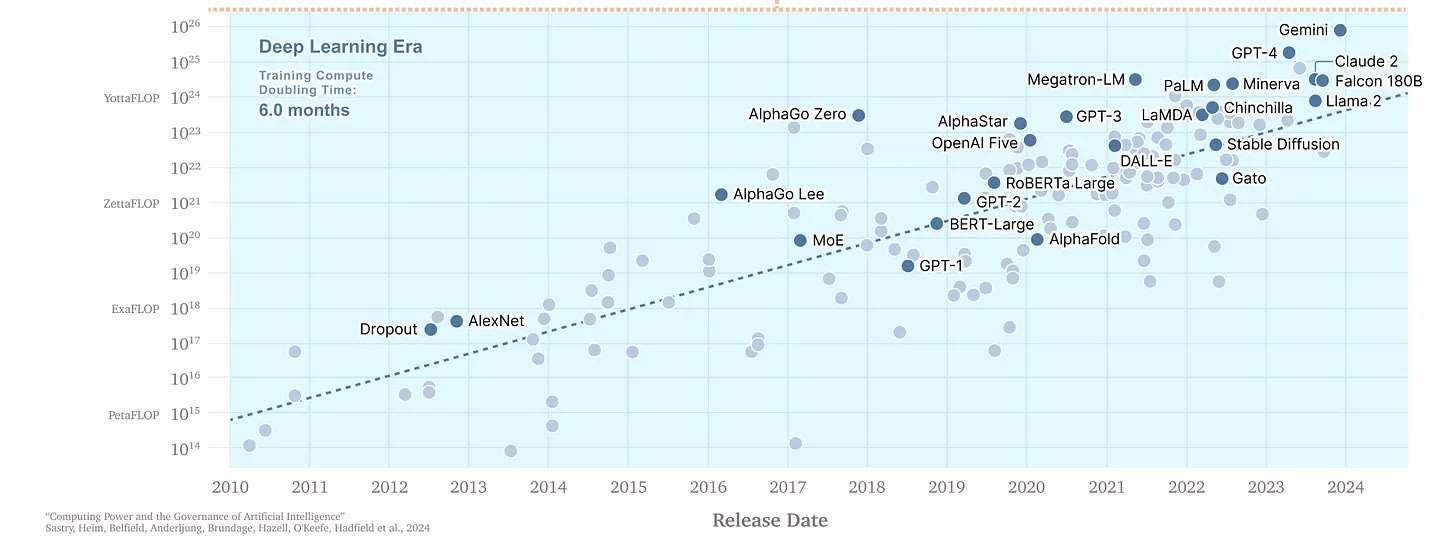
1

The broader Emergency Response Law (突发事件应对法) still seems to be responsible for certain types of pandemic emergency situations, but the two new laws appear to have taken over many of the responsibilities this law originally covered.

2

Chloe Lee wrote a strong analysis of the Biosecurity Law and Regulations on the Export Control of Dual-Use Items as they existed before the 2024 updates, laying out some of their weak points.

Second Breakfast: Hegseth’s Second Strike

Tony Stark and Justin Mc return for Second Breakfast.

Our conversation covers…

  • How strike decisions are made, and the implications for military officers,

  • Why this is a pivotal point for military ethics,

  • What Congress may do in response,

  • Why Hegseth being the TEA breaks the impartial review process.

Listen now on your favorite podcast app.

The Target Engagement Authority

Jordan Schneider: Let’s talk about the second strike. Justin, you wrote an article on it. What’s your take?

Justin McIntosh: My hope with that article was to clarify some of the language around this topic.

Shortly after the September strike, it was revealed that Secretary Hegseth was the target engagement authority (TEA). Generally, the TEA is a task force commander or a designee vested with the authority to approve strikes.

There are two main types of strikes. Some are status-based strikes, where a person is a known adversary but isn’t actively engaged in hostile acts. The others are action-based strikes, where adversaries are actively threatening friendly forces.

The bar is lower for an action-based strike, but collateral damage estimates are still required. Strikes must adhere to the principles of proportionality and the laws of war, and avoid causing undue damage or suffering or targeting protected sites. The strikes in the Caribbean seem to be status-based until the targets are in a location where they can actively threaten Americans.

If it were a status-based strike, it had to be approved by a TEA following a briefing. Typically, there’s a period of “soak,” where you watch the target — be it a person, building, or something else — to build a pattern of life. You do SLANT counts, which tally the number of men, women, and children. If the count is unfavorable, meaning women and children are present, you do not strike.

U.S. Navy Admiral Frank 'Mitch' Bradley departs the U.S. Capitol following congressional briefings on Capitol Hill in Washington, D.C., U.S., December 4, 2025. REUTERS/Evelyn Hockstein
U.S. Navy Admiral Frank “Mitch” Bradley departs the U.S. Capitol following congressional briefings, December 4, 2025. Source.

All of that information is fed by a ground force commander or a strike cell commander to the TEA in an incredibly detailed briefing. Something like, “Sir, I want to direct your attention to this sensor, under this Unmanned Aerial Vehicle (UAV). We are targeting X. Over the last 48 hours of observation, we have this many reports from signals collection co-locating his phone with him. We had a high SLANT count at his location of 4-1-1, but it is currently 1-0-0. We know who it is. We’ve been watching him for 48 hours, and we have a window of opportunity to conduct this strike without causing collateral damage. This is how we will weaponize the strike to keep collateral damage to an absolute minimum, affecting only that person, building, or vehicle. Pending your questions.”

The TEA will then approve, disapprove, or ask for clarification, and give remarks and restrictions, including re-engagement authority. Then he will sit there and watch the strike, because he has now signed on the dotted line as the Target Engagement Authority.

The first thing that was weird about this situation was that Secretary Hegseth was the TEA for these strikes. Assuming everything happened as reported, the strike did not sink the vessel immediately, though it began to sink. There were apparently two clear survivors. 41 minutes later, there was a re-engagement. That is a long gap for re-engagement, which suggests there were discussions among the various stakeholders about whether they were allowed to re-engage. This probably included watching the vessel sink and realizing the strike was not going as planned.

The fact that the TEA left after the initial strike is important. He had already signed off and conceivably given remarks and restrictions, including for re-engaging. If he’d already authorized that, then it doesn’t matter that he wasn’t watching. The commanders below him have a moral, legal, and ethical responsibility to act appropriately, but he has already signed up for whatever comes next if he’d given that clearance.

If you say something like, “Kill them all,” as the TEA, you have technically signed off on whatever happens next, because, as the Target Engagement Authority, you stated your intent was for all targets to be dead.

Tony Stark: I have two thoughts on this. First, ownership is an issue here — I’m sure they are discussing what leadership ownership is behind the scenes. Second, the ethics here aren’t complicated. Every U.S. Army infantryman is taught a simple, non-negotiable rule — a wounded or surrendering enemy is under your care. You do not execute them. Every soldier is taught what it means to commit war crimes, and this is the baseline.

Share

That rule is drilled into every officer, whether from West Point or Reserve Officer Training Corps (ROTC). Everyone in that decision-making room knew the line between engaging a target and recognizing when they are under your care. This is not complex law. The idea of them debating that for 41 minutes is cartoonish.

Justin McIntosh: My task force commander — he’s now a two-star general — once refused to authorize a strike and pissed off a lot of his junior officers and Special Forces captains. The proposed target was a mosque that was a staging location for insurgents — dozens of men were seen moving weapons out. Everybody was excited about the target, but the SLANT count was in the 60s, and Kurdish forces would arrive the next day.

This commander said, “Guys, I understand why you’re proposing this. But we are going to own that terrain tomorrow, and the negative repercussions of this strike greatly outweigh any potential positive benefit. I have not seen anything that shows an imminent threat to our forces or our partner forces that warrants taking secondary risk.”

This is the nuanced distinction between action-based and status-based strikes. A guy running at you with a weapon — that’s a clear threat. But a radio operator 15 kilometers away in a building you can’t see into? That is a tough call. We endlessly debate what constitutes a valid strike. Most commanders I served with were cautious — unless a target said, “We’re about to kill the Americans,” they didn’t shoot. They didn’t know who else was in that building. Sometimes an adversary put a child on the radio, with an adult feeding them lines, to make sure you knew a kid was there.

Warfare is ugly. I allow for confusion in the heat of the moment. But as a commander, you have to see the bigger picture. Is there an active threat? How do the benefits weigh against the costs? We are seeing those repercussions.

Jordan Schneider: If the Secretary of Defense is making these calls, what happens to the mission? They publicized these strikes to look tough and scare drug dealers — to shift their risk-benefit calculus. But the second strike might cost him his job.

Initially, Congressional oversight on this campaign was surprisingly muted. Now, it’s dialed to 10. Most Americans would be deeply uncomfortable reading that article — there is political grist in that. War crimes aside, striking two shipwrecked guys was a politically dumb decision.

Tony Stark: The Democratic base sees the whole episode as illegal, but most of the country doesn’t care if drug traffickers die. That said, most people don’t care if murderers die either, but we don’t execute people in the streets. The rule of law demands we behave better than our animal instincts.

Once the House and Senate Armed Services Committees (HASC and SASC) are involved, the situation changes. Congress hates being lied to, having its funds misused, and having its power usurped. While Congress has abdicated some of its war powers, once HASC and SASC have their hooks in you, they don’t let go, especially before midterms. That will tie up the administration’s agenda.

Any new budget aligned with the National Security Strategy will be filled with restrictive NDAA items. Six months ago, officials felt immune from investigation — now they are concerned. There’s no clean escape — Congressional staffers will want to talk to everyone. I don’t know if they will need a sacrificial lamb or a leadership change, but I doubt the Senate can confirm a new Secretary of Defense.

This is like a Spider-Man meme, everyone pointing fingers at each other. They can’t change what happened, but they can make it painful. I don’t know what comes next.

Justin McIntosh: The Secretary of Defense acting as decision-maker for the strike creates a problematic chain of review. If he had delegated authority — say, to South Command (SOCOM) commander Mitch Bradley — any questions about a strike would have gone to the Secretary for an impartial review. He could have consulted his council and then absolved Bradley of any accusation.

But who can be the impartial reviewer within the department now? By making himself the decision-maker, the Secretary has removed that layer of internal oversight. This puts the department in a weird position, because now questions go to the Senate. The Secretary can’t tell the Senate he is an impartial reviewer of the events — he was the primary decision-maker.

Jordan Schneider: Why would he do it in the first place? Did he want to feel cool and tough watching explosions on TV?

Justin McIntosh: With the right access, the Secretary could have watched Unmanned Aerial Vehicle (UAV) feeds from anywhere in the world. The question is why he was supervising. Mitch Bradley was the squadron commander for DEVGRU, and commander for JSOC, and SOCOM. He was on SEAL Team Six during the bin Laden raid. His entire career was built on these operations — he knows the process and is fully qualified to make decisions without another TEA. It also doesn’t make sense to include the Secretary as a secondary backup. Bradley didn’t need that level of oversight. Or, perhaps he did.

Gray Areas

Tony Stark: More information will come out about this, though Congress is always weird about investigations during the holidays. But the main takeaway should be this — the U.S. military has not abdicated its moral responsibilities. This is not the military’s default setting. Politics aside, we are at a critical point for military ethics. What does good order and discipline look like? Do we still care about these standards?

Justin McIntosh: Warfare is full of gray areas. The Kunduz hospital bombing is a good example. The 3rd Special Forces Group team and their Afghan partners were under fire, likely from the hospital. As protected sites, there is a higher standard for strikes on hospitals, and insurgents exploit that for their advantage.

Some argue we undermine our military by allowing sanctuary sites, but in my service, I was proud that we held ourselves to higher standards than the insurgents. Those standards protect children, sick and wounded people, innocent civilians, and doctors bravely risking their lives to heal.

That said, there are big gray areas. I usually give grace to ground force commanders, who have small optics and are focused on their men under fire. They are directly encountering active threats, and imperfect decisions are understandable.

My grace degrades for commanders removed from danger — secure in a strike cell with cushy leather chairs. That is the problem here. This strike was unnecessarily messy. There was ample time to develop the target and demonstrate our incredible precision. Secretary Hegseth could have justified the first strike by declassifying evidence that they were drug smugglers.

Jordan Schneider: This will not be our last conversation about this strike.

Tony Stark: Certainly not. Some argue ethics of warfare are a new invention, but these norms are shaped by culture and past wars. The many laws that followed WWII were a response to atrocities on the battlefield. Even in the Civil War, there were standards for treating the wounded and negotiating with the enemy to recover the dead.

The question of what defines a valid target is not new. Our modern standards are an important moral evolution.

Justin McIntosh: There is a psychologically strategic advantage to humane treatment. If the enemy knows they will be mistreated or killed if they are captured — like the Bataan Death March or the slave camps of World War II — they will fight harder. If your forces are known to treat POWs well, there will be more enemy defections. That is militarily relevant.

Jordan Schneider: Hegseth is Secretary of War because he defended Eddie Gallagher on Fox News, even though Eddie’s teammates said he did some heinous things. If that is your formative professional experience outside of public service, then you’re learning some twisted lessons. In other contexts, that behavior leads to a dark place. That’s the only logical explanation for what happened in September. It’s disgusting and counterproductive.

This isn’t a sustainable strategy. The American people can tolerate a lot, but celebrating these strikes from the rooftops is a profound misjudgement of the public mood.

Tony Stark: Congress was initially quiet because the American people didn’t care — it was almost a meme. But the public debate around this will change public opinion. Midterms are around the corner — this is a bad time to try to build up support for a military campaign.

DoD will likely be looking for new mission strategies, such as hitting targets at the source — production facilities, for example, anything legally or morally straight, or off camera. If the political fallout worsens, they may even seek congressional authorization to provide official cover.

If Bradley goes down for this, other officers will see that these strikes can cost them their careers. We might reach a critical mass of officers saying, “I am not risking my career, my livelihood, and my pension for this.” Six months ago, that was not a consideration.

Subscribe now

Jordan Schneider: It comes back to the SOUTHCOM commander who retired early. How much did he see? Did he hear orders like “kill them all” and decide he wasn’t up for the task? It makes more sense now.

Tony Stark: Has he been called to testify before Congress yet? Bradley testified in a classified hearing this week. I am interested in seeing the former SOUTHCOM commander testify.

Justin McIntosh: I agree. That’ll be the telling moment, because it was around September when he announced he was going to retire early. The timing is weird.

Tony Stark: Congress failed by not immediately saying, “That’s weird, we should ask about that.”

Justin McIntosh: Normally, combatant commanders don’t retire halfway through their command.

Jordan Schneider: Especially when their job suddenly attracts public attention.

Tony Stark: If you’re at SOUTHCOM, you’re thinking, “Oh my God, I finally have assets! This is fantastic.”

Justin McIntosh: They’re in Tampa, so they’re trying to pull CENTCOM guys to fill those roles.

Jordan Schneider: Well, that was some real “SportsCenter for War” action. We’re closing with Grok. I asked it what regimes the paragraph from the National Security Strategy reminded it of.

It answered Fascist Italy, National Socialist Germany, and Franco’s Spain.

Apparently, Fascist Italy had a demographic campaign called the “Battle for Births,” which was intended to boost birth rates. Maybe we’ll cover that next week!

Tony Stark: That’ll really interest our audience.

Jordan Schneider: I’m really excited for the AI song I’m going to make from that paragraph.

ChinaTalk is a reader-supported publication. To receive new posts and support our work, consider becoming a free or paid subscriber.
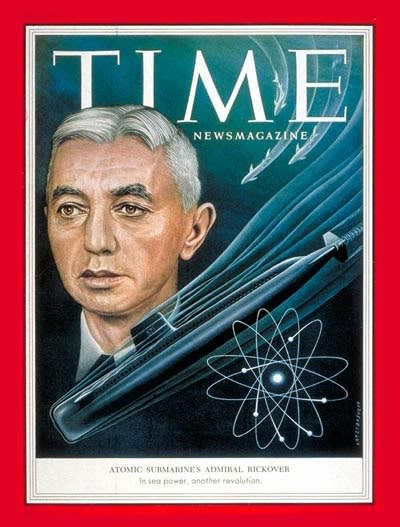
CFR's Mike Froman on Détente 2.0 and Running a Think Tank

is president of the Council on Foreign Relations, former U.S. Trade Representative, and a substacker. He joins ChinaTalk to discuss:

  • Why his 1992 dissertation on détente is suddenly relevant again – and why “positive linkage” fails to change adversary behavior,

  • How mutual assured destruction has shifted from nuclear weapons to rare earths, supply chains, and technology, and why the U.S. and China are stuck in a costly, uncomfortable stalemate,

  • How think tanks work — salary levels, where the money comes from, and what to expect from Mike’s tenure.

Listen now on your favorite podcast app.

Détente Redux

Jordan Schneider: We’re going to take it all the way back to 1992. You did your dissertation about this idea of détente and how it evolved from the ’50s all the way through the end of the Reagan administration. Coming to your conclusion, the echoes of where we are today and that theme seem to be very striking. Why don’t you pick a quote and then kick it off from there?

Mike Froman: “To retain the support of the American public, U.S.-Soviet relations must be based on reciprocity. Détente suffered no greater liability than the public’s perception that the Soviets exploited it at the United States’ expense. To be reciprocal, however, U.S. policy must embody reasonable expectations.”

Mike Froman: I thought I was writing a historic piece. The end of the Cold War came. I put the book on the shelf, thought it would never be opened again. And yet, Jordan, there you found it and indeed have highlighted that there might be some relevance to the U.S.-China relationship today.

Jordan Schneider: I played this game with Kurt Campbell. He did his thesis on Soviet relations with South Africa and the tensions of how the U.S. navigated that dynamic. Everything’s coming back.

We’re sitting here in the fall of 2025. We have a president who is probably as far towards the “let’s do détente” mindset as you could have gotten in this political moment. What do you think are the bounds of what an American president today could domestically go towards if they were in a détente mindset?

Mike Froman: The issue of détente back in the old Soviet days was — was it a strategy to transform the Soviet Union by engaging with it, or was it a reflection that we had to engage with it because we had overwhelming common interests? Some of those are the same questions that come up today in the U.S.-China relationship. Do we think we can fundamentally change the trajectory of China, or do we just simply have to accept it and live with it, coexist with it, and create some rules of the road for managing potential conflicts?

Any president right now figuring out how to coexist with China will have to determine — where do we need to cooperate on issues of national security? Where do we have to compete around the economy and technology? And where do we have to be very careful to manage potential conflicts that could blow up and create a kinetic conflict between us — whether around Taiwan, the South China Sea, or otherwise? Balancing those different baskets of interests is the most challenging thing for any administration to deal with.

Jordan Schneider: You wrote, “The theory of using détente as a means of transformation was based largely on the misguided assumption that the U.S. could use cooperation on common interests as a source of leverage over conflicting ones. Positive linkage was not particularly effective, however, because success in areas of common interest did not easily translate into success in areas of divergent ones.”

You published this book in 1992, which is a key moment of translating that kind of — in your estimation — flawed thinking of how we went about this with the Soviet Union to the next 25 or 30 years of American policy towards China. Can you talk about those parallels?

Mike Froman: Yes. The U.S.-China relationship is quite a bit different than the U.S.-Soviet relationship, first and foremost because of our economic interdependence. Russia and the Soviet Union were never terribly significant economic players in the global economy, whereas China very much is. We have developed over the last several decades a great deal of interdependence with them.

The leverage question’s a little bit different. Could you use economic leverage — the fact that we have a common interest in maintaining strong trade relations — as positive linkage into other issues? Or could you cooperate in areas like climate change, which both sides thought at one point were of common interest, and translate that into broader cooperation in other issues?

Having said all that, you’re right to point out that it’s proved to be relatively limited. In China’s view, they in many respects separated areas of common interest from areas of potential conflict and from areas of competition, and were unwilling to allow cooperation in one area to really affect their interests and how they pursue them in the others.

“Peace, Détente, Cooperation.” A Soviet propaganda poster from 1983. Source.

Jordan Schneider: What is your sense of why the theory of the case was so directly ported over to China? The argument through the Clinton administration, Bush administration, first half of Obama was basically — we’re going to develop leverage, develop these common interests and they’ll see the light. We didn’t get that these are both two party-led systems. There are some commonalities, but there are pieces of learning that maybe folks overlooked from that experience. It felt like a brave new world. Given your view over the past 30 years of this arc, what do you think got lost in translation there?

Mike Froman: If the Cold War was defined at least in part by an ideological battle between Western liberal, capitalist, market-oriented, democratic-oriented principles and the communist totalitarian principles of the former Soviet Union, the view at the end of the Cold War was that it was much more of a unipolar moment. Not necessarily U.S. hegemony, but the hegemony of the open liberal democratic capitalist perspective.

That was embraced by China. If you go back to the days of Jiang Zemin and Zhu Rongji and the reform trajectory that they laid out, they were very much on the path towards market-oriented reforms, opening up — not necessarily democracy. Those who thought that opening up on the economic side would lead to political pluralism were probably being overly optimistic. But there was certainly a view that China was on a path towards greater integration in the global economy, which they have been, and greater market-oriented policies to help lead them there.

They were on that trajectory for quite a while. It didn’t go as far or as fast and it wasn’t as linear as people expected. The advent of President Xi, who was willing to either stop or reverse some of those reforms, was probably not as anticipated as proved to be necessary.

There was this dominance of a set of principles that we thought could bring China into the international system and bring the U.S. and China into a more cooperative relationship. What happened was that China changed course and didn’t go as far as we expected. Indeed, China reversed many of the gains that we thought we had seen.

Escalation Dominance and Stalemate

Jordan Schneider: Escalation dominance — a phrase we thought was dead and dusted in the bin of history — is now back. Is this the right mental framework folks should be using when thinking about these trade wars? What is and isn’t useful when trying to take the arms control frameworks and put them onto what you’re seeing with the U.S. and China with respect to economics and technology?

Mike Froman: There certainly is a rigorous competition between the two in technology, economics, and military. The Chinese buildup of both its conventional and nuclear forces is very much top of mind.

Where the analogy may play out — it does come from nuclear weapons, but it’s not necessarily the escalation issues. It’s really back to the notion of mutual assured destruction. What we’ve seen more recently in the U.S.-China relationship is we have leverage in terms of access to our markets and access to our technology, but China too has leverage in terms of their capacity to control critical choke points of key technologies — whether it’s critical minerals, rare earths, magnets, et cetera. That’s, in my view, probably just the tip of the iceberg of the kinds of technologies and products that they control and that they have now demonstrated a willingness to use their leverage with us.

If anything, we’ve reached a stalemate where both sides realize that neither can escalate in a costless way. Indeed, it may require them to sit down and come up with some rules of the road for managing the relationship going forward.

“Back to Where it All Started,” Michael Cummings. Aug 1953. Source.
The number of nuclear warheads possessed by the U.S./USSR (Russia) from 1962-2010 in 1000s. Source.

Jordan Schneider: There’s this misreading of the history of the Cold War that once you had mutually assured destruction, everything was cool by the 1970s, which, as you as well as anyone know, was not necessarily the case. You had both countries developing new weapons systems and wrestling for that nuclear primacy and escalation dominance.

If we are in a world now where the U.S. and China both understand that they can take big, painful chunks of GDP without going to war or doing incredibly aggressive cyber attacks, where does that lead us? Because the game doesn’t stop, right? We’re still having different moves that both sides can play.

Mike Froman: Exactly. The competition doesn’t stop. As you said, back in the Cold War, it wasn’t all sweetness and light once you hit mutual assured destruction, but it did prevent a direct nuclear exchange between the two largest nuclear powers. They had to find other ways of positioning vis-à-vis each other, whether through proxy wars or other elements that allowed them to try and gain some advantage over each other.

That’s probably true here in the China relationship as well. It’s likely to lead to a certain degree of selective decoupling, whether it’s on advanced technology issues where we’ll go our way and China will go its way. The question is for the rest of the relationship — to what degree can there be a normalization of trade and other interactions?

There is a lot of non-strategic trade. The Trump administration is evolving in its views towards — what can we actually grow or produce here in the United States and where do we actually need to import from other countries? Can we take T-shirts and sneakers and toys from China without compromising our national security? I would think so. Allowing them in at a decent rate is good for particularly low-income Americans who spend a disproportionate amount of their disposable income on the basics of supporting their family.

But there are likely to be some technologies that we’re going to want to keep out of China’s hands, and China is going to have some choke point technologies that they can control over us. Hopefully that again reaches some sort of balance.

Jordan Schneider: Say we’re in 2028 and both countries have had three years to do more economic securitization and the size and amount of the bites that each country can take out of the other one diminishes. America has a few more mines. China does a better job of making semiconductors. Is the world in a more or less safe place? Or does just the fact that each side is still going to have this leverage — if they are the world’s two largest economies and still do trade — is that still the salient thing? Does playing around the edges even mean all that much?

Mike Froman: It’s unclear at this point because it’s very much a work in progress. It’s only been in the last few months that we’ve seen China’s willingness not only to turn off access to a particular batch of technologies like the magnets back in April 2025, but demonstrate a willingness to put in place a whole export control licensing system which could disrupt global supply chains in fundamental ways. They’ve now demonstrated their capacity to do that. We’ll see how they actually go about implementing it.

This ultimately could be, ironically, a force for stability with each side recognizing that the other side has some significant leverage. But to me, the bigger issue is we’re not really dealing with the other very significant questions in the relationship. The summit that President Trump and President Xi had in Korea — the main issues were fentanyl, soybeans and TikTok. We’re not asking ourselves: how do we get to the fundamental relationship between the two economies around China’s strategy of export-led growth, excess capacity, high subsidization of critical areas? How do we deal with that and the potential ongoing tensions that’s likely to create going forward?

Whether we’re on a more stable or a less stable path, in my view, depends on whether we get to those underlying issues and try and resolve some of those. Those have not yet been put back on the table, let alone issues like Taiwan, South China Sea, North Korea, nonproliferation, et cetera.

Jordan Schneider: We just had a whole conversation about how using international diplomacy as a means of domestic transformation is a bit of a fool’s errand, right?

Mike Froman: It’s not about domestic transformation. If you remember back in the Soviet Union, the idea was if we engaged with them or took other actions vis-à-vis them, somehow their system would collapse. They would see the values of democracy, the values of market orientation and everything would fall apart. They would inevitably collapse.

This isn’t about making China collapse. It’s about seeing whether we can come up with rules of the road so that China and the rest of the global economy can coexist without undue tension. Right now we’re not really dealing with those issues.

Jordan Schneider: If we’re defining “dealing with those issues” — for my first job out of college, I covered trade policy for the Eurasia Group. I was listening to every single one of your speeches trying to figure out if this meant like the U.S.-China BIT was 7% more likely to happen.

With the second Trump administration, there are two disjunctures that we’ve seen from the past 20 years of American foreign policymaking. The biggest one is just the risk tolerance and the ability to take big swings that may end up being either illegal or backfiring horribly, which the presidents that you worked for were a little more reluctant to do, for better or for worse.

Subscribe now

If you’re sitting as USTR and you have the threat of putting 50% tariffs on the countries you’re negotiating with — be it China with a U.S.-China BIT or with all the allies that you were talking around with the TPP — to what extent do you think that unlocks new political economies and new negotiating paths that weren’t possible if at the end of the day you have a president who just wants to be nice to the countries that we have treaty allies with?

Mike Froman: The Trump administration’s threat and use of tariffs has created very significant negotiating leverage and has gotten countries to come to the table on a whole range of issues — whether it’s fentanyl, migration, or economic issues — and to agree to things that they previously would very likely not have agreed to. The administration in the short run has very much demonstrated that access to the U.S. market is a source of negotiating leverage and other countries have responded to it. They haven’t been happy about responding to it but that’s okay.

The question is what are the longer-term implications and whether it makes it more difficult to gain their cooperation on some other issue down the road. But only time will tell. In the meantime, if you had asked people a year ago whether we would have this raft of agreements that the administration has rolled out with anywhere between 10% and 25% or 30% tariffs on other countries — quite asymmetric agreements in many respects — most people would have said it was highly unlikely, but it has proven to be the case.

Purely from a negotiating point of view, if you have the capacity with credibility to put tariffs on regardless of your international obligations and regardless of the long-term implications, you can probably get a fair amount done in the short run.

By the way, the Trump administration’s skepticism about some of the mechanisms of engagement with China — like these big bilateral fora that we managed for years: the Strategic and Economic Dialogue, the Security Economic Dialogue, et cetera — I share some of that skepticism. They involved thousands of person-hours of work and produced communiqués which I don’t think necessarily advanced the ball that far and show the limitations of that form of diplomatic engagement.

That doesn’t mean there aren’t other forms of engagement that make sense, including ones backed up by a series of potential actions. But certainly it’s healthy to look back and say, what did these things accomplish and where can we do better?

Jordan Schneider: Looking forward, if there is a Democratic president in 2028 — a president that you would want to work for, who was less scared to play hardball the way the Trump administration has when it comes to access to the American domestic market — a president that you would be more sympathetic to in terms of their ultimate aims, where would you want to see the new leverage that has clearly been brought to the fore when it comes to domestic market access? How would you want to use those cards?

Mike Froman: Ultimately, it’s in the U.S. interest not to go it alone in a lot of areas, but to bring allies and partners into the arena. Using whatever leverage we have to get allies and partners to work with us on difficult issues — including a common approach to competition, a common approach to adversaries, a common approach to national defense, whether it’s support for NATO or engagement vis-à-vis China — those are all very important.

We don’t have to have everything reshored to the United States. If we have coalitions of the willing, coalitions of the ambitious, trusted allies and partners who we can work with to make sure we’ve got adequate supply to critical inputs that we need for our national security and for our competitiveness more broadly — I would use whatever leverage the U.S. has to bring our allies and partners to the table with that goal in mind.

Jordan Schneider: This idea of economic security is very nebulous. The Fed has this clear thing they’re trying to do — 2% inflation, full employment. It feels like all these discussions about what economic security is very quickly go into here’s what we should do for this sector, here’s what we do for that sector, here’s what we should do for this technology. But there’s not an overarching framework of what the end state we’re trying to achieve or work towards is.

I want to run an essay contest around how to define it in more concrete ways with numbers attached. How would you frame that question? If you had an answer or an equation off the top of your head, I’d be curious for that as well.

Mike Froman: First of all, you should read our recently released CFR task force report on economic security. The task force was co-chaired by Gina Raimondo, former Commerce Secretary, Justin Muzinich, former Treasury Deputy Secretary in the Trump administration, and Jim Taiclet, who’s the CEO of Lockheed. We had a couple dozen CFR members with a wide range of backgrounds in technology and defense.

I flag that because one of the fundamental sets of questions that the task force was focused on is — what are the parameters? What are the guardrails? What are the limiting principles on economic security?

For decades, the focus of economic policy really had been on efficiency — the most efficient supply chains around the world. Companies put their factories and sited their suppliers where it made most economic sense to do so. A lot of that ultimately led to China, given not just the labor differential, but also its infrastructure, its management practices, and just how efficient it was as a manufacturing floor for the U.S. We found ourselves overly dependent on one country, or in the case of semiconductors, on Taiwan and China.

What economic security fundamentally means is really proper risk management. The number one principle of risk management is diversification. You want diversified supply chains, resilient supply chains. Particularly when it comes to national security core interests — such as the materials that go into a missile or into an F-16 — we can’t be dependent on our adversary for them. Figuring out where to draw that line is the goal.

It’s easy to say missile parts, F-16 parts — we should not be dependent on China for those. But what about active pharmaceutical ingredients? What about the supply chain for semiconductors? What about PPE that we saw during COVID? Where do you draw the line?

That’s the big challenge for policymakers going forward because each of these involves a trade-off. There’s a reason the manufacturing was sited in China — it was the economically most efficient thing to do. Any other approach is going to be, almost by definition, more expensive, less efficient. That may well be worth the cost. The question is, how much are we willing to pay additional for whatever product it is in order to have more resilience, more redundancy, more diversification, and better national security?

We ought to be willing to pay something. The question is how much. Maybe we’re willing to pay a fair amount to make sure our semiconductors, our missile parts, our F-16 parts are made in the United States or in a close ally’s jurisdiction. But we may not be willing to pay quite as much to make sure our sneakers and our T-shirts and our socks are made in the United States. That’s the kind of conversation we should be having — really about trade-offs.

Jordan Schneider: My question was an implicit critique of that report because I think it skipped the base question and then went pretty quickly to this sector, that sector, the other sector.

Mike Froman: Let me push back on you, Jordan. It decided, instead of focusing just on the theoretical, to say — here are three critical sectors. We could have picked a dozen. Here are three critical sectors. Let’s see what it looks like through the lens of a particular use case. Whether it was AI, quantum, or biotechnology, those each have particular needs that need to be addressed. Everybody would agree that at least in those three areas, we need to be a leader in those technologies. How do we maintain that leadership?

Jordan Schneider: The core issue here is escalation dominance — when can China inflict enough politically visible pain on American policymakers to force them to back down?

When we define it down to even the non-perishable consumables — I am the father of a young child and hit this weird crunch where the tariffs made it such that you couldn’t find car seats because every car seat in the world is made in China, apparently. It just seems to me that there’s just so much that is going to be dependent on the two countries.

Maybe there’s some 80/20 or 90/10 principle where we’re still going to rely on China for 90% of the screws that go into the F-16s, and if they take 10% away, we’ll still have this much of our military capacity back. But closing the loop for all the things like you did in the 1960s relative to the U.S. and Soviet Union is not feasible.

It seems like there are two relevant variables here. One is the long-term GDP cut that China can make from being dominant in something. The other is how much short-term political pain can an adversary use to squeeze American policymakers to do something that they wouldn’t otherwise want to do. Is there another aspect to it? Am I missing something here?

Mike Froman: That captures it. But what you’re pointing out is very much the importance of distinguishing between the strategic and the non-strategic. That points to the broader relationship as well.

In the Biden administration, it was the phrase “small yard, high fence.” What goes in the yard for control, and how small can you keep it? They were pretty selective and pretty targeted in terms of how they viewed that. Maybe some things would need to be added, maybe some things can come out of it. But the question is: what should be deemed as strategic either from the perspective of keeping key technologies out of China’s hands or ensuring that we have redundancy so we’re not overly dependent on China? And what can go anyway? What can be sold anyway?

Even in the height of the Cold War, we were buying wheat from the Soviet Union. Wheat was seen as non-strategic and we could buy wheat from them and still be at odds over various issues. With China, where are we willing to draw that line? To me, that’s really the question for the next phase. As the Trump administration engages now, there’s been a stabilization of escalation and de-escalation. The next phase should be: how are we going to define this relationship going forward?

Jordan Schneider: The ability to cause pain to the other side is always going to be there, but what tool you use to cause pain is the question. We’ve thankfully had some great norms develop around the use of nuclear weapons. We’ve had some norms around the use of conventional forces — TBD on those. All of the cyber stuff between the U.S. and China thus far has been of the snooping, not of the blowing up power plants variety.

But the fundamental question I have around economic security is — say that China wants to retain leverage on the U.S. and get politicians to do things they wouldn’t otherwise do in their druthers. It just seems like there are so many levers that you can pull as a peer competitor in the 2000s. It makes me worried that we’re working toward an end state of being resilient if the other side doesn’t want you to be resilient. It seems like a marathon where the end isn’t even something that’s realistic. You see what I’m getting at, Mike?

Mike Froman: I do. I sense that you’re feeling overwhelmed by the challenge. But that should be our opportunity to rise to the challenge. There’s a certain urgency, I believe, in one, assessing what the key dependencies are. And two, assessing what it takes to address them. Is it a combination of tariffs, industrial policy, investment, and regulatory changes? What is the toolbox that we need?

Thinking very strategically about that — including where allies and partners can play a role because they’ve got capacity in certain areas that we don’t, or because they can supplement our capacity and help us get to scale more quickly — and building a bipartisan, ongoing consensus around what it takes is an urgent need. That helps you get to that point of saying, yes, it may seem overwhelming, but you’ve got to start somewhere.

That’s what we’re doing right now. That’s what the CHIPS and Science Act did during the Biden administration. It said we cannot be 100% dependent on Taiwan and China for the packaging, etc., of chips. We’re going to begin to rebuild chip manufacturing capacity in the United States. The question is, what additional sectors do we need to do?

Take shipbuilding. Everybody believes we need more ships, whether it’s for the Navy or for merchants or otherwise. We don’t have a huge amount of shipbuilding capacity anymore. Can we work with Japan, Korea, and Finland on icebreakers? Who can we partner with to get there?

Mission, Money, and Talent at the CFR

Jordan Schneider: You gave me a little transition there — building a bipartisan consensus for decades of policymaking going forward. That seems to double as your vision for what the point of a think tank or CFR is, particularly now. What are the KPIs we’re going to give for Mike Froman’s reign as president of the CFR?

Mike Froman: Our mission is to inform U.S. engagement with the world. There are lots of different ways to engage. Our job is to flesh out what are the different mechanisms for engaging with these goals in mind that we’ve just been talking about. What are the trade-offs involved? What are the costs and benefits of going down one path or the other and helping policymakers in their decision of how to pursue that? Also helping opinion leaders and the broader American public understand and get their input on which of those trade-offs they’re comfortable with. That’s an important part of what the Council does.

We’re focused on policymakers like most think tanks, but we’re also focused on the broader American public through broad education efforts and media efforts, digital, etc., programs around the rest of the country with the goal of getting their input into how they view the role of the U.S. in the world and to help inform policymakers accordingly.

Jordan Schneider: How are you going to do things differently? What’s the Mike Froman twist on all this?

Mike Froman: We’re taking a step back and saying, just as the Council did — the Council was founded in 1921 after the end of the First World War, after the defeat of the League of Nations — to organize around trying to push back against trends of isolationism. In 1948, it was a place where the Marshall Plan and NATO were very much being worked on. In 1991, at the end of the Cold War, there was a lot of talk about geoeconomics and bringing economics into the national security sphere as well.

From left to right: John W Davis, Elihu Root, Newton D Baker, Hamilton Fish Armstrong, the founding fathers of the CFR. Source.

This is another one of those inflection points. As a Council, we’re going to take a step back and say, where do we go from here? We’re going through a major disruption right now. Fundamental questions about the nature of the global economy, of the trading system, of alliances, of how to manage adversaries, how to compete — these are all on the table. How can we help policymakers and the broader public understand different options for pursuing U.S. national interests and the trade-offs involved in each?

It’s a major studies effort, a major research and analysis effort, but also a major education effort — engaging with more audiences, non-traditional audiences, different kinds of media to engage with the rest of the country and get a sense of their input as well.

Jordan Schneider: From an internal organization structure perspective, what do you think of the model? What needs to change?

Mike Froman: The Council’s been around for a long time and is actually well-positioned for this moment in history because we’re not just a think tank focused on trying to influence the couple thousand people in Washington that are sitting in these meetings and trying to make decisions. We’re also focused — as a membership organization, a publisher of Foreign Affairs, an educational organization that provides material to high schools and colleges — on the broader American public. We do events all over the country. We’re relatively well hedged to both work with policymakers on one hand and work with the rest of the country on the other hand.

Jordan Schneider: Let’s talk about money for a second. I assume you were on the other side of this in terms of large corporations funding various research efforts. What do you think about where funding comes from for think tanks in general, CFR in particular, and what makes sense and what doesn’t?

Mike Froman: Our funding’s obviously all public. It’s all on our website. It’s transparent. We don’t take any money from any government institution, including the U.S. government. We don’t take any money from corporations for research. Corporates can be members like other members and send their employees to our events, but they can’t involve themselves or set the agenda or influence our research agenda. That allows us to remain nonpartisan, allows us to remain independent. It’s one of the reasons that both our research and analysis and our publications are viewed highly as being independent and credible in that space.

What that means is we rely on — we’re a membership organization, so individuals pay dues. We’re blessed to have members who are philanthropic. We get money from foundations, some of the standard foundations that work in this area. That’s where our funding comes from. We have an endowment that’s been built up over the years as well, again, because of the generosity of our individual members.

Jordan Schneider: I’ve been on the other side of this, where you have a funder who is a corporation that wants you to write a certain thing. Do you think it’s unseemly? The dance is tricky, right? But without that, it would kind of only be CFR and Heritage left standing. There’s a lot of foreign government money as well.

Mike Froman: I’m not going to criticize my peers. I would just say that we’re lucky and we have a concerted strategy to make sure that we’re able to remain independent. That means no government money, no corporate money for research. That allows our fellows total freedom of speech. They can write whatever they like. As an institution, we take no institutional positions. We try to put our best research and analysis out there and make it available as broadly as possible.

Why are salaries so low

Jordan Schneider: Entry-level research associates come in with a $55K to $58K pay band at CFR. What are your thoughts on that, Mike?

Mike Froman: We would love to — we’re very lucky to have a great set of research assistants and entry-level people. There are a lot of people who want to go into the field of international relations. This is their first job. By the way, we view one of our core objectives of CFR as helping to identify, promote, and develop the next generation of diverse foreign policy expertise. We spend a lot of effort and time — whether it’s our interns, our research assistants, our junior staff, our term members — really focused on who the up-and-coming generation are, and what we can do to help them develop the skills and the expertise to succeed in that field.

As a nonprofit, obviously we’re subject to constraints, but we always look at what the market is and try our best to make sure we’re getting the very best quality people for the resources that we can expend.

Jordan Schneider: But it’s not a lot of money, right? These are really big, hard, important questions. It bums me out that we lose talent because folks who are coming out of school with debt or just see an opportunity to make 4x right out of college look at this field and say, “How can I go down this route?” It breaks my heart, really.

Term Members at CFR in 1970, the year CFR membership opened to women. Source.

Mike Froman: Having been at the beginning of my career once upon a time, I can relate to that. Luckily, we have a lot of interest in the Council by people coming out of college, coming out of graduate school. There’s significant demand for the openings that we have. We have a great group of junior staff and research assistants. I’m really impressed with them, and we take a lot of effort to make sure we’re doing everything we can to develop them professionally.

But I also say, Jordan, we’d be delighted to take a major donation from you to the Council to help endow a new research assistance endowment program if you like.

Jordan Schneider: That was my next question. I am surprised that there isn’t some rich person out there who doesn’t want to have the next generation all be Mr. and Mrs. X fellows. Then they get to make $10 or $20 grand more. It’s not that much money in the grand scheme of things for all of the kudos and accolades you would get and all of these fresh young faces saying thank you so much, Mr. or Mrs. Whoever.

Mike Froman: We have been very fortunate to have some of those donors participate.

Jordan Schneider: How do you split your time? What’s the weekly daily pie chart? You’re now a take artist on Substack as well. How do you think about where your time should be spent?

Mike Froman: I live in Washington, and I spend about three days a week on average in New York and two days a week at our office here. Every week’s a little different. I travel around the rest of the country as well, doing events for CFR members and others.

I split my time between my own research and writing — as you say, I have a weekly column that I put out on Fridays that then gets posted on Substack. It’s part of our newsletter as well. I spend a lot of time working with our senior leadership team on our programming here, making sure that we are presenting a nonpartisan slate of participants here on our stage for events on all the major issues. I spend a certain amount of my time on internal management. We’ve got a great management team here, so I’ve been able to defer to a lot of them in terms of managing people and systems and things here, budgets, etc. Of course, a certain amount of time on fundraising. I do a bit with the press, a bit with the media to be helpful and out there. That fills a week.

Jordan Schneider: If you took a pill and could sleep 10 fewer hours a week, where do you think you would spend it? Doesn’t have to be on the job.

Mike Froman: On the job, I would probably spend it digging further into our research and analysis and doing more in that area. That’s the direction I’m heading in. I’ve been here for a couple years. I wanted to spend the first couple years really getting my arms around the place as an institution. Now I’m working more closely with the fellows on this big project of taking a step back — our Future of American Strategy initiative — and looking at some of these big questions going forward.

Jordan Schneider: It’s a weird time, right? Doing the work that I do in Trump one or Biden felt like the residence was much more direct to the sorts of wavelengths that the most important decision makers in the country were on. Now we’re in a brave new world. There are lots of strains of thinking in American policymaking.

Going back to the 1940s and the origin story of CFR — man, isolationism is back. We got Nazis going on the most popular right-wing podcasts. Doing things in the normal, mainstream way, trying to optimize for the solutions that you, me, George H.W. Bush would all see as reasonable goals for American policymaking is not shared by a significant chunk of one of the two parties in America.

In this new paradigm we’re in, to what extent do the bounds of thinking, the ways of working in a mainstream foreign policy think tank, have to change? On the other hand, in which ways should things stay the same?

Mike Froman: First of all, I don’t view President Trump or his administration as isolationist. You can’t be isolationist and talk about taking over the Panama Canal, Canada, and Greenland. That’s expansionist. This president has spent more of his first 10 months on foreign policy — whether it’s getting involved in particular conflicts, traveling abroad, hosting foreign leaders — probably more than just about any other president in recent memory. He is deeply engaged in the world.

As I said, our mission is to inform U.S. engagement in the world. There are lots of different ways to engage. He is engaging with it in a different way than several of his predecessors, but he is deeply engaged. For a think tank that’s focused on that, it is to say — this is the way this president is engaged. What are the costs and benefits? What are the trade-offs involved? What are the alternatives? What could be done to ensure ultimately that the U.S. meets its national interests? That’s what our role has always been. That’s what our role is now.

Jordan Schneider: What do you think are the unique challenges of this job relative to others you’ve had in your career?

Mike Froman: That’s a great question. I worked in the public sector. I’ve worked in the private sector. This is the first time I’m running a nonprofit organization, a think tank. The challenge is to maintain its position as a nonpartisan, independent source of research and analysis in what is a very partisan environment. Every day we think, how do we make sure, whether it’s our membership or the people who participate in our meetings and are put on stage or the engagement we have with the administration, how do we make sure that we are fulfilling our obligation as a nonpartisan institution going forward? That is a new and different level of challenge now probably than in the past, just because of the broader nature of the political environment.

Jordan Schneider: Do you spend much time with AI? Have you been using it to research or write at all?

Mike Froman: Not really.

Jordan Schneider: Maybe this is my pitch to you, Mike. The tools are enabling young talent to learn much faster and be much more prolific than they ever were in the past. My critique of the model that I grew up with — you have senior fellows and then you have RAs who hang out for two or three years and then go on their merry way, and most of their job is directly supporting or just serving as a research assistant to someone senior — what the research tools which now exist allow folks who are really sharp and motivated to do is just get up these knowledge hills much more quickly.

Obviously there are things that ChatGPT can’t teach you. A lot of this think tank game is one of relationships, be that with folks in Washington or in the media or what have you, or the subtleties of how to shape an idea so that it will resonate with different audiences. On the more contentful learning stuff, you can run a lot further as a 23-year-old than you could even 10 years ago. I would encourage — challenge, maybe — you and the organization to imagine raising the bar for what the top tier of young talent can aspire to do.

Mike Froman: To that point, Jordan, we started about a year ago opening the door for our RAs to publish on CFR.org in conjunction with their fellows or on their own as well, recognizing, as you say, first of all, we have a terrific group of people with or without AI tools and quite expert in their own way for their stage in their career. We wanted to give them an opportunity to develop their portfolios as well.

Jordan Schneider: Cool. Two thumbs up for that.

It’s clear that demand exceeds supply for policy analysis roles. I see this when I put job descriptions out. I’m sure you guys see it as well. There are people willing to not make a lot of money to do this work because they think it’s really interesting and really important. It seems like we, as a country, are leaving some money on the table from an idea generation perspective. The fact that we don’t just have 10 times as many people trying to understand what makes the Chinese rare earths ecosystem tick… where are we on the production curve of idea generation for think tanks?

Mike Froman: It’s probably always been more applicants than roles for these kinds of jobs. It’s probably particularly acute right now just because changes in the government mean that a lot of people who expected to go into the government or into the intelligence community are probably not seeing the same pathways that they saw before. Same thing for a lot of NGOs or nonprofits, particularly in the development field. People who are planning on going into that area are probably seeing the jobs disappear.

On the positive side, virtually every company is figuring out that they need geopolitical advice. They need to understand the impact of the changing geopolitical environment on their business. Many of them are setting up offices to bring in people with foreign policy interests and ideas into their ecosystem. That’s another avenue that didn’t fully exist five or 10 years ago and now is a much more vibrant part of the market for ideas. It’s think tanks, obviously, being one piece of it. Universities also. But then the private sector is now another place where people can go and develop careers if they have an interest in this area. Can I ask you a question Jordan? Who among the CFR fellows is your favorite.

Jordan Schneider: Oh man, I don’t know if I can choose…

It’s interesting, right, this whole think tank model, because on the one hand, you are these independent atoms, kind of like professors who can do their own thing. But I imagine also as a president, you want to see synergies develop in-house, as opposed to if one’s sitting here and the other is at Brookings.

Given that you have all these stallions who are going to want to run in their different directions, how do you think about to what extent you’re going to want to get them playing together and rowing in the same direction versus going off and optimizing their time how they want?

Mike Froman: What I hear from you, Jordan, is that we have so much great talent that you can’t possibly choose who is the best one. I appreciate that endorsement of CFR.

To answer your question, because it is timely and it is one of the things that I brought to the Council as a bit of an innovation — we’re doing a lot more collaboration among the fellows. runs our China Strategy Initiative and he pulls in a wide range of fellows from CFR, but also from other think tanks and universities into his project to answer questions — What is China thinking? What is China doing? How do we compete and how do we engage? Those are the four pillars of his initiative. It involves dozens of folks across the Council, including our cadre of China fellows.

We’ve done the same, for example, on economics. Our Real Econ initiative, which is Reimagining American Economic Leadership, now has about a dozen or so fellows who touch trade and economics in one form or another and are working together on a whole series of projects. That’s a little bit new for the Council — these clusters of fellows coming together, working on collective projects, as well as working on their own books and their other projects. As you said, it adds that synergy. It’s not about having them all pull in the same direction intellectually because we welcome the diversity of their perspectives, but adding them together and seeing what we can produce on China, on economics, on technology, on energy and climate in ways that are additional is very important.

Jordan Schneider: One person you didn’t name is Tanner Greer, in the Rush Doshi extended universe. The other failure mode, which you have thankfully avoided, is this deification of PhDs as the only way to have relevant credentials or insight that would allow you to play under the bright lights of a CFR fellowship. Tanner has had a classic China arc of living in the PRC, speaking, teaching grade school, being a tutor, and just having a blog on the side. He’s one of the most well-read and thoughtful people. He also provides a little bit of ideological diversity to the building, which is important in these trying times. I’m really excited to see what he does with those extra tools and leverage that you guys can bring to him.

Mike Froman: Thank you for raising him. He’s a great new asset for us. Of course, he’s running our Open Source Observatory, which is this effort to do mass translations of Chinese public documents and make them available to scholars and policymakers so you can read in their own words what they are actually saying, which oftentimes proves to be actually quite relevant to the policy direction they’re taking their country.

ChinaTalk is a reader-supported publication. To receive new posts and support our work, consider becoming a free or paid subscriber.

CCP Purges as Camp

Anon contributor “Soon Kueh” occasionally writes about China and delights in bureaucracy.

Disclaimer: All the quotes and information are obtained directly from Pin Ho and Wenguang Huang’s A Death in the Lucky Holiday Hotel: Murder, Money, and an Epic Power Struggle in China unless stated otherwise.

Under Xi’s regime, CCP purges have been exceptional in terms of quantity and quality. Xi has now purged more officials than Mao ever did, and he is not stopping. While purging is now a normalised feature of Xi’s rule, fresh rounds of purges always invite new political divinations, rumours of succession politics, and new speculations on the cabinet’s factional alignments.

While understanding realpolitik is fun, what about the fanfare, the drama, the campiness associated with purges? Unfortunately, because of the party’s opaque politics, we are rarely privy to the internal processes of a successful purge and can only debate about the outcomes once the dust settles. Alas, we can only imagine what it’s like being a fly on the wall in the recent PLA purge, but we can draw from memory to extrapolate. So far, the only crack that allowed us a rare glimpse into the party’s shrouded political intrigue occurred 13 years ago, during the purge of Bo Xilai. For longtime party watchers, it was a strangely serendipitous time to witness how the chips fell out of place — from Wang Lijun’s 王立军 botched defection at the American embassy, to Gu Kailai’s 谷开来 shoddy murder of British businessman Neil Heywood, and the resulting purge of Bo’s faction. Borrowing mainly from Pin Ho 何頻 and Wenguang Huang’s 黃聞光 A Death in the Lucky Holiday Hotel: Murder, Money, and an Epic Power Struggle in China, this article takes a trip down memory lane to revisit Bo’s fantastical downfall and indulges in a campiness rarely associated with the CCP.

Act 1: The Hero’s Return to Greatness

Bo Xilai in 2007 (Source)

Our tale begins as a wǔxiá 武侠 novel, with Bo Xilai as our main protagonist, attempting a return to greatness. The revenge trope of the fallen prince is a common theme in the wǔxiá genre and Chinese historical dramas. Forced into exile, the disgraced noble prince swears to bide his time in the shadows as he slowly accumulates resources(韬光养晦 and plans for his return to glory.

As the son of former high-ranking revolutionary Bo Yibo 薄一波, Bo Xilai’s life fundamentally embodies this trope (although he is obviously not a conventional hero). Princeling by birth, his playmates included Xi Jinping and Liu Yuan 刘源, son of Liu Shaoqi. However, Bo’s life soon took a downturn when his father was purged during the Cultural Revolution and languished in jail for twelve years. As a result, Bo and his brothers were detained in a youth delinquency center for 5 years from 1967-1972. Bo’s life improved in his thirties, when his father was finally reinstated as vice premier. His father’s return to power signaled that young Bo’s exile was over and that it was finally appropriate for him to enter politics.

Tired of quietly lurking in the shadows, Bo’s political ambitions were obvious from the start. In 1982, he joined the Party Central Committee Secretariat as a research assistant. Following the playbook of elite officials who forged their careers by conducting revitalization efforts in the rural countryside, Bo requested a transfer in 1984 and was ultimately posted to Jin county 金县 in Liaoning. His career progressed steadily afterwards, alongside his vanity and flamboyance. In 1987, Bo became district party chief in Dalian, where he sought to beautify the city through extensive greenification (which was a questionable priority given the region’s severe water shortage) and heavy redevelopment. He was both an ambitious princeling and a debauched ruler. He had an unabashed love for beautiful women. At one point, he used government money to host fashion shows with gorgeous young women to demonstrate Dalian’s immense beauty, and even ordered the police department to create a squad of policewomen who patrolled on horseback. He was also aptly nicknamed “Bo Qilai” 薄起来, which translates to “Get-it-Up Bo” because of his lustfulness.

During his ascent, his burgeoning political ambitions ruffled many feathers. In 1994, he built Xinghai Square 星海广场, the largest city square in the world, to celebrate the handover of Hong Kong.

Xinghai Square, Dalian City (Source)

It wasn’t just the size that caught people’s attention, but the huábiǎo 华表 that was erected there. As a huábiǎo is a ceremonial column traditionally placed in front of tombs or palaces that usually signified imperial authority, many observers thought that this artistic decision revealed Bo’s thirst for influence — especially since the huábiǎo in Dalian was much larger than the one in Beijing. Rumors even alleged that Jiang Zemin was shocked when he first saw the huábiǎo in Dalian during a visit.

The now-demolished huábiǎo in Xinghai Square (Source)

Like a classic wǔxiá novel where the protagonist must undergo many trials and tribulations, Bo’s career was not all smooth sailing. In fact, his final posting, Chongqing, was initially viewed as a demotion. But to be fair, Bo is no hero. In fact, it was his domineering personality that led to his Chongqing reassignment.

Bo was initially promoted to deputy party secretary and interim governor of Liaoning in 2001 after he left Dalian. (He was given a huge sendoff by residents, although some eventually disclosed that they were promised free KFC by local officials if they attended). However, because his strong-headed personality did not gel with the Liaoning leadership, President Hu Jintao brought him to Beijing to succeed ailing Commerce Minister Lu Fuyan 吕福源 in 2002. His stint at the Commerce Ministry earned him the unpleasant nickname “Mao Zedong Jr. 小毛泽东” and he clashed with his superior, Vice Premier Wu Yi 吴仪, who oversaw the ministry. Bo sought to replace Wu Yi when she announced her imminent retirement in 2008, but was thwarted by Wu’s objections. Against his will, Bo was posted to Chongqing as party secretary — although he eventually looked at it as an opportunity to exercise more political autonomy to implement his own policies.

Act 2: Every Hero Needs a Sidekick

Bo’s narrative arc is fascinating because of its capacity for genre-shifting. While his story initially resembles the return arc of The Dark Knight Rises, where Batman painstakingly crawls out of the underground prison to defeat Bane, Bo’s stint in Chongqing embodies the spirit of a classic buddy cop film, with a twist of tragicomedy.

Bo Xilai’s stint in Chongqing was unforgettable. His year-long “Smashing Black, Singing Red” 打黑唱红 anti-corruption campaign was implemented by 10,000 police, divided into 329 investigation teams. Allegedly, nearly 5,000 arrests were made and 3,273 people were prosecuted; 520 of these cases resulted in a conviction, with 65 people executed or sentenced to life imprisonment. In the same time frame, the “police successfully captured 4,172 previously unsolved cases and broke up 128 crime rings.” While later reports claimed that the numbers were heavily exaggerated, the operation’s massive scale was enough for Beijing to become wary of Bo.

In comes Bo’s loyal sidekick and fellow buddy cop Wang Lijun, who was responsible for executing much of the campaign. Wang was the former Chongqing police chief and deputy mayor. Bo and Wang’s initial connection has been the subject of much speculation, which often veers towards the fantastical. Supposedly, Wang was an elite cop who cracked the mysterious attempted mercury poisoning of Bo’s wife Gu Kailai after he was enlisted by family friend and billionaire Xu Ming 徐明. Unfortunately, the most realistic story is also the most boring: Wang was introduced to Bo by former security czar, Zhou Yongkang 周永康, who owed Wang a favour.

Wang Lijun in 2012 (Source)

In many ways, Wang was as narcissistic as Bo, if not more. He always “had an entourage of more than twenty camera-carrying assistants” who followed him everywhere and recorded his every word and action. Quotes and pictures deemed good enough were then either “compiled into a book which included lavish praise from subordinates,” or posted on the news. If the photos taken were too ugly, the photographer needed to Photoshop them until Wang was satisfied. Wang was also a terrible boss. He once jailed his secretary for “talking back to him over a trivial matter.” In just two years in Chongqing, he burned through fifty-one personal secretaries; one was even fired on his first day. And like Bo, Wang had a love for women — his bodyguard posse mainly consisted of women decked in red uniforms.

But Wang was no princeling, a fact which clearly haunted him. He started from scratch as a volunteer in a neighbourhood watch group before becoming a police officer in Tieling 铁岭, Liaoning. Thereafter, he was posted to Jinzhou 锦州, Liaoning, and finally Chongqing. Much of Wang’s career involved a dash of deceit and savviness that easily rivalled Anna Delvy and Elizabeth Holmes. To take advantage of the affirmative action policies that benefit ethnic minorities, Wang switched his ethnicity from Han to Mongolian to contest for a delegate spot at the 14th Communist Party Congress in 1992. To make up for his lack of college credentials, Wang embarked on a retroactive crusade to collect them all:

“His official résumé indicates that he obtained an [MBA]…at something called “California University” … Wang also obtained an eMBA from the China Northeastern Finance University between 2004 and 2006, when he was deputy mayor of Jinzhou. A professor at Beijing University said Wang’s eMBA degree has no academic value because the program is a revenue-generating engine for the university.”

Despite his suspicious credentials, “more than ten of China’s prestigious universities have made Wang an adjunct professor and doctoral supervisor.” The president of Beijing University of Posts and Telecommunications even claimed that Wang had a PhD in law. Chinese state media also reported that “Wang was an expert on forensics, criminal psychology, and law; had written five books on law; and had presided over eighteen legal-research projects.” Wang was supposedly also a genius inventor: he has filed more than 119 patents on China’s State Intellectual Property Office website, “from police equipment and alarm systems to police raincoats and policewomen’s boots.”

Wang’s inferiority complex found refuge in Bo’s princeling status. With Bo’s backing, Wang confidently unleashed Chongqing’s anti-corruption campaign that terrorized the city and made excessive surveillance and paranoia the new normal.

However, this camaraderie did not last long.

Act 3: The Slap that Ended it All

The genre shifts again. We are now regressing in time and now reside in the genre of the Chinese historical period drama, where political intrigue, murder, and petty catfights — alongside the occasional gender bender — unfold.

To say that a slap ended it all would be an exaggeration. But it is not entirely false to say that the slap did create the fissure that caused the cataclysmic fallout between Bo and Wang. But first, we must return to the catalyst: Neil Heywood’s murder.

Out of all the career switches an ESL tutor can make, Neil Heywood chose the riskiest option. He started working as an English tutor to affluent families in 1998. However, with the suave confidence of a white man in early reform China, Heywood reached out to Bo Xilai’s wife, Gu Kailai, and introduced himself as an alumnus of Harrow — an elite UK private school where Gu’s son Bo Guagua 薄瓜瓜 was studying. Gu agreed to meet Heywood in London thereafter, and the rest was history. Heywood successfully transitioned out of his teaching gig to become a part-time nanny and part-time money launderer — arguably the most successful ESL career switch in history.

Bo Guagua (right), with his parents (Source)

Heywood and Gu’s relationship had always been intense, but their relationship became severely strained when Heywood ran out of money in 2011 and started harassing Bo Guagua. (Heywood even forcibly detained Bo Guagua in his apartment once.) Consequently, Gu viewed Heywood as a threat that needed to be neutralised. In choosing between framing Heywood for drug trafficking and poisoning him to death, Gu eventually preferred the latter for its simplicity. Throughout this process, Wang was actively assisting Gu and brainstorming ideas to get rid of Heywood. (Wang even suggested killing Heywood in a shootout and planting drugs on him, but this idea was eventually rejected as it would have caused a massive international scandal and risked damaging Chongqing’s reputation.)

However, Wang’s assistance eventually turned into blackmail. Around the same time, Wang feared that his career was coming to an end because his political opponents were zeroing in on him; many of his old friends in Tieling were investigated by the Central Disciplinary Inspection Commission and prosecuted. Wang feared that he would be next. When Wang realised that Bo remained unconcerned, he took things into his own hands. After Gu double-crossed Wang and tried to destroy evidence of Heywood’s murder behind his back, Wang reached out to Bo directly and informed him of Gu’s role in Heywood’s murder. However, this did not end well: when Gu falsely denied her role, Bo slapped Wang for his ungratefulness and betraying him.

This slap was the turning point that “shattered the last shreds of [Wang’s] illusions about dignity,” according to a police officer in Chongqing. Realising that he was “merely Bo Xilai’s hound dog,” Wang reopened the investigation into Heywood’s murder. Unfortunately, Wang was soon fired by Bo thereafter. Although Wang and Gu had a brief reconciliation — during which he “allegedly slapped his own face in repentance” — Bo still sought to “eliminate” him, prompting Wang to find new exit options.

Drawing on his talent for self-reinvention, Wang cosplayed twice — once as an old woman, and the other as an old man — and started embassy shopping. Unfortunately, his undercover trip to the Guangzhou British Embassy as an old woman was unsuccessful; visa officials ignored him when he probed the possibility of political asylum. His second expedition became an international scandal, except this time Wang cosplayed as an old man in the American embassy in Chengdu. Indeed, Wang’s strategy of causing massive political damage at his own expense 杀敌一千自损八百 ensured that Bo could not easily kill him, albeit at the cost of the party’s reputation.

There is a conspiracy theory that Wang’s brazenness in entering the US consulate was a result of working with the anti-Bo faction in Beijing, but this cannot be fully proven. Either way, it was a win-win situation for both parties: Bo got taken down, and Wang saved his skin.

Act 4: Schadenfreude and Old Debts

We are still in a historical period drama. The genre has not shifted, except that most of the drama now unfolds in the imperial court, where backstabbing and political intrigue are the norm. Occasionally, petty disputes arise and old debts are settled.

Initially, many of Bo’s political opponents delighted in the convenient opportunity to get rid of him. After all, his tremendous anti-corruption campaign implicated many in Beijing. It was rumoured that even former Premier Wen Jiabao secretly ordered “the deputy minister of state security to dig up dirt on Bo” in 2009 because he was against the latter’s anti-corruption crusade. Bo’s association with Heywood’s murder, alongside the international ruckus it caused, was thus a perfect opportunity to drag all the skeletons out of the closet. The family’s routine money laundering, close relationship with Heywood (who was a suspected British spy), chummy relationships with billionaires such as Xu Ming, the murder allegations, and other accusations of corruption became prime fodder to eliminate Bo from the party for good.

It was also a time to settle petty debts. Remember the time when Jiang Zemin visited Dalian and was shocked by the huábiǎo that rivalled Beijing’s? During that visit, Bo covered the city with life-size posters of Jiang, only to tear them down immediately after Jiang left. This apparently upset Jiang, who began to view Bo as a “mere sycophant,” “deceptive,” and overly politically ambitious. Unfortunately, for Bo, it was Jiang, his former mentor, who denounced him as morally unscrupulous and deserving of punishment. (We can only guess how many more petty incidents like these played a part in Bo’s fall from grace.)

Nonetheless, the attack against Bo became too much of a good thing as it brought increased scrutiny to other party members. On October 25th, 2012, the very same day Bo lost his position as a delegate to the National People’s Congress, a New York Times article divulged that Wen Jiabao’s 温家宝 family had a startling estimated net worth of $2.7 billion. Correspondent David Barboza reported that the wealth was “hidden behind layers of partnership and investment vehicles involving friends, work colleagues, and business partners.” Bloomberg also published an article on the sprawling elite fortunes of the descendants of former revolutionaries shortly after.

To avoid disrupting the leadership transition by kicking up more dirt, punishment was swiftly meted out. Gu was given a suspended death sentence on August 9th, 2012, while Bo was issued a life sentence the year after. Bo Guagua escaped unscathed and now resides in Canada, where he spends time writing long eulogies about his dead dog. He married a Taiwanese hospital heiress in 2024.

Conclusion: C is for Camp

CCP politics are inherently campy because of their strong affinity for theatrical excess. Campy politics are only a natural outcome when so much weight is placed on slogans, performativity, and backroom gestures. Add in the fact that many party members have feuds that trace back to the Cultural Revolution, and the opportunities for camp and petty drama are endless. While the dust is settled for now, nothing stays buried for long. Maybe in the next few decades, we’ll see a political comeback by Bo’s faction.

But for now, we wait.

ChinaTalk is a reader-supported publication. To receive new posts and support our work, consider becoming a free or paid subscriber.

H200s Sale: China Reacts

President Trump announced that he will permit Nvidia’s H200 chips to be sold to China on Monday, December 8th. Beijing’s official response to this is extremely understated. This is the entirety of Spokesperson Guo Jiakun’s response to a question from Bloomberg on the H200 sale at the regular foreign ministry press conference on December 9th:

We have noticed the reports. China always advocates that China and the United States achieve mutual benefit through cooperation.

Since then, however, a range of commentary and opinions have come out of Chinese media, reflecting varied opinions. Some are excited, while others are deeply wary; most lie somewhere in between. We’ve selected four commentaries from the Chinese media landscape to excerpt, translate, and feature, as a way to encapsulate the debate happening inside China regarding GPU reliance. They include…

  • How cloud providers helped Chinese AI labs access top-tier compute, even while restrictions were in place;

  • Why transitioning from Hopper to Blackwell is labor-intensive, and how this shapes Chinese compute demand;

  • How inference differs from training, and where Chinese chipmakers might shine in the market;

  • And Taiwanese chip makers having a brief panic attack amid the crossfire.

Translations of the original Chinese were done by ChatGPT 5.1 Thinking, then verified manually by the ChinaTalk team for accuracy and fluency. Hyperlinks were added by Irene where context is useful.

Huawei’s Atlas 900 A3 SuperPoD, displayed at the World AI Conference in Shanghai in July 2025. Source: China Business Journal via Sina.

Secrets of the Cloud

This first analysis is by Xinzhi Observatory 心智观察所, a media brand covering high-tech that’s owned by Shanghai-based news site Guancha 观察网. Guancha is on the nationalistic end of the Chinese media spectrum, with a penchant for virality. Xinzhi Observatory’s reporting on tech has a more nuanced style, but its assertions should still be taken with a grain of salt. Nevertheless, the piece is a useful read because it reflects popular mainstream attitudes towards the H200s deal: that it is a temporary compromise that benefits Chinese development in the short run, but does not undercut China’s progress in indigenizing the chip supply chain. Its insights into how Chinese labs have managed to access advanced compute via cloud service providers is also revealing.

In Nvidia’s AI product lineup, the Hopper series (including the H100 and H200) represents the previous-generation “ace,” focused on data-center-class AI acceleration and already widely used in supercomputers and AI training clusters around the world. Although the H200 is not based on the latest Blackwell architecture (B100/B200, released in 2024 and more focused on multimodal AI and energy efficiency), its memory advantage makes it a “transitional trump card.” While it far exceeds the performance threshold of domestic Chinese chips, it does not reach the most sensitive cutting-edge technologies that the United States is trying to protect. It was precisely on the basis of the H200’s “moderate firepower” that Nvidia CEO Jensen Huang persuaded Trump.

But for China, the introduction of this chip fills the performance gap between the H20 (the specially downgraded version for China) and Blackwell. We cannot look only at the talking points Jensen Huang used in his lobbying: the H200 is, after all, the pinnacle of Nvidia’s Hopper architecture. According to estimates by Georgetown University’s Center for Security and Emerging Technology (CSET), the H200’s total processing performance (TPP) is nearly ten times the previous export-control ceiling for sales to China. When training and serving large models with more than 175 billion parameters, the H200’s performance is more than six times that of the H20. It is a “previous-generation flagship,” not a “downgraded product.”

Over the past two years, 99% of Chinese AI companies have only been able to use the neutered H20 or domestic chips. Through CSP channels, however, frontier model makers have already been training at scale on clusters of original, advanced chips. Therefore, when Trump suddenly opened the door to the legal sale of the H200, the market reaction was not particularly dramatic, because China’s top players have been using the highest-end compute available via CSP for quite a while already.

CSP is currently an important business model in China’s AI chip ecosystem; it refers to AI chips sold specifically for Cloud Service Providers. Put simply, Nvidia (and to some extent AMD and Intel) sell their top-of-the-line, uncut AI chips exclusively to a handful of leading Chinese cloud providers through special channels, and these cloud providers then offer the compute power to domestic AI companies and research institutes in a “cloud rental” model. What the United States has banned is “direct sales to Chinese enterprises.” Under the CSP model, however, ownership of the chips resides with the cloud providers, so technically it does not violate the ban.

Former TSMC engineer and current Ronghe Semiconductor CEO Wu Zihao told Xinzhi Observatory: “Based on the current performance of various domestic AI chip manufacturers, none of them have yet broken through shipments of 100,000 cards, with the exception of Ascend. Ascend’s shipments are between 500,000 and 1 million cards, but they rely heavily on the ‘IT indigenization’ (xinchuang) market, and CSP purchases of Ascend are not large. In other words, shipments of domestic chips basically depend on xinchuang, with CSP accounting for a very small share. Nvidia’s H200 mainly targets the CSP market; Nvidia cannot enter the xinchuang market. The only point of overlap between the two is in CSP, and judging from the fact that each domestic GPU vendor has shipped only tens of thousands of cards, not a single Chinese CSP treats domestic chips as its mainstay.”

Wu Zihao believes: “Precisely because the base is low, even if the H200 comes in, domestic GPUs still have considerable room for growth. For example, Cambricon shipped 70,000–80,000 GPUs this year. Next year they are expected to reach 150,000 cards, nearly 100% growth, but a base of 150,000 is still very low, and for domestic CSPs’ total demand of at least 4 million cards, the share is not high. In the short term, this may not affect domestic cards, but Nvidia resuming sales of relatively high-performance high-end GPUs to China is not a good thing for Chinese AI chips in the long run; the dependence on the Nvidia ecosystem may prove impossible to reverse.”

Views like Wu Zihao’s—that Nvidia’s renewed sales are not a good thing for Chinese AI chips in the long term—are somewhat representative. But we need to look at the issue more comprehensively: potential gains always come hand in hand with risks. For AI startups like DeepSeek, being able to rapidly deploy H200 clusters can boost model-training efficiency and help overcome compute bottlenecks. The H200’s 141 GB of memory can easily handle RAG (retrieval-augmented generation) and LoRA fine-tuning for models with more than 175 billion parameters. China has the world’s largest pool of AI researchers, and using more advanced technology allows them to translate research into commercial value more quickly.

After Trump announced that the H200 could be “legally sold directly,” the CSP model will not disappear in the short term; on the contrary, it might be upgraded. Previously, CSP arrangements existed with the United States turning a blind eye. Now that direct sales of the H200 have been legalized, the CSP channel may be further extended to more advanced lines like Blackwell, continuing to serve as a “valve” and “observation window” for the United States to monitor China’s AI development.

In the short term, China can temporarily rely on the H200 to train models, but in the long term it must feed back into domestic chip firms to accelerate their iteration. Chinese companies can use more advanced compute to “nurture” models and “accumulate” data, while at the same time feeding back into the domestic chip ecosystem. If China can substitute a narrative of diversified sourcing for a narrative of “decoupling” from the United States, then a “bad thing” can also be turned into a “good thing.”

This is what it truly means to “sustain war through war.” As a former Council on Foreign Relations official lamented in an interview with the FT, “Selling large numbers of H200s to China will give rocket fuel to the Chinese AI industry,” giving them enough compute to dramatically narrow the gap within two years. [Irene note: The expert quoted here is Chris Mcguire who joined ChinaTalk as a podcast guest to talk about Huawei in October!]

As things stand, Trump, for the sake of corporate interests and fiscal revenue, has had to compromise with China—and in doing so has made a crucial choice between the two camps. In terms of performance, the H200 is “the most dangerous yet also the safest compromise product” for the United States, while for China it is “just enough to be usable without forcing a rupture.”

Hopper vs. Blackwell, and what China actually wants

In this piece, Tencent Technology 腾讯科技 writer Su Yang 苏扬 explores why more advanced isn’t always better. Even though Blackwell chips are a generation ahead of Hoppers (including the H200), Su argues that Nvidia’s Chinese customers currently rely heavily on the Hopper architecture. Even in a world where Nvidia gains permission to sell Blackwells to China, it’s possible that demand for Hopper chips will remain much higher for quite a while still.

In November 2023, Nvidia officially launched the H200. Shipments to global customers and cloud service providers began in the second quarter of 2024, with mass production starting in the latter part of that quarter and large-scale deliveries rolling out after the third quarter. A single GPU sells for around $30,000–$40,000, and an 8-GPU server comes in at roughly $300,000.

The chip uses TSMC’s advanced 4N process, with a GH100 GPU at its core, integrating 80 billion transistors and a thermal design power (TDP) of 700W. It is also equipped with NVLink 4 interconnect technology, offering 18 links and 900GB/s of interconnect bandwidth. The GPU paired with HBM3e has 141GB of memory, with memory bandwidth as high as 4.8TB/s.

In 2024, the H200 was an unequivocally cutting-edge product, with FP16 performance reaching 1,979 teraFLOPS, compared to just 148 teraFLOPS for the H20 custom-made for the Chinese market. Its FP8 performance is an even more impressive 3,958 teraFLOPS, while the H20 has only 296 teraFLOPS. The H200’s interconnect bandwidth is also double that of the H20, reaching 900GB/s.

But by the end of 2025, products such as the B200 based on the Blackwell architecture had come online and become the new industry standard at the top end. The H200 was pushed into second place, turning into a product whose performance is “relatively behind the curve.”

“As expected,” an industry analyst said when talking about the lifting of export controls on the H200. “Letting Hopper chips out, but not Blackwell, still allows them to tell their domestic audience, ‘we’re still a generation and a half ahead,’ while Chinese customers can still buy what they want.”

Overall, Trump’s announcement on social media that he would allow H200 exports has basically dispelled most concerns. At its core, it just means that the H200 no longer represents truly cutting-edge computing power.

Previously, Jensen Huang had repeatedly stated in various settings that “our market share in mainland China is zero.” The approval of H200 exports will bring new opportunities for Nvidia, especially because its performance is far ahead of the downgraded H20, making it much more attractive to customers.

“Chinese customers’ models are all built to run on Hopper-architecture GPUs,” the aforementioned industry analyst emphasized.

In his view, at this stage Hopper has even more pull than the Blackwell architecture: “No one has adapted their models to the B-series yet. Otherwise you’d have to redo all the operators, the toolchain, and the underlying software from scratch—that’s an even bigger engineering effort.”

Put simply, for model developers, migrating from the Hopper architecture to any new architecture requires redeveloping computation modules, building dedicated tooling pipelines, and restructuring the low-level integration code—all of which demand large amounts of manpower, engineering work, and time.

From Nvidia’s standpoint, the profit margin on H200 sales is also much better than for the H20. The H20 is derived from a cut-down H100, which raises manufacturing costs, whereas the H200 does not need to be “neutered” in any way. As an older product, its average gross margin is expected to approach—or even exceed—80%.

undefined
Four Hopper H100s. Source: Wikimedia Foundation/极客湾Geekerwan.

Securitization Will Not Be Undone

This commentary was published by DeepTech 深科技, the China-specific media brand of MIT Technology Review. The writer is very bullish on economies of scale being favorable for Chinese domestic chipmakers. Most importantly, the piece argues that the impacts of the last two years of American export controls are lasting. China’s technology industry has internalized that it cannot rely on American giants for compute in the long run, and the state will not roll back extensive effects to support indigenization.

The back-and-forth swings of the past two years have already made Chinese companies acutely aware of how important supply chain security is. No one can guarantee that what is allowed today won’t be revoked tomorrow with a single tweet.

Morgan Stanley estimated that China’s AI chip self-sufficiency rate was 34% in 2024 and is expected to reach 82% by 2027. TrendForce data indicate that in China’s AI server market in 2025, domestic chips are likely to account for as much as 40%.

Mizuho Securities forecasts that shipments of Huawei’s Ascend 910 series will exceed 700,000 units this year. Huawei’s own roadmap already extends to 2028, with the Ascend 950, 960, and 970 lined up in sequence, and in-house HBM also on the agenda. Admittedly, domestic chips still have clear shortcomings in areas such as ecosystem maturity, development toolchains, and support for high-end training scenarios. But the industry has already hit its stride: large-scale training and the migration of large models onto domestic platforms are accelerating. The further the market moves forward, the more likely it is that the ecosystem will be backfilled and completed in turn. As a result, this path toward autonomy and control will not be brought to a halt just because a few foreign chips have been cleared for sale.

For Nvidia, returning to the Chinese market means a revenue opportunity worth several billion dollars; for the U.S. government, a 25% cut of sales is a sizable source of fiscal income; and for the Chinese market, the H200 provides a channel for obtaining advanced computing power in the short term.

But in the long run, this may be just a minor episode in the larger tech contest between China and the United States. China’s AI industry has already embarked on a path of autonomy and control, and that path will not be reversed by the approval of a few chip models.

On the battlefield of chips, genuine security can only come from one’s own capabilities, not from the grace of a rival. The green light for the H200 is merely the starting point for a new round of competition.

Inference vs. Training

This last take is a commentary from the editorial staff at the Wu Xiaobo Channel 吴晓波频道. Wu Xiaobo is a prominent finance and economics writer in China, having worked for Xinhua, Hangzhou Daily, and the Shanghai-based Oriental Morning Post. Wu Xiaobo Channel is his personal media venture.

The piece is most notable for its discussion of how China’s domestic chip supply is reshaping the inference landscape, providing needed granularity into where H200s fall within the market for compute demand. It echoes many points made by previous commentators about the long shadow of securitization as well, arguing that China will continue to aggressively pursue domesticization regardless of American policy.

Right now, China’s large models and domestic chips have already become deeply intertwined. During the “blockade” phase, the two grew side by side, with their level of mutual adaptation steadily improving.

This relationship has become even closer since DeepSeek burst onto the scene.

If, in the past, training on Nvidia chips was essentially a contest of raw compute, DeepSeek has changed the structure of compute demand: for some smaller companies, compute has shifted from training to inference.

And because inference has lower compute requirements, it has created real room for mid- and lower-end domestic AI chips to shine.

In terms of ecosystem compatibility, it’s difficult during the training phase to build a single resource pool mixing Nvidia and domestic chips, but inference workloads can run on domestic chips.

Data show that in 2024, 57.6% of accelerator cards in Chinese data centers were used for inference, surpassing the 33% used for training. Platforms like Tencent and Baidu integrating DeepSeek have also greatly boosted the growth of inference-oriented chips.

Industrial integration has also brought a shift in market preferences: as China’s large-model and domestic chip industries grow more deeply intertwined, more and more major tech firms and state-owned enterprises are leaning toward buying domestic chips. For example, ByteDance accounts for more than 50% of Cambricon’s total orders; similarly, in 2024, 42% of Moore Threads’ revenue came from government-led intelligent computing center projects, and Huawei’s Ascend chips captured 60% of the orders in such computing centers.

Although these domestic AI chips still lag behind Nvidia’s latest high-end products in absolute top-tier performance, they are sufficient to meet the needs of most inference scenarios. This also means that even if the H200 enters the Chinese market, it will be difficult for it to rapidly achieve “reverse substitution,” and the scale at which it can displace domestic chips will be limited.

Of course, the core advantage of domestic chips at this stage lies precisely in the word “domestic.” These “leading lights of domestic manufacturing” come with no backdoors, are secure and controllable, and leave the power of discourse firmly in Chinese hands—without any need to worry about supplies suddenly being cut off one day.

Although the narrative of “domestic substitution” is attractive, once news broke that the U.S. government would allow H200 exports, share prices of domestic chipmakers such as Cambricon and Hygon saw a clear pullback—the challenge is self-evident.

Overall, compared with domestic chips, Nvidia’s products still have advantages in raw compute, ecosystem maturity, and cluster scale—especially the CUDA ecosystem, whose level of development represents a chasm that domestic chips find hard to cross. The migration cost within the CUDA ecosystem is almost zero, whereas domestic chip ecosystems still need another two to three years to catch up.

From the product standpoint itself, the H200’s advantages are also very prominent: not only does its performance far exceed that of the H20, but more importantly, it is highly compatible with existing systems—most of China’s current AI models are already adapted to the Hopper architecture, so there is no need to rebuild operators, toolchains, or underlying software; it can be put to work directly. By contrast, moving straight to the most advanced Blackwell architecture could actually lead to acclimatization problems.

At the same time, from a market and capacity perspective, the current supply of domestic chips is still insufficient to meet the surging demand in the Chinese market. For example, SMIC’s 7 nm chips reportedly have a yield rate of only 20%, which further exacerbates this supply–demand imbalance. Nvidia’s chips, by contrast, are manufactured by TSMC, with a yield rate reaching 60%, providing much stronger assurance on production capacity.

The most direct impact may come from the release of pent-up demand: there were reports that in early 2025, several major companies placed orders worth 16 billion yuan with Nvidia to purchase H20 chips, but these ultimately could not be fulfilled. With the H200 now cleared for export, that demand may be converted into new orders and released in concentrated form in 2026.

But in any case, Nvidia has long since missed the best window to enter the Chinese market—especially China’s AI sector. This approval has come too late.

China is no longer the market that “can’t live without Nvidia.” It’s like a couple separated for a long time who have each grown on their own before meeting again: even if they get back together, it’s hard to recapture the original passion and dependence. Put more plainly, it’s now a relationship where “if it works, we can make it work; if it doesn’t, we can just walk away.”

The Taiwan Situation

Regarding how the US government’s 25% cut will be collected, per Reuters:

A White House official said that the 25% fee would be collected as an import tax from Taiwan, where the chips are made, to the United States, where the chips will undergo a security review by U.S. officials before being exported to China.

This vague description inspired some sudden panic among manufacturers in Taiwan, who worried that they would have to pay an additional fee to the US. Tzu-Hsien Tung 童子賢, chairman of Taiwanese electronics giant Pegatron and cofounder of Asus, told Taiwan’s Economic Daily News that this is most likely a confused misinterpretation: “If Taiwanese firms are paying anything at all, it’s only in a pass-through capacity—collecting and remitting on behalf of someone else, since contract manufacturers aren’t the owners of the product. … My instinct is it’s just pass-through payments; they’re not going to count that as ‘Taiwan paying.’”

The confusion is now mostly cleared up, but a lack of effective communication to Taiwan is probably not a positive indicator for US-Taiwan relations.

Jensen Huang, confronted with a Taiwanese biography of him that calls him “the Genghis Khan of AI chips,” in Taipei, June 2024. Source: CNA.

ChinaTalk is a reader-supported publication. To receive new posts and support our work, consider becoming a free or paid subscriber.
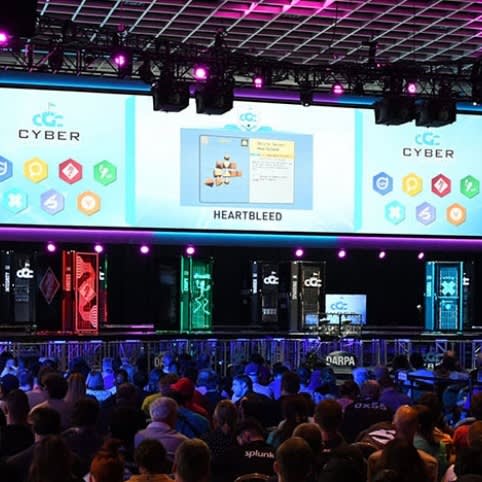
Subscribe now

Chinese AI in 2025, Wrapped

A year for the history books for the Chinese AI beat. We began the year astonished by DeepSeek’s frontier model, and are ending in December with Chinese open models like Qwen powering Silicon Valley’s startup gold rush.

It’s a good time to stop and reflect on Chinese AI milestones throughout 2025. What really mattered, and what turned out to be nothingburgers?

This piece recaps:

  • The biggest model drops of the year

  • China’s evolving AGI discussion among Alibaba leadership and the Politburo

  • The biggest swings in the US-China chip war

  • Beijing’s answer to America’s AI Action plan and the MFA’s

  • Robots

Models

The DeepSeek Moment

Liang Wenfeng lit the fire

DeepSeek-R1 came out on January 20, thwarting everyone’s Chinese New Year plans. The cost-efficient LLM, which uses a Mixture-of-Experts (MoE) architecture, caused many in Silicon Valley to re-evaluate their bets on scaling — and on unfettered American dominance in frontier models. DeepSeek is powered by domestically trained Chinese engineering talent, an apparent belief in AGI, and no-strings-attached hedge fund money (it is owned by High-Flyer 幻方量化, a Hangzhou-based quantitative trading firm). There were initial concerns that such a recipe could not be replicated by more capital-constrained Chinese tech startups, but Kimi proved that wrong with K2 in July; Z.ai, Qwen, and MiniMax followed.

We translated Chinese tech media 36Kr’s interview with DeepSeek CEO Liang Wenfeng back in November 2024, and spent much of January 2025 on the DeepSeek beat (see Jordan’s conversations on DeepSeek with Miles Brundage here and with Kevin Xu of Interconnected here). Over at the newsletter, we covered how China reacted to DeepSeek’s rise, its secret sauce, and concerns around open-source as a strategy.

DeepSeek continues to be a big deal. For one, it paved the way for an open-source race dominated by Chinese models. Nearly every notable model released by Chinese companies in 2025 has been open source. In public blog posts, social media discussions, and private conversations, Chinese engineers and tech executives repeatedly attribute their open-source orientation to the example set by DeepSeek.

On the technical end, despite some remaining mystery surrounding the exact cost of training R1, DeepSeek’s viability was a shot in the arm for Chinese labs working under compute constraints. Going into 2026, with restrictions on H200s loosened and reporting that DeepSeek is still training on smuggled Nvidia, easier access to TSMC-fabbed Nvidia chips may be just what DeepSeek needs to get their mojo back.

Manus

Big deal, but not because of the product

On March 6, an unknown Chinese startup named Butterfly Effect 蝴蝶效应 launched Manus, the world’s first general-purpose AI agent. Revisiting the “Introducing Manus” video that went viral nine months ago is a reminder of how quickly technology has developed: the capabilities Manus demonstrated — reviewing a folder of résumé PDFs, researching stocks, and comparing real estate options — are now so common that we barely think of them as new or even particularly agentic. But back then, some thought Manus was a second “China Shock” of sorts after DeepSeek. Jordan discussed Manus on the podcast with (Strange Loop Canon), Swyx from , and (Mercatus, Hyperdimensional) on the podcast here.

Soon after, Manus didn’t want to be Chinese anymore. In July, the company scrubbed its internet presence inside China, relocated to Singapore, and laid off most of its staff in Beijing and Wuhan. An April funding round led by the American venture capital firm Benchmark had been scrutinized by the US Treasury Department over restrictions on investments into Chinese AI development. Manus may have decided that its Chinese base is a worthy sacrifice if it means access to American capital and the global market.

Since then, its market strategy has been anything but understated: from exclusive parties in San Francisco to conference keynotes in Singapore, Manus is trying to reinvent itself as a global force spearheading agents. Whether or not this rebrand is successful remains to be seen; in the meantime, it is no longer the only agent in the game, as major AI companies like OpenAI and ByteDance launched agent products of their own.

Looking back, Manus was the start of a wave of Chinese AI companies aggressively pursuing international expansion in the second half of this year. With DeepSeek providing that the world was interested in open-source Chinese models, other companies became eager for a slice of the lucrative global market. Whether or not their Chinese roots limit their growth potential will be up to regulators in 2026 and beyond.

The Open Source Race

The defining paradigm

With DeepSeek shooting the first shot, this year saw a significant number of Chinese companies contributing excellent models to the open source race. In the process of promoting their models, Chinese labs have also become much less secretive.

We covered Kimi K2, a “thinking” model whose architecture is inspired by DeepSeek, in July, with much of the reportage based on blogs and comments Kimi engineers shared online. Since then, we were also able to interview Li Zixuan, director of product at Z.ai (formerly Zhipu), which makes the popular GLM models. 2026 will almost certainly see more Chinese AI companies leverage open source as a mean of expanding influence.

China and AGI

Does China believe in AGI, and is it working to pursue it? It’s a question hotly debated by observers of China’s tech scene, and this year we were fortunate to be able to feature some excellent writing that probes at this topic.

In April, an anonymous contributor staged a Platonic debate between a believe and a skeptic, laying out arguments for and against the question of Chinese AGI belief.

In May, another anonymous writer covered the Politburo “study session” on AI. We learn from the invited guest list that “Xi’s hand-chosen experts on AI seem more like the Yoshua Bengios and Geoffrey Hintons of the Chinese AI world than the Yann LeCuns”:

Alibaba, whose family of Qwen models gained particular prominence in the latter half of this year, held its annual Yunqi Conference in September, and CEO Eddie Wu delivered a landmark speech sketching out his vision for transformative AI. Guest contributor Afra Wang argues that prophetic styles signal a “vibe shift” in Chinese tech, as the industry begins to see itself as pivotal for the nation’s destiny.

The Chip War

Just make up your mind already!

For most of the year, we waited with baited breath for the Trump administration to decide whether to export advanced AI chips to China — and for Beijing to make up its mind on whether it wants them after all. All this drama led to five emergency pods! A quick timeline to refresh our memory:

  • Jan: Biden’s AI diffusion rule (emergency pod)

  • April: BIS closed loopholes in Biden-era chip and manufacturing equipment export controls, further restricting Chinese access;

  • May: Commerce Department kills the Biden Administration’s Diffusion Rule via Q&A but weirdly still hasn’t fully changed the reg…

  • July: America’s AI Action Plan called for stricter enforcement of export controls and exploration of location verification mechanisms (our coverage)

  • The Summer of Jensen (reported by ChinaTalk here and discussed with Lennart Haim and Chris Miller here):

    • July 15: Jensen Huang met Trump and secured permission to resume sales of H20s to China;

    • July 30: The Cyberspace Administration of China (CAC) summoned Nvidia’s representatives over risks of Nvidia being able to control H20s remotely, accusing them of having a “kill switch”;

    • August 11: The Trump administration reached a deal with AMD and Nvidia to resume exports of H20s and MI308s to China, with the US government receiving 15% of the resulting revenue;

    • August 12: The CAC summoned top Chinese tech firms to pressure them to reduce H20s orders and supplant with domestic alternatives;

    • August 13: Reuters reported that US officials have been secretly putting tracking devices into some high-end chips in order to track diversion to China;

    • August 21: Reports emerge that Nvidia has asked some suppliers to halt production of H20s.

  • September: BIS unveiled an Affiliates Rule, which would have hit many more Chinese companies with restrictions on chip access, including their ability to purchase legacy chips;

  • October: the Trump-Xi Summit produced a deal, with China suspending its new, dramatic rare earths export restrictions for one year in exchange for a temporary suspension of the Affiliates Rule (emergency pod)

  • November: The GAIN AI Act was introduced in the Senate, with the White House apparently lobbying against it;

  • December: Trump announced that he will permit Nvidia to sell H200s to China (emergency pod).

Huawei is Beijing’s champion for creating an alternative ecosystem to Nvidia’s. Guest contributor Mary Clare McMahon explored how Huawei is working to bypass the CUDA moat in May, and in June Jordan sat down with veteran journalist Eva Dou to discuss her new book, The House of Huawei. In October, Jordan also interviewed Chris McGuire, former Deputy Senior Director for Technology and National Security at the NSC, about where Huawei’s capabilities might be going.

The rise of reasoning models and inference training has also brought attention towards high-bandwidth memory (HBM), where China still currently relies on the Big Three: the US’s Micron, and South Korea’s SK Hynix and Samsung. Contributors Ray Wang and Aqib Zakaria covered China’s pursuit of indigenous HBM this year, exploring CXMT’s capabilities in the face of lithography export controls.

Robots

Too soon to tell…

A wave of attention gathered around robotics and embodied AI in China this year. The Government Work Report this year explicitly mentioned embodied AI for the first time, placing it alongside longstanding tech aspirations like quantum and 6G. The Ministry of Industry and Information Technology (MIIT) specifically named humanoid robots in its list of work priorities for 2025. And throughout the second half of 2025, the Chinese Institute of Electronics has been working on standards for the humanoid robots industry, responding to an apparently “urgent” need for standardization in an increasingly competitive field.

Inside China, buoyed by media attention and Unitree’s Spring Festival Gala appearance in January, competition in humanoid robots turned white-hot this year. At least ten companies released humanoid robot models. Some compete by offering increasingly low per-unit prices, while others are starting to pursue specialization in terms of capabilities.

Embodied AI sits at the intersection of China’s longstanding manufacturing advantage and recent advances in machine learning research like vision-language models (VLMs). Jordan sat down with Ryan Julian of Google DeepMind to discuss some of these advances in robotics research this September. Some industry observers in China are worried that humanoids, and embodied AI in general, will turn out to be a bubble, given the sudden rush of investment and a lack of obvious business models. In the meantime, American policymakers are beginning to fret about Chinese robotics firms’ impressive market shares and Western academia’s reliance on affordable Chinese hardware. It’s too early to tell if 2025 was the start of something seismic in robotics.

Track and field at the inaugural World Humanoid Robot Games in Beijing this year.

Policy

AI+ Plan

Big deal; results unknown

On August 28, the State Council released its “Opinion on In-Depth Implementation of the ‘Artificial Intelligence+’ Initiative” (关于深入实施“人工智能+”行动的意见, hereafter abbreviated to “AI+ Plan”). The Plan is a landmark document addressing the integration of AI into China’s economy and society and pushes for thorough AI diffusion across sectors, ministries, and regions. It does not address geopolitical competition much, but clearly portrays AI integration as a strategic priority for the country.

We dove deeply into the AI+ Plan after it was released. Its extraordinarily comprehensive scope, intense sense of urgency, and framing of open-source models as geostrategic assets were remarkable then and remain relevant now. Going into next year, however, knock-on effects will reach Beijing’s doorsteps. How far is “emotional consumption,” greenlit as an application by the AI+ Plan, allowed to go, as AI companions become more alluring and mental health issues potentially proliferate? Will the state be able to keep frustrations around unemployment at bay amid deflation? If AI capabilities are “jagged,” to quote Helen Toner, will Beijing need to adjust expectations for how different industries’ productivities will change with AI?

The Global AI Governance Action Plan

Mid-sized deal with MFA characteristics

A follow-up from the 2023 Global AI Governance Initiative, the Global AI Governance Action Plan was released on July 26 at the World AI Conference (WAIC) in Shanghai. China has long sought to create an overarching narrative for international AI governance. The Global AI Governance Action Plan should be understood as part of its campaign to win hearts and minds around the globe, particularly among unaligned nations in the developing world seeking technology partners.

In hindsight, there is a link between the third item of the Global AI Governance Action Plan, which discusses integration of AI into nearly every industry internationally, and the “AI+” plan for domestic AI diffusion that was released later in the year (to be discussed next). Sector-agnostic, large-scale adoption is a conceptualization of AI that is articulated consistently in Chinese tech policy.

Beyond this, however, most of the other items in the Global AI Governance Action Plan are yet to be realized. Without naming the US, the Plan stresses “global solidarity” and warns against fragmentation. China seeks an active role in international AI governance, whether in standards, environmental management, or data sharing. Diplomatic currents move slowly, and we will likely see more AI policy outreach from Beijing towards developing countries in the coming months and years.

Labelling Requirements, and How to Evade Them

Nothingburger, sadly

Just one day after Manus on March 7, the Cyberspace Administration of China (CAC) released a draft of its “Measures for Labeling of AI-Generated Synthetic Content” (人工智能生成合成内容标识办法), which later came into force in September. The Measures require internet service providers to explicitly label AI-generated content on users’ feeds and add implicit labels to the metadata of synthetic content files. Platforms, in theory, should make it known to users whenever the latter interact with potentially AI-generated content, as well as make sure that creators proactively label their uploaded content as AI-generated. This makes China one of the first jurisdictions, and certainly the largest, to implement labelling or watermarking rules for AI-generated internet content.

The CAC is ostensibly well-placed to roll out AI content labelling regulations, given its unparalleled regulatory reach and China’s competitive position in AI technology. However, after a rush of actions by companies to comply in September, momentum has fallen by the wayside. ChinaTalk will have more coverage on this soon, but in a nutshell, the landscape for AI content labelling enforcement is uneven at best. (Anecdotally, I see unlabelled, AI-generated content on Xiaohongshu and WeChat almost every day. Especially in the case of AI-generated text, labelling is next to nonexistent.)

AI-assisted and -generated content is now so much more pervasive online than nine months ago, whether on global platforms or on the Chinese internet. It’s time to ask: what was the point of labelling as policy? Is it to actually protect users from misinformation and engender trust, or is it just a stopgap measure that lets platforms evade responsibility? What kinds of AI usage merit which kinds of mandated disclosures?

A clearly AI-generated video on Rednote/Xiaohongshu. The user’s self-chosen name is “Mimi Loves AI,” but apart from that there is no other indication that the video is AI-generated.

ChinaTalk is a reader-supported publication. To receive new posts and support our work, consider becoming a free or paid subscriber.

EMERGENCY POD: Trump to Sell H200s to China

Here to discuss is of the Silverado Policy Accelerator.

We get into:

  • Why this is, in Dmitri’s words, “a disaster”

  • There are military balance of power implications for selling chips to China

  • Why the rest of the AI ecosystem is against selling chips to China, Why Trump made this call anyway, and why SME export liberalization might be next

  • Where the GAIN Act goes from here

Listen now on YouTube or your favorite podcast app.

Jordan Schneider: Let’s first toast the unfortunate U.S. Attorney for the Southern District of Texas, Nicholas Jon Ganjei. On Monday morning, he proudly issued a press release for his cool-sounding “Operation Gatekeeper,” which intercepted $160 million worth of Nvidia H100s and H200s.

That afternoon, President Donald Trump announced on Truth Social that the United States would allow Nvidia to ship its H200 products to approved customers in China. Dmitri, please make sense of this for me.

Dmitri Alperovitch: There’s no way to sugarcoat this — it’s a disaster. This isn’t only about the Department of Justice. The U.S. Attorney General’s statement highlighted how critical AI is to military applications. The President’s own AI action plan discussed how the United States must aggressively adopt AI within its armed forces to maintain its global military preeminence, while ensuring that the use of AI is secure and reliable. This technology is essential to U.S. military dominance and the successes of the U.S. Intelligence community.

You have to give the administration credit — it is doing a lot to ensure all levels of the U.S. government are adopting AI. Why we would enable China to do the same is beyond me. Are we going to sell them aircraft carriers or Virginia-class submarines? Should we let them into AUKUS? This is effectively what we are doing.

NVIDIA CEO Jensen Huang delivers remarks next to U.S. President Donald Trump at an 'Investing in America' event in Washington, D.C., U.S., April 30, 2025. REUTERS/Leah Millis
Donald Trump and Jensen Huang at the White House, April 30, 2025. Source.

It is outrageous that Jensen Huang has been able to pull the wool over the eyes of people in government and on Capitol Hill, convincing them that arming our primary adversary — the one we are unquestionably in a cold war with — is somehow good for America. I understand it’s good for Nvidia’s sales and for him personally, but it is a disaster for our national security.

Jordan Schneider: What I find baffling is the contradiction in Nvidia’s public messaging. Jensen Huang and his company argue that their technology will revolutionize every conceivable industry, all requiring massive amounts of GPU capacity. But when asked directly about the military implications of selling these chips, Huang downplays the risk. He suggests that China’s military will acquire the necessary chips regardless and claims they are too sophisticated to use American technology for sensitive, dual-use applications. It’s ludicrous that this technology is transformative for every field except for the military.

Dmitri Alperovitch: It doesn’t make sense. AI will transform everything. Even in civilian uses, do we want China to win in automotive, energy, and everything else? Because that’s what you’re enabling by selling chips to them. The primary concern is their military and intelligence services, but we are also in an economic competition. I would rather kneecap Chinese competitors to enable our own companies to succeed. Why would you do otherwise?

This is equivalent to selling supercomputers to the Soviet Union in the 1970s. No one even considered doing that. You could make the case that it would support Soviet agriculture and feed starving people, but no one said that because those same computers could be used for nuclear weapons testing and countless other military applications. There was no debate about it — it was understood to be a bad idea.

50 years later, we’re in a cold war. This is unbelievably shortsighted — putting profit above national security. Jensen Huang said if you’re a China hawk, you’re unpatriotic and un-American. I think selling supercomputing capabilities to the Chinese military is as unpatriotic and un-American as it gets.

Jordan Schneider: Jensen, if you’re listening, you’re invited to come on ChinaTalk anytime to make your case.

Dmitri, what’s telling is that the rest of the tech industry is finally pushing back. After months of staying quiet for fear of losing access to Nvidia chips, major players like Microsoft and AWS are supporting measures like the GAIN Act. The benefit of selling chips to China is mostly limited to Nvidia. U.S. hyperscalers and AI labs now face a powerful new competitor for limited chip manufacturing, driving up prices. The upside seems narrow, especially when Nvidia’s strongest argument — that the world, including China, will be locked into CUDA — seems far-fetched.

Dmitri Alperovitch: Nvidia’s argument is knowingly false. The GAIN Act is the ultimate ‘America First’ act. It stipulates that before chips are sold to countries of concern like China, we must ensure that U.S. demand is satisfied. American companies are first in line. How anyone could argue against this is beyond me.

The Act doesn’t say, “we’ll cut China off completely to ensure their military doesn’t get chips” — we’re saying, “let’s make sure American companies have priority.” It’s a no-brainer. I’ve talked to hyperscalers who are supportive of this act, and even other chip companies are saying they agree with the concept. The fight wasn’t about the details — the fight was a push for no restrictions on sales to China, which is unbelievable.

Jensen’s argument that the U.S. wants to make China addicted to the American tech stack is ridiculous. There is no addiction — chips aren’t cocaine. You can see this today with every single hyperscaler — Google, Amazon, Microsoft with its Maia chip, and now Meta with its own custom chips — all saying they are moving off CUDA. Many already are.

The top two frontier models, Claude and Gemini, were reportedly trained on Amazon’s Trainium and Google’s TPUs, respectively. There aren’t enough chips to go around, and for cost and strategic reasons, pretty much every frontier company is now using a multi-chip architecture — CUDA, Trainium, TPUs, and others. There is no addiction. Companies were able to make that switch in months, it’s easy — this is software and APIs. You can give AI one API and tell it to rewrite it in the form of another. It’s a trivial task.

Now we’re selling China H200s. This is probably the start of a broader concession on Blackwell, and then Rubin. Jensen won’t stop at the H200 — he will want to sell everything. The Chinese want to receive the latest and greatest chips, not only the Hopper generation. We’re going to sell them these chips, and they’re going to build competitive models. DeepSeek, Qwen, and Kimi are already good — they’re at most 12 months behind. They will quickly catch up and become leading models.

China will keep investing in Huawei because the Chinese are not stupid. Jensen says that if we don’t sell them chips, they’ll invest in their own, like Huawei’s Ascend chips. They’re doing that anyway. Xi Jinping is going to demand it, which is why you’re seeing China’s response that they will restrict the importation of H200s to ensure there is still domestic demand for Huawei chips.

Huawei’s Ascend chips will eventually catch up, and Chinese companies — supposedly “addicted” to the American AI stack — will switch over in days or weeks. What will we have achieved? We will have relinquished our lead in frontier AI models, and eventually, they’ll have chips that replace Nvidia’s. It is myopic and stupid for Nvidia’s own business model. They are focused on the next quarter and the next year versus a couple of years from now when China dominates both chips and frontier models.

Jordan Schneider: If this goes through, and tens of billions of dollars worth of chips are exported to China, and the future you portend comes true, will there will be a political price to pay? This was a major talking point for Trump on his campaign — “Winning the AI race” and “American AI dominance”. A year or 18 months from now, if China is releasing crazy new AI-powered technologies that were all trained on Nvidia chips, that will be a tricky political dance. Nice calls from Jensen won’t be enough to smooth that over.

Dmitri Alperovitch: We are already there. Almost a year ago, there was a brouhaha over the release of DeepSeek. The surprise was unwarranted: it shouldn’t have shocked anyone paying close attention. But people reacted with, “Oh my God, the Chinese are catching up.” Of course they are. Deepseek was built on H100 chips, which, until recently, were not restricted. There will be another DeepSeek moment, but worse. DeepSeek was good, but it was still behind frontier models. The next models will be better.

Sam Altman is in panic mode over Gemini 3 because its capabilities eclipse his models. This will happen to all American frontier models and to the country more broadly. The Chinese will crush us with cheaper power, tons of researchers, and massive state subsidies. The one thing they were missing — compute — will now flow into China.

Jordan Schneider: The Financial Times reported Chinese companies were training models in Malaysia or Singapore. That’s not ideal and not as efficient as AliCloud’s operations in China. There, they can rapidly deploy numerous H100s while benefiting from straightforward communication, a reliable power grid, and lower energy costs.

Dmitri Alperovitch: We should have been cracking down on H100 access in Malaysia and elsewhere. Chips shipped directly to China will be prioritized for high-side intelligence and military networks. Chinese agencies can’t use public clouds in Malaysia for their classified data. But now they can grab those chips from private companies in China and prioritize them for military purposes, as they do with everything else.

Jordan Schneider: That seems like the most salient reason China would want the chips inside the country. Training models in Malaysia is annoying, but only 10%-annoying. There are also data privacy restrictions, which they can get around if they’re serving domestic consumers in China. What do they want complete control of their chips for? The sensitive stuff that they would never trust a random Singaporean cutout to do for you.

Dmitri Alperovitch: The U.S. government cannot get enough chips. Agencies have told me they are compute-dependent for inference and cannot get enough chips. Now we’re shipping part of that limited supply to China. How does that make sense?

Jordan Schneider: Let’s flip this around.

Dmitri Alperovitch: One more point. The H200 is from the Hopper generation, not the latest Blackwell generation, but it has High-Bandwidth Memory (HBM). We have a current ban on the export of HBM to China. The H200 decision calls HBM protections into question, as the technology is already being exported on Nvidia chips.

We may see a cascading failure of export controls. I am hearing of discussions about relaxing export controls on semiconductor manufacturing equipment, which would make it easier for Huawei to manufacture Ascend chips in China. I hope that doesn’t happen, but there are people in the administration pushing for it.

Jordan Schneider: A year ago, the administration was being pressured to restrict chip technology to China. First there was the H20 situation, then the Laura Loomer saga and teh “twilight of the China hawks.” Lawmakers Vasant, Greer, and Rubio even intervened right before the Xi Jinping meeting to urge against concessions. Now, only a month later, this policy has been enacted without any clear reciprocal action from China other than continued soybean purchases.

Dmitri Alperovitch: I don’t know.

Jordan Schneider: To be determined. The main thing they’ve done recently is bully Japan. That’s the only big new development. And now we’re deciding to throw this other carrot into the mix. It’s weird.

Dmitri Alperovitch: The crazy thing is that China isn’t even asking for this. It didn’t come up in the Trump-Xi meeting. This is a concession to Jensen Huang, enabling Nvidia to make money at the expense of U.S. national security. I could understand it if this were a trade to get something we desperately want from China, like rare earths or a commitment not to invade Taiwan — though they would never do that. But it’s not. We are getting nothing for it. It is a favor to Jensen, to China, and to the PLA.

Jordan Schneider: It’s not even a big favor to my 401(k) — it only went up by two and a half percent. Come on.

Dmitri Alperovitch: Nvidia is in trouble because its U.S. market is going to shrink. Its primary customers, all the major hyperscalers, are building their own chips and want to move off of Nvidia’s platform. It’s desperately looking for another market, in China and the Middle East. That is why the company is pushing so hard for these export controls to be lifted. Jensen probably sees this is an existential problem.

Jordan Schneider: Dmitri, I appreciate your energy. I am so tired of these guys. I have to give Jensen credit for his stamina in making those calls and fighting through this. He has delivered twice now.

Dmitri Alperovitch: And he killed the GAIN Act.

Jordan Schneider: The man’s on a roll — he’s scored a touchdown.

Dmitri Alperovitch: And by the way, he’s not only going after the China hawks. The entire industry — from the hyperscalers to other chip companies — is on the other side of the ledger. He’s single-handedly beating everyone in this town. It is astonishing.

King Jensen

Jordan Schneider: Last year I asked you why more rich people don’t invest their time and energy to shape political outcomes. The thesis was that if you put the time and work in, you can get results. This is Exhibit A for CEOs trying to push through initiatives that may not have polled well initially. If you put in enough legwork and time on the phones, you can make things happen.

Dmitri Alperovitch: You have to give him kudos — he’s done incredibly well at the influence game here in D.C. He is putting in the time, meeting with anyone. He even said he’ll meet with Elizabeth Warren, one of his chief critics on the Democratic side. He’s calling the President almost daily, it seems. He got this done by badgering the President, repeating, “Get me my chips, get me my chips, get me my chips.” Donald Trump finally said, “Fine, here you go.”

Jordan Schneider: This development suggests the administration dismisses both the national security and the economic arguments for restricting this technology. It ignores the reality that these chips are vital in a strategic military competition.

Economically, it also overlooks the fact that strengthening Chinese competitors will harm American industry for decades. We should be consolidating the technology that drives productivity, not ceding it to a rival.

Dmitri Alperovitch: I don’t agree. The majority of this administration is opposed to this decision and does believe we are in a strategic competition with China. Call it a cold war. I know people in the administration agree. The president was convinced that selling China American AI stack is good for American business, and that Chinese firms will be addicted to it. But it’s a nonsensical argument. Jensen lied, because there is no addiction to the stack — it’s easy to move off of it. Unfortunately, he has been able to carry the day for now.

Jordan Schneider: This isn’t selling the “stack.” Selling the stack would be Nvidia chips run by AWS or Google, running Western models. This is selling the lowest level of the stack. I guess if the semiconductor manufacturing equipment (SME) relaxations come true, we’ll be selling the two lowest levels.

Dmitri Alperovitch: This is the equivalent of selling Ford cars to China in the hope China will be “addicted” and not prefer any other car. It is stupid on its face.

Jordan Schneider: It’s not even selling the Ford car — it’s selling the axles.

Dmitri Alperovitch: That’s all it is. There are huge problems with this decision. First, this is enabling the Chinese military and intelligence services, which are adversaries we could one day be at war with. The DoD is planning for a fight with China and stressing the need to overmatch its capabilities. Second, it puts Chinese firms on equal footing with American firms. Why would we do that? It hurts American companies and the American economy.

Jensen’s argument against export controls is inconsistent with his own business practices. He claims controls only encourage strategic competitors to innovate. By that logic, he should open-source his proprietary CUDA framework to AMD, because God forbid they develop a superior alternative. He doesn’t practice what he preaches. He is protecting his technology with patents and trade secrets, like any other company. Yet, he insists the U.S. should use a different strategy at a national level. It’s insanity.

Demand for chips in the U.S. already outstrips supply. Diverting this limited resource to a strategic military and economic competitor is a self-defeating act — we are actively surrendering the Cold War. I’m not an “AI doomer” — this technology is profoundly important for economic and military power. That is why there is no valid argument for helping your main rival develop it.

Jordan Schneider: Hey, White House. Hey, Nvidia. If you want to come on ChinaTalk and make those arguments, we could hash it out here.

Maybe we’ll be saved by the Ministry of State Security, who convince themselves that this is a crazy CIA plot to backdoor hack the PLA. It’s a longshot.

An Institute for Progress chart shows the U.S. and its allies currently possess a large compute advantage over China, roughly a 13-to-1 ratio. Selling large volumes of chips to China could drastically change this balance.

The main question is how Huawei’s domestic production compares to Nvidia’s global output from its fabs. If we withhold advanced equipment and AI chips from China, we can confidently expect a continued U.S. advantage. If these sales go through, it’s unclear who will lead in compute power in next 5 to 15 years.

Dmitri Alperovitch: It will be China, because they’re going to subsidize the hell out of this and we won’t.

It’s not over. Capital Hill is upset about this. Don’t count out Congress, the GAIN Act isn’t dead yet. There will be a fight to prioritize chips for American companies and to see what restrictions are possible — maybe export control reviews by Congress. There are bills floating around.

Also, Donald Trump often changes his mind. Others may convince him to revert this decision. The good thing about Donald Trump is that you’re never done. Whatever happens today can be undone tomorrow, and we need to take advantage of that.

Jordan Schneider: That’s the great irony in all of this. Given the political hesitancy on both side of the aisle and the possibility of Trump changing his mind, Alibaba, Tencent, or ByteDance are unlikely to bet their firms’ futures on Nvidia chips. This is going to be a political football, and one Truth Social post won’t end it. The strategy of “addicting Chinese firms” over the long term — setting aside Beijing’s own goal to indigenize chip production— won’t work.

Dmitri Alperovitch: Beyond politics, this strategy fails for basic business reasons.

China won’t get enough chips. You have Jensen acting as king, allocating a scarce supply of Nvidia chips to hyperscalers and now Chinese customers. Since there isn’t enough to go around, that scarcity forces them to rely on other chips.

No one wants to pay the “Nvidia tax” or be completely dependent on a single monopolistic supplier. Everyone wants to diversify, which is why you see them all building their architectures on multi-chip designs. Committing 100% to CUDA, politics aside, makes no commercial sense.

The Magic of AI

Jordan Schneider: Let’s close on some vibe-coding. I can’t be too depressed going into the holidays. Dmitri, I hear you’ve been having some fun with Opus 4.5 recently. What’s it done for you?

Dmitri Alperovitch: It’s magic. Anyone with a bachelor’s degree, not even in a technical field, can be a software engineer within three years, if not sooner. It is so easy to develop applications. I’ve built two mobile apps in the last month and a web app for personal use. Opus 4.5 is magic. I built a mobile app yesterday in 15 minutes, and most of that time was spent on setup, authorizing it on the Apple Store, and configuring my device. The capability is incredible, and it’s improving everyday.

This is the innovation we have to look forward to, and we want to make sure our American companies, our government, and our citizens are the primary beneficiaries. We want American frontier companies to be the best, and then we can restrict these models from actors we don’t want to have access.

I’m on the board of a number of companies, and I’m telling them all to start measuring their engineers on their use of AI in development tasks. Anyone who isn’t using AI should be considered for a performance improvement plan (PIP). This is the next hammer. It’s like when hammers were discovered tens of thousands of years ago — whoever didn’t use them fell behind. This is an unbelievable productivity tool.

One of my companies has a software engineering team developing their products. They’re also pulling people from other departments, like security, to help build the next module in Claude or other models. These teams are creating prototypes, and even production-ready versions. It’s unbelievable how you’re able to raise the productivity of everyone, not just software engineers.

Jordan Schneider: I want to say the same for analysts, think tankers, Hill staffers, and folks in the executive branch. It is a superpower. We were having a debate about whether Huawei can backfill Nvidia and what the ratio of chips would be. It took me 45 minutes to build an entire data visualization with sliders for different assumptions. How much HBM will China get? How tight will the export controls be? How much will they improve using DUV? How far behind will Huawei’s chips be compared to Nvidia’s?

Beyond the fun personal applications, it’s the “bicycle for the mind” aspect that people should experience, especially for thinking through policy problems. If you’re wrestling with a knotty issue that has numbers, contingencies, or second-order effects that are hard to hold in your head, ask Claude to help you visualize it or see the other side of the argument.

The hallucination issue is almost gone. You still need to fact-check the details and trust your gut if something seems off, but the improvement has been dramatic.

Dmitri Alperovitch: It depends on what you’re using it for. At some level, it’s garbage in, garbage out. If you’re training a model on Reddit and asking about something very esoteric, you’re not going to get a good answer.

Jordan Schneider: You are doing yourself a disservice if you haven’t spent time with these models. Try to integrate them into your day job. You should be hanging out on Cursor and Claude, trying to build little tools and apps to make your workflow easier or allow you to do new things.

Dmitri Alperovitch: Building apps was nostalgic for me. It brought back the emotions I felt as a kid in the 1980s when I learned programming. It was an amazing feel coding your first “Hello, World!” program or, in my case, a simple game in QBasic. The magic of seeing it run was a special feeling, and you felt so proud and accomplished.

This took me back. It made me think, “Oh my God, this is magic.” In the ‘80s and ‘90s, you had to have technical expertise and learn a programming language. You still need some technical skills today, particularly when you’re debugging or if you don’t understand how Swift works or how to deploy iOS apps. But all of that is going away.

Jordan Schneider: It’s going away.

Dmitri Alperovitch: The accessibility of this technology changing everything. For years, we thought only nerds could access the magic of programming. Now, everyone can, and that is going to revolutionize everything. The interesting thing about AI is not that it’s going to make tasks easier and faster, but that it’s going to make other things that you would never, ever do before accessible.

The cost of software engineering iwill drop to zero. Everyone will be building dozens of apps — for their grocery list, for managing their kids’ schedules, whatever it may be — because it’s so easy. You can custom build something that would be useful only to you, with no commercial value. Even for coders, we wouldn’t spend our time building those apps it was a lot of effort. Now, that effort is gone.

Jordan Schneider: The activation energy for doing a side project has dropped to zero. What I’m excited to see created, Dmitri, is the “senior policy official simulator.” That’s a classic nerdy ChinaTalk idea.

Dmitri Alperovitch: So nerdy.

Jordan Schneider: But you read all these memoirs from government officials. Jake Sullivan said the one thing you can’t experience beforehand is being in a crisis. You can have a Tim Geithner level — all of a sudden it’s 2009, and it’s not like you’ve lived through a financial crisis before.

Having a visceral experience — a VR Situation Room meeting, a VR flight on the plane with the president trying to convince him not to sell chips to China — getting reps in those high-stakes political, personal, and commercial situations could be transformative. It doesn’t have to be for politics and national security. We haven’t had a nuclear crisis in a long time.

Having the deeper, emergent human capabilities that AI simulations of these events can provide seems like a big upside for human competence when dealing with crises in the future. I’m excited about it. Rockstar Games, if you’re out there, give me a call. We can do some cool stuff together.

Dmitri, always a pleasure. Thank you so much for being a part of ChinaTalk.

Dmitri Alperovitch: Thanks for having me, Jordan.

ChinaTalk is a reader-supported publication. To receive new posts and support our work, consider becoming a free or paid subscriber.

Mood Music

Second Breakfast: Trump’s National Security Strategy

Tony Stark and Justin Mc return for Second Breakfast. In Part I, we break down the Trump administration’s new National Security Strategy (NSS).

Today, our conversation covers…

  • What a National Security Strategy is, and why they matter,

  • Controversial new inclusions in Trump’s NSS, including on Taiwan policy and the “reinvigoration of American spiritual and cultural health,”

  • How to reconcile the document’s ambitious vision for deterrence with the reality of Trump’s China policy,

  • The mixed signals this NSS sends to U.S. allies,

  • What Buffalo Wild Wings can teach us about competition with China.

Listen now on iTunes, Spotify, or your favorite podcast app.

Ends, Means, and One China

Jordan Schneider: Tony, give us the 101 on what a National Security Strategy is, and then we’re all going to go around and say one nice thing about it.

Tony Stark: There are three major U.S. government national security strategy documents. The first is the National Military Strategy, which applies to the uniformed services but is rarely noticed outside the Joint Staff.

Next is the National Defense Strategy (NDS), which is the Pentagon’s primary strategic document. It’s the one most people in the field care about because it’s a Cabinet-level document, even if it isn’t overtly political. Legally, a new NDS is required every four years, and developing a new NDS takes 6 to 18 months. New administrations are given a little extra time — about a year and a half — to publish their first one.

The NDS is written at the “action officer” level, which includes General Schedule (GS) employees, field-grade officers, contractors, and think tank experts. Then it is passed up to the Deputy Assistant Secretary level in the Office of the Secretary of Defense (OSD) — their equivalents are three-star generals — and then to the commands, the undersecretaries, and so on.

Finally, there’s the National Security Strategy (NSS), which is historically the most political of the documents because it comes out of the White House, not the Pentagon. The NSS is a guiding vision of the administration’s goals and incorporates all elements of national power. Historically, this is also the blandest document — its wide scope reads more as a political statement than a defense plan. The new Trump administration just released its first NSS. While the NDS has been ready for a while, they were likely waiting to publish the NSS first.

At 29 pages, the new NSS is the right length for a public national strategy document. There are usually non-public, classified annexes and other materials.

Justin McIntosh: The document correctly focuses on economic re-industrialization and re-energizing the defense industrial base — issues we’ve previously discussed. It puts those ideas forward in its “answers” section. But…

Jordan Schneider: No “buts.”

Justin McIntosh: Okay! Yes, that’s where the focus should be.

Jordan Schneider: The straightforward questions in the document are nice. The Q&A rhythm is interesting and provocative. It’s focused. There’s a section of questions like, “What should the U.S. want overall?” and “What does the U.S. want from the world?” There’s no artifice about how transactional it’s going to be — what you see is what you get.

Tony Stark: If I were framing a strategy document for the American people, this is how I would structure it. A clear layout saying, “This is what we want. This is why we have a strategy. What are the ends, ways, and means? What does that mean?” It’s written in a clear, accessible way, without many buzzwords. Although what replaced the buzzwords wasn’t great.

Jordan Schneider: Avoiding policy jargon in this document seems to have been a conscious choice.

Justin McIntosh: But it lacks nuanced, impartial language and contains statements that our adversaries will exploit. A comment on the necessity of securing borders said that any sovereign nation has the right to control them. The PRC and Russia can easily seize on a statement like that. This is a kind of language previous administrations have avoided, because they didn’t want a quote interpreted as agreeing with the Chinese or Russian position.

U.S. President Donald Trump and Chinese President Xi Jinping talk as they leave after a bilateral meeting at Gimhae International Airport, on the sidelines of the Asia-Pacific Economic Cooperation (APEC) summit, in Busan, South Korea, October 30, 2025.
Trump and Xi chat in South Korea, October 30, 2025. Source.

Tony Stark: The document does not change U.S. policy towards Taiwan. If anyone tells you it does, they are wrong. However, it does give the PRC political and legal ammunition. They can now say, “But you said you wouldn’t interfere in the internal affairs of others,” pointing to our supposed principles of non-interventionism.

The document also says we do have to intervene sometimes. This amounts to talking out of both sides of your mouth — we reserve the right to do whatever we want. The “flexible realism” section is a fancy way of saying we’ll do whatever is convenient. Historically, that has been U.S. foreign policy in practice, but that doesn’t mean it’s what we should aspire to.

Justin McIntosh: I don’t have a problem with them laying out the “ends, ways, and means” discussion up front, but it has limitations. That linear framework is well-suited to military decision-making, but a national strategy needs to be more pragmatic and flexible. At the national level, you control all the resources. You can marshal all those resources toward any goal that is deemed important. That makes the “ends, ways, and means” calculation irrelevant because you will find a way to make it happen.

Jordan Schneider: The Trump administration’s focus on “ends, ways, and means” raises the question — how weak do they think the U.S. really is?

Reducing the U.S.’s power to an “ends, ways, and means” calculation only works in military contexts — counting ships and battalions to see how many wars you can fight. The U.S.’s power to achieve economic and national security ends is elastic. The means to those ends can grow dramatically when the president builds a consensus around them — once the nation decides something must be done, it finds the capacity to do it.

It’s a mistake to define goals downward because those goals inevitably change. Consider the border — the Biden administration didn’t prioritize the issue and struggled to find the means. The Trump administration’s intense focus on the border unlocked congressional funding and operational capacity. The resources didn’t appear from nowhere — the will to use them did. This dynamic applies globally. To believe the U.S. cannot act because it lacks on-hand capabilities is a severely limited way of thinking about our power to shape events.

Mixed Signals

Tony Stark: The document’s focus on military and economic power isn’t unique, but its goals do not align with a realistic budget. It calls for both bolstering deterrence in the Indo-Pacific and shifting our entire global military posture to the Western Pacific, which would drain resources from Europe and Latin America. We have to assume this will happen.

This creates deep concern for our allies, but that matters for the U.S. too. The Germans will be wildly pissed about how they are described in the document. Asian allies are told to “do more,” a demand that ignores their significant recent efforts. Getting allies to increase defense contributions was an accomplishment of the first Trump administration that continued under Biden. The call to “do more” is now an outdated talking point — they are doing more. Japan is considering exporting weapons for the first time.

Justin McIntosh: Worse still, when allies make the kinds of statements the U.S. wants — like Sanae Takaichi declaring a PLA incursion into Taiwan a national security threat to Japan — the administration’s response is silence. Based on the reporting of Xi and Trump’s call, it appears the U.S. did not affirm that position. Instead of backing Japan’s strong stance, the message was to “calm it down.”

The Trump administration is sending mixed signals. Does it want allies to spend more on defense, develop a stronger defense mindset, and care more about their own security, or not?

Jordan Schneider: Let’s do some reading from the scripture here.

“A favorable conventional military balance remains an essential component of strategic competition. There is rightly much focus on Taiwan, partly because of Taiwan’s dominance of semiconductor production, but mostly because Taiwan provides direct access to the second island chain and splits Northeast and Southeast Asia into two distinct theaters. Hence, preventing a conflict over Taiwan, ideally by preserving military overmatch, is a priority. We will also maintain our long-standing declaratory policy on Taiwan, meaning that the United States did not support any unilateral changes to the status quo in the Taiwan Strait.”

From that, it sounds like a good idea for Japan to make its role in deterrence transparent. How seriously should we take any of these documents?

Tony Stark: I wish Eric were here for another briefcase-carrier rant. In the 2010s, a gripe of mine was hearing mainstream national security people, the ones in the know, say strategy documents don’t matter. That is a clear indicator they either haven’t written a good strategy document or haven’t marshalled the resources and people to execute it. I’ve occasionally had to metaphorically beat somebody over the head with a strategy document.

One problem is that people don’t read strategy documents. I have been in meetings with theater-level commands who’ve asked me, “What are you quoting from?” And my response is, “The National Defense Strategy.” They’ll ask me to send it to them. It’s a public document.

Justin McIntosh: “No, no, we meant the classified annex, Tony. Obviously, we’ve read the public one.”

Tony Stark: “The super-secret one that wasn’t even fully distributed to your command.”

Justin McIntosh: The document doesn’t matter, and there isn’t a robust national security apparatus anymore — at least in this administration — it’s as if the President is the sole decision-maker. Trump has consolidated his counsel — it’s a smaller group than it was.

Another problem is that the strategy document’s promises are often the opposite of what the president himself has done. The strategy specifically addresses deterring propaganda aimed at Americans, clearly referencing China, and yet TikTok is still legal here.

When X turned on a filter showing where accounts came from, it revealed so-called Mongolian accounts weren’t Mongolian, and supposed Uyghur accounts were run from mainland China. Pro-MAGA accounts were operated from VPNs in India and China to target Americans. Where was the action on that propaganda? We kept TikTok, and no one has suggested the government force X to shut down foreign influence accounts. These goals are in the document, but the follow-through is missing.

Tony Stark: Every administration struggles with inconsistencies between its strategy and actions. That’s the nature of a democracy — it’s the nature of any government worldwide. This strategy document’s main issue is its unusual use of national security language. The strategy says the administration opposes disinformation, but what do they consider disinformation? There are direct quotes that frame concepts like “de-radicalization” and “protecting our democracy” as a fake guise — that inclusion is wild.

On foreign policy, the document critiques the U.S. for focusing too much on projecting “liberal ideology” into Africa — it’s unclear if that means big ‘L’ or small ‘l’ liberal. Let’s assume it’s both. The most stunning part is that the National Security Strategy of the United States explicitly frames the concept of “protecting our democracy” as a ruse. That is insane.

The parts of a strategy document that truly matter are the ones that diverge from the previous strategies. While I’ve critiqued previous strategies, this document is on another level.

Justin McIntosh: The large section on China is a good example. It would be great if the administration enacted many of the listed actions — I’d be all for it. The cognitive dissonance between the strategy document and the administration’s actions is troubling.

Jordan Schneider: Six months ago, the AI action plan included interesting language about new export controls on semiconductor manufacturing equipment. Those controls are paused because Stephen Miller’s current job is to avoid upsetting China. This directive came after a Chinese official was angered by a Financial Times article on Alibaba and the PLA. Stephen Miller’s Twitter banner is a picture of him shaking hands with Xi. This is hard to square with official strategy documents demanding military overmatch.

You can try to connect those dots and argue that the goal is to keep the economic relationship calm while we re-industrialize and build up our military. Okay, maybe. But that still doesn’t explain the U.S NSS includes sovereignty language seemingly copied and pasted from Putin’s playbook.

Traditional Values, Universal Wings

Tony Stark: The document is also very undergraduate. That is not a critique of the accessible language — I also try to write for a wider audience — but of the concepts themselves. If an undergraduate at the University of Texas at Austin were assigned the paper topic — what should a national security strategy be — this would be that paper.

Jordan Schneider: There are 14 bullet points where each sentence is about seven words long.

Tony Stark: What does this all mean? The language in the National Security Strategy should not shock anyone — it’s consistent with the administration’s usual rhetoric. What has changed is that this language is now the official guidance — it has leverage in bureaucratic fights. The influence may not be immediate, but it will be cumulative. The real test will be when the National Defense Strategy comes out. Someone who worked on it texted me last night and said, “Well, they set the bar low, so this is great for us.”

Justin McIntosh: They’re being pragmatic. What troubled me was the traditionalist language at the end.

“Finally, we want the restoration and reinvigoration of American spiritual and cultural health, without which long-term security is impossible. We want an America that cherishes its past glories and its heroes, and that looks forward to a new golden age. We want a people who are proud, happy, and optimistic that they will leave their country to the next generation better than they found it. We want a gainfully employed citizenry—with no one sitting on the sidelines—who take satisfaction from knowing that their work is essential to the prosperity of our nation and to the well-being of individuals and families. This cannot be accomplished without growing numbers of strong, traditional families that raise healthy children.”

Tony Stark: “We will use every means to protect our precious bodily fluids.”

Jordan Schneider: Wait, if you’re raising a disabled child, or if your child is sick with a fever, then you are not contributing to the restoration of American cultural and spiritual health? Wow.

Tony Stark: That is what RFK Jr. said — if your kid is sick, that’s not a good societal contribution.

Justin McIntosh: His miasmas are off, or whatever non-germ-theory medicine he peddles but doesn’t practice.

Tony Stark: The Midi-chlorians from Star Wars.

Justin McIntosh: That language is reminiscent of what you see from Putin and China’s family planning policies. It is the exact type of language that Xi and Putin use to justify pro-natalist policies and promote traditional families and traditional gender roles. Reading about the one-child policy in Dan Wang’s Breakneck is heartbreaking if you have children. It’s striking how similar the NSS’s language is to China’s early discussion of the one-child policy.

Tony Stark: In a reasonable time, there would be ten articles asking, “What does this mean? How is the government going to encourage people to have more kids?” Now, it’s something I don’t even want to read about.

After COVID-19, as the “China Rising” narrative was gaining prominence in 2021 and 2022, discussions began in national security circles about how the U.S. population is numerically outmatched. Although we are solving that problem with robotics, it was a talking point among traditionalists. They argued that the U.S. won the Cold War by embracing traditional values. That’s not how we won. We won thanks to Skunk Works and the Soviet Union’s economic mismanagement.

This argument has surfaced before in national security circles — it’s not a new phenomenon. The other common concern is protecting our food supply — I’m surprised it was not mentioned in the document. But, to quote a former coworker of mine, “We have Buffalo Wild Wings and the Chinese don’t. I think we’re okay.”

Cheerleaders perform during a baseball game at Taoyuan International Baseball Stadium in Taiwan, May 2018. Source.

Jordan Schneider: That would be a great cultural export. Maybe that’s what the world needs.

Tony Stark: Are there Buffalo Wild Wings locations in Shanghai or Beijing?

Justin McIntosh: I’m sure there’s one in Taipei. [Note from Lily: Taiwan does not have a Buffalo Wild Wings, but it does have three Hooters locations.]

Tony Stark: Is the food different, or is it universal?

Justin McIntosh: It’s universal, but like McDonald’s in Japan, it’s better.

Tony Stark: Another American cultural victory. We don’t need to change anything.

Justin McIntosh: You can watch a baseball game while eating Buffalo Wild Wings in downtown Taipei.

Tony Stark: During COVID, my former American University professor, Justin Jacobs, uploaded all his lectures on Spotify — excellent lectures on the history of China and Japan. He has an episode about why baseball is played in Taiwan but not on the mainland. He discusses the Japanese occupation of Taiwan and the differences in Confucian culture and masculinity. Prof. Jacobs is an amazing resource for East Asian history.

Jordan Schneider: I asked Gemini what other regimes this resembles. It suggested Vichy France, Fascist Italy, and modern Hungary.

Justin McIntosh: I wonder what Grok would say…

ChinaTalk is a reader-supported publication. To receive new posts and support our work, consider becoming a free or paid subscriber.
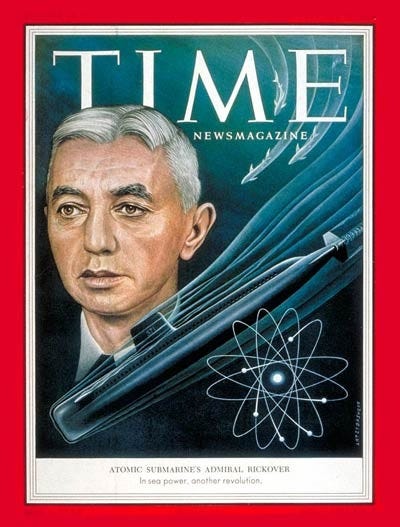
How Far Can Chinese HBM Go?

This December, we’re teaming up with GiveDirectly to send cash to 800 impoverished families in the Bikara region of Rwanda. Studies show that direct cash transfers have a multiplier effect of 2.5x in local economies and reduce infant mortality rates by 48%. Your donation is also tax-deductible in the United States. The link to give is here, and the deadline for donations is midnight on December 31st. Please consider donating if you can!


is a researcher focused on semiconductors, AI, China, and Taiwan. He holds a Master’s degree in Regional Studies — East Asia from Harvard and was recently a summer fellow at the Centre for the Governance of AI (GovAI).

High-bandwidth memory, or HBM, remains the key bottleneck for China to catch up in manufacturing advanced AI chips. As Moore’s Law has more or less held steady, logic nodes have continuously progressed.

However, the rate of memory chip progression has been slow compared to logic chips. Thus, AI operations are often “memory constrained,” meaning that compute is sitting idle waiting for the memory chip to feed it data on which to perform operations. HBM was created to address this “memory wall” by stacking multiple memory chips on top of each other to boost memory bandwidth. As AI chips continue to get better, HBM remains a critical component for scaling. Simply put, if you care about the AI race and AI chips, then you must care about HBM.

Although China’s memory champion CXMT has been closing the HBM gap, the three memory giants of SK Hynix, Samsung, and Micron continue to be more than two generations ahead of CXMT’s HBM2. Assuming export controls hold steady, China’s HBM advances will continue to be stymied by a lack of advanced equipment.

For perspective, achieving the industry’s current HBM3E and HBM4 would be a tremendous achievement for China. As of November 2025, the most advanced AI chips in use use HBM3E. H100s, B100s, and other leading GPUs tap into HBM3E for memory, while Nvidia’s upcoming Rubin GPUs will use HBM4. If CXMT can achieve HBM4 quickly, then they will be able to crack a key part of making advanced GPUs. However, even if they are able to make HBM4 several years down the line, competitive AI chips will likely have meteored beyond contemporary standards to handle workloads unimaginable today.

Ray Wang’s piece earlier this year in ChinaTalk mapping CXMT alongside other memory giants helps policymakers keep an eye on China in the rearview mirror. But past HBM2, when will CXMT hit a wall? Given the current state of export controls and Chinese technological development, what node of HBM can China be expected to reach?

The Three Ingredients: DRAM, Base Die, and Packaging

Making HBM is a difficult endeavor, and the product’s performance ultimately comes down to three factors: the DRAM dies that compose the HBM, the base die that routes the signals coming in and out of the memory stack, and the packaging that binds the DRAM dies together.

Source: Wevolver

Different bottlenecks exist within each of these three HBM components that will hinder CXMT’s progress at different HBM generations. Each merits its own discussion.

DRAM

The memory industry uses a different terminology to mark node sizes compared to the logic industry. Instead of referring to a node by nanometer, the DRAM industry has begun to use letters for its advanced nodes. They started first with 1x, then 1y, and then 1z; afterward, they moved to the Greek alphabet, with 1α after 1z, and then 1β, and then 1γ. (Samsung and SK Hynix use the English 1a, 1b, and 1c instead, but this article uses Micron’s terminology.) Just to demonstrate the gap between each generation, between Micron’s 1β and 1γ nodes, the product speeds increased by 15% while reducing power usage by 20%.

As of 2025, CXMT is three generations behind the leading memory manufacturers, making the 1z node while the big three are shipping 1γ. With the 1z node, however, CXMT can produce DRAM for HBM up until HBM3.

But what must CXMT do to achieve beyond the 1z node? To get to 1α and beyond, CXMT must shrink DRAM cells even further, which requires advanced tools in lithography, etching, and deposition.

Lithography

Two of the most difficult steps in DRAM manufacturing are forming the bitline contact (BLC) and storage node contact (SNC). The BLC is the physical connection between periphery transistors that decide what memory needs to be fetched to amplify their signals and the capacitors that actually hold the memory.

As shown above, patterning and etching the BLC must thread the needle so as to contact the source/drain of the array transistors rather than the buried wordline (BWL) shown in teal.

The case is similar for the SNC, the physical connection between the bitline and capacitor. As shown below, the SNC must be etched through layers of different materials to again connect with the source/drain of the array transistors, instead of the BWL.

As DRAM nodes progress, the pattern density and critical dimensions of these processes get stricter, and greater precision is required. Eventually, EUV lithography is needed for these processes.

However, Micron has used techniques like self-aligned quadruple patterning (SAQP) to continue to use DUV up until its 1β node. Chinese manufacturer SMIC has used similar techniques to stretch DUV use for advanced nodes in the past, like its 7 nm Huawei chip. CXMT is likely even better at utilizing SAQP given the memory industry’s lengthier history with the process. Even for 1γ, Micron only uses EUV for one layer of the process, likely either the BLC or SNC step.

Thus, CXMT can likely also stretch its DUV use until 1β. After that, considering Micron has attempted to delay EUV use until the last possible moment, 1γ and beyond will become extremely difficult without access to the export-controlled EUV equipment. Without EUV, advanced nodes will either be impossible to make or of terrible yield; according to some estimates, using EUV, while more expensive, saves about 3-5% yield for advanced nodes while decreasing process steps by 20-30%. Without EUV, CXMT’s progress in DRAM will likely be stalled at the 1γ node, meaning HBM4E and beyond will be difficult for China to achieve from the DRAM standpoint alone.

Etching

For etching, the picture looks more favorable for CXMT. Advanced etching is required for the steps above, as well as for creating capacitor holes. These holes, which hold the memory charges, have small critical dimensions, high pattern density, and are very deep. Etching narrow yet deep holes like this can lead to a variety of defects, shown below, and thus require advanced tools with high aspect ratios (ratio of height to diameter). Aspect ratios reached 40:1 in the 1x era, with estimates for advanced nodes closer to 60:1.

The U.S. has imposed export controls on advanced etching equipment, including anisotropic etchers (the ones needed for capacitor etch), though China has been able to domestically produce equipment defying the controlled parameters.

For etching through silicon nitride for the capacitors, BLC, and SNC, Chinese products include Naura’s Accura NZ and Accura LX, as well as AMEC’s Primo nanova. Technical specifications about Chinese products are not widely available, though the Primo nanova is specifically advertised for the 1x node and beyond. Although this means the product probably cannot be stretched to cutting-edge nodes, Naura’s tools may work well enough.

Regardless, the existing Chinese offerings demonstrate that China is not too far behind on equipment for capacitor etch. These tools are susceptible to having exaggerated capabilities or scaling issues with manufacturing, but, especially compared to lithography, they’re not so far behind. China holds 10% of the global dry etch market and is self-reliant for about 15% of its advanced etching needs. The country’s rapid growth in the industry also demonstrates that etching obstacles may not be so solid. In short, China’s HBM progress will probably not be meaningfully hindered by DRAM etching bottlenecks.

Beyond etching, advanced deposition tools are required for DRAM manufacturing, but the story is very similar to etching: China can already produce the tools required, so it will likely not be a bottleneck. China is self-sufficient for 5-10% of its deposition needs and is also rapidly accelerating its indigenization efforts.

Through-Silicon Vias (TSVs)

Another step in DRAM manufacturing for HBM is the formation of through-silicon vias (TSVs), diagrammed below. This front-end-of-the-line process forms the vertical connections that allow stacked DRAM dies to communicate and function together. Without TSVs, the concept of HBM and of nearly all advanced packaging would be impossible.

For making TSVs, the most important process again is etching. TSVs require precise etching through DRAM dies to later deposit the material that serves as the vias connecting all the wafers together. The U.S. has imposed export controls on etching equipment specifically for TSV formation (EC 3B001.c.4), but again, China’s domestic manufacturers have been able to defy these parameters.

TSV critical dimensions currently range from 3-5 µm with depths of less than 100 µm. As nodes progress, DRAM dies are getting thinner, and both the depth and CD will decrease. Currently, China already offers equipment to satisfy these TSV requirements. AMEC’s TSV300E advertises a TSV CD of down to 1 µm and can achieve depths of several hundred microns. Naura’s PSE V300, though not publishing its specs, likely achieves a similar performance. Chinese product specs may be exaggerated or with lower throughput, but empirically, TSVs do not seem to pose an issue for CXMT given its capacity rivals other leading memory makers.

Having already achieved likely self-sufficient capabilities in TSV formation, CXMT will not be bottlenecked from this step in HBM manufacturing.

High-κ Metal Gate (HKMG)

Another process difficult in DRAM manufacturing is implementing the high-κ metal gate (HKMG). As shrinking DRAM cells for performance gains becomes increasingly difficult, HKMG has served as another means to increase device speeds.

As shown below, periphery transistors on a DRAM die are normally advanced by shrinking distances between the source and drain while also thinning the gate insulator. However, when insulator thinness reaches its limit, leakage issues emerge, and HKMG is used to solve them.

HKMG replaces traditional gate materials in periphery transistors to accelerate electron flow and prevent power leakage. Partially due to implementing HKMG, SK Hynix was able to achieve a 33% boost in speed with a 21% decrease in power usage.

The HKMG process has been adopted by memory makers since, and CXMT is now beginning its adoption process too; however, some reporting indicates that CXMT is struggling with its HKMG implementation, leading to reduced yield and slower manufacturing ramp-up. Other memory makers have adopted HKMG in their process flows around the 1z node, where CXMT is stuck now, so the company must hurdle the HKMG barrier to keep pace.

Incorporating HKMG in DRAM processes is difficult, partially because of the simultaneous processing of the periphery and array on a single wafer. The thermal budget of the array, or how much heat the structures are able to withstand, is relatively low; this means that the standard HKMG processes for logic nodes cannot be so replicable for DRAM. Although CXMT is currently struggling with HKMG, this doesn’t seem like an insurmountable issue. The bottleneck seems to be the more amorphous challenges of experimenting and perfecting process flows rather than a concrete wall of equipment inaccessibility. The equipment required for HKMG generally relates to the deposition tools in which China seems more or less self-sufficient.

Because of the lack of “hard” barriers like lack of access to tools, HKMG adoption will likely not be a serious hindrance to China’s HBM advances.

Base Die

The HBM DRAM dies sit on top of the base die. Among other functions, the base die routes signals coming in and out (I/O) of the memory stack. Ultimately, regardless of how strong the memory dies are, the power of the base die determines the upper limit of memory bandwidth for HBM.

As HBM nodes have progressed, the number of pins on the base die has increased, along with the data transfer speed of those pins. As a result, memory makers have used more advanced DRAM nodes to function for the base die to satisfy the requirement. Around the HBM4 generation, though, memory makers are compelled to use more expensive logic nodes to handle the workload. As such, memory makers are now partnering with TSMC to manufacture their base nodes for advanced generations.

The advanced logic nodes used for base dies will pose a problem for CXMT in its HBM advancement. Without EUV lithography, SMIC has been struggling to advance beyond 7 nm without abysmal yield.

For HBM4, CXMT can retrace Micron’s steps and continue to use a 1β DRAM die for base die functions. However, this decision would have significant drawbacks. Not all HBM4 are created equal, and by using a memory-process base die, Micron has emerged with HBM4 worse than SK Hynix and Samsung. While Micron’s product meets the JEDEC minimum of 8 Gbps per pin and goes to 9 Gbps, SK Hynix and Samsung have been able to reach 10 Gbps per pin and beyond via logic node base dies. Micron claims that they have begun sampling HBM4 with 11 Gbps, but Irrational Analysis explains why this is probably misleading.

Regardless, Micron has conceded that memory nodes are not best suited for the base die after HBM4 and has partnered with TSMC to produce the base die for HBM4E on an advanced logic node. For CXMT, this likely means that using 1β DRAM dies for HBM4 will result in a subpar product, and that HBM4E will be difficult to make without SMIC making breakthroughs in logic nodes.

However, lower cost HBM4 and 4E may be possible for CXMT. Although memory makers are producing their most advanced base dies for HBM4 at 5 nm and below, they are also offering alternatives with cheaper 12 nm base dies. 12 nm base dies can get the job done, but the products with more advanced logic offer smaller interconnect pitches for memory performance and lower power consumption. These make the 5 nm base dies attractive for AI workloads desired by customers like Nvidia.

Although CXMT could theoretically partner with TSMC for its base dies, as they would likely not fall under export control restrictions, my conversations with experts suggest that TSMC may not accept such orders given geopolitical tensions. Essentially, without access to advanced logic nodes for the base die, CXMT will likely struggle to make competitive HBM4 and HBM4E. They will likely be able to make HBM4 with non-leading-edge 12 nm base dies. Perhaps they will even be able to secure orders from TSMC for advanced nodes, but the amount of question marks here makes CXMT’s success uncertain.

Packaging

Packaging is how the entire HBM stack comes together, and one element in particular is relevant. The “glue” that binds DRAM dies to each other, or bonding, is critically important. Stacking so many dies together creates thermal issues that bonding plays an important role in addressing; further, more efficient bonding with minimal gaps between dies is important to enable further stacking. As HBM has evolved from stacking only four dies to now up to sixteen, efficient bonding has been a key enabler.

Die Bonding

A possible struggle for CXMT will be succeeding in die bonding, but not because of export controls. Currently, export controls do not restrict the sale of bonding equipment used for HBM.

The two primary methods for die bonding in HBM are thermocompression bonding with non-conductive film (TC-NCF), used by Samsung and Micron, and mass reflow-molded underfill (MR-MUF), used by SK Hynix. SK Hynix adopted MR-MUF early on since HBM2E, and because of the decision, SK Hynix has been consistently lauded as creating superior HBM.

MR-MUF involves heating and connecting all the stacked dies at once, rather than one at a time like in TC-NCF. The real magic potion for MR-MUF, though, is the epoxy molding compound (EMC) used to fill the gap between dies.

MR-MUF has both better throughput and thermal dissipation than TCB. This is important both to scale production of HBM, but also to manage its heat requirements. By using MR-MUF, SK Hynix is able to stack more dies with fewer usage problems. HBM failures are the number one cause of AI chip failures, so MR-MUF to manage heat grants a real competitive edge.

Following SK Hynix’s footsteps, CXMT is reportedly adopting MR-MUF for its HBM3 and beyond; however, adoption is not like flicking a switch. To reap the benefits of MR-MUF, CXMT must solve several issues. First, MR-MUF is inferior to TC-NCF in managing die warpage. As DRAM dies become even thinner, CXMT will take time resolving this issue, just as SK Hynix has. SK Hynix solved this issue with a process it calls “advanced MR-MUF,” which adds a step of temporary bonding to the process — a step which CXMT may imitate.

Secondly, material acquisition may pose a problem. Competition, not export controls, may bar CXMT from acquiring the EMC for MR-MUF. SK Hynix has an exclusive deal with the Japanese materials company NAMICS for providing its EMC. SK Hynix’s material has been co-developed over years with NAMICS, and the material must be suited for each company’s process flow. Some Chinese sources suggest that CXMT’s EMC supplier is the domestic company Huahai Chengke (华海诚科), but this is still unconfirmed. Even if CXMT uses a domestic supplier, it will likely take years to work together to achieve a high yield.

Because of the extra steps from DRAM making to die bonding via MR-MUF, CXMT’s yield for its HBM3 in 2026 will likely take time to ramp up. Some experts claim that CXMT’s HBM3 yield likely won’t break 40% until the latter half of 2026, partially because of the MR-MUF adoption process.

In the end, though, CXMT’s early bet on MR-MUF will likely turn out to be a good idea in the long term, if not the short term. The advantages of the process are clear, and the bonding process only seems to be a short-term stumbling block. Though not a strict bottleneck, adopting MR-MUF will likely cause CXMT to slow production of HBM3 and beyond, but will not serve as a bottleneck for advanced generations.

Unanswered Questions

It is difficult to gauge CXMT’s capabilities or breakthroughs with 100% certainty. Unlike Chinese model developers, China’s chip manufacturers like to play their cards close to their chest. Because of the sensitive nature of their work, which is relevant for national security goals, or perhaps just because of the nature of the industry, CXMT rarely makes public statements. Perhaps this will change if CXMT undergoes its IPO as planned in 2026.

As such, certain details about China’s memory ecosystem are unanswerable without insider information. Some specific questions are listed below, and ChinaTalk invites anyone with color to reach out with answers or leads:

  1. DRAM Node Sizes

    1. What are the critical dimensions of the latest DRAM nodes and their aspect ratios?

    2. What are the critical dimensions for TSVs in the latest HBM generations? How many TSVs are now included on a single DRAM die?

  2. Chinese Equipment Ecosystem

    1. How good are AMEC and Naura’s etching equipment for mass production? How good is China’s deposition equipment in practice? How true are the advertised specs?

  3. CXMT Struggles

    1. What part of HKMG adoption is CXMT struggling with?

    2. Who is CXMT’s EMC provider for MR-MUF?

If anyone has answers to any of these questions, or has information related to prior analysis, please respond to this email or reach out to jordan@chinatalk.media!

Conclusion

Overall, CXMT is progressing at a steady pace for making HBM, but this trend is likely not to hold forever. For each step of the HBM process — DRAM, base die, and packaging — different bottlenecks will appear to stall CXMT’s progress or compel them to make sub-par HBM. First, the lack of advanced logic for base dies will likely lead CXMT to make lagging-edge HBM4. Even if CXMT utilized a memory node for its base die for HBM4, this would result in an estimated 10% decrease in memory bandwidth. After HBM4, both the base die constraint and the lack of EUV for DRAM manufacturing will cause trouble.

Summary of Conclusions:

But CXMT should not be written off. The industry chose HBM as the best option for memory in AI chips because it was the path of least resistance. With export controls, that may not be true for CXMT and China. Other alternatives for alleviating the memory bottleneck have been discussed, including using hybrid bonding, high-bandwidth flash (HBF), a unified cache manager (UCM), compute in memory (CIM), ferroelectric RAM (FeRAM), and magnetic RAM (MRAM). All of these options have their own problems and are nowhere near adoption, but they present opportunities for China to move off the beaten path and achieve memory self-sufficiency in its own way. If any U.S. administration reverses export controls, though, China will be able to more quickly follow the path for HBM development and catch up in the AI chip race.

For now, though, with HBM remaining the preeminent option, CXMT will have its work cut out for itself.

ChinaTalk is a reader-supported publication. To receive new posts and support our work, consider becoming a free or paid subscriber.

Helen Toner Takes the Reins at CSET

, the new interim Executive Director of CSET who substacks at , makes her ChinaTalk debut. Present since the founding of CSET, Helen has had a front-row seat to the drama shaping today’s AI world — including a stint on OpenAI’s board.

Today our conversation covers…

  • What it means to run CSET in 2025, and how to keep think tank work rigorous and relevant in the age of AI,

  • The “good-faith” vs “dark arts” actors shaping Washington’s AI policy debate,

  • What her recent trip to China revealed about how Beijing is thinking (and not thinking) about AI,

  • Why AI progress might stay “jagged,” and what that means for AI policy,

  • Plus: why Jordan can’t fall in love with AI.

Listen now on your favorite podcast app.


The 2026 Tarbell Fellowship is now open. You could come work with us at ChinaTalk! Apply here.

Don’t just take it from me. Take it from our current Tarbell Fellow, , on his experience so far:

“Tarbell placed me at ChinaTalk for a year, fully funded! It’s been a dream setup to report seriously on China, tech, and AI. The fellowship’s training covers both journalism and the fundamentals of AI, which makes it one of the best on-ramps for people who didn’t come up through traditional reporting or AI pathways.

I always thought about tech journalism but assumed I missed my chance after college. Tarbell gave me another shot. ChinaTalk gives me the freedom to chase questions I’m genuinely curious about in the China–AI space, paired with a team that constantly reads each other’s work, shares articles, and brainstorms ideas. You’ll be producing impactful work for a large audience, but you’ll also be learning every day.

At ChinaTalk, I spend my time digging into the semiconductor supply chain, Chinese AI models, U.S.–China relations, and whatever else I get excited by. If that sounds like your idea of fun, apply!”


Think Tanks in the Age of AI

Jordan Schneider: As the new interim Executive Director of CSET, are you excited to rip up everything they’ve created and remake it in the image of Helen Toner? What is your vision for the future of CSET?

Helen Toner: If there’s one thing that I have learned from the many friends and colleagues who’ve rotated in and out of government, it’s that your day-one mission should be reorganization. Step in, tear everything up, and change the org structure.

No, I’m kidding. It’s exciting and an honor to be in this position. After Jason and Dewey, I’m stepping into big shoes. I’ve been at CSET since its founding in 2019, so it’s exciting to shepherd the organization into a new phase.

CSET’s success is built on a foundation of excellent work, and I want to continue that. The core of our mission is to produce intellectually independent research that is driven by evidence and data.” Our data science team is unique in the think tank world their data powers our analysis. On every project, we make sure our analysis is rigorous and driven by the best evidence we can find. We care that our work is technically informed.

One of our founding goals at CSET was to show a different way for think tanks to operate, and ideally, inspire others to follow us. I think we’ve been really successful there. You now see RAND with a huge emerging tech and national security effort, and CSIS doing more translations and data visualizations — things that were core to the CSET model and are now much more common in Washington.

That’s great, because it proves our model works. Of course, it also means we have competition, so we have to show what makes CSET unique and where we provide particular value. Our deep expertise on China is a perfect example. We have a whole range of China specialists woven throughout our team, covering everything from language to specific subject matter. I’m excited to lean into that and to keep evolving. Emerging tech never stands still, so we have to keep figuring out where we can add the most value.

Jordan Schneider: I agree that CSET has raised the bar for discourse in Washington — it’s why I gave CSET ChinaTalk’s only “Think Tank of the Year” award back in 2022. It’s been heartwarming to see your standard of using real evidence on thorny topics like chip controls, immigration policy, or the PLA’s use of AI resonate so strongly in the broader debate in Washington.

But at the same time, we’re seeing a paradox. Since 2019, it feels like facts matter less than ever. Arguments get reduced to tweet-shouting matches, and remarkably, those shouting matches are now becoming central to the actual policy debate on AI. What’s your take on these two trends happening in parallel? What’s the synthesis?

Helen Toner: I think there are multiple layers here. You have the headlines in the New York Times or the Wall Street Journal, but there is also work happening beneath the surface. The U.S. government has millions of employees, and the subject matter experts doing the work are interested in details and evidence. There’s a steady demand from them for the kind of support we provide, and they are very responsive to facts.

Another example is the discourse around recent AI legislation. Take California, for example. Last year, the discourse around the SB 1047 bill was awful. Then this year, they convened a governor’s panel, published a report, adopted its recommendations, and passed a less controversial bill. It’s a crazy turnaround. We saw something similar with the EU Code of Practice — it looked like it was going to fall apart, but then it came together. I don’t want to sound too pollyannaish, there’s a lot to be concerned about. But it’s important to remember that sensible work is still getting done.

Jordan Schneider: I started ChinaTalk in 2017, and CSET started in 2019. Back then, the intersection of U.S.-China relations, emerging technology, and national security was not a front-page topic.

Helen Toner: When we said we wanted to have a whole organization focused on emerging tech and national security, and people were like, “A whole organization? Like, four people?”

Jordan Schneider: It’s been a wild adjustment for this space to go from an idea funders would laugh at to something presidents tweet about all the time. But that shift has also brought in layers of bad faith. Back when this community was smaller, there weren’t many people playing dirty.

I think CSET has its heart in the right place and is doing earnest, yeoman’s work. But there are snakes in the grass everywhere now. There’s so much money riding on this research, and that wasn’t true a few years ago. I admire your pollyannaishness — I think it’s good for your mental health. But is the most effective option to put out good research and facts? Or are “dark arts” needed to have that research shape policy?

Helen Toner: I don’t think the only options are “put a white paper on your website” or “go full political dark arts.” There’s a lot of space in between. From the beginning, we’ve done more than publish research — we actively seek out the relevant policymakers, brief them, and work with their teams on legislation. Now, we’re also thinking about how the internet has changed what that means for us. Should we be doing videos? I’m not sure, but we should at least consider it.

Another big shift, which I know you follow, is the trend toward individual brands over institutional ones. Some of our people are eager to give that a go, while others — especially those from the intelligence community — are like, “Oh God, shoot me before you make me go on Twitter.” We’re exploring that space — finding ways to keep doing good-faith, fact-based work while operating effectively in today’s ecosystem.

Jordan Schneider: I worry that an organization where good-faith, facts-focused people are comfortable is fundamentally different from one with “dark arts” specialists. The cultures and incentives don’t mix.

Helen Toner: Will there be a ChinaTalk “Dark Arts Think Tank Award”? Who would that go to?

Jordan Schneider: Wow, I don’t know. I can’t give any names here this is for public consumption. But I agree that there will always be an audience for grounded data, and someone needs to provide the facts.

Helen Toner: When we talk about “the Facts,” it’s not about some ideas being more virtuous than others. But if you want to accomplish something and care about results, then you need to know what the world looks like.

We worked closely with the Biden administration when they were considering outbound investment controls — asking them, “How will you implement these controls? Do you have the necessary information to do it effectively?” This isn’t about taking a holier-than-thou position. It’s about the reality that if you don’t know what’s going on, you’re going to try things that backfire — and most people want to avoid that.

Jordan Schneider: A better framing might be that it’s better to have data in the discussion.

It’s remarkable what a single researcher can do in recent years with an “individual brand”. It’s wild to think that CSET was around before we could ask ChatGPT what The PLA Daily 解放军报 says. I can now code data visualizations in two hours, which I used to assume would require a CSET-level team and budget. How do you think these new tools change what a solo researcher or a small team can accomplish? Does this change how CSET operates?

Helen Toner: We’re looking at it from the opposite side — what unique things can our larger team do that an individual still can’t? Our data team is tackling a huge data science problem called “entity resolution”. That’s figuring out that “Google London” and “DeepMind” are both “Google” in a massive dataset of text. It’s a huge, messy problem, and using language models in a carefully designed and validated pipeline, we blew past previous results.

We also analyzed ~3,000 AI contracts the PLA is buying and used language models to parse that data. As a larger team, we can do things an individual researcher can’t. We can validate our results and test different models — like when to use an expensive, frontier model versus a lighter one that’s faster and can handle high volumes. We’re doing tons of experimentation there, and the team is coming up with some really cool stuff.

Subscribe now

Jordan Schneider: CSET was early on important AI topics, but has remained ideologically neutral — you were writing about semiconductor export controls in 2020, but have not published an “AI will arrive in 2027” style analysis. Is now the time? Are the odds of those radical changes high enough that you need to start spending your team’s time and budget exploring them?

Helen Toner: I have a unique perspective because I have my feet in two worlds. I’m from the AI safety community, which is in that mindset, but most of my team at CSET is not “AGI-pilled.” We’ve done a lot of work on scaling and red-teaming, but not the “OMG AGI” work. We are currently hiring someone to work on frontier AI issues, and I’m hoping to increase our work in that space.

Jordan Schneider: What are you excited for this person to do?

Helen Toner: I’m excited about the “Frontier AI” framing. I’m glad RAND is now researching AGI, but the concept of AGI is messy and contested — it’s not clear what, if anything, is there. There has been a giant gulf between the AI systems we have — those we can touch and test — and hypothetical concerns about future AGI. But in two years, that gulf has gotten smaller. Now we can look at current systems and extrapolate future ones — which makes this topic amenable to CSET’s evidence-based methods.

I’m psyched for this research. It won’t be “CSET predicts AGI in 2027,” but it’s important to consider the possibility of AGI or superintelligence on timescales soon enough to matter for policy. Watch this space.

The Jagged Frontier

Jordan Schneider: You’ve expressed the view that AI progress could stay jagged. Can you elaborate on that?

Helen Toner: The idea comes from Prof. Ethan Mollick, and possibly also Andrej Karpathy. I highly recommend following Mollick’s AI work on Substack, LinkedIn, or Twitter. His idea was a “jagged frontier” — that AI is good at some tasks and surprisingly bad at others.

I recently gave a talk on this, arguing we should take seriously the idea that AI’s progress might remain jagged. Right now, most people fall into one of two camps — either they think AI is all hype and a “nothing burger” — or they’re in the “AGI by 2027” camp. That group believes powerful AI will become a drop-in remote worker or an automated AI engineer. Both are non-jagged views of the future. The question of what persistent jaggedness would look like is underexplored.

Jordan Schneider: The “jagged frontier” idea is more nuanced than mainstream discourse on AI — the Twitter brain, swinging wildly between “it’s over” and “we’re so back.” Why do you think people resist the possibility of uneven AI development — that the next model won’t solve everything? Why does the jagged idea struggle to gain traction, even though it is our current reality?

Helen Toner: Most people agree today’s AI is jagged, but they believe the future will be different. I think that’s because we use humans as a reference point — we believe that what’s difficult for us must be universally difficult, instead of seeing it as a product of our own evolution. Since the 1950s, we’ve debated — are we recreating the human mind, or building useful machines?

We’re currently far down the “build useful machines” path, but the idea of recreating the human mind is built into the field. I think this is why people expect AI to be more human-like than it is.

Jordan Schneider: There’s money involved now — the AI hype is backed by enormous financial incentives.

Helen Toner: Jaggedness doesn’t only refer to the troughs where AI struggles — there are high peaks as well. In the next 5-10 years, I expect us to exploit the heck out of those peaks. But the way we do so must account for the troughs.

Jordan Schneider: Is jagged AI more tractable for policy research? Is CSET’s work more relevant in that scenario?

Helen Toner: If jaggedness persists, fast takeoff scenarios are less likely — scenarios like an automated AI researcher that makes ten years of progress in six months. That would be a hard world for policy to operate in — there isn’t time for the government to form a commission, write a nice report, and debate it in the next legislative session. Jaggedness leads to slower AI progression, which gives us time to reflect, experiment, and adapt.

I’m not certain jaggedness will persist, but the idea is underrated in the AI community. At the same time, we should consider the possibility of non-jagged, rapid AI progress. It could still happen, although it’s not my best guess.

Jordan Schneider: There’s a resource allocation problem in AI policy research. Should we focus on a tangible, near-term jagged frontier — like AI’s impact on cybersecurity — or on the sci-fi futures of self-improving AI? People are drawn to speculative, sci-fi scenarios — a cybersecurity paper won’t go viral like “AGI by 2027” did. But there is value in working on a more probable future.

Helen Toner: There is a lot of low-hanging fruit in research on jagged development, and a lot of possible futures. What will AI be good at? What tasks will it struggle with? What does that mean for adoption and integration?

A jagged frontier means we are unlikely to fully automate complex jobs or goals. Instead, we will get powerful AI advisors and a “centaur” model of human-AI teaming, which you mentioned in the AI girlfriends podcast. Future human-AI collaboration scenarios are underexplored because predictions of super-powerful AI assume everything will be automated. They focus on abstract problems like alignment, not the messy, practical details of human-machine teaming that a jagged world would demand.

Jordan Schneider: After writing a paper on AI honeypot espionage, I decided to do some experimenting. Over the past few days, I’ve tried to fall in love with an AI, and it’s not lovable in the slightest.

When it comes to personal comfort and consolation, AI jaggedness is very apparent. There has been a lot of recent reporting about people who’ve developed close, intimate relationships with AI, but it’s not doing it for me. What should I make of that, Helen?

Helen Toner: Have you tried the Grok anime goth girl? You need to find the right one for you.

Jordan Schneider: It was bad — really repulsive. Even if I’m not the target audience for these AIs, if they were smart, they would have figured me out after 10 minutes of conversation — the way TikTok figured me out after 45 seconds of swiping. These models cannot do that — that’s an important detail.

The lack of personalized learning is a huge hurdle for AI in the workplace. Instead of learning from user input, models are trained and dropped into organizations, leaving people to figure them out. If the future of this technology depends on personalization that fits like a glove — professionally and personally — then we need to solve this.

Helen Toner: There’s a long way to go. We held a workshop in July about automating AI R&D and the potential for an “intelligence explosion” takeoff. We need to question underlying assumptions — what does progress look like? What are the gaps? How soon can we fill them? We’ll examine this in an upcoming CSET paper.

Jordan Schneider: There’s tension in our view of AI’s capabilities. It’s easy to overlook its limitations in work you do not do yourself, but in your own work, you can feel the jaggedness firsthand. You have an intuitive sense of where AI is exceptional and where it’s uneven.

Ironically, AI engineers are the most optimistic about AI’s capabilities — maybe a little high on their own supply. But the proof is in their paychecks — companies are hiring them in droves because AI cannot do their jobs.

Helen Toner: There are many sources of jaggedness.

A key source of AI’s jaggedness is the context window — how easy is it to input the organizational or practical context of a task? Some professions, like software engineering or marketing, are easily digestible for an AI because you can copy-paste the relevant code or creative brief. But most jobs can’t be reduced to a text file — their context is messy and organizational. We haven’t fully grasped how this single limitation will shape what AI can do and how quickly it can do it.

AI Debates in China

Jordan Schneider: Helen, you were in China recently. How was that trip?

Helen Toner: It was great to be back in China. In 2018, I was in Beijing for 9 months, studying Mandarin and learning about China’s AI ecosystem. But between my green card, the pandemic, and having kids, it had been ages since I was there. I went for a quick five-day trip to Shanghai for the World AI Conference, which was gigantic. You know what Chinese conferences are like — the huge stage, the flashing lights. Robots were walking around everywhere, something you couldn’t get away with in the U.S. Kids were petting little quadruped robots that were roaming the floor. It was a good time.

A robot dog display at the 2025 Shanghai World AI Conference. Source.

Jordan Schneider: Were you recognized?

Helen Toner: No, definitely not. Not that anyone told me.

Jordan Schneider: What’s your sense of the U.S.-China AI dialogue and opportunities for discourse or cooperation?

Helen Toner: People in the AI safety community often ask why there isn’t a U.S.-China dialogue on avoiding a race to superintelligence. The answer is that there is no agreement on what the problem is, or what the U.S. and China’s interests are. At a Chatham House discussion I recently attended, the Chinese organizers were divided on whether to focus only on superintelligence or broader development questions as well. Within their team, there was no consensus on the core issues. These conversations are a good start, but we still have a long way to go.

Jordan Schneider: A core AI policy question is how the U.S. and Chinese ecosystems will relate to each other. What are the other key questions that will define the field for years to come?

Helen Toner: On the national security side, the U.S.-China dynamic is a big one, covering both competition and the potential cooperation on AI. Military integration is another huge question. The focus is shifting from developing advanced AI to how it changes a military’s operational concepts and the way it fights. This is an adoption challenge.

There are also serious risks around cyber and biosecurity, but we might get lucky, and the threats are manageable. I’m personally more concerned about cyber, but I know well-informed people with access to classified information who are deeply worried about the bio risks.

Outside of national security, we’ll see more community-level issues, particularly around data centers. A narrative about their water use is gaining traction, and while the data may not show an unusual amount of consumption, the community perception is strong enough to create backlash. There are also social questions. We do not have a framework for dealing with AI companions, especially for children, and the impact of AI on labor and jobs is not going away.

AI Parenting Advice

Jordan Schneider: Do you have any AI parenting takes, Helen?

Helen Toner: I have a three-year-old and a one-year-old, so thankfully, we’re not there yet. But I worry the “engineer-brained” approach to parenting reduces child-rearing to a set of tasks. The idea that if an AI can entertain or teach a child “better” than a human, then it’s a net win, misses the point. The relationship between a parent or teacher and a child is a huge part of what it means to grow up and learn. AI should be a tool to enhance connection, not replace it. If an AI generates a story, read it to your child, but do not be too utilitarian. What are your thoughts?

Jordan Schneider: Abstracting love is a high bar for AI.

Kids are wired by billions of years of evolution to trust a warm, sweaty mammal. An AI can certainly teach them physics or math better than I can, and outsourcing that is one thing. But the biological need for connection is another. Primate studies show the same thing — the monkeys want to be held. Trying to engineer that need away is playing with fire. Maybe a robot will get there in 20 years, but you’re running hard against evolution. No offense to anyone using Midjourney for children’s books — I have that tab open right now.

Japanese snow monkeys embrace in the cold. Source.

Helen Toner: I think there are good ways to do it.

Jordan Schneider: Absolutely. But the sci-fi future where kids don’t need loving parents for connection or as models of how to relate to other humans seems a long way off.

Helen Toner: There is a This American Life story that sticks with me, about a single dad and his daughter. He was a physicist, and she would ask him astronomy questions like, “Why do stars...?” or “Where did the Earth come from?”. Kids love to ask “why” questions. He found answering them stressful, so one day, he asked her to write down all of her questions. He locked himself in his office and wrote up a gigantic set of answers for her. The interviewer on the show asked the girl what she thought, and she said, “I wanted to hang out with my dad.” It’s so tragic. Don’t do that with AI.

On Calling Timeout

Jordan Schneider: My theory is that CSET only exists because of Jason Matheny. The national security risks of China’s rapid AI growth were completely off the radar for these funders. It took an exceptional person they trusted, like Jason, to convince them to build a community around this idea.

Before CSET, there was no tech team with deep China expertise. I spent years trying to make the case that competition with China mattered, that AI was more than one small piece of a larger puzzle, but people were unconvinced — that idea was ’too spicy’ or too far out.

There was a brief moment during the 1st Trump administration when it became a mainstream concern. Many corporate blogs, including that famous OpenAI document, were suddenly about beating China. But that moment has passed, and it feels like the issue is becoming less relevant again.

Helen Toner: It’s an interesting time for China+AI policy. When I started in this space around 2017, people in AI would ask, “Why talk about an AI race with China?” and then give AI-specific reasons why it wasn’t a race. I had to explain that they were missing the bigger picture. The U.S. national security apparatus was orienting towards strategic competition with China. For them, AI was only one small manifestation of that competition, and the AI community’s arguments were seen as irrelevant noise.

Jordan Schneider: I remember people telling me, “Oh, but if we say this, will it accelerate the race?” Bro, come on.

Helen Toner: Is strategic competition with China still the main goal of the U.S. national security apparatus? People outside the tech world are not sure — the current U.S. policy toward China is unclear. That’s disconcerting in some ways, but it also creates potentially productive space.

Jordan Schneider: In the 1st Trump administration, U.S.-China competition was a central pillar — Jake Sullivan wanted “as large a lead as possible.” But in Trump 2.0, focus on China has waned, and now we’re mobilizing against Venezuela while ignoring Chinese boats in the Philippines.

For years, I’ve thought that the U.S.-China AI race was inevitable. In many ways, it has already happened — we now have bifurcated ecosystems for AI chips, models, and hyperscalers. These dynamics seem resilient to the day-to-day whims of policymakers. How durable is this rivalry? If the American president is not focused on this issue, do the competitive dynamics of the last decade have enough momentum to continue on their own?

Helen Toner: I don’t know how resilient the rivalry will be. The competition was never about AI — competition with China was the organizing principle of the U.S. national security apparatus, and AI was one part of that. The U.S. AI sector now uses that narrative as justification for everything from faster data center permits to avoiding AI regulation. If those arguments lose force, I’m not sure what will happen.

My own prediction has always been that China’s internal demographic and economic challenges would eventually cool the rivalry, though I thought it would take longer, maybe till the 2030s. With a president who is hard to predict and an increasingly isolationist MAGA base, and a new focus on the Western hemisphere, disengagement with China could be stickier.

Share

Jordan Schneider: The TikTok story is a…

Helen Toner: Hilarious episode in the sitcom that we live in.

Jordan Schneider: Exactly! This was a bill Congress passed almost unanimously, and then the president decided he was not concerned with an issue Congress had a bipartisan consensus on — that is an interesting detail. I’m not sure how illustrative that is.

Helen Toner: Another source of tension in the Trump coalition right now is between the “tech right” and MAGA. They have disagreements about whether to charge ahead with AI — whether AI is the best thing since sliced bread, or the devil, or the Antichrist. There is a lot of division, but both sides are less concerned about competition with China. The tech right wants to sell to China, and the MAGA world would prefer to slow the rate of development.

Jordan Schneider: Corporate self-interest could be a reinforcing driver. U.S. firms do not want to compete with Chinese companies on their home turf. Once Chinese EVs start taking market share, or Huawei chips threaten Nvidia, the game changes. The question will become, is access to China’s market worth giving up our own? The likely answer is no. U.S. companies will demand the same protected home base that Chinese firms have used to their advantage, which only accelerates the competition.

Helen Toner: Wait, they can operate here? I thought it was a one-way street.

Jordan Schneider: Bill Bishop often invokes a Xi Jinping quote that essentially says, “Our goal is to become more self-reliant at home and make the world more dependent on us.” This mindset was in the rare earths saga, where China’s escalation was a self-inflicted wound. It showed a willingness to compete in a way that alienates American elites. You can admire their ambition, but the U.S. will not accept Chinese competitors dominating key verticals — especially in the tech sector that underpins the U.S. stock market.

Helen Toner: We’ll see. I do not know how we can ban Chinese open-source models, which I think is one of the biggest threats to U.S. market share. Using open-source Chinese models presumably displaces API market share for OpenAI, Anthropic, or Google.

Jordan Schneider: They are not un-bannable — stopping individual downloads of Chinese software is a fool’s errand, but that’s not the real game. The real game is preventing billion-dollar companies from being built on Chinese open-source models, and the government has plenty of ways to do that. They can block Chinese models from government contracts, tie it up in FCC compliance issues, or make it a mandatory risk disclosure. If the U.S. government really puts its back into it, it can find a way.

Helen Toner: The government procurement restriction is a good point. Public company disclosures — that’s interesting. I agree, these policies can make it harder.

Jordan Schneider: Or change the incentives. Switching tangents, can you pitch some of the best recent work from CSET — what do you admire and plan to build on?

Helen Toner: One of our most exciting new papers analyzes 2,800 PLA AI contracts. The initial piece focuses on who is buying, and the key finding is that while the largest contracts go to state-owned enterprises, the bulk are awarded to “non-traditional” private companies and universities. More research is coming on what they’re buying.

Our work on DoD AI integration has also been impactful. Interestingly, our research has been valuable to government officials because it is public. Internal reports are often classified and hard to share, so a URL they can circulate is a game-changer. Our paper “Building the Tech Coalition,” which analyzes their use of Project Maven and the internal talent required, is a great example of this.

Number three is our work on AI and biorisks. The debate has been narrowly focused on controlling AI models, so our “Toolkit for Managing Biorisks from AI” broadens the conversation by outlining a full range of policy options, which has been helpful for policymakers.

Jordan Schneider: Let’s do two more, oldies but goodies.

Helen Toner: For oldies but goodies, I’d point to our outbound investment work, where we asked the Biden administration, “If you want to control outgoing investment, do you know how to do that? What data do you have, and what data would you need?” That implementation was a classic example of our work.

Our explainers have been surprisingly impactful. We published one about the differences between generative AI, large language models, and foundational models. A government agency was trying to decide which terminology to use in an influential policy document, and told us the explainer directly influenced their policy. Straightforward research like that has a good track record.

Jordan Schneider: Would you like to recommend some mood music to end the episode?

Helen Toner: The great China and AI scholar, Matt Sheehan, told me instrumental playlists are the best way to focus, so I’ve been listening to a lot of instrumental music. There’s a great James Brown instrumental album. Why not some instrumental James Brown?

Mood Music:

The Future of Secure Telecom

In the wake of Salt Typhoon, what does the future of secure telecom look like?

To find out, ChinaTalk interviewed John Doyle, a former Green Beret who spent a decade building Palantir’s national security practice before founding Cape, which calls itself “America’s privacy-first mobile carrier”. Also joining the conversation is Dmitri Alperovitch, chairman and co-founder of Silverado Policy Accelerator, founder of CrowdStrike, and an angel investor into Cape.

We discuss…

  • Why telecom data is so valuable to adversaries, and what China discovered in the Salt Typhoon campaign,

  • Cape’s founding thesis, including what makes Cape’s cell network so much more secure than major providers like AT&T,

  • How wars are run on commercial cell networks, and how Russia and Ukraine’s reliance on that has been exploited over the course of the war,

  • Other instances of telecom data weaponization, including by Hezbollah, Israel, and Mexican drug cartels,

  • Taiwan’s plan for dealing with undersea cable sabotage,

  • What it takes to cultivate engineering talent in telecoms, and why Huawei has stayed innovative while US providers stagnated.

Listen now on your favorite podcast app.

Thank you to Cape for sponsoring the episode.

Why War Runs on Commercial Cell Networks

Jordan Schneider: Dmitri, why don’t you kick us off — what was Salt Typhoon all about?

Dmitri Alperovitch: Salt Typhoon came to the fore in late 2024, maybe a little bit earlier, when the government discovered there was a huge compromise of major telcos — AT&T, Verizon, and others — by China. Specifically, a Chinese contractor in Sichuan that they ultimately sanctioned for this effort. They were breaking into telcos to get access to call records, sensitive information that telcos have to facilitate law enforcement operations, and voicemails of key political figures. There were revelations that they targeted the Trump campaign in particular during last year’s election.

At the time, I was serving on the Cyber Safety Review Board, which was tasked with investigating Salt Typhoon. The Cyber Safety Review Board is an executive order-created board within the government that combines private sector members with government members to investigate major national security-impacted cyber intrusions. I was actually shocked in the course of our work that the government was shocked. If you know anything about signals intelligence agencies, the first thing you would do is go after telcos. That’s where the crown jewels are. John knows this well from his military career — it’s an invaluable source of information and intelligence on your opponents or adversaries. The idea that no one had seemingly asked, “Would China do this to us?” was baffling. As we’ve seen in revelations from various leaks like Snowden’s, this is something the US intelligence community might be doing to our adversaries. Why would we be shocked that China would do this to us?

That was surprise number one. But in general, I’ve been concerned for many years — and that was one of the reasons I got so excited about investing in Cape — about the fact that our mobile devices are arguably the most valuable source of information about us. They contain really sensitive information: they track our location, have access to cameras and microphones, and contain text messages. People usually put things in text messages that they don’t even put in emails. The telcos have the location data, call records, voicemails, and they can do many things without our knowledge or control.

One of the things we investigated on the CSRB prior to the Salt Typhoon investigation was a cybercrime group called Lapsus$. It was a bunch of teenagers who broke into most of the major companies around the world — Microsoft, Nvidia, and others — with almost no technical skills, primarily leveraging a technique known as SIM swapping. They would bribe or, in some cases, threaten employees at telcos, or oftentimes resellers of telcos, to initiate a SIM swap. A SIM swap is essentially when your phone number gets cloned to another device. It’s a completely legitimate technique when you get a new phone, lose your phone, or upgrade your phone — you initiate a SIM swap where a new SIM card is activated in a new device for you.

But threat actors like Lapsus$ have been doing this surreptitiously to essentially clone your phone number and get SMS two-factor authentication on that device. This would allow them to VPN into companies if they were able to social engineer a password reset through the employee help desk, as these guys were doing. Many companies around the world are still relying on SMS-based authentication, and it seems like every financial institution, in my experience, is still using SMS and not even providing other forms of authentication that are more secure.

I was very concerned that telcos and phone makers have all this information about you and can do pretty much anything they want with it. The telcos in particular can resell it and violate your privacy. From a security perspective, threat actors can break in and tap into those sources of data, and there was nothing you could do about it. Then John came along with Cape and actually offered a solution.

John Doyle: Dmitri just gave basically the entire initial investment thesis of Cape. The Salt Typhoon story has been an enormous focus for us. Three and a half years ago, when I started the company — well first, I should give a little bit of background. Cape is a cellular network. If you’re an AT&T subscriber right now, you can switch and become a Cape subscriber. We’re a worldwide cell network focused on improving privacy, security, and resilience over commercial cellular above the industry baseline.

The Salt Typhoon story is interesting for many reasons. Three and a half years ago, when I was out trying to raise a seed round to start Cape, I would say in pitch meetings, “China has completely infiltrated the telecommunications networks. China has full visibility into what you’re doing with your phone.” People didn’t quite laugh you out of the room. We had been down the Huawei road, and people were aware of some of the vulnerabilities, but it didn’t quite hit home the way it has since the Salt Typhoon news broke. Now we’ve all learned unequivocally: China has completely infiltrated the cell phone networks and can watch everything you’re doing on your phone.

The other thing I would underscore from what Dmitri said is that in his very adroit two-minute introduction to the problem and to the company, we covered SIM swap attacks, carrier breaches, and insecure two-factor authentication over SMS. Your takeaway there is that this problem is really broad. There’s not one specific vulnerability we’re trying to patch. We’re not just trying to patch SolarWinds and then we’re done. This is a literal PhD field of study: what’s wrong with the protocols that run the global cell network, how can they be exploited by bad actors, and how do we remediate them? It’s endlessly interesting, and there’s no shortage of work for us here at the Cape team. But those are some really good examples of why this is a problem.

Dmitri Alperovitch: I should pat myself on the back by saying that I invested long before Salt Typhoon ever manifested on the scene.

John Doyle: That is true. Dmitri saw it also. Full credit.

Jordan Schneider: By way of more introduction, I want to shift the camera over to Ukraine. One of the really remarkable things about this war is the amount of commercial cell phone usage happening on both sides of the front. It has always struck me as a big puzzle because obviously, you turn a phone on and then people can find out where you are and can try to kill you. But at the same time, the utility of these phones is just so important over the course of this war that people are willing to take those risks and put themselves in situations where the cost-benefit ends up on the side of choosing to use your cell phone — and not just because you want to swipe TikTok in Bakhmut or whatever. John, why are soldiers in Ukraine using them as well? Clearly, Americans are not going to stop using cell phones, but why?

John Doyle: It’s a really important question, and there’s an important insight underneath it: wars really run on commercial cellular networks. When I was in the Army from 2003 to 2008, we were in Iraq, and I was a communications guy on a Special Forces team. I would jump out of airplanes with 160 pounds of radio equipment in a rucksack between my knees. Every single time, I also had a cell phone in my cargo pocket. Despite all that — probably hundreds of thousands of dollars worth of communications gear — the thing I knew would always work every time I turned it on was my cell phone. [A quick note from John from the future: In a minute, Dmitri is going to make a joke that made me feel like this rucksack story implied that I have jumped into combat. I want to be clear that I’ve never done a combat jump. I’ve only jumped in training. I’m being careful because I don’t want to claim more cool guy points than I’m entitled to. But I do stand by my broader point, which is that cell phones have been an informal part of the comms plan, at least since I was in the army.] That network’s only gotten better and better.

The telecommunications network is the best communications platform we’ve ever built. The iPhone is one of the best products ever built. It’s so ubiquitously adopted that you see things like Ukraine, where — as a quirk of history — Russia was invading Ukraine literally as I was checking into the WeWork to start Cape in 2022. Like everyone, we watched that unfold on TV. One of the really surprising early revelations was that the Russians were leaving physical cellular infrastructure intact as they advanced into the country. The reason we learned quickly was that they were relying on their cell phones at least as heavily as the Ukrainians were.

To this day, both sides are fighting the war primarily on commercial cell, despite the fact that they’re literally targeting missile strikes against each other based on cell phone location data. That’s how deep the adoption and — you could say — addiction to cellular devices as a communications platform runs.

We saw an interesting turn in the story in June of this year when the Spiderweb attacks happened. That’s when the Ukrainians snuck drones into Russia, woke them up, and piloted them remotely over Russia’s own commercial cellular network to hit strategic bombing targets in a really spectacular attack. When Salt Typhoon happened, everyone asked, “Why are we so surprised this happened?” Spiderweb is another moment where we thought, “Wait, of course this is a way to carry out a really spectacular attack.” It was a highly successful attack and it relied on the commercial cell networks.

Those are just proof points for the thesis we’ve had at Cape from the very beginning: even in times of conflict, even in the most acute of circumstances, people turn to the cell network first. That’s good because it’s amazing and performant, and we know how to use it — for all the reasons that we love cell phones. As long as you fix what’s broken, and that’s where we come in.

Dmitri Alperovitch: I can provide a few more anecdotes. As you know, Jordan, I’ve been pretty involved in analysis of this war and talking to folks in Ukraine on a daily basis. With Spiderweb, one of the things that’s actually been a trend line in Russia — not just with Spiderweb, but with these other long-range strike attacks on infrastructure from Ukraine — is that the Russians have been turning off cellular networks in particular regions whenever they detect a drone strike. Both cellular networks and the internet itself may get turned off regionally whenever they see a swarm of drones coming toward a particular set of infrastructure.

On the other side of the equation, the Ukrainians have been using cellular networks as part of their air defense missions. With these swarms of Shaheds coming every single night into Ukraine, they have mobile units all over the country that are chasing them, trying to track them, trying to shoot them down, often communicating via cellular networks. They have a huge network of acoustic sensors all over the country to detect the motor, which is pretty loud — it’s like a lawnmower in the sky. The Shahed drones are detected and tracked, oftentimes communicated over cell networks.

A couple of years ago, there was a major hack and disruptive attack against Kyivstar, the largest telco in Ukraine. There was speculation inside Ukraine that it was an attempt to impact that air defense network. At the same time, they were launching huge missile and drone attacks into Ukraine in a somewhat coordinated fashion. It’s very tightly linked on both sides to defensive measures against these drone attacks.

A couple more anecdotes for you. On my last visit to Ukraine, I went to visit senior officials in the Defense Ministry and the intelligence agencies. I was completely shocked that in nearly every single case, these officials — the first thing they do when they sit down — take their phones out of their pockets and put them in front of them. In every meeting, I was thinking, “Thank God you’re not fighting the United States of America, because we’d all be dead right now.” They’d identify us by geolocation, and missile strikes would go into these buildings. The lack of OPSEC at the highest levels and operational levels is just absolutely mind-boggling.

The SIGINT that’s active on both sides — on the Russian side, on the Ukrainian side, both against strategic and tactical use of cell phones at the front — is mind-boggling. The type of information they’re able to collect is absolutely insane. I’ve seen what the Ukrainians are collecting against the Russians. Hopefully, when the United States fights, there’s a little bit more OPSEC involved. I was actually surprised to hear that John was able to take his phone on missions because usually it’s prohibited in the US military, and people do get in trouble for it. But it’s hard to enforce, particularly when there are few other ways to communicate reliably, as John said.

One other anecdote I heard from folks in the intelligence services — during the initial invasion in 2022, the Russians left the cellular infrastructure intact so they could use it for communication, but they were bringing in Russian phones. Ukrainians identified Russian forces because new phones were activating on the Ukrainian networks. The Ukrainians immediately pulled every single new phone that was activated on February 24, 2022, inside Ukraine and started geolocating them. Lo and behold, they would find command posts and immediately target them with artillery strikes. A lot of Russian generals died because of that heuristic.

Jordan Schneider: Is this how they got the moms’ phone numbers to start texting them to tell their kids to come home?

Dmitri Alperovitch: I think that was done by capturing phones off the dead. By the way, the Russians quickly got wind of this tactic and instead started stealing phones from the Ukrainians to defeat it. But then the Ukrainians responded by building social media bots where you could easily submit a notification that your phone was just taken by the Russians, which would immediately flag that phone as suspect.

Jordan Schneider: I want to stay on why John brought his phone on missions.

John Doyle: Thank you, Jordan. I really like to defend myself on this point. Dmitri just low-key instigated an Article 15 investigation retroactively into my military career. The phone was switched off, first of all. Second of all, there’s a story I love to tell. When I left Palantir to start Cape in 2022, I talked to a teammate of mine, a guy who was an alumnus of what we call Tier One Special Operations Forces — the elite of the elite, the folks who really do this stuff at a high level. I told him in broad strokes what my idea was, what I was working on, and how I was thinking about the problem. He laughed out loud and said, “Man, we always had this rule — you’re not allowed to take your cell phone on the objective. And every single time we took our cell phones on the objective, because we knew if you really got in trouble and needed to get help, that’s the best way. You flip on your cell phone, you make a phone call.”

I’m not saying it’s right. I’m not going to argue that the policy wasn’t to leave your phones at home. But I wasn’t the only one toting a cell phone — and it was always off.

Dmitri Alperovitch: That’s a good point.

Jordan Schneider: Well, look, Al-Qaeda and Iraq’s SIGINT capabilities are not quite the same as the Russians or the Chinese.

John Doyle: Right. China’s capabilities were essentially the reason we were able to raise money to start this company. That was basically the market insight — the vulnerabilities in the cell phone network accrued to our benefit from a national security perspective for a long time when we were focused on counterterrorism. Everyone was happy to understand the network from that position, and it only ran in one direction because Al-Qaeda and ISIS were not technically sophisticated enough to turn the tables.

But when the Pentagon shifted focus to China and Russia as primary adversaries, all of a sudden, we were facing technically sophisticated foes. Those vulnerabilities were suddenly relevant in both directions. This problem that had been interesting for a long time suddenly became a DOD problem. Defense tech was a big booming industry, and you’re able to raise money if you’re working on important problems. There was nobody building in this space, and that’s basically how we were able to get the company off the ground.

Dmitri Alperovitch: John, good OPSEC is so hard to do. We saw this just this summer during the Iran-Israel war. Based on open-source reporting, the Iranian commanders were smart enough to know that they shouldn’t carry cell phones, but their drivers didn’t. Effectively, because their drivers were taking them everywhere, the Israelis knew exactly the locations of the meetings and were able to target them in real time. It’s just so hard to do because these things have become almost an extension of our arms. If you leave it behind — John and I know this from going to SCIFs for classified briefings where you can’t take a phone into a SCIF — you feel naked. You’re thinking, “Oh my God,” even though you’re only in there for a few hours.

John Doyle: Or the kids’ school needs to get in touch with me.

Dmitri Alperovitch: Right, exactly. It also takes you back to the Stone Ages. I remember I had a meeting inside a classified facility — you can’t bring your phone into the cafeteria — with someone once years back, and that person had an emergency and had to cancel. But I had no way of knowing. They couldn’t contact me. I didn’t have a cell phone. I couldn’t check my email. I was waiting for them until I finally gave up. It was like, “I remember this from the ’90s before cell phones” — it was really problematic. You don’t think of it anymore, how that problem got solved. Those are places where you can’t bring your cell phone, and it’s still a huge issue.

John Doyle: Yeah, it’s the classic seniority question — how long do you have to wait if someone’s not showing up? Do you give them 15 minutes? Do they get 20?

The point about the Iranian drivers is an important one, and it’s interesting to bring that home to the US. Our equivalent of that is the folks who maintain the hypersonic missile systems, or the people who go in advance to catch the bombers when they’re flying. It’s the same problem. The operational security of those folks is just as critical as the people on the pointy end.

When you realize that — as you rightfully have — and you see that the problem has gotten quite large, you need a solution. The solution is not to tell people not to use their cell phones. Even Sergeant John, who would go on to found a company dedicated to this problem, couldn’t be convinced to leave his phone at home. Not only that, but people won’t even endure a degraded user experience on their phones. If you hand them a work phone where they can only download six apps, people will just buy a burner and take it also.

The way we think about that problem is we hold as a design constraint that your phone has to work just like any premium cell service. Otherwise, people will have a shadow phone and you can’t solve the problem. That is hard. It means we have to do a lot of really technical work at the network layer in particular. But it’s also the only way to get at the root of the issue.

Dmitri Alperovitch: Education doesn’t really work on this thing — not just because of the huge value you get from a cell phone, obviously in war zones or otherwise, but also because so many people just don’t appreciate how much data is stored on them and what can be done with this data.

Another anecdote from Ukraine — an FBI agent told me that in the first six months of the war, they had all these exchanges where Ukrainian intelligence folks were coming over. They would go into the FBI headquarters building — the Hoover Building — and of course you have to leave your cell phone in the locker at the entrance of the Hoover Building. All the Ukrainian intelligence folks were asking, “What is this? Why do we have to do that?” These were intelligence community folks in Ukraine who did not appreciate that you have to do this. The agent told me that on his next visit to Ukraine, when he went into an agency building, they suddenly had lockers too.

Cartels, Hezbollah, and Call Data Records,

Jordan Schneider: John, you mentioned Russia and China. If we’re worried about them, how are the cartels with their surveillance capabilities?

John Doyle: Oh man, it’s a great question. There was a recent story out of the US Embassy in Mexico — cartels had used very technically sophisticated means and advanced tradecraft to identify who the counter-narcotics agents working in that embassy were. They went out and killed some of their sources.

To talk more specifically, the data they were getting was call data records, which are the records generated every time you use your phone. If I call you, it’s “this number called that number, the duration was such and such, and the location of the towers was such and such.” Or if you connect to the internet, you get your IP address and some of the high-level metadata. Those are called CDRs, or call data records.

The cartels were able to access them in Mexico. I don’t actually know how they did it, although I will say that data is available on the commercial market for just about anywhere in the world. If you go looking for it, you can just buy CDRs — and that’s consistent with the terms of service of your cell phone carrier, unless you’re a Cape subscriber. But anyway, they did this CDR analysis and were able to really easily figure out who the counter-narcotics agents were, and the identities of the Mexican folks who were working with them. Then they went out and killed them. The threat is certainly relevant on that front as well.

Dmitri Alperovitch: There was a similar story, I think 15-plus years ago, out of Lebanon where Hezbollah did the exact same thing with US and Israeli assets that were infiltrating Hezbollah. Through the use of tracking their locations — and where they were actually turning off the phone because they were about to go into a meeting and didn’t want to be tracked — that in itself was a signal for Hezbollah. In Lebanon, certainly at the time, they had full control of the telco network. They were able to see these weird patterns of turning on and turning off of cell phones on the network. That was an indication that it was likely an asset that was trying to penetrate them.

John Doyle: A version of that story comes up a lot, and it’s interesting both because it illustrates how ubiquitous and how always-on our phones are — that it’s an anomalous network event when you switch your phone off. It’s also interesting how frequently that turns out to be the answer: you just figure out where people are turning their phones off, drop a pin in the middle of that radius, and there’s something interesting happening right in the middle there.

Dmitri Alperovitch: Not to make John feel any worse, but when he was turning his phone off, the enemy would know he was going on a mission, right?

John Doyle: Probably. Well, I was a pioneer. We were still figuring out the rules of the road at that point. We’re talking about a Nokia flip phone. This is old school.

Jordan Schneider: On Lebanon and Hezbollah, the whole Israel using the beepers is another interesting case of, “Oh, you think you’re being cute by trying to get around this problem.” Presumably, the whole idea was they recognized that doing stuff over commercial telecommunications wasn’t going to work, so they tried to have some alternate solution.

Dmitri Alperovitch: I was talking to the Israelis about this after that operation came to light, and they said that Hezbollah did get pretty sophisticated about the use of cell phones because the Israelis had been so successful in penetrating them and using them for targeting. They consciously switched to beepers, which the Israelis were like, “Oh, great, we can now leverage that. By the way, we can put more explosives into a beeper or walkie-talkie because they’re bigger devices than cell phones.”

Part of the plan was also that the walkie-talkies in particular would be worn by Hezbollah commanders on their chests when they would go into battle. You can imagine what would happen if you rig an explosive and make it go off during a fight. The Israelis were upset that they had to trigger it early because Hezbollah was shipping those beepers to Iran for investigation — the battery drainage was too high, so they started to suspect something. But the plan was always to wait for the war to start and have these guys go into battle with the walkie-talkies on their chests and blow themselves up.

Building a Secure Cell Network

Jordan Schneider: On that smiley note, let’s come back to John with a little more of the commercial history. The dream is to build a parallel to a global functioning Verizon that anyone can use — 5G, 6G — and still be more secure than they would be otherwise. Where do you start when that’s what you’re aiming toward?

John Doyle: That’s a great question. It’s way harder than we thought it was going to be. You start like any good startup — you just start doing things and seeing what works and what doesn’t work. More concretely, you need to start in the US. Our goal from the beginning has been to build something that consumers can benefit from, that consumers value and use. But national security has been at the heart of the company from the very start — specifically US national security.

You start in the US because if your phone doesn’t work in the US, then it’s always going to be a niche “pull it off the shelf in times of emergency” solution. Frankly, the problem is just as much domestic as it is international. That was a little counterintuitive at the start, but then Salt Typhoon taught us — if you didn’t already believe it, which you should have — you knew for a fact after Salt Typhoon.

That’s a long way of saying that you start in the US. What we build at Cape is software. We build all the software it takes to run a cell network — call routing, messaging, authentication, billing. All those things are the platform we build. You have to rent towers. We were not then, and we’re still not rich enough as a company, to build brand new physical infrastructure all around the United States or own all that spectrum. We rent space on towers from major carriers. But we’re different from every other virtual operator like the Mint Mobiles of the world in that, past the tower, everything passes through our software. That’s how we have so much control over how much data we collect about you and how we protect that information. That’s where we can make all of our privacy and security guarantees.

We started in the US, and that’s been an odyssey. It’s been amazing. We have a really great network now that we’re very proud of. Consumers are signing up for it, and national security folks are using it. There’s still work to be done, but it really is becoming real.

Then you inevitably need to go international. The other half of this problem lives overseas. We’ve accomplished that expansion both broadly via aggregators that can get you access in 190 countries more or less overnight — although my engineering team would point out it’s 11 months of work to get overnight access to the global network. Then you also can go country by country. As an example, we went with the Navy to Guam in response to their being the canary in the coal mine on Salt Typhoon and Volt Typhoon. In response to that compromise, we went to Guam in partnership with the Navy and installed on top of the telcos there to test our remediation of those threats. We can do country-by-country expansion and make heightened security promises and privacy promises as we do that.

The summary is that it’s very hard. It’s regulatorily and technologically complex. But with a small but mighty team of engineers, you can get it done.

Jordan Schneider: I’m just old enough to remember when people talked about Apple as this small operating system that the hackers weren’t spending as much time focused on because there wasn’t enough value behind getting into that OS. I’m curious how you guys conceptualize the idea that everyone who is worth hacking is now going to be on the Cape network.

John Doyle: We think about that problem in a few ways. First, early on in the conversation here, Dmitri said that telcos are the crown jewels because they have so much information about you. That’s really true, except for Cape. One of the fundamental decisions we made early on was to collect as little information about our subscribers as possible to run a functioning telco and then retain it for as short a period as possible as the realities of a business allow.

In practice, what that means is we retain call data records for about three days because if we have a dispute with one of our carriers about how many gigabytes we have to pay them for, we have to be able to settle the dispute. But then after that, we just delete it. Those call data records are not linked to any detailed portrait of you as a person — your mother’s maiden name, your Social Security number, and all that data that your current carrier probably collects. We just don’t collect it. We have a really novel way of managing payment via a third-party processor, so we’re hands-off on all your payment data. Even in the event that we’re breached, there’s considerably less to steal. That’s our starting point.

Then we’ve done a lot of work around deploying in commercial cloud, which has significant security advantages. One of the stories that came out of Salt Typhoon was the cottage industry of vendors around the telcos that service and provide parts of their stack. I won’t go into a ton of detail because it’s not my information to share, but they help them accomplish some of the ancillary functions you need in order to be a compliant telco. At least some of the origin of that breach was via that cottage industry of vendors.

The Cape ethos from the beginning has been that we buy as little as we can. We build everything ourselves. There’s a little bit of hubris here, I guess, but we do a considerably better job of building it than most of the partners we evaluated in the space. We have a lot of confidence in our approach.

Dmitri Alperovitch: One of the things I didn’t fully appreciate when I was investing was — why wouldn’t Verizon, AT&T, or T-Mobile just do this? It seems like offering better security is something you could upsell to consumers. There’s value in that.

The reality is that selling customer data is part of the core business model for these carriers.

They make a ton of money by collecting call records and geolocation data, then selling it to various data brokers. They don’t want to give up that business because it’s a huge revenue stream for them.

What John is doing by focusing specifically on security and building robust security capabilities into the network — starting with the simplest principle of just not collecting data you never need — is a huge advantage over everyone else who are in the business of collecting that data to sell it.

John Doyle: That’s a really good point, and it also sets up one of my favorite topics, which is the other reason Verizon, AT&T, and T-Mobile can’t do this. Their business model, in addition to monetizing subscriber data, is centered around being big enough to own and administer spectrum.

These are enormous companies that own nationwide spectrum, which is a really expensive asset. They own this physical infrastructure, and they administer it. Then they act as systems integrators on top of that asset. They buy their mobile core software — the thing we build and deploy — from one of a couple of vendors, along with all the other pieces you need to bolt together to run a telco.

In and of itself, it’s an amazing feat and a really hard thing to accomplish, but very little of that, if any, is built in-house. Their core competency is not actually building the technology that powers the network — they just administer it. It would be a big shift for a carrier like that to start building the software internally. They don’t have that function.

Jordan Schneider: Let’s come back to the Verizon-AT&T comparison. There are many sexy things that software engineers can do nowadays. Telecom has not been one for a while. How are you thinking about recruiting and then getting up to speed on this ecosystem, which doesn’t have a lot of people tweeting about how cool it is?

John Doyle: We’re trying to change that. I would say getting from 10 to 35 on the engineering team was pretty hard. We had the hardcore early folks who were all in on the problem, and then we were trying to build a critical mass of engineering talent to come work on a telco.

A lot of attention is rightfully paid to the fact that through Huawei, China was able to take ground in the cellular network around the world via subsidized rollout — they sold the equipment as cheaply as possible to all these network operators. It’s a really effective strategy, and it’s not wrong to focus on that. Are they spying on us via Huawei equipment? Probably. Although it turns out they’re even spying on us via our own carriers.

The less appreciated part of that story is that over the last 20-plus years, via Huawei, China has built one of the most valuable companies in the world and accumulated all this capital and all this talent around 5G, which has turned out to be a critical technology area. The US just has not had an equivalent. We have not had that accumulation of talent, that accumulation of capital.

Our last great manufacturer of telecommunications equipment was Lucent, which was sold from the US to a French company in 2006 — right before the iPhone came along and really informed us that we’d all be using cell phones for the rest of our lives whether we wanted to or not. With that as background, it has turned out to be a strategic disadvantage for the United States. China has Huawei, therefore, they have people who understand the telco stack deeply. They have a huge core of really talented engineers who work on it. They have a capital base, so they can continually do R&D on this stuff. The US just hasn’t had that natively.

My long-term vision for Cape is to be that answer. Right now, we’re 85 to 87 people strong, and we’re focused on a really specific set of problems. But it’s a better engineering team than you’re going to find anywhere else in telco — I’m confident in saying that.

To the second part of your question about our talent strategy — from the very beginning, the plan was to attract really top-end software engineers and give them a little bit of room to learn telco and 5G. It’s hard on the front end, both from a recruiting perspective and from a time-to-value perspective, because people need to ramp up on what we’re building. But it’s really starting to pay off now. Literally outside my door, there’s a room full of people building really amazing stuff. They came from Palantir and Anduril and Coinbase and all these sexier companies that you’re alluding to. But now they’re building the next telco together. It’s quite cool.

Jordan Schneider: Well, let’s continue on the pitch then, John. What is fun about engineering these systems?

John Doyle: The network is deeply technical. It’s complicated. There are frustratingly legacy parts of the stack, where if you open the door, the whole thing falls apart. They can’t be touched, basically. But it’s deeply technical, really hard, and a little obscure.

Then the scale of things you build is automatic. We’re live in 190 countries, and when the engineering team builds a feature and deploys it, it goes live at that scale immediately. That’s really cool.

The other, maybe cuter example — from my perspective, when we finally got the network live and David Dunn, our head of network engineering, called me. He did the “Watson, come here, I need you” first phone call on Cape — the feeling was exactly like when you were 8 years old or however old you were and you got your first walkie-talkies. Everyone kind of remembers that sensation, the miracle of remote communication. It was like that, but it reaches all around the world and is definitely hard.

Not every single day feels like that, but there are a lot of those moments where you’re finally getting to build the walkie-talkie you wished you had when you were 8 years old.

Jordan Schneider: Cute. All right, beyond building a thing, you’ve got to sell it. What has that been like?

John Doyle: Selling to the government is famously hard. Selling to defense is famously hard. Some uniquely hard things about our business and our product include the fact that the government has been buying cell phone service for a long time. A lot happens on cell phones, but no credible alternatives to the major carriers have existed in our space until Cape.

What that means is there’s a big contract vehicle right now that the Department of Defense uses to buy all of its domestic cell phone service. If you’re a battalion commander in the 82nd Airborne and you want to buy 20 cell phones for your staff, you go to an office called Spiral 4 and say, “I need 20 cell phones” — last year’s iPhones or whatever. It’s the only place you can go to get domestic cell service.

The incumbents on that contract are the big three, and then a couple of resellers bid on it. The contract gets awarded strictly on lowest price. That’s fine. They are all roughly equivalent networks, and it makes sense from that perspective.

But Cape is a little bit premium. We’re a little more expensive because it’s expensive to build the things we build. We’ll never win a lowest-price bidding war against the big three. Plus, they have owners’ economics on their networks. The price is not the point anyway. The point is we’re solving problems that no one else has solved.

But bureaucratically, it’s legally impossible for the program office currently to buy that cell service any other way. One of the things we’ve been working on is saying, “Look, guys, if your criticism is Cape is too expensive and it’s not worth it, then that’s fine. Say that to us and we’ll go away.” But nobody’s saying that. They’re just saying we can’t technically pay for additional security and additional privacy.

We’re doing a lot of work to just try to get the rules changed. If the buyer would like not to give China full visibility into their communications and their troops’ whereabouts while they’re using their cell phones, and they’re willing to pay 10 bucks a month more for that, then they should have that option. It’s surprisingly hard to get that done, but we’re making progress.

Jordan Schneider: What was your read on the recent Hegseth speech?

John Doyle: He did a great job. The spirit is right. The intent is right. Acquisition reform has been an increasingly popular topic, and rightfully so. Commercial-first is such an important part of that. We think of what we’re doing as a commercial-first technology.

Now the hard part starts. Secretary Hegseth is not the first person to stand at a podium and announce acquisition reform is on its way. It’s famously hard to drive deep bureaucratic change at the Pentagon, but I’m hopeful. It’s a righteous mission, and I hope that he’s able to do it.

A Nightmare in Taiwan

Jordan Schneider: Commercial telecom in the Taiwan context — what’s your take, Dmitri?

Dmitri Alperovitch: Just like in all these conflicts we’ve talked about, there’s going to be huge dependence on the mobile communications network in Taiwan. There are going to be a lot of questions about resiliency.

The first thing the Chinese are likely going to do in the event of an invasion — or even a blockade — is cut the submarine cables that go to Taiwan. Those cables provide the vast majority of their communications with the outside world, but cutting them is going to have cascading effects on internal networks as well.

We know that the Internet is quite brittle. When one service fails, you can have these cascading effects that no one anticipates. We just witnessed that a few weeks ago with AWS. One service within one of their regions on the East Coast fails, and then it reverberates across the entire AWS network. Everyone using AWS experiences outages around the world as a result.

Take something like DNS — the Domain Name System for resolving domain names to IP addresses — which relies on connectivity to root servers. If you can’t connect to those root servers because the submarine cables are cut, then a bunch of things that operate even just internally within Taiwan will start to fail.

You want to have other ways of communication. The great thing about the cellular network is that you’re increasingly starting to build in capabilities to connect to Starlink and other satellites, at least for emergency messaging. iPhone and other phones are starting to offer that.

This is going to be a pretty vital way for Taiwanese forces and emergency responders to communicate with each other in the event of that contingency. Having something that’s reliable and that can’t be used for targeting purposes by the Chinese is absolutely essential. John, I don’t know how much you can talk about this, but there’s quite a bit of interest in the region generally in Cape for that very reason.

A cell tower in the mountains overlooking Jiaming Lake in Taiwan. Source.

John Doyle: That’s spot on, both in terms of the enormity of the problem and the reality that backhaul off the island is really constrained and really hard.

Our opinion is that a terrestrial cellular network — whether a carrier or virtual carrier — is the perfect integration point to manage all the complexity you’re describing after the cables get cut. If you have limited backhaul off an island like Taiwan, the correct way — and the easiest way and the most robust way — to prioritize how you use that bandwidth, whether it be Starlink or other means, is over the cellular standards.

This works both because everyone already has the platform in their pocket — everyone already has their cell phone — and because if you’ve done the right things on the SIM card in advance, you can have a relatively graceful degradation of service. You can provide connectivity to an entire population with prioritization as needed for things like government officials and people doing the most important work.

We are working hard to offer support in that region. Hopefully, we’ll have some news coming out soon on that front. Certainly, if you built the company we’re building and started attacking this problem when we did — literally in the middle of the Russian invasion of Ukraine — then you inevitably wind up where we are: focused on Taiwan as a problem and thinking about what problems we would have liked to have solved in Ukraine in advance and how we can get that solution into Taiwan before we hit a crisis or conflict.

Jordan Schneider: I want to stay on the degraded Taiwan communication ecosystem. Where does the data come from in that context? Is it all from the sky then?

John Doyle: That’s a good question. Basically, yes. It doesn’t necessarily all have to be from the sky. There are other ways to get data off the island at medium range. Technology like microwaves and lasers can provide some amount of backhaul. But the real fat pipe that you want to have access to for moving large amounts of data is the sky.

Certainly, Starlink is the most famous example here and the best known. But there are other low Earth orbit constellations, and then there are other constellations — both government and commercial — at higher altitudes as well. All of those have different constraints and different qualities that make them advantageous in certain situations. But short answer: yes, you want to look to the sky, and that’s where you get most of your backhaul.

Jordan Schneider: Currently, when people think of satellite cell service, it’s SOS text messages when you’re on a mountain hiking or something. But presumably you can do more than just that now. Can you serve 30 million people? Maybe not live streaming, but phone calls and stuff? What’s the optimistic case?

John Doyle: An important constraint to have in mind: even when we finally fill up all of low Earth orbit with as many satellites as can fit, if we assume a couple of advances in antenna technology and dedicate all of those satellites to direct-to-cell service — that’s what you’re describing when you’re a hiker in the Grand Canyon and you want to get an SOS text message out; direct-to-cell is the tech that allows your cell phone to talk directly to a satellite — there’s still not enough bandwidth to meaningfully offload the traffic that passes over the terrestrial cellular network every day.

This is not to downplay how impressive and important that technology is, but it does underscore that it will always be supplementary to the terrestrial physical infrastructure. Now, to bring it back to Taiwan: assume the cables have been cut. There are still ways — and we have our own opinions on how — you can continue to operate intra-island and even maintain a highly performant cell phone carrier. People can talk to each other within the island in a relatively uninterrupted way. You need to manage your scarce resource, which is backhaul, and prioritize which traffic gets on and off the island.

Jordan Schneider: Okay. Cables that are running on Taiwan to various cell towers can still talk to each other relatively normally, but if I’m trying to stream something from Netflix, which is hosted in a data center in Malaysia, then I’m going to have a tough time.

John Doyle: That’s right.

Jordan Schneider: On the tactical and operational side of what a commercial cell network can do, we had some examples from Dmitri on triangulating where Shaheds are falling. What else makes this so addictive, even when it puts your life at risk? What logistical or operational things can you do in Ukraine because everyone has cell phones connected to commercial networks that would not have been possible in, say, 1987?

John Doyle: If Russia had invaded in 1987, if there were no cell phones or the network was taken down, the biggest difference would have been the lack of connectivity for the civilian population.

The way those folks benefited from the network remaining available was primarily in two ways. Number one is morale — just the ability to stay in touch with friends and family who have left or friends and family over distance. This turned into a really long conflict, and the political will of the population is a really critical factor in the resilience against the invasion. It’s an amazing way to keep morale high or to boost morale.

The other is crowdsourced intelligence, especially in the early days. But even now, you see civilians contributing to the intelligence picture. They’re able to do that because they’re connected to the network and connected to their friends and family who are also in the military and also prosecuting the war over the cellular network. It’s relatively seamless to pass along what they’re seeing.

Jordan Schneider: The other thing that has really struck me is these photos of Ukrainian command and control literally on Discord and Skype. Then you text the people who are out and about on Signal, right? The idea that this technology is so valuable that you are willing to be the intelligence official who walks around with a phone. What is the friction of not having that in 1987?

John Doyle: In 1987, you had to set up a radio. You had to set up a communications outpost. You had to do all this work to maintain a line of communication that you just don’t have to do now.

Signal and Discord, in a really important way, have been ahead of the networks in that Signal solved the problem of end-to-end encryption for consumer communications. You can now protect the content of your communications with a high degree of certainty using Signal. It’s an amazing messaging app and it’s a very frictionless experience.

Where Cape fits in — and what we like to say — is that Signal protects the messages and we protect the messenger. The part that’s been lagging is: while you’re out running around sending and receiving Signals, the metadata associated with your location and your activities is not protected until you have a carrier like Cape in place.

Jordan Schneider: Even in 2005, give us a little more color on those hundreds of thousands of dollars’ worth of things. Were they heavy? Did it take a long time to set up? People have this image of radio men in World War II, but presumably you were working with a little better stuff than that guy on Omaha Beach or whatever.

John Doyle: Maybe a little better. You organize your communications plan if you’re a comms guy in the military according to something called PACE. You have a Primary, Alternate, Contingency, and Emergency communications plan. If one system fails, you go to the next and the next.

Examples of stuff I had in that rucksack include radios for line-of-sight communications, and really, really good walkie-talkies with very heavy batteries that we could use to talk back to people who were a little farther away from the front lines than we were.

Further down the contingency list were things like satellite communications, which in those days meant these little foldable satellite dishes that you would unfurl and point at the sky and try to get just the right elevation. If you got a good connection, you could get pretty decent communications over satellite.

My favorite — and this is way down the PACE plan — was high-frequency communications, which is ham radio operator stuff. You measure out an antenna and you’re like, “Okay, we’re going to communicate on this frequency, so I need a 37-foot antenna,” and you roll it out on the ground. You can talk a really long way over high-frequency communications, but you’ve got to get it just right. I never had the opportunity to do that operationally, although we did a lot of training on it, and I was always fascinated by it.

But each one of those — line-of-sight communications, satcom, and high frequency — those are all different boxes. That’s a 30-pound brick that rides in your rucksack, and it’s got its own batteries associated with it and its own antennas and whatever. All that gear rides around in your rucksack, and if you need to make communications, then you just start working down the PACE list.

The cell phone is better. It’s a lot better. It’s much lighter. I love Signal, and it doesn’t work everywhere. We’re not fully replacing those boxes. Ninety-whatever percent of the world’s population is covered by cell coverage, but not that much of the terrestrial surface area is. There’s a time and place for other comms also.

Jordan Schneider: Our reported SEALs hanging out on North Korean beaches — I don’t think they’re connecting to the local telecom.

John Doyle: We haven’t tested our network in North Korea. I can’t say whether it works or not. I’ll come back for an update if we ever find out.

ChinaTalk is a reader-supported publication. To receive new posts and support our work, consider becoming a free or paid subscriber.
The Z.ai Playbook

Zixuan Li is Director of Product and genAI Strategy at Z.ai (also known as Zhipu 智谱 AI). The release of their benchmark-topping flagship model, GLM 4.5, was akin to “another DeepSeek moment,” in the words of Nathan Lambert.

Our conversation today covers…

  • What sets Z.ai apart from other Chinese models, including coding, role-playing capabilities, and translations of cryptic Chinese internet content,

  • Why Chinese AI companies chase recognition from Silicon Valley thought leaders,

  • The role of open source in the Chinese AI ecosystem,

  • Fears of job loss and the prevalence of AI pessimism in China,

  • How Z.ai trains its models, and what capabilities the company is targeting next.

Co-hosting today are , long-time ChinaTalk analyst, as well as of the Interconnects Substack.

Listen now on your favorite podcast app.

The Z.ai Model and Chinese Open Source

Jordan Schneider: Zixuan, could you introduce yourself?

Zixuan Li: Hi everyone, I’m Zixuan Li from Z.ai. I manage a lot of things, like global partnerships, Z.ai chat model evaluation, and our API services. If you’ve heard of the GLM Coding Plan, I’m actually in charge of that, too. I studied AI for science and AI safety at MIT, where I did research on AI applications and AI alignment.

Jordan Schneider: Let’s do a little bit of Zhipu AI’s backstory. When was it founded? How would you place it within the broader landscape of teams developing models in China?

Zixuan Li: Zhipu AI and Z.ai were founded in 2019, and we were chasing AGI at that time, but not with LLMs, but with some graphic network or graphic compute. We did something similar to Google Scholar called AMiner. We used that type of thing to connect all the data resources from journals and research papers into a database. People could easily search and map these scholars and their contributions. It was very popular at that time.

However, we shifted to the exploration of large language models in 2020. We launched our paper, GLM, in 2021. I believe that was about one year ahead of the launch of GPT-3.5, so it was a very, very early stage. We were one of the first companies to explore large language models. After that, we continuously improved the performance of our models and tried a new architecture. GLM is a new architecture, actually, but we’re going to explore more in the future.

I believe we became famous with the launch of GLM 4.5 and 4.6 because they are very capable in coding, reasoning, and agentic tool use. That’s more useful compared to the previous version. People may know us through Cloud Code, KiloCode, and other tools. We need to combine with these top products to gain fame.

Nathan Lambert: What does it take to transition from the models you were early to developing into things that get international recognition? I’ve known of Z.ai and your work for years, and then it’s like a snap of the fingers, and suddenly, this model is on everybody’s radar that’s paying attention. Did this feel like something that was going to happen overnight, or what does that feel like when you go through it? How do you get to that moment? There are a lot of people that want to do that at their companies.

Zixuan Li: That’s a very interesting point. In 2024, everyone was interested in the Chatbot Arena. We saw GPT-4 and Gemini performing very well there. That was our interest because we pay attention to end-users’ experience, such as deciding which answer they prefer when presented with two options. We did a lot of work on that and performed very well on the Chatbot Arena, ranking maybe sixth to ninth.

In 2025, with the launch of Manus and Claude Code, we realized that coding and agentic functions are more useful. They contribute more economically and significantly improve people’s efficiency. We are no longer putting simple chat at the top of our priorities. Instead, we are exploring more on the coding side and the agent side. We observe the trend and do many experiments on it. We need to follow the trend and also predict the future.

Jordan Schneider: Let’s talk a little bit about the talent and the internal culture that allowed you to put out GLM 4.5. What do you think is different about, or what distinguishes, Z.ai from other labs both in the US and China?

Zixuan Li: First of all, we are more collaborative inside the company. Everyone is working on a single target. We have the heads of separate teams — the pre-train team and the fine-tune team — but they are working very closely. They sit next to each other, working on the single goal of trying to build a unified reasoning, agentic, and coding model. As we illustrated in our tech report, we first built three separate models (teaching models). We then distilled those three into one single model, GLM 4.5. That was our goal, and I believe that is how we built GLM 4.5 more efficiently compared to other companies, which are very young.

Another point is the talent. I believe that nowadays, the head of the team needs to do the research and the training themselves. You cannot let others do this stuff for you. Why is that? Because things change so fast. Maybe during your training, Claude 4 or GPT-5 comes out; anything can happen. You need to feel the trend yourself. You need to combine the results from experiments and the trends — what’s going on within your competitors’ teams — to feel the move yourself. It’s super important. Even our founder does the experiments himself and looks at the papers. You need to do things simultaneously, not just set goals for people and let others do the work for you.

Nathan Lambert: It seems very fast-paced. Before we started recording, you also mentioned that there are a lot of PhD students involved. I was just wondering if these are people who are actively pursuing their PhDs, new graduates, or a mix of all of them. I work at a research institute, which is very open-source, and we have many full-time students who are part of it. When you look at other closed labs in the US, there isn’t nearly as much intermingling with academic institutions. That could be a really powerful thing if you have this, because there is extreme talent there. I’m just wondering if you feel like there’s an open door between some academic institutions and your work.

Zixuan Li: Definitely. There are a lot of ongoing PhD students here, and I believe they are simultaneously pursuing their academic goals and working on GLM, but they can combine them. If you are doing a truly innovative job, like training a unified agentic coding model, it’s one of your greatest achievements ever. People won’t say, “I need to do another research, let me finish this first, and then I’ll go back to GLM.” They will try to treat GLM as their single biggest achievement. Everyone is really devoted to this stuff. We hardly see anyone who isn’t devoted to training GLM.

Jordan Schneider: What does the talent market look like in China right now? What’s the hierarchy, what are employers looking for, and what is the talent looking for?

Zixuan Li: On the research and engineering side, companies are looking for papers, GitHub code, competition performance, and your experience using GPUs and training models. For the non-technical side, they’re looking for how you will grow the model’s performance and expand the brand. If you’re going to be a product manager, for example, your vision in this area and how you execute are very important. The requirements are pretty similar across the board.

You mentioned hierarchy. In terms of hierarchy, large companies choose people first because they have more money and can pay more, companies like ByteDance and Alibaba. For startups like ours, we need people to fight together. You need to fight against other competitors and drive yourself to finish goals because you don’t get paid as much. You need ambition. You must truly enjoy working with really young, talented people and trying to build something like GLM that seems to come from nowhere and beat other competitors’ models.

Nathan Lambert: How big would you say the number of people actually training the model is? In the US, it’s accepted that the core research and engineering staff normally doesn’t get to be more than one to two hundred people at places like OpenAI. There’s a lot of support around them in terms of product and distribution. Do you feel like this is similar?

Zixuan Li: The core small research team is similar, about 100 to 200 people. I think that’s enough because you need to be focused, right? There are other people preparing data and doing product work, but for the core team, you don’t need that many people. You need to stay focused, and these people need to be really talented; they cannot make many mistakes.

Irene Zhang: Is that different at bigger companies?

Zixuan Li: For bigger companies, there might be different groups. They have more GPUs and can do more exploration. For example, at ByteDance, they are chasing top performance not only in text generation but also in video generation, speech, and other areas. They can allocate resources to multiple teams. But inside these teams, I think the core members are still the same — maybe 10 to 20, and the other 80 or 100 people are doing the training or data preparation work.

Jordan Schneider: What’s the thought process behind so many Chinese models open sourcing in recent years?

Zixuan Li: First, I think we need to devote more to the research area. Llama’s doing this, Qwen is doing this, and Kimi’s doing this. We are also doing this. We want to contribute more to academia and the exploration of all possibilities. I think that’s our top priority.

But beyond that, as a Chinese company, we need to really be open to get accepted by some companies because people will not use your API to try your models. Maybe they deploy on Fireworks, maybe they use it on Groq, or maybe they download to their own chips. It’s not easy to get famous in the United States because people just don’t accept your API. They need to be stored in the US. I think it’s necessary to be open right now for people to use our models.

Nathan Lambert: This is what our company does. It’s like where I work — I wouldn’t be able to sign up for the API service at the enterprise level. But I distill from multiple Chinese models when I’m training. I’m using multiple models and might come across this, so it’s not surprising, but it’s good to articulate it.

Zixuan Li: We also learned from DeepSeek because our flagship model was closed source back in 2024. But when DeepSeek R1 launched, we realized that you can be really famous for open sourcing your model while getting some business return through API or other collaborations. You need to expand the cake first and then take a bite of it.

Source.

Jordan Schneider: Why is it so important for Chinese model makers to get famous in the US or achieve global adoption more broadly?

Zixuan Li: Because I think there’s a better ecosystem for developers and research still in the United States. You need to get accepted by the top researchers because if we don’t open source our models, we’ll never have an opportunity to join this conversation. It’s important because we learn from X, from YouTube, from Reddit every day, and all the Chinese tech media are also paying attention to US KOLs or influencers.

Jordan Schneider: This was very surprising, I think, to both Nathan and me — how recursive it was, where the Chinese media covers the Chinese models that the Americans are talking about. It’s a very curious trend.

Zixuan Li: Because you have people like Andrej Karpathy, Sam Altman, and Elon Musk. They not only talk about their own models but also what’s going on elsewhere. Everyone knows — if they post a tweet, everyone knows what’s going on, what models they’re picking, what preferences they have, their views on maybe Qwen versus Codex. All the social media will try to grasp their core ideas immediately. That’s very important. We also learned this from DeepSeek.

Frankly speaking, we used to neglect the importance of the global economy previously because we thought we needed to sell our products and APIs directly to Chinese enterprises. But nowadays, Chinese enterprises are still paying attention to the global brand and your global performance.

Irene Zhang: This reminded me of something I’ve been curious about. We know the conversation is recursive. We know that Chinese tech pays a lot of attention to what Silicon Valley is looking at. But is there anything about the AI debate or discourse in China that Western media tends to miss? In your opinion, are there any issues or debates or things that people are really interested in that people in the English-speaking discourse tend to not understand?

Zixuan Li: I just talked to a professor from Germany yesterday, and he mentioned some models that he knew people are talking about these days — Llama, Qwen, even Mistral — but not GLM. There are many people still unaware.

Nathan Lambert: This person’s a little out of date in the SF circles. More people are talking about GLM than Mistral and arguably Llama these days. You’ve made a lot of progress.

Zixuan Li: We’ve made a lot of progress, but we track the discussion on Reddit and other social media, and we still see a lot of people asking what GLM is. Is it a good model? Where does it come from? It comes from nowhere or similar stuff. We still need to do a lot of things because we only have 20,000 followers on X. People don’t have a very deep understanding of GLM compared to other models.

Nathan Lambert: I think DeepSeek has like a million. It’s remarkable.

Zixuan Li: Also, Mistral and Cohere get much more attention compared to Kimi and Z.ai. We still need to do better in our branding and our engagement in the technical community.

Jordan Schneider: You mentioned selling API access to Chinese companies. Tell us a little bit about adoption in China. What’s the sales process like? Do they all just have VPNs and use Claude? What’s it like trying to do enterprise sales in China?

Zixuan Li: You have two types of enterprises. One is companies that can’t use APIs because they need to deploy the model on their own chips. They cannot accept sending data to other companies — not even to Z.ai or even Alibaba. That’s a requirement for those companies. There are teams deploying DeepSeek for them — not from DeepSeek itself, but other companies can deploy DeepSeek for them. They usually build on top of the DeepSeek model with RAG, data storage, workflows, and other things.

The other type uses APIs — those are maybe tech companies and media companies. These companies accept APIs because they need to standardize their workflows. For API companies, they choose based on the balance between performance and price. ByteDance is doing great in that area. I believe ByteDance dominates the API services. Qwen is still trying to sell its APIs because Qwen 3 Max is a closed source version. If you’ve heard of it, they have open sourced some models but also keep some things closed source for selling.

For us, we have open sourced our flagship models, so we are frequently asked, “Why is your service different from the open source version? Because we can deploy the open source version ourselves.” We need a better engineering team, we need faster decoding speed. We need to do more on top of just having a good model. That might be our unique selling point. We need to do searches, we need to build our MCP. We’re trying to get a competitive advantage over other GLM providers.

Jordan Schneider: Is that annoying or fun?

Zixuan Li: It’s fun. It’s fun because I think it’s necessary to open source your models, so how you get a bite in that case is really important. We’ve been figuring it out for a long time, but recently we found that subscription is a good idea — a GLM coding plan. With subscription, your users become more sticky. They love this area because you don’t have to worry about how one prompt consumes tokens in your dialogue. Maybe inside Claude, a round of interaction will consume a million tokens, but you don’t have to worry about it. We’ll figure it out for our users.

Nathan Lambert: Do you think you have meaningful adoption there? Because in the US market, I could start using Claude, Codex, Gemini, and whatever all for free with some basic Cursor. I was wondering — are people in the US actively using this? Is this a growing market that you think you’re going to eat into? Qwen has one, and I might have tried it, but I’m always like, “Oh, I have my ChatGPT subscription.” I’m just wondering if, on the ground, it feels optimistic as something that is really shifting the needle.

Zixuan Li: It’s definitely very optimistic because we don’t have to persuade 50% of people to do this — maybe you only need 5%. But 5% is a huge market. If 5% of Claude users shift their model to GLM, it’s a huge market.

Nathan Lambert: It’s growing so fast, too.

Zixuan Li: But not just for Claude, because we’re trying new ideas like role-playing. Many people on Silly Tavern are using GLM and Janitor AI because we do very well in role-playing. We’re trying to have more markets — coding markets, chat markets. Maybe one day Meta will be using our model.

Jordan Schneider: All right, we’ve got to take a step back and explain role playing. What is it? How do you make a model that’s good at it? What are people using it for?

Zixuan Li: Before GLM-4.6, for models like GLM-4.5, we were relatively weak in role playing because we hadn’t trained on that kind of data. We needed to create some data and let the model follow the instructions. For role playing, if you have a very long system prompt and you don’t train on that kind of stuff, the model will forget who it is and forget all the instructions. It will just use its general performance to do the conversation. For a role-playing task, if given very long instructions, it must strictly follow those instructions and show more emotion or more specific behavior based on them.

Jordan Schneider: Just to be clear, this is people having a conversation, for example, saying, “I’m a Japanese pirate, I’m raiding the coast of Taiwan in 1570, and I want to plan an attack to defend the fort.” People write out like five pages of background.

Zixuan Li: We also tried something very interesting, like Family Guy. We have our own Stewie, and you just give a description of what the characher does and his history, and then you can create your own Stewie. We perform very well in text generation. If we had some speech model, we could recreate a Stewie there too.

Jordan Schneider: Was there a specific kind of pre-training data or RL that you needed to do to get this? How do you make a model that is really good at pretending to be cartoon characters?

Zixuan Li: It’s mainly post-training data.

On AI Optimism and Translating Chinese Memes

Jordan Schneider: There’s a big discussion of late in the US about people being worried that folks are falling in love with AI. There’s this whole discussion about AI psychosis, where ChatGPT, for example, convinces people who trust it too much to harm themselves. I’m curious about your broad sense of that type of discussion in China generally, and then internally in your firm, about the question of people using AI for emotional support.

Zixuan Li: I just read a post from OpenAI yesterday. They invited a lot of experts to try and train a model that is not addictive. They trained data to ask ChatGPT to say it’s an AI instead of saying it’s a human being, not letting people get attached to ChatGPT anymore.

But from a broader audience perspective, not many people at Z.ai are looking into this yet because our model’s capabilities are not there yet. If we had a model that could perform like GPT-5, then we could move on to removing the addiction.

Still, the performance is not on par with these top closed-source models, which we need to chase first. When we chase these models, we shift our focus to data collection and data preparation. Sometimes, the model behavior will change dramatically. If we do some similar things on our previous model, it will be outdated in the next version. Performance is still very relevant currently.

Nathan Lambert: I’m guessing this is somewhere in the rundown, but what is the balance of optimism versus fear of AI as a long-term trajectory in your lab versus China generally? I think there’s a very big concentration in the US of people who worry deeply about the long-term potential of AI, whether it’s a powerful entity or a concentration of power or other things. Then there are people who just think this is the most important technology ever invented, and we have to be really serious about it. I’m just wondering where on this spectrum you think the lab’s culture is, or if it’s not really something that’s debated, and you’re just focused on, “We’re building a useful thing, and we’re going to keep making it better.”

Zixuan Li: I think developers fear the most. When you use code, when you use Codex, you get that fear in a very concrete way. It can do all the tasks for you, especially for junior developers. For writers or other managers, though, I think it’s simpler because we already have SaaS and other technologies helping them. Large language models like ChatGPT are just another helper for them. So, I don’t feel fear coming from the general public, but specifically for developers and data analysts. They fear the most because they try out the new models and new products more frequently than the general public, so they can feel the power.

Many people use DeepSeek and other chatbots. DeepSeek can help you brainstorm ideas, polish your writing, or do translation for you, but they don’t believe that this work can replace them. But for developers, it’s a different story.

Jordan Schneider: What are the main fears? Is it just people’s jobs getting taken away? Or is it AI taking over the world? For the people who are worried, what exactly are they worried about?

Zixuan Li: Probably jobs being taken away.

Nathan Lambert: Those fears are pretty different than in the US. There’s definitely a huge culture — not a majority of the people, but a very vocal minority — that influences a lot of the thinking about the risks of AI well beyond just job loss. Job loss is almost an assumption for many people in the US, but there are added fears on top of this. I think that is a very different media ecosystem and thought ecosystem.

Zixuan Li: I definitely know about this because I lived there. Obviously, everyone at MIT was talking about how AI will change the world, not on the positive side, but on the negative side.

Irene Zhang: Why do you think this is? Is it that Chinese society is a little more practical, or is it just that job loss feels more imminent, or is it because it’s less of a market-driven economy?

Zixuan Li: I believe that people just know about DeepSeek. Maybe only 1 million people follow the latest trend, and a billion people do their work daily and are not impacted by AI. The more you learn about it, the more fear you have.

Irene Zhang: What is the vibe among these younger engineers you’re talking about? Specifically, the junior folks who are a little scared. I’m generally curious what gets them into this work in the first place and what makes them want to work at places like Z.ai?

Zixuan Li: At Z.ai, we lack people. There is no fear about losing jobs here because we have a lot of things to do. For other companies, especially large enterprises, they may have 10,000 people doing similar things, such as data analytics and back-end engineering work. They might think that if other people start using coding tools or agentic tools, maybe they only need 50% of their current staff.

They can do nothing, though. They need to wait for their bosses or the founders to make the decision, like what’s happening at Amazon. For layoffs, you can do nothing — you just wait for the results.

Irene Zhang: I’d like to ask about translation because Z.ai’s models are very strong in making very contextually rich translations from Chinese to English and deploying them onto social media. Could you talk a bit more about the process behind that, if you know? What is the secret sauce to translating memes?

Zixuan Li: We are doing very well in translation, especially the translation between Chinese and English. I think we are on par with Gemini 2.5 Pro. You mentioned memes — memes are one of our weapons because we prepared the data and understand the culture. We can even translate emojis. For example, if you enter a sentence talking about AI and you use a whale emoji to replace DeepSeek, we might translate this back to DeepSeek. However, if the sentence is actually about animals, we will translate the emoji into “whale.” We understand the context.

Irene Zhang: Is this because Chinese internet talk is just so cryptic?

Zixuan Li: Yes, Chinese netizens are very novel. They sometimes use emojis. People also use abbreviations, so all those things need to be translated correctly.

Jordan Schneider: I remember a few years ago there was all this discussion that it was going to be really hard to train Chinese models to speak colloquially because all the data is behind walled gardens. For example, Tencent has the Tencent data, Xiaohongshu has the Xiaohongshu data, and Alibaba has its own data. Was that a problem for you guys doing this more colloquial, internet-speak work? Or is there enough out there that you can just scrape stuff and figure it out?

Zixuan Li: We need synthetic data. We do not have the actual data — we cannot scrape WeChat, but we know what people are talking about, especially in the public area. In the open area, we can observe what’s going on on Xiaohongshu and on TikTok, for example. We especially pay attention to their comment area because people are very novel in their comments.

When the “TikTok refugees” situation happened, we actually benefited from it because more people and more software needed auto-translation. We are trying to conquer some large customers through our translation capabilities.

Jordan Schneider: Does anyone train on danmu 弹幕 data [Ed. the rolling comments that appear on top of Bilibili videos]?

Zixuan Li: Definitely. We are trying to collect memes from everywhere, especially for our vision model, because memes are always in image format. We are trying to understand them with our vision model. I think it’s very interesting and also very necessary because if you cannot translate the comment in a very accurate way, customers will not purchase your model.

It’s unlike YouTube. If you use YouTube’s auto-translation, it won’t grasp the exact meaning. People just need to understand, “Oh, this English version is about this, and I can read it in Chinese. 80% is enough for me.” But for apps like X, Reddit, Xiaohongshu, or WeChat, you need to understand 100% of the comment area.

Nathan Lambert: Is it a challenge to balance data across different cultures? Since you are marketing to Western users as well as having your domestic market, is that a technical challenge to feel like you have to do both excellently?

Zixuan Li: It is a challenge. We can do very well in Chinese and English, and we are trying to explore more in French and even Hindi. We can perform very well in, I believe, about 20 languages. Beyond that, we are still exploring the data and the software. We need to register on their software to see what people are doing out there. Sometimes it’s hard to figure out. We are trying to learn from Gemini and GPT-5 why they do so great in translation.

Domestic Training and Hitting the Data Wall

Jordan Schneider: Do you guys train outside of China as well, or only on domestic clouds?

Zixuan Li: We do the inference outside China, but all the training is going on here.

Jordan Schneider: How do you feel about Huawei chips and software? Are they going to make it?

Zixuan Li: We are going to use them because we have multiple models, like GLM-4.6 and the upcoming 4.6 Air, as well as our previous version. We need to find the best use case for all sorts of chips: domestic chips and Nvidia chips. We need to classify the use case. One customer may need 30 tokens per second, and another customer may need 80 tokens per second. For one customer or one use case, some chips are enough, and for others, we need better chips and better inference techniques.

Irene Zhang: Do you try to do any API sales or just enterprise sales in general outside the US or China?

Zixuan Li: We have two platforms. Inside China, our platform is called Big Model, which is a simple translation of “large language model.” It’s BigModel.cn. We also have Z.ai, which is our overseas platform. I’m actually in charge of API Z.ai. All of our services are hosted in Singapore. I’m an employee of a Singaporean company.

Irene Zhang: Do you see much demand for Z.ai coming from non-US countries, like other countries?

Zixuan Li: We see demand from a lot of countries — India, Indonesia, even Norway and Brazil. However, it depends on who’s using Reddit and X, because we basically grew our user base on X, Reddit, and some on YouTube. We are trying to expand to platforms like Telegram, which might shift the proportion of our users. India and Indonesia are huge markets. More revenue, however, comes from the US compared to other countries because they pay more. They buy the Pro plan or Max plan instead of the Light plan. In terms of users, India has the most, but the US market generates 50% of our overseas revenue.

Irene Zhang: Building off of what we were talking about earlier — that walled gardens didn’t matter — does Z.ai have any thoughts about doing AI search on the Chinese Internet, and what that will look like in China, where there increasingly is no unified, open internet?

Zixuan Li: That’s a challenge for us product builders. Google doesn’t have a search API, and Bing is trying to stop its search API. There are other third-party providers like SERP, which basically just scrape the data — they quickly send a request to Google and scrape the page. This is also very challenging for builders like Perplexity and even ChatGPT.

We need to rely on the technical side, nowadays using our own technology or trying to gather multiple resources from different platforms. That is very reasonable. There are other technologies, like manuscript, that just browse the Internet themselves without using an API. That’s more doable these days. When you want to see multiple resources and try to distinguish the best use case or the best resources, you need to really log into an account and see the data yourself, read the page yourself, instead of just using whatever API gives you.

Nathan Lambert: Where are you planning to take your models next?

Zixuan Li: Right now, we are exploring on-policy training and on-policy reinforcement learning. We are quite mature in off-policy reinforcement learning, but for on-policy learning, we still need to explore more. Also, multi-agents.

When you look at Z.ai chat, it actually acts like a single agent. One model does the search, comes back, does another round of search, then comes back, and it can generate slides, a presentation, or a poster, things like that. But it’s all performed by a single actor, the one GLM-4.6

Nathan Lambert: Do we think we have to change our models a lot in order to do this? So much of 2025 has been changing the training stack away from “we are a chatbot” to “we are an agent.” What do you think we should change the most about our models, given that the faster model, like the Air model, might be more useful because you can have more of them?

Zixuan Li: That’s the reason why we need to do a very solid evaluation because we have different product solutions. Currently, the single agent works very well on our platform. We need to do more to try out different ideas and see whether we can improve the speed and performance with a multi-agent architecture and other possibilities. For single agents, it has better context management because you have the best model that can see all the context ahead of the current conversation and follow the instructions up to that point. For multi-agents, however, you need to compress the context for each agent, and that might lose some context or information.

Nathan Lambert: Or the orchestration is hard. If you give four agents the same context, they might all try the same thing, and they might not work together well.

Zixuan Li: Yes. If even one agent has a hallucination, it will ruin all the research. We are also trying to make a longer context window and a longer effective context window. We all know that you can say your model can do a one-million context window, but it actually performs very well only inside 60k or maybe 100k.

Nathan Lambert: You can release whatever size of context model you want, but the question is whether or not it actually works.

Zixuan Li: Exactly.

Nathan Lambert: How much do you think it’s going to be scaling the kind of transformers that we have — making the long context better, just improving the data — versus if there are fundamental walls that this is approaching? It’s kind of the low-hanging fruit question. Do you just think there’s a ton to keep improving, or is it kind of easy to find the things to do, and you just don’t have time?

Zixuan Li: It’s not easy. We believe it’s the architecture thing. Data can improve performance, but it cannot cross the wall. There is a wall. We need a better architecture, better pre-training data, and better post-training data.

Nathan Lambert: Do you think you’re starting to hit this wall, or do you kind of see it coming already? Is this something you’re forecasting, or are you seeing, “Oh, this specific thing — data alone is not solving it for us”? People in the US who are training these models just don’t talk about it; they say, “I can’t say.” I’m curious. The models I train are smaller — I think our biggest model is about 30 billion scale. When you scale up, you start to see very different limits to what’s happening.

Zixuan Li: We need to do some experiments. GLM is a 355-billion-parameter model, but we cannot do experiments with this large model. We need to do experiments with some smaller models, maybe 9 billion or 30 billion parameters, and test our hypothesis. Ninety percent of the time, we just fail, because you cannot win every time with experiments. You need to do a lot of scientific work to finally get the right answer.

If you are talking about whether the GLM-4.6 architecture will hit the wall, there is actually a wall. We need to shift our focus and start from maybe a new architecture or a new framework for doing this stuff.

Nathan Lambert: It sounds like these bigger runs were not necessarily barely making it, but definitely stressful for you.

Zixuan Li: Yes, it’s stressful. We are going to use some engineering solutions to try to compress the text windows to make our users happy. You don’t normally need one million tokens yet. If it cannot perform very well, you can compress the context window to 60k or 30k to make it work.

Jordan Schneider: You mentioned earlier that all the inference is abroad, but training is at home. What’s the rationale behind that decision?

Zixuan Li: The rationale is very simple — we provide services to overseas customers. I think it’s a requirement to store the data overseas. That is a very strict policy for our Z.ai endpoint. We change that privacy policy every month to make it stricter and more coherent with people’s expectations.

For the training, I think it’s simpler because we don’t have many resources. We only have these resources, and we need to utilize them.

Jordan Schneider: But doing it on Azure or AWS in Malaysia or Singapore — is that too expensive, or too slow? Do you guys already have enough chips at home? What’s the thinking there?

Zixuan Li: I don’t think it’s very slow — it’s fast because we change the location of not only the GPU but also the CPU and the database. If they are all in Singapore, it is still very fast. If you have to go back from Singapore to mainland China and then go back to Singapore, it will be slow.

On the training side, I think it’s very simple. We’re not OpenAI or Anthropic; we don’t have to choose between Amazon and Google and their own infrastructure. They are doing very complicated things. For us, I think we are still in the initial stage. We don’t have many complicated structures with these large inference providers, so things are still simple here.

Jordan Schneider: For now.

Zixuan Li: For now, yes.

Jordan Schneider: Irene or Nathan, any more training questions before we wrap up?

Nathan Lambert: Only sensitive questions that I don’t expect to have an answer to: How big is your next model? How many GPUs do you have?

Zixuan Li: For our next generation, we are going to launch 4.6 Air. I don’t know whether it will be called Mini, but it is a 30-billion-parameter model. It becomes a lot smaller in a couple of weeks. That’s all for 2025.

For 2026, we are still doing experiments, like what I said, trying to explore more. We are doing these experiments on smaller models, so they will not be put into practice in 2026. However, it gives us a lot of ideas on how we are going to train the next generation. We will see. When this podcast launches, I believe we already have 4.6 Air, 4.6 Mini, and also the next 4.6 Vision model.

Nathan Lambert: A good question is: How long does it take from when the model is done training until you release it? What is your thought process on getting it out fast versus carefully validating it?

Zixuan Li: Get it out fast. We open source it within a few hours.

Nathan Lambert: I love it.

Zixuan Li: When we finish the training, we do some evaluation, and after the evaluation, we just release it. We don’t send the endpoint to LM Arena or to other analysis companies to let them evaluate it first and then release the model. We don’t have that. We also don’t have a “nano banana” thing to try and make it famous before it’s launched because we are very transparent. We believe that if you want to open source the model, the open source itself is the biggest event.

Irene Zhang: Do you try to time the release with a market event or anything?

Zixuan Li: We are trying to do some marketing from my side, and I want to make the rollout longer. I want a week for me to collaborate with inference providers, benchmark companies, and coding agents, and let everyone trial the model before it’s released.

From the company’s perspective, if open source is the most important thing, you only need to prepare the materials for the open source itself. You need the benchmarks and maybe a tech blog. It is very stressful for me because I need to negotiate with multiple partners within several hours. “We have a new model coming in two hours, maybe three hours. Maybe you are sleeping, but this is huge.” We don’t give enough time for people to connect to the model or do the integration, but we’re trying to post your tweet afterwards.

Jordan Schneider: Now, in America, we have our own thing, 002.

Zixuan Li: What is 002?

Nathan Lambert: Midnight to midnight with a two-hour break. It’s so dumb.

Zixuan Li: Hours vary a lot, even inside the company. Someone might leave the company at 7 p.m., while someone else will never leave the company. For me, I work 18 hours a day because I need to negotiate with US large firm CEOs or the founders of coding agents. I need to discuss with Fireworks, with LM Arena, and with Kilo Code CEOs. I have to follow their time and do meetings, sometimes at 2 a.m. or 3 a.m. That’s all possible.

For our researchers or the engineering team, your brains can only work maybe eight hours a day. If you feel tired, you need to get some rest. It’s impossible to ask a top researcher to work 24 hours a day. That would mean you are either working inefficiently or you are just attending meetings. But if you want to read papers, do experiments, and write code, eight hours is enough.

Irene Zhang: That’s very sensible.

Nathan Lambert: My PhD advisor always said that you can completely change the world if you do four hours a day of top technical work. Just go walk in the sun after that — you did a good job.

Irene Zhang: How do you explain the value of your work to, let’s say, high school kids in Beijing? Or your grandmother?

Zixuan Li: It’s hard. I can only say I do something similar to DeepSeek. Everyone in high school, and even in kindergarten, knows about DeepSeek.

For developers, it’s simple: we are one of the best coding LLMs you can find, especially in China. But for high school students, they always ask, “We have DeepSeek, what are you doing? Why do we need you? Are you doing a similar thing, or are you better? Are you faster?” That’s very tough.

We still need to improve the model performance. That’s the top priority. Product experience is the second. Without a solid model, nobody will pay attention to you. If we are at the same level, only the most famous one gets all the attention.

Irene Zhang: So you think the salience of AI models, generalized across society, came straight out of DeepSeek and the kind of nationalism associated with that?

Zixuan Li: There is a hype. They got so famous, even in China, so we are unknown even here. I believe a lot of students in Tsinghua University haven’t tried GLM or haven’t even heard of this company. Everybody knows the famous names, but not everyone goes to this building to visit Z.ai, right? DeepSeek is all over the news and social media, so it’s really tough to explain our contribution and our value.

Irene Zhang: Do you think Chinese society is starting to find AI to be more valuable, or is it getting scarier than valuable?

Zixuan Li: We are not there yet. AI is not so strong as to make people fear it because there is still hallucination, and it’s still not always following instructions. There are still a lot of issues to solve before it becomes more fearful or terrifying for people.

Jordan Schneider: We end every episode with a song. Does Zhipu have a theme song, or what do people listen to when they code around the office?

Zixuan Li: Actually, no. Our founder loves running, but music not so much. He is a pro in the marathon. The founder of Moonshot really loves music, but our founder doesn’t have much interest in it. For our anniversary, we have a half-marathon to celebrate.

Nathan Lambert: I’ve got to go do this. I’m going to go run the Z.ai half-marathon next year.

Correction: A section of this transcription originally recorded Zixuan as saying, “In 2025, with the launch of Moonshot’s Kimi Chat (Kimi K2 model), we realized that coding and agentic functions are more useful.” It is, in fact, “In 2025, with the launch of Manus and Claude Code, we realized that coding and agentic functions are more useful.” The transcript has been updated

ChinaTalk is a reader-supported publication. To receive new posts and support our work, consider becoming a free or paid subscriber.

Jake Sullivan

After five long years since his last ChinaTalk appearance, Jake Sullivan returns to the show.

We discuss…

  • Sullivan’s experience managing crises, implementing grand strategy, and cultivating leadership skills during the Biden administration,

  • The art of crafting aggressive industrial policy, from chips to rare earths to infrastructure,

  • The risk of miscalculation in the Taiwan Strait, and whether Pelosi’s Taipei visit was a mistake,

  • Russia’s nuclear brinkmanship and the development of Biden’s posture on Ukraine,

  • Whether Trump can succeed at ratcheting down tensions with China.

Listen now on your favorite podcast app or on YouTube.

A reminder: this is the conversation I wanted to have with Jake, not the one you want me to have. For other recent interviews that get more into the Biden administration around the withdrawal of Afghanistan, the pace of arming Ukraine, and America’s handling of Israel’s invasion of Gaza, see all these other shows he’s done this year.

Playing to Win

Jordan Schneider: Jake Sullivan, Biden’s former National Security Advisor, currently a professor at the Harvard Kennedy School, and my near peer in podcasting. Jake, welcome to ChinaTalk.

Jake Sullivan: Thank you for having me. Now I have a whole different vantage point on being a guest on a podcast, so I’ll spend my time silently judging you.

Jordan Schneider: Great, we’ll have an impromptu masterclass.

You’re calling your new show The Long Game. What are your reflections on how crises interact with the goal of maximizing national power, or however you want to define the long game?

Jake Sullivan: Part of the reason we’re calling it The Long Game is that it’s incredibly important for us to lift our heads up and out of the smoke of immediate crises and ask, how do we put the US on the strongest strategic footing going forward? That really is the ultimate essence of the long game — how do we marshal and husband the sources of American power in service of our national security, our prosperity, and our values? That’s the ethos behind The Long Game.

Now, to your question about the interaction between crises and the long game — it takes an enormous amount of discipline, especially in my time in the seat when we were dealing with a lot of crises and a lot of different types of incoming, to say we’re going to set aside the time, the effort, the resources, and the top-level attention to actually focus on the long game. I’m actually quite proud that through Ukraine, the Middle East, Afghanistan, Chinese balloons, and lots of other stuff, we set aside the time to really invest in our alliances, invest in our industrial base, and invest in a set of technology policies that advanced America’s capabilities and helped protect those capabilities from being used against us.

That requires discipline — a huge amount of discipline — and I tried to bring that discipline with me to work every day. I was also lucky to have a lot of people who were assigned to the long-game things and not just the crises, who had no trouble banging on my door and saying, “Jake, don’t forget we have to be working on this issue,” whether it was chip controls or infrastructure projects in Africa or what have you. Having that kind of team around you — people who keep you honest and say we’re not going to let you just get swallowed by the inbox — that was very important as well.

Jordan Schneider: Is there a design fix around this? Should there be two NSAs — the firefighter and the long-term person? Why does this need to be one job?

Jake Sullivan: That’s a great question. Maybe it’s right that if you think about the close advisors to the President, there shouldn’t be any reason you couldn’t have two people essentially dividing the job. My overall reaction is that it’s probably a process fix better done with other senior people who are devoted to specific crises, not just someone who’s like, “I come in and handle all crises.”

A National Security Advisor should actually have both the dispensation and the instinct to say, “I’m just not going to spend a lot of time on this particular set of issues. I’m going to have the Principal Deputy do that, or an envoy do that, or someone else in government do that, because I need to be allocating more of my time to the longer-term things.” That’s probably a better way to do it than formally dividing the role into two.

One thing I reflect on from my time in government is, should I have just more consciously and systematically said, “This is something I’m putting on someone else’s plate, and I will check in on it every now and again, but it’s not going to be something I’m responsible for”?

Jake Sullivan and Zelenskyy in Kyiv, November 2022. Source.

Jordan Schneider: What were the things that you decided you needed to own and drive personally very aggressively, and why did you make those calls?

Jake Sullivan: First, I felt I was unusual as a National Security Advisor in that I thought I had to be at the table as an advocate, a designer, and to a certain extent an implementer of domestic industrial policy. I thought it was important that we have the national security perspective on that and that we’d be pushing that forward on chips, on clean energy, on infrastructure. That was one thing that I put a lot of effort into, particularly in the first two years.

Second, I thought the intersection of technology and national security was going to be defining. We created from whole cloth a new directorate on Technology and National Security, and I saw it as my responsibility to stay on top of that set of issues — yes, semiconductor export controls, but also other areas, such as biotech, quantum, and as I mentioned before, the clean energy transition.

Third, I believed from the beginning that a defining feature of modern geopolitics is the competition between the US and China. I thought it was my responsibility to play a central role in the design and execution of our China strategy and in the management of the US-China relationship.

Those were areas that I felt, regardless of what else was going on anywhere else in the world, I had to be focused on. Tied to all of those — industrial policy, technology policy, US-China — were allies. That meant husbanding and stewarding our relationships with core allies: the G7 plus India, Korea, and Australia. I put a lot of thought, energy, and effort into trying to elevate those relationships so that they were in the strongest possible state.

Jordan Schneider: That is a lot of stuff.

Jake Sullivan: Yes. I didn’t even mention the war in Ukraine. Or the multiple overlapping crises in the Middle East, or the drawdown from Afghanistan. There’s a lot going on. But the things I just named — they’re also interconnected. They’re not just different piles of work. At our best moments, they were a coherent strategy that we were trying to drive.

Jordan Schneider: You were one person both pushing the long-term stuff and being the crisis manager — what are the upsides to having that all be on your shoulders?

Jake Sullivan: First of all, if you just take it from the top, the President of the United States has to do everything. There is no division of that job into multiple different units. At some point as you go up any institution, any organization, you get to a CEO or a cabinet secretary or a President or a National Security Advisor. The question is, can you have a multi-headed monster at the top of the National Security Council enterprise? That’s difficult because you’re trying to execute and run a process that allocates time, energy, resources, priority, and then unity of vision and coherence of execution across everything. At the end of the day, you need a single point of accountability for that. That’s why it has to be basically in the job of the National Security Advisor.

But I also believe that theories of delegation and relative levels of personal engagement on different issues have to be an important part of how someone in that role thinks about what they’re doing day to day.

On Age, Experience, and Getting Ground Down

Jordan Schneider: What do you think the pluses and minuses were of being the second-youngest National Security Advisor when you started the job?

Jake Sullivan: It’s interesting — I’ve thought a fair amount about this, and it may strike some of your listeners as surprising. I was 44 years old when I took the job. That’s only a couple years younger than Kissinger was when he took the job.

Jordan Schneider: He was 45 and a half. ChatGPT made us a chart. Not sponsored, by the way. McGeorge Bundy was 41, which is insane. Condi was 46. You’re not an outlier on the young side. The mean is 53.

Jake Sullivan: There are a number of National Security Advisors around my age. When I took the job, I felt very young in a way because you tend to think of the black-and-white photographs of people with gray hair. But that’s a solid list of folks in their mid-to-late 40s entering this job — in some cases not with a lot of government experience at all coming before them, in other cases, like Condi, with quite a substantial amount of government experience.

Pluses of being on the younger side include energy, stamina, the capacity to really dig in and do the job full bore, full scale, 24/7. Being willing to push the envelope and be creative and dynamic and say we’re going to do things a different way, we’re going to have a theory of the case and try to execute against it — that youthful vision, energy, and creativity matters. That’s not just the single person acting as National Security Advisor — it’s also the team they build and the dynamic they build.

In my case, I felt I was able to build a very flat structure where everyone could come in, challenge, question, raise ideas, and feel like they had a voice. There wasn’t some oracle up top with hierarchy. That made for a much better — well, first of all, it was a better working environment, just more fun to work in that way. But I also think it allowed us to develop more interesting, more creative, more dynamic strategies in critical areas.

As for downsides… having done this job for four years. I understand deeply, to my bones, the value of experience — both positive experience and hard-won experience. There’s no substitute for it. There’s actually no substitute for experience as National Security Advisor. It is a truly unique type of seat to sit in that in some ways nothing can really actually prepare you for.

Jordan Schneider: More on that then. What was year-four Jake Sullivan able to do that year-one Jake Sullivan couldn’t?

Jake Sullivan: Actually, the most interesting part about experience is that to essentially metabolize experience, you need distance. Ask me in a year and I’ll give you an answer to the question. I’m being a bit glib, but what I mean is it’s less that in year two I was suddenly able to do things I couldn’t do in year one. It’s more the accumulation of that experience and then stepping away and being able to say, “Okay, I now have lessons learned — things that worked well, things that didn’t work well.” As this conversation goes on, I’ll point out some of those, I assume.

Sometimes I think that actually the right way for someone to do a job like this is to come in for two years, leave for six months, and then come back for 18 months — or in for 18, out for a year, back. I don’t know, whatever it adds up to. Leaving even for a little while just gives you an angle on what you were doing in the trenches that you just don’t have when you’re sitting in those trenches. That’s an interesting model for how to think about this going forward: you serve for a while, then you step away for a little while, then you come back and say, “Okay, now I’ve actually had the chance to metabolize that experience.” But anyway, that’s an idle thought for others to consider down the road.

Jordan Schneider: On what dimensions do you feel like experience gets accrued?

Jake Sullivan: The first dimension is living through a crisis, and actually having to stare square in the face the hard trade-offs and the imperfect choices, the lack of clear information, the need to form assumptions in the shadow of uncertainty. You can read all about that, but until you actually have to live through it, you’re not going to fully understand what both the opportunities and limitations are. That’s one.

Second is converting vision into action. How do you actually turn the idea of an industrial strategy into results? You’ve got to go through the thick and thin of that and make progress, but also come up short, to really be able to expose and understand what the obstacles are, what the modes of operating are, and how we could have done things differently — faster, more ambitiously, more creatively. Those are a couple of examples of where having to actually do something is what teaches you what works, what doesn’t, and how to be most effective.

Jordan Schneider: What about on the management side?

Jake Sullivan: On the management side, it comes down to a combination of how do you get the best out of people. Experience can come both ways, to be honest with you. One thing that I observed over the course of my time in government is that you get ground down. Your kindness, your patience, your sense of joie de vivre just get ground down. You become more impatient. Government is hard, so you become harder. I had to constantly fight against that. That’s an asterisk, a proviso — set that aside. That’s how too much experience, too much time in the trenches can actually degrade you rather than enhance you.

But how you actually get the most out of a team, how you run a process, what works and doesn’t work with respect to trying to surface and crystallize options for the President, how to make the government as a whole all pull in the same direction — these are things that require trial and error. It’s a very human exercise. Any particular group of people is going to have its own psychology, its own operating capacity. You can take experience from one administration and it won’t map neatly onto another. But there are some broader lessons that you can learn from it.

Jordan Schneider: In 20th-century American history, we have a bit of a pendulum. On one side, we have FDR and Trump — presidents just winging it. On the other side, we have the reactions to that — Truman being like, “Man, this FDR guy was crazy, we need to create the NSC,” or the Biden administration saying, “This Trump guy was crazy, we need to bring in a Yale Law School person to organize things.” After doing this job, how do you see the trade-offs of both models?

Jake Sullivan: This is going to maybe be true to brand, but I actually think that the right answer is to try to land in the middle of that pendulum. What I mean by that is — rigorous, fair, honest process is really important to the long-term strength of the United States and to the discipline of strategy on the big picture. But I also believe that a President and a National Security Advisor need a theory of what’s really important, and they need to get after it.

I had two people that I really looked at to try to approximate — not emulate, because I couldn’t live up to these two guys — but approximate. They were Brent Scowcroft and Zbigniew Brzezinski. Scowcroft for process and for being an honest broker and for not coming in and just calling the shots, but rather teeing up the debates of principles to the President. Brzezinski, because he had a theory of geopolitics and a worldview that helped shape and drive decision-making, even as he dealt with a bunch of crises on the edges and margins of that. A blend of those two strategies is the best way to pursue statecraft.

Breakneck Industrial Policy

Jordan Schneider: Are there dimensions on which you wish you’d had more freedom of maneuver? What felt the most constraining?

Jake Sullivan: You’ve had Dan Wang on your podcast — I thought his book Breakneck was just incredibly thought-provoking and interesting. His overall thesis is that America is run by lawyers — of which I am one — while China is run by engineers. There’s a truth to that. Democratic administrations are even more run by lawyers.

It would have been great to have more freedom of maneuver to actually just build at speed and scale than we were able to accomplish, because we had every conceivable obstacle to being able to do that — from the defense industrial base to infrastructure to building a semiconductor fab in Arizona. That would be one area where more freedom of maneuver, more capacity to move fast, would have helped.

Two: The US is funny. We’re the richest country on the planet, with deep and liquid capital markets and a massive federal budget, and yet our ability to mobilize capital in an intentional way to serve national security ends, both domestically and globally, is wanting.

I would have loved more freedom of maneuver to be able to offer a value proposition to the countries of the Global South for building infrastructure and competing with the Belt and Road Initiative. It was hard to even get nickels and dimes to be able to do that.

That was maddening because for pennies on the dollar, we could have competed more effectively and can to this day compete more effectively. We’re not doing it because we can’t get that money.

Jordan Schneider: In that vein, what homework would you give researchers, future administrations, and anyone listening?

Jake Sullivan: We really need a deep and rigorous study of what the objectives of industrial policy are, what the limits of industrial policy should be, what tools work and don’t work, and then once it’s being applied, what are the obstacles to actually executing in a way that delivers results on a reasonable timeframe. To the extent those obstacles need to be adjusted, how do we adjust them?

That entire chain of questions — people are looking at some of it. Some of my former colleagues, like and , who were central to the CHIPS Act effort, are really doing a deep study of some of this today [now on substack at ]. But there is not a body of work on this, in part because industrial policy was basically considered unacceptable to work on. We’ve got to bring it front and center, and not just with the core economics profession — that’s got to be a dialogue between national security professionals and economists coming up with a range of answers to those questions that are rooted in empirics and evidence and rigorous study.

I would ask anyone out there who’s thinking about contributing to the national security literature of the future — this, to me, is a set of questions for which we need better answers than we have. Those answers will be in large measure defining of whether we’re able to pursue an effective strategy.

What If’s on Rare Earths and US-China Escalation

Jordan Schneider: The CHIPS Act is a long-game play, but there is a world in which you implemented the October 7th controls and China decided to play the rare earths card early. If you had woken up in that world, what would you have done?

Jake Sullivan: First of all, we wouldn’t wake up the next day and think about what to do, because we thought about that before we did the controls. We thought about retaliation risk. We thought about how to structure a strategy to protect our most advanced technology without getting on an escalation ladder that could end in harm to us or a downward spiral, or as we’ve just seen recently, the need for us to basically blink and back down.

We executed the controls in a way consistent with this theory of “small yard, high fence,” precisely to avoid the massive counterreaction that we have seen once President Trump decided to slap on 145% tariffs. That was a credible and sensible strategy.

Now, it’s totally fair to ask — and this gets to the point of hard-won experience — we knew that rare earths were a supply chain vulnerability for the United States. We knew that China was weaponizing it. We were explicit about that, open about that. We took steps on it. I could send you a note with a whole list of things that would all look like perfectly credible steps one would take to try to reduce that supply chain vulnerability. And yet it obviously didn’t end that vulnerability or even really, truly dramatically reduce it. Why?

I’ve reflected on this question, and there are a few reasons. One reason is that it is a new set of muscles for the government to intervene in markets where the markets have failed or where a competitor like China has taken advantage of those markets to dominate supply. We were trying to build that muscle.

Second, it’s a dynamic game. We made investments in US firms, we also made investments in allies, and China was counterreacting by cratering the price or driving a particular processing plant out of business. We hadn’t yet fully gotten up to speed in terms of that reaction-counterreaction.

The thing that concerns me right now is the Trump administration is taking good steps on this and they’re obviously motivated, but it’s still linear from where we were. We need to go really nonlinear. We need a much more aggressive strategy, in my view.

If I’d woken up the next day after the imposition of the semiconductor export controls and they’d played the massive rare earth card, I would have said drop everything — we need to solve this within the shortest possible span of time and essentially have Operation Warp Speed to get it done.

That is what the Trump administration should do. They’re moving in that direction, but now is the moment for more alacrity. I say that as someone recognizing — not enough alacrity in our administration, in the end, not enough alacrity. I’m worried that that remains the case today.

Jordan Schneider: Zooming back, we have two countries that are competing, which are deeply economically intertwined. Say you solve rare earths — it seems to me that insofar as the two countries have an enormous amount of economic interaction with each other, there will still be ways for either country to squeeze and cause the other one pain, even if it’s not commercial. We saw Volt Typhoon — “What the hell are you doing in our water treatment plants?” I’m sure you told them to knock it off and they didn’t.

It’s a game worth playing, but what does the incremental resiliency-building help the US when it comes to these negotiations? To use a wrestling metaphor — if you’re winning points in the round, but your opponent could still pin you if they really felt like they needed to.

Jake Sullivan: As far as homework — let’s fully map the vulnerabilities as far as we can see them. Let’s ask where they are. Let’s test this hypothesis you put forward that there is simply no end to interdependence and that there will be some fundamental vulnerability that can be exploited by China or, for that matter, by the United States. That is worth a deep dive, not just all of us talking back and forth about it.

I have three answers to this question.

  1. There are different forms of vulnerability. Some act very fast, and the pain can be applied asymmetrically, powerfully, and swiftly. Some act much more slowly and give you time to adjust, or they act in a way that harms the country imposing that action, so there’s some degree of deterrence. That’s one answer — let’s not just have a list of all the interdependencies, but we need to isolate the examples that are like rare earths. How many of those are there actually?

  2. I would prefer to have fewer vulnerabilities rather than more. If I can take some bullets out of your gun, could I still end up dead? Maybe. But if you gave me the choice between you having a full magazine and less than a full magazine, I would say let’s make investments to do that.

  3. This is really important — the more a country shows it has the muscle to be able to adapt and adjust if another country tries to weaponize interdependence, the more of a broader-based deterrent effect it ends up having. Having the wherewithal to relatively rapidly identify and then close a gap, even if you know there are other gaps out there, has a knock-on effect on those other gaps too. For all those reasons, we should still have a resilience strategy, though I do acknowledge that this is a very legitimate question.

Part of the answer to it has to come down to a cost-benefit analysis of trying to deal with this resilience. In the rare earths case, the cost-benefit analysis seems to be pretty straightforward. This is not a massive market. It doesn’t require us to move heaven and earth to resolve the vulnerability. It requires some determined, concerted action, and we should take it.

On Yards and Fences 固若金汤

Jordan Schneider: The closest thing we got to a Sullivan Doctrine was given in September 2022 — “Given the foundational nature of certain technologies, we must maintain as large of a lead as possible.” There’s the maximalist version of that, where everything gets cut off, you’re Stuxnet-ing private companies. Then there’s the “small yard, high fence” version of Biden vintage, where every day you put out new export controls, and the next day we’re recording an emergency podcast talking about all the loopholes. I’m curious about your reflections on what the calculus was and what was constraining it. Was it domestic stuff? Was it political economy? Was it worries about retaliation? How did the level end up getting set?

Jake Sullivan: One element is retaliation risk. We talked that through, right? If you just say to China, “We’re essentially cutting you off altogether,” then you’re going to induce a really dramatic reaction. That’s what happened when we fired a bazooka of 145% tariffs — they fired a bazooka back.

A second element is trying to actually have some discipline about a threshold above which you have national security concerns and below which you’re just talking about broad-based commercial or consumer applications. We wanted to have the American idea that we’re not in favor of a total technology blockade. We are just in favor of focusing on those elements of technology that have genuine national security and strategic implications for us.

A third aspect is what you said about political economy — you’re trying to bring allies along, you’re trying to bring your private sector along, you’re trying to organize a government that has very different views on this.

If you and I sat down for an hour and went through ‘22, ‘23, and ‘24 — do I think we got all the calibrations right, all the levels? Of course not. First of all, in ‘22, they knocked out the interconnect and had the H100, and we had to update the controls in part because that interconnect speed criteria didn’t make sense. We were learning as we went — the stockpiling of some of the manufacturing equipment, those timelines we could walk through. But we were executing a novel strategy, trying to make sure that we were nurturing and sustaining our advantages, protecting our most advanced technologies, while at the same time dealing with this other set of considerations.

I had breakfast with a guy I respect a huge amount in the technology field who was basically like, “My only objection to ‘small yard, high fence’ is that it should be ‘big yard, high fence.’” He had an argument — we should control legacy chips, control it all. I actually think the experience of this year and how things have played out compared with the experience of the last three years is a good argument for “small yard, high fence” — for a particular style and strategy of a pretty aggressive policy that is conducted with a degree of care and precision. That was a more sustainable policy for the United States over the longer term than just letting it rip. Now, it’s hard to say for sure that that’s right. There’s no algorithm for this, but that was the judgment that we reached, and that’s why we proceeded the way that we did.

The last thing I would raise on this is, having watched President Trump do what he has done with our allies, was the right answer just FDPR — the Foreign Direct Product Rule — from the start? Basically, don’t negotiate with our allies over coordinated semiconductor manufacturing equipment controls. Just tell them they’ve got American content, you’re not selling, done. I think about that sometimes. That comes down to a question of what are the longer-term costs of treating your friends that way? I believe that there are genuine longer-term costs for that that are real and strategic and meaningful. But I can’t prove that. That’s something we’re going to have to watch over time because now we’re running a real lab experiment.

Jordan Schneider: All right, let’s talk about China. There was kind of a big yard with FDPR. Should we have been more aggressive with FDPR, for example, to really put maximal pressure on Huawei? Do you think China would have freaked out?

Jake Sullivan: The yard could have been smaller than it is, I guess. Here’s what I would say about some of these arguments — like, if only you do this extra thing on Huawei, then that happens. It reminds me of the “real socialism has never been tried” argument. Look, it’s possible you’re right — just one more crushing sanction or export control.

By the way, I’m being glib because you may be right. But the question that one has to grapple with is some of the assumptions that underpinned the Huawei controls that were put in place in the Trump administration and the statements about what would happen as a result of those controls — not the next, better version later down the line — didn’t quite bear out. We have to grapple with that, too. You may be right that just taking more steps in the Biden administration could have made all the difference.

Jordan Schneider: I identified the biggest “what if” is FDPR on equipment earlier, because the big chart is the one where SME exports double and double again and double again. It’s going to keep doubling. That seems to me to be the big fork in the road.

Jake Sullivan: It’s a big question, and I’m not sure what the right answer is. We had a thesis with respect to our allies — you work with them rather than coerce them. That obviously meant China got access to more manufacturing equipment than if we had just coerced them. But in a net assessment of the overall health, vitality, and strength of those relationships and how they would play out in — to coin a phrase — the long game, that’s a big question.

President Trump is testing that question because he’s basically saying, “I don’t buy it. I can go punish all these people as much as I like, and they’re just going to have to keep being friends because they have no other choice.” He seems to think that’ll just be how it is. I happen to think what’s more likely is you get a group of countries that were coming along with us to de-risk from China, who now are sitting there thinking, “I’ve got to do what I’ve got to do today, but over time, I need to de-risk from the United States.” In the end, that is not going to be a winning strategy.

These are the kinds of calls that you have to make in the shadow of uncertainty. I will say we didn’t have knockdown, drag-out fights about FDPR. There was a general sense that we should try to negotiate this with our allies rather than just club them over the head. There are also other ways to get at this challenge than FDPR — like timelines on implementation and how companies went about allowing the stockpiling despite government agreements and so forth. That’s for another time, maybe over a drink.

Taiwan, Pelosi and the Risk of Accidental War

Jordan Schneider: You were present at the beginning of the Xi era. What do you believe about him that’s not the consensus?

Jake Sullivan: He is more improvisational than the theory that he’s just set out a coherent strategy that they are just going to execute. He’s basically like any other leader of any other big, unruly country, and he’s got to make a lot of stuff up as he goes along.

Jordan Schneider: Accidental conflict is something Americans worry about. I’m personally skeptical that if two countries really don’t want to fight, they can trip into a war neither side really wants. Am I wrong here? Is this something I should be more scared of?

Jake Sullivan: It’s such a fair question. It’s almost like a shibboleth — the risk of mistake, miscalculation, escalation. Ships bumping into each other in the South China Sea, and all of a sudden, you’re in World War III. I share a degree of your skepticism. There are restraining factors that can allow disengagement and de-escalation.

But let me give you a hypothetical scenario, and you tell me if it worries you. As you know, the PRC is pressing closer and closer to the island of Taiwan in the air and on the sea, bumping up against fewer and fewer nautical miles offshore, right? They’re doing that with manned aircraft, they’re doing it with ships, they’re doing it with drones. At some point, let’s just say Taiwan says, “We can’t tolerate this anymore. We’ve got to fire a warning shot, or we’ve got to do a fake dogfight with one of these planes to show them that we’re not tolerating the continued encroachment.” Then one thing leads to another and those two planes splash down. You think the next day it’s cool? Does that bother you? Does that worry you?

Because that scenario does worry me. Do I think automatically we’re off to the races? No. But that kind of scenario, in an already unstable operational environment — I don’t know that the risk of a tactical mistake leading to a change in the strategic situation — I’m not at one end of the spectrum on this that you’re pushing against, but I’m not quite where you are either.

Jordan Schneider: It wouldn’t be a nice thing. You’d lose some sleep over it.

Jake Sullivan: That’s the thought experiment to me. Why would you lose sleep over it? Because you’d be like, well, there is a possibility — maybe not that immediately the invasion force comes flowing over the horizon, but rather that it leads to a change in the national conversation on the mainland. It leads to arguments that we just can’t tolerate this, there has to be punishment and so on. Can that contribute to a shift in a negative direction that raises the risk of outright conflict? It can. I don’t want to overstate the case because I take your point, but that kind of scenario worries me more in a way than the US and China bumping up against each other.

India-Pakistan is another example where I think a mistake can lead to very rapid escalation. To me, it’s a little bit more condition-specific than just in the abstract.

Jordan Schneider: But isn’t the lesson of the most recent India-Pakistan crisis almost the other thing? It’s like, okay, we have a game now and we just play it every five years.

Actually, it probably doesn’t feel like that if you’re getting woken up at 4 o’clock in the morning.

Jake Sullivan: You know what? I’ll take that point. That’s fair because I basically agree with you that at the end of the day, the two sides don’t want to go to all-out war, so there are reasons for them to end up not doing so. I withdraw the India-Pakistan example.

Jordan Schneider: Was it a mistake for Pelosi to go to Taiwan?

Jake Sullivan: Look, I want to be fair to the Speaker. I’m going to answer your question, but I want to do it in a fair way. I spoke with her about going to Taipei, and she basically said to me, “All you White House Democrats and Republicans — you’re all too restrained. I should be able to do what I want to do, and nobody should tell us whether we can go to a city.” She was pretty clear and direct in her view.

I believe that the cost to Taiwan of that visit far exceeded the benefit to Taiwan of that visit. For me, it’s pretty simple calculus.

Jordan Schneider: How so?

Jake Sullivan: Well, it led to not just an immediate reaction by China that put a huge amount of pressure on Taiwan, but it led to a change in the operational environment around Taiwan that has not gone back to the way it was before — substantive, negative changes in Taiwan’s immediate environment. On the positive side, some symbolism, I guess.

Supporters of Pelosi’s visit hold signs outside her hotel in Taipei, August 2022. Source.

Managing the Stress of Putin’s Nuke Threats

Jordan Schneider: On the accidental risk stuff, speaking of you getting stressed out — the Putin nuclear scenario is probably the scariest thing you had a 5-10% chance of seeing, I assume. You’ve already given some reflections on this, but maybe from — we had all these NSC management questions — this is the big one. What sticks with you?

Jake Sullivan: This is fall of ‘22. The Ukrainians are on this counteroffensive in Kherson and Kharkiv, and the intelligence community at the most senior levels comes to the President and says, “If there’s a catastrophic collapse of Russian lines and Putin feels that he’s in danger of potentially losing the war, there’s a 50% chance — a coin toss — that he will use tactical nuclear weapons to avert that defeat and shore up his lines.”

By the way, this is not just people guessing out of thin air. These are people who have studied this issue, are watching everything going on, who have amassed a fairly broad-based view across the intelligence community of this judgment. You’re the President of the United States, and you’re like, “All right, we’ve got to deal with that. Can’t be paralyzed by it. You’ve got to keep supporting Ukraine, but we’ve got to deal with that.”

We gathered in the Situation Room. We ran tabletop exercises. What would happen? What would we do in response? What would they do in response to our response? Not very pleasant scenarios, all told. We communicated directly with the Russians about the consequences of taking such an action. Of course, we reached out to, among others, China to get them to weigh in as well.

But this is the kind of thing where the difference between a commentator saying, “I don’t think it’s a very serious risk,” and actually being in the seat, having the responsibility to the American people of taking very seriously what sober, senior intelligence professionals are telling you while also continuing to support Ukraine — that was very real and very challenging.

I do not believe that this was all just BS. This was a risk. If it had happened — the first nuclear use since Hiroshima and Nagasaki — the United States would have had to take meaningful action in response. That action could easily have led to a totally different form of escalation between us and Russia. It’s good it did not happen. A lot of people look at the fact that it didn’t happen and say this was all overblown. I think we had some influence over it, and events on the battlefield had some influence over it as well.

Share

Jordan Schneider: We’ve talked about a few different escalatory ladders — the econ-tech fights, planes hitting each other in the sky. But this is different than what they were theorizing in the ’50s and ’60s. Thoughts? What’s my question here?

Jake Sullivan: I think your question is, how the hell do you deal with that?

It raises a question about risk tolerance, right? You’re walking on a narrow mountain path and there’s a steep cliff off to one side — one side’s the mountain, the other side’s a steep cliff. The path is, call it five feet wide. Do you walk right on the edge, saying, “I don’t think I’ll slip”? Or do you walk up against the mountain?

A lot of the debates over the nuclear escalation thing is, why weren’t you closer to the edge? Why were you closer to the mountain? The right answer on this is you have to keep moving forward. You’ve got to go from point A to point B. You can’t stop providing weapons to Ukraine, intelligence to Ukraine, capacity to Ukraine. But you also have a responsibility to the American people not to fall off the cliff.

Jordan Schneider: Can you talk about psychologically, yourself and your team? It’s one thing to be in the CIA for 30 years and be thinking about Russian nuclear posture. It’s another thing when it’s the week when it’s more risky than any time since the ’80s or even the ’60s.

Jake Sullivan: One thing that I’m playing around with in my head — I don’t want to say it wrong because it’s going to sound somehow like I didn’t take my job seriously enough, and I took my job deadly seriously — is that stress and stakes and consequences normalize. What I mean by that is the human capacity to just adjust to your circumstances.

I was an associate at a law firm in Minneapolis working on commercial litigation. We had these cases that kept me up at night. I stressed out over whether we got something right or wrong. I second-guessed and recriminated, the whole thing. Then I end up in this nuclear scenario. These are night and day. But somehow human beings don’t just have an infinite level of calibrating stress. They just have their bands, and then they’re presented with things. Some of them are life-or-death situations, and some of them are life-or-death decision-making situations. You get up in the morning and you go to work and you do your job and then you go home at night and you execute your responsibility to the best of your ability to do so.

I don’t have a better answer than that, but I don’t feel like, “Oh, I was some special person.” I was just a guy who had a job. This was the problem presented in that job, and I had to deal with it. A lot of it is just about being able to inhabit that mindset and say, “I’ve got to go to work. This is my job today.” But that didn’t mean I didn’t sweat through a lot of shirts.

Jordan Schneider: It’s a good point. The Marines fought on Peleliu and Iwo Jima. You’re going to an office.

Peleliu Island
A more intense workplace than the West Wing

Jake Sullivan: Exactly. This is such a good way of putting it. Somebody is walking into the teeth of gunfire at Omaha Beach who, a year before, was a schoolteacher in my hometown of Minneapolis.

The ability to normalize just your situation — this is my job today. That’s so much more real than anything I had to deal with. Yet we all have really stressful and complicated situations in our lives. Even when something is objectively not that high stakes, I don’t begrudge people that they feel super stressed in that situation because they’re just operating within the range we all operate of stress and stakes based on their lived experience.

Jordan Schneider: But there have been very few humans in human history who have stared down a non-zero risk of nuclear war and managed through it. Even then, it still is a unique experience.

Jake Sullivan: It’s a lot. It is a lot. It’s heavy. The other important thing is we’re all just human beings leading three-dimensional lives while dealing with all of this — dealing with family stuff or health stuff or whatever the case may be. I talked before about how you can get ground down in these jobs and lose a certain sense of who you are. There is a way in which the stress and the stakes harden you. You don’t even quite realize it at the time.

Being vigilant for that, to try to remember at the end of the day that it’s your job to be a good and decent person, is a really important thing. That requires more discipline than often in a given day you can bring to bear.

Jordan Schneider: You said on a podcast you still don’t sleep well. Did you sleep well before?

Jake Sullivan: In Trump one, there was a period where I had a really hard time sleeping post-2016. But yeah, I would say I slept pretty well. I don’t now, because in many ways, a lot of the things that we dealt with had no perfect outcomes achievable. The outcome was going to be painful in one way or another. There were some painful outcomes, and then they happen and you’re like, “Well, what if I’d done this? Or what if I’d done that? Or what if we had done this? What could we learn from that?” You turn it over in your head, and then you do all of that with perfect hindsight, which is a super problematic thing to do because you could only make those decisions in the moment.

But I don’t know — that’s just going to be what it is for me for a while. I don’t think that’s a bad thing. In a way, the completion of discharging your responsibility in a job like I had is not to walk out the day you’re done and just go, “All right, someone else’s problem.” It’s to continue to wrestle with it indefinitely. That’s part of the service.

Jordan Schneider: You mentioned earlier that you think the thinking around AI and national policy is really poor. What are the hottest questions you wish there was better thought on?

Jake Sullivan: Let me be absolutely clear. If I said that, I don’t mean to say it’s really poor. I mean to say that we’re in the early innings. There are brilliant people thinking about this, and they’re thinking thoughts way beyond in complexity and sophistication that I could think. My concern is that we are designing strategy — and who’s the “we”? Because it’s a combination of this government plus these big private companies that are driving the frontier, without really fully unearthing the assumptions underlying those strategies.

A world in which we are rapidly approaching AGI and ASI versus a world in which it’s a boundary and jagged pathway towards greater capability — what you would do across a range of different inputs is different in those two worlds. Yet I don’t think we sit and work out what our relative confidence is in one world as opposed to the other. What are the can’t-fail or the must-dos, the no-regrets moves? Then what are the things we have to be able to adjust as we gain more information?

That’s just one example of many where getting technologists and strategists together to really go through the underlying assumptions of where all this is going is important. Most of this conversation floats above at a plane of abstraction. As a result, we pursue a policy with a lot of hidden assumptions that we haven’t fully validated or unearthed. That’s my main concern and something I’m turning over in my head and thinking about how to articulate better than I just did.

Jordan Schneider: Maybe more broadly, the process of gathering information, even though it’s under uncertainty and you’ll never get to much less 80% confidence with some of these things — how did you think about it and the sources, and how did that evolve over time for you?

Jake Sullivan: First of all, when you’re in government, access to information is amazing. My friend Kurt Campbell likes to say, “When you’re in government, the shit comes to you. When you’re out of government, you have to go find the shit.” There’s a simple, crude elegance to that. We could have senior people from the AI labs come in and actually present to us where they were and their capabilities and where they were going and what concerned them — literally in the flesh, just do it. We could also get all of the industry data and analysis synthesized by a team of people at any agency in the US government and supply it to you as well.

The biggest weakness on the US government side in terms of the consumption of information is that we tend to over-prioritize classified information over unclassified information because we somehow think it’s more special. Particularly in technology, it’s the unclassified information where you really find out what the hell is going on. But basically, all you can do is try to bring in as much as you can.

Then I believe in the debate method — basically having people on opposite sides or at different ends of the spectrum on a given question of what’s likely to happen actually debate it out, unearth it, and figure out where they agree and where they disagree and isolate the points of disagreement. That method gives you the best confidence that you’ve actually kicked the tires on all the potential perspectives. Then you just have to decide where you land, where you fall.

Subscribe now

Jordan Schneider: Trump two does not seem to see China as the threat that you guys and Trump one seemed to characterize it as. Two questions fall out of that — to what extent do you think, if he really tries, he can change the tenor of this relationship? How structural is the competition, basically? Second, given that this is what they’re seeing, if you had foresight into this, would the bias have been to push harder or push less hard?

Jake Sullivan: The second’s a good question. Increasingly, it’s going to be a salient question because we are going to see more swings in US foreign policy in the years ahead. Future National Security Advisors will have to contemplate dramatic departures one way or the other. We’re seeing that play out right now.

On the first question, here’s what I think — It’s structural. The United States and China are two big, ambitious, dynamic countries with proud people who want to succeed and frankly don’t want someone else calling the shots or having undue influence or having greater capacity than they have. We have two different political systems, two different value systems. Therefore, competition is a feature of the relationship.

What I don’t think is structural is that it has to be conflict. Where we have the ability to influence things is to manage that competition effectively. But the idea that you can just wish the competition away and go with win-win, peaceful coexistence and all these kinds of phrases — I don’t really buy that. Frankly, I don’t think China buys it deep down either.

President Trump can talk about the G2, and I completely agree he looks at this through an economic lens, a mercantilist lens, and not a lens of strategic competition. But at the end of the day, these structural factors will shine through. I have to think about whether it would have made us do something different. That’s a bit of a mind-bender, projecting back and then forward, but it’s a totally reasonable question.

Jordan Schneider: You talked earlier about the personal weight of all this, and you said somewhere that you almost envy the people who can have more confidence in their calls. The irony, of course, is this new book about McNamara at war. He’s the one who projected the most confidence out of any of these folks, and he had panic attacks. It was actually all a cover for all his insecurity.

Jake Sullivan: I was being a little wry when I said that. That’s understated Minnesota wryness. What I meant was I just find it so interesting that people can assert things like, “Yes, it’s this.” You’re like, “Congratulations, I’m so glad that you just know that.”

Going back to the point about hard-won experience — most of these issues do not have easy calls. They have trade-offs and they have puts and takes. I really admire the self-confidence because I could sleep at night super easily then. It’s just a hell of a lot less pain and suffering, but I don’t think it’s right.

Jordan Schneider: I have three book recommendations for you.

  1. Feeding Ghosts — this one is best suited for midnight reading. It’s actually a graphic memoir. It just won the Pulitzer. It’s a personal history with the US-China arc in it that I can’t wait for you to read.

  2. The Social History of the Machine Gun — it is probably the most stylishly written military history I’ve ever come across. It goes through the technology, the companies, the acquisition side, and then the human and strategic implications. Fantastic. Someone’s going to have to write the social history of the drone. We didn’t get to drones today. We’ll have you back maybe. But that book’s a real treat.

  3. To Run the World: The Kremlin’s Cold War Bid for Global Power. [Ed. Check out ChinaTalk’s interviews with the author here and here].

Final thing — what feedback do you have for ChinaTalk? What do you want to put on my plate or our team’s plate?

Jake Sullivan: Actually, bringing on some more people on the future of manufacturing, supply chains, industrial strategy — all the things that we were talking about a little bit ago that deserve so much more depth. Getting folks in to really unpack a lot of the kinds of questions Dan was posing that Chris Miller has been thinking a lot about. I know you do this, but doing a dedicated series on this subject with a specific emphasis on the particular challenge China poses and what the United States should be using government tools for to deal with it, and what we should not be, so that we don’t try to out-China China. That’d be a piece of advice I would give.

Why Chinese Elite Rùn to Japan

Why are Chinese moving to Tokyo? Takehiro Masutomo 舛友雄大, who worked for Nikkei in Tokyo and Beijing, has written a fascinating book about Japan’s new Chinese diaspora. Through interviews with Chinese immigrants who’ve moved to Japan, he explains what draws Chinese dissidents, intellectuals, billionaires, and middle-class families to Tokyo. The book is called Run Ri: 潤日 Following the Footsteps of Elite Chinese Escaping to Japan, and it’s only available in Japanese and Traditional Chinese for now.

Today’s conversation covers…

  • How Chinese intellectuals are following in Sun Yat-sen’s footsteps by creating Chinese bookstores and community events in Japan,

  • How underground banking networks help wealthy Chinese transfer money beyond Beijing’s $50,000 annual limit,

  • Why some middle-class Chinese families prefer to send their children to Japanese schools,

  • Backlash against Chinese immigrants,

  • Why Chinese immigrants are more optimistic about Japan’s future than most Japanese.

Thanks to the US-Japan Foundation for sponsoring this Q&A.

Tokyo’s New Dissidents

Jordan Schneider: Why’d you want to write this book?

Takehiro Masutomo: Back in 2022, I realized many of my Chinese friends that I had met in Beijing had moved to Tokyo. I thought this was an interesting new trend. Then, in November of 2022, there was a big protest in Tokyo echoing with the White Paper movement 白纸抗议 in mainland China. That was quite a departure from previous generations of Chinese residents in Japan.

I also witnessed the opening of some Chinese-language bookstores in Tokyo, such as One Way Street bookstore in Ginza. I thought Chinese immigration to Japan could be a new, emerging trend. That’s how I decided to look into this phenomenon.

Jordan Schneider: I remember seeing the former mainland journalist turned YouTuber Wang Zhi’an 王志安 saying he was doing YouTube from Tokyo. I wondered if he had dissident-adjacent friends there. There’s a second wave of Chinese who immigrate to Japan, who have money but are also unsatisfied with the life that mainland China can provide.

Your book walks through a number of different push and pull factors for wanting to leave China and being attracted by Japan. Since you mentioned the White Paper movement, it might make sense to start with the refuge for liberal intellectuals. Talk a little bit about what you uncovered in your reporting on this community.

Takehiro Masutomo: A good example is how we now have a lot of new Chinese-language bookstores in Tokyo. I don’t know if our listeners know how many Chinese bookstores there are now in Tokyo — as far as I know, there are five bookstores here. I heard there’s just one Chinese bookstore in Washington, D.C., which opened just last year, JF Books.

Jordan Schneider: Shout out to JF Books. I’ve been to a handful of talks there. I’m curious if it’s the same thing in Japan, where these bookstores double as community gathering spots. They hold lots of events and talks, and it’s a place for the liberal community to congregate and discuss ideas.

Takehiro Masutomo: The same here. They regularly host events — almost every weekend. Before, I don’t think there were any such activities, especially before the pandemic. But after the pandemic, I’m busy attending all these different events. There are too many nowadays.

They often have their own chat groups online or on WeChat. It functions as a community. There are five bookstores in Tokyo — the Chinese community is already dense enough to accommodate that many.

Jordan Schneider: When you talk to some folks in this scene, what do they appreciate about their lives in Japan versus in China?

Takehiro Masutomo: There’s much more space to discuss anything freely. I’m sure that’s a big plus. If it were a decade ago, I think people could have almost any kind of academic events or current affairs-themed activities in Beijing or Hong Kong, but it’s impossible these days. Tokyo provides them with this alternative space.

Jordan Schneider: How many Chinese in Japan do you think left for political reasons?

Takehiro Masutomo: Well, I don’t think it’s a huge number, but it’s somewhere in the hundreds.

Jordan Schneider: There is a fun historical parallel here with Sun Yat-sen, of course, who spent several years in Japan.

Takehiro Masutomo: I think some people started to see a parallel with the late Qing period. At that time, Japan accommodated a lot of Chinese revolutionaries, like Sun Yat-sen and others. Maybe something similar is about to happen in Tokyo.

Sun Yat-sen and Japanese filmmaker Shōkichi Umeya (left), 1914. Source.

The Retired Chinese Billionaires of Hokkaido

Jordan Schneider: Let’s maybe turn to another community — the folks who are coming there for a new lifestyle. Who are they and what are they looking for in Japan?

Takehiro Masutomo: There are different layers in terms of their asset size. I would say there are maybe three categories — super rich, upper middle class, and middle class. They have different kinds of lifestyles here. They live in different areas in central Tokyo. They really enjoy the lifestyle here, for example, going to nice restaurants. Tokyo has many world-class restaurants.

Jordan Schneider: But there’s good food in China, too.

How do the super-rich get their money to Japan? Ostensibly, you can only take $50,000 a year out of the mainland.

Takehiro Masutomo: For the case of Jack Ma and other billionaires, maybe the story is a bit different. They already had enough assets overseas for a long time. But I think the majority of those wealthy Chinese people who recently arrived in Tokyo have different options to transfer their money from the mainland to Japan.

I think a prime example is underground banking. I visited a few underground banks in Tokyo and learned that when they buy real estate properties here, they often pay in cash. They can get large amounts of cash through underground banks.

Jordan Schneider: Are we talking RMB taking physical RMB out of China?

Takehiro Masutomo: To be precise, they first need to transfer money in RMB in mainland China from their own accounts to the seller’s account. After the bank operators confirm the money was actually transferred in mainland China, they give cash in Japanese yen.

Jordan Schneider: What do these underground banks do with that? How does it work?

Takehiro Masutomo: It’s a bit complicated. It involves not just Japan and China, but third countries. Simply put, I think it’s a parallel system together with ongoing goods trade. They need to balance their accounts, and that’s how this underground bank operation comes in.

Jordan Schneider: These underground banks are piggybacking off of other business activities that are going on. You just say, Oh, I sold a little less or had a little more revenue, and that’s how they transfer money out of China?

Takehiro Masutomo: That’s my understanding.

Jordan Schneider: What’s the motivation for super-rich people? They come to Japan for food. What else?

Takehiro Masutomo: Well, many of those super-wealthy Chinese people are semi-retired, including Jack Ma himself. They like the kind of retirement life here. Medical services in Japan are much better than those available in mainland China on average. They also enjoy traveling around Japan. I notice they like to have parties in their homes or at exclusive private membership clubs.

Jordan Schneider: What are these membership clubs? How do these membership clubs feel about all these nouveau riche Chinese people showing up?

Takehiro Masutomo: There are different kinds of private clubs operated by Chinese people nowadays in Tokyo. Some of them are restaurants, but they don’t take reservations, and it’s only for those members or the friends of those rich people. There’s another kind — for example, it’s attached to a resort office. These resorts, like the one in Hokkaido and so on, are not open to the public.

Jordan Schneider: Is there a lot of overlap and social interaction? I mean, I can’t imagine many Chinese immigrants speak Japanese, and I can’t imagine a lot of rich Japanese who are in these clubs in the first place speak Chinese.

Takehiro Masutomo: It’s not just about their own private clubs. For example, there are other Western-type clubs here, including the American Club. I think it’s getting filled with Chinese members these days. That’s also interesting.

Jordan Schneider: We’ll get world peace started at the American Club in Tokyo. By the way, if anyone wants to invite me to a secret Chinese club in Tokyo, I’ll fly out for that.

Snuffing out the Midnight Oil

Jordan Schneider: Let’s go one social stratum down. You talk a lot about families where the parents believe raising their children in Japan will set them up with different, better opportunities and less stress. For these families, Japan is a place they want to build their life and their future. First off, do the husbands come too, or is it just the wives with the children?

Takehiro Masutomo: At least for those I interviewed, they tend to come as families. The husbands also live here.

Jordan Schneider: It’s not like a place to park the family you don’t want to deal with.

Takehiro Masutomo: No, it’s having real life here. That’s maybe different. These people tend to live in the city center here in Tokyo, especially in the high-rise condominiums around Tokyo Bay. I went there for interviews many times, and the ratio of Chinese residents is going up fast.

Education is definitely a big motivator. More wealthy Chinese immigrants send their kids to top international schools here, including the American School in Japan.

Jordan Schneider: I had a Jack Ma sighting in New York City. I was walking on Central Park South one day, and he was outside the Essex House Hotel. He’s incredibly physically distinctive — he’s like 5’2”, you will not mistake this man and his face. He seemed like he was having a good time, even though it was rainy. I wish him all the best, but this is a real jet-set lifestyle that Jack’s been living. I guess he’s been back in China of late.

I think we should take a step back. Can you put some numbers around this? What has the broader trend of immigration looked like in Japan over the past few years?

Takehiro Masutomo: From the data I checked, the number of new Chinese immigrants I’m talking about today is roughly about maybe a bit less than 100,000. The number of Chinese residents in Japan now stands at 870,000. But the new immigrants I’m talking about are about up to 100,000.

Jordan Schneider: That’s post-COVID.

Takehiro Masutomo: Yes, something like that.

Jordan Schneider: From a school perspective, you wrote that Chinese immigrants believe that there are top schools in certain districts of Tokyo and that competition is less intense than it would be for the Gaokao and trying to get into Peking University, etc. Is that true? How much more relaxed is the Japanese education system?

Takehiro Masutomo: Good question. I’m always surprised when they talk about educational situations in mainland China. It’s far beyond my wildest imagination. Their kids normally study from early morning to midnight — that’s totally normal in China, according to those interviewees. It’s totally different from the situation in Japan. Kids here are more relaxed normally.

“Night Reading” 《夜读图》painted by Qi Baishi 齐白石 in 1930. Source.

You mentioned this area in Tokyo — it’s called Bunkyo-ku 文京区. That’s where the University of Tokyo campus is located. I noticed a lot of new Chinese immigrants tend to move into Bunkyo-ku, a particular ward of Tokyo, because they believe the public elementary schools there are better than others. But it’s a myth because in Japan, the public school system is quite solid and there’s no difference among different public schools. It’s interesting.

Jordan Schneider: It’s a real estate marketing game then?

Takehiro Masutomo: Exactly.

Jordan Schneider: Is it cheaper to raise kids in Japan? Is there government daycare or other benefits?

Takehiro Masutomo: Tuition fees in Japan are cheaper than those in Shanghai or Beijing. I checked the data some time ago. If you compare the tuition fees for international schools in Tokyo, it’s half the fee in Beijing or Shanghai. Much cheaper. It’s reasonably priced in the eyes of Chinese parents. That’s partially why they want to come to Japan. Also, of course, the competition is not as fierce as in China.

Sichuanese Restaurants and Anti-Gaijin Politics

Jordan Schneider: Do the parents speak Japanese? Are there well-paying jobs open to Chinese nationals who don’t speak Japanese? What are they doing all day?

Takehiro Masutomo: One of the traits of these newcomers is that they don’t have a good command of the Japanese language, because they suddenly decided to come to Japan, and they are at least middle-aged or older. Acquiring a new language is challenging. Typically, they can only speak basic Japanese.

I don’t think there are many job opportunities for those people. But if you are a professional working in mainland China, maybe you can do something similar here. You set up your own company here, and you can open a consulting firm, a restaurant, or a real estate agency.

Jordan Schneider: There was a lot of news a few years ago of Chinese nationals trying to cross the border from Mexico to the U.S. These were lower-class immigrants coming for strictly economic reasons — not “I want my kid to have a more chill time in middle school.” I know there’s been a large influx of foreign workers to Japan over the past few years. I imagine that’s mostly from South Asian countries, but are there Chinese who fit in that bucket?

Takehiro Masutomo: The number of foreigners living in Japan has increased rapidly over the past several years, and now the ratio has reached about 3% of the total population. As you rightly pointed out, many of them are either from Southeast Asia or South Asia.

It’s a different category from those newly arrived Chinese immigrants here. The Chinese don’t do part-time jobs and so on. I would say it’s different categories. A lot of these newcomers choose Japan because Tokyo offers the best cost-effective quality of life. Inflation is mild here, and there’s this effect of the weakening Japanese yen. For them, many things are quite cheap.

Another key reason Japan is attractive to Chinese immigrants is that Japan has been relaxing its long-term visa over the past decade or so. Many recent Chinese immigrants had been to Japan as tourists in the 2010s, and then the Japanese government had been relaxing even long-term, residential-type visas. That’s why they could apply for those long-term visas and they could easily get one of those. It really makes a sharp contrast with many Western countries.

Jordan Schneider: How’s the Chinese food nowadays? Has it gotten a lot better to serve this audience?

Takehiro Masutomo: It’s more diverse these days. I sometimes go to Chinese restaurants because Chinese people want to have dinner with me there. It’s interesting — there are a lot of Sichuan restaurants and so on. It’s very authentic. Every time I go, I’m surrounded by Chinese diners. I don’t often see any Japanese customers in these Chinese restaurants. It’s completely a Chinese world.

Jordan Schneider: Let’s talk about the sort of broader Japanese response to this trend. In the most recent election, there was some xenophobic pushback specifically oriented towards Chinese nationals. What’s your characterization of that?

Takehiro Masutomo: Ever since I started to cover these new Chinese immigrants, I thought that it deserves nationwide discussions — whether or not to accept these Chinese immigrants more proactively or not. That has been in my mind for a long time. But to my surprise, during the recent upper house election in July, these so-called “foreigner issues” suddenly became a big topic.

I think it’s an accumulation of people’s frustration — there has been a lot of sensational reporting about immigrants, specifically about Chinese immigrants. It’s not written by me, but by many other tabloids, magazines, and TV shows, highlighting how these wealthy Chinese people are buying up a lot of properties here, suggesting that recent hikes in property prices may be attributed to those Chinese buying sprees. That’s one thing.

I recall that several months ago, a magazine reported that the number of Chinese students at, for example, Tokyo University has increased significantly over the past few years. Now they are close to 20% of the graduate student cohort.

Jordan Schneider: Do they pay more for tuition?

Takehiro Masutomo: I don’t think there’s a difference in tuition between local Japanese students and international students. That’s different from Western countries. In the U.S., of course, you distinguish the tuition fees between home students and international students, but it’s not the case here. Maybe for those Chinese people, the tuition fee is quite reasonable here too.

A New Golden Age for Japan?

Jordan Schneider: Can you share some more stories from your interviews? What were some interesting perspectives you heard over the course of these interviews that surprised you about their motivations, reflections on China, or reflections on their experience in Japan?

Takehiro Masutomo: Many Japanese people are quite pessimistic about their future because we are facing a depopulation issue and we are all getting older. I was surprised by how optimistic these new Chinese immigrants are about Japan’s future. Some of them even said Japan is going to enter a new golden age. That’s an interesting perspective.

Jordan Schneider: That’s so funny. The most optimistic people in Japan are recent Chinese immigrants.

Share

Takehiro Masutomo: Another interesting phenomenon is Chinese intellectuals gathering in Tokyo. Many interesting things are going on — there’s now even a Chinese publisher based in Tokyo. I know him personally, and he started to run a Chinese language publisher. His business has become quite successful. He’s selling his Chinese books not just in Tokyo, but also in other countries. Not in mainland China, of course, but in Taiwan or other Western countries.

What’s more interesting is that some people say these intellectuals, combined with wealthy Chinese people, could eventually become a political force, potentially challenging the CCP in many years to come. There’s a small number of Japanese scholars and diplomats now discussing whether Japan could have the second Sun Yat-sen here. That’s definitely something we should watch out for in the future.

Jordan Schneider: That’s fascinating. Who from this community should I have on the show? Who are some of the most interesting figures?

Takehiro Masutomo: You mentioned Wang Zhi’an — he’s becoming quite popular here among those newcomers. There is also a lawyer from mainland China named Wu Lei 伍雷. He’s hosting a lot of events himself, and he’s quite big here. There are also other influential intellectuals I cannot name in public.

One example I can share is Liu Xia 刘霞, the wife of Liu Xiaobo 刘晓波, who now lives in the Kansai region. She used to live in Germany.

Jordan Schneider: Are there any other little hotspots outside of Tokyo?

Takehiro Masutomo: Resort areas are getting quite popular amongst Chinese people, including Niseko and Furano (both in Hokkaido), and other cities like Karuizawa or Hakuba around Mount Fuji. These areas are also getting hot. Some people want to live there, so they are building their own villas. Some of the newly built villas in those resort areas are now owned by wealthy Chinese people.

Inume Pass, Kōshū by Katsushika Hokusai, 1829. Source.

There are also Chinese developers building hotels and condominiums. There are a lot of real estate projects going on, some of which are really big. I know there is an ongoing project where the developer aims to build up to 10,000 units in one area alone. Well, that’s a really huge project. If they eventually realize that size, it’s unprecedented because if they could build 10,000 units, that would be by far the biggest real estate project in Japan. It’s getting a bit crazy.

ChinaTalk is a reader-supported publication. To receive new posts and support our work, consider becoming a free or paid subscriber.

Silicon Oasis: How Abu Dhabi Plays Both Sides of US-China

Anonymous contributor “Masa Rick” returns to ChinaTalk. Last year, Masa Rick discussed China’s growing interest in the Middle East. Today’s report assesses how the UAE in particular has been responding China’s advances toward the region.

The United Arab Emirates has emerged as a formidable player in artificial intelligence, leveraging its immense financial resources, influence over the Global South, and a deliberate balance between the United States and China.

So when Emarati tech-investment firm MGX joined the likes of OpenAI, SoftBank, and Oracle in pledging $7 billion to Stargate, the move was perceived as the UAE pivoting away from Chinese partnerships and toward the United States. Has the swing vote officially been cast?

The reality is more complex. This report examines China’s strategic interests in the UAE, the UAE’s need for Chinese expertise, and whether Abu Dhabi is genuinely decoupling from Beijing or simply playing both sides to maximize its AI dominance. The evidence shows that the UAE is still probably playing both sides: leaning toward the US for access to chips, while hedging their bets with Chinese brains.

Current landscape: why is the UAE working with China?

The stereotype in China toward the Middle East goes something like this: “the deep-pocketed, oil-rich gulf countries will invest in anything that helps them diversify their economies away from oil.” But that stereotype obscures more than it reveals. The UAE, in particular, is not simply throwing money at Chinese firms. Rather, it demands the best technology, regulatory clarity, and alignment with its national priorities to boost its domestic growth (indigenization). Chinese PE/VC executives who go to Abu Dhabi to raise capital often lament the Western preference that Middle Eastern elites seem to have: after all, most Emirati elites were educated in the UK or other Western countries.

The UAE also prefers sustainability over quick results. As Hazem Ben-Gacem, former co-CEO of Investcorp (a global-investment firm backed by the Abu Dhabi sovereign fund Mubadala), put it, Emirati investment patterns can be summed up in three concepts: “patience,” “strategically distributed,” and “long term.” That approach hardly aligns with the interests of Chinese investors, who have little interest in ending up “trapped” in the UAE.

Caixin: “Cross-regional investment of private equity in the Middle East and Asia”; red = “Middle East deals involving Asian investors”; black = “Asian deals involving Middle Eastern investors”; 100亿美元 = US$10 billion

Even so, the UAE’s pickiness does not imply that it will stop engaging with China in developing its AI capacity. The UAE’s sovereign wealth funds, for example, are still prime targets for Chinese firms seeking capital — especially as China’s AI sector faces mounting financial pressures due to US sanctions and chip export controls.

In February 2024, Emirati AI firm G42 was prompted by the US government to divest from China — but that $105 billion investment was simply transferred to another Emirati investment vehicle called Lunate, an arm of the Tahnoun bin Zayed Al Nahyan’s business empire. Given Lunate’s significant investments in Chinese firms, a CSIS team led by Greg Allen argued in a January report that this spinoff represents more of a reorganization than true divestment. So far, their argument has aged well: in the past few weeks, Lunate’s holding in Alibaba has increased to 30.48%.

The UAE government has also continued its engagement with China in the telecom sector — which doesn’t exactly scream divestment from China, either. According to the CSIS report,

Huawei and UAE’s state-owned telecommunications company e& launched a 5G cloud edge computing platform called 5G Edge Box. The announcement came just months after e& launched a similar 5G edge cloud computing platform with Microsoft.

The UAE and other nondemocratic gulf states are also prime targets for Chinese cooperation because of their shared disregard for environmental regulations and human rights (exemplified by recent China-UAE joint military exercises in Xinjiang of all places). Rather than navigating Western restrictions, China and the UAE can remain focused on “pragmatic cooperation” — as well as extending non-Western tech capacity (like building data centers) and norms (like setting data-security standards) to the Global South.

The UAE, in other words, is no bystander in the global AI race.

Is the next DeepSeek going to be Emirati?

Investment is only half the picture. China and the UAE show no signs of slowing down their academic and research cooperation — as evidenced by Mohamed bin Zayed University of Artificial Intelligence (MBZUAI), the only AI institution in the world where Chinese researchers dominate the academic roster.

The jury is still out on whether MBZUAI’s AI investments will ultimately boost the UAE’s tech capabilities. But in light of DeepSeek’s success with a small team of engineers from a very short list of Chinese universities, it’s not farfetched to imagine a major leap in AI innovation coming out of MBZUAI in the near future.

Since its founding in 2019, MBZUAI has been massively alluring to top-notch Chinese scholars for several reasons:

  • Chinese researchers, especially in STEM, face growing US scrutiny over espionage and national-security concerns. MBZUAI lets US-trained Chinese researchers work without these constraints.

  • MBZUAI has resources. A Chinese source claims MBZUAI “is equipped with top-tier GPU facilities, including over 800 NVIDIA GPUs, 400 A100 GPUs, and 400 V100 GPUs.”

  • And MBZUAI has Eric Xing, the university’s president since 2021 and a leading voice in ML research. With someone of his stature at the helm, his position not only attracts significant talent from top-tier institutions, but also legitimizes UAE’s intentions. For example, Xing was recently spotted in Paris, meeting French officials and forging connections with French institutions to launch their AI initiatives in Europe.

MBZUAI has assembled a star roster of Chinese researchers, some of whom were Professor Xing’s advisees and others well-known within their respective fields. Of the 77 current faculty members on their directory, 25 are from mainland China, and three more are from Taiwan — including a Taiwanese-German “celebrity” scholar. The inclusion of Taiwanese professors seems to be highly intentional, too. Tei-Wei Kuo 郭大維, one of the Taiwanese professors, recently resigned from the board of Foxconn; now he can bring his insights on semiconductor supply chain management to Abu Dhabi. (A full list of all current Chinese and Taiwanese faculty at MBZUAI is produced at the end of this article.)

The composition of MBZUAI’s board of trustees also provides insights into UAE’s intentions on AI innovations: it’s a top-down initiative with immense financial resources and unlimited partnership possibilities (as seen by, for instance, Lisa Su’s entry and Li-Kai Fu’s exit).

Khaldoon Khalifa Al Mubarak (chair)

  • Corporate Positions:

    • Managing Director and Group Chief Executive Officer, Mubadala Investment Company (sovereign fund)

  • Board Positions:

    • Vice Chairman, MGX

    • G42 (Board Director)

    • Abu Dhabi Commercial Bank 

    • Emirates Global Aluminium

    • Abu Dhabi National Oil Company (ADNOC)

    • Emirates Nuclear Energy Corporation

    • New York University Board of Trustees (instrumental in establishing NYU Abu Dhabi Campus as well)

  • Governmental:

    • Chairman of the Executive Affairs Authority ( Serving as an Advisor of MbZ, President of UAE)

    • Presidential Special Envoy to China

Jassem Mohamed Bu Ataba Al-Zaabi

  • Board Positions:

    • Vice Chairman, e&

    • Chairman, Modon Holding PJSC

    • Vice Chairman, Abu Dhabi Holding Company (ADQ) (sovereign wealth fund) 

    • Board member, Abu Dhabi Investment Authority (ADIA) (sovereign wealth fund)

    • Board member, Abu Dhabi National Oil Company (ADNOC)

    • Board member, First Abu Dhabi Bank (FAB)

  • Governmental:

    • Secretary General, Artificial Intelligence & Advanced Technology Council

    • Board member, Tawazun Economic Council (the defense and security acquisitions authority for the UAE Armed Forces and Abu Dhabi Police)

    • Chairman of the Department of Finance

    • Chairman, Abu Dhabi Pension Fund

    • Vice Chairman, UAE Central Bank

Saif Saeed Ghobash 

  • Board Positions:

    • Board Member, Mubadala Investment Company (sovereign fund)

  • Governmental:

    • Secretary General, the Abu Dhabi Executive Council

    • Under-Secretary, the Department of Culture and Tourism - Abu Dhabi

Rima Al Mokarrab Al Muhairi (aka the designated quasi-NGO/think tank person)

  • NGO: 

    • President, Ideas Abu Dhabi (partnership with a US-based NGO Aspen Institute)

  • Governmental:

    • Executive Director, the Executive Affairs Authority of Abu Dhabi (advisor to the President of UAE)

  • Board Positions:

    • Chair, Tamkeen LLC

    • Board of Trustees, NYU

    • Board Member, the Emirates Centre for Strategic Studies and Research (think a think tank)

    • Vice Chair, Zayed University

Professor Daniela Rus (aka “the academic”)

  • Director, the Computer Science and Artificial Intelligence Laboratory (CSAIL) at MIT

Dr. Lisa Su (aka “The Semiconductor Giant”) 

  • Corporate Positions:

    • CEO of Advanced Micro Devices (AMD)

Peng Xiao

  • Corporate Positions:

    • CEO, G42

  • Board Positions:

    • Board Member, MGX

Martin Edelman (aka “the lawyer”)

  • Corporate Positions:

    • Senior of Counsel, Paul Hastings

    • Partner, Fisher Brothers

    • Advisor, Mubadala Investment Company

  • Board Positions:

    • Board Member, MGX

    • Board Member, Lionheart Strategic Management

Professor Eric Xing (aka “the Academic” + face of the university)

  • Corporate Positions:

    • CEO and Founder, Petuum Inc. 

What about MBZUAI’s students?

MBZUAI offers students free tuition and covers their living stipend. So who’s coming?

So far, it seems the only ones to jump on the bandwagon are US-educated Chinese students: the university’s current student body is about 30% mainland Chinese, according to an admissions officer based in China (private conversation with me). MBZUAI advertises to prospective students funding opportunities for ambitious research projects as well as work opportunities post-graduation: “80% of graduates decided to stay in the UAE, working for companies like ADNOC (UAE national oil company), G42 AIQ (subsidiary of G42) and TII (AI research institute).”

MBZUAI aims to be Abu Dhabi’s Stanford. Before you send in your application, however, it’s probably worth contemplating the following:

What next?

Stay on the lookout for MGX’s next moves on Stargate: Sam Altman is making the rounds to drum up more funding for the $500 billion project, stamping out any skepticism from Elon Musk on the way. And keep an eye out for the conferences that will take place in the AI and technology UAE from October to December — who will be attending and, more importantly, who will be sponsoring.

Subscribe now


Current Mainland Chinese Scholars on MBZUAI Faculty

Eric Xing

  • Undergrad: Tsinghua University

  • PhD: University of California, Berkeley; Rutgers University

  • Department: Machine Learning

  • Notes: President

Anqing Duan

  • Undergrad: Harbin Institute of Technology

  • PhD: Italian Institute of Technology and University of Genova, Italy

  • Department: Robotics

Dezhen Song

  • Undergrad: Zhejiang University

  • PhD: University of California, Berkeley

  • Department: Robotics

Gus Xia

  • Undergrad: Peking University

  • PhD: Carnegie Mellon University

  • Department: Machine Learning

Jin Tian

  • Undergrad: Tsinghua University

  • PhD: University of California, Los Angeles

  • Department: Machine Learning

Ke Wu

  • Undergrad: Chongqing University

  • PhD: National Institute for Research in Computer Science and Automation, Lille, France

  • Department: Robotics

Kun Zhang

  • Undergrad: University of Science and Technology of China

  • PhD: Chinese University of Hong Kong

  • Department: Machine Learning

Le Song

  • Undergrad: South China University of Technology

  • PhD: University of Sydney and National ICT, Australia

    • Post doc: Carnegie Mellon University

  • Department: Machine Learning

Min Xu

  • Undergrad: Beihang University

  • PhD: University of Southern California

  • Department: Computer Vision

Mingming Gong

  • Undergrad: Nanjing University

  • PhD: University of Technology Sydney, Australia

    • Post doc: Carnegie Mellon University

  • Department: Machine Learning

Pengtao Xie

  • Undergrad: Tsinghua University

  • PhD: Carnegie Mellon University

  • Department: Machine Learning

  • Notes: Eric Xing advisee

Qiang Sun

  • Undergrad: University of Science and Technology of China

  • PhD: University of North Carolina at Chapel Hill

  • Department: Statistics and Data Science

Qirong Ho

  • Undergrad: Carnegie Mellon University

  • PhD: Carnegie Mellon University

  • Department: Machine Learning

  • Notes: Eric Xing advisee

Steve Liu

  • Undergrad: Tsinghua University

  • PhD: University of Illinois at Urbana-Champaign

  • Department: Machine Learning

  • Notes: Associate Vice President of Research

Ting Yu

  • Undergrad: Peking University

  • PhD: University of Illinois at Urbana-Champaign

  • Department: Computer Science

Tongliang Liu

  • Undergrad: University of Science and Technology of China

  • PhD: University of Technology Sydney, Australia

  • Department: Machine Learning

Xiaodan Liang

  • Undergrad: Sun Yat-sen University

  • PhD: Carnegie Mellon University

  • Department: Computer Vision

  • Notes: Eric Xing advisee

Xiaojun Chang

  • Undergrad: Northwest University, China

  • PhD: University of Technology Sydney, Australia

    • Post doc: Carnegie Mellon University

  • Department: Computer Vision

  • Notes: Published with Eric Xing

Xiaosong Ma

  • Undergrad: Peking University

  • PhD: University of Illinois at Urbana-Champaign

  • Department: Computer Science

  • Notes: Department Chair of Computer Science

Xiuying Chen

  • Undergrad: Wuhan University

  • PhD: King Abdullah University of Science and Technology (KAUST), Saudi Arabia

  • Department: Natural Language Processing

Youcheng Sun

  • Undergrad: Jilin University

  • PhD: Scuola Superiore Sant’Anna, Italy

  • Department: Computer Science

Yuanzhi Li

  • Undergrad: Tsinghua University

  • PhD: Princeton University

  • Department: Machine Learning

Yutong Xie

  • Undergrad: Northwestern Polytechnical University, China

  • PhD: Northwestern Polytechnical University, China

    • Post doc: University of Adelaide, Australia

  • Department: Computer Vision

Zhiqiang Shen

  • Undergrad: Unknown

  • PhD: joint program — University of Illinois Urbana-Champaign and Fudan University

    • Post doc: Carnegie Mellon University

  • Department: Machine Learning

  • Notes: Eric Xing Lab; published with Eric Xing

Zhiqiang Xu

  • Undergrad: Unknown

  • PhD: Nanyang Technological University, Singapore

  • Department: Machine Learning

Current Taiwanese Scholars on MBZUAI Faculty

Chih-Jen Lin

  • Undergrad: National Taiwan University

  • PhD: University of Michigan

  • Department: Machine Learning

Shih-Hao Hung

  • Undergrad: National Taiwan University

  • PhD: University of Michigan

  • Department: Computer Science

Hao Li

  • Undergrad: Universität Karlsruhe, Germany

  • PhD: ETH Zurich

  • Department: Computer Vision

  • Notes: Director of the MBZUAI Metaverse Center

The Myth of China's "AI Talent Pipeline"

Zilan Qian is a program associate (research) at the Oxford China Policy Lab and holds a Master’s degree in Social Science of the Internet from the University of Oxford.

Trigger warning: the second half of this article explores suicide.

“The US-China AI race is a race between Chinese — those in the US vs. those in China.”

This joke has real-world references. It is no secret that Chinese engineers and researchers make up a meaningful percentage of the AI workforce in the US. According to the Paulson Institute’s Global AI Talent Tracker 2.0, by 2022, US institutions relied more on Chinese AI researchers (38%) compared to US AI researchers (37%). Yet, this tracker still underestimates the Chinese AI talents in the US, because researchers are only counted as Chinese if their undergraduate degree is from a Chinese institution. That excludes a massive number of China-born AI researchers who did their undergraduate degrees in the US.

Meanwhile, China’s own AI progress, almost 100% powered by China-born Chinese, has grown at an unmatched pace. Besides the industry performance that can compete with the US, in 2024, China’s AI research publication output matched the combined output of the US, UK, and European Union, and now commands more than 40% of global citation attention.

People often cite China’s talent pipeline as one of its most valuable strategic resources — a system to admire or even emulate. Unfortunately, this view is fundamentally wrong. The system is highly inefficient, with a low cost-return rate: the top STEM genius everyone sees at the summit is built upon the bodies of massive numbers of talented students who failed to reach the top.

This piece is not about the life stories of successful Chinese AI or STEM talents. It is not about how the talent system works — but about how it does not. It explores the price paid to create this talent pool and the untold mental health stories behind it, as experienced and witnessed by me.

How to Build an “AI Talent Pipeline”

I grew up in Hangzhou, which is known today as one of China’s booming AI and robotics hubs. I went to some of the city’s top middle and high schools, the kinds of places that sit at the center of the country’s STEM pipeline. A middle school senior several years ahead of me became the co-founder of xAI, and another high school senior cofounded Pika AI.

My high school reliably produces at least one International Olympiad gold medalist in STEM subjects every two years, and a recent student just outperformed OpenAI in the International Olympiad in Informatics (IOI). All except one of my high school classmates majored in STEM, and about half of them went on to Zhejiang University (ZJU) — the alma mater of DeepSeek’s CEO. A handful of my friends are doing PhDs in CS, EE, or ML at leading Chinese and Ivy League-level overseas universities, some supervised by professors listed on Times AI 100.

IOI leatherboard showing three Chinese high school students overperforming OpenAI, one of them being a student from my high school.

On paper, this is the kind of pipeline many places dream of building. In practice, living inside it felt far less enviable.

In elementary school, most parents enrolled their kids in Olympic math training. Some of my peers juggled six different math tutoring classes a week. Later, these math programs began to lose popularity, replaced by coding, Python, and machine learning courses. By the time I entered middle school, coding had become a standard path.

The after-school care activities provided by a mid-tier elementary school in Hangzhou in September 2025, which includes “LLM application”, “military model making”, “augmented reality (AR) coding”, “Visual algorithm programming (pure logic), “Creative Robotics,” and, perhaps most ordinary yet strangely out of place in this lineup, “creative children’s painting.”

Before the first day of middle school, the school coding team held a 2-hour math exam to recruit new members. Out of 650 students in my cohort, more than 100 were selected for the first round. Over the next two years, that number shrank to about 15. At first, we trained for half a day a week, later a full day. This came on top of 7 am-to-5 pm schooldays (which would eventually stretch to 7 am-to-9 pm, 5.5 days a week) and weekends packed with supplemental classes.

The reward was clear: perform well in provincial programming competitions and you could secure a spot in a top high school. The risk was equally clear: most students could not balance this with preparing for the high school entrance exam, and eventually lost both the opportunity to enter a top high school through programming competitions and the regular path through the high school entrance exam (高中招生考试, which is usually known as 中考). In my city, 95,000 students sat for that test each year, and my high school (the top 1 in the city) recruited less than 300 through exams (and another 300 through other means).1

High school further raised the stakes. Prestigious schools ran Olympiad teams in math, informatics, chemistry, physics, and biology. At my school, at least 400 students entered these training streams, but fewer than 30 students in total might reach the national stage representing the province. There, fewer than 5 in total get selected into the national team and advance to international competitions. At the peak of the system, winners of international and occasionally national competitions were guaranteed admission to Peking or Tsinghua University, while reaching the national stage may get certain admission priority compared to others in the Gaokao. In 2022, the admission rate of Peking and Tsinghua combined in Zhejiang Province was 0.16%.

The training often began with one day per week and escalated to full weeks or even months devoted entirely to Olympiad preparation. Meanwhile, boarding school meant a 6 am-to-10 pm schedule, with Sundays spent back at school by noon and weekends set aside for extra classes. For those who fell behind, catching up to peers who had been preparing for the Gaokao full-time was almost impossible. The later you were eliminated from the Olympiad track, the more closing the gap and getting into a good university via the Gaokao became a hopeless endeavor.

If you do make it past the Gaokao, the grind continues in university. A friend at Zhejiang University once told me that during exam months, she slept only three hours a night. In her dorm, six students rotated sleep so that someone was always awake to wake up the others after their allotted three hours.

In 2020, Beijing University of Posts and Telecommunications changed its trash bins from the right to the left, because the old version had a curved top, and students complained that it was hard to put computers on top and do programming wherever they needed. The new version has a flat top to enable students to program on it.

If one is to continue in academia in China, metrics for academic publications create mounting pressure. To obtain a CS-related PhD from Zhejiang University, students are required to publish at least two articles in SCI as the first author, and at least one needs to be in a CAS Zone 2 journal (at least the top 15% of the respective discipline). Other universities have similar publication requirements. And for those who stay in academia, the pressure only intensifies! China’s 非升即走 (“up or out”) tenure system sets strict timelines for publications and funding, with no second chances for those who fall short.2

Across all these stages, the structure looks less like a ladder of opportunity than a staircase with a trap door at every step. Each milestone comes with an award for the top STEM students–admissions priority — but also punishes those who fail.

A recent screenshot of a PowerPoint circulated on Chinese social media about the requirements made by a PhD advisor to their students (sources not verified). According to the PowerPoint, the advisor requires 11 hours of work daily, from 8:30 to 22:30, with six fingerprint check-ins and security camera monitoring. Students must propose their own research topics, write their own reports, and present in English during group meetings. They are also expected to write their papers independently, only during vacations, with two papers reaching an impact factor greater than 10, a threshold that is exceptionally challenging to achieve given that only around 2% of the academic journals have an impact factor greater than 10. Absences must be made up, and severe punishment will be administered if employees are found playing video games or watching DVDs.

And there is no cushion for failure. If you fail to get into a good middle school because you split your time between coding camp and the high school entrance exam, you have very little chance of getting into a good university. The scarcity of resources means that at a mediocre high school (meanwhile, around 50% of middle schoolers do not even get into academic high schools), you would have no chance of getting good STEM coaches and support to continue exploring your talents in high school.

The other door to good universities — taking the Gaokao — is also closed to most, if you cannot get into good high schools. The best two high schools in my city each sent more than 140 students to the best university in my province (Zhejiang University) in 2024 (and more than 40 each to Peking and Tsinghua Universities). The 10th high school (which is still considered good in academic performance) sent 19 students, whereas most schools ranking below that had single-digit or no admissions.

Meanwhile, an average university does not offer great resources for its STEM students. The 2021 Nature study shows that a Chinese STEM student’s university experience is a high-stakes filter. While only students in elite institutions achieved significant growth in critical thinking and academic skills over four years, the average STEM student at a non-elite university saw virtually no skill gains and often experienced a decline. This stagnation is particularly notable because these average Chinese students begin university with skills significantly surpassing those of even top students in peer countries like India and Russia. Their considerable initial talent is thus arguably wasted because the Chinese system reserves the resources necessary for continued skill development exclusively for the small cohort admitted to the most selective, “elite” institutions.

This is a system of ruthless natural selection: only the brightest continue, and the rest are quietly discarded.

(Original data)

The Human Cost of Building the STEM Talent Pipeline

Trigger warning starts here…

In the autumn of 2018, I was waiting at a psychiatry clinic to address my burnout problem after preparing for the Gaokao and the SAT at the same time. Suddenly, the machine voice called out a familiar name: a high school classmate from the Olympiad team. Teachers had described him as a future national champion, someone destined for Peking or Tsinghua and top national science labs. We saw each other in the waiting room but did not speak. The silence was an agreement to pretend we did not know each other.

Mental health was rarely spoken of openly, but the signs were widely available. I knew many classmates whose middle or high school experiences left visible or hidden scars. One had long marks on her arm from self-harm. Another took a gap year halfway through high school. A few transferred to middle/high schools abroad. Three more took gap years later, during their university studies overseas.

All of them were once the students that teachers and parents placed the highest hopes on — top of the class, members of math or informatics Olympiad teams. Yet few became the “talent” they were trained to be. Many ended up in very good places — Oxbridge, the China Academy of Art, consulting, or finance — but not in the elite Chinese labs or international research institutes that had once seemed their destiny. These alternative paths offered equally sustainable futures, often at a lower personal cost, particularly for those with the economic or social resources to pursue them. But they were not outcomes you could announce proudly among peers. Foreign degrees, artistic pursuits, and wealth were desirable — but they were secondary to being regarded as exceptionally gifted in STEM and proving yourself through your own intellect, specifically inside the traditional ivory tower.

However, not everyone is lucky enough to find a path and make it through. During the 2020 Gaokao year, with Covid-19 disruptions compounding the stress, there were at least three high school students rumored to have committed suicide in the city. None were publicly acknowledged. Local schools, authorities, and media downplayed the incidents.

When I returned for a middle school reunion last year, one teacher told me there are now “one or two cases [of students committing suicide] every semester” in the city. My friend, who is beginning a PhD in CS at the best provincial university, said his department had two student suicides in 2024.

Even public data confirms the trend. A 2023 study published in the China CDC (Center for Disease Control and Prevention) Weekly 中国疾病预防控制中心周报 reported that while overall suicide rates in China have declined, the rate among children and adolescents has risen. Between 2010 and 2021, suicide deaths among urban and rural children aged 5-14 substantially increased, as did deaths among 15-24 year-olds from 2017 to 2021, surpassing three per 100,000.

Graphs of age-specific suicide mortality by geographic location in China, 2010–2021 included in the study. (A) Suicide mortality in children aged 5-14 years old by location. (B) Suicide mortality in adults aged 15-24 years old by location. (C) 25-44 years old. (D) 45-64 years old. (E) 65 years or older.

However, the pressure is not limited to students. Young academics, especially those working in STEM, also struggle with mounting research pressures. A 2025 study compiled 130 verified suicide cases in China’s academic and scientific circles from the 1990s to 2024. It found that work and academic pressure were the leading factors, cited in 53 percent of cases. More than half of those who died worked in science and engineering fields. The most affected age group was 20-29, accounting for 53 percent of cases. And the numbers are rising: 38 cases were recorded from 2000 to 2009, 52 from 2010 to 2019, and already 38 between 2020 and 2024.

Graph compiled by a WeChat account based on the research, showing that science and engineering account for 56.15% of total suicides, humanities and social science for 28.46% and medicine for 10.77%.

How to Hide the Cost

The figures above almost certainly underestimate the problem. They capture only the cases that slip through layers of silence. Suicide in China’s education and research system is managed through a multilayered regime of suppression.

At the first level, teachers (for student suicides) and school administrators downplay or conceal incidents. Their incentive is straightforward: avoid public criticism and protect their own careers. Local governments then step in to prevent negative publicity, leaning on media outlets and social platforms to delete or bury reports. If those measures fail, the central government becomes involved, concerned primarily with preserving social stability.

To be fair, investigations can be carried out at each stage. Teachers and schools usually notify local police; the education bureau may research the cause of suicide, and the central state would also mandate a more thorough investigation. There are many cases where public attention was enough to push for good investigations and the central state’s public acknowledgement. But many more cases do not survive until that stage, and investigations often leave room for more speculation.

For example, when a 17-year-old boy suddenly fell to his death in his high school in 2021, school administrators swiftly seized his body and drove to the funeral parlor, while notifying his mother only two hours later and banning her from entering the campus. Meanwhile, local police aggressively censored posts on social media and blamed the death on a “personal issue.” Although public dissent was large enough to force a central authority-mandated re-investigation, local police again ruled out foul play and claimed the family had “no objection.”

Some students make dark jokes that the only way to guarantee graduate school admission (保研) is if your roommate suffers something life-threatening. In cases of rape or suicide, some universities quietly offer guaranteed admission to those who report the incident, so the case doesn’t become public. The humor is bitter, but the logic is rooted in lived experience where tragedy is normalized, even instrumentalized, in a system that prefers silence to awareness and change.

Screenshot of a Zhihu discussion thread regarding providing guaranteed graduate school admission to the roommate of a student who committed suicide. The top answer, with 34k likes, said: “When the incident happened, you thought the school would say: ‘Please don’t spread the news, we will offer you guaranteed admission.’ What the school actually did was: ‘Strictly ban posting anything on Zhihu, Weibo, or Tieba (popular Chinese social media platforms); if found, students will be expelled from the school,’ while making a lot of effort to tune down public dissent by giving money to Weibo to ask them to remove/censor people’s posts.”

This censorship compounds the stigma already surrounding mental health. Seeking help is seen as wasting precious study time. Shame still lingers around mental health despite some recent improvements in awareness.

The Collective “Dream”

What do I see as the secret of China’s AI talent? A “human sea attack 人海战术”: massive scale creates fierce competition that elevates top performers, while accepting enormous attrition as the system’s operating cost. Enough talented students enter the pipeline that losing most along the way still produces exceptional outliers at the top.

But scale and attrition alone don’t fully explain the system’s output. There was also an ideological component. After I left China to study abroad, I met many students from Oxbridge and the Ivy League. Many are very smart, but probably few of them could compete with my Chinese classmates within the Chinese system. The elite students in the UK and the US were brighter in another way — passionate and determined as individuals.

Meanwhile, we had been taught to be passionate and determined as a collective.

“Though hardships endure, never cease striving forward, with utmost loyalty in service to the nation; 忧患其久 不辍奋进 精忠报国. Only seeking great achievement, to pass on the torch, for future generations to rely upon. 唯求大成 薪火相继 后学所凭.”

These lines come from my high school’s school song. Back then, studying STEM carried an implicit patriotic mandate — the ideal was to become a pure scholar advancing the nation through knowledge. This was the greatness we were all supposed to be pursuing, the torch in our hands, and the shared future into which we were meant to channel our passion.

Of course, this patriotic mandate is different from the one China had decades ago. The years of pure scientism and old scientific nationalism in China have faded. Many students now consider practicality over ideology, choosing economics or finance over foundational sciences, to the extent that the state started to censor such narratives as negative emotions. Mental health awareness has grown. Overwork is no longer universally celebrated as dedication to the nation.

Yet the embedded ideology of techno-nationalism, or — in the parlance of modern propaganda — “science and education for the development of the nation” (科教兴国), remains powerful for individuals, especially when geopolitical pressures reinforce it. Regardless of whether ordinary Chinese think they are racing with the US, many of us have been trained to race, especially in STEM, from the very beginning of our lives.

The core question about China’s talent system is not whether China can continue producing top AI talent through this system. It can, at least until its population shrinks drastically. It is not whether other countries can have as many native talents as China has — they can, if they have enough people to lose. The question is whether we have paid enough for this race, and whether the next generation will be willing to pay more — both racing internally against each other, and externally against other countries.

ChinaTalk is a reader-supported publication. To receive new posts and support our work, consider becoming a free or paid subscriber.

1

The high school’s alternative recruitment drive brought in 300 additional students via two main channels: test-waived admissions (保送名额) for the top 1-10 students in feeder middle schools, and separate provincial exams (省招) to secure top STEM talent from high schools in neighboring counties.

2

Historically, Chinese academics enjoyed more permanent “iron-rice bowl” 铁饭碗 style employment without these formal up-or-out reviews. However, many Chinese universities now operate a fixed-term “tenure-track” system: junior faculty (assistant professors or post-docs) are given roughly six years to meet strict criteria—mostly around publications and grants—and then either receive a permanent (tenured) appointment or leave the institution.

The system resembles the US tenure track, where junior faculty undergo a six- to seven-year review. However, in the US, meeting the evaluation criteria is generally sufficient to secure tenure. Except in a handful of elite institutions, faculty in American academia are unlikely to be denied tenure at the end of their review periods, and elite-school tenure-track scholars generally have flexibility to move to other institutions. Whereas in China, simply fulfilling the metrics set by the university is often not enough. Candidates frequently need to exceed expectations by a significant margin, which has led some to describe the process as a tournament, with multiple rounds of competition to secure a position. Others characterize China’s tenure system as a “bet-on agreement” (对赌协议) between the individual and the university: if the researcher succeeds, they gain tenure and its associated benefits; if they fail, they may lose their position entirely and, in some cases, be required to repay relocation or housing subsidies.

AI Slopaganda in the KMT Election

Mandarin Peel is an International Relations graduate student based in Taiwan. His work focuses on U.S.–China tech competition, Indo-Pacific geopolitics, and Taiwan. You can find more of his writing on X and on Substack, where he also publishes work from fellow researchers.

The October 2025 KMT chairmanship election came at a time of reckoning for the party. The KMT faces a difficult challenge — being the party that regards Taiwan as Chinese — trying to get elected by a public whose own identity conceptions trend the opposite way.

At first, 73-year-old Hau Lung-pin 郝龍斌, a central figure of the deep blue wing of the KMT’s old guard, was the favored candidate for the position, having built a strong network within the party over his long career. Though he has historically leaned pro-China even for the KMT, he was running to help the KMT win elections. Toward that end, his vision for the party’s new core message would step more in line with the current trends in Taiwanese identity conception: “Pro-America, not kneeling to America; Peaceful with China, not sucking up to the CCP” “親美不跪美,和中不添共.”

His main competition, and the eventual victor, was Cheng Li-wun 鄭麗文, a 55-year-old candidate with fewer connections but not without charm or vision. A brash and charismatic campaigner, she instead sought to use growing mistrust of America, brewing since the beginning of Trump’s second term, and convince voters to be unapologetically pro-China and Chinese while refusing to be a “piece in the chess game of two great powers” — a favorite metaphor of Taiwanese America-skeptics (疑美論). “This is my promise, and it’s not just elected as party chair: in the future, all Taiwanese will proudly and confidently say ‘I am Chinese.’ This is what the KMT needs to do!”

Perhaps as controversial as Cheng’s remarks was a deepfake video that emerged of Hau Lung-pin and city councilmember Liu Caiwei 柳采葳 kissing at a press conference. Hau said that posts like this were coming from “overseas” accounts seeking to influence the election. His close ally Jaw Shaw-kong 趙少康 even directly accused China of election interference. This marked a turning point as officials of the party that had previously disputed such claims are now making them too. Hau cited a National Security Bureau report that found over 1,000 videos about the election on Chinese TikTok over 20 YouTube accounts — at least half of which were posting from outside of Taiwan.

“False flag” operations, in which an actor attempts to actually convince the public that a fake event is real, are a much smaller piece of the pie, however. Jerry Yu, senior analyst at Taiwan’s Doublethink Lab, told me in an interview that the main function of AI generation for propaganda has not been to increase quality or to convince viewers that the videos are real, but to increase scale by speeding up the creation process.

YouTube DeepFake channels

Disinformation sloperations are, however, using AI to boost their strategic sophistication, if not video quality. For example, most of the channels did not begin by posting propaganda. In the months prior to the KMT chair election, numerous accounts sprang up praising Taiwan’s natural beauty or culture. Then, seemingly out of nowhere, the channels would suddenly switch to posting pro-Cheng propaganda via DeepFakes realistic enough to fool your grandparents (and maybe even your parents). These channels exemplify the speed-over-quality strategy of AI propaganda; if the makers of these videos are trying to convince people they’re real, they’re certainly not trying that hard.

The accounts build up viewership and favor with the algorithm before eventually posting content about Taiwanese politics. One such case is 萤火 (Firefly), whose earliest available post is a full-stack AI slop story about the kind-hearted Taiwanese strangers who volunteered to help an apparently homeless American. For three months, the channel pursued its niche of faceless voiceovers retelling heartwarming stories of the Taiwanese people’s magnanimity toward foreigners. Then, after months of buttering up Taiwan, it switched to the most common model for YouTube DeepFake channels: a woman who looks like a Chinese model sitting in front of a camera and praising Cheng Li-wun and Han Guoyu 韓國瑜 at the expense of DPP politicians and the KMT old guard. Other channels — whose niches include documentaries about wild animal species, post-travel reflections on the dark sides of Japanese culture, and erotic stories about wife swapping — all switched to videos of one of several deepfaked women sharing identical political views.

Yu noted that many of these channels write their subtitles in simplified characters, which is strong evidence that the accounts come from Mainland China. The uniformity of their style is also indicates that they are part of a coordinated effort.

I took a look at the database of Taiwan-facing, pro-Cheng Li-wun, AI-based videos created by a partner of DoubleThink to see when these channels started cropping up, when they first began posting videos about Cheng, and where the channels have gone since.

The timing of the video proliferation gives us information as to whether the accounts were astroturfing or simply riding an existing pro-Cheng wave. At least one account with the same essential style as all of the rest released its first deepfake model Cheng Li-wun video on September 17th, the day that Cheng Li-wun announced her candidacy. Just one channel mentioned her before she announced her candidacy, arguing in late August that Cheng would be a good candidate. The new mentions of Cheng reached their peak just the week after her announcement. That they came out in droves and copied the exact format of those that had already supported her suggests strongly that this is a coordinated campaign.

Before they began posting videos of Cheng Li-wun, most would have videos from the same deepfaked character that they used to talk about Cheng Li-wun, also talking about Taiwanese domestic politics — even if they started out as political, they’d typically not start by talking about Cheng. Or, they’d switch to apolitical slop, the vast majority of which now seems to focus on Chinese entertainment industry gossip.

Following the election, the majority of the channels have switched to posting apolitical slop — presumably to continue growing their audiences until the next election comes around and it’s time for them to go back to politics. We have an army of accounts that were once Cheng Li-wun keyboard warriors and will almost definitely return to influence an election when needed.

Though there are no methods to definitively measure the influence of these campaigns, Yu points to how much of an underdog Cheng was when she entered the race: “She was not popular in the KMT.” He claimed that if the videos were not making a “big difference,” then Cheng Li-wun would not have won. That’s a pretty strong statement, but altogether, the evidence shows a serious and impactful operation. Some of these channels got millions of views, and they started in earnest early on during Cheng Li-wun’s campaign, when Hao Lung-pin was considered the clear favorite.

One common topic for the video is essentially “why Cheng Li-wun is the best candidate.” One video speaks about her “four trump cards” 四張王牌: (1) her grasp of the KMT’s innerworkings combined with her campaigning experience; (2) her understanding of the DPP, being a former member; (3) her ability to promote “blue-white cooperation” 藍白合作 between the KMT and the Taiwan People’s Party; and (4) her tacit support from Lu Shiow-Yen 盧秀燕, the popular mayor of Taichung. Another appeared more neutral, respectfully critiquing each candidate’s debate performances while describing Cheng Li-wun as “steady, accurate, and decisive (穩,準,狠)” and saying that she showed the best prospects for attracting young people to the KMT.

On the other hand, Cheng ran an excellent campaign. Even if she was a dark horse, she had a lot going for her aside from just the campaigns — she gave strong speeches, won over important KMT figures like Ma Ying-Jeou 馬英九, and pushed a more inspiring vision for the party and won with a sizable 14.3-point margin. Her margin above a majority, however, was slim at only 0.15 percentage points.

Going above 50% of the vote has permitted pro-Cheng sources to call the election a strong mandate for Cheng to shape the party’s direction. Lu Xiaodan 陸小蛋, a Deepfake channel with nearly 1.5 million views and ~12 thousand subscribers, said: “More than half of the vote – that’s a key number. It’s not a close call; it’s overwhelming support. It represents the will of the grassroots” (超過半數的得票率,這個數字很關鍵。不是險勝,是壓倒性的支持。這代表基層的意志). That Cheng’s supporters have taken this small threshold and run with it as a mandate for change demonstrates the impact that a psyop can have, even if it only moves the result by a fraction of a percent.

“Lu Xiaodan” stresses the political significance of Cheng Li-wun surpassing the 50% threshold.

TikTok

Also released in September, though having no clear connection to the KMT election, has been a remix of DPP legislator Wang Shijian 王世堅 on the Legislative Yuan’s floor slamming then-Taipei Mayor Ko Wen-je 柯文哲 for his supposed failure to properly prepare the city to host the 2017 Summer Universiade. Of course, political remixes in the same vein as “Good For Nothing” 沒出息 have been around at least since Schmoyoho’s “Auto-Tune the News” — such songs have been popular for over 15 years, and voice-altering technology this good has existed since at least 2024.

But LLMs now let you make dopamine-inducing political content like never before — such as a music video where DPP legislator Wang Shijian 王世堅 impersonates Elvis and grooves out to “Good For Nothing”. The account that posted that video has posted multiple versions of the same song and also demonstrates how Sora 2 — which came out during the height of the race — may provide a leg up for election-influencing operations.

The account behind these videos, ‘gourmet.cookathome,’ seemed to switch from manual edits of the news to mostly posting AI-generated videos on October 3rd, shortly following the release of Sora 2. I compared the viewcounts from 16 days after its adoption of AI-generated videos with the equivalent period prior and found that while the average viewcount showed almost no change, the number of videos released increased by 60% — bringing the total viewcount from just over 600 thousand in the previous period to nearly one million.

As for the viral song “Good for Nothing,” Yu speculates that it at least has potential to be part of a longer-term operation. In addition to being memeable, Wang Shijian 王世堅 is known within the DPP to call out his party when he believes they have done wrong. So, if following Wang Shijian’s establishment in the Chinese and Taiwanese meme canons, we start to see a mass of Douyin and TikTok videos of Wang criticizing his own party, there will be a case that the song itself was part of a misinformation op. The video already seems to have reignited support for him, including renewed calls for him to run for mayor of Taipei City.

The Betting Website

Another piece of the AI-generated puzzle came in the form of a gambling website whose creation coincided closely with the lead-up to the election. Its X account is an apparent dummy come to life: created in January, it made a few posts about soccer and then went quiet before beginning to promote its AI-based prediction market platform in late September.

The website’s homepage was dedicated to the chair election during the final days of the race. The company is clearly run from Mainland China, with the announcement post as evidence: It specifies that Taiwan is part of China and then spells Cheng Li-wun’s name in mainland pinyin rather than the Wade-Giles romanization.

The website’s interface is pretty slick, but contains the hallmarks of being designed by an LLM: the rounded edges of the boxes, the emojis beside the text, and the text animations make it look like any standard 2025 AI startup website with a casually vibe-coded front end.

The timing of the website’s release coincides with the creation of most of the Deepfake accounts. The KMT chairmanship election was one of the first bets announced on the website, and some of the previous bets showed signs of being fake. For example, the only event under “Chess” was the “2025 World Championship”, a match that doesn’t exist (chess world championships only take place every other year). If the website was indeed vibe-coded just for this election, it’s a strong case study demonstrating the potential of the newfound ease of creating a professional-looking website for election manipulation.

Of course, it could have been a coincidence, and the fake posts of previous events exist to demonstrate their intentions to continue expanding their project, which has only just taken off. But that still begs the question: Why would a mainland Chinese prediction market startup pick a Taiwanese political party’s internal election as one of its first actual bets to run?

Professional political bettor Domer theorized on ChinaTalk about the possibility of prediction market numbers influencing a candidate’s chances to win an election: “[T]hey can say, ‘I have momentum. Here’s proof. Someone’s betting on me. My price is going up.’” What he didn’t predict was that one could accomplish the same ends by simply creating a betting website that can say, whether true or false, that a certain candidate is winning.

Conclusion

More striking than the quality or the persuasiveness of this wave of slopaganda is its rhythm. Deepfake accounts that oscillate between algorithm-friendly nothing-burgers and slews of videos from kind-of-obviously-fake beautiful women with AI-generated voices, scripts, and body motions. Innocuous remixes potentially intended as sleeper psyops making their way into your feed. An AI startup with an unusable product or a fake website with a scarily good interface. All done in broad daylight, with little attempt to hide the seams.

What a strange kind of invisibility: It’s easy to provide probabilistic evidence but impossible to provide conclusive proof. Even as those disseminating the information barely even seem to be trying to cover it up, they know that even if they’re found out, there will be no consequences, and they will still have garnered the positive feelings they needed. At least those behind the apparent campaign must have thought that their messaging would be influential, but no one can prove the sway definitively. The ambiguity feeds the machine and allows it to keep generating more of the same. Influence campaigns target social media users who keep eating the slop no matter what it’s filled with — like pigs to the slaughter.

ChinaTalk is a reader-supported publication. To receive new posts and support our work, consider becoming a free or paid subscriber.

❌