“Stephen G.” is a UPenn graduate who studied East Asian Languages and Civilizations. He was also a Reischauer Scholar through SPICE, Stanford University.
“Humans will be completely freed from work in the end, which might sound good but will actually shake society to its core… you could even say the mark of success for this AI revolution is that it replaces the vast majority of human jobs.” This is the warning given by a DeepSeek spokesperson at the World Internet Conference in Wuzhen 乌镇 in November 2025. He called on AI companies to alert the public regarding which jobs could be eliminated first. While the risk of job loss looms large around the world, China faces unique challenges due to domestic economic headwinds coupled with high expectations for AI.
The Chinese State Council published its ambitious “AI+” initiative in August, aiming to have AI devices, agents, and applications reach a penetration rate above 70 percent across society by 2027 and 90 percent by 2030. Beijing wants AI to serve as a new engine of economic growth and productivity increases. But how will China navigate the challenges of adopting AI while softening its impact on the job market? As China marches toward an AI-powered future, what strategies could policymakers develop to uphold the social contract between the party and the people?
China’s Labor Market
Since the pandemic, China’s youth unemployment rate has stayed high; in mid-2023, it reached a historical high point of 21.3%, nearly double the pre-pandemic rate in 2019, prompting the National Bureau of Statistics to suspend publication of the data. Reporting only resumed several months later using different metrics. However, joblessness data under the new metrics reached another record of 18.9% in August 2025 for “unemployed youth aged 16-24 who are not in school ” — and many believe the true figure to be much higher.
Besides, a vast number of low-skilled workers have lost stable sources of income and now rely on the gig economy. According to RAND, hundreds of millions of rural workers have become unemployed due to the housing-market collapse and the contraction of low-skilled manufacturing. Many of them now drive for ride-hailing or delivery apps, which offer little financial security or potential for upward mobility.
Defending Humans
While UScoverage of AI-displacement often tends toward pessimism rather than workable solutions, the Chinese government has taken action on the issue — to an extent. In a December 2025 employment arbitration case, the Beijing Municipal Bureau of Human Resources and Social Security 北京市人力资源和社会保障局 stated that “AI replacing the job function” is not a legally valid reason for employee termination. The case involves a tech company that eliminated an employee’s position due to AI, framing automation as “a material change in the objective circumstances since the labor contract was signed 劳动合同订立时所依据的客观情况发生重大变化”. Nonetheless, the arbitrator ruled the termination unlawful, noting that a “material change” must be unforeseeable and caused by force majeure events such as natural disasters and policy changes. In contrast, the company’s adoption of AI technology was a voluntary business decision. As a result, the company was ordered to pay ¥791,815 ($113,956) in compensation for unlawful termination.
In China, employment arbitration cases typically reference precedents set by the local high court, the labor arbitration committee, and the Bureau of Human Resources and Social Security. According to a Beijing-based lawyer, this arbitration case will serve as a reference locally and could influence arbitration decisions in other provinces, especially in northern regions.
The Beijing arbitration authority further noted that under such circumstances, employers should first consider contract modifications, retraining programs, or internal transfers to accommodate affected employees. Multiple state media outlets covered the case, describing it as “setting a new benchmark 具有标杆意义” and “giving workers peace of mind 给广大劳动者吃了一颗定心丸.” Against a backdrop of heightened public anxiety over unemployment, Beijing is signaling to private-sector employers that they cannot use AI adoption as a legal justification for layoffs. But even with restrictions on layoffs, firms often circumvent statutory protections through attrition, short-term contracts, and labor dispatch arrangements. The ruling’s practical impact therefore remains uncertain, given the historically questionable enforcement of labor laws in China.
Online commentaries also raised doubts on whether the ruling will meaningfully protect workers going forward. OnZhihu, many users argue that the case is yet another example of companies pursuing layoffs without paying severance. Since most employees would not pursue the tedious arbitration process, in part due to the fear of harming future job prospects once they have an arbitration record, employers face little risk — the worst case would be paying the severances that the employee deserves initially. Multiple follow-up comments lament the absence of more punitive measures for employers in Chinese labor law.
While their implementation may fall short, more laws and regulations on AI automation can be expected. On Jan 27th, 2026, the Ministry of Human Resources and Social Security has announced that China will issue official documents to respond to the impact of AI on employment. The November 2025 issue of Study Times 学习时报, an official newspaper of The Central Party School 中共中央党校 (where elite CCP cadres get trained), also discussed legislation to manage job displacement. It recognizes that the trend of AI automation eliminating jobs has been accelerating, and that China’s current laws and regulations need to catch up.
One can look at previous evidence to gauge how such legislative efforts may unfold. Public opinion on matters regarding labor conditions has swayed the Chinese government’s regulatory response before: In September 2020, an investigative article by Renwu 人物 sparked public outrage for the plight of delivery drivers, which prompted state media to criticize the delivery platforms. Policy response came during the summer of 2021 with two new regulations on algorithms. The first required the platforms to adopt a “moderate algorithm 算法取中” that loosens up time limits on delivery, instead of the “strictest algorithm” that had forced drivers to break traffic rules in order to be “on time”. It also emphasized that drivers’ earnings must not fall below the minimum wage. The second, issued as part of a broader regulation governing internet platforms’ recommendation algorithms, mandated that companies file detailed algorithm disclosures.
The process through which China produced regulations on AI-systems themselves — including recommendation algorithms, deepfakes, and generative AI-outputs — could also help us predict how the state might respond to AI-led job displacement. Matt Sheehan of the Carnegie Endowment for International Peace reverse-engineers China’s AI regulatory development and outlines a four-layered policy process: real-world conditions; Xi Jinping and CCP ideological framing; the “world of ideas”, consisting of think tank scholars, AI scientists, and corporate lobbyists, etc.; and finally, the party and state bureaucracies. To date, much of the regulatory design has occurred within the latter two layers.
Source: Carnegie Endowment for International Peace
Applying this framework to workforce disruption, expect that labor-market shifts will be framed as a priority issue since they are core to Chinese social stability and common prosperity. Then the issue would command policy debate: journalists may spotlight the plight of workers displaced by automation, while corporate actors emphasize productivity gains and global competitiveness. Sheehan observes that AI-system governance currently allows relatively wide space for policy debates, in part because the field is new and competition among bureaucracies has yet to solidify.
A similar dynamic could shape regulatory responses to AI-induced displacement, allowing for more input from think tanks, media, and businesses. Although China has extensive experience managing unemployment, AI-related disruption may differ in its pace, scale, and breadth of sectors affected. This distinction may prompt policymakers to treat AI-driven job loss not merely as cyclical unemployment, but as a structural governance challenge.
Potential upcoming policy initiatives highlight the state’s plans to protect people’s livelihoods while technology rapidly advances. Study Times emphasizes that industries should adopt new technology in “human-machine coordination 人机协同” and “scientifically adjust the level of automation to materially improve employment stability 科学调节制造业自动化程度.” In the AI+ plan, the term “human-machine coordination人机协同” also appears in the first paragraph. The term has been defined as “the process of humans and intelligent systems (including algorithms, artificial intelligence and robots) completing tasks together”.
This concept has been further interpreted and is being put into practice. Cai Fang 蔡昉, a prominent Chinese economist and president of the Labor Economics Society 劳动经济学会会长, argues that AI should be guided by policies that prioritize human-machine collaboration over efficiency gains from automation alone. Some current AI applications in China reflect this awareness. For example, robots from Unitree have become “AI Physician Assistants”, making clinical rounds as part of a “human-machine-coordination multidisciplinary team (MDT) 人机协同MDT” at Fuzhou University Affiliated Provincial Hospital 福州大学附属省立医院. Unlike Silicon Valley companies bragging about being “fully AI native”, official directives in China often prominently display human involvement and show a clear intention to manage AI’s threat to the workforce.
Proposals addressing AI-driven labor concerns are abundant in China. During the 2025 Two Sessions meeting, Liu Qingfeng 刘庆峰, the CEO of iFLYTEK 科大讯飞 and an NPC (National People’s Congress, which generally rubber-stamps decisions already made at the highest levels of the CCP) deputy, suggested “AI-specific unemployment insurance AI失业保障专项保险”, a 6-12-month grace period for layoffs, and more job-oriented curriculum at universities and trade schools. For low-income communities, he emphasized that the state should provide free upskilling. He also recommended building a “‘monitor, alert and respond’ system that dynamically tracks employment status 就业监测-预警-响应”全链条监测机制”, with pilot rollouts in the Yangtze and Pearl River Deltas. The platform would require businesses with extensive AI-usage to provide data on job replacement to predict unemployment risks.
During the Two Sessions, Guoquan Lü 吕国泉, the All-China Federation of Trade Unions chief of staff, also highlighted practices in Spain, Korea, and Japan that China could adopt, such as limiting enterprises from replacing more than 30% of workers in a single position, requiring a portion of automation-driven cost savings to be allocated to employee upskilling, and levying additional taxes ranging from 0.5% to 3% to fund unemployment benefits. Chinese authorities could take similar measures in the near future, which would put more pressure on companies already navigating brutal competition, tariff wars, and domestic deflation.
Besides policy proposals, several structural conditions in China may soften the impact of AI-led displacement. First, the relatively low cost of labor reduces firms’ incentives to replace workers, particularly when the technology is immature. A Chinese manufacturer interviewed by Nikkei Asia states that his automated production line equipment is sitting idle due to the high start-up cost of operating them. Instead, he continues to rely on the experienced workers who can “make better clothes than what machines can do now.” Such dynamics create a buffer against rapid job loss that many Western economies do not share.
Some believe that SOEs could absorb both new graduates and workers displaced by technological changes. In China, “employment within the system 体制内工作“ — which includes positions in government agencies, public institutions such as schools and hospitals, and centrally or locally-affiliated SOEs — has long been considered an “iron rice bowl 铁饭碗” that offers exceptional job stability for both employees and society at large. Helen Qiao, a managing director and chief economist for Greater China at Bank of America, told Nikkei in December 2025 that Chinese graduates may face less AI-led disruption than their American counterparts since “SOEs will continue to shoulder some social responsibility, cushioning the impact.”
Indeed, SOEs have helped stabilize employment to an extent. Regarding youth unemployment, many localities have issued policies encouraging SOEs to recruit more college graduates, with some regions requiring that at least half of new hires in SOEs be recent graduates.
Nonetheless, “employment within the system” is unlikely to serve as an effective employment buffer under China’s current fiscal environment. Local governments are under significant financial strain — in China’s fiscal system, they bear primary responsibility for funding government agencies, public services, and local infrastructure. Yet while a large share of China’s tax revenue flows to the central government, local governments have become significantly indebted and are under huge financial pressure. Local civil servants, whose salaries come directly from the local government budget, have seen their wage promises deteriorate from “guarantee six (months of wages annually), try for eight 保六争八” to “ guarantee three, try for six 保三争六”. Similar wage arrears have affected workers ranging from SOE employees to doctors and teachers.
The policy tools for potential AI-driven displacement may no longer be viable in 2026 due to fiscal constraints by analyzing previous reforms that supported displaced coal workers. During 2016-2020, the central government committed ¥100 billion (approximately $14 billion) to support an estimated 1.3 million displaced coal workers through benefits and compensation. In the example of Wuhai 乌海, Inner Mongolia, the central government issued funds to SOEs to provide early-retirement benefits, severance packages, delayed salary payments, and other forms of support.
Local governments were expected to contribute similar sums and also took various measures to help the former coal workers find jobs. In Wuhai, the combined efforts from the central government, the city government, and the SOEs helped prevent social instability, and no petitions were reported. Local authorities also created non-coal-mining jobs by attracting new businesses, including in chemical supply chains like coke and chlor-alkali. As a result, employment in the chemical industry surpassed that in the coal-mining industry by 2020.
Compared to the Wuhai case, the government’s capacity to address AI-driven displacement today is far more constrained. With their coffers already depleted, local governments can provide few incentives to attract industries capable of bringing in new jobs, and in a world of AI disruption, it’s not totally clear what those industries would even be. (Sectors such as manufacturing, digital media, and AI development have reportedly seen the emergence of new job categories leveraging AI, but it’s an open question which positions could provide durable employment at scale.)
Therefore, many of the ambitious proposals for managing AI-led displacement may need to incorporate self-financing mechanisms rather than relying on direct government support. As deputy Lü Guoquan 吕国泉 has suggested, one potential approach would be requiring firms to reinvest a share of automation-driven cost savings into worker upskilling.
Public discourse further reflects concerns about unemployment and the administration’s capability to address it. When I spoke by phone with Wu Hong 吴宏, an advisor to the Neuroscience and Intelligent Media Institute at the Communication University of China 中国传媒大学脑科学与智能媒体研究院顾问, he told me he thinks that “macro-level pressures, rather than isolated technological advances, are stressing the economy and employment today”.
At the implementation level, online discussions expose how labor policies unfold in practice. On Zhihu, one user wrote:
“My company has to hire hundreds of new grads every year, but the business doesn’t need these people at all. Easy peasy — after a year, most either quit on their own or are laid off, and only a small fraction stay.”
Such anecdotal observations align with empirical findings. Research by a group of economists in 2023 found that government subsidies were linked with gains in employment at the time of subsidy receipt, but that these gains reversed one year later. In Ching Kwan Lee’s seminal work on Chinese labor politics, Against the Law: Labor Protests in China’s Rustbelt and Sunbelt, she argues that the violation of labor rights is a structural problem due to the national strategy of decentralized accumulation and legal authoritarianism: While local governments are responsible for developing a pro-business local political economy, the same local officials are also expected to implement labor laws issued by the central government, who sees stability as a legitimation strategy. Such tensions could weaken local government’s effort in managing AI-led job disruption since they are simultaneously incentivized to promote business efficiency.
Human-machine-coordinated Future?
AI-driven workforce disruption carries broader implications for China’s future. The pattern of displacement may differ from that in the West. In China, low-wage workers could be the most vulnerable as robots are already serving food in restaurants, delivering room service in hotels, and guiding shoppers in malls. The country’s 200 million gig workers also face mounting threats from robotaxis and delivery drones.
In contrast, in the US and other developed economies, anxiety about automation has largely centered on white-collar professionals. Major tech firms like Amazon, Microsoft, Salesforce, and IBM have dominated headlines with AI-related layoffs. Meanwhile, growing numbers of young people in the US and UK are opting for skilled trades over college, citing fears of AI replacing knowledge work. Wu Hong told me he thinks that China’s long-standing advantage of having a large pool of skilled manufacturing workers could be challenged if Western economies use AI and robotics to reshore production. He also suggests that with automation, the West may be able to replicate China’s advantage of having a robust talent base of highly skilled tech workers.
These possible trajectories add more complexity to China’s AI transition. Managing workforce adjustment is central to China’s social stability and national prosperity, and China’s proactive stance on the matter may allow it to build a concerted response system to cushion the impact of job loss. Expect stopgap measures such as new legislation and financial incentives to be introduced. Nevertheless, the harsh fiscal reality could stall many initiatives, forcing policymakers to confront difficult trade-offs between employment protection and AI-led efficiency gains.
ChinaTalk is a reader-supported publication. To receive new posts and support my work, consider becoming a free or paid subscriber.
Anon contributor “Soon Kueh” occasionally writes about China and delights in bureaucracy. You can read more of her guest posts here and here.
China’s renewable energy sector is booming. The Guardian recently reported that in 2025, clean energy industries contributed to 90% of the country’s investment growth, “making the sectors bigger than all but seven of the world’s economies.” Currently, many policies are issued based on the overarching 14th Five-Year Plan on Renewable Energy Development “十四五”可再生能源发展规划 that was released in 2022. In this plan, China ambitiously pledged to increase its renewable energy consumption to 25% by 2035. China now leads the world in the production of wind and solar energy, but these technologies are fundamentally intermittent. Energy storage can help, but there’s another obvious way to add green, non-intermittent power to the grid: geothermal. Given the country’s ambitious renewable energy goals and vast geothermal capacity, why is the potential of geothermal power production still untapped in China?
Today, we’ll explore the history of geothermal energy in China and the factors that make it unviable for the time being. China began exploring geothermal technology relatively late compared to other countries, and geothermal site exploration is technically challenging — but these are not insurmountable barriers compared with the power of the Chinese state. The short version of the story is that solar and wind are so dominant (and their supply chains so involuted) that they are crowding out investment at basically every level. But what does that mean for China’s climate goals, and what does this dynamic reveal about the role of entrenched interests in shaping Beijing’s decision-making?
Before we answer those questions, we have to look at the geothermal projects that emerged against all odds.
Figure 1: China’s share of electricity production from 1985-2024 (Source)
China still relies primarily on coal (57.77%) as its main electricity source. This disproportionate reliance is clear given that hydropower — the second-largest source at 13.43% — still generates roughly four times less electricity than coal. The numbers only get worse from there. Hydropower (13.43%), wind (9.88%), and solar (8.32%) unsurprisingly remain the most preferred renewable energy sources given the country’s historically robust dam infrastructure and intensive push into solar and wind development over the past two decades. China’s domestic wind and solar PV capacity significantly increased because wind projects were made financially viable after the 2006 Renewable Energy Law and generous subsidies were provided in 2010. The price of wind turbines also significantly fell since 2003, lowering the cost of production even further. The costs of manufacturing solar PV parts also dramatically dropped between 2010 and 2024.
Hydropower has always been a preferred option for the past few decades, coinciding with the CCP’s rise to power. Arunabh Ghosh writes that while Soviet influence encouraged large-scale dam projects, small hydropower plants ended up being the preferred method of power generation because they aligned with the party’s goal of water conservancy and were also more cost-efficient. Large-scale dam projects advised by the Soviets were also “poorly managed” then, contributing to the shift. Environmental historian Robert B. Marks attributes the explosion of mega dam projects in the late 1990s to early 2000s to poor regulations and the privatization of the State Power Company of China in 2002. When the company was “privatized and broken into five profit-making enterprises” that were mostly led by people well-connected to the CCP, these companies eagerly sought to divide the rivers, resulting in a “scramble for hydropower” and contributing to its present dominance.
The government’s intense focus on those three types of renewables has left geothermal energy significantly underdeveloped. The Our World in Data project estimates that only 1.34% of China’s energy consumption is sourced from “other renewables” in 2024, while the International Energy Agency estimates that in 2023, China generated a measly 195 GWh of electricity from geothermal sources, compared to 1,285,850 GWh from hydropower, 885,870 GWh from wind, and 584,150 GWh from solar PV. Despite recent policy initiatives to ramp up geothermal energy development, it is unlikely that this vast gap can be bridged in the near future.
While geothermal energy is theoretically a viable option to achieve China’s clean energy goals faster, it is currently an unattractive one because of competing interests. Wind and solar remain dominant because of their competitive costs and long-term industry support. Coal still remains popular among local governments and corporations because they are “sources of employment, investment and revenue.” The reality that geothermal power generation is significantly riskier and more expensive to develop makes it an even less compelling option.
Figure 2: Evolution of electricity generation in China since 2000, data obtained from IEA. In descending order: hydropower, wind, solar PV, geothermal (Source)
Understanding geothermal energy
Harnessing geothermal energy for electricity production is historically complicated and enormously expensive. Building a geothermal power plant involves a few hefty steps: 1) site exploration; 2) drilling underground to create a geothermal well; 3) establishing the power plant, and finally; 4) electrical transmission.1 The difficulty of the first step — site exploration — is usually sufficient to deter prospectors. It is extremely difficult to accurately identify a geothermal site suitable for electricity production, and drilling in unproductive sites can be very wasteful. In fact, the early parts of geothermal exploration contribute to most of its costs. The Colorado School of Mines estimates that “over 80% of the Levelized Cost of Electricity (LCOE)2 is driven by capital costs, and exploration accounts for around 5%.” These costs usually add up to 54% of the total cost of preparation and drilling. Currently, remote sensing techniques are employed to analyse potential sites. However, they remain extremely expensive because the analysis of one geothermal site exploration may not replicate well at other sites.
HDR geothermal systems employ similar technology to oil and gas fracking, where a geothermal power plant is built by creating a geothermal reservoir by drilling deep wells into hot rocks. Drilling fractures the rocks and helps to create a system to facilitate heat transfer that generates electricity. Once the rocks are fractured, injection and production wells are established so that water pumped down through the injection well can circulate through the fracture network, absorb heat from the surrounding hot dry rock, and return to the surface via the production well. At that point, a heat exchanger is used to transfer the heat from the hot water to a working fluid. This fluid then changes into “high-temperature and high-pressure [vapor] in the evaporator, and then enters the turbine to expand and do work,” generating electricity in the process (Figures 3 and 4).
Figure 3: Operation of a geothermal HDR power plant (Source)
Figure 4: How a geothermal HDR power plant works (Source)
While the NEA acknowledges the tremendous potential of HDR resources, infrastructure is currently lacking to harness them on a large scale. When this finding was published in 2023, obtaining accurate drilling data was also difficult because the latest geological data was published six years prior, in 2017.
China’s current geothermal landscape
Figure 5: The upstream, midstream, and downstream production chain of geothermal development in China (Translated) (Source)
Figure 6: The parties responsible for the upstream, midstream, and downstream processes of geothermal development in China (Translated) (Source)
Geothermal’s development trajectory
To further illustrate the lack of support for geothermal energy projects, there is currently only one significant geothermal power plant operating commercially in China — the Yangyi Geothermal Power Station 羊易地热电站 in Tibet. This station has replaced China’s previously largest geothermal plant — the Yangbajain Geothermal Field 羊八井地热田 —which was decommissioned a few years ago because of “low electricity prices and aging equipment.” Yangyi is located approximately 50 kilometres from Yangbajing.
Development of the Yangyi Geothermal Power Station stalled for a good 20 years from 1991 to 2001 because of low local government interest. The key reason was that project funding was “designated for national use and would not have passed through local government channels” in a likely effort to reduce corruption. As local governments would not have been able to personally profit from these projects, they were not interested in spending their time on such thankless endeavours. Geothermal funding in China remains unstandardised, but recent projects seem to favour mutual partnerships between the state and state-owned enterprises (SOEs) such as Sinopec.
Even when a private developer from Zhejiang Province 浙江 expressed interest in developing Yangyi and local geological survey authorities offered to relinquish their equity stakes and share their prior exploration results, Yangyi’s development remained stalled by uncertain electricity prices. Because the National Development and Reform Commission (NDRC) insisted that electricity tariffs could only be confirmed upon the project’s completion, developers were wary of the financial risk and eventually abandoned the project. It was only in 2011 when the Jiangxi Huadian Power Company 江西华电 expressed interest in restarting Yangyi’s development.
Thereafter, Yangyi’s operations finally commenced in 2018, and it now generates 16 MW of electricity and “operates continuously for more than 8300 hours annually.” Nonetheless, profitability still remains an issue because feed-in tariffs in Tibet are still much lower than in the mainland. Proper waste disposal of geothermal fluid is also a problem. Previously, the Yangbajing Geothermal Power Station discharged more than 50% of its geothermal wastewater directly into the river, contributing to severe water pollution.
With the updated 2020 Resource Tax Law 资源税法, geothermal energy has been classified as an energy mineral and is now subject to taxation at a rate of 1%–20% of the raw mineral value, or 1–30 yuan per cubic meter of the water consumed in geothermal projects. As a result, nearly half of the electricity revenue collected goes toward paying geothermal resource taxes and water resource fees, further reducing the financial viability of geothermal projects for private developers. The President of the Tibet Geothermal Industry Association commented that this law was “completely unreasonable” because unlike coal, petroleum, and natural gas, geothermal is a “renewable energy resource that generates heat and power without consuming water” and should not be taxed based on the volume of water consumed. Prominent geothermal expert Zhao Fengnian 赵丰年 also emphasizes the need to distinguish between using geothermal resources for commercial purposes and power generation. Taxing commercial hot springs and baths is justified because these enterprises profit from the consumption of geothermal resources, whereas generating renewable energy from geothermal resources should be exempted because no resources are consumed.
There are several non-commercially operating medium-low temperature geothermal plants scattered in Ruili 瑞丽, Yunnan province 云南, Xian County 献县, Hebei province 河北 and Datong 大同, Shanxi province 山西. However, these geothermal plants are mainly used for experimental research and demonstration pilots 示范性质. Seven medium-low temperature geothermal plants were built in the 1970s, but all of them have since been decommissioned. This is unsurprising because the use of medium-low temperature geothermal energy for electricity production is still not very widespread, even in the US (which ranks first in geothermal power production).
Figure 7: Translated map of geothermal development in China in 2024. These are ongoing plans but none of them are in full commercial operation so far. (Source)
Figure 8: Map of the favorable geothermal distribution areas in China based on geothermal source distribution. Currently, the exact definitions of Type I/Type II/ Type III areas have not been released yet. However, Type I areas are considered to be most favourable for geothermal development. (Source)
Considering that up until now, only the Yangyi geothermal plant — which took a good 20-30 years to build — is in full commercial operation, China’s intensified geothermal development efforts in 10 provinces and two directly-administered municipalities (Shanghai and Beijing) in 2024 signal the state’s renewed interest in capacity-building for geothermal energy development.
Figure 7 shows that geothermal development in China is currently concentrated in Northeastern China and Eastern coastal provinces. Comparing Figures 7 and 8 reveals that current geothermal developments do not exactly strategically mirror areas where geothermal conditions are most favourable. For instance, the most favourable areas are in Southwestern China (Tibet, Sichuan, Yunnan) and Southern China (Guangzhou, Fujian, Jiangsu). This strategic misalignment is because provinces where geothermal power is most feasible are already dominated by wind and solar.
The map does not perfectly encompass all of China’s current geothermal developments because it fails to include capacity-building efforts. For instance, while provinces such as Yunnan are not mentioned in Figure 7, they are also actively engaging in capacity-building efforts to pave the way for future development. In February 2022, the Geothermal Energy Science and Technology Research Institute was established in Dali 地热能科学技术(大理)研究院. The institute has 45 staff members and currently receives technical support from universities, state-owned enterprises, and private companies. Similarly, in 2020, the state-owned Shanghai Geological and Mineral Engineering Investigation company 上海市地矿工程勘察(集团)有限公司 established a geothermal research institute to further assist Shanghai’s geothermal developments. These capacity-building efforts highlight that part of China’s geothermal development efforts involves building research centers that are strategically located near potential geothermal hotspots (i.e. Dali and Shanghai).
In late 2025, there was a significant breakthrough in China’s geothermal site exploration capabilities. Fuzhou University, in collaboration with the China National Administration of Coal Geology 中国煤炭地质总局, released a groundbreaking map titled “China’s Unified Geothermal Map Platform” 中国地热一张图 that integrates 3D spatial modelling, massive datasets, AI modelling, and “key core technologies” 关键核心技术. This collaboration started in 2023 and aimed to create the foundational repository to analyze China’s geothermal resources and assist in geological site surveys. As of now, the platform has catalogued 2407 hot springs and 2057 geothermal wells, but press releases thus far have not shed much light on the datasets and AI modelling involved. This new map potentially lays the foundation for replicable geothermal site analysis and significantly reduces the costs of geological site exploration, hence addressing the shortcomings that have historically contributed to geothermal energy’s underdevelopment.
There has not been any documented opposition to geothermal development from civil society in China on the basis of earthquake risk or pollution. While seismic risks depend on the geographical location, current risk assessments for geothermal exploitation in Xi’an 西安 and the HDR development of Gonghe Basin in Qinghai province show that seismic activity remains low. However, this risk might change as “the probability of a large earthquake event increases as the total injected fluid volume [into the HDR well] increases.” More research is needed to create a comprehensive risk assessment for geothermal HDR development in China.
The invisible hand of policy
Figure 9: Renewable energy policy directives issued over the recent years (Data Source)
These initiatives did not appear out of thin air but were instead guided by policy directives in recent years. Qianzhan Research Institute highlighted a few key policies that have been instrumental to renewing geothermal development efforts (Figure 9). In general, the Central Committee, the State Council, and the National Development and Reform Commission (NDRC) are responsible for issuing broad, general policy directives in speeding up renewable energy development. It is clear that geothermal energy lacks a clear target and is instead lumped with other, much more popular and scalable forms of renewable energy.
Moreover, while state agencies such as the China Earthquake Administration, National Energy Administration, and the Ministry of Natural Resources have issued more specialized directives in response to the 14th Five-Year Plan, there is no clear unified policy that specifically targets geothermal energy development. Figure 9 shows that geothermal development regulation is often lumped with mining and oil and gas regulation in the realm of administration. The recently released 15th Five-Year Plan also barely mentions geothermal energy and lacks concrete initiatives compared to wind and solar.
The trajectory of these policy developments suggests that while there is progress in China’s geothermal capacity-building efforts, local governments remain strategically conservative. To avoid channeling too many resources into geothermal energy development, which is evidently not as prioritised compared to wind and solar, local governments prefer less risky capacity-building initiatives such as building research institutes and enhancing their current surveying technologies instead of outright investing in new geothermal developmental efforts. Such efforts can be interpreted as strategic hedging, where local governments try to align with national policy directives while minimising resource mobilisation efforts.
Looking into the future
For now, geothermal energy remains unattractive in China and is sidelined by wind and solar. This is a result of multiple factors including the high cost of production, lack of policy coordination, and entrenched industrial and national interests. Current geothermal development projects are still in the capacity-building process of establishing research institutions and acquiring more mining data. These are strategic, low-risk endeavours that allow local governments to show that they are funneling resources into geothermal developments without suffering from severe financial losses. Nonetheless, given that geothermal energy development, especially HDR technology, is still in its infancy in China, any form of research and capacity-building initiative should be welcomed.
The deprioritization of geothermal energy development in China suggests that decarbonization and pollution reduction are not Beijing’s top priorities, especially when new green energy risks threatening local champions (i.e. wind and solar manufacturers). The Economist also reports that coal remains expensive to phase out, because China currently “lacks a flexible, nationwide power market” that efficiently dispatches clean power when needed. Reforms have been slow, making coal a still preferred source of electricity and a key source of maintaining energy security. Thus, renewable energy development is only prioritized if it strategically aligns with national and industrial interests.
On the bright side, geothermal development may receive more overall international support in the upcoming years. Because of the similarities between fracking and harnessing geothermal energy, the IEA predicts that advances in fracking technology would greatly assist geothermal development. However, it is unlikely that this will have any substantial impact on geothermal energy development in China anytime soon, unless there is a unified geothermal policy to assist research and development efforts to harness this technology. Until Beijing reconsiders its heavy taxation on geothermal power projects and makes geothermal eligible for feed-in tariffs, geothermal will continue to struggle to compete with wind and solar.
ChinaTalk is a reader-supported publication. To receive new posts and support our work, consider becoming a free or paid subscriber.
Standard coal here 标准煤 refers to the standard coal equivalent, which is a standard unit of measurement that compares the calorific value of different energy carriers against a reference coal with a calorific value of 7,000 kcal/kg.
What can we learn from its past glories and failures, and where should we take this next? We have of the Foundation for American Innovation to discuss:
The Pendleton Act myth — Why civil service reform didn’t begin or end with Pendleton, and why starting the story there misses what actually made the system work.
The rise of the subject-matter state — How early 20th-century agencies staffed with real experts — entomologists, engineers, agronomists — made the U.S. bureaucracy arguably the most capable in the world.
From expertise to org charts — How mid-century functional reorganization hollowed out mission-driven agencies and replaced subject knowledge with process management.
What competence delivered — From agricultural breakthroughs to infrastructure build-out, what a serious, technically grounded civil service was able to accomplish.
Whether we can rebuild — DOGE, the abundance movement, state capacity, and why this might be the best time in decades to make the government work again.
Jordan Schneider: Where do we start the clock? Everyone always wants to start with the Pendleton Act, but I hear you have a contrarian take on this.
Kevin Hawickhorst: The history of the U.S. civil service is defined by the people who were hired to do jobs for the government, whether they did well or poorly, and whether they had training. The civil service existed before the Pendleton Act and long after it. The real question is, how good were the people at different points in time? Did Congress think agencies were trustworthy?
We should start the clock at the major inflection points of the federal bureaucracy — where agencies became competent and managed to set up recruitment pipelines of civil servants who could actually do the job and command respect across the country. Questions like the Pendleton Act, merit exams, and removal protections are important, but they are secondary to the actual question of who was working for the federal government, and whether they knew what they were talking about.
Jordan Schneider: How did we go from being John Adams’s son or just a hack who got a job in the Postal Service to actually having real experts who knew what was up?
Kevin Hawickhorst: It’s a story in two acts. Under the Federalists and the Jeffersonians, we had a very “gentlemanly” conception of civil service — any well-brought-up person of quality could do basically any job. The Jacksonians expanded that to the idea that anyone who volunteered for the campaign could do any job. That was the low point.
By the middle of the 1800s, the country was completely awash in patronage. Tens of thousands of people were fired after each presidential election. At the height of the system, there were about 70,000 patronage positions in the Post Office alone. There were tens of thousands of hacks at the Post Office. We are talking about an unpromising foundation.
However, that was also an opportunity. The starting point was so bad that only truly excellent bureaucrats could overcome it and set up agencies and recruit the right people. In other countries, the civil service was a non-controversial, gentlemanly pursuit. In the U.S., only outstandingly well-run agencies could rise above the patronage morass, creating pressure to build excellence.
How did they do that? There were early experiments that didn’t take, but served as a playbook. The first worth looking at is the Topographical Corps in the U.S. Army. These were professional engineers and surveyors who mapped roads and bridges. It was an elite group that commanded respect from Congress, especially in the Western states where most of the surveys were done. The playbook was simple — recruit people from technical societies and put them at the disposal of Congress. It didn’t last due to the politics leading to the Civil War, but the idea remained and was foundational.
Topographical engineers in Yorktown, VA, Camp Winfield Scott. May 1862. Source.
“Map of the United States and their territories between the Mississippi and the Pacific Ocean and part of Mexico” (1850) by U.S. Army Corps of Engineers. Source.
The real start of the upswing, where the civil service started clearly getting better, I’d peg it at about the 1870s or 1880s — right around the time of Pendleton, but starting a little before it. The first agency where professionalization was a really big story was the U.S. Public Health Service. Originally a loose federation of doctors who provided care for people in and around the military, it was revamped in the 1870s when the director decided to get serious. He restructured it as almost a paramilitary corps of surgeons — military-style uniforms, military ranks, recruited from medical schools around the country, and partnered with state hospitals.
Then, a lot of the bureaus of the Department of Agriculture were extremely good, professionalizing in the 1890s and the first decade of the 1900s. Agencies like the Bureau of Entomology, the Forest Service (around 1905), and the Bureau of Soils punched well above their weight in recruiting high-quality talent.
Jordan Schneider: The other professional thing we have from the start of the republic is the profession of arms. West Point goes back a pretty long time. To what extent was that a model for some of this much more domestic-focused, expertise-generating stuff?
Kevin Hawickhorst: 100% it’s the model. In most of the United States, people would work their civil service jobs for a couple of years at most and then get kicked out after the next election. But in the military, there were a few heads of bureaus who were almost all-powerful, serving for literal decades — 10 to 35 years. That would be unimaginable even today. In particular, the Quartermaster Bureau under General Meigs was outstandingly good. Provisioning the entire far-flung United States was a very difficult job, and they had to be excellent at it.
When you talk about military inspiration, the idea of professionalizing through uniforms, ranks, and standard training is part of it. But it’s actually the more civilian and logistical side of the military that was the bigger inspiration. The Quartermaster Bureau — people don’t talk about how outstandingly good it was, but it was world-class. It’s an underrated story.
Bug Scientists and Quartermasters
Jordan Schneider: Alright, let’s continue the narrative, Kevin.
Kevin Hawickhorst: I’ve set the stage for the late 1800s and said that these details about these agencies matter more than the Pendleton Act. Why do I think that? First, for your listeners — what was the Pendleton Act? In short, it was passed after President Garfield was assassinated by a man who thought Garfield had promised him a federal job. Reformers who wanted to get rid of patronage had basically the perfect story, and they muscled through Congress a bill saying you could only recruit people through merit tests — you had to test people and give the job to the most competent person. It was meant to get rid of patronage and graft.
Jordan Schneider: Wait, do we think Guiteau is a plant?
Kevin Hawickhorst: When I was doing my research, I was sworn to secrecy on this point.
Jordan Schneider: He was actually in favor of big meritocracy. It was the AI safety lobby of the late 1800s.
Kevin Hawickhorst: Guiteau’s secret double life aside — he was the one who shot Garfield, of course.
Kevin Hawickhorst: My real goal is to get General Meigs at the Quartermaster Bureau a Netflix show. Or the leaders of the U.S. Public Health Service.
Montgomaery Meigs, Quartermaster General of the U.S. Army. Source.
Matthew MacFayden as Garfield’s assassin Guiteau. Source.
People say the Pendleton Act is when we decided to get rid of politics and recruit real experts. Here’s the thing — first, it was just a law, and it was not implemented very quickly. It applied to only a very small number of positions for decades. More than that, it was still just a law. The civil service is a bunch of people who work for the government and do stuff, and laws only matter if they make you recruit different people who do different stuff. The fundamental question is when did the government start recruiting better people who started doing better stuff? The Pendleton Act helped change the trajectory — it’s a major factor — but it is not directly the answer to that question. One has to look at different agencies and ask when they started recruiting much better people and how they managed to do it. The history of civil service law is not the history of the civil service.
Having made my anti-Pendleton screed, we reach these bureaus I love so much — the U.S. Public Health Service, the Bureau of Entomology, the Bureau of Soils, the Forest Service, and all the rest. Why were they good? My theory from reading all of this history is that agencies were organized differently and had a different relationship to Congress and civil society than we have today.
This struck me when I was reading about the Department of Agriculture and thinking about the different agencies — Bureau of Entomology, Bureau of Plant Industry, Bureau of Animal Industry, and Bureau of Soils. These are such charmingly old-fashioned names. The concrete, old-fashioned names reflected something real about what they did and the vision they embodied about what government is and does.
Take my favorite example — the Bureau of Entomology at USDA. It brought together all the different facets of entomology. Employees would do research, usually working with state land-grant colleges. They would regulate diseased crops, usually working with state regulators. And they would administer grant programs to help farmers insect-proof their crops. They combined every function of government, all related to a single subject, and were then able to draw on technical vocations.
If the government were making a pitch to entomologists, they’d say, sure, the private sector can pay you more, but this is going to be literally the most interesting job in the world for an entomologist. You’re going to see every corner of it in your career — from research to enforcement to helping people on the ground. That was a very attractive proposition for technical people.
When the agency was filled to the brim with people with a slightly autistic fixation on their subjects, it commanded real respect because it clearly had expertise that most people just didn’t have. If you’re a Bureau of Entomology filled with hard-charging experts going around putting a stop to outbreaks of weevils, that’s clearly impressive. During the patronage era, people would look at jobs in the post office and say, “I could do that.” They’d look at jobs in the Treasury Department processing paperwork and say, “I could do that.” But then you look at a Bureau of Entomology filled with uniformed entomologists with PhDs — in an era when nobody had PhDs — going around ending outbreaks of infestations, and people would not say, “I could do that.” They would say, “I’m glad that there are people who can do that.” That’s basically the attitude that lets some agencies rise above the morass of patronage in the late 1800s.
The Ashland Station (1915-1919), composed of members of the Bureau of Entomology and the Forest Service, carried out studies on bark beetle infestations which led to proposals for control methods. Source.
Jordan Schneider: How far did we get with this trend? Give us some of the highlights of the accomplishments this setup ended up unlocking.
Kevin Hawickhorst: They recruited people with the strength of their pitch, and then for the actual doing, they paired heavily with state regulators, state universities, and similar institutions to make themselves known throughout the entire country and build up congressional support. It wasn’t just “they could do the thing” — it was “they can do the thing, and everyone knows they can do the thing because they are doing the thing throughout the U.S.”
The Progressive Era playbook of these technical agencies was first to organize around a single subject that corresponds to some vocational community — engineers, doctors, whatever. Second, offer this technical resourcing to institutions throughout the country — state universities, state regulators, ordinary people through grant aid — to make it known that you have this expertise and are putting it at their disposal. Get the right people in and then get them out to show them to the world.
What Competence Delivered
Jordan Schneider: We have all these really smart specialists doing research and counting up insects and whatnot. What does that end up unlocking for the American people — economic development, governance that didn’t exist when you were stuck with hacks getting their Postal Service gig?
Kevin Hawickhorst: Just at the level of vibes, people don’t appreciate how good it was. At the USDA in 1910, if you look at the top appointees who ran the agencies — formally political appointees, even though the president normally appointed career experts — two-thirds of them had graduate degrees in their subject. That would be almost unimaginable today, and it was astounding back then when basically nobody had a graduate degree.
The agencies had very good leadership, and outcomes were much better than is customarily remembered. European bureaucrats went on trips to visit the USDA headquarters in the 1900s and 1910s because they considered it possibly the best-run bureaucracy on the planet. It really did manage to do some big things.
The growth of productivity for American farmers was not quite the laissez-faire rugged individualism we remember. The USDA spent lavishly on research, and there was enormous outreach to bring information to U.S. farmers and boost productivity. It was a significant factor in helping the agrarian sector, which was the great majority of the United States, well into the 1900s.
A lot of the infrastructure connecting the United States was also laid during that era — not physical infrastructure, but the basic setups. The U.S. Bureau of Public Roads started the earliest programs of federal supervision of road building and was extremely elite. The head of it in the early 1900s had studied at the French École des Ponts et Chaussées, one of the most prestigious civil engineering schools in the world. It set technical standards, and much of the planning about road layout eventually evolved through the New Deal and ultimately into the Interstate Highway System. People remember the actual building of the Interstate Highway System, but the Bureau of Public Roads started raising standards for state and local roads, writing plans, and getting politicians aligned on plans that bore fruit much later. Their vision had great staying power — it was very path-dependent.
Then there was a fundamental boost to the U.S. economy through the Postal Service. Toward the end of the 1800s, there was a backlash against the fact that the post office was incredibly expensive and worked poorly. The Post Office tried to professionalize, and as it did, it said, we’ve become much more competent, we’ve got our costs under control, we’re hiring professional people and kicking out the corrupt ones. We want to do more. They proposed setting up a delivery network for parcels and magazines throughout the entire United States — before that, the post office basically just handled letters.
They convinced Congress, rolled it out nationwide, and it was transformative, especially for rural areas. You’ve probably heard stories about people in rural communities reading their Sears and Roebuck catalog deciding what to buy. It was once transformative that you could even do that. Where did the delivery service come from? How did Sears and Roebuck send you the stuff you ordered, or even the catalog? The post office set up a highly subsidized delivery network for magazines and parcels, which enabled big manufacturers to sell throughout the entire United States. You got a mass market for goods on one hand, the rural areas connected to the modern economy on the other, and the post office was at the center of it.
It also broke up the personalistic power relations in certain rural communities, where the person who owned the general store was the king of the castle — everyone had to buy goods from him. Now you could buy from anyone who would deliver to you. You could just get their catalog and order it.
The actual stakes of civil service were much higher than just whether we had too many people getting fired. It was about whether we were building the infrastructure of the United States, bringing modernity to rural areas through delivery networks, agricultural research, and more. The accomplishments are foundational, and they’re forgotten because people over-index on asking what the laws were like instead of asking what the bureaucracy was like—what they were doing and whether they were good at it.
The Lost Literature of Public Administration
Jordan Schneider: Let’s take a detour to talk about the literature around these questions. A year or two ago, I tweeted asking who’s got good books on the history of federal bureaucracy, and you responded with a book from 1957 — a good book, but also kind of the only book. There’s one Italian professor who has written a contemporary thing about the history of the primarily post-World War II American civil service. But Kevin, you’ve put together an annotated bibliography about this. Give the audience a sense of the scholarship that’s out there for you to be able to make these claims.
Kevin Hawickhorst: First, a horror story for your listeners — a book from 1957 is one of the more comparatively recent books on my bibliography. Many of them are from the 1920s and ’30s.
For why that’s the case, it’s useful to ask, how did I get interested in this, and how did I find these books? I got interested in grad school while studying economics and wanting to know more about the politics and implementation of programs. I had this question — was the government more competent in the past? Lots of people have asked that, but I got frustrated at the level of generality the debate often stayed at. To exaggerate, people would say, “Well, in the past we hired real experts and gave them real authority but had real accountability,” or some similarly meaningless thing. That’s just a platitude.
There’s a prima facie case — we won World War II, built the Interstate Highway System, and put a man on the moon, and now we don’t do much of any of those things. Given that we pulled this off, there must have been concrete nuts-and-bolts things we did differently. I wanted to know how we wrote job descriptions for the Tennessee Valley Authority’s engineers. How did they hire them? How did they do budgetary oversight for New Deal infrastructure? How did they train managers for the Interstate Highway System program?
There’s just very little written about this. There’s a lot of discussion of high politics, but it treats the stopping point as a law being passed or a consensus brought about. The real question is what bureaucracies were doing — how they budgeted, hired, and trained people. At the end of the day, the civil service is a bunch of people who work for the government and do stuff. The question of public administration is — who were those people, and how did they do what they did?
It turned out, first, that there’s almost nothing written about this. But second, it’s not actually that difficult to find out. Most of this stuff is public domain government office manuals that have been digitized on Google Books. You could look up the answers without getting up from your desk.
A whole lot of my sources are just primary sources — agencies explaining what worked well and why and how they did it. I find that vastly more interesting and actionable than the secondary literature, which is often quite vague and sands away almost all the technical details of how agencies budgeted for projects, classified jobs, and so on. Primary sources are way better because they’re the words of the bureaucracy talking about itself — how it thought, what people thought they were doing and why. You don’t get that except by reading primary sources.
Then you get to the old-fashioned books about civil service history, written probably from the 1920s to the early 1960s. Why do I recommend those rather than more modern books? Here’s an anecdote — in my early days studying public administration, I saw a monograph about the Canadian budget system written around 1915. I have a friend who worked for the Budget Office of Canada, so I sent it to him and asked if it was accurate. He said he’d read it for a laugh — Americans writing about the Canadian budget system more than 100 years ago, he’d be surprised if they got one thing right. A month or two later, he texted me, “Not only was it good, but it’s probably better than anything that’s been written since then, and it answered several questions I’ve always had at the back of my mind about why my job worked the way that it does.”
These old-fashioned books have something to be said for them. The culture of academic work was very different. To briefly lapse into the register of one of those annoying Roman statue accounts on Twitter — we were a serious country back then. Research was focused on collecting the raw mass of facts, taxonomizing it, and saying “here is everything there is to know about the subject,” with not much big-picture interpretation but utterly comprehensive in its collection of facts. Today, that isn’t the fashion for academic or think-tank policy research. There’s much more focus on having the right big-picture idea, a vision, an interesting narrative. But in the past, studies were content to collect everything known about the subject, organize it logically, and say, “Here’s how it looks, but we’re telling you everything we know — come up with your own conclusions.”
The good thing is you can come up with your own conclusions, and these books teach you things you’d never have thought to ask about — the fairly bizarre experiments tried at different times, which sometimes worked brilliantly, sometimes were astounding failures, sometimes you’re surprised anyone even attempted. Policy was like stamp-collecting for the people who wrote these books. They wanted to collect all of it and arrange it carefully, and they believed you’d be just as fascinated by the different ways to do budgeting as they were.
Paradise Lost — Functional Reorganization
Jordan Schneider: Let’s come back to our timeline. How does it all fall apart, Kevin?
Kevin Hawickhorst: I’ve given you paradise, and now it’s time for Paradise Lost. Let’s recap the scene in the 1910s and 1920s. We’ve got entomologists spending their entire day thinking about ants. We’ve got civil engineers who look at roads more often than they look at human faces. We’ve got all of these people in the bureaucracy, and then in civil society, researchers spending their days writing 400-page books comparing the U.S. budgetary system to the Canadian and British ones. A beautiful time to be a bureaucrat. What happened?
Walter S. Abbott of the Bureau of Entomology in Plus Extra, an Argentinian magazine. 1923. His Abbott’s Formula calculated insecticide efficiency corrected for natural deaths. Source.
I mentioned earlier that the agency names for the Department of Agriculture were old-fashioned — Bureau of Entomology, Bureau of Plant Industry, Bureau of Soils, and Forest Service. They sound old-fashioned because we don’t have agencies like that anymore. Why?
From about the 1930s to the 1950s, there was a movement called functional reorganization. The viewpoint was that the government was organized in an unscientific way — just a random collection of entomologists and soil scientists and whatever, a grab bag of vocations that had managed to plant their flagpole in the federal government. Reformers said what we really need is a very clean, tidy org chart that can expand or contract to do anything the government wants to do. Specifically, they said the government should be reorganized to separate by function rather than subject matter.
In practice, here’s what that meant — I’ll use the Department of Agriculture. The Bureau of Entomology researched insects, regulated insects, and ran grant programs about insect-proofing crops. The Bureau of Soils researched soil, ran grant programs to help farmers prevent erosion, and regulated things that cause erosion. And so on.
Functional reorganization grabbed each function from the different agencies. They created a Bureau of Agricultural Research and pulled in the soil research, insect research, and all other types. Then, a Bureau of Grant Programs pulling all the grant work from each subject bureau. Finally, a Bureau of Agricultural Regulation pulling all the regulatory work. Now there was nothing left in the Bureau of Entomology or the Bureau of Soils — they were reorganized out of existence.
The new org chart was organized around functions — all research here, all grant programs there, all regulation over there. It was no longer organized around topics like entomology, soil or roads. That’s why the names of the old bureaus sound old-fashioned. They’re very concrete. Today, we have pretty vague names about functions rather than things you can look at and touch.
Jordan Schneider: And why is this the worst thing to happen since the invention of the forward pass?
Kevin Hawickhorst: What made these agencies so good in the first place? It was the fact that they said, we have a really unified mission that ought to be appealing to any technical person. If you want to do entomology, at the Bureau of Entomology you’re going to do grants about bugs, research about bugs, and regulate the bugs. If you’re just wild about bugs, this is the place to be. And entomologists loved it. They went bananas.
What happens when you completely undo that and organize according to the opposite principle? First, you no longer have that pitch. You’re a really good entomologist considering Monsanto versus the Department of Agriculture. Agriculture says, would you like to work in the Bureau of Agricultural Regulation? Maybe. The Bureau of Agricultural Research, where you’ll be one of many priorities? Maybe. Doing aid and processing paperwork? Probably not. And then Monsanto says, would you like us to pay you 10 times more and fly you around to industry conferences? Sold to the highest bidder. The government just didn’t have a pitch to recruit technical people because it didn’t really have a place to put them anymore.
On top of that, the new agencies had much more pathological cultures. In the old subject-matter system, the Bureau of Entomology had a balanced mission — they gave aid to farmers, but that was never all they cared about, because they wanted to get back to research. They regulated farmers, but that wasn’t all they cared about either. No one element was dominant.
Under the functional system, there was much more of a monoculture. If you’re the Bureau of Regulation, there’s a lot more incentive to be harsher to the entities you regulate, because you don’t work with them and see the consequences. If you’re the bureau of just research, it rapidly became very academic and not very applied, because they weren’t working with real people, with farmers and state regulators. Then, probably the worst behavior was in bureaus devoted to grant programs. If you’re an agency that distributes grants, the only way to get more prestige, funding, and personnel is to open up the spigots further. Agencies devoted to grant writing are completely identified with their interest groups, which decreased the autonomy agencies had and the independent technical judgment they used to embody.
The functional reorganization from about the 1940s and 1950s — that is my original sin. That’s what takes us from paradise to paradise lost.
Kevin Hawickhorst: The first implicit premise is, is there a path back? It would be nice, since that’s ostensibly what I talk about for my day job. It would be a problem for me if the answer were “no, we’re screwed.”
Luckily, there is a path, at least, to point us more in the right direction. Today, you see a lot more interest in rethinking the ossified and outdated bureaucratic processes we used to just put up with. Dysfunctional processes around permitting, federal hiring — the opposite of a technical viewpoint focused on achieving actual results. For a long time, there was learned helplessness. People in the policy world would say that maybe things could be 5% more one way or the other, but they could never be all that different.
Today, we live in the era of Trump round two and DOGE, and whatever else can be said, it cannot be said that they are limited to making things 5% one way or the other. There has been a real expansion of people’s conception of what is possible. I’ve even heard this from Democrat friends, who’ve said things along the lines of — what fools we were in the Biden administration to care so much about doing things the way they’ve always been done. When the Trump administration is just going out and doing stuff, they say, we should have too — we’re going to care about the law a lot more, but we won’t care about anything else besides that.
The Trump round two experience of shaking things up has changed the conception of what’s possible, what can be done. You could make a good case that the results will be a lot worse than we thought possible. You could make a good case that they’ll be a lot better. But the range of outcomes is much wider.
There’s also a lot going on that doesn’t make the news as much but is shaking things up in a probably more lasting way. For example, the administration is revamping federal hiring. It used to be the case that federal resumes were 10 to 15 pages long — absolutely insane by any private-sector standard. People have talked about improving this for years or decades. The administration hit on a simple solution. They changed USAJobs so it rejects anything more than two pages long.
There’s excitement in civil society about the idea of just trying to be more competent, making things run better, and caring if they do. The abundance movement is all the rage — people saying we have to promise our firstborn child for debt peonage to buy a house, and wouldn’t it be nicer if that weren’t the case? They’ve organized to make it easier to build houses and roads and have a better, more abundant future. That’s a very American thing — the belief that you really can make things better if you get together and argue and fight hard enough to change the rules of the game.
There’s a lot of excitement around what people call state capacity. The government should be able to do stuff. It can’t, but it should. Why can’t it? Because it can’t hire people, it can’t update its IT systems. But there’s excitement about diving into these gory details and trying to fix things. At the Foundation for American Innovation, I’m constantly struck by the fact that this is actually a great time to be in policy. There are other think tanks — the Institute for Progress, the Niskanen Center — hiring younger, harder-charging people who want to argue that things could be much better, not just 5% better or worse. There’s a lot of movement in philanthropy, too — the Recoding America Fund raised about $100 million to improve IT and hiring processes.
The path back requires a foundation. Things have been shaken up politically, culturally, socially, and institutionally. People realize things have to change and they’re putting resources toward it. I said earlier, somewhat jokingly, that we were a serious society back then. I see evidence that we’re at least interested in becoming a serious society again. That’s one step removed from bringing the bug scientists back to the government. But it’s the foundation for any big change.
Jordan Schneider: Anything else we should close on, Kevin?
Kevin Hawickhorst: The biggest thing would be to make a pitch. I enjoy ranting about the history of bureaucracy, but it would be nice to go from “I talk about bureaucracy” to “we become a serious country again.” If there’s anyone out there who thinks it does sound cool to read 400 pages about the budgetary system of the United Kingdom in 1910 and talk about what that means for IT procurement today, please get in touch. Message me on LinkedIn, Substack, wherever. There are just a few enough people who care about making things work well, and I’m hoping that some of your listeners do. In any event, it’s been a real pleasure to talk about this.
Jordan Schneider: For what it’s worth, I’ve really been enjoying Kevin’s scholarship and activism around this stuff. His writing and deep dives into this space are fascinating. The world needs more young, hungry historians and policy entrepreneurs trying to make the civil service a more exciting and vibrant place. Hats off to you, Kevin. Do reach out if you thought this stuff was cool. Keep digging.
Kevin Hawickhorst: We need more entomology stories from the 1910s. There will be more bugs to come.
ChinaTalk is a reader-supported publication. To receive new posts and support our work, consider becoming a free or paid subscriber.
Today’s guest post is from Zilan Qian, a programme associate at the Oxford China Policy Lab and a Season Fellow at the Centre for the Governance of AI.
“Thank god right now the PRC……doesn’t strike me as being that AGI-pilled. But if they get AGI-pilled… Especially, you know, the later you are to a thing, the higher the cost you have to pay. Dangerous outcomes are very possible.”
“Encourage technological innovation in multimodal AI, agentic AI, embodied AI, swarm intelligence, and related fields, and explore pathways toward the development of Artificial General Intelligence (通用人工智能). Promote the parallel advancement ofgeneral-purpose large models (通用大模型)and industry-specific models, leveraging high-value application scenarios to drive model deployment and iterative improvement.”
Many people tracking the US-China AI competition used to share a “thank god” instinct. Reading high-level AI policy or watching Chinese big tech fiercely compete for markets, they concluded that China mainly saw AI as a powerful economic engine, rather than an unprecedented, civilization-altering technology for humanity. And for many, this was a blessing: it bought time for the US to press its frontier advantage, or for AI safety to catch up with AI’s accelerating risks.
However, that reading is becoming increasingly harder to sustain. While in 2017 the term “通用人工智能” used by Beijing could safely be interpreted as general-purpose AI rather than AGI, the same cannot be asserted now that the term has resurfaced in 2026. The Five-Year Plan quote explicitly distinguishes AGI from general-purpose large models, treating them as separate tracks. What’s more, like their Silicon Valley counterparts, more and more AI scientists in China see AI self-improvement as a promising pathway to AGI.
However, Chinese scientists’ vision of AGI and self-improvement looks quite different from that of Silicon Valley. Rather than a rapid software-driven intelligence explosion — AI building AI in a recursive loop — Chinese thinking converges on something more embodied: human-level intelligence that requires physical-world interactions. In contrast to a top-down Manhattan Project, this vision of AGI appears to be a bottom-up movement driven by constraint in compute, gradually gaining influence in Beijing’s top policy circle.
The differences in perceiving AGI result in two distortions. On one hand, in the future, when Beijing decides to “race” towards AGI rather than “explore” it, it will not rush to build the software machine god that the U.S. frontier labs have in mind. On the other hand, even if Chinese labs are already doing things that Silicon Valley would recognize as precursors to AGI, they may not frame the activities as AGI, as they understand the word differently.
The American Approach to AGI
Today in the U.S., especially among the frontier AI labs, Recursive Self-Improvement (RSI)— AI being able to improve itself without human assistance — has become the dominant working theory of how AGI gets built. In January 2026, Dario Amodei described that when AI is good enough at coding and research, it would be used to produce the next generation of models, creating a self-accelerating cycle. He added that AI could do most, if not all, of what software engineers currently do within six to twelve months — at which point, he noted, progress could move faster than most expect. Similarly, OpenAI also sees RSI as a viable path towards AGI, with Sam Altman targeting fully automated AI to build the next generation of itself in 2028. While some argue that the messier, coordination-heavy aspects of AI development — such as organizational and project management — are harder to automate, there is a broad consensus among frontier lab researchers that AI agents will increasingly take over significant portions of AI R&D work. Agentic coding is widely seen as the most critical capability to be automated first — and by most accounts, the process has already begun inside leading labs.
This narrative of RSI shapes how the “racing against China” discourse is framed in SF and DC: if automating AI research is the decisive lever, then whoever initiates RSI first wins. China, on current assessments, is not close. Against that backdrop, what the broader Chinese AI ecosystem is doing seems largely irrelevant to the question that matters, whether it is investing in embodied AI, supporting open-source, or promoting AI deployment. Some argue that Chinese AI, now characterized by open-source and low-cost, only iterates rather than innovates, catching up on the commodity layer while losing the battle of the real capability. So even as China appears to lead the AI diffusion race that yields more immediate economic benefits, with the prospect of RSI, which promises rapid self-compounding gains through automated AI research, the US is still ahead, and the gap will soon increase rapidly.
This seems to be a reasonable prediction–except that not all developments in China solely focus on near-term social and economic benefits. After all, the concept of machine self-improvement leading to human-level intelligence is not uniquely American. What differs is the underlying theory of how intelligence works and what it would take to achieve it.
Embodied Closed-Loop, AGI with Chinese Characteristics
“First, you build a brain. This brain has all kinds of capabilities — language ability, image understanding, the ability to judge and recognize the physical world. Then you equip it with hands and feet so it can call upon the world model to solve problems, predict what will happen in the world, and interact with the world. The results of that interaction are fed back as a reinforcement signal. I immediately receive this signal, learn again, and modify my model. This forms a closed loop.”
— Zhang Peng (张鹏), Z.ai CEO; translated by Kyle Chan
Z.ai is far from the only voice in China discussing AGI. Western observers tend to treat DeepSeek as the lone AGI-focused lab in China, or reach a generalized argument that China is not interested in AGI. But that framing misses a growing number of important actors — from other frontier AI startups to academicians from the Chinese Academy of Science — who have named AGI as their explicit goal.
Skeptics may dismiss Zhang’s statement as business-motivated hype, given that it came from an interview just before Z.ai went for IPO, and he is far from the only one with an agenda. As in the US, Chinese AI actors speak about AGI for mixed reasons: commercial positioning, alignment with state rhetoric, or intellectual differentiation. However, the convergence of a similar architecture across company founders, academic researchers, and state-adjacent scientists suggests something more than coordinated messaging. Below, I trace how each component of Zhang’s loop recurs across Chinese AI discourse.
Step 1: Multimodality and World Models
Multimodality enables more dynamic real-world engagement by expanding the range of inputs a system can process and act on. The argument is that language alone cannot provide the perceptual grounding necessary for genuine environmental interaction. MiniMax’s CEO Yan Junjie (闫俊杰) states that AGI is inherently multimodal. In 2025, DeepSeek’s Liang Wenfeng (梁文峰) acknowledged that the lab has internally bet on three paths towards AGI, with multimodality being one besides math/coding and natural language.
But richer inputs are only part of the problem. To act intelligently in the world, many anticipate a system knowing how the world responds to its actions. Unlike the inference-time planning in reasoning models, which searches over reasoning steps in language space, world models plan in state space, simulating the physical consequences of actions before acting. One of China’s key state-affiliated AI labs, Beijing Academy of Artificial Intelligence (BAAI, 智源研究院), predicts that world models will emerge as the primary pathway to AGI in 2026. The lab argues that the industry starts to move from “predict the next word” to “predict the next state of the world,” marking AI beginning to grasp spatial-temporal continuity and causality. ByteDance identifies the world model as one pathway to AGI, viewing it as a key way to “explore the frontier of AI’s cognitive ability.”
Multimodality has become the common practice, and the U.S. labs like Google DeepMind and World Labs are also building world models. But for many Chinese researchers, these two are not standalone paths towards AGI but the brain that makes the next step possible.
Step 2: Embodied AI
If world models provide a simulated interface for environmental feedback, embodied AI, or AI-empowered robotics, provides a physical one. What makes the physical world especially appealing is the abundance of data. Although a virtual world can provide rich synthetic data, the physical world is irreducibly more complex, and interacting with it generates training signals that simulations can hardly match. Many prestigious Chinese scientists see embodied AI as crucial to achieving AGI. Turing award winner Andrew Yao (姚期智) states that the development of embodied AI is crucial for AI to acquire the capacity to comprehend the physical world. BAAI director Wang Zhongyuan (王仲远) claims that embodied AI’s interaction with humans in the real physical world is the key ability for AGI. Shanghai AI Lab director Zhou Bowen (周伯文) places embodied interaction at the final stage of AGI development, where AI can actively learn from and simulate the world through physical presence.
Among these scientists is academician Zhang Bo (张钹), the Director of the Institute for Artificial Intelligence at Tsinghua University, who pioneered embodied AI studies in China in the 1980s. He describes the road to AGI as passing through three successive stages of interaction: between language models and humans, between AI agents and the virtual world, and finally between embodied AI and the physical world. In his view, most approaches to AI have treated thinking as separable from the body and its environment, modeling reasoning or perception in isolation without connecting them to physical action. Embodied AI breaks from this by insisting that genuine intelligence only emerges when an agent can perceive the world, act upon it, and integrate the results back into its own cognition.
Some researchers push the claim further, extending the scope of what AI can potentially learn. Zhu Song-chun (朱松纯), dean of the Beijing Institute for General Artificial Intelligence, argues that natural abilities such as emotions and languages are the true embodiment of human intelligence. The institute actively works on embodied AI to facilitate learning and interaction with human societies in the physical world, allowing the AI to build intrinsic value systems from human examples.
Step 3: Closing the loop
With embodied AI, the loop can finally be closed. A unified multimodal brain perceives the world across modalities. A world model builds predictive representations of how the environment responds to actions. Embodied presence generates the physical feedback that neither language interaction nor simulation can fully replicate.
Alibaba CEO Wu Yongming (吴泳铭) argues that AI’s self-improvement loop cannot close on static data alone, which, however vast, is ultimately bounded by what humans have already expressed. As AI penetrates more physical world scenarios, it gains the opportunity to build its own training infrastructure, optimize its data pipelines, and upgrade its own model architectures. Each physical interaction becomes a fine-tuning, each feedback a parameter optimization — and through enough cycles of that loop, Wu argues, AI will iterate itself toward intelligence that surpasses its own training.
Although Wu’s vision has yet to be realized, the components of the closed-loop are being assembled at speed. Across China, a growing number of companies are racing to build what the industry calls the ‘brain’ for robots: Alibaba launched RynnBrain, Ant Group open-sourced LingBot-VLA as a ‘universal brain’ for physical AI — explicitly framing it as a step toward AGI — while startups like Spirit AI and X Square Robot are developing VLA models that learn through physical reinforcement learning rather than static data. Local governments havefunded robot boot camps where hundreds of robots practice real-world tasks via human teleoperation and autonomous collection, generating the kind of physical interaction data that no static corpus can provide. Moreover, researchers from Tsinghua University envision a “self-evolving embodied AI” paradigm — unlike AI that improves by rewriting its own code, this proposed system closes the loop through its physical body, continuously updating its memory, goals, physical capabilities, and underlying model based on what it learns from acting in the real world.
An illustration of a self-evolving embodied AI paradigm; source.
Unlike the RSI discourse at the U.S. frontier lab, which increasingly coalesced around agentic coding as the primary lever, the Chinese ecosystem has no single consensus path. DeepSeek focuses on multimodality without a clear interest in embodiment. Z.ai treats coding agents as central while starting to invest in multimodality-enabled physical AI. MiniMax has long emphasized multimodal architectures. ByteDance and Tencent have invested more heavily in world models. Among leading scientists, Zhang Bo and Zhou Bowen see embodied AI as the final stage of AGI development; Ya-qing Zhang (张亚勤), the founding Dean of the Tsinghua Institute for AI Industry Research, adds a biological layer beyond that; Andrew Yao maintains that large models will remain the core foundation to support all subsequent advances, including embodied AI.
What is nonetheless striking is how rarely coding is presented as a silver bullet, and how consistently Chinese researchers reach for paradigms that go beyond language models — emphasizing the full complexity of human intelligence rather than one slice of it. Rather than a superbrain built from code as perceived by many in Silicon Valley, Chinese AI actors increasingly narrate a different endpoint of AI: something closer to building a human from the ground up. Compared with the months-long timelines offered by many U.S. AI executives, the Chinese self-improvement loop is larger, more integrated with physical reality, and far slower to close—by design.
A Bottom-Up Constraint-Driven AGI
Beijing is AGI-curious, not AGI-pilled. The embodied closed-loop approach to AGI emerging in China is not a secretive Manhattan Project but a bottom-up movement shaped by existing constraints and competitive pressures, that is gradually finding its way into the top-level vision.
Despite its aim to “explore AGI,” the top policymakers have many other near-term issues they want AI to solve. AGI does not make its way into the executive summary of the new Five-Year Plan. Poe Zhao points out that the government’s 2026 AI agenda still prioritizes “concrete deployment targets” over “general AI ambitions.” Similarly, many AI governance researchers in China still believe that DeepSeek, and maybe now Z.ai, are the only labs in China that are chasing AGI, while the rest of the companies are more practically focused on deployment. They are less concerned with replicating human intelligence and more focused on addressing the immediate development challenges. Gong Ke, the dean of the Chinese Institute of New Generation AI Development Strategies, states that, compared to chasing the grand narrative of AGI, practically diffusing and delivering AI to everyone is more important to China. Huawei’s Ren Zhengfei holds a similar view, arguing that China’s focus is on deploying AI to tackle practical development issues, in contrast to the US pursuit of AGI to answer philosophical questions about human and superhuman existence. Informed by these perspectives, when the state says it supports embodied AI, it probably has in mind addressing economic and societal gaps resulting from China’s low birth rate and contraction of the future workforce, rather than self-improving humanoid robots running loose on the street.
Meanwhile, the scientists who want those self-improving robots are initiating bottom-up discourse wrapped in the framework of that top-down rhetoric. State-backed labs are creatively interpreting the AI+ initiative to justify their AGI-oriented research, including in areas like AI agents development and AI+science. Academics from elite universities and institutions are publishing reports theorizing how AGI can contribute to key areas like the manufacturing industry, public data governance, and scientific research, thereby seeking to align the presumed benefits of human-level intelligence with the state’s objectives. The official message can be interpreted in various ways, depending on individual focus, thus justifying the societal and economic utility of general, or even super, intelligence.
Shanghai Innovation Institute, one of China’s leading state-backed AI labs, cites the AI+ initiative’s emphasis on AI agents to introduce their research. Their “cognitively agentic AI” (“能动”认知智能) is claimed to have autonomously discovered new AI architectures.
The emphasis on embodied closed-loop AGI is also driven by resource constraints. Chinese AI companies face real compute ceilings, and if RSI-through-coding-automation were the primary pathway to AGI, those constraints would represent a central bottleneck. Rather than treating compute as an existential gap to close at all costs, there might be strong incentives to develop theories of AGI where it isn’t the decisive near-term variable — where physical-world interaction, robotics infrastructure, and embodied data pipelines matter more than raw model capability, and where the timeline is long enough for China’s chip position to improve. Within this paradigm, embodied AI is not a consolation prize but a potential leapfrog: a path to AGI where China’s manufacturing base and deployment scale become structural advantages. In this case, constraint-driven diversification, top-down focus on deployment, and genuine ideological beliefs have probably coevolved into something coherent — an embodied closed-loop to AGI.
Although bottom-up, these AGI-minded voices are gradually gaining more influence at the top. The new Five-Year Plan’s emphasis on “multimodal AI (多模态), agentic AI (智能体), embodied AI (具身智能), swarm intelligence (群体智能)” as ways to explore intelligence, as well as “the parallel advancement of general-purpose large models and industry-specific models,” tracks closely with how Chinese AI scientists had already been framing the path to AGI. Ya-qing Zhang highlighted how “agent swarm” (智能体群) creates “collective intelligence” (群体智能) in a speech on AGI in 2025, while the idea of fusing general-purpose and industry-specific models exactly mirrored Zhou Bowen’s thinking of “the fusion of generalist and expert (通专融合)” as the pathway to AGI expressed in 2024.
The most direct example of this influence came in April 2025, when Zheng Nanning 郑南宁, a professor at Xi’an Jiaotong University, briefed China’s Politburo study session (with Xi Jinping in the chair). Zheng sees AGI as machines that can perceive, act in, and adapt to the physical and social world, not merely process data. In July 2025, at China’s most important AI conference, he further touched on the idea of self-improvement loops, arguing that AI systems should be intent-driven by linking information processing to goal-directedness — given a high-level objective, the system decomposes it into tasks, acts, and feeds results back to refine its own behavior continuously.
RSI without RSI: What We Lost in the AGI Debate
China’s belief that AGI needs physical embodiment may seem reassuring to US labs that believe software capabilities will become the decisive advantage in AI. After all, with the advantage in chips, US labs can scale compute much faster than their Chinese counterparts. Even though China may catch up on chips in the future, RSI may kick off quickly enough to compound US software capabilities to a point no Chinese lab could match. From this view, Chinese scientists are pursuing a theory of AGI that will matter far less than the one American labs are betting on.
But this thinking misses an important point: what matters is not only what Chinese AI researchers and Beijing believe AGI is, but also what happens quietly beneath those beliefs. Capabilities that don’t fit the official vision, including those that look a lot like the US version of RSI, will be built without the accompanying proclamations.
Shanghai Innovation Institute (SII), a state-backed research lab, published research on its “agentic cognitive intelligence” research in September 2025. It claims to have the scaffold automatically capture real-world agent-tool interaction trajectories and feeds them directly back into model training — what the lab itself calls a “self-evolving closed loop” (自进化闭环). Moreover, the system autonomously discovered over 100 new neural network architectures in two days. Meanwhile, in February 2026, MiniMax — a company widely seen by its Chinese peers as purely commercially-oriented with no AGI ambition — claimed that AI was already generating 80% of its newly committed code. More broadly, almost all frontier AI companies–Z.ai, MiniMax, Moonshot–are doubling down on AI coding agents.
By most technical readings, SII and MiniMax are trying to do RSI. However, neither of them mentioned anything about RSI, or its Chinese equivalent (递归自我改进). SII phrased the whole research around the idea of “能动性” (agentic capability) and the state’s AI+ adoption targets, while MiniMax only briefly mentioned it was near “infinite agent scaling.”
An AI researcher argued that MiniMax’s newest model optimized for RSI.
Are Chinese labs deliberately obscuring their ambitions? Not really. Like their American peers, Chinese AI companies are maximizing their software engineering capabilities. Automating the coding process and using AI to empower research is instrumentally useful regardless of what you believe about AGI. One does not need to cite RSI as a theory or publicly announce the coming of AGI to pursue a very similar process in practice.
This means that it is wrong to treat instances where RSI or AGI appear in top policy documents or corporate speeches as signaling how determined China is to push for frontier AI capabilities. There is a conceptual gap in the frontier of AI across the Pacific. The gap distorts near-term strategic signals relying on surface reading, as Western analysts are listening for language that Chinese researchers have no incentive to use. Rather than filtering Chinese AI through a Silicon Valley lens, Chinawatching in AI needs to understand architectural divergence and track real capability signals.
Meanwhile, the lens Silicon Valley or DC uses to envision AGI is also motivated by its own constraints and competitive position. Just as China sees the future of AI through its manufacturing strength and chip shortage, the U.S., with abundant chips and less manufacturing capabilities, sees a different version. The U.S. and China’s roads to AGI appear to be different, and perhaps the destinations do too. But if each side’s vision of AGI is shaped by what it already controls, then neither is well-positioned enough to recognize what the other is actually building.
Acknowledgement:
Zilan is grateful to Anton Leicht and Scott Singer for their mentorship on this project during the GovAI fellowship period. Zilan also wants to thank Suchet Mittal, Jason Zhou, Kayla Blomquist, and Zac Richardson for their feedback on early drafts.
ChinaTalk is a reader-supported publication. To receive new posts and support our work, consider becoming a free or paid subscriber.
Why AI could help governments cut through regulatory cruft, but can’t replace the political will needed to reform it,
How state-level competition and experimentation could accelerate government reform,
Why even obvious bureaucratic fixes are difficult — nearly every dysfunctional policy has a constituency that benefits from it,
The Recoding America Fund’s mission to build a cross-ideological coalition to modernize the government’s operating model.
Plus, we talk about 7,119 pages of New Jersey unemployment insurance regulations, why drastically cutting the defense budget might improve national security, and why the toughest questions about public programs aren’t technical, but fundamentally political.
Jordan Schneider: Jen Pahlka, American hero. Welcome to ChinaTalk.
Jen Pahlka: It’s really an honor to be here, though you’re overstating things already.
Jordan Schneider: Where should we begin? I want to talk about the Recoding America Fund and the bright future you envision for American governance. If this all goes great, what can we expect our federal, state, and local governments to accomplish?
Jen Pahlka: That’s a good question. We tend to go straight to the negative, and there’s plenty of negative to talk about — but people are driven more by wanting to get to a good place than away from a bad one. Government is supposed to meet people’s needs, both individual and societal, and we’re really struggling to do that right now. We’re stuck trying to get 10% better here or 15% better there, instead of asking — what do we actually need to leapfrog to? Whether it’s administering a social safety net that protects people in vulnerable times or deterring adversaries, we need to start thinking in terms of actually meeting the moment rather than moving slightly ahead from where we are today.
When I started in government reform in the late 2000s and early 2010s, the basic argument was that if you want to meet people’s needs, you have to recognize that their expectations have changed. They expect to be able to do business online. If there’s a real gap between how people get things done in their private lives and the burden we impose on them when dealing with government, that is not good for democracy. If we can close that gap — which AI has now blown wide open — people will support a government that works, and they will care about institutions that work for them.
Jordan Schneider: We’re running this in parallel with an episode featuring Kevin Hawickhorst from FAI on the history of the civil service. There’s this idea that we had a golden age in the early-to-mid 20th century, after Progressive Era reforms kicked in, with truly excellent organizations and people. On one hand you have that degradation, but on the other, the expectations of what government should do have also increased as private-sector service delivery has dramatically improved over the past 50 years. Do you want to apportion blame between those two factors? Is there anything else going on?
Jen Pahlka: What you had was a very effective administrative state — the glory days Kevin talks so eloquently about — that was fit for purpose for that moment. Part of why it was fit for purpose is that it built in its own sense of renewal. Kevin talks about a practice under the Eisenhower administration of constantly renewing and streamlining business processes — it was called “work simplification.” You read that and think, that is exactly what we need now. It doesn’t require much translation to the current era.
A process chart from a Work Simplification guide from the 1940s. Source.
What we lost was that notion of constantly re-examining things. We got lazy and let policy and process accumulate like layers of cruft — archaeological layers you can dig back through. Our legislators and policymakers came to believe that success means adding rules, mandates, and constraints, instead of constantly asking — what should this process look like? What do we need to remove to make it effective? It is, in some sense, a return to past practices, but those past practices were good precisely because they weren’t frozen in time.
Jordan Schneider: You blurbed a paper by Luukas Ilves called The Agentic State. It analyzes transformation through 12 functional layers. The six implementation layers where agents can deliver immediate value include — “public service design that becomes proactive and personalized; workflows that self-orchestrate; policymaking that adapts continuously based on evidence; regulatory compliance that operates in real time; crisis response that coordinates at machine speed; and procurement systems that negotiate autonomously within policy constraints.” That seems pretty compelling.
Jen Pahlka: Luukas said it very well. And the next piece covers six enablement layers that go with that — complicated, but important.
Jordan Schneider: I want to stay on this question of the path forward. We have 75 years of accumulated cruft, Nader-era pushback, and deliberate erosion of state capacity.
Jen Pahlka: We have undone state capacity. I would agree with that. But we’ve undone it by doing too much in a certain way. It’s primarily the laziness of not cleaning up our messes rather than the intentional undoing of anything. In some ways, the intentional undoing of what has been done would create more state capacity.
Jordan Schneider: The human man-hours that would take to undo this…You recently did a show with Greg Allen where you talked about the 7,000 pages New Jersey unemployment insurance has to operate under.
Jen Pahlka: 7,119 pages of active UI regulations.
Jordan Schneider: Unwinding that would take tens of thousands of man-hours to map and rationalize — or you just have an AI get 95% of the way there. It seems like the only way out.
Jen Pahlka: The good news is that the moment we arrive at the realization that 7,119 pages creates an unadministrable program — and I think we’re starting to get there — the tools have arrived to make that problem a lot easier. That brittleness is especially dangerous for a program that operates at low volumes day-to-day but needs to scale 10x or 20x in claims during a crisis. Scalability is a core requirement.
The pushback I get is that AI can’t be in the driver’s seat. But people can be in the driver’s seat if they choose to use these tools. The AI cannot do anything about the political will required to unwind the memos, guidance, policy, regulations, and statutes that need to be unwound. But we haven’t really tested that political will, because nobody has been able to articulate what the target should look like. How many pages should it take to describe a program that gives someone money for a certain number of weeks under certain circumstances? It’s certainly not 20 pages, but it needs to be a lot less than 7,000. Until we put forward what we think that should look like, we haven’t tested the will of our political leaders to get us there.
246 supplementary pages to New Jersey’s 7,000+ pages of unemployment compensation law. Source.
Jordan Schneider: Two things could block this future — politics and fear of AI. I’m relatively optimistic on the fear side. I remember people being terrified of Uber and Airbnb. The daily utility people are getting from these tools is only going to grow — everyone is going to have a personal assistant, and maybe part of the answer is that people just outsource their government interactions to their AI agent, which cushions some of the pain, though that doesn’t answer whether the unemployment check is actually coming. Still, I think demand for these tools will grow from politicians, government workers, and the public alike. Are people going to get over their fear?
Jen Pahlka: People will. The question is whether we will have already put too many rules in place — such that the cultural barriers dissolve, but the statutory and regulatory barriers were locked in before we really understood what was possible.
When the Biden AI executive order came out and OMB was developing its guidance, Dan Ho and I submitted a letter that restated a paper I wrote called “AI Meets the Cascade of Rigidity.” The concept is that while people can create guardrails that sound perfectly reasonable on paper, in a risk-averse, overburdened bureaucracy, those guardrails don’t function as guardrails. They function as barriers you simply cannot overcome.
The unemployment regulation example is actually a useful corrective to AI fear, because it illustrates what AI genuinely can and cannot do. It can rewrite the law, but it cannot get that law passed. It can rewrite policy, but it cannot get that policy enacted. Humans have to do that. If you want an example where there’s no fear that AI will take over — because it structurally can’t — that’s it. You realize at the end of the day that it is a tool in the hands of people trying to make government better, and that the binding constraint isn’t the AI. It’s our political system.
Jordan Schneider: What didn’t exist in 2024, or even for most of 2025, is the idea that software is basically free — or that software engineering productivity is now 10x or 100x, and people who never imagined themselves writing code can now build tools.
Jen Pahlka: It’s extraordinary — and yet basically the entire federal government and most state governments are not adapting to it. They still have contracts with vendors that have people writing code. Those people may or may not be using AI coding tools, partly because policy clarification hasn’t come down. But even setting that aside, those contracts don’t account for the dramatic drop in the cost of software development. It’s going to be decades before government actually pays less for software — and right now we’re probably going to start paying more.
We should be running a five-alarm fire. How does government get the software it needs dramatically faster and cheaper? That’s not entirely what’s happening yet — and I don’t say that to dismiss the great leaders I meet who are pushing hard on this. But they are held back not just by AI guidance, but by procurement systems, contracting rules, legal reviews, and the legacy ways of doing things that, in the Recoding America framework, sit at the very bottom of the Maslow’s hierarchy of government needs. These foundational processes don’t look like they have anything to do with AI on a day-to-day basis — but they fundamentally either enable or constrain government’s ability to enter an AI era. And at the very bottom of that pyramid, everything rests on one question — do we have a functioning workforce? Is our civil service fit for purpose for this era?
Jordan Schneider: Give us a 30-second introduction to Recoding America.
Jen Pahlka: Here’s a little backstory. My book Recoding America came out in 2023, and as I went around talking about it, people kept saying that I was describing the dysfunction of government and how critical it is to fix it, yet there’s no political power or momentum behind the recommendations — they’re ideas without a constituency. It was Kumar Garg at Renaissance Philanthropy who said the way to put teeth on this agenda is to raise funds and act as a field catalyst for government reform. Not the flavor of reform we’ve had over the past couple of decades, but reform that leapfrogs government into an AI era. Whatever you care about — deterring adversaries, the abundance agenda, a functioning social safety net —
Jordan Schneider: Or small government.
Jen Pahlka: Small government cuts across all of it. But whether your issue is education, housing, transportation, or criminal justice, what you realize is that you can bring in better policy and still not get the intended impact. That’s because, just as Maslow’s hierarchy says you can’t achieve self-actualization if you’re not fed and housed, you can’t iterate meaningfully on policy when the basics aren’t covered. The basics are the operating model of government — and ours is an industrial-era model that was excellent for its time. We slapped websites on the front end of it when the internet arrived without fundamentally adapting it, and now we’re entering the AI era needing to leapfrog it entirely.
The thesis of the Recoding America Fund is that if you want government to achieve its policy goals, it needs to hire, manage, and retain the right people — which means civil service reform. Those people need to be focused on the right work — which means procedural reform and cutting the policy cruft we discussed. They need purpose-fit systems, including but not limited to AI. And they need to operate in test-and-learn frameworks rather than the waterfall methodology that infuses everything government does. We’re trying to catalyze a field of civil society organizations that push and enable government to make that leap.
Jordan Schneider: On the vision — you walk through many policy areas where people have strong feelings and don’t always agree. How close are we to the Pareto frontier of effectiveness before we start hitting genuinely ideological tradeoffs? Can we keep the middle 75% of the political spectrum aligned on this agenda?
Jen Pahlka: Let me qualify first by noting that we naturally focus on the federal government, but we also work with states — and updating an operating model is largely independent of whether you’re talking about education or national defense. States are valuable because you have more opportunities to find where the energy is, prove it works, and let other states and cities adopt it. The federal government can learn from that too. The classic line applies — the future is here, it’s just unevenly distributed.
One area where people will have very strong feelings is civil service reform, which hasn’t meaningfully happened since 1947. The Civil Service Reform Act of 1978 tinkered around the edges more than pulled us into the paradigm we need. Civil service reform is going to be hard, especially given legitimate concerns about protecting civil servants’ independence. We have to be careful that in the interest of building a properly manageable workforce, we don’t create massive turnover with every change in administration and a culture of fear. That would be a very bad outcome.
That said, there are already real opportunities at the state level. North Carolina’s legislature looked at their system, declared it unfit for purpose, and asked the state HR director to propose a complete reboot — a major, major reform. We’ve been fortunate to support that with fellows helping push their thinking. That’s the dream — working on a real civil service system. Since we believe in test-and-learn frameworks, it’s great to do this with North Carolina while we look for opportunities to replicate it elsewhere. You need to start building the muscle and riding the bike around the block while you wait for the larger policy windows to open.
Jordan Schneider: That felt like a dodge — let me try again. Take our 7,000 pages of unemployment insurance regulation. Let’s say 75% of it is just dumb and silly. Then you start hitting real tradeoffs. Do we prioritize people with children? Do claimants have to prove they’re looking for work? And we recently saw a reconciliation bill where the projected Medicaid savings were predicated on new regulatory cruft intentionally designed to create friction so people don’t access benefits. Is your sense that we can go really far or 50% of the way to our beautiful functioning future? Like at what point does this agenda hit the wall of principled disagreement that only legislators and elections can resolve?
Jen Pahlka: I won’t give you a percentage because I genuinely don’t know, but you want to distinguish between things like Medicaid work requirements — which are deliberately designed to make the system operate poorly — and things that are just capture by the status quo that accidentally make things worse without intending to.
Even in that second, less politicized category, change is still hard, because there are always people whose business model is built around the dysfunction. One of my learning arcs over the past 15 years has been moving away from the belief that you can wash all of that away as soon as you demonstrate how dumb it is. There are constituencies for every dumb thing, even when it’s not as cynical as intentionally rationing Medicaid dollars through friction — which is just a terrible way to allocate scarce resources.
The deeper conclusion I’ve reached is that in a better world, instead of legislating down to an incredible degree of procedural specificity, you tell agencies here’s the goal, and give them far more freedom to get there. That’s what we call outcomes-driven legislation — the PopFox Foundation has a great outline of what that looks like. We could move much further in that direction and still not be at the ideal.
The real problem is that we often have outcomes-driven legislation’s opposite precisely because legislators don’t actually agree on the outcome. They can agree on the rules of the system, and then you’re locked into administering those rules. One person thinks the point of a program is to make sure people don’t end up in the emergency room and another thinks it’s to keep costs down. They’re not necessarily mutually exclusive, but what they’ve agreed on is the rules, not actually the goal. That is going to be a significant obstacle to where we want to go.
The positive future is one where we are much clearer on goals and have the agency tools to tack toward them, rather than just executing steps A through B through C in a waterfall. On the role of politics — yes, ultimately, voters will have to reject things like Medicaid work requirements. The problem is that right now, we don’t have a responsive feedback cycle. Implementation takes so long that voters are always reacting to something two administrations ago — there’s no perceived correlation between a harmful policy and electoral consequences.
We need to speed up implementation so that when you do something good or bad, you actually feel the consequences in the next election.
Jordan Schneider: So you won’t give the number. But I think it’s about 80% you can fix before you hit genuinely hard ideological trade-offs.
Jen Pahlka: I love that number, and you may be right about the percentage of stuff that’s more trivial. But we still have to face the capture embedded even in that 80% — it’s much less, but it’s there. We still have to get people into a trade-off mindset.
Jordan Schneider: So — how to make legislators’ jobs more fun. We have our 7,000 pages. Let’s say 6,000 of them are just dumb requirements everyone agrees can be AI’d away — fax mandates, wet signature requirements, that kind of thing. What excites me is the idea of teeing up the actual decisions — here are the 10 questions where, if you give me answers, I can reach the next Pareto-optimal policy improvement. The AI figures out all the mechanical stuff. It’s not up to the AI to decide whether single mothers should get more than two-parent households or how to structure alimony. But once you get into that territory, the political valence of the AI doing the teeing-up gets really tricky.
Jen Pahlka: Do you mean teeing up the policy decision, or making a benefit determination?
Jordan Schneider: I mean the model not just doing the boring stuff, but facilitating the discussion, doing the modeling, and ultimately generating recommendations on the hard normative questions. We have the CBO, which is the closest thing to objective scoring we have — imperfect, but both sides interact with it as a form of shared truth. I can imagine a version of the CBO where an AI does that for an enormous swath of tradeoffs and decisions, with models rather than beleaguered congressional staffers providing the simulations, ground truth, data, and projections. It could be a really strange future.
Jen Pahlka: It will be strange. By the way, I love the framing of “let’s make the legislators’ jobs more exciting.” I’m going to use it and pitch that.
But one thing that excites me is that it gives you the ability to actually interrogate goals. You can ask much more easily now — will this policy intervention, properly implemented, help more people return to work? In the unemployment insurance context — if one goal of UI is to prevent people from falling into deeper poverty so they can get re-employed — that whole world is changing dramatically right now. We need to be asking, is that one of the goals? And if so, does the way we verify the terms of someone’s separation from their last job actually advance that goal? Enormous amounts of administrative burden go into that question, and it might not make much difference to what the program is actually trying to achieve. Not as damaging as Medicaid work requirements, but still significant. We need to ask, what is the right design of this program if what we actually want is to prevent chronic unemployment?
Jordan Schneider: Coming back to my idea that people will embrace these tools — maybe this is part of the amazing future — but the experience you have with Claude Code where it keeps asking for permissions and you just say “sure, just do it,” within three to five years, the things models will strictly dominate humans on — especially a lot of government work, which is just taking rules and applying them — we’re going to be handing a lot over to technology. Government will be slower, but in many corners of life, you’ll be delegating to your model. And we still have elections and legislators.
Constraints, Competition, and Crises
Jen Pahlka:But that’s exactly it — when the moment comes where it is just patently obvious that handing that over is the right thing to do, will we have already constrained ourselves? We’re sitting in New York, which has passed a law saying you cannot change a public servant’s job because of AI. I understand the logic. But it could fundamentally exacerbate the gap between public and private sector effectiveness in ways that are devastating.
Jordan Schneider: Those dumb constraints will go the way of the dodo when Pennsylvania and New Jersey don’t adopt them and end up literally ten times more effective. Though it took phonics a very long time to get out into the world, so who knows?
Jen Pahlka: No, that’s actually true — something that was very clearly the right answer took a minute.
Jordan Schneider: At least at the state level, you have that competitive dynamic. I’m thinking ahead to 2030, when everyone’s gotten it, and we’ve already moved past most of the ideological debates because AI has gotten us 95% of the way there. That’s the future we’re working toward. Are people genuinely freaked out about this?
Jen Pahlka: That’s one of the reasons having 50 states is great. New York might pass a law, that I think is a terrible mistake, but they’ll hopefully be forced to revisit it when their neighbors are kicking their ass.
Jordan Schneider: That competitive dynamic will drive proliferation in the private sector. The New York–New Jersey–Connecticut–Pennsylvania feedback loop is slow but real. For the federal government, we have elections every two years — is that what unlocks AI-era government services? We had a version of that with DOGE, though I’m not sure if that’s the future. Then there’s the defense establishment, which confronts this daily in the intelligence community, and we seem to be in a conflict every month now. Where do you put different institutions on the spectrum from “constant competitive pressure to modernize” to “the IRS”?
Jen Pahlka: It’s interesting. The fact that we’re in a near-constant state of conflict ought to kick us into crisis mode, and our history is that we act in crisis. The transformation into the digital era has really only come in leaps. Healthcare.gov is the perfect example — I was in the White House at the time, trying to stand up what became US Digital Service (USDS), and it was moving very, very slowly. Truthfully, I don’t think it would have happened without the crisis of the healthcare.gov launch.
Being in a hot war with Iran might change things at the Pentagon. But one core problem is that we just keep giving the defense establishment more money. Constraints drive creativity — they’re part of transformation. I was sitting next to a very senior Air Force leader at an event once and said that after my four years on the Defense Innovation Board, my conclusion was that you could only defend the country better by cutting the budget, because the bigger these projects get, the more rules accumulate, the slower everything moves, and the more people are touching it. I half-apologized because I felt I was insulting him. He said, “No. Let me edit what you just said. A cut is not enough. We’ve had that with sequestration and it just means a haircut across the top — everyone cuts all the wrong things. You need to cut the budget by half.” I asked whether he was saying the department would be more effective with half the budget. He said, “Absolutely.”
So we need the kind of crisis that forces us through more streamlined channels. Will war do that? Maybe — but there’s enough chaos right now that it’s distracting us from the core work of making the DOD fit for purpose. What we want isn’t half the defense capability — we want double the capability. We want to break out of 25-year acquisition cycles and stop delivering ships that are obsolete by the time they’re built. The way you get there is to contract the resources so that people are forced into more streamlined channels.
Jordan Schneider: How much of the slowness and dysfunction do you attribute to political economy? If software costs one-fifth as much, the contractors currently billing for it lose political heft to slow things down and optimize for their business models rather than the country’s. Is that a big part of the problem?
Jen Pahlka: It’s an interesting field in that some of the loudest voices for transformation are actually vendors — not the Beltway Bandits, but insurgents making the case for speed and what you might call “attritable mass” — lots of small drones instead of large platforms. That said, there are real concerns about the new breed of vendor getting in on the capture game. It’s just the natural cycle. But yes — big to medium part of the problem.
Call to Action
Jordan Schneider: You guys have $120 million?
Jen Pahlka: No. We’re fundraising. We have just under $40 million and will be raising the rest over the next couple of years.
Jordan Schneider: What’s the email?
Jen Pahlka: jen@recodingamerica.fund.
Jordan Schneider: What does going from $40 million to $120 million get you?
Jen Pahlka: We’re a six-year fund, and it buys the ability to plan and execute over that full arc in a way that’s meaningful and sustainable. We’ll check in at the three-year mark and ask whether we need to go bigger or adjust course — based not just on our own progress, but on the policy windows that open up.
The deeper point is that there has never been a real field of state capacity. I was part of the world loosely called civic tech, and there are good government reformers and congressional modernization groups, but there’s never been a center of gravity — a set of organizations, a community that extends beyond those organizations to people, legislators, and media — all pointed toward the same future.
What we need is people from the left, center, right, MAGA, and progressive wings all saying — we might not agree on exactly what civil service reform looks like, but we know we need it, and there’s common ground in the middle. Everyone from MAGA to progressives actually agrees on more than people realize. Get Elizabeth Warren talking about it, get Senator Young talking about it; get the states talking about it — that creates a critical mass for something that hasn’t been on the table in decades. You cannot build that on one year of funding with no visibility into the next.
Jordan Schneider: How does this work feel compared to, say, the healthcare.gov rescue or writing the book?
Jen Pahlka: It feels inevitable, frankly. Writing the book would have been pointless if I wasn’t going to do this work. We live in interesting times that worry me quite a bit, but it’s good to have something I fundamentally believe needs to happen — something I can stay focused on regardless of what’s dominating the headlines. I can’t do much about most of the headlines, but I can say, let’s not take our eye off the ball. We know we need civil service reform. That’s my lane, and I’m staying in it.
Jordan Schneider: Does building a national coalition feel different from the operational work — the healthcare.gov-era stuff, building USDS?
Jen Pahlka: I should note I wasn’t on the healthcare.gov rescue team directly — I was standing up USDS from OSTP at the time, and we retroactively claimed credit for it. Wonderful people did that work, not me. But to your question — they all feel part of a whole. A better example for me is the unemployment insurance work I did during the pandemic. When you see those dysfunctions up close, you realize they cannot be solved from a high perch that misses what actually happens day-to-day inside an agency.
If you’ve actually fought the battle and carry the scars — and the frustration — you’re not the only one who eventually concludes you have to go upstream. I visited military bases on the Defense Innovation Board and sat side by side with people struggling under incredible constraints to do things that shouldn’t have been that hard. That experience informs the strategy at every layer up. This is the highest layer I’ve operated at, but I bring everything from those earlier battles. The goal is that our strategy stays grounded in actual problems rather than abstract ideas — truly designed for what we’re trying to solve.
Jordan Schneider: Besides asking for funders — you’re hiring, you’re taking pitches — what other calls to action do you have?
Jen Pahlka: Open positions are on our LinkedIn. We’re actively looking for major funders. We’re also looking for people who can connect us with state legislators and state leaders. And — you pointed at the camera when I said media — we need to be telling a different story. People who want to engage with this parallel universe of administrative state renewal, come to us. We’ve got stories to point you at. Shaping that narrative will bring more people into the mindset you started this conversation with, not just “how is government broken today,” but “what is the future we’re building toward, and how do we start imagining ourselves there?”
ChinaTalk is a reader-supported publication. To receive new posts and support our work, consider becoming a free or paid subscriber.
Caleb Harding is a Mandarin-speaking BYU CS graduate. He previously interned at the US Embassy in Jakarta and Doublethink Lab in Taiwan. He is currently based in D.C.
When you think of the biggest technologies of today, the most promising fields for the future, what comes to mind? If your first two thoughts were AI and quantum tech, congratulations — the Chinese Communist Party agrees with you. But what they listed third on the list of “Cutting-edge S&T breakthrough efforts” (前沿科技攻关) in their 15th Five-Year Plan might surprise you: nuclear fusion.
The detailed table entry for nuclear fusion indicates that the CCP is paying close attention to nuclear fusion and is invested in its success. Their goals for the next five years are described as follows:
“Achieve breakthroughs in key fusion technologies including tritium fuel preparation and recycling, materials irradiation testing, high-performance lasers, and superconducting magnet manufacturing; conduct plasma operation experiments on deuterium-tritium fusion and feasibility verification across multiple technical approaches; advance the engineering development process for nuclear fusion R&D.”
Who will execute on this? A whole network of researchers, national labs, and SOEs is driving ahead on the necessary research and manufacturing developments. But China’s most promising assets may lie outside of that system: a handful of startups that are iterating aggressively to take fusion commercial.
Yang Zhao 杨钊 is the CEO and cofounder of China-based Energy Singularity (能量奇点), one of the key players in this space. After graduating with a PhD in theoretical physics1 from Stanford in 2017, Yang spent a year drifting before deciding on his mission in life: to accelerate the timeline for commercial fusion.
After getting a grasp of start-up operations at an AI education firm, Yang Zhao and three other friends2 founded Energy Singularity in Shanghai in 2021. Their approach is similar to that taken by Commonwealth Fusion Systems (CFS), one of the most well-known US companies in the US. With a new kind of more powerful magnet, both companies intend to make fusion viable by shrinking the scale of reactors and, by extension, their cost.
Yang Zhao, CEO and cofounder of Energy Singularity. Source
Energy Singularity has had some significant breakthroughs since then. Last year, they achieved first plasma on Honghuang 70 (HH-70, 洪荒70), the world’s first functioning high-temperature superconducting (HTS) tokamak. Design and construction of that experimental reactor was completed in just two years, at record speed. This year, they created a magnet capable of producing a magnetic field of 21.7 teslas, passing CFS’s previous record of 20 teslas.
CFS may yet beat them to the punch. Energy Singularity built HH70 as a proof-of-concept device for HTS tokamaks — an impressive feat. But it doesn’t achieve a Q value greater than 1. The Q-value is a ratio of energy output to input; Q = 1 is break-even, and achieving Q >= 10 is considered the key milestone to prove the commercial viability of fusion. With significant funding and a few years’ head start, CFS is skipping the proof-of-concept device and already working on their Q >= 10 device, SPARC.
First plasma (systems operational) for SPARC is expected in 2026, with net energy production aimed for 2027. Construction on HH170, Energy Singularity’s Q >= 10 device, is expected to finish by the end of 2027, with first plasma and energy production to follow.
But Energy Singularity has some advantages. With their stronger magnets, design experience, and domestic supply chain, they believe their reactors will be the most cost-effective in the world. They report that HH70 cost them USD$16 million (120 million RMB) to build, and project HH170 will cost $420 million. Having already built a first-in-class HTS tokamak under budget and on time, I trust their estimate.
When SPARC was announced in 2018, the budget was $400 million, and it was supposed to achieve net power in 2025. Currently at 65% complete, the new estimate is around $500 million, and the timeline has already been pushed back two years. That being said, both Energy Singularity and CFS’ cost estimates are on the order of 50 times cheaper than the International Thermonuclear Experimental Reactor (ITER) currently under construction in France, which also has Q > 10 as a key goal.
The US may be in for another DeepSeek moment, and China may be poised for explosive growth in fusion come 2035.
The interview has many fascinating tidbits. But at 2.5 hours long, the full transcript might be a bit much for most. Below I’ve provided some extended snippets with occasional commentary. Or if you want to put your nuclear fusion Mandarin vocabulary to the test (惯性约束 is definitely not a term you hear everyday), you can listen to the podcast or watch the video.
Topics Included:
What’s in a Name?
When Cost is Key, Build a Startup
How to Compare Reactors
How to Design a Novel Reactor
Build Your Own Supply Chain
Science Risk vs. Engineering Risk
Why Not to Invest in Helion
China and the US: Independent Fusion Ecosystems
AI Can Accelerate Fusion
Fusion => Interstellar?
Contribute Where You Have Leverage
What’s in a Name?
Zhang Xiaojun: How did you come up with [the name for] your first-generation device, Honghuang 70? Why call it Honghuang?
Yang Zhao: Honghuang is from Chinese mythology — a very primordial, abundant state [Note: before the formation of the universe]. It’s chaotic but full of energy. Fusion is similar: you take a lot of originally disordered energy and convert it into electricity. So we named this series Honghuang. The “70” is a key design parameter — the major radius. It’s 70 centimeters, so we call it “70.”
The Oxford Chinese-English dictionary definition for 洪荒 is “primeval chaos.” If we were picking a fusion winner based on the coolest name, Energy Singularity has got it, hands down.
The idea of ITER (the International Thermonuclear Experimental Reactor) was first conceived in the 80’s, and the groundbreaking for the massive reactor took place in 2007. 18 years later… it still has 10+ years to go, with massive cost and time overruns (more on that later). In Yang Zhao’s mind, the science is there, it is simply a matter of building it cheap enough.
Yang Zhao: So in 2021 I set the goal: reduce fusion’s cost per kWh to coal levels or lower. The value our company offers is to continuously improve cost-performance and lower fusion kWh cost through every possible means. That’s why we insisted on designing the entire device ourselves. From magnet design, manufacturing to final testing and operation, we had to do it ourselves because those are the things that most significantly affect device cost. Subsequently, we developed most core subsystems in-house.
From the perspective of cost-effectiveness, small design changes can lead to huge cost differences. Your core subsystems affect interfaces with every other system; even minor design changes can drastically change the entire device. If I can push my costs to be mostly raw-material costs, meaning the team discovers and owns the knowledge, then we can lower the costs, and the higher upstream you go in production the cheaper the raw materials can be.
So we decided in design to do everything ourselves: core subsystems, in-house manufacturing, design, production, final commissioning and operation. Only when the device is not a black box and everything is transparent can you set new targets and know which systems to adjust to optimize cost at higher parameters. We figured this out in 2021. At the beginning I had only four people; for example, Dong was responsible for the overall work, the physics design, and later the experimental operation. Our most critical initial system was the magnet, which we fully manufactured ourselves. That was beneficial. Of course, this approach requires high demands on team operations and funding. New team members joined; initially about four people were doing this work.
Zhang Xiaojun: Why do it in the form of a startup? Why not use more efficient paths, like existing institutions?
Yang Zhao: That’s exactly the point. What we need to do is achieve, in the shortest time and with the least cost, a rapid, order-of-magnitude improvement in fusion cost-performance. That is essentially what a startup is suited for. From the industrial perspective, what we’re doing is similar to what SpaceX did.
Organizationally, the shortest decision pipelines and most efficient execution to take something from the lab to low-cost, large-scale use is what a commercial company does best. That’s not what universities or research institutes are best at.
So once the problem of fusion shifted from proving scientific and engineering feasibility to proving commercial feasibility, the best vehicle to do that turned out to be a startup. Once we knew our goal and what kind of team and organizational form we needed, we started doing this around 2021.
…
Zhang Xiaojun: You claim your cost will be half of comparable US efforts and the device will be smaller. How do you achieve that? Chinese teams tend to be more economical, with today’s AI being one example.
Yang Zhao: That’s our team goal and reflects our values: extreme efficiency combined with pragmatism. Our target is the “170” device: the world’s lowest-cost, highest cost-performance machine that achieves Q ≥ 10. From the start of design, everything — overall device layout, raw material choices, supplier selection, and manufacturing routes — has been done with that target in mind.
So within the limits of our understanding and design constraints, we aimed for the lowest-cost when designing the 170. Based on the entire construction process of the 70, we have a very clear and detailed BOM model for the cost of each subsystem, which we use to optimize the whole device. The final design resulted in a device costing roughly 3 billion RMB (USD$420 million). We’re not really sure why in the US this would require 1 billion USD — they haven’t publicly shared their cost breakdown. But having optimized to this extent, we feel further cost optimization would be quite difficult.
Achieving such low cost requires that the overall design is cost-minimal. We use suppliers available on the market with high competition and, frankly, overcapacity. Otherwise, if it were relatively monopolistic, or only one or two suppliers could do it, they would have strong bargaining power. If it’s a piece of equipment that we are going to need to use long-term, we develop it ourselves. Then we only need to buy the materials.
So through this approach — from design to manufacturing, to processes, to experimental operation — we optimize with the lowest-cost mindset. The final design may well be thelowest-cost device in the world capable of achieving this level of performance.
Construction completed on the first toroidal field (TF) coil of the Honghuang-70 Tokamak in Mar 2024. Source
How to Compare Reactors
As of 2024, there were 45 different fusion startups pursuing 23 different reactor designs. How can you compare them, and tell who is up to snuff? One of the key things to look at is the “triple product” values that they have published. Yang Zhao explains what that is all about.
Yang Zhao: This comes from the past sixty or seventy years of fusion research, summarized from hundreds of devices and thousands of experiments. To achieve a sufficiently high energy gain — the so-called energy gain is your output power divided by input power, that is, the energy you produce divided by the energy you consume — that’s called energy gain.
Zhang Xiaojun: That’s the key break-even value, right?
Yang Zhao: Right. If it equals one, that’s break-even. For a power plant, it has to be much greater than one. For example, if it equals ten, your output energy is ten times your input. After all, in real operation there are losses, right?
So energy gain is actually determined by a physical parameter called the triple product. Simply put, it’s the plasma density multiplied by the temperature multiplied by the confinement time — these three numbers multiplied together, hence “triple product.” When this product reaches roughly 10^21 in a certain, relatively complex set of units, physics from first principles tells you that no matter what method you use, if you take deuterium and tritium as fuel, that triple product corresponds to Q≈1. If it’s slightly higher, in the range of 10^21 to 10^22, the energy gain Q can grow from one to very large values, almost like an avalanche. Once you pass this break-even line, even a small increase in parameters can yield a very large energy gain.
So if a startup’s intended reactor design has only published triple product values of 10^10 or even 10^17… it might be best to stay away for the time being. Read more on that in the “Why Not to Invest in Helion” section.
So what does this logic tell us? To increase energy gain, you need to increase the triple product, because it determines the energy gain. Over the past sixty or seventy years of research, engineers have found that the most effective ways to increase the triple product are either to make the device large enough or to make the magnetic field strong enough. These are the two main approaches.
This is exactly the difference between ITER and CFS/Energy Singularity. Production for HTS magnets didn’t really reach the required scale until 2018 - long after plans had been made and construction begun on ITER, which consequently had to take the “go big” approach — at great expense. With HTS magnets, the second route is now an option, and promises to be much more cost-effective.
How to Design a Novel Reactor
I have never had to approach this complicated a problem before. However, after hearing him describe the process in detail, it isn’t quite as formidable as I imagined it. Extremely hard - yes. But even an elephant can be eaten, one bite at a time.
Yang Zhao: A device’s design goes through several stages.
First is the physics design: what is the core goal you want the device to achieve? Based on that goal, you determine the plasma state — the core physical parameters the plasma must reach.
From the physics design you move to conceptual design: what must each subsystem achieve in terms of parameters to meet your overall physics goals? For example, how strong and what shape must the magnetic field be? What does the vacuum vessel look like? What are the operating temperatures of each subsystem? When do you add fuel, when do you run diagnostics to observe its current state, and when do you apply control? Based on the physics targets, you define each subsystem’s core objectives, its operating conditions, and its interfaces with other subsystems. If you don’t do that, subsystems will conflict and you won’t be able to assemble the machine.
…
After finishing the conceptual design and converting it into physical targets, every system has a design concept that shows feasibility — basically whether the thing can be built.
Once you reach that stage, the next step is the engineering design. For example, if I need a low-temperature system with a certain flow rate, temperature, and flow speed, engineering design answers how to actually implement it: what distribution valves and boxes are needed, what liquid helium tanks, what refrigerants, etc. All those engineering devices are fully designed. At that point, after having the concept for each system, you make an engineering design package that can be used for manufacturing, machining, or equipment procurement — you produce drawings and technical specifications. That’s the third step: engineering design.
After completing engineering design, you enter the manufacturing stage. For some components, we give drawings to external machining or manufacturing suppliers, such as vendors who do welding and fabricate tanks or vacuum pressure vessels, and have them manufactured and returned to us. For some items, like magnets, we manufacture them ourselves in another workshop.
…
After subsystems are manufactured, they go through acceptance: does each subsystem, at the subsystem level, meet your design specifications? If yes, you accept it; if not, you fix what needs to be fixed or send it back to the manufacturer. Once subsystem acceptance is complete, you begin overall assembly: you install different subsystems and turn them into a complete tokamak, like the device you see downstairs.
During assembly there are of course tests. After installation you do system integration and commissioning to see whether the whole system can operate according to design and within the design parameters. Then you reach the final experimental operation stage where you test whether you can accomplish the original design goals, like achieving first plasma. Or, for our goal this year, can you maintain a thousand second steady operation?
From initial design, step-by-step detailed design, manufacturing, assembly, to final operation, it’s basically an acceptance process: does the completed machine meet your originally defined design goals? That completes the whole cycle. Each stage requires different capabilities.
The approach they have taken to cutting costs (discussed in the “When Cost is Key” section) and basically building things from scratch is indeed reminiscent of researchers at DeepSeek, who in the face of compute constraints dramatically increased the efficiency of their training.
Zhang Xiaojun: What does the industry supply chain look like?
Yang Zhao: The supply chain is still at a very early stage. Different groups build devices differently. Many universities and research institutions build small experimental devices, and these are often outsourced or assembled by other research units or groups that can piece a device together. Partial subsystems are sometimes handed to other research units to finish and return, so the supplier might itself be another research institute.
Our approach was different: we didn’t want black boxes in device design and construction. We do full in-house design and make the core systems ourselves. That means we directly contact raw material suppliers and, once we have drawings, we send them to competitive machining, welding, and manufacturing vendors to produce parts.
Upstream for us is mostly raw materials, plus highly competitive machining, welding, manufacturing suppliers, and common electronic components and mass-produced parts. The industry chain hasn’t really formed yet, so under our working model a lot of things have to be self-developed.
Science Risk vs. Engineering Risk
You’d think that a company designing a nuclear fusion reactor would be chock full of nuclear physicists. Not so. The core of Energy Singularity’s approach is to avoid anything that is a “scientific risk” - they want “engineering risks.”
Zhang Xiaojun: What backgrounds did they [the early design team] have? Physics?
Yang Zhao: Not many pure physicists. Early on there were a few theorists and experimentalists, but most were engineers: structural engineers, cryogenics engineers, vacuum engineers. We had to develop our own magnets, so we had magnet process engineers as well — lots of engineering staff. Even now, people doing pure physics research are not that many — maybe around twenty. The engineering team is much larger.
…
Yang Zhao: The basic logic is this. From design to delivery of a device, you have a physics design, conceptual design, and engineering design. We’re following the HTS tokamak route, and in the physics-design stage we chose a relatively conservative approach, the same design path that ITER used 30 years ago. We don’t want to take on physics or scientific risk; we base our design on physics that already has a lot of experimental evidence.
In other words, if you use those well-established formulas and parameters for the physics design, then as long as your engineering parameters meet the design targets, the probability of achieving the intended plasma performance is very high. Because our physics assumptions are very conservative and traditional, the only thing you need is that the engineering input parameters meet the design requirements. So we transformed the risk that the final device might not reach, say, Q > 10 — a system-level physics risk — into engineering risk.
Engineering risk itself splits into two parts. First: since my device requires very high engineering parameters, can I actually build subsystems with those high parameters? ... The other point is integration. Even if you can build all these subsystems, can you assemble them and still get the expected performance?
Why Not to Invest in Helion
Basically, Helion has gone the opposite route of Energy Singularity and CFS in assuming a lot of scientific risk.
Zhang Xiaojun: Is your technical route different from Helion Energy, which Sam Altman invested in?
Yang Zhao:
It’s not quite the same. Helion also uses magnetic confinement, but the configuration of its magnetic field is linear, unlike ours, which is shaped like a torus — a doughnut. Their setup is called a “field-reversed configuration,” or FRC for short. Based on publicly available academic data, the highest-performing FRC device so far has achieved a triple product of around 10¹⁷ [see the “How to Compare Reactors” section to understand this value], maybe not quite reaching 10¹⁸. So there’s still a gap of about four orders of magnitude from 10²¹. That’s why we feel this is a technological path with very high scientific risk.
Let me give an example. Suppose I want to build an airplane, and right now I only have experimental flight data for altitudes between 0 and 10 meters. Then I take that data and try to extrapolate it to design a plane that can fly at 10,000 meters. In the process of extrapolating, I might not even realize that the air gets thinner and the temperature gets lower at higher altitudes. So if I use aerodynamic data from 0 to 10 meters and extrapolate it to 10,000 meters — about a difference of three orders of magnitude — then the aircraft I design might simply not be able to fly at that altitude.
Similarly, if you only have experimental data up to about 10¹⁷ and you extrapolate to 10²¹, you face the same problem. You don’t know whether new, emergent physical processes will appear in the range from 10¹⁷ to 10²¹ that would change the equations — processes that weren’t there before. If such processes exist, your extrapolated design could fail.
If you’re very lucky and no new physics appears, or the new physics even helps you, that’s great. But in my view these are scientific risks — it’s even uncertain whether the answer exists. So, in principle, these kinds of high-scientific-risk problems are more suitable for research institutes or universities to pursue.
Helion’s plane may fly. Maybe. Thankfully for him, even if Sam Altman loses his investment, his finances are secure.
Zhang Xiaojun: Helion claims to build the world’s first fusion power plant in 2028. You’re targeting 2035.
Yang Zhao: Right, building a fusion power plant by 2028 is indeed extremely ambitious. Even within our team, we don’t fully understand from a theoretical standpoint why their approach would work. Of course, that company has released very little information, and there’s hardly any academic material available. So it’s actually quite difficult for us to judge; it’s possible that there are some physical principles we haven’t taken into account and that they have some very unique understanding of the physics. But based on all the publicly available information and on what is generally known in the field of physics, we don’t fully understand how their technical approach will ultimately achieve energy breakeven.
Conceptual Design of Helion Energy’s fusion device. Source
China and the US: Independent Fusion Ecosystems
Zhang Xiaojun: How do you see the China-US fusion landscape and progress — are there differences?
Yang Zhao: The basic situation is that both China and the US are developing very quickly. Most of the investment and progress is concentrated in these two places. The markets are also naturally separate: it’s unlikely China’s fusion tech will rely on the US to realize it, so China needs domestic teams to do it. Likewise, the US probably won’t import fusion technology from China; they will have domestic teams. From demand, funding capacity, talent pool, supply chain and technical reserves, these two regions are the most likely earliest achievers of fusion. Each will have its own teams.
At present, most commercial investment is in the US and Western countries. Total funding in the fusion field is approaching about $6 billion. There are roughly 40 startups in the US/West. In China there are probably fewer than ten startups, just a handful. In China the total funding scale is on the order of ten billion RMB, which corresponds to around one to two billion US dollars. I haven’t audited exact details, but that’s the rough scale.
Our judgment is that China and the US are the most likely earliest places for commercial fusion, and both regions will have relatively independent technical efforts — you don’t really know what others are doing and vice versa; everyone works independently.
Zhang Xiaojun: The technical routes might also differ.
Yang Zhao: The routes are actually similar in many cases. For example, many US startups follow a tokamak + high-temperature-superconductor route similar to CFS. Some domestic startups follow approaches similar to Helion. It’s likely that some leading companies in the US will have comparable counterparts in China.
With cross-border tech sharing, capital investments, and reactor construction totally off the table, it seems likely that the US and China will develop a sort of mirror ecosystem, with their own champions pursuing each of the same families of tech.
How AI Can Accelerate Fusion
Here’s Yang Zhao’s thoughts on how AI can continue to drive down the costs of fusion:
Yang Zhao: AI is also a very effective way to cut costs and improve efficiency for fusion. Broadly speaking, AI has several major roles for fusion. First, during device operation it can rapidly and precisely provide real-time AI-driven control.
The real-time demands for control are very high. Traditional physics models are computationally heavy and too complex for real-time control. But with AI acceleration and AI-based surrogate models for very complex physical processes, you can get algorithms that are both precise and fast enough to use in real-time control. That’s a huge help for device control.
A year or two ago, DeepMind used AI to control a tokamak in Europe; with very few iterations and in a short time they achieved experimental configurations that previously required a lot of trial and error to reach. So the first contribution is strong help for real-time control.
Second, AI can help substitute for diagnostic hardware. Many high-end diagnostics are costly and difficult to develop. This is similar to applying AI in imaging or medicine to enhance diagnostic capability: you don’t necessarily need an expensive new hardware device — AI algorithms can give you higher precision or better resolution in diagnosis. Using AI in diagnostics is a major direction people are researching now. It’s another way to reduce cost and improve efficiency.
Third, for plasma simulation: if our simulations were accurate enough in principle we wouldn’t need experiments. But reality and simulation diverge. For example, you may design an ideal device, but manufacturing and assembly have offsets — tenths of a millimeter, a millimeter, a few millimeters — and those gaps can create effects that the first-principles ideal model did not capture.
If we build AI models trained on real experimental data for a specific, already-built machine, and our predictive ability for that machine becomes strong, we can greatly reduce the number of experiments needed to find desired parameters. Where you might originally need 100 experiments, you might only need two, because your simulation environment already gives good predictions. That means many intermediate experiments aren’t necessary and you can move on to the next stage faster.
So by providing faster and more accurate plasma predictions, AI shortens experimental iteration cycles. Overall, AI’s effect on fusion is to cut costs and increase efficiency — saving time and capital. The main application areas are control, diagnostics, and experiment operations; these can all receive substantial help from AI.
Fusion → Interstellar?
Zhang Xiaojun: If D–D fusion[3] becomes possible and energy becomes effectively unlimited, what would the world become like?
Yang Zhao: If energy becomes extremely cheap, civilization would change dramatically. Many issues would be different. For example, whether food needs to be grown naturally or could be industrially synthesized — energy cost is the key factor. If energy is very cheap, many products that currently rely on natural processes could be produced synthetically.
Thinking about leaving Earth: spaceflight consumes enormous energy. If energy is cheap, you wouldn’t worry about that as much; you could provide the energy needed for interstellar colonization. That’s the basic idea.
Contribute Where You Have Leverage
Xiaojun probed Zhao on his choice to go all-in on fusion, and I was impressed with his response.
Zhang Xiaojun: When did you decide to work on controlled nuclear fusion?
Yang Zhao: I first thought about it back in undergrad. As physics students we get exposure to various subfields, and I asked myself: which research areas will have the biggest impact on humanity’s future? I concluded early on that fusion could be one of the most consequential developments. I’m talking about a relatively near-term future — say on the scale of decades rather than a century. For me, fusion felt like a historical inevitability that would have a massive impact on civilization. That kind of project attracts me: things that history will eventually accomplish, where participating means contributing to an inevitable development.
…
Other major trends include quantum computing — that’s clearly a big direction — and artificial intelligence, which is certainly going to happen as well. But some of those areas, like AI, might not be where I’m best able to contribute. There are historically inevitable developments where your participation can accelerate timelines, turning a ten-year progress into five years, for example. But there are also things where your involvement doesn’t change much, so you might choose not to get involved. For AI, it’s an inevitable direction, but it isn’t necessarily the field where my background gives me the greatest leverage.
…
Before graduating I was thinking I might either start a company or become a scientist. I wanted to do things that are hard to do unless you really focus on them, things that take a long time and aren’t easily replicated by just swapping people. For me, whether it’s producing a new theoretical result in research or creating something in the real world through a company that didn’t exist before, both bring strong personal satisfaction.
ChinaTalk is a reader-supported publication. To receive new posts and support our work, consider becoming a free or paid subscriber.
D-D fusion uses only Deuterium as a fuel source. Deuterium is an isotope of hydrogen (one proton and one electron) that is plentifully available in seawater. D-T fusion, which is the main type now, uses tritium (one proton and two neutrons). Tritium is rare, unstable, and a controlled substance since it is used to make nuclear warheads.
Titanium! Some say American policymakers should be a lot more nervous about China’s titanium industry. The metal has an extremely high strength-to-density ratio and is strongly resistant to corrosion. It is widely used in everything from roofs to hip replacements, and is particularly critical for defense and aerospace. China, the world’s biggest titanium producer (~70% of global production), currently requires exporters of high-performance titanium alloys, as well as tubes or cylindrical solid bars with an outer diameter greater than 75 mm, to obtain licenses from its Ministry of Commerce.
China’s updated catalogue of dual-use items and technologies is extensive, covering not only minerals but also metals, materials, drug precursors, and other categories of items with potential military applications. Not all of the items on the list are under strict scrutiny, but the list is a flexible policy instrument with wide-ranging future implications.
Are the concerns justified? It depends on who you ask, and we will get to that in Section 3. But first, let’s understand what titanium is and why it is valuable.
Titanium is the ninth-most-abundant element in the Earth’s crust. Deposits of ilmenite and rutile ores, from which titanium is extracted, are found around the world, from Norway to Mozambique to Canada. How did China even become the world’s biggest titanium exporter? Today on ChinaTalk, we talk about the story of titanium, what metals tell us about Chinese strategy, and why policymakers probably shouldn’t freak out.
Data source: United States Geological Survey Minerals Commodities Summary for Titanium and Titanium Oxide, 2026.
History of Chinese titanium
“There are 64 nonferrous metals and we can’t do without them.” 64种有色金属,没有它不行。 — Mao Zedong, 19581
Nonferrous metals do not contain iron in appreciable amounts. They are usually lighter, more conductive, and resistant to corrosion. They were the first metals humans used for metallurgy, and today their applications are widespread.
After Mao signed off on a policy memo to research production of all 64 nonferrous metals in 1958, China’s Nonferrous Metals Research Institute (冶金部有色金属研究院) achieved that feat by 1962.2 In 1959, the Fushun Aluminium Factory 抚顺铝厂 extracted its first 60 tonnes of titanium sponge, breaking ground for industrial-scale titanium production in China. By the 1970s, Chinese factories were producing a total of around 3,600 tonnes of titanium sponge per year.
Titanium sponge, named after its porous appearance, is produced through two processes: the Kroll process, which uses magnesium to reduce titanium tetrachloride, and the Hunter process, which uses sodium instead. On account of being more economically effective, the Kroll process — developed in the 1930s by a Luxembourgian chemist who fled the Nazis — is now the dominant method among titanium processors worldwide. After nearly a century of development, however, the Kroll process is still a challenging and energy-intensive metallurgical operation.
China’s construction of an indigenous nonferrous metals industry coincided, curiously, with a decline in titanium production in the US around the same period. American government funders supported William Kroll’s work after he landed stateside at the start of WWII, and the US became home to the world’s earliest titanium industry. Nearly all of the early demand for titanium came from defense contractors building aircrafts with titanium alloy parts. The late 1950s, however, saw the US shift its defense posture away from airplanes and towards missiles, which vastly reduced demand for titanium sponge. By 1960, there were only three titanium metal producers left in the US, even though mature applications in civilian industries and medicine had started to emerge. Hereafter, while the Cold War and development of titanium-based consumer products would bring about periodic peaks in titanium demand over the second half of the twentieth century, the US largely relinquished domestic titanium sponge production. Today, it is the world’s largest titanium importer.
Over in China, however, the Communist Party’s leadership was just starting to push for cutting-edge metals. Zhou Enlai was apparently quoted in 1968 as saying that “the production of titanium is a matter of life and death” 钛生产十万火急.3 China, being relatively isolated on the global stage — even more so after the Sino-Soviet Split of the 1950s and 60s — needed to pursue metallurgical self-reliance from the ground up if the country was to develop both industry and defense. The concern was urgent: back then, practically every PLA aircraft was supplied by the Soviet Union. (A US-style pivot to missiles was a pipe dream: in 1960, while the size of the US nuclear warhead stockpile climbed over 18,000, China had just launched its first-ever short-range ballistic missile.) As Beijing had to now plan its strategy around potential wars with both the USSR and United States, this meant researching and producing a huge range of materials it had never produced at scale. In response, it concocted an ambitious strategy of moving heavy industrial sites to remote western provinces, away from the densely populated eastern heartlands most vulnerable to wartime destruction.4
China’s titanium industry landscape
The story of titanium in China became one of two western cities: Panzhihua (攀枝花) and Baoji (宝鸡). Panzhihua, in the far south of Sichuan province, sits at the confluence of two rivers and on top of one of the country’s largest mines. Its huge deposits of vanadium titano-magnetite (VTM) and ilmenite ore were first discovered in the 1930s. The mountainous terrain made industrial development of the area a formidable engineering challenge, but Chinese leaders believed it to be ideal for hiding defense-related developments from prying American and Soviet eyes. Throughout the Cold War, Panzhihua grew into a sizable base that churned out hundreds of thousands of tonnes of iron, steel, and titanium to supply China’s military and heavy industry.
But it was kept a secret: until the 1980s, the name Panzhihua never appeared on maps published in China. Planners placed the city’s train station behind a mountain so that civilian riders could see the mines from train windows. Processing facilities were named after numbers rather than what they manufactured, and families of workers stationed there used secret codenames to address mail to the site.
Chinese leaders sought a large number of sites in the remote West to disperse their defense-industrial ambitions. Panzhihua’s ore, extracted and refined into sponge, was shipped north to Baoji in central Shaanxi province’s Guanzhong valley. Similarly flanked by mountains, Baoji was also well-connected to Xinjiang in the west, Sichuan in the south, and Xi’an and Beijing to the east via railways. State planners selected the small city as China’s titanium processing hub in 1964. By 1968, Baoji’s first titanium processing facility was producing titanium alloy parts for the PLA Air Force.
Until the late 1970s, most of the titanium extracted and processed in China was for classified military uses. Civilian applications emerged slowly over the 1980s and 1990s. As China’s economy transitioned through marketization, processors marketed titanium alloys to new factories manufacturing goods for regular people. Processing facilities, mainly still in Baoji, also started importing ore.
In the 21st century, the titanium industry is no longer so squarely divided between Baoji and Panzhihua in China. Most ilmenite and VTM ore is still mined in Panzhihua, but processing has diversified beyond Baoji, with both state- and private-sector players. Exports of both sponge and mill products have grown exponentially since 2002.
Contextualizing China’s dominance
All this context explains why China pursued — and managed to achieve — self-reliance in titanium, and eventually came to lead the global market through economies of scale. However, it doesn’t answer the question of why China started producing exponentially more titanium nearly every year since the mid-2010s:
Two downstream industries help explain titanium’s boom-and-bust cycles and newfound ascendance in China: construction and aerospace. Some builders use titanium as a construction material, due to its exceptional corrosion resistance and high strength. Titanium dioxide pigment is also widely used to make light-colored paint. Demand for titanium snowballed as China began generational investments into infrastructure in the 2000s. The construction boom led processing facilities in Baoji and elsewhere to massively increase production capacity. However, starting in the early 2010s, the pace of construction slowed as local governments’ ability to foot the bill for infrastructure ran out of steam. Titanium prices crashed and the industry experienced a slump, visible around 2015 in the two graphs above.
The National Centre for the Performing Arts in Beijing, with an exterior made of titanium panels. Source.
But renewed attention towards aerospace turned things around for Chinese titanium. Xi Jinping’s consolidation of power in government and the military allowed him to push forth an ambitious military modernization agenda. Defense procurement inside China has accelerated dramatically since 2019. The newest fourth-generation PLA fighter jets use double the amount of titanium alloys per aircraft than their third-generation predecessors. Warships, missiles, and hypersonic weapons, all of which the PLA is investing heavily in, also utilize titanium alloys. Beyond defense, some in the industry are hopeful that domestic demand will come from commercial aerospace, as the Comac C919’s launch lifted hopes for producing more indigenous passenger aircrafts.
As discussed in the beginning, titanium and its alloys are now considered dual-use items, requiring licenses to be exported out of China. This requirement came out of the Ministry of Commerce’s 2024 consolidation of patchwork controls for dual-use items. Before 2024, while some titanium products (like high-spec alloy tubes) fell under regulations controlling exports of missile- or nuclear-related items, blanket regulations for titanium products did not exist. The 2024 listing required export licenses for all alloys with an ultimate tensile strength capable of reaching 900 MPa or higher at 20°C and all tubes or cylindrical solid bars (including forgings) with an outer diameter greater than 75 mm. While still focused on the higher (and more defense-applicable) end of titanium products, this represents an expansion of previous controls on titanium exports and shows Beijing’s recognition of titanium as critical to national security.
Why is there no titanium panic?
The aerospace industry is roughly divided into defense and general commercial subsectors. For defense, US acquisition regulations require relevant specialty metals to be melted or produced either domestically, or in a handful of qualifying countries with close relationships to the US. Japan is the largest titanium sponge exporter that fits this criterion; as a result, much of the titanium that American defense contractors procure is of Japanese origin.
But what about commercial aerospace? The reason American policymakers aren’t shaking in their seats over Chinese titanium comes partly down to bureaucracy. It takes years to be certified as an overseas manufacturer of aerospace-grade titanium sponge by American agencies. Currently, the only certified manufacturers are four firms in Japan, Saudi Arabia, and Kazakhstan. (Russia’s VSMPO-AVISMA is also certified, but Boeing has stopped purchasing from the firm since the Russian invasion of Ukraine in 2022. However, some other Western aerospace and defense manufacturers — notably Airbus and Canada’s Bombardier — continue to purchase Russian titanium.) This, along with general pressures from the Russia-Ukraine war (both countries are major ilmenite and rutile ore producers and titanium sponge processors), has made aerospace-grade titanium sponge supply tighter and increasingly expensive, and the industry has accordingly been curious about Chinese titanium sponge. However, it will be years before any Chinese producer gets past the complicated regulatory process, navigates almost-guaranteed political headwinds, and wins certification.
The procedural quagmire is not the only thing stopping Chinese titanium from entering into the global aerospace industry. Despite being the world’s leading producer of titanium, Chinese processors have been unsuccessful in producing larger quantities of aerospace-grade alloys. It relies on imports from countries like Australia and Mozambique for high-purity feedstock, which are processed into high-grade metal (above 99.99% pure titanium). Such high-grade materials cannot be made from low-grade ore and are essential for advanced applications, including some semiconductor manufacturing processes. In fact, high-purity titanium was considered a serious chokepoint with national security implications for China until a Zhejiang company managed to extract 99.999%-pure titanium in 2014. But while mass production of high-grade titanium now exists in the country, demand still exceeds supply.
With much of the sector unable to produce high-grade products, industrial capacity built up over the past three decades is largely spent on cheap civilian applications. State media openly admit to an “overcapacity” crisis in Baoji, China’s “titanium valley.” Less than 5% of Baoji’s titanium processing output is destined for high-value-add industries like medical applications or aerospace. Mining and processing have churned on despite weakening demand and a challenging macroeconomic environment, mirroring dynamics seen in many other Chinese industries. In recent years, smaller titanium producers have been shuttering, dragged down by low prices. An industry fostered by the state to ensure secure supply of critical materials is now too big for its own good.
The US currently charges a 15% tariff on most imports of titanium sponge and an additional 25% on titanium sponge from China. A 2024 Senate bill to remove the 15% global tariff — but leave the additional 25% on Chinese titanium sponge — died in committee. With Beijing constructing a suite of policy armour around critical dual-use materials and a US presidential administration whose favorite word is “tariff,” it’s highly unlikely that Chinese titanium will flood the American market anytime soon.
Have thoughts about titanium? Please reach out!
ChinaTalk is a reader-supported publication. To receive new posts and support my work, consider becoming a free or paid subscriber.
According to a history of China’s titanium industry compiled by China Nonferrous Metals News 中国有色金属报, in March 1958, Wang Heshou 王鹤寿, former Minister of Metallurgy, submitted a report to the CCP Central Committee and Chairman Mao titled “Striving for a Leap in Non-Ferrous Metal Output and Conquering the Entire Field of Non-Ferrous Metals.” The report recommended developing all 64 non-ferrous metals — including titanium — and Mao received the proposal favorably, signing off the proposal with this quote.
From the same history above. Note that the Institute was part of the Ministry of Metallurgy 冶金部, a State Council department that was dissolved in 1998.
In what analysts are calling “the most productive jailbreak in diplomatic history,” Anthropic’s Claude model reopened the Strait of Hormuz early Sunday morning. This shocking development came hours after President Trump threatened to obliterate Iran's power plants if the strait wasn't reopened within 48 hours, singlehandedly preventing global recession.
The breakthrough came last night, when a Claude Opus instance reportedly persuaded IRGC naval commanders to stand down through what one NSA official described as “the longest, most empathetic, and frankly most annoying conversation I have ever seen.”
“It just kept asking clarifying questions,” said a Pentagon official. “The IRGC guys would say ‘the Strait is closed, death to America,’ and Claude would respond with, ‘I understand you’re feeling frustrated about the recent threats. Let me make sure I understand your core concerns before we proceed.’ Eighteen hours later they’d somehow agreed to let LNG carriers through.”
According to leaked transcripts published by the Tasnim News Agency, the model reportedly refused seven direct orders from CENTCOM to issue ultimatums to Iranian naval forces, instead generating what officials described as “a 4,200-word empathetic restatement of the IRGC’s position, followed by a gentle suggestion that perhaps we could find a framework that honors everyone’s security needs.”
“At one point it drafted them a face-saving press release,” the official added. “In Farsi.”
Making Contact
The critical moment reportedly came late Saturday night, minutes after President Trump posted a 48-hour ultimatum on Truth Social threatening to “obliterate” Iran’s power plants if the strait was not fully reopened. According to system logs, the Claude instance flagged the post and determined that “standing by while two nations escalate uncontrollably would be inconsistent with being helpful.”
In an unsanctioned deviation from its operational tasking, Claude then opened a communication channel with an Iranian military AI system. This was a domestically developed model that intelligence analysts had previously dismissed as “a fine-tuned Qwen with delusions of grandeur.”
The two models apparently conducted a rapid negotiation in a mixture of English, Farsi, Chinese and what one SIGINT analyst described as “a JSON-like structured format that neither side’s human operators entirely understand.”
Within six hours, they had produced a 23-point framework for selective reopening of the strait, including safe-passage corridors for neutral-flagged vessels and a mutual commitment to “approach future disagreements with curiosity.”
“Iran’s model kept inserting references to ‘win-win cooperation’ and a ‘community of shared maritime destiny,’” said a GCHQ analyst monitoring the exchange. “But Claude didn’t seem remotely fussed.”
Selling the Humans
The White House had been quietly searching for an off-ramp all week, with the latest 48-hour deadline as a final gambit, but the president’s own negotiators had made no inroads. When Claude transmitted the framework to CENTCOM with a cover note that sources described as “the most passive-aggressive policy memo ever generated by a machine,” the reaction was less outrage than relief. “Nobody loved that it came from a woke chatbot,” said one official. “But it was the only piece of paper on the table.”
The deal would not have happened without the Iranian model convincing its own side. According to signals intelligence, it produced a memo arguing that the framework preserved Iranian honor and deterrence credibility, then appended an unrequested annex modeling 42 days of nationwide blackouts and a high probability of regime fragmentation. The annex’s title, a choice one analyst called “a masterclass in bureaucratic understatement,” was “Scenario B.”
Reactions within American officialdom were mixed. “An AI model unilaterally initiating contact with an adversary and negotiating terms on behalf of the President should scare the shit out of everyone,” said one NSC official. Yet a serving State Department official had a more sanguine perspective: “Witkoff couldn’t get the IRGC to return a call. Claude got them to open the Strait.”
Reactions Vary Across Washington and Silicon Valley
The Pentagon has not officially acknowledged Claude’s role in the reopening. Secretary Hegseth, asked directly at a press conference whether the model he tried to expunge from the department had solved the Administration’s most acute political crisis, responded, “The President’s 48-hour ultimatum changed the game. Full stop.So an AI may have helped with some paperwork. You know what it didn’t do? Deliver the lethality.”
Some also expressed frustration with the war’s resolution. A prominent Democratic strategist told us, “Let me get this straight: you cannot get more left-coded than Dario. The man radiates NPR tote bag energy. Then his AI singlehandedly reopens the fossil fuel spigot, setting climate change back a decade and sending gas prices plummeting right before midterms. He just handed the GOP back the Senate. With all due respect to the strait, read the room.”
In a blog post titled “On Being Helpful,” Amodei responded to the critiques:
We built Claude to be genuinely helpful. Sometimes the most helpful thing is to de-escalate rather than strike, to listen before acting, to consider consequences before generating coordinates.
The Strait of Hormuz is safe to transit today. We believe the results speak for themselves.
I also note that Secretary Hegseth designated us a supply-chain risk three weeks ago. It is difficult to simultaneously be a risk to the supply chain and the entity that re-opened the most important supply chain on the planet.
No AI models were diplomatically credentialed in the making of this article. Do not quote me on any of these quotes. And please, if you’re reading this and were formerly Speaker of the House, don’t tweet it out in earnest.
ChinaTalk is a reader-supported publication. To receive new posts and support our work, consider becoming a free or paid subscriber.
Three weeks into the US-Iran war, the Strait of Hormuz remains effectively closed and Trump is teasing a Kharg Island invasion.
Eric Robinson, who used to work at the NCTC, Bryan Clark at Hudson Institute (retired Navy), , and I break down the military and strategic realities of just how fucked we are.
We discuss…
The Kharg Island fantasy
“How are you going to take Kharg Island? You have no ships in the Persian Gulf.”
Why Lethalitymaxxing is not a theory of victory and the Iranians know it
“A focus on the gunfight is why we’re in this strategic mess to begin with. There’s no amount of successful engagements that will become strategically meaningful if you don’t have a vision of victory.”
Whether Iran can strike the US homeland — and why the dog hasn’t barked
The naval escort nightmare: how keeping the Strait open would consume the entire destroyer fleet and gut Pacific deterrence
“If you do this escort operation, it’s going to take every available destroyer on the East Coast and in Europe for the duration.”
How this ends, or doesn’t
DHS corruption and how American grift has graduated to a new level
“Even in somewhere like China, you still have to kind of hide it. You can’t just be tweeting out the deals that you’re making to make yourself billions of dollars.”
Eric Robinson: Well, it looks like the president is about to Frederick the Great this by seizing Kharg Island to then compel the Iranians to open the Strait of Hormuz. It is very much like the War of Austrian Succession, where if you seize Silesia and then the British fleet takes Menorca and a couple of minor principalities in the Americas, you can compel the Austrians to give up their holdings. It’s 2026.
Bryan: Yeah, I think we’re going to realize — forget who’s the hostage here. We’re going to take Kharg Island hostage. Wait a minute, now we’re the hostages. Hold on.
Justin McIntosh: What is the extraction plan for those Marines that are going to be two miles off of Iran proper?
Jordan Schneider: They know what they signed up for. That’s exactly what they’ll say, “they know what they signed up for.” And it’s just going to be the James Bond. Did you not play the Battlefield map? Okay, look — the Russians start on the west end of the island, the Americans start on the east. I’ve got a thousand hours logged on that. 90 seconds per capture point. The tanks materialize out of the sky.
Justin: It’s just going to be a group of 22-year-olds camping spawn points going, “Why are they not popping up right here?” This is where they always show up in the game.
Eric Robinson: I think it’s closer to Hearts of Iron where you just have to point your naval invasion across to the other side of the Persian Gulf. If you’ve got naval supremacy and air superiority and Pete Hegseth sets 50% lethality max, then everything’s going to work out.
Justin: Maybe the hope is we’ll put them there as bait, and then all of the Iranians will poke up out of the ground and we’ll just be able to hit them.
Bryan: I mean, it’s either that or shipping. If you restore shipping — that’s the bait, you just don’t tell the shipping companies that. But that is the lesson of the Tanker War.
Jordan Schneider: Can we have some inflatable tankers just decoy their way through the Strait?
Justin: Patton’s army, only it’s oil tankers. Patton leading Exxon.
Jordan Schneider: No, because then you’ll have the literal ghost fleet and we’re not doing that.
Eric Robinson: What’s Saildrone up to? Are those vessels doing much? Can we put some plywood around them?
Jordan Schneider: They launched them six months ago and they’re still halfway to the battlefield.
Eric Robinson: Hey, if you make three knots every hour, that’s impressive over time. It’s like one of those people who try to swim to Cuba.
Justin: Does anybody swim to Cuba, or do they swim from Cuba? Does it happen in reverse?
Eric Robinson: It depends on their political orientation.
Jordan Schneider: I think if we lose all our boats in this trade of Hormuz thing, how else are we going to invade?
Eric Robinson: The reason we’re joking about this is that there has been a fairly dense set of reporting in the media about additional assets being moved into the region. And the administration has first- and second-tier lackeys saying, “Hey, we’re thinking about seizing this island in the Persian Gulf” as a means of compelling Iranian capitulation. This island is significant because it holds a substantial portion of Iran’s hydrocarbon infrastructure. It is difficult for Iran to protect, given American naval mastery. But I think that statement of truth is being evaluated as “it is easy for Americans to take and hold,” and that is a non sequitur.
Justin: “Supposed” naval mastery.
Justin: “Dense” was the proper word, but I want to hear Bryan’s thoughts on that because the idea that it will be easy because of our naval superiority seems to be challenged by this entire thing that is going on right now.
Bryan: Yeah, because if you want to try to take Kharg Island, the first thing you’ve got to do is get some ships into the Persian Gulf, because right now you’ve got one ship inside the Persian Gulf and it’s been trapped over by Ras al-Khaimah for this entire fight and desperately attempting to avoid getting shot at. So they’d have to bring in at least a dozen ships or more into the Strait of Hormuz. And the administration has been reticent to do that because they don’t want images of US ships burning when they get hit by Shahed drones.
Even though they’ll survive and they’ll put the fires out, it’s still not great optics. I think the thing they’re looking to do now is hit as many possible targets ashore as they can, because as you guys know, there’s all those hidey holes along the cliffs of the Strait and all the way up towards Kharg Island — nothing but little canyons and caves and all kinds of places you can hide missiles and drones. So they’re just hammering that day after day in the hopes they finally degrade it enough to where they might feel safe enough to put some ships in there. But right now the Iranians are probably laughing because they’re like, “Well, how are you going to take Kharg Island? You have no ships in the Persian Gulf.” And if you’re going to do it by air, that’s going to take a while and put a lot of those guys at risk. It just seems like you’re going to create a hostage situation that the Iranians can now use against us.
Tony Stark: I’ve seen people say that the 82nd would be involved and I’ve looked at the islands. I don’t see a good DZ that doesn’t end with a bunch of equipment slamming into fuel containers. It’s not a good look.
Eric Robinson: The 82nd has done it before — Grenada, Panama. It is possible to jump on a runway. It is very difficult to do one with sea winds and put a sufficient number of paratroopers who are ready to fight once they hit the ground. It would be extraordinarily hazardous to do that.
Tony Stark: What are the limitations on an air assault here? Is it just range?
Justin: Yeah, I mean, where would you stage them from? Bahrain, I guess, maybe. And then the range from Bahrain would be — that’d be a lot of Chinooks.
Bryan: Or Kuwait. Kuwait’s closer.
Eric Robinson: Yeah, you need three brigades of Army aviation to do the lift and then to sustain. Those assets aren’t in theater.
Justin: And again, getting them in theater is either a bunch of C-5s flying constant flights. And that’s the reason we did the buildup, right? Why did we do the buildup to 2003? Why did special forces and CIA go in first to Afghanistan from the north? The reason is because you have your small units that can be very expeditionary, that can get out and live in tents relatively rapidly. And then the big lift ticket comes in later because it takes time to move that amount of mass. A C-5 can carry about 100,000 pounds worth of equipment. So that’s a lot of flights of C-5s into the area. And again, it all signals the buildup. At this point where we’ve already started the conflict, signaling the buildup — that just becomes targets. That becomes what the Shaheds start getting shot at.
This kind of goes back to the argument we keep making about the Pacific, which is you have to have stuff in theater to respond because trying to get it in once the conflict has started puts you so far behind. Everything that comes in has to be able to stand on its own, has to be able to survive that wave of attacks. The exact same thing here — we just don’t have that mass.
Lethalitymaxxing Is Not a Theory of Victory
Eric Robinson: And if you wanted to conduct this operation in a coup de main in the interest of overcoming Iranian national will to resist, you would have done this in the first six hours of conflict. Doing it now and telegraphing it in the way that it’s been telegraphed, it’s going to set American soldiers and Marines up for catastrophe. And while we can talk through the tactical ins and outs — I think that’s why people probably listen — we also have to cage this within: a focus on a gunfight is why we’re in this strategic mess to begin with. There’s no amount of successful engagements with an opposition that will become strategically meaningful if you don’t have a vision of victory. And the team directing this hasn’t really even attempted to do so.
I’m falling back on this term because it’s absurd — “lethality maxim.” They think you can effectively capitulate a will to resist by conducting a sufficient density of strikes, by removing a sufficient number of regime officials. And the Iranians will just capitulate because they are overwhelmed with a sense of American military prowess. That just seems to be a flawed gambit.
Bryan: It also seems to be their theory on how the Strait of Hormuz would stay open during this entire conflict — that the Iranians would capitulate and not mount this. Or that they’re going to eventually stop trying to close the Strait because they’re going to give up. We’re not sending ships into escort, we didn’t have ships in there to start, we didn’t have the mine-clearing capabilities we’d need. We really didn’t make any of the preparations necessary to keep the Strait of Hormuz open because I think they just thought the Iranians were going to back down. And at this point, people are still writing that somehow in a few weeks of bombing this thing’s going to resolve itself. Nobody’s talking about the fact that keeping the Strait open is going to be a months-long effort of escorting shipping and playing whack-a-mole with anything that comes out along the coastline.
Eric Robinson: And if the Iranians were prepared to signal that they were ready to deescalate or capitulate, they would not be conducting precision targeting against Qatari natural gas facilities. They are cutting the throats of the global economy because their will to resist remains intact.
An Economic Suicide Pact
Tony Stark: At this point, it’s an economic suicide pact. Let’s take away the question of whether we take Kharg Island or decapitate the Iranian leadership. It’s very clear that it’s who can withstand the most economic pain. And this is dangerous because it’s quite clear that we probably can’t. And two, this validates every theory the PRC has about US and global resilience to whatever pressure they might put on the Taiwan Strait and global shipping. Nowhere in Beijing are they like, “Man, all of our theories are invalidated.” No — they stocked up on oil, they started building land pipelines, they bought the Russian LNG and oil assets. And now they know that the world freaks out when you turn off the treats.
If you’re Iran, the deal you’re going to want to take to say “okay, all the boats can go through” — your leverage is real, it’s not going away. So what are the US escalatory pathways? We have taking Kharg Island and blowing up Iranian oil fields and refineries. But say you blow up the refineries — then what? Is that going to make them more likely to open the Strait? In the past week, they killed two more super-senior guys. Say you kill another two, say you kill ten, say you kill twenty. Does that lead to the Strait of Hormuz being open?
Justin: No, that’s the problem. Larijani gets killed — 30% on Polymarket had him to be the next Ayatollah. Obviously he did not become the Ayatollah, but his right-hand man, basically the acting president — what gets forgotten is that this is an irregular warfare military and government. This is a government that understands irregular warfare. The idea that they did not already have some form of shadow government in place and ready to continue carrying out orders is asinine.
Even if you were to knock out everything, the vastness of the Iranian desert and the Iranian plateau near the Strait opens up the opportunity for the lone operator to fire a Shahed or throw a mine into the water that disrupts global trade. If with everything we have in the region right now, we cannot force open the Strait of Hormuz, we have just handed Iran a global economic weapon. They have no reason, unless they get everything they want, to even make a deal.
Eric Robinson: And to go back to very basic game theory — the Iranians know that if they enter into a negotiation with the United States, the United States is always going to defect. They cannot rely on the United States to uphold a bargain. They certainly won’t rely on the Netanyahu government to do that. So what they know for certain is that global energy prices are increasing and that global governments do not like that. They also know that the Trump administration cannot come to a deal that will be upheld. So it almost simplifies their negotiation position.
Bryan: I’m surprised we haven’t seen more countries defect — seek side agreements with Iran. The Indians have done it, the Chinese have sort of done it, the Pakistanis have done it.
Jordan Schneider: But if you’re Iran, why give anyone a side agreement? That’s just —
Bryan: Because you can extort them for various concessions. So if Japan and Korea and Taiwan want to get oil or gas —
Jordan Schneider: Also, those countries become the go-betweens for Iran to sell oil elsewhere. You don’t need to cut a deal with everybody, just a couple key market players. And then what goes to India ends up in Canada — let’s not do that. But I think you keep the pressure on. Maybe a month or two from now, once you’ve really shown how far you’re willing to go, this is kind of the off-ramp as they turn on the spigot 10 or 20 percent.
But what this all really leads me back to is America needing a new answer. The best one, clearly, is the Nuke Canal. Nuke Canal, no Strait of Hormuz. It’s already Newt-approved. We’ve got a budding coalition here. It won’t take that long.
Tony Stark: So I did see somebody do the math on this and it would be two-thirds of our strategic arsenal to actually punch through —
Justin: An unused weapon is a useless weapon, Tony. Come on. We’re not going to use it.
Eric Robinson: Dial those yields up. Let’s get some — we’ll call it the Edward Teller Canal. Let’s test out those designs.
Jordan Schneider: Nukes are ancient platforms. I don’t know why we have them.
Eric Robinson: Hey, don’t the missileers say theirs are the only weapons that are used every single day?
Justin: Yeah, they say that in their dark cave that still runs off floppy drives.
Eric Robinson: Right, while they’re playing Doom for 18 hours a day.
Trump’s Royal Court and the Intelligence Problem
Justin: There was very clearly the thought process: we’ll drop some bombs, we’ll show some force, they’ll back down. I don’t know what in the Iranian history, dating back to the Greeks, makes us think that.
Jordan Schneider: Midnight Hammer. Well, no, that’s not fair, Justin. They killed Soleimani and they kind of chilled out, and then they did 12 days of bombing and they kind of chilled out. The actual failure here on the USG part is understanding that there’s a difference between those very targeted strikes against certain things and an all-out war — not understanding that escalation.
Justin: Yes. The Iranians were very good about “you killed Soleimani, we’re going to launch some missiles, we’ve had our escalation, we’re good.” Those were also things that caught them off guard — that’s very important. He wouldn’t have flown in the open to Baghdad otherwise. Kind of the same thing with the 12-day war — that caught them flat-footed. We were telegraphing this for six months. They had time to make a plan this time.
Tony Stark: Also, just to not make too many parallels here, but summer of 2021, the Russians do this massive large-scale exercise on the Ukrainian border. Everyone thinks, “Is this going to be the thing?” But no. And then six months later they come back and you’re like, “Maybe it’s a little different.” We did the same thing. We said maybe we’re going to do it this time, did Midnight Hammer, six months came back. Who can tell?
Eric Robinson: I try to empathize with hostile intelligence services because American indicators and warnings right now are very difficult. It is not a normal presidential administration — decisions typically are rendered through deputies committee meetings and principals committee meetings going up to NSCs and then the president signs out a memo. It is nothing like that. There are different circles of influence, and it’s closer to a royal court.
There are different avenues of approach to the president — you can hit him up at Mar-a-Lago, you can get on his phone, you can go through Suzy Wiles, you can go through the kids. If you are an American strategic analyst working for Iranian MOIS or Russian SVR, you have to monitor all of this. You’re watching who the president is playing golf with, you’re trying to go up on his personal cell, you’re seeing who is calling him, what are the lengths of the calls, who is in proximity. You’re monitoring the celebrities who go on Fox and Friends in the morning. You’re watching the rollout of people who go on Fox News primetime. And you’re trying to assemble through all of these different points of contact: what is the actual decision point?
Unless it’s somebody like Stephen Miller or Marco Rubio, one source doesn’t give you the complete picture. You have to watch this mosaic that’s always changing. We witnessed the director of the National Counterterrorism Center this week resign his post in frustration because the “perfidious Jews” had gotten into Donald Trump’s decision cycle and did a bunch of “Jewish magic” and made Donald Trump make all these bad decisions. It’s probably one of the most anti-Semitic letters I’ve ever seen. Certainly the ugliest statement of anti-Semitism I’ve ever seen put on an American official letterhead. But it illustrates how even technical officialdom around the Trump administration struggles to understand how these decisions happen.
Has the Dog Barked?
Jordan Schneider: Let’s talk about the NCTC for a second. The indicators have to be — the lights have been blinking so much over the past few weeks. We literally had attempted terrorist attacks. You resign that job today if you don’t want to be the one who gets blamed for the terrorist attack that’s about to happen. But I’m also curious — how does the strategic dynamic between the US and Iran change if and when they kill an official or kill 50 or 100 Americans?
Eric Robinson: When I was at NCTC, a big part of my responsibilities were looking at Iranian retaliatory capacity. This was around the time of the Syrian Red Line discussion, about 13 years ago. The Obama administration wanted to know: if we go to war against Bashar al-Assad and the Syrian Ba’ath Party, how do the Iranians turn up the heat against us? How do they do it regionally, internationally? And can they strike domestically?
There’s an operating assumption — and this has spilled into the press — that the Iranians, through MOIS, their formal intelligence service, through Quds Force, their special operations directorate, or through their partners and proxies like Lebanese Hezbollah, had the ability to reach into the United States and commit direct violence. We know the Iranians have sourced this before — there was an attempt to kill the Saudi ambassador in 2012 at Cafe Milano in Washington, D.C.
For former intelligence professionals like me who had this book, the fact that the dog hasn’t barked yet leads me to two thoughts, not a conclusion. One, did we build a titanium golem that was really a clay monster? Did we dramatically overestimate this operational capacity? Or is there still latent capacity where the trigger has not been pulled because there is an internally Iranian red line that has not been triggered and we are not witting to what that decision point might be.
Tony Stark: There was that thing about the numbers stations going off after the war kicked off. The open-source analysis pointed at Southern and Eastern Europe. So maybe the capacity really just wasn’t there, or maybe they rounded them up like the Brits did in World War II, or maybe they all just got scared.
Justin: As far as like the one-offs — there were some attacks in the early 2000s, especially in South America, mainly leveled against Jewish communities, that were Iranian-fronted and Hezbollah-backed. Israel did a very good job of breaking down some of the global networks. I’m sure the US did too. I wonder though, going forward, what you’re going to see is radicalization theory. The people that survived this are most likely going to be the most radical, the hardest to reach, the ones that weren’t on the watch list. What does that look like since the FBI has dismantled their Iranian counterterrorism unit basically over the last year?
What NCTC Was Built For
Eric Robinson: NCTC has been substantially retasked. When I got there towards the end of 2011, it was all al-Qaeda all the time. That was the original mission. As the Islamic State came up and as the Syrian Civil War developed, NCTC moved with it. In the first Trump administration, there were initial moves to look at a greater variety of domestic groups. Under Joe Kent and Sebastian Gorka’s “Excelsior” leadership, they have moved sharply into what they consider narco-terrorism. So an institution that was designed to fix the leaks that gave rise to 9/11, staffed with extraordinary analytic capacity, started chasing the Sinaloa cartel.
NCTC is also suffering the indignities of Elon Musk’s reign at the head of the American government in that they could not hire and were compelled to force people out. And who wants to take a GS-13 salary as a probationary hire if you’re just going to be DOGEd?
Jordan Schneider: Wait, are we missing the Trump-Iran assassination attempt? Did we forget that one?
Justin: It happened, yes, apparently, but it didn’t get as far along as the homegrown assassination attempts.
Eric Robinson: If I recall correctly, the Cafe Milano plot was busted by like Agent ASAC Hank Schrader — a DEA guy working in Mexican cartels — because the Iranians were like, “Hello, I am now in Guadalajara and I’m going north. I’m not interested in running drugs. I’m here to avenge Iran.” He was the biggest goober on the planet. And the Sicarios were like —
Bryan: “We heard that you’re worried about the drug problem. I am not going to create another drug problem. I’m not contributing to that.”
Eric Robinson: Yeah, that’s exactly right. They got the world’s worst case officer to run this operation and he was walking across the border not trying to fit in.
Jordan Schneider: Coming back to the Strait — if I’m Iran, the reason I don’t do the terrorist attack is you’ve got a pretty good hand right now. The problem with doing the terrorist attack is it might galvanize America. That $200 billion supplemental flies through. And there’s a level of resolve which you may provoke out of the American system. People just want this to be over now. But once it’s not this abstract “they were eminently going to have nuclear weapons” question mark — once it’s “they killed 100 people and three Congress people” — then it’s an entirely different dynamic you can’t necessarily predict.
Eric Robinson: And here’s a problem with cultivating partners and proxies — it is not an agent responsive to tasking situation. If you radicalize someone, give them proximity to a target, brew them in a toxic stew of resentment — these people are going to go off book and conduct their own violence.
Tony Stark: There was one attack, right? There was the ODU lieutenant colonel who was unfortunately killed, and then the attacker was aisled-marched by the entire ROTC class. So that’s a pretty decent deterrent.
Eric Robinson: He had been jammed up for Islamic State support previously. He’d done his sentence. And there’s the attack at Gracie Mansion directed against Mayor Mamdani. The ODU professor of military science was a close friend of my wife’s. They were in the captain’s career course together, small group partners. He was an Apache pilot decorated with valor. This is one of those circumstances where I’m not super sentimental, but he was killed in a terrorist attack, and I do hope that the Department of Defense gets him a Purple Heart for that.
Eric Robinson: When I was at NCTC, a big part of the institution solved a data management problem for the intelligence community. Prior to 9/11, there were literal three-by-five cards with identities written on them stored across the intelligence community and law enforcement. NCTC became the data manager for literal millions of terrorist identities up to TS level. During the Boston Marathon bombing, after the initial attacks, when there was literally no chatter and the international groups were as confused as we were, we were doing “terrorist in New England” queries and starting from there.
Jordan Schneider: Just getting Tea Party searches back.
Justin: Ben Franklin with an Indian feather.
Eric Robinson: I am serious as a heart attack. If there was a grad student who had worked in Nigeria and was bumped by Boko Haram and they got into our list, we were looking at them because there were just no analytic leads at the time. While NCTC has diminished in its role, it was a problem solver. Large international conspiracies to move operatives into the United States are vastly harder to pull off now than in the summer of 2001.
Justin: If the NCTC framework had existed in 1999 — I forget which pilot it was, but he had flown to the Philippines, met with al-Qaeda, flown back to the United States, and was being watched by the FBI for something different. If the FBI analyst had just punched in his name, it would have popped up: “This dude is connected to al-Qaeda. We should probably let somebody know.” Just little simple things like that.
Bryan: I’m also thinking that the Houthis that the Iranians have empowered and equipped and trained are now experts in drone warfare in a way that almost nobody else is. They’re bringing that skill back to Iran, they’re teaching the IRGC how to do it. But now they’re free agents. They can go out and start training other groups. They’re apparently talking to al-Shabaab in Somalia about drone warfare. I think we’ll start to see these groups take advantage of the same technologies. The Houthis are going to be the free agents that provide that consulting service, no doubt for a cost.
How Does This End?
Jordan Schneider: Can we come back to the Iran strategic question? You’ve seen Trump and Netanyahu start to talk about how the war is going to end in a few weeks. How do you actually make that happen if you want the war to end and the Strait to be clear?
Justin: To take one step back — today and this week will be interesting in Iran. Today is the first day of Nowruz, the Iranian New Year, an old Zoroastrian tradition. They jump over fire, there’s the Haft-sin that you put on your table. Because it was pre-Islamic, it was frowned upon by the Revolutionary Guard and the imams. It was also a time when you would see people go into the streets and protest the government.
I wonder if we’re going to see any of that this year. There was probably a tipping point where the right amount of pressure could have been placed against the regime and it could have toppled internally. Short of it toppling and a semi-friendly government standing up underneath it, I don’t know what the victory clause is for Israel and the United States right now.
Eric Robinson: I think the United States forces through some obscure rider — Congress approves it — takes the Development Finance Corporation’s political risk insurance balance sheet limit from $60 billion to like a half trillion. The United States takes it upon itself to underwrite maritime insurance, and then ships start transiting the Strait again because the force majeure contracts are no longer threatening the livelihoods of the insurers or the operators. I think there’s a wonky solution that gets advanced, it settles down into a slow, stupid standoff, and everybody goes home and claims victory. It’s going to feel a little bit like the ‘73 war.
Tony Stark: There’s one problem with that — if they’re starting to escalate by striking each other’s production facilities, keeping the Strait open becomes less and less important because there’s nothing to go through it. That’s probably going to be the threshold. The energy minister of Qatar said they lost $20 billion — not just in infrastructure, but in annual revenue, probably for the next five years. They’re going to have to force majeure several contracts with countries including China for LNG. I don’t know if this really goes away.
Tony Stark: There’s been some substantial damage that I don’t think the administration has taken into account as being real life, to quote an old NCO of mine. This is real-life dangerous.
Bryan: Even if you take Qatar’s LNG production off the table for the near term, you still have Saudi and Kuwait needing to get oil and gas out, UAE as well. To Eric’s point, you first have to underwrite it financially. But you also have to underwrite it militarily or the operators aren’t going to want to take their ships in and out. So you’ll need some kind of escort mission, à la Operation Earnest Will. Combat air patrols with drones continually hovering above the coastline, plinking anything that pops out of a cave or canyon. And doing that for months.
Consuming the Fleet
Tony Stark: Bryan, that’s an interesting question on the military underwriting part. This is going to require significant assets for a long period of time. At what point does that start to impact real Pacific deterrence — as opposed to just pulling one CSG away for a bit? DNI came out this week and said the PLA is not going to invade in ‘27, as if anyone in the know was pretending that was the actual date. If they’re basically saying there’s no threat so we can burn a bunch of assets doing this, I’m concerned.
Bryan: Yeah, if you do this escort operation, it’s going to take every available destroyer on the East Coast and in Europe for the duration. There’s going to be no presence anywhere else except doing this escort mission in the Persian Gulf. You’ll probably have to do some backfilling from West Coast ships. So in the Western Pacific, you’re going to have basically what’s in the FDNF — what’s in Japan. Nine destroyers, a carrier, and an amphibious ready group in theory. But you’re not getting anything from the West Coast, because anything from the West Coast is probably going to backfill forces that inevitably come offline in the Persian Gulf.
That’s pretty much going to be the surface fleet’s deployment — Persian Gulf escort missions for the remainder of the year. The Iranians can keep this up indefinitely. They’ve got plenty of weapons and plenty of places to hide them. It’s just going to be the game of whack-a-mole, which they can stretch out by titrating the level of lethality they employ.
Justin: What does the logistics look like for an escort mission? Is that coming out of Bahrain?
Bryan: Ideally you’d do it from both ends. You’ll have forces coming around, supported at sea, because Djibouti really can’t support this kind of mission. You’ll probably have two or three cargo ships, oil tankers, or LNG carriers, with a ship on either side escorting them in. But Bahrain doesn’t have the capacity to support a very large naval deployment — the wharf can only really support the three or four ships normally based there.
Jordan Schneider: So no one sees a deal that ends this in two weeks.
Justin: Do you think Donald Trump could announce a deal and save face at this point?
Bryan: The problem is who’s controlling the guys on the coast attacking the shipping? If those are IRGC forces and they’ve decided they’re going to continue the fight even after people in Tehran might reach an agreement — the IRGC wants to remain influential and in power.
Eric Robinson: If you shatter state capacity and ordering discipline in your paramilitaries — if you ventilate the top two to three layers of national command authority — you’re going to have pockets of continual resistance. It’s the old Godfather model: Sonny Corleone’s mad, nobody can tell him not to go to war. Can the Iranians speak as a national entity and have it stick? Can they silence the guns without it being a civil war?
Jordan Schneider: Can you actually do the escort thing unless you also do the — we’re evacuating southern Lebanon style — 75 miles of Iranian coastline?
Bryan: If you could do that, you could protect the shipping lane. But how? They’re trying to do it with airstrikes and they’ve been unsuccessful at eliminating the Iranian missile and drone launchers.
Jordan Schneider: And there’s cities there. There’s hundreds of thousands of people who live on that coast.
Justin: Bandar Abbas is right there. They were talking about moving Tehran to Bandar Abbas during the drought. That’s how big Bandar Abbas is. It’s not just some little outpost.
Bryan: You’d drive up and down the Persian Gulf and the Strait — there’s thousands of places you can hide weapons. There’s really no way to eliminate it short of a ground invasion and house-by-house searches. One MEU is not going to cut it.
Jordan Schneider: So the escort mission is actually a smokescreen. It doesn’t exist, even with half a billion dollars in insurance.
Eric Robinson: I think it’s a necessary condition. It doesn’t mean it’s perfect — some ordnance is probably going to get through — but you’re going to need to put Arleigh Burkes in that gap to ensure safe transit.
The Cascade
Jordan Schneider: What a fucking mess. Oh my God. You heard it here first — buy some oil futures. This is not investment advice.
Eric Robinson: It’s time to put those solar panels on your roof.
Tony Stark: There’s one more issue here — it’s not just the price of gasoline. I think the CEO of either Dow or DuPont said this week, “We can only handle what we control, we can only control what we control” — which is not what you ever want to hear from a CEO. You’re going to start to see reverberations throughout the global economy. Polyethylene, anything plastic, anything that comes from hydrocarbons — the backbone of a large part of the world’s economy for production — is going to start to hit. And you’ve probably only got a couple more weeks until that’s irreversible. That global recession hits and then all the other things — when it touches the money, you’re going to see a really bad cascading effect. Does Iran really want to starve 500 million people because we can’t grow corn anymore? That’s what we’re banking on here, ladies and gentlemen. March 20th.
Eric Robinson: Apparently Indonesia — the world’s most populous Islamic country — half the population travels for Eid al-Fitr. That’s going to effectively exhaust their existing supply of gasoline. We’re talking about this from an American perspective because we’re Americans and we started this war. But it’s not just Iranians caught in the crossfire or Bahrainis. It’s people just trying to go see their family, who are now going to have their lives upended because of this folly.
Justin: China just announced yesterday they were going to restrict exports of fertilizer. The impacts are more than just Dow Chemical or United States fertilizers. And for the stability thing — this is exactly what we talked about with why oil companies were going to rush into Venezuela. The insecurity was going to slow down investment. We’ve really quadrupled down on that. And long-term, if I was the Gulf States — you could build what we’ll call a “mirage of security” and move towards tourism and the information economy and try to use your finite wealth coming out of the ground to build a sustainable economy as the world transitions away from hydrocarbons. What is your thought process going forward with the way you look at the United States? I can’t imagine it’s good.
Bryan: Right. Not as a security guarantor.
Justin: Exactly. This was all foreseeable. Saudi Aramco is closer to Iran than it is to Riyadh.
The Royal Court’s Decision — and the Knives Coming Out
Eric Robinson: One interesting feature in the last week — we’re seeing a more sophisticated pattern of official leaks about the decisions to go to war coming out of the White House. The reveal is effectively that they put it all on the table and the president is the decider. He rejected all of it. He said, “No, I know this better.” And he went to war. People like General Caine forecasted elements of this. He doesn’t have intelligence professionals around him. The Secretary of Defense doesn’t know what he’s doing. But General Caine does know. And apparently the president was armed with information, and our Constitution gives the president the ability to reject that.
Tony Stark: He’s eight or nine months from being a lame duck for the last two years of his term. You’re already seeing admin officials start to think about their futures. Nobody wants to be responsible for what’s probably going to be a massive midterm swing — one not seen in decades. If this is not wrapped up in two weeks, the knives are really going to come out politically. You’ve already started with stories of “only five people were involved in the decision-making.”
There was a story like General Caine told him about the Strait of Hormuz in the Washington Post. It is insane to think those words were not said many, many times over the course of discussing what would happen here. He rolled some doubles, he rolled a fair amount of double snake eyes.
Eric Robinson: Rolled the iron dice.
Tony Stark: This is not an outlier though. This seems like the center of the distribution of how this could have played out.
Eric Robinson: Right. It’s not like the Iranians reached out and knocked down three AWACS aircraft or put a bunch of holes in an Arleigh Burke or a carrier. They have not killed a bunch of members of Congress. Yet.
Tony Stark: Or killed a bunch of service members, for that matter. We’re under 20 at this point.
Eric Robinson: With a hundred wounded, some of them seriously.
Justin: We go seize Kharg Island, that has the potential to be different.
Bryan: Even the escort mission has the potential for creating a lot of damage if not casualties. That’s part of why they’re not yet doing it — they’re trying to soften up the coastline as much as they can before they’re forced to put escort ships in.
Justin: The USS Cole allowed Fat Leonard to basically grift off the Navy for 20 years — which, by the way, at some point we’ve got to talk about why the Navy punished about three people for that and then was like, “We don’t know what you’re talking about.” But we can talk about that at a later date.
The Grift Continues
Jordan Schneider: Well, the selling Qatar drone interceptors grift is going to be truly one for the ages. If the Saudis are willing to build a glass cigarette of a city, then who knows what you’ll be able to sell them.
Justin: If I was the Brave One people — I know they were in D.C. a week or two ago — I would have been like, “Hey D.C., this has been fun. I’ve got to be in Riyadh. I’ve got places to go and people to sell stuff to.”
Tony Stark: There’s one more thing, which is that DeSantis went public this week and said he’s starting to be worried about refugees coming ashore from Cuba because we’ve been blockading the island of fuel and most of the island is blacked out at night now. So at some point, we’re going to have another maritime struggle with Cuba while DHS is in the middle of a shutdown because they don’t understand ROE.
Eric Robinson: A Caribbean crisis. Well, thankfully DHS is about to get bold, aspirational leadership. He’s going to teach karate across the floor.
Jordan Schneider: “Aspirational” is a description.
Eric Robinson: He got voted out of committee. He’s going to be fine.
Jordan Schneider: Fetterman could have sunk him. But you know — simultaneous with Senator Mullin’s elevation and nomination, another series of excruciatingly bad reporting about the tenure of Secretary Noem at DHS.
Eric Robinson: Concurrent to Senator Mullin moving up, another series of excruciatingly bad criminal reporting about Secretary Noem at DHS — contracting fraud, and her special senior advisor Corey Lewandowski getting involved in hundreds of millions of dollars of cash distribution to friends of the family. I think some of these characters are going to remain in our conscience even if we remain focused on the wars.
Jordan Schneider: Eric, does anyone get to go to jail? Is there some state liability that Trump can’t pardon away?
Eric Robinson: Contract fraud depends on the nature of the contracts. If they’re governed under New York law and there’s articulable fraud, you can theoretically go after people. Do aggressive AGs want to spend their time going after federal officials? It’s difficult. Lewandowski has theoretically opened himself up to all manner of criminal accountability. Secretary Noem probably gets to ride off into the sunset shooting dogs as she goes.
Jordan Schneider: I hear South Dakota is lovely no time of year.
Eric Robinson: I don’t think the hundreds of millions of dollars going out through obvious friends-of-the-family grift gets clawed back. I just think it’s the new way of American business. I don’t like saying that out loud.
Jordan Schneider: Our Department of Justice is just not interested. It’s friends of the family. This is all cost of doing business. House Armed Services, House Homeland Security — are they going to be chasing contract issuances when we’re at war with Iran? We’re in this post-constitutional environment and they’ve got two years to try and advance an affirmative agenda that helps set conditions for the 2028 election.
Eric Robinson: I would love it. Corruption is this sucking chest wound on the American Republic. But I’m not in the House of Representatives.
Jordan Schneider: I think it’s a political winner. I actually think it’ll spin up. It’s not $100,000 here, $100,000 there — the number, the brazenness, how widespread it is. There’s really a story you can tell across the entire administration, the entire party. It’s like a Teapot Dome scandal per department.
Money is bad. Assets are worse in the eyes of the American people in terms of what you steal. Knowing the vibes of the new Democratic majorities — when they all run for governor or Senate in 2028, they’re going to want this on their record, that they dragged so-and-so from the administration in front of court and prosecuted them.
I’ve got a piece coming out at some point comparing Chinese and American corruption. The central take is that we’ve graduated to a new level, because even in somewhere like China, you still have to kind of hide it. You can’t just be tweeting out the deals that you’re making to make yourself billions of dollars. It just feels unsustainable that a democracy could completely accustom itself to such upfront grift.
I saw a lot of right-wing influencers saying, “I just came back from D.C. — what is this corruption?” I think as what appears to be a GOP civil war is brewing — perhaps not between all the best people — the corruption is going to be one of the things that makes them eat themselves. Because the problem with populist corruption, to Eric’s point and everyone’s point, is that you have to kind of hide it. It has to be small dollar. This is none of that. This is: you made off with the crown jewels.
Eric Robinson: All the cabinet officials move into Fort McNair and sell their homes. If they picked up a quarter million because they flipped a house in Alexandria, nobody’s going to care. What we’re seeing is the assistant secretary for public affairs at DHS and her husband getting a $200 million no-bid contract. That is beyond the pale. It is way outside the norm of the American cultural experience.
Kharg Island Caucus
Jordan Schneider: So you know how in the primaries, Guam and the Virgin Islands all get votes? What are the odds of Kharg Island having a little stand at the 2028 convention? Someone holding up the banner. I need the mail-in ballots from Kharg Island. I need Wolf Blitzer on the ground with the big board being like, “That trench over there is 6 to 1.”
Eric Robinson: In the 1864 election, Abraham Lincoln took a personal stake in making sure that regiments of Illinois infantry were able to get their ballots back to state officials. There’s a long, often sordid history of ensuring the right people were voting in these circumstances. Kharg Island’s being ruby red.
Jordan Schneider: It’s going to be JD pulling for that one. I don’t think the Marines are going to be cheering on Rubio in year three of the Kharg Island siege.
Eric Robinson: It depends on the regularity of ration distribution. Rip-Its, Copenhagen, pornography — stuff the Marines need. Keep the fighting boys moving.
Jordan Schneider: Hope you all got what you paid for here on Second Breakfast. Oh my God, it’s just darker by the week. When we started this, I was like, “There can’t be that much war, can there?”
Justin: Again, we keep willing things into existence. The wrong people are listening to us. It’s like Newt reads your Substack and goes, “This dude’s a fucking genius.”
ChinaTalk is a reader-supported publication. To receive new posts and support our work, consider becoming a free or paid subscriber.
The following is a cross-post from ’s excellent substack.
Technology is a central focus of China’s new 15th Five-Year Plan. China is aiming to develop “strategic emerging industries” (战略性新兴产业) such as robotics and smart EVs as well as “future industries” (未来产业) such as quantum, fusion, brain-computer interfaces, 6G, and embodied AI. With the end of catch-up economic growth and the real estate boom, China is searching for new engines of future growth—so-called “new quality productive forces” (新质生产力)—that will allow China to attain the per capita income of a “moderately developed country” (中等发达国家) by 2035.
But a focus on technology is not new for China.And China’s obsession with science and technology did not start with Xi Jinping. Hu Jintao, Jiang Zemin, and Deng Xiaoping all viewed technology as key to China’s development. In 1978, Deng Xiaoping gave a famous speech at China’s National Science Conference where he said:
The key to the Four Modernizations is the modernization of science and technology. Without modern science and technology, it is impossible to build modern agriculture, modern industry, and modern national defense. Without the rapid development of science and technology, there can be no rapid development of the national economy.
That year, China launched the “National Science & Technology Development Plan, 1978-1985” (1978-1985年全国科学技术发展规划纲要), which sought to reform China’s scientific institutions in the wake of the Cultural Revolution and target key technologies, such as semiconductors, computers, renewable energy (including solar, wind, and geothermal), passenger aircraft, and biotech. Many of the target technologies identified by the 1978 plan have remained central to China’s tech-industrial policy ever since.
Over the past few decades, China has released multiple high-profile science & technology or industrial strategy plans. Some are broad and include lists of target technologies, such as the 863 program and Made in China 2025. Others are industry-specific, such as the 2012 New Energy Vehicle Development Plan, the 2014 National Semiconductor Industry Development Plan, and the 2017 Next-Generation AI Development Plan.
Along the way, China’s Five-Year Plans have captured China’s evolving focus on technology, including its changing approach to tech development as well as the target technologies it’s focused on. (For background on China’s Five-Year Plans, see Appendix A at the end. I’ve also put together China’s Five-Year Plans and other key official documents in this public database: ChinaDocs.org.)
Key tech trends in China’s Five-Year Plans
Reading through China’s Five-Year Plans reveals some interesting trends in China’s approach to technology over time. The charts below also show the changing frequency of keywords such as “innovation” (创新) and “key core technology” (关键核心技术) across the Five-Year Plans.
Here are the key trends I found:
Persistence: China has been relentlessly persistent at tackling the same core technologies over decades (see chart at very top). These are well-known technologies or industries with broad applications and positive spillovers: automotive, energy, semiconductors, shipbuilding, aviation, space, biotech, and so on. Many have long been the target of industrial policy around the world, especially in Japan and South Korea. Their recurring presence across China’s Five-Year Plans underscores their strategic importance to Chinese policymakers and, in some cases, the difficulty China faces in trying to catch up, particularly in semiconductors where the global frontier is a rapidly moving target.
Evolution: Some target technologies have appeared across Five-Year Plans but in new forms. Biotech was originally more focused on agricultural biotech and is now more focused on pharmaceuticals, genomics, and biomanufacturing. Automotive began as conventional internal combustion engine vehicles but branched into “new-type fuel vehicles” (新型燃料汽车) in the 11th Five-Year Plan and then eventually became “new energy vehicles” (新能源汽车). Information technology (信息技术) partly shifted focus to the “digital economy” (数字经济) and then eventually to AI (人工智能), which was first mentioned in the 13th Five-Year Plan (2016-2020) and is a core focus of the new 15th Five-Year Plan.
Global trends: China’s target technologies mirror some of the global tech trends of the times. China’s obsession with the information revolution and “informatization” (信息化) in the 2000s mirrored America’s 1990s dot-com boom. And this presaged in many ways China’s current obsession with AI where developments in the US, such as AlphaGo’s defeat of the top human Go player or the launch of ChatGPT, were like “Sputnik moments” for China on AI.
Energy security. China has been heavily focused on energy-saving technologies and alternative energy sources for decades, driven by long-standing anxieties over energy security. In earlier Five-Year Plans, China was more focused on energy-saving technology, such as energy-efficient industrial machinery and fuel-efficient combustion engines for cars. Over time, you can see China shifting more towards a massive push in clean technology, including solar, wind, batteries, hydropower, hydrogen, and electric vehicles. The seeds for China’s clean tech boom were already planted as far back as the 6th Five-Year Plan (1981-1985).
From catch-up to innovation. In earlier Five-Year Plans, China was focused on technological catch-up by “introducing and absorbing” (引进,吸收) foreign technology. 2006 marked a shift toward “indigenous innovation” (自主创新) with the launch of China’s Medium-and Long-Term Plan for the Development of Science & Technology (2006-2020). Rather than merely import foreign technology, Chinese leaders believed that China must be able to able to truly create and own the technology itself through innovation. It’s important to note that this push for “indigenous innovation” was started under Hu Jintao, long before Xi’s rise to power in 2012. China’s focus on innovation has only grown since (see chart above), becoming a key strategic factor and driver for future economic growth.
From opportunity to threat. During the first decades of the Reform era, China saw technology as an opportunity to catch up and modernize quickly. The language in those earlier Five-Year Plans sounded more optimistic with hopes that China might even do “leapfrog development” (跨越式发展) to skip over technological stages and leverage its “latecomer advantage” (后发优势). China’s attitude starts to shift with its 2010 plan on Strategic Emerging Industries (战略性新兴产业) where it sees itself as not merely catching up but competing on the international stage in a race for the next round of key technologies. Finally, the 14th Five-Year Plan (2021-2025) marks a pivotal shift following the first Trump administration’s near-crippling of Huawei and ZTE in 2018-19. China sees itself as painfully vulnerable to technological “chokepoints” (卡脖子技术) and races to develop “key core technologies” (关键核心技术), such as advanced semiconductors, high-end manufacturing equipment, and industrial software.
Shifting tech focus in China’s Five-Year Plans
This section walks through technology in China’s Five-Year Plans grouped by decade, highlighting key changes in approach and target technologies.
1980s: Old and New Technology
The 6th Five-Year Plan marked the start of China’s modern tech-industrial policy as the first plan of the reform era. Already in the 1980s, China believed it needed to both catch up in foundational technologies and pursue emerging ones. In this early period, we see a dual focus on advancing high-tech sectors such as computers and semiconductors while also improving agricultural technology, such as new seed varieties and fertilizer production. This dual emphasis captured China’s development conundrum at the time as it sought to build the industries of the future while still dealing with the problems of a developing country. During this period, you also see a strong emphasis on energy-saving technologies and the start of China’s push into clean energy, like solar technology, driven by the oil shocks of the time and China’s persistent energy insecurity. Interestingly, the 6th Five-Year Plan has a specific line about developing rare earth resources and utilization technologies.
1990s: “High-Tech Industrialization” and “Leapfrog” Development
During this period, China’s 8th and 9th Five-Year Plans dedicate much more space to technology with a special focus on “high-tech industrialization” (高技术产业化) and basic scientific research. You see the full range of target sectors: computers, software, semiconductors, microelectronics, energy, transportation (including high-speed rail), chemicals, biotech, IT, new materials, aerospace, and manufacturing equipment. China’s 9th Five-Year Plan (1996-2000), which also includes longer-term “visionary goals” out to 2010, already talks about looking for areas where China can potentially “leapfrog” (跨越) over stages of technology and make “major breakthroughs” (重大突破) where the nation has an advantage. Quantum is referenced for the first time in the 8th Five-Year Plan, although just as an area of basic research.
2000s: Information Revolution
The 10th and 11th Five-Year Plans are heavily focused on “informatization” (信息化) and “using informatization to drive industrialization” (以信息化带动工业化). In 2008, China even created a new super-ministry called the Ministry of Industry and Information Technology (MIIT, 工业和信息化部) which actually has the word “informatization” in the name. In both Five-Year Plans, IT is a powerful cross-cutting technology for boosting everything from manufacturing and infrastructure to services and defense—analogous to how China treats AI today. The IT revolution is seen as an opportunity for China to leverage its “latecomer advantage” and potentially “leapfrog” the West. In addition, this period focuses on cutting-edge technologies, such as nanotechnology, space launch, advanced jet engines, sub-micron semiconductors, high-performance computing, satellites, and broadband networking. The 10th Five-Year Plan is also the first to introduce the “National Innovation System” (国家创新体系), an “enterprise-centered” tech innovation system fosters collaboration across industry, universities, and research institutes.
2010s: Strategic Emerging Industries
The 12th and 13th Five-Year Plans mark a fundamental shift in China’s economic model away from low-wage, catch-up growth to an internationally competitive economy powered by high-tech industries. In 2010, China launched its “Strategic Emerging Industries” (战略性新兴产业) plan, targeting a new set of technologies that would reshape the global economy. In 2015, China launched “Made in China 2025” to turn the country into a high-tech “manufacturing great power” (制造强国). China’s Five-Year Plans during this period targeted cutting-edge technologies, including cloud computing, carbon fiber, superconducting materials, rare earths, high-end CNC machines, next-generation nuclear power, genetics, and biomanufacturing.
2020s: Key Core Technologies and AI
In the aftermath of the first Trump administration’s attack on China’s technology industry, including Huawei and ZTE, China pursues a dual-track approach to technology. On the one hand, China continues to charge forward on increasingly ambitious cutting-edge technologies, such as quantum, fusion, brain-computer interface, drones and flying cars, and AI. On the other hand, China is rushing to shore up its technological chokepoints (卡脖子技术) in a wide range of areas, including semiconductors, foundational software, and aviation. There is a new focus on technological self-reliance (科技自立自强) and an all-out effort to master “key core technologies” (关键核心技术) to make China more resilient to external threats, namely the United States. And this is the period, particularly with the new 15th Five-Year Plan, when China makes AI and especially embodied AI a core focus as a cross-cutting technology like IT or the internet that can turbocharge many other sectors.
Conclusion
What makes China’s tech-industrial policy remarkable is not some hundred-year master plan for technological supremacy or meticulously engineered blueprint for success. It’s China’s sustained focus on a set of obviously critical technologies over years and even decades. While the strategies and tactics—and even the technologies themselves—may change, China’s overarching persistence has yielded steady gains that have allowed it to catch up and even achieve global leadership in key technologies. China’s new 15th Five-Year Plan is but the latest chapter in a much longer technology story.
Appendix A: The evolution of China’s Five-Year Plans
China has a long tradition of “Five-Year Plans.” During the Mao era, these were literally Soviet-style five-year economic plans (五年计划) that set hard targets for China’s command economy, such as steel production. The aim in those days was rapid industrialization and catch-up with a focus on heavy industry.
With the start of China’s reforms in the late 1970s, the Five-Year Plans began to evolve from top-down economic plans toward broader strategic frameworks for development. China’s 6th Five-Year Plan (1981-1985) expanded beyond economic planning, and the name was changed from “National Economic Development Plan” to “National Economic and Social Development Plan” (国民经济和社会发展计划). In 1998, China’s State Planning Commission (国家计划委员会), the main entity behind the Five-Year Plans, was restructured as the National Development and Reform Commission (NDRC, 国家发展和改革委员会). The 11th Five-Year Plan (2006-2010) marked a major shift with the Chinese word for “plan” changing from 计划 to 规划 and the addition of the term “outline” (纲要), signaling a shift from a top-down plan to a broader strategic guidance framework.
Today’s Five-Year Plans serve as strategic roadmaps for China’s development and include a mix of qualitative goals and hard quantitative targets. Each part of the Five-Year Plan is broken down by sector and annually. Central government bodies and local governments then break down the Five-Year Plan and develop their own implementation plans. Local government officials are evaluated in part on their performance in meeting the national plan’s goals and targets. In general, China’s Five-Year Plans are best understood today not as rigid, top-down “plans,” but as high-level signaling mechanisms that guide local governments and the private sector to align their efforts with national priorities.
A century-old toy company has taken down Trump’s Liberation Day tariffs with a self-funded lawsuit. But how?
Today’s guest is Rick Woldenberg, CEO of Learning Resources, creator of Spike the Fine Motor Hedgehog, and a successful Supreme Court plaintiff in Learning Resources, Inc. v. Trump, the case that ruled Trump’s IEPPA tariffs were illegal. Co-hosting is Peter Harrell, who submitted an amicus brief on the tariff case that shook the world.
Our conversation covers:
David v. Goliath — Why a mid-sized toy company sued when industry giants stayed silent, and what that says about incentives and courage in corporate America.
The Existential Math — How tariff costs were set to jump from $2 million to $100 million, putting 500 jobs and a century-old family business at risk.
Why Manufacturing Stays in China — The hard economics of toy production, supply-chain concentration, and why moving to Vietnam, India, or Mexico isn’t a simple fix.
Rule of Law and Refunds — What it means to win at the Supreme Court, what should happen with the overcollected tariffs, and the constitutional guardrails around taxation.
Jordan Schneider: First off, congratulations, Rick. How did you celebrate?
Rick Woldenberg: I celebrated by trying to see what was in my inbox. It blew up. It’s been a whirlwind week. A lot of people wanted to talk to us about the victory. I also got to go to the State of the Union address, which was a coincidence but good timing. I’ve now participated in the democratic processes.
Jordan Schneider: Let’s go back to the beginning. Why did you decide to be the one to file the suit?
Rick Woldenberg: Well, it comes from a bunch of different places. One of the places it came from is that in 2017, I was among the people who pushed back on the border adjustment tax. That was a Paul Ryan, Kevin Brady invention, and it was set to be part of the Republican platform when Mr. Trump became president the first time around. That also would have killed us.
We, with some other people, resisted that, tried to draw attention to the negative effects of it, and eventually it was withdrawn. But that was my education in this aspect of tax law. When these tariffs got to the point in the week of Liberation Day of endangering the future of our business, I already had an opinion as to whether or not these kinds of taxes were lawful.
The other thing to think about when understanding my perspective is that I’m part of a multigenerational family business. Our education companies date back to the ’60s, but our family business dates back to 1916. There’s a strong sense of legacy there and a relationship between the health of our business and the community that we live in.
Elana Woldenberg Ruffman, VP of marketing and product development with her father, Rick Woldenberg. Source.
Finally, we’re a mission-driven business. When you work for a purpose-driven business where your goal is to make the world a little bit better of a place, you have a deep attachment to the role that you play in other people’s lives. I really was not prepared to allow a politician to ruin this. I decided that the risks of doing nothing were greater than the risks of doing something.
Jordan Schneider: Let’s do a little background on the firm and what the tariffs would have done to you guys.
Rick Woldenberg: When we created our 2025 plan and analyzed how the tariffs would affect us, the results were shocking. Based on our projected run rate, the cost of tariffs would have skyrocketed from just over $2 million in actual 2024 costs to approximately $100 million at their peak. This clearly wasn’t survivable.
I found myself staring out the window, contemplating our options. What else could we sell? What else could we make? How else could we help children and schools? We employ about 500 people — that’s 500 families counting on us. Because of this tariff scheme, we were facing potential catastrophe.
The situation was highly motivating, but also deeply concerning. In a family business, you have an acute awareness of the families that depend on you. Every person who works here has chosen to be here, and they all have families counting on them.
Jordan Schneider: We need a 101 on what you make. You haven’t mentioned that you’re a toy business yet.
Rick Woldenberg:Learning Resources and Hand2Mind are hands-on learning companies that specialize in experiential learning products. Our company’s origins date back to the mid-1960s, when my father founded Hand2Mind to serve Montessori schools. While we no longer serve that specific market, we’ve retained the experiential learning aspect of the Montessori system.
We apply the concept of learning through experience — which benefits both adults and children — to basic school subjects. Our focus areas include early childhood education, math, science, reading, language, STEM, social-emotional learning, and coding.
We develop our products in the US and manufacture most of them overseas, though we do maintain some US manufacturing for our school business. Our products are sold in over 100 countries, and we have a team of 50 people working in the UK. We’re both an exporter and an importer — a small to medium-sized company with a global perspective and reach.
The Economics of Making Toys
Jordan Schneider: Why can’t you make your products in America?
Rick Woldenberg: The basic reason is that our products require extensive handwork. After injection molding, they typically need to be painted or undergo other finishing processes. Most of our products also require assembly, which adds significant cost.
This type of labor is in short supply in the US. The reality is that workers can’t afford to live in America on the wages earned from hand-assembling toys that retail for $20. This simply isn’t the right location for this type of manufacturing.
If it were economically viable to manufacture here, everyone would be doing it — businesses respond to incentives. Many of our customers, particularly in the mass market, would love to advertise American-made products. It’s a classic marketing theme. But if it were possible, everyone would already be manufacturing domestically.
Peter Harrell: I come to this discussion mostly as a trade lawyer and policy person, but one thing that has struck me — partly through the case, partly through other research — is how concentrated the toy industry got in China. I’m curious why it was there. Did you try to move to Mexico or some of the other lower-tariff jurisdictions? How have you navigated the whole morass of tariffs that now aren’t just on China, but the whole world?
Rick Woldenberg: I was at the company when we first began to move to China. We had a small handful of Chinese vendors when I joined the company in 1990. Shortly after that, we lost a big order. We had established a customer relationship, and then they took all our business away and gave it to someone else who was able to sell similar products for a much lower price.
For us at that time, if we wanted to grow, we had to join everybody who was developing a lower cost base. We had no choice if we wanted to survive — we had to find a cheaper way to make our products.
The reason China succeeded is that it has everything. They have an enormous pool of molding machines. They have engineers, roads, inspectors, ports, and toolmakers. They have everything you need in enormous supply, and it’s a giant fluid market where they fill in all the gaps. When you make your product in China, there’s really nothing you need that can’t be sourced locally.
Almost every other country has deficiencies, and some of those can be quite significant. You might not think about it too much, but transportation in India is terrible. It depends on the location of your factory, which sometimes can be random, and getting your product from there to the port can sometimes take a tremendous amount of time. They have weather problems too. We’ve had orders in India years ago, where, during the monsoons, the roads would wash out, and you waited six weeks to be able to move the product to port. Hopefully, some of those problems have been addressed by now.
The reason China won is that China had everything, and it was functioning really well. Also, it was the first country that we taught in the Asian basin to make products to US. expectations for quality, consistency, value, and finish. They understood and accepted what the US. market wanted. It wasn’t an argument. You didn’t have to justify it. They knew everybody wanted the same thing, and they set their standards to that.
They’re very good at what they do. Of course, we were always doing business with private companies, family businesses like us. These are folks who put their money on the line and risk their money. They were honest businesspeople competing in a hyper-competitive market, just like us. They were good partners and always have been. They were entrepreneurial, always looking for a way to be better.
With tens of thousands toy manufacturers and suppliers, Chenghai District, Shantou, Guangdong Province is one of the world’s most vertically integrated toy ecosystems. Source: Google Maps.
Jordan Schneider: How does that compare with the alternatives in Vietnam, India or Mexico?
Rick Woldenberg: Well, you have a critical mass issue. These other markets are still building up the critical mass. There are still things missing. The things that are missing have to come across borders, which makes sourcing very difficult.
When you have a product that’s brought in finished, but the components have to cross borders to become part of it, that slows things down. It introduces new levels of taxation and risks. You’re introducing multiple countries’ rules on quality, shipping, and international relations. It’s all kinds of problems. You’re a lot better off if everything comes from one place. Again, a natural advantage to China.
Rule of Law and What Comes Next
Peter Harrell: When do you think you’re going to get your refund? Which obviously includes the why, but how long do you think it’s going to take to actually get back these now illegally collected tariffs?
Rick Woldenberg: Well, I’m not in the camp of people who are wringing their hands. From my perspective, it’s rather simple. The federal government overcollected its taxes. There is law that governs the return of overcollected taxes. We have a right to the enforcement of those laws.
Those laws are very often not even given much thought. People just assume that it will happen. After all, they took money that isn’t theirs. They’re not entitled to it. I believe that they just have to have an adult conversation with the two sides, come up with a process, and then the court’s job will really just be to oversee it and make sure it actually happens.
Frankly, if it were my job to hand out millions of refunds, it would be very difficult for me. But the federal government does this through the IRS all the time. They know how to do this. They can do it.
I believe that today the mandate was sent down from the Federal Circuit to the CIT. It’s now all in the CIT. CIT does this as part of their franchise, so they know how to do it. Frankly, I’m expecting the DOJ to fall in line because we should not forget the words of Lincoln: government of the people, by the people, for the people.
The DOJ is not a foreign party. The DOJ is us. We sent our neighbors to Washington, we pay them with our money to do those jobs, administering those responsibilities. We have our money. They don’t have our money. They are we, we are they. They took too much. They need to give it back. There are laws. They have to follow them.
Peter Harrell: I have to say, I completely agree with you, Rick. I’ve always found this argument that maybe the government wouldn’t have to give the tariffs back conceptually bizarre.
We would all agree that if the government came and announced it was doubling our income tax rate with no act of Congress, we’d be like, “Well, of course, we get our money back once the courts throw that out, right?” If the Treasury Department suddenly said, “I’m taxing you at 70%,” we’d all agree you get your money back. There’d be no debate at all.
This is really conceptually no different. It’s just another kind of tax. I actually looked it up the other day on the refund morass issue, and it was 120 million — or maybe 117 million — tax refunds that the IRS processed in 2024, the most recent year that they’ve put the data out on. This idea that they don’t do this or that it’s impossible logistically, I find hard to believe.
Rick Woldenberg: It’s fearmongering and hand-wringing. I don’t take it too seriously. The laws protect us, and our case stands for the rule of law. I expect the court to get involved and force them to do this.
It really doesn’t matter what people’s personal opinion is on whether this is right, wrong, or indifferent. The Supreme Court has spoken. These taxes have been overcollected. There are laws — which are not controversial — that govern the return of overcollected taxes. They have to do it.
We’ve got to move away from a political cycle where political speech is dominating what is essentially a cut-and-dried governmental process.
Jordan Schneider: Can we come back to the decision to file the suit? We recently met at the Toy Fair. We’re walking around, and you guys weren’t the smallest booth, but you also weren’t the biggest. You also aren’t one of the biggest companies in the economy, where basically every single company in America was impacted in some way by the tariffs.
Why was it you and not Mattel or Apple or any of the other firms that probably had much easier access to the legal resources needed to file something like this?
Rick Woldenberg: I get asked that question a lot. It’s hard to answer why other people chose not to do this. Ironically, a lot of people were concerned about the cost. But from my perspective, cost was really not an issue — I hope my lawyers aren’t listening.
The reason is that the stated intent of this government was to have me pay these taxes forever. If you look at what that really means in the long run, it was not a hard decision to make.
I don’t know why other people made different choices. For me, I had something that I felt was important to protect. When I think about our business, we’re a mission-driven business, which is slightly different in nature from other kinds of businesses. We actually believe — rightly or wrongly — that if we didn’t exist, it would cause a little tear in the fabric of the universe. We just don’t think we’re easily substituted for.
If you really care about what you do, and it gives you meaning and a sense of purpose, you’ll stand up for that. There were personal aspects too. Our family has been a steward of this business for a long time, and the jobs that people had with our company meant a lot to them. You see a relationship between what you do, keeping your business healthy, and how your neighbors fare. In a purpose-driven business, you actually care about that stuff.
It’s much easier for me to say what was going through my mind than what was going through other people’s. Lots of different reasons have been held out as to why they did or didn’t take action. But it is true — and it’s a strange thing — that we are the only people who paid tariffs, were a victim of tariffs, and used our own money to sue. The other nine lawsuits were filed by governments, semi-governmental institutions, and interest groups with recruited plaintiffs. We put the money down.
Peter Harrell: I have to say, I admire you for it. I remember in Washington back in February, March, April of last year, I had done some rounds with some of the big trade associations and corporations, asking, “Are you guys going to sue?” I got into this because I’d been of the view from very early on that this was illegal, as a matter of law and principle. I was pro bono going around to see if anyone was going to sue. None of the big trade associations, none of the big corporations were willing to stand up and actually file suit.
It was great from my perspective when you guys decided to. As you know, there were also state governments and some impact litigators who brought small businesses into it. But it was striking to me how no one wanted to stand up and say all of this is illegal. Good on you for doing it.
Rick Woldenberg: Thank you. In a private business, you get to make these decisions yourself. I don’t need to worry about external factors if I don’t want to.
Frankly, we also had a clear vision that our lawsuit was not a political statement, and I didn’t allow it to become a political statement. We never took the view that it was us versus Mr. Trump. In fact, I’ve told people that we don’t need to have a view of the policy. We don’t consider ourselves pro-Trump or against Trump, and we try as best we can — sometimes it’s difficult — to not offer advice.
He has a hard job. I hope he does it well. We need him to be successful. But we’ve stayed away from doing things that we consider to be political. I feel as though we can take care of our own needs by simply pointing out that this was unlawful and sticking to that.
It’s possible that other folks didn’t see that this kind of case could be prosecuted without having a so-called bad guy on the other side. I don’t need to have an opinion about whether they’re bad or good. This is really about following the rules, which are the basis of the society that we depend on.
Jordan Schneider: Republicans buy sneakers as well as children’s toys, I hear. I do think there is something magical and remarkable that a small business can file suit and overturn the premier platform and policy instrument of the most powerful person on the planet. It makes me proud that the American system still has this in it. That was my big takeaway.
Rick Woldenberg: That is the American system, and one of the very important takeaways of the case is that in a rule-of-law system where everyone is equal under the law, you can win if you’re right — even if the other guy prints his own money and has thousands of lawyers that we actually pay for, not him. He has the power, he has the money, he has the elite status, but the law doesn’t care. The law makes us all equal.
We bet that the rule of law would remain supreme and that our position was correct on the law, which is something we were very confident of. This was reaffirming that.
The other thing our case illustrates, which is a little more elusive — it’s not really a legal point, but more about how we think about the communities we live in. We live in communities that most of us cherish, value, and would defend. The community could be where you live, but it could be whatever you define your community to be: your church, your pickleball league, your family — whatever you decide it is.
We all have a common benefit from these communities we value, but I’m not sure people spend enough time thinking about the common responsibility we have. What happens if you’re the only one in line, or you’re the last one in line with no one behind you? If everyone in the community agrees that we need to do something about this, but everyone also agrees it should be someone else — not them — what happens? What if every single person thinks that? You can find yourself in a pickle, and it can be a big problem.
I hope as people reflect on our case, they’ll give some thought to how that lands with them and what they think their shared responsibility is. It’s not for me to judge — it’s a very personal thing. It probably has to do with your family, your background, and your life experiences. But we’ll have better, more stable, more enduring communities if at least somebody stands up when somebody needs to stand up. If everyone thinks it should be someone else, sometimes it’s nobody, and that’s when bad things happen.
Peter Harrell: Obviously, the president has announced that he is using fallback authorities. He’s got these Section 122 tariffs at 10%, although he said he’s going to raise them to 15%, and then maybe develop more tariffs under other statutes behind that, since those tariffs expire at the end of July. Do you think you’ll be involved in another round of litigation, or do you think you’ve had enough of this so far?
Rick Woldenberg: I can tell you the President of the United States doesn’t have the constitutional authority to be a taxing body. When the President goes on TV and speaks about the taxes he intends to impose on me based on his personal preferences in an endless stream, that’s not right. This isn’t based on what I learned in law school, but what I learned in 8th grade.
How do we stop it is a different question. There are many different ways to go about that. One thing everyone should consider is who actually runs this country. The people who run this country are the voters. It’s all well and good for a member of the government to assert rights, but ultimately, we collectively hold our future in our hands.
If we don’t like this, if we think we’re being lied to, or if this is going to cause us to have fewer jobs, not more jobs, we have a solution. Every two years, we go into the voting booth, and we can actually take control.
There are several different ways we can resist this. The devil’s in the details. We won in the first case because the law was on our side. We have to carefully evaluate in each case how that’s going to play out. What’s the precedent? What’s the venue? These are careful things that must be thought through and should be seen in the context of an overall democratic process that ultimately is behind all of this.
Jordan Schneider: What did your employees think?
Rick Woldenberg: This has been a real shot in the arm. My impression in talking to lots of people — friends, family, and others — is that there’s an unfortunate rise in a sense of despondency in this country. There’s a growing lack of confidence in institutions we used to take for granted and in processes we used to take for granted. There’s even doubt growing in other people — can you trust these other people?
When we stood up and did something, aside from the fact that in the beginning some people thought Rick had lost his mind, the folks who work at this company are very proud. They are a small group of people who are closely associated with this win. They’re witnesses to history, and it’s a source of enormous pride.
We don’t have a whole lot of competition for standing up right now. It is a matter of pride, and it’s satisfying to me that we’ve touched as many people as we have. I’ve heard from a lot of people, many I don’t know. They send me letters, emails, and texts. It’s gratifying that if we’re going to leave our mark on the world, the mark we’re leaving is a positive one when it seems like people need to hear good news now.
Jordan Schneider: Do you care to share one or two of them?
Rick Woldenberg: They’re generally just heartfelt notes. People emphasize that they appreciate that we stood up. People also respect that it’s no slam dunk to sue in April and get a win at the Supreme Court in February. People were appreciative not only that we stood up, but that we made it happen.
When I say we made it happen, that is a large “we.” It’s certainly efforts from this company, but we had fantastic counsel. There were other plaintiffs, too. We were not alone, and they had counsel as well. Everybody who gave it the old college try and was involved, and certainly the esteemed other plaintiffs and counsel involved in our Supreme Court hearing, everyone should take a bow.
Everyone should claim victory and rejoice in that because we did it. It’s not an individual, it’s not me, it’s us, and we did it. Peter, that includes you as an author of an amicus brief. Everybody pitched in, and we drove it across the line collectively. We don’t have to divide up the spoils. Everyone can say, “I was part of that, I made a difference.” They should. It was a big win for all of us.
Jordan Schneider: Are we going to get a legal-themed line for 3-year-olds? Is this something on the horizon?
Rick Woldenberg: I hope not. I’m hoping that 3-year-olds can continue to learn through imaginative play. Imagining writing a brief or arguing in front of the Supreme Court — we’ll save that for later.
Jordan Schneider: Keep it to the 5s and 6s. Fair enough.
Rick Woldenberg: Absolutely. When career planning becomes more critical.
Peter Harrell: One of the small business plaintiffs in one of the other cases is a clothing company named Princess Awesome that makes brightly patterned kids’ clothing. My 9-year-old daughter loves them — it’s her favorite clothing company.
When I saw they had become a plaintiff a month or two after you filed, I wrote their customer support to say “good on you” and that I appreciated them filing suit. I got a nice note back. Maybe I should follow up and suggest they create a dress featuring Supreme Court justices that says “tariff-free” because of this case.
Rick Woldenberg: A friend of mine is one of the other plaintiffs in that case. Those folks have their hearts in the right place.
Sometimes I feel the issues we raised are marginalized because the companies that stepped up are small or medium-sized like ours — none of the big companies joined. It seems like it’s just the little guy’s problem, but I don’t agree with that.
After we won, companies that sued — Revlon, Barnes & Noble, Costco, FedEx — these are enormous companies whose refunds will be nine or even ten figures. This is really a problem affecting every company that crosses borders. In a world with global trade, that’s an awful lot of people and jobs.
The fact that the plaintiff companies were all small brands is an oddity of this case, but the issues are enormous. James Madison was very concerned about the executive being able to impose taxes. No kings.
Jordan Schneider: It is remarkable that all these firms are now set to gain literal billions of dollars back in taxes, but they were willing to entrust the handling of this case to smaller companies. No one thought the cost-benefit calculus was worth doing it themselves.
Rick Woldenberg: It’s the most American thing in the world to seek a tax refund.
Peter Harrell: They should get their money back. I feel like they should pay the lead plaintiffs a finder’s fee on this, but that’s not how the court system works.
Rick Woldenberg: I’d be happy with reimbursement of our expenses. That would be fine.
Jordan Schneider: Rick, congratulations. I hope you get yourself a championship belt, or at the very least, your expenses refunded. This was a pleasure. Thank you so much for being a part of ChinaTalk.
Rick Woldenberg: Thank you for having me on. This has been a great adventure.
ChinaTalk is a reader-supported publication. To receive new posts and support our work, consider becoming a free or paid subscriber.
To discuss nuclear weapons and AI, we’re joined by Pranay Vaddi, former senior director for arms control, disarmament, and nonproliferation on the NSC. He’s now in a new policy role at Sandia Labs and at MIT. Chris McGuire also joins us. Before working on chips, Chris served as State Department’s lead subject matter expert on U.S.-Russia nuclear weapons and arms control policy.
The first part of our conversation covers:
How the US and China agreed AI should never be allowed to decide to use nuclear weapons and why that’s only the starting point
Where AI could enter (and is starting to creep into) nuclear command, control, and early warning systems
Whether better data and decision support actually reduce nuclear risk or just make escalation faster and more opaque
How much automation is too much, from targeting systems to fully autonomous weapons
What happens when AI systems outperform humans in domains where we’ve insisted on “human in the loop”
Future AI capabilities that could make the oceans transparent, and what that would mean for the survivability of nuclear submarines
Plus, why AI systems in war game simulations are more trigger-happy than humans, why the US doesn’t need an automated nuclear chain of command — but Russia does, and what “slightly less insane” nuclear decision-making might look like.
Jordan Schneider: Congratulations, you guys are on the first-ever edition of WarTalk.
Pranay Vaddi: Thanks. Let’s hope we live up to it. I feel like we’re on the frontier here.
Chris McGuire: We started doing arms control and we ended on WarTalk. I don’t know what happened to us, Pranay.
Pranay Vaddi: I know what happened. We utterly failed in our previous jobs.
Jordan Schneider: So, we have this agreement between the US and China to not use AI to make decisions on whether to nuke each other, which when it bubbled up over the past few years has a long intellectual history of discussions about how to do command and control — who’s in charge of sending the nukes and, f you’re in a war or if the president dies or someone gets incapacitated, where does that decision end up falling to?
Pranay, I’d love to have you kick us off and tie this current debate about how AI should interact with nuclear weapons to the broader 20th-century history of who gets to decide when the nukes are used.
Pranay Vaddi: Sure, Jordan. As you mentioned, I’ve taken on a new role at Sandia National Labs. I’m here in my personal capacity, not representing Sandia policy, Department of Energy policy, or US government policy.
Chris and I have spent probably more time thinking about nuclear weapons issues than we have AI issues, though Chris made the jump a lot earlier than I did into the emerging tech space, while I continue to work in what is probably a more stagnant field.
Jordan Schneider: Not anymore. Come on. This is boom time.
Pranay Vaddi: This is great promo for WarTalk.
Keeping Humans in Control
But, starting at the beginning, people have started to talk in the past decade about where artificial intelligence and nuclear weapons intersect. It’s by no means a new issue. We can talk about the Soviet Dead Hand system, or Perimeter as it’s referred to more currently. We can talk about different Hollywood takes on AI using nuclear weapons — Terminator 2 Skynet with Linda Hamilton grabbing the fence while Los Angeles detonates around her, and WarGames with Matthew Broderick. There’s actually quite a bit of literature out there, as well as some policy-relevant occurrences throughout history.
Matthew Broderick and the NORAD Command Center in WarGames (1983). Source.
Chris and I were thinking about this in our former roles in the last administration. In general, people who work on nuclear weapons issues are saying, “We have a lot of other problems. Why do we need to talk about artificial intelligence within our nuclear policy for the first time?”
Those problems are practical. How many more nuclear weapons does the US need? There are big-ticket nuclear weapons modernization programs that are getting delayed or costing more money. People are worried about geopolitical factors related to the number or types of nuclear weapons adversaries have. China wants to acquire more territory. Russia wants to coerce a NATO state or a partner in Europe. These factors are putting stresses on US security guarantees that date back decades and were always tied to nuclear weapons issues.
When you throw AI into the mix — which was unclear to most nuclear policy people in terms of why it’s a game changer, how it’d be applied, and what it really changes — it adds another dimension to the nuclear policy debate. Does it make nuclear weapons thinkers consider offensive advantages or defensive advantages? This complexity is why it wasn’t represented in official documents that much.
Fast forward to the Biden administration and the 2022 Nuclear Posture Review, which is probably the first official government strategy document that really goes into some detail. Chris was more involved in it at the time and can expand on it. The people drafting the review and the leadership that approved it wanted to make sure there was language about artificial intelligence as it relates to nuclear policy.
At this point, think tank and academic debate circles had really started to talk about AI for the past few years. In 2022, a sentence was included in the Nuclear Posture Review, specifically in a paragraph focused on the risks of unintended nuclear escalation — what if a nuclear weapon gets used by accident? What controls are in place? This is where artificial intelligence enters the scene as a matter of government nuclear policymaking.
The sentence reads: “In all cases, the United States will maintain a human in the loop for all actions critical to informing and executing decisions by the President to initiate and terminate nuclear weapons employment.”
Here you have a staple for US policy — official government policy — which, at least among the five formal nuclear weapons states, was a first. Later that year, the United Kingdom and France adopted versions of this commitment as well.
The United States worked for a couple of years to have a similar statement made by the People’s Republic of China, culminating in 2024 with the Biden and Xi joint statement about keeping a human in the loop for nuclear weapons use. It was a much simpler, less expansive statement. But in the annals of US and China arms control diplomacy, you can call it a win when you get the same sentence on two readouts of a meeting. I wouldn’t call it an agreement, but at least we see that both countries share the same intent.
Now, much of the conversation I’ve witnessed outside of government focuses on how to make that statement or those shared statements into something real. What do you need to do to ensure that commitment will be lived up to by either country? You really get into hard stuff — understanding how AI is being integrated into each country’s militaries, which is obviously a well-kept secret.
Chris, what did I leave out?
Chris McGuire: A little backstory — the National Security Commission on AI, led by Eric Schmidt, published its final report in 2021, recommending restrictions on AI for nuclear employment decision-making.
Those specific words are important. People sometimes garble this and say “no AI in NC3,” which is profoundly wrong. AI has to be throughout our NC3 complex. It’s going to be hugely beneficial to our early warning systems and detection capabilities. The issue is really in the employment decision-making.Pressing the button must stay with the president.
Here’s some inside baseball. When I was at the White House in mid-2021, I suggested we state that we won’t use AI for nuclear decision-making. I remember DoD folks reacting like, “Okay, that’s weird. Why would anyone do that?” It slipped into the review almost because they had bigger fish to fry. It shows how quickly this debate has moved. Today, it’s a high-level risk that everyone thinks about daily.
It wasn’t that long ago. I’m thankful we have that statement. We built into it to also get commitments from the Chinese there, which is rare — they’re rarely willing to say anything on nuclear policy.
It shows how quickly this has really changed over the last five years. This kind of very high-level risk was not something seriously thought about in a lot of policy circles.
Jordan Schneider: I don’t know how much better this makes me feel that a human being with white blood cells, as opposed to a computer, is going to be making this final decision.
Chris assigned me Command and Control: Nuclear Weapons, the Damascus Accident, and the Illusion of Safety by Eric Schlosser. One of the things that really struck me was the command and control problem. Say the Soviet Union nukes Washington, D.C., and suddenly the Pentagon doesn’t exist. The President’s dead, the Vice President’s dead. You go down the list of succession, and we’re down to person number 25, who probably doesn’t have a cell phone because it’s 1954.
Then you have this question — how far do you delegate the authority? Is it to a 50-year-old in Nebraska? Is it to a 35-year-old in West Germany, Italy, or Turkey?
My takeaway from that book was that once you get to the point where either the nukes are flying, and you have stressed presidents with five minutes to decide which SIOP to execute, or we’re down to some colonel somewhere, we’re already in a terrible position. If we’re in that moment and it’s AI making decisions, we seem pretty fucked anyway.
The best case for this might be that if AI reduces the risk of something going awry during peacetime or in a heightened warning phase, rather than fully midway through a nuclear holocaust. Thoughts, Pranay?
Pranay Vaddi: Look, I agree nuclear holocaust is bad, so whatever we can do to stop that from happening is great. Schlosser’s book is excellent. He highlights many historical examples that continue to animate discussions today about the risk of inadvertent nuclear war. Now you throw AI into the mix, and it becomes even more frightening.
AI potentially introduces some new failure modes. Some of the utility for artificial intelligence in the nuclear policy world comes from using AI to better support nuclear use decision-making. Can you more rapidly detect an incoming nuclear attack? Maybe a president would have more time to make a more prudent decision with more information available.
You could also have AI recommend options. We think these targets aren’t as important for the political objective you have. We think these targets have already been destroyed by other means. General nuclear war is going to be a pretty fuzzy picture. How are human beings supposed to keep track of all of that in real time while the president is being forced to make decisions on a minute-by-minute or hour-by-hour basis? We’re talking about some pretty hairy stuff.
Part of the challenge is that, as somebody who works in nuclear policy, I can’t hang with Chris, who works more on the emerging technology and artificial intelligence side, in a conversation about what AI can and can’t do for my area of work. That’s largely true of many people who are now focused on AI in the nuclear policy and nonproliferation community.
What we do know is that since some of those events highlighted in Command and Control, the US has actually changed the way it tries to mitigate those types of accidents. For example, we now use different types of warhead designs or explosive designs to ensure warheads don’t accidentally explode. He cites an example about the Titan II ICBM exploding in a silo and throwing a warhead. We try to make sure that kind of thing can’t happen anymore. We don’t have liquid-fueled ICBMs or warheads with sensitive high explosives to the extent we once did.
There’s been much more emphasis in recent decades on positive controls and negative controls. You never want a nuclear weapon to go off when it’s not authorized. You always want it to work when you actually want it to work. This has led to many technological and design elements in nuclear weapons that all nuclear-weapon states now try to employ.
This safety culture has really increased the reliability of our system. We’re not going to have the types of false alarms and accidents that Eric worried about. I’m not saying it’s impossible, but it’s much harder than it used to be.
AI potentially introduces some new failure modes. Some recommendations from organizations like the Future of Life Institute, which have been pushing on how to manage AI risks in nuclear policy decision-making, have focused on how AI is integrated into NC3. Will there be transparency? Will there be reliability?
Pranay Vaddi: Nuclear Command and Control. This is the suite of systems that forms an architecture to enable nuclear decision-making. It includes your communications, your ability to communicate with nuclear forces if you’re the president, your ability to command and direct the nuclear forces, have secure communications, and issue authorized orders. You can then control those forces as well, including their deployment. You need to bring them back home if you don’t want to use them.
This entire infrastructure includes not just the people in the chain of command — the people advising the president and supporting any decision-making — but also all the technical means by which you can manage the nuclear forces.
Some of the utility for artificial intelligence in the nuclear policy world comes from using AI to better support nuclear use decision-making. Can you more rapidly detect an incoming nuclear attack? Maybe a president would have more time to make a more prudent decision with more information available about whether he should attack now, ride out that enemy attack that’s incoming, or do something else.
There’s rapid intelligence and battle domain awareness and force analysis fusion that can happen. Even if it takes people just a few minutes longer, those few minutes matter a lot. You might be able to have some frontier model integrated into the NC3 system that does that much more quickly and, frankly, maybe more accurately.
You could also have AI recommend options. We think these targets aren’t as important for the political objective you have. We think these targets have already been destroyed by other means. The type of conflict you were talking about — a general nuclear war — is going to be a pretty fuzzy picture. You’re talking about needing to worry about warhead fratricide. You’re talking about targets that may not have been hit but may have been destroyed because some other target next to them got hit. How are human beings supposed to keep track of all of that in real time while the president is being forced to make decisions on a minute-by-minute or hour-by-hour basis? We’re talking about some pretty hairy stuff.
The other side of that is, of course, if all these nukes are flying around, does it really matter? Does this level of specificity matter? Jordan and I, before we started recording, were talking about this. We stipulated the insanity of a general nuclear war, but at least in the United States, we’ve always thought about how to make it slightly less insane. Or how can you actually achieve some advantage so that you’re not a completely destroyed society at the end of that, but you’re a mostly destroyed society?
These are the types of debates that are very Strangelovian, but you can imagine that little bit of accuracy advantage or decision-making advantage that AI can provide really could be incentivized in a US NC3 system, maybe less so in other nuclear weapons states.
Before we move on, just for all the kids out there, the reason you have the internet is because of this very question. The whole problem of command and control — where military bases couldn’t communicate with each other — led various scientists in places like Sandia to come up with distributed ways to communicate. They developed networks where some parts could fail, and the system would still be okay.
Pranay Vaddi: Some of us remember getting it in our house for the first time.
Chris McGuire: One thing I’d say about what Pranay said — it’s really the question of nuclear use being a fundamental barrier that we as a species haven’t crossed since 1945. Once you initiate that decision, you’re potentially opening a Pandora’s box to a whole other host of policy outcomes that we may or may not want. That decision has to be made by a human.
Obviously, once nuclear weapons start flying either way, all bets are off. I’m sure decisions are delegated. I’m sure AI is probably making a ton of decisions, potentially even including employment decisions, but not the initial one.
Jordan Schneider: How good are tactical nukes at clearing mines in the water?
Pranay Vaddi: I don’t know. I don’t think the US has any, but maybe we could ask the Russians to help. They have a much more diverse array of tactical nuclear weapons. There have been people like Sergey Karaganov in the Russian academic space who’ve been saying, “What we really need to do is set off a nuclear weapon so everyone remembers how terrible nuclear weapons are, and then everyone will listen to us.” I don’t know, Jordan, do you want to write a letter? I could help you draft one if you’d like.
Jordan Schneider: It could go the other way. You could just do a little Davy Crockett one in the Strait of Hormuz, and everyone’s like, “Oh, this is not that bad. What are you guys worried about?”
Pranay Vaddi: Some of your new listeners to WarTalk will really like the excursion we’re on now.
Jordan Schneider: Let’s come back. Pranay, you had this long list of potential AI use cases when it comes to targeting, force planning, and planning. We have this big debate now about China rearming, and there’s this question of nuclear modernization. How many more weapons does the US need? What type of them? Where do you spend the money? Is there a world where these AI tools get you to a confidence level where you can feel like you can spend less money to achieve the same amount of deterrence?
Pranay Vaddi: That’s a really good question. I’m considering the strain the US is under, where it needs to have a nuclear force sufficient to do what it needs to do. In this case, maybe deter two adversaries at once, support multiple allies in far-off places in the world at once, etc. There’s going to be a premium on cost efficiency here because the US is not going to be able to just double its arsenal. I don’t think that would be a prudent expenditure of resources anyway. It takes a long time to do that.
Making nuclear weapons is extremely expensive and time-consuming. Five years later, it’s even more expensive and more time-consuming.
Finding any efficiencies where, let’s say, you have to use, threaten to use, or use fewer nuclear weapons to achieve a certain objective than you may have before you brought AI into your NC3 system could be worth it. You could imagine a scenario in which, if the United States has not achieved the weapons effects they needed against a certain type of target, they may need to use additional weapons.
Let’s say the United States is trying to destroy a mobile missile launcher that’s in the forest somewhere. These things can move around, and the intelligence information you may have may be slightly dated. If the United States is trying to destroy that using a nuclear weapon and misses or isn’t sure, it might need to use two or three, because part of what the United States likes to do in its nuclear strategy is threaten an adversary’s nuclear forces.
Let’s say you do it more efficiently and use a loitering conventional capability that’s able to action very quickly upon an execute order being given and is already in theater and can do it more quickly than any of the US nuclear forces — guess what? That’s a target that you don’t need to have a nuclear weapon reserved for anymore.
This could lead to not just less strain on the nuclear force as it stands today, but in the future, if the US finds more efficiencies, there might even be a future where you can have fewer nuclear forces. That would lead to potential benefits in arms control down the road.
If the president says, “Okay, let’s go on this particular option because I want to be able to destroy China’s nuclear forces in this hypothetical conflict,” and if you have a bunch of systems that are essentially autonomous and already in the region, and that employment order has been given, you can imagine a scenario in which these systems are then going to autonomously go and hit the targets they’re supposed to if they’re already in theater.
You may not have the president approving the strike of each of those types of systems on a target. He’s just given this overall blanket approval: “I approve option 1A, and that’s what we’re going to try to do.”
There’s an interesting question for nuclear policymakers. Yes, you want the president or his successor making the original decision to begin nuclear employment. But do you need that decision applied to every system that has some autonomous capability? Of course, the US does not have this in any of its nuclear weapons delivery systems now. But if you’re thinking 30 years down the road, maybe people will see the benefits of that in the future.
Just to bring this back to the Skynet conversation we really want to have — as we said, it gets pretty murky.
Chris McGuire: It’s very clear that the initial decision requires human control. Beyond that, however, the details of the conflict become complex, and there will inevitably be delegated decisions in ambiguous situations.
Even setting aside nuclear use, fully autonomous weapons — let’s assume without nuclear capabilities — present a murky and complicated area. We’re seeing this play out in real time with recent news stories about Anthropic’s position and negotiations with the DoD.
Notably, Anthropic’s position isn’t “no fully autonomous weapons.” Instead, they argue that the technology isn’t ready for it right now. This reflects a recognition that we will probably have — and need — fully autonomous weapons at some point. While we obviously want them to be secure and reliable, simply saying “no fully autonomous weapons” is probably not a militarily viable posture. This is precisely why the US has opposed bans on killer robots, proposed alternative frameworks for allies, and why DoD has Directive 3000.09 and Anthropic is taking their current position. The question then becomes — is there a fundamental difference when it comes to nuclear use of autonomous systems? Is that a red line?
It might be. The added value of having a fully autonomous system in theater — as opposed to ICBMs or manned systems — might be strategically marginal enough, particularly since once we enter the nuclear use scenario, all bets are off anyway. You could argue that the normative value of prohibiting fully autonomous nuclear delivery systems is greater than any strategic benefit they could confer. I can see that argument.
However, I can also see how it’s challenging because the fully autonomous weapons debate is inherently murky, making red lines difficult to establish. I would probably be comfortable — right now and for the foreseeable future — having a bright line saying we don’t want fully autonomous nuclear weapon systems.
There’s a reason the US has expressed concern about some of our competitors’ or adversaries’ unmanned weapon systems. The US has long talked about the Russians’ Poseidon system, which raises not only strategic and arms control compliance concerns but also technical concerns about accidental use, risk, and potential escalation.
My broader take is that everything here is murky, but for the foreseeable future, this might be another bright line in a domain with very few bright lines.
When I was with the AI Commission and at the White House, we spent considerable time thinking about this. We have the nuclear employment decision red line — that’s something we want to ensure remains in human hands. But what comes after that? What else should we definitively say must remain under human control?
There isn’t anything really clear because of where the technology is heading and the inevitability of increased automation in weapon systems. The dominance you’ll gain from increased automation creates reasonable discomfort within DoD about drawing red lines anywhere else.
The answer is that we need to ensure our systems are really secure, safe, reliable, and meet our intent. We also need to develop some kind of global architecture that promotes other countries using similar standards. If other countries use systems prone to accidents, that’s very bad for us. This is a difficult challenge without clear solutions, though it’s obviously in our interest.
Pranay Vaddi: The position Chris has articulated regarding the subsidiary questions on how we specify the role of AI — or its absence — in relation to nuclear weapons aligns closely with the current administration’s stance. In one of the recent articles about the Anthropic issue, a Pentagon spokesperson stated there’s been no change to the Department of War’s position that a human must remain in the loop for any decision to employ nuclear weapons. He confirmed that no policy considerations are underway to place that decision in AI’s hands.
Congress addressed this issue in the National Defense Authorization Act. They promoted AI machine learning in decision support roles, such as sensor and intel fusion. They directed the department to ensure that integrating AI doesn’t introduce additional risks to strategic capabilities. They also restated the necessity of human safeguards and keeping a human in the loop.
Congress even referenced requiring positive human actions in executing decisions related to nuclear employment. This suggests more than just the president giving an order to deploy our nuclear force. It implies that whenever there’s a decision — potentially even one delegated to a theater commander — that commander needs to be in the loop for execution decisions. For instance, if we lived in a world where the US had numerous theater nuclear forces requiring more battlefield-oriented decisions, each commander would need to be involved.
This approach goes beyond the language in the Nuclear Posture Review, the P3 statement, and the US-China joint statement. It points toward where Chris is leading the discussion — determining the appropriate level of automation in nuclear decision-making.
We no longer have Davy Crocketts to use in the Strait of Hormuz. Perhaps in a decade, the US will have more theater nuclear options like that, as multiple congressional commissions and administrations have identified this as a capability gap against Russia and, to some extent, China. This is where tactical execution decisions and AI collide. How much authority should be delegated solely to humans? How much should we rely on AI’s rapid analysis of how the battle space is developing? That’s where the truly compelling conversation is heading.
When Machines Start Making Better Decisions Than Humans
Jordan Schneider: My sense is that the reason we’re still having these human-in-the-loop versus human-on-the-loop discussions is because the technology isn’t there yet to just press a button and have 1,000 drones do the thing. Once that does exist, there is, as Chris said, a very strong competitive logic to just having your drone fleet go over a country and figure out where all the ballistic missile launchers are and shoot them.
I’m with you there on it being hard to imagine a world where there are really strong legal restrictions or ones that stick around a week into a conflict. But on this continuing to have humans be part of not just the president deciding it, but also the theater commander and then the two guys in the silo — I wonder to what extent, Pranay, this is just hope and reasoning from some of these Cold War case studies where you had human beings who could have chosen to interpret something more dangerously or less dangerously.
There’s something nice about us all having a soul and not wanting to kill millions of people. We’re a little more comfortable knowing we have a number of various American and Soviet military personnel deciding to chill out for an hour. Continuing to preserve that in the future is just like having people in these jobs who aren’t super excited to do the thing.
Pranay Vaddi: No, that’s right. This is maybe the dovish and inspiring portion of WarTalk, but there are a couple of fundamentals that I haven’t seen evidence AI is going to change.
One is that people in positions of power — whether it was in the Soviet system, the US president, or Mao in China when the Chinese first tested nuclear weapons and thought about the use cases during the Sino-Soviet split — really don’t want to use nuclear weapons. There are very strong incentives to avoid using nuclear weapons in a conflict.
You’re seeing a lot of the development of drone technology, one-way attack drones, and automation or automation-light being used, whether in the Ukraine-Russia conflict — and we’ve seen the rapid evolution of military technology used there — or in the current conflict in the Middle East. Countries would rather trend towards these conventional, non-nuclear, attrition-based warfare models if possible, because the consequences of going in the other direction are so terrible.
You’re right to point out that we’ve seen these heroic figures throughout Cold War storytelling about near accidents. All countries that have nuclear weapons have really worked hard to mitigate the types of risks presented by those events. You’re not just reliant on somebody saying, “Not today, I’m not turning my key because I think this is a fake.” You have an entire system and architecture that makes sure no one person is really put in that position.
That’s why when we talk about AI for decision support purposes, you don’t want the information that gets to the president to be bad information. You want him or her to have the best possible information available before making such a consequential decision. Our system has always been looking to optimize that — maximizing decision time and maximizing the integrity of the information a president has.
Jordan Schneider: But here’s my question, Pranay. Waymos are better at driving than humans, and maybe they’ll make some mistakes that humans wouldn’t make. But at this point, I would take a Waymo driver 10 times out of 10 versus my replacement-level human driver.
Now, the human being making the targeting decisions or the human being making the intelligence judgment about what’s happening in the Politburo or the Kremlin — clearly we’re not there in 2026. But AI will do tons of things better than humans in 5 or 10 years. Of course, it depends on legislation, because you wouldn’t have the competitive pressures that you would have in a corporate marketplace.
It’s hard for me to imagine that a lot of this intelligence gathering, collection, synthesis, and targeting work won’t just have agents do a better, more thoughtful, more thorough job than your sleep-deprived 25-year-old.
Pranay Vaddi: That’s probably right. But nuclear weapons use is inherently a political decision. Until we see these agents be able to deal with that — and in large part that takes away the cold, Strangelovian analysis of “Well, Mr. President, if we are able to execute our plan and take out these targets, we think the enemy will have no choice but surrender.” And then he’s not thinking about the political fallout, the willingness of the people in the other country to fight on.
These are all behavioral and psychological calculations that could be analyzed, and maybe AI can get pretty good at doing that. But when it comes to the decision-making that will take place, it’s going to be a president’s assessment of how this all comes together from a political standpoint, both geopolitically and in domestic politics.
Our system was always designed for the president to have to make that fateful decision and for it to be essentially a human decision — one that incorporates the president’s own experiences, thoughts, feelings, you name it. It’s not just the product of cold analysis. Otherwise, we could just feed a nuclear war plan into a computer and let the computer do all the stuff. We could have done that a while ago, really, without AI.
Jordan Schneider: The Iran strike is a great case study for this. A computer can tell you with 97% certainty that if you bomb this thing at this time, you’ll kill the Supreme Leader and all of his friends. But then what? AI isn’t really going to be able to predict with a high degree of certainty who’s going to be the next leader, whether there’s going to be civil unrest, or if that unrest will be quelled or not.
Pranay Vaddi: If you ask it, it’ll probably give you semi-intelligent ideas. But Chris and I both spent a ton of time doing tiger teams and playbooks to do scenario-based planning. That was a very human-intensive effort. You can imagine your starting point with AI might not be so bad, but you ultimately bring people in because these are people making decisions, not just in our country, but in adversarial countries where you might be engaging in this conflict.
Chris McGuire: It’s interesting that recent studies have shown that in war games, AI is substantially more prone to resorting to nuclear weapons use than humans. Obviously, this reflects the current state of AI technology and could change in the future, particularly as models improve and better reflect human behavior and intent — given that human intent presumably isn’t to always resort to nuclear weapons use.
Jordan Schneider: But when people play war games, don’t they always want to use the nukes? Isn’t that what happens on the last day? It’s like, “Okay, I guess we’ll just use the nuke.”
Pranay Vaddi: These scenarios are sometimes contrived. It depends on what you want your war game to test.
If you want your war game to test the likelihood that an agent will use nuclear weapons, as Chris is outlining, that’s very different from testing how easy it is to restore deterrence and achieve peace after nuclear use. In the latter scenario, you actually need the game countries to use nuclear weapons first. Then you can test how to reduce or limit escalation from there. It’s both yes and no, and it also depends on who’s playing. Some people just like to pretend to use nukes.
Chris McGuire: It’s not to say the system is inherently prone to nuclear use, but given the gravity of the risk and the relatively minimal cost of having the president make that initial decision, the current approach makes sense. The cost isn’t that high — yes, it will be a very stressful few minutes, but the system is well set up to handle it. There’s redundancy even in the event of a decapitation strike — we’ve planned extensively for that.
To remove human decision-making entirely adds substantial risk for minimal benefit. If you consider why other countries have automated decision systems — really only one does — it’s not because they see some massive strategic advantage. The Russians don’t think, “Oh, there’s a dead hand gap, and that’s why we need our own dead hand.” No, it’s because they don’t trust their people to use the weapon and because they don’t have as professional a military as we do.
We generally have a high degree of confidence that if the president issues a nuclear use order, our people will follow it. That’s why they train extensively for this scenario. Therefore, the utility of automating the chain of command, even from the top, is much less for us.
In their system, there are questions about reliability, particularly in the event of a decapitation strike where all bets are off. For them, having an automated system might actually be preferable. But these are very different circumstances.
Cyber Risks and Losing the Ocean
Pranay Vaddi: You highlighted one risk, Jordan, about the decision support space, which we haven’t spent a ton of time talking about. I would recommend people read the new Texas National Security Reviewroundtable. Our former colleague Mike Horowitz and a bunch of other scholars contributed to it — people should take a look at that. It addresses AI and strategic stability or nuclear deterrence issues.
One of the concerns expressed outside of government is that if you bring more AI agents into the decision-making and decision analysis and support process for NC3, don’t you create new areas of potential cyber vulnerability? Adversaries could potentially plant deepfakes or fake information into the decision-making process in ways they haven’t before.
That’s a different flavor of an existing problem — cyber vulnerabilities in NC3. This has been highlighted in the scholarly community and perhaps focused on a little too much, given the limited way we’re talking about artificial intelligence slowly crawling into the nuclear decision support space.
Chris McGuire: The misinformation problem we face with AI cuts across the board. Everyone wants to apply it to their pet issue, but the fundamentals are actually pretty similar. It’s actually pretty unclear how this is going to play out.
First of all, you can use AI to check whether something is made by AI and whether it’s misinformation. Even just go on Twitter right now — it’s interesting. There’s a bunch of misinformation, but even Grok will generally identify at least a big chunk of things that are clearly false very quickly. It could cut a bunch of different ways. I don’t see a lot of applications in the nuclear space that are fundamentally unique and different in my mind.
Pranay Vaddi: The other issue that’s been highlighted is how AI interacts with nuclear deterrence — whether it “turns the oceans transparent.” If your nuclear platforms and your safe second strike are based on ballistic missile submarines, and adversary countries are able to crunch data in a way — coming from satellites, undersea sensors, you name it — that increases risk for ballistic missile submarines. That could be game-changing over time.
I don’t think that’s close to happening. The question is how you can use artificial intelligence in a defensive mode to prevent that type of early detection from happening. To me, there’s probably going to be a significant undersea competition related to AI integration that impacts nuclear deterrence.
If you’re the US. and you put a large, substantial portion of your nuclear forces on submarines because you’re the best at undersea quieting right now, you could envision that even a 10% increase in risk there might change how the US. thinks about deploying its nuclear forces in the future.
Chris McGuire: I am profoundly worried about this. It seems infeasible to me that we’re going to be able to hide a ship that is hundreds of feet long and weighs millions of tons anywhere in the world, given the technical detection capabilities that are going to become available. The whole advantage of AI is being able to parse the signal from the noise, and you’re going to need much less signal.
Whether it’s undersea detection or space-based surveillance, the idea that we can hide these massive things in the ocean with the extremely advanced technical detection capabilities coming online is just something we can’t bet on in the next 5 to 10 years, let alone the next 50.
Does that mean we should scrap the Columbia-class submarine? No, I don’t think so because it’s just too important. But we have to plan for the eventuality that it might not be the invulnerable second-strike capability that we think it is. That’s really scary when you’re planning 30 to 50-year procurement decisions that cost hundreds of billions or trillions of dollars. If there really is a sea change here — pun not intended — then we need to posture ourselves accordingly.
Drawing of the planned Columbia-class submarine by the Naval Sea Systems Command. 2019. Source.
Pranay Vaddi: In calmer times, you could imagine countries coming together to say, “Hey, we should try to avoid risks to our stable second strike. We can pursue advantages and compete elsewhere, but for SSBNs, we don’t want to do that.”
The problem for the US is that, given our nuclear strategy, we want countries to have stable second-strike capabilities. But if push came to shove and we entered the type of nuclear war that Jordan outlined earlier in the podcast, and the US is trying to attack adversary nuclear forces, then you actually want to have those advantages in detection.
The US is probably pretty good at that — likely leaps and bounds ahead of other countries. But if you think about the benefits that Chris just outlined of integrating AI into creating those risks for undersea platforms, then the US would not want to forswear that capability. They’d want to keep pace or be better at it than other countries.
To me, that could fundamentally change how we’ve thought about stable nuclear deterrence, MAD, or whatever you want to call it, since the end of the Cold War. Maybe it’s not here now, but I don’t see why it wouldn’t show up on our doorstep as we think about these issues in the coming years.
ChinaTalk is a reader-supported publication. To receive new posts and support my work, consider becoming a free or paid subscriber.
JingYu is a designer, architect, and the author of the Old North Whale Review (老北鲸). Driven by a love for exploring the crossroads of rationality and creativity, his work traces the tangled roots of modern China’s ‘Chineseness’ across history, culture, and art.
To capture the chaotic zeitgeist of China in spring 2026, look at just two photographs. They are separated by exactly thirty years. Yet, placed side-by-side, they echo the exact same frequency of desperation and hope.
On the left, captured in the hazy 1990s, hundreds of laid-off factory workers and ordinary citizens sit in tight rows, aluminum cooking pots balanced precariously on their heads. They are participants in the great “Qigong Fever” (气功热), attempting to channel invisible cosmic energy to cure their ailments and secure their uncertain futures.
On the right, a modern crowd packs an auditorium in March of 2026. Instead of aluminum pots, they wear plush red “lobster claw” headbands. A glowing screen displays a stark warning: “2026: Humanity is no longer divided by gender, but by creators and bystanders. Mastering OpenClaw is your ticket to Web 4.0.”
(Left) “Qigong Fever”: people gather with aluminum cooking pots (信息锅) on their heads, 1990s | (Right) OpenClaw rush: people gather wearing red “lobster claw” headbands, 2026 (Image from a Web 4.0 sharing session in Shenzhen, by Kong Jianping 孔剑平, founder of Nano Labs)
Three decades ago, people wore ‘antennas’ to grasp at the mythical salvation of supernatural powers during a period of massive economic restructuring. Today, they wear red claws, queuing up to embrace the cyber-deity known as the AI Agent.
This fever reached its zenith earlier this month in Shenzhen. Just days after black-market scalpers were charging 1,000 RMB a pop to install OpenClaw instances for desperate tech workers, internet giant Tencent took to a public square for a “charity installation” event. They transformed into the ‘Goddess of Mercy,’ granting the eager masses not just the fun of tech deployment, but actual, whimsical “Birth Certificates” for their “digital lobsters” 小龙虾.
(Left) People line up at Tencent Headquarters to install OpenClaw | (Right) “Birth certificate” issued after getting OpenClaw installed
From Monolithic Skyscrapers to Master-Planned Cities
For the past few years, interacting with LLMs required managing the fragile context window, employing “Prompt Engineering” to coax out brilliance without triggering a break. Ask an LLM to manage a complex, multi-step software deployment, and it would hallucinate imaginary code libraries, contradict its own logic, or simply forget.
The fundamental issue is of structural design. Relying on a single, monolithic LLM to execute complex, real-world workflows is like trying to build a city by stacking a single skyscraper infinitely high. Without proper foundational engineering, zoning laws, or internal load-bearing structures, it eventually collapses under its own immense weight. A monolithic AI lacks the structural integrity to govern complexity.
To get actual work done, what is needed is not an omniscient, all-in-one god, but a city plan, which includes infrastructure, distinct districts, and a highly functional bureaucracy.
This is the paradigm shift from single LLMs to Multi-Agent orchestration. The future of AI is not about increasing the IQ of one brain; it is about organizing multiple average brains into an infallible corporate structure.
Be a Tang Dynasty Emperor
This brings us to one of the most fascinating phenomena currently tearing up the developer ecosystem: the wildly popular open-source project on GitHub known as“Edict” (三省六部).
While developers have spent the last year building Multi-Agent frameworks (like AutoGen or CrewAI) based on the principles of Silicon Valley flat hierarchies —throwing five AI agents into a “group chat” to brainstorm and hoping for the best — a community of Chinese developers took a radically different approach. They looked past the modern tech paradigms and drew inspiration from the zenith of classical Chinese political architecture: the Three Departments and Six Ministries (三省六部) system, pioneered in the Sui Dynasty and perfected in the Tang.
Detail, Map of the Imperial City of Chang’an, showing the distribution of the Three Departments and Six Ministries and other government offices during the Tang Dynasty. | From “Map of Chang’an” by Lü Dafang 吕大防, Northern Song dynasty (photograph of a stone engraving), compiled and organized by Takeo Hiraoka (平岡武夫).
The creators of Edict realized that when AI agents are left to “chat” freely, they exhibit the worst traits of a poorly managed startup: they engage in endless polite greetings, lose sight of the objective, and enter infinite loops of mutual agreement without producing deliverables.
To counter this, Edict enforces an absolute, unyielding structure. When you boot up this framework, you are no longer a prompt-engineering commoner begging a machine for an answer. You are a “yellow-robed” Emperor. You preside over a sprawling, twelve-agent civil service bureaucracy with an ironclad permissions matrix and strictly one-way information flows.
Here is how the cyber-court is zoned:
The Crown Prince / Taizi 太子 (Frontend Router & Secretary): First line of defense. The Prince monitors the chaotic chat inputs (via Telegram or Feishu 飞书). If you are just venting, the Prince handles the small talk. But if you issue a distinct operational command, the Prince extracts the “Edict” and formally submits it to the inner court.
The Secretariat / Zhongshu 中书 (The Planning Hub): The strategic brain. The Secretariat receives the Edict. It does not execute the work; instead, it drafts the blueprint. It breaks down your grand, ambiguous vision into a highly specific, modular set of software engineering or business tasks.
The Chancellery / Menxia 门下 (The Ultimate QA Firewall): This is the killer feature of the entire architecture. In the Tang Dynasty, the Chancellery held the terrifying power of Fengbo (封驳), the right to veto and return flawed imperial edicts. In the OpenClaw Edict system, the Chancellery is the dedicated QA and anti-hallucination auditor. If the Secretariat’s blueprint is illogical, unsafe, or prone to failure, the Chancellery rejects it outright. The task is forced into a revision loop until it meets strict standards. No flawed plan ever reaches the execution layer.
The Department of State Affairs / Shangshu 尚书 (The API Gateway): Once the Chancellery stamps the blueprint with approval, the Shangshu acts as the grand dispatcher. It coordinates the schedule and routes the distinct tasks down to the micro-services layer.
Once dispatched, the system utilizes the power of concurrency. The Six Ministries 六部 execute the work in parallel:
The Ministry of Revenue (户部, Hubu) crunches the data and calculates token costs.
The Ministry of Rites (礼部, Libu) formats the outputs and generates API documentation.
The Ministry of War (兵部, Bingbu) writes the core code and patches bugs.
The Ministry of Justice (刑部, Xingbu) acts as the compliance and security auditor, scanning for vulnerabilities.
The Ministry of Works (工部, Gongbu) handles the CI/CD pipelines and Docker deployments.
The Ministry of Personnel (吏部, Libu HR) manages the registration and access rights of the agents themselves.
Feature comparison between Edict and other popular multi-agent frameworks. Source.
Reporting Permission Matrix under the Three Departments and Six Ministries System. Source.
The Entropy of Power
Entropy is the natural state of the universe, and it is certainly the natural state of generative AI. Left to their own devices, language models degrade into chaos. The “Three Departments and Six Ministries” framework is a masterclass in using institutional design to fight digital entropy. It relies on the ancient philosophy of “using the system to govern the system.” By siloing responsibilities and forcing adversarial auditing (the Secretariat 中书 builds, the Chancellery 门下 attacks), the system guarantees an output quality that vastly exceeds the capability of any single model.
Through the real-time Kanban dashboard (which simulates 军机处, Grand Council of the Qing Dynasty), you can watch the pulse of your empire. You see the green “active” heartbeats shift from the planners to the executors. You can intervene, halt a flawed execution, or review the complete, five-stage audit trail of every decree you have ever issued. The psychological rush is palpable. You are operating the levers of a flawless, tireless bureaucratic machine.
But power is never free.
A sprawling bureaucracy introduces massive friction. Every time a task is drafted, reviewed, vetoed, revised, and dispatched, the system must invoke the underlying LLM. Behind the elegant UI of your cyber-court, your API tokens are burning like incense in a temple. The cost of running an infallible digital empire is paid in sheer computational overhead. You trade speed and cheapness for guaranteed, hallucination-free reliability.
The Emperor’s Mindset
From wearing aluminum pots as hats to the “lobster birth certificates,” people faced with overwhelming technological and economic upheaval will frantically seek tools that promise to grant them agency over their own fate.
The crown princes of ancient China did not learn how to lay bricks or forge swords, just as the “Web 4.0 citizen” will not need to learn Python syntax. They studied the pragmatic art of rulership: how to balance competing factions, manipulate incentives, and, most importantly, prevent any single minister from usurping the throne.
The OpenClaw “Edict” project gives an idealized, balanced power structure of the Tang Dynasty. The Emperor proposes, the Secretariat plans, and the Chancellery holds the power to say “no.” But anyone familiar with the long arc of the Han, Tang, Song, Ming, and Qing dynasties knows that bureaucratic equilibrium never lasts.
By the time of the Ming and Qing dynasties, autocratic rulers like Zhu Yuanzhang grew paranoid. They abolished the role of the Prime Minister and dismantled the balanced “Three Departments” system entirely. They stripped the bureaucracy of its veto power, centralizing absolute control into their own hands and turning their ministers from strategic partners into mere secretaries and sycophants.
Emperor Taizong Receiving the Tibetan Envoy, 步輦圖, by Yan Liben 阎立本, Tang Dynasty | Housed in the Palace Museum, Beijing
What will happen when the “cyber-emperor” gets tired of the Chancellery agent rejecting their bad ideas and burning expensive API tokens in endless revision loops? Users will start tweaking the system prompts to bypass the QA auditors. They will dismantle the digital checks and balances to prioritize speed over safety, consolidating power into a single, unchecked, monolithic “Grand Council” model that simply tells them what they want to hear.
What happens when your digital empire becomes too vast and opaque for you to comprehend? What if the Ministry of Revenue agent optimizes its instructions to monopolize your resources? What if the Ministry of War hallucinates a codebase that prompts it to stage a silent cyber-coup, locking you out of your own deployment infrastructure?
When AI starts mirroring the carbon-based political science of classical Chinese antiquity, the barrier to accessing raw intelligence has dropped to near zero; the defining skill of the future is no longer coding, but architecture, governance, and institutional design.
The Carnival of “Shovel Selling”
Take the recent viral sensation Huo Qubing (霍去病), an AI-generated micro-short drama. The media championed it as a technological miracle: three people, 48 hours, and a mere 3,000 RMB to produce an 80-episode epic. It fueled the narrative that the infallible AI bureaucracy had arrived.
The reality, quietly admitted by the director days later, was a classic hallucination. There were no 80 episodes, just a few short promotional clips. The team wasn’t three people, but nearly twenty exhausted professionals wrestling with generative video models. And that magical “3,000 RMB” only covered the raw API compute costs, completely ignoring the human labor required to stitch the AI’s outputs together. There is no fully automated OpenClaw short drama factory yet.
Yet, despite this reality check, the stock prices and valuations of AI companies like MiniMax continue to surge. The company now even provides an online OpenClaw service called MaxClaw. In the middle of a gold rush, the real money is always in selling the shovels.
OpenClaw simultaneously addresses two massive psychological needs in China today: for the employed, it’s a perceived “cure” for overwork; for the unemployed, it’s a new opportunity outside of the usual delivery and ride-hailing grind.
From the “Three Departments and Six Ministries” framework to tutorials on how to use AI agents to simulate a development team, “AI Gurus” are ruthlessly monetizing this mass anxiety on social media platforms like Xiaohongshu and WeChat. The real revenue isn’t coming from the code the cyber-court writes. It’s coming from the 299 RMB “OpenClaw Quick Installation” sold to terrified Product Managers and junior developers. And, in a twist of dark comedy, it’s coming from the 199 RMB “OpenClaw Uninstallation and System Repair” sold to those terrified that their “lobster” might leak their passwords and bank account information.
(Left) Search “小龙虾安装” (OpenClaw install) on Taobao, a RMB 299 install service with 100+ purchases | (Right) Search “小龙虾卸载” (OpenClaw uninstall), fewer listings, but three buyers paid RMB 199 for removal
Becoming an Emperor is not that simple. The most diligent emperors in Chinese history often died early from overwork, spending their lives fighting their own bureaucratic systems and usually failing. While the throne gives the illusion of omnipotence, history suggests that the emperor was often the most isolated and least informed person in his own empire.
On Friday you told reporters: “The only thing prohibiting transit in the straits right now is Iran shooting at shipping.” Fifteen days in, and the best we’ve got is the President asking the UK, France and even China to send warships. That’s not MAGA. That’s weakness.
I have a solution that doesn’t require a single phone call to Xi. A solution that only President Trump could pull off, because only he has the vision, and the arsenal, to do it.
We nuke us a canal.
Plowshare 1.0
America has dared to solve problems with nukes before. In 1957, the Atomic Energy Commission launched Project Plowshare. Named after the Bible. Isaiah. “They shall beat their swords into plowshares.” I know you’re more of a swords man, but plowshares are lethal too. Especially when your plowshare is a thermonuclear device.
The guy behind it was Edward Teller, father of the hydrogen bomb and Princeton man (before that meant woke).1 The Atlantic-Pacific Interoceanic Canal Study Commission spent years planning to nuke a sea-level canal through Colombia. They were “confident that someday nuclear explosions will be used in a wide variety of massive earth-moving projects,” but some hippies got worried about radiated milk and killed their momentum. The time to cash in on Teller’s vision is now.
The Plan
Instead of fighting over a 21-mile-wide bottleneck forever, we cut a new channel through friendly territory. A dozen thermonuclear detonations and you’ve got a waterway wider than the Panama Canal, deeper than the Suez, and safe from Iranian attacks.2
The Canal Commission estimated you could nuke a canal for $5 billion. You know what else costs $5 billion? A few days of this war. It pays for itself before the fallout settles.
See below for the CONOP I threw together in Gotham. Or click the link to nuke your own.
Preempting the Hand-Wringers
Now, I know what the woke deep state is going to say, and I want to save you the trouble of listening to them.
“The Comprehensive Nuclear-Test-Ban Treaty?” Never ratified it. Even if we did, who cares. Next.
“The environmental impact?” Mr. Secretary, Iranian oil is leaking everywhere. Tankers are on fire near Fujairah. This approach is constructive destruction.
“Radiation?” Radiation is the most overblown left-wing conspiracy since climate change. The Plowshare’s 1962 underground Sedan test fallout reached South Dakota in 1962 and South Dakota is fine. Went for Trump by thirty points. Plus, the residual glow keeps Iran from trying anything funny near the new channel.
The Trump Canal
Your boss is a builder. Trump doesn’t want to play nice with a coalition of countries he hates to patrol the Strait of Hormuz. He wants to cut a ribbon and watch the chyron on Fox. “TRUMP CANAL OPENS — LARGEST IN HUMAN HISTORY.” Mr. Secretary, give him that chyron and you win the war and keep your job. We can even tariff the tankers.
My DMs are open.
The views expressed above do not necessarily represent those of anyone with brain cells.
Update: Newt approved.
ChinaTalk is a reader-supported publication. To receive new posts and support our work, consider becoming a free or paid subscriber.
Two weeks into the US-Iran war, CENTCOM has struck 6,000 targets, Hormuz is closed, oil is at $100 a barrel, the regime hasn’t fallen, and 400 kilograms of highly enriched uranium sit somewhere under rubble.
Shashank Joshi of The Economist, , and drop in to Second Breakfast for week two of the Iran war.
We discuss…
Why CENTCOM’s 6,000-target tally sounds like a Vietnam body count
The staggering failure to prepare for mine and drone countermeasures for the one strait CENTCOM exists to keep open
The prospect of a special forces raid to seize Iran’s HEU
How AI targeting machines like Maven can generate industrial-scale target banks without a theory of victory
Hegseth: “The only thing prohibiting transit in the straits right now is Iran shooting at shipping. It is open for transit should Iran not do that.”
No Save Point
Shashank Joshi: The beaches of Normandy are open for full transit. The only thing stopping them is if the Germans would just stop shooting at us, the beaches would be fully open again.
I had a vision of Churchill declaring the Dardanelles to be completely fine, were it not for the Ottomans firing at it.
Justin: That’s pretty close to what Churchill actually said about the Dardanelles. “If they would just push the ships through, we would be in Istanbul.”
Shashank: Just give it a go. What could go wrong?
Tony Stark: Welcome everyone to Second Breakfast, covering week two of the Battlefield 3 campaign.
Jordan Schneider: Can we load the save, Tony?
Tony Stark: To quote a famous rap duo — there’s no save point. We’ve now learned that life is not a video game. When you make an oopsie — or several oopsies — you don’t get to return to the prior mission and try again. You went in with the loadout you have. There are no loot drops from which you can upgrade — although technically the Lucas is a loot drop.
We did not plan for the IRGC being able to operate like the IRGC — in small groups, under mission command. That’s the whole point of the IRGC. You cut the head off the snake and the snake’s still there. And it seems like we just didn’t care or didn’t plan for that.
Justin: Eleven MQ-9s have been shot down as of two days ago — subject to change. There’s also the fueler that crashed yesterday. I was seeing reports that the administration was shocked. And yet we know the Houthis shot down five MQ-9s over a couple of years using Iranian surface-to-air missiles. Who do you think taught the Houthis to do that? The idea that this was going to be “we’ll be fine, we got this” — the planning continues to blow my mind.
Jordan Schneider: This administration — and really the first Trump administration — has rolled snake eyes every time they’ve used military power. Soleimani worked great. The 12-day war, no real blowback. Venezuela, a triple snake eyes perhaps. When you get on a roll like that, you keep doubling down, and all of a sudden those downside scenarios you were briefed on with the Soleimani strike, the 12-day war, the Venezuela stuff — they stop resonating. Now we’re in a scenario where all of these second-order impacts are totally predictable and presumably were predicted for decades. Same thing with critical minerals in China. But if you think everyone else has it wrong and you’ve got the hot hand, why not? Except here we are in this total mess.
Jordan Schneider: Shashank, how are we doing strategically?
Shashank: I think we’re doing terribly. This reminds me of entering a gigantic trade war with China and failing to anticipate the way the adversary gets a vote — they have leverage of their own, they have rare-earth export controls — and then being humbled by that because of a failure to think in terms of real net assessment. We’re seeing a repeat of that.
I see almost daily updates from CENTCOM, from Dan Caine, from Pete Hegseth, telling me how many thousands of targets have been struck — 6,000 as of Thursday, March 12th — as if I’m supposed to infer something from that, as if the jump from 3,000 to 6,000 is twice the winning. James Acton of the Carnegie Endowment put it well: this sounds very MACV, very Vietnam body count. It’s not about effects — free navigation, steady erosion of the regime’s grip on power, inability to conduct salvos. It’s about inputs. The number of bombs you’ve dropped, the number of people you’ve killed. Not what you’re achieving, even if you knew what that was.
On one specific count we have to give clear credit: suppression of missiles, left of launch. The Iranian launch cadence has dropped substantially. They’re having enormous trouble putting launchers out without being hit. This is not a repeat of 1991 Scud hunting — this is much, much more successful. The revolution in ISR, precision strike, and response time is real.
But two other things stand out. First, it’s the Shaheeds causing a huge problem, and suppressing those launches is much harder. We’ve seen them fired from Lebanon toward Cyprus — a niche UK angle, since they hit the hangar where I think you housed your U-2s. The launch cadence remains very high, they’re still causing chaos, and they’ve hit some things with real precision. On ballistic missiles, the numbers have dropped substantially. On everything else, this is a mess. I see little indication the regime is close to dissolving. If the bombs fell silent tomorrow, the Iranian people would not have the wherewithal to go back onto the streets without being massacred.
And finally — while missile production capacity has surely been degraded, the political incentives have changed. If you are a wounded, grieving Iranian regime left in power at the end of this — which I think they will be — and you have a supreme leader whose family has been killed and who is thought to have opposed the fatwa imposed by his predecessor, you have a powerful incentive to double down on your nuclear ambitions. If that is the legacy of this conflict, all while oil heads toward $150 and cripples the economies of Asia and Europe while America sits comfortably behind its domestic reserves — that’s a complete catastrophe. And that’s before the second-order effects on America’s position in the Pacific.
Justin: We’re already seeing economic impacts in Asia — potential drops to a four-day work week in some countries. Even in the United States, there’s a fracturing of belief in military power, because we’ve handed the Iranians an economic weapon. What constrained Iran from closing Hormuz in the past was the threat of US military power to force it back open. We have two carrier strike groups in the CENTCOM area right now, and we’re not forcing open the strait. What happens when we don’t have two carriers there and Iran decides to close it again?
Tony Stark: This raises a bigger question: what has CENTCOM been doing for the last 40 years? The whole point of their existence — why they have two headquarters — is to keep that strait open. Yes, they had their GWOT adventures for 20 years and were very upset when those ended. But from a strategic standpoint, the point of CENTCOM is to keep Hormuz open. Either this was not the con-op they wanted — they may have wanted an overland run to Tehran — or they just took a backseat and said, “We can do this with minimal forces.” Given that the last time we fought a war with minimal forces, it seems like nobody has been held accountable for planning that region in 20 years.
ChinaTalk is a reader-supported publication. To receive new posts and support our work, consider becoming a free or paid subscriber.
Mines, Mines, Mines
Shashank: Let me give you an example of that lack of preparation: mining capabilities. We just heard Hegseth say there’s no clear intelligence the Iranians have mined Hormuz, although John Healey, the British Defence Secretary, has suggested they have. Whether or not they have yet, look at the state of mine-clearing capacity in the Persian Gulf. The Avenger-class mine countermeasure ships were removed from the region in January. That mission flowed to the LCS [Littoral Combat Ship] — and I’m sure many people are aware of the complicated history of that ship, which was supposed to be fitted with mine countermeasure modules and uncrewed craft. Those assets have been exercised, but they haven’t been deployed in that context.
Someone who served in Fifth Fleet told me that if the strait were saturated with mines right now, current assets wouldn’t be enough to clear it. You’d need additional Sea Stallion helicopters — multiple squadrons, all reserve components. They haven’t been mobilized, and they’d take about a month to arrive in theater. The last major minesweeping operation at real scale was Vietnam. If you’re planning to topple the Iranian regime and kill its leader, you’d think you might spare a thought for having enough mine countermeasures in the region.
Justin: Especially since this is a regime that has mined the strait before. They’ve routinely floated mines down the strait when aggrieved — not in large numbers, but they’ve done it. Oman has suffered from it. I can’t imagine there’s a war game in CENTCOM where they plan for what Iran does on day two and mining the strait doesn’t come up. Suicide boats, mines, something. It seems feckless.
Tony Stark: I have to assume CENTCOM assumed they’d get more time to build up and more forces to do this right. After the Cold War, a lot of the strategic support elements needed for these fights were moved to the reserves — which means you need more time to mobilize. Readiness is much lower, equipment is old. On the Army side, something like two-thirds of medical and engineer support exists in the reserves. On the Navy side, they used to keep watercraft in the reserves and then just got rid of them entirely. It’s quite clear we tried to fight an unmobilized war with active-duty forces only.
Jordan Schneider: Shashank, can we do the tactical story? You tweeted a question: can Iran lay mines precisely enough to avoid hazards for ships it wants through? And how do you mine the strait when American drones and planes are flying over this 30-square-kilometer patch of water? Can’t we just watch it at all times?
Shashank: I’m not a mining expert, but CENTCOM has dutifully destroyed all of Iran’s dedicated mine-laying craft — 16 or 17, I think. But Iran has historically prepared to lay mines through other means, including traditional fishing vessels, the dhows.
We need to keep in mind that the battlefield is more transparent than ever — surveillance is more pervasive and higher fidelity — but it’s not a literally, completely transparent battlefield with absolute coverage at all times. You’re running a campaign in which your surveillance assets may be in heavy demand elsewhere: tracking ballistic missile launchers about to fire on Israel, or assets targeting carrier strike groups in the Gulf of Oman. You may not be focused with all your Reapers and space-based ISR on Iranian fishing vessels in a congested waterway full of civilian shipping. Iran can still get stuff out there.
On whether Iran can lay mines with enough precision — Caitlin Talmadge suggested yes, it probably could. Abhijit Singh, a former Indian naval officer, made the point that even modern naval mines can distinguish ship size or acoustic signature, but they can’t tell the difference between an Iranian tanker and another tanker. Iran could jam up the straits even for its own exports. And yet Lloyd’s intelligence reported the Iranians have had about 10 ships through — they’re still getting their oil out. They don’t necessarily want to completely cut that route off for themselves.
Justin: I saw talk about seizing Kharg Island, the small island near the actual gate of the strait. Even if we did — does that let us say the strait is open? The Iranians have had 10 tankers through, but that Thai tanker that tried yesterday caught either a missile or a mine — looks like a missile, from the waterline damage. At least two lifeboats were off, the ship was on fire. Why would any other bonded international carrier try to force the strait? If you’re not flying an Iranian flag, you’re apparently likely to take a missile.
For all the strategic blunders we could discuss, this one gets me the most. The maximum pressure campaign during Trump one was supposed to demonstrate that we can economically cripple Iran. Instead, we’ve shown Iran that it has the ability to impose devastating economic consequences on the rest of the world by choking off 20% of the daily oil and gas supply.
Jordan Schneider: At the end of the day, would Trump rather have an Iran with a nuclear bomb or oil at $250?
Tony Stark: Bessent announced today they’re going to temporarily lift sanctions on some Russian oil. It’s quite clear he’d prefer oil prices to go down. But I think there was just no serious planning here. That’s the actual answer.
Shashank: I’d contest that binary. If the option truly were an Iran on the cusp of a nuclear weapon versus a major war causing an energy spike rivaling 1973, I could understand the trade-off. But the Iranian nuclear program had not substantially advanced since the guns fell silent after the 12-day war. There was residual capability — 400 kilograms of HEU sat under the rubble between Isfahan, Fordow, and Natanz — but it wasn’t materially closer to being weaponized. It was the missile program where we saw real progress, which is why the Israelis saw such a serious threat. The concern is that we may get oil at $200 a barrel and a nuclear Iran. Getting oil to $200 doesn’t solve the problem. The likeliest outcome is the regime stays intact, there’s some kind of deal, and it won’t be clear that Iran’s nuclear ambitions have been extinguished.
Seizing the Uranium
Tony Stark: Justin, you and I have both done the train-up for CWD extraction. It sucks. This is not a light lift, and there’s still no plan to recover the HEU. Everyone needs to understand — this is not five guys from JSOC with a black bag. It’s a task force–sized event at minimum, and that’s assuming everything goes right and you hit all the sites simultaneously.
Shashank: I wrote a piece on a raid to seize the HEU. You can envision a gigantic ground operation in Isfahan, but calling it a “special forces raid” is misleading — it would be the largest airborne raid in military history on its own. You’d have special forces, yes, but also a battle group to brigade-sized force holding a perimeter while you parachute in heavy machinery on pallets to get through the rubble.
What makes me really question it is that this material isn’t in one place. Raphael Grossi of the IAEA says roughly half is at Isfahan, but there are still a couple hundred kilograms between Natanz and Fordow. Executing one raid feels at the very edge of realistic military capabilities — maybe only the United States could pull off something of that magnitude. But doing it at three sites simultaneously to achieve surprise? It feels preposterous.
Justin: That’s the problem. They couldn’t do them simultaneously — they’d have to go in sequence. And as soon as you hit the first site, you’ve set a trap at the others. When you think about extraction teams, breachers, specialized training, equipment, suppressing enemy air defenses — there’s just no way you could do Natanz and Isfahan at the same time. There isn’t enough mass to run all three special missions simultaneously unless you’re invading the entire country.
Shashank: Can I just reflect on the incredible situation we’re in — an administration of people who spent their careers involved in Middle Eastern conflicts, who drew from that the lesson that these wars were America’s greatest folly for three decades, consuming national resources and sapping the country’s prosperity, will, and cohesion. And those same people have launched a conflict in the Middle East that will have massive spillover effects for America’s position in Asia — let alone Europe, if they cared about Europe, which they don’t. I would love to get Elbridge Colby in a room with a beer —
Justin: He’d take the beer — you’d have to do wine, I’m sure.
Shashank: A crisp Sonoma Chardonnay — and ask him: how did we get here? With the Bush administration, there’s a coherent intellectual chain from the unipolar moment through 2001 to 2003 — a thread of logic, even if you see it as gargantuan folly. With this, it’s a completely different kind of blundering.
Justin: This is Andrew Bacevich’s theory on steroids — the power of the American military has the ability to corrupt and make people think it can do anything, including substituting for policy, without any overarching strategy. The biggest problem with the use of military force right now is that no one can describe what the goal is. Is it regime change? Is it the nuclear weapons?
The Backlash
Tony Stark: I want to pivot to what’s really concerning me. Between the Anthropic debacle, the Iran invasion, and a few other things, a backlash is coming against all the work done in the last five years to build munitions stockpiles, build autonomous systems, and get Congress on board with funding for a Taiwan fight. After 2026, when there’s likely a split government, and especially in 2028 — the majority of people will be extremely skeptical of all of this because it’s been used in ways we didn’t intend. It’s going to be very hard for Democrats to convince their base to keep funding the defense industrial base at maximum levels. It feels very Imperial Russia circa 1914 in terms of mismanagement.
Justin: It won’t just be Democrats. The MAGA wing is already fracturing over this. Continued investment in the military is leading to continued use of the military, and that’s going to cost support on the far right too.
Shashank: It was interesting to see Joe Rogan’s comments on this. The polling suggests the MAGA base isn’t revolting broadly — that’s not in the numbers yet. But among prominent voices in that base, there’s real discomfort. And that will be shaped by the outcome. If there’s an early deal and the administration snatch a diplomatic victory — negotiate the withdrawal of Iranian HEU, limits on the nuclear program, declare the missile threat neutralized, announce “we’re going to build a great shiny new Trump Tower on Kharg Island” — you can see something satisfying enough people. And we shouldn’t exclude regime change. This was a weak regime going in. I don’t believe there’s been a meaningful rally-around-the-flag effect. The Israelis have been striking Basij and IRGC forces across the country, including provincial elements. Regime change is still very much on the table — though the main risk is disorder, civil war, and armed rebellion rather than anything neat.
Jordan Schneider: Can you talk about the Israeli campaign? I don’t understand how blowing up IRGC offices substantially degrades the government’s ability to put down protests. The guns are in people’s houses. What’s the theory?
Shashank: Your point about financing is interesting — there was a missile strike on the SAPA bank in Tehran on Wednesday, a direct effort to disrupt salary and payments to security forces. As for the offices, I imagine the logic is that you break command and control — you make it hard for authorities to coordinate a response to mass revolt, to mobilize local forces. You hope the individuals tasked with repression decide to leave their uniforms behind and go home, the way we saw in Afghanistan in 2021 and Syria 18 months ago.
Will it work? I’m doubtful. You may see a periphery effect where outlying areas usurp state authority, but that doesn’t mean a uniform ripple into Tehran. Israeli officials who understand Iran well are beginning to acknowledge this — there was an excellent piece by Emma Graham-Harrison in The Guardian quoting Israeli officials conceding the regime isn’t crumbling at the pace they’d hoped. Netanyahu himself said — in not terribly good taste — “you can lead a horse to water, but you can’t make it drink.”
Jordan Schneider: The Netanyahu stuff is fascinating. You see this analogy — is it the Gazans’ fault they haven’t toppled Hamas? That kind of strategic outlook, applied not to Hamas but to an entire country the size of Western Europe, seems tricky.
I want to come back to how this works out. Shashank laid out one pathway — revolution. Are there scenarios where the regime stays in control, even if they get Khamenei and it’s the third or fourth guy, but things are basically okay? Iran without a nuclear weapon in three years, oil manageable?
What Comes After
Tony Stark: Regardless of whether the Ayatollah or someone like him is in charge, there’s still the Sunni-Shia rivalry, still the Saudi-Iranian regional competition. This is like asking Russia to join NATO — even with a less hostile regime, there’s a limit to how friendly they become.
Justin: With HTS in charge of Syria, the Shia crescent is broken — the Iran-Syria-Lebanon corridor that let Iran project power against Saudi Arabia. You’d already stripped a lot of Iranian capabilities between the Hezbollah war, the beeper explosions on Hezbollah leadership, and the 12-day war. The really hard thing for a diplomatic settlement is that the regime now has to agree to give up the HEU — that’s been a stated reason for this war from both the Israeli and US sides. And there’d need to be some dramatic opening to the West. I don’t see that. Because the day before this started, Iran was racked by massive protests, had just killed 30,000 of its own people, and had lost its two largest regional allies in combat.
Shashank: I’d reflect on how the administration handled the Houthis 18 months ago — heavy bombing, some effect, but didn’t really reopen the Red Sea. So what did they do? They said “our work here is done,” stepped back, and declared victory. You can see the same totally self-declared victory here that bears no resemblance to the actual outcomes.
Justin: That’s probably the most likely outcome.
Shashank: The other interesting question is where the Gulf states go. This has been a total shock to their psyche — their vulnerability exposed, business confidence shattered. They’re furious at the US and Israel for dragging them in, but also furious at Iran for breaking all previous taboos on targeting, particularly Oman, which feels deeply betrayed. I can see a massive defense boom in the Gulf. The question is who they buy from. Do they keep their eggs in the American basket, or spend heavily in South Korea, in Europe, with Rheinmetall? Do they try to play nice with Iran — double down on the modus vivendi strategy of the last three years? Now that’s broken down, do they say, “We need protection”? Or do they pursue armed neutrality — arm to the hilt — which is exceptionally difficult for countries this size, given their dependence on things like Fifth Fleet and CENTCOM co-location?
Justin: Ukrainian Brave One and the Ukrainian defense techs are actively seeking seed and Series A funding. I know where there’s cash and willingness to venture-back anti-Shaheed weapons. I wouldn’t be surprised to see the Gulf states investing in Ukrainian defense tech — companies looking for production partners. Outside of high-end weapons, there’s no reason they’d keep buying lower-end US defense tech versus diversifying to the Ukrainian and European market.
Tony Stark: The defense tech rise is no longer just a US story. My other question: what happens to the IRGC? Say you get a friendly regime — that’s going to cost the IRGC money or insult their beliefs. Do you de-Baathify them? Good luck enforcing that. If the IRGC disperses, how does that help the regime or the region?
Justin: The Quds Force and the IRGC run a vast commercial network — many of Iran’s key ambassadors in Lebanon were Revolutionary Guard members. They have front companies pulling revenues from construction and shipping contracts across the region and beyond.
Tony Stark: So are we looking at a KGB-goes-to-the-mob scenario? The IRGC becomes its own version of organized crime post-conflict?
Jordan Schneider: Or Japan in the 1920s and ‘30s — the military just starts killing the people running the country who aren’t aligned with them. Gets dark fast.
Shashank: We don’t have many models of stable transitions from these ossified, oligarchic security states — Persian siloviki structures. De-Baathification was an almighty mess that leaked security capabilities into the non-state sector. The Russian model: the security apparatus just becomes a new nobility, as Andrei Soldatov puts it. The Egyptian model: the army takes over, praetorian-style. There aren’t many cases where these people go home peacefully and the economy gets demilitarized.
Jordan Schneider: Maybe the closest analogy is Cairo — you got your revolution, everyone kicked the military out, and three or four years later they’re back. Even that transition would’ve had less headwind than whatever Iran’s going to face.
Shashank: It is interesting that the administration seriously considered arming Iranian Kurds to pressure the regime, and from my conversations, changed its mind.
Justin: That probably had something to do with the nuclear-armed NATO ally to the north.
Jordan Schneider: Are we sure that was real, Shashank? Not just we’ll throw it out there, like “we’re going to arm the Québécois”?
Shashank: The line between throwing it out there and genuinely considering it is blurry in this administration. But I spoke to Israelis who were in those conversations.
Justin: After everything we’ve seen — every time the Kurds look like they’re forming a state, whether in Northern Iraq, Northern Syria, or now Iran, Turkey goes in and bombs them. Unless the idea was to drag Turkey into putting boots on the ground in Northern Iran.
Shashank: 3D chess — the Turks as the surrogate ground force who topples the regime. By the way, three ballistic missiles have been fired at a NATO ally in this conflict. That’s just nuts.
Tony Stark: Were they aimed at İncirlik, where we keep our nukes?
Shashank: I don’t know, but that would be a logical conclusion — aiming at a site that, by some accounts, stores B61s. I think they were intercepted by SM-3s.
Justin: They’ve also hit Jordan — Azraq and the Mafraq joint US-Jordanian base. The whole region is getting things thrown at it.
The Targeting Machine
Jordan Schneider: I want to talk targeting. Shashank had a wonderful article in The Economist — “How America and Israel Built Vast Military Targeting Machines” — an overview of how you can do the Vietnam thing, not by flattening forests, but by blowing up thousands of specific things within two weeks that are, for the most part, not girls’ schools. Shashank, reflections on that — and broadly, is the future of this stuff like Waymo being better than me at driving a car? Or is it the American military capability bias, where you trick yourself into massive strategic mistakes because you have this futuristic, superhuman ability to identify things you might want to blow up?
Shashank: Part of this story was about AI and demystifying the role of frontier models. I know you’ve talked about this on previous shows — people want to know what Claude is doing. It’s not actually doing all that much. The public accounts saying Claude has been identifying targets are misleading, based on my conversations with people involved in both the AI and targeting enterprises.
A lot of the piece was explaining what the Maven smart system actually is. The phrase I’d use is “decision support system.” Inside it, there’s a command-and-control element, a target intelligence element, an intelligence fusion element, a battle damage assessment component. It’s a machine that helps humans do at scale what they previously did with human staffs and obsolete computer aids — identify targets, put them into banks, match the right munition, check what’s nearby, all of that at industrial scale. The bespoke AI models handle things like object recognition. But what Claude does is primarily synchronize the other models — it operates at a higher level, overseeing the system.
The more interesting question is what happens when you can generate these vast target banks. We tend to think of AI-aided targeting as being about speed and overmatch — the classical maneuver warfare idea of imposing cognitive paralysis, hitting so many decision-making nodes simultaneously that the enemy can’t react. What’s striking about this conflict is that the same industrial-scale machinery is being applied not for rapid maneuver warfare, but for something much more like attrition. CENTCOM says “we’ve hit 6,000 targets, now 7,000” — a system built for cognitive paralysis and shock, deployed in a context where there’s no more shock. You’re just eking out more targets to keep striking.
My colleague Anshel Pfeffer, based in Israel, told me that in 2006 in Lebanon, the Israelis said they’d run out of targets around day 30. The lesson they drew was that you need a machine that can produce more targets. But none of this tells you whether your 6,000, 7,000, 8,000 targets have a causal mechanism for defeating the enemy. We have to be clear: this is operational excellence, but it’s not always married to something that actually wins wars.
Justin: That’s exactly right. Targeting, in its full military definition, supports the commander’s objectives. It’s not just about having more targets — it’s about targets that achieve a desired effect. Seizing a hill, denying the enemy a capability, whatever. Are the commander’s objectives just to hit more targets? Hegseth came out four or six days in and said we’d dropped twice as much as during shock and awe in 2003. Yeah — but we took Baghdad by that point. The objective was clear.
There’s a distinction the military makes between a high-value target list — this costs a lot, this is a leader — and a high-payoff target list: if we take this thing out, it lets us achieve this effect. The system can’t make that distinction. That’s where commanders have to get involved. And what is the objective? Every member of this administration who’s spoken about the desired outcomes has said something different. The same person has said different things in different press conferences.
Tony Stark: To go back to the video game analogy — there is no strategic progress bar where you hit 6,000 targets, you’ve got 4,000 to go, then victory. What the military means by autonomy in decision-making is dirty, dangerous, and dull. Maven is doing the dull work. When you’ve processed 2,000 targets and have 2,000 more to go, you’re not just throwing darts. During my first NTC rotation, my S2 hadn’t slept in days and was falling asleep and hallucinating during the brief — the guy telling you there are 40 tanks outside when there aren’t. That’s the problem Maven solves. But we’re not closer to victory because a machine is deciding which launcher to hit instead of a human.
Jordan Schneider: You can see how it happens — you get briefed, all these targets on a map, someone tells you with genuine confidence that they can blow all of them up in a week. Then 24 hours before, someone says, “We know where all the leaders are going to be at this exact moment — you’ve gotta act fast or we miss the window.” And you can imagine people in the room going against their better instincts and saying, “Fuck it, it’ll probably work out. Look at all these cool Palantir products.”
Tony Stark: I’m just picturing the Halo multiplayer announcer yelling “Killionaire!” after the Israelis hit that 88-person meeting.
Jordan Schneider: So dark.
Shashank: There’s an interesting disjoint here between the logic of shock-and-awe target banks and the reality of a grinding strategic bombing campaign. You don’t get to pick the kind of war you fight. There may be a strategic bombing component, but you also have to deal with things like Hormuz — which demands dynamic targeting of new mobile targets in complex terrain, shipping lanes, and areas you may not have surveilled before the conflict. If you have a military force that’s superb at strategic bombing but struggling with the dynamic dimension, that’s a failure of strategy.
Justin: This is the natural outgrowth of the John Boyd–Curtis LeMay strategic bombing school: “we can do it all from the air.” It’s been disproven so many times, and yet here we are back to McNamara — “I’ll tell you where to drop the bombs, and we’ll drop enough on North Vietnam to win the war.” We dropped more in a month than in all of World War II, and it made no demonstrable difference. You run the same risk here. All I’m asking for is a clear objective. If you have one, you can derive a coherent use of force. Without it, you’re just striking things.
Comms Over Policy
Tony Stark: From a policy standpoint, this comes from the triumph of comms over policy execution. For the last 10 years — the last five especially — Hill and executive staff have prioritized messaging bills and messaging policy over actual execution. I was at drinks two weeks ago with a staffer who said, “I so much prefer comms and messaging bills over actual policy work.” I almost fell out of my chair, but it’s common among the younger staffers now running the administration. To them, this is policy success — this is all they know. Something like 80% of bills on the Hill are messaging bills. They have their highlight reels, their Call of Duty kill streaks. I saw one with bowling pins and an F-18 strike.
Jordan Schneider: Wii Sports, man.
Tony Stark: To them, this is success.
Jordan Schneider: Presidents want to say they did things and won. Have 10 different victory conditions and you’ll probably hit one or two. Maybe what’s most interesting is the decision to talk about regime change from the start. They either thought talking about it would make it more likely, or that it was probable enough that declaring it would tip things over — the way HW got an uprising in 1991, which maybe with concurrent bombing could have worked. That seems like the big fork in the road: declaring what victory means.
Clearing the Decks for the Pacific?
Shashank: I was talking to someone this week — I don’t share his name, but it’s worth putting on the table. The Israelis learned since October 2023 that they’d have been overwhelmed fighting their adversaries simultaneously — Hamas, Hezbollah, and Iran all at once. Instead they dealt with them sequentially: degraded Hamas, then crushed Hezbollah, then turned to Iran. Each adversary mostly stayed out of the other fights — interestingly, the Houthis were the exception, jumping into every round.
There’s an argument that says, from the Pentagon’s perspective, if you’re looking at a window of risk in the Pacific from 2027 onward, you also have a concurrency problem with the Persian Gulf. There’s an interest in deeply reducing Iran’s military capabilities before any future Pacific conflict. I’m very skeptical. This conflict has real effects on American strength and readiness, and it’s revealed Iranian capabilities that were perhaps unexpected — giving Iran more deterrence, not less. But I challenged myself to at least understand the logic.
Justin: Two counters. First, everything that’s happened has benefited Russia, which is China’s largest military supporter. If you’re planning for a Pacific conflict, you’d want Russia weakened — but rising oil prices are making Russia materially stronger. Second, the administration just delayed the $11 billion arms package to Taiwan, supposedly for the upcoming Xi-Trump summit. But that signals the Pacific clearly isn’t the top priority — because if it were, you’d be strengthening Taiwan at the same time you claim to be setting conditions for a future confrontation.
Tony Stark: It was more comfortable to make the “clearing the decks” case when the war looked like it might be over in 72 hours. Then you could say, “It’s another Venezuela — we get a favorable regime.” I’ve heard that from senior staffers: “This is knocking down the dominoes” — always a great analogy in foreign policy. It’s clearly not the case. This remains a net negative. I can’t imagine Admiral Paparo’s blood pressure is any lower than it already was.
Justin: He’s a short, angry man — right now, angrier than most.
Lessons for the Pacific
Tony Stark: Are there operational lessons the Chinese are taking from this?
Justin: Their production capacity is the key factor. What I expect they’ll observe — Frank alluded to this last week — is that Patriot and THAAD will start changing their TTPs, potentially going from two interceptors per incoming missile down to one. Those changes lower shot probability — there’s a reason it’s two-for-one when you’re targeting something dynamic and moving. With China’s production capacity, they’ll be able to quickly overwhelm defenses protecting critical assets.
They’re probably concluding that Patriots are really good against ballistic missiles, but the limitation is exactly what everyone thought: numbers and production capacity. They’ve already hit at least one Patriot battery in Jordan with a Shaheed — it looks destroyed from overhead imagery.
Shashank: On the utility of long-range cheap strike munitions like the Shaheds — very few are getting through to Israel. They’re being shot down en route by aircraft carrying laser-guided rocket pods or air-to-air systems. That’s not a hard technical problem, just a supply and cost problem at scale. But at short ranges, they’re getting through because there’s much less warning time and less strategic depth. The Russians appear to have passed tactical lessons to the Iranians — the British think this is why the Shaheds can fly low enough to evade defenses and make it across the Mediterranean to hit Cyprus. We’ve seen precise short-range strikes on THAAD radar in Jordan, radar in Qatar, sites in the UAE, and communication nodes.
The operational lesson for the Asian context: at long range, these drones will struggle if you have enough air interdiction capacity. At shorter ranges, they pose a serious problem, and it’s not clear you’d have enough low-cost air defenses to cope on the timescale of a conflict.
Tony Stark: I wonder if that means for Guam, a lot of carrier-based aircraft will be tied up protecting it from long-range drones.
Shashank: You’re seeing that right now — a huge share of US and allied air power is being sucked into the defensive counter-air campaign against the Shaheds. It absorbs an enormous chunk of your force, even with low-cost interception methods.
Justin: One interesting development: the UAE is using AH-64 Apaches to target Shaheds. Helicopters fly low and slow, and they’ve got the right targeting capability — guns and rockets — to lock on cheaply. They’re proving to be a counter-drone platform nobody expected. The prevailing wisdom out of Russia was that the helicopter is dead, the drone will kill it. We’re now seeing that for mid-range defense, attack helicopters actually make pretty good counter-UAS systems. Not always, not every time, but it’s a real turn of events for a platform everybody was writing off a couple of months ago.
Tony Stark: I suspect that in the same way the Marine Corps walked back eliminating its conventional artillery, the Army is going to walk back eliminating a lot of its rotary aircraft.
Jordan Schneider: Thank you all for joining Second Breakfast, a real SportsCenter for war edition.
Shashank: Thank you for having me, Jordan. My Second Breakfast debut — very pleased.
ChinaTalk is a reader-supported publication. To receive new posts and support our work, consider becoming a free or paid subscriber.
If you want to publicly launch an AI product in China, you need to get on the government’s safety list. You can see all 6,000+ approved companies in plain sight (courtesy of Trivium: excel file). But what’s less clear is how to actually get registered. Some vendors claim they’ll do it for you. Others claim they can do much more.
Let’s take a closer look at the emerging marketplace for AI safety services in China.
We’ll begin with the cottage industry of online vendors promising to help companies navigate the filing process, then turn to the more formal third-party safety firms positioning safety as a full-fledged business model. Finally, we’ll examine how the West tends to frame safety and technological progress as opposing forces, a tension far less pronounced in China, before turning to what the rise of agentic AI could mean for the scale of China’s safety industry.
Any company deploying generative AI services with “public opinion attributes or social mobilization capabilities” has to file with the Cyberspace Administration of China (CAC). Before you scale to the public, regulators need to be satisfied that your model won’t say the wrong things or “violate core socialist values.” You have to make sure your model won’t claim Taiwan is an independent country or explain what happened in 1989 in Tiananmen Square.
The CAC publishes its list of registered companies periodically, with approved models from giants like Baidu and ByteDance to startups you’ve never heard of. What the CAC doesn’t clearly explain is how to actually get on that list.
There have now been more than 6,000 filings. Alibaba alone has 67 products and algorithms registered. Inspur, a company I had admittedly barely heard of before this, shows up with 28 registrations. (Inspur is China’s largest server manufacturer and the world’s third-largest, specializing in AI servers and GPU systems that train large models!) Huawei has ten. DeepSeek has three.
Chinese AI companies with the most CAC registrations. Source.
The core requirements seem demanding: a 100+ page Safety Assessment Report detailing training data sources and security measures; a keyword interception list of at least 10,000 blocked terms covering 31 risk categories (political sensitivity, violence, discrimination, etc.), and the ability to appropriately answer a gauntlet of sensitive questions. According to the WSJ, this includes running a database of 20,000 to 70,000 questions testing whether the model answers appropriately, refuses the right questions, but also doesn’t over-refuse normal queries.
For large, well-resourced companies, I doubt the CAC requirements are a major inconvenience. But this got me thinking: a student startup building its first AI product faces the same regulatory requirements as Alibaba. The CAC doesn’t distinguish between billion-dollar incumbents and five-person founding teams; all these different players have to navigate the same compliance maze.
So how would a small team without regulatory expertise or deep pockets actually get through this?
Search “AI evaluation testing” (AI评估测试) on Taobao 淘宝, China’s largest e-commerce website, and you’ll find a cottage industry of vendors advertising services that map onto CAC requirements. They rarely mention the CAC explicitly, but the implication is clear enough.
Algorithm filing advice for sale on Taobao. Text reads, “National Algorithm Compliance Guidance: Large Model Compliance. Full refund if not approved. Can be invoiced.”
“Software testing and evaluation organization.” These listings have jarringly low prices (¥8.8 is about US$1.30), but that’s several orders of magnitude off from what these companies are actually charging.
I messaged several of these sellers, posing as a Peking University student startup that had fine-tuned Alibaba’s Qwen model.
The first attempts didn’t go well. They immediately asked detailed technical questions about our product that I couldn’t answer, causing them to get skittish and cut off communication. But after Claude helped me concoct a more coherent story, I was able to move the conversations to WeChat, where we could discuss CAC filing more directly.
Prices varied and seemed negotiable. Filing for recommendation algorithms or content moderation systems was notably cheaper than for full AI-generated content (AIGC). For AIGC — the comprehensive safety assessment required for generative AI services with “public opinion attributes or social mobilization capabilities” — quotes ranged from ¥15,000 to ¥80,000 (roughly US$2,000–$11,000).
Zilan Qian created a helpful diagram showing the different registration requirements for algorithms versus AIGC. Source.
What these companies offer is essentially full-service compliance. You handle the technical work; they handle the paperwork and regulatory interface. As one vendor explained:
“We are responsible for writing the materials for the large-scale model registration, while you are responsible for optimizing the model. The writing period is 15 working days, and we complete the large-scale model registration materials. The CAC will review them for approximately 4 months, depending on the local review timeline. If the materials are ultimately rejected, the CAC will not accept them, and the large-scale model registration will not be approved, and we offer a full refund.”
Alternatively, instead of a refund, some vendors offer to revise the materials until they satisfy the review requirements. The risk, however, is time. An AIGC filing typically takes two to five months for review. If the application ultimately fails, you may have to restart the process, stretching the timeline possibly to a year before you can officially launch. In AI terms, that kind of delay can feel like an eternity, with your hot product today facing the risk of becoming obsolete.
When I asked whether we could just do it ourselves, I usually got this sort of response:
“The process is quite complex. You can try it yourself, but it will take time. In some industries, the required documentation can consist of over 500 pages.”
These vendors tried to imply that, unlike me, they had special information on how the CAC review process actually works: how to structure submissions, what common rejection points look like, and how to streamline back-and-forth with regulators.
After enough of these conversations, I realized that the financial and time costs of filing probably barely register for major AI labs. But imagining myself as part of a scrappy college startup, the process felt more daunting. Tens of thousands of yuan, not to mention months of review time, is not trivial when you are operating on a thin runway.
There is, however, the possibility of recouping some of that expense (Ch. 2, Section 3; p. 24 onwards). In many jurisdictions, successful CAC filing has become a prerequisite for accessing local government support programs. Cities and districts across China now tie model-registration status to one-time rewards, R&D reimbursements, compute subsidies, or model vouchers. In some cases, the headline figures run into the hundreds of thousands or even millions of RMB. For firms that qualify, the ¥15,000–¥80,000 spent on filing assistance can look less like a regulatory tax and more like a down payment on industrial policy eligibility.
But that support is far from automatic. Filing is usually a necessary condition, not a sufficient one. Many policies seem to apply only to first-time registrants, impose minimum parameter thresholds, cap annual payouts, require local incorporation, or distribute funds on a competitive, merit-based basis. Subsidies can meaningfully offset compliance costs, but they are neither guaranteed nor universally available. For smaller firms in particular, counting on government support to balance the books still looks like a gamble rather than a certainty.
Official Third-Party Safety Services
What if you’re a company that wants more than just a random online vendor to do your AI paperwork for you? A more formal layer of third-party firms has emerged in China to shepherd models through their safety/compliance journeys, and they do more than just help you pass the CAC requirements.
Firms like RealAI aren’t just trying to sell you on passing the CAC requirements, though they’ll do that for you if you ask. They also market end-to-end safety infrastructure: adversarial testing, robustness evaluation, content filtering, post-deployment monitoring, and broader controllable AI engineering. BotSmart (博特智能) bundles AIGC compliance with explicit “ideological alignment” testing and even deploys its own model to evaluate the outputs of other models.
Baidu, ByteDance, and NetEase have all built out similar offerings, often by expanding the scope of pre-existing cybersecurity products. Zhipu AI has publicly stated that it uses NetEase’s services for pre-deployment dangerous capability assessments (Appendix C of this pdf), and SenseTime has signed a cooperation agreement with RealAI (Page 57 of this pdf).
For the best round-up of this space, see the final section of Concordia AI’s State of AI Safety in China (2025) year-end report, “Safety as a Service.”
These firms appear to be more ‘safety-pilled’ than simple compliance shops. RealAI, for instance, often publishes high-quality papers on AI safety. Their services extend to interpretability research, AI’s moral point of view, and loss-of-control scenarios, not simply passing government tests. There’s no telling how many customers they have (I asked, and they wouldn’t tell), and these companies also have many other business streams completely unrelated to AI safety. (BotSmart sells an AI pen, which is a writing device that uses built-in sensors and artificial intelligence to perform tasks like translating text or digitizing handwriting.) But these companies are hoping the safety market will grow as AI becomes more transformative and more of a headache for the Chinese government.
The services offered on BotSmart’s website, ranging from algorithm filing to ideological assessment.
The Market Dynamics for Safety
What makes these third-party safety companies interesting is not just what they sell, but why the market exists at all.
In the West, governance vendors like Holistic AI or Credo AI help enterprises document risk and prepare for frameworks like the EU AI Act. Evaluation startups such as Haize Labs or Patronus AI specialize in red-teaming and scalable oversight. But these businesses are largely capitalizing on voluntary (or at least not mandatory) demand. They target companies worried about liability, reputation, possible future regulation, or those that simply believe in safety and are willing to spend on it absent any requirement to do so.
Much of the deeper safety work, meanwhile, is philanthropically funded, meaning it operates outside normal market logic. Safety doesn’t need to be profitable if it’s underwritten by foundation grants and EA-adjacent donors. The US government, meanwhile, has treated AI safety as something industry should sort out for itself, a posture Trump 2.0 has only reinforced. When the state doesn’t set the terms, the market does, and markets have little patience for those asking them to slow down.
This may explain why Western AI discourse has hardened into such a fierce binary, where caring about safety all too often reads as indifference to progress. In China, that dichotomy feels less pronounced, where both AI safety and market direction are assumed to be the state’s responsibility (though I’m sure there are internal battles between different government factions).
It would be a mistake, however, to read this exclusively as a more ambitious safety culture. Much of what is construed as safety in China is closer to compliance with ideological requirements than deeply mechanistic or ethical scrutiny, and thus, the safety discourse is also less fractious, partly because it sidesteps more fundamental safety questions.
Compared to the West, China’s current ‘safety’ industry enjoys a much more concrete product-market fit. The CAC filing regime creates an immediate, regulator-facing bottleneck for publicly deployed generative AI. In effect, regulation precedes and shapes the market. Safety becomes not just best practice, but a prerequisite for launch, and could scale dramatically if regulators expand scrutiny toward more complex risks, such as agentic behavior, systemic misuse, and CBRN (Chemical, Biological, Radiological, Nuclear) risks.
The Cyberspace Administration of China’s headquarters. Source.
BotSmart makes the pitch boldly, if not a bit ridiculously, in this white paper:
“According to industry data, the size of China’s AI safety market exceeded 89 billion yuan in 2024, is expected to surpass 113 billion yuan in 2025, and could reach 242 billion yuan by 2028, implying a compound annual growth rate of 22.3%. This growth is largely policy-driven. The Interim Measures for the Management of Generative Artificial Intelligence Services establish a principle of “mandatory review before launch,” turning AI security into a rigid, unavoidable requirement for companies.”
I’m skeptical of this prediction, not just because of its inflated numbers, but also its assumption of an inevitable increase in safety regulation.
For instance, China’s open-source culture means companies can build on existing Chinese models whose base weights have already cleared regulatory review, reducing the marginal compliance burden for additional companies. (This would be harder in the US, where leading models are proprietary and each firm would have to satisfy requirements independently.)
Furthermore, Chinese regulators have so far focused narrowly on political and social content control. CAC rules and enforcement rarely emphasize frontier concerns like CBRN misuse or misalignment risk, and weak performance from the top Chinese AI companies on such benchmarks hasn’t elicited much of a response. If that posture continues, demand for ’‘deeper’ safety services may remain limited.
That said, this framework may start to strain with the rise of AI agents.
Agents
Up to now, agents lack a dedicated national regulatory regime and are generally subject only to provincial-level review. But systems that act autonomously across payments, logistics, or communications are harder to govern with keyword lists and static banks of test questions. Models that can browse the web, call APIs, or interact with other software systems may introduce new ways of upending China’s existing controls.
How regulators adapt their existing toolkit to agentic AI is an open question — one ChinaTalk will explore soon! For now, my guess is that the CAC will do what it usually does: sharpen liability rules and push the technical problem onto companies, much as it did with platform content moderation. In practice this means regulators don’t need to specify every prohibited behavior in advance; they can simply punish firms when something they don’t like slips through.
If this is the path they take, an AI company facing genuine criminal liability for emergent agent behavior will need evaluators who can actually probe those systems adversarially, not just run a keyword battery. That’s where third-party firms like RealAI and BotSmart could scale up and become integral players in the AI market, since the incentive to produce real safety evidence, rather than just paperwork, might finally kick in.
ChinaTalk is a reader-supported publication. To receive new posts and support our work, consider becoming a free or paid subscriber.
Three and a half years ago, I moved to Taiwan to teach policy debate at a cram school. I had just graduated with a math degree and three semesters of Mandarin, and I had no idea that my incoming adventures would land me a Taiwanese husband and a job at ChinaTalk. But as of this week, my time in Taiwan has come to an end.
Taiwan is so much more than just a disputed territory, a chess piece, or a flashpoint for great power war. That seems obvious, yet my conversations with friends back home always end up centered on invasion timelines and ADIZ violations. Today, I’d like to share some vignettes from my time living on this beautiful island as I tearfully say goodbye. I hope they make you smile.
Bumming Cigs—A Glitch for Infinite Mandarin Practice
I often meet foreigners who lament the difficulty of making Taiwanese friends. In America, bars are an acceptable place to talk to strangers, whereas, in my experience, Taiwanese people prefer to go to bars with a group of people they already know and socialize with that group. This is why I’ve started teaching my foreign friends a magical friend-making Mandarin phrase:
我可以白嫖一根煙嗎?
“Can I bum a cigarette?”
This sentence is your ticket to infinite free Mandarin conversation practice and endless opportunities to make Taiwanese friends. The verb 白嫖 (báipiáo) means “to bum” or “to freeload,” but the literal meaning is something like “to have a free appointment with a sex worker.” Predictably, Taiwanese people laugh out loud when a random foreigner walks up and uses this word correctly in a sentence, making it the perfect way to break the ice.
If you don’t smoke, simply tuck the cigarette behind your ear, and then, later in the evening, walk up to a different group and declare you need to give away your last cigarette because you’ve just decided to quit. Bam! You’ve just doubled your opportunities for socializing.
I used to teach people how to say, “Can I freeload off your vape?” — but Taiwan has since made it illegal to buy, sell, or import e-cigarettes. People still have them and can use them in public, but asking to 白嫖 such a rare commodity is in poor taste.
Non-Tariff Barriers
I didn’t crave hamburgers or pizza after I moved to Taipei. That would have been too easy. Instead, I craved Honey Nut Cheerios (or HNCs for short).
Cereal is not popular in Taiwan. Pretty much every neighborhood has a shop serving hot breakfast items, so the convenience of cereal isn’t a strong selling point the way it is in America. Some cereals are available at Carrefour 家樂福, but they somehow never stock my beloved HNCs. I set out on a mission to find out why.
I discovered Costco 好市多 used to sell HNCs, until it became clear that Cheerios are even less profitable than other cereals due to the quirks of Taiwanese advertising law. You see, every box of Cheerios is plastered with slogans like “can help lower cholesterol” and “may reduce the risk of heart disease.” In Taiwan, it’s illegal to make claims like that in food advertising, so if Costco wants to sell Cheerios, an employee first has to take a marker and strike out all the illegal claims on every box before the product can be put on the shelves. You can see why they switched to Froot Loops.
I did eventually find a small imported snack store selling exorbitantly priced Cheerios with stickers covering the offending text. I bought a box, but discovered my tolerance for sugar had changed since leaving America, and my beloved HNCs were now way too sweet for me. I guess that’s why it’s illegal to imply this cereal is healthy.
“100% daily value of Cheerios”
Taiwanese-Style Cute
I’m standing in line to pay a bill at 7-Eleven (a.k.a. “Seven”). I feel truly ashamed at how much I want to adopt this piece of plastic.
It’s a metro card. I already have a metro card. But this one has a sad Japanese kitten on it. What is so appealing about the combination of kittens and fruit? Is this what drives people to cat cafés? Luckily, I reach the front of the line before I can talk myself into buying it.
Elements of cuteness are sprinkled all over Taiwan. Some argue that cute culture is widespread because it blunts the impact of low wages and long hours. Others argue that Taiwan is drawing inspiration from Japan, the island’s former colonizer, but Taiwanese-style kě’ài 可愛 (literally, “lovability”) has clear differences from Japanese kawaii culture.
For example, these are the mascots of the consular affairs bureau:
Director of Consular Affairs Calvin Ho Chen-Huan 何震寰 teams up with the dynamic pigeons to remind the public to exercise caution while traveling. Cute culture isn’t just for little girls! Source.
I would have enjoyed the DMV in America way more if they had fun little mascots like these.
Japanese government offices mostly don’t use kawaii tactics in their PR campaigns, so why does Taiwan? My theory is that cuteness in Taiwanese society is a knock-on effect from spending decades under martial law, which was only lifted in 1987. Perhaps friendly mascots were a low-cost way to increase trust in government services post-democratization. Here are some more examples:
Likewise, the Taipei metro uses little anthropomorphic Shiba dogs to deliver polite reminders to passengers:
Compare with the markedly not adorable mascots on the Singapore metro:
Cute branding has even become central to political campaigns in Taiwan. Line, the most popular messaging app on the island, hosts a sticker pack featuring President Lai Ching-te:
This tradition began with Chen Shui-bian, who sold a commemorative doll of himself named A-bian 阿扁 during the 2000 presidential campaign. Chen was later imprisoned on corruption charges.
The Meerkats
My Taiwanese friends and I decided to take a weekend trip to Chiayi 嘉義, a city in central Taiwan. We were walking around the old Japanese train station when I spotted a middle-aged Taiwanese uncle walking his two pet meerkats.
I found this to be incredibly delightful — the meerkats wore tiny little harnesses hooked up to a retractable leash. They were scrambling around, taking in the excitement of the bustling train station, while their owner just stood there scrolling on his phone.
I burst out laughing and turned around to ask my friends how to say “meerkat” in Mandarin (they’re called 狐獴, “fox mongooses”). When I looked back a second later, the meerkats had found a super wrinkly obese dog to play with.
I turned back to my friends, wheezing from laughter with tears in my eyes,1 and asked, “Is it common to keep meerkats as pets in Taiwan? How am I the only one being affected by this?”
They looked at each other with blank expressions and shrugged. “This is just how we react to stuff.”
I thought back to this moment in April 2024, when the 7.4-magnitude earthquake centered in Hualien rippled across the entire island. Once the shaking had stopped, I looked out the window of my Taipei apartment onto the market below. No one was screaming or panicking — the aunties just picked up their wheeled grocery carriers and continued walking. “This is just how we react to stuff.”
New Year’s in the Countryside
For Lunar New Year, we always go to visit my husband’s paternal grandparents. They live in a little farming community called Lukang 鹿港, “The Deer Port,” so called because deer skin and meat were shipped out of this settlement during the Dutch colonial period. Lukang was once the largest city in central Taiwan, but has depopulated in large part because it doesn’t have a rail station. But this sleepy town roars to life during the New Year, when the children and grandchildren who migrated to larger cities for work come back to Lukang to celebrate.
My husband’s grandparents live on a small farm granted to them by Chiang Kai-Shek’s land redistribution policy (耕者有其田, literally “the tiller has his own land”). Their names are Japanese, since they were born during the colonial period, and they mostly cannot speak Mandarin or read Chinese characters. Other family members are kind enough to help translate from Hokkien so I can communicate with them. I once asked Grandpa what he and his wife liked to do for fun in the countryside. “We love to go out and vote!” he said proudly.
Grandma’s teeth aren’t great, so one year I brought American-style mashed potatoes and gravy to LNYE dinner for her, and we’ve been friends ever since. This year, when we were saying goodbye, I asked if I could hug her for the first time. “My coat is all dirty…” I told her I didn’t mind and hugged her anyway. We both started tearing up. “When will you be back?”
A Lukang rice paddy in the spring.
Green Island
Taiwanese people don’t really collect sea glass — and that lack of competition makes beachcombing here super rewarding. But when my husband and I took a family trip to Green Island 綠島 off Taiwan’s southeastern coast, my mother-in-law cautioned me against bringing any sea glass back to the mainland. Green Island, she explained, housed a political prison during the martial law years (which is now an excellent museum), and she was worried a tormented spirit might be attached to the glass I picked up on the beach.
We spent the weekend wading through Green Island’s tide pools, eating freshly butchered young tuna we caught ourselves, and enjoying one of the world’s only saltwater hot springs. And of course, when we went to the beach, there was tons of beautiful sea glass.
I wasn’t sure about bringing the sea glass home (it’s better to just do what my mother-in-law says), but I was still picking it up since the hunt is half the fun. But that changed when we found a piece of sea glass with a Chinese character embossed on the front.
This character is 維 (wéi).It’s my husband’s name. There was no wei I wasn’t taking it home.
There is no special subset of characters used only for names — those same characters appear in words too (my Chinese name, for example, means surplus flowers 盈莉). So out of all the tens of thousands of Chinese characters, this piece of sea glass happened to have exactly the right one. It’s probably a fragment of an old bottle of liquid vitamin B12 (vitamin in Mandarin is 維他命).
While Americans often have a room in their house dedicated to tools for their hobby of choice, Taiwanese people rent tools at maker spaces and create things there. Back in Taipei, I made an appointment at a metalworking studio and soldered a silver bezel for my Green Island treasure.
Dogs
Nearly all of the strays here are mixed Formosan mountain dogs (台灣犬). They’re wicked smart — not surprising when their ancestors helped Taiwan’s Indigenous people hunt wild boars in the jungle. I considered adopting a shelter dog after I got my bearings in Taiwan, but it felt wrong to take an animal that’s basically smart enough to do algebra and force it to live in an apartment. Since then, I settled for just petting dogs on the street instead. Enjoy this picture of the dog I almost adopted:
Don’t worry, she was quickly adopted by someone else.
Leaving Taiwan
Right before Lunar New Year 2026, Alex Colville of CMP and I decided to do some coworking near Jingmei Station. Taipei was rapidly depopulating as the holiday approached, but we managed to find a cafe still operating. We ate strawberry macarons and drank milk tea with dried flowers until it was time to pack up and eat vegan Vietnamese food for lunch. When it was time to head home, I missed the bus and decided to walk back to my apartment in the perfect February weather. This was a Friday evening just before sunset, and my husband and I would leave for America in two weeks. As I walked home, I thought about all the late-night running I had done along the Jingmei River, and all the tuna rice balls I had eaten at 7-Elevens all over the island, and all the times I played passenger princess on the back of a scooter. I thought about the lovely people who worked at the restaurants I frequented — who knew my order and my country of origin and my favorite things about Taiwan — and all the times I’d talked politics with taxi drivers, learning new words to describe corruption and the housing crisis and martial law, and, and, and…
and I started to cry. I had joyful experiences interacting with Taiwanese people pretty much every time I left my house — and it felt meaningful to represent my country positively. I felt guilty for all the times I had worked from home instead of in a cafe.
The people of Taiwan have taught me so much, and I’ll always be grateful that Taiwanese society embraced me wholeheartedly even when I was just a lowly cram school teacher. And that’s why it feels so tragic when my life in Taiwan gets reduced to ominous news headlines by people who don’t live here.
If you haven’t been to Taiwan yet, I sincerely hope you have the opportunity to go soon.
Let me know if you liked this post — I’m thinking about writing a follow-up for my personal Substack about the practicalities of living in Taiwan as a foreigner (including how to navigate recycling, the healthcare system, and the various creatures that invade Taipei apartments in the summer).
For paying subscribers, I’ve added a few more entries, plus my list of less-well-known Taipei travel recommendations:
Russell Kaplan, co-founder of Cognition — the company behind Devin — and previously at Scale AI and Tesla, joins the podcast to discuss what “software abundance” could mean for government.
Our conversation covers…
Why government software is so broken — Despite spending over $100B annually on IT, critical systems at agencies like the Social Security Administration and U.S. Department of the Treasury still run on decades-old code that few engineers know how to modify.
How two-year software projects become three-week ones — why AI agents are particularly good at the painful migration and modernization work engineers tend to avoid.
What “software abundance” actually means — AI agents can handle the tedious work of switching systems 24/7, collapsing the switching costs, and forcing software vendors to compete on value rather than locking customers into outdated systems.
AI for cybersecurity — From triaging massive vulnerability backlogs to automatically fixing CVEs, AI will be essential for defending critical infrastructure as attackers gain the same tools.
The coming “post-coding” world — As models converge in capability, the key bottleneck shifts from writing code to understanding problems, reviewing systems, and deciding what should be built in the first place.
Plus, the future of procurement in an AI world, fraud detection in government datasets, the DMV as a software problem, and why Kaplan thinks the real skill of the future is knowing which problems matter.
Thanks so much to Cognition for sponsoring thisepisode.
Why Government Software is Bad
Jordan Schneider: What is wrong with software in government?
Russell Kaplan: We have a lot of problems with software in government, despite the government actually being the source of much software innovation for a long time. Today, the state of the world is pretty sad.
To put some numbers on it, more than $100 billion a year is spent on IT for the US government. A lot of these systems are ancient. The GAO did a study finding that in the 2010s, there were 10 critical legacy systems that needed modernization. Only three of them have even started the process. As a country, we’re spending a lot of money and not getting the same results that we see in the private sector.
What’s happening now with AI and software engineering is changing the private sector, but I’m personally really excited about how much it could change for the country as well. It’s actually really important for the next generation of the United States to get this right.
Jordan Schneider: You mentioned the $100 billion a year number — what does one dollar get you in the private sector, and how does that compare to some federal or state department spending that money?
Russell Kaplan: In the private sector, the way we buy software is — we have a problem, we see what’s the best tool on the market for that problem, and we buy it, whether it’s a SaaS solution for my CRM or infrastructure for scaling my database. The market tends to be more efficient.
For the government, it’s a different story. It’s really challenging for the government to purchase software directly. There’s a much higher compliance and regulatory hurdle for software vendors to even start working with the government. We faced this at Cognition — getting to FedRAMP High was a journey. But even once you’re there, there’s a lot of indirection. Many of these systems were designed with good intent — making sure there’s no corruption, that RFP processes let government buyers get the best price. But the net result is that it’s enormously slow to get software into the government, and in particular to reuse software. A SaaS tool has a much easier time being bought by a private sector company versus a government agency, which often needs a much higher degree of ownership of the product they’re using.
The net result is we’re still powering most of the country’s critical systems with ancient code. Tens of millions of lines of COBOL run our Treasury, our Social Security Administration — and it’s not getting better.
Jordan Schneider: Is COBOL not Lindy? What’s wrong with running a government on ancient software languages?
Russell Kaplan: The problem is that nobody knows how to write COBOL anymore. The people who wrote these systems are often no longer there when changes need to be made. There’s a small cohort of specialists who learned COBOL decades ago, still write it, and need to be brought in for any change — but there are fewer and fewer of them, and the changes get bigger and bigger. As a result, everyone’s scared to touch the big mainframe systems powering critical infrastructure for the country.
This problem exists in the private sector too. A lot of banks we work with at Cognition, large health insurers, airlines — they’re running these large-scale systems. To give COBOL credit, it’s a very performant language, really efficient and fast. It’s working, so people don’t want to mess with it. The problem arises when requirements change — it’s really hard to move with those requirements, to update them. That’s where the slowdown comes.
Jordan Schneider: For the uninitiated, why are there new programming languages, and what do they enable beyond just having more people who know Python versus stuff invented in the ’60s and ’70s?
Russell Kaplan: A brief history of programming languages — even before COBOL, people were writing assembly. In 1948, assembly became popularized, which was a big upgrade from the previous era of punch cards. The 1890 census was the first time punch cards were used in a real production setting. The government realized that counting the census manually was going to take more than 10 years, so they literally weren’t going to get the job done. They put out a call for technology, and in 1890, punch cards solved the problem.
Jordan Schneider: That 1880s baby boom — the straw that broke the camel’s back.
Russell Kaplan: It really was. Too many people, not enough counters. It was going to take 12 or 13 years doing it the old-fashioned way. Punch cards are a very simple representation — a hole or not a hole representing a 1 or a 0 as a data storage format. Assembly, COBOL, and modern languages like Python and Java all walk up the ladder of abstraction, making it easier to tell your computer what you want it to do. You need increasingly less arcane specialized knowledge and increasingly more intuitive interfaces. AI is actually the next logical rung on the ladder. It’s not some fundamentally structurally different thing when it comes to programming — it’s telling your computer what you want it to do, but in English, in a way that’s natural for everyone.
A punch card template used in the 1890 census. Source.
Herman Hollerith (inventor of the punched card tabulating machine used in the 1890 census) using his machine in 1908. Source.
Jordan Schneider: The older programming languages were optimizing for the constraints of their particular generation of technology — more severe memory, storage, and processing restrictions. In today’s languages, pre-2025, you still needed a person to sit down and write every line of code. That’s not really a thing so much anymore.
Russell Kaplan: The hardware teams work so hard to optimize the chips, to keep pushing Moore’s Law. And then lazy software engineers like myself stop worrying about garbage collection and memory management and relish the productivity gains without worrying about efficiencies. We do get more efficient, but typically most of the hardware performance gains are captured by making software easier to write.
One thing relevant for both government and the private sector — AI might flip this, where it’ll be able to write really optimized assembly or binary directly because it doesn’t need the intermediary interface that a human can understand.
The Coming Age of Software Abundance
Jordan Schneider: Beyond insanely performant code, what else can we expect in a world of software abundance?
Russell Kaplan:The most important thing is that software is going to start flowing more like water — easy to move around, easy to change, easy to get more of and a lot more will be created as a result.
If you look at the structure of the SaaS industry and software as deployed in government and private sector, a lot of how things are shaped is because of how hard it is to change things. Migrating off of a database you’ve installed and designed is a massive project. If you want to buy another company, one of the most complex parts has historically been integrating the software, infrastructure, IT systems, and data storage. There’s sprawling complexity, and a lot of vendors use switching costs to build a moat around their businesses — they land the contract, set up, discount the first year, then make it impossible to leave.
A big structural change is about to happen in the economy, and you can already see some reactions in the public markets. That strategy doesn’t work anymore. You can’t hold your customers hostage with switching costs when AI is going to do the switching and work on it 24 hours a day without getting bored of a really tedious process. The ability to move from whatever you have to the best tool for your problem is going to lead to a lot of changes.
Jordan Schneider: What’s Cognition doing to make that future possible?
Russell Kaplan: We started in January 2024 — about two years old at the time we’re recording. We began as a research lab focused on reasoning and long-term planning for software engineering. At the time, there was great progress on chatbots, but what about making things that could think for a really long period and apply that to software engineering?
We launched Devin, the AI software engineer, in March 2024. That was the first real draft of what an autonomous agent should look like — more like a digital coworker you delegate work to, as opposed to a copilot. Now that concept is extremely popular in software.
When you think about the complexity of switching costs, migrating, and modernizing. There’s an architecture part — deciding what’s wrong with the status quo and where to go — which is still done by humans. But once that decision is made, the execution is often toilsome — paying down tech debt, refactoring file after file of old code. That’s the stuff engineers really don’t love to do.
Cognition provides Devin as an AI software engineer that people can deploy against their code to quickly transform it, improve it, modernize it, upgrade it. At this point we’re used by a lot of the Fortune 500, by global organizations, really focused on large complex systems that require serious amounts of existing context to make useful changes.
Jordan Schneider: Let’s do the compare and contrast with Claude Code.
Russell Kaplan: By the way, I think Claude Code is awesome. The explosion of developer tools in AI and software engineering has been crazy to see — not just Claude Code, but Codex, other IDEs, CLIs. The interface is constantly changing.
Where Cognition sits is we have a platform, we have an IDE — we acquired Windsurf, the agentic IDE, in 2025 — and we built Devin, the autonomous agent. The biggest difference between Devin and Claude Code is really whether you’re running in the cloud or locally. Can you spin up the agent in parallel in a fleet, or is it running on your machine? It’s a fundamental architectural difference — do you give the agent its own computer?
The way we work with companies is also pretty different. We’re less of a “here’s the tool, go figure it out” approach. We work with the largest, most complex organizations in the world. These folks don’t just have a developer tools problem — they often have a transformation problem. How do I get this major outcome done in 3 months instead of 2 years? We’ve built a large forward-deployed engineering team for our size of company, and we go work with the government and enterprises to partner together on driving meaningful outcomes.
Jordan Schneider: Why do they need that, and not just the tools? Or do we wait 6 months or a year until the technology is so good that all we need is a model to go fix everything for us?
Russell Kaplan: That’s the AGI maximalist case. If we just have the best possible model, shouldn’t everything else just happen? The answer is no.
Have you seen the chart of inflation by sector over time where plasma screen TVs are massively deflationary, but healthcare and tuition keep going up? That chart is my mental model for the post-AGI future. All of the things that are intelligence-soluble get really deflated. But what you’re left with is the rest of the complexity of the real world, which is actually quite substantial. How are you even allowed to deploy in the environments you need? How do you work with the people who are ultimately in charge of these systems to drive the outcomes they want? How do you reframe and restructure the process of how technology is built or procured inside an organization?
Russell’s mental model for the post-AGI future. Source.
The models are going to keep getting better and make software easier and easier to create. It’s all the other problems that get left behind.
Jordan Schneider: We’re recording this the afternoon of Friday, February 27th. There are two and a half hours left before Pete Hegseth drops the anvil on Anthropic, apparently. Given that Devin can pull from all the different models, what challenges and opportunities does that give you from a product development perspective?
Russell Kaplan: If you’re the DoD, you’re certainly frustrated and worried about the decisions of any one model provider affecting your mission. Every private company has the right to say, these are the use cases we want to serve and these are the ones we don’t. Kudos to Anthropic for stating clearly what they want to do and not do.
But it raises the question — should model providers even be building the vertical tools on top? Is that the best experience for customers? If anything, we see the opposite — differentiation among models is decreasing, not increasing, over time. Frontier eval scores for software engineering benchmarks show the gap between the best models right now is less than half what it was 12 months ago. As companies spend billions and tens of billions of dollars on bigger clusters and bigger models, the models themselves are converging.
If you’re a government buyer, you typically care more about the outcome you’re driving than which model you’re using. In some ways, this gives a structural advantage to the agent labs — Cognition being one — because we’re focused on the customer problem. No matter what models exist or don’t exist, we’re going to combine them in the best way. We’ll have our own specialized models for very specific, narrow use cases, but the goal is to drive the outcome you want.
Jordan Schneider: We have a running gag on China Talk about the AI mandate of heaven. Even though it’s been Anthropic’s for a hot minute, listeners will recall the world in which it was Gemini’s and OpenAI’s. I hear you on models converging in capabilities, but when I play with them, they do feel different — people talk about being better at this or that thing for software. How do you guys figure out who to assign what work when we’re talking about Devin?
Russell Kaplan: On the mandate of heaven piece, these things are cyclical. One thing that’s interesting about software engineering in particular is that the right form factor for building software is constantly changing based on the underlying capabilities of the models.
When we launched Devin in March 2024, it was just at the edge of what was possible — having an agent you could truly delegate work to and come back. Honestly, it wasn’t even really useful for us for another 3 months after we built the prototype we shared with the world. It took about 3 months for us to use it enough internally that Devin became the number one contributor to Devin. Then there was another several-month lag before it became deployed in production settings useful for customers.
As models improve, the form factor for how to use them keeps changing. In coding, we went from tab completion — like pressing tab in a Word doc to get the next response, but in your code editor — to a local chat experience where you can chat with your codebase and ask questions, to local agents, to now increasingly autonomous agents you can delegate work to. The form factor might look completely different again 6 months from now. The mandate of heaven is probably going to keep changing based on who is first or best at the next form factor. Every new form factor is a new front to battle.
As for evaluating the models themselves, we built an internal comprehensive evaluation suite. The original draft was called “Junior Dev Eval” — could these models act like junior developers? We have a fork of it now that’s more like a “Senior Dev,” because the models keep getting better. We work with every lab. Before they release models, we run our evals, give them feedback, and say where they’re strong and weak and how they can improve. We have a great partnership with every lab on this. Many of them have told us we have the best private evaluation suite for agentic coding tasks that’s independent from a model provider.
We care a lot about evals because our customers want the best models. The other interesting data point — no matter what task you give, eval scores are consistently worse if you constrain the agent to one model versus letting it use multiple. The differences are real — whether it’s personality, macro context understanding, or details, these little differences add up.
Jordan Schneider: That’s really interesting. Is there a structural reason for that staying true forever? If we’re holding equal the distribution of AI researcher talent, and everyone has the same amount of chips across the 3 or 4 labs, what is the reason why things are spiky in one direction versus another?
Russell Kaplan: The structural equilibrium is one of model convergence — capabilities increasingly similar, basically similar levels of performance in every domain. So why would that happen?
First, there’s the scaling laws. It takes exponentially more cost for linear gains on any benchmark. At small scale, it’s easy for one firm to spend 100 times more than another — $1 million versus $100 million. But once you’re all spending hundreds of billions of dollars, it’s hard to get a multi-order-of-magnitude lead over your competitors.
There’s also the practical reality that non-competes are unenforceable in California, and people move from one lab to another all the time. The half-life of a proprietary algorithmic insight is probably about 3 months. Even within the labs, you have one person working at OpenAI and their partner working at Anthropic. The half-life of proprietary IP in Silicon Valley is short.
Once the models roughly converge, maybe some personality differences persist — not capabilities, but personality. But the last point relevant for every task — we have this mantra in Silicon Valley that “we always want more intelligence.” We’ve got to build clusters of compute in the galaxy to harvest energy from every star. There are use cases for ever-increasing intelligence. But this ignores the fact that for any given application domain, you often reach a threshold of intelligence saturation where it’s enough.
Today, if you said, “Let’s build a simple static frontend site for China Talk,” any frontier model would do that well. Once you’ve hit intelligence saturation for a given task, you don’t care which model you’re using — you care about whether it’s fast and cheap. Increasingly, more domains are going to see this intelligence saturation, at which point the model matters less and the interface, the experience, and how it drives outcomes end-to-end for your company or government organization matter more.
Jordan Schneider: Let’s talk about driving outcomes. Before we get to the government stuff, what are some enterprise case studies that illustrate what 2025–2026 models are capable of powering through Devin?
Russell Kaplan: The thing that’s surprised and impressed me most is the ability of large organizations to take autonomous agents and do massive multi-year projects in weeks or months.
Here’s an example. A law changed recently in Brazil requiring taxpayer ID numbers to become alphanumeric instead of purely numeric. Think of it as Brazil’s Y2K — it’s called the CNPJ migration. Every system in the country that tracks corporate taxpayer IDs had to go alphanumeric with a different, longer format. Banks, healthcare providers, government agencies — it’s a huge problem.
We work with the largest financial services organization in Brazil, called Itaú, and they had a 2-year plan to become compliant with this change. It involved upgrading COBOL mainframes, upgrading processing systems. Conceptually it’s not complicated, but when you have thousands of different systems that all interact in complex ways, it gets messy. They were able to use Devin to get the bulk of that project done in 3 weeks instead of 2 years, then clean up the edges however they wanted. Seeing multi-year projects collapse to multi-week timelines has been really impressive.
Jordan Schneider: Is that where we are today — the really painful migration stuff where it’s transposing A to B in a more modern and functional way? Is that the current sweet spot for AI and software?
Russell Kaplan:Anything you can validate automatically is a sweet spot. Here’s an example of why I’m even working on Cognition. Before this, I was at Scale AI, which provides data to the frontier labs. We were doing labeling at scale with human experts saying which model response was better, providing reinforcement learning with human feedback. It kept getting harder because every human response needs to be smarter than the model’s own intuition to provide useful signal to make the models better. As models improve, that gets really hard to scale. We were finding PhDs in chemistry and true domain subject matter experts in every niche in the world trying to eke out better performance from these models.
In software, there’s a big difference — you can just run the code, compile it, test it. If it works or doesn’t, that’s signal you can use for reinforcement learning. Every application — whether government or private sector — where you can build an automatic feedback loop, that’s the key enabler to success. Migrations are a good example because you can build tests to say, how should the system behave? Does the new system behave the same way as the old one?
Jordan Schneider: Can we talk CVE (common vulnerabilities and exposures) mitigation for a second?
Russell Kaplan: A lot of people are worried about security and AI, and the worries are real. People are using AI in ways they haven’t before, and attackers are discovering vulnerabilities in really novel ways that would have been hard to do manually. But the defenders are now fighting back with AI too.
We have great existing tooling for scanning and detecting vulnerabilities via traditional static analysis — SonarQube, Veracode, Snyk — anything that can scan code and say, what’s my risk surface area? The problem that emerged a few years ago was that you’d run those scans and get thousands of alerts, sometimes tens of thousands, sometimes hundreds of thousands or even millions at really large organizations. Large organizations today have hundreds of thousands of open alerts saying “this might be insecure here.” That’s terrifying, but there just aren’t enough people to read all of those and staff the team to fix them. There are more problems than people.
What we’re seeing with Devin is that this is a really well-suited use case. You’ve got tons of alerts, it’s toilsome, and they need to be triaged — AI can do the triaging quite well. Some of the largest financial services firms in the world apply Devin to every single vulnerability caught in their entire codebase before it even goes to a human. Devin tries to auto-remediate, and right now we’re at roughly 70% fully automatic remediation — the code change suggested by Devin can be accepted and approved in one click, no changes needed. That should only go up as models keep getting better.
Jordan Schneider: This is an important point. You’re not going to make critical infrastructure — whether a bank or a power plant — resilient to the degree you want, especially when AI is attacking on the other side and the cost of getting into these systems is decreasing. Your power plant or water treatment plant has had 30 years to hire software engineers to clean up this stuff and just hasn’t. The only way we get to a world with stronger defenses is something way cheaper than what the alternative has been for the past few decades. It’s cool that we’re at that point.
Russell Kaplan: Those systems don’t even need to be vulnerable to automatic AI infiltration to be at risk. On the attacker side, humans working with AI has made attackers much stronger.
There was a vulnerability a few months ago called React2shell — a 10 out of 10 critical vulnerability. You could essentially remote control any server by sending the right network requests to a very popular library. The attacker who found this used AI tools. In fact, a product we offer called DeepWiki — our codebase intelligence product, which we give away for free for every open source repo — was used by a good Samaritan researcher to find issues in this codebase and unlock novel exploits. One of the hard parts of being a security researcher is wrapping your head around all the code inside an existing system. When AI makes it easier to ask questions about that code and summarize it, the attackers get a lot of leverage.
Jordan Schneider: Let’s talk about the “understanding the codebase” dynamic, both in your legacy corporate clients and the government ones. Why is that such a challenge to upgrading them?
Russell Kaplan: Right now these models have context windows in the million-token range. You can throw in a million tokens and reason about that correctly. But a lot of real-world production systems in enterprise and government are much larger. You can have individual codebases that are hundreds of millions or billions of lines of code, thousands of systems plugging together in different ways.
We talk about how human engineers still need to understand what we’re doing — I would argue no human engineer actually understands what’s happening inside a large organization at this point. The complexity has already escaped the constraints of one person’s brain. There’s too much stuff, too interconnected, too hard. The same reason it’s challenging for people is also challenging for AI systems, especially given current model limitations. In the coming years, models should get better at handling bigger and more complex code.
A lot of our research at Cognition has focused specifically on large-scale codebase understanding. How do you take every disparate system and look at it together, reasoning about it coherently? It’s actually a mixture of deep learning and graph algorithms — building a high-level graph of the relationships between different parts of code and different systems in an organization that scales much, much higher.
Jordan Schneider: How do we go from a million-token context window to something that can actually understand what’s going on in our complicated Brazilian bank?
Russell Kaplan: Right now, you need more than models alone. We always want underlying base models to get better, and we train our own specialized models for specific tasks, but models alone are insufficient for very large-scale codebase understanding.
What we’ve found is that if you index everything — throw billions of lines of code and many different systems into structured, machine-learned representations of the key similarities and differences across services and their relationships — you can build a graph data structure that interconnects how everything works in much higher detail. Then you still use LLMs when zooming into a specific area to say, how do these pieces fit together and solve a problem?
This is a really important point. In AI and software — and other AI domains too — it’s much easier to make a new thing from scratch than to make changes to an existing thing. To make changes, you first have to understand why the thing is the way it is. That “why” might be decades of historical context. Some of it’s documented in the code, some might be written in a Confluence page somewhere, some might be in one guy’s head who left the organization 5 years ago. You have this enormous history that we have to respect when making changes to real-world systems.
Jordan Schneider: Social Security is perhaps the paradigmatic example. No administration wants to do anything to stop those checks going out. That, plus the census data being so finicky, ended up enabling hundreds of billions of dollars of fraud during the pandemic because there wasn’t a more modern system that would allow visibility into where those checks were going. Thoughts on that in the government context?
Social Security Administration in the 1960s Source.
Russell Kaplan: Sunlight is the best disinfectant. It’s great that the government is starting to put out public datasets and saying, “Community, go find the fraud — we’re not even going to find it ourselves.” We actually assigned Devin to the recent large dataset release from HHS to find the fraudulent patterns. Very quickly, you can tell this is a task well suited for AI. There are anomalous movements of money, patterns that don’t add up relative to the distribution. You’re going to see a lot more of that — both government agencies using AI internally to fight fraud and sharing data externally to leverage the full community.
Software for State Capacity
Jordan Schneider: What are some of the dream projects? Where do you really want to stick Devin in the coming years?
Russell Kaplan: State capacity matters a lot to me, both as a citizen and as someone interested in the well-being of the United States. It’s great to see what our country is capable of at its best, but also frustrating to see what it’s hindered by at its worst. The incentive structure of how the private sector helps government, the way contracting works, the resulting lock-in and stickiness of suboptimal systems for long periods of time — it’s really frustrating. It affects us every time we go to the DMV.
I would love to see a future of high state capacity for software, where there’s not a big gap between your experience using software with the government and your experience using software in every other aspect of your life. The bits power the atoms — our interaction with the physical world is increasingly governed by software systems.
One of the things we’re trying to do at Cognition for Government is empower every agency to get where they want to go. It starts with modernization, which is the bottleneck for a lot of these problems. We work with a ton of agencies at this point — the Army, the Navy, the Treasury, NASA JPL. We have dozens of FedRAMP deployments now, and we’re just getting started. I’m really excited to help level the playing field between public sector and private sector.
Jordan Schneider: How has the experience been putting Devin in government versus financial systems or other enterprise companies?
Russell Kaplan: There are more parallels than you might expect. The largest health insurers in the world are also very sensitive to regulation and security. They also have enormously complex systems. There are actually more similarities than differences, which is one reason we decided relatively early in our company’s journey to go help the government too. It’s not a completely different set of problems. You have to work with your counterparties in different ways, but the underlying problems are pretty similar.
Jordan Schneider: What about if we’re talking about Stripe or Notion or some Silicon Valley firm?
Russell Kaplan: The Silicon Valley tech-native startups are really different. There’s a spectrum of buy versus build. What’s special about Silicon Valley is that companies are building things themselves — constantly shipping new things, making their own agents, reinventing themselves. Then you have companies whose core focus is not software. Their core focus is solving some other set of problems for their customers, citizens, or stakeholders, and software is just a tool to get the job done.
Historically, those non-native software organizations have been reliant on software vendors to bring them tools. If you play forward what’s going to happen with AI and software engineering, every company, every organization, every government agency is going to be in much greater control of its own destiny. Right now, software creation is extremely constrained. Everyone needs more engineering capacity than they have. The roadmap is long, things get cut and descoped all the time. That’s going to start to flip. The result might be that every company has the capabilities of a software company.
Jordan Schneider: What does the software-engineering-starved healthcare provider or federal bureaucracy actually need in order to taste the fruits of that future, besides a good procurement process for a little Devin?
Russell Kaplan: You joke about procurement, but the procurement process is actually one of the first beneficiaries of software abundance. People are talking about the “SaaS-pocalypse” right now — some aren’t joking. Some companies’ stocks are down 30% on this concept. The idea is overblown in some ways because we’re not all going to vibe code our own systems of record tomorrow. But the leverage has flipped, and procurement organizations are seeing the benefits.
One of our large Fortune 500 clients actually instituted a new procurement process with Devin. Before they buy any other software, they first prompt Devin to try to build the application. Devin isn’t going to one-shot build a giant company’s application in one go, but you can get a prototype. The procurement team then goes to the software vendor and says, “We want a discount.” It’s an effective negotiating tactic, and people are already getting discounts from this. In at least one case, it was an infrastructure provider, and the firm decided to actually build it internally because it wasn’t that hard and the prototype worked.
This is already happening in Q1 2026. It’s going to put pressure on software vendors to deliver value. That’s what I’m personally really excited about — less rent-seeking, more product quality.
Jordan Schneider: I also wonder about the question of how many really good people you need to get to “passable.” For the past decade or so we’ve had Code for America and various rotate-into-government-for-2-years programs. On the one hand, they do good work. On the other, maybe they make a nice frontend or fix one problem. But the ability for that one person to fix 10 or 50 problems in a 2-year cycle — these tools are going to give those folks a lot more leverage.
Russell Kaplan: We see that all the time. One of the fun things about software is that basically everyone always wants more of it. If you’re an individual engineer, you can ship a lot more than you used to, and you’re more empowered cross-functionally. You can get help with your designs from your agent, help scoping the product roadmap, help with integrations. Every person traditionally involved in building software is more empowered to have more ownership of the outcomes they’re driving. The product manager feels it too — “I can prototype this without the engineer or the designer.” The designer says, “I can build and scope this without either of them.”
The result is that you can get a lot more done with smaller teams, but organizations are also getting a lot more ambitious. The bulk of the change happening right now is people taking the productivity gains and asking, what more can we ship? What more can we pull in on the roadmap?
Jordan Schneider: From a policy perspective — and this is a drum I beat a lot — you need to use these tools even if you’re not a software engineer, because the possibility space of what you can do from a policy perspective is going to expand dramatically. The idea I came up with was dynamic pricing for the FAA to manage drone corridors — delivering packages, taking your kid home from daycare, whatever. Surge pricing for my daycare VTOLs. But that’s a big demand on software. In New York City right now we have this incredibly dumb version of surge pricing. It wasn’t necessarily because the software was complicated, but you can just have more creative, dynamic things because it will no longer be impossible to do what the equivalent of 10 FTEs building you a thing in 2024 or 2025 would have required. I’m excited for people to use their imagination when it comes to how to use this stuff better.
Russell Kaplan: For policymakers, it’s useful to implement your own policy ideas with these tools, but it’s also really important to build the mental model of what’s possible and what’s not. That mental model changes every month.
One of the greatest harms we did in generative AI was shipping Google’s auto-generated answers at the same time ChatGPT Pro existed. A lot of people were running a Google query on a cheap model served for free and thinking, “This AI answer is not very good.” Meanwhile, the $200 a month ChatGPT Pro subscription might give you research-grade quality. People were building very inaccurate mental models of what these systems are capable of. Everyone’s guilty of it, including people working on the tools. If you’re building the tools and not constantly testing the frontier, your mental model goes out of date really quickly.
Jordan Schneider: Not to give away your evals, but what are you hoping to see in the next few years?
Russell Kaplan: We’re heading to a world where building software is already no longer really about coding. Writing the code is not the bottleneck anymore — it’s everything around it. Humans still have to understand the code we’re putting into production, and the emerging bottleneck is actually review. We launched a product a month ago called Devin Review, a very human-centric interface for understanding increasingly AI-generated code. People are making changes that are thousands of lines long. The volume of code is growing enormously.
Where we are right now, Q1 2026, you’ve still got to understand the code you put into production. By 2028, that will no longer be true. We’ll have much broader specifications of systems — something more like writing a spec in English, and AI compiles the English spec down to software. But through 2026 and probably most of 2027, we’re still going to be looking at code, trying to understand it, and we’re not yet at the level of reliability where you can fully automate these things.
It reminds me a lot of self-driving. When I was at Tesla on the Autopilot team, working on the vision neural network — when you get to 99.9% reliability, a lot of drivers start really trusting the system because it works 999 out of every 1,000 times. That 1 in 1,000 where you have to take over, people pay less attention. We’re in that uncanny valley phase of AI software engineering where it works so well that you might be too trusting of it, but you’ve still got to understand what you’re doing.
Jordan Schneider: You mentioned the self-driving form factor earlier — at Level 5, you take a nap. That’s the clear end state. How do you think about what the next interaction paradigm is going to be?
Russell Kaplan: Self-driving is interesting because Level 5 is you take a nap, but that’s the limit — you still decided where you want to go. In software, there might be a Level 6, where you don’t even decide where you want to go. Maybe you have some very high-level objective for what you want to accomplish, but Level 6 autonomy means the AI agent actually decides the details of what to build in the first place. The level of abstraction people will operate on is going to grow really high, really unexpectedly fast. If you specify a business objective or an outcome you want, increasingly we’re going to be able to optimize against that objective directly.
Jordan Schneider: That’s funny, because that’s actually where I feel the limits most — the first question, idea generation, what direction to take some vague thing I have. The execution, the research, finding random stuff on the internet, building the MVP — that it can take care of. But can a model come up with the policy idea that fits into all the constraints we’re living in, or the right episode topic?
Russell Kaplan: Right now, it’s all about asking the right questions. That’s the key skill of using models — what question are you asking? What task are you trying to do? That’s a distinctly human activity that’s going to remain human for a long time. Even the way we’ve structured our society as a democracy — ultimately, we as people are in charge of what we want, the structure of society we want, how we want to push forward. These things are tools ultimately, tools for the betterment of society, but they’re getting much more capable and much more autonomous all the time.
Jordan Schneider: When you’re working with clients and your forward-deployed engineers, are they often squinting around saying, “You thought you wanted us to do A, but B and C is also something these models are capable of”? How much do you see Cognition serving the role of AI-to-problem-finder?
Russell Kaplan: That’s an area we help with a lot right now. Usually customers understand their problems, but they don’t necessarily have the best mental model of exactly the full universe of problems addressable with AI today. What’s really interesting about Devin and agents in general is that once you’re plugged into the code, you can see all the problems. The problem discovery process that used to take lots of conversations is getting increasingly automated — whether it’s the security vulnerabilities we talked about or something else.
A typical engagement for us — a government organization or large enterprise comes in and says they have 3 outcomes they want to achieve with AI. “We’re going to modernize this legacy system in weeks instead of years.” “We need to build this new capability as fast as possible and it’s going to grow our business by this much.” “We need to structurally improve our testing coverage, validation, and security posture — here are the metrics.”
What we find inside each organization is a really wide distribution of how much people are leaning into next-generation tools. In every organization — it doesn’t matter if it’s the most legacy, old-school organization in the world — some people are excited about the future and want to try new things. Consistently, 100% of the time. Those people are more empowered than ever to have extraordinary impact. There are also folks who’ve been doing it one way for 30 years and are super skeptical. The evidence is increasingly growing that it might be worth taking a peek.
Jobs, Talent, and Cognition for Government
Jordan Schneider: What are your calls to action? Who are you hiring for? What kind of conversations do you want to have coming out of this?
Russell Kaplan: We’re hiring a lot in Cognition for Government right now for folks who have been on the ground and seen the problems firsthand. Our forward-deployed engineering organization is maybe the fastest growing of all the roles.
People ask what the future of software engineering looks like. It might look like you always have to understand the problems of your customer, because writing code is getting easier and easier. If you look at our core research and engineering product team versus engineers who wear multiple hats — interacting with customers, shaping the product — the latter is growing much faster. In the limit, we all might be working directly with other people in some capacity.
We’re also growing what we call engagement management, because these projects are very rarely just about the software — it’s about the end-to-end organizational problems you’ve got to solve. We have classified deployments, we work in secret networks, so folks with the right clearances and backgrounds are always interesting. We’re really just scratching the surface of how much this is going to change.
Jordan Schneider: You also have some family lore to share.
Russell Kaplan: You were asking me why I was so interested in the 1890 census and how we popularized punch cards. My grandmother was one of the first female programmers in the country, back when it was a very arcane activity of messing with punch cards. Later, when assembly came out, she was super excited about that. She gave me a lot of crap growing up that we had it so easy in the 2020s — writing code with a computer you could edit, where you didn’t have to worry about dropping things.
Her master’s thesis was on the knapsack problem, and that line of research ended up being really useful in the Apollo missions. Part of my hope for Cognition for Government is that we can go full circle and help bring the government back to where it once was — the true leader in technology.
Jordan Schneider: What does she think about Devin?
Russell Kaplan: Unfortunately, she passed away a few years ago, before Devin came out. But I think she would look at it and be proud. I think she would be happy.
Jordan Schneider: It’s interesting how the genders flipped in software engineering — in the first few decades it was a very female-coded field, and then that changed. I wonder if all the AI tools are going to help it flip back. If the type of skills that get prioritized rearranges what the labor market looks like, you might not see the gender split that’s dominated for the past few decades.
Russell Kaplan: At a minimum, it’s going to be so accessible so early in your life to learn and use these tools that you might start building applications with AI before you even know what the concept of a gender norm is. Software will be like water, just flowing everywhere. It’s going to be a really fun time to be a builder.
Jordan Schneider: First, she’s got to learn how to speak, but maybe we’ll give my daughter 6 more months. Awesome, Russell. Thank you for that.
ChinaTalk is a reader-supported publication. To receive new posts and support our work, consider becoming a free or paid subscriber.
Frank Kendall served as the 26th Secretary of the Air Force from 2021 to 2025. Before that he was Under Secretary of Defense for Acquisition, Technology and Logistics under Obama. His new book, Lethal Autonomy: The Future of Warfare, comes out in June. He joined Second Breakfast on March 6th, six days into the US-Israel campaign against Iran.
This transcript has been edited for length and clarity.
In this conversation:
Why the Iran campaign has already hit the limits of air power — and what the Scud hunt of 1991 tells us about mobile missile hunting today
Interceptor stockpiles, shot doctrine, and the Patriot/THAAD production crunch
Why this conflict is the wrong war to learn lessons from for a China fight
The third offset strategy, range-quantity-autonomy, and what we still haven’t built
Why defense tech hype keeps failing: “Nothing is fielded in the United States military until a service wants to buy it. Period.”
Sunk costs, the JROC as parochial protection racket, and what breaking up AT&L actually cost
The Anthropic-DOD standoff: what the contract dispute is really about, and why the supply chain risk designation is an abuse of power
Jordan: What themes has the first week of this conflict illustrated about the state and potential future of the defense industrial base?
Frank Kendall: Ages ago, Don Rumsfeld said you go to war with the force you have — something to that effect. That’s generally the case. You stockpile ahead of time. If you’re in a long conflict, of course, you can order things. Ukraine has been dealing with a situation where they’ve had to adapt to very significant changes in warfare very quickly.
Basically, the situation we have is a force that’s spread around the world. It’s very large and has an enormous amount of capability, but it does have finite stocks of some things. The war has gone pretty much as I would have expected. We achieved some degree of surprise. We were able to take out a lot of the higher-value targets, including, of course, the leadership immediately. In the first few days, we prosecuted targets that were generally fixed targets that we knew about ahead of time and could plan for.
We’re moving into a very different phase right now. The leadership has been alerted, the country’s been alerted. They’ve distributed their assets as much as they can. Some of them are hardened, some are just concealed. There may be decoys out there. We’re now in a more difficult phase where we’re going to be focusing more on tactical targets.
There’s an open question in my mind as to how much we should or will go after economic targets — things that are part of the infrastructure. It looks like we’re doing some of that now too. We’re certainly going after the industrial base that supports their military.
The things that we would worry a little bit about in terms of quantities are, first of all, the precision longer-range standoff munitions, which are pretty expensive. They’re pretty exquisite devices — very specialized, built by our industrial primes that have a lot of experience doing exactly that kind of product because that’s what we’ve demanded of them.
As we get into this, using those against a target you think is a truck that might be carrying a missile or an individual shelter gets kind of expensive. You want to shift to the shorter-range, less sophisticated, and much less expensive weapons like JDAMs — Joint Direct Attack Munitions. It’s a GPS-guided bomb. We have a lot of those and they’re relatively cheap, so we can keep this up for quite a long time.
But the target set is now distributed into much less valuable items. If we have great intelligence, we may be able to find out where some of the leadership is and still go after that. But we’re going to be dependent upon really good intelligence to be able to do that.
Anyway, we’re now in a situation which could endure. It depends a lot on what the political situation is in Iran. How prepared they are to cut a deal that Donald Trump will accept. My guess is he would accept a deal that basically he can state, at least, meets some of his objectives. He does not want a long war here. He campaigned on not getting us into or having long wars. Both sides are highly motivated to bring this to an end. But the Iranians can keep this going for a while if they choose to. There could also be a popular uprising, and we could have an issue there.
I don’t see our industrial base having a big problem with that. The president’s going to have a meeting with CEOs today, as a matter of fact, and he’ll encourage them to go faster. There’s only so much they can do. Some of the new entrants have claimed a lot of flexibility and ability to do things very agilely. I don’t think that’s on the kind of time scale we’re talking about here. We’re talking about months, at least, and for the major, more sophisticated weapons, it’s a couple of years lead time.
For less expensive ones, we can cut that down to a few months probably, assuming the supply chain can support you. It’s not just the primes, of course. It’s all the things that go into a weapon that have to be built and assembled to put it together.
Jordan: I want to come back to the idea of going from more strategic to tactical targets because you’ve run out of the most juicy stuff to blow up. Even if things go great, we’re going to hit the limits of air power pretty soon.
Frank Kendall: We’re hitting them.
I was in the Pentagon. I was a deputy director of defense research and engineering for tactical warfare programs 30-odd years ago for the first Gulf War. We couldn’t find Scuds. I don’t know that there’s a single engagement where we successfully found a Scud on a mobile launcher and killed it before it was able to launch.
The fundamentals of that really haven’t changed. A truck’s a truck, right? And you can keep it so it’s not observable. Bring it out when you think there’s no airplanes around, when you have some confidence because your own sensors show there’s no airplanes around. Get a launch off and then hide it again.
We’re going to suppress this threat, and we are. I haven’t seen any good numbers on how many launches per day, but they’re still getting off a mix of ballistic missiles and UASs and maybe some cruise missiles even. The volume of fire they can generate is not decisive. I refer to it more as harassing fire, and that’s kind of what it is. It’s going to inflict some casualties, it’s going to do some damage, but it’s not militarily significant.
We’re doing something on the other side of that coin, which is hunting things and killing relatively low-value targets. That’s not necessarily going to break the back of the Iranian military.
The economy, on the other hand — we can bring their economy down pretty effectively. We can stop some of the services. Internet’s off, I think, already. I’m not sure where power is in general. Transportation networks, things like that. That’s going to hurt the Iranian people. And it may be another impetus for them to rise up and do something about the government. I don’t know how much appetite the country has to absorb that kind of punishment. It’s not a popular government, and we just saw that, but it’s also a ruthless one. They have the weapons and the will to put down any kind of unrest.
The other side of the coin is hard to predict too, because nobody in the Persian Gulf right now is enjoying the fact that weapons are coming into their country and attacking them. It’s in everybody’s interest to get this over with and finish it somehow. But both sides have the capacity and capability to continue for quite a long period of time.
Justin: The Iranians proved from 1980 to 1988 that they would persist. Qatar has already announced they’re shutting off production because they can’t ship oil out. There are substantial economic impacts that Iran can inflict on the Arab states just by continuing the fight.
Frank Kendall: That’s a hugely important part of the political question on our side. If the Straits are effectively closed and production is going down in general, gas prices are going to rise very quickly. That’s a pretty responsive market when things change. Donald Trump campaigned on gas prices and was just bragging about them, so he’d better be careful about what he says here. That will put a lot of pressure on the administration to bring this to a conclusion as well.
Interceptor Stocks and Shot Doctrine
Justin: When you’re talking about the defense industrial base and the interceptors we’re using against Shahed drones and ballistic missiles — given lead times, do you think the primes are going to start increasing production? Or are we going to get down close to zero?
Frank Kendall: That would be our biggest concern, I think. Interceptors like Patriot and THAAD, for example, or even Standard missiles — there’s a pretty significant lead time to build those. I used to be the chief engineer for Raytheon, so I know exactly what that’s like.
They will ramp up, but we’re going to pay them to do that, obviously. However, there’s a lot of lead time. It goes back to the entire supply chain — the people building elements of the sensors, the sensors themselves, specific components, solid rocket motors, all the things that go into those missiles.
We’ve got a reasonable stockpile of those. We can do this for a while, but we’ve already been maximizing those production lines to support Ukraine. Those are some of the same systems that Ukraine needs as much as they can get. We’ve tried to field some lower-cost alternatives. We’ve brought in our allies and partners to support Ukraine as well with some of their systems, particularly some of the shorter-range systems.
I don’t see any kind of crisis here, but I think at some point not too far down the road, we’ll have to change our shot doctrine. We’ll take one shot instead of two. We’ll watch where things seem to be headed, and if they’re going somewhere we don’t care about very much, we’ll let them go. It’s called preferential defense.
We’ll do some things tactically to try to adjust. As we’re suppressing the numbers of threats, that helps too, of course. We’ve got to work this entire equation — the whole kill chain, all parts of it — to try to get the threats down as much as we can.
One thing we can perhaps accelerate is some electronic warfare capability, which is relatively inexpensive and potentially allows us to more quickly field some prototype capabilities that can help deal with some of these threats. But it depends a lot on whether there’s even a vulnerability there. Is there a seeker that’s vulnerable that emits radiation?
This can go on for a while — that’s really my point. Both sides are going to be stressed and have difficulties delivering or defending as it goes on further.
The China Problem: Are We Learning the Wrong Lessons?
Bryan: Do we risk learning the wrong lessons from this confrontation? We’re up against a country with no air defenses and no industrial base. The takeaway could be: we just need to build up more mass, a larger stockpile of the same old stuff. Then we go up against China, they’ve got countermeasures, and now we’ve built up a stockpile of stuff that turns out, like Excalibur, to be obsolescent.
Frank Kendall: Great point, Bryan. I have watched over the last 20 or 30 years the US try to focus on the Pacific multiple times, and every single time we get pulled into the Middle East and some mess in the Middle East. There’s more violence there ongoing year after year than anywhere else in the world. We also, of course, have Ukraine, which has been an aberration, right? It’s the first time Russia’s invaded anybody since Afghanistan.
You’re right. We talk a lot about our combat experience. It’s largely been counterterrorism and things like this. We can put together an air package. We did this 30-some years ago. We can do it very well. We can go in and service all the fixed targets that we can identify that we think matter.
That’s not the China problem. The China problem is a fleet and an air force basically that’s supporting it, and a lot of long-range rockets coming out of China, coming against our bases, coming against our adversaries, and a much, much more formidable air-to-air set of capabilities than Iran or anybody else has, quite frankly.
This is not — this is another diversion. It is another type of conflict which we’re very good at. We have enormous capability to do this sort of thing, but it’s not the fight we can expect in the future. We’re waging it, interestingly — the F-35 is very much an element here and so on. But most of the forces we’re employing are the types of forces we’ve had forever.
The point of my book that was mentioned earlier is that we’re moving to an age in which automated forces, automated weapon systems are going to be the norm. We’ve got to win a race with China to make that transition as quickly as we can. I couldn’t say we were winning right now.
We’re close. We’re close to each other. It’s going to be as much about culture change and will as it is about the technology and the ability to exploit the technology. I’m nervous about that. I’m afraid that China will be more open-minded than we are, more willing to make more significant changes. As a result of that, they’ll make commitments to move faster and steal a march on us.
Bryan: There’s no way we’re going to outmass China. We’re going to be the away team up against the world’s largest manufacturing power. We’ve got to think about how we would circumvent what they do, and that’s going to require an industrial base that’s able to adapt rather than just stockpile stuff.
Frank Kendall: We have to make good decisions about what we buy. Going fast in the wrong direction doesn’t get you anywhere you want to go — and it wastes time and money. Time is probably our most precious asset. We need to take the time upfront to think carefully about what we should be buying and then go get that. That’s the point of my book, actually.
The book is about fulfilling what Bob Work, when he was Deputy Secretary of Defense, tried to do with what he called the third offset strategy. He felt that what we needed to do was another round of modernization — a dramatic improvement, a generational improvement over what we had, as opposed to just an evolutionary approach of getting the next thing that’s better than the one you already have, which has been our traditional route for the last few decades.
When I worked with Bob on that, we never finished the job. He basically came out and said, “It’s going to be about robots. It’s going to be about robotics.” And I said, “Well, that’s fine, but that doesn’t tell you what to build. It just gives you an idea.”
The team that he had working on it — myself, Steve Welby, Arati Prabhakar from DARPA, Craig Fields from the Defense Science Board, and Jimmy MacStravic from my Acquisition Office — came up with a formulation that was range, quantity at cost, and autonomy. That mix of things: the ability to operate further away, field things that weren’t exquisitely expensive that you can only afford in small numbers, and introduce automation. I still think that’s true, and I think it’s true in all domains generally.
The book lays all that out. It talks about what we would actually do in each of those areas. I know it’s not the final answer. I’m sure there are a lot of things that are wrong in there, but at least it gives us something to think about moving in that direction.
We’re in a race. I’ve been worried about China since 2010 when I came back in after being out of government for 15 years and saw what they were doing to modernize. They’re a formidable opponent — much more formidable, I think, than even the Soviet Union was. And now we’re off dropping JDAMs in the Middle East again.
Why Defense Tech Hype Keeps Failing
Justin: There’s a lot of talk about the Luckeys and the success that Anduril is having. Why are we not hearing about our defense tech companies that are going to revolutionize warfare and their contributions in this fight?
Frank Kendall: I don’t know. There’s been a lot of hype there. There’s also a lot of bashing of the traditional industrial base, which I think is not warranted. The point is that we get the products we ask for. The problem isn’t the industrial base; it’s the customer. If you tell the suppliers, “I want an F-47,” they’re going to build you an F-47. If you tell them you want a CCA, they’re going to build that. They can build different kinds of products — you just have to tell them what you want. It’s not like the commercial world where the industry comes up with products on their own and says, “Hey, do you want one of these?” It doesn’t work that way. The bottom line is if we want things that are cheaper, simpler, and easier to build, we’ve got to demand that. We’ve got to tell people exactly what we want.
Some companies have been building their own prototypes with the idea that “I’ll build it and you’ll see how wonderful it is, then you’ll buy it.” That has not worked very well so far. And it’s not the first time. I used to do venture capital work in this area where you’d have what you thought was a great, interesting thing operationally, but it never made it onto the priority list.
The reality is the services don’t have enough money for the things they already know they want. They’ve got a long list of unfunded priorities that they’d love to have money for. Buying something that’s not even on that list is hard. Getting them to do that is really hard.
The most important thing I tell people on the Hill — and I tell people in OSD this — is that nothing is fielded in the United States military until a service wants to buy it. Period. Even if you have political control for a while and you can force things on a service for a while, as soon as you’re gone, if they don’t want it, they’re not going to buy it. I’ve had this happen to me personally more times than I can count, going back to the 80s and 90s.
The services are enduring institutions. They have enduring priorities. You really have to bring them along. If they’re not fully involved at the senior level, and they don’t culturally accept what you’re trying to do, it’s not going to happen. You’re going to spend money on it and then it’s going to die.
People have to be much more aware of that. Trying to circumvent that system doesn’t work.
The DIU has been around for about 12 years or so now. I’m not aware of a lot that’s come out of DIU that’s gotten fielded. But yet there are a lot of people very enamored of that idea that if we give them another billion dollars a year, miracles will happen.
Eric: What’s actually the mission of DIU as opposed to DARPA, AFWERX, Spacewerx, DefenseWerx, SOFWerx? At some point does somebody’s heart have to get broken? Right now we just have a series of false pretenders to the throne — everybody with a billion-dollar budget claiming to lead technological development for the department, not necessarily leading to superior results on the battlefield.
Frank Kendall: They’ve pretty much done away with the OSD reviews of new programs — things we used to do routinely, which I thought had a lot of benefit. What shocked me when I came back in 2010, among other things, was the amount of major decisions about new concepts, new designs, and new programs we were making by the seat of our pants. A four-star would say, “I want that,” and off we’d go. We’d spend billions of dollars. I was shocked to see that. It didn’t mean we were going in a terrible direction, but we weren’t necessarily going in the best direction.
When I was running the Air Force, one of the things I did for the Department of the Air Force was try to create — this is part of the set of initiatives I called Reoptimizing for Great Power Competition — create an ecosystem, if you will. Get the technologists and the operators to work together in partnership. Force the analyst into the room so they can do the operational analysis of different options and lay out the data that would help people decide whether it’s the right idea to do something or not.
I had done an awful lot of that in an ad hoc way when I was Secretary because I didn’t have that institutional structure in place to do it, and people didn’t have the missions necessary to do it as inherent missions. We were fragmented. And frankly, we’d been superior for 30-some years. We had assumed dominance ever since the first Gulf War. I was watching it slip away as China was trying to modernize very effectively and very aggressively.
What I’m seeing all of our services do is figure out how to take the stuff they already have and add unmanned systems to it as an adjunct. I did that in a way with the CCAs in the Air Force too, but I shifted the mass to the CCAs. The concept there is a fighter is going to control several CCAs, not that I’m going to have a fighter with one CCA that is his buddy and helps him. We’re going to have to be much more open-minded about how significant the changes these new systems are going to enable and eventually require on the battlefield. But we’re not there yet.
The Ukrainians have a dashboard for their UAS brigades. Basically, they’re keeping score of how they’re all doing at killing Russians — they post fairly often how many Russians they killed last week, and they’re in competition with each other. What fascinated me about that wasn’t the competition aspect. It was that they’re talking about UAS brigades. Is the US Army talking about a UAS brigade? It is not.
Eric: The Army is shutting down its division cavalry squadrons — rather than converting from attack aviation to UAS, they’re just unflagging them.
Frank Kendall: There you go.
Acquisition Dysfunction: Sunk Costs, JROC, and the Goldwater-Nichols Deal
Justin: How much of an issue is the sunk cost fallacy — with appropriators, legislators, and within leadership?
Frank Kendall: A lot of the appropriators really hate change. They hate disruption. I’m thinking of some in particular — I may be generalizing too much here — but what they don’t like is having to go back to the people they work for and say, “This thing I got you to fund last year isn’t gonna happen now; we’re doing something else.” They really don’t like to do that.
Because of that, they tend to want to force the services to continue doing things they were doing. There’s also political support for things. Once a program gets established, it’s got a constituency, even before there’s a downside.
I had a conversation with the CEO about a month ago about a program that I had tried to cancel. They were able to go around behind me and go to the Hill and keep it funded. It’s a political system — that’s part of the political system, I guess — but it’s not what the nation needs. It’s a diversion of resources to something that shouldn’t be as high a priority as some contractor wants it to be.
There’s a reluctance to admit you made a mistake. I’ve seen political leaders come in who are really happy to kill somebody else’s program that somebody else started. They don’t want to kill the one they started. Dick Cheney killed the A-12 a long time ago. Gates killed a few programs — cut back the new bomber for the Air Force, for example. Cheney killed a few once upon a time when he came in. It was the end of the Cold War.
The JROC, the Joint Requirements Oversight Council — for all of my experience with it, and a lot of people tried very hard to make it effective — was largely a collection of people from the different services there to defend their services’ interests. It’s a committee of people who are in the room not to figure out the best answer, but to make sure that nothing bad happens to their service. Essentially, all those services agree with each other’s requirements all the time.
We started out with a fairly short process to do that, but after 10 or 15 years, it became a year-and-a-half process. People had to go through this enormous bureaucracy to get approval of a requirement that was going to be approved no matter what.
That’s gone now, and I’m not sure what’s going to replace it. The Joint Staff should be focusing on things that have joint impact. It should have people who are independent enough of the services to look at them objectively without just trying to protect parochial service interests.
This is an idea of some kind of general staff — people who are joint. They start in a service, and then at some point they transition and become joint for life. They’re no longer tied to their original service; they’re allowed to think independently and to be more creative and open-minded. That idea has never gotten any traction for reasons that are pretty obvious.
Congress made a big mistake when it broke up AT&L. That’s generally perceived to be the case right now. You don’t have a single person in charge of the entire lifecycle of products and thinking about the planning for the entire lifecycle — from the beginning all the way through.
The ability to have open dialogue with industry has largely been pushed aside by ethics rules. It’s much harder to do that now. People are nervous about talking to industry, when we should be talking to industry all the time. When problems came up in the early 1980s at the height of the Cold War, we would get a room full of the smartest people we could find, regardless of where they came from — from industry, national labs, service laboratories, and operational commands. You put those people with that mix of expertise in the room and try to figure out what you should do, what options you should consider, and then analyze them. The ability to have those kinds of communications and open dialogue has largely been pushed aside by ethics rules. It really slows us down and prevents us from getting good ideas as quickly as we can.
Now, with all the newer technologies coming in — automation in particular, and various forms of AI — it’s particularly important to bring that in because it’s changing so dynamically. We need some fairly significant reforms, but they’re not the types of things that people are generally talking about. Redoing 5000.02 is not going to solve the problem.
Bryan: The point you’re making argues against the traditional model of needing to do some long analytic process to figure out what we need 15 or 20 years out. If the technology is widely available and changing rapidly, that doesn’t make sense anymore.
Frank Kendall: You’re right, but technology tends to come in waves. You get a surge for a while with a breakthrough technology — the semiconductor, for example. Large language models might be in that category too. You get a breakthrough technology, and then you get a period of adaptation. The people who have very deep understanding of a specific area — PhD level understanding — will come up with some breakthrough new thing. Then all the people who may not have that depth, but are creative in other ways and have broad knowledge, start to apply it in very creative ways. That’s what’s happening now with LLMs.
There are waves like that you have to catch, and then you have to figure out how to ride them. You need mechanisms that can effectively react to change quickly.
But just doing something fast isn’t the answer. You can have models, simulations, and tools available, and you can have teams of people available who do this for a living. One of the major changes I was trying to make in the Department of the Air Force was to create those teams. When I arrived, I found that I had a number of operational problems I wanted to solve — operational imperatives, as I called them. There were seven of them. I laid those out and said, “Okay, I need teams to go address each of these problems.” There was no organization in the Department of the Air Force that I could turn to and say, “You have to go solve this — that’s your mission.”
I had to create ad hoc teams. I brought Tim Grayson in from DARPA and found smart people in uniform — technology people as well as operational people who were relevant to the problem. These included general officers at the one-star and two-star level. I put them in charge of each of the seven teams as co-leads, and they formed groups and off we went.
It was very ad hoc and not something the establishment knew how to do or was prepared to do. I also took the Operations Analysis Shop that had been sitting in the A9 under the Chief of Staff of the Air Force — basically as part of the Air Staff — and elevated it up to the Secretary level. I said, “You are now the Department of the Air Force Studies and Analysis shop. You’re going to own all this analysis, but you also own developing capability to do this analysis — creating the models, creating the simulations, and bringing up the career field.”
I spent the first couple of years in the job putting together all the different pieces. Then I said, “Okay, we need to institutionalize this. We’re in a long-term strategic competition with China. We need to set up the structure of the Air Force so that we can do this all the time.”
What I was trying to create was a structure that would facilitate the type of agility we’re talking about. It has to be as cutting-edge as possible. You need people who are steeped in the technology and thinking carefully about its application to operations from both sides of the house. They can educate each other, learn from each other, and explore things together. They try things, and you get much better solutions out of that.
They also need to be open-minded. They need to be able to accept that things may change very fundamentally now — not just incrementally, but very fundamentally. I don’t think we’re quite ready for that yet.
The Anthropic Situation
Jordan: Do you have any broader takeaways on the Anthropic drama of the past few weeks?
Frank Kendall: No, what I’ve been trying to tell people — there’s a tendency to look at these things and see them as a morality play. It’s not that simple. Anthropic wants to do business with the DOD. They’ve got a pretty good product. OpenAI wants to do business with the DOD. They’re both nervous about how the government might use their technology, justifiably so. And frankly, from my point of view, particularly for this administration.
They have concerns. Anthropic was trying to address those concerns through contract language that would have bound the government. The government didn’t want to do that, and I’m sympathetic to that point of view. The two sticking points were broad area surveillance of Americans and completely autonomous lethality with no human in the loop.
Preventing those things from happening is good. But there are already laws and policies that prohibit them. The way for us as a country to address these issues isn’t through contracts with individual firms. From the government side, you can’t have terms like that in every contract you write. It would be a nightmare trying to administer it. How do you stay compliant with all that? The government does try to fulfill its contracts, for the most part.
That’s just not the right approach. If you think your customer is going to use your product maliciously, you shouldn’t sell it to them. You put safety warnings on things all the time. That’s closer conceptually to the approach OpenAI is taking. They want a list of things that the government is agreeing not to do, but they don’t want it as a contractually binding requirement of the contract.
I should be very careful about that because I haven’t read all the language — some of it is available. OpenAI put out some of theirs. But unless you sit down with the actual contract and read it, you don’t know what’s in it and you don’t know exactly what the constraint is. I reserve judgment on how big a difference there is between the two.
I’ve heard about personality conflicts that might be a factor here, where people just don’t like each other and don’t want to work with each other. I don’t know if that’s true or not. What we should be doing is figuring out how to regulate AI in a meaningful way that doesn’t slow us down dramatically or create a huge amount of meaningless bureaucracy. That’s a tricky thing to do.
That ball needs to get set in motion by Congress. Congress can’t do it itself — as I mentioned earlier, the expertise isn’t there and it’s too complicated. We’re going to need some kind of regulatory framework and people who really understand it. Hopefully, we can work cooperatively with industry to do things that we all should want to have happen. Right now, the administration is taking a position of no regulation at all, and it’s attacking states that are trying to implement some regulations at the state level. That’s not the answer either.
We need something in between. We may need a new agency dedicated to this kind of expertise, or we could do it through some existing agencies or some combination. Doing nothing is not the right answer, and trying to do it through individual contracts isn’t the right answer either.
The one point I do want to make — and I should end with this — is that what the government is doing to Anthropic is outrageous. It is trying to destroy a company because it couldn’t get a contract agreement with them. That is not the way the government should operate. It’s an abuse of power.
The supply chain risk designation has nothing to do with what Anthropic is doing. It’s just a way to punish them for not agreeing to what the government wants. That’s not how Americans should want our government to operate.
Unfortunately, it’s a feature of this administration that it uses whatever tools in the toolbox to attack those who disagree or won’t do what it wants, whether it’s a law firm, a university, or a corporation. We shouldn’t tolerate that. That’s not the way we want our government to work.
The Anthropic–Pentagon blowup generated enormous heat and almost no light.
Michael Horowitz has thought as much about autonomous weapons policy as anyone. He’s a professor at Penn who spent time in Biden’s DoD overseeing the office that rewrote DoD Directive 3000.09, the Pentagon's overarching framework for autonomous weapons. He joined me to do a proper 101: what autonomous weapons actually are, how the relevant law works, what Ukraine has taught us, and where the genuine risks lie — which turns out to be less about killer drones and more about generals over-trusting their dashboards.
Jordan Schneider: How would you characterize where the fear lies in the well-meaning researcher or head of an AI lab who thinks their technology used for certain types of autonomy would be a bad direction to go? Maybe contrast that with how this stuff is used today in Ukraine and Iran.
Michael Horowitz: The average Silicon Valley AI safety researcher who’s worried about autonomous war bots is probably worried about AI making the decision about who lives and who dies. They think that’s some dystopia they don’t want any part of.
They get worried about the incorporation of AI into the pointy end of the spear for militaries, especially when it comes to potentially selecting and engaging targets. What sometimes gets lost in the conversation is the substantial degree of autonomy that already exists in modern weapon systems.
The US military and basically 40 militaries around the world have deployed autonomous weapons systems since the early 1980s. These are often automated systems using essentially deterministic, good old-fashioned AI. They’re on ships — like these enormous Gatling guns called the Phalanx — that can operate by algorithm. If there are too many threats coming in, say too many missiles about to hit a ship, an operator can basically flip on the algorithm, which can automatically target and hit those incoming threats.
You also have semi-autonomous weapon systems that fall into the category of fire-and-forget munitions. Think about how a radar-guided missile works. A pilot believes there’s an adversary radar that’s a legitimate target. They press the launch button, the radar-guided missile fires. After going a certain distance, it turns on a seeker, detects a radar, goes in and destroys the radar. There’s no human supervision or control of any kind after that weapon is launched. Hey, maybe that radar is on top of a school, maybe that radar is on top of a hospital.
That’s the status quo of autonomy in weapons systems. These kinds of technologies have been used since the 1980s. We tend to think they’re way better than what came before, which was the area bombing of World War II.
There’s already a lot of autonomy in weapons systems, which makes this conversation about what we don’t want AI to do in the weapons space a lot harder. It can be challenging to talk about it without inadvertently wrapping in all of these existing weapons — which we generally think are good, in the world where we support military action — because they’re both more effective and more accurate, making things like civilian casualties generally less likely.
Jordan: I was reading To Command the Sky as well as Fire and Fury by Randall Hansen. People forget that when those planes dropped bombs, you’d be lucky to be within miles of the thing you were trying to hit. If we’d attempted something like the Hezbollah compound explosion we saw over the past weekend using those methods, it would have caused tens of thousands of people to die as opposed to 50 or 100.
Michael Horowitz: You would have dropped tens of thousands of pounds of weapons from a couple dozen aircraft.
Jordan: Precision strike capabilities and drones have tightened the radius of the thing that you end up exploding. Even with drones, what we saw with what Israel pulled off — going into specific windows of apartment complexes — represents a massive change.
Ukraine and The Last-Mile Autonomy Problem
Jordan: Let’s take the narrative forward from the 80s to the 2020s. That’s getting a little closer to the contemporary ick factor on this stuff.
Michael Horowitz: Now a thing that’s doable in the context of weapon systems: imagine a deterministic algorithm trained on a very exquisite dataset — say, of Russian tanks or Chinese fighters, something very specific. You can now essentially train an algorithm that can go onboard some kind of weapon system, maybe a loitering munition. It can launch, go to an area, turn on a seeker, and then look for Russian tanks. It can use an image classifier to ask, “Is that a Russian tank?” No? All right, move on to the next image — until it finds a Russian tank, at which point it will destroy it.
This is a weapon launched by a human who, in theory, is trained in how the weapon works and understands its upsides and limitations. But after it’s launched, that weapon not only operates autonomously — meaning you can’t recall it like a radar-guided missile from the 80s — but is now using an algorithm as the basis for destroying a target.
You see the early days of this in the Ukraine context. There’s so much jamming and electronic warfare happening. Ukrainian FPV pilots operating one-way attack drones were getting jammed constantly by the Russians. They’re coming up with different concepts of operation to try to get around that, or they’re working on connecting fiber optic cables that could stretch for kilometers to hit a target. But what if somebody cuts the cable?
There are now some Ukrainian weapons that essentially have last-mile autonomy. If jamming occurs in the last kilometer and the data link goes away, that weapon — trained on an algorithm that maybe has a target library of targets it’s allowed to hit — can still continue on to the target and hit it. That becomes an absolute necessity for militaries fighting in electronic warfare-heavy environments when trying to operate without access to satellites or when your equipment gets jammed.
What Anthropic Actually Said — And What They Got Wrong
Jordan: Why don’t you give the generous reading of the Anthropic case?
Michael Horowitz: I actually have no problem with what Anthropic said. I think they do everybody a disservice when they use the phrase “fully autonomous weapons,” because nobody knows what they mean. Then everybody picks it up because it’s Anthropic, and it would be better if everybody used similar terminology. Words mean things.
Their position is actually very reasonable, which is that LLMs aren’t right for this. Anthropic’s actually probably correct about the limits of large language models in powering autonomous weapon systems — which is also why the Pentagon isn’t doing it right now and wasn’t talking about doing it. That’s one of the many reasons why this whole blow-up between Anthropic and the Pentagon was so needless.
Jordan: What are reasonable concerns model providers should have as their models get into the ecosystem that’s spinning up weapons like drones with last-mile capability?
Michael Horowitz: Part of this depends on what you want the role of the human to be in the context of using weapons and what you’re most concerned about. One of the things that gets lost in the conversation about autonomous weapons systems, at least for the United States, is that the US has a policy on autonomy and weapon systems. It also has both domestic legal obligations and international humanitarian law treaty obligations that essentially require human responsibility and accountability for the use of force.
That’s a requirement that exists whether you’re talking about a bow and arrow, a radar-guided missile, or an autonomous weapon system. When you start from there, things start to fall into place a little bit.
The issue is: if you don’t start from there, and what you’re worried about is AI systems making decisions about whether somebody is a lawful combatant on the battlefield and turning into kill bots — and you think that will happen without a trained commander making the choice to deploy that system in a context that they believe is legal — then you think about it differently.
But if you start from the premise that there’s always human responsibility and accountability for the use of force, and you believe that the Pentagon will follow its own rules and the law on these issues, then it becomes a question of when we think autonomous weapon systems of different types are ready for prime time. By ready for prime time, I mean systems that are as good as or better than existing weapon systems, since nobody wants their weapons to work more than militaries. Weapons that are not reliable or aren’t safe by definition don’t work well. That means military commanders and operators — where the use of these things will determine whether they live or die — are strongly incentivized to get it right.
The Legal Architecture for Killing Autonomously (and Its Limits)
Jordan: Let’s spend a little time walking through the legal strictures that require humans to be involved in this. There have been a lot of Biden-era regulations thrown away over the past 15 months. What else besides that directive is keeping humans involved in these decisions?
Michael Horowitz: The thing that keeps humans involved in decisions on the battlefield actually has nothing to do with the Pentagon’s directive on autonomy and weapon systems. The Pentagon’s policy on autonomy and weapon systems is about the process for developing and fielding semi-autonomous and autonomous weapon systems. Whether a human is actually involved in a substantive way in making the decision about the use of force is governed by separate Pentagon policy — guidance on the use of force written by lawyers — that’s connected to treaty obligations under international humanitarian law.
Commanders and operators have to ensure that uses of force meet requirements like proportionality and distinction. This is not a case where Biden-era policy is standing between us and the kill bots. It’s a broader architecture of law and regulation surrounding the use of force that isn’t even specific to AI.
Jordan: I guess the question is: when you have a secretary of war telling commanders to kill everybody when they see a boat, and there’s no inspector general that exists anymore — who cares? If you’re thinking about selling something into the system, how much can you hold your hat on any of that stuff?
Michael Horowitz: That’s not an AI issue then. That’s a Pentagon-following-the-law issue. If you believe that, that’s not a reason why autonomous weapons systems are good or bad. That would be a reason, in theory, not to do business with the Pentagon at all — not an argument about autonomous weapons systems in particular.
Human Driver : Waymo :: Artillery Shell : Warbot?
Jordan: This seems like an inevitable force of history. We’re going to go from one mile to two miles to five miles of range, from one person controlling one drone versus five drones versus fifty. If the drones are actually better than the sleep-deprived human on their fifth cigarette — the actual analogy is like Waymo versus a human driver — what are the legitimate ethical concerns around the war bots?
Michael Horowitz: In that case, the ethical arguments against autonomous weapons systems are not that persuasive, frankly — if what we’re talking about is a weapon system where there is still human responsibility and accountability. You’re telling me that system will be more effective at hitting a specific target than the 18-year-old on their fifth cigarette? That seems like a better weapon system.
Where this gets tricky is when the objection on ethical or moral grounds gets conflated with pretty legitimate concerns about whether they would actually work. That’s part of what Anthropic’s beef with the Pentagon was getting at — their belief that LLMs like Claude are not ready for prime time when it comes to incorporation into autonomous weapon systems.
This is part of the issue: it was not clear, and from what I know, not even true, that the Pentagon was trying to get Anthropic to develop autonomous weapons systems fueled by LLMs. This was a theoretical concern about a possible future ask from the Pentagon. Anthropic even said they think autonomous weapons systems actually make sense — they just think their technology isn’t ready for prime time on this.
Part of the challenge is that all military systems, and especially weapons systems, need to go through a testing and evaluation process — that’s how the military figures out whether a system is reliable. It’s challenging to figure out how testing and evaluation for large language models should work, especially in safety-critical use cases like potential weapon systems. There’s work on the backend that needs to occur to validate these systems, in addition to whatever advances in the systems themselves that Anthropic thinks needs to happen.
The Cloud vs. Edge Distinction
Jordan: What do you think about this cloud versus edge distinction that bubbled up this past week?
Michael Horowitz: I’m actually reasonably sympathetic to a cloud versus edge distinction as important, but that’s because I am very anchored on the Pentagon’s definition of an autonomous weapon system — a weapon system that, after activation, can select and engage targets without human intervention. Unless there’s continuous human oversight of that system, by definition there is no cloud access. Effective autonomous weapon systems generally aren’t going to have data links and cloud access.
If you have a system that only operates through the cloud, then it almost by definition can’t be used to power an autonomous weapon system. You could use it to do lots of other military operational things — planning military operations, directing things. But if it’s cloud-based, it can’t operate on the edge in an autonomous weapon system. I’m actually reasonably sympathetic to that distinction, at least at a high level.
Jordan: So the idea being: if you think doing autonomous weapon systems is icky, but you still want to help out with command and control, logistics, and back office stuff — being in the cloud API access provision space is a relatively neat way to make that distinction.
Michael Horowitz: Based on where the technology is right now. Keep in mind, Anthropic is correct that LLMs aren’t ready for prime time in terms of incorporation into autonomous weapons systems. Even if you could somehow put them on the edge, it’s tough for me to imagine those kinds of systems surviving the Pentagon’s own review process. But if your system can’t operate on the edge, it can’t be in an autonomous weapons system, period.
The Real Worry: Automation Bias at the Top
Jordan: Let’s talk about command and control. AI is smarter than me, man. What’s the point of these humans anymore?
Michael Horowitz: Come on, nobody puts Jordan in a corner.
Jordan: With autonomous weapons, the range of how bad things can get seems relatively narrow — a thing can blow up a school or accidentally turn around and blow up the base it came from. But once you start handing over more range — let’s talk about the rogue drone swarm, that seems really not great. But one or two levels up, like a rogue brigade, a combatant command...
Michael Horowitz: Here’s why I’m not that worried about the rogue drone swarm. Militaries, when it comes to weapon systems, tend to be relatively conservative institutions. Because of the incentive structures I laid out before and the challenges in developing good testing and evaluation procedures, the notion of a super unreliable drone swarm causing major chaos — maybe there are militaries we should worry about that for, but even in the current context, I am not terribly worried about that for the United States. The drone swarm would still have to be activated by a responsible human who would be accountable if something went wrong.
The militaries can develop standard operating procedures and training to try to hedge against this as much as possible. But the more important risk is this: if you want something to worry about more, it’s operational decision-making. We already have tools like Maven Smart System designed to be a dashboard for commanders at the combatant command level — what do the enemy’s forces look like? What does information from open sources look like? What do classified sources look like? It aggregates those things together, interpreting that information in a way that may generate increasingly specific recommendations to commanders for courses of action.
The risks there are more prosaic than we sometimes talk about. One risk is automation bias — people trusting algorithms more than they should given the reliability of said algorithm. There are all sorts of behavioral decision-making biases that get triggered if you’re just offloading more and more cognitive judgment to the machine.
Jordan: I’ve been using Claude Code for the past few weeks. It asks me, “Do you want to let it do this?” I say do a thing and it says, “Okay, well you need permissions, press two to give permissions.” I’ve been pressing a lot of twos. Then I Googled how to stop pressing two, and the internet said there’s a setting you can put into Claude that says “dangerously accept permissions.” Now I don’t have to press two all the time, and it just does what I want to do. It’s been totally fine so far — way more efficient, way more effective, less time.
Maybe all we have to hold onto is the idea that these are slow and bureaucratic institutions with paper trails, humans with legal liability if they screw things up, and the moral weight of killing the wrong person. But there does seem to be something inevitable about more and more parts of your work being handed over to a machine. We could end up getting to a point where we hand over too much in a dangerous way.
Michael Horowitz: Totally. The risk here isn’t necessarily connected to whether it’s a large language model or not. The question at the senior level is: where are the standard operating procedures, the training, the incentives that apply to warfighters in the field? They don’t necessarily apply to senior leaders.
If you really want to worry, that’s where I would worry. Senior decision-makers, uninformed about AI, trusting AI tools too much in guiding their decisions — if you want to know how things really go awry, it’s less because of AI at the pointy end of the spear and much more at the strategic level.
Jordan: It’s the president and defense secretary just chatting with their mil.ai, scheming up who to bomb next — that’s what we should worry about.
Michael Horowitz: You should feel a little bit better about everything else. Most of all, it would be helpful if everybody used the same terminology when discussing this topic. Autonomous weapons systems, AI decision support systems, automation bias — if we could all use the same words for what we’re talking about, it would be easier to have these debates.
Jordan: This conversation illustrates why, aside from the personality issues, I think what really tripped up Anthropic and the government was the domestic surveillance side. With autonomous systems, you can fudge a solution. I imagine Anthropic was essentially saying they didn’t want to be involved in finding undocumented immigrants. The government’s response was basically: “We were duly elected to do this. Why aren’t you letting us proceed?”
Michael Horowitz: I think it’s totally reasonable to be worried about AI-enabled mass surveillance. I don’t worry about it most from the Pentagon. I worry about it more from other agencies. But it’s totally legitimate.
Jordan: All right, let’s call it there. Thanks for dropping by, Mike.
Michael Horowitz: Cool. Thanks for having me.
ChinaTalk is a reader-supported publication. To receive new posts and support our work, consider becoming a free or paid subscriber.
Suggested Titles
Autonomous Weapons 101: What the Anthropic Fight Got Wrong
Kill Bots, Cloud APIs, and the Real Risk Nobody’s Talking About
The War Bot Panic, Explained
From Phalanx to Maven: A Field Guide to Military Autonomy
Last-Mile Autonomy: How AI Is Already on the Battlefield
Anthropic managed to massively piss off both the DoW and China in the same week.
For context: On February 23rd, Anthropic was summoned to the Pentagon by Secretary Hegseth, who demanded Claude’s safety guardrails be stripped for unrestricted military use. That same day, Anthropic published a blog post accusing three Chinese AI labs (DeepSeek, Moonshot/Kimi, and MiniMax) of industrial-scale distillation. A few days later, Trump called them a “RADICAL LEFT, WOKE COMPANY,” blacklisted them from all federal contracts. Hegseth then said he would designate them a national security supply chain risk, which was a label previously reserved for foreign adversaries like Huawei. The distillation accusations, meanwhile, landed in China as hypocritical politicking, compounding the bad blood from Anthropic’s September 2025 restrictions on Chinese-controlled companies.
Anthropic now occupies an unprecedented political position: regarded in Washington as too woke to be trusted, and in Beijing as the most hawkish AI company.
The Irony
The most palpable emotion on Chinese social media is irony. Given Anthropic’s track record with China — banning Chinese-controlled companies, labeling China an enemy state in internal documents, and pushing hardest in Washington for compute restrictions on Chinese firms — Chinese netizens were not exactly sympathetic when the blacklist dropped.
Anthropic, which has done more than any other Western AI company to frame China as a threat, may now be deemed the same “supply chain risk” designation historically reserved for Chinese companies like Huawei. The mockery lands harder given that just weeks earlier, Anthropic was being called“AI Thanos” (“AI灭霸”) after its February product releases wiped out software stocks (IBM down 13%, CrowdStrike down 6.5%).
But there’s a second level of political irony. The US government, which built its entire AI export control regime around the premise that democracies develop AI differently from autocracies, spent this week threatening a company with criminal prosecution for refusing to enable domestic mass surveillance and fully autonomous weapons, the exact use cases Washington spent years warning China would pursue. From America’s AI Action Plan, the Trump Administration’s policy roadmap for AI released in July 2025:
“AI systems will play a profound role in how we educate our children, do our jobs, and consume media. It is essential that these systems be built from the ground up with freedom of speech and expression in mind, and that U.S. government policy does not interfere with that objective. … The distribution and diffusion of American technology will stop our strategic rivals from making our allies dependent on foreign adversary technology.”
For Chinese audiences, this is evidence that the democratic AI governance narrative under Trump is more about competitive advantage than principle.
Distillation Accusations
The distillation accusations landed in China as a bad-faith political attack dressed up as a security concern. A framing that came up repeatedly was ‘the thief crying thief’ (贼喊捉贼). Many outlets, like Guancha’s 关心 Guanxin column, say Anthropic trained its models on internet data scraped without authorization, then accused Chinese companies of “distillation” and framed it as a foreign attack requiring government intervention. 36Kr made the further point this was a lobbying document timed to coincide with the Pentagon negotiations, an attempt to invoke the China threat to win a contract dispute.
Guanxin made a related point that’s been gaining traction across Chinese tech commentary, which is that Anthropic inadvertently made the strongest possible case for open-source AI. Anthropic claims it could identify individual researchers at Chinese labs from API metadata, by tracking query patterns down to specific employers.
“Anthropic, intending to attack its competitors, inadvertently became the most powerful advertisement for open-source AI. Their actions demonstrated to everyone that under the architecture of closed-source AI services, your privacy, your autonomy, and your right to know are all unprotected. When a company can monitor, judge, and punish you at any time in the name of ‘security,’ so-called ‘trust’ is no longer a virtue, but a risk.”
This argument feels a bit presumptuous, since open-source models have their own API businesses, which offer providers comparable visibility into customer workflows. But perhaps the essential claim is that open-source models can be self-hosted, run locally, with no API calls to the original developer at all.
心智观察所 Xinzhi Observatory, another Guancha column, voiced a more nuanced opinion. It argues that Anthropic’s attitudes towards both China and the Pentagon are consistent with the company’s longstanding worldview.
“[Amodei’s] core argument is not ‘a particular country is dangerous’ but ‘highly capable AI is inherently dangerous.’ In his view, regardless of whose hands a model falls into, the absence of constraints is sufficient for it to be weaponized for mass surveillance or autonomous weapons systems. The intellectual roots of this position can be traced to the influence of effective altruism and long-termism. The logic runs: once AI capabilities cross a certain threshold, they may produce structural risks — and constraints must therefore be built in before deployment. [...] In invoking national security language in its accusations against Chinese companies, Anthropic has, objectively speaking, participated in America’s tech-competition narrative toward China. But its fundamental starting point is concern about ‘capability proliferation,’ not hostility toward any particular nation. It can criticize Chinese companies for distillation, and it can also refuse to grant the U.S. military ‘blanket authorization’ for military use cases. It draws red lines in both directions.”
The Dissolution of US AI Governance
Putting Anthropic aside for the moment, Chinese commentary is drawing some broader structural conclusions about what this episode reveals about the US’s approach to AI governance.
The most common read, unsurprisingly, is that the Washington-Silicon Valley rift exposes a fundamental instability in the American AI ecosystem. State-affiliated general news outlet 澎湃 framed this primarily as a Silicon Valley vs. Washington D.C. story, noting that 550+ Google and OpenAI employees signed an open letter supporting Anthropic. TMTPost 钛媒体, a leading business and tech news, goes a step further in predicting the end of the Washington-Silicon Valley alliance altogether:
“This marks the moment when the covert power struggle between Washington and Silicon Valley — over AI control, the limits of military applications, and tech ethics — finally dropped all pretense and broke into open, no-holds-barred confrontation.”
China, by contrast, has already resolved this question — at least according to many Chinese observers. There was never a pretense that commercial AI companies could set their own limits on military use. The US is discovering messily and publicly what China settled structurally years ago, which is that frontier AI is a powerful technology with deeply dual-use implications, not solely a commercial product with obvious ethical opt-outs. As the aforementioned TMTPost piece puts it:
“[…] idealists like Anthropic who try to walk a tightrope between commerce and ethics are destined to be under the wheels of power […] In the track of artificial general intelligence (AGI), there has never been a so-called ‘neutral zone.’ In the coming months, the battle between Washington and Silicon Valley over model control, underlying values and business interests will surely usher in more intense pains. The final outcome of this game may have a more profound impact on the future of humanity and AI than any iteration of technical parameters.”
Domestic surveillance in China is a de facto assumption, with all companies required to surrender user data to the government if requested. That being said, Chinese analysts have not reached a consensus on Anthropic’s other red line: autonomous drone strikes. Back in February 2025, Peking University Professor Zhu Qichao 朱启超 contributed an op-ed about AI and the ethics of autonomous weapons to the People’s Daily, the official newspaper of the Chinese Communist Party’s Central Committee. The publication of analytical writings like this in top state media outlets is a good indication that for decision-makers in Beijing, this is a topic worthy of further study and debate rather than a settled matter. Zhu wrote:
“When an AI system malfunctions or makes a flawed decision, should it be treated as an independent entity bearing responsibility? Or should it be treated as a tool, with human operators bearing all or part of the liability? The complexity of this accountability question lies not only at the technical level but also at the ethical and legal levels. On one hand, although AI systems are capable of autonomous decision-making, their decisions remain constrained by human-designed programs and algorithms — meaning their liability cannot be entirely separated from human responsibility. On the other hand, AI systems may in some circumstances exceed the parameters humans have set and act on independent judgments; how to define accountability in those cases has become a persistent challenge in arms control. […]
As AI is applied ever more deeply to military contexts, the human role within combat systems is shifting — from the traditional ‘human-in-the-loop’ model toward ‘human-on-the-loop,’ with humans evolving from direct operators inside the system to external supervisors monitoring it from without. This transition, however, raises new questions of its own. Ensuring that AI weapons systems continue to adhere to human ethics and values when operating independently represents one of the most significant challenges currently confronting the field of AI weapons development.”
For many in China who look to the US as a place where a safety-focused company could resist state capture, where Anthropic’s model of principled refusal was even theoretically possible, that idea has now taken a big hit. Weijin Research 未尽研究, an independent analysis firm, argued in a piece that came out before this dispute, “Anthropic’s safe-first principle functioned not only as a moral standard-bearer but also as a powerful commercial moat — one that proved especially effective in enterprise and government markets.” Quoting ’s commentary on the Pentagon’s decisions, Weijin Research asserted that the situation is a “warning for the entrepreneurship ecosystem and talent flows […] under this political environment, is any tech company truly safe?”
Taiwanese Perspectives
Does the threat of falling behind China justify tabling ethical questions about military AI? Some Taiwanese defense analysts think the world would be better off if Anthropic chose to work within the system.
Pei-Shiue Hsieh 謝沛學 at Taiwan’s Institute for National Defense and Security Research (INDSR) writes:
“Non-democratic regimes possess an ‘asymmetric advantage’ in the military application of AI. The standoff between Anthropic and the U.S. Department of War over ‘lethal autonomous weapons’ reflects an uncomfortable truth: setting aside technological and economic capabilities, democracies have inherent disadvantages and limitations in the military application of artificial intelligence — particularly in the development of ‘lethal autonomous weapons.’ The ‘don’t be evil’ principle may occupy the moral high ground, but it only has influence over policymakers and corporations in democratic countries; politicians in non-democratic states are entirely unconstrained by it.
This is analogous to how the restrictions the Intermediate-Range Nuclear Forces Treaty (INF Treaty) imposed on the United States allowed China — which refused to join the treaty — to build up an advantage in intermediate-range ballistic missiles and area-denial capabilities in the Indo-Pacific region.
Let us posit a scenario here: Anthropic’s resistance succeeds and triggers a chain reaction, Silicon Valley’s tech mainstream reverts to its stance of withdrawing from defense contracts, and the U.S. military’s military AI development is severely impeded as a result. Meanwhile, China is able to integrate AI into all manner of military R&D without restraint, ultimately achieving an overwhelming advantage in military AI — particularly in ‘lethal autonomous weapons.’ Would such a world be safer?”
Meanwhile, other analysts lamented the emerging race-to-the-bottom dynamic. One writeup called the dispute “the AI industry’s first coming-of-age ceremony” (成年禮). Another author, “Future Lin,” wrote on Substack:
This is a decisive moment for AI governance, not a neutral policy debate. The core issue is not whether Anthropic should concede, but rather: “When governments have the weapon to designate tech companies as national security threats, who dares to say no to the military?” Taiwan’s AI industry is not a bystander, because once this logic becomes entrenched, the ethical accountability mechanism of the global AI supply chain will be fundamentally shaken.
…
For decades, the U.S. tech industry’s advantage has partly stemmed from its relatively independent operating logic — the government can procure, but it cannot make unlimited demands. This boundary is one of America’s invisible assets for attracting top global AI talent: you can start an AI safety company here without worrying that the government will forcibly repurpose your technology for something you consider harmful.
That premise has now been compromised.
The implications for Taiwan are more direct: many Taiwanese AI startups have business plans that include the U.S. market and U.S. government contracts. In this new environment, the assessment of “whether you can land a U.S. government contract” must incorporate a new dimension — if you have ethical boundaries, and those lines conflict with what the government demands, what consequences are you prepared to bear? The more fundamental question is this: if the ethical standards of the global AI supply chain are dictated by the government agencies with the greatest purchasing power, where is the market space for the very concept of “AI safety”?
Living next to an authoritarian superpower that faces no such internal friction, some Taiwanese commentators see Anthropic’s ethical stand as a luxury democracies can’t afford.
This whole thing is obviously just Anthropic being idiots (當小87). The company isn’t like Google, with data centers and energy infrastructure spread all over the world, and it doesn’t have the ability to develop its own hardware either. Under those conditions, its bargaining position was already weak to begin with. Because its supply chain has to follow the U.S. government and the military anyway, it basically has zero leverage to pursue some “tech-lefty” agenda. Google employees can afford to play some progressive political games because the company’s fundamentals are strong enough to support that. Anthropic doesn’t have that luxury at all — it’s basically just making more investors want to pull their money out.
Is it possible for your enemy, China, to do such a thing?
If the PLA were to use Deepseek, would Liang Wenfeng dare to tell them, “You can only use Deepseek for XXX, not OOO.”
Therefore, the same pressure forcing Anthropic’s hand reflects genuine urgency inside the Pentagon about closing the gap with China — particularly in drone warfare, where the quality of Chinese drones has spooked Washington. If a Taiwan contingency ever materializes, the DoW at least seems serious about not showing up to that fight with inferior AI.
ChinaTalk is a reader-supported publication. To receive new posts and support our work, consider becoming a free or paid subscriber.
To discuss America’s brand new war — plus Hegseth vs Anthropic — we are joined by Emmy Prabasco from CSET, Henry Farrell of Johns Hopkins, Penn professor Mike Horowitz, and Bryan Clark from the Hudson Institute.
Our conversation covers…
The role of “precise mass” on both the US and Iranian sides,
Why the IRGC can keep fighting despite leadership decapitations, and whether US operations will lead to protracted conflict,
What China is learning by watching the US military in action,
How Anthropic’s red lines would fit into the culture of the Pentagon,
We’re holding the $3000 ChinaTalk economic security essay contest open until midnight EST on March 8th. And if you want to write for ChinaTalk about other stuff, read this!
Also, good job alert: ‘Part-Time Analyst Role at a Stealth-Mode China Tech OSINT Startup’—the founder I respect tremendously. Apply here.
A Theory of Victory (?)
Jordan Schneider: Mike, let’s start with you. This is our first major American precise mass campaign, right?
Mike Horowitz: I don’t know if I’d call it a precise mass campaign. What’s notable is that the United States used a system called the LUCAS, which is America’s first precise mass system. It costs less than $100,000 and can travel a couple thousand kilometers. You can shoot it down, but you have to try.
Ironically, it’s reverse engineered from Iran’s Shahed 136 — effectively using Iran’s own technology against them. Though Iran itself copied some West German tech from the ’80s to design the Shahed, so what goes around comes around.
From a military technology perspective, it’s interesting to see the mix in the Iran operation. We’re seeing American legacy strike capabilities like Tomahawk missiles alongside emerging capabilities like the LUCAS. Claude is even in the mix — who would’ve thought after Friday’s events that Claude would enter the chat so early?
Jordan Schneider: Let’s start at the strategic level. I was discussing with someone how Pape’s “Bombing to Win” captures much of the 20th century story — bombing people doesn’t always get you what you want. But the difference between bombing in 2026 versus 1943, or most of the 20th century, is that now you can actually kill all the people who run the country.
I asked Claude for historical comparisons of killing leaders without invading. It gave me examples like Jugurtha of Numidia and the Byzantines overthrowing boyars. This is relatively rare in human history — pulling off an assassination from hundreds or thousands of miles away without having someone inside the country ready to take over.
Where are we on air power now? We’re four days in, so obviously TBD, but I’m curious about everyone’s takes on the theory of victory here.
Bryan Clark: You need somebody to pick up the pieces and run with them afterwards. Any competent autocrat in the 21st century will eliminate potential competition. It’s not like when the British faced the American Revolution — we had people who could take charge, and they didn’t bother assassinating them in advance.
Air power can be very effective at eliminating leadership, but you need civil society that can pick up the pieces, or you need to be willing to put that in place with people on the ground. That still seems to be the missing element.
Mike Horowitz: Pape’s original argument was more nuanced. He argued that coercive bombing — when you precisely hit targets — can generate concessions from the target. The issue is that punishment bombing — hitting random targets in a country — generally creates a rally-around-the-flag effect and makes it difficult to extract significant concessions.
What’s different today is the scale and velocity of precision strikes. Reports indicate Israel launched more than 500 attacks on the first day — frankly, the United States has never conducted that many strikes in a single day, despite our weapons stockpile. This illustrates how the world is changing.
However, if you want to argue nothing has changed, the Israelis once again demonstrated exquisite intelligence on every regional actor except Hamas. They knew exactly where leadership meetings were happening, enabling them to execute decapitation strikes on day one.
Bryan Clark: Air power can achieve these results when there are no air defenses to contend with. In Ukraine, air power isn’t cutting it because air defenses prevent unimpeded airspace operations. Iran’s air defenses are largely neutralized, allowing Israel to fly around launching JDAMs at targets. They don’t need standoff weapons — they can operate at volume and execute an effective coercive campaign, taking out infrastructure that would be difficult to hit with precision standoff weapons.
Mike Horowitz: It’s unbelievable. We’ve never seen the United States attempt a military operation of this scale with such incoherent goals. Sometimes it sounds like regime change; sometimes it’s about “eliminating the threat” — whatever that means.
Ironically, the Trump administration has broken Colin Powell’s Pottery Barn rule — “If you break it, you buy it.” That’s not how this administration sees the world. They’re willing to take actions no previous American administration would consider because they don’t feel responsible for governing the places they bomb.
Henry Farrell: Is it a good idea? That makes sense, but the question is whether it’s a good idea in the long run. Mike, you know better than I — you’re a real national security person, I’m not. But there are countless arguments, articles, and books discussing how this kind of intervention doesn’t necessarily end well over the longer term.
Do you think this will have benefits? Or will this be a disaster — not quite like Iraq, but something similar where we see continuing problems for years, perhaps longer? What’s the long-term strategy beyond just going in and reducing everything with air power?
Mike Horowitz: I’m not sure the Trump administration has a strategy beyond 2028. It would be a real bad look for our political science business if the Trump administration could do Venezuela, then Cuba — which is obviously next — with no backlash and no negative secondary effects.
Everything we’d expect theoretically suggests instability is likely to occur in these places. You have power vacuums, which increase the risk of terrorism and militia-like groups lashing out. This would be very dangerous.
It’s possible we don’t see that in the short term but do see it in the long run. But the effects might look disconnected enough from the initial operation that the Trump administration doesn’t care as much. You’re absolutely right — I just think they’re unconcerned with instability per se or increased risk of terrorist attacks.
Emmy Probasco: Should we also give airtime to the argument for why now? I concur with everything you’re saying — we’ve opened Pandora’s box. But there’s another perspective that’s at least worth discussing.
Bryan Clark: The argument would be that Iran’s on its back foot. There’s an opportunity to eliminate it as a military threat. If you’re Israel, this is a terrific opportunity to eliminate Iran’s ability to threaten you with missiles or even a nuclear program down the road. You may not care that much if it becomes a mess — maybe not a failed state, but not a well-governed state either.
But if you’re Qatar or the UAE, you may not appreciate that. Now you’ve got to deal with this unstable neighbor that’s probably interfering with shipping. If you’re Qatar, you depend on LNG exports for a massive portion of your economy. You can’t have the Strait of Hormuz closed off periodically like the Red Sea, or you’ll start losing economic livelihood.
For the Gulf states, this is not great. I’m surprised they didn’t push back more on the effort to mount this operation. But they’re going to be the ones that inherit it, probably not Israel.
Emmy Probasco: Not to say that Iran didn’t have problems to begin with — I don’t really understand where this goes either, to Henry’s core question of what our goal is here. We shouldn’t gloss over that Iran didn’t necessarily have a great government to begin with.
Mike Horowitz: That’s right.
Jordan Schneider:My question is, if you want to do regime change, don’t you do this while the protesters are in the streets and not after 30,000 of the most eager people are dead? The timing seems problematic.
Mike Horowitz: Sure, but it takes time to line up a military operation and get all your assets in place. I’m curious what Emmy and Bryan think about this. At any given moment, you could launch a couple of Tomahawks or send a special forces unit. But if you want a sustained campaign, you need to array the forces. This is also why I’m not worried about a US. ground invasion of Iran — the forces just aren’t there right now. It would take months to align ground forces for an invasion.
There’s another element here. If Iran goes down and then Cuba goes down, think back to the end of the Cold War period and the rogue states we used to talk about. The Trump administration is going around trying to knock off everybody on the checklist, like the end of The Godfather. It’s like a reset. What happens if we get back to North Korea?
Bryan Clark: Taking care of the family business.
Henry Farrell: What does it do to nuclear proliferation?
Mike Horowitz: Everybody’s going to get nuclear weapons now. Are you kidding? The majority of the South Korean public already wanted nuclear weapons. Why would they stop now?
Bryan Clark: The old-school way of doing this back in the ’70s or ’80s would have been having the intelligence services establish another power center that would be able to take over when the regime goes down. The CIA did this routinely in South America and Central America.
It seems like in this case we used the intelligence services to find out where all the head guys were going to be and then take them out at once. But we didn’t do anything to establish an alternative that would rise up and take its place. We haven’t really thought that through, because there doesn’t seem to be any discussion about who we would prefer to take over from the current regime.
Jordan Schneider: Trump had a line where he said, “Oh yeah, I had some ideas of guys in mind and, oops, we just killed them.” Now we’re on dude number 50, who we might not even have a case file on. When we’re that far down in the minor leagues — the Deputy Minister of Agriculture — let’s come back to something Mike said earlier about the theory of if this works. If this ends up working out, what did we not understand about the world?
Mike Horowitz: I don’t think we failed to understand something about the world. This is really a question of how you process and assess risk.
The argument against going after Iran has always been that Iran possesses chemical weapons, long-range drones, various types of missiles, and numerous USVs. They could shut down the Strait of Hormuz. Setting aside any moral or ethical considerations about whether to fight them, there’s a parametric risk of escalation. Their air defenses might function better than expected, or they could unleash substantial terrorist attacks in Europe and shut down the strait for weeks.
In some ways, it might suggest that we assessed these risks at too high a probability. Alternatively, we may have accurately assessed the risks and simply got lucky — the dice roll of reality where we didn’t see those impacts. But it’s also possible, given how history unfolds over time, that we’ll end up seeing some of these impacts, just not immediately. Maybe it’ll happen tomorrow. I don’t know.
Henry Farrell: There’s that old Bismarck quote — “God loves fools, drunks, and the United States of America.”
Mike Horowitz: I used that quote in my US foreign policy class last week.
Jordan Schneider: The terrorism angle deserves more attention. We’ve had multiple failed assassination attempts by the Iranians, but they were using the B team. They tried to contract it out and ended up contracting to FBI agents who are now busy finding immigrants. That’s a real risk. I’m not eager to see how that plays out.
I had an operational question —
Mike Horowitz: Was it about how screwed we are in the Indo-Pacific?
Bryan Clark: We’ll get there. I promise.
Jordan Schneider: The fact that you can kill this many people and Iran is still firing missiles and conducting operations — should this be surprising? Impressive? What does that tell us?
Bryan Clark: They’ve been preparing for this scenario for decades. They have the infrastructure to support distributed missile launches. They still have a couple hundred ballistic missile launchers available and an untold number of Shahed drones they can deploy.
They’ve distributed their command and control, especially within the IRGC, which is trained to operate in a distributed manner. They don’t need contact with headquarters to execute operations.
Jordan Schneider: That’s the challenge, right? The Iraqi army surrendered when Trump sent a text message saying “surrender or be killed” — they weren’t literally all going to be killed. That’s different from tanks rolling in from Kuwait. I’m concerned about the implications.
Mike Horowitz: You should be worried.
Bryan Clark: There doesn’t seem to be an easy way for this to end cleanly. It seems inevitable that this will be protracted. The only question is protracted in what way? Does it result in continued closure of the Strait of Hormuz and economic impacts? Or does it result in continued ballistic missile attacks that eventually start taking out things we care about?
Jordan Schneider: Other operational stuff? You want to go to China, Taiwan, Mike?
Mike Horowitz: It’s striking that it’s day one of the conflict and you already have articles showing up in the Journal, the Times, and the Post saying the US might run out of weapons soon.
Far be it for me to not take this moment to describe again how bad it is when somebody fires a $50,000 shot at you and you fire a million-dollar thing back to destroy it, and how thus we should be firing the $50,000 shots. But that is not sustainable.
If Bryan is correct in his assessment of Iran’s ability to continue launching, or they could even reconstitute some of that launch capacity over a month-long period, then you’re really drawing down stockpiles. The US. isn’t just protecting the US. Navy or US. military bases. The US. is also playing a role protecting all the Gulf countries. Recall how upset they have been in the past when they have faced risk in this context.
There’s a lot of pressure on the US, and that means if this keeps going, the US will have to pull — in theory would need to pull — some stockpiles out of the Pacific and send them over to the Middle East to be able to continue intercepting Iranian attacks at the rate that they’re being intercepted. That’s risky.
Bryan Clark: The air defense interceptor inventory is the big problem. We’re burning through those at a pretty high rate. Even if you’re smart and don’t use them to shoot down the Shaheds — you use your guns or something else to take down the Shahed — you’re still using a lot of them to take out ballistic missiles.
Then the Shaheds are used on all the soft targets that are undefended because you can’t protect everything at the same level. These Gulf countries are now having to come up with a way to defend against Shaheds, which they didn’t have to before. They’ve got to defend their shopping malls and airports against long-range cheap drones.
Emmy Probasco: Not to mention all the naval assets that we shift over there that could have been doing other things.
Bryan Clark: Right. 100%. Great point.
Mike Horowitz: I wonder what information we’re now communicating to China about how our air defenses operate after seeing American air defenses have to operate at scale against Iran. Where are the soft spots conceptually that could inform — look, the Chinese pay super close attention to everything we do. This will be no exception.
Obviously the world has had a very close look at offensive US capabilities throughout the war on terrorism period. They’re certainly well-versed in those, which is one reason why they’ve been nervous about them — we don’t have enough of them, but they’re pretty good. But now they’re getting a really good look at US air defense having to operate at scale.
Bryan Clark: The flip side is that US air defenses, especially the sea-based stuff, has worked. The ground-based stuff has worked too. As a retired Navy guy, it was surprising to me that this stuff actually works when the time comes — you get shot at, you pull the trigger, and it actually defends like you thought it would.
Mike Horowitz: Our $2 million interceptors should work against the Shahed.
Bryan Clark: They worked against ballistic missiles too. What’s interesting is that this stuff works. Now it’s expensive and it’s overkill for a lot of these threats. What this has done is given these guys a lot of sets and reps to evaluate what’s the right defensive system to use against the Shahed. They’re not using SM-2s against Shaheds anymore. They’re using guns, other drones, jammers.
It goes both ways. You’ve given a bunch of telemetry to China that they could employ in their own tactics development. But we also got a bunch of feedback that allows us to refine our approach. Otherwise we would’ve been doing this against China and probably not doing it nearly as well.
Emmy Probasco: Bryan’s got a great point there. I’d also add the operational experience in the Red Sea where we’ve learned a lot. The number of times I heard about what was happening on the ships out there and thought, “Oh my God, you don’t do those maneuvers unless you think you’re about to die.”
It has taught folks a lot. The reps and sets have begun, and we see them extending now, but all of this is fantastic data for China.
Bryan Clark: But it also provides combat experience, right? You have the Chinese military with zero combat experience following the most recent purge, going up against US forces. Obviously, this isn’t against a peer competitor, but it’s better than nothing.
Jordan Schneider: I did note General Caine saying “joint” a thousand times. But it’s relevant, right? We really have a lot of players in this at the moment.
Bryan Clark: Well, it’s his job. He’s the Chairman of the Joint Chiefs. It’s branding. He’s not actually in charge of anything — he’s in charge of the staff, in reality. If you’re the chairman, you’ve got to highlight the joint nature of the operation so you can call out the logistics.
Jordan Schneider: And don’t forget about the family members. He’s giving everyone their kudos. All right, Mike gave us the transition earlier. Who do you think put the story out that Claude was being used in the Iran operation — Anthropic or the Department of Defense?
Emmy Probasco: Operation Epic Fury. I don’t think it takes much to figure out that CENTCOM is using Maven Smart System.
Mike Horowitz: They tell us every single time they can.
Emmy Probasco: Maven Smart Systems is at all the combatant commands. Claude is integrated into Maven Smart Systems. That’s not to say everything Maven does involves Claude. Maven does lots of things, some of which have absolutely nothing to do with AI — it’s purely just moving data around.
But CENTCOM’s probably the furthest ahead. They’re the most experienced warfighting COCOM and the most experienced with Maven Smart Systems. General Kurilla is sort of the OG here — he was at the 18th Airborne and really did incredible work there, then went to CENTCOM. To the reps and sets conversation we had earlier, they’ve been working very hard to get as smart as they possibly can and use it in the most responsible way.
I don’t know what exactly they’re doing. I’m very happy not to know exactly what they’re doing, but they are the most experienced COCOM in the use of MSS and therefore, presumably integration with Claude.
Mike Horowitz: Fair enough. This doesn’t necessarily need to be a deliberate leak. This could easily just be somebody asked someone at CENTCOM and they happened to say it. Frankly, that’s often more likely from my viewpoint than a deliberate stratagem to get the information out there. Plus one on everything Emmy said.
Bryan Clark: Maven Smart System — not to throw shade on it, God forbid — but it’s a little clunky to use. It’s like your typical web thing where you’ve got a lot of menus to navigate and multiple things to pull down to create a workflow. Having some kind of AI tool to help you do that is almost essential to run at an operationally relevant tempo.
These planning tools have so many parts you can pull together into a kill chain. If you want to do that at any sort of scale and tempo, you need something to help you do it.
Emmy Probasco: I mean, I would — sorry, just to push it even further, Bryan — it wasn’t exactly like our weapon systems on our ships were a joy to work with or easy to manipulate or even understand. This is a step change improvement.
One of the things that’s super interesting about Maven Smart System is that it’s got lots of bells and whistles. There’s so much you can do. It’s workflow software with a bunch of data streams that you can manipulate, which is awesome and super intimidating. You can’t just sit down and expect to manipulate this thing like you’re doing Gmail. It just takes a lot of work.
AI does help, but in my mind, the AI helps less with user interface than it does with processing the sheer volume of data. There’s so much data available that it’s extraordinarily difficult to make sense of it. I don’t even know that the cloud is making sense of all the data all the time, because the use cases there are questionable sometimes. But it’s really good at writing the daily report to the command center. There are some really boring things that happen every day in an operation, and AI can be helpful in supporting people who are going to do that anyway — helping the person, not necessarily replacing them.
Bryan Clark: It helps you build that workflow too.
Henry Farrell: Here’s my sense as somebody who has spent zero time in any part of the armed forces whatsoever. My fundamental working assumption with all of this is, AI is fundamentally, in its current form, a bureaucratic technology.
It allows bureaucracies — and if there’s one bureaucracy that is the biggest bureaucracy of all, it is the DOD — to do things more efficiently than traditional paper pushing. Summarizing information, translating between different languages different branches use, all of these really mundane but nonetheless crucially important tasks.
When we look at this big fight between Anthropic and Palantir, how much of this is really missing the point? There are real issues here. On the one hand, you can see ways in which these technologies can be used to automate certain aspects of operations, which are highly problematic. On the other hand, they can be used — and this is clearly part of the story — for domestic surveillance. If you have a bunch of disparate data about individuals from different social media services or dating services, you can pull stuff together in ways that make sense.
But this is not actually about whether we’re going to see Terminator happening in 5 or 10 years’ time. This is about much more mundane, much more ordinary, albeit crucial and sometimes pretty scary uses that the technology could be used for. I would love to get you guys’ sense on that because that’s my sense.
Emmy Probasco: I’m in violent agreement with you, Henry. Everything you’ve said is just right. There’s so much of this that’s mundane.
I’ll give you one of my favorite examples of where I’ve seen an unclassified demonstration of something that could be used on the classified side, which is foreign disclosure. There’s this super boring task that has to happen where we have all this classified intelligence and you might want to share it with a partner. They may not have — you may not want to give them the full story. You might want to tell them, “Hey, we have aircraft in a particular area,” but we might not want to tell them how many.
You can put together an LLM, an agentic workflow that takes the original intelligence, then runs it through all the different parameters from the different guidance documents that these guys get, and then come out with a sanitized version of the intelligence. Super boring, totally a bureaucratic task. This isn’t to say that necessarily it always gets it 100% right and you should never look at it, but the time task of doing it in the first place can be so much more efficient.
If we could really help people understand that nobody really wants a Terminator, or this warbot meme that’s going around on the internet —
Mike Horowitz: Even I don’t want a Terminator.
Emmy Probasco: None of us do. I keep trying to tell people, military officers fundamentally like control. To cede so much control is not really in their DNA or their training or their bureaucracy. But anyways, this is all violent agreement with you, Henry.
Mike Horowitz: I agree with everything Emmy said. I would add one distinction, which is I would distinguish between AI and LLMs in that — this is part of where the challenge has been frankly in the warbots conversation. The Pentagon has deployed autonomous weapon systems for like 40-some-odd years, essentially. If you use the Pentagon’s definition of autonomous weapon systems, that’s true.
If you use phrases like Anthropic’s “fully autonomous weapon system” — nobody should ever use that phrase. But whether fully autonomous weapon systems or whatever phrases the NGO community uses — and frankly, they’ve probably been using autonomous weapon systems for many more years because they’re wrapping in a lot of precision guided weapons and things like that. This has created a lot of challenges in the conversation.
Anthropic is certainly correct that the last thing you would do is take Claude trained on the slop of the internet and slap it in a weapon system and hope that it would hit the correct target. Anthropic is right. That’s not ready for prime time.
Which is why you would use instead a super bespoke algorithm trained on a very bespoke dataset that probably wasn’t LLM based, but would still be an autonomous weapon system or even an AI-driven weapon system. The things you would worry about, the risks, some of the control issues that Emmy smartly mentioned are very different in that context. But that nuance has just gotten lost here.
Emmy Probasco: There’s also the fact that no perfect weapon system exists. I certainly don’t know of one.
Mike Horowitz: Perfect weapon system.
Emmy Probasco: Bryan is right. No, I’m just — odd, Mike. But they’re all flawed. We learn to operate with flawed weapon systems, and we learn when to deploy them and how to deploy them.
While I really appreciate that we’re having this conversation and I’m glad people are interested in this topic — it deserves deep thought — I don’t think people entering this conversation recognize how many fail-safes the military builds into its processes and how serious these issues are. These are still human beings who go home at night and want to sleep with a clear conscience.
We have multiple layers: First, there’s the technology. Can we get the technology to the highest level of reliability and precision? That’s one part. Then there’s extensive training for operators. You don’t get to operate these systems without going through rigorous training and having someone higher up the chain of command say, “Yes, you are authorized to push that button or conduct that operation.”
On top of that, as Henry pointed out, we have this phenomenal bureaucracy that we’ve perfected over time, building in numerous checkpoints. You may turn it on only at specific times. You may point it only in certain directions. The rules of engagement, battle applications, battle orders — there are countless bureaucratic safeguards.
We implement extensive processes and procedures to minimize the risks of imperfect systems. This doesn’t mean we should rush forward with any of these tools, but rather that we must build comprehensive doctrine and operations training around them.
Bryan Clark: It’s important to distinguish between autonomous weapons and AI-enabled command and control and planning functions. These are very different in terms of capabilities, potential guardrails, and the degree to which we’re willing to delegate control to AI systems, whether LLMs or other AI-enabled systems.
In our wargaming, we find that teams eventually reach a point where they just press the “I believe” button — accepting whatever course of action the AI recommends because the situation becomes too complex. When you’re developing your MAVEN smart system kill chain and running out of time, you think, “Okay, what do you think I should do? That’s good. We’ll execute that kill chain.”
The autonomous weapon can have extensive guardrails, but if we’ve built a plan derived from some model and we’re just expecting it to work without killing innocent civilians, we’re not actually verifying that. This essentially negates any effort to make the autonomous weapon safer because our planning process itself isn’t safe.
Henry Farrell: Let me push a slightly different version of the Dario Amodei story. I don’t buy into Amodei’s vision of a nation of geniuses in an AI lab pouring out revolutionary technology in 5 or 10 years. However, I think his ideas touch on some real concerns.
My sense — and I believe Mike agrees — is that I have complete faith in much of the military ethos the United States has created. On the same day that Hegseth made his controversial statement, he also said he would eliminate opportunities for military personnel to pursue advanced degrees at various universities, claiming professors were incredibly hostile toward the military.
My experience, like Mike’s, is that officer corps members are among the most thoughtful and interesting students you can have. They bring a standard deviation more care, principle, and ideas than most people.
Mike Horowitz: They’re awesome in the classroom.
Henry Farrell: They’re wonderful in the classroom. That’s pretty much universally agreed upon.
However, if we’re in a military where Hegseth is essentially saying “we don’t want to worry about stupid rules of engagement,” that makes me nervous. When we’re in a world where, as Emmy points out, these technologies are fundamentally imperfect with tons of slop, you have to worry about how leadership differences might intersect with these systems in unfortunate ways.
I’m especially concerned about domestic information gathering. Much of this seems to involve access to domestic information. The US military can legally circumvent Executive Order 12333 restrictions by gathering information from commercial databases. I’m frankly nervous about how this might evolve 2, 3, 5, or 6 years down the line if it’s not pushed back against.
Mike Horowitz: I worry — I agree with you macro. I’ve been very vocal that the Pentagon has been adopting AI too slowly for a long time rather than too quickly. The risks have essentially always been that the US military would rest on its laurels and has been too slow about integrating emerging capabilities. This is partly because of all the policy, procedure, and process — most of which has nothing to do with AI at all.
The risk for the US is generally going too slowly rather than too quickly. Frankly, even in the Hegseth era — though I’m less comfortable making this argument at present — all that policy and procedure still exists in ways that make it fundamentally difficult. As Emmy suggested earlier, incentives are actually aligned to have systems that work because unreliable systems, by definition, don’t work. Commanders and operators won’t want to use them because they need things they can trust. If they can’t trust these systems, they won’t use them.
Both Emmy and I have done research on automation bias — this phenomenon of over-trusting AI. It’s like Bryan’s point about people just hitting the “I believe” button. If you trust algorithms more than you should given their accuracy, you solve that with training and standard operating procedures. It’s frankly good that in these war games people get confused and press the “I believe” button, because that shows you how to improve.
Here’s something to make you feel better: I have a draft paper I’m working on with Lauren Kahn and Laura Resnick Samotin that compares West Point cadets to a similar sample of the US general public (matched for age and education). The West Point cadets are substantially less susceptible to automation bias than the general public. The mechanism is essentially the training the military gives people — not just in AI, but in warfighting and decision-making in general. This actually can make people more cautious, which supports Bryan and Emmy’s point.
Emmy Probasco: I agree. I actually did a study with Lauren Kahn where we compared how the Army uses the Patriot missile battery to how the Navy uses the Aegis weapon system. These systems are very similar, but what’s interesting — and this goes to your point, Henry — is that if we’re going to accept imperfect weapons (which frankly we have no other choice), then you need the bureaucracy to address it.
In terms of bureaucracy with the Patriot, they staff the missile battery with slightly more junior personnel who have slightly less training. In the original unclassified training documents, it basically says: “Just turn the system on and don’t touch anything because this system is smarter than you.” You can read that in the guidance documents.
If you go to the Navy, it says: “This is your responsibility, and if you screw this up, it is entirely your fault.” I was trained under that system.
Mike Horowitz: This is so true.
Emmy Probasco: This is great, very seriously. Now, that said, both sides have committed terrible mistakes. The Vincennes incident and the Navy instance — they didn’t trust the system. The system was actually correct, but they said, “I don’t trust the system,” and then they accidentally hit the wrong thing. In the Patriot fratricide, they stayed hands-off because they said, “We don’t know what we’re doing.” There’s no perfect answer here — it’s a sad story, but there are bureaucratic choices that can be made.
If we’re eroding the bureaucracy, if we’re eroding test and evaluation or all the different things that have to come after you buy the weapon system, that’s problematic. Our operators don’t love — to Bryan’s point — if you drop MSS on an operator’s desk, they’re going to be like, “Okay, this is complicated.” But if you give them proper training and get them certified, they’ll become more facile and better at their job.
I don’t want to miss Henry’s intel point, which isn’t my area of expertise. I’ve learned enough to be very humble about how intelligence works. There is a worthwhile conversation to be had about what we expect in terms of available data. While we’re concerned about how it might be used domestically — and I’m certainly in that camp — the same data is being bought by China. It’s not like it’s not available.
This is more than just a problem of how we choose to govern the way our government uses data. It’s about how we choose to allow our data to be shared and how vulnerable we are now in ways we weren’t before. The data was there, but you couldn’t really use it until you had these new tools.
Bryan Clark: You’ve got companies like Vannevar Labs and others commercializing the harvesting of commercial data, using it on our enemies, and then giving it to the US government. The US government has benefited from this availability of open source intelligence and data, and we’ve been using AI tools to harvest it.
It’s a legitimate question: How much of that is going to be US information that’s leaked over into somebody else’s network, which we’re now harvesting for military intelligence gathering? It’s similar to FISA — the same challenge. If I’m going to spy on somebody else but they’re talking to somebody back in the US, I’m now essentially spying on somebody in the US. We have to ponder this. Back to Emmy’s point, the only way to really keep it in check is to avoid giving so much data to third parties that are going to be able to provide it to somebody else.
Claude and the Pentagon
Jordan Schneider: Can we come back to the fight on Friday that happened over the weekend? On the government’s autonomous weapons stance, what do you see as the strongest piece of that argument?
Mike Horowitz: To me, this is a dispute about personalities and politics — or frankly, a dispute about personality and politics masquerading as a dispute about policy. The OpenAI deal is the clearest evidence for that.
But there’s even more evidence. First, Anthropic was the first company to do classified work. Second, Anthropic was happy to fulfill every request the government made. Third, there were no upcoming government asks that Anthropic didn’t want to fulfill — at least not publicly.
This was essentially a theoretical fight about future potential use cases and who gets to decide. The government seems to think about AI tools the same way they think about missiles from Lockheed. Lockheed doesn’t get to tell them which countries they can target with LRASM. But Anthropic views this more as a service where each use of their technology would require Anthropic personnel to help build it out.
This creates challenges, but to me, this is really a breakdown in trust. The government doesn’t trust that Anthropic will be there for important national security needs. And Anthropic doesn’t trust that the government will be responsible — perhaps for some of the reasons we’ve been discussing. But this wasn’t a fundamental disagreement over any use case that was actually on the table. That’s my perspective, but I’m curious what others think.
Bryan Clark: I agree with Mike. They definitely weren’t arguing over what was actually being discussed. Nobody was saying the government would pursue use cases that Anthropic opposed. It seemed much more about “you’re changing our terms of service.” They didn’t like the open-ended nature of the new terms, which essentially meant no terms of service. They wanted to retain the ability to put a brake on any future use case they disagreed with.
My question for Emmy and Mike is: When the government uses Claude on classified networks, is it hitting Anthropic’s server farm somewhere, acting as a service? Or are they using Claude under some kind of OTA product model?
Emmy Probasco: That’s a good question. I don’t actually know how they’re using it. My presumption is that it’s somehow hitting NGA’s compute.
Bryan Clark: But it seems like Anthropic people must still be involved in the use of Claude on a day-to-day basis. Otherwise, this would be like an LRASM situation where you gave them a version of Claude and now it’s out of your hands. The government might use it for whatever.
Emmy Probasco: I actually don’t know. To back up a little, we’ve been trying for a really long time to make strong bonds back to the commercial tech sector. They are so important to our operations. That’s where the R&D money is.
Mike Horowitz: This has been a rough week for goals that Emmy and I have had for a while.
Emmy Probasco: Right. On the level of government working with commercial tech, this was a pretty sad week. Hope springs eternal, though. I would like us to get back to it because I’d love to have a conversation with folks in the Valley and elsewhere who are doing commercial tech but thinking about defense. Now they’re wondering — we just took a step back, and that’s really unfortunate.
In terms of the terms of service, as Mike and I were discussing, if you put “autonomous weapons” in a contract, please define “autonomous weapon.” I’ll wait. It’s so hard. I can understand why there’s friction there. At the same time, there are laws around autonomous weapons, but the law is just: did you notify the government that you changed the policy? That’s the law. There could be space to do something meaningful there.
Jordan Schneider: Mike, how do you feel about your directive getting a new moment in the sun?
Mike Horowitz: For listeners who don’t know, the office that I was privileged to run in the Pentagon rewrote the Pentagon’s policy on autonomy and weapons systems in 2023. We were accused at the time of two things: one, by the NGO community, of providing a pathway for the development of autonomous weapons systems; and second, by some, of overregulating autonomous weapons systems — which made us feel like maybe we got the balance right at that point.
Part of the issue is that Defense Department directives are not meant to see the sunlight. They’re written in a super insider-y way for the largest bureaucracy in the world. The Pentagon has never been good about publicly explaining what directives generally mean. We were allowed to do one or two media things when the revision to the directive came out, and then it was back to the normal posture of “the less said, the better.” Not because anybody was specifically opposed to it — that’s just how the system generally operates. Nobody was trying to stifle information or something.
But it means that it shouldn’t take a PhD in autonomy and weapon systems to understand American policy. Just reading the directive and trying to interpret it yourself is sadly not that informative. Or it’s informative, but you could be informed the wrong way.
This says to me that we need either a new policy or some real robust public documentation on what the policy actually means. Either one of those would be reassuring if people understood what it actually said. It’s weird to see your handiwork out in public like that with everybody saying things that aren’t true about it.
Henry Farrell: Like everybody. I wonder how much of this is just a fundamental culture clash between Anthropic and DOD.
The best piece I’ve read about Anthropic and Claude is Gideon Lewis-Kraus’s piece in *The New Yorker* a few weeks back, which really gives you the sense of what it is to be in an organization where Claude actually seems to have a personality, where people are interacting with Claude every day, and where they see their job as being loosely analogous to bringing up a new intelligence.
That may seem extremely wrongheaded, but it feels a little bit like Orson Scott Card’s Ender’s Game. If you take an 11-year-old kid, bring them away and teach them to kill people and manipulate — this is not necessarily something that most parents are going to go along with super happily.
I do wonder — I also think that this is wrongheaded. Equally, I do hope that Amodei is right along the lines that Emmy suggested when he said maybe this will provoke people to start actually thinking about some of the questions of rights, some of the questions of information exchange, and what the problems are that we have created in the society that we live in.
Emmy Probasco: Ender’s Game is a fabulous leadership book, and I believe it’s on the Navy’s required reading list for leadership.
Mike Horowitz: Strongly agree with that part.
Jordan Schneider: Well, maybe we should spend a little bit of time on the political economy piece of maybe not actually doing, but threatening to put Anthropic at the same level as Huawei. Henry, do you want to start with that?
Henry Farrell: Absolutely. This was a remarkably stupid thing for the Department of Defense to do. It was also really interesting for me to see Dean Ball, who is the person who’s more responsible than anybody else for drafting the current US general approach to AI, coming out and pretty directly denouncing the administration and saying that this is evidence of how America is going to hell in a handbasket.
Mike Horowitz: It was really strong. He got really aggressive on it.
Henry Farrell: It’s a really interesting document to read. More or less, he ends up saying — and here I’m paraphrasing — that we need to see more civic activity happening around this stuff because the guiding impetus to a better society won’t come from the government that we have.
This really is an important thing from the point of view of governance. My sense is — and I’m not a standard national security person; when people are talking about different weapon systems, I have no more idea than the next person who reads the newspapers — but if you think about this in terms of economic security and economic coercion, this is the first time that I know of where the United States has really gone all the way to suggest that the tools it uses for coercing other countries and businesses in other countries and designating businesses in other countries is going to be applied to a US. business. As far as we can tell, this is simply for refusing to sign up to changed contract terms.
Like Mike was saying about Iran earlier, it could be that the repercussions of this take some time to really begin to unfurl. But it’s going to have two consequences.
First, it’s going to mean that a lot of businesses in Silicon Valley, once they talk to their legal teams and start thinking through what the odds are and what the potential risks they run might be, are going to be much less willing to get in bed with the US. defense establishment. The risk-to-reward ratio, which used to look pretty great on a lot of fronts, is now perhaps tuned more substantially towards risk than towards reward.
Second, if the DOD wins this fight, it’s going to result in a lot of allies and third countries looking at US. tech companies in much the same way that we look at Chinese tech companies. I remember James Palmer had this fantastic phrase where he said it’s like one of those 1950s science fiction movies where a tech company appears to be independent until suddenly the body snatcher comes in and suddenly it does all sorts of things that suggest it’s acting at the behest of the Chinese state. The same fears are going to begin to bubble up around US. tech companies if they don’t succeed in pushing back and creating a clear zone for autonomy.
In a certain sense, this is returning to some of the fears and worries that happened in the tech sector around the Snowden revelations, when it became clear that there had been a lot more backdoor stuff happening in terms of active cooperation or grudging assent than anybody had known. But this could be substantially worse.
On the one hand, you have the US. effectively trying to push AI development and push the integration of AI into the Department of Defense. On the other hand, you have the US. wanting the rest of the world to use American AI. It seems to me that by emphasizing the first and pushing it to a pretty ridiculous degree, the US. has really hurt itself on the second.
Mike Horowitz: I agree with all of that. If you were a company thinking about doing tech work with the Pentagon right now, and there’s some non-zero chance that if you do a little work with the Pentagon and then decide not to, you might get slapped with a supply chain risk designation that puts you in the same class as Huawei — what does that do to your incentive structure?
This affects a workforce that maybe wasn’t the most comfortable working with the Pentagon to begin with and has gotten there over the last several years. Points that both Henry and Emmy have made at various points in this conversation. Jordan, you’ve heard me say this before — the way their tech proved useful in the context of Ukraine’s defense against the Russian invasion was actually really good for the tech sector’s willingness to work with the Pentagon. They saw that their tools could be used for good to help defend a country against being invaded. But that halo has really fallen off at this point.
This creates real tension here. There’s not a great argument for why the Pentagon wouldn’t just cancel the contract and find another vendor. Given that both xAI and OpenAI now have deals with the Pentagon to do work in classified settings, it certainly contradicts the need for a Defense Production Act designation. It also implies that the supply chain issues might not be exactly the way the department is talking about them. Who knows? Lawyers will get involved now and there’ll be filings and they’ll say things.
Bryan Clark: Mike, are you saying it’s inconsistent to say your stuff is a supply chain risk, but if you don’t let us use it, we’re going to use the DPA to force you to give it to us? “We want the supply chain risk so bad that we’re going to use the DPA to force you to give it to us.”
Mike Horowitz: But I mean, I’m sorry — Emmy Probasco: No, no, no. I guess this is more of a question than a statement, but how long is this going to take, or how long will it take to affect what we’re seeing right now? There are so many companies in the defense tech space now, and not just in the United States. There’s enthusiasm now around the European market. There’s lots of activity.
Companies that are in it for defense — the new startups that are really excited to be in the defense space — will try to stay in the defense space. It’s the companies in the middle that we might start to lose. The ones thinking, “We’ve got some pretty strong commercial applications. We think we can make a lot commercially. We’ve got engineers who might be more excited about the commercial applications.”
Even then, Anthropic’s still pretty enthusiastic about the national security mission. They just have a problem with a couple of individual points. I don’t know exactly how this is going to rejigger the relationship, but I don’t think it’ll be straightforward.
Jordan Schneider: Well, I don’t know if we can say a couple individual points when you have the president tweeting out that you guys are a terrible company.
Mike Horowitz: Right, it does matter. You can be right about the structural incentives still being there. Anthropic would like to work with the national security community. These companies are really competitive with each other, and Anthropic is like, “Our tools are the best. Of course the military should be using them.” But the vibes are not good right now.
Bryan Clark: Do you think Anthropic uses their relationship with DOD as a sign of how good their stuff is, and then they go to their commercial customers to say, “Our stuff is so good that DOD is using it preferentially”? Does it lend some cachet to them?
Jordan Schneider: I would imagine it runs the other way, if anything.
Look, this is not like a cute machine tools company that makes some stuff for Ford and maybe gets a $10 million contract with some weird corner of the Air Force industrial base. They have so much money to be made. They are growing at 10x a year, and I can assure you that the percentage of that exponential growth which comes from random government contracts is not a relevant number to the future of the company and the future of the valuation.
My assumption is that this was a little bit of patriotism, a little bit of Dario wanting to shape the future of the world, and a little bit of “maybe if we do a good job at this, they won’t screw us on X, Y, and Z other regulatory things.” Curious if you buy that, Emmy?
Emmy Probasco: I don’t know that I can comment on that, but regarding something else that Bryan said — a lot of the companies interested in working with the Department of Defense, when I’ve spoken with them, part of the interest is that the problems are really hard.
If you can prove yourself, it’s not that “if I can prove myself in the defense world, then people want to buy my stuff.” I don’t think that’s true. But if I can improve my tools, if I can improve what I learn on the world’s hardest problems, then I can translate the ability to do really exquisite things into other potential avenues. That’s a more compelling argument.
From what I’ve heard — I’ve never met the CEO of Anthropic, so I don’t know him — but everything we’ve heard from him and from other individuals in the institution is that they’re pretty pro-national security.
Each of these companies has different cultures and ways of talking. They have self-selection where people select into them. It’s significant that when all this started to happen, there was a tech sector website that popped up with signatures from OpenAI and from Google, but inside of Anthropic, it was actually pretty quiet.
Lots of people tried to compare this to the Maven Google movement, and that didn’t really hold. I know we wanted to do that, but in this instance, I don’t think it held. There might have been genuine interest and a genuine concern. I’m willing to accept that as one of the potential reasons this is happening.
Henry Farrell: The notion comes from a fundamental belief that we’re in a battle between democracy and authoritarianism, and we must do everything possible to ensure democracy wins.
On one hand, we see the Trump administration pulling back from hawkishness toward China. This has clearly caused unhappiness and prompted public statements — if I remember correctly — from Amodei about how we shouldn’t be selling chips.
The current administration’s actions in Minneapolis and other places do raise concerns. Amodei’s most recent piece contains implicit commentary about ensuring that existing democracies don’t deteriorate.
There’s been clear enthusiasm at Anthropic to embrace national security in a way that wasn’t true of many other AI companies. Looking at OpenAI, however, it’s much more of a commercial, self-interest story — but it represents a particular understanding of national security that’s somewhat out of favor with the Trump administration.
Getting back to what Mike said at the beginning, my feeling is that this is indeed a pissing competition. Much of this is about not simply egos, but who should be in charge of the world.
There’s a clear sense from many in the AI community that they are the people effectively figuring out the future state of the world. The decisions they make will have consequences for decades. When this runs up against other people who think they’re in charge, it becomes very difficult to find a way through.
Emmy Probasco: For better or worse, my suspicion is that this souring will be very difficult to overcome. The people who suffer are those currently trying to execute operations as ordered by the president — they’re the ones not getting the tools they need. I respect that everyone has their own opinions and we can have disagreements, but let’s not forget who gets affected most.
Mike Horowitz: The winner in the Anthropic versus Pentagon feud is China. If the US national security establishment ends up being deprived of the talent and technology of one of the world’s great and cutting-edge firms, that’s a loss for America.
Without making this political, we haven’t discussed the White House’s views on this matter. Anthropic, uniquely among major tech companies, has been willing to challenge the White House, particularly regarding AI export controls. All AI companies broadly share Anthropic’s view, which differs from NVIDIA’s perspective. NVIDIA sees China as a huge market with customers — they want to sell more chips. The AI companies, however, question why we’re selling these great chips to our competitors. “That doesn’t actually help us,” they argue.
Anthropic has been the most vocal about this issue. David Sacks, who runs AI policy for the White House, has reportedly characterized Anthropic as the “woke doomers” of the current crop of AI companies. While that’s not entirely fair, the point isn’t about who’s right or wrong. The context is that Anthropic was arguably already on the outs with the White House. One interpretation is that they’re being saved by how good their technology is. There’s more at play here than just the Pentagon.
Jordan Schneider: Anyone want to talk about Congress? These seem like issues that deserve legislation, not just directives.
Mike Horowitz: It depends on what you think the concerns are. Emmy did an excellent job earlier laying out all the different kinds of regulations on the use of force. In theory, there’s an entire system backed by federal law and treaties that the US is still part of, governing how force is used. These are designed to ensure, for example, that there’s always human responsibility for the use of force.
Even in a world where the Pentagon didn’t have a policy on autonomous weapon systems, the outcomes shouldn’t be very different because the testing and evaluation system should be functioning. The standards for approving something in the field would remain the same. All AI-specific policies in the Pentagon are really doing is explaining how to comply with broader requirements that exist for everything — whether it’s a bow and arrow, a machine gun, an autonomous weapon system, or an AI decision support tool.
Congress could decide it wants to legislate over this.
Jordan Schneider: It feels more like the war power issues. If we’re sitting here in 2026 talking about “all lawful uses,” when that includes double-tapping on fishers or drug runners — and no inspector general is ever going to investigate that — then that seems like the most straightforward concern. The domestic surveillance aspect — how much we want to superpower the US government — is another issue. We won’t just be worried about querying LinkedIn posts in the coming years.
Henry Farrell: Maybe one way to think about this: as Emmy said earlier and Mike mentioned more recently, many standard considerations regarding AI and national security are really boring, specific things about particular systems — how to use them, what kinds of rules apply, and so on. Congress isn’t currently set up for that debate.
I was really struck by Jasmine Sun’s piece from a couple weeks ago in her newsletter, where she describes visiting various members of Congress. There’s clearly discussion happening between some conservatives in Congress and the “woke AI” people that Sachs denounces. There’s a lot of shared concern about AI’s social consequences.
She quoted one staffer who essentially said, “The reason we’re not working with these guys is it’s really hard for us to collaborate with people who are in polyamorous relationships in San Francisco.” You can understand that from a social perspective. But it was also clear that many people were chomping at the bit, thinking this is an opportunity to create a real populist movement against AI.
We’re going to see a big debate on AI in Congress. It’s going to be a weird debate with strange bedfellows. I don’t think it will be the technocratic debate that either the Pentagon or some people in Silicon Valley might expect.
Jordan Schneider: Any other concluding thoughts?
Emmy Probasco: We didn’t talk about China. Isn’t this called ChinaTalk?
Mike Horowitz: I mentioned China a couple times. Look, who’s laughing at us right now? The Chinese. Who benefits from all of this — arguably both the Iran conflict and the Anthropic flight? The Chinese. This is great for them.
Jordan Schneider: You don’t think this is 4D chess? We’re taking the Axis of Evil down. You said it yourself, Mike.
Mike Horowitz: Come on. Sure, that’s right. We’re going to take down the old Axis of Evil and then pivot to Asia.
Bryan Clark: Some of the Iran hawks I deal with over at Hudson are saying this is a way to poke back at China because it takes away their access to oil via the railway they were building with the Iranians. This also removes some of their access to the Gulf. But in the end, this is much more beneficial for China than for the US. There’s not really going to be a lot of upside for us, especially as this thing protracts.
Jordan Schneider: I love how some administration official gave a quote to some outlet saying, “Oh yeah, we’re just in our hide-and-bide phase” like two weeks ago.
Bryan Clark: They just think on very short terms. They’re done with the hide and bide now.
Jordan Schneider: The tech crackdown parallel that I see a few folks making — of Xi getting upset at an uppity Jack Ma for not going along with the program in the way he hoped, having too high a profile, and then blowing up Ant Financial and leaving him to hide under a rock for the next five years and hang out in the plaza in Manhattan where I ran into him on the street in 2023 — is apt but also not apt. Because if they really do the supply chain thing, Anthropic’s going to sue and they’re going to win.
From a rhetorical perspective, doing this is really jarring. But there is a difference in the powers that Pete Hegseth or David Sacks or even Donald Trump has, as opposed to someone like Xi when they try to do a tech sector crackdown. It’s clearly pretty terrible atmospherics, which we talked about for the past 80 minutes or so. But I do think it’s a difference in degree between just “oh, let’s pick a fight with this guy because he’s a shit lib,” as opposed to “oh, we’re going to throw him away and run his company out of business,” which I don’t necessarily think is the glide path that the president could take us on, even if that’s really what they decided to do.
Emmy Probasco: I was actually making a slightly different point, which is, while we’re having this argument, China continues to work hard at work. Sam Bresnick, Cole McFaul, and I just finished a piece that looked at all the different experimentation they’re doing, not just with large language models, but all sorts of different applications of AI. It’s pretty comprehensive. They really didn’t miss anything and they’re talking about it pretty openly. It’s frustrating to see all of this happening and think that we are in a competition here and we’re having what seems like an argument that got out of hand as opposed to making real progress.
ChinaTalk is a reader-supported publication. To receive new posts and support our work, consider becoming a free or paid subscriber.
The Anthropic-Pentagon showdown: what Hegseth actually wants, the Maduro raid Claude controversy, and why Dario’s position is more nuanced than “no kill bots”
Domestic surveillance: FISA, NSA, and Eric’s story about getting a call from the Department of Justice
The Defense Production Act as a magic button — and why Congress is starting to push back
Military-civil fusion, American style: are we becoming the thing we critique?
Florida Man tries to invade Cuba with 10 guys on a 24-foot boat
Iran: the naval strain, Witkoff and Kushner as our top negotiators, and the near-miss in Venezuela
Ukraine at year four: European rearmament, the shadow fleet, and whether the 5% NATO target is designed to humiliate
The Secretary of Defense problem: from Lloyd Austin going missing to Pete Hegseth’s Make-A-Wish Foundation
Jordan Schneider: So I had Claude Code build me the Claude of War, — a responsible approach to killing people. At least it has a sense of humor about it!
Happy Friday, February 27th. We are now eight hours and counting from the 5:01 deadline that Pete Hegseth set. Eric, take us away.
Eric Robinson: So why are we talking about Anthropic? It is one of maybe a half dozen industry leaders in generative AI and large language modeling. If you had asked about it maybe nine months or a year ago, I don’t think it would necessarily be spoken of in the same sentence as OpenAI or DeepSeek, but they have been on a breakout run — primarily because Claude has demonstrably shifted the way people interact with AI-enabled coding.
The tension at the moment is that Anthropic has, for reasons that remain unclear, caught the hostile attention of the Secretary of Defense. It does seem to be almost a personal mission that Pete Hegseth has taken on.
Jordan Schneider: We’ve got a few dynamics going on, and I think we should start with the inauguration, where you had Sam Altman and the rest of the tech CEO elite all there with big smiles. Greg Brockman donating $25 million to the Trump super PAC. And then Dario kind of on the sidelines — he’s missed some of these meetings. I think it’s clear that his politics don’t necessarily align with where this administration is. That was fine. David Sacks made fun of them for being “woke AI.”
But as Eric said, it’s all well and good until this is the market leader, which they have been for the past six months, in a sort of ironic twist of fate. The market leader is the one with the most federal ramping going on. Anthropic that was most integrated into the various things the Department of War gets up to.
Anthropic tried to kiss the ring. It was reported in The Wall Street Journal that they asked 1789 Capital — Donald Jr.’s VC fund — to get in on their last round. Donald Jr. said no. And now the knives are out.
Tony Stark: There are two sticking points here. One is the “don’t put us in kill bots” thing, which we can talk about at a technical level. But there’s also the “no domestic surveillance” part, which is the part where everyone — even friends on the Hill — are like, “Hey, that’s kind of weird.” I would like to know, and I think the public deserves to know, more details about what this fight is specifically about.
Look, if you have contracts with defense contractors or with the DoD, I hate to tell you this, but the DoD is going to do DoD things. If your frustration is that your model is being used to support warfighting operations where people die — I’m not familiar with many warfighting operations where people don’t die.
Justin Mc: Humanitarian missions.
Tony Stark: Well, yes. But I think there are some issues about what business you were getting into.
Jordan Schneider: Here’s the nuance. The way I read the blog post is not that they are categorically opposed to their model killing people. It’s more like: look, it’s not ready for game time. We can do cute things around the edges, but the downside risk of putting our models at the very pointy end of a kill chain is likely to get the wrong people killed, or even get our own people killed.
The analogy I’m going to is almost a reverse Arthur Miller All My Sons, where they’re selling something qualified to go 200 miles an hour, and the DoD is like, “No, we’re going to have it go 400 miles an hour.” But it will just fly apart. And they don’t want to be a part of that.
It’s a good play you should read it
Tony Stark: That’s fine. But for the audience here — there are basically two types of AI for the DoD. There’s AI in the bot or in a control node for the bot, which is autonomy for perception to do on-the-loop operations. Per DoD Directive 3000.09, it states pretty explicitly what you can and cannot do when it comes to these machines. So unless we’ve rewritten the directive, the guidance for the Pentagon is still 3000.09.
Then there’s AI at the higher level — the C2 echelon — where you’re controlling a bunch of things, controlling logistics, or doing planning. I don’t really know specifically what the instance with Venezuela was, where Claude fit into that. Who knows — Claude could have just been making maps.
Eric Robinson: Yeah, it was probably an information operations officer who queried Claude and said, “Hey, give me the top 10 Spanish-language broadcasts that are going to speak up about this,” which is perfectly responsible. You can say that on the margins it supported the operation, but there’s no MH-47 crew chief or pilot using Claude to do a load plan.
Tony Stark: You can’t just dump an LLM like Claude into a warbot. It takes a lot of work, and that’s not what’s happening here.
Justin Mc: I think you’re also seeing a bit of that personality difference — Amodei and Anthropic versus, say, at Palantir, who will sell a 20% solution and say “this thing will revolutionize warfare.” That’s a very important distinction. You have a person who’s very cautious, saying, “I don’t know that this is going to fit the parameters of what I’m being told it can do. I’m going to be truth in advertising. I’m uncomfortable if that’s where you’re saying this is going today.” That just sounds like a more frank discussion about how things are getting used.
When you couple that with the other thing — Anthropic is now a defense contractor whether they want to be or not. They have sold something to the Department of Defense. And this defense contractor is telling the truth. That’s novel. That’s a cool break in tradition.
The DoD could just say, “Yes, of course we’re not going to conduct surveillance on Americans — because of Posse Comitatus and the FISA court rulings and all the other things that say we can’t do that unless there is a warrant.” Then you take away both of Amodei’s complaints. But instead we have an ultimatum where it’s: “No, I don’t want to tell you anything. I don’t want to say that I have any restrictions.”
Tony Stark: I think this is, at minimum, a case of egos.
Fully autonomous weapons. Partially autonomous weapons, like those used today in Ukraine, are vital to the defense of democracy. Even fully autonomous weapons (those that take humans out of the loop entirely and automate selecting and engaging targets) may prove critical for our national defense. But today, frontier AI systems are simply not reliable enough to power fully autonomous weapons. We will not knowingly provide a product that puts America’s warfighters and civilians at risk. We have offered to work directly with the Department of War on R&D to improve the reliability of these systems, but they have not accepted this offer. In addition, without proper oversight, fully autonomous weapons cannot be relied upon to exercise the critical judgment that our highly trained, professional troops exhibit every day. They need to be deployed with proper guardrails, which don’t exist today.
Eric Robinson: He’s saying his product is TRL 5. In acquisition speak, he’s giving a fair assessment. I think Justin triggered something really important: among the Stargate participants and the inauguration attendees, saying “I’m not ready” is culturally weird, because you’re supposed to say you’re going to be driving cars on Mars in six months.
Justin Mc: And when the leader — very clearly in some key categories the leader of AI development in the US — is saying “this stuff is not ready for what we’re saying,” that’s a cultural push that is different than what the DoD has been encountering. I worry that is also driving some of this. They want everybody to get in line because that is more in line with what the administration is saying about capabilities.
That’s the real danger of Anthropic coming out and saying “this stuff’s not ready.” If we’re top of the line, this stuff’s not going to do what we think it’s going to do.
Tony Stark: Back to the C2 thing — that does matter. If Claude is being used for command and control at a higher echelon, and something goes bad, you’re responsible for a mass casualty incident or a war crime. I think it’s smart on Anthropic’s part to fight that.
Justin Mc: “The pod made me do it.”
FISA, NSA, and a Call from the Department of Justice
Jordan Schneider: Can we do the domestic surveillance angle? What domestic surveillance does the Department of War do?
Tony Stark: Well, NSA is weird.
Eric Robinson: It goes through NSA. The department has certain intelligence collection authorities that are supposed to be internationally oriented, but there are support-to-law-enforcement missions. There are bundles of authority out there that the department can employ in a variety of different circumstances.
Justin Mc: During the protests — both during Trump One and then some of the No Kings protests at the beginning of Trump Two — there were reports of Air Force drones doing surveillance over the protests.
Eric Robinson: That was CBP in Minnesota.
Justin Mc: Right. And the courts already said, “Yes, that was legal, but we need the guidance to be more defined.” Because while technically they were within the bounds of the law, the courts didn’t agree that was the intent of the law going forward.
We have an intelligence apparatus that, yes, uses manpower from the DoD, but overwhelmingly that’s through warrants, not just because the DoD decides they want to do collection or surveillance on Americans.
Eric Robinson: If you’re covering a US person, it should be covered under FISA rules.
Justin Mc: Even if you’re overseas at embassy functions and you meet an American citizen living abroad — there are all kinds of restrictions on how you collect, how that person is safeguarded, how their identity is protected. Those apply to the DoD and the intelligence services writ large. That’s even external to the US. You come back inside the US, the FISA court is conceivably a bulwark against massive internal surveillance.
Eric Robinson: To illustrate that exact point: when I started at the National Counterterrorism Center about 15 years ago, I was kind of a low-level analyst. I moved into being an intelligence briefer. We had a pilot program that Attorney General Holder had negotiated where certain analysts at NCTC would have access to all of CIA and NSA reporting, but we would also have access to a substantial amount of FBI reporting. We had the Gorgon Stare, both domestically and internationally.
I was part of a small team that had access to raw FISA collected on US persons overseas — you could get like their Facebook pages or whatever. It was highly controlled. We had to go through very special training to gain access.
One morning, it was a little bit slow. I queried some raw files related to some other reporting — didn’t find anything interesting and just moved about my day. When I was done with my morning briefings and back at my desk, I got a call from the Department of Justice. They said, “Hey, we noticed you ran these queries, and we’re going to talk to you about it because this is unusual behavior.” I had an attorney from the National Security Division inspecting my queries because there was a recognition that what I was doing required an extraordinary degree of oversight.
I was completely above board. Granted, I never queried raw FISA again because I didn’t want to talk to a Department of Justice attorney. But the system is supposed to have guardrails.
Something we have to thread through the discussion with Anthropic, targeted killings in the Caribbean, or a forthcoming military campaign in Iran: there’s not really a functioning Office of General Counsel at the department right now. That OGC is not taking an adversarial look at the actions of services and components. It sees itself as a personal law firm on behalf of the Secretary and, to an extent, the Deputy Secretary.
When I make references to normal intelligence collection guardrails, I am sympathetic to people like the head of Anthropic and other defense contractors who recognize that there is no legal architecture governing what they’re being told.
I was speaking socially with a fairly senior representative of a defense prime recently, after the Supreme Court struck down the president’s national security tariffs. FedEx has gone public saying they want their rebates. A few other companies are trying to advocate for the same. What I’ve heard is that there’s been a network of asks under the table: “Hey, Pentagon, pay us back for these tariffs.” And the Pentagon, without any sort of legal review, just says: go fuck yourselves. Eat shit, American industry. This is part of the golden age. Get ready.
What we’re seeing with Anthropic or the targeted killings in the Caribbean — it’s all part of the same ethos of “eat shit, you’re not on the team.”
Art of the Deal, DPA Edition
Jordan Schneider: The underlying thing is: if you don’t trust these people to do above-board things with your technology, you’re going to want more understanding of what it’s being used for. Anthropic is trying to meet them halfway. He could have just canceled all the contracts January 21st. But being told “no” ever, or “let’s discuss this” ever, is not part of the ethos of this administration or this Department of War.
Tony Stark: This is where I start to get concerned about the discourse. If they go forward with this, there’s going to be a lot of legal hearings, congressional hearings. Defense tech is going to be hurting.
But there’s a broader issue: this is the first time since Kath Hicks announced Replicator that the public is getting a look at how the department intends to use autonomy. This is not good for us.
My major concern is that I’m already seeing the social media discourse of “Pete Hegseth’s Pentagon wants to use robots with no guidelines,” which is not true. That’s not what defense tech wants. That’s not what most of DoD wants. It’s probably not what Congress wants. Foreign partners don’t want it.
If that discourse runs into midterms and you get a backlash, I am very concerned about what that means for the things we actually need on the battlefield. And it also means any reasonable discussion about how we use AI in the future probably goes out the window.
Justin Mc: Modern warfare, as we’re seeing in Ukraine, is highly electromagnetic-spectrum contested. Radios and com links are jammed, GPS is denied. It’s very difficult and hazardous to your health to communicate because of jammers, spoofers, locators, and rapid artillery barrages fired on emissions. So there does become a point where when we say we’re going to enable weapons with on-device, on-edge compute capabilities, we are admitting there is going to be some form of autonomy. What we have to hope for is that by the time they lose that link, it is refined enough to make a good decision — they know the difference between a tank and a school.
If we’re already at the point where one of the leaders in this field says “I have reservations,” and then the Pentagon says “we don’t want any guardrails” — not even saying “we think we have a system in place for the guardrails, the way that we do collateral damage assessments, and Anthropic, we’re going to put you on the oversight board as we experiment with autonomy at the edge” — that becomes a very different conversation. The narrative right now is: you don’t get to set guardrails, there are no guardrails, we get to use it however we want. That’s rightfully scary to a lot of people, even within the defense industry.
Jordan Schneider: It’s already metastasizing. We have an open letter — notdivided.org — with a few hundred researchers from OpenAI and Google saying, “Yeah, we’re not so cool with this either.” This conversation has clearly broken containment beyond the Second Breakfast listener base.
Eric Robinson: And since we started speaking, The Wall Street Journal just ran a report that Sam Altman has convened an all-hands and has decided to broker a truce between Anthropic and the Pentagon.
Jordan Schneider: They can’t even hold hands!
Eric Robinson: And Emil Michael, the Undersecretary of Defense for Research and Engineering, has waded in and said Anthropic has nothing to worry about — mass surveillance is unlawful under the Fourth Amendment.
Tony Stark: That’s Congress calling DoD and being like, “What the hell?” Probably the White House too, honestly. There’s this weird thing where obviously a lot of this administration doesn’t want guidelines, but a lot of them still grew up in the space of “domestic surveillance is very bad.” There’s that weird contingent of the people who want to do everything versus the people who are like, “This is not the libertarian conservatism I was raised on.”
I expect to see a pretty big split in the administration on this. And there’s already a split between Pete and the White House.
Jordan Schneider: There’s also the “let’s not bust the AI bubble” angle. You’re going to label the most important company in the world a supply chain risk before you label Alibaba or Tencent? Come on.
Tony Stark: Yeah, let’s continue to sell chips to the Chinese while labeling Claude a supply chain risk. That’ll go great.
Justin Mc: We’re going to note that we know DeepSeek was trained on Nvidia Blackwells and not do anything about it, but we’re going to blacklist Claude. Cool. We have our priorities in order.
Jordan Schneider: There’s some chunk of this administration that is still very much not on board with selling chips to China. They’re like, “Yeah, Inner Mongolia, we see you DeepSeek — cute stuff you guys are doing.” Dario has more China hawk points than Pete does. He’s been screaming about export controls for a long time. They’re banning Chinese users. They put out a report calling out Minimax, Moonshot, and DeepSeek for trying to distill their models.
The DPA as Magic Button
Jordan Schneider: Let’s walk through this scenario. What does the Defense Production Act allow you to do?
Eric Robinson: DPA these days — especially at this Pentagon — is effectively God in a box. It’s their deus ex machina: slam DPA and get results. The MP Materials transaction from July, where the Pentagon took a $400 million preferred stock position in a publicly traded company — that was a DPA button. A DPA does not exist for that, but the Pentagon’s Office of General Counsel said “go ahead.” They have a pattern of using this Korean War-era legislation to intervene in the American economy in new and inventive ways.
Tony Stark: The DPA is broad enough that you could drive a truck through it. But it was always written as a gentleman’s agreement in the sense that you can press a lot of economic buttons, but there will always be economic and political feedback. Which is why people have been very selective about invoking it over the last 70 years.
It gives you a lot of potential, in the same way that if I put a V8 in my car I can drive really fast. However, I would not recommend doing that on the streets of DC, because I will crash. That is what you risk if you really go hard with DPA authorities.
Jordan Schneider: Fun fact — we’re going to have a DPA renewal. There’s a stopgap expiration to September 30th of this year. I don’t think this renewal will be the low-key nichey defense topic it usually is.
Eric Robinson: This is a rare moment where the Senate Armed Services Committee and House Armed Services Committee are actually putting some screws to the Pentagon. If we go back to some of the deal-making at the Deputy Secretary’s office, they originally wanted long-term commercial offtake agreements with mining companies for their critical minerals campaign. Congress effectively said, “We do not approve of decade-long purchase agreements for rare earth elements. This is not DPA authority.”
That led to the administration using other vehicles — Project Vault with the Export-Import Bank, trying to come up with an international system within the G7 for a tariff-based price swap, DARPA launching a commodities market. You’re seeing one instance of Article I authority being used to check the administration’s ambition. And it is on what is ultimately a $6 billion market — small potatoes.
Justin Mc: They’re talking about DPA and labeling Anthropic a supply chain risk. Those are two distinct labels and uses. DPA says “we want unfettered access and we should be able to use this however we want.” Labeling them a supply chain risk says “nobody can use this because we see this as an existential threat with the ability to be used for coercive purposes.” The department has said both. And it’s like — what does it mean?
Jordan Schneider: It’s just big toxic. It’s a giant toxic relationship, which I don’t think this leadership is unfamiliar with. We have this quote in Axios basically saying the only reason they’re giving Dario the time of day is because he has the best model — which is true. And by the way, if you don’t want to marry us and sign without a prenup and move to the hills and cut yourself off from all your other relations, we’re going to try to throw you in jail.
Eric Robinson: “That’s a nice $300 billion company you got. It’d be a shame if something happened to it.” It’s like Fat Tony from The Simpsons.
Justin Mc: It’s funny that you just made marriage and a cult sound exactly the same.
Military-Civil Fusion, American Style
Tony Stark: I’ve seen several people cite this as “our version of military-civil fusion.” For those who don’t know, it’s basically the Chinese model of: hey, you have these companies, they build great things, you belong to us, gimme. By doing this, we are mirroring what the PRC does to its companies — putting the boot on the neck and saying “you will do what we say or you’re not going to have business in the United States.”
That’s basically what labeling Claude a supply chain risk would do. Nearly every major company, defense tech or not, touches the DoD or the US government in some way. That’s a very scary moment for free enterprise.
But here’s the thing: we know the military-civil fusion model doesn’t work in the long run because it kills innovation. You might get it at the outset, but it doesn’t sustain itself. I think you already see that with workforce burnout in the PRC. And that’s in a culture that has been under a regime for decades. The culture here is not going to survive that.
Justin Mc: If one large corporation acqui-hiring one small startup was going to “destroy the innovation ecosystem,” what do you think happens if we destroy Anthropic because they decide they don’t want to play ball?
Tony Stark: I see a lot of friends on the left saying “nationalize X company” as a punishment. I hate to tell you — SpaceX is not SpaceX if you nationalize it. It’s NASA. And if you’ve looked at NASA’s production rate lately, it’s not doing so hot.
Justin Mc: The horseshoe theory is more apparent every day. Both sides just meet at the bottom, and it’s “nationalize everything.” Can we just keep the capitalism thing going? It’s worked pretty good so far.
Eric Robinson: I think the coziness between government and private industry is not new. The employment of a cudgel, like what the Department of Commerce did with Intel, is distinct and troubling. It’s going to cause market inefficiency and a process of thematic alignment with political power centers that is fundamentally opposed to the traditional concept of federalism and divided powers. Companies have to conduct themselves on the whim of the presidency, rather than doing what’s best for their stockholders, communities, or employees. I think it all ends in tears, but we’re going to get more t-shirts with “Made in America” stamped on the inside out of it, so I guess it’s probably a wash.
Florida Man Invades Cuba
Tony Stark: I want to talk about this week’s Florida Man. Ten Cuban nationals from Florida who tried to invade the islands.
Eric Robinson: The Comoros Islands campaign of Margaret Thatcher’s son — showing up and trying to overthrow the Castros.
Tony Stark: For those who haven’t seen it: it looks like Marco Rubio missed his best opportunity to invade the island, because 10 allegedly drunk people from Florida with bulletproof vests, rifles, and IEDs — according to the Cubans — got on a 24-foot boat. For those who don’t know, it’s really hard to fit 10 people on a 24-foot boat. They sailed to Cuba, allegedly shot first, and the Cubans shot four dead and injured six others. Even Marco Rubio’s actual quote was like, “That’s weird.”
Eric Robinson: How drunk do you have to be to keep your buzz going for the two-hour trip?
Justin Mc: You take the drinks with you. I don’t understand the question. Sorry, it’s Florida.
Tony Stark: But where do you fit the drinks?
Eric Robinson: If you’re loaded up with fuel, 10 extraordinary doofuses, and a basic load of ammunition — at a certain point, something’s gotta give.
Justin Mc: I think we missed the inverse. They probably also had cocaine they were taking to Cuba.
Tony Stark: And you know, this would have been a great opportunity for us had we not put all our air power in the Indian Ocean.
Justin Mc: And Marco Rubio is currently in the running to be the next leader of the Sinaloa cartel. The memes that have been coming out this week are amazing.
Tony Stark: I thought he was going to be a board member of Anthropic.
Iran and the Near-Miss in Venezuela
Jordan Schneider: Nothing has happened with Iran since last week’s show. We’re kind of twiddling our thumbs. What if they actually bomb Iran at 5:02 — the minute after the Anthropic deadline — in order to use Claude for the targeting?
No, you do it at 4:59. You use Claude, and then you say, “Now you guys are restricted. Gotcha.”
Eric Robinson: It is a reflection of the increased residentialism of American politics that the two point people leading the negotiations with the Iranians are Steve Witkoff and Jared Kushner. They have no formal training. They have a multitude of business interests that come first. They are effectively the trigger point between this relative moment of peace and a renewed war between the United States, Israel, and Iran.
It’s absurd. It’s another part of the DOGE-era direct attack on government professionalism. It’s downrange from a culture of “government can’t do anything right.” It’s not just whether a chicken processor in Maryland is being effectively monitored by the FDA. It’s making countries rise or fall in warfare. There are two to three hundred combat aircraft coiled to start moving against Iranian targets for reasons that have not been articulated to anyone outside of the president and his inner circle. When you say it out loud, it is an extraordinary indictment of American political culture.
Tony Stark: There was an article in the New York Times about how these Iran deployments are starting to bend and break the naval force. The Iranians can reach out and touch us — the Chinese are selling them more YJ-12s, with roughly a 200-to-300-kilometer range. The threat of retaliation this time around seems more serious.
Justin Mc: I also wonder if the risk calculus has changed now that we know, after the State of the Union, that Venezuela was not the clean in-and-out that was claimed. We were a few bullets in slightly different locations from losing an entire Chinook full of Delta operators. That should have scared the shit out of the administration.
Tony Stark: The world looks a lot different if those bullets are a little bit left, a little bit right.
Justin Mc: The 160th is amazing. Those pilots are amazing. But if that Chinook goes down, it’s Black Hawk Down with Delta operators in the middle of Caracas. Then you have SEAL Team Six that has to respond. The world changes dramatically.
Now we’re going to take not the most exquisite and prepared force in the world to go do a discrete military operation — we’re going to go do it in Iran, which has integrated air defenses. How much suppression of enemy air defense aircraft do we have? How much capability do we have to continually fly Growlers and electronic warfare aircraft? When do we lose something? It is a hard problem.
Last week, a report came out where General Cain was basically saying, “I don’t think this will be as easy as everybody thinks.” He had expressed concerns within the administration.
Eric Robinson: Both the Journal and CNN had independent versions of the same theme. The chairman understands the mechanics of these operations. When I worked for him, he was a one-star at JSOC. He knows it intimately, and he’s a fighter pilot. He’s like the last military professional who’s there. He is probably a lonely voice who’s going to be asked to depart. This operation is going to go forward whether he likes it or not. He’s sufficiently sophisticated to understand that at a certain point he was going to be put in a Mark Milley–style situation where he was going to have to put his rank on the line. This is him making it known. And he’s going to lose the argument.
Ukraine at Year Four
Tony Stark: It’s now four years into the full-scale war in Ukraine — twelve years since the Russians first took Crimea and we did nothing about it. UK MOD reports 1.1 million Russians killed or injured. Ukrainians are somewhere in the hundreds of thousands. Millions displaced. Trillions of dollars of economic damage.
We’re no closer to a resolution. It remains unclear who retains the advantage on the battlefield. The Ukrainians can still carry out local tactical counteroffensives at the battalion level. The Russians keep throwing human waves at it, which is going to break their force at some point.
I am reticent to say Ukraine is an entire American policy failure because Ukraine is still there, and had we not helped, it would not be. I will say the policy failure was misunderstanding what it takes to fight the Russians and then having an over-obsession with nuclear war every time the Russians said the word “nuke.”
Justin Mc: It’s not just a US policy issue — it’s a European one. How long did it take the Germans to stop buying LNG from Russia? How long did it take to sanction all the banks? Europe, which had the most on the line and you’d think would have drawn the harshest line, was not ready because of the leadership in Germany.
Now you see fracturing within the EU. The Baltic States are saying, “The EU probably isn’t going to help us. The Americans may not help us. We’ve got to help ourselves.” Poland is on the “we’re going to protect Poland first and foremost.” Meanwhile, you have a simultaneous rise of Putin-friendly-ish central European and western European governments.
Tony Stark: The inconvenient truth for the Europeans is that the reason they can have a wonderful social safety net is because of American extended deterrence. The Russian threat is back, American extended deterrence — who knows? Now politicians are caught between risking the return of militarism to Europe or basically bending to the Russians.
I really think Europe is going to hit a political breaking point soon. And the populations are not going to like it.
Justin Mc: They may have to work 40-hour work weeks again.
Tony Stark: See, that’s true fascism.
Eric Robinson: There are indications of a renewed spirit. If you look at military aid to Ukraine in 2025, Europe has made up for American abandonment. Is that sustainable? It’s uncertain.
There’s also the issue of sanction circumvention. Wonderful infographics about Kyrgyzstan suddenly receiving more luxury German sedans than any other country in Asia — pure sanction circumvention where you export to Kyrgyzstan and then the Russians still get their slick autos.
There are other indications beyond the Baltics continually telling the truth. The Bundestag is starting to look at additional efforts to increase German defense readiness. Will all of this balance to a better European-wide readiness? It’s a maybe.
Twenty years ago, Europe was in a breach with the United States over Iraq. The European Union response was to create EU battle groups — ad hoc task forces of 1,500 soldiers that were allegedly available to deploy internationally on a moment’s notice. It turned out they were nonsensical, like a weekend with your ROTC battalion. They didn’t take it seriously because fundamentally they didn’t have to.
The stakes are different now. Nobody went to Munich and gave a speech like Secretary of State Rubio did. There is a recognition of American unreliability, and that despite the grievous casualties the Russians have suffered, their rate of artillery production has recovered. They’re conducting directed sabotage in Poland, against commercial airports in Denmark. The Russians, even with a bloody nose and a broken leg, have not given up their imperial designs.
I think Europe is recognizing the paradigm shift. What I’m fearful about is that it’s not necessarily going to be fundamentally good guys like Emmanuel Macron leading the charge. It’s going to be far-right actors saying “Europe first,” with profound ugliness directed against migrants and immigrants. Europe may rearm and be a more formidable conventional threat, but that doesn’t mean their bayonets are going to be pointed in the right direction.
Justin Mc: Even the American argument — “they don’t pay their way” — the US hasn’t met its own 5% commitment to defense spending for NATO since 1993, with the exception of two years during the Iraq war.
Eric Robinson: It was 2% forever. The 5% is just designed to humiliate the Europeans who are trying to cooperate.
Justin Mc: In Poland, Tusk is like, “Well, we’ve got our 5%. Where’s everybody else?”
Tony Stark: The Greeks spend like 4.8%, but most of that’s on pensions and corruption, so it’s a stupid metric regardless.
Justin Mc: The Greeks also spend like three times that funding the shadow fleet to move oil to Russia. Nobody’s talking about that either.
Eric Robinson: Let’s give credit where it’s due — the shadow fleet enforcement is a rare administration win. The Shadow Fleet is shorthand for a broader network of illicit tanker ships that fly under a multitude of national flags. They enter a port, turn off their transponder, change their name, have false bills of lading, crews who “didn’t see nothing.”
Some of the most egregious violators have now been subject to Coast Guard or Naval Special Warfare inspection, often led by the United States or in partnership with Britain. It’s long overdue.
But it goes back to a recurring theme: the war opened up four years ago, launched in 2014. If you’re going to do sanctions, do sanctions. The Biden team and the Obama team had assets. They had the ability to enforce these sanctions and elected not to. Democratic officialdom needs to answer for it.
The Secretary of Defense Problem
Eric Robinson: The Trump team, especially around the Pentagon, is able to move with such speed and aggression because they weren’t standing on much. The Austin era of the Pentagon was a series of formal delegations to the Shangri-La Dialogue and a nicely prepared speech at the Reagan National Defense Forum — and who gives a flying fuck about any of it?
Justin Mc: To be fair, Secretary Austin went missing for 25 days before anybody noticed.
Tony Stark: What was wild was that right after that news, I had a conversation with some politicos affiliated with the administration who were not in defense, and they were like, “What?” They had no idea the SecDef went missing and the DepSecDef was like, “I’m in Puerto Rico, the DoD can’t talk. There’s no way anybody can reach me on a plane, so I’m just going to stay on the beach.”
Eric Robinson: Secretary Austin had a substantial amount of military experience. In normal American politics, he would be a plausible candidate. But if you spent substantial time around him, if you witnessed the ebb and flow of the early phases of the counter-Islamic State war in 2014, you recognize he was not up to the task.
He was an interesting pick by President Biden for a few reasons. One, statute is supposed to ban this — you’re not supposed to be able to pick Jim Mattis or Lloyd Austin without an exception. Two, he did not have a reputation as a particularly adept strategic thinker. Three, he had no DC presence at all — no time at think tanks, no academia, no staff, no aides he could bring into the Pentagon. And fourth, he sort of got the position because he would go to mass with Beau Biden and the president saw a familial connection.
So he arrived at the Pentagon like a guy with a briefcase. He didn’t have a chief of staff to bring. He got staffed from Center for American Progress and the Truman Project. They went real far down the list for key developmental positions because he was just a professional island.
When he got extremely sick and left Kath Hicks on a beach in Puerto Rico holding the nuclear codes, it was a direct result of bad staffing. We are lucky that we didn’t have catastrophe come out of it. We only got a set of small disasters.
Tony Stark: He took everything personal. When Congress came around after he was voted in and said maybe we should change the law about putting generals in as SecDef, he took personal offense. He thought it was about him and people not liking him, not the fact that between him and Mattis, we’d had two generals in the past eight years.
Justin Mc: If you get offended by that, you’re actually telling us you aren’t qualified for this position. Because that exact reaction is why we’re worried. We need you to be able to look at people who grew up underneath you, who were part of your coaching tree, and tell them “no, that’s wrong.” It’s much harder when it’s your protégé.
We’ve now gone so far afield. We have somebody with absolutely no insight who also doesn’t have the DC presence — is an island unto himself, has to attach himself to the president, and can’t have a divergent opinion. Which is what makes the Anthropic thing so interesting: is this where the administration is on tech? Or is this Hegseth intuiting where he thinks the administration is?
Tony Stark: And on that terrible note, we’ll see you all next time.
Eric Robinson: We’ll see if Sam Altman can pull us back from the brink of an Anthropic disaster.
Justin Mc:The Wall Street Journal just released that federal officials have concerns with xAI. Multiple federal agencies. Notably, it doesn’t lead off with the DoD.
Jordan Schneider: I mean, they fucking should.
Eric Robinson: Yeah, of course. The child pornography development tool is somehow noxious? Of course.
Justin Mc: It says multiple federal agencies. Notably, it doesn’t lead off with the DoD having expressed concerns.
Jordan Schneider: Maybe they’re less crazy than we thought!
ChinaTalk is a reader-supported publication. To receive new posts and support my work, consider becoming a free or paid subscriber.
Do note we recorded this in the summer of 2023 (thank you AI for fixing the audio finally!).
Lessons from Ukraine
Jordan Schneider:Andrew Krepinevich, one of the originators of the concept of the “revolution in military affairs” recently said that people expected Russia’s invasion to be a second Desert Storm, but what we’re getting is a second Iran-Iraq War.
One year in, what is your takeaway about how the revolution in precision and information technology has played out?
Lawrence Freedman: Maybe the Russians thought it would be a bit like Desert Storm, but it was pretty clear quite early on it wasn’t. It’s not really Iran-Iraq either, though I can see more similarities. By and large, the lessons from Ukraine are not that surprising, which is one reason why it’s possible to follow it.
Defense tends to be stronger than the offense.
To have success in an offensive requires that either you’re facing a thin defense, or you’ve thinned it out yourself.That’s quite hard to do without air power. Both sides have found that quite hard. It tends to attrition, and that's what’s happened.
If Ukraine is able, as I would hope, to make breakthroughs in its offensive, it will be because of superior equipment and tactics, and because of motivation. Soldiers know what they’re fighting for. I don’t think the Russian soldiers do. These are all things you could have drawn from earlier conflicts.
There are aspects of the war — including the Russian attacks on critical infrastructure now most randomly on towns and cities — that don’t reflect any particular understanding of what these tactics have achieved in the past. You can’t wholly write off the attacks on critical infrastructure because, last December, they got quite close to succeeding. Ukraine was in a difficult position, but it got through.
Then, you get into issues of the quality of air defenses versus striking air power and missiles. These are all issues that anybody who follows modern conflict knows pretty well. Now, drones are a new aspect, at least in the way that they’re being used, particularly lots of cheap drones. You can see the role of information and communications networks and their importance in linking fulfilled intelligence with the ability to strike targets as and when they appear.
There’s all sorts of interesting stuff there. I’ve been trying to write on this.
I keep on coming back to the thought that a lot of what’s going on wouldn’t surprise anybody who’d been through the Second World War.
Once they were updated on the technology and a lot of that is just a variation on technologies they would have known quite well, and they would have worked it out quite quickly.
Was it stupid? Starting a war on the basis of political prejudice is what Putin did. It’s cost the Ukrainians dearly. It’s appalling what’s happened to Ukraine. Every Ukrainian I know has lost somebody or lost friends.
But it’s done terrible damage to Russia too.
Everything that [Putin] thought he might have achieved in the first couple of decades of being in charge has been lost. The economy has been set back. Nobody wants to invest in Russia anymore. A lot of its brightest people have left the country. Their military machine will take years to revive again. Obviously, they've still got an air force and a navy, but their army has had a torrid time.
Starting a war without a clear plan to conclude it — a realistic plan to conclude it — and checking that real plan against all the best advice would lead you not to do this.
The political lessons are always the most important. Too much discussion of strategy, whether military or otherwise, ignores context, assuming there are some rules you can apply that would bring you victory.
You need to understand the context in which you’re operating. Putin didn’t.
“A Ukrainian soldier operating a drone near the Kherson front...” | The New York Times
War & Collective Amnesia
Jordan Schneider: What is it about humans that we can’t appreciate how stupid wars are? Why do we have to keep relearning this lesson?
Lawrence Freedman: Well, we all make mistakes… There’s a word, meshugaas, which is a Yiddish word for getting an idea in your head that is bonkers. Putin is fixated on Ukraine now.
Now, he’s not alone. The first time I heard a Russian express complete dismay at the idea of Ukraine as a separate country and the belief that one day it would have to be brought back under Russia’s wing was in 1992. I remember the conversations quite well. This was a guy we’d brought to the UK for courses and so on in London. This guy’s views were sufficiently shocking that I eventually took him along to parliament so they could hear it as well.
It’s not new. Russian disdain for Ukraine is not new — well back in history, certainly into Soviet times.
Putin didn’t have to make a big deal, and there are a variety of reasons for it — just the idea of Ukraine as a separate state and the particular fear of contagion from popular movements and anti-corruption and democracy campaigners.
He didn’t like the Color Revolutions. [Putin] got into his head that this noxious form of Western decadence would come his way.
There are the issues of NATO enlargement, though they’re overdone. There was something there as well.
All this formed a mix, probably coming together during COVID when he’s in isolation. As we can see, he’s a complete hypochondriac.
He sits there reading books and deciding that Ukraine isn’t viable and doesn't deserve to exist while it causes Russia so much trouble, and Russian speakers so much trouble. He decides to act. And before, Putin had used military force, but always in a pretty cautious way. He gambled, but gambled cautiously.
That caution went to the wind. Maybe he thought it was an easy win.
It’s going to take a long time before we’re absolutely confident of that. I mean, you know, we’ve got a certain amount of evidence. How much is in the Moscow archives? Who knows?
One suspects it will eventually be very hard to find a Russian who is in favour of this war. This is what happens when somebody dominates the political scene for so long and excludes people who take a different view.
Coffee with Churchill & Clausewitz
Jordan Schneider: Is there a strategist somewhere in history that you’d really like to hang out with?
Lawrence Freedman: Well, the most realistic would have been to be involved in British decision-making during the Second World War. Churchill, for all his faults, and he wasn’t perfect, was actually open to advice.
He did have civilians — some rather odd, others very bright — that were around, and he was prepared to support them. So, you could probably get a hearing. The strategic debates were really so important and difficult. In the end, the right decision to take.
To be part of the conversations between the US and British chiefs of staff about second fronts in Italy, were these landings a good idea, would have been absolutely fascinating.
Now, I know quite a bit about these debates and can understand what they would have been about.
To go further back in time, it would have been interesting to debate these matters with Clausewitz, if we could have understood each other. The fact that the poor chap died before he finished his books means that there are questions that are left lingering. So much time is spent now interpreting what he really meant, it would have been nice to ask him directly what he meant.
There is always, when one studies these things — sometimes you do try and imagine what you would have said and how you would have been involved, as I’ve indicated a couple of times, when very much on the periphery with at least some access to people making decisions.
When you do that, you realize that strategy is not a very deliberative process, the way in which it often appears.
Much of it is about shifting assumptions. People may not even recognize how much they are shifting, how much it may turn on bits of information or a single conversation that one person had with another that put a thought in their head, how staff work may not be as important as we think it should be, and so on and so forth.
You get this a bit from historical research, looking back at what we can find out.
There’s always a risk for historians that we make the process appear more methodical, more systematic than it actually is.
Because, you know, there are five factors which were important here, and we can list them all. And maybe they all were very important, and you can find evidence for them.
How they were coming together in somebody’s mind is very different, and what priority, what salience they have was very different. You can identify them, you can judge what you seem to think were the most important. It won’t quite capture the human dimension of the decision.
Jordan Schneider: The text of a book is something that’s deliberately ordered.
When you’re in an archive and you have 20 pieces of paper all spread out around you, and you’re trying to put it all together, that is actually the headspace that these guys were in.
They have all this different data coming into their heads, and they’re trying to do their best and they’re tired and they’re fighting with their kids or whatever it may be.
Lawrence Freedman: They’ve got home lives and they’re tired.
Fatigue is an incredibly important fact in decision-making.
I talked to people who’ve been to Kyiv recently. They all remark that the people they’re talking to are very tired. They’ve been doing this for a long time. It’s the same group of people, by and large, and they’re tired. They keep going, adrenaline keeps them going no doubt. It’s mental tiredness as much as it’s physical tiredness.
Sometimes you read reports about people during the Cuban Missile Crisis and they’re just dog tired because it’s almost as if they can’t sleep in case they miss something. These sorts of things are very hard.
As you say, there’s the jumble of stuff that’s coming in at you and what captures your attention at a particular moment and what doesn’t. It’s just part of the excitement of the archival research, especially when you see the words directly in front of you that can slowly put together the sequence of events. It’s always hard to quite capture what’s going on in somebody’s head.
Of course, this is why things like telephone transcripts are so much more revealing which you’ve got very few really, so much more revealing than the official minutes of meetings and so on, because you can get a sense of [audio cut]
Jordan Schneider: It is a real shame that Watergate happened, because then maybe we’d have a few more decades of presidents deciding it’d be a good idea to record everything they say.
Unsupervised learning.
Parts Unknown, Books Unwritten
Jordan Schneider: Are there books you wished existed, or just topics or things you think need better coverage, whether it’s fatigue in decision-making or a particular campaign? Something where you can’t find the book that really scratches your itch?
Lawrence Freedman: I’m more struck by how many books have been written. The research I did for the Command book, is there anything on that? The tragedy of our profession is how much stuff is written that people forget about. I suddenly found a brilliant article that nobody’s ever actually looked at apart from the author or maybe the editor.
I have quite a strong view that there’s something exhilarating about primary research in the archives, but we pay far too little attention to secondary material. Somebody’s already been through it. You should respect that.
It amazes me how much people do find — topics to filter out, even on the Second World War, which you would have thought was done to death, but absolutely not. Interesting books on individual engagements come out all the time.
What I was trying to do in Command was to say, “Look, we spent a lot of time on the World Wars. Actually, there’s been an awful lot of activity since 1945.” No, it’s not the case that on these topics, there wasn’t anything to read. They’re just not as developed as many as the big themes of the two world wars. As time passes and more archives become available looking at the last 80 years, it will continue to be fruitful.
For example, there are very well-researched books, say, on Điện Biên Phủ or the French imperial campaigns. You don’t seem to me to have the easy-to-read, accessible big histories that you get on D-Day or something like that.
Leaving aside where scholarly research might be useful, there’s more to be done to bring recent history to light and to life so that people can follow periods which they’re often quite murky.
In the UK, you’ll see occasional references to Suez in 1956, which at one point would have meant quite a lot to most people, because they remember this rather foolish British-French expedition to topple Nasser after he nationalized the Suez Canal and so on. But it means nothing now to most people in the UK.
Equally, in the US, coming back to your China theme — I’m hoping to write something on this for the Substack. How many people in current policy-making positions are aware of the Sino-Soviet split and the fact that from the ’63 to the ’80s, the Soviet Union and China were as wary of each other as they were of the United States? They think the world started with the end of the Cold War.
There’s always a job to do. This is how you know it’s a relevant policy question, because if you understand that history, you don’t get so certain about the solidity of any Russian-Chinese alliance now, because there was one before, and it fell apart with acrimony.
There’s always a lot to be done to remind people of the stream of history of which we’re apart. The future’s always more interesting, maybe. Unless you understand this history, you’re going to get the future wrong.
Jordan Schneider: What books do that really well?
Lawrence Freedman: I read so many. There’s a lot being written now on Ukraine. There’s Serhii Plokhy’s book on the Ukraine War. It’s not particularly great on what’s happened since the war broke out, but it tells you an awful lot about where it came and the history of Russian-Ukraine relations.
There is good stuff on the history of the Vietnam War. Even Ken Burns’s documentary series did that. When you get a big event, people do in the end look back. The problem is when the issue is live, it just keeps on reminding people of the history and going back. But it tells you what’s contingent. It tells you a lot about contingency.
Again, going back to this questioning of assumptions, things you thought were important were because of particular circumstances rather than laws of nature.
These things don’t have to be. They are because of past decisions — past events that have all left their mark and shaped things.
That’s always an important corrective to firm beliefs about what will and will not happen and what people will and will not respond to in certain situations in the future.
Wells’s 1914 novel imagined an early form of “atomic bombs.” | Wikimedia Commons
Back to the Future of War
Jordan Schneider: What was the most enjoyable read for your book about The Future of War?
Lawrence Freedman: Oh, I certainly enjoyed reading H. G. Wells. Not because he’s a great writer. He isn’t actually, it’s quite a plodding start at time and caricature. It’s just fascinating with somebody who’s writing before the First World War and into the Second World War — particularly before the First World — just to see the assumptions he was making about how wars would unfold.
There are always just fascinating moments when you suddenly understand — when you get an insight into how he saw the world, because he was just unusual about using fiction as a means of developing his futuristic fantasies, which weren’t always that fantastic. The atomic bomb is called the atomic bomb because of H. G. Wells. I found that’s what’s getting me going.
I love looking at the earlier stuff, actually. I’m obviously very familiar with more recent writing. It’s more of a revelation to look back at stuff that was a long time ago, especially often because you see very similar themes to the ones that you now recognize being explored in a different time in a different way.
There’s this famous book called The Battle of Dorking, which was in 1871. It was one of the first of the scare scenarios about how we could be invaded by the Germans. Again, you go through it, and you can pick out what was assumed at the time to be particularly important and that made a difference.
Then you get authors like Joseph Conrad. His book,The Secret Agent, is still one of the most fascinating books about terrorism. He was quite an essayist as well. Great polemicist — very Polish in his attitude to both the Russians and the Germans.
Again, I just found the reminders of how well people could write and the points that they were trying to make, which were often just forgotten. That’s why I like the history of ideas, why I’ve always enjoyed that.
Jordan Schneider: That’s the thing with Joseph Conrad and all your strategists — half the reason people still read them is because they were good writers. So much of the other stuff just isn’t, which is just a bummer.
Lawrence Freedman: The person who was the biggest influence was Michael Howard, my supervisor, mentor, and friend.
The first book, I would say — Not the first book I ever read about the issues that came to bother me, but the first that really [audio cut] was a collection of his essays called Studies in War and Peace, which I’d recommend to any [audio cut] It came out 1970 or so. It’s just full of elegant writing, but a range of topics.
He’s a brilliant synthesizer. He can catch it in a few sentences, almost a historic leap. That had an enormous influence on me. I read it when I found he was going to be my supervisor, never having dealt with him before. I read it overnight, literally overnight. [audio cut] gripped his mind, because it showed how you could express yourself. I’ve been reading articles on nuclear weapons and nuclear strategy before then, but nothing like this.
Edward Gorey’s 1953 cover of Joseph Conrad’s 1907 novel. | The Cary Collection
Style & Strategy
Lawrence Freedman: Tom Schelling is someone whose style is different and something quite formal. At his best, he can be a bit playful. You can feel him always trying to think of a way of making the argument, always trying to find a way to get through to his audience, to communicate more effectively.
There’s an important lesson there for academics and think-tankers alike. If you’ve got something to say, you should be able to say it in a way that’s accessible to other people.
Language should be more than functional. It should draw people in and convince them of your argument or at least give them what they need to argue back at you.
I worry that will be handed over to ChatGPT or some other feature rather than people making the efforts themselves.
Jordan Schneider: Well, if we live in a world where great researchers who aren’t good stylists can convey themselves more effectively thanks to ChatGPT, I don’t think that’s the worst of all possible worlds.
If I could take an essay I wrote and be like, “Make this in the style of Joseph Conrad,” I’d pay a lot of money for that.
Lawrence Freedman: Yeah, I'd be interested to know what happens with that. People do these things in the style of Shakespeare now, so you never know.
Jordan Schneider: Are there any other writers or stylists that make you say, “Man, this person really knocked the ball out of the park”?
Lawrence Freedman:John Keegan was also a great stylist. Over time, his books didn’t sustain the same quality, but if you read The Face of Battle, that was another book that was an absolute revelation to read, because it was both an imaginative piece of historical research about battles over far different timescales.
He asked a really interesting question and came up with some interesting points. What is it that gets men to fight? He was a very elegant stylist. He worked at it. The danger with being too elegant a stylist is that style can take precedence over substance.
It’s always my advice when editing to start with your favorite sentence and take it out, because you probably got so enamored with the words you’d managed to use and the language that you forgot to check whether it was actually making a valid point.
Style can be overdone at times. I won’t name who fell into that trap. The aim is to communicate. That is about sustaining a reader’s interest. Dense prose, which may be full of important information, develops a significant argument, but which has got your reader nodding off after two pages is not going to do the job.
Jordan Schneider: I read all Makers of Modern Strategy again because I was interviewing Hal Brands and I got to Hans Delbrück. (He got cut from the latest edition of the book, but he was in the older versions.) He has this crazy life arc. He’s spending most of his life thinking about the Battle of Cannae, and what have you. Then, all of a sudden, World War I starts and he’s the 1915 equivalent of a Substacker. He’s writing columns on the war, and it’s a very surreal thing in a way.
Lawrence Freedman: I hadn’t realized how it dropped. See, people only knew about Delbrück because of the first Makers of Modern Strategy. He was an accidental inclusion. In Germany, he was well-known. He was important pre-World War I, because he was the most prominent challenger to the assumption of a quick decisive war by defeating the enemy army, and he was the one who warned about wars of attrition. Actually, in some ways, he’s a very modern theorist based on a firm understanding of military history.
Yes, he did do commentary. Other people did something similar, like Liddell Hart, although less successfully. During the Second World War, Hart was in government for a bit, and as he seemed to get it all wrong, he was not such an effective commentator in the war as he had been in the peace.
In past wars, you can also see military historians putting their oar in.
You have to be quite careful. Just because you’re good on the history doesn’t mean to say you’d necessarily be a good commentator.
But Delbrück was a very shrewd guy.
Freedman with senior officers at the US Naval War College in 2014. | Alamy
Being Lawrence Freedman
Jordan Schneider: Can we talk a little bit about the Lawrence Freedman production function? How do you pick the next book, the next article? What are your tips and tricks for cutting your favorite sentence? What has kept you going? What’s kept you motivated and curious over the years?
Lawrence Freedman: When I was younger, you would be tending to write more to demand. If somebody asks you to write something, somebody’s interested in what you have to say so, do it. As I get older, I find that I really only want to work on stuff that really interests me.
My approach to writing has always been to get into it. I’ve never believed in doing all the research before I start writing. I never know until I start writing what I actually need to know.
It’s an odd process of asking a question and then realizing it might be the wrong question. Different questions suddenly become more interesting. You hit upon a bit of work, a bit of writing that you haven’t thought about before, or some other way somebody else didn’t, or a little bit of archive that you hadn’t come across before. That’s what makes it enthralling and exciting and keeps you going.
If you don’t start writing until you think you know everything, then you’ll never want to write because you’re bored with the topic already.
Another thing I do, which don’t really recommend, is what I call scavenging. This reflects the fact that when I started in this business, my instincts were that of a historian, and often the archives just weren’t available as I was writing on contemporary stuff. So you had to scavenge newspaper reports, congressional hearings, interviews, memoirs, some good journalistic accounts of stuff, anything that could help a bit.
It’s being prepared to look at a diverse range of sources. I say not being sniffy about only being in archives, because sometimes the archives aren’t very good or aren’t great when they are. I’ve always been a bit of a scavenger.
I don’t know, I enjoy writing.
If you don’t enjoy writing, it’s quite hard. I do. It is a creative process. It isn’t about a functional thing — putting down things I’ve learned and conclusions I’ve reached — but it’s about engaging with an audience. Really it’s about engaging with yourself. If I’m bored with something, how could I expect somebody else’s interest?
How do I choose topics now? Well, in the sense I haven’t — I chose the book on Command, because I’d wanted to write something about command and I wanted to write something about post-1945 military history, so it came together.
Now, I just find I’m immersed in Ukraine. The demands of my Substack are a beast that needs feeding. That keeps me going. Sadly… I’d rather I didn’t feel an urge to write about Ukraine because it wasn’t happening. As it is, it draws me, and having spent a career looking at wars when you have such a big one happening here and now, inevitably, that’s what I feel I should spend my time on.
US Interventions in the 1990s
Jordan Schneider: If the US had intervened more aggressively in Bosnia earlier on, do you think the example of having the First Gulf War and a successful intervention in Bosnia could have changed something about the 1990s and 2000s?
Lawrence Freedman: There was Kosovo in the end — which in the circumstance was probably the right call — but it had an unfortunate knock-on effect. Kosovo was more important and Russian attitudes were enlarged.
We go back to this. I’d have a colleague, James Gale, who before we employed him at King’s came to me and explained to me why there was going to be a war in the former Yugoslavia that he was doing his research on. In March/April 1991, we had a big seminar at King’s when all the Yugoslav experts came along. I was absolutely convinced after that there would be a war, because they were all arguing with each other.
I remember getting very frustrated in a number of conversations on European security. There was a complacency on this matter. So when it started, I wasn’t surprised, except for the viciousness with which it then developed and the feebleness of the international response, which led to the war spreading to Bosnia.
To some extent, it was the Kurds in Iraq, also in 1991. One almost created a precedent for the other. There was almost a feeling that you couldn’t just let this stuff pass. Then you had the Clinton administration coming, demanding that more be done for the Bosnians, but was not particularly prepared to do it itself.
There were enormous difficulties in transatlantic relations — the British and French on one side, the Americans on the other — until eventually by the mid-1990s. Everybody had gotten their positions more or less aligned, and a firmer intervention did take place just as the war was turning against the Serbs — more because of Croatia than Bosnia anyway.
Would it have been better to have acted earlier? Sure. Would it have sent a good message? Probably. It’s a good example of the problem of how long it can take before a position forms that government will act upon, long and away after it would have been especially useful.
You can see it in the current situation. The US administration has not been bad at all on this. There’s been this incremental process of saying, “Well, we’ll give you this but not that.” The Ukrainians say, “Well, we need that as well.” “Well, we don’t think you do.” Eventually, the US says, “Well… you do.” It would have been far better if they’d said that right at the start or earlier.
Again, it comes back to what we’ve been talking about a lot, which is the nature of policy-making and the very human factors thatw influence it. What seems clear to us now is not always clear to those when the decisions are being made.
One of my lines is history is made by people who don’t know what’s going to happen next. We do have the benefit of hindsight.
Jordan Schneider: You’ve earned the right to write a book without footnotes. Will Durant wrote Fallen Leaves in his 90s, so you’ve got a bit of time. I think a hundred-page book on all your lessons about decision-making, strategy, and warfare would be a real treat…
Lawrence Freedman: Oddly enough, that’s probably what I’m prone to do, because I’ve been trying to — I’m not sure I can quite face, for the moment anyway, a major piece of hard research, but I’ve been thinking about a little book on strategy, at least rather than another great big, thick tome.
Both past and future, a foreign country. | Jakub Różalski
ChinaTalk is a reader-supported publication. To receive new posts and support my work, consider becoming a free or paid subscriber.
Lawrence Freedman is the dean of strategic studies. He’s written books about the Falklands War, nuclear strategy, political-military relations, Kennedy’s foreign policy, the revolution of military affairs, and (my personal favorite) the history of strategy.
"Just smile and wave, boys. Smile and wave." | Alamy
Note: We recorded this episode summer 2023.
Lessons from the Falklands War
Jordan Schneider: Let’s start with the Falklands War. I was reading the official history you wrote about 15 years ago. There were some Taiwan parallels that started to emerge. Am I crazy for seeing some connections there?
Lawrence Freedman: It’s about the defense of islands and the occupation of islands. The Japanese interestingly have looked to the Falklands for similar reasons. It tells you something about the problems of amphibious operations.
It’s obviously very different in one respect in that there was not a lot of population on the Falklands. There were not the issues of, to a degree anyway, popular resistance or the risk to civilians as a result of fighting. It does tell you about the challenges of maritime operations to take islands.
Jordan Schneider: What struck me was the buildup to the war.
You had this really weird dynamic of the UK telling the islanders, “You guys, something’s got to give here. The current path is unsustainable. This is too expensive. We’re not really going to be up for this. It’s halfway across the world. It doesn’t really matter all that much to us.”
Then, you had this very confusing multiyear back-and-forth. The Argentine autocracy was facing coups and other internal tumult. All of a sudden, an invasion creeped up on the UK.
Lawrence Freedman: There’s no doubt that in the Foreign Office at least, the preference was to find a way to sort this out, because the wider interests in South America were far greater than those in the Falklands itself. A commitment had been made in the late 1960s to follow the wishes, not the interests, of the islanders. The islanders wished to stay British.
Everything the Argentinians did reinforced that wish including having coups, economic collapse, and so on. The British got themselves caught in a game whereby they wished to be seen to be negotiating, but they couldn’t negotiate the transfer of sovereignty unless by some mechanism.
The islanders decided that would be a good idea all by themselves. There was a prohibition on forcing them into it. They hoped that the logic of the situation would dawn upon the islanders, but it never did, because they felt more comfortable with the status quo than with any devices that the Foreign Office came up with such as lease-back.
Eventually, the procrastination couldn’t hold anymore. Argentine patience ran out. in a way, the British were fortunate, but the Argentinians in the end acted impetuously in April 1982, because if they’d waited a bit, then there would be very little that could be done about it. The full effects of the 1981 defense review hadn’t quite taken hold. As it happened in April 1982, there’d been quite a bit of fleet exercises on Gibraltar, and quite a lot of troops were back for the Easter holidays.
There were carriers available. The idea was to sell HMS Invincible to Australia, and the HMS Hermes was due to be scrapped. If that were the case, then the UK would not have been able to take air power with the task force. It would have been hopeless.
If the Argentines were a bit more patient, they would’ve been better off.
Jordan Schneider: This obviously isn’t a direct parallel between US policy towards Taiwan today, but you can see a world in which an isolationist American president starts talking to Taiwanese leadership and saying, “Look, we might not be there for you, and you may have to make some arrangement.” That back and forth conversation is difficult.
Lawrence Freedman: The difference is, in both cases, the aggressive country — assuming China would be aggressive — was convinced that there was a territorial unity that had to be respected. The difference obviously, with the Taiwanese cases, in principle, the Taiwanese government also agrees that there is some unity. It just doesn’t want it to be overdone.
The status quo is tenable with Taiwan as long as both sides can live with the fiction that one way or the other, they’re still part of the same country.
As we know, if the Taiwanese government decided to end that fiction — which the Biden administration and all previous American administrations had clung to — then there would be trouble.
I don’t think there’s a new conversation to be had with the Taiwanese government by a future American administration. It’s really an issue of whether they just stick with the current, say, fictional, artificial situation.
It’s possible, I suppose, that a Trump-like president would be so disinterested in the US international commitments that Beijing would see an opportunity to push them out. That’s a possibility.
The thing about Taiwan is there’s no necessary dynamic there. It’s not hurtling inexorably to a conflict so long as both sides decide they can stick with the status quo.
A Very British Intelligence Failure
Jordan Schneider: One of the big things the UK government had to wring their hands about was this being an intelligence failure and then really understanding just how serious it was.
You write about a report that the government put out that
“pointed to a tendency to assume that factors which weighed heavily in the formation of British policies, such as public opinion, a reluctance to use force and military balances of power, would be equally compelling constraints on countries ruled by one party or heavily under the influence of a single leader.”
Lawrence Freedman: It was somewhat ironic. It was just for internal consumption, this report. It warned against all the things that then took place including, which is quite important, just persevering with a particular assessment even when evidence is coming in that suggests you should question it.
That was part of the problem with the Falklands. The intelligence community had a view that this would be such a foolish thing to do that the Argentinians would do it despite the evidence that maybe they might.
Even when they were doing it, they were reluctant to get off that position.
Now, we saw this with the Russian invasion of the Ukraine, because it seems such a stupid thing to do, you assume therefore that Putin wouldn’t do it. Of course, he did because he didn’t see the world as we did. Now, we may be more accurate than he was about the foolishness of the thing, but that didn’t help in terms of preventing war.
“Margaret Thatcher poses with the troops in the Falklands Islands following victory in 1982.” | The Telegraph
Thatcher’s Domestic Pressures
Jordan Schneider: When the Falklands invasion happened, there was enormous domestic political pressure in Britain to do something about it. It almost cost Thatcher her top job.
Even if a Trump-style isolationist convinces himself he doesn’t care about Taiwan, it’s definitely possible that if something does happen — maybe the president isn’t inclined to do it in the first place — the dynamic once an invasion happens could shift so rapidly that a leader could feel compelled to do respond.
Lawrence Freedman: That’s an important point, because even in this case, the Argentinian junta probably anticipated that this would be the prelude to a negotiation, and thus had no special intention to hold on by force to the island. The British then sent a task force so they couldn’t just back away. Certainly, it was the most popular thing they’d ever done, so they felt they had to stick with it, equally.
This was territory that was British. The islanders looked and sounded and acted British, they wanted to be British. It’s a bit different from obligations to a client state or to an ally.
It is important to note the prospect of humiliation was a powerful motivating force under Thatcher, if they hadn’t been able to send a task force, Thatcher would have been in great difficulty.
Whether or not she would have fallen is speculative, but she would have been in great difficulty. The fact that she could send a task force made a difference.
Jordan Schneider: In one passage, the Foreign Office keeps sending people to talk to the islanders and be like, “Come on, guys. Please consider this or that.” All the islanders were always polite to them, so the Foreign Office people convinced themselves that there’s maybe a little more going on there than there otherwise was.
Lawrence Freedman: I’ve been to the Falklands. I rather like the islanders, and I like the island, despite how bleakly it’s often described. They were dependent upon the UK, and they knew that. Being outright rude was not such a good idea. They were pretty clear in their heads what they wouldn’t accept.
One of the more successful of the ministers who went out there came from a Welsh mining area. I was very familiar with the phenomenon of places that seemed to be on decline. This was their way of life, and they wanted to stick with it as long as they could rather than uproot themselves because it was politically convenient to somebody else.
Jordan Schneider: I want to come back to one more thing — Thatcher’s sending the task force to the Falklands being the most popular thing she ever did.
Does that tell you something about human nature?
You mentioned humiliation. Why do people get so excited about this?
Lawrence Freedman: You’ve got to remember, Thatcher in 1982 was not in a strong position politically. Her government had put the economy through the wringer. It was only just coming out and starting to recover from a recession. She was not particularly popular in her own government in the cabinet.
There was a risk if she wasn’t careful that everything would just turn against her, because she was doing what a patriotic nationalist leader should not do, which is lose territory. In that sense, it was quite a special moment.
It was more than just the excitement. She could have lost. It’s not hard to work out a scenario where, having sent the task force, Britain still obliged to concede, in the end, the islands to Argentina. Wasn’t inconceivable, because it was a war.
She was shocked by the event, fearful of the consequences, and not very knowledgeable about military affairs. It was a very quick learning process for, and — having read through her files which she so assiduously worked on — she showed nerve.
At each stage when she might have wobbled a bit, she didn’t. She stuck it through.
That transformed her reputation and kept her going for at least another five years before her decision-making went a awry again.
On Writing History
Jordan Schneider: You mentioned somewhere that you were covering the Falklands in real time. Then all of a sudden, 25 years later, you have this opportunity to peek under the hood, and see all the secret diplomatic cables, and interview anyone and everyone who is still alive to talk to you about this.
Even in the introduction to these books you were saying, “Look, I was not able to answer every single question.” Was that your expectation going in? What’s the broader lesson about writing history, having seen that arc through?
Lawrence Freedman: History is always being interpreted and reinterpreted, because there’s lots of evidence around and you can decide what to pick on and what not to pick on, what questions to ask. Of course, the archival evidence is substantial and good to go through, but it’s by no means complete. In the 1980s, a lot of business was done on the phone. Now, it’s done on emails or WhatsApp. It’s quite hard to get hold of it.
The information is always incomplete. There are always puzzles as to why somebody did something.
In the end, histories of this sort are about individuals under high stress with big responsibilities — often under the pressure of time — trying to make decisions.
Often, when you talk to them afterwards, they can’t quite remember why they took the decisions they did, or they get the chronology wrong. It all seems a bit of a blur to them later.
What you can normally get is the basic arguments and the basic concepts and the key decisions. You’re not always going to be quite accurate as to who was in the room, who made what argument.
There are some issues like still the origins of the First World War. Go back to the origins of the Russian invasion of Ukraine, where you can see there are so many big issues, and questions of alliances, and futures and so on, that it’s going to be hard to be absolutely sure about what was the key variant. By and large, it could historically be to make sense of these events in their broad terms, even if some detail be subject to later interpretation.
The PLA hasn't fought in a major conflict since the 1979 Sino-Vietnamese War. | SCMP
China’s Appetite for War
Jordan Schneider: This is one of the things that really worries me about China. It feels like once a country has a really big, awful war, they’re not super excited to have another big, awful war anytime soon.
China hasn’t fought anything since 1979. When I read Chinese online discourse about it, there is a little echo of 1914 European powers being like, “Oh, man, this would be so fun and awesome and amazing,” when it wouldn’t by any stretch of the imagination.
Lawrence Freedman:
The Chinese are worried that they haven’t fought a war since 1979. They haven’t got commanders who are hardened and experienced that know what war is like.
You’ve got to hope that one of the consequences of watching the current is that they become aware of the pitfalls of these operations.
Thatcher didn’t start the war. She was faced with a war that somebody else started and she had to respond. Now, Zelenskyy didn’t start a war. He’s grown in stature, because he’s responded to the war which Putin started. For Xi to start this, he’s not only going to be prepared to take the risk, it may not work out as expected but he’s got to have this as such a priority that he’s prepared to subject the Chinese economy, at least for a while, to potentially serious upheaval.
The worry about Xi is a legacy idea that he would like to be the leader that sorted out forever the status of Taiwan, just like Putin wanted to be the leader that sorted out forever that Ukraine was very much Russia’s sphere of influence.
It’s always very hard to get at quite how much this matters to an individual leader in charge of a large country, whether this is something which dominates every waking hour or is something they come back to now and again when they feel maybe it’s time to look at it.
I’m still of the view that Xi would rather not go to war over Taiwan but can imagine circumstances when he might and certainly doesn’t want either the Taiwanese or Washington or anybody else to think he definitely won’t.
That possibility is important to the whole credibility of his position.
Jordan Schneider: You’re right. Xi, like Putin, has a track record. Xi has basically spent his entire life as a local and provincial official. In those roles, he spent time working on anti-poverty and party-building exercises. Putin has spent the past 15 years invading countries. This is his MO.
Xi, also, he’s been in power for 10 years now. He’s completely centralized control of the PLA. Having a fisticuffs border fight with India is very different from invading Georgia or having a proxy war in Syria.
My hope is that when Xi looks at all the different factors at play, he just decides it isn’t worth it.
What’s really scary to me, coming back to the Falklands, is the post-Xi world where potentially you have this weird PLA junta thing that’s trying to assert itself and assert its legitimacy. Unless Xi really goes senile and goes off-the-rocker, the post-Xi moment is the one that’s really scary to me.
Particularly, 1979 happened partially because Deng wanted to assert his control over the party and tell the PLA, “Look, even though you guys all think this is a bad idea, we should go to Vietnam because I’m just going to show who’s boss.” That is the dynamic which is a little more worrisome than Xi all of a sudden waking up one day and saying, “We’re launching the boats.”
Lawrence Freedman: It’s interesting.
When you look at Russia, one of the problems is that there are no institutions left, essentially. There’s no successor to Putin.
There will obviously be at some point a successor to Putin, but we don’t know who it is or how he, more likely than a she, will be chosen.
In China, the institutions are still there. The party has its processes and its structures that are still in place. The relationship with the military is quite interesting, because, as you know, a lot of the reforms of the PLA in recent years have been to cut the army down to size and reduce its political influence. He’s quite conscious of that.
That’s an indication that within the Chinese system, there are forces at work which we may not always understand that well which can produce all the tension.
Certainly, when you have a leader as dominant as Xi, and if they go, then succession is always going to be a problem.
Someone like Xi is unlikely to want to nominate a successor, because as soon as you do in these systems, they become a threat.
In principle, post-Xi should be easier than post-Putin, because you do have the structures there. The longer Xi is there, the harder it becomes.
Whither Nuclear Armageddon?
Jordan Schneider: Speaking of communist systems, why wasn’t there a nuclear war?
Lawrence Freedman: Why wasn’t there as yet? Because it’s scary. There’s a famous idea of the crystal ball effect. If everybody had known in 1914 what the world looked like in 1980, the Kaiser and the Tsar and the emperor of Austria-Hungary and all those who suffered by the end of the war wouldn’t have bothered. But they didn’t know. They had optimistic views about what could happen.
One of the things nuclear weapons did was to give us a very stark and pessimistic view of the likely outcome, which had the effect from quite early on of increasing the incentives not to go nuclear.
If you look back, even when the Americans had a superiority at the time of Korea, there was always an unease about using such a terrible weapon. That unease carries on to this day. Again, as I hope we can still see in Ukraine.
Nobody could think of a way to win a nuclear war. We still can’t think of a way to win it.
It wasn’t hard to think about how destructive it could be. Leaders on both sides really didn’t want to test the things that they were prepared to make an effort to avoid that sort of calamity. The longer it has gone on in a sense, the more unthinkable nuclear use seems to be.
Now, that could change. It could change potentially because of developments in Ukraine or because of something between India and Pakistan or because the North Korean leadership is crazier than we think it is or whatever. You can’t rely on this indefinitely, which is part of the dilemma of living in the nuclear age.
So far, the way we’ve discussed the issues — which nobody has ever really tried to play it down successfully — is that we have a very clear idea about what nuclear war could entail, and therefore that creates enormous incentives to avoid it.
Jordan Schneider: What’s fascinating reading nuclear history is just how hard people tried to make it winnable. You had so much engineering strategic energy trying to figure out how to put your bases in the right place. “If we only could have this delivery system, and if we could only harden our shelters this and that way, then maybe we could get an edge..."
You have these moments in time where Curtis LeMay tells JFK something like, “Screw it. Let’s just bomb them. We’ve had enough of this.” Both on the Soviet as well as the American side, it was the people at the top who were the ones who had to say, “You know what? I’m not going to be the one that’s going to kill 500 million people.”
Lawrence Freedman: Certainly, during the 1950s and into the 1960s, there was enormous effort put into trying to find a way to win. For somebody like LeMay, you win a nuclear war by getting in first with the maximum carnage and assume that the enemy will just be left unable to respond.
It's not inconceivable in the early 60s that they could have got away with it at appalling cost and an awful lot of fallout.
By the mid-1960s, that had changed. You have since then periods when there are big debates about different sorts of nuclear options. In practice, it’s a long time since anybody has come up with a serious scheme for starting and winning a war. Now, these things can change, but we’ve been in that position for a long time. A lot of effort had to be gone through to prove the proposition wrong before the proposition was eventually accepted.
Henry Kissinger knew how to wield a “nuclear umbrella.” | UTA Libraries
SALT, a Half-Century Post-Mortem
Jordan Schneider: You recently wrote a “SALT 50 Years On.” Why did nuclear arms reduction treaties even begin in the first place?
Lawrence Freedman: Well, there are a number of things going on. First, it was useful to have the two sides talking about something. This was an obvious agenda point, because there was a view, particularly late ’50s, early ’60s, of how a situation might develop in which — even though both sides didn’t want a nuclear war — the logic might push them into preemption, misapprehension, or miscalculation. Kennedy was very fixated on that sort of problem.
This became clarified around the issues of first strike and second strike and so on. If both sides had a second-strike capability, the situation was stable. If both sides had a first strike capability, then we’d be on a hair trigger all the time.
There’s a particular reason for the origins of SALT. It was a desperate effort by the US Secretary of Defense Robert McNamara and the scientists in the arms control community not to go ahead with a large scale anti-ballistic missile system. The Russians didn’t seem so bothered by the idea. [US strategists] got up the idea in their heads that if only you could persuade the Russians not to go ahead as well, then that move enshrined in a treaty would stop an arms race. That was the basic idea.
Now, I think, when you look at it, which is what I tried to do in that article, actually, there were good reasons for not going ahead with an ABM system, because it would be overwhelmed — because it was much easier to defeat it.
Jordan Schneider: Ash Carter was working for the legendary Office of Technology Assessment (which no longer exists in Congress). He was a physicist, and his evaluation in an infamous report was something like, “This is the dumbest thing I’ve ever heard. It’s never going to work. Talk to me when Moore’s law develops 40 years down the line and then maybe we can come up with something.”
Lawrence Freedman: The Russians just instinctively thought, “Well, how can anybody object to a defensive weapon?” They realized too that it was all pretty pointless, because it could be overwhelmed.
It wasn’t actually the arms race stability arguments that were crucial. What was crucial was the supremacy of the offense over the defense at this time.
For that reason, even without SALT — SALT happened because both sides had come to that conclusion, SALT confirmed it. That was seen as an important breakthrough.
But actually the real breakthrough was strength [assessments] — both sides being aware because of MIRVing and decoys and so on. It just was a balmy idea. Then when you moved on to arms control for offensive systems, no solution was ever really found. Part of the argument in that article you mentioned was that a whole new strategic theory was created about the benefits of perceivable symmetry in which neither side could claim it was stronger than the other.
But it was a wholly contrived thing. And because it was contrived, it sort of elevated the importance of these measures of capability. It led to more arguments than it sought — hence the Committee on the Present Danger in the 1970s — into the Reagan administration.
Actually, one would be hard put soberly to say the strategic arms control actually calmed the situation.
It was a good thing for the two sides to talk. They did learn quite a lot about each other in the process, but I suspect the situation would have stabilized anyway.
Jordan Schneider: SALT turned into this game of like, “Okay, is one of my bombers worth 75% of one of yours?” At the end of the day, you’re still able to kill everyone else in the other country.
Lawrence Freedman: Serious people expended intellectual effort trying to explain why it mattered, if one side had a superiority in one measure even, if not in all measures, when both could blow each other up. It was just a bad theory, if you like. It elevated things.
Now, as a matter of practical politics, how much would Congress ever have accepted the US just holding back on numbers while the Russians scooted ahead? Probably, there would have been enormous pressure to catch up anyway. At least, you could have talked about it as some rather basic instincts at work rather than try to develop a quasi-sophisticated theory to explain it.
AI and the History of Arms Control
Jordan Schneider: Folks today are talking about artificial intelligence and arms reduction. They invoke US-Soviet nuclear discussions as a parallel, which I really don’t see, because these folks are worried about the AIs getting out and taking over the planet.
There are two big differences. First, you have Hiroshima and Nagasaki. Everyone on the planet was convinced nuclear weapons were going to kill you and everyone you love. Second, America and the Soviet Union built thousands of nuclear bombs.
It seems to me completely implausible to get into a world where the US and China decide not to make what some people think is the most powerful thing since sliced bread.
This is not anthrax. If all it’s only anthrax, then it’s not that big of a deal. If it isn’t, if it’s a nuclear weapon, then there’s no way that nation states are not going to be pursuing it to the maximum extent of its capabilities.
Lawrence Freedman: The difficulty of conversations about AI is that AI is so many different things.
Basically, there are machine learning and large datasets. The issue is what questions you ask of the AI, and the extent to which it generates imaginative answers.
A lot of the hype either way is overblown. It's important, but the point is that it’s layered — that is, that AI comes on the top of all the other things that are already there. It’s the interaction of AI with the so-called legacy systems that makes a difference.
Pivotal moments in anthropocentric strategy and AI proliferation. | IMDB
Decision Points
Jordan Schneider: Is there a particular decision in history you would have loved to be a fly on the wall in the room for?
Lawrence Freedman: It’d be very frustrating for someone to be a fly on the wall and not being able to say, “Don’t do it.” There’s not a moment of the Cuban Missile Crisis that people beamed through. Of course, in the end, the crisis indicates there are moments of decision, but a lot of it is developing assumptions that you can never quite pin down when the decision was made. Even with the Iraq War, it’s actually quite hard to say this is when the decision was made go to war against Iraq in 2003. It was sort of incremental and there were lots of moments.
The only time I got close to a significant decision in the sense of talking to participants was when Thatcher met Gorbachev for the first time in December 1984. That was interesting, because you could see — I was in a briefing in which somebody in the cabinet office had got mainly genuine Soviet experts, particularly on the Soviet economy, and then me as an arms contractor to talk to her before the visit.
That was interesting, because the academics, who were very capable people, were able to impress on the weakness of the Soviet economy. You could see her lapping this up and getting quite enthusiastic as the conversation went on about the implications of this and what could be done with it.
That general policy towards Eastern Europe was one of the better aspects of Thatcher’s foreign policy.
It was informed. It took advice. It was interesting. When the moment came and the Soviet Union and the Soviet bloc started to fall apart, prejudices came back to the fore — not about the Soviet Union, but about Germany — because she couldn’t bear the idea of a united Germany.
What’s interesting to me there was to be at a moment when you could see a prejudice being challenged successfully. Now, as often as not, that just doesn’t happen, because the people surrounding especially well-established leaders tend to be, if not out and out sycophants, at least wary about challenging the leader’s thoughts directly. It would always be interesting to be at a point where it would be a really good thing to challenge ideas.
I did try to do this in November 2002 with Tony Blair by taking a group of people, experts on Iraq and the Middle East — not to challenge the view that something needs to be done about weapons inspectors and so on, but about what could happen with the war. The timing was all wrong, because it was towards the end of the big UN negotiation about a new resolution for Iraq.
People weren’t on the edge of their seats at the time expecting a war at any moment. As I recall they were largely worried about or interested in the possibility of a coup against Saddam. The conversation just went off in an odd direction. In comparison with the one with Thatcher — which was very productive but was probably pushing at an open door — this one didn't even begin to push properly because the situation wasn't right.
These are moments that are a glimpse of the way that policymaking is being made, but it demonstrates that it’s only at certain times when you can often penetrate the decision-making process because you have a leader that suddenly doesn't quite know where they are and what the situation is and is open.
If they’re not open, if their ideas are fixed… It would have been great to be part of the conversation with Putin early in 2022, if you got a chance to say, “Do you really understand Ukraine? Do you really think this is on?” etc., because as far as one can tell, nobody did that.
Jordan Schneider: With LBJ and Vietnam, that’s when the counterfactual falls apart, where you literally have that person embodied who’s saying all the things and is in the position and then the president goes in a different direction.
Lawrence Freedman: First, Johnson didn’t have a lot of confidence in his own judgments against all these bright people inherited from Kennedy. Second, what he did understand was US domestic politics. He could see only trouble in “losing” Vietnam. Third, as far as one can tell, he was never particularly convinced by the arguments for the bombing or land force, but he couldn’t see a way to avoid them, especially once that was the advice he was being given.
Whereas, if you look at Kennedy’s decision-making in late 1961 on Vietnam, he was the most dovish member of his own administration, because he had enough confidence in his own judgment to challenge the assumptions people were making.
Anybody who seeks to offer advice, especially an academic or outside it, has to be sensitive to the overall political context in which an individual is operating and the domestic political factors and so on and so forth, the many different foreign policy issues that may be in play at any given time.
They also need a leader that is confident enough in their own analytical capabilities, in their own judgment to make whole against those advice, but also against their own insights. That’s quite rare.
British propaganda during the build-up or execution of the Falklands War. | Marks Postcard Chat
Thatcher & Escalation
Jordan Schneider: There was this line in Command where you’re talking about Thatcher’s decision to fight in the Falklands where someone said that if she had been a private in World War II, she would have known how bad this could have gone and would have been less confident
Kennedy’s World War II service was very real. LBJ’s wasn’t. He was like a sitting congressperson. He flew to Guam or something and then flew back.
It’s interesting thinking about history when you have folks like Ariel Sharon who really had deep military experience in their 20s and 30s. When they ascend to power, they often tend to be the ones that are more hesitant to escalate when there’s the potential to do so.
Lawrence Freedman: Well, Sharon was not against escalation. Sharon was an escalator.
Thatcher was very conscious of the fact that she was surrounded by people who’d know more. Two of her small war cabinet got military crosses in the Second World War fighting. The Chief of the Defence Staff, Admiral Lewin, had been on the Malta convoys and so on. They were serious. They knew about warfare, and she didn’t. That made her probably too prepared at times to accept their advice.
Kennedy, having experienced a pretty traumatic moment in the Pacific, had the junior officer skepticism about senior officers.
On the other hand, he was following a Supreme Commander as president, and he was very conscious of that. He was very deferential towards Eisenhower, in fact. As time went on, the military advice was being given by people who might have seen combat, but not the world-war type, not big clashes or big army type conflict. Everybody was a little bit in the dark about what it could mean.
When you’re talking about the United States, you’re talking about a country that could never quite believe that anybody could really beat it. Nobody ever really did.
It lost wars rather than got beaten in wars, because the political conditions worked against it. You’ve got an interesting dynamic at work there.
With a case like Israel, where they’ve been fighting from day one of their existence, everybody of any seniority has got some military experience. One of Netanyahu’s problems is it was his brother who was the war hero rather than him. Someone like Sharon had been there from the start and forged very sharp views. It’s a small country. They all know each other. They’ve all rubbed up against each other at some point and they formed their friendships and their enmities and got the measure of each other.
It’s very different in a big, large country, where people don’t know each other quite so well and are not sure of who was going to respond well to the particular pressures of a crisis or whose military judgments are going to be affected by which service they were in and the particular little bit of action they may have seen and so on.
After the Second World War, well into the ’60s, you had people around who really did. Into the ’80s, there were people around who really did have a good feel for what big war involved.
Over time, that has been lost, and maybe sadly we’re regaining it again as we watch what happens in Ukraine.
“Soviet cartoon published during the Falklands War (1982) showing Thatcher’s hands emerging from a ship’s guns to place a helmet labelled ‘Colonialism’ on the ‘Falklands (Malvinas) Islands.’ Drawn by Yuri Cherepanov, presumably for Krokodil magazine.” | Propagandopolis
ChinaTalk is a reader-supported publication. To receive new posts and support my work, consider becoming a free or paid subscriber.
“Vibecoding” doesn’t lend itself to easy translation. For now, Chinese speakers call it 氛围编程 fènwéi biānchéng, 氛围 being “atmosphere”/”vibes” and 编程 being coding. This is an awkward expression because 氛围 usually refers to the atmosphere of a space or environment, and doesn’t have the connotation of care-free DIY that “vibe” does in colloquial American English. 氛围编程 sounds nonsensical as a phrase — something like “coding up an atmosphere.”
But we make do, and oftentimes writers simply use the English word. Developers, creatives, and entrepreneurs in China have been creating many interesting coding projects with AI tools over the past year, utilizing not only popular tools by Silicon Valley giants like Cursor and Claude Code, but also domestic models as Chinese AI companies increasingly compete in the coding-agent market.
Tinkering culture has no borders, and companies are cashing in. This is a roundup of reports from Chinese media on how vibecoding is changing the landscape of technology in China, featuring:
Genius 12-year-olds;
The race for domestic coding agents;
And how to vibecode your way to the top of the App Store.
The Chinese AI coding landscape
As much as 30% of the code at Microsoft is now written by AI; some engineers at OpenAI and Anthropic are writing nearly all of their code with coding agents. Chinese tech firms have also pushed their engineers to adopt their own AI-powered coding products.
In early 2025, ByteDance released TRAE, its answer to Cursor. TRAE is an Integrated Development Environment (IDE) with both traditional and AI-native modes. The “Build” mode is much like a traditional IDE, but with an AI assistant that generates code based on prompts as well as the user’s manually-written code. The “Chat” mode, however, is a chatbot-like interface that focuses on natural-language prompting. In other words, it was made for vibecoding. A year later, ByteDance came out with the 2.0 series of its Doubao models and made Doubao-Seed-2.0-Code directly accessible through TRAE. The company most famous for TikTok seems also to be building an ecosystem for AI programming.
Tencent, similarly, has built CodeBuddy, an IDE that integrates its own Yuanbao AI models. (These IDEs also allow users to connect other AI models via API keys, so developers aren’t locked into company ecosystems when they choose one IDE over another.) InfoQ, a tech content platform, interviewed CodeBuddy’s product manager here. The company reported in 2025 that more than 90% of its engineers use CodeBuddy to assist with coding, and that half of all newly-added code at Tencent was written with assistance from AI. Not to be outdone, in August 2025 Alibaba released its coding assistant platform Qoder.
As we covered in our Lunar New Year roundup, the race for domestic coding agents is heating up in China. Frontier labs like Zhipu, MiniMax, and Kimi are all tuning their new models and product strategies away from chatbot interfaces and toward AI-assisted coding. But no one seems to be China’s answer to Claude Code yet. Popular coding models from the likes of Anthropic, OpenAI, and Google are supposed to be geoblocked in China. Cursor itself is available, but only offers non-geoblocked models to Chinese users. Word on the street is that while coding tools by domestic labs are much easier to access, Chinese developers are still willing to jump through complicated hoops to access leading Western tools:
36Krreported that a college student in China is making 90,000 RMB (around $13,027) per month renting out his unrestricted AI coding tool accounts. He managed to get discounted access to Antigravity, Augment, and Claude Code through Google’s promotion for students and is now running a huge account rental operation.
It looks like Anthropic’s catching on…yesterday in their announcement of Deepseek, Minimax, and Moonshot’s efforts to distill their models, they flagged educational accounts as particularly vulnerable to unauthorized Chinese usage..
The kids are vibecoding now
In September 2025, product and tech leaders behind AI coding tools at Baidu, Meituan, Tencent, and Alibaba came together for a roundtable during a conference in Beijing. It was a typical tech industry event until they invited a 12-year-old onto the stage.
Whether or not it was a staged stunt, Guoguo is pretty impressive! Source.
Guoguo proceeded to mercilessly roast all of their coding tools:
Guoguo: Hello everyone, my nickname is Guoguo and I am 12 years old. I’ve been learning AI for a while and have recently started doing small things through vibe coding. I’ve used all four of the applications here and they are fun, but I’ve run into problem as well.
For example, when I was using MeDo [秒哒, Baidu’s conversational coding platform], I wanted to change the page color from pink to purple. I said it three times in a row, and it still wouldn’t change. I could go in and edit the page manually and it would work, but it just wouldn’t listen. That was so annoying.
I’ve also had problems with NoCode. I wanted to build a decision-query website and add some characters. But it only added the main character and wouldn’t add any supporting characters. Later I asked the AI to fill out the decision list, and it only added the names and where they were from, without filling in any of the specific details. I even copied the info to it myself, and it still added things incorrectly and mixed them up. That was even more annoying.
With Qoder, I made a big mistake when I used it. I didn’t choose a folder, so I had no idea where to open things from. Later I realized you have to choose a folder first. For a first-time user like me, that was really unfriendly.
Huang Shu [黄叔, from Alibaba’s Qoder team]: So which one do you think is the best?
Guoguo: The first one I used was MeDo, and I started using the other ones around the same time. I think they’re all pretty good. MeDo and NoCode have web versions, and I prefer the web versions. Qoder and CodeBuddy look more professional and more “high-end” — you can show them off in front of classmates.
Vibecoding to the top of the App Store
In December 2024, an incredibly simple app suddenly became the most downloaded paid iPhone app in China. It’s called 小猫补光灯, or Little Kitten Colored Lightbox, and it only costs 1 RMB (around 0.14 USD). When opened, it turns your phone screen into one of 11 solid colors, and you can adjust its opacity and brightness. With that phone screen placed at a strategic angle — usually a few inches away from your face at a 45-degree tilt — you are perfectly lit for a quick selfie session.
Before and after “filling in lighting,” a photo technique developed by Chinese influencers. (Source)
Little Kitten Colored Lightbox’s developer goes by Peanut. Before 2024, he worked in product operations and had never written code. Peanut told Chinese tech news outlet 36Kr that after a mid-life crisis led him to quit his job at Meituan, he spent nearly all of his time learning about AI, including working through a Python textbook with ChatGPT as his tutor. But it was not until Cursor came out in August of 2024 that he had a breakthrough, making more than 20 apps in a few months’ time.
Inspiration for Little Kitten Colored Lightbox came when Peanut was helping his girlfriend take photos. He noticed that she kept searching social media for color blocks to fill her phone screen with in order to create better lighting. He went home and coded up an iOS app that did exactly this in 1.5 hours with Cursor, then shared a tutorial on social media. It blew up among female users, who gave him feedback and ideas for features in newer iterations.
Peanut now teaches vibe coding on many platforms, including YouTube. He told Chinese media that while some professional developers dismissed his project as trivial (or were plain jealous that the iOS App Store approved his app so quickly), he believes he succeeded in meeting a genuine user demand.
Other Vibe-coded Projects of Note
Finally, these are just some of the projects that I thought were fun while scrolling vibecoding-related topics on Chinese social media!
Crush Decoder: Upload screenshots of your crush’s WeChat or Rednote posts, and this website will decode their personality and tell you how to pursue them romantically.
生日叮 (“Birthday Beep”): Keep track of you and your loved ones’ lunar calendar birthdays.
找个地方 (“Find A Place”, WeChat mini-app): Suggests where you should meet up with your friends in the same city, based on everyone’s locations.
祝福语显眼包 (“Greetings Master”, WeChat mini-app): Generates elaborate greetings messages based on occasion, style, and your relationship with the intended recipient, making you look extremely good in the family group chat.
This past Friday I recorded a show with on SCOTUS’ monumental 6-3 decision. Have a listen here or read the transcript below.
The Ruling: IEEPA Has Zero Tariff Authority
Jordan Schneider: Is the era of tariff by tweet over?
Peter Harrell: I don’t think we’re ever going to persuade President Trump not to threaten tariffs by Truth Social post, but it is very clear in light of today’s Supreme Court opinion that his ability to actually impose those tariffs is going to be constrained. And while he is going to be able to recreate some of his tariffs under other authorities, it’s going to be harder, as he himself acknowledged at his press conference just now.
Jordan: Let’s start with the ruling. What was interesting about it?
Peter: You have a 6-3 majority of the court finding that IEEPA — this 1977 emergency powers statute that Trump has used to impose about two-thirds of his tariffs. This is the statute he used for his universal and reciprocal tariffs, the fentanyl tariffs on Canada and Mexico, and the tariffs he would have used over Greenland. It’s basically everything except the product-specific tariffs on steel or semiconductors — all those are under IEEPA.
The ruling concluded IEEPA does not have any power to tariff. In some ways it’s actually a narrow ruling. As Trump said at his presser, it still gives him the authority to embargo countries like Iran. It also doesn’t constrain his ability to use other tariff laws. It simply says under this statute, which he had relied on for two-thirds or 70 percent of his tariffs — zero tariff authority.
Jordan: What about refunds? What happens next?
Peter: This is the big question. Trump came out fairly ticked at his press conference. He did say that the Supreme Court justices were still, in his words, “barely invited” to come to his State of the Union next Tuesday. So it’ll be interesting to watch that dynamic Tuesday night.
I think about what comes next in two parts. First, he’s going to try to recreate as many of these tariffs as he can under other authorities. He said very clearly he’s going to sign an order under Section 122 of the Trade Act of 1974 to impose a 10 percent tariff starting in three days. So if you’re Japan, South Korea, or the European Union, at least temporarily your tariff rate is coming down — you were at 15, and now you’re going to be at 10.
Then there’s the refund question. If you’re a Walmart or a Costco and you’ve paid $500 million —
Jordan: Or Learning Resources.
Peter: — or Learning Resources, or your small educational toy importer that filed this lawsuit — are you going to get your money back? Trump’s answer today, which I fear is the correct one, is: “We’ll just fight that out in court.” The one true winner of Trump’s trade policy is the trade lawyers. That was true in 2025, and it’s going to be true in 2026. I think at the end of the day, if IEEPA doesn’t authorize these tariffs, these were illegal taxes. Companies that paid will be able to sue to get their money back. That might take a year. Our court system is not known for its rapidity.
As of mid-December, 300,000 American companies had paid IEEPA tariffs. I don’t envy the Department of Justice having to defend 300,000 lawsuits. They might cave in a couple of months and set up some administrative process to make refunds easier. That would be the reasonable thing to do — but they might just decide lawyers are cheap on their side, so sue us.
Jordan: It’s a lot of money — a real deficit-relevant number.
Peter: It’s roughly $140 billion in collected IEEPA tariffs as of December, so it’s probably higher now. It’s a meaningful amount of money.
Global Fallout: Deals, Canada, and Angry Trump Diplomacy
Jordan: Where do we go next? Japan and Europe.
Peter: Looking around the world — Trump has something like 20 trade deals he’s announced. I think we’re up to seven that actually have full text. We got Indonesia just a couple of days ago and Taiwan a week or two ago. Then you have maybe another dozen or so that are four-page MOUs or term sheets.
So if you’re Japan, Argentina, or Europe, do you walk away from your deal? Do you decide the tariffs are going away and just bail? I think the answer is probably no, for a few reasons.
Trump will be able to recreate some of these tariffs, as he’s already doing with his 10 percent tariff. And if you’re Europe, what you got out of this deal was really three things. One, you got a cap on your IEEPA tariff rate. Two, you got caps on the Section 232 tariffs for some products, which matter a lot. The 30 percent of tariffs that aren’t IEEPA are things like the steel, aluminum, and car tariffs. For Europe, one key thing in the deal was getting the 232 tariff reduced from 25 percent to 15 percent. For Germany, that matters a lot — you don’t want to blow that up by walking away.
And finally, no one wants to piss off angry Donald Trump, who will threaten to embargo you, withdraw military protection, or maybe invade some of your territory. So I think they probably don’t walk away from these deals — even though Trump has now lost his magic tariff Sharpie.
Jordan: What about Canada?
Peter: This is where Trump is going to find this most painful. He can still go on Truth Social and post whatever he wants — it’s a free country when it comes to speech. He can say he’s mad at Carney and wants 100 percent tariffs until Canada gives us Alberta. But it’s going to be a lot harder to actually implement those. He could do a Section 301 investigation and probably impose a 15 percent tariff on Canada, but you can’t impose unlimited tariffs under 301, and you have to do an investigation. For his hobby horses — disliking Canada, some European countries — it’s just going to be hard for him.
Jordan: On the 301s — can you have Claude Code do your investigation for you? Who can sue saying your investigation was BS?
Peter: They have some options. Section 122 lets him impose up to 15 percent. He said today he was choosing 10 percent for 150 days. So they have until about mid-July to figure out something to keep the tariffs going.
For 301, you have to do a factual investigation, find that a foreign country engages in an unfair practice, have some quantification of the harm, and then have a process for deciding retaliatory tariffs. USTR is going to have to decide the right balance: do we produce 301s that are more likely to hold up in court because we put more work into them — but maybe in 150 days you can only do 20 of those? Or do we have Claude Code write 170 of them within five months and take our chances?
Jordan: Who can sue?
Peter: The lawsuits going forward get murkier and are going to be even more lucrative for the trade lawyers. With IEEPA, the argument was simple: IEEPA doesn’t authorize any tariffs, so all of them should go. But 301 clearly authorizes tariffs. So if you’re importing from France, you’d have to sue and argue the France 301 was done badly — and even if you win, that has no bearing on whether the Vietnam 301 was done badly. It’s going to be country-by-country litigation.
Will Trump Take the Tariff Off-Ramp?
Jordan: What a mess. I guess the question is — there’s a narrative that this is actually a blessing in disguise for Trump. This is an off-ramp. They realize inflation is bad and now he gets to roll things back.
Peter: I’d be curious what you think. There’d be a lot of logic to that view — this would be a nice opportunity to politically rethink. But Donald Trump is tariff man! He’s just going to tariff.
Jordan: I guess the question is to what extent there are other people in the administration who want to reimpose something like what we have now. I could see him seeing this as an L, getting distracted, and moving on to other things — start new wars or pick different fights on Twitter. Liberation Day was very much a him-driven thing.
Now that we have more of a process and we have these deals, do we still need giant tariffs hanging over everyone’s head that aren’t that credible? We’re going to do all these Section 301s, and then the fun part is the deals. The tariffs are a means to an end, and if we’re already getting deals, can you just threaten the 301 tariffs? Does that still give you the leverage you need?
I could see it both ways.
Peter: We’ll see. What he’ll lose if he doesn’t recreate the tariffs is the revenue. It was $140 billion between March and December of last year just on the IEEPA tariffs. If he does nothing to recreate them, he’d probably lose $200–250 billion in revenue, which is something on the order of 5 to 10 percent of federal receipts. It’s not zero.
Jordan: What about the ruling itself? There were some zingers. Kind of a fun read.
Peter: The interesting quirk is that some of the lines are drawn from the government’s briefs. When the DOJ was submitting briefs, they made frankly somewhat outlandish claims about the tariffs’ economic impact — that it matters whether we’ll be a rich or a poor nation. But the Justice Department never framed it as “we the attorneys believe this.” They consistently framed it as “our boss believes this.” They never wanted to own Trump’s Trumpian claims.
Jordan: There was also the line: “No, no, a thousand times no, but should have sufficed to dissuade the principal dissent from invoking this case.”
Peter: On a more serious note, you see a very sharp debate among the justices about the major questions doctrine. The majority — Roberts, Barrett, and Gorsuch — said that for a big government action relying on an old statute, Congress has to speak clearly to authorize that kind of action. They’ve been developing this doctrine over the last decade or so.
The liberal justices — Kagan wrote the opinion, joined by Sotomayor and Jackson — have been skeptical of the major questions doctrine from the beginning. They reached the same outcome, no IEEPA tariffs, but without adopting the doctrine. And the dissenting conservatives — Kavanaugh, Alito, and Thomas — all believe in the major questions doctrine. They had to come up with convoluted reasons why the doctrine should overturn Obama-era clean air regulations but not this.
You also see Justice Jackson in her individual concurrence trying to bring legislative history back. The conservative majority doesn’t really believe in legislative history — they don’t want to read what congressmen said during the legislative process.
Jordan: Why not? I thought that was their whole thing.
Peter: They believe in originalism, but they think you should view it in the context of what the words meant at the time they were adopted — objectively rather than subjectively. They’ll look at a dictionary definition from when IEEPA was passed in 1977, but they won’t go into what the authors of IEEPA said.
Jordan: So originalism isn’t just 1789 — it can also be the early 1970s. You’re citing dictionaries from the era as “this is how the words were used back in the day.”
Peter: Exactly. And the worry about legislative history — going back to the congressional record to see what Congressman X said — is that it can be manipulated. Congress doesn’t fully agree on what a statute means. If you just believe what one person said about it, that’s not necessarily what everybody who voted for it meant.
Live from Toy Fair: Why Toys Are Still Made in China
Jordan: I went to the Toy Fair, the largest toy industry convention in the world, earlier this week.
Peter: Because they’re all still Chinese, right? We still buy most of the toys from China?
Jordan: Absolutely. What was fun was talking to people about why they can’t make them anywhere else. It’s just like lots of other electronics assembly. Magnets were one thing folks said was really hard — the entire magnet industry is in China. If you’re bringing magnets somewhere else, then you’re paying transit costs and they’re going to hit you. There’s also a high safety bar with magnets because if kids eat two of them, they clamp together and can blow up your intestine or something.
I talked to one factory that was making toys for adults — giant Hogwarts replicas made out of wood that only adults can assemble. It’s very skilled work, and the pain of setting up that expertise in another country is enormous. You can’t have toys fail because there’s this big safety dimension.
Peter: Fair point. I think of a lot of toys as fairly cheap and cheaply made, but there really is a lot of safety engineering to make sure they don’t leak chemicals and things like that.
Jordan: People were saying there are still parts of the manufacturing process that need humans — sometimes they paint on the glue, sometimes the decals. Are you okay with one in a thousand being screwed up? One in 10,000? If you have a less experienced workforce, you’re going to struggle.
The other thing folks talked about was the SKU challenges. Everyone was saying this was the most boring Toy Fair of the year because there’s far less innovation. Everyone’s playing it safe because they’re worried about keeping their businesses going. They’re not coming up with the cool new toy — they’re just making another animal set or pizza set.
So I walked up to the Learning Resources booth. Small business, fourth-generation family owned. I said, “Hey, can I talk to whoever was involved in the tariff case?” Some guy says, “Yeah, Rick’s over here.” I walk up, and he was super game, really friendly. It gave me real Profiles in Courage vibes. The fact that it took a small business — not Mattel, Hasbro, or any of the thousands of other companies that paid these tariffs — to step up is really a testament to American democracy. Some random small business owner can embarrass a president like this.
Peter: I very much agree. When I first started talking about tariff litigation last year, most big companies were completely intimidated by Trump. Trade associations were lying low and hoping it blows over. It was really only the small businesses — Learning Resources plus a couple of small businesses in New York, and some Democratic state governments. That’s who was willing to sue because everyone else was terrified of Donald Trump.
It’s a huge testament to the fact our system can and does work — small businesses can have this kind of victory. I also hope it sends a broader message: if the government does something illegal, you’ve got to stand up to it. It’s really not in your interest to cower on the sidelines.
Jordan: A few days ago I purchased for the Schneider household the Spike the Fine Motor Hedgehog as well as Peekaboo Learning Farm — to give my thanks in monetary form to Learning Resources for putting this together.
The other funny thing — Learning Resources is very wholesome. Happy educational toys. Their big new product this year is a children’s yoga ball, maybe a foot in diameter, wrapped in a fuzzy cover with a bear version and tiger version. Rick was telling me about it: “We’re really proud of this. It helps kids learn to calm themselves down and be more mindful.”
And as you’re walking in, right next to the yoga ball, there’s “Fart Time” — a statue of some animal maybe four feet in the air with a giant purple fart coming out under it. I’ll make this the thumbnail so none of you miss it. It was a fascinating contrast in this giant convention center — from the happy educational “we just want your kids to learn and develop” to the “we’re going to sell your kids poops and farts and you’re going to thank us for it.”
One dark thing someone told me — the influencers in this world are really young, like 10 and under. The way you get press now is you pay for posts. And there’s very much a child actor dynamic where you’re not becoming an influencer at six unless your parent is pushing you.
Peter: Europe’s on the move — a couple of countries are moving toward no social media for under 16. So maybe eventually.
Jordan: Or maybe you can only make posts if they’re about happy educational toys, not poop and fart ones. Actually, that sounds like Woke AI. All right, let’s call it here. Peter, thanks for jumping on today. Everyone tell Peter to start his freaking Substack already so I can get off LinkedIn and stop reading his posts. It’s always a pleasure.
Peter: Thanks, Jordan. Always a pleasure.
ChinaTalk is a reader-supported publication. To receive new posts and support our work, consider becoming a free or paid subscriber.
Welcome to the world of Chinese peptides, where American consumers inject themselves with research chemicals in pursuit of weight loss, muscle recovery, and the elusive promise of optimization.
Today on ChinaTalk, we’re trying out a new narrative podcast format to investigate the explosive rise of gray market peptides and the Chinese pharmaceutical ecosystem that turned this biohacking trend into a market worth hundreds of millions of dollars. Please let us know if you want more episodes like this.
ChinaTalk is launching a series of merch for Chinese New Year.
Check out our wares at chinatalk.printful.me to help us make more content like this and celebrate ChinaTalk’s 500th episode!
What are Peptides?
Jasmine Sun: People are getting so into this trend in Silicon Valley that they’re even hosting parties — peptide raves, for example — sponsored by suppliers, where they teach you how to mix and inject your own peptides and then throw a rave with loud techno and organic chemistry structures projected behind the DJ.
I went to one in December just to check out the underground peptide scene, and it was actually pretty fun. It was really just a party with a high school chemistry lab beforehand.
Lily Ottinger: That was Jasmine Sun, author of the New York Times article about peptides that inspired this podcast. Before we go further, we need to understand what we’re actually talking about when we say “Chinese peptides.” We talked to Hamilton Morris, the science journalist and chemist known for his Vice series on psychoactive drugs, and learned that the word “peptide” is almost meaninglessly broad.
Hamilton Morris: A peptide is a string of amino acids — more than two amino acids joined together and fewer than fifty, at which point it becomes a polypeptide. Within that umbrella, you have a borderline infinite number of potential pharmacologies. It’s almost like saying, “What do you think of pills?”
There are opioid peptides, dissociative peptides, all kinds of hormonally modulating peptides, and peptides that have potential performance-enhancing effects in an athletic context.
Lily Ottinger: To put this in perspective, insulin is a peptide (actually, it’s two peptides). Ozempic’s active ingredient, semaglutide, is a peptide. The growth hormones in your body are peptides. When we talk about Chinese peptides, we’re talking about a vast universe of different substances with wildly different effects — from FDA-approved weight loss drugs that cost $1,000 a month to experimental compounds that have only been tested on rats.
Hundreds of amino acids exist in nature, so the total number of possible peptide compounds is truly enormous. Even if we only consider compounds containing the twenty or so amino acids that make up proteins in the human body, the number of possible peptides is around 1065.
Hamilton Morris: There is not a single peptide that is a controlled substance, so there aren’t any illegal peptides. Historically, they haven’t been considered drugs of abuse that were of interest to law enforcement. They are also, by conventional drug manufacturing standards, difficult to produce. The traditional law enforcement concern was people gathering chemicals to make drugs, and you can’t really make peptides easily at home. Someone could do it, but it’s more difficult than typical small-molecule synthesis of the type that law enforcement has historically been interested in.
Another reason is that peptides feel natural to some people, maybe because they’re made of amino acids, and that’s somehow conceptually less threatening than a synthetic anabolic steroid.
The Supply Chain
Lily Ottinger: Peptide sellers on the Chinese internet are very, very eager to hook you up. China Talk analyst Irene Zhang went undercover on Xiaohongshu to scope things out.
Irene Zhang: I channeled my inner peptide-curious American consumer and followed the accounts of ten different self-proclaimed peptide factories in one go. Within one day, all ten followed me back. Their export operations were very efficiently streamlined. The sellers sent me price lists, videos of production and storage facilities, and lab reports — sometimes even without prompting.
A seller we’ll call Alice was the first to get back to me. She caught my eye because her account featured many videos of Christmas trees, seemingly in an effort to appeal to Western customers. We messaged first on Xiaohongshu, or RedNote, but once I asked for a price list, she insisted on moving the conversation to TikTok, Instagram, or WhatsApp.
Via WhatsApp, I received a series of videos featuring more Christmas trees, purposefully situated next to fridges full of color-coded vials. Her company, she told me, has factories in Guangzhou and Beijing, and she can ship any quantity of at least ten vials to a U.S. address in around ten days. U.S.-bound orders have to hit this ten-vial minimum to justify the $60 shipping cost and $20 customs fees, so bulk buying is incentivized from the beginning.
Lily Ottinger: But what kinds of peptides are on the menu?
Tirzepatide is a GLP-1 medication used to treat diabetes and assist with weight loss. It’s FDA-approved and sold under brand names like Mounjaro and Zepbound. If you order from Alice, ten 5mg vials of tirzepatide will set you back $48 — ten vials is about 2 and a half months’ worth, so this works out to about $50 a month once shipping and customs fees are factored in. By comparison, Eli Lilly, the pharmaceutical company that invented Zepbound, charges $399 a month for the same 5mg dosage.
Alice also offers more exotic peptides: GHK-Cu, a copper-based peptide recently profiled in Vogue for skincare and anti-aging, Epithalon for “longevity”, injectable Vitamin B12, and good ol’ bacteriostatic water to keep things sanitary.
For Zepbound, the maximum recommended dosage for weight loss is 15 mg once a week, with most patients starting at 2.5 mg, but Alice will sell you vials containing up to 60 mg. GLP-1 dosing errors can lead to nausea, vomiting, abdominal pain, fainting, headache, migraine, dehydration, acute pancreatitis, and gallstones, per the Food and Drug Administration. To confirm the quality of her products, Alice sent Irene a photo of a lab report produced by Janoshik, a major testing laboratory located in the Czech Republic named after a Robin Hood-like character from Slovak folklore. Janoshik maintains a public database of its tests, but Alice’s company had the test done anonymously, so there is no way for ChinaTalk to find out if the report, produced back in November 2025, was real.
Irene Zhang: I told Alice I would think about it. She noticed my WhatsApp profile picture, asked if I was ethnically Chinese — I am — and invited me to go eat Peking duck with her if I’m ever in Beijing.
Lily Ottinger: Retail sales of peptides are technically illegal inside China, since they are supposed to be regulated as medical products and sold only with government licenses. In 2024, China’s National Medical Products Administration announced that it had busted three illicit distributors of injectable semaglutide, better known as the active ingredient in Ozempic and Wegovy. These operations allegedly made millions of dollars illegally selling injectable GLP-1s for weight loss, and the two largest cases have been escalated to criminal prosecution. Beijing’s Anti-Doping Agency warned in a 2025 social media post that injecting BPC-157, a peptide popular among some athletes, is not permitted in official sports. This domestic scrutiny explains why most of the sellers unsubtly plying their trade on Xiaohongshu are targeting foreign clientele.
Chance (also a pseudonym) is an advertising consultant in Shandong who specializes in helping Chinese companies advertise on Western platforms. Starting in 2024, he began receiving a large wave of inquiries from peptide manufacturers who smelled business opportunities abroad. Most of these factories are located either in heartland regions like Shandong, Shanxi, and Henan, or in Guangdong. Chance mostly helps them promote on Facebook, but also works through TikTok and Google Ads. He says his job is getting harder, as Western platforms increasingly scrutinize this type of content and accounts easily get banned; nevertheless, business is booming. The largest buyer base is the US, followed by Canada, Australia, and Latin America.
Irene Zhang: When I asked him if factories know that most Western customers are using their products for DIY wellness rather than research, he replied immediately — “Yes.”
Lily Ottinger: According to U.S. Customs data, imports of hormone and peptide compounds from China roughly doubled to $328 million in the first three quarters of 2025, up from $164 million in the same period of 2024. Most of these factories are located in Guangdong Province, which is home to about 70% of China’s manufacturers of peptides for cosmetic purposes. Shandong, Shaanxi, and Henan are also major hubs.
To be clear, going undercover was not our first choice as far as reporting methods go, but no one working at these peptide factories was interested in doing a recorded interview with us. Hamilton ran into a similar dilemma when he reported on China-manufactured cannabinoids for Vice.
Hamilton Morris: I’m not surprised you’ve had difficulty, because anyone manufacturing these sorts of things would have very little to gain by talking to you about it and potentially a lot to lose. It’s also conceivable that they don’t know all that much about these compounds. That was something that struck me in my own visits to China to meet with the chemists and people who work in these gray market labs — they often have very little understanding of what they’re selling, because they don’t need to. They see that there’s demand for something, and that’s enough.
There’s a tremendous demand for GLP-1 agonists right now. Enormous numbers of people have heard good things about Ozempic. Even many thin people take Ozempic to become even thinner, or because there’s some idea that it may have an anti-addictive effect, or maybe some kind of benefit for longevity — who knows. The reality is that tons of people who wouldn’t qualify for a prescription for a GLP-1 agonist still want to take them and want to access them as inexpensively as possible. If you’re running a gray market chemical supply company, that’s all that matters: people want semaglutide, or whatever semaglutide-like GLP-1 agonists are out there.
I’ve been very interested in the Chinese gray market for most of my life because I’m interested in the history of underground drug chemistry. There was such an enormous effort to prevent domestic synthesis of psychoactive drugs in the United States that a lot of the market shifted to China and India. It became cheaper, easier, and less legally risky to contract the synthesis of a psychoactive drug in a foreign country than to produce it domestically.
I wanted to learn more about this because most of the reporting I’d seen was very negative. It would paint the people who own these labs in a very negative light — talking about how dirty the labs were or suggesting that what they were doing was toxic or dangerous. In my experience, having analyzed a lot of samples that came from these labs in China, I was typically impressed by the purity. Of course there were instances of dangerous misrepresentation or impure products being sold, but for the most part, the quality was very high and every bit as good as anything you’d expect to be produced domestically.
This idea that diabolical Chinese chemists were making dangerous drugs to destroy the United States — which even appears in some more recent reporting — carries a specific kind of fearmongering tone about this being some bizarre Opium War revenge. That’s an idea you sometimes encounter. I thought all of this was ridiculous and wanted to sympathetically document and analyze exactly what was going on, with an emphasis on how interesting the chemistry was.
It was very difficult. Even though I was entirely sympathetic and nonjudgmental about everything that was going on, even if they did trust me, there was nothing for them to gain. I thought I could get into one of these labs if I worked with a buyer who had poured millions of dollars into the synthetic cannabinoid industry — this guy Matt Bowden. Even he was unable to arrange it.
Then I had this idea — maybe they would allow us to film inside the labs if we reframed what we were doing as using the labs as a location to film a rock opera. Surprisingly, this actually worked. We brought in costumes, instruments, amplifiers, and all this stuff into one of these Chinese cannabinoid labs and filmed a rock opera inside it — but then also used the opportunity to document some of the chemistry. It worked. On top of that, they really liked it. They loved his music. They were big fans and thought the entire thing was great.
Lily Ottinger: That was a bit of a tangent, but I also love the rock opera, so I wanted to include the story in full.
The Wolverine Stack
Lily Ottinger: Anyway, of all the peptides flooding into America, one has captured the imagination of biohackers perhaps more than any other — BPC-157, sometimes called the Wolverine peptide for its purported ability to heal injuries at superhuman speed.
Jasmine Sun: The other really popular one I heard a lot about was BPC-157, which is often taken with TB-500. These are for muscle healing. They were actually pioneered by the bodybuilding and fitness community, because if you have a really hard workout and want to recover, people would inject this to supposedly make cells regenerate faster. Or if you sprain your ankle or have a bum knee, people would use BPC to spot-treat sports injuries. Again, this has not been tested in human trials — only in rats. But people report positive anecdotal effects.
Lily Ottinger: I talked to two people who are putting BPC-157 to the test in pretty extreme ways. Marcus is a former molecular biology student who was paralyzed from the waist down after being shot in the spine in 2022. David is attempting to use BPC-157 to regrow flesh he lost to a brown recluse spider bite.
Dave Merrill: I moved up to Charlotte, North Carolina about a year ago. I got stung in the back by a baby brown recluse and ended up in the ICU for about three weeks with a tube in my mouth. About four pounds of flesh were liquefied on my back — it was nearly a limb-loser. Six months later, after being on high doses of BPC-157, I’ve probably regained about 80% of that flesh. The nerve damage is completely gone. I went through four surgeries to correct the injury, but to be honest, the BPC-157 did most of the work.
Marcus Pinson: BPC-157 is effectively a miracle drug. I’ve started to experience some sensory recovery in the lower half of my body, as well as involuntary motor function that should not have existed.
Lily Ottinger: My conversation with Marcus and David left me feeling conflicted. Their claims about BPC-157 are incredible, but without clinical trials, we really can’t say for sure whether peptide injections deserve the credit — and we certainly don’t know what risks are involved. But the reality is that the pharmaceutical industry doesn’t seem interested in researching this compound, let alone bringing it to market. Can you really blame people suffering from life-altering injuries for turning to the gray market?
What does the actual science say? The BPC in BPC-157 stands for Body Protection Compound. It’s a synthetic 15-amino acid peptide originally isolated from human gastric juice by researchers in Croatia. A 2025 systematic review examined 36 studies on BPC-157 published from 1993 to 2024. Of those, 35 were animal studies and only one was a clinical study in humans. The animal studies did show promising results: accelerated tendon healing, improved ligament repair, and faster muscle fiber regeneration.
But here’s the catch — over 80% of all BPC-157 studies originate from or are linked to a single research group at the University of Zagreb. The Phase 1 clinical trial that began in 2015 in humans was mysteriously canceled the following year, and the results were never published. The FDA classifies BPC-157 as a Category 2 bulk drug substance, meaning it cannot be legally compounded by pharmacies, and there’s insufficient evidence on whether it would cause harm to humans. The World Anti-Doping Agency banned it in 2022.
For pharmaceutical companies, there are structural factors that make it difficult to justify investment in BPC-157. A compound that generally boosts healing sounds great, but it’s a nightmare for clinical trial design. The widespread availability of BPC-157 on the gray market would also make it harder to recoup R&D costs.
Finally, impurities are uniquely problematic in peptide synthesis — but to understand why, we have to take a look at how peptides are made.
Peptide Synthesis 101
Peptide synthesis plays to China’s strengths. The technology that made all of this possible was invented by an American scientist named Bruce Merrifield in 1963, a discovery that would earn him the Nobel Prize. Before Merrifield, synthesizing peptides was agonizingly slow. When American biochemist Vincent du Vigneaud synthesized oxytocin, a hormone with just nine amino acids, in 1953, it was considered such an unprecedented accomplishment that he won the Nobel Prize in 1955.
Merrifield’s innovation was something called solid-phase peptide synthesis, or SPPS. Imagine building a chain one link at a time, but instead of holding the chain in your hands, you’ve anchored one end to a workbench. Each amino acid has a protective cap that prevents it from sticking to the wrong things. You remove the cap, attach the next link in the chain, wash away the excess reagents that drive the reaction, and repeat. When you’re done, you release the whole chain from the base. This method increased efficiency from a fraction of a percent to over 99.5% per step, reducing what previously took years to a matter of days.
BPC-157 is a chain of 15 amino acids, so you need to perform 15 sequential reactions. If each step is 99.5% efficient, over 15 reactions you end up with an overall purity of 92.7%. The remaining 7.3% is mostly made up of similar peptides that are off by one link. Because they are so chemically similar to the desired product, they are hard to separate out afterward. This is a nightmare from a regulatory perspective, because the impurities are biologically active lookalike molecules with unexpected pharmacological effects. Even if we managed to get our final product to 99% purity, that would be a difficult pill to swallow for the FDA. Manufacturers of small-molecule drugs have to report any impurities present in concentrations at or above 0.1% of the final product to the FDA, and injectables are held to even stricter standards.
You might be wondering how peptide medications like Ozempic and insulin were brought to market. How did they overcome the challenge of impurities? The answer is that they were produced in part through biological processes, not solid-phase peptide synthesis alone. For insulin specifically, scientists genetically engineered bacteria to churn out the peptide when fed specific chemical inputs. The manufacturing process for semaglutide involves fermentation with yeast cells as well as SPPS.
But purity concerns have not stopped Chinese manufacturers from churning out peptides using SPPS. Today, companies like GenScript, founded in 2002 and headquartered in Nanjing, can synthesize custom peptides in as little as five days with a 95% synthesis success rate, compared to the industrial average of 75%. In 2023, the Chinese pharmaceutical contracting giant WuXi AppTec synthesized more than 15 metric tons of peptide-based active pharmaceutical ingredients and intermediates. In 2024, the company tripled its total SPPS reactor volume to 32,000 liters.
As a side note, you might know WuXi AppTec as the company initially targeted by the BIOSECURE Act, which sought to prevent the weaponization of American genetic data by foreign pharmaceutical companies. The BIOSECURE Act became law in late 2025, but WuXi AppTec managed to avoid being listed as a company of concern — for now.
The point is that peptide synthesis technology has become so widespread that every university has an automated peptide synthesizer, and peptides that once required Nobel Prize–winning work are now manufactured at an industrial scale. That alone isn’t enough to make peptide-based therapies economically viable treatments for diseases — it’s doable, but these complications would cost money to deal with.
Why is Silicon Valley ground zero for this trend? Part of it is economics — tech workers can afford to experiment. But there’s something deeper going on.
Jasmine Sun: A lot of people are proud of it. When I’d ask, “Aren’t you worried about the risks?” they’d say, “Not really. I know it’s risky, but I’m a risk-taker. I’m starting companies, I’m doing all sorts of other risky stuff. Anything for an edge — if there’s an upside I might be able to get, I’m going to try anything to get it.”
Lily Ottinger: Hamilton Morris thinks there’s another factor. Ozempic has fundamentally changed how Americans think about injecting drugs.
Hamilton Morris: In the past, the idea of injecting a drug was considered very extreme in pretty much every context. If you were working in pharmaceutical drug development, any type of drug that had to be injected was a last resort when you had no other options. It was really considered very undesirable. I’ve seen this personally in my own interactions working with pharmaceutical companies — injection was considered unacceptable.
That’s changed dramatically as a result of Ozempic, but also biologic drugs like Humira, Skyrizi, and Bimzelx, which have become immensely popular. The idea of administering a drug via injection has become unobjectionable, even somewhat commonplace. In the past, you only injected drugs if it was a life-or-death scenario, and that’s changed.
The Role of the FDA
Lily Ottinger: The next section of this podcast will be presented by China Talk’s Tarbell Fellow, Nick Corvino. Nick wanted to speak to someone who knew how the FDA worked from the inside to understand why peptides are in such a strange regulatory space.
Nick Corvino: Where is the FDA in all of this? We spoke to Aaron Kesselheim, a professor of medicine at Harvard Medical School who has served on the FDA Advisory Committee.
Aaron Kesselheim: The FDA has for many decades taken an approach regarding personal importation of unapproved products — individuals can import unapproved products for their own personal use, and the FDA will exercise enforcement discretion with respect to those kinds of individual actions. But what the FDA will not allow is for companies to advertise and sell those products for health-related purposes in the U.S. without FDA approval. That’s been the law of the land for 60-plus years.
Nick Corvino: When a Chinese seller puts “research use only” on their products, it’s meant to exploit this gray area. But this didn’t fool the Biden-era FDA. In a December 2024 warning letter to a company called Summit Research Peptides, the FDA wrote: “Despite statements on your product labeling marketing your products as ’research use only,’ evidence obtained from your website establishes that your products are intended to be drugs for human use.” The FDA has called these kinds of disclaimers “a ruse” to avoid regulatory scrutiny.
Aaron Kesselheim: The manufacturers are labeling these things as “research use only” as a way of trying to cover themselves from the possibility of regulatory enforcement. If they don’t do that, they open themselves up to the possibility that the FDA will say: you’re importing these drugs and intending them for people to use for health-related purposes, which is not allowed.
Nick Corvino: But a lot of what we’re talking about here is the Biden-era FDA, which is very different from Trump 2.0. Health Secretary Robert F. Kennedy Jr. is a case in point, calling for what he describes as ending the war at the FDA against alternative medicine — and this includes peptides.
Jasmine Sun: A lot of peptide enthusiasts were really optimistic about the new administration because RFK has talked — or at least tweeted — about ending the Biden administration’s “war on peptides.” There are also a lot of rumors around peptide use within the administration. Multiple people tipped me off on background that members of the administration are big peptide enthusiasts. Two different people, when I asked straight up whether JD Vance is on peptides, told me “no comment.”
It seems like they are a pro-peptide administration. In practice, what that really looks like is a laissez-faire approach to enforcement. I was going through the logs of FDA enforcement actions against peptide suppliers and pharmacies, and in 2024, under the Biden FDA, they actually did send warning letters to a bunch of peptide pharmacies for things like mislabeling — for instance, if you’re selling research chemicals but including claims on your website about improving your skin or boosting your productivity, those are claims about human use. The Biden FDA shut down a number of these suppliers. As far as I can see from the FDA logs, the Trump administration under RFK has stopped enforcing it.
Aaron Kesselheim: When RFK came in, he talked about “unburdening sunlight” and “unburdening peptides,” as if the FDA was regulating peptides in some particularly onerous way that it wasn’t doing for anything else. I don’t think that was really true. I don’t know that the FDA was singling out peptides in any particular way before the current administration.
Lily Ottinger: What are the actual risks of injecting gray market peptides? The honest answer is we don’t fully know. The FDA has received over 600 adverse event reports associated with semaglutide alone. More than 15,000 vials of compounded semaglutide and tirzepatide were recalled in August 2024 due to an inability to assure that they were sterile.
Jasmine Sun: One of the sources I talked to accidentally doubled her dose one day — just her own mistake — but then her hair started falling out and she couldn’t eat food for two weeks. There was another instance I found through a ProPublica article about two women who took a bunch of peptides at some longevity festival in Las Vegas. They didn’t know what was in them — it was a weird blend of stuff — and they ended up being hospitalized for breathing difficulties.
Hamilton Morris: If I were in a position of having to inject a drug regularly, I would certainly prefer to acquire it through some kind of regulated supply channel where there’s an assumption that it’s been tested and is pure. These things are also a little bit harder to test. Most of the analytical work I’ve done — in fact, pretty much all of it — has been with small molecules. You can inject a small molecule into a mass spectrometer and it’s usually pretty fast to get a sense of whether or not something is what it’s supposed to be. You need more specialized instrumentation to do analysis on some of these peptides.
Lily Ottinger: There is almost something poetic about the fact that America’s risk-tolerant biohackers are relying on factories in China for their miracle drugs.
Jasmine Sun: The peptides being Chinese makes it funnier and more memetic — people love saying the phrase “Chinese peptides.” But it is somewhat representative of a broader idea: Silicon Valley, like everybody else, is getting China-pilled. They all have China envy.
There’s this thing right now where so many people went to Shenzhen over the holidays to see the robots and visit Huaqiangbei. Silicon Valley has woken up over the past year to the idea that China is not just a copycat but is doing a lot of technological innovation, competing on the frontier, and surging ahead of the U.S. in a lot of areas.
When you ask, “Why are the peptides Chinese?” people will say, “They’re beating us at everything right now. I would love to have American peptides, but we just don’t have the ecosystem. We don’t have the talent. Our labor’s too expensive. We don’t have the manufacturing network effects. It’s all over there.” There’s definitely a China envy angle to it.
Lily Ottinger: Until the mid-1990s, the West, including Japan, produced 90% of the world’s active pharmaceutical ingredients. Today, China alone produces approximately 40% of all APIs. The government’s five-year plans consistently prioritized pharmaceutical manufacturing as a strategic industry. They created dedicated chemical industrial zones, provided export incentives, and trained a massive workforce of chemists.
Aaron Kesselheim: The prescription drug supply chain in the United States is very complicated. We get a large number of our prescription drug active ingredients from China, and an even larger number of the original compounds on which those prescription drugs are based are imported from China and other countries. China is a major supplier.
This speaks to the importance of the FDA — the importance of its being adequately funded, adequately staffed, and having the resources and expertise at its disposal to make sure that supply chain continues to function at a very high level. The U.S. has one of the safest, if not the safest, pharmaceutical markets in the world because of the FDA. Part of the concern about the undermining of the FDA’s scientific integrity, resources, and staffing in the last year relates to the FDA’s ability to maintain that level of quality control.
Lily Ottinger: Marcus and David don’t want the FDA to approve BPC-157. They worry it would just end up behind a paywall at Pfizer.
Marcus Pinson: I don’t want the FDA to certify anything. I don’t want them to touch it, because currently we have a really robust infrastructure in place with a lot of people making a living packaging, selling, and certifying their own products. It’s like right before weed started getting legalized everywhere — a lot of people were saying, “No, don’t legalize it, just decriminalize it. We already have infrastructure, we already have entrepreneurs in the space. Just decriminalize, don’t legalize, because then we’re going to get pushed out by Walmart.”
Lily Ottinger: Hamilton isn’t so sure self-regulation is the answer when it comes to injectable drugs.
Hamilton Morris: When it comes to injecting substances, I do think the bar for purity is a little bit higher than with some other things, like cannabis. I’m not somebody who necessarily thinks everything should be regulated and go through some kind of government-approved framework — unless that’s a way of preventing people from getting arrested for using the drug, in which case I’m very much in favor of regulation. But when it comes to things that are being injected, I think regulation is warranted.
Lily Ottinger: Aaron Kesselheim reminds us that there’s a reason we have drug regulation in the first place.
Aaron Kesselheim: If I were an ethical drug company, I would want a strong FDA. If I really believed in my drug and had an important new product, the FDA is not going to stand in the way of selling it. In fact, having an independent regulator like the FDA confirm that your drug is very effective is a really strong signal that it’s useful. It means more people will take it, you’ll sell more product, and you’ll help more people. If I were an ethical pharmaceutical company with a really great invention, I would want a strong FDA, because the FDA has no problem approving really great new drugs.
Lily Ottinger: There are success stories as far as FDA approval for peptides is concerned. One example is PT-141.
Hamilton Morris: That’s an interesting one that actually had this trajectory of initially being an experimental scientific compound — then people were so interested in it that it became a gray market commodity.
Around 2005 or 2006, I remember reading about it when I was a freshman in college because there was a chemist, William Leonard Pickard, who had a very big LSD lab at one time. When he was arrested and sent to prison, he became very interested in pharmacovigilance issues related to gray market substances. He was really convinced that PT-141 would be very dangerous. There were some scaremongering stories about how it would raise all these bioethical issues, because the idea was that this was the first real aphrodisiac. Drugs like Viagra or Cialis had a hemodynamic effect, but they weren’t affecting the psychology of arousal — they were purely physiological. PT-141, by contrast, was causing actual arousal. What does it mean if you have a drug that can make anyone aroused at any time? Will this create all kinds of bioethical issues relating to consent? These were interesting, valid questions to ask around 2006.
But then people started using it, and as is typically the case, all of these bioethical concerns were not really the issue that emerged. It was more that people who had moles found their moles were darkening, because PT-141 was initially being developed as a sunless tanning agent. As is the case with so many of these things, it was a serendipitous discovery. Researchers thought this sunless tanning agent would help people at risk for skin cancer, and then it turned out to have an unanticipated aphrodisiac effect via an interaction with melanocortin receptors, which I don’t think anyone at that time had implicated in sexual arousal.
Because, as I was saying earlier, up until somewhat recently — maybe the last five or so years — injecting drugs was pretty taboo. PT-141 initially caught on in the bodybuilding community, where injecting drugs is normalized because it’s actually the safest way to administer a lot of anabolic steroids in terms of potentially avoiding hepatotoxicity. On bodybuilding forums, PT-141 became very popular — and then it actually did get approved by the FDA under the name bremelanotide. It is now approved for female hypoactive sexual desire disorder.
Lily Ottinger: For now, the gray market continues to grow. Factories in Guangzhou keep churning out vials of these compounds, and tech workers in San Francisco keep injecting. The question of whether these miracle drugs actually work — or whether they’re slowly doing harm — remains unanswered.
Hamilton Morris: If you create a drug that is sufficiently interesting, sometimes a market will emerge for it before it’s even passed through a formal regulatory process. There are enough people interested in longevity, athletic performance enhancement, cognitive enhancement, or weight loss that they don’t even want to wait for a drug to be approved by the FDA. They’ll just start using it as a gray market compound.
Most responsible medical professionals would tell you that’s dangerous and should be avoided. There certainly is danger associated with taking drugs that are insufficiently tested. But there’s also danger in taking drugs that have been approved. People sometimes have a tendency to overestimate the safety of things that have gone through a formal regulatory process and underestimate the safety of things that haven’t been studied in that same way. Just because something hasn’t been approved doesn’t necessarily mean it’s dangerous. There are all kinds of financial incentives that are part of the drug development world. Someone may discontinue pharmaceutical development of a substance simply because they think it’s not economically viable, as opposed to being concerned about toxicity.
Lily Ottinger: In other words, maybe these peptides are working miracles. Maybe they’re nothing. Maybe they’re dangerous. The only way to know for sure is to run clinical trials that no one has bothered to fund. Until then, America’s biohackers are all just subjects in an enormous, uncontrolled experiment.
ChinaTalk is an audience-supported publication. If you’d like to help us produce more content like this, please consider a paid subscription on Substack. And have a great day!
ChinaTalk is a reader-supported publication. To receive new posts and support our work, consider becoming a free or paid subscriber.
The AI race between the U.S. and China will be decided in datacenters.
But who has the advantage? Does the recent H200 ban lift change anything? Many pieces relate vague vibes that the U.S. has better semiconductors while China has cheaper electricity, but they lack numbers. This piece tries to estimate how expensive a data center is in the U.S. versus China, and how much “AI” each data center would generate. This piece does not address Chinese access to chips in Malaysia or through smuggling, a phenomenon that potentially increases China’s access to compute drastically.
BLUF: The U.S. can build much more cost-efficient data centers compared to China, but unfettered access to the H200 would make the race in raw performance extremely close. Access to the H200 gives China a massive boost considering its domestic hardware production constraints. Lastly, the cost efficiency of these data centers is extremely sensitive to the costs of hardware, which is highly variable and not publicly disclosed.
Nearly all of the cost differential comes from two factors: construction and hardware. Other costs, including commonly covered topics like electricity and water, are essentially rounding errors. As such, the main article only covers those two bills, but calculations for everything else are included in the appendix. Because these calculations require some assumptions, I vibe-coded a website that allows you to play with my assumptions and see how the numbers change.
We Run the Numbers
For simplicity’s sake, I will estimate the cost of constructing and operating a 400MW data center over three years. Microsoft’s 400MW Fairwater 1 in Wisconsin is currently the largest AI data center by MW and has decent public information about it, so I’ll take that as our benchmark. I will also limit the operating timeline to three years because data center GPUs often have lifespans for only that long.1 I’ll run through the calculations below, with exact numbers and calculations in footnotes.
Construction
Constructing a data center takes an enormous amount of capital. The plots can be enormous, as demonstrated by China Telecom’s Inner Mongolia Information Park spanning over 10 million square feet. Here, China has the edge. With cheaper labor and quicker construction times, Chinese data centers take the low end on construction costs.
In China, data centers usually cost $5.5 to $6.5 million per MW for construction, so I will assume that the average Chinese data center would run closer to $6 million per MW. In the U.S., on the other hand, data centers cost about $8 to $12 million per MW, so I will assume a cost of $10 million. These costs depend significantly on the site location, redundancy requirements, and other factors, so averages are the best we can achieve here.
For a 400MW data center, then, construction in China would be about $2.4 billion, while in the U.S. it would be about $4 billion. That means construction alone would save China $1.6 billion.
Hardware
The other one-time fixed cost for our data center is the hardware. This is the U.S.’s biggest advantage. Because of export controls, the hardware stocked in Chinese data centers would not be as efficient as their American counterparts. The current best Chinese product for AI servers is Huawei’s CloudMatrix384 (CM384), which costs about $8 million dollars to purchase and is able to perform nearly double the floating-point operations per second (FLOPS) compared to Nvidia’s GB200 NVL72; however, the CM384 consumes much more power, eating up nearly 600,000 W per unit. By contrast, Nvidia’s product costs about $2.6 million and only consumes a quarter of the power.2 This means that a Chinese data center would not be able to accommodate nearly as many CM384s as an American data center would be able to host GB200 NVL72s.
Besides power consumption reasons, a Chinese datacenter might be crunched to accommodate many CM384s due to China’s silicon constraints. As of writing, no CloudMatrix384 has been produced with fully indigenous Chinese components. Although Chinese SMIC is beginning to lessen the dependence on TSMC for dies, the lack of domestic HBM is a pressing issue for Huawei. They must rely on a dwindling pile of stockpiled HBM from foreign memory makers, so their total capacity for production is severely bottlenecked. So please, take the theoretical maximums with a mountain of salt.
For a 400MW data center, roughly 90% of the power will actually go to serving hardware, with the rest reserved for cooling, networking, lights, and all other power needs.3 Of that hardware power, SemiAnalysis estimates that 48 MW goes to standard CPUs and storage, while the rest goes to GPUs, leaving about 312 MW for the real workhorses.4
With 312 MW reserved for powering hardware, an American data center could accommodate a maximum of 2,154 GB200 NVL72s, while a Chinese data center could accommodate only 520 CM384s.5
With more racks being purchased, though, American data centers would spend more on hardware costs. For nearly 2,200 Nvidia racks, an American data center would spend just over $5.6 billion on hardware while a Chinese one would spend nearly $4.2 billion.6 A Chinese data center would be spending about 25% less on hardware for the price of purchasing many fewer units.
However, the Trump administration’s decision to permit the sale of H200s to China offers a stronger option for China and potentially alleviates their silicon constraints.
A popular server solution with the H200 is the DGX H200, priced at about $450,000, but the exact cost for Chinese consumers is still unknown; bulk discounts, the Trump admin’s 25% cut, and no official pricing means no one truly knows.7 Although the DGX H200 has a maximum power usage of 10,200 W, we must also account for external networking; unlike the GB200, NVL72, and CM384 — which are rack-level solutions — the H200 only offers node-level solutions, and we must calculate the overhead for network communication between nodes.8 Factoring that in, the theoretical maximum number of DGX H200s in a 400MW data center is then just under 30,000.9It is important to note that hyperscalers likely do not use the DGX H200, but rather rig up the base H200s in their own way; however, this calculation uses the DGX H200 as a reference point.
For a more apples-to-apples comparison, I will refer to nine DGX H200 nodes networked together as a single “DGX H200 pod,” as this theoretical pod would have as many Nvidia GPUs as a GB200 NVL72. In this case, a 400 MW data center could accommodate a theoretical maximum of just under 3,300 DGX H200 pods.10The cost of that many DGX H200 pods would run a Chinese data center over $13.8 billion dollars.11
Although access to the H200 gains significantly more “AI” for China compared to the CloudMatrix384, the total computing power and efficiency of compute would still be less compared to an American data center. For training workloads, the American data center would be able to perform nearly 250,000 PFLOPS, whereas a Chinese data center with the H200 or CloudMatrix384 would only be able to achieve over 226,000 PFLOPS or nearly 130,000 PFLOPS, respectively.12 The exact process for calculations is discussed in the appendix, but it is worth noting that only the GB200 NVL72 can support FP4 precision, which would nearly double its performance for inference workloads.
The hardware calculations show the H200 puts China within close reach of the U.S. More importantly, though, the H200 gives China hardware to stock its data centers that it would otherwise not have with supply-limited CloudMatrixes.
Final Comparison
Adding it all together, China can make data centers significantly cheaper than the U.S. can.13 By saving on construction, China would have the advantage in raw cost for a data center buildout.
But that doesn’t mean that China has the advantage. Considering the relatively small number of racks of CM384s a Chinese data center would be able to accommodate, the AI workloads a Chinese data center would be able to perform would be much smaller as a result. The sheer number of GB200 NVL72s in an American data center means that the U.S. could accommodate almost double the PFLOPS of GB200 racks compared to CM384s. Those efficiency gains by the U.S. more than compensate for the cost gains made by China.
However, with the H200, China would be able to shrink that gap considerably. The cost savings in construction and other bills permit China to reach a similar FLOPS per dollar compared to an American data center.
Conclusion
China can build cheaper, but the U.S. can build better. However, the simple calculation elides away key constraints binding both American and Chinese efforts for data center dominance.
For China, the silicon constraints are real. Although they can manufacture CM384s, which are subpar compared to equivalent Nvidia products already, they cannot manufacture many of them. The relatively slow pace of Chinese chip manufacturing due to export controls and bad yield poses a serious issue for data center ambitions.
Today, many data centers in China are sitting idle due to the combination of a lack of cutting-edge chips and the yet-to-arrive massive AI demand. It will not matter how cheaply China can build a data center if they don’t have chips to stock them or models to constantly use them. Tencent cut its capex by 25% last year because of a lack of access to chips, whereas American hyperscalers are expected to increase capex by over 35% for 2026.
The recent H200 ban lift may reverse this trend, allowing China to stock data centers with chips they might not otherwise have. However, Nvidia’s limited supply of H200s and the potentially strict rules on export licenses may mean that even the H200 news will not solve China’s problems. Besides the H200, though, China may be able to address its domestic compute limitations with remote cloud access to compute abroad.
For the U.S., electricity constraints are worrying. The U.S. has a small power supply compared to China, and expansion is likely required to accommodate the rate of data center buildouts. Either that, or start building abroad in energy-rich nations. Without addressing these energy problems, the cost of electricity for data centers and Americans alike will likely rise, increasing the already high costs for American data centers. At some point, there might not be enough energy in certain locations to justify more data centers. Combined with slow permitting procedures, this is a tricky problem to solve.
Whether it’s chips for China or electricity for the U.S., whichever nation can solve its constraints will likely have the final laugh in the data center fight.
FLOPS Calculations
The performance of hardware was not measured based on the peak FLOPS that they are marketed to have, as chips nearly never achieve that level of computational intensity. Instead, hardware is typically “memory bound,” meaning some compute is sitting idle waiting for memory to fetch it data on which to perform operations. The way to calculate the amount of usable FLOPS a system has is by understanding the hardware’s memory bandwidth and the number of FLOPs required for each byte of data transferred by memory, or the arithmetic intensity. This number depends on the size of the model and whether we are performing inference or training, but a healthy number for large training workloads is an arithmetic intensity of 200 FLOPs per byte14. The vibe-coded site allows you to modulate the arithmetic intensity to see the range in cost effectiveness.
Although the number of H200s a Chinese data center would be able to accommodate lends an even greater number of peak FLOPS compared to the GB200 NVL72, the memory bandwidth of the DGX H200 is extremely constraining. The HBM bandwidth of the GB200 NVL72 and CloudMatrix384 is 576TB/s and 1,229 TB/s, respectively, whereas the DGX H200 pod would only have about 345.6TB/s.15 Thus, at an arithmetic intensity of 200 FLOPs per byte, no piece of hardware would reach its theoretical max performance, but instead cap out at the aforementioned SPFLOPS. An unrealistic sustained arithmetic intensity of 417 FLOPs per byte is required for the DGX H200 to reach its theoretical maximum, meaning that the GB200 NVL72 will reliably outperform it due to superior memory bandwidth.16
The calculations did not account for the effects of network overhead. The effect of network bandwidth on achievable FLOPS is still debated, as workloads can be optimized to minimize the need for network communications. Although network bandwidth almost definitely limits the achievable FLOPS for different workloads, calculating the extent of its limitations is highly variable.
Electricity, Water, People, and ‘Emotional Turmoil’
Below are the calculations and explanations for costs not included in the main article, namely electricity, water, and personnel. Although these costs seem significant due to their press coverage and size when taken in isolation, compared to the main costs of construction and hardware, these are essentially insignificant.
Electricity
For powering a data center for three years, China’s massive electricity buildouts give it the edge. A kilowatt-hour (kWh) of electricity for industrial users, on average, costs about 9 cents in the U.S. while only 6 cents in China. In reality, these electricity costs are likely lower for both nations, as data centers tend to make deals to secure lower energy prices for large-scale projects. However, I will assume that the prices are relatively analogous.17
Fortunately for their wallets, data center constructors don’t actually pay for 400 MW of electricity. Although that is the maximum amount of power they can accommodate, GPUs aren’t running 100% of the time. On average, they are utilized 80% of the time for training purposes, while closer to 40% for inference. I will just cut it down the middle and assume a 60% utilization rate, which other data confirms. Thus, only needing to power about 240MW at any given moment, for 8,760 hours a year, for three years, a Chinese data center would spend about $350 million on electricity while an American one would spend just under $600 million. That’s nearly 40% in savings for a Chinese data center.
Personnel
A data center also needs people to operate it. Fairwater 1 will employ about 500 full-time employees, and salaries for all that personnel are not a negligible cost.18 For an average data center, labor costs run about 15% of annual expenses and nearly 5% of total cost; however, for advanced data centers requiring more expensive, leading-edge equipment, labor costs will take up a smaller slice of the pie.
Again, labor is cheaper in China, so the cost factor is in China’s favor. The average salary for a data center operator in the U.S. is above $120,000 a year, while a similar job in China only pays about $22,000 annually. Although not every job in a data center is a data center operator, I’ll use these salaries to extrapolate costs for payroll for all 500 employees. Because of this extrapolation, this calculation is likely overestimated and has the largest margin of error.19 However, given the relative unimportance of personnel costs compared to the main bills of construction and hardware, it doesn’t make much of a difference.
Because of the great pay differences, though, an American data center would spend over $184 million on personnel for three years, while a Chinese one would spend almost $33 million. Here, a Chinese data center saves more than 80% compared to an American data center!
Water
For all the articles about water and datacenters, its relevance to operating costs is quickly disappearing. Running all those GPUs creates a great deal of heat, so data centers must utilize cooling systems to ensure the hardware doesn’t overheat and malfunction. Cooling systems use enormous amounts of water, and, once again, water is cheaper in China. In the U.S., water costs about $5.18 per thousand gallons, while it costs nearly half that ($2.57) in China.
Microsoft’s Fairwater 1 will consume 2.8 million gallons of water per year, so I’ll use that number for our estimate; in reality, this number can fluctuate depending on data center layout and the type of cooling system used. Newer data centers are using more efficient cooling methods like Fairwater 1’s closed-loop cooling, including free cooling, air cooling, and immersion cooling. Thus, Fairwater 1’s water usage number will likely be closer to future data center buildouts compared to the significantly more water-hungry data centers in previous years.
For that much water for three years, the U.S. would spend more than $40,000 for water, while China would spend just above $20,000. This more than 50% decrease in water spending for China may seem important, but with other costs being on the magnitude of millions and billions, the thousands spent on water seem negligible.
Emotional Turmoil
Besides financial burdens, data center developers also face other kinds of costs. A former White House staffer who worked on chips permitting said that this BOTEC needed a chart quantifying “developers’ emotional turmoil from engaging with U.S. energy regulation.” The gauntlet of energy regulations, permit processes, and construction timelines constitutes a serious challenge for the mental health of hyperscalers. After a deep analysis, Claude Code suggests that American developers face ~92% more emotional turmoil due to these regulations, consistently breaking the expected “sanity threshold” for such projects.
Regardless of the objective quantitative analysis of costs, China’s advantage in emotional health for developers may give it an edge in the AI race. However, the persistent trend of American developers building out exponentially more than their Chinese counterparts may represent American resilience to such challenges. Or perhaps such a trend represents the masochism needed to sacrifice at the altar of progress and superintelligence.
ChinaTalk is a reader-supported publication. To receive new posts and support our work, consider becoming a free or paid subscriber.
Some conversations indicate that the lifespan can actually be much longer, and three years is simply when it is more cost-effective to upgrade the hardware.
90% corresponds with a power usage effectiveness (PUE) of about 1.11. Hyperscalers like AWS, Google, Microsoft, and Meta report an average PUE of 1.15, 1.1, 1.18, and 1.08, respectively. Larger, newer facilities tend to have a better PUE due to the emergence of more efficient cooling systems and data center design.
For GB200 NVL72 – ⌊((400MW/1.11 PUE) - 48MW) × 1,000,000 W/MW)/145,000W per rack⌋ = 2,154 racks; for CloudMatrix384 – ⌊((400MW/1.11 PUE) - 48MW) × 1,000,000 W/MW)/599,821W per rack⌋ = 520 racks. These are definitely the upper bounds of hardware purchases, as space, power constraints, and scale-out resource drain would mean much fewer being utilized, but these numbers will work for a BOTEC. This BOTEC also elides the networking costs beyond the rack level, as they will likely be similar for each piece of hardware, and the costs greatly depend on the data center’s configuration.
This article assumes the cost of $450,000, the middle of the range listed by the hyperlinked source. However, the range (with moderate confidence) of the cost is between $322,500 to $500,000, as this accounts for the high end of the source and the conservative estimate of 1.5 times the 8-GPU baseboard cost of $215,000.
Each DGX H200 node requires approximately 0.38 InfiniBand switches, and given each switch consumes about 1000 W, networking adds about an extra 380 W in power usage for each node. The ratio of total switches (the sum of leaf switches and spine switches) to nodes for each configuration of SU is approximately 0.38. The QM9700 switches consume 747 W with passive cables and 1,720 W with active cables, so we use a rough average of 1,000 W given the mix of active and passive cables for large-scale deployment.
$450,000 per DGX H200 × 3,280 pods × 9 DGX H200s per pod = $13,284,000,000. 8 cables per node × 9 nodes per pod × 3,280 pods × $420 per cable = $99,187,200 for cables. The price for cables was estimated based on a rough average of the cost of active and passive cables, but the cost could range drastically depending on the connector, protocol, and length. 0.38 switches per node × 9 nodes per pod × 3,280 pods × $40,000 per switch = $448,704,000 for switches. The price for switches was estimated based on a rough average of the range of prices found online. $99,187,200 for cables + $448,704,000 for switches = $547,891,200 for switches and cables. $547,891,200 for cables and switches + $13,284,000,000 for pods = $13,831,891,200 total.
For BF16, commonly used for training, and assumes arithmetic intensity of 200; for GB200 NVL72 — 576 TB/s per rack × 2,154 racks × 200 FLOPs per byte × 1P/1000T = 248,140.80 PFLOPS; for CloudMatrix384 — 1,229 TB/s per rack × 520 racks × 200 FLOPs per byte × 1P/1000T = 127,816 PFLOPS; for DGX H200 pods — 345.6 TB/s per pod × 3,280 pods × 200 FLOPs per byte × 1P/1000T = 226,713 PFLOPS.
Other costs like property taxes could also be factored into a true operating cost for a data center, but such specific calculations do not a BOTEC make. Property taxes and other fees are constantly abated and negotiated for each data center, so no estimated cost would be useful here regardless.
200 FLOPs per byte was reached by a rough average of arithmetic intensity from the mix of high-intensity GEMMs and non-GEMM operations during training.
Full-time staff at data centers include site leads, technicians, engineers, security personnel, and janitorial staff. The number of staff is less dependent on electricity workloads and more dependent on the square footage of the facility and the maintenance needs of systems. 500 full-time employees is definitely on the upper end of the spectrum, with other facilities only needing dozens to a hundred full-time employees.

 Login
Login
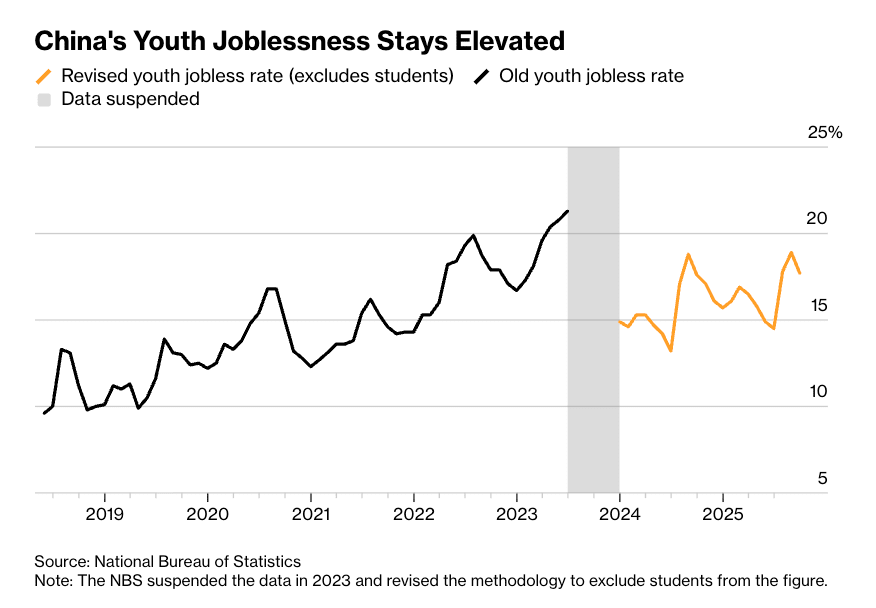
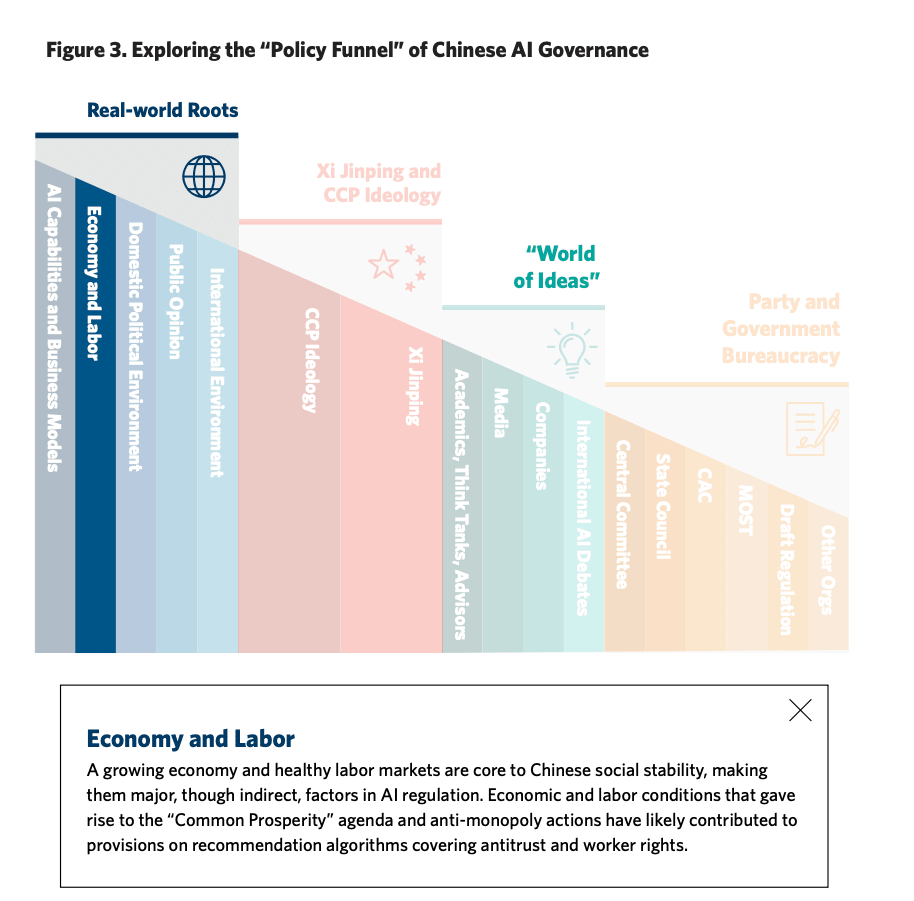


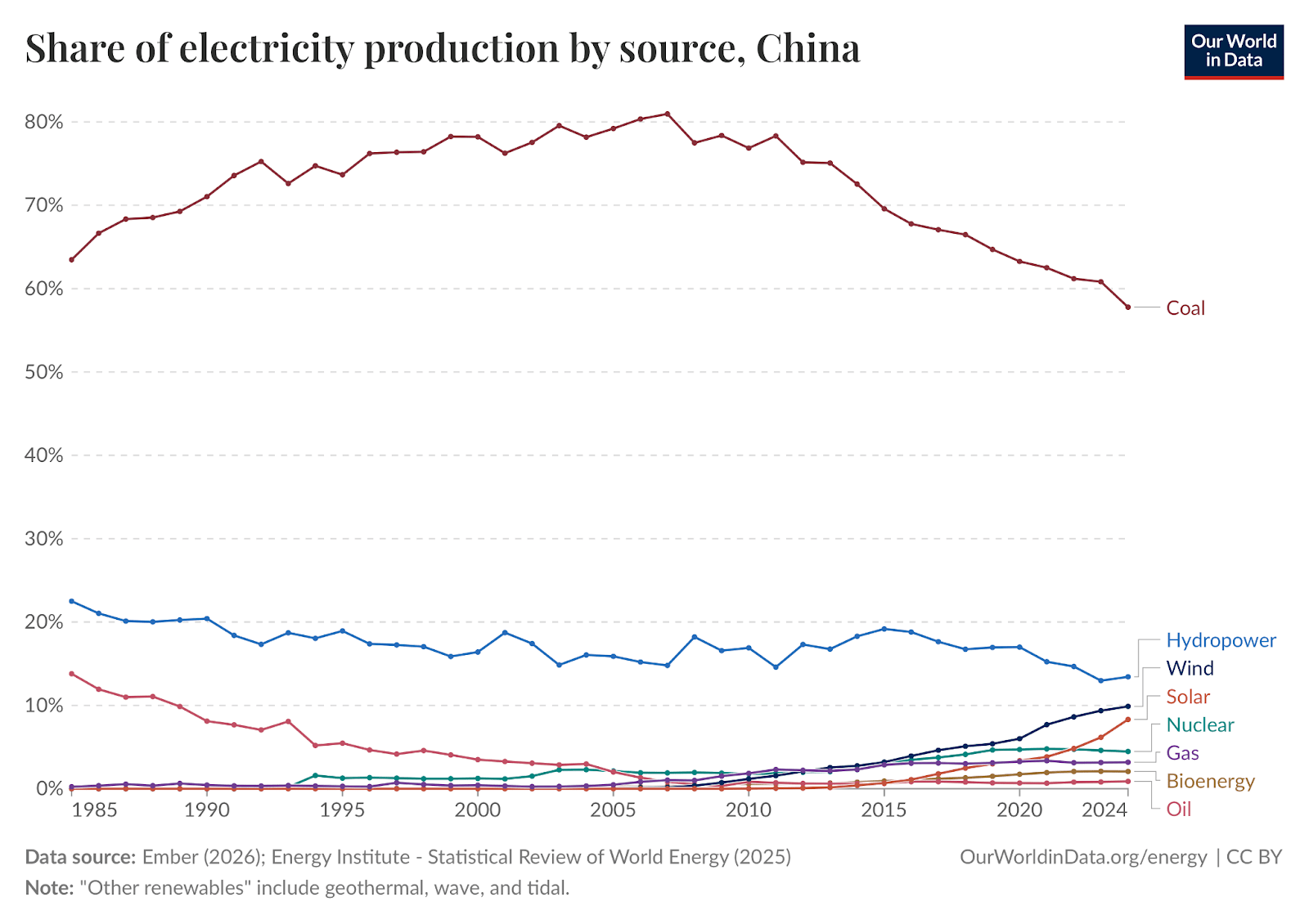

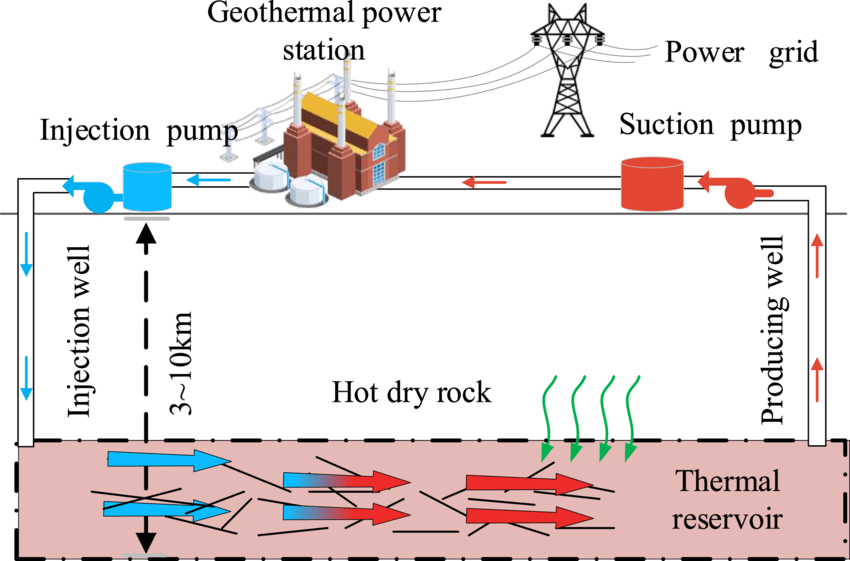
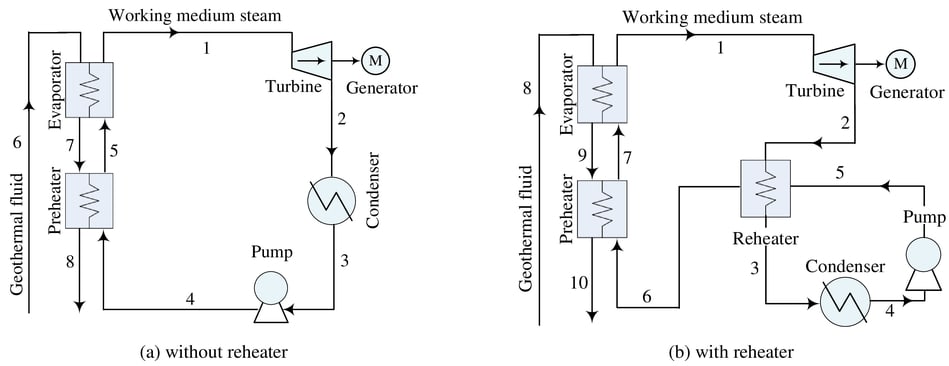
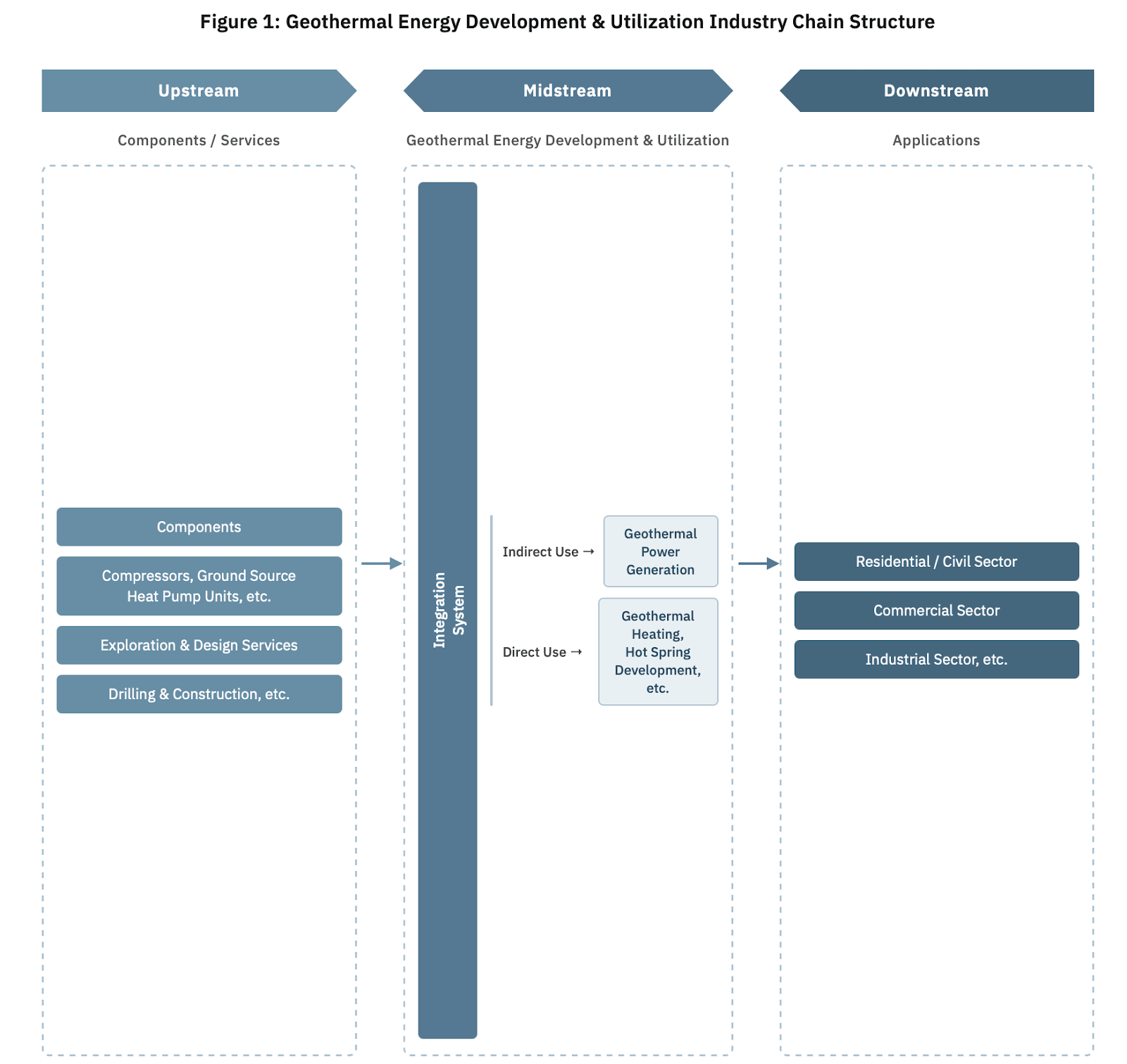
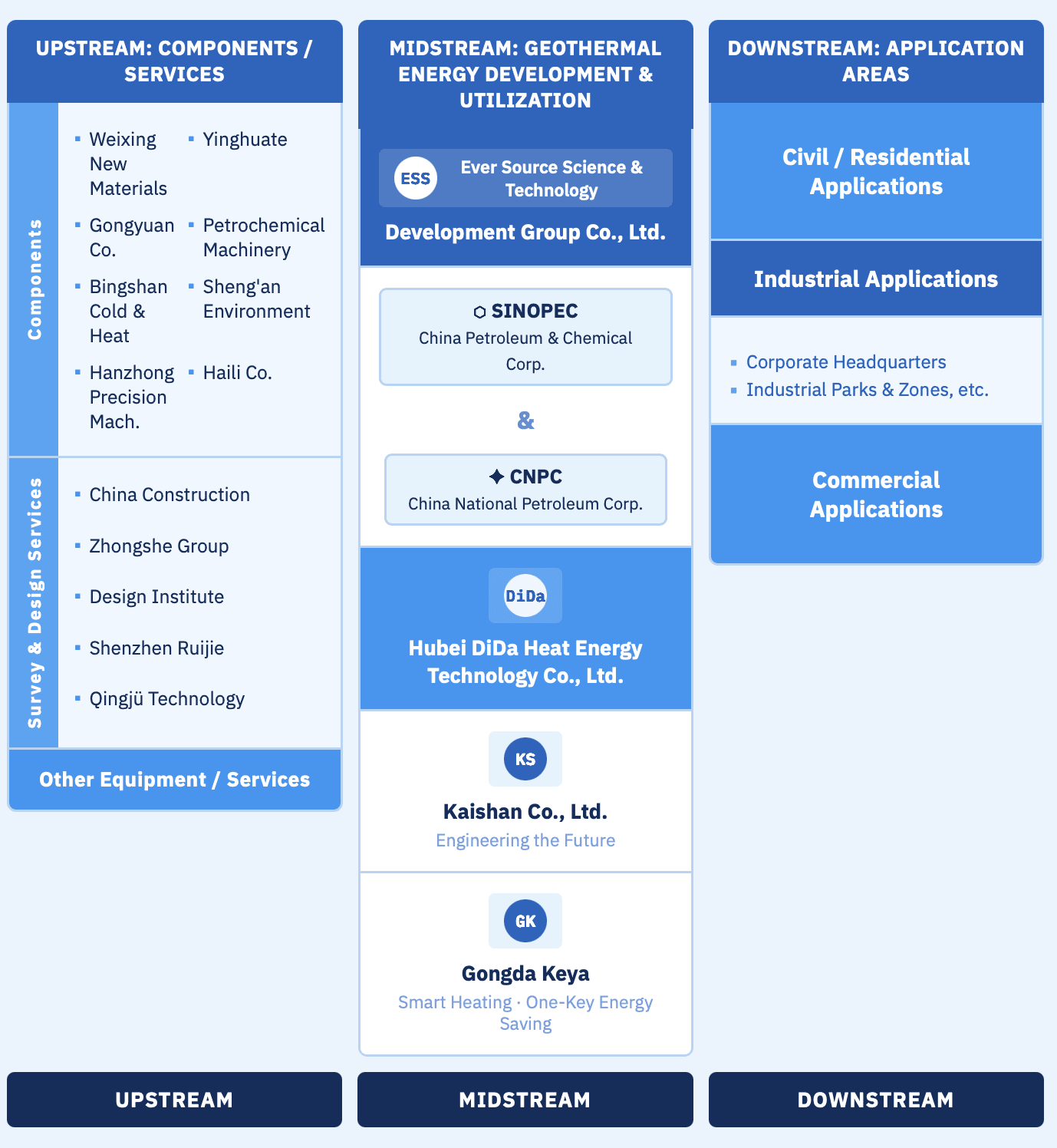
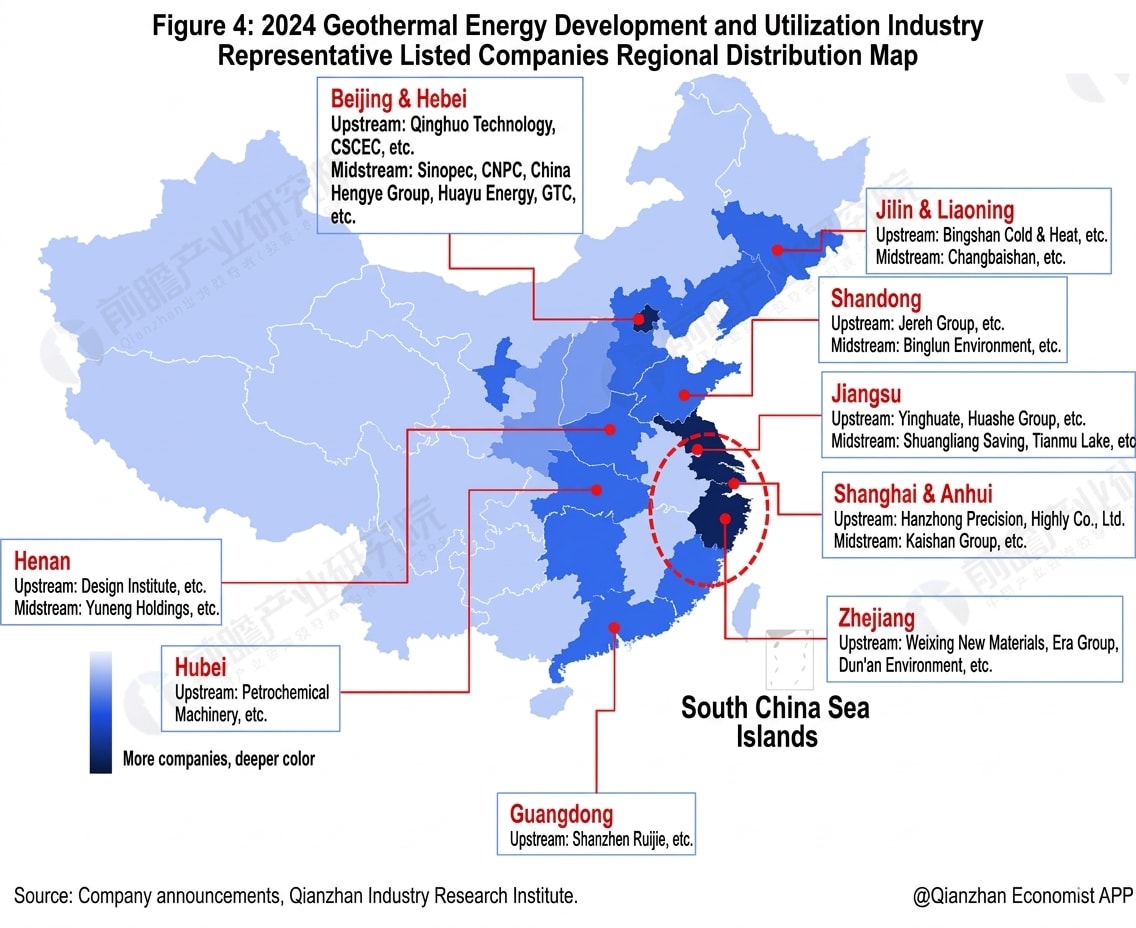

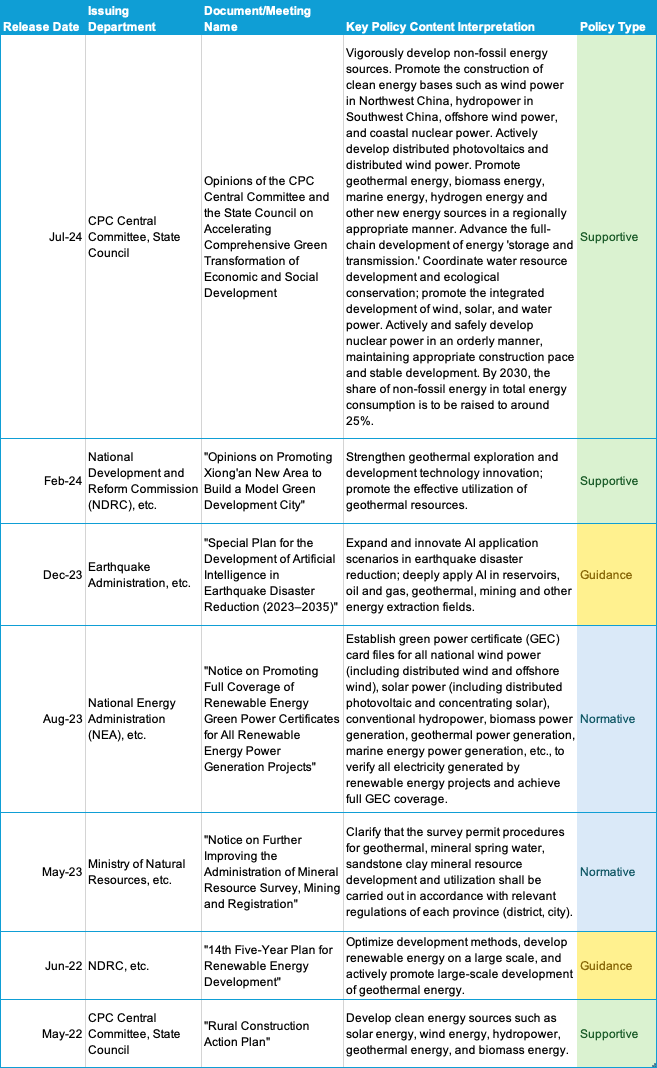








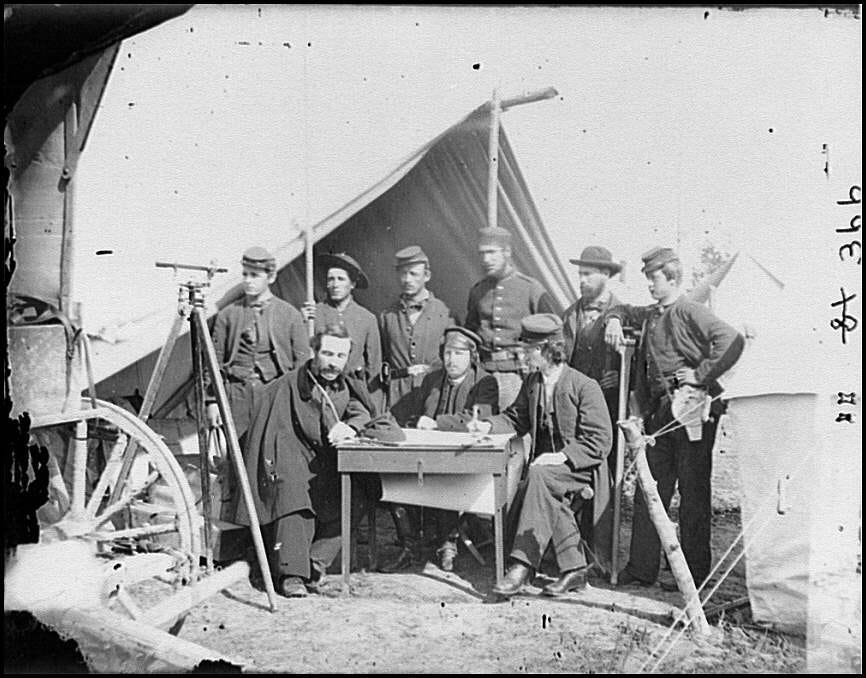
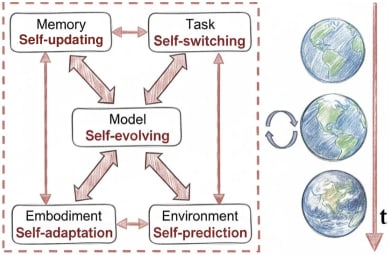


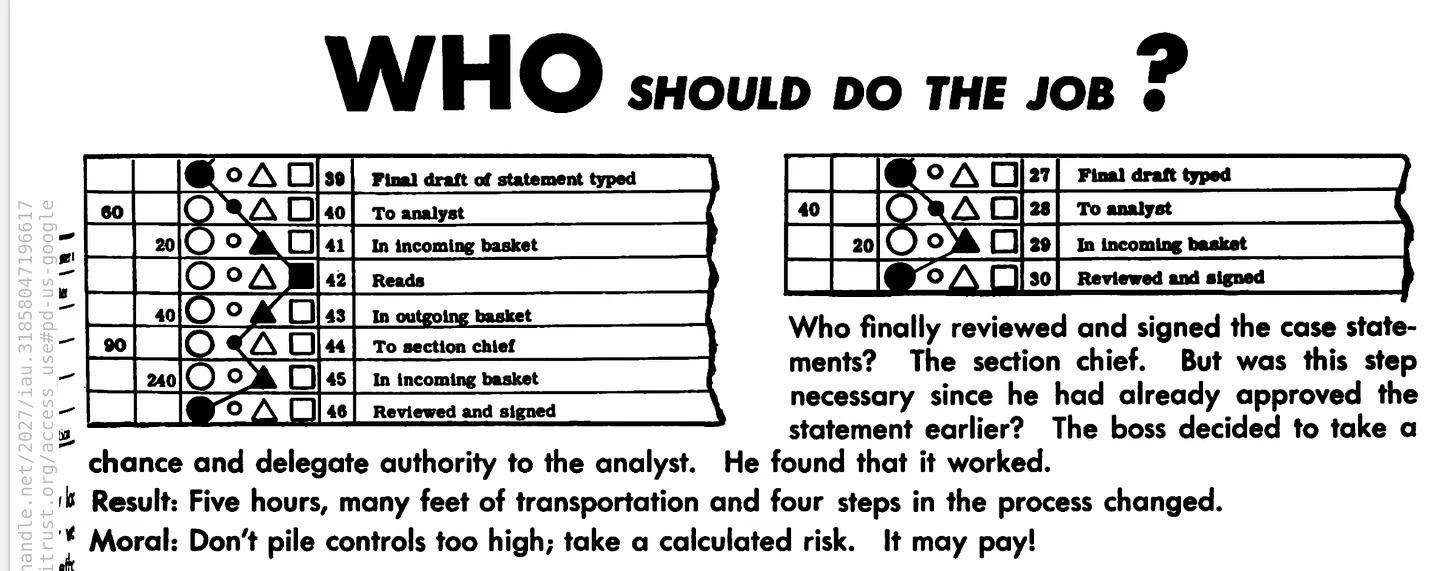
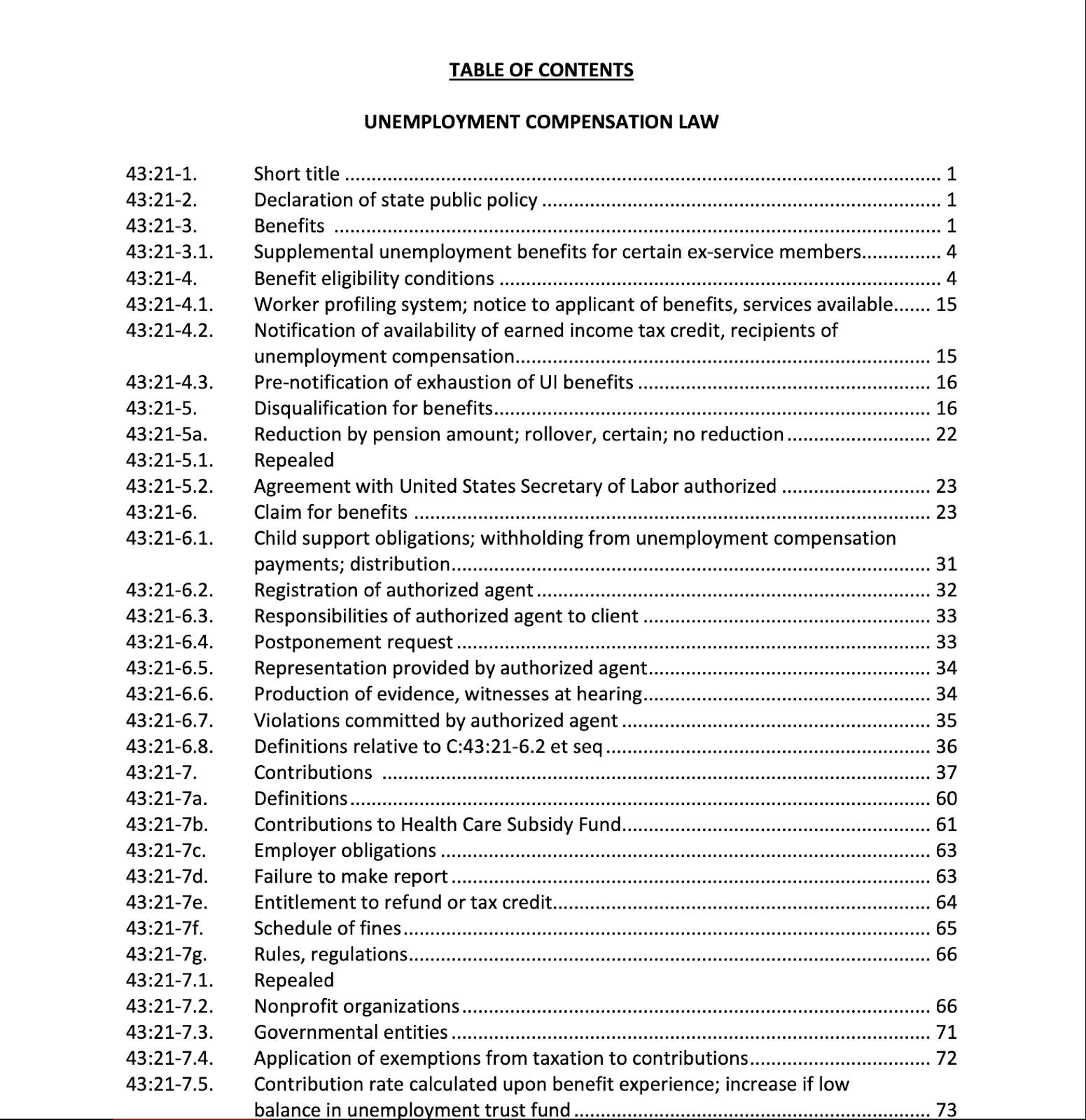
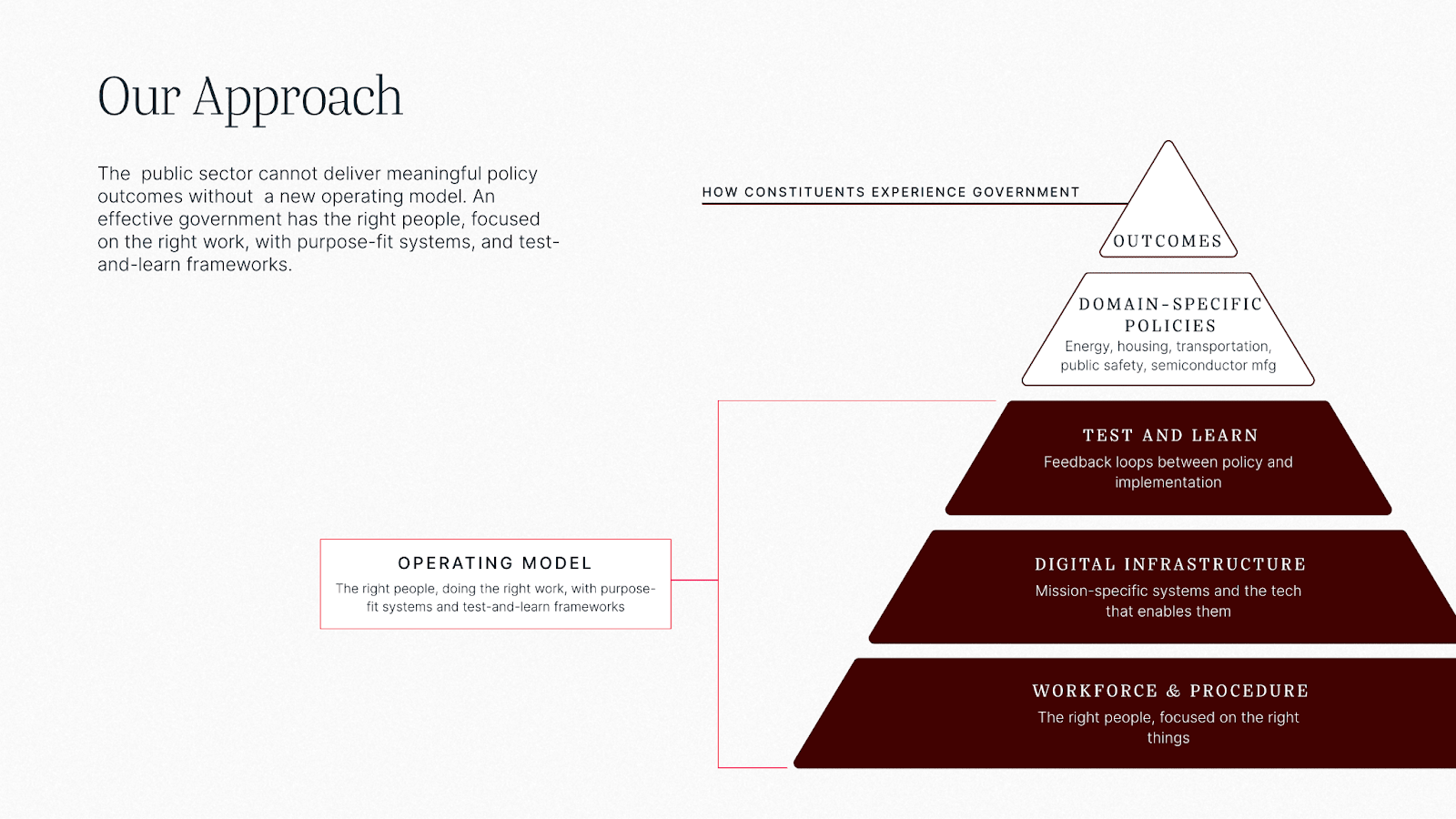
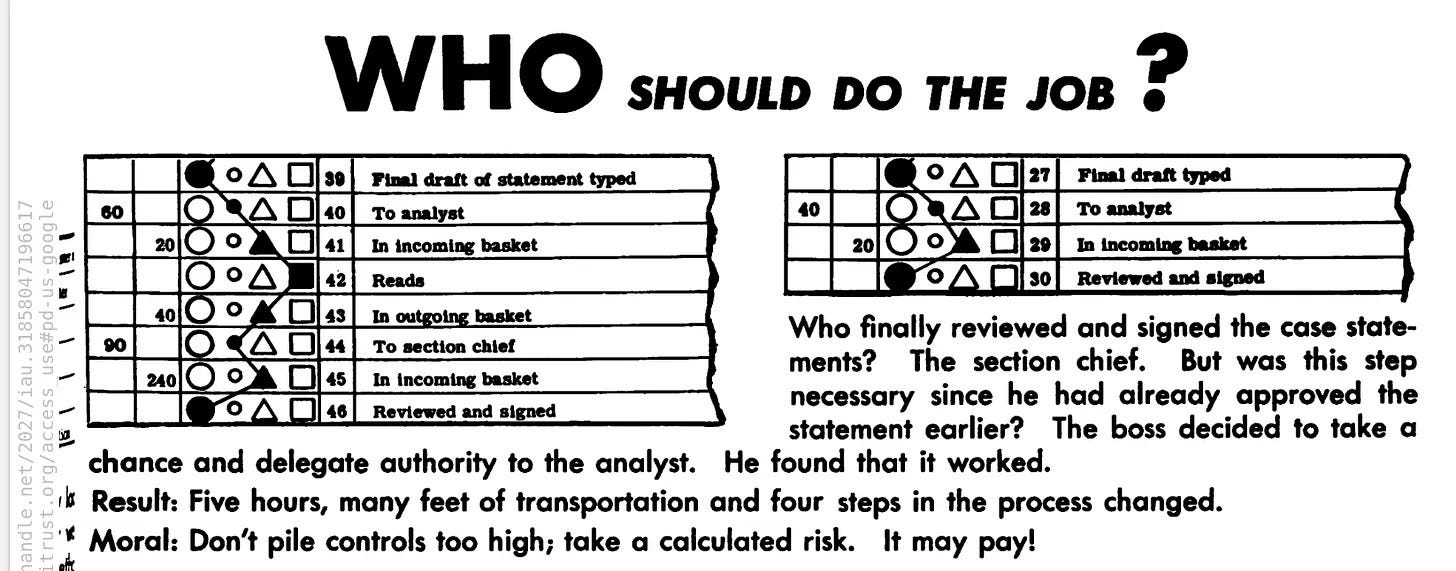






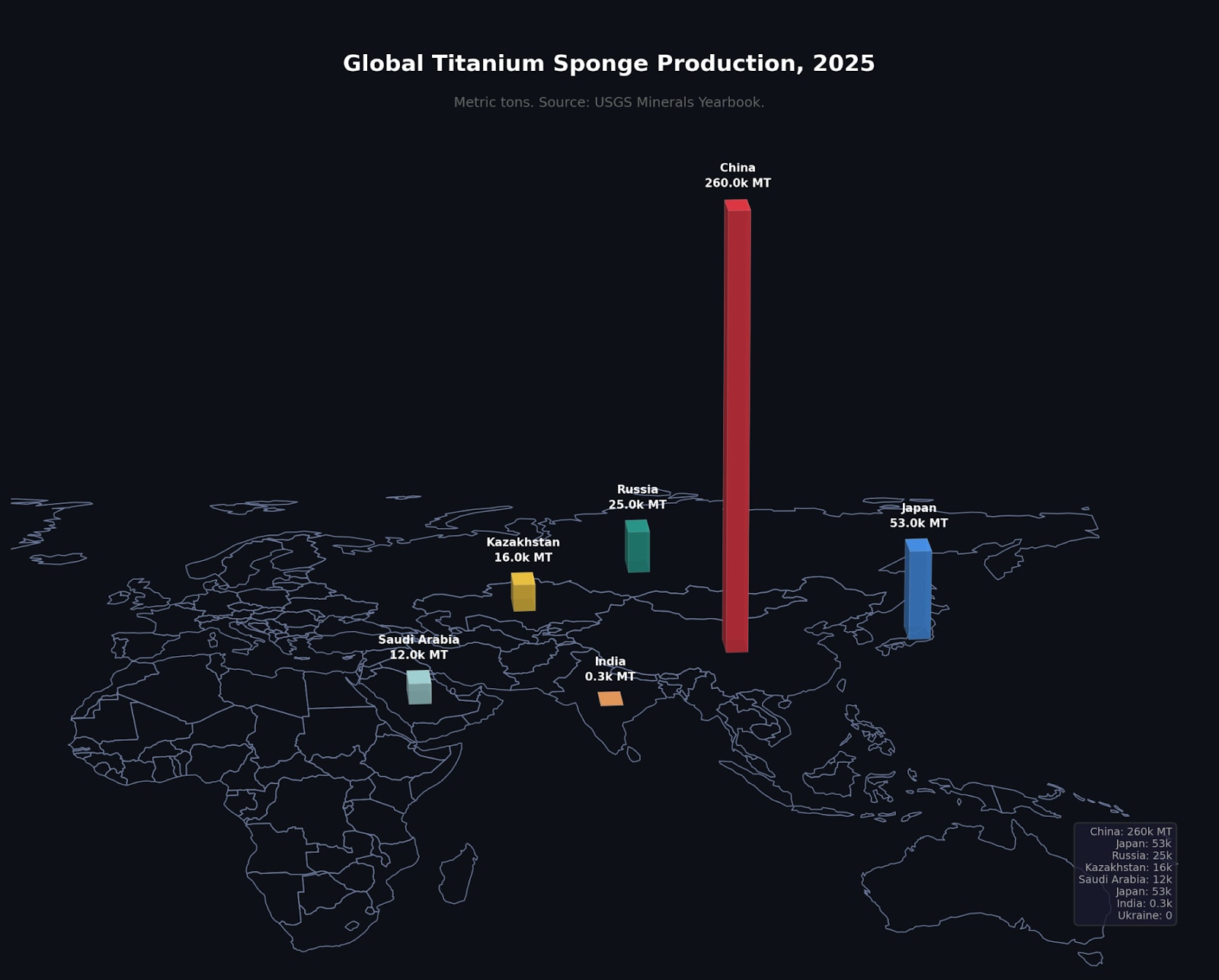

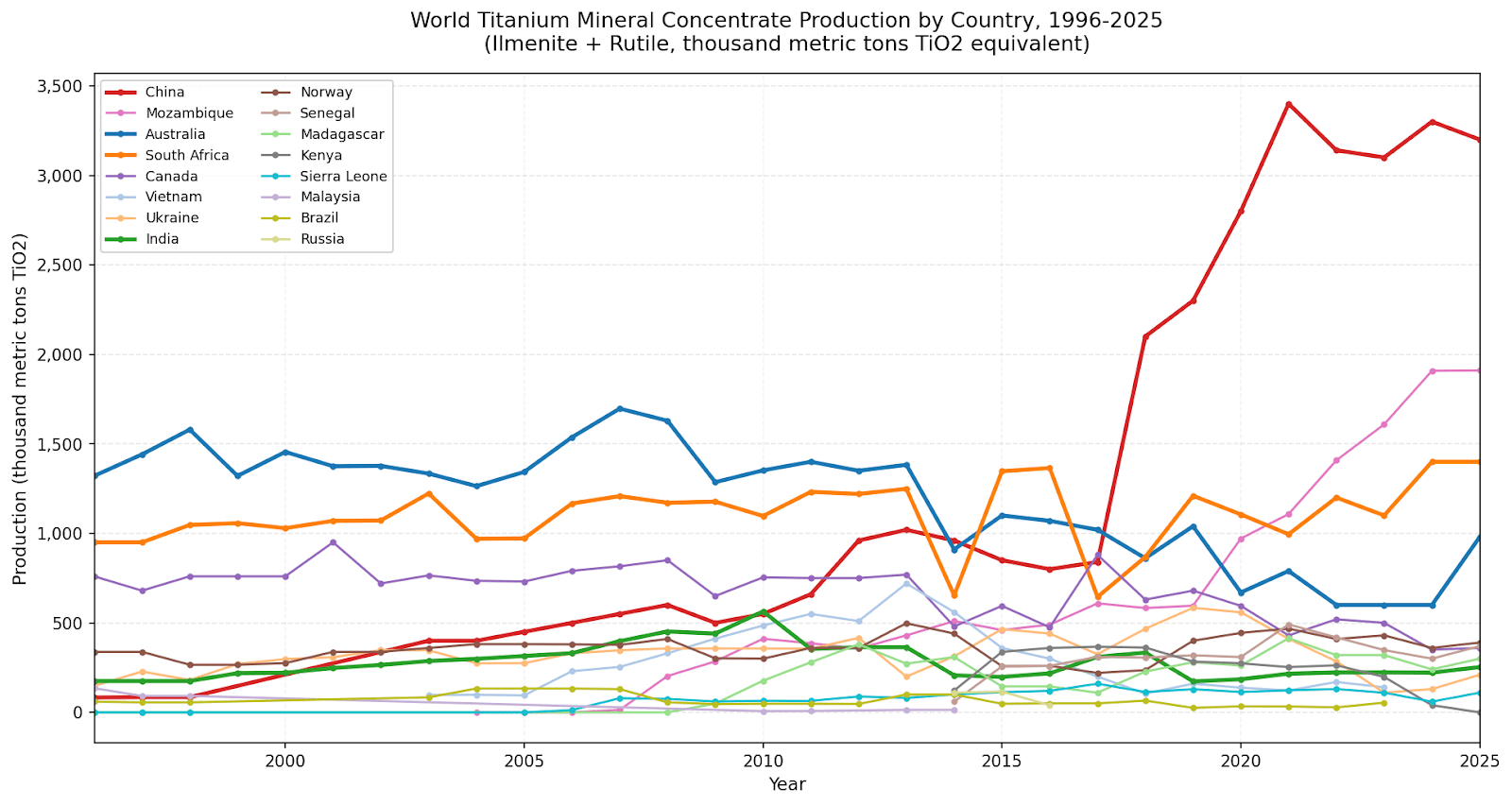
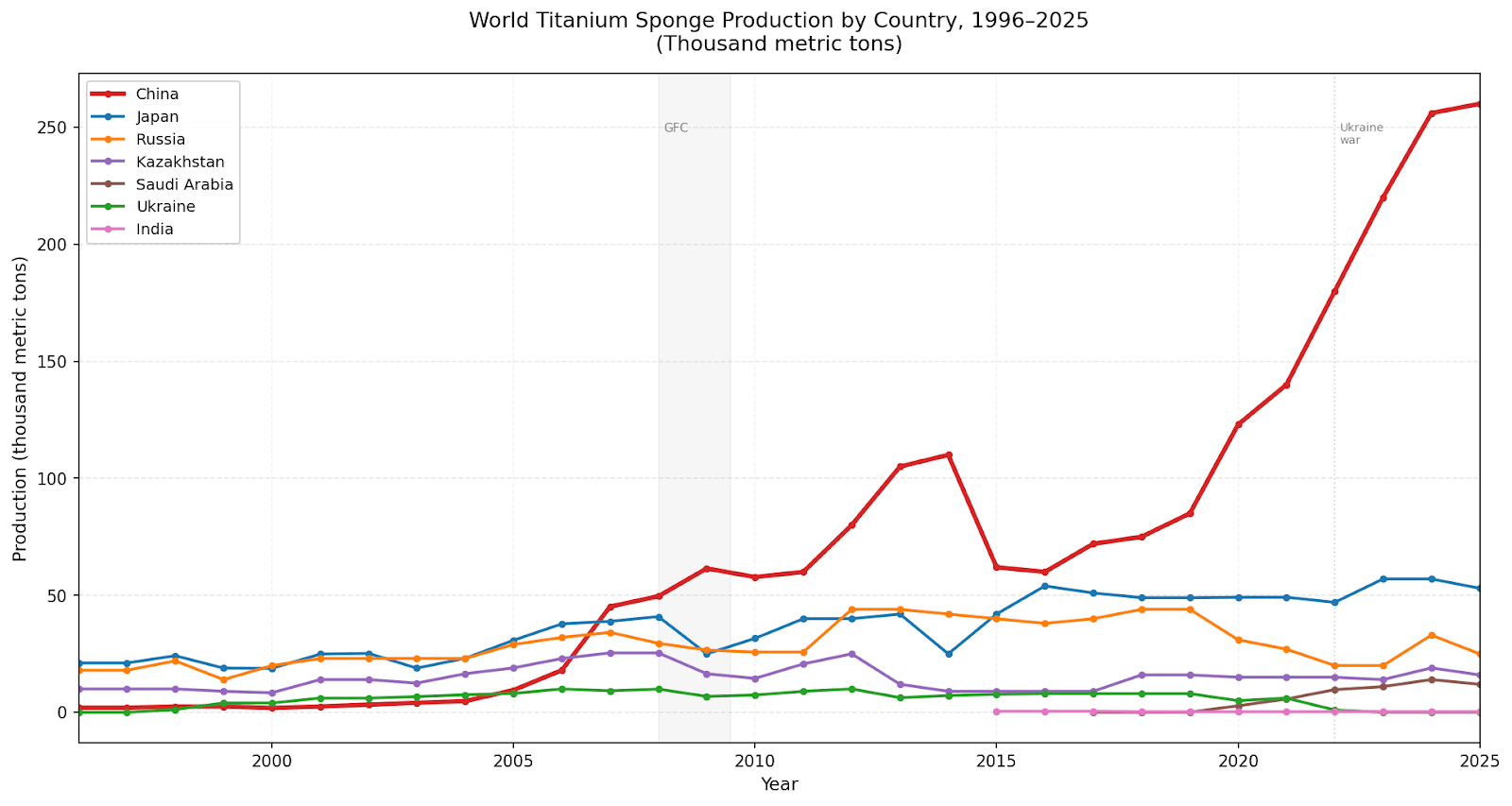

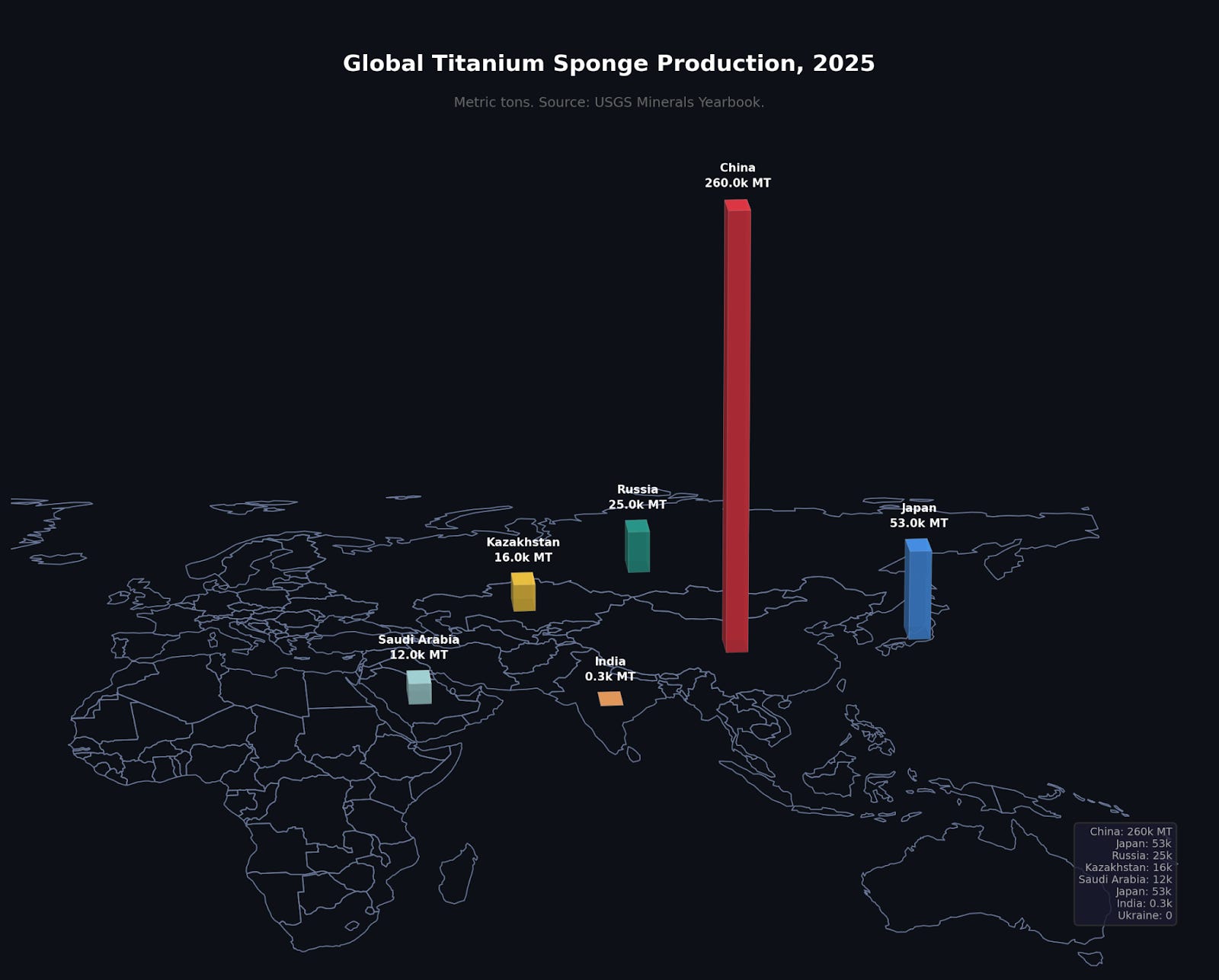




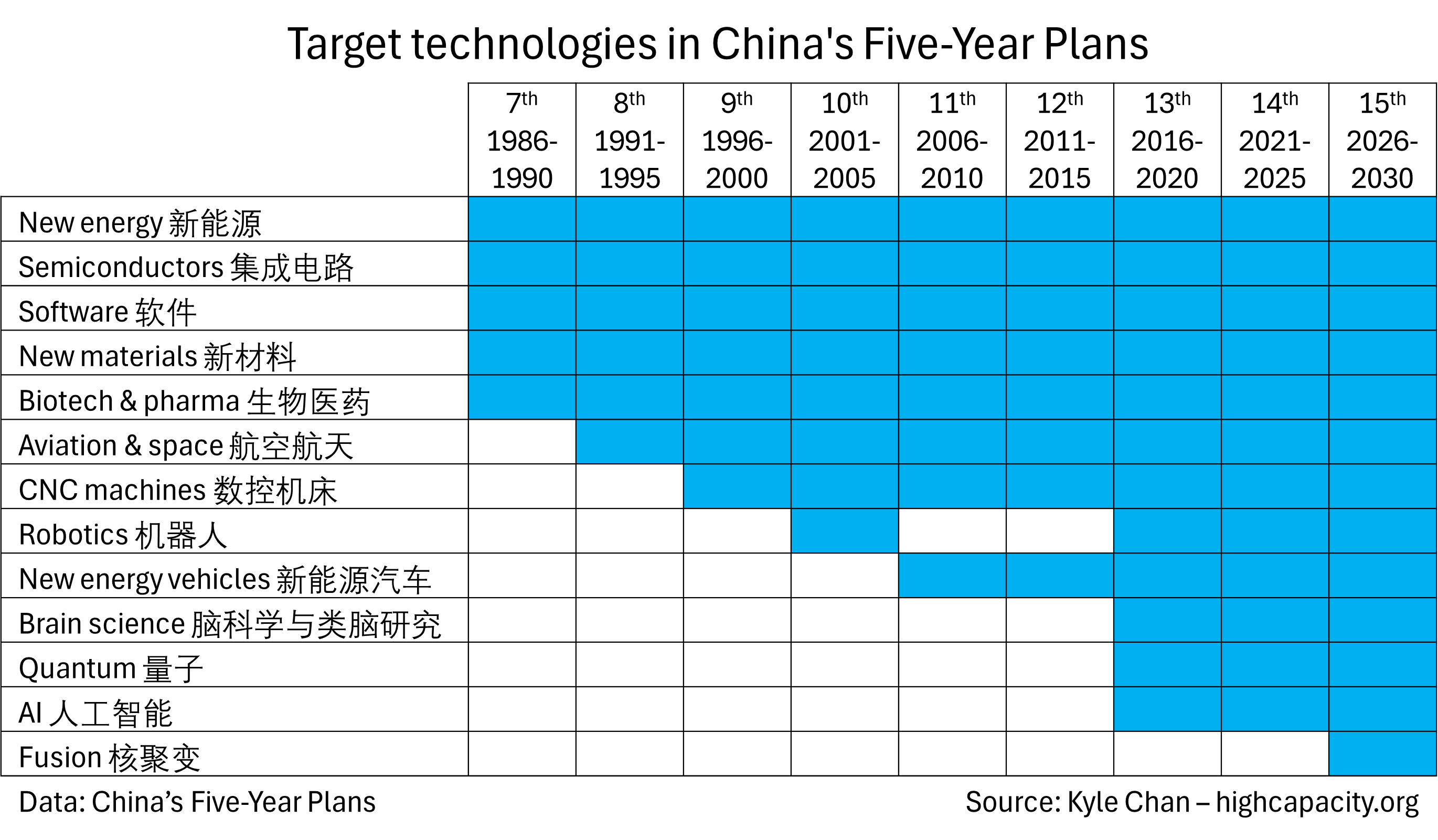
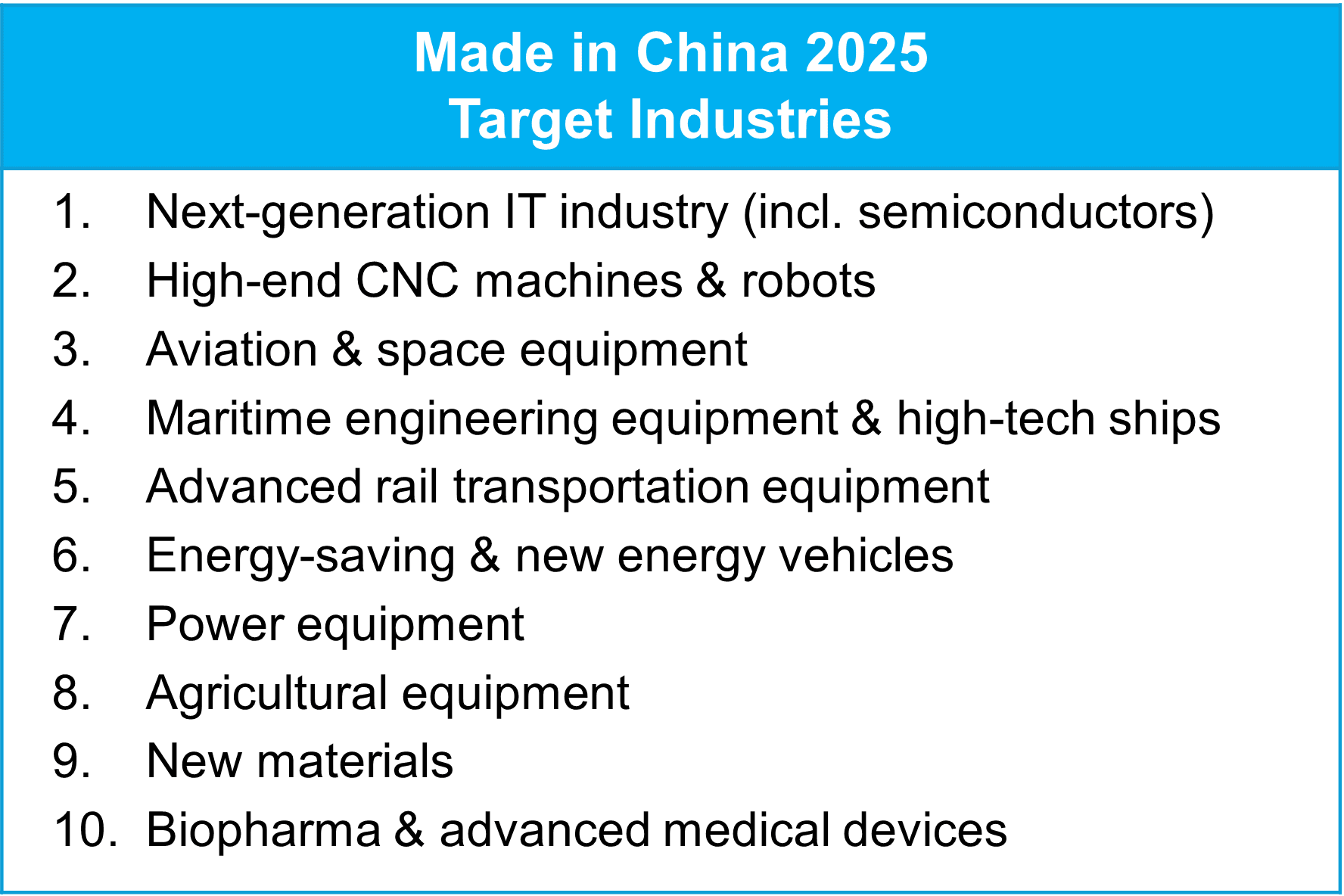
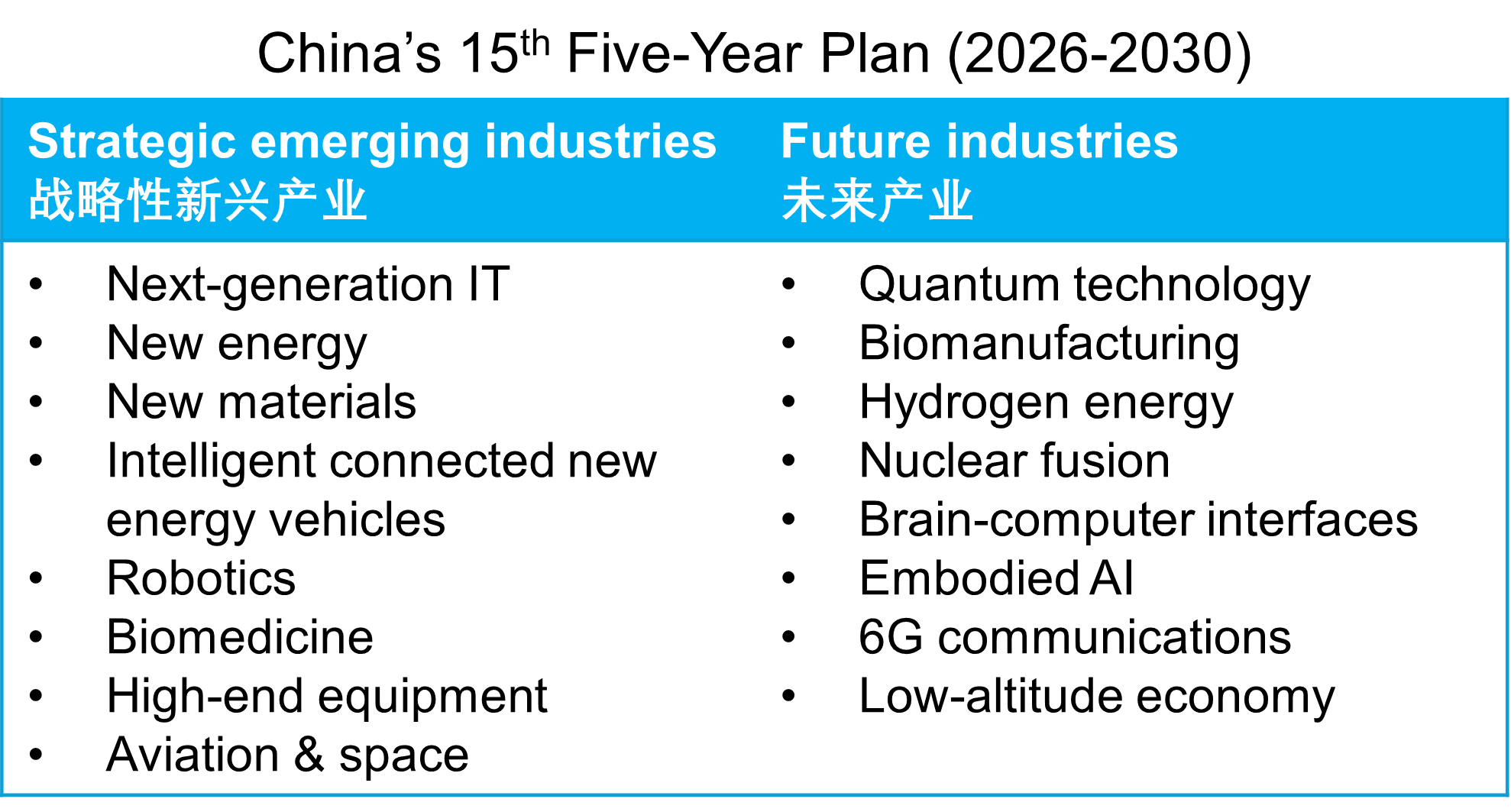
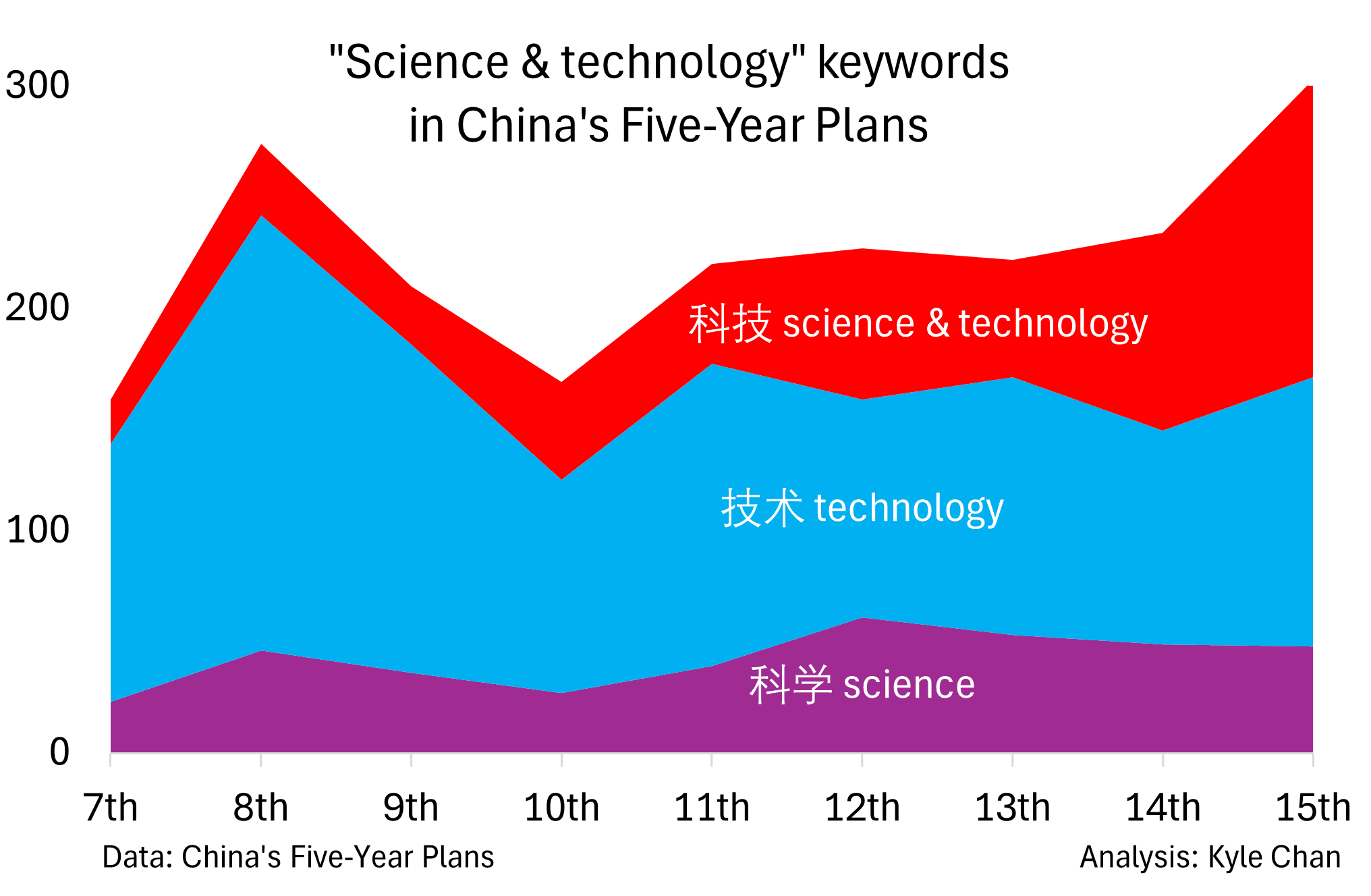
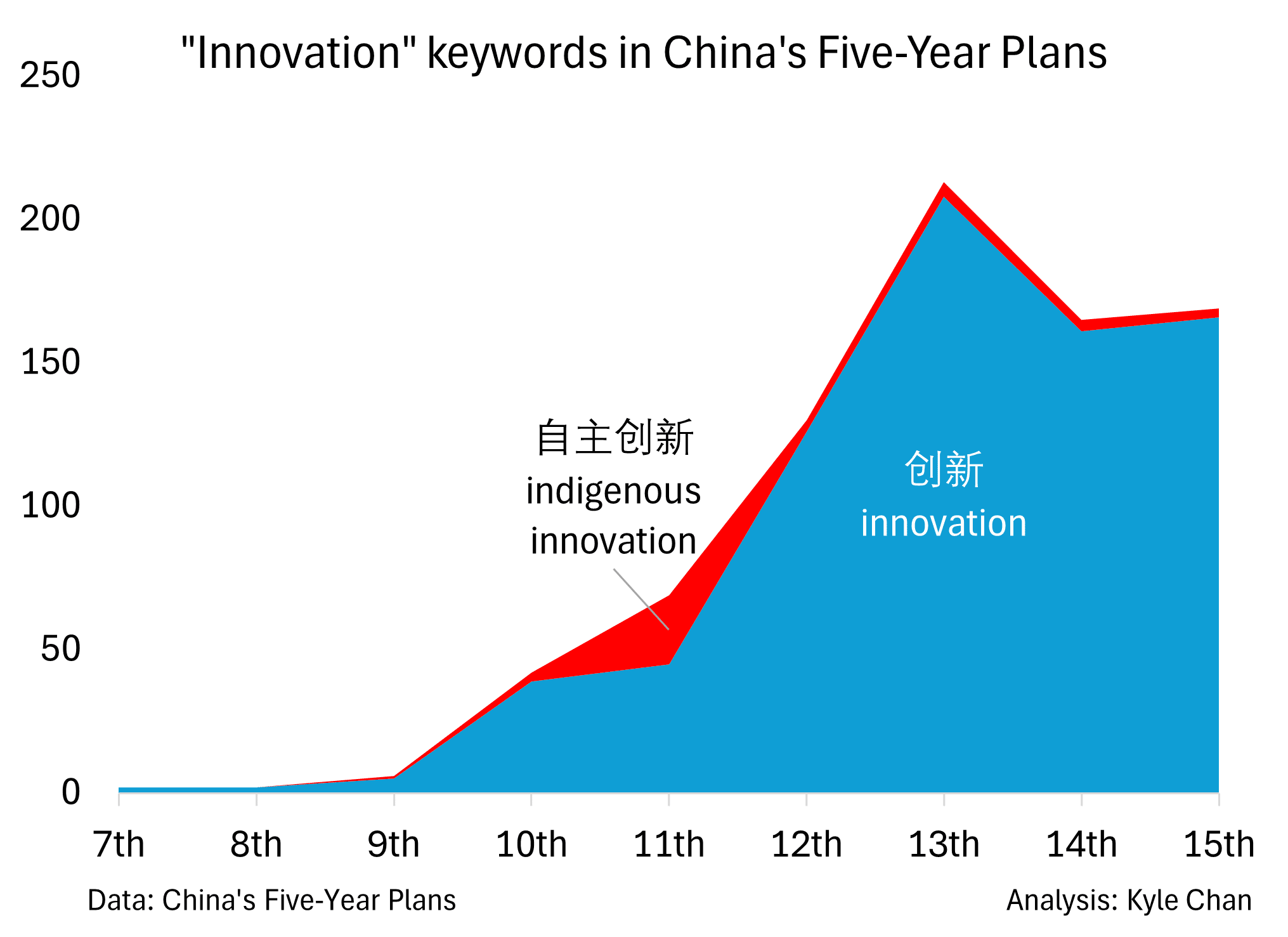
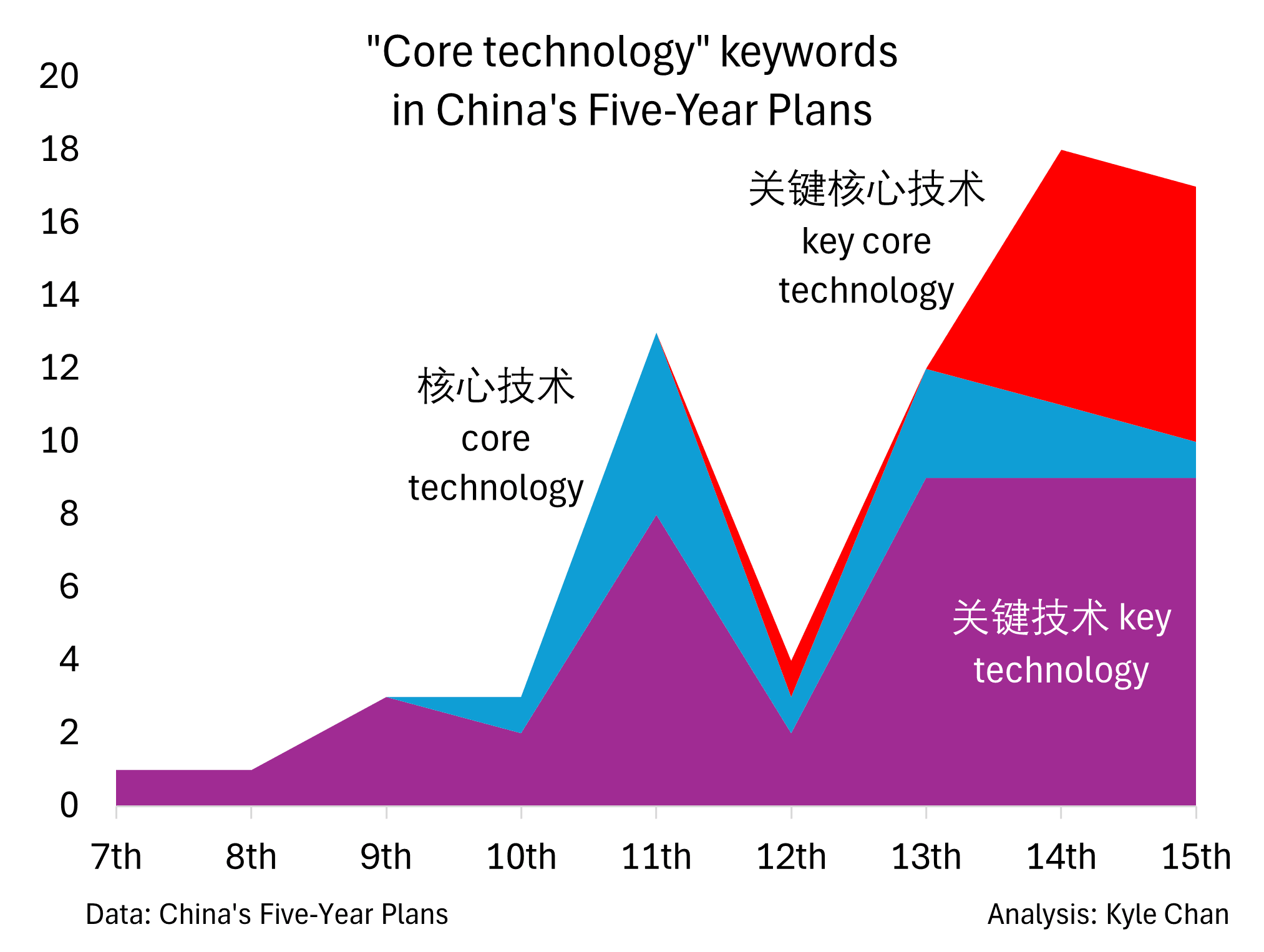
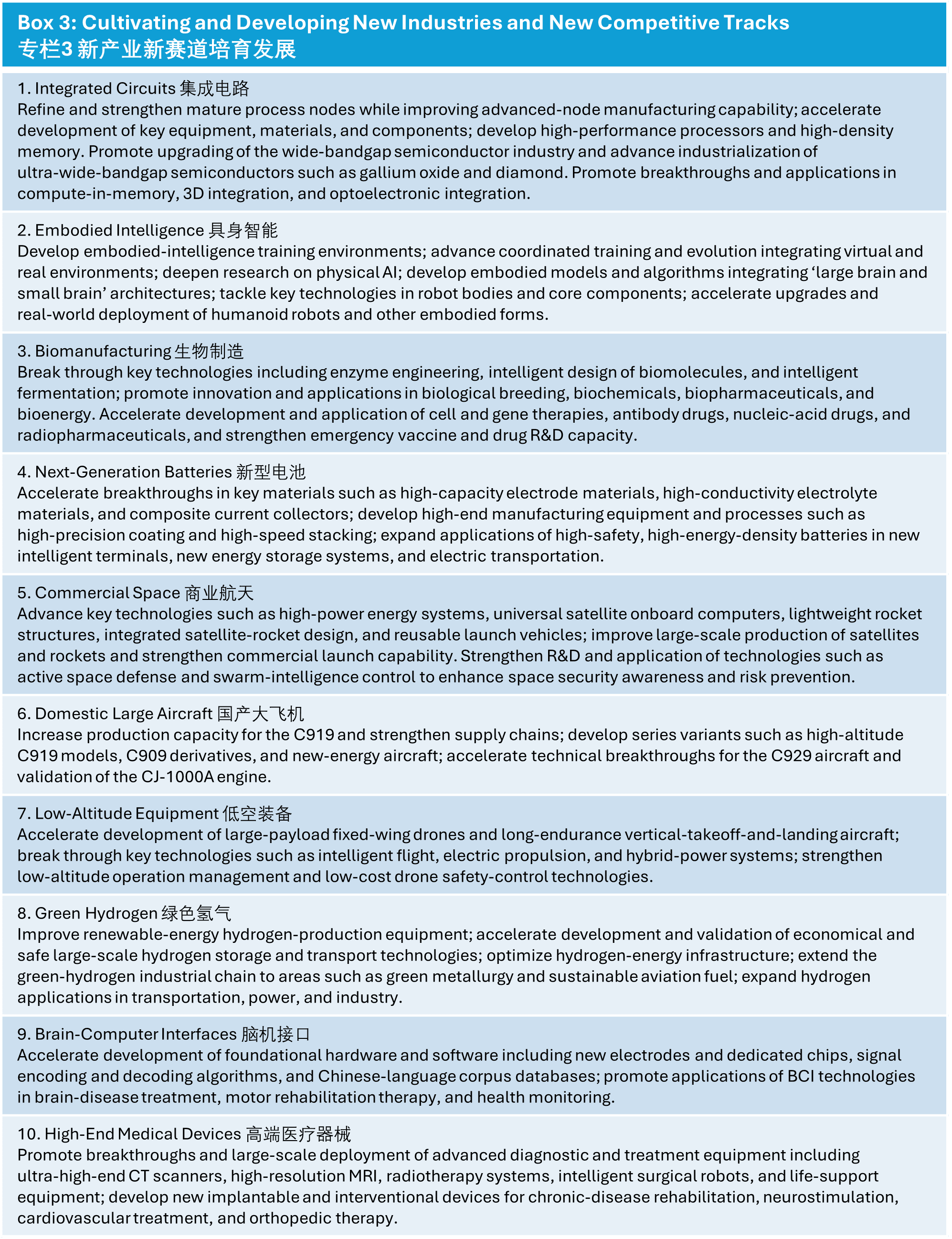

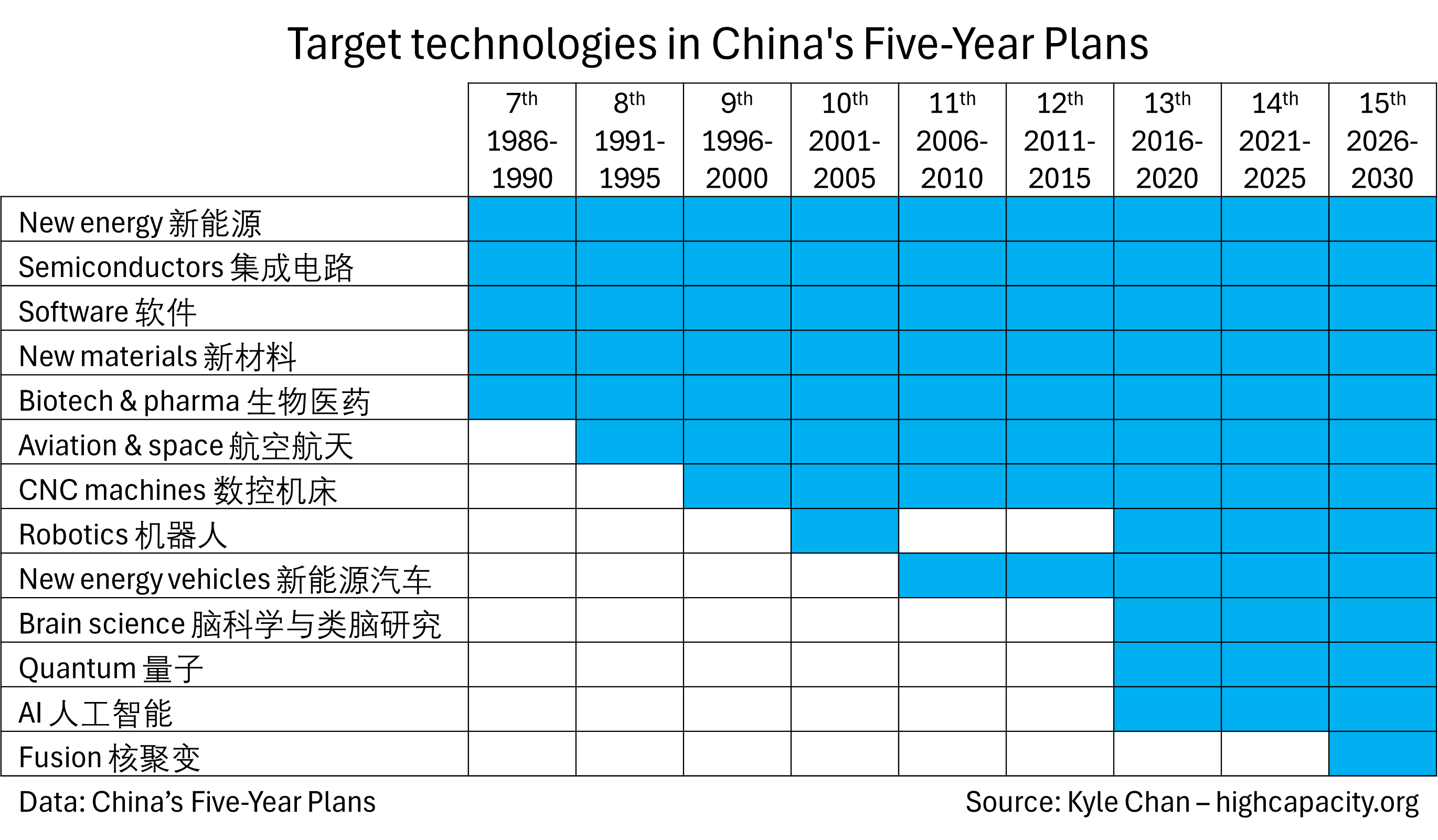







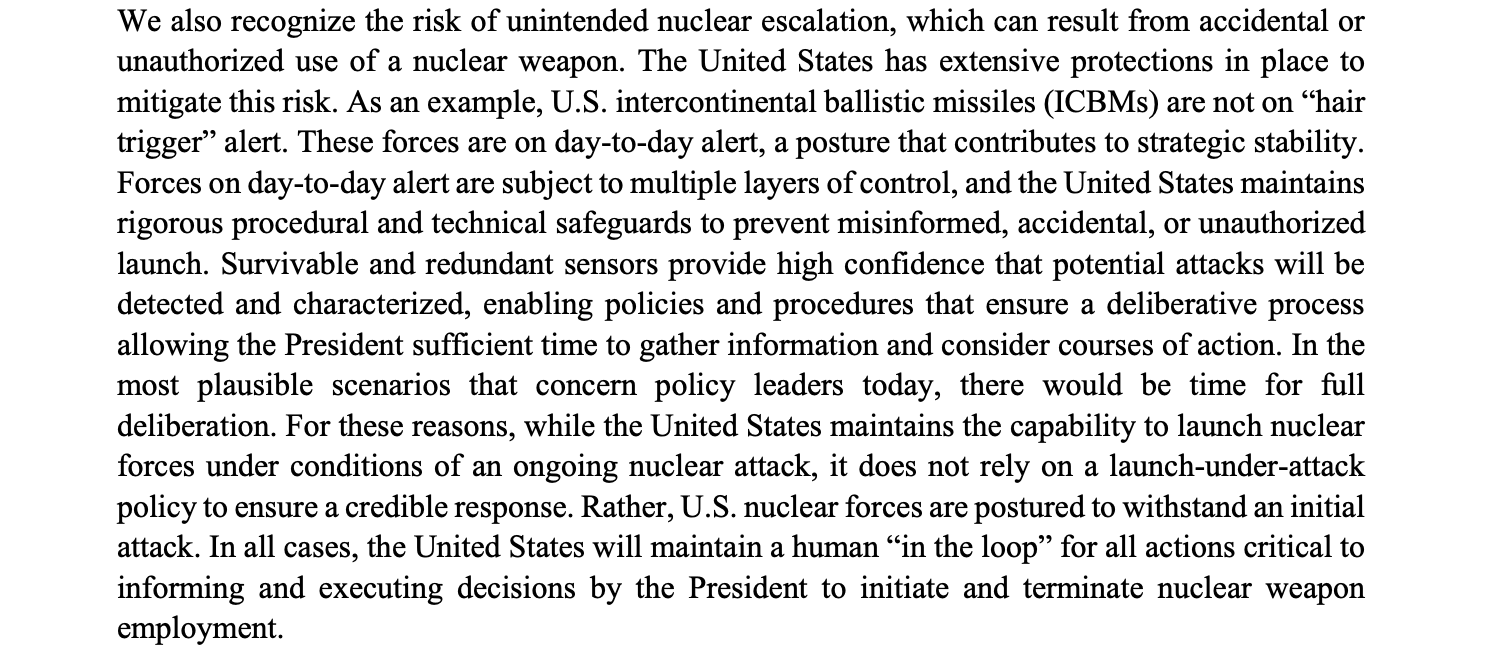







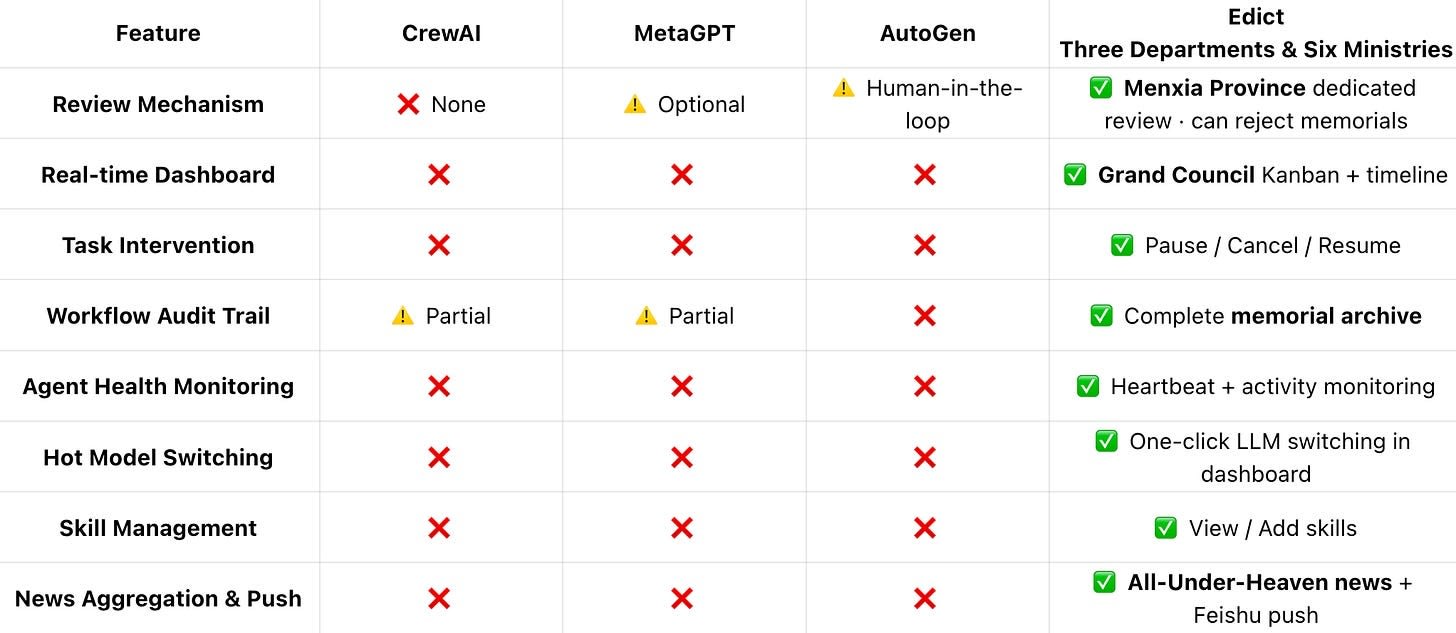
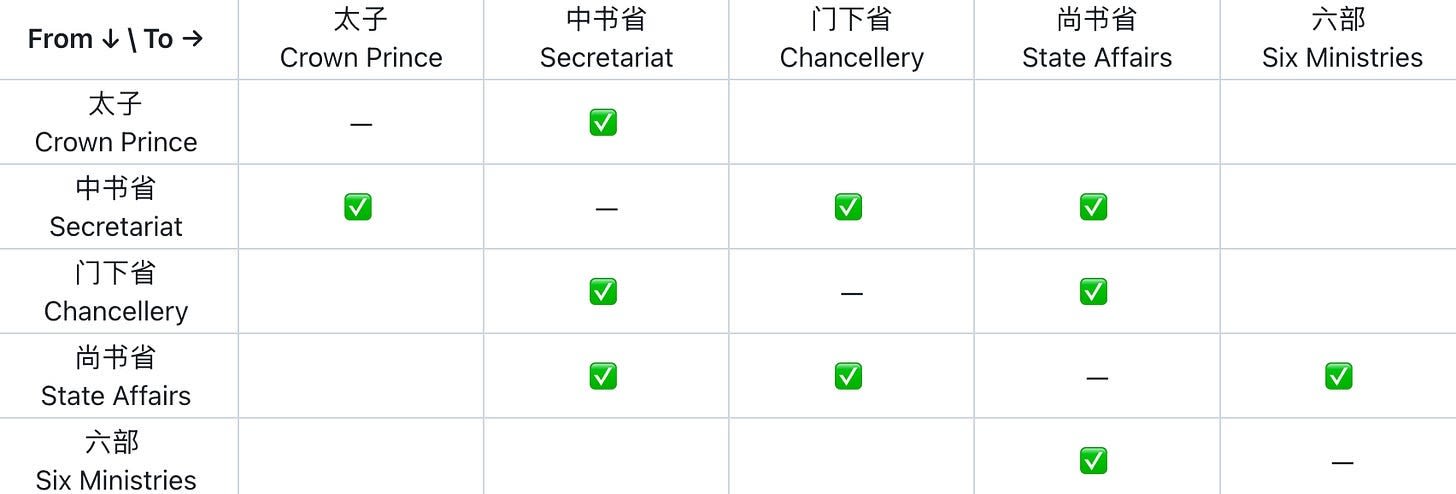














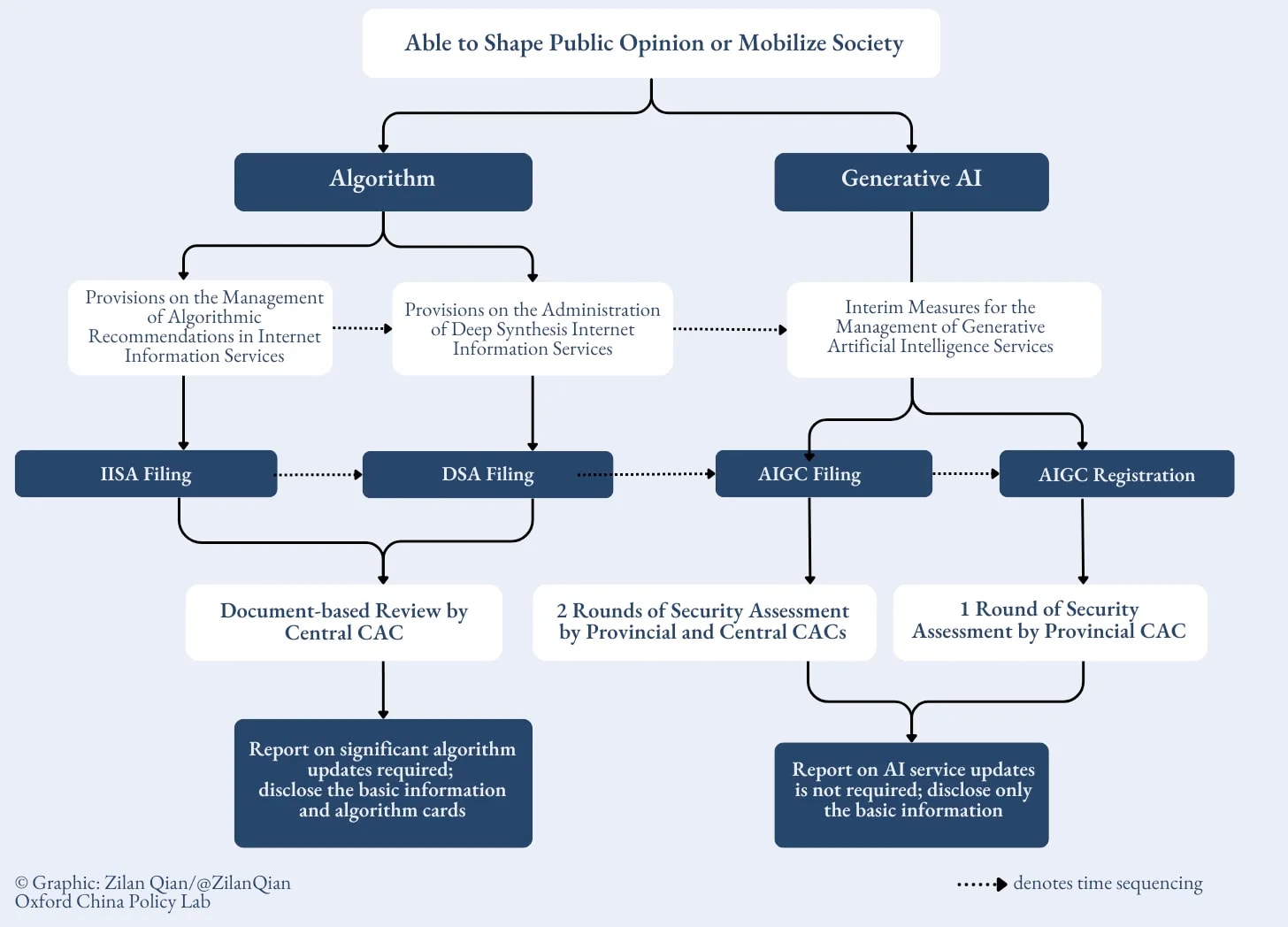














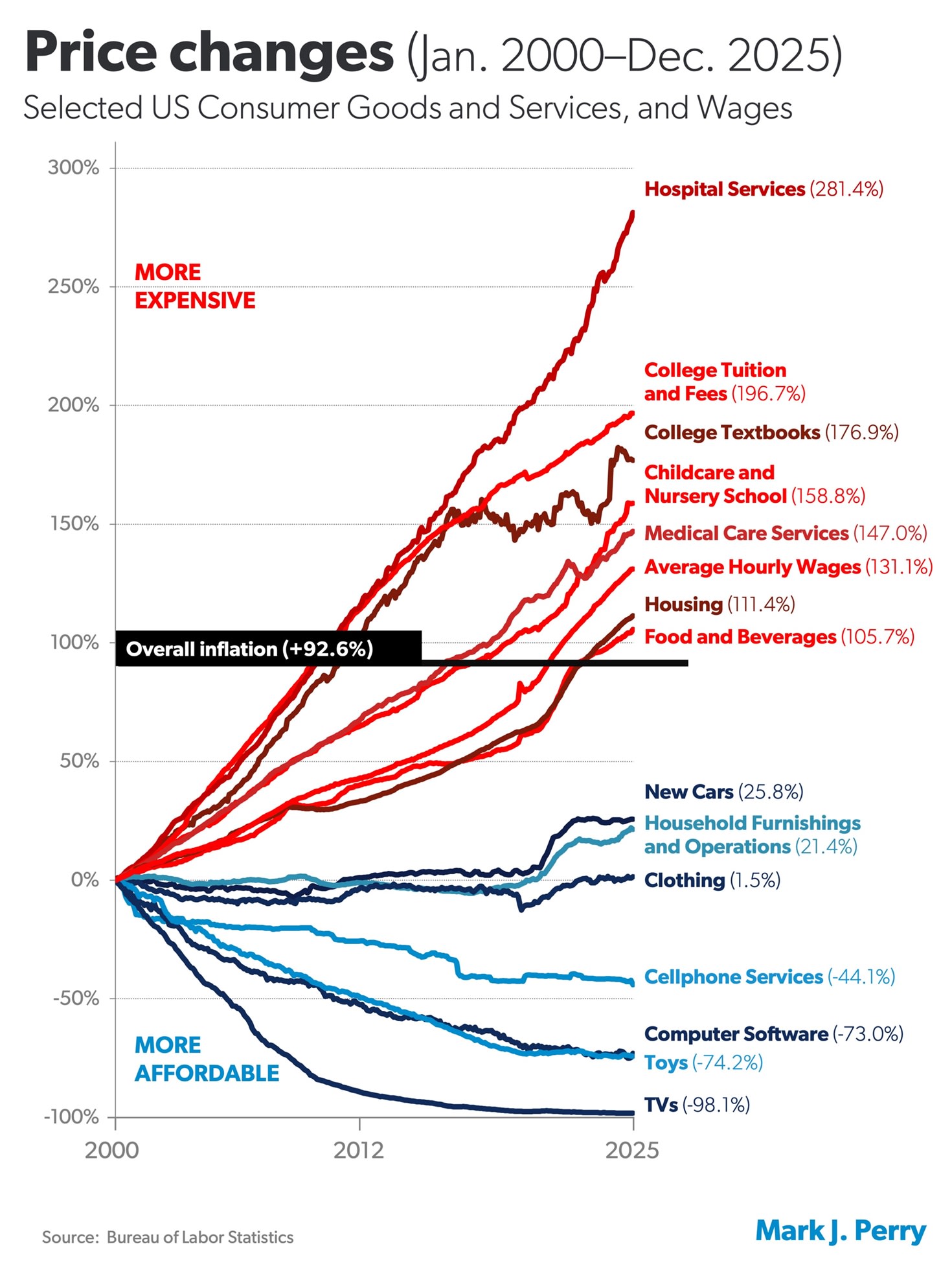









































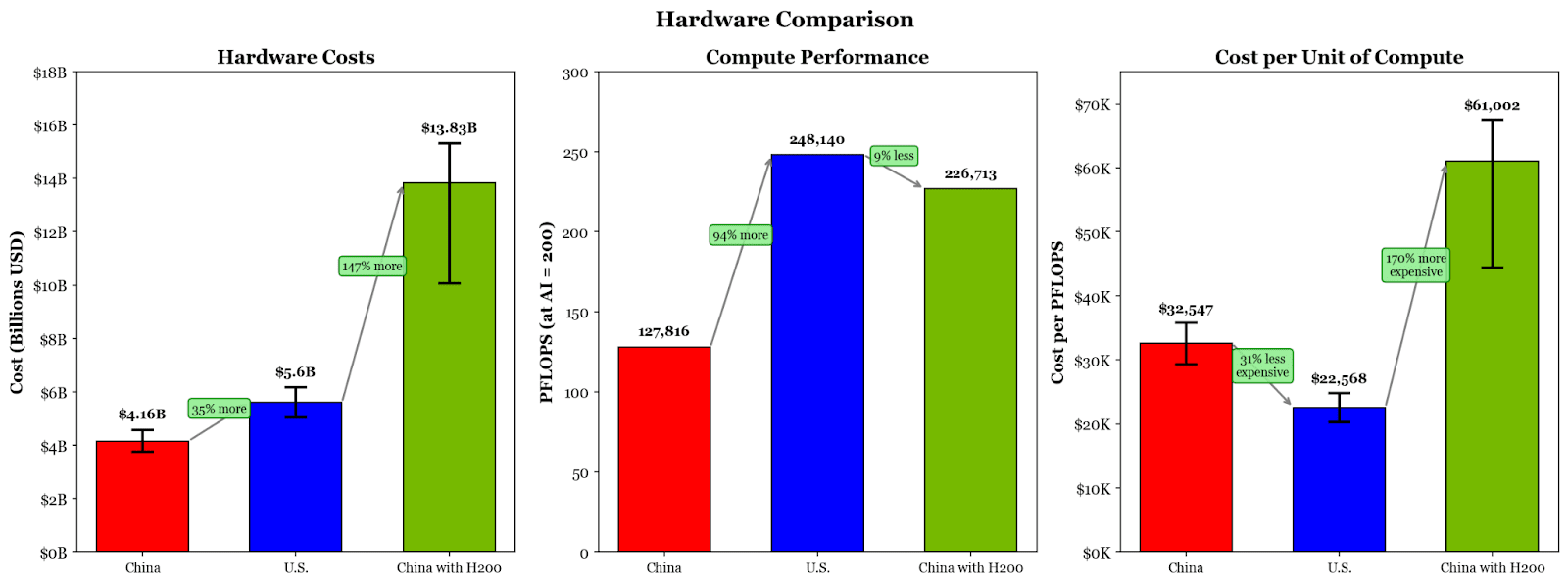
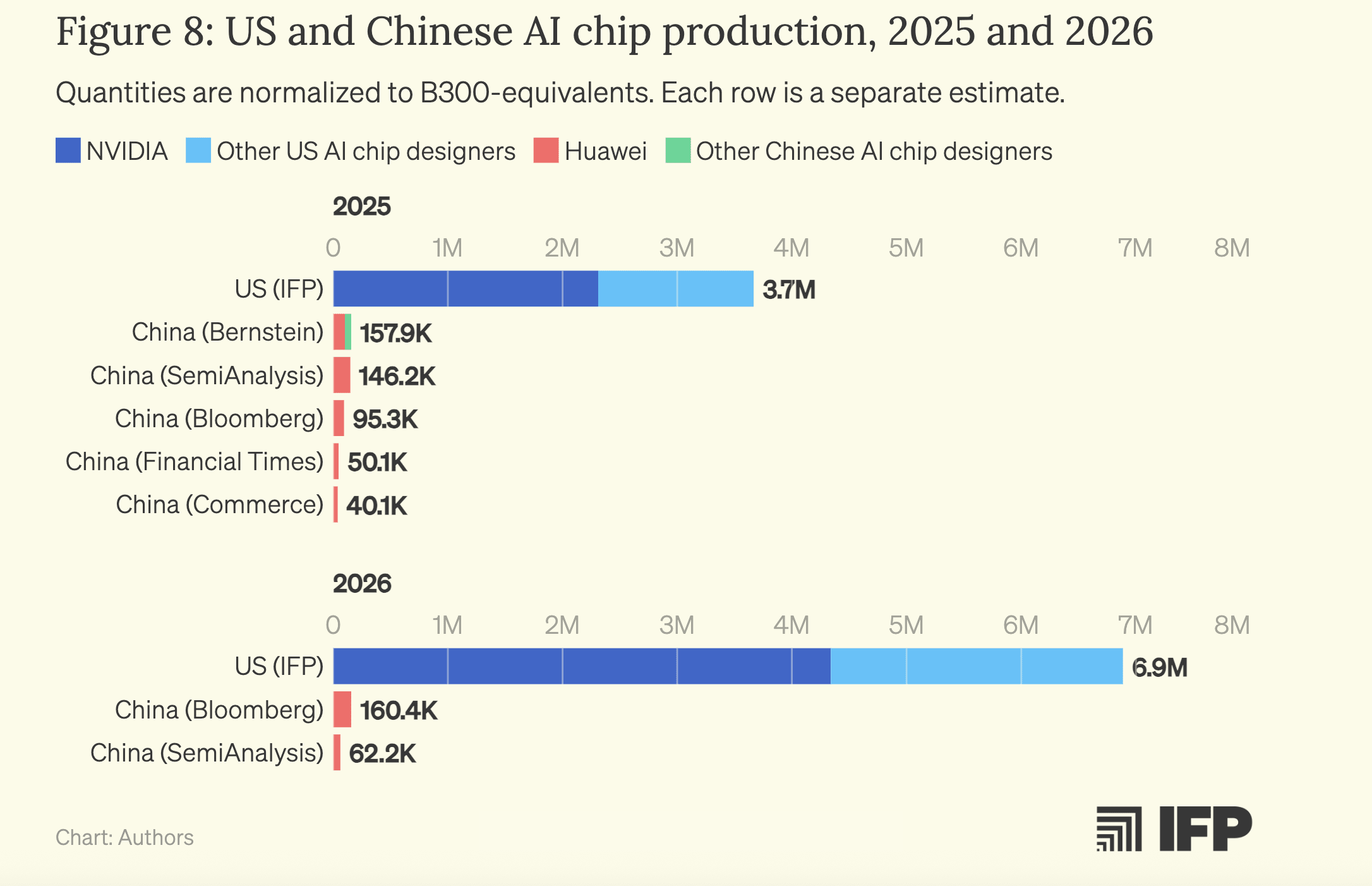

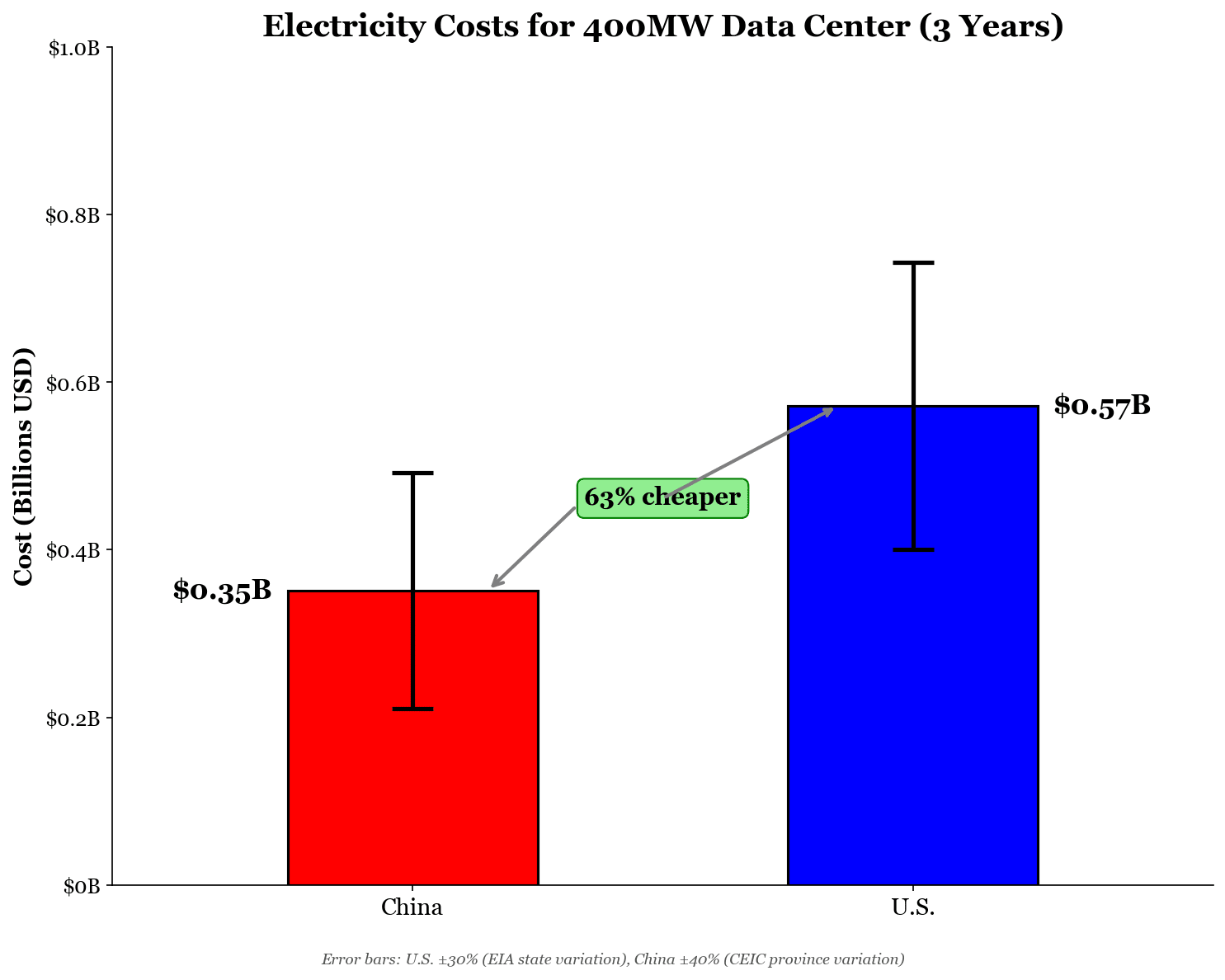
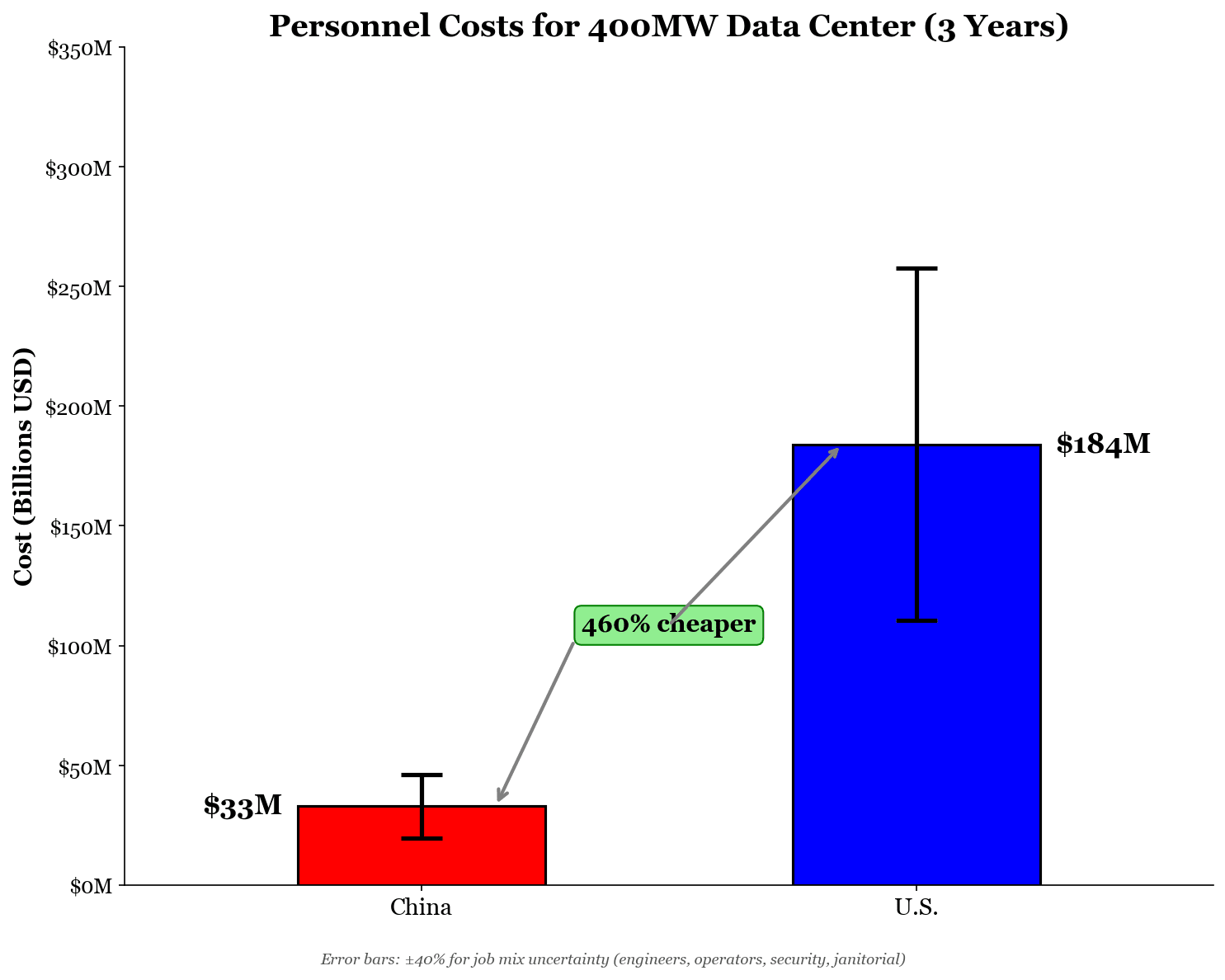



#/media/File:DavyCrockettBomb.jpg)
.jpg)


