The government has greatly restricted the number of work and study permits issued to foreigners following an unpopular immigration boom during the pandemic.
The Democratic measure was defeated mostly along party lines, along with another resolution that would have halted the military’s escalating campaign of boat attacks.
U.S. military aircraft in Ceiba, Puerto Rico, on Tuesday. For months, the U.S. military has been building up a large naval force there as President Trump continues to threaten to attack Venezuela.
The departure of Mr. Bongino had seemed inevitable since August, when the White House hired Missouri’s attorney general, Andrew Bailey, to share his job as deputy director.
Nick Reiner's lawyer says the case involves "complex and serious issues"
Nick Reiner, the son of celebrated Hollywood director Rob Reiner, has appeared in court for the first time charged with murdering his parents.
The 32-year-old waived his right to enter a plea to two charges of first-degree murder at the hearing, as all sides agreed to delay his arraignment until 7 January when he will once again have the opportunity to enter a plea.
His lawyer, Alan Jackson, told reporters outside court that there were "complex and serious issues" in the case that needed to be worked through in the coming weeks.
Rob Reiner and Michele Singer Reiner were found stabbed to death in their Brentwood home on Sunday. Nick Reiner was charged with their murder on Tuesday.
As he appeared in court in downtown Los Angeles, Mr Reiner only said "yes, your honour" when asked by Judge Theresa McGonigle if he understood that he has the right to a speedy trial.
The judge earlier ordered the assembled media - who gathered outside the courthouse hours prior to the hearing - not to film the defendant, who wore what appeared to be a suicide prevention vest.
Media inside the courtroom could not see Mr Reiner throughout the brief hearing because he was sitting in a corner out of sight.
He was initially slated to make a court appearance on Tuesday but had not been medically cleared to do so, his lawyer and prosecutors said.
"We ask that during this process, you allow the system to move forward in the way that it was designed to move forward," Mr Reiner's lawyer, Alan Jackson, told reporters.
"Not with a rush to judgement, not with jumping to conclusions, but with restraint and with dignity, and with the respect that this system and this process deserves, and that the family deserves," he said.
The delay in Mr Reiner entering a plea could be designed to allow time for a psychiatric evaluation, one criminal defence lawyer told the BBC after the hearing.
"The psychiatric evaluation is generally done before arraignment to see if he is even fit to stand trial," Seth Zuckerman said.
Getty Images
Nick Reiner (right) is accused of killing his parents
Until the next hearing on 7 January, Mr Reiner will remain in custody at the Twin Towers Correctional Facility in Los Angeles.
If he pleads not guilty, he could be sentenced to life without the possibility of parole or the death penalty if convicted. Prosecutors have said no decision has been made yet about whether the death penalty will be pursued.
Rob Reiner directed a handful of iconic films in a variety of genres, including This is Spinal Tap, Misery and A Few Good Men.
Michele Singer Reiner was an actress, photographer and producer, and the founder of Reiner Light, a photography agency and production company.
"This case is heartbreaking and deeply personal, not only for the Reiner family and their loved ones, but for the entire city," LA Police Department chief Jim McDonnell said on Tuesday.
The Metropolitan and Greater Manchester police forces have said they will arrest people holding placards and chanting the phrase 'globalise the intifada' - an Arabic word for uprising.
In a statement following Sunday's mass shooting at Bondi Beach in Sydney, they said: "Violent acts have taken place, the context has changed - words have meaning and consequence. We will act decisively and make arrests".
The two forces also referenced the Manchester synagogue attack in October.
The UK's chief rabbi told the BBC this week that chants of 'globalise the intifada' had helped lead to the two attacks.
The police forces said: "We know communities are concerned about placards and chants such as 'globalise the intifada' and those using it at future protests or in a targeted way should expect" the two forces "to take action".
"Frontline officers will be briefed on this enhanced approach. We will also use powers under the Public Order Act, including conditions around London synagogues during services," the statement said.
Visible patrols and protective security measures around synagogues, schools, and community venues have been stepped up in London and Greater Manchester.
The term intifada came into popular use during the Palestinian uprising against Israeli occupation of the West Bank and Gaza Strip in 1987.
It was a largely unarmed and popular uprising that continued until the early 1990s. The intifada also saw the development of groups outside the control of the Palestine Liberation Organisation (PLO) – notably Hamas.
This breaking news story is being updated and more details will be published shortly. Please refresh the page for the fullest version.
You can receive Breaking News on a smartphone or tablet via the BBC News App. You can also follow @BBCBreaking on X to get the latest alerts.
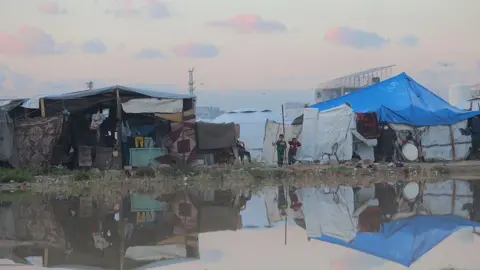
Almost 55,000 families have so far been affected by the rains, with their belongings and shelters damaged
Heavy rains over the past week have compounded the already dire living conditions of the hundreds of thousands of displaced Palestinians in the Gaza Strip, UN agencies say.
Unicef spokesman Jonathan Crickx told the BBC that the weather overnight had been "horrendous", with the rain so intense that he had seen up to 15cm (6in) of water on the ground near his office.
He said he was extremely concerned that children living in tents and makeshift shelters in wet clothing would succumb to hypothermia and other illnesses.
Gaza's Hamas-run health ministry has said one baby has died from hypothermia and at least 11 other people have died in building collapses caused by the severe weather.
UN agencies have stepped up deliveries of tents, blankets and clothes since the Gaza ceasefire began nine weeks ago, but they have said there is still not enough aid getting in.
The UN and its partners estimate that almost 55,000 families have so far been affected by the rains, with their belongings and shelters damaged or destroyed.
More than 40 designated emergency shelters were severely flooded following downpours on Monday and Tuesday, forcing many people to relocate again.
"Last night was really horrendous for the families. The heavy rains were so intense that we could see from our office and guest house 10cm, 15cm (4-6in) of water at some point. And the winds were so strong," Jonathan Crickx, chief of communications for Unicef State of Palestine, told the BBC's Today programme on Wednesday.
"When I drove this morning, I could see that many, many people were trying with buckets to remove some of the water."
He noted that most of the estimated one million people living in tents and makeshift shelters had been displaced many times during the two years of war between Israel and Hamas, and that they had no or very few changes of clothes.
"When I was seeing [children] this morning, their clothes were damp. I could see parents trying to dry some of the blankets they had. But it has been raining almost all of the time in the past four or five days, so it is extremely difficult to keep the children dry," he said.
"With temperatures about 7C, 8C (45-46F) at night, we are extremely concerned about children getting sick or even worse, dying from hypothermia."
Many tents were also at risk of being blown away or destroyed by the strong winds accompanying the rain because they were only made from a piece of tarpaulin or plastic sheeting nailed to a fragile wooden structure, he added.
Mr Crickx said Unicef had been able to bring in more aid during the ceasefire to help children cope with the harsh winter conditions, including 250,000 winter clothing kits, 600,000 blankets and 7,000 tents, but that it was not enough.
"We are working relentlessly to bring in that aid and to distribute it, but the scale of the needs is so immense that we still have thousands of people and children who are really suffering every night," he warned.
Reuters
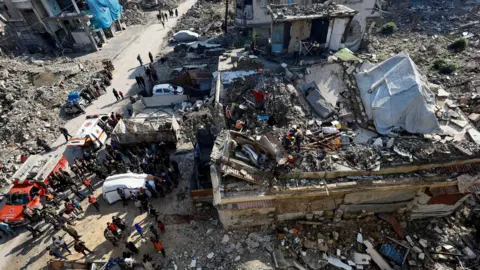
One man was killed when a building in Shati refugee camp where he was sheltering collapsed on Tuesday
Gaza's health ministry said a two-week old boy named Mohammed Abu al-Khair had died of hypothermia on Monday, two days after he had been admitted to hospital and placed in intensive care. Another 11 people had so far died after the war-damaged buildings where they were sheltering collapsed, it added.
A spokesman for the Hamas-run Civil Defence agency, Mahmoud Bassal, put the death toll higher. He said in a video that a total of 17 people, including four children, had died because of building collapses and the cold.
He added that 17 residential buildings had collapsed completely because of the wind and rain and that another 90 buildings had collapsed partially.
On Tuesday, video footage showed first responders from the Civil Defence recovering the body of a man from the rubble of a building in Shati refugee camp, north-west of Gaza City. Its roof had collapsed suddenly, according to eyewitnesses.
"We call on the world to solve our problems and rebuild the territory so that people can have homes instead of being displaced and living in the streets," said Ahmed al-Hosari, a relative of the man, told AFP news agency.
The International Committee of the Red Cross (ICRC) said the collapse of damaged buildings due to the severe weather conditions was "deeply concerning".
It stressed the need for "increased and sustained humanitarian assistance to respond to urgent and long-term needs, including food, shelter and equipment for the repair of critical infrastructure".
Cogat, the Israeli military body which controls Gaza's border crossings, has dismissed claims of deliberate aid restrictions as "inconsistent with facts on the ground, and the ongoing co-ordination taking place daily".
It says that between 600 and 800 lorries carrying humanitarian supplies enter Gaza daily, and that almost 310,000 tents and tarpaulins have been delivered since the start of the ceasefire, along with more than 1,800 lorry loads of warm blankets and clothing.
The UN says a total of 67,800 tents, 372,500 tarpaulins and 318,100 bedding items have been collected from crossings over the same period.
The second phase of the ceasefire between Israel and Hamas includes plans for the reconstruction of Gaza, along with post-war governance, the withdrawal of Israeli troops, and the disarmament of Hamas.
Last week, Israel's prime minister said the second phase was close, with only the body of one dead Israeli hostage in Gaza still to be returned by Hamas as part of the first phase.
The war was triggered by the Hamas-led attack on southern Israel on 7 October 2023, in which about 1,200 people were killed and 251 others were taken hostage.
More than 70,600 people have been killed in Israeli attacks in Gaza since then, according to the territory's health ministry.
Almost 55,000 families have so far been affected by the rains, with their belongings and shelters damaged
Heavy rains over the past week have compounded the already dire living conditions of the hundreds of thousands of displaced Palestinians in the Gaza Strip, UN agencies say.
Unicef spokesman Jonathan Crickx told the BBC that the weather overnight had been "horrendous", with the rain so intense that he had seen up to 15cm (6in) of water on the ground near his office.
He said he was extremely concerned that children living in tents and makeshift shelters in wet clothing would succumb to hypothermia and other illnesses.
Gaza's Hamas-run health ministry has said one baby has died from hypothermia and at least 11 other people have died in building collapses caused by the severe weather.
UN agencies have stepped up deliveries of tents, blankets and clothes since the Gaza ceasefire began nine weeks ago, but they have said there is still not enough aid getting in.
The UN and its partners estimate that almost 55,000 families have so far been affected by the rains, with their belongings and shelters damaged or destroyed.
More than 40 designated emergency shelters were severely flooded following downpours on Monday and Tuesday, forcing many people to relocate again.
"Last night was really horrendous for the families. The heavy rains were so intense that we could see from our office and guest house 10cm, 15cm (4-6in) of water at some point. And the winds were so strong," Jonathan Crickx, chief of communications for Unicef State of Palestine, told the BBC's Today programme on Wednesday.
"When I drove this morning, I could see that many, many people were trying with buckets to remove some of the water."
He noted that most of the estimated one million people living in tents and makeshift shelters had been displaced many times during the two years of war between Israel and Hamas, and that they had no or very few changes of clothes.
"When I was seeing [children] this morning, their clothes were damp. I could see parents trying to dry some of the blankets they had. But it has been raining almost all of the time in the past four or five days, so it is extremely difficult to keep the children dry," he said.
"With temperatures about 7C, 8C (45-46F) at night, we are extremely concerned about children getting sick or even worse, dying from hypothermia."
Many tents were also at risk of being blown away or destroyed by the strong winds accompanying the rain because they were only made from a piece of tarpaulin or plastic sheeting nailed to a fragile wooden structure, he added.
Mr Crickx said Unicef had been able to bring in more aid during the ceasefire to help children cope with the harsh winter conditions, including 250,000 winter clothing kits, 600,000 blankets and 7,000 tents, but that it was not enough.
"We are working relentlessly to bring in that aid and to distribute it, but the scale of the needs is so immense that we still have thousands of people and children who are really suffering every night," he warned.
Reuters
One man was killed when a building in Shati refugee camp where he was sheltering collapsed on Tuesday
Gaza's health ministry said a two-week old boy named Mohammed Abu al-Khair had died of hypothermia on Monday, two days after he had been admitted to hospital and placed in intensive care. Another 11 people had so far died after the war-damaged buildings where they were sheltering collapsed, it added.
A spokesman for the Hamas-run Civil Defence agency, Mahmoud Bassal, put the death toll higher. He said in a video that a total of 17 people, including four children, had died because of building collapses and the cold.
He added that 17 residential buildings had collapsed completely because of the wind and rain and that another 90 buildings had collapsed partially.
On Tuesday, video footage showed first responders from the Civil Defence recovering the body of a man from the rubble of a building in Shati refugee camp, north-west of Gaza City. Its roof had collapsed suddenly, according to eyewitnesses.
"We call on the world to solve our problems and rebuild the territory so that people can have homes instead of being displaced and living in the streets," said Ahmed al-Hosari, a relative of the man, told AFP news agency.
The International Committee of the Red Cross (ICRC) said the collapse of damaged buildings due to the severe weather conditions was "deeply concerning".
It stressed the need for "increased and sustained humanitarian assistance to respond to urgent and long-term needs, including food, shelter and equipment for the repair of critical infrastructure".
Cogat, the Israeli military body which controls Gaza's border crossings, has dismissed claims of deliberate aid restrictions as "inconsistent with facts on the ground, and the ongoing co-ordination taking place daily".
It says that between 600 and 800 lorries carrying humanitarian supplies enter Gaza daily, and that almost 310,000 tents and tarpaulins have been delivered since the start of the ceasefire, along with more than 1,800 lorry loads of warm blankets and clothing.
The UN says a total of 67,800 tents, 372,500 tarpaulins and 318,100 bedding items have been collected from crossings over the same period.
The second phase of the ceasefire between Israel and Hamas includes plans for the reconstruction of Gaza, along with post-war governance, the withdrawal of Israeli troops, and the disarmament of Hamas.
Last week, Israel's prime minister said the second phase was close, with only the body of one dead Israeli hostage in Gaza still to be returned by Hamas as part of the first phase.
The war was triggered by the Hamas-led attack on southern Israel on 7 October 2023, in which about 1,200 people were killed and 251 others were taken hostage.
More than 70,600 people have been killed in Israeli attacks in Gaza since then, according to the territory's health ministry.
The district attorney in Atlanta addressed a Republican-led committee created to investigate her conduct during her prosecution of President Trump last year.
Even adversaries of Jack Smith, the former special counsel, conceded that his tight-lipped, painstaking approach made tripping him up particularly difficult.
A naturalization ceremony in Boston in August. The Trump administration has been closing loopholes in the immigration system and throwing up roadblocks for people seeking to enter and stay in the country.
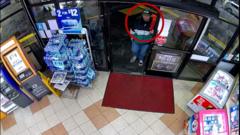
Mr. Reiner was filmed entering a gas station’s store in South Los Angeles to buy a sports drink roughly an hour before he was arrested by the police across the street.
The administration’s outreach to the industry, previously unreported, is the latest sign the White House is dreaming of a post-Maduro future for Venezuela.
The violence took place in the heart of a Crown Heights, just steps from the headquarters of the Chabad-Lubavitch movement, a globe-spanning sect of Hasidic Judaism.

 Login
Login