Reading view

There are new articles available, click to refresh the page.

Medium and Message: Oil on paper

Centuries of experience with painting using oil paints have proved the importance of a robust support and a ground that isolates the paint layer from its support. Older use of wood panels with a gesso ground consisting largely of gypsum or chalk ensured the paint layer wouldn’t be subjected to mechanical stress, and would remain isolated from the underlying wood. Canvases became popular because of their relative lightness particularly in larger sizes, but still require an isolating ground layer both to protect the canvas from damage by the paint, and to prevent discolouration of the paint.

When sketching in oils in front of the motif became increasingly popular in the late eighteenth century, those paintings weren’t intended for public view, but as an aid for the artist when composing finished paintings in the studio. Rather than gather hundreds of small oil sketched on canvas or panels, the first plein air painters usually used paper or cardboard as support and ground. Subsequently, when their studios were sold off following their death, surviving oil sketches were usually laid on canvas for preservation and display.

Pierre-Henri de Valenciennes, (Title not known) (c 1783), oil on paper laid on canvas, c 18 x 28 cm, Musée du Louvre, Paris. © 2015 EHN & DIJ Oakley.
Pierre-Henri de Valenciennes (1750-1819), (Title not known) (c 1783), oil on paper laid on canvas, c 18 x 28 cm, Musée du Louvre, Paris. © 2015 EHN & DIJ Oakley.

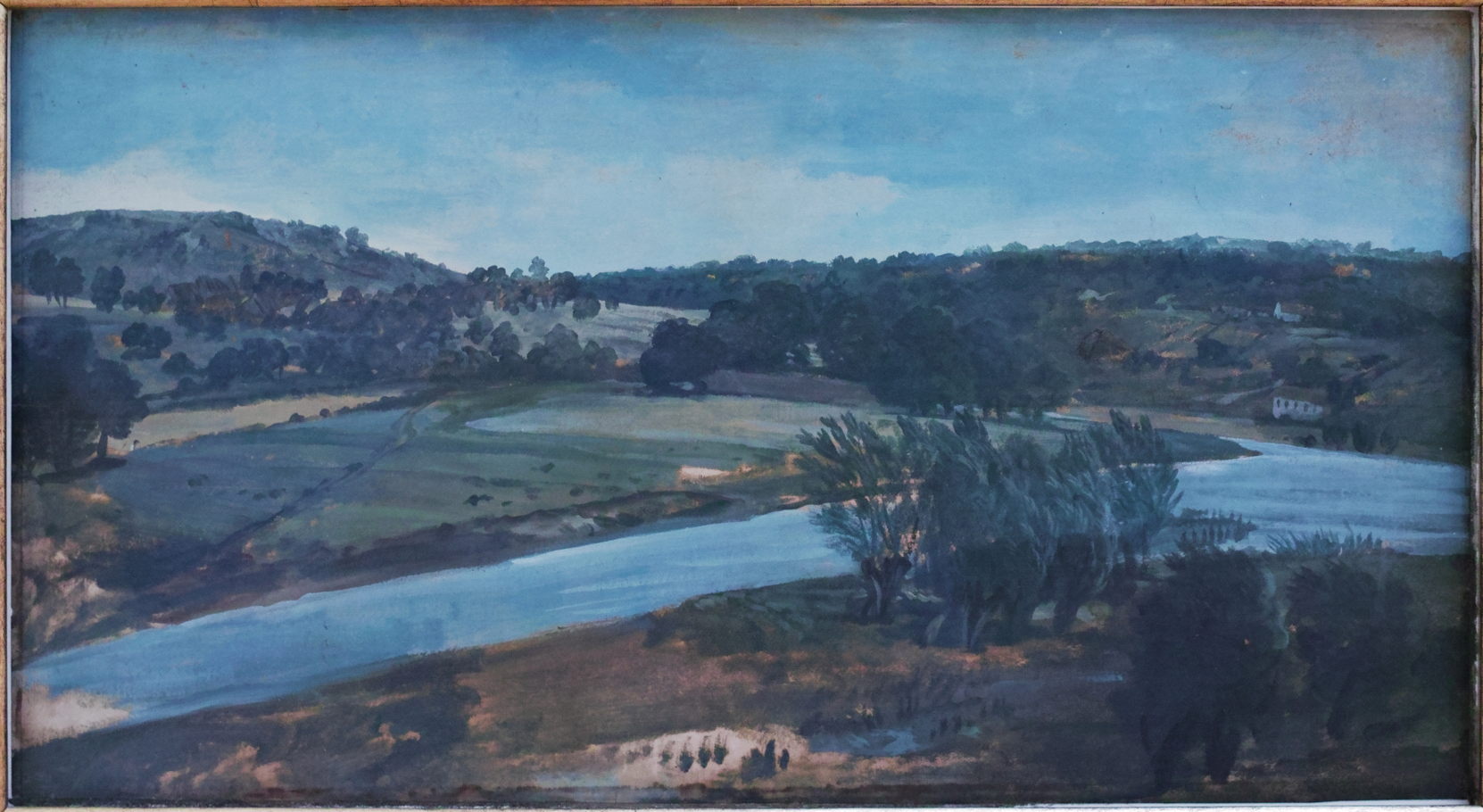
Although he probably wasn’t the first to compile a library of oil sketches, those gathered by Pierre-Henri de Valenciennes when he was painting in the Roman Campagna in the 1780s are among the most brilliant. This untitled view of the countryside near Rome is thought to have been painted in about 1783.
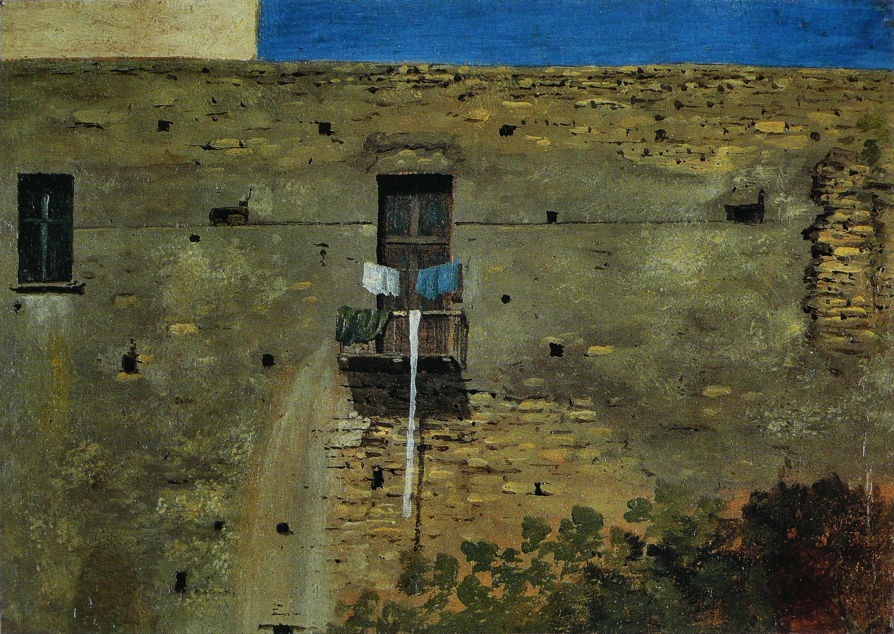
Thomas Jones, A Wall in Naples (c 1782), oil on paper laid on canvas, 11.4 x 16 cm, National Gallery, London. Wikimedia Commons.
Thomas Jones (1742-1803), A Wall in Naples (c 1782), oil on paper laid on canvas, 11.4 x 16 cm, National Gallery, London. Wikimedia Commons.

At about the same time, the Welsh painter Thomas Jones was doing the same thing in and around Naples as well. This tiny view of A Wall in Naples was painted in about 1782, and is now one of the gems in London’s National Gallery. Below is a detail.

Thomas Jones, A Wall in Naples (detail) (c 1782), oil on paper laid on canvas, 11.4 x 16 cm, National Gallery, London. Wikimedia Commons.
Thomas Jones (1742-1803), A Wall in Naples (detail) (c 1782), oil on paper laid on canvas, 11.4 x 16 cm, National Gallery, London. Wikimedia Commons.
Thomas Jones, The Capella Nuova outside the Porta di Chiaja, Naples (1782), oil on paper, 20 x 23.2 cm, Tate Britain, London. Wikimedia Commons.
Thomas Jones (1742-1803), The Capella Nuova outside the Porta di Chiaja, Naples (1782), oil on paper, 20 x 23.2 cm, Tate Britain, London. Wikimedia Commons.

Jones was taught by the Welsh artist Richard Wilson, but none of his oil sketches have survived. Jones’ Capella Nuova outside the Porta di Chiaja, Naples is another example that’s significantly larger, and now in the Tate Gallery.

Pierre-Henri de Valenciennes, (Title not known) (c 1783), oil on paper laid on canvas, c 18 x 25 cm, Musée du Louvre, Paris. © 2015 EHN & DIJ Oakley.
Pierre-Henri de Valenciennes (1750-1819), (Title not known) (c 1783), oil on paper laid on canvas, c 18 x 25 cm, Musée du Louvre, Paris. © 2015 EHN & DIJ Oakley.

Valenciennes went on to assemble a large library of his oil sketches that he used for his studio paintings following his return to Paris. He was admitted to the Academy in 1787, published an influential manual of perspective and painting in 1799, and became Professor of Perspective at l’École des Beaux-Arts in Paris in 1812.

Among the aspiring young landscape painters who followed in the footsteps of Valenciennes was Camille Corot, who was taught by Achille Etna Michallon, who in turn had been taught by Valenciennes. Corot painted in the Roman Campagna between 1825-28, using the same techniques of applying his oil paint direct to sheets of paper.

Jean-Baptiste-Camille Corot, View of Rome: The Bridge and Castel Sant'Angelo with the Cupola of St. Peter's (1826-7), oil on paper on canvas, 26.7 x 43.2 cm, Fine Arts Museums of San Francisco. WikiArt.
Jean-Baptiste-Camille Corot (1796-1875), View of Rome: The Bridge and Castel Sant’Angelo with the Cupola of St. Peter’s (1826-7), oil on paper on canvas, 26.7 x 43.2 cm, Fine Arts Museums of San Francisco. WikiArt.

Corot painted this View of Rome: The Bridge and Castel Sant’Angelo with the Cupola of St. Peter’s in 1826-27. This is one of the best-known bridges over the River Tiber, and not far from the centre of the city. The view is taken from the north-east of the bridge, on the ‘left’ bank, probably close to the Piazza di Ponte Umberto I, looking towards the south-west (‘right’ bank). The painting is sketchy rather than finely finished, and appears to have been painted en plein air onto a sheet of paper that has subsequently been laid on canvas.

Jean-Baptiste-Camille Corot, View of the Convent of S. Onofrio on the Janiculum, Rome (1826), oil on paper mounted on canvas, 22 x 33 cm, Fitzwilliam Museum, Cambridge, England. WikiArt.
Jean-Baptiste-Camille Corot (1796-1875), View of the Convent of S. Onofrio on the Janiculum, Rome (1826), oil on paper mounted on canvas, 22 x 33 cm, Fitzwilliam Museum, Cambridge, England. WikiArt.

This View of the Convent of S. Onofrio on the Janiculum, Rome is another from Corot’s first campaign in Rome.
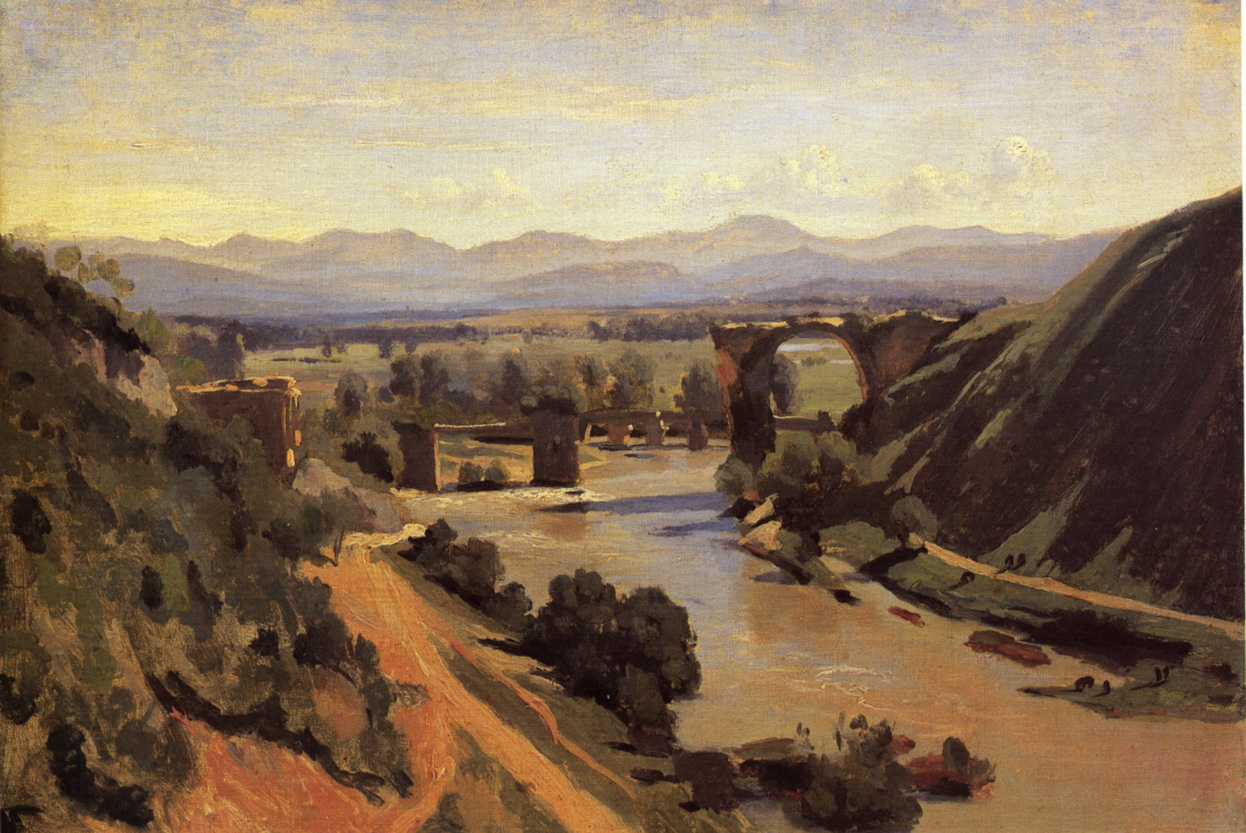
Jean-Baptiste-Camille Corot, The Bridge at Narni (1826), oil on paper, 34 x 48 cm, Musée du Louvre, Paris. WikiArt.
Jean-Baptiste-Camille Corot (1796-1875), The Bridge at Narni (1826), oil on paper, 34 x 48 cm, Musée du Louvre, Paris. WikiArt.

Corot’s years in Italy were formative in his own development, and one of the key elements he put in place to hand on to Camille Pissarro and other Impressionists. The Bridge at Narni is one of his finest oil sketches.
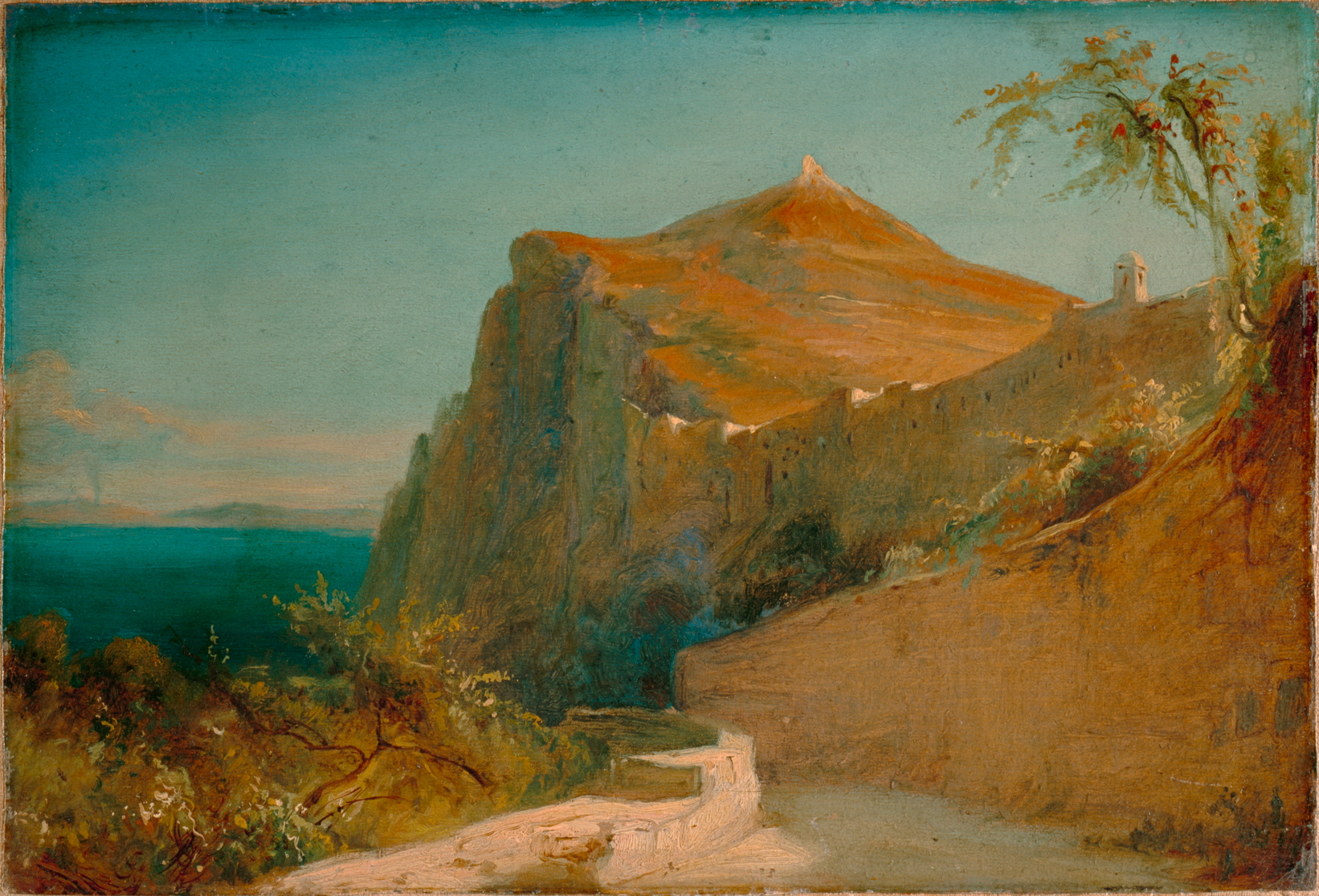
Carl Eduard Ferdinand Blechen, Tiberiusfelsen auf Capri (Tiberius Rocks, Capri) (1828-9), oil on paper mounted on canvas, 20.5 x 30 cm, Lower Saxony State Museum, Hanover. Wikimedia Commons.
Carl Eduard Ferdinand Blechen (1798-1840), Tiberiusfelsen auf Capri (Tiberius Rocks, Capri) (1828-9), oil on paper mounted on canvas, 20.5 x 30 cm, Lower Saxony State Museum, Hanover. Wikimedia Commons.

Others followed Valenciennes’ instructions, among them Carl Blechen, a brilliant German landscape painter who sketched the Tiberius Rocks, Capri during a visit in 1828-29, again on paper.

Carl Eduard Ferdinand Blechen, Galgenberg bei Gewitterstimmung (A Scaffold in a Storm) (c 1835), oil on paper mounted on board, 29.5 x 46 cm, New Masters Gallery, Dresden. Wikimedia Commons.
Carl Eduard Ferdinand Blechen, (1798-1840) Galgenberg bei Gewitterstimmung (A Scaffold in a Storm) (c 1835), oil on paper mounted on board, 29.5 x 46 cm, New Masters Gallery, Dresden. Wikimedia Commons.

Blechen’s late oil sketch of A Scaffold in a Storm was painted in about 1835, shortly before he succumbed to severe depression. This anticipates many elements of Impressionism: it appears to have been executed rapidly in front of the motif (although a view from his studio over Berlin and Brandenburg), with many brush-strokes plainly visible; details are composed of stylised marks; it is an everyday if not banal subject, with an informal composition.

However, the French Impressionists seldom if ever sketched in oils on paper, as their paintings made in front of the motif were intended to be sold to and viewed by the public, for which paper wasn’t considered suitable. Times had changed.

Medium and Message: En plein air

Paintings made in oils in front of the motif, en plein air, are a surprisingly recent innovation. Although often ascribed to the inconvenience of handling oil paint before it was offered in tubes in the middle of the nineteenth century, in fact it had become popular if not mandatory for the aspiring landscape painter well before that. Instead of taking their paints in tubes, those pioneers used pig bladders, that had become widely available from artists’ colourmen, as were used by Constable, Turner and many others.

Initially, plein air oil sketches weren’t intended to be seen by the public or patrons.

desporteslandscape
Alexandre-François Desportes (1661-1743), Landscape Study (c 1700), oil, dimensions not known, Palais des beaux-arts de Lille, Lille, France. Wikimedia Commons.

Among the earliest artists to paint regularly in front of their motif was Alexandre-François Desportes (1661-1743), a professional painter of hunting scenes and animals, whose Landscape Study was painted in about 1700.

Plein air oil sketching was described and recommended by Roger de Piles in his book Cours de Peinture, published in 1708, contemporary with Desportes’ sketches. Other books on painting and art in the eighteenth century also cover the topic, and Claude-Joseph Vernet was recorded as having painted oil sketches en plein air, but none have survived.

valenciennesvillafarnesepoplars
Pierre-Henri de Valenciennes (1750–1819), Farm Buildings at the Villa Farnese: the Two Poplar Trees (1780), oil on paper on cardboard, 25 x 38 cm, Musée du Louvre, Paris. Wikimedia Commons.

At Vernet’s suggestion, the young Pierre-Henri de Valenciennes made copious oil sketches such as this of Farm-buildings at the Villa Farnese: the Two Poplar Trees when he was painting in the Roman Campagna in 1782-85. He not only built himself a large visual library of sketches from nature, but published a widely used book on landscape painting in which he recommended the practice.

sabletconradgessner
Jacques Sablet (1749–1803) Portrait of the Painter Conrad Gessner in the Roman Campagna (1788), oil on canvas, 39 × 30 cm, Kunsthaus Zürich, Zürich. Wikimedia Commons.

Jacques Sablet’s Portrait of the Painter Conrad Gessner in the Roman Campagna shows one of the early plein air landscape painters in 1788, over fifty years before the first paint tubes became available.

quadroneeveryoccasiond1
Giovanni Battista Quadrone (1844–1898), Every Opportunity is Good (detail) (1878), other details not known. Wikimedia Commons.

Although this detail of Giovanni Battista Quadrone’s Every Opportunity is Good shows a studio in 1878, the low table at the left has several bladders containing oil paint. They remained popular with many artists until towards the end of the nineteenth century. Although not as convenient as tubes, the better colourmen still offered a wide range of pigments in bladders that were significantly less costly.

renoirmonetpainting
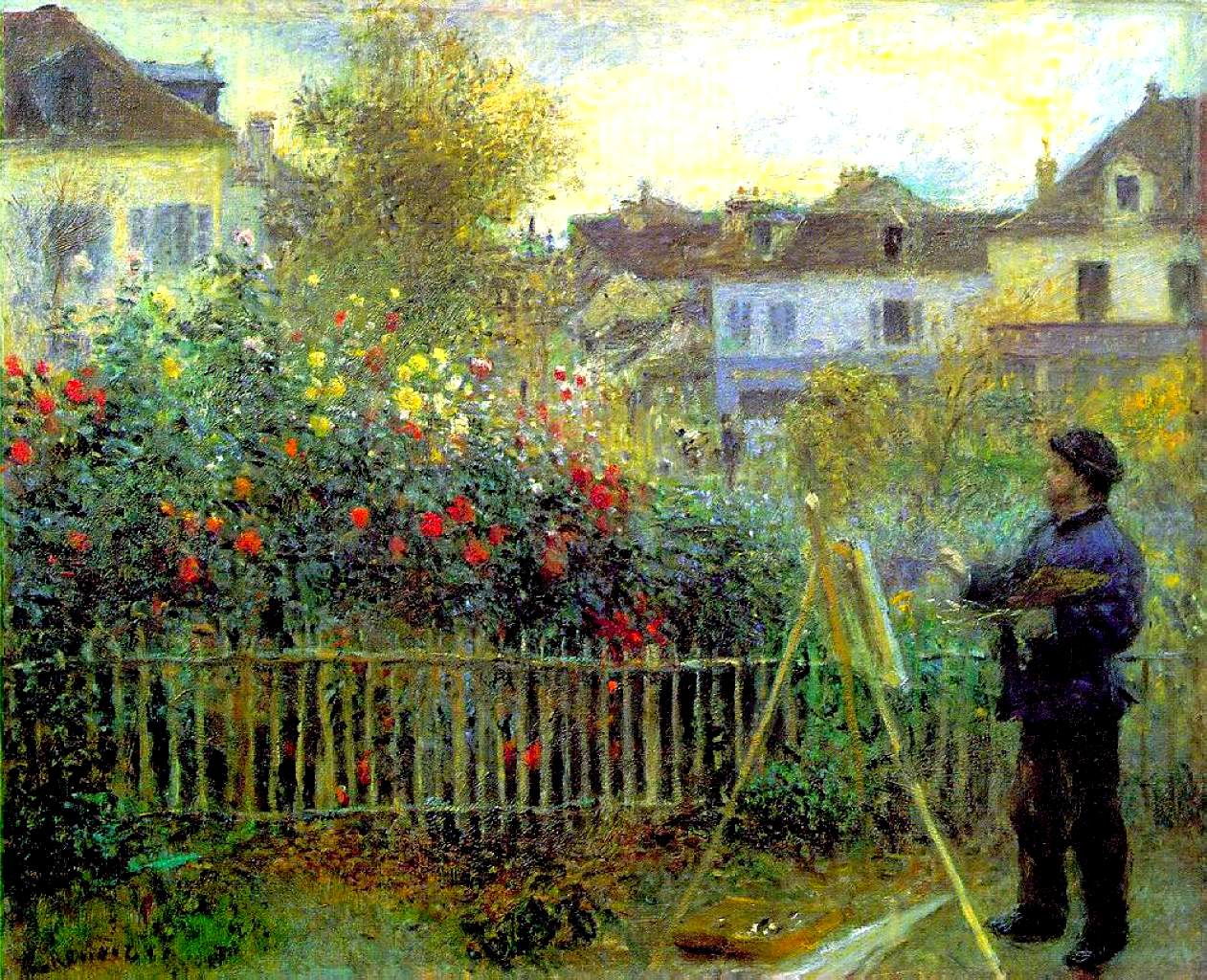
Pierre-Auguste Renoir (1841–1919), Monet Painting in his Garden in Argenteuil (1873), oil on canvas, 46 × 60 cm, Wadsworth Atheneum, Hartford, CT. Wikimedia Commons.

Pierre-Auguste Renoir painted Monet Painting in his Garden in Argenteuil in 1873. Claude Monet is using a conventional lightweight wooden easel, with a small canvas that allows him to work standing. His oil paints are in the pochade box under the easel. Although just outside his house, he would have used the same equipment when further from home.

Claude Monet Painting by the Edge of a Wood ?1885 by John Singer Sargent 1856-1925
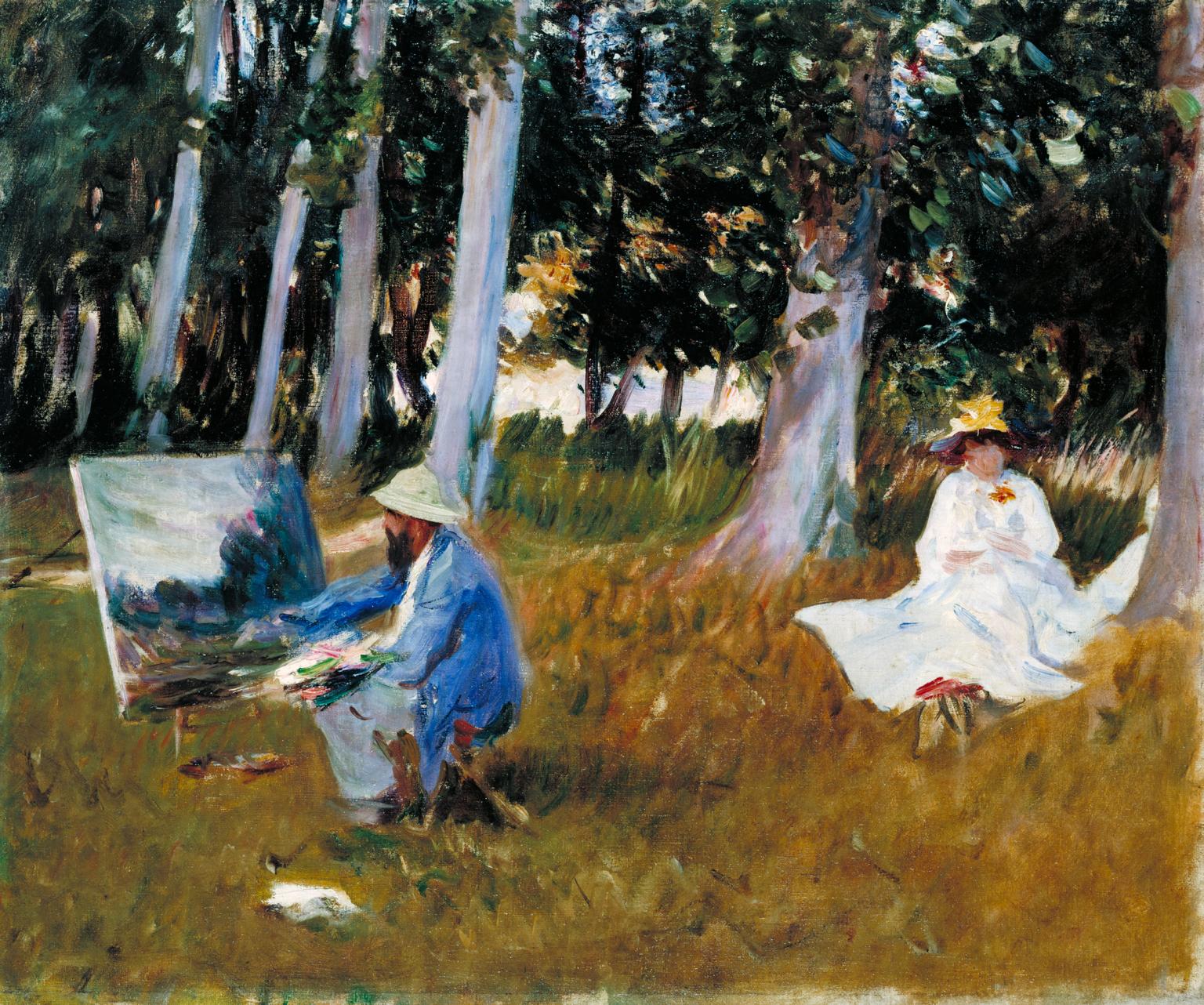
John Singer Sargent (1856–1925), Claude Monet Painting by the Edge of a Wood (c 1885), oil on canvas, 54 x 64.8 cm, The Tate Gallery (Presented by Miss Emily Sargent and Mrs Ormond through the Art Fund 1925), London. © The Tate Gallery and Photographic Rights © Tate (2017), CC-BY-NC-ND 3.0 (Unported), http://www.tate.org.uk/art/artworks/sargent-claude-monet-painting-by-the-edge-of-a-wood-n04103

In about 1885, when they were painting together, John Singer Sargent took this opportunity to paint Claude Monet Painting by the Edge of a Wood. Seated on a traditional three-legged folding stool, Monet is here working on a much larger canvas, his pochade box again under the easel for ready access.

demontbretonmarieduhem
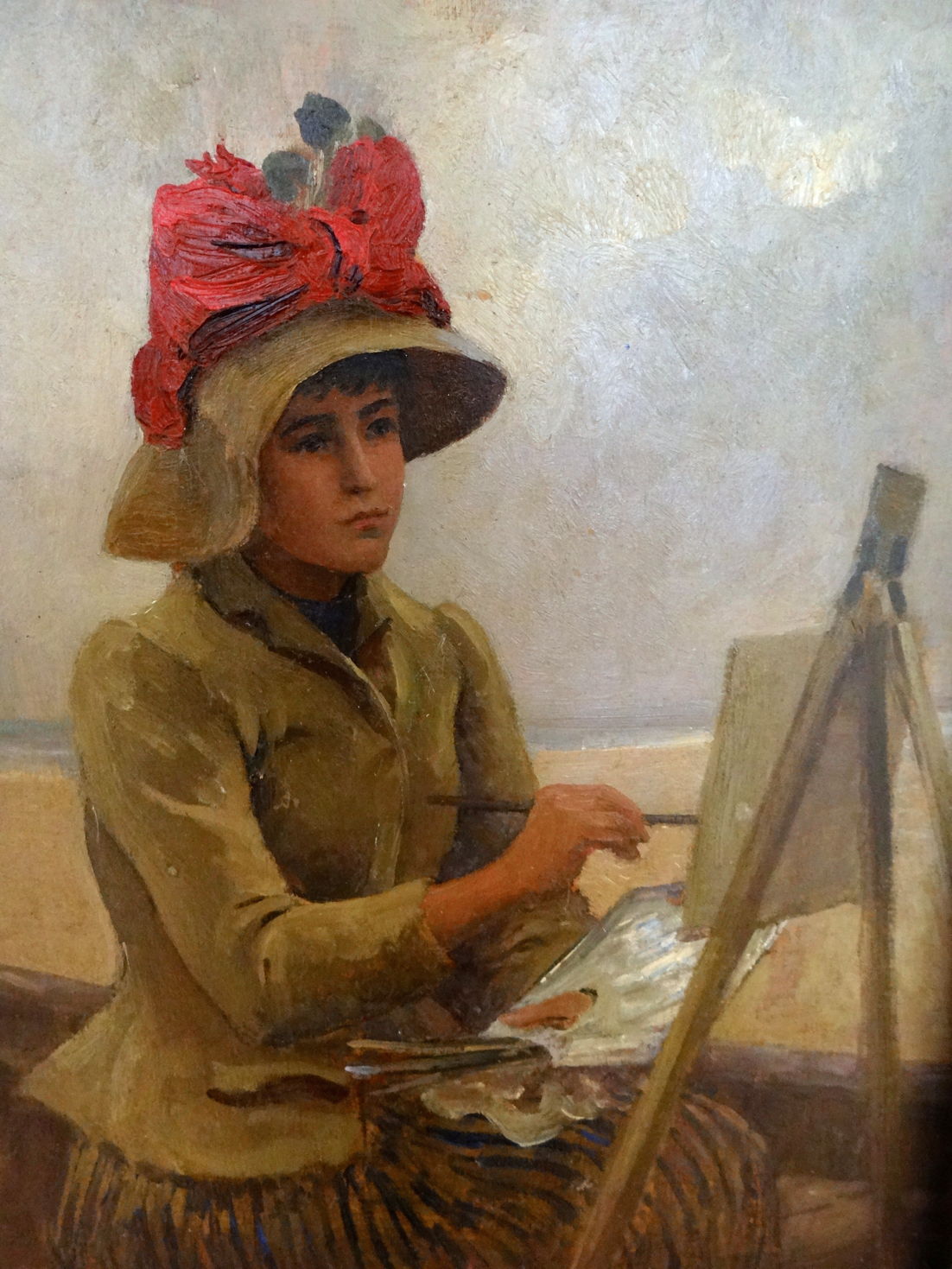
Virginie Demont-Breton (1859–1935), Portrait of Marie Duhem (detail) (1889), oil on panel, dimensions not known, Musée de la Chartreuse de Douai, Douai, France. Wikimedia Commons.

This detail of Virginie Demont-Breton’s Portrait of Marie Duhem (1889) shows one of her close friends and colleagues in the Wissant School, at work en plein air on the coast near their house. She appears to have set her easel up by a wooden groyne on the beach.

sargentoutofdoorsstudy
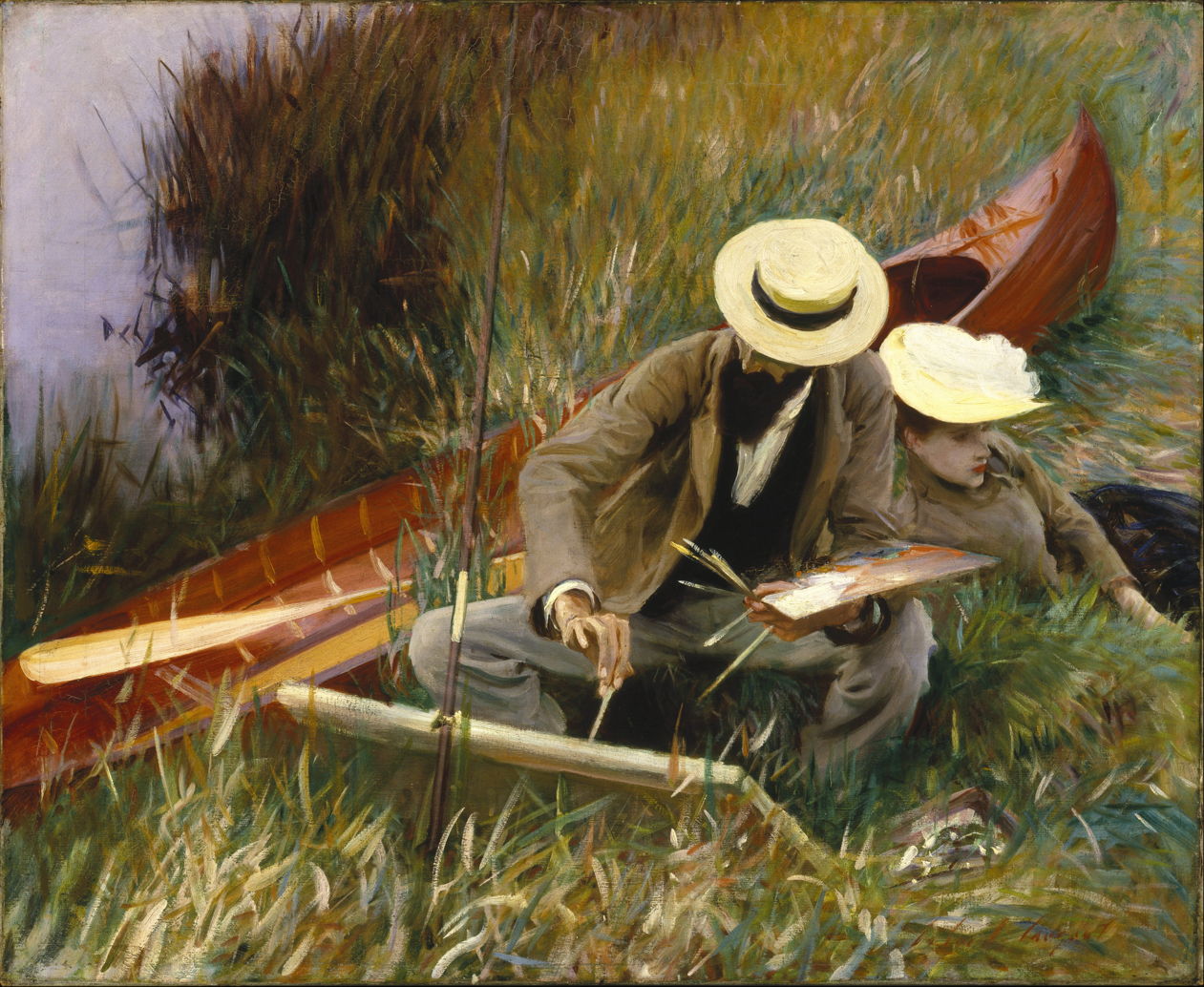
John Singer Sargent (1856–1925), An Out-of-Doors Study (c 1889), oil on canvas, 65.9 × 80.7 cm, Brooklyn Museum, New York, NY. Wikimedia Commons.

In John Singer Sargent’s An Out-of-Doors Study (c 1889) he shows his friend Paul César Helleu working on a canvas propped up in the grass by a single pole, a precarious arrangement only suitable for the calmest of days. It also forces him to work very low, and he squats in a position of tension, his pochade box in the grass below his left knee.

brendekildelaring
Hans Andersen Brendekilde (1857–1942), L.A. Ring Paints at Aasum Smithy (1893), oil on canvas, 107 x 140 cm, location not known. Wikimedia Commons.

Hans Andersen Brendekilde’s L.A. Ring Paints at Aasum Smithy (1893) shows his friend painting the primary school in the village of Åsum (or Aasum), to the east of Odense in Denmark. Clearly visible in the pochade box behind is a substantial collection of shiny paint tubes.

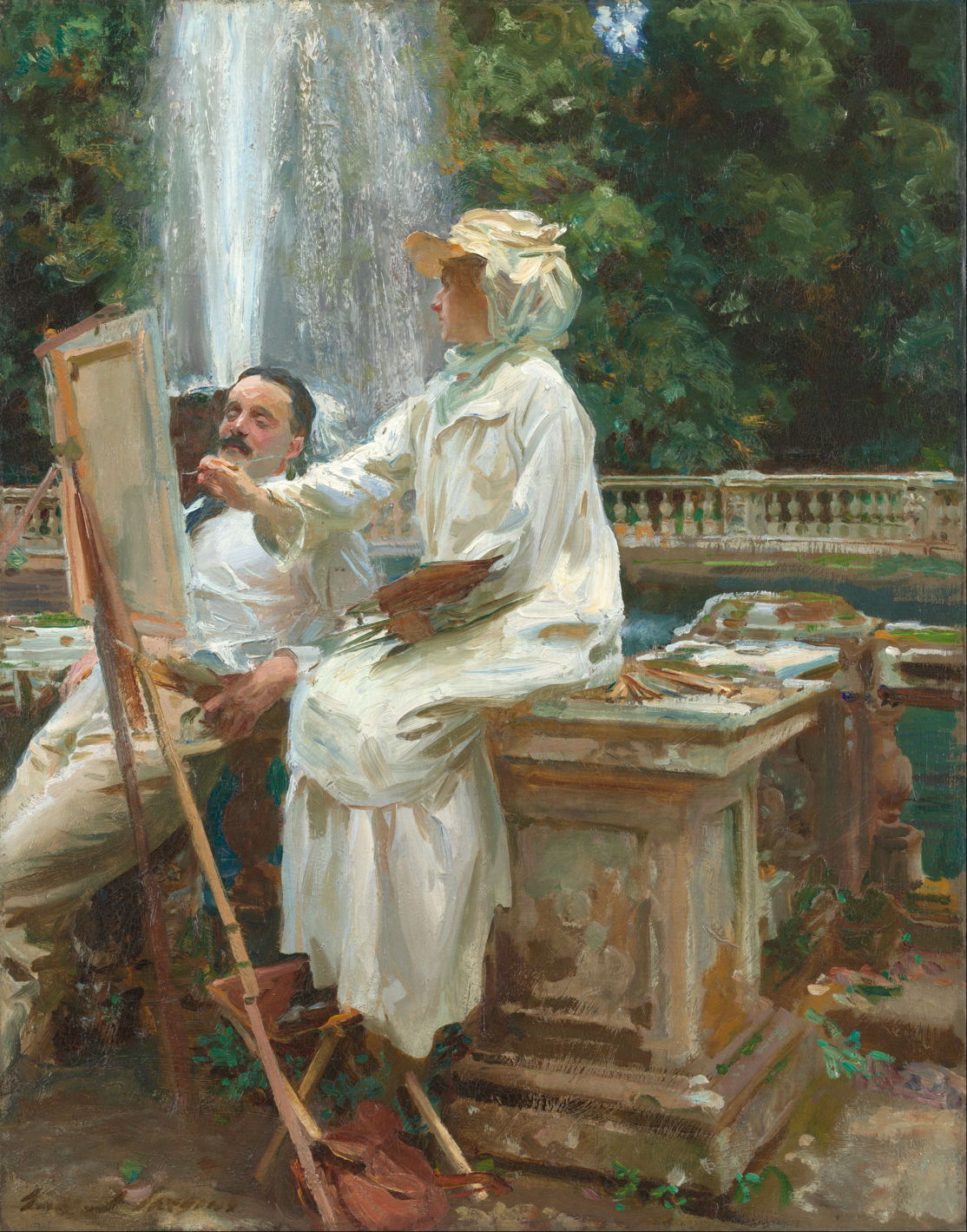
sargentfountainvillatorlonia
John Singer Sargent (1856–1925), The Fountain, Villa Torlonia, Frascati, Italy (1907), oil on canvas, 71.4 x 56.5 cm, The Art Institute of Chicago, Chicago, IL. Wikimedia Commons.

The American artists Jane de Glehn and her husband Wilfrid were long-standing friends of John Singer Sargent. His plein air oil sketch of The Fountain, Villa Torlonia, Frascati, Italy (1907) shows Jane working at a lightweight wooden easel in the grounds of this villa.

Joaquín Sorolla y Bastida, Maria Painting in El Pardo (1907), oil on canvas, 82 x 106 cm, Private collection. WikiArt.
Joaquín Sorolla y Bastida (1863–1923), Maria Painting in El Pardo (1907), oil on canvas, 82 x 106 cm, Private collection. WikiArt.

Joaquín Sorolla here shows his daughter Maria Painting in El Pardo in 1907. She’s painting with a pochade box, and has a large parasol with a specialist mount so that it can provide her with shade.

brendekildelaringfalleneasel
Hans Andersen Brendekilde (1857–1942), L A Ring by his Fallen Easel (1883), oil on canvas, 78 x 67 cm, Det Nationalhistoriske Museum på Frederiksborg Slot, Hillerød, Denmark. Wikimedia Commons.

One of Brendekilde’s earliest surviving paintings shows L A Ring by his Fallen Easel (1883). Both of them had a struggle achieving recognition, and at this stage Ring was verging on abandoning art altogether as a result. He is seen on the outskirts of a wood, looking down dejectedly at his easel that has dropped paint-first onto the fallen leaves on the road.

Plein air painting has many challenges. In fine sunny weather you’re normally limited to thirty to sixty minutes painting time. Any longer than that and the light and shadows have changed too much over the course of time, but overcast lighting allows greater tolerance. Even with modern portable lighting systems, painting en plein air at night is an astonishing feat that few even attempt.

dahldresdenatnight
Johan Christian Dahl (1788–1857), Dresden at Night (1845), oil on cardboard, 7 × 11.3 cm, Private collection. Wikimedia Commons.

This remarkable painting by JC Dahl of Dresden at Night appears to have been painted on a sheet of cardboard one night in 1845. There really is no limit to what can be achieved in front of the motif.

❌