A member of the UK armed forces who died in Ukraine has been named as Lance Corporal George Hooley of the Parachute Regiment.
On Tuesday, the Ministry of Defence said the 28-year-old was killed observing Ukrainian forces test "a new defensive capability, away from the front lines".
Paying tribute to the paratrooper in the Commons on Wednesday, Prime Minister Keir Starmer said: "His life was full of courage and determination.
"He served our country with honour and distinction around the world in the cause of freedom and democracy, including as part of the small number of British personnel in Ukraine."
This breaking news story is being updated and more details will be published shortly. Please refresh the page for the fullest version.
You can receive Breaking News on a smartphone or tablet via the BBC News App. You can also follow @BBCBreaking on X to get the latest alerts.
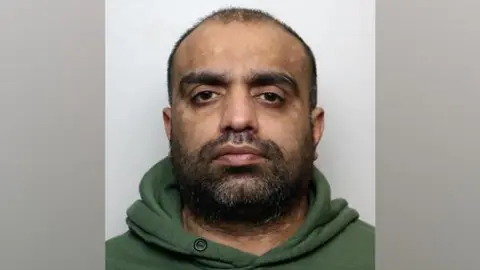
Sharaz Ali was convicted of four counts of murder and one of attempted murder
A man has been found guilty of murdering his ex-girlfriend's sister and her three children in a house fire in Bradford.
Sharaz Ali killed Bryonie Gawith, 29, and her children Denisty, nine, Oscar, five, and 22-month-old Aubree Birtle, after deliberately setting fire to their home in a revenge attack when Bryonie's sister, Antonia, ended their relationship.
The 40-year-old was also found guilty of the attempted murder of Antonia Gawith, following a trial at Doncaster Crown Court.
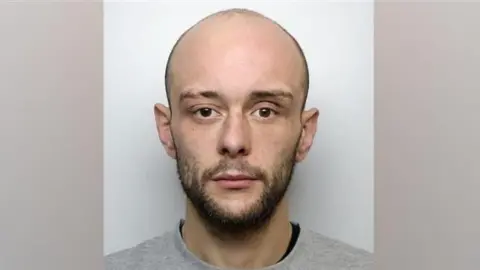
Co-accused Calum Sunderland, 26, was cleared of murder and attempted murder but found guilty of four counts of manslaughter for his role in breaking into the family's house where Antonia had been staying.
West Yorkshire Police
Calum Sunderland was found guilty of four counts of manslaughter
Prosecutors said Ali then ordered Sunderland to kick down the door before he went inside and poured petrol around the property.
In her evidence, Antonia told jurors she had confronted Ali on the ground floor of the property.
During a scuffle he poured petrol over her before she managed to run into the garden in the hope he would follow her out of the house.
The court heard he tried to get upstairs but was confronted by Bryonie and forced back down where he took a lighter from his pocket and set the house alight.
Bryonie and her three children, who were asleep upstairs, were unable to escape.
Four Afghan men were ordered to report to the Taliban government's department of vice and virtue for dressing in costumes inspired by the TV series Peaky Blinders.
The friends were told that their clothing was "in conflict with Afghan and Islamic values", a Taliban spokesman told the BBC, adding the values in Peaky Blinders went against Afghan culture.
In videos posted online, the men, who have been released, can be seen posing in flat caps and three-piece suits similar to those worn in the series set in England soon after World War One.
Since the Taliban seized power in 2021, they have imposed a number of restrictions on daily life in accordance with their interpretation of Islamic Sharia law.
"Even jeans would have been acceptable, but the values in the Peaky Blinders series are against Afghan culture," Saiful Islam Khyber, a spokesman for the Taliban government's provincial department of Vice and Virtue in Herat city told the BBC.
The men, all in their early twenties, come from the town of Jibrail in Herat province. They were ordered to report to the Taliban's "morality police" on Sunday, and presented themselves for questioning in Herat the following day.
"They were promoting foreign culture and imitating film actors in Herat," Khyber wrote on social media, adding that they had undergone a "rehabilitation programme".
The were not formally arrested, "only summoned and advised and released", Khyber told the BBC's US partner CBS News.
"We have our own religious and cultural values, and especially for clothing we have specific traditional styles," he said.
"The clothing they wore has no Afghan identity at all and does not match our culture. Secondly, their actions were an imitation of actors from a British movie. Our society is Muslim; if we are to follow or imitate someone, we should follow our righteous religious predecessors in good and lawful matters."
The men could be seen thanking officials for their advice and saying they were unaware they had violated any laws in a video released by the ministry after they were questioned - though it is unclear under what circumstances the interview was recorded.
"I have innocently been sharing content that was against Sharia which had many viewers," one said in the recording.
He said he had been "summoned and advised", and would no longer do "anything like this".
In an interview with YouTube channel Herat-Mic uploaded at the end of November, before they were summoned, the friends said they admired the fashion displayed in the series, adding that they had received positive reactions from locals.
"At first we were hesitant, but once we went outside, people liked our style, stopped us in the streets, and wanted to take photos with us," one of the men said, according to a translation by CBS News.
María Corina Machado was last seen in public at a protest on 9 January
María Corina Machado, the winner of this year's Nobel Peace Prize, is "safe" and will come to Oslo, but will not be able to make the awards ceremony scheduled for 12:00 GMT on Wednesday, the Nobel Institute has said.
The Nobel Institute awarded the Venezuelan opposition leader the prize for "her struggle to achieve a just and peaceful transition from dictatorship to democracy" in her home country.
There has been much speculation about whether Machado, who has been living in hiding, would be able to defy a travel ban to attend the ceremony in Norway's capital.
Organisers said her daughter would accept the award in her stead.
In an audio recording shared by the Nobel Institute, Machado said "I will be in Oslo, I am on my way."
However, the director of the Nobel Institute, Kristian Berg Harpviken, said that Machado was expected to arrive "sometime between this evening and tomorrow morning" - too late for the ceremony.
In her mother's absence, Ana Corina Sosa is expected to give the speech Machado had prepared.
Earlier on Wednesday, the Nobel Institute had said they were in the dark about Machado's whereabouts, triggering concern among her supporters.
Two of her children and her mother are in Oslo, hoping to be reunited with Machado after being separated for more than a year.
Machado went into hiding shortly after Venezuela's disputed presidential election in July 2024.
The last time she was seen in public was on 9 January when she spoke to her supporters at a rally protesting against the swearing-in of Nicolás Maduro to a third term as president.
The elections were widely dismissed both by the opposition in Venezuela and on the international stage as rigged, and sparked protests across the country.
Around 2,000 people were arrested in the crackdown which followed, among them many members of Machado's opposition coalition.
Machado, who had managed to unite the bitterly divided opposition ahead of the election, went into hiding for fear of arrest.
She continued to give interviews and uploaded videos onto social media urging her followers not to give up.
The announcement that she had been chosen as this year's Nobel Peace Prize winner galvanised her supporters and triggered immediate speculation as to whether she would be able to travel to Oslo.
Total secrecy has surrounded her travel plans and it is not know how she managed to leave her place of hiding or by what means she has reached Europe.
Two US fighter jets were tracked circling the Gulf of Venezuela on Tuesday as tensions continue to escalate between the two countries.
The F/A-18 Super Hornets appeared on flight tracking sites near Maracaibo, Venezuela's second-largest city, at around 13:00 (17:00 GMT), before circling the gulf for about 40 minutes.
A US defence official told the Associated Press the F/A-18 jets had conducted a "routine training flight" in the area.
The incident comes amid a wave of US strikes against boats in the Caribbean Sea, which the White House said were trafficking drugs to the US from Venezuela. Experts have raised questions over the legality of the strikes, which have killed more than 80 people.
Venezuelan President Nicolás Maduro has accused the US of using the strikes to destabilise the country and oust him from power.
In an interview conducted with Politico the day before the jets approached Venezuela's coastline, Trump declared that Maduro's days in power were "numbered", and declined to comment on whether US troops could be deployed to the country.
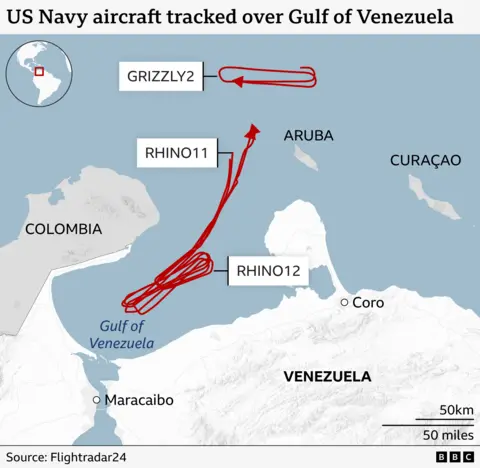
A separate jet, an EA-18G Growler, also appeared just before the F/A-18s on the tracking site FlightRadar24. Data shows the jet flew loops just north of Venezuela's coast.
But the F/A-18s, which are capable of engaging targets both on the ground and in the air, appear to be the first to approach the Venezuelan coastline so publicly in recent months. The F/A-18s came within 20 nautical miles of the coastline, flight tracking data showed.
Neither the F/A-18s or the Growler showed a point of origin or a destination on FlightRadar24, and all three aircraft only turned on their transponders when they arrived near the Venezuelan coastline. Justin Crump, head of the risk consultancy Sibylline, suggested the move was intended to "support the administration's signalling and put pressure on the [Venezuelan] leadership".
The F/A-18s - which operated under the callsigns RHINO11 and RHINO12 - flew six loops up and down the Gulf of Venezuela. Meanwhile, the Growler jet - flying under the codename GRIZZLY2 - also flew circles along the coast.
Greg Bagwell, a former RAF air marshall and president of the Air and Space Power Association, told BBC Verify that the flights appeared to be "probing" Venezuelan defence and trying to check for responses such as radio traffic and encrypted signals related to defence systems.
"The Growlers would have been listening for [signals intelligence], whilst the Super Hornets would have been providing air defence cover for the Growlers," Baswell said. He said the Growlers would also detect "active missile sites".
"It could be construed as the early gathering of intelligence for subsequent operations, or just a warning of such," he added.
Crump said the jets also had the capacity to test out "jamming capabilities", adding: "This also helps send a message, when successful, potentially indicating to Venezuela's leadership that these systems cannot or should not be relied upon," he said.
On Tuesday the US Southern Command published photos of an F/A-18 operating from the USS Gerald Ford, the world's largest aircraft carrier, which has been sent to the Caribbean.
Analysis of satellite images and ship tracking websites by BBC Verify has made it possible to identify at least nine military vessels that have been deployed to the region over recent weeks.
Satellite images also show that an airbase in Puerto Rico, which was closed in 2004 by the Pentagon, has been re-activated. Repairs have been carried out to the runway at Roosevelt Roads base and F-35s - America's most advanced fighter - have been sent to the base.
'Battle of the Sexes' will not damage women's sport - Sabalenka
Image source, Getty Images
Image caption,
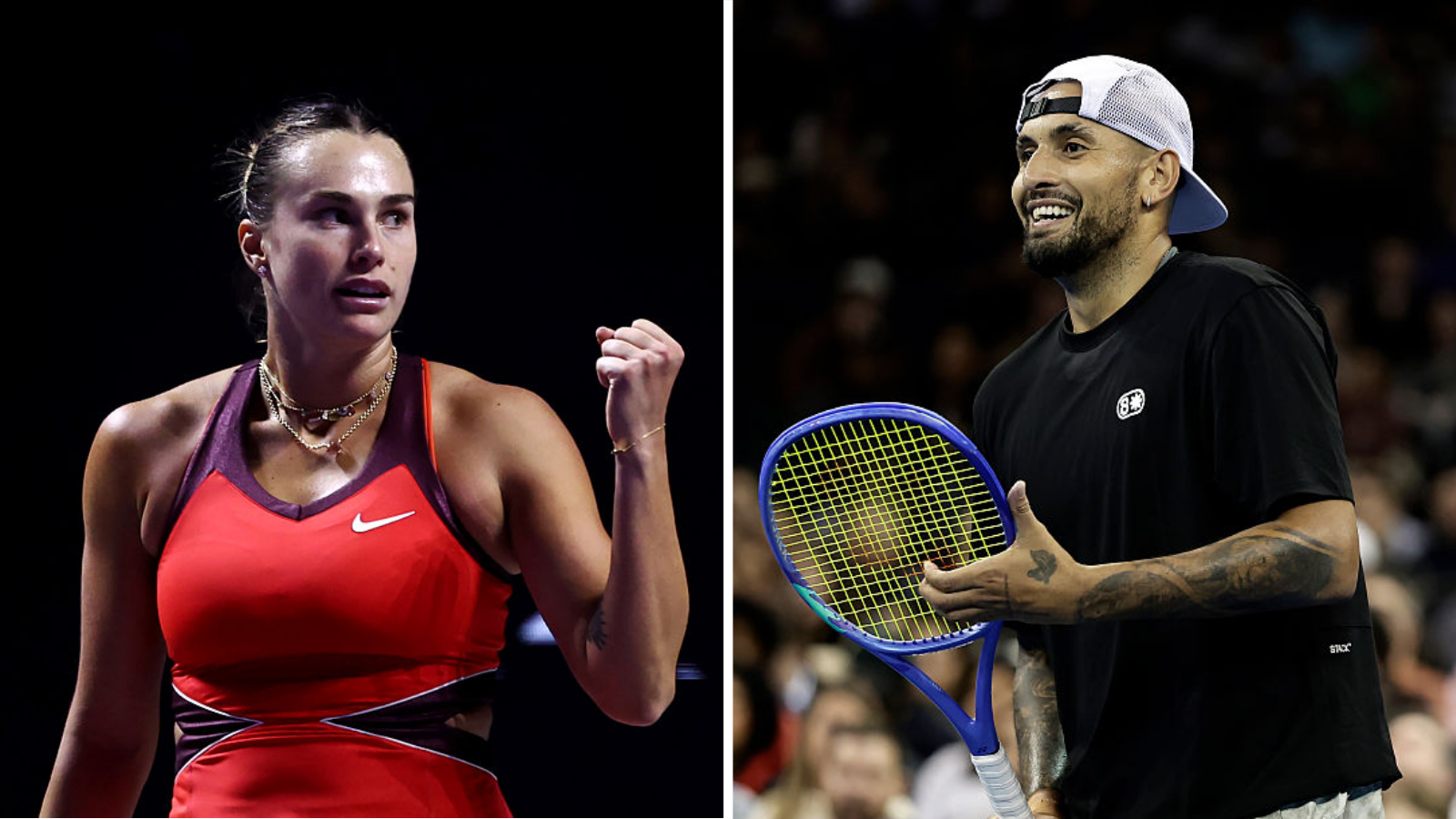
Aryna Sabalenka and Nick Kyrgios took part in an exhibition, alongside Naomi Osaka and Tommy Paul, at a packed Madison Square Garden in New York this week
Published
Aryna Sabalenka says her controversial Battle of the Sexes-style match against Nick Kyrgios will not damage women's sport.
Sabalenka, the women's world number one and four-time major champion, faces 2022 Wimbledon runner-up Kyrgios in an exhibition match on 28 December.
The event will be held in Dubai and shown live on the BBC.
Some people see it is as harmless entertainment between two high-profile players, but others believe it could belittle the women's game if Sabalenka loses.
Asked if it could be damaging, Sabalenka told BBC Sport: "I don't agree.
"I am not putting myself at any risk. We're there to have fun and bring great tennis. Whoever wins, wins."
She added: "It's so obvious that the man is biologically stronger than the woman, but it's not about that.
"This event is only going to help bring women's tennis to a higher level."
Belarusian Sabalenka, 27, has been one of the standout players on the WTA Tour over the past few seasons, capping another marvellous season by winning the US Open in September.
Kyrgios, 30, played only five professional matches in 2025 as he attempts to rebuild a career which he feared would be ended by a wrist injury.
The controversial Australian is ranked 672nd in the world and many have questioned what Sabalenka stands to gain from the event.
The concept is the brainchild of the pair's shared agent Stuart Duguid, who said the players will "do fine" financially from the match but that money is "not what is driving this".
It is not known if the winner will receive a cash prize or both players will get appearance fees or a share of revenue.
"It's not going to be an easy match for Nick," Sabalenka said.
"I'm going to be there competing and showing women are strong, powerful and good entertainment.
"He's in a lose-lose situation. I'm in a win-win situation."
In 1973 Billie Jean King faced Bobby Riggs in a match dubbed the 'Battle of the Sexes', attracting a worldwide television audience of 90 million and going down in cultural folklore with the aid of a Hollywood depiction.
King's victory over former Wimbledon champion Riggs - a self-proclaimed chauvinist aged 55 - was a landmark in the fight for gender equality and laid the path for equal pay at the top of the game.
With WTA players now among the world's highest-paid athletes, critics argue that this latest iteration of the 'man versus woman' format is unnecessary.
But Kyrgios and Sabalenka say it will attract a new audience to tennis, with their promises of more entertainment and celebrity fans sitting courtside.
"Tennis doesn't really have that (razzmatazz) that often and I think that when something like this occurs it is pretty special," said Kyrgios.
Sabalenka said: "We are helping tennis to grow.
"It's fun, it's challenging and I think that's what people want to see."
I'm more mature now - Kyrgios
Critics have questioned Kyrgios' suitability as the male protagonist, given he admitted assaulting an ex-girlfriend in 2021 and has made a series of comments which have been considered misogynistic.
Last year Kyrgios shared a post from controversial influencer Andrew Tate before later distancing himself from the self-proclaimed misogynist.
Asked if he understood the criticism given his previous behaviour, Kyrgios told BBC Sport: "Of course. But that's what life is. You make comments when you're younger and you change."
The former world number 13 said he is a "different person" now, adding: "I'm not going to sit here and say I'm an amazing role model, but I've grown and I'm definitely more mature now."
Kyrgios said he has not given "a thought" to the possibility he could become a poster boy for misogynists ready to criticise women's sport if he beats Sabalenka.
"This is the only thing I'm good at - hitting a ball over a net and giving people a show," he said.
"So I can't do anything other than hope me and Aryna play our best tennis and, at the end of the day, whoever wins, that our handshake afterwards solidifies the union between males and females in the tennis world."
Kyrgios, who has been open about his alcohol and drug abuse in the past, said he is not concerned about losing face if he is beaten by Sabalenka.
"I'm never worried. I know how I've responded with things in my life," he said.
"This is all a bonus. I've lost tennis matches before, so it's not really a big deal."
Kyrgios said he sees the event, as well as recent exhibitions in Atlanta and New York alongside Sabalenka, Naomi Osaka, Ben Shelton and Tommy Paul - as crucial preparation for a fuller return to the ATP Tour in 2026.
A knee injury means he has not played on the tour since the Miami Open in March, but he said there are "real positive signs" in his fitness.
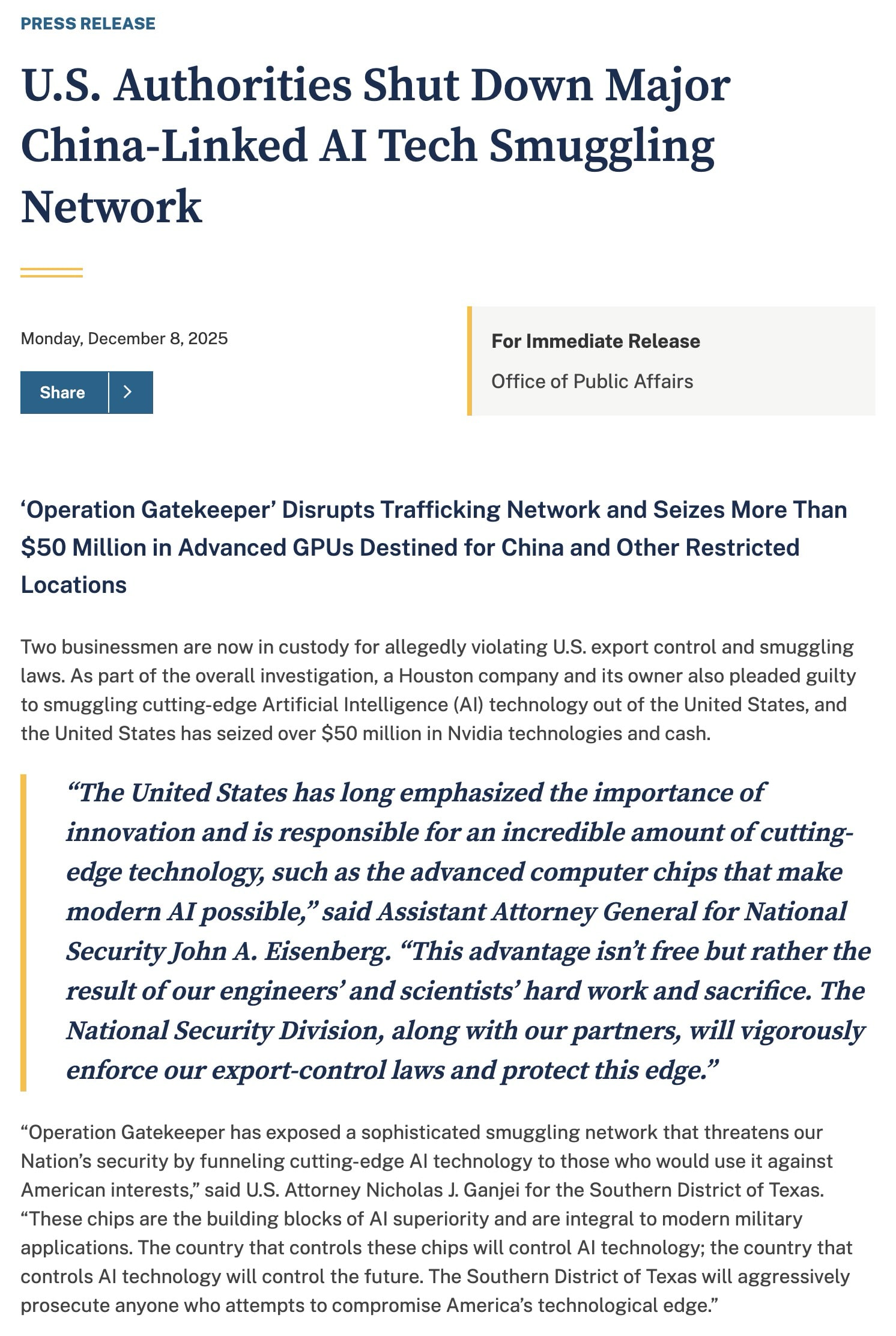
Jordan Schneider: Let’s first toast the unfortunate U.S. Attorney for the Southern District of Texas, Nicholas Jon Ganjei. On Monday morning, he proudly issued a press release for his cool-sounding “Operation Gatekeeper,” which intercepted $160 million worth of Nvidia H100s and H200s.
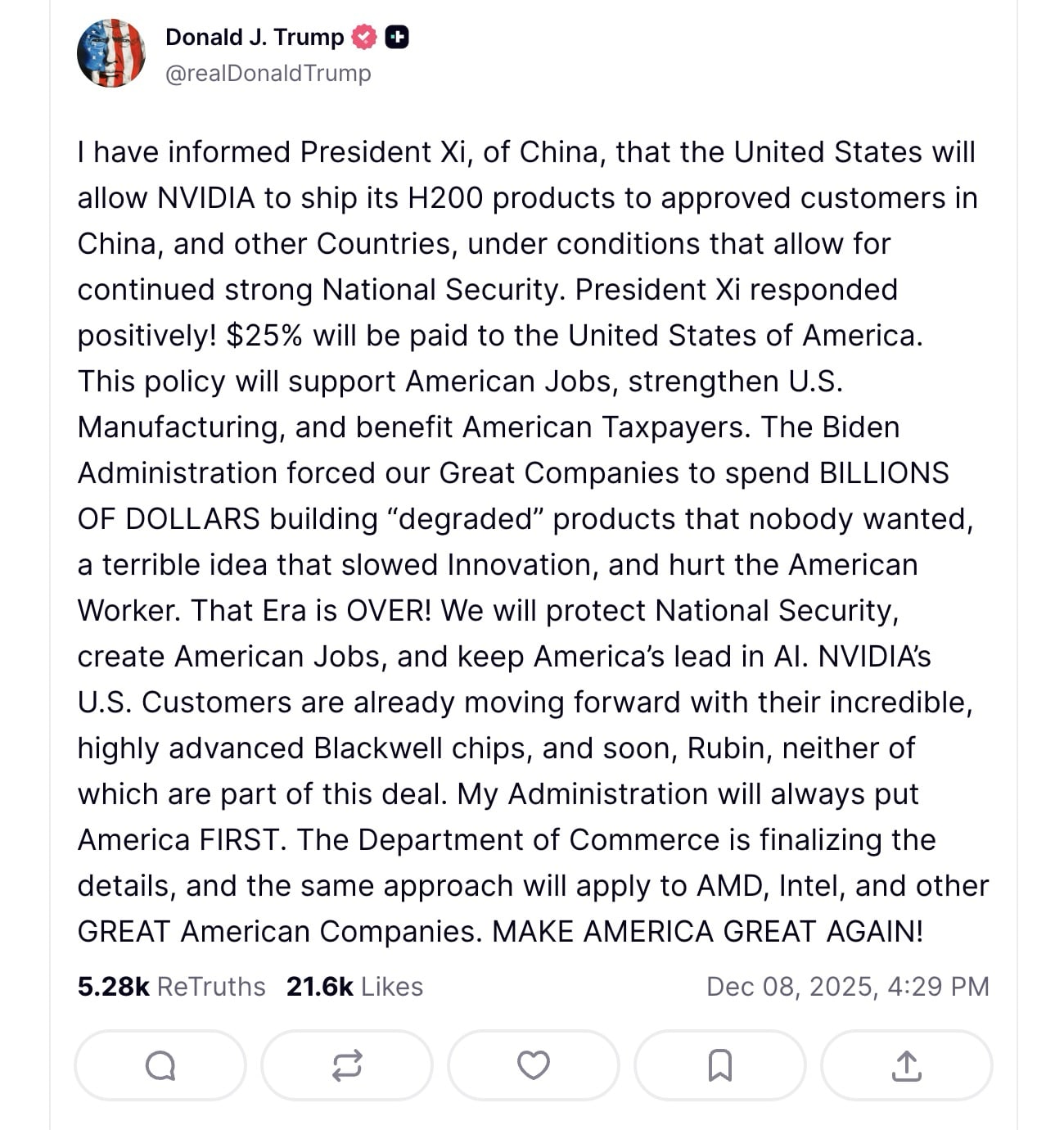
That afternoon, President Donald Trump announced on Truth Social that the United States would allow Nvidia to ship its H200 products to approved customers in China. Dmitri, please make sense of this for me.
Dmitri Alperovitch: There’s no way to sugarcoat this — it’s a disaster. This isn’t only about the Department of Justice. The U.S. Attorney General’s statement highlighted how critical AI is to military applications. The President’s own AI action plan discussed how the United States must aggressively adopt AI within its armed forces to maintain its global military preeminence, while ensuring that the use of AI is secure and reliable. This technology is essential to U.S. military dominance and the successes of the U.S. Intelligence community.
You have to give the administration credit — it is doing a lot to ensure all levels of the U.S. government are adopting AI. Why we would enable China to do the same is beyond me. Are we going to sell them aircraft carriers or Virginia-class submarines? Should we let them into AUKUS? This is effectively what we are doing.
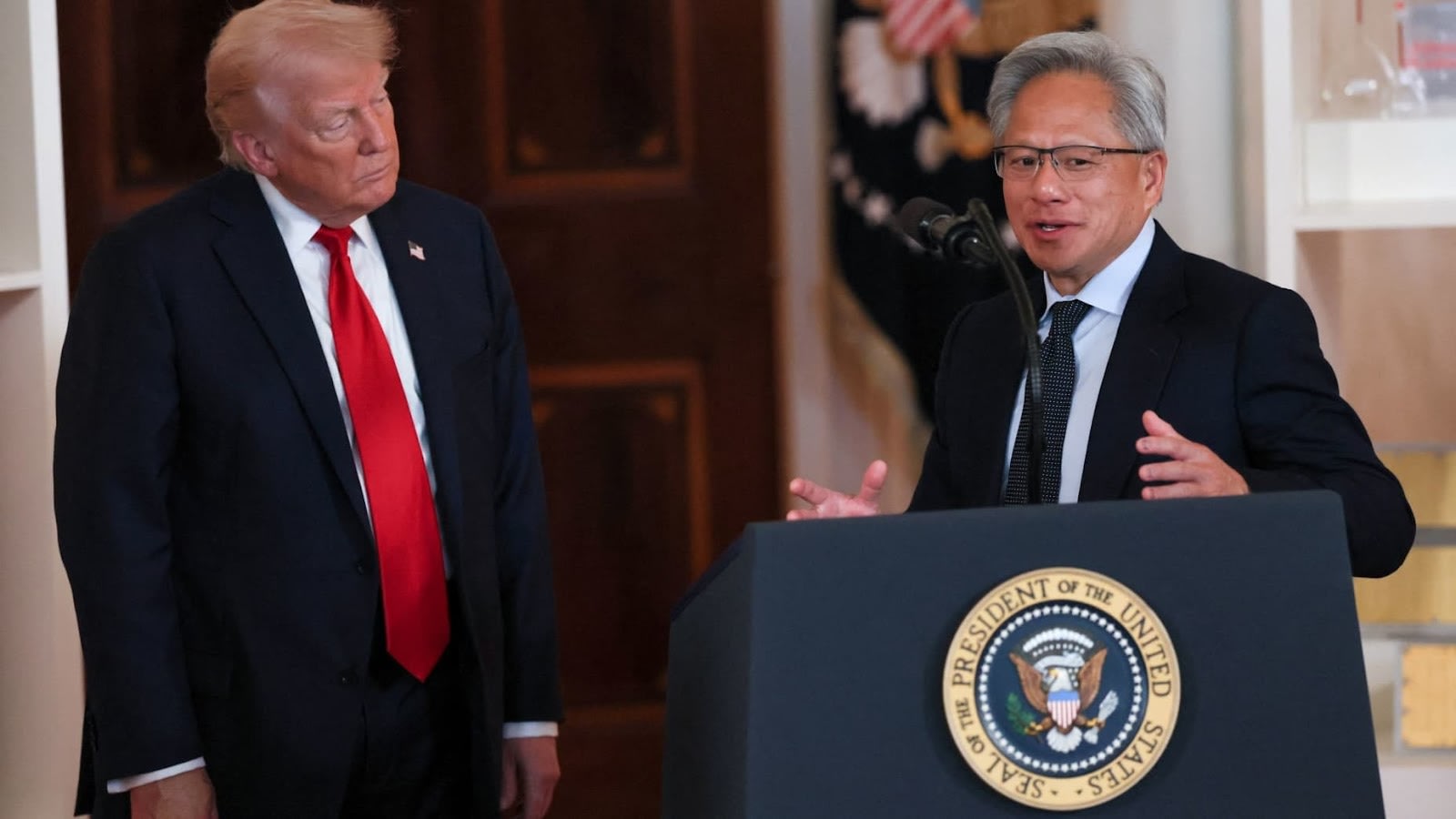
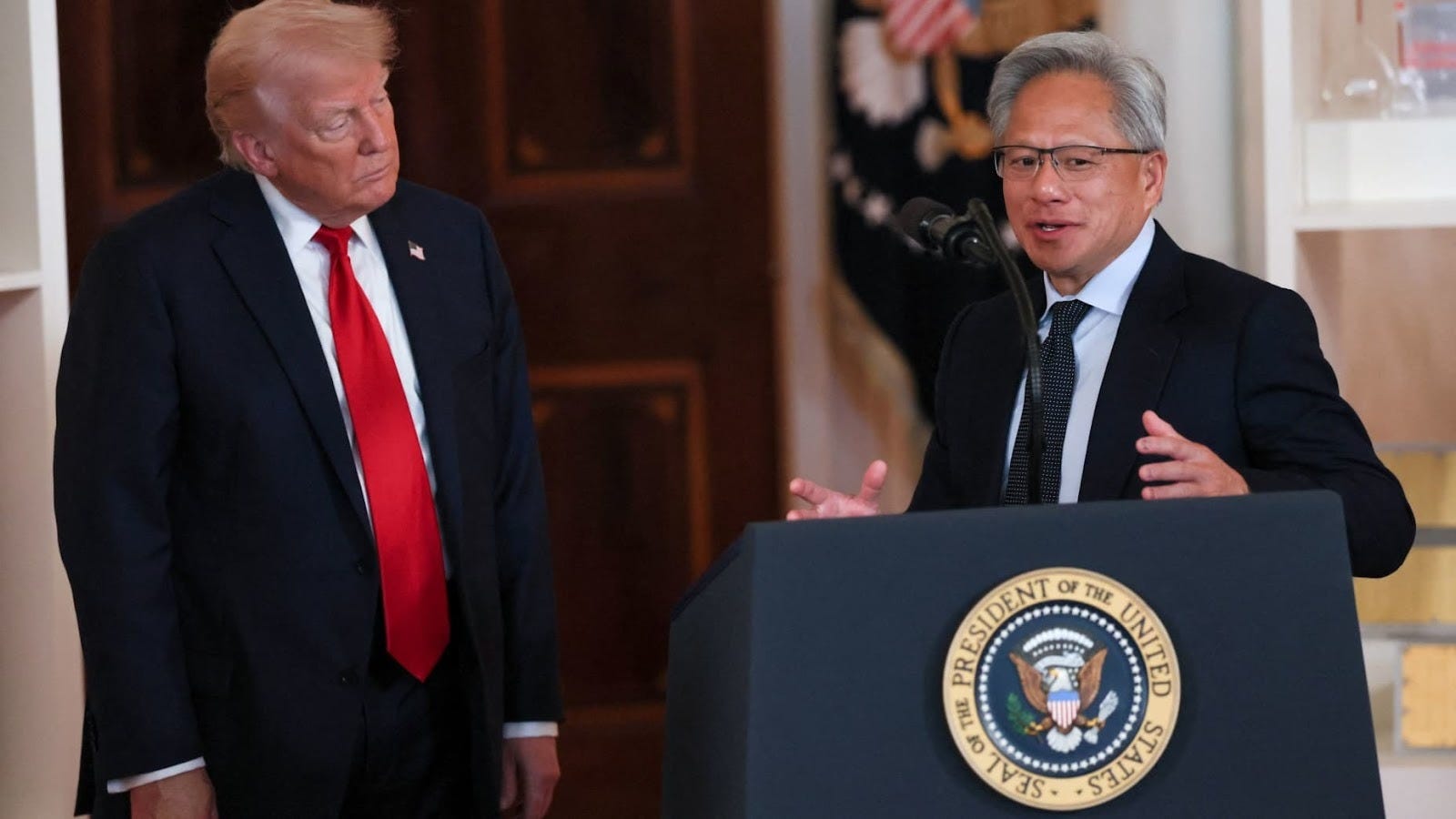
Donald Trump and Jensen Huang at the White House, April 30, 2025. Source.
It is outrageous that Jensen Huang has been able to pull the wool over the eyes of people in government and on Capitol Hill, convincing them that arming our primary adversary — the one we are unquestionably in a cold war with — is somehow good for America. I understand it’s good for Nvidia’s sales and for him personally, but it is a disaster for our national security.
Jordan Schneider: What I find baffling is the contradiction in Nvidia’s public messaging. Jensen Huang and his company argue that their technology will revolutionize every conceivable industry, all requiring massive amounts of GPU capacity. But when asked directly about the military implications of selling these chips, Huang downplays the risk. He suggests that China’s military will acquire the necessary chips regardless and claims they are too sophisticated to use American technology for sensitive, dual-use applications. It’s ludicrous that this technology is transformative for every field except for the military.
Dmitri Alperovitch: It doesn’t make sense. AI will transform everything. Even in civilian uses, do we want China to win in automotive, energy, and everything else? Because that’s what you’re enabling by selling chips to them. The primary concern is their military and intelligence services, but we are also in an economic competition. I would rather kneecap Chinese competitors to enable our own companies to succeed. Why would you do otherwise?
This is equivalent to selling supercomputers to the Soviet Union in the 1970s. No one even considered doing that. You could make the case that it would support Soviet agriculture and feed starving people, but no one said that because those same computers could be used for nuclear weapons testing and countless other military applications. There was no debate about it — it was understood to be a bad idea.
50 years later, we’re in a cold war. This is unbelievably shortsighted — putting profit above national security. Jensen Huang said if you’re a China hawk, you’re unpatriotic and un-American. I think selling supercomputing capabilities to the Chinese military is as unpatriotic and un-American as it gets.
Jordan Schneider: Jensen, if you’re listening, you’re invited to come on ChinaTalk anytime to make your case.
Dmitri, what’s telling is that the rest of the tech industry is finally pushing back. After months of staying quiet for fear of losing access to Nvidia chips, major players like Microsoft and AWS are supporting measures like the GAIN Act. The benefit of selling chips to China is mostly limited to Nvidia. U.S. hyperscalers and AI labs now face a powerful new competitor for limited chip manufacturing, driving up prices. The upside seems narrow, especially when Nvidia’s strongest argument — that the world, including China, will be locked into CUDA — seems far-fetched.
Dmitri Alperovitch: Nvidia’s argument is knowingly false. The GAIN Act is the ultimate ‘America First’ act. It stipulates that before chips are sold to countries of concern like China, we must ensure that U.S. demand is satisfied. American companies are first in line. How anyone could argue against this is beyond me.
The Act doesn’t say, “we’ll cut China off completely to ensure their military doesn’t get chips” — we’re saying, “let’s make sure American companies have priority.” It’s a no-brainer. I’ve talked to hyperscalers who are supportive of this act, and even other chip companies are saying they agree with the concept. The fight wasn’t about the details — the fight was a push for no restrictions on sales to China, which is unbelievable.
Jensen’s argument that the U.S. wants to make China addicted to the American tech stack is ridiculous. There is no addiction — chips aren’t cocaine. You can see this today with every single hyperscaler — Google, Amazon, Microsoft with its Maia chip, and now Meta with its own custom chips — all saying they are moving off CUDA. Many already are.
The top two frontier models, Claude and Gemini, were reportedly trained on Amazon’s Trainium and Google’s TPUs, respectively. There aren’t enough chips to go around, and for cost and strategic reasons, pretty much every frontier company is now using a multi-chip architecture — CUDA, Trainium, TPUs, and others. There is no addiction. Companies were able to make that switch in months, it’s easy — this is software and APIs. You can give AI one API and tell it to rewrite it in the form of another. It’s a trivial task.
Now we’re selling China H200s. This is probably the start of a broader concession on Blackwell, and then Rubin. Jensen won’t stop at the H200 — he will want to sell everything. The Chinese want to receive the latest and greatest chips, not only the Hopper generation. We’re going to sell them these chips, and they’re going to build competitive models. DeepSeek, Qwen, and Kimi are already good — they’re at most 12 months behind. They will quickly catch up and become leading models.
China will keep investing in Huawei because the Chinese are not stupid. Jensen says that if we don’t sell them chips, they’ll invest in their own, like Huawei’s Ascend chips. They’re doing that anyway. Xi Jinping is going to demand it, which is why you’re seeing China’s response that they will restrict the importation of H200s to ensure there is still domestic demand for Huawei chips.
Huawei’s Ascend chips will eventually catch up, and Chinese companies — supposedly “addicted” to the American AI stack — will switch over in days or weeks. What will we have achieved? We will have relinquished our lead in frontier AI models, and eventually, they’ll have chips that replace Nvidia’s. It is myopic and stupid for Nvidia’s own business model. They are focused on the next quarter and the next year versus a couple of years from now when China dominates both chips and frontier models.
Jordan Schneider: If this goes through, and tens of billions of dollars worth of chips are exported to China, and the future you portend comes true, will there will be a political price to pay? This was a major talking point for Trump on his campaign — “Winning the AI race” and “American AI dominance”. A year or 18 months from now, if China is releasing crazy new AI-powered technologies that were all trained on Nvidia chips, that will be a tricky political dance. Nice calls from Jensen won’t be enough to smooth that over.
Dmitri Alperovitch: We are already there. Almost a year ago, there was a brouhaha over the release of DeepSeek. The surprise was unwarranted: it shouldn’t have shocked anyone paying close attention. But people reacted with, “Oh my God, the Chinese are catching up.” Of course they are. Deepseek was built on H100 chips, which, until recently, were not restricted. There will be another DeepSeek moment, but worse. DeepSeek was good, but it was still behind frontier models. The next models will be better.
Sam Altman is in panic mode over Gemini 3 because its capabilities eclipse his models. This will happen to all American frontier models and to the country more broadly. The Chinese will crush us with cheaper power, tons of researchers, and massive state subsidies.The one thing they were missing — compute — will now flow into China.
Jordan Schneider: The Financial Times reported Chinese companies were training models in Malaysia or Singapore. That’s not ideal and not as efficient as AliCloud’s operations in China. There, they can rapidly deploy numerous H100s while benefiting from straightforward communication, a reliable power grid, and lower energy costs.
Dmitri Alperovitch: We should have been cracking down on H100 access in Malaysia and elsewhere. Chips shipped directly to China will be prioritized for high-side intelligence and military networks. Chinese agencies can’t use public clouds in Malaysia for their classified data. But now they can grab those chips from private companies in China and prioritize them for military purposes, as they do with everything else.
Jordan Schneider: That seems like the most salient reason China would want the chips inside the country. Training models in Malaysia is annoying, but only 10%-annoying. There are also data privacy restrictions, which they can get around if they’re serving domestic consumers in China. What do they want complete control of their chips for? The sensitive stuff that they would never trust a random Singaporean cutout to do for you.
Dmitri Alperovitch: The U.S. government cannot get enough chips. Agencies have told me they are compute-dependent for inference and cannot get enough chips. Now we’re shipping part of that limited supply to China. How does that make sense?
Jordan Schneider: Let’s flip this around.
Dmitri Alperovitch: One more point. The H200 is from the Hopper generation, not the latest Blackwell generation, but it has High-Bandwidth Memory (HBM). We have a current ban on the export of HBM to China. The H200 decision calls HBM protections into question, as the technology is already being exported on Nvidia chips.
We may see a cascading failure of export controls. I am hearing of discussions about relaxing export controls on semiconductor manufacturing equipment, which would make it easier for Huawei to manufacture Ascend chips in China. I hope that doesn’t happen, but there are people in the administration pushing for it.
Jordan Schneider: A year ago, the administration was being pressured to restrict chip technology to China. First there was the H20 situation, then the Laura Loomer saga and teh “twilight of the China hawks.” Lawmakers Vasant, Greer, and Rubio even intervened right before the Xi Jinping meeting to urge against concessions. Now, only a month later, this policy has been enacted without any clear reciprocal action from China other than continued soybean purchases.
Dmitri Alperovitch: I don’t know.
Jordan Schneider: To be determined. The main thing they’ve done recently is bully Japan. That’s the only big new development. And now we’re deciding to throw this other carrot into the mix. It’s weird.
Dmitri Alperovitch: The crazy thing is that China isn’t even asking for this. It didn’t come up in the Trump-Xi meeting. This is a concession to Jensen Huang, enabling Nvidia to make money at the expense of U.S. national security. I could understand it if this were a trade to get something we desperately want from China, like rare earths or a commitment not to invade Taiwan — though they would never do that. But it’s not. We are getting nothing for it. It is a favor to Jensen, to China, and to the PLA.
Jordan Schneider: It’s not even a big favor to my 401(k) — it only went up by two and a half percent. Come on.
Dmitri Alperovitch: Nvidia is in trouble because its U.S. market is going to shrink. Its primary customers, all the major hyperscalers, are building their own chips and want to move off of Nvidia’s platform. It’s desperately looking for another market, in China and the Middle East. That is why the company is pushing so hard for these export controls to be lifted. Jensen probably sees this is an existential problem.
Jordan Schneider: Dmitri, I appreciate your energy. I am so tired of these guys. I have to give Jensen credit for his stamina in making those calls and fighting through this. He has delivered twice now.
Dmitri Alperovitch: And he killed the GAIN Act.
Jordan Schneider: The man’s on a roll — he’s scored a touchdown.
Dmitri Alperovitch: And by the way, he’s not only going after the China hawks. The entire industry — from the hyperscalers to other chip companies — is on the other side of the ledger. He’s single-handedly beating everyone in this town. It is astonishing.
King Jensen
Jordan Schneider: Last year I asked you why more rich people don’t invest their time and energy to shape political outcomes. The thesis was that if you put the time and work in, you can get results. This is Exhibit A for CEOs trying to push through initiatives that may not have polled well initially. If you put in enough legwork and time on the phones, you can make things happen.
Dmitri Alperovitch: You have to give him kudos — he’s done incredibly well at the influence game here in D.C. He is putting in the time, meeting with anyone. He even said he’ll meet with Elizabeth Warren, one of his chief critics on the Democratic side. He’s calling the President almost daily, it seems. He got this done by badgering the President, repeating, “Get me my chips, get me my chips, get me my chips.” Donald Trump finally said, “Fine, here you go.”
Jordan Schneider: This development suggests the administration dismisses both the national security and the economic arguments for restricting this technology. It ignores the reality that these chips are vital in a strategic military competition.
Economically, it also overlooks the fact that strengthening Chinese competitors will harm American industry for decades. We should be consolidating the technology that drives productivity, not ceding it to a rival.
Dmitri Alperovitch: I don’t agree. The majority of this administration is opposed to this decision and does believe we are in a strategic competition with China. Call it a cold war. I know people in the administration agree. The president was convinced that selling China American AI stack is good for American business, and that Chinese firms will be addicted to it. But it’s a nonsensical argument. Jensen lied, because there is no addiction to the stack — it’s easy to move off of it. Unfortunately, he has been able to carry the day for now.
Jordan Schneider: This isn’t selling the “stack.” Selling the stack would be Nvidia chips run by AWS or Google, running Western models. This is selling the lowest level of the stack. I guess if the semiconductor manufacturing equipment (SME) relaxations come true, we’ll be selling the two lowest levels.
Dmitri Alperovitch: This is the equivalent of selling Ford cars to China in the hope China will be “addicted” and not prefer any other car. It is stupid on its face.
Jordan Schneider: It’s not even selling the Ford car — it’s selling the axles.
Dmitri Alperovitch: That’s all it is. There are huge problems with this decision. First, this is enabling the Chinese military and intelligence services, which are adversaries we could one day be at war with. The DoD is planning for a fight with China and stressing the need to overmatch its capabilities. Second, it puts Chinese firms on equal footing with American firms. Why would we do that? It hurts American companies and the American economy.
Jensen’s argument against export controls is inconsistent with his own business practices. He claims controls only encourage strategic competitors to innovate. By that logic, he should open-source his proprietary CUDA framework to AMD, because God forbid they develop a superior alternative. He doesn’t practice what he preaches. He is protecting his technology with patents and trade secrets, like any other company. Yet, he insists the U.S. should use a different strategy at a national level. It’s insanity.
Demand for chips in the U.S. already outstrips supply. Diverting this limited resource to a strategic military and economic competitor is a self-defeating act — we are actively surrendering the Cold War. I’m not an “AI doomer” — this technology is profoundly important for economic and military power. That is why there is no valid argument for helping your main rival develop it.
Jordan Schneider: Hey, White House. Hey, Nvidia. If you want to come on ChinaTalk and make those arguments, we could hash it out here.
Maybe we’ll be saved by the Ministry of State Security, who convince themselves that this is a crazy CIA plot to backdoor hack the PLA. It’s a longshot.
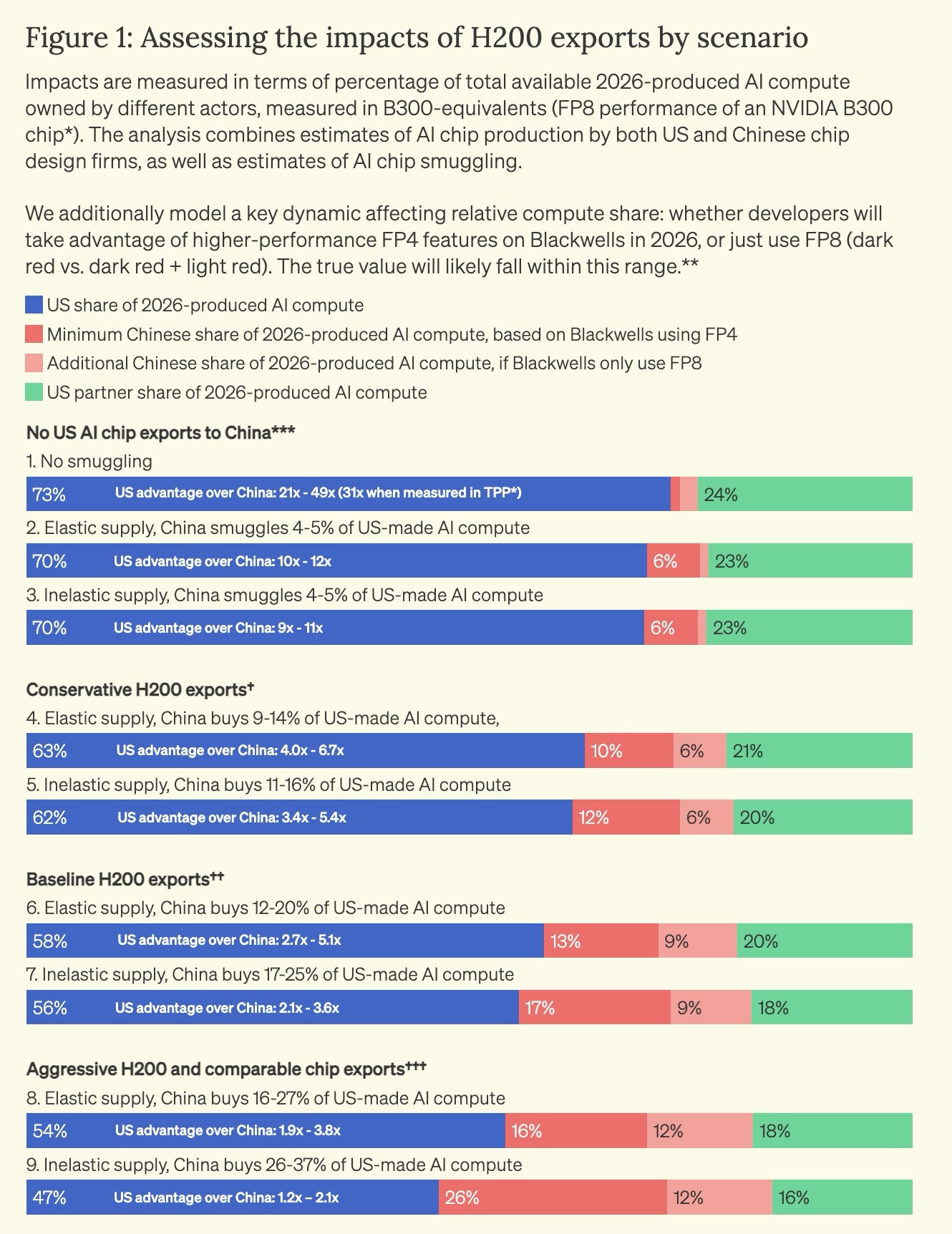
An Institute for Progress chart shows the U.S. and its allies currently possess a large compute advantage over China, roughly a 13-to-1 ratio. Selling large volumes of chips to China could drastically change this balance.
The main question is how Huawei’s domestic production compares to Nvidia’s global output from its fabs. If we withhold advanced equipment and AI chips from China, we can confidently expect a continued U.S. advantage. If these sales go through, it’s unclear who will lead in compute power in next 5 to 15 years.
Dmitri Alperovitch: It will be China, because they’re going to subsidize the hell out of this and we won’t.
It’s not over. Capital Hill is upset about this. Don’t count out Congress, the GAIN Act isn’t dead yet. There will be a fight to prioritize chips for American companies and to see what restrictions are possible — maybe export control reviews by Congress. There are bills floating around.
Also, Donald Trump often changes his mind. Others may convince him to revert this decision. The good thing about Donald Trump is that you’re never done. Whatever happens today can be undone tomorrow, and we need to take advantage of that.
Jordan Schneider: That’s the great irony in all of this. Given the political hesitancy on both side of the aisle and the possibility of Trump changing his mind, Alibaba, Tencent, or ByteDance are unlikely to bet their firms’ futures on Nvidia chips. This is going to be a political football, and one Truth Social post won’t end it. The strategy of “addicting Chinese firms” over the long term — setting aside Beijing’s own goal to indigenize chip production— won’t work.
Dmitri Alperovitch: Beyond politics, this strategy fails for basic business reasons.
China won’t get enough chips. You have Jensen acting as king, allocating a scarce supply of Nvidia chips to hyperscalers and now Chinese customers. Since there isn’t enough to go around, that scarcity forces them to rely on other chips.
No one wants to pay the “Nvidia tax” or be completely dependent on a single monopolistic supplier. Everyone wants to diversify, which is why you see them all building their architectures on multi-chip designs. Committing 100% to CUDA, politics aside, makes no commercial sense.
The Magic of AI
Jordan Schneider: Let’s close on some vibe-coding. I can’t be too depressed going into the holidays. Dmitri, I hear you’ve been having some fun with Opus 4.5 recently. What’s it done for you?
Dmitri Alperovitch: It’s magic. Anyone with a bachelor’s degree, not even in a technical field, can be a software engineer within three years, if not sooner. It is so easy to develop applications. I’ve built two mobile apps in the last month and a web app for personal use. Opus 4.5 is magic. I built a mobile app yesterday in 15 minutes, and most of that time was spent on setup, authorizing it on the Apple Store, and configuring my device. The capability is incredible, and it’s improving everyday.
This is the innovation we have to look forward to, and we want to make sure our American companies, our government, and our citizens are the primary beneficiaries. We want American frontier companies to be the best, and then we can restrict these models from actors we don’t want to have access.
I’m on the board of a number of companies, and I’m telling them all to start measuring their engineers on their use of AI in development tasks. Anyone who isn’t using AI should be considered for a performance improvement plan (PIP). This is the next hammer. It’s like when hammers were discovered tens of thousands of years ago — whoever didn’t use them fell behind. This is an unbelievable productivity tool.
One of my companies has a software engineering team developing their products. They’re also pulling people from other departments, like security, to help build the next module in Claude or other models. These teams are creating prototypes, and even production-ready versions. It’s unbelievable how you’re able to raise the productivity of everyone, not just software engineers.
Jordan Schneider: I want to say the same for analysts, think tankers, Hill staffers, and folks in the executive branch. It is a superpower. We were having a debate about whether Huawei can backfill Nvidia and what the ratio of chips would be. It took me 45 minutes to build an entire data visualization with sliders for different assumptions. How much HBM will China get? How tight will the export controls be? How much will they improve using DUV? How far behind will Huawei’s chips be compared to Nvidia’s?
Beyond the fun personal applications, it’s the “bicycle for the mind” aspect that people should experience, especially for thinking through policy problems. If you’re wrestling with a knotty issue that has numbers, contingencies, or second-order effects that are hard to hold in your head, ask Claude to help you visualize it or see the other side of the argument.
The hallucination issue is almost gone. You still need to fact-check the details and trust your gut if something seems off, but the improvement has been dramatic.
Dmitri Alperovitch: It depends on what you’re using it for. At some level, it’s garbage in, garbage out. If you’re training a model on Reddit and asking about something very esoteric, you’re not going to get a good answer.
Jordan Schneider: You are doing yourself a disservice if you haven’t spent time with these models. Try to integrate them into your day job. You should be hanging out on Cursor and Claude, trying to build little tools and apps to make your workflow easier or allow you to do new things.
Dmitri Alperovitch: Building apps was nostalgic for me. It brought back the emotions I felt as a kid in the 1980s when I learned programming. It was an amazing feel coding your first “Hello, World!” program or, in my case, a simple game in QBasic. The magic of seeing it run was a special feeling, and you felt so proud and accomplished.
This took me back. It made me think, “Oh my God, this is magic.” In the ‘80s and ‘90s, you had to have technical expertise and learn a programming language. You still need some technical skills today, particularly when you’re debugging or if you don’t understand how Swift works or how to deploy iOS apps. But all of that is going away.
Jordan Schneider: It’s going away.
Dmitri Alperovitch: The accessibility of this technology changing everything. For years, we thought only nerds could access the magic of programming. Now, everyone can, and that is going to revolutionize everything. The interesting thing about AI is not that it’s going to make tasks easier and faster, but that it’s going to make other things that you would never, ever do before accessible.
The cost of software engineering iwill drop to zero. Everyone will be building dozens of apps — for their grocery list, for managing their kids’ schedules, whatever it may be — because it’s so easy. You can custom build something that would be useful only to you, with no commercial value. Even for coders, we wouldn’t spend our time building those apps it was a lot of effort. Now, that effort is gone.
Jordan Schneider: The activation energy for doing a side project has dropped to zero. What I’m excited to see created, Dmitri, is the “senior policy official simulator.” That’s a classic nerdy ChinaTalk idea.
Dmitri Alperovitch: So nerdy.
Jordan Schneider: But you read all these memoirs from government officials. Jake Sullivan said the one thing you can’t experience beforehand is being in a crisis. You can have a Tim Geithner level — all of a sudden it’s 2009, and it’s not like you’ve lived through a financial crisis before.
Having a visceral experience — a VR Situation Room meeting, a VR flight on the plane with the president trying to convince him not to sell chips to China — getting reps in those high-stakes political, personal, and commercial situations could be transformative. It doesn’t have to be for politics and national security. We haven’t had a nuclear crisis in a long time.
Having the deeper, emergent human capabilities that AI simulations of these events can provide seems like a big upside for human competence when dealing with crises in the future. I’m excited about it. Rockstar Games, if you’re out there, give me a call. We can do some cool stuff together.
Dmitri, always a pleasure. Thank you so much for being a part of ChinaTalk.
Dmitri Alperovitch: Thanks for having me, Jordan.
ChinaTalk is a reader-supported publication. To receive new posts and support our work, consider becoming a free or paid subscriber.
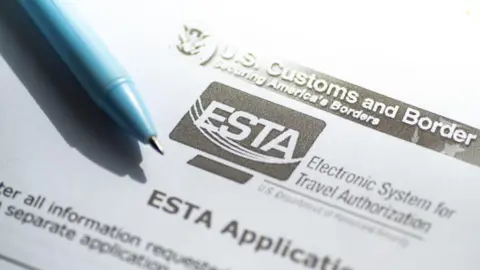
Tourists from dozens of countries including the UK could be asked to provide a five-year social media history as a condition of entry to the United States, under a new proposal unveiled by American officials.
The new condition would affect people from dozens of countries who are eligible to visit the US for 90 days without a visa, as long as they have filled out an Electronic System for Travel Authorization (ESTA) form.
Since returning to the White House in January, President Donald Trump has moved to toughen US borders more generally - citing national security as a key reason.
Analysts say the new plan could pose an obstacle to potential visitors, or harm their digital rights.
The US expects a major influx of foreign tourists next year, as it hosts the men's football World Cup alongside Canada and Mexico, and for the 2028 Olympics in Los Angeles.
The proposal document was filed by Customs and Border Protection (CBP) and the Department of Homeland Security (DHS), of which the agency is part.
US media reported that it appeared in the Federal Register, which is the official journal of the US government. The BBC has asked DHS for comment.
It says "the data element will require ESTA applicants to provide their social media from the last 5 years", without giving further details of which specific information will be required.
The existing ESTA requires a comparatively limited amount of information from travellers, as well as a one-off payment of $40 (£30). It is accessible to citizens of about 40 countries - including the UK, Ireland, France, Australia and Japan - and allows them to visit the US multiple times during a two-year period.
As well as the collection of social media information, the new document proposes the gathering of an applicant's telephone numbers and email addresses used over the last five and 10 years respectively, and more information about their family members.
The text cites an executive order from Trump in January, titled "Protecting the United States From Foreign Terrorists and Other National Security and Public Safety Threats".
Getty Images
The plan would affect people from countries including the UK, which can fill out an ESTA form in lieu of a visa
The Trump administration has previously required foreign nationals to make their social media accounts public if they are applying for student visas or H1B visas for skilled workers - the latter of which now also entail a much higher fee.
A senior state department official said of the student visa policy: "It is an expectation from American citizens that their government will make every effort to make our country safer, and that is exactly what the Trump Administration is doing every single day."
Officers were instructed to screen for those "who advocate for, aid, or support designated foreign terrorists and other threats to national security; or who perpetrate unlawful anti-Semitic harassment or violence".
As part of the administration's broader effort to toughen borders, officials recently said an existing travel ban - affecting 19 countries in Africa, the Middle East and the Caribbean - could soon be expanded.
That move was announced in the wake of a shooting attack on two National Guard members in Washington DC, in which an Afghan man has been named as the suspect.
The new proposal regarding ESTA data collection for tourists invites views from the public for 60 days.
Sophia Cope, of digital rights organisation the Electronic Frontier Foundation, criticised the plan, telling the New York Times that it could "exacerbate civil liberties harms".
Meanwhile, immigration law practice Fragomen suggested there could be practical impacts as applicants could face longer waits for ESTA approvals.
Experts have previously suggested that the changes to travel policies introduced under Trump have had an impact on the American tourism industry.
Earlier this year, the World Travel & Tourism Council said the US was the only one of 184 economies that it analysed that was expected to see a decline in international visitor spending in 2025.
Other Trump administration policies have also appeared to impact tourism to the country, such as many Canadians boycotting US travel as a form of protest against Trump's tariffs.
October marked the 10th straight month of decline in the number of Canadian travellers to the US. In the past, Canadians have made up about a quarter of all international visitors to the US, spending more than $20bn (£15.1bn) a year, according to the US Travel Association.
María Corina Machado was last seen in public at a protest on 9 January
María Corina Machado, the winner of this year's Nobel Peace Prize, is "safe" and will come to Oslo, but will not be able to make the awards ceremony scheduled for 12:00 GMT on Wednesday, the Nobel Institute has said.
The Nobel Institute awarded the Venezuelan opposition leader the prize for "her struggle to achieve a just and peaceful transition from dictatorship to democracy" in her home country.
There has been much speculation about whether Machado, who has been living in hiding, would be able to defy a travel ban to attend the ceremony in Norway's capital.
Organisers said her daughter would accept the award in her stead.
In an audio recording shared by the Nobel Institute, Machado said "I will be in Oslo, I am on my way."
However, the director of the Nobel Institute, Kristian Berg Harpviken, said that Machado was expected to arrive "sometime between this evening and tomorrow morning" - too late for the ceremony.
In her mother's absence, Ana Corina Sosa is expected to give the speech Machado had prepared.
Earlier on Wednesday, the Nobel Institute had said they were in the dark about Machado's whereabouts, triggering concern among her supporters.
Two of her children and her mother are in Oslo, hoping to be reunited with Machado after being separated for more than a year.
Machado went into hiding shortly after Venezuela's disputed presidential election in July 2024.
The last time she was seen in public was on 9 January when she spoke to her supporters at a rally protesting against the swearing-in of Nicolás Maduro to a third term as president.
The elections were widely dismissed both by the opposition in Venezuela and on the international stage as rigged, and sparked protests across the country.
Around 2,000 people were arrested in the crackdown which followed, among them many members of Machado's opposition coalition.
Machado, who had managed to unite the bitterly divided opposition ahead of the election, went into hiding for fear of arrest.
She continued to give interviews and uploaded videos onto social media urging her followers not to give up.
The announcement that she had been chosen as this year's Nobel Peace Prize winner galvanised her supporters and triggered immediate speculation as to whether she would be able to travel to Oslo.
Total secrecy has surrounded her travel plans and it is not know how she managed to leave her place of hiding or by what means she has reached Europe.
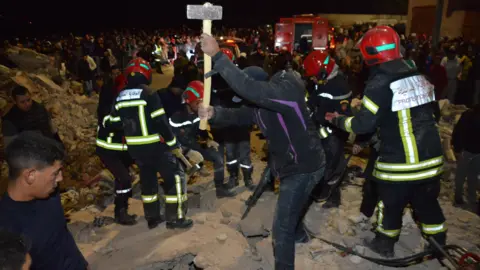
At least 19 people have been killed and a further 16 injured after two buildings collapsed in the Moroccan city of Fez.
The two four-storey residential buildings that came down early on Wednesday morning contained eight families, state media report, citing local officials.
Several Moroccan news outlets report that the buildings - located in the south-westerly Al Massira suburb of the new part of the city - had shown signs of deterioration for several years.
Fez, in north-eastern Morocco, is one of the North African nation's oldest cities, with parts dating back to the 8th Century, as well as being its third-most populous.
A search and rescue operation is ongoing to find anyone who may still be trapped under the rubble. Footage from the scene shows people and diggers sifting through the debris under the cover of darkness.
In one clip, published by news site Akhbarona, a body can be seen being carried away on a stretcher by emergency services.
Residents of nearby buildings have been evacuated as a preventative measure, state media report.
Those taken to hospital suffered varying injuries.
Nine were killed when a condemned building collapsed in a different neighbourhood of Fez in May.
Prior to that, five people were killed when a house in the old city crumbled in February 2024, following heavy rain and strong winds.
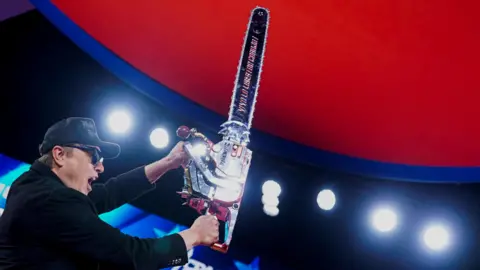
Elon Musk wielded a chainsaw to symbolise government cost-cutting at the Conservative Political Action Conference in February
Elon Musk says he would not lead the Department of Government Efficiency (Doge) if he had his time again, but has maintained that its tumultuous efforts to shrink the size of the US government under President Donald Trump was "a little bit successful".
The billionaire boss of Tesla and SpaceX gave his reflections during a nearly-hour long interview on The Katie Miller Podcast on Tuesday.
Musk left Doge in May after initially promising to save as much as $2tn (£1.5bn) a year by slashing federal jobs and shuttering government programmes, among other cost-cutting measures.
Doge's website, which was last updated on 4 October, claims to have saved an estimated $214bn so far this year.
Conservative podcast host Miller, a former White House adviser herself who worked as a spokesperson for Doge, asked Musk whether he would do his work for the organisation again if he could rewind to the start of the year.
"I mean no, I don't think so," Musk replied.
Instead, he said he would have "worked in my companies, essentially", explaining that "they wouldn't have been burning the cars".
His comments reference a series of vandalism attacks on Tesla showrooms and vehicles earlier this year, which came in response to the highly visible political role in the Trump administration for the world's richest man.
Musk's involvement in US politics sparked global protests and boycotts against Tesla, and led to a spike in vandalism of Tesla's Cybertruck vehicles. In April, the firm said sales had fallen to their lowest level in three years and warned investors that "changing political sentiment" could continue to hurt demand.
But Musk said he believed Doge had been "a little bit successful, we were somewhat successful".
"You really want the least amount done by government as possible," he explained, adding that Doge had "stopped a lot of funding that really just made no sense".
Musk told Miller that Doge, which was created by an executive order on Trump's first day back in the White House, was a "made-up" name "based on internet suggestions".
The advisory group, which is not an official government department, tackled Musk's vision at a fierce pace. It pushed for massive reductions in the federal workforce, as well as the shuttering of programmes and even agencies such as the US Agency for International Development (USAID).
Some of Doge's moves were met with legal fights, or were reversed. When the group's cost-cutting resulted in bird flu officials at the US Department of Agriculture being fired, the Trump administration looked to re-hire them days later.
Reuters
Musk spoke to podcast host Katie Miller, a former Trump adviser herself who is also married to White House Deputy Chief of Staff Stephen Miller
Musk's time at the helm of Doge not only appeared to cause issues for his business empire - it also led to an explosive falling-out with the president himself.
Musk donated millions of dollars to the Trump campaign during the election and was a fixture at the White House for months, speaking at cabinet meetings and standing behind the president at events in the Oval Office.
But that relationship came to a grinding halt in June when Musk broke with the White House narrative and criticised a Trump-backed spending bill.
It led to a war of words on social media, with Trump at one point threatening to order Doge to look into Musk's own business dealings with the US government.
The pair's relationship now seems to be mended. Musk was spotted at a White House dinner with Saudi Crown Prince Mohammad bin Salman in November.
And Musk spoke positively of Trump in his interview with Miller, saying the president was the funniest person he knows and has "great sense of humour".
The British author Madeleine Wickham, who wrote under the name Sophie Kinsella, became a force in commercial fiction upon the 2000 release of “Confessions of a Shopaholic.”
While the United States is not yet close to a full-on autocracy, the New York Times editorial board outlines some of the warning signs of democratic erosion already taking place, thanks to the efforts of President Trump.
Painting in the Dutch Republic during the Golden Age was rich in landscapes, interiors and images of everyday life, but didn’t abandon storytelling. Many of Rembrandt’s finest works are religious narratives and tales drawn from classical mythology and history. This article shows a selection of paintings by the less famous, and how their stories extended beyond those that had been most popular in the Renaissance.
Adriaen van de Velde (1636–1672), The Annunciation (1667), oil on canvas, 128 x 176 cm, Rijksmuseum Amsterdam, Amsterdam. Wikimedia Commons.
The Annunciation (1667) is a large canvas, and among the few religious paintings that Adriaen van de Velde made following his marriage to a Catholic woman, and his conversion to Catholicism. Although the angel is a little awkward, it seems hard to believe that this was painted by a landscape specialist.
Adriaen van de Velde (1636–1672), Vertumnus and Pomona (1670), oil, 76.5 x 103 cm, Kunsthistorisches Museum, Vienna. Wikimedia Commons.
Three years later, van de Velde painted a classical myth in his superb Vertumnus and Pomona (1670). Vertumnus was the Roman god of seasons and change, who could assume whatever form he wished. Book fourteen of Ovid’s Metamorphoses tells the story of his transformation into the form of an old woman, seen here on the left, so that he could gain entry to Pomona’s orchard and seduce her. Sadly, the yellow he used to mix greens has faded in parts, leaving some of his vegetation blue.
Jan Lievens (1607–1674), Quintus Fabius Maximus (1656), media not known, 203 x 175 cm, Paleis op de Dam, Amsterdam, The Netherlands. Wikimedia Commons.
Jan Lievens’ painting of Quintus Fabius Maximus from 1656 may refer to this Roman’s victory at Tarentum, as told in Plutarch’s Lives. The great Carthaginian general Hannibal was only five miles away at the time of the Roman repossession of Tarentum, and this made Hannibal realise the impossibility of mastering Italy.
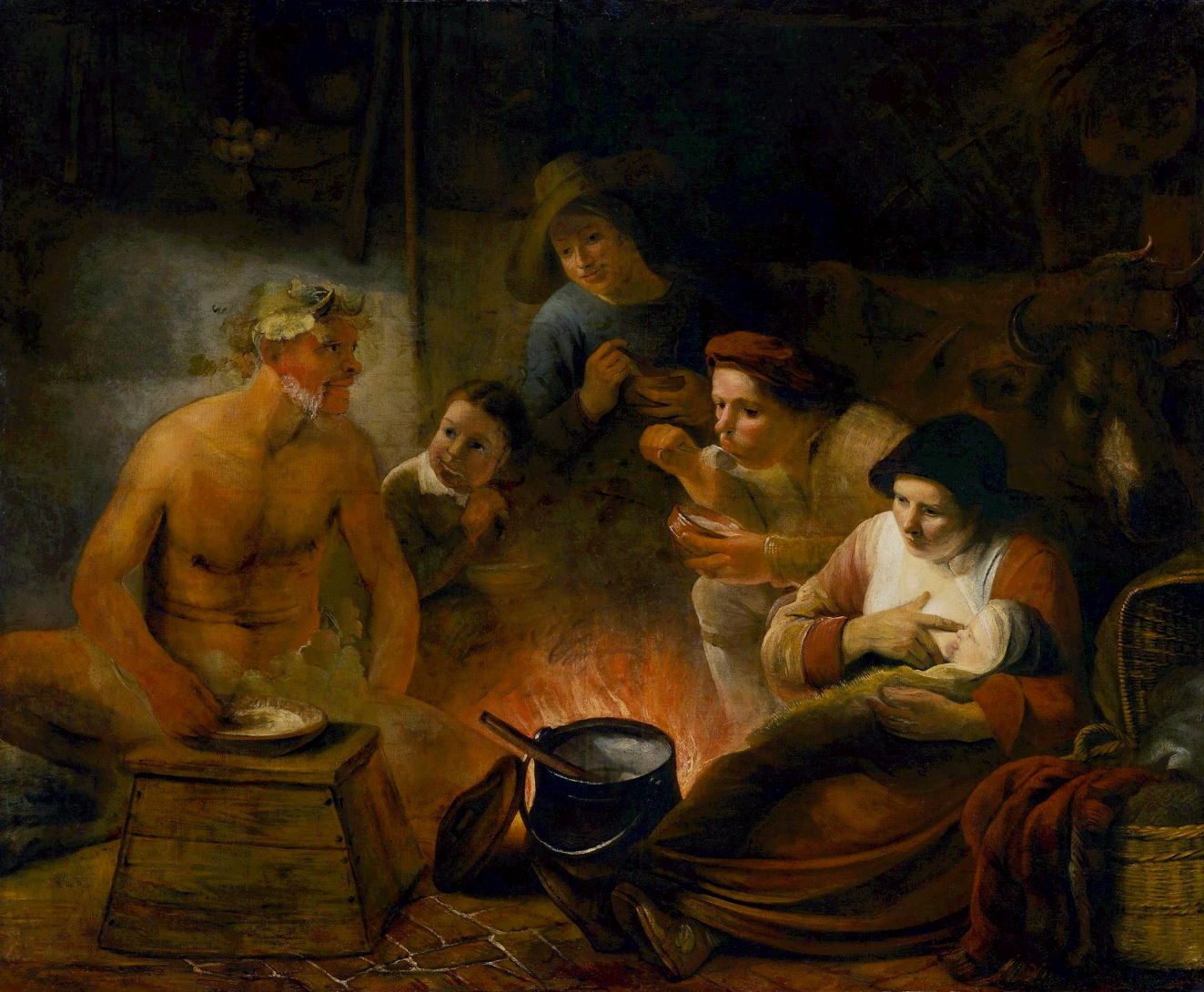
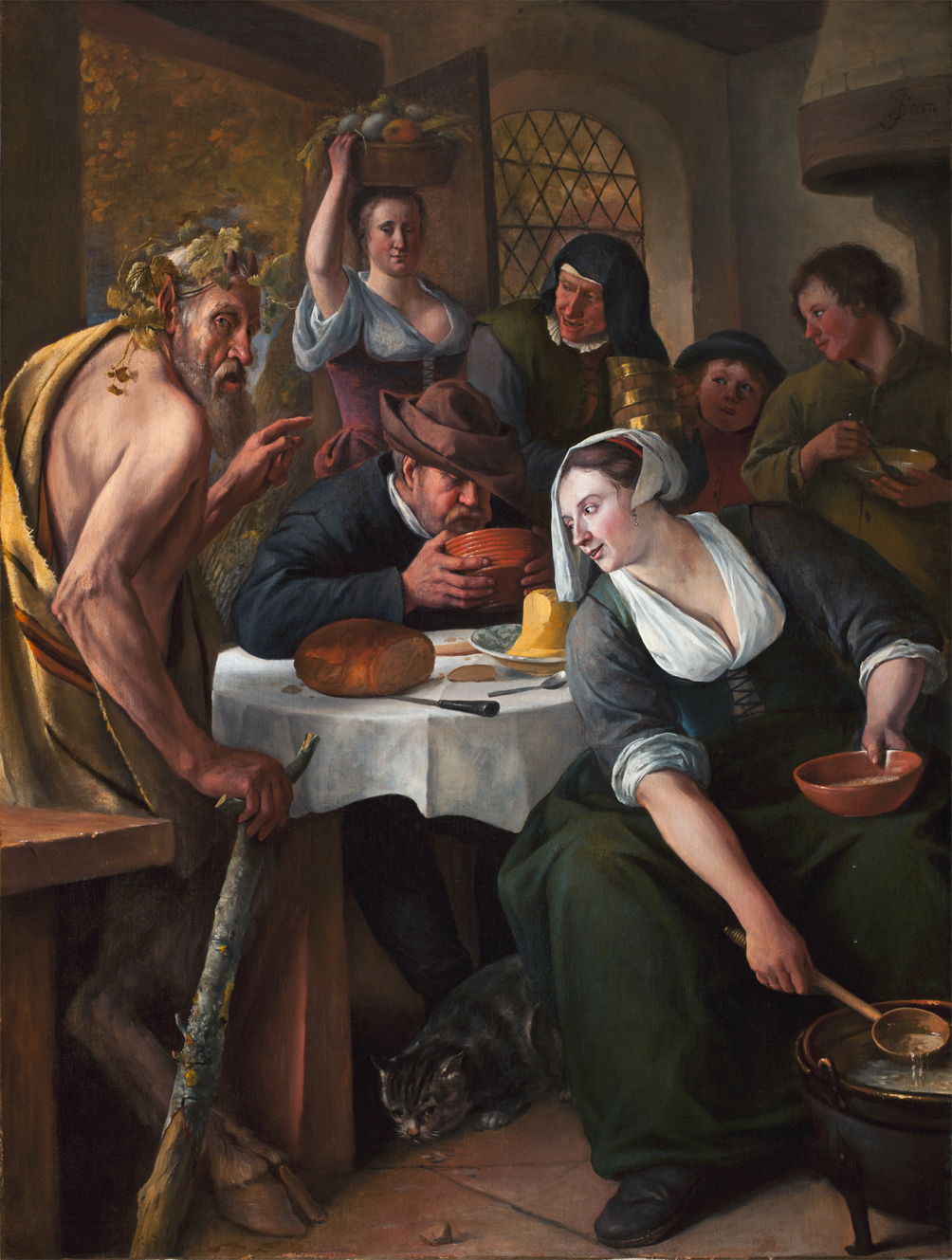
Paintings of fables, that had already started to become popular among Flemish artists at this time, appeared in the Republic to the north. Among them was the story of the Satyr and the Traveller, or the Man and the Satyr. A man made friends with a satyr; when the man’s hands were cold, he blew on them to warm them up. When the two were eating together, the man blew on his hot food in order to cool it down. The satyr decided that he couldn’t trust a creature whose breath blew both hot and cold, so broke off their friendship.
Constantijn à Renesse (1626–1680), Satyr at the Peasant’s House (1653), oil on canvas, 168 x 203 cm, Muzeum Narodowe w Warszawie, Warsaw, Poland. Wikimedia Commons.
In 1653, Constantijn à Renesse, a former pupil of Rembrandt, painted his version of this fable in Satyr at the Peasant’s House. This shows one of the family blowing on the hot food in their spoon, although at this stage the satyr hasn’t reacted to the contradiction.
Jan Steen (1625/1626–1679), The Satyr and the Peasant “Who Blows Hot and Cold” (c 1660), media and dimensions not known, Museum Bredius, The Hague, The Netherlands. Wikimedia Commons.
Jan Steen, in his telling of The Satyr and the Peasant “Who Blows Hot and Cold” from about 1660, gives a clearer account, with the satyr looking worried at the viewer, as a man (still wearing his hat) blows on a bowl of hot stew. He also pays attention to delightful details such as the cat skulking under the table, and a rich supporting cast.
Steen went on to paint two unusual accounts of what happened in schools across country districts in the Republic.
Jan Steen (1625/1626–1679), The Village School (c 1665), oil on canvas, 110.5 x 80.2 cm, National Gallery of Ireland Gailearaí Náisiúnta na hÉireann, Dublin, Ireland. Wikimedia Commons.
His The Village School from about 1665 shows physical punishment in a contemporary school. The child at the right holds out a hand for teacher to strike it with a wooden spoon, and is already wiping tears from his eyes. A girl in the middle of the canvas is grimacing in sympathy.
Jan Steen (1625/1626–1679), The Village School (c 1670), oil on canvas, 81.7 x 108.6 cm, Scottish National Gallery, Edinburgh, Scotland. Wikimedia Commons.
A few years later, Steen painted a scene in a larger and more chaotic classroom, in The Village School from about 1670. Although there are two staff sat at the teachers’ desk, the man is distracted, perhaps in cutting himself a fresh quill. The woman teacher sat next to him is engaged in explaining something to a pupil. Around them, all hell is breaking loose. In the distance, a boy is stood on one of the trestle tables. Older children are teaching younger ones, and a small group at a table at the right are trying to write while others get up to mischief. One younger child in the middle of the foreground has fallen asleep against a hat.
Gerrit Dou (1613–1675), The Young Mother (1658), oil on panel, 73.5 x 55.5 cm, Koninklijk Kabinet van Schilderijen Mauritshuis, The Hague, The Netherlands. Wikimedia Commons.
Gerrit Dou approaches social realism in his detailed account of The Young Mother from 1658. As she sits at her needlework, her child is attended in their wickerwork crib by a young nurse. Around them is an eclectic collection of objects, from a large cabbage, hanging game and a bundle of carrots at the right, to a bird cage and an upholstered chair at the left. Suspended above them is a chandelier, and a wooden spiral staircase ascends to the next floor. This family appears to be living in affluent squalor.
Melchior d’Hondecoeter (1636–1695), Concert of the Birds (1670), oil on canvas, 84 x 99 cm, Private collection. Wikimedia Commons.
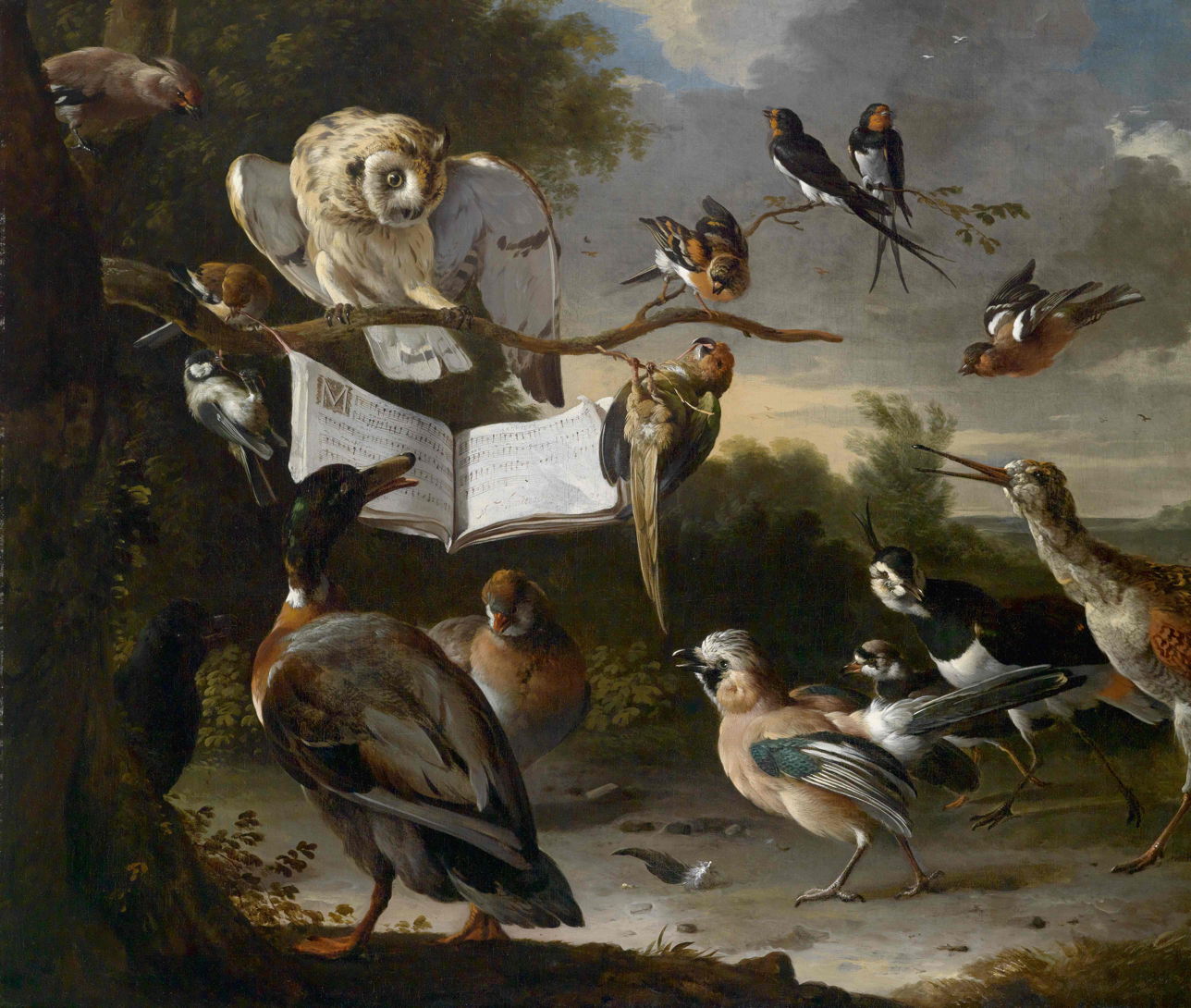
There was even an anthropomorphic fad for paintings showing gatherings of birds ‘singing’ together, and I think Melchior d’Hondecoeter’s Concert of the Birds from 1670 is probably the best example of those entertaining paintings.

 Login
Login