María Corina Machado is being honored for her push for democracy even as she backs President Trump’s military buildup and aggressive campaign against Venezuela.
President Trump backed Nasry Asfura days before the Nov. 30 election and denounced his opponents. In a close race, that has potentially tipped the scales.
Mandatory arbitration, underfunded enforcement and corporate malfeasance have eroded Americans’ trust in institutions. It’s time for government to fight back.
Making a highly successful career for yourself as a woman artist in the Renaissance was an extraordinary if not unique feat. It’s one of the many accomplishments of Sofonisba Anguissola (c 1532-1625), who also managed to survive the ravages of infectious disease, and died in her early nineties, four centuries ago today.
Even more unusually, she wasn’t born into an artistic family, but into minor nobility in Cremona, Lombardy, Italy. The oldest of Amilcare Anguissola’s seven children, the family claimed ancestry going back to ancient Carthage. Amilcare and his wife Bianca educated and encouraged their daughters to develop their abilities, resulting in four of their six girls becoming painters, but it was only Sofonisba who persisted long enough to make a career of her art.
When she was fourteen, Sofonisba went to study in Bernardino Campi’s workshop, then to Bernardino Gatti’s. She probably completed her training in about 1553, but by then was already painting outstanding works in oils.
Sofonisba Anguissola (1530–1625), Self-portrait with Bernardino Campi (1550), oil on canvas, 111 x 109.5 cm, Pinacoteca Nazionale, Sienna, Italy. Wikimedia Commons.
One of her earliest surviving paintings is also one of her most remarkable and ingenious, this Self-portrait with Bernardino Campi, painted in 1550 when she was just eighteen. This double portrait is fascinating in her depiction of two left hands on the portrait that Campi is shown working on: one reaches up to meet his right hand, holding a brush, and the other holds her own brushes.
Sofonisba Anguissola (1530–1625), The Chess Game (Portrait of the artist’s sisters playing chess) (1555), oil on canvas, 72 x 97 cm, Muzeum Narodowe w Poznaniu, Poznań, Poland. Wikimedia Commons.
Only five years later she transformed Renaissance portraiture with her superb The Chess Game (1555), showing her sisters playing chess, with their mother (probably) making an appearance at the right edge. Her sisters Lucia, Minerva and Europa are shown dressed in their finest, but the informality of their poses and expressions is striking, and innovative in portraits at that time. Her attention to detail in clothing and on the table is also notable, and perhaps more characteristic of the Northern Renaissance. Her other portraits are just as finely detailed.
Sofonisba Anguissola (1530–1625), Self-portrait (1554), oil on poplar wood, 19.5 × 12.5 cm, Kunsthistorisches Museum, Vienna, Austria. Wikimedia Commons.
In addition to painting her family, she also completed a series of self-portraits in her early career, including this Self-portrait from 1554, when she was twenty-two. The contrast with the fine dress and relaxed informality of her family portraits is interesting, and may reflect her almost austere devotion to her art.
Sofonisba Anguissola (1530–1625), Self-portrait at the Easel (1556), oil on canvas, 66 × 57 cm, Zamek Lubomirskich i Potockich w Łańcucie, Łańcut, Poland. Wikimedia Commons.
A couple of years later, Self-portrait at the Easel (1556) shows her working on an exquisite devotional painting which may have been of the Virgin and Child, showing the deep relationship between a mother and her infant, and another painting within a painting.
Sofonisba Anguissola (1530–1625), Self-portrait (date not known), oil on panel, diameter 13.2 cm, Private collection. Wikimedia Commons.
This small undated Self-portrait on a tondo is no more relaxed.
Sofonisba Anguissola (1530–1625), Portrait of the Artist’s Family (Portrait of Amilcare, Minerva, and Asdrubale Anguissola) (1557-58), oil, dimensions not known, Nivaagaards Malerisamling, Nivå, Denmark. Wikimedia Commons.
Her Portrait of the Artist’s Family of 1557-58 maintains her style of informality in poses, although its composition is more typical of the day. This shows her younger sister Minerva, father Amilcare, and young brother Asdrubale, with a fantasy landscape of classical ruins and the rising towers of distant castles, receding to a dramatic mountain.
She stayed in Rome in 1554, where she met Michelangelo and several other artists. Michelangelo seems to have mentored her for a while. She became an established portraitist, and in 1559 was invited by King Philip II of Spain to teach painting to his wife, the young Queen Elisabeth of Valois. Anguissola painted many important portraits while in Philip’s court, and prospered as a result.
Sofonisba Anguissola (1530–1625) (attr), Portrait of Prince Alessandro Farnese (1545-1592), later Duke of Parma and Piacenza (c 1560), oil on canvas, 107 × 79 cm, The National Gallery of Ireland / Gailearaí Náisiúnta na hÉireann, Dublin, Ireland. Wikimedia Commons.
This fine Portrait of Prince Alessandro Farnese from about 1560 has been attributed to her. The prince, who later became Duke of Parma and Piacenza, lived from 1545-1592, and this portrait conforms to more standard practice.
Sofonisba Anguissola (1530–1625), Portrait of Anna of Austria (1549-80) (1573), oil on canvas, 86 × 67.5 cm, Museo Nacional del Prado, Madrid. Wikimedia Commons.
Her Portrait of Anna of Austria of 1573 was one of her more important commissions. Anna (1549-1580) was the fourth wife of her uncle, King Philip II of Spain, and the daughter of the Holy Roman Emperor Maximilian II. She married the king in 1570 following the death of Queen Elisabeth of Valois, who had been Anguissola’s pupil. Among Anna’s other portrait painters was Giuseppe Arcimboldo, later famous for his unique ‘vegetable’ portraits.
Although she had married a noble in 1571, she continued to paint professionally, and the couple moved to Paternò, near Catania on the east coast of Sicily. Her first husband died eight years later, and in 1584 she married again, moving to Genoa.
Sofonisba Anguissola (1530–1625), Portrait of Julius Caesar Aged 14 (c 1586), oil on canvas, 186 × 115 cm, location not known. Wikimedia Commons.
This unusual Portrait of Julius Caesar Aged 14 from about 1586 shows, according to its inscription, the famous Roman emperor, who lived from 100-44 BCE. She has approached it as another of her informal portraits rather than as a history painting.
Sofonisba Anguissola (1530–1625), The Holy Family with Saints Anne and John the Baptist (1592), oil on canvas, dimensions not known, Lowe Art Museum, University of Miami, Coral Gables, FL. Wikimedia Commons.
Her religious paintings broke new ground in the intimacy with which she shows family scenes, as in The Holy Family with Saints Anne and John the Baptist (1592).
She taught and provided advice to other painters throughout her later career, and in 1624 was visited by the young Anthony van Dyck. Her sight was failing by that time, but she was still able to give him good advice. Finally, Anguissola moved to Palermo, where she died at the age of 92 or 93 in 1625. She had no children, but left a generation of artists who had benefitted from her innovation and influence. Among those directly inspired by her example and work was Lavinia Fontana. Over two centuries later, Ella Sophonisba Hergesheimer pursued her painting career bearing Anguissola’s name.
Almost all who paint in oils use conventional brushes, but there’s a significant minority who sometimes, or frequently, use different tools to apply and shape the paint layer. Of those, the most popular are palette knives, generally used to move and mix paint on the palette. Others have used the other end of the brush stick to incise, or their fingers.
Marie Bashkirtseff (1858–1884), In the Studio (1881), oil on canvas, 188 x 154 cm, Dnipro State Art Museum, Dnipro, Ukraine. Wikimedia Commons.
Marie Bashkirtseff’s painting of a class in the Académie Julien in Paris in 1881 demonstrates how oil painting should be done by the textbook. The artist, shown in her self-portrait in the centre foreground, is using a long-bladed palette knife to prepare the paint on her palette. At her feet, on an old sheet of newspaper, are her brushes, all with handles of typical length, and the pupil behind her is using a maul stick to rest her right hand while painting with her brush.
Gustave Courbet (1819–1877), The Grotto of Sarrazine near Nans-sous-Sainte-Anne (c 1864), oil on canvas, 50.2 x 60 cm, J. Paul Getty Museum, Los Angeles, CA. Wikimedia Commons.
Gustave Courbet applied his paint using a palette knife for some of his paintings. This has been identified from the facture in some of his paintings of caves that he made from about 1864, including The Grotto of Sarrazine near Nans-sous-Sainte-Anne above.
Another enthusiast for painting with a knife was Auguste Renoir.
Pierre-Auguste Renoir (1841–1919), Jules Le Coeur and his Dogs in the Forest of Fontainebleau (1866), oil on canvas, 112 x 90 cm, Museu de Arte de São Paulo (MASP), São Paulo, Brazil. Wikimedia Commons.
In 1866, Renoir painted his friend Jules Le Coeur and his Dogs in the Forest of Fontainebleau. This is unusual among his works, as it was preceded by two studies, and all three were made using the palette knife rather than brushes. This makes it most likely to have been painted before Renoir abandoned the knife and returned to the brush, by the middle of May 1866.
Pierre-Auguste Renoir (1841–1919), The Mosque (1881), oil on canvas, 73 x 92 cm, Musée d’Orsay, Paris. Wikimedia Commons.
Renoir returned to the technique in The Mosque, also known as Arab Festival, in 1881. Small strokes of bright colour and energetic work with the palette knife give it a strong feeling of movement, and it so impressed Claude Monet that he bought it from Durand-Ruel in 1900.
Anna Althea Hills (1882-1930), Fall, Orange County Park (1916), oil on board, 35.6 x 45.7 cm, Private collection. The Athenaeum.
Anna Althea Hills’ Fall, Orange County Park (1916) is a classic and highly accomplished plein air painting that appears to have been made with extensive and deft use of the knife, particularly in the foreground.
Perhaps the most famous artist who is known to have painted with his fingers is Leonardo da Vinci.
Leonardo da Vinci (1452–1519), Annunciation (c 1473-75), oil and tempera on poplar, 100 x 221.5 cm, Galleria degli Uffizi, Florence, Italy. Wikimedia Commons.
This Annunciation, painted in oil and tempera on a poplar panel, is generally agreed to be one of the earliest of Leonardo’s own surviving paintings. When it was painted is in greater doubt, but a suggestion of around 1473-75 seems most appropriate. There are numerous pentimenti, particularly in the head of the Virgin. Its perspective projection is marked in scores in its ground and Leonardo used his spontaneous and characteristic technique of fingerpainting in some of its passages.
Finally, some painters are well-known for their use of brushes with exceptionally long handles. These enabled them to stand back, sometimes almost on the opposite side of their studio, get an overall view of their canvas, and paint from the same distance as a viewer.
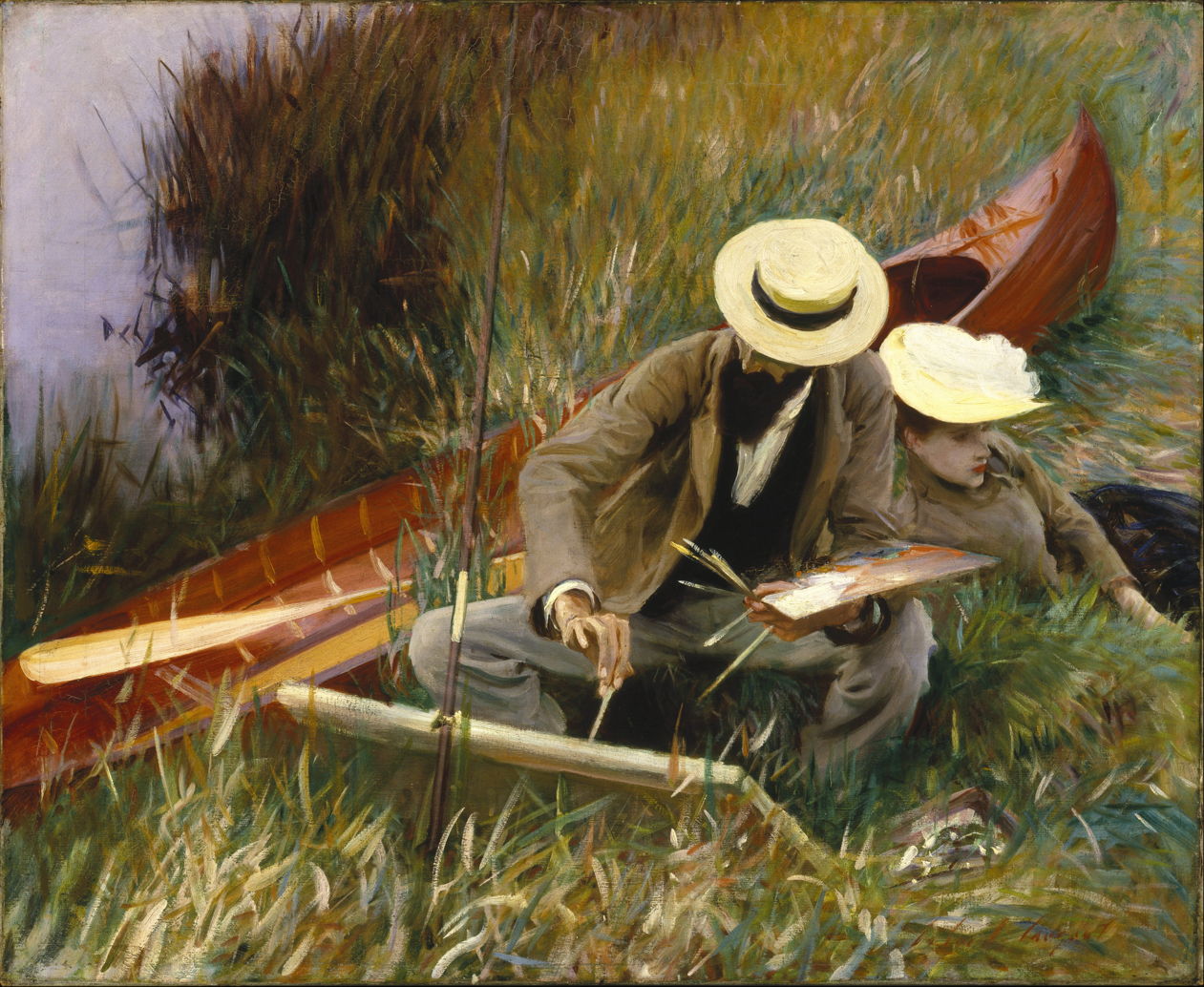
John Singer Sargent (1856–1925), An Out-of-Doors Study (c 1889), oil on canvas, 65.9 × 80.7 cm, Brooklyn Museum, New York, NY. Wikimedia Commons.
Like all plein air painters, Paul César Helleu (1859–1927) shown in John Singer Sargent’s An Out-of-Doors Study from about 1889, is using brushes with handles of modest length. His canvas is fairly small, and he’s working close-in while clutching a brace of brushes in his left hand. Some designed for use when painting in front of the motif have even shorter handles, but when back in the studio Helleu would almost certainly have opted for longer.
James Abbott McNeill Whistler (1834-1903), Symphony in White No. 1: The White Girl (1862), oil on canvas, 214.6 x 108 cm, National Gallery of Art, Washington, DC. WikiArt.
Whistler was renowned for using brushes with handles over one metre (39 inches) long, and appears to have used them when painting Symphony in White No. 1: The White Girl in 1862 on a canvas just over two metres (78 inches) tall. He reworked it between 1867-72 to make it more ‘spiritual’ and reduce its original realism.
Joaquín Sorolla y Bastida (1863–1923), Sewing the Sail (1896), oil on canvas, 220 x 302 cm, Museo d`Arte Moderna di Ca’ Pesaro, Venice, Italy. Image by Flaviaalvarez, via Wikimedia Commons.
Early in his career, Joaquín Sorolla established his reputation of painting ‘voraciously’, often using brushes with extremely long handles and large canvases. Although Sewing the Sail from 1896 may look a spontaneous study of the effects of dappled light, Sorolla composed this carefully with the aid of at least two drawings and a sketch, and given its 2.2 metre (87 inches) height, he was almost certainly using brushes of similar length.
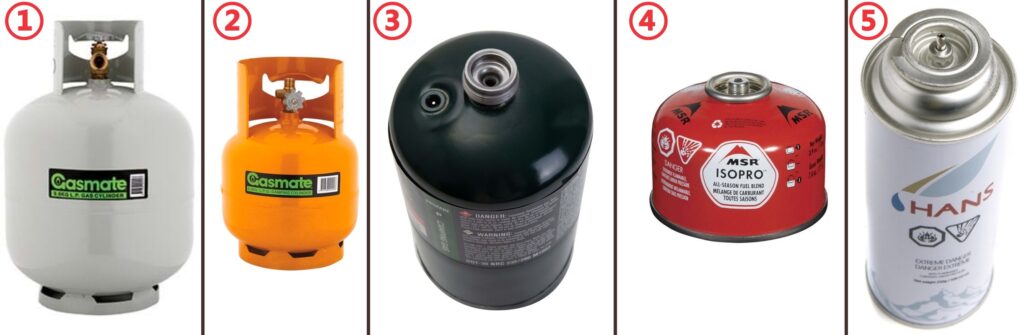
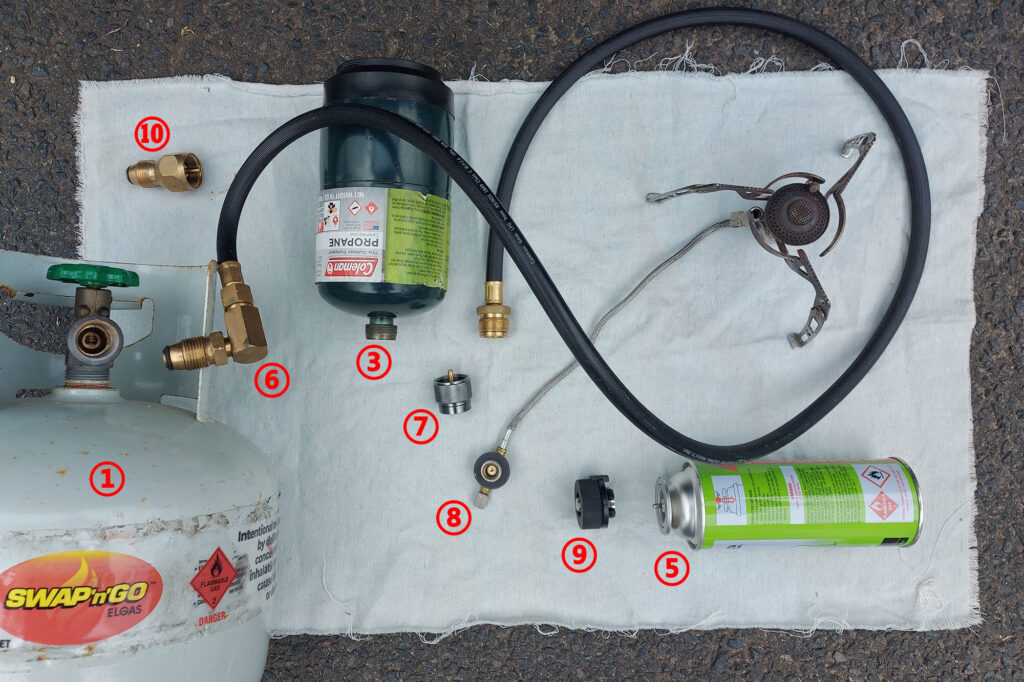
① POL,也就是最常见的大号「煤气罐」,准确地说,叫「液化石油气罐」。我这边日常可以买到的,有 3.7kg 和 8.5kg 两种容积。大的更划算,但我的床板下面只能放进小号的,换一瓶气大约 $20,Bunnings 和很多加油站都有换。
还有一种 LCC 27 接口,是 POL 的升级版。近年来政府渐渐把 POL 气罐,升级成更安全的 LCC 27 接口。这个是向下兼容的:原先用在 POL 上的管线,仍然可以拧进 LCC 27 的气罐;反之则不行,LCC 27 专用的管线,不能用在 POL 气罐上。所以,使用 POL 的管线,就不必在乎每次换到的气罐,是旧接口还是新接口。
② 3/8″ BSP-LH,另一种大号石油气罐的接口,通常只有专门的户外型房车才会使用。加油站很少见,更换气瓶也远不如 POL 方便。可以很方便地改成 POL,户外店有转接头卖($15)。
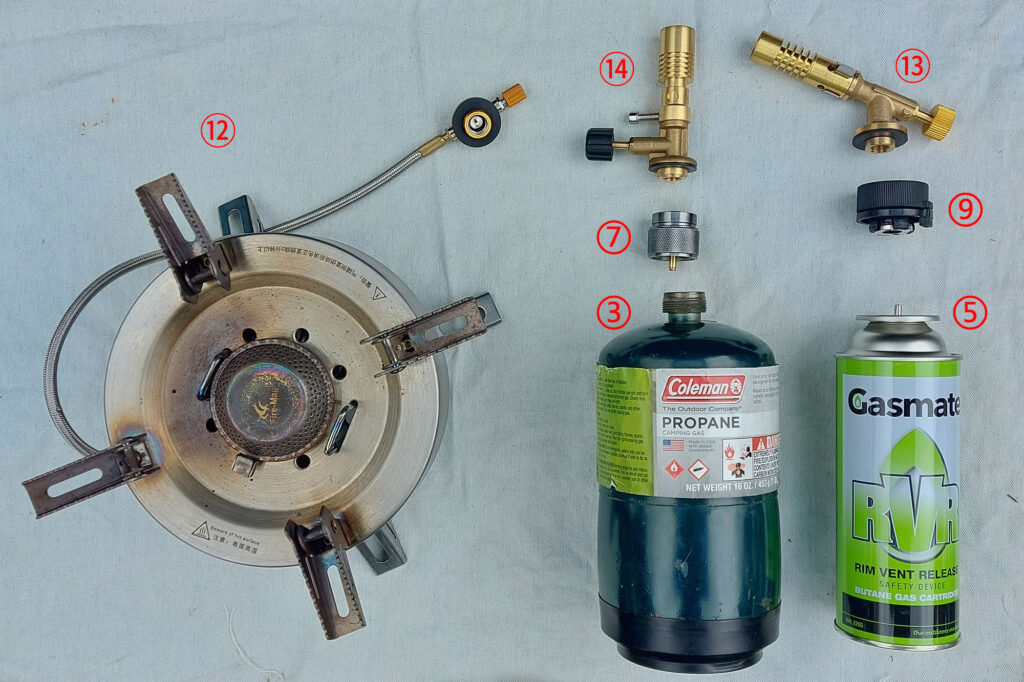
③ UNEF 1″ / BOM,北美常见的一磅重的绿气罐,北美的加油站和便利店到处都是,但澳洲和中国很少,只有专门户外店才有。
学微机原理的同学都是要求学汇编语言的,但是这种古老的语言并没有良好的移植性,用 Mac 的同学深受其害,往往都需要在 Windows 虚拟机下运行 Dos 模拟器完成,但是 macOS 下也有很棒的 DOS 模拟器,让我们可以跳过 Window 虚拟机这一环。
不要给我说 nasm 命令!!那个东西基本跟学校学习的汇编不兼容,劝发现这个命令的人老老实实用 DOS 模拟器吧。
DOSBox
Windows 下著名的 DOS 模拟器,华中科技大学自动化学生御用 DOS 模拟器,其官网已经多年没有更新了,所以对于最新的系统可能有一些兼容问题。 最新的版本是 2010 年推出的 0.74 版,之后就再也没有更新。细心的读者可能会发现,DOSBox 居然有 MAC OS X 版!各位,先别急着欢呼,我这里之所以用 MAC OS X 而没用 macOS 就是想提醒大家这个版本已经很老了,最新版的兼容性堪忧。

 Login
Login


 尾注
尾注