Reading view

There are new articles available, click to refresh the page.

Medium and Message: En plein air

Paintings made in oils in front of the motif, en plein air, are a surprisingly recent innovation. Although often ascribed to the inconvenience of handling oil paint before it was offered in tubes in the middle of the nineteenth century, in fact it had become popular if not mandatory for the aspiring landscape painter well before that. Instead of taking their paints in tubes, those pioneers used pig bladders, that had become widely available from artists’ colourmen, as were used by Constable, Turner and many others.

Initially, plein air oil sketches weren’t intended to be seen by the public or patrons.
desporteslandscape
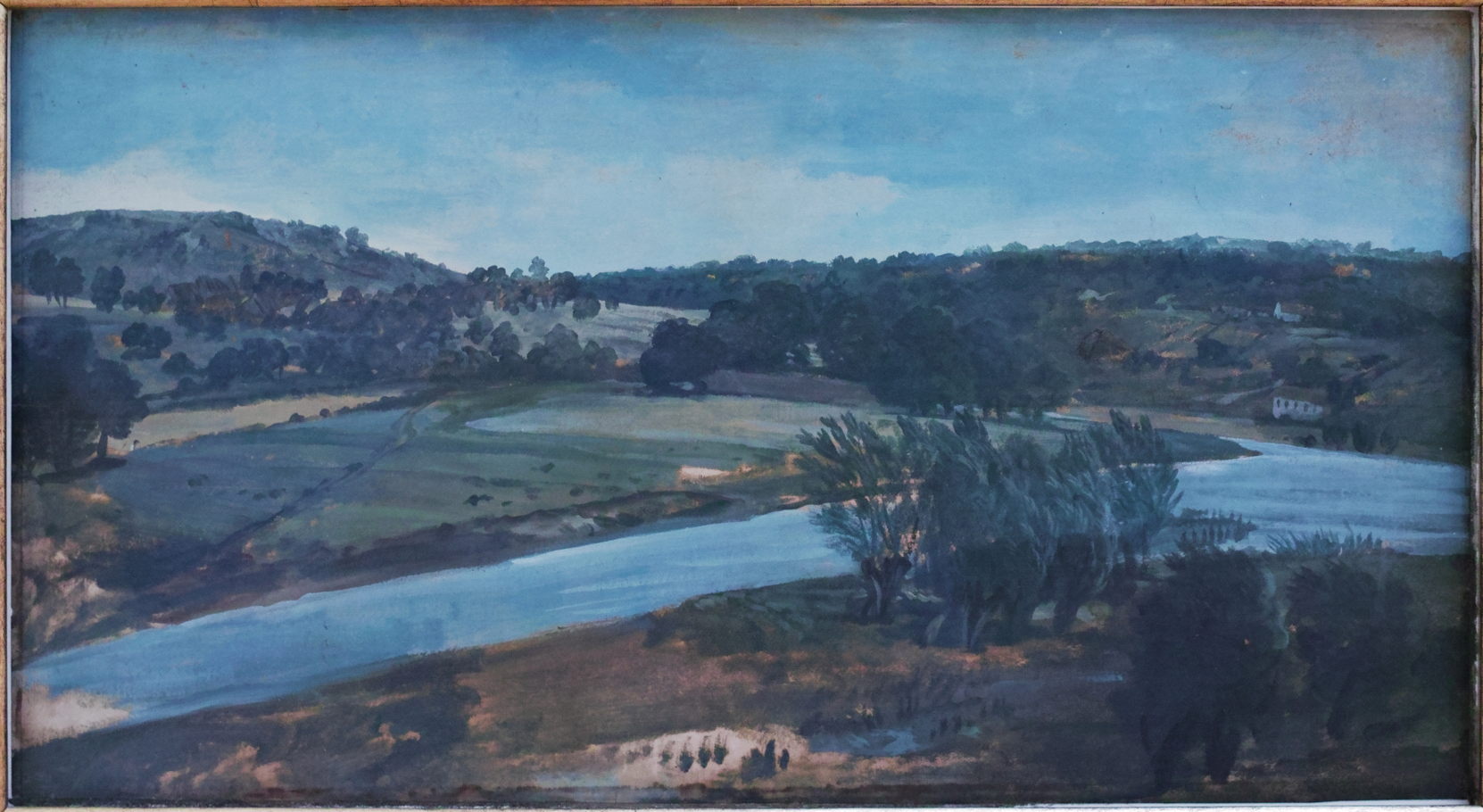
Alexandre-François Desportes (1661-1743), Landscape Study (c 1700), oil, dimensions not known, Palais des beaux-arts de Lille, Lille, France. Wikimedia Commons.

Among the earliest artists to paint regularly in front of their motif was Alexandre-François Desportes (1661-1743), a professional painter of hunting scenes and animals, whose Landscape Study was painted in about 1700.

Plein air oil sketching was described and recommended by Roger de Piles in his book Cours de Peinture, published in 1708, contemporary with Desportes’ sketches. Other books on painting and art in the eighteenth century also cover the topic, and Claude-Joseph Vernet was recorded as having painted oil sketches en plein air, but none have survived.

valenciennesvillafarnesepoplars
Pierre-Henri de Valenciennes (1750–1819), Farm Buildings at the Villa Farnese: the Two Poplar Trees (1780), oil on paper on cardboard, 25 x 38 cm, Musée du Louvre, Paris. Wikimedia Commons.

At Vernet’s suggestion, the young Pierre-Henri de Valenciennes made copious oil sketches such as this of Farm-buildings at the Villa Farnese: the Two Poplar Trees when he was painting in the Roman Campagna in 1782-85. He not only built himself a large visual library of sketches from nature, but published a widely used book on landscape painting in which he recommended the practice.

sabletconradgessner
Jacques Sablet (1749–1803) Portrait of the Painter Conrad Gessner in the Roman Campagna (1788), oil on canvas, 39 × 30 cm, Kunsthaus Zürich, Zürich. Wikimedia Commons.

Jacques Sablet’s Portrait of the Painter Conrad Gessner in the Roman Campagna shows one of the early plein air landscape painters in 1788, over fifty years before the first paint tubes became available.

quadroneeveryoccasiond1
Giovanni Battista Quadrone (1844–1898), Every Opportunity is Good (detail) (1878), other details not known. Wikimedia Commons.

Although this detail of Giovanni Battista Quadrone’s Every Opportunity is Good shows a studio in 1878, the low table at the left has several bladders containing oil paint. They remained popular with many artists until towards the end of the nineteenth century. Although not as convenient as tubes, the better colourmen still offered a wide range of pigments in bladders that were significantly less costly.
renoirmonetpainting
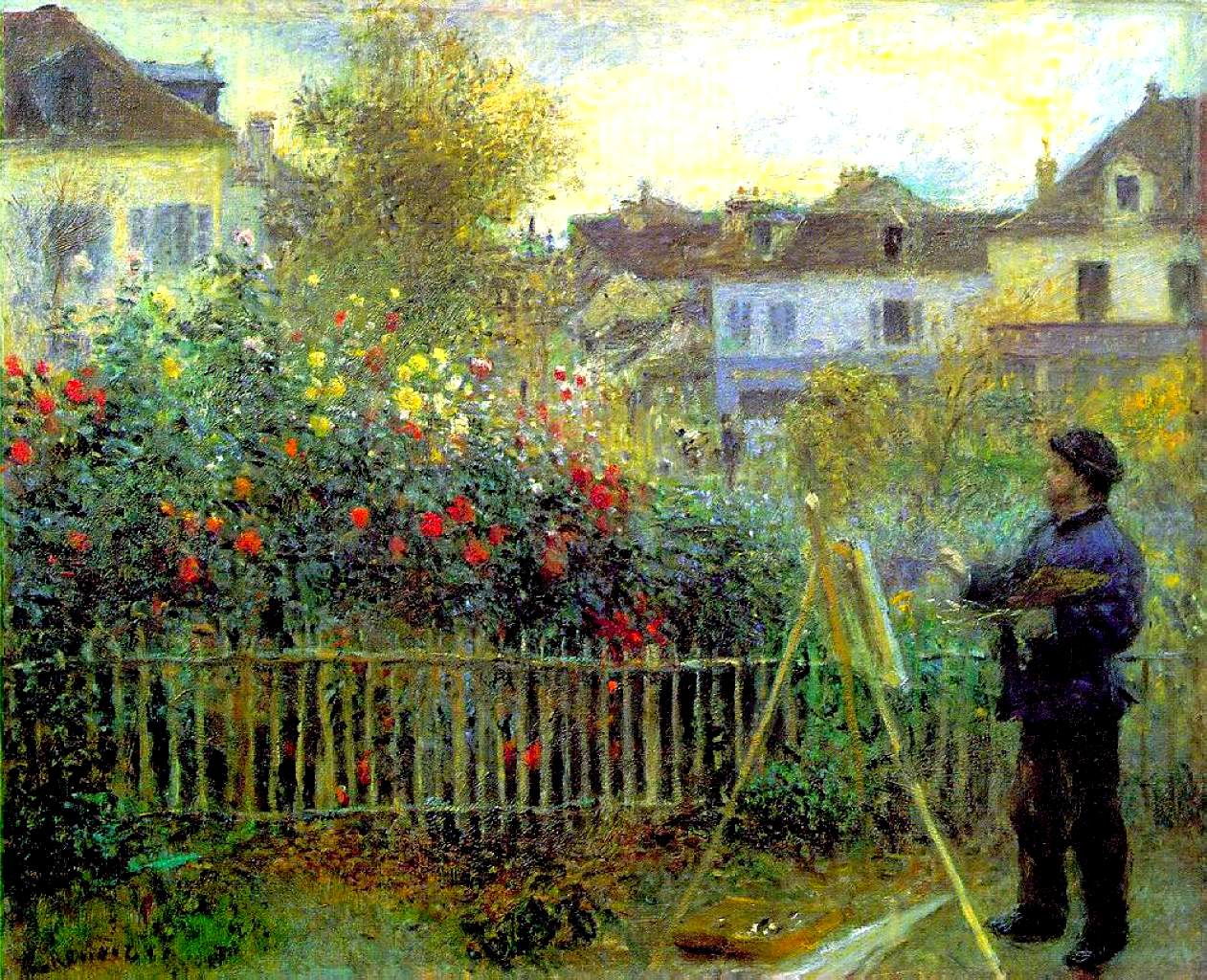
Pierre-Auguste Renoir (1841–1919), Monet Painting in his Garden in Argenteuil (1873), oil on canvas, 46 × 60 cm, Wadsworth Atheneum, Hartford, CT. Wikimedia Commons.

Pierre-Auguste Renoir painted Monet Painting in his Garden in Argenteuil in 1873. Claude Monet is using a conventional lightweight wooden easel, with a small canvas that allows him to work standing. His oil paints are in the pochade box under the easel. Although just outside his house, he would have used the same equipment when further from home.
Claude Monet Painting by the Edge of a Wood ?1885 by John Singer Sargent 1856-1925
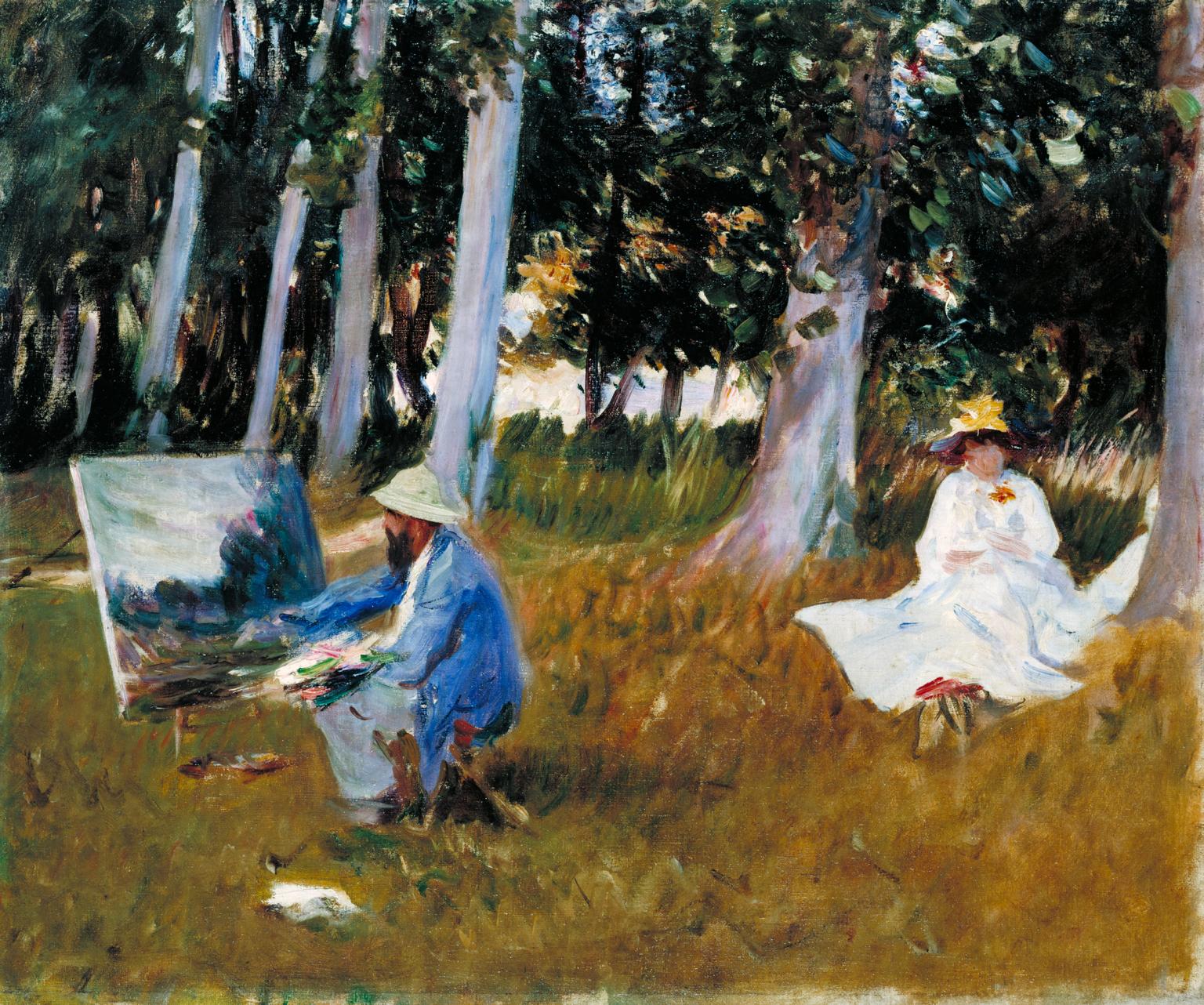
John Singer Sargent (1856–1925), Claude Monet Painting by the Edge of a Wood (c 1885), oil on canvas, 54 x 64.8 cm, The Tate Gallery (Presented by Miss Emily Sargent and Mrs Ormond through the Art Fund 1925), London. © The Tate Gallery and Photographic Rights © Tate (2017), CC-BY-NC-ND 3.0 (Unported), http://www.tate.org.uk/art/artworks/sargent-claude-monet-painting-by-the-edge-of-a-wood-n04103

In about 1885, when they were painting together, John Singer Sargent took this opportunity to paint Claude Monet Painting by the Edge of a Wood. Seated on a traditional three-legged folding stool, Monet is here working on a much larger canvas, his pochade box again under the easel for ready access.
demontbretonmarieduhem
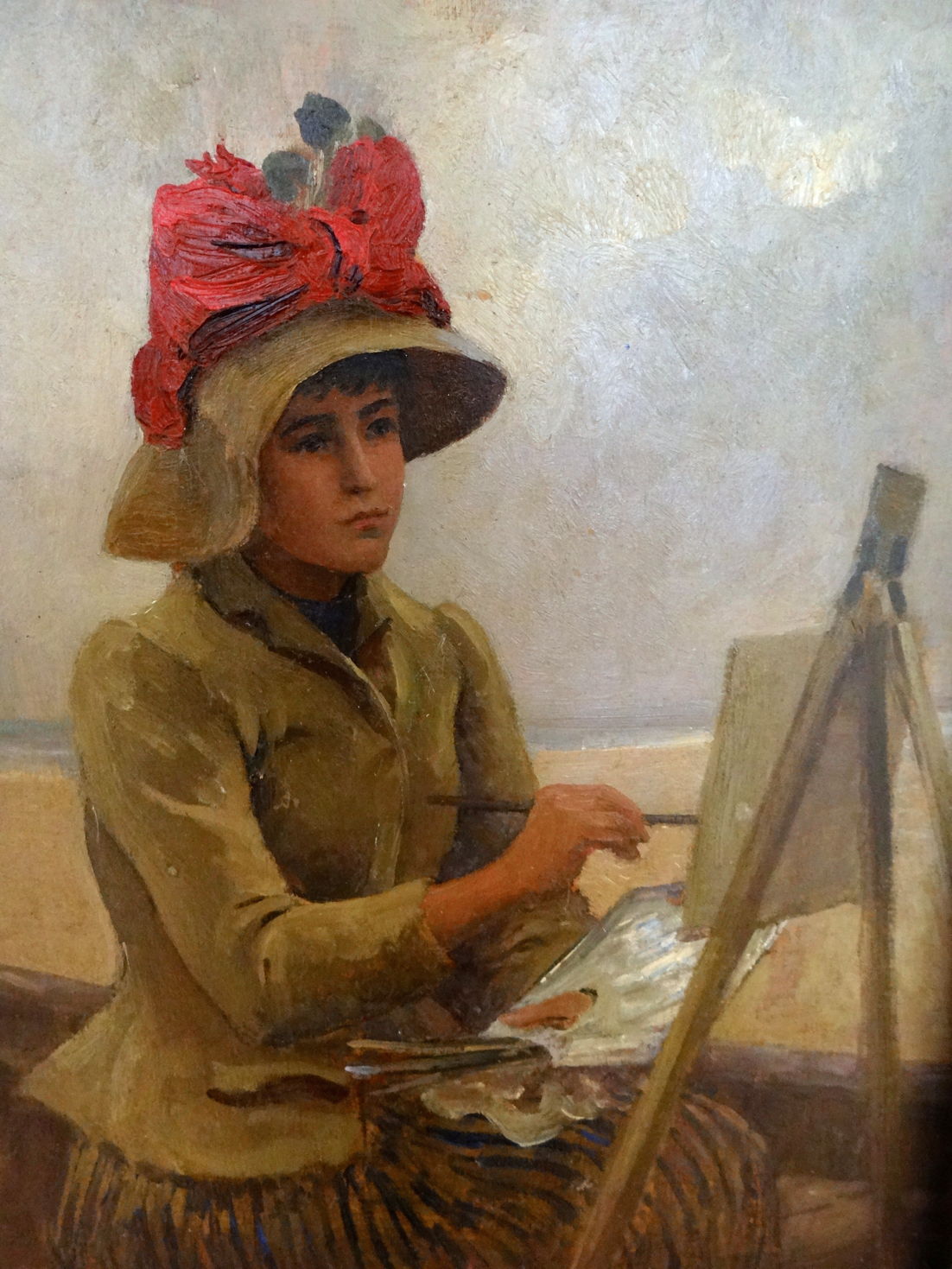
Virginie Demont-Breton (1859–1935), Portrait of Marie Duhem (detail) (1889), oil on panel, dimensions not known, Musée de la Chartreuse de Douai, Douai, France. Wikimedia Commons.

This detail of Virginie Demont-Breton’s Portrait of Marie Duhem (1889) shows one of her close friends and colleagues in the Wissant School, at work en plein air on the coast near their house. She appears to have set her easel up by a wooden groyne on the beach.
sargentoutofdoorsstudy
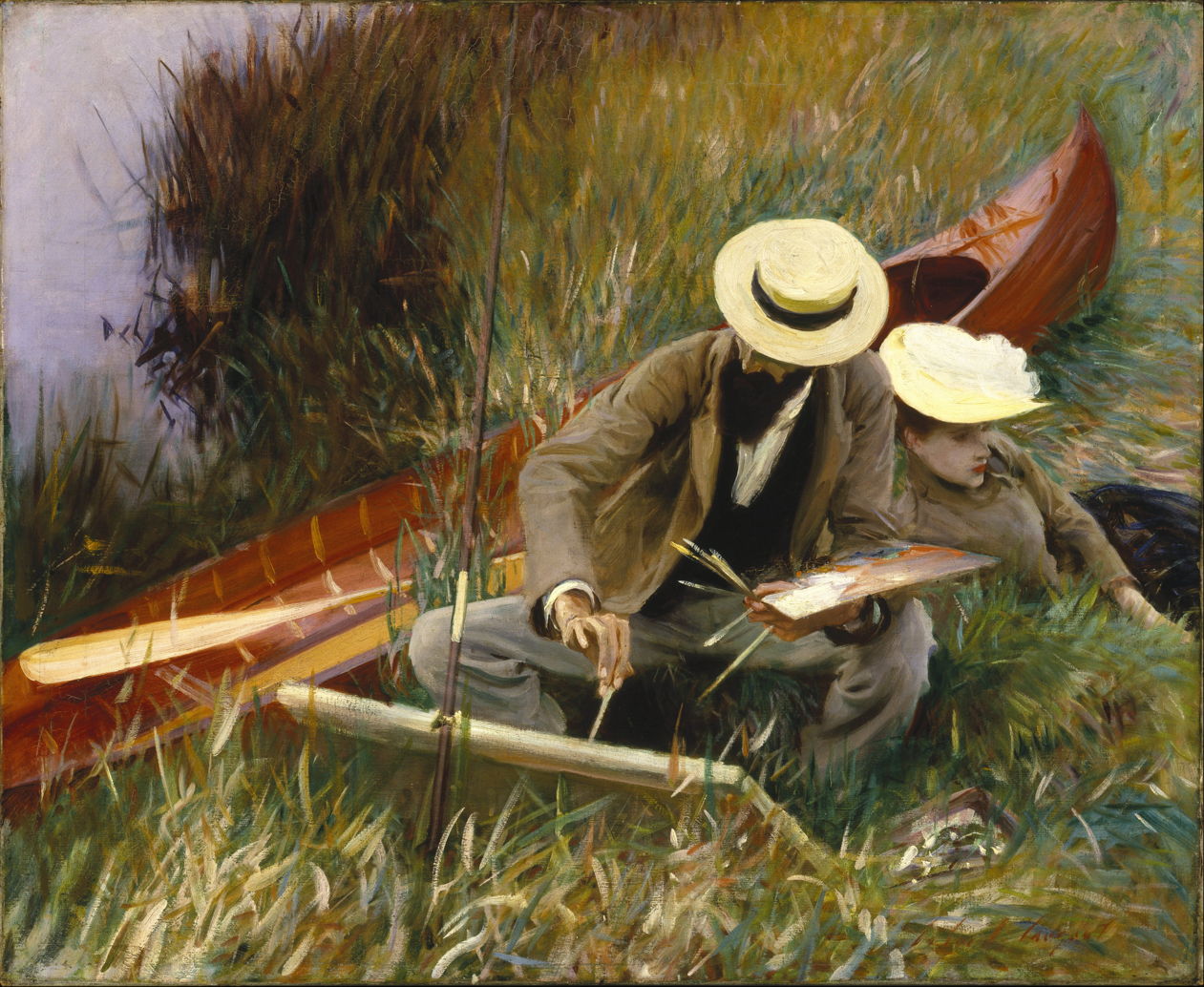
John Singer Sargent (1856–1925), An Out-of-Doors Study (c 1889), oil on canvas, 65.9 × 80.7 cm, Brooklyn Museum, New York, NY. Wikimedia Commons.

In John Singer Sargent’s An Out-of-Doors Study (c 1889) he shows his friend Paul César Helleu working on a canvas propped up in the grass by a single pole, a precarious arrangement only suitable for the calmest of days. It also forces him to work very low, and he squats in a position of tension, his pochade box in the grass below his left knee.

brendekildelaring
Hans Andersen Brendekilde (1857–1942), L.A. Ring Paints at Aasum Smithy (1893), oil on canvas, 107 x 140 cm, location not known. Wikimedia Commons.

Hans Andersen Brendekilde’s L.A. Ring Paints at Aasum Smithy (1893) shows his friend painting the primary school in the village of Åsum (or Aasum), to the east of Odense in Denmark. Clearly visible in the pochade box behind is a substantial collection of shiny paint tubes.
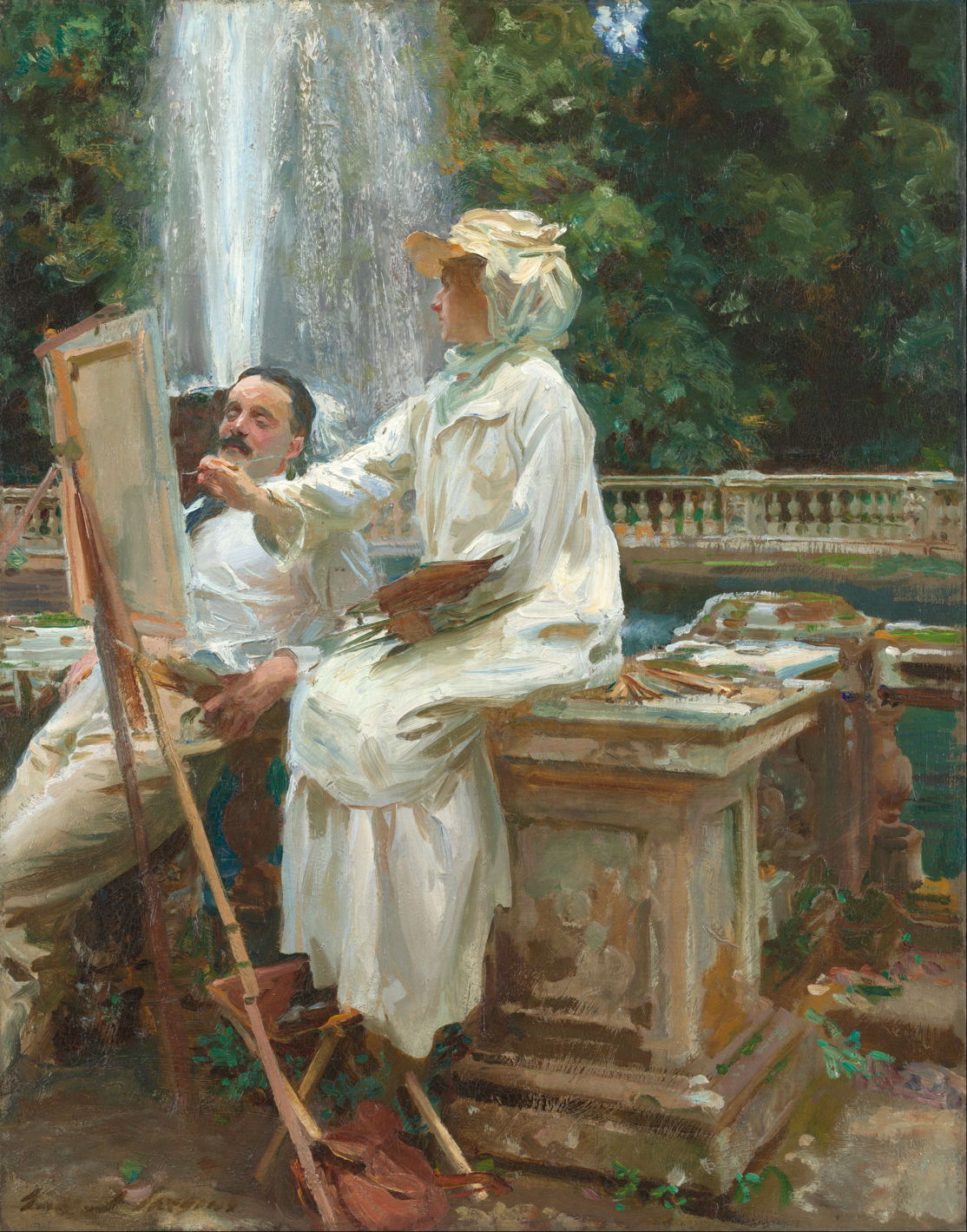
sargentfountainvillatorlonia
John Singer Sargent (1856–1925), The Fountain, Villa Torlonia, Frascati, Italy (1907), oil on canvas, 71.4 x 56.5 cm, The Art Institute of Chicago, Chicago, IL. Wikimedia Commons.

The American artists Jane de Glehn and her husband Wilfrid were long-standing friends of John Singer Sargent. His plein air oil sketch of The Fountain, Villa Torlonia, Frascati, Italy (1907) shows Jane working at a lightweight wooden easel in the grounds of this villa.

Joaquín Sorolla y Bastida, Maria Painting in El Pardo (1907), oil on canvas, 82 x 106 cm, Private collection. WikiArt.
Joaquín Sorolla y Bastida (1863–1923), Maria Painting in El Pardo (1907), oil on canvas, 82 x 106 cm, Private collection. WikiArt.

Joaquín Sorolla here shows his daughter Maria Painting in El Pardo in 1907. She’s painting with a pochade box, and has a large parasol with a specialist mount so that it can provide her with shade.

brendekildelaringfalleneasel
Hans Andersen Brendekilde (1857–1942), L A Ring by his Fallen Easel (1883), oil on canvas, 78 x 67 cm, Det Nationalhistoriske Museum på Frederiksborg Slot, Hillerød, Denmark. Wikimedia Commons.

One of Brendekilde’s earliest surviving paintings shows L A Ring by his Fallen Easel (1883). Both of them had a struggle achieving recognition, and at this stage Ring was verging on abandoning art altogether as a result. He is seen on the outskirts of a wood, looking down dejectedly at his easel that has dropped paint-first onto the fallen leaves on the road.

Plein air painting has many challenges. In fine sunny weather you’re normally limited to thirty to sixty minutes painting time. Any longer than that and the light and shadows have changed too much over the course of time, but overcast lighting allows greater tolerance. Even with modern portable lighting systems, painting en plein air at night is an astonishing feat that few even attempt.

dahldresdenatnight
Johan Christian Dahl (1788–1857), Dresden at Night (1845), oil on cardboard, 7 × 11.3 cm, Private collection. Wikimedia Commons.

This remarkable painting by JC Dahl of Dresden at Night appears to have been painted on a sheet of cardboard one night in 1845. There really is no limit to what can be achieved in front of the motif.

Reading Visual Art: 236 Carpenter

Until the Industrial Revolution brought the wide availability of iron, and even well into the twentieth century, the carpenter who worked wonders in wood was one of the key trades. It’s thus odd that remarkably few paintings show carpenters at work, at least until the middle of the nineteenth century.

They also play no role in the best-known classical myths, with the exception of one painting by Piero di Cosimo.

SSI481345
Piero di Cosimo (1462–1522), Vulcan and Aeolus (c 1490), tempera and oil on canvas, 155.5 × 166.5 cm, National Gallery of Canada Musée des beaux-arts du Canada, Ottawa, Canada. Wikimedia Commons.

Piero sometimes assembled his own mythical narratives, such as that in Vulcan and Aeolus from about 1490. From the left the figures are a river god, Vulcan forging a horseshoe, a figure (possibly Aeolus, keeper of the winds) riding a horse, a man curled asleep in a foetal position, a couple and their infant son, and four carpenters erecting the frame of a building. Among the animals are a giraffe and a camel. It’s thought this shows early humans developing crafts at the dawn of civilisation.

Christian religious painting has a better opportunity, with Joseph, husband of the Virgin Mary, the most famous carpenter in European history.

tintorettoannunciationsanrocco
Jacopo Tintoretto (c 1518-1594), The Annunciation (E&I 264) (c 1582), oil on canvas, 440 x 542 cm, Sala terrena, Scuola Grande di San Rocco, Venice, Italy. Wikimedia Commons.

Tintoretto’s Annunciation is thought to have been painted in about 1582. Its composition is unusual by any contemporary standards, with natural rendering of brickwork, a wicker chair, and a splendidly realistic carpenter’s yard at the left. This is coupled with an aerial swarm of infants, at the head of which is the dove of the Holy Ghost in a small mandorla. Christ’s origins are here very real, tangible, and contemporary, in stark contrast to most traditional depictions of this scene.

Christ in the House of His Parents ('The Carpenter's Shop') 1849-50 by Sir John Everett Millais, Bt 1829-1896
John Everett Millais (1829–1896), Christ in the House of His Parents (‘The Carpenter’s Shop’) (1849–50), oil on canvas, 86.4 x 139.7 cm, The Tate Gallery (Purchased with assistance from the Art Fund and various subscribers 1921), London. © The Tate Gallery and Photographic Rights © Tate (2016), CC-BY-NC-ND 3.0 (Unported), http://www.tate.org.uk/art/artworks/millais-christ-in-the-house-of-his-parents-the-carpenters-shop-n03584

John Everett Millais’ painting of Christ in the House of His Parents, also known as The Carpenter’s Shop, is one of the foundational paintings of the Pre-Raphaelite Brotherhood, from 1849-50. It was exhibited at the Royal Academy in 1850 with a quotation from the Old Testament book of Zechariah 13:6: “And one shall say unto him, What are those wounds in thine hands? Then he shall answer, Those with which I was wounded in the house of my friends.” It shows an entirely imagined scene, one not even alluded to in the Gospels, in which the young Jesus Christ is being comforted by his kneeling mother, after he has cut the palm of his left hand on a nail.

It’s rich with symbols of Christ’s life and future crucifixion: the cut on his palm is one of the stigmata, and blood dripped from that onto his left foot is another. The young Saint John the Baptist has fetched a bowl of water, indicating his future baptismal role. A triangle above Christ’s head symbolises the Trinity, and a white dove perched on the ladder is the Holy Spirit. A flock of sheep outside represents the Christian flock.

huntshadowdeath
William Holman Hunt (1827–1910), The Shadow of Death (1870-73), oil on canvas, 214.2 x 168.2 cm, Manchester Art Gallery, Manchester, England. Wikimedia Commons.

In William Holman Hunt’s later painting of The Shadow of Death from 1870-73, the young Jesus Christ is seen in his father’s carpentry workshop, holding his arms up to savour the bright sunlight. His cast shadow on the rack of tools and wall behind shows him crucified on the cross, with his mother Mary already on her knees, as shown in so many paintings of the crucifixion.

Christian allusions to carpentry became more popular from the start of the nineteenth century.

blakechristasleeponcrossva
William Blake (1757–1827), The Christ Child Asleep on the Cross, or Our Lady Adoring the Infant Jesus Asleep on the Cross (1799-1800), tempera on canvas, 27 x 38.7 cm, Victoria and Albert Museum, London. Image courtesy of and © Victoria and Albert Museum, London.

William Blake’s The Christ Child Asleep on the Cross, or Our Lady Adoring the Infant Jesus Asleep on the Cross from 1799-1800 is among the few of his glue tempera paintings that has retained its colours. This shows at best an apocryphal if not invented scene, in which the young Jesus anticipates his eventual fate by sleeping on a wooden cross, surrounded by the carpenter’s tools, including compasses or dividers.

vonuhdedifficultjourney
Fritz von Uhde (1848–1911), A Difficult Journey (Transition to Bethlehem) (1890), oil on canvas, 117 × 127 cm, Neue Pinakothek, Munich, Germany. Wikimedia Commons.

Fritz von Uhde’s A Difficult Journey from 1890 imagines Joseph and the pregnant Mary walking on a rough muddy track to Bethlehem, in a wintry European village. Joseph has his carpenter’s saw on his back as the tired couple move on through dank mist.

brendekildecountryroad
Hans Andersen Brendekilde (1857–1942), People by a Road (1893), oil on canvas, 200 x 263 cm, Statens Museum for Kunst (Den Kongelige Malerisamling), Copenhagen, Denmark. Wikimedia Commons.

There’s a more complex story behind Hans Andersen Brendekilde’s People by a Road from 1893. The group at the left are old road-workers, breaking larger rocks into coarse gravel. They lived out under the wooden shelter behind them, as they made their way slowly around the country roads. The woman holds what is either a small shovel or spade used in their work. Standing and apparently preaching to them is a cleanly dressed carpenter, his saw held in his left hand. The building behind them, on the opposite side of the road, is a church, from which a large congregation has just emerged.

henningsenevicted
Erik Henningsen (1855–1930), Evicted (1892), oil on canvas, dimensions not known, Statens Museum for Kunst (Den Kongelige Malerisamling), Copenhagen, Denmark. Wikimedia Commons.

This association with the Holy Family may extend to Erik Henningsen’s Evicted from 1892 with its family of four being evicted into the street in the winter snow. With them are their meagre possessions, including a saw suggesting the father may be a carpenter. In the background he is still arguing with a policeman.

It was only then, at the end of the nineteenth century, that artists started to paint portraits of carpenters at work.

ringworkerswaterpipe
Laurits Andersen Ring (1854–1933), Workers at a Water Pipe at Søndersø (1891), oil on canvas, 155 x 185 cm, Fuglsang Art Museum, Lolland, Denmark. Wikimedia Commons.

In 1891 Laurits Andersen Ring painted these Workers at a Water Pipe at Søndersø, in the north of the central Danish island of Fyn (Funen). Two are skilled carpenters, who are sawing a plank of wood to be used in the construction work in progress behind them. The third worker, in his light blue jacket, wears rubber overboots on his wooden clogs, implying he has been working down in the trench. This is one of a series painted by Ring showing trades and crafts.

Reading Visual Art: 234 Fish A

Because most fish aim to spend their entire lives underwater, where few artists go to paint, fish are seldom seen in paintings. That contrasts with those who try to capture fish by going fishing, an activity I have previously covered in this series in this article and a second.

Most of the aquatic creatures seen in paintings of myths, including those accompanying the god Neptune, appear to be caricatures of marine mammals including dolphins, or sea-monsters bearing no resemblance to fish.

stellabirthofvenus
Joseph Stella (1877–1946), The Birth of Venus (1922), oil on canvas, 215.9 x 134.6 cm, Private collection. The Athenaeum.

One exception to this is Joseph Stella’s The Birth of Venus from 1922. As might be expected, his treatment is completely novel and seems to have benefited from visits to an aquarium. Aphrodite is shown at sea, in the upper part of the painting her upper body above the waterline, and below morphing into an aquatic plant underneath, where it finally merges into a helical shell. Matching the birds and flowers above the water are brightly coloured fish below.

beuckelaerwater
Joachim Beuckelaer (c 1533–1575), The Four Elements: Water. A Fish Market with the Miraculous Draught of Fishes in the Background (1569), oil on canvas, 158.5 x 215 cm, The National Gallery, London. Wikimedia Commons.

Another interesting exception is Joachim Beuckelaer’s depiction of water in his Four Elements cycle from 1569. This shows A Fish Market with the Miraculous Draught of Fishes in the Background, the one place even landlubbers would come across fish, combined with the Gospel story in the far distance.

courbettrout
Gustave Courbet (1819–1877), The Trout (Summer 1872), oil on canvas, 53 x 87 cm, Kunsthaus Zürich, Zürich, Switzerland. Wikimedia Commons.

In the summer of 1872, as a one-off, Gustave Courbet painted an allegorical still life of The Trout, that is “hooked and bleeding from the gills”, a powerful expression of his personal feelings after being imprisoned for damage to the Vendôme Column during the Paris Commune the previous year.

turnerslaveship
Joseph Mallord William Turner (1775–1851), Slave Ship (Slavers Throwing Overboard the Dead and Dying, Typhoon Coming On) (1840), oil on canvas, 90.8 × 122.6 cm, Museum of Fine Arts, Boston, MA. Photo by Museum of Fine Arts, Boston, via Wikimedia Commons.

JMW Turner recruits a school of fish for effect in his Slave Ship from 1840. His threatening sky and violent sea put the ship in the middle distance, silhouetted against the blood-red sky. The foreground is filled with the ghastly evidence of the slaves who were cast overboard.

turnerslaveshipdet
Joseph Mallord William Turner (1775–1851), Slave Ship (Slavers Throwing Overboard the Dead and Dying, Typhoon Coming On) (detail) (1840), oil on canvas, 90.8 × 122.6 cm, Museum of Fine Arts, Boston, MA. Photo by Museum of Fine Arts, Boston, via Wikimedia Commons.

Seen in amongst a feeding frenzy of fish and scavenging seabirds are hands raised from the waves in their final plea for rescue, a gruesome manacled leg, and various shackles used to restrain the slaves when in transit. Further back on the left a vague white form could represent spirits, and on the right is the thrashing tail of a sea monster.

thomathreemermaids
Hans Thoma (1839–1924), Three Mermaids (1879), oil on canvas, 106 × 77.6 cm, Städelsches Kunstinstitut und Städtische Galerie, Frankfurt, Germany. Wikimedia Commons.

Fish make the occasional appearance alongside legendary mermaids, as in Hans Thoma’s Three Mermaids from 1879. These mermaids are remarkably human in form, lacking fishtails, and frolic with fish under the light of the moon.

Historically the most important fish in Europe has been the humble herring. In the Middle Ages herring fisheries prospered and were the foundation of Copenhagen and Great Yarmouth, and influential in early Amsterdam. They remain strongly associated with the Netherlands and Nordic countries, where they are commonly preserved in brine (soused) or pickled.

Gabriel Metsu (1629–1667), Woman Selling Herring (c 1661-62), oil on panel, 37 x 33 cm, Rijksmuseum Amsterdam, Amsterdam, The Netherlands. Wikimedia Commons.

Gabriel Metsu’s Woman Selling Herring (c 1661-62) is going from door to door with her fish, here trying to convince an old woman standing with a stick at the door of her dilapidated cottage in the Dutch Republic.

brendekildehomefordinner
Hans Andersen Brendekilde (1857–1942), Home for Dinner (1917), further details not known. Wikimedia Commons.

In Hans Andersen Brendekilde’s Home for Dinner from 1917, a young girl holding some fresh fish stands talking to a man with a spade.

turnerstmawes
JMW Turner (1775–1851), St. Mawes, Cornwall (c 1823), watercolour, 14.3 x 21.9 cm, Yale Center for British Art, New Haven, CT. Wikimedia Commons.

JMW Turner toured the West Country as far as Cornwall in 1811, and the Tate Gallery has his ninety-page sketchbook recording many views of the Cornish coast from that visit. He later developed several into fine oil paintings, although it’s unclear whether this watercolour of St. Mawes, Cornwall, from about 1823, had its origins in those sketches and studies.

As with his paintings of other coastal areas, Turner shows a fishing boat coming in to a beach to land its catch, and the great activity in the open air fish market in the foreground. Behind are typical Cornish cottages stepped up from the shore to the top of the coastal cliffs, and the castles of St Mawes (closer) and Pendennis, in Falmouth (more distant, on the other side of this estuary).

daddfishmarket
Richard Dadd (1817–1886), Fish Market by the Sea (c 1860), oil on canvas, 100.3 x 125.7 cm, Yale Center for British Art, Paul Mellon Collection, New Haven, CT. Courtesy of the Yale Center for British Art.

Richard Dadd’s Fish Market by the Sea, from about 1860, shows an impromptu open-air fish market, run by the fishermen’s wives, to sell their husband’s catch as soon as it had been landed.

Reading Visual Art: 228 Spade

Spades are agricultural tools of ancient origin, with a flat blade in line with its shaft, and used for digging. Their closest relative is the shovel with a broader blade for moving loose earth, gravel and snow, and the hoe whose blade is mounted at a right angle to the shaft. In some common applications, such as lifting potatoes and other root crops, a fork with three or more tines is normally preferred.

As a well-known tool for digging, the spade is often associated with the digging of graves, and appears in some religious paintings depicting the imminent interment of Christ’s body following the Crucifixion.

tintorettocrucifixionsanrocco
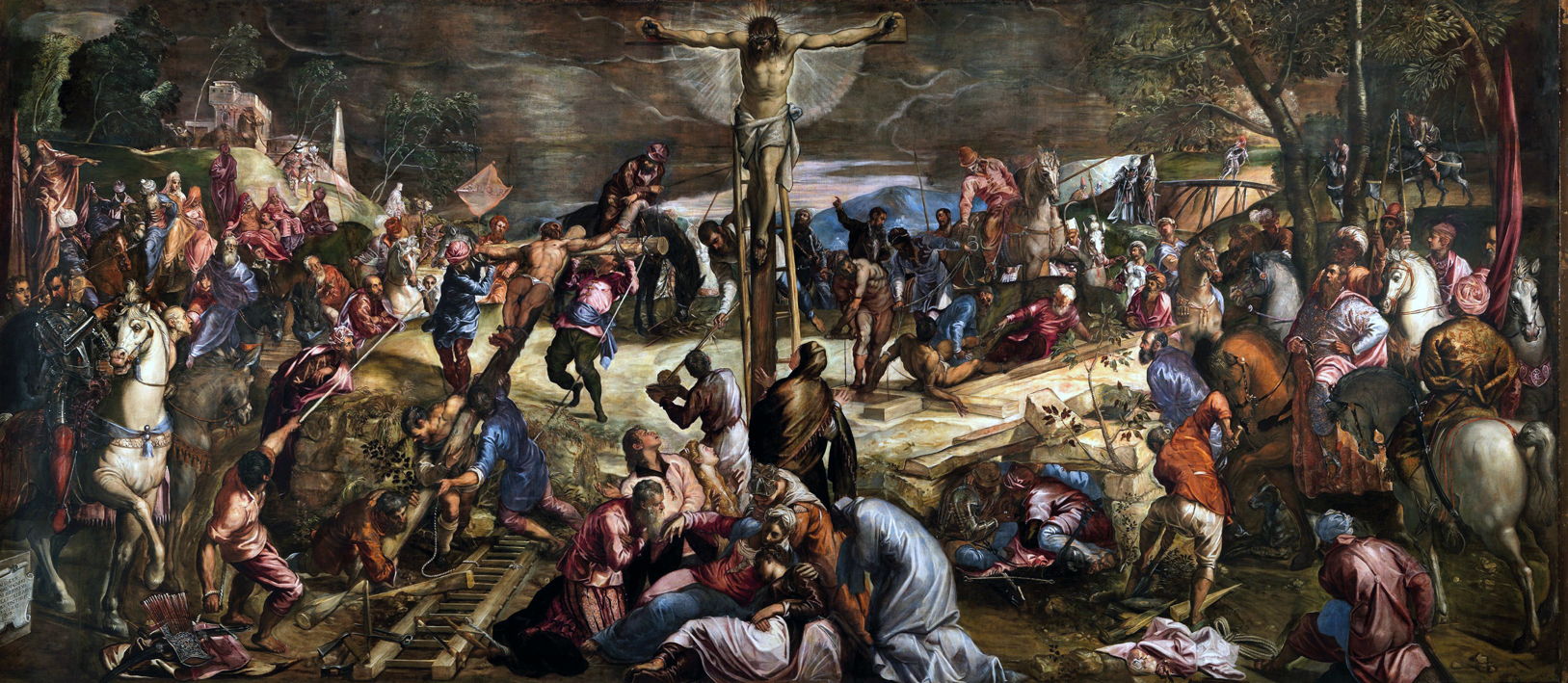
Jacopo Tintoretto (c 1518-1594), The Crucifixion (E&I 123) (1565), oil on canvas, 536 x 1224 cm, Albergo, Scuola Grande di San Rocco, Venice, Italy. Wikimedia Commons.

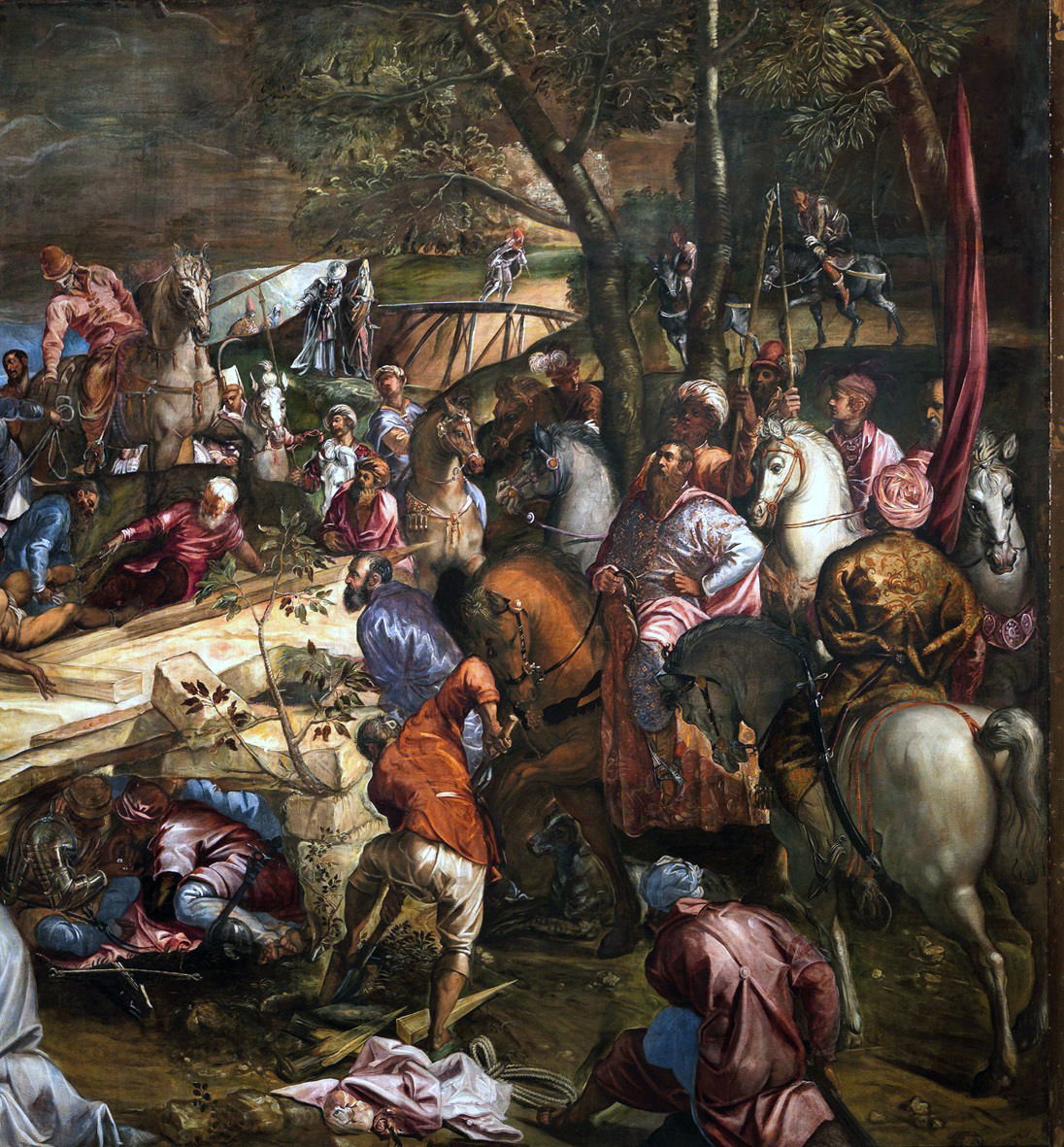
Jacopo Tintoretto’s huge and magnificent Crucifixion from 1565 shows a man digging a conventional grave, as seen in the detail below.

tintorettocrucifixionsanroccod3
Jacopo Tintoretto (c 1518-1594), The Crucifixion (detail) (E&I 123) (1565), oil on canvas, 536 x 1224 cm, Albergo, Scuola Grande di San Rocco, Venice, Italy. Wikimedia Commons.

On the left of this detail, two men are gambling with dice in a small rock shelter suggestive of a tomb. To the right of them, a gravedigger has just started his work with a spade.

A spade may also appear in depictions of Christ’s subsequent resurrection, in his appearance to Mary as a gardener, often known by the Latin words from the Vulgate as Noli Me Tangere, “touch me not”, the words attributed to Christ in the Gospels.

fontanajesusappearsmagdalene
Lavinia Fontana (1552–1614), Jesus Appears to Mary Magdalene (1581), oil on canvas, 80 x 65.5 cm, Galleria degli Uffizi, Florence. Wikimedia Commons.

In her Jesus Appears to Mary Magdalene from 1581, Lavinia Fontana re-locates this encounter between Mary and Jesus, dressing him in the garb of a mediaeval Italian gardener, and holding a fine gardener’s spade with his left hand.

magnasconolimetangere
Alessandro Magnasco (1667–1749), Noli Me Tangere (1705-10), oil on canvas, 144.8 × 109.2 cm, The J. Paul Getty Museum, Los Angeles, CA. Courtesy of The J. Paul Getty Museum.

The eccentric Alessandro Magnasco painted his Noli Me Tangere (1705-10) over a background of ruins made by a collaborator. Christ is shown standing, holding a long-hafted spade with his left hand. Mary is on her knees, a small urn in front of her. Their clothes are rough, and Christ’s appear to be his burial linen, blowing in the wind.

Spades are not uncommon in paintings set in the countryside.

brendekildeonforbiddenroads
Hans Andersen Brendekilde (1857–1942), On Forbidden Roads (1886), oil on canvas, 126 x 160 cm, location not known. Wikimedia Commons.

Hans Andersen Brendekilde’s On Forbidden Roads from 1886 shows one of the core themes of Naturalist painting: itinerant workers making their way through neglected corners of the countryside. These two men are equipped for forestry, with a two-man saw, axes, and spades. Almost hidden among the vegetation at the far left is a third figure, who looks anxiously towards them. Maybe none of them should really be there at all.

brendekildecountryroad
Hans Andersen Brendekilde (1857–1942), People by a Road (1893), oil on canvas, 200 x 263 cm, Statens Museum for Kunst (Den Kongelige Malerisamling), Copenhagen, Denmark. Wikimedia Commons.

There’s a more complex story behind Brendekilde’s People by a Road from 1893. The group at the left are old road-workers, breaking larger rocks into coarse gravel. They lived out under the wooden shelter behind them, as they made their way slowly around the country roads. The woman holds what is either a small shovel or spade used in their work. Standing and apparently preaching to them is a cleanly dressed carpenter, his saw held in his left hand. The building behind them, on the opposite side of the road, is a church, from which a large congregation has just emerged.

brendekildetherest
Hans Andersen Brendekilde (1857–1942), The Rest (1887), oil on canvas, 70 x 91.5 cm, location not known. Wikimedia Commons.

One of the most physically demanding tasks of the year was clearing snow in the winter. Brendekilde’s The Rest (1887) shows a younger man taking a short break from cutting a track through to the elderly lady’s farmhouse. The blade of his spade is flat, confirming that it’s used to dig through compacted snow and pile the slabs seen behind him.

brendekildehomefordinner
Hans Andersen Brendekilde (1857–1942), Home for Dinner (1917), further details not known. Wikimedia Commons.

In Brendekilde’s Home for Dinner from 1917, a young girl holding some fresh fish stands talking to a man with a spade.

brendekildeafternoonwork
Hans Andersen Brendekilde (1857–1942), Afternoon Work (1918), oil on canvas, 77 x 100 cm, Private collection. Wikimedia Commons.

The following year, Brendekilde painted a gardening story, in Afternoon Work (1918). A younger man is out on his finely tilled vegetable patch in front of his thatched cottage, wielding his spade as a weapon. Standing just outside the door, behind him, is his young daughter, and through the window is an older woman, presumably his wife. Both are watching him intently, with an air of fear at what he is about to do. He is about to attack a small crop of molehills that have appeared freshly in the midst of his seedling vegetable plants.

As Europeans and Americans started taking to the beaches, they realised how much fun it is to dig sand and build sandcastles using small buckets and spades.

dycepegwellbay
William Dyce (1806–1864), Pegwell Bay, Kent – a Recollection of October 5th 1858 (c 1858), oil on canvas, 635 cm x 889 cm, The Tate Gallery, London. Wikimedia Commons.

This is William Dyce’s finely detailed view of Pegwell Bay, Kent, on the coast of south-east England, out of season, at the end of a fine day in early October. Visitors to the beach are wrapped for warmth as well as modesty. In the distance, a group of donkeys are being taken to graze for the night, after the day’s work being hired out for children to ride. In the foreground, at the left, a child holds a spade, although there is precious little sand suitable for sandcastles.

carpentiertreport
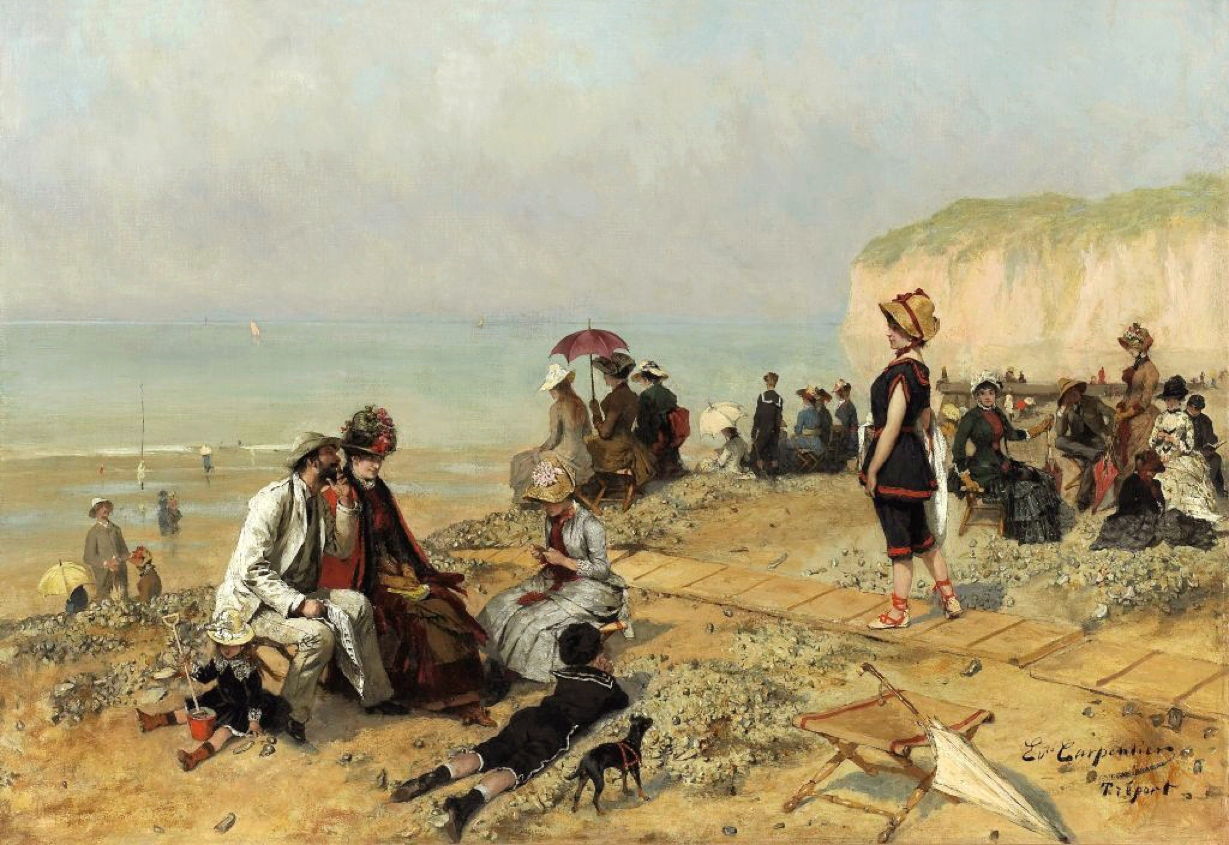
Évariste Carpentier (1845–1922), Tréport, Bathing Time (1882), oil on canvas, 50.5 x 80.5 cm, Private collection. Wikimedia Commons.

Later in the nineteenth century, at Le Tréport on the Channel coast of France near Dieppe, Évariste Carpentier’s Le Tréport, Bathing Time shows progress in the development of beach costume and culture. A young girl in the left foreground is playing with her bucket and spade, while her older brother is admiring the fashionable young woman parading her new clothes. A far cry indeed from the grave-digger.

❌