
 Login
LoginPaintings of 1925: people
In this second round-up of paintings completed a century ago in 1925, I turn to people, with a few portraits and self-portraits, together with a brief painted summary of the predicament that Pierre Bonnard found himself in.
In his final few months of art and life, Lovis Corinth painted his family and himself.

Thomas in Armour shows Corinth’s older child, then aged 21, wearing the suit of armour that had appeared in several of his paintings over the years, as a visual record of his son’s transition into adult life.

Corinth’s Last Self-Portrait, painted just two months before his death, is unusual in showing him with his reflection in a mirror. He is balding rapidly, his cheeks sunken, and his eyes are bloodshot and tired. That summer he travelled to the Netherlands to view Old Masters, including Rembrandt and Frans Hals, developed pneumonia, and died at Zandvoort on 17 July, four days before his sixty-eighth birthday.
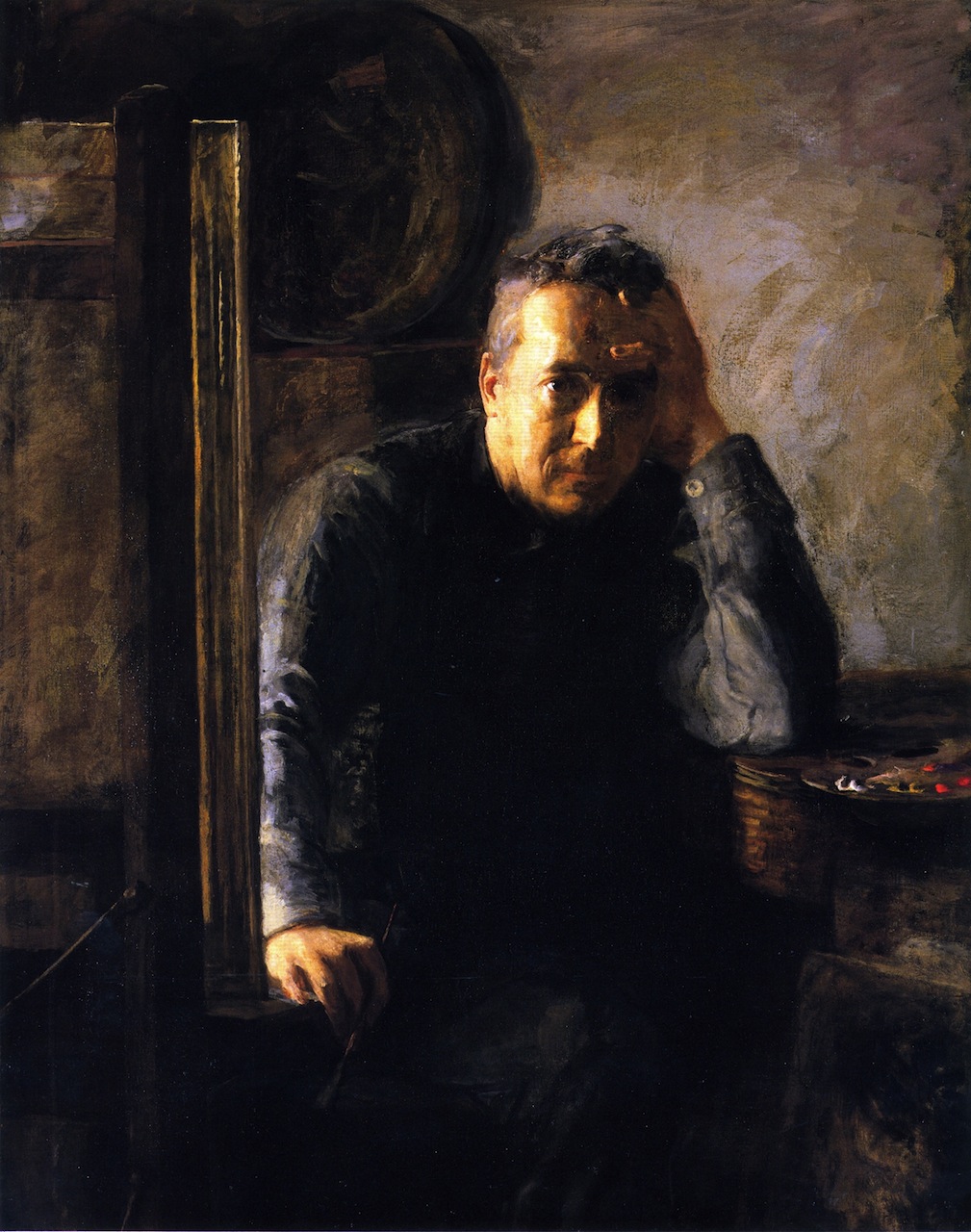
When Thomas Eakins died in 1916, at the age of 71, his artist wife Susan was 65, and immersed herself in painting daily. Some of her first works worked through her grief, with titles such as Anguish (1916). But her style quickly became brighter, looser, and higher in chroma. The one painting of hers from this period I have been able to locate is her most remarkable: her posthumous portrait of her husband, Thomas Eakins, painted between about 1920-25.
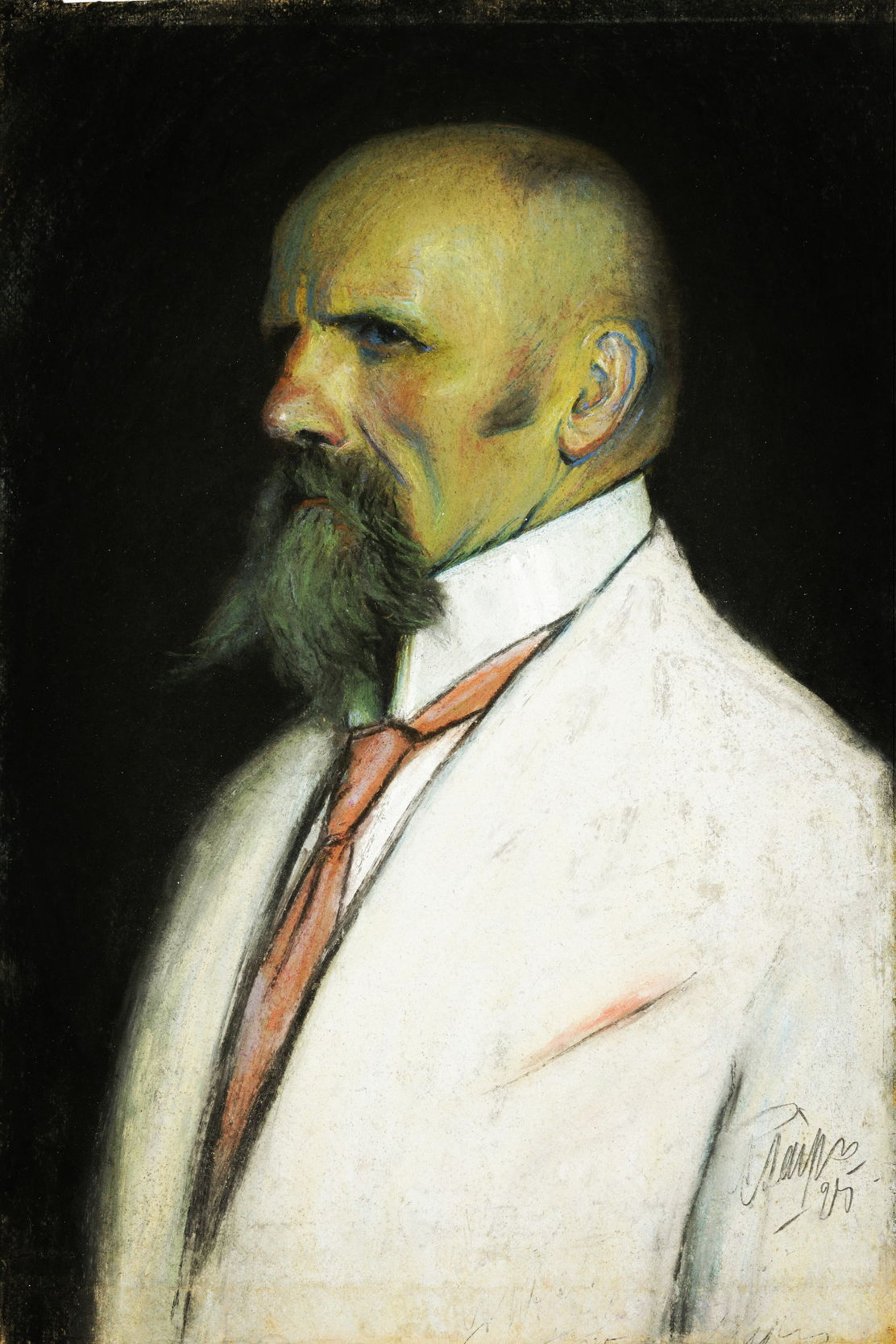
The great Estonian pastellist Ants Laikmaa painted this Self-portrait when he was in his late fifties.

Olga Boznańska painted her Portrait of the Painter Francis Thomason, whose life and art have at last been detailed in Columbia University’s online history of Reid Hall, in Rue de Chevreuse, Montparnasse, in Paris. Frances Thomason was born in Van Buren, Arkansas, in 1866, and is also known as Francis Thomason. After training in the Art Students League in New York, and at Shinnecock under William Merritt Chase, she lived and painted in Paris from about 1900 until her death there in 1939. Although almost forgotten today, she won a gold medal at the St. Louis World’s Fair of 1904, and exhibited extensively.
In August 1925, in a quiet civil ceremony in Paris, Pierre Bonnard finally married Marthe, his longstanding partner. None of their friends attended the wedding. Within a month, Bonnard’s former lover Renée Monchaty shot herself in the chest, as she lay in a bath of white roses. Given that domestic turmoil, Bonnard’s paintings of that year are interesting.

The Window gave Bonnard the opportunity to frame a view, presumably from his villa in Le Cannet looking inland, with the verticals from the frame. It’s unclear to whom the name Marie, shown very deliberately on the uppermost book, might refer. Marthe’s real name was Maria Boursin, and he had earlier (c 1897) illustrated a book with the title of Marie.

The Table presumably shows Marthe eating at a table replete with fruit and other food.
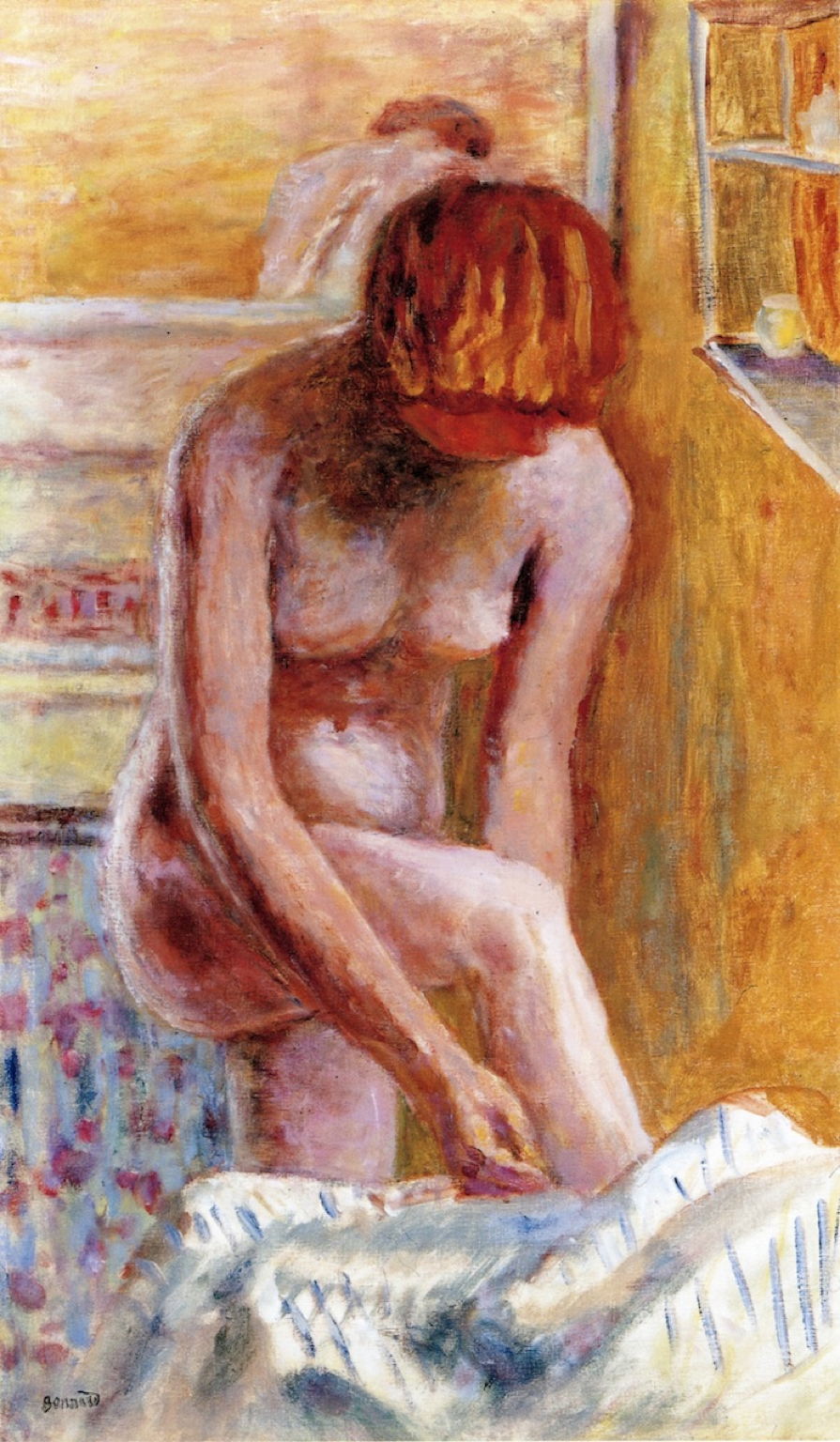
Pink Nude Reflected in a Mirror engages in some simple mirror play. Bonnard’s model, probably Marthe, is apparently drying her leg, as she flexes it at the hip.

Bonnard’s best-known nudes of 1925 are those in which his model is still in the bath, most notably this Nude in the Bath. The bath is cropped to show just the lower torso and legs of the woman in its water. A second, clothed, person is striding across from the left, its figure cropped extremely to show just the front of the body and legs.
It’s thought that the figure on the left is that of the artist, but I cannot make sense of that. He or she appears to be wearing light patterned clothing consisting of a jacket and long skirt, with soft slippers resembling ballet shoes! It isn’t known whether Bonnard painted this before Renée Monchaty’s suicide, although his bathing paintings from 1925 onwards are often supposed to refer to her death.
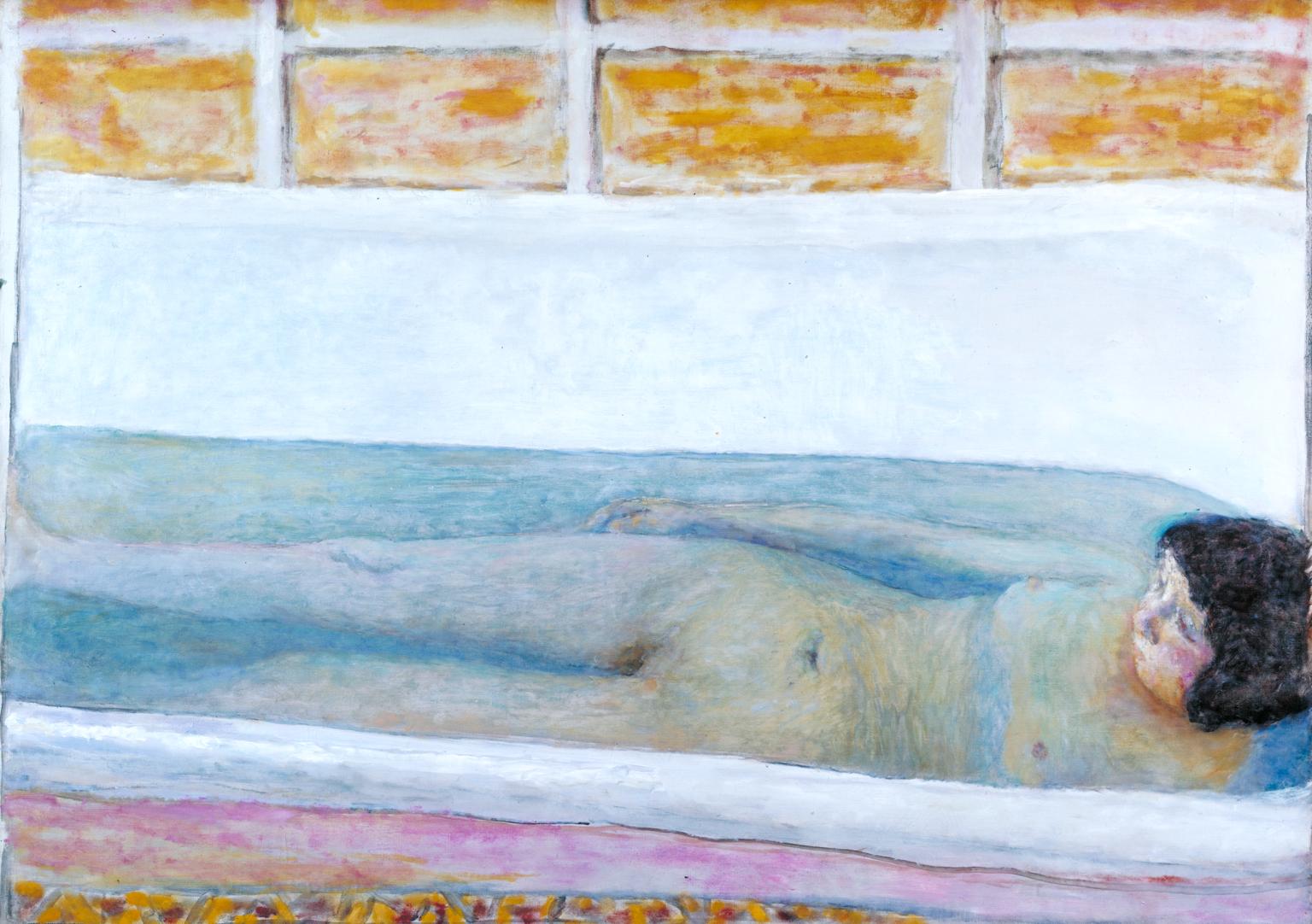
The Bath is even more eerie in the light of that suicide, with Marthe lying full-length across the canvas, her skin appearing a ghostly pale blue. Apparently, she had been given medical advice to spend long sessions in the bath, possibly because she was thought to have had tuberculosis.

