Reading view

There are new articles available, click to refresh the page.

Medium and Message: Oil on copper 1620-1926

Painting in oils on copper plates had become relatively popular by 1600, and reached its zenith in the work of Adam Elsheimer, who died in 1610. Although it continued through the seventeenth century, it entered a slow decline as stretched canvas became the norm.

declerckmidas
Hendrick de Clerck (1560/1570–1630), The Contest Between Apollo and Pan (c 1620), oil on copper, 43 x 62 cm, Rijksmuseum Amsterdam, Amsterdam, The Netherlands. Wikimedia Commons.

Copper remained quite popular in the Netherlands. Some artists, such as Hendrick de Clerck, pushed their technique up to larger sizes too, in The Contest Between Apollo and Pan (c 1620). This is a huge 43 by 62 cm (17 by 24.4 inches), dwarfing its predecessors, and providing exquisite detail in the flowers of its foreground.

teniersarmidabeforegodfrey
David Teniers the Younger (1610–1690), Armida before Godfrey of Bouillon (1628-30), oil on copper, 27 x 39 cm, Museo Nacional del Prado, Madrid, Spain. Wikimedia Commons.

To the south, David Teniers the Younger adopted copper for many of his paintings, including Armida before Godfrey of Bouillon (1628-30), significantly smaller than de Clerck’s.

teniersdmonkeyencampment
David Teniers the Younger (1610–1690), A Monkey Encampment (1633), oil on copper, 33 x 41.5 cm, Private collection. Wikimedia Commons.

Teniers even used copper for his singerie of A Monkey Encampment from 1633, showing monkeys in human roles in a camp.

terborchratificationoftreatymunster
Gerard ter Borch (1617–1681), The Ratification of the Treaty of Münster, 15 May 1648 (1648), oil on copper, 45.4 x 58.5 cm, Rijksmuseum Amsterdam, Amsterdam, The Netherlands. Wikimedia Commons.

One of the grandest paintings made in oils on copper is Gerard ter Borch visual record of The Ratification of the Treaty of Münster, 15 May 1648 made in the same year. This recorded the moment that the Thirty Years War ended, with the ratification of this treaty between the Dutch Republic and Spain. It also marked the birth of the Dutch Republic as an independent country. This is 45.4 x 58.5 cm (17.9 by 23 inches), similar to de Clerck’s giant, but far smaller than its equivalent would have been on canvas.

tenierstemptationstanthonyprado
David Teniers the Younger (1610–1690), The Temptation of Saint Anthony (c 1650), oil on copper, 55 × 69 cm, Museo Nacional del Prado, Madrid. Wikimedia Commons.

Teniers appeared to rise to the challenge in The Temptation of Saint Anthony in about 1650: 55 × 69 cm (21.5 by 27 inches).
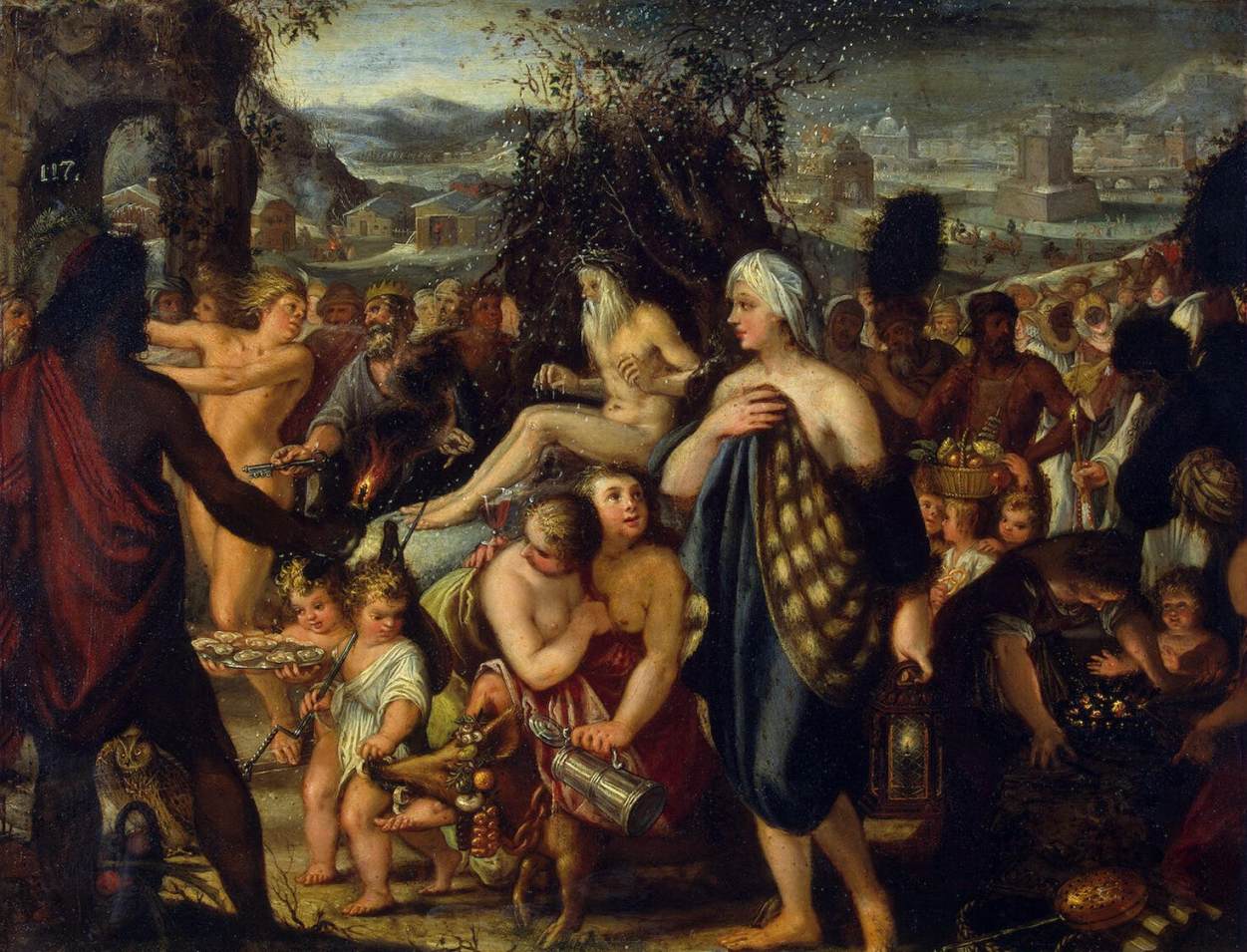
heissallegorywinter
Johann Heiss (1640–1704), Allegory of Winter (1665), oil on copper, 29 x 37 cm, Hermitage Museum Государственный Эрмитаж, Saint Petersburg, Russia. Wikimedia Commons.

Johann Heiss’s Allegory of Winter (1665) depicts fine snowflakes realistically, thanks to its smooth grain-free surface.

By the eighteenth century, the use of copper as a support had become unusual if not exceptional.
verkoljedavidspyingbathsheba
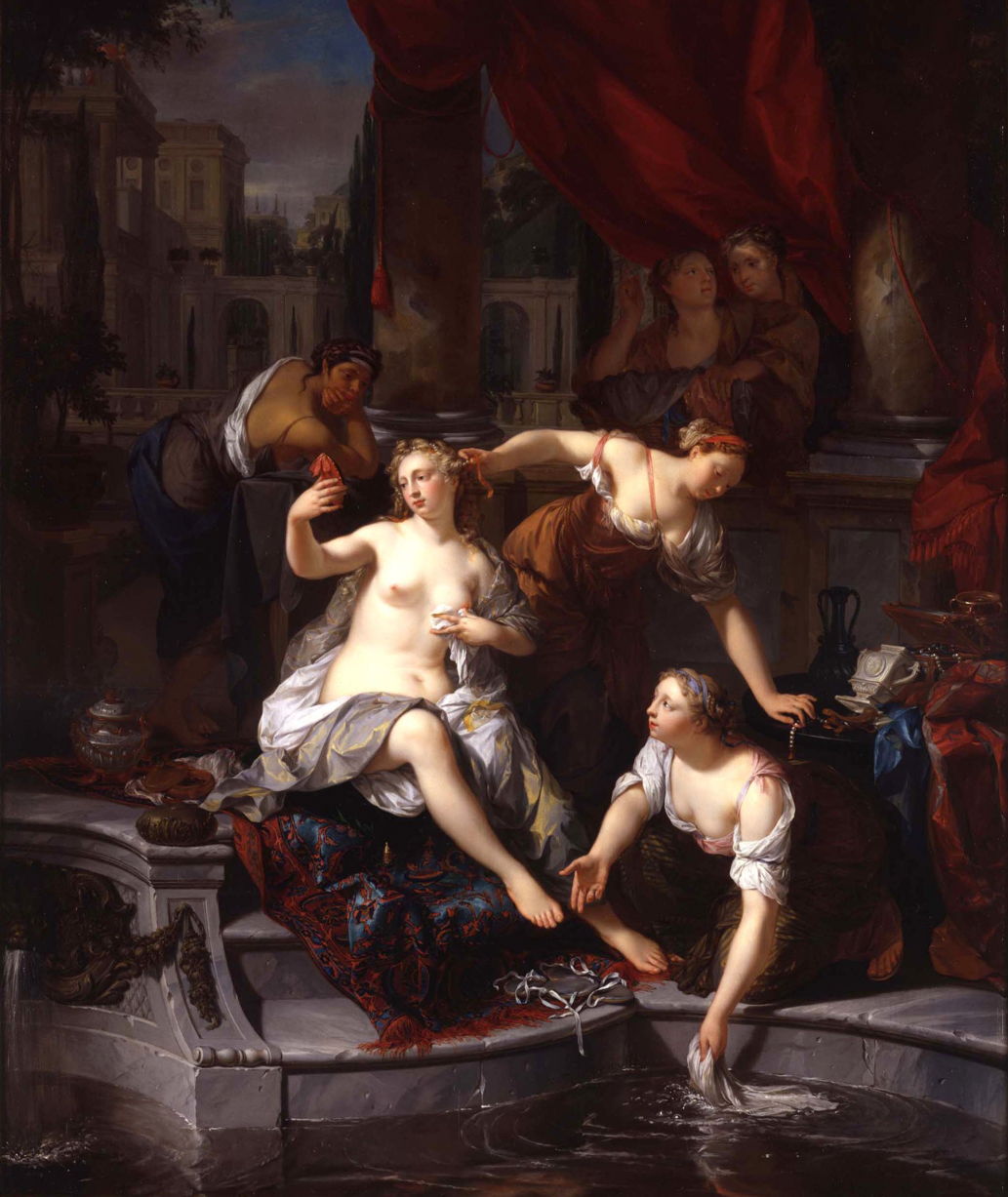
Nikolaas Verkolje (1673–1746), David Spying on Bathsheba (1716), oil on copper, 62.5 x 52 cm, Private collection. Wikimedia Commons.

Nikolaas Verkolje’s David Spying on Bathsheba from 1716 uses a relatively large sheet for its conventional account of this popular story.

lancretbrotherphilippesgeese
Nicolas Lancret (1690–1743), Brother Philippe’s Geese (c 1736), oil on copper, 27.3 x 35.2 cm, The Metropolitan Museum of Art (Purchase, Walter and Leonore Annenberg and The Annenberg Foundation Gift, 2004), New York, NY. Courtesy of The Metropolitan Museum of Art.

The use of copper has never ceased altogether since the late sixteenth century, and has been continued by a succession of artists with whom it has found favour, such as Nicolas Lancret above, and Johann Georg Platzer below. The latter appears to have painted many works on larger sheets than those used earlier. There’s a delicate balance to be struck, as thinner sheets are less rigid and warp more readily, but are substantially lighter and cheaper.

platzerpaintersstudio
Johann Georg Platzer (1704–1761), The Artist’s Studio (1740-59), oil on copper, 41.9 × 60 cm, Cleveland Museum of Art, Cleveland, OH. Wikimedia Commons.

Platzer’s The Artist’s Studio (1740-59) shows an assistant using a muller, at the far right, to prepare fresh oil paint for the painters at work in this workshop. Sadly, none of the paintings shown appear to have used copper supports.

Since then, copper has reappeared from time to time, usually where it’s least expected.

vernetcjmorning
Claude-Joseph Vernet (1714–1789), The Four Times of Day: Morning (1757), oil on silvered copper, 29.5 x 43.5 cm, Art Gallery of South Australia, Adelaide, Australia. Wikimedia Commons.

Claude-Joseph Vernet used it for his outstanding series The Four Times of Day in 1757. The first, Morning, shows three people busy fishing at the edge of a substantial river, as the sun rises behind a watermill and trees on the left. Making its way slowly towards the viewer is a barge, its sail lofted out by the gentle breeze. Gulls are on the wing, and the day promises to be fine and sunny. These are painted on silvered copper, presumably to give them a lustrous look. Vernet doesn’t appear to have used copper much later in his career.

My final examples come from the underrated Italian-American artist Joseph Stella, who seems to have experimented with large copper supports in the 1920s.

stellaledaswan
Joseph Stella (1877–1946), Leda and the Swan (1922), oil on copper, 108 x 118.1 cm, Private collection. The Athenaeum.

His Leda and the Swan from 1922 is huge by previous standards, although it’s hard to see any advantage gained from the properties of the support.
stellaapotheosisrose
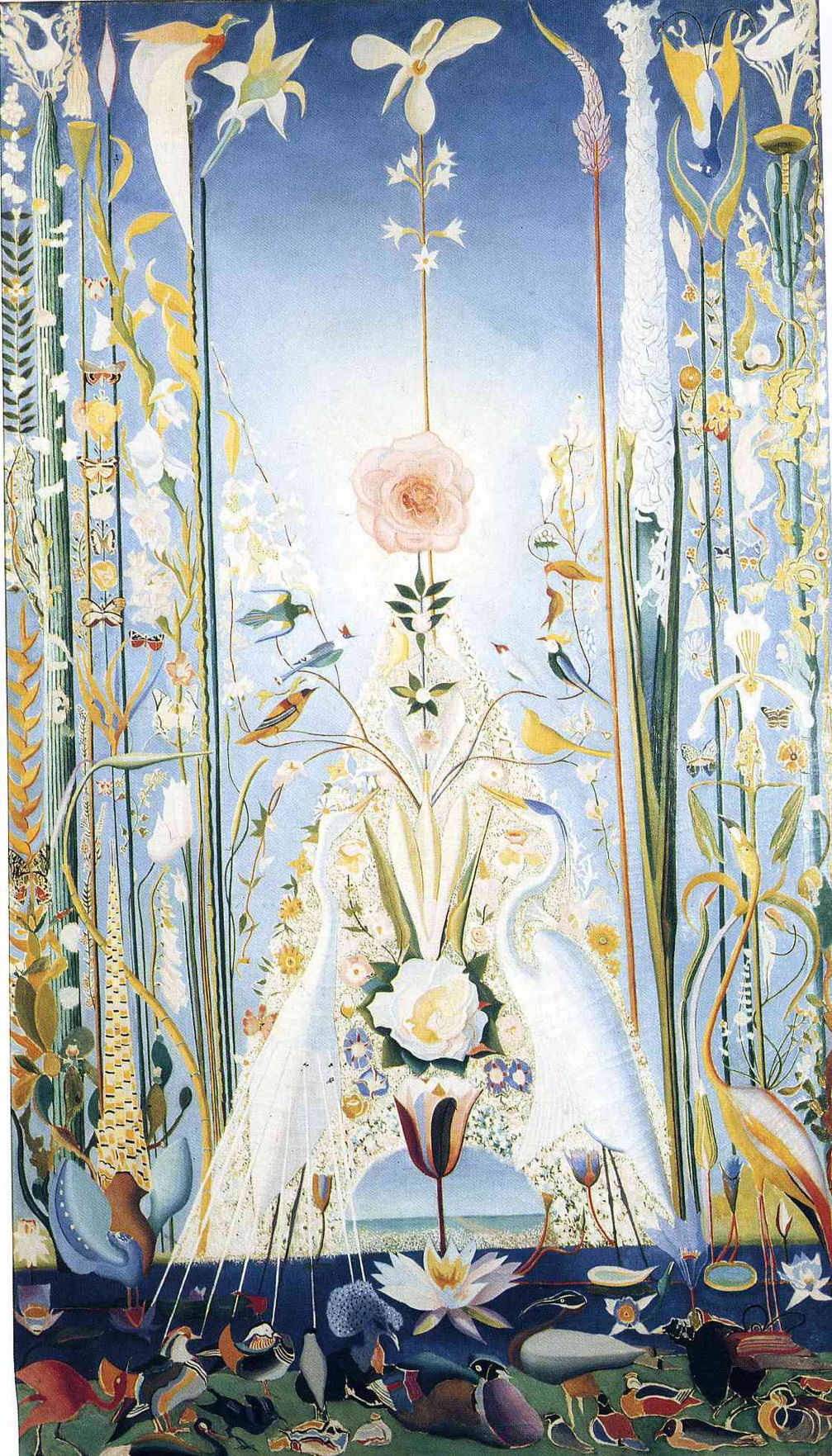
Joseph Stella (1877–1946), The Apotheosis of the Rose (1926), oil on copper, 213.4 x 119.4 cm, Private collection. Wikimedia Commons.

The Apotheosis of the Rose from 1926 is the largest work on copper that I have come across, at 213.4 by 119.4 cm (84 by 47 inches). Its fine detail is overwhelming, making it the perfect end to these examples.

The twenty-first century successor to copper plates must be lightweight ‘honeycomb’ alloy and composite panels that have been adopted by some modern painters.

Painted stories of the Decameron: Brother Philippe’s Geese

Boccaccio’s Decameron consists of a hundred stories told ten each day for a total of ten days. But there’s a bonus, the hundred-and-first story buried in Filostrato’s introduction to the fourth day. In some ways, this is the best known of all these stories as it has made its way into the French language, through one of La Fontaine’s fables, and is generally known as Brother Philippe’s Geese. Filostrato, though, claims this isn’t a complete story, only part of one.

Filippo Balducci was a good man, knowledgeable, and deeply in love with his wife, who was equally in love with him. She died tragically young, when their only child, a son, was but two years old. Filippo was broken by this loss, and decided to withdraw from life to devote his remaining years to the service of God.

He therefore gave all his possessions to charity, and went to live in a cave on the slopes of Mount Asinaio with his young son. For many years, he kept his son in the cave, seeing only the walls around him, their meagre possessions, and his father. From time to time, Filippo travelled alone down to the city of Florence, where generous people gave him the small things that he needed to live, but his son always remained in their cave.

When Filippo’s son reached the age of eighteen, and his father was preparing to travel down to Florence again, the son asked his father if he could accompany him. He argued that the time would come when his father was no longer able to undertake the journey, so it was important that the younger man learned what to do. Filippo agreed, and the two went down to the city together.

The son had never seen another living thing apart from his father, and was taken aback when he saw the crowded buildings and bustle of Florence. He repeatedly asked his father about the new things which he saw, and what each was called.

The pair then came across a group of beautiful young ladies who had just been to a wedding. The son asked his father what they were, but Filippo just told him to keep looking at the ground, as they were evil. His son wasn’t content with that, and asked his father again what they were called. At a loss for words, Filippo said that they were goslings.

The son immediately lost interest in everything else in the city, and asked his father to get him one of those goslings. Filippo told him again that they were evil, to which his son said that he couldn’t see any evil in them, and pleaded again for them to take a gosling back so that he could pop things in its bill.

Filippo told his son that their bills are not where the son might think, and that they required a special diet, a very ribald remark that abruptly terminated Filostrato’s story.

La Fontaine’s fable, the first in his second book, is a faithful retelling of this abbreviated story, but omits the double entendre of the punchline, which is perhaps just as well given his readership when it was first published in 1668. As those fables became popular throughout France and Europe, they attracted the attention of artists, and this has been painted at least thrice now.

boucherbrotherphilippesgeese
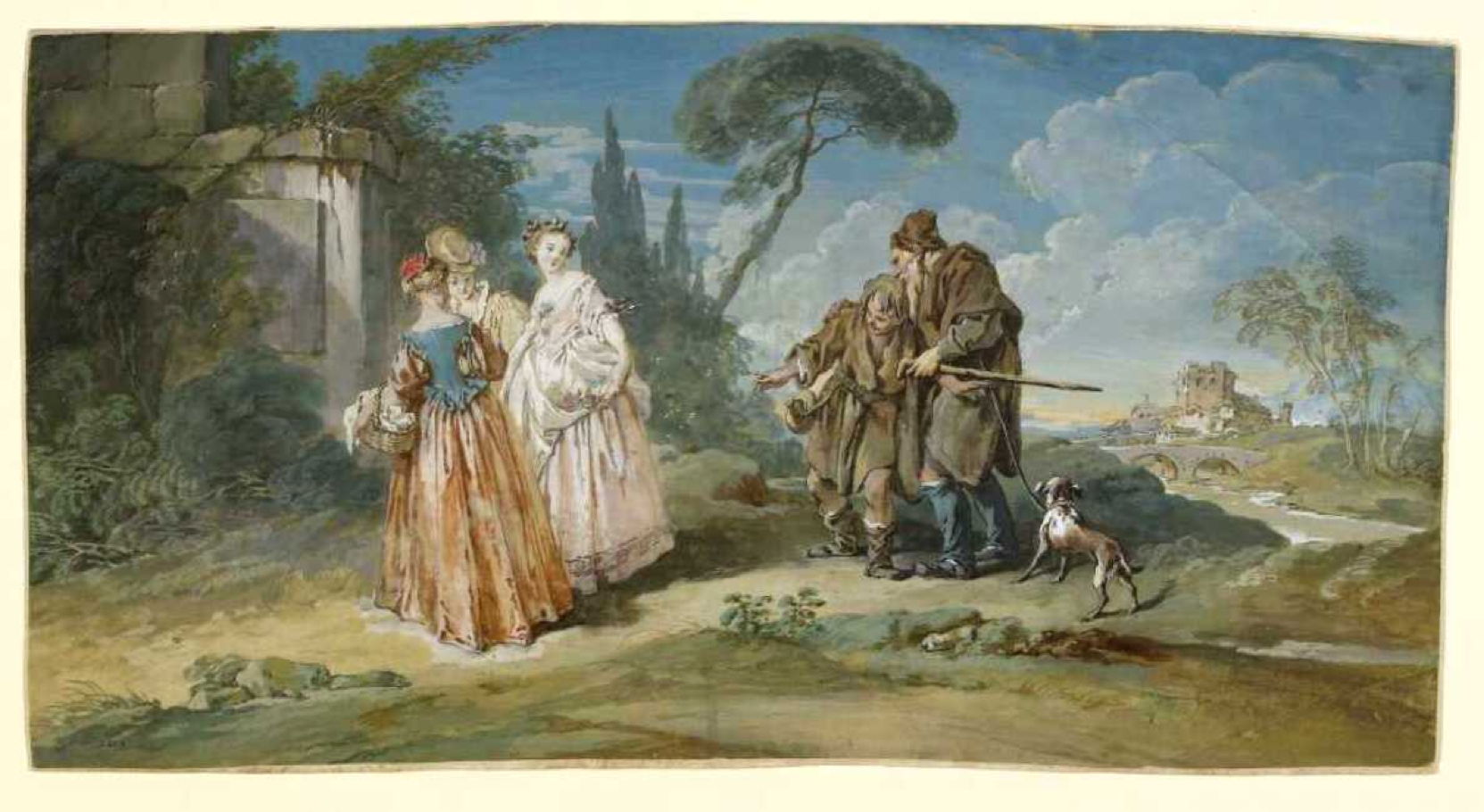
François Boucher (1703-1770), Brother Philippe’s Geese (c 1720-28), gouache, 21 x 42 cm, Musée des Beaux-Arts et d’Archéologie de Besançon, Besançon, France. The Athenaeum.

The first painting is this small gouache by François Boucher from about 1720-28, with its marked contrast in the dress between the reclusive pair and the goslings or geese.

lancretbrotherphilippesgeese
Nicolas Lancret (1690–1743), Brother Philippe’s Geese (c 1736), oil on copper, 27..3 x 35.2 cm, The Metropolitan Museum of Art (Purchase, Walter and Leonore Annenberg and The Annenberg Foundation Gift, 2004), New York, NY. Courtesy of The Metropolitan Museum of Art.

Then in about 1736, Nicolas Lancret painted it in oil on copper, as one of a pair, among a larger group of his paintings of La Fontaine’s fables. The father is shown here dressed as a monk, which is more in keeping with La Fontaine’s account than Boccaccio’s original, but the facial expressions are marvellous, particularly that of the son.

anonafterlancretgeese
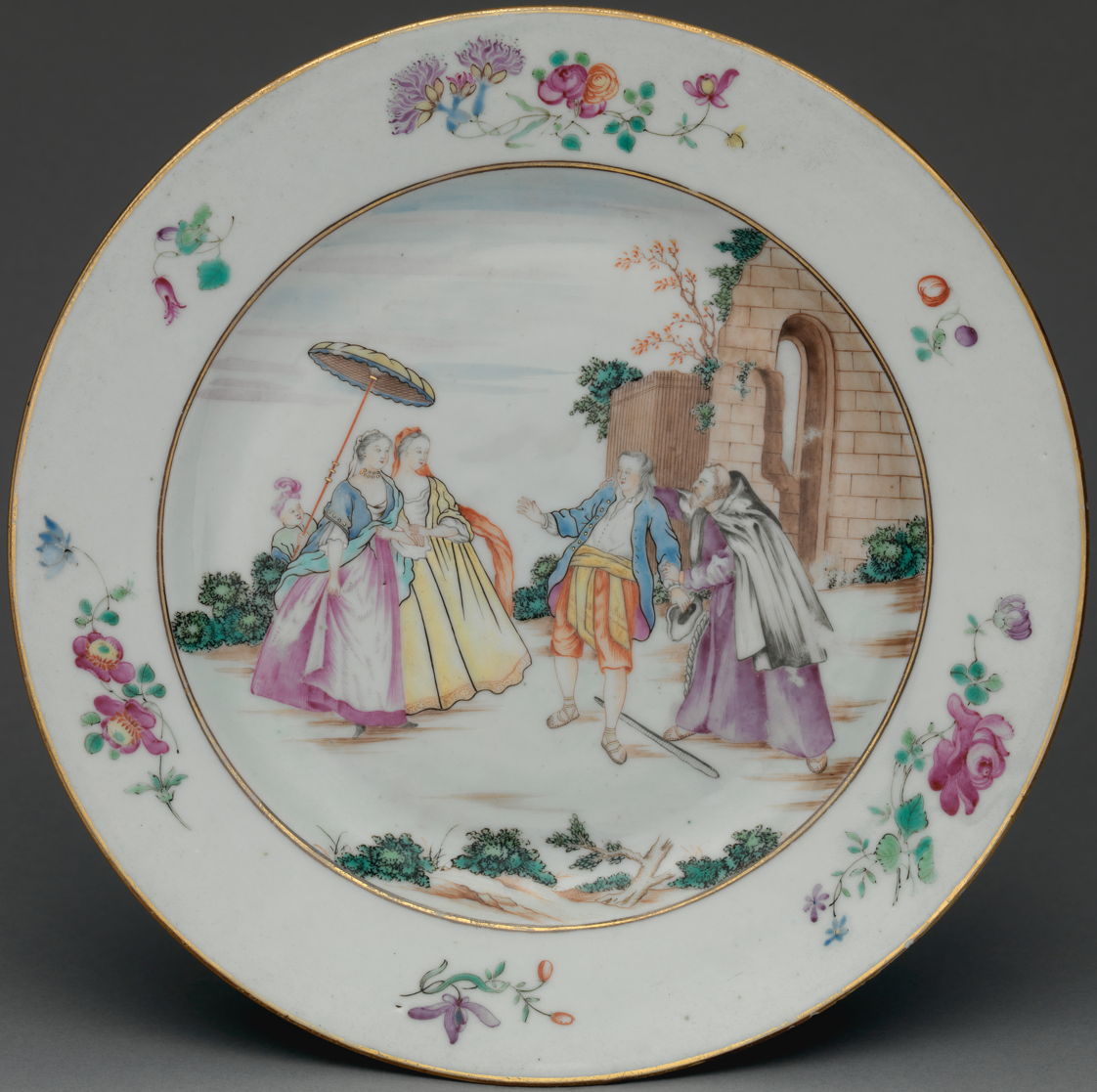
Artist not known, Scene from Brother Philippe’s Geese (1745), Chinese painted porcelain plate, 22.9 cm diam, The Metropolitan Museum of Art (Friends of European Sculpture and Decorative Arts Gifts, 2016), New York, NY. Courtesy of The Metropolitan Museum of Art.

That became so popular that it was reproduced in prints, such as those by Nicolas de Larmessin (1684–1755) in which the image is naturally reversed, but here seen unreversed on a porcelain plate exported from China in 1745.

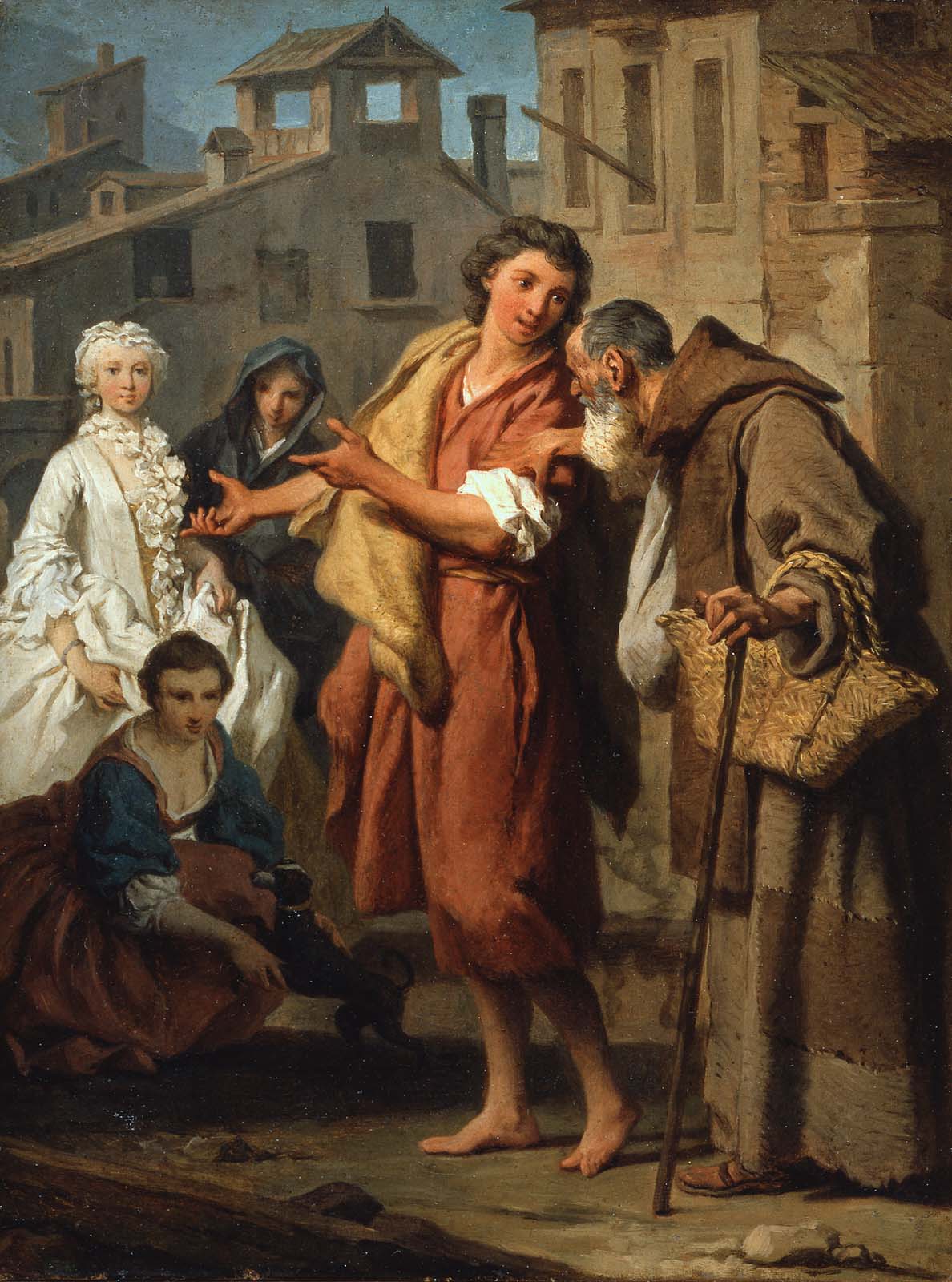
subleyrasbrothephilippesgeese
Pierre Hubert Subleyras (1699–1749), Brother Philippe’s Geese (c 1745), oil on canvas, 29.5 x 21.9 cm, The Museum of Fine Arts, Boston, MA. Courtesy of the Museum of Fine Arts, Boston.

At the same time, Pierre Hubert Subleyras painted a different composition telling the story, short of its punchline of course. He restores a thoroughly rustic appearance to the father and son, but surprisingly the young man isn’t staring in wonder at the goslings or geese.

anonbrotherphilippesgeese
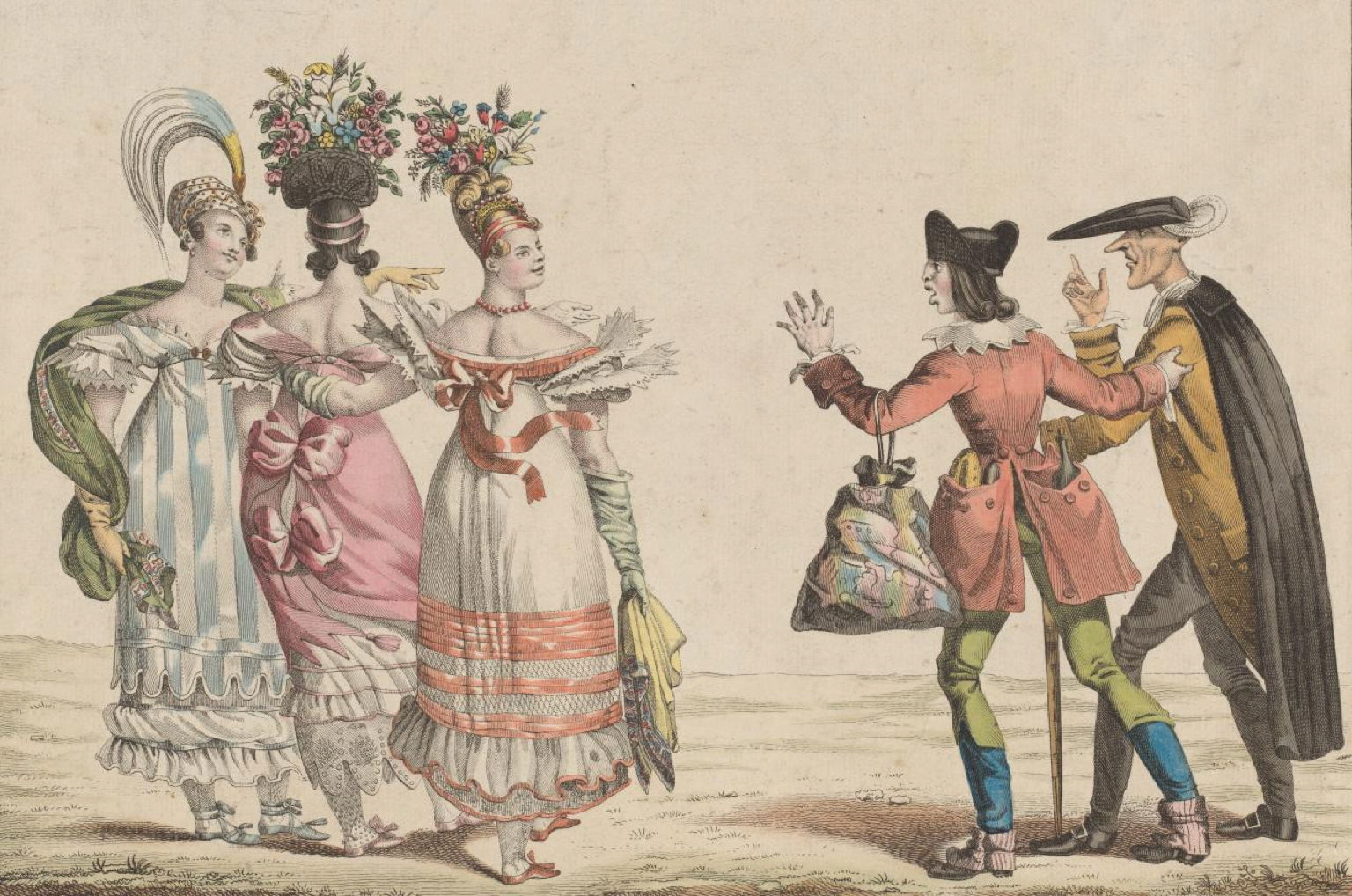
Artist not known, Brother Philippe’s Geese (date not known), hand-coloured etching and engraving, dimensions not known, National Gallery of Victoria, Melbourne, Australia. Courtesy of the National Gallery of Victoria.

And here’s an undated hand-coloured print apparently based on another composition altogether.

The phrase Brother Philippe’s geese, which in modern English might be best rendered as Philip’s birds, then entered French idiom as a reference to young and pretty women. Abbreviated further to geese, its origins have often been misunderstood as being derogatory. It certainly seems to have been well-understood by Paul Gauguin.

When Gauguin stayed at Le Pouldu in Brittany from 1889, he and others were accommodated by Marie Henry in her inn. Gauguin and his colleagues decorated the interior for her with their paintings. In 1893, when Marie Henry rented the building out, she removed as much as possible of the paintings made there by Gauguin and others, but some were left behind. Over the years, they were covered with wallpaper and vanished, until they were rediscovered in 1924.

gauguingoose
Paul Gauguin (1848-1903), The Goose (1889), tempera on plaster, 53 x 72 cm, Musée des Beaux-Arts de Quimper / Kemper, mirdi an Arzoù-Kaer, Quimper, France. Wikimedia Commons.

Among them is this wonderful painting of a goose, intended as a complement to Marie Henry, in its allusion to the fable of La Fontaine, and its original telling as the hundred-and-first story in Boccaccio’s Decameron.

❌