Reading view

There are new articles available, click to refresh the page.

A painted weekend in the Alhambra 1886-1914

Landscape painters came to the Alhambra in the Andalucian city of Granada relatively late. But once they started to visit the Prado in Madrid to view and copy its magnificent collection of masters, a steady succession travelled south to paint the Moorish palaces of the Alhambra.

mapalhambra
Openstreetmap and contributors, Map of the Alhambra, Spain (2013). © OpenStreetMap contributors, via Wikimedia Commons.

To remind you, this plan from Openstreetmap and its contributors shows the modern site, as of 2013.

uhdealhambra
Constantin Uhde (1836–1905), Plan of the Nasrid Palaces, Alhambra (1892), illustration, further details not known. Wikimedia Commons.

Constantin Uhde’s plan of 1892 shows the layout of the Nasrid palaces:

  • Red is the site of the Palace of Comares and the Palaces of the Ambassadors.
  • Green is the Palace of the Lions.
  • Yellow is the Mexuar.
  • Blue is the Garden of Lindajar and later quarters of the Emir.
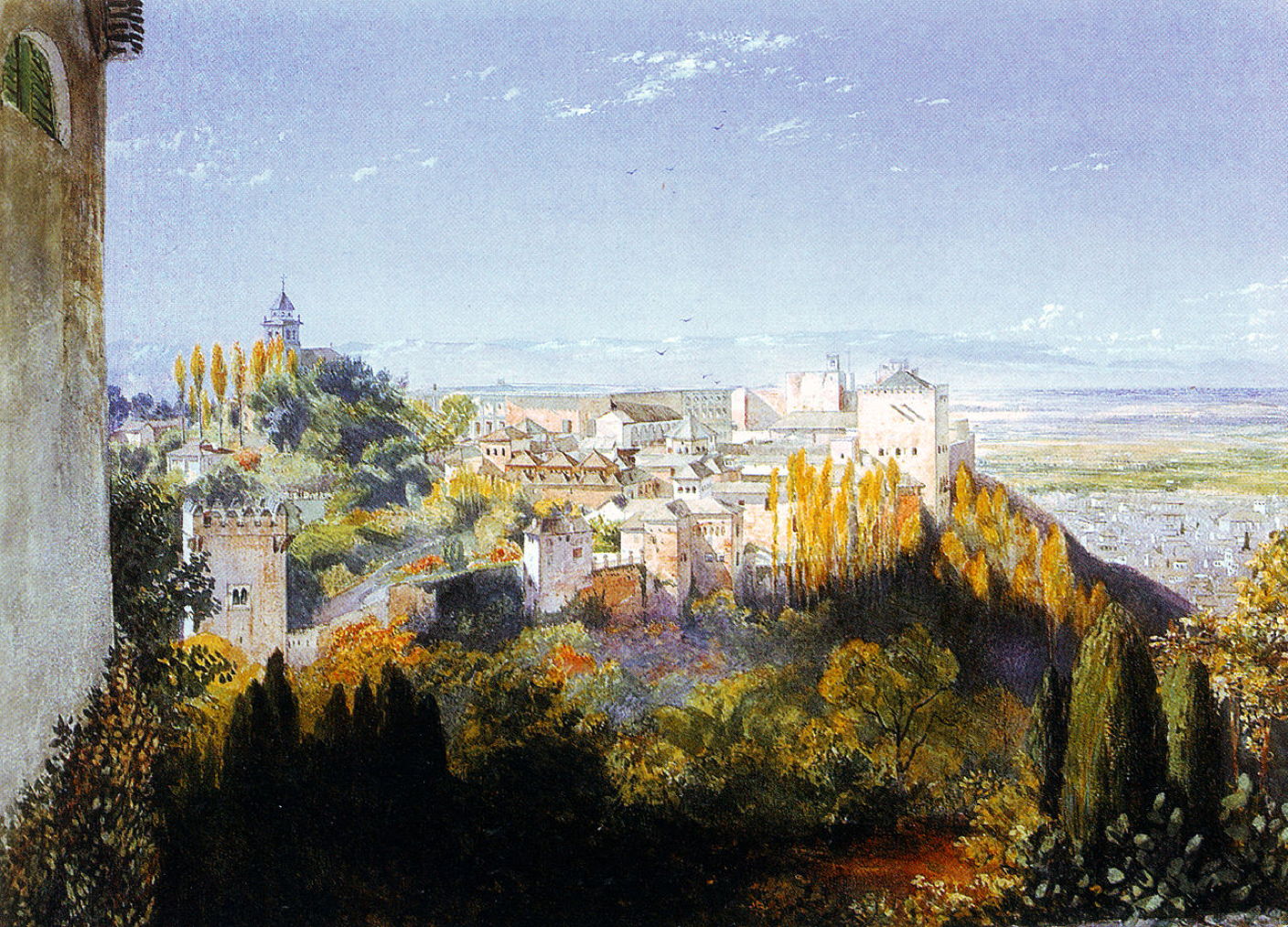
wodickgranada
Edmund Wodick (1816–1886), Granada (1886), oil on canvas, dimensions not known, Kulturhistorisches Museum Magdeburg, Magdeburg, Germany. Wikimedia Commons.

For Edmund Wodick, who must have visited Granada to paint this spectacular landscape in early 1886, it was probably the last work that he completed. Shortly after this, he developed pneumonia and died at the age of 69. He painted this just outside the city walls, looking across at the Alhambra and its towers, down towards the lush green plain and the snow-capped peaks in the far distance.
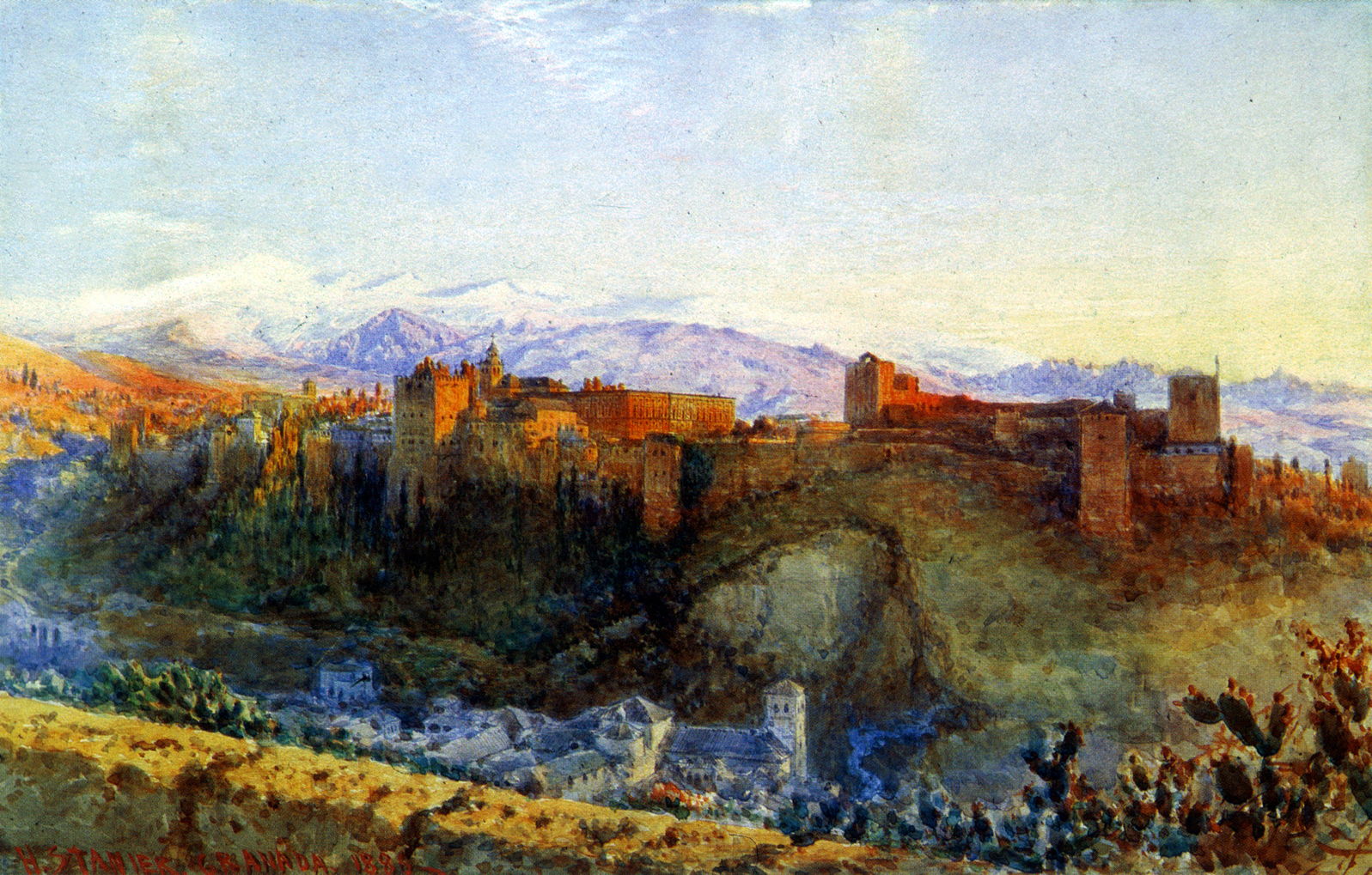
stanieralhambrafromsannicolas
Henry Stanier (1832-1892), Alhambra from San Nicolas (1886), further details not known. Wikimedia Commons.

Long before the brash colours of the Fauves, those who painted the Alhambra in the rich light of dawn or dusk surprised viewers with the intensity of its colours. Henry Stanier’s view of the Alhambra from San Nicolas from 1886 is a good example, and another from late in an artist’s career. Stanier was a topographical draughtsman and sometime Orientalist from the city of Birmingham in England, whose work is now almost forgotten.
gomez-morenoalcazaba
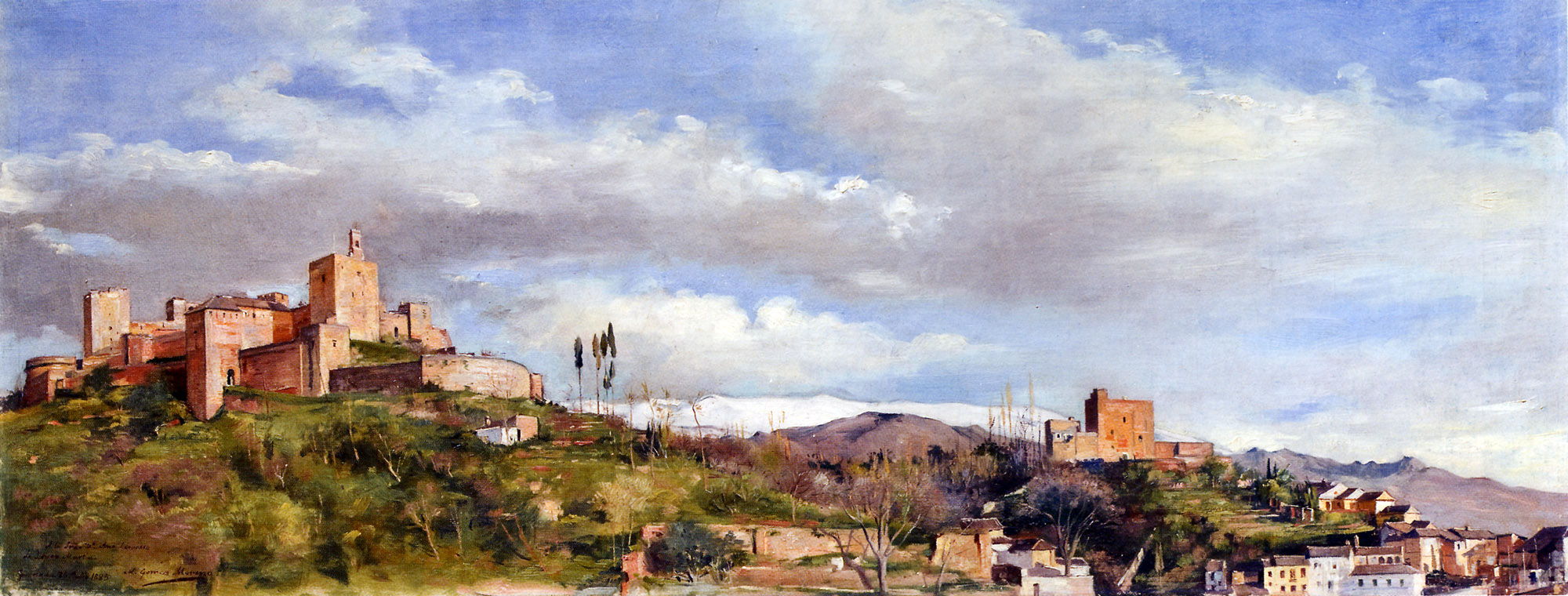
Manuel Gómez-Moreno González (1834–1918), La Alcazaba y Torres Bermejas (The Alhambra and Castle of Torres Bermejas) (c 1887), oil on canvas, 35.5 x 89.5 cm, Casa de los Tiros, Granada, Spain. Wikimedia Commons.

Local painter and amateur archaeologist Manuel Gómez-Moreno González was fascinated by the history of the Alhambra, and the first to compile an account of its depictions in paintings. His own works showing the site include The Alhambra and Castle of Torres Bermejas from about 1887, painted from an unusual viewpoint below its ridge.

The Alhambra dominates the left, with the much smaller castle to the right. The snow-clad peaks of the Sierra Nevada rise to over 3,000 metres (10,000 feet), and resemble a bank of white cloud peeking over the skyline in between.

vicoalhambracuestadeloschinos
Hernandez Miguel Vico (1850-1933), Alhambra and Cuesta de los Chinos (date not known), further details not known. Wikimedia Commons.

Hernandez Miguel Vico, another local artist, also favoured a view from below in his undated painting of Alhambra and Cuesta de los Chinos. In 1877, he exhibited an interior of the Alhambra at the Salon in Paris, but I have been unable to locate an image of that.

weirjfalhambra
John Ferguson Weir (1841-1926), The Alhambra, Granada, Spain (c 1901), oil on canvas, 92.1 x 118.1 cm, The Metropolitan Museum of Art (Gift of David T. Owsley, 1964), New York, NY. Courtesy of The Metropolitan Museum of Art.

The founder of the School of Fine Arts at Yale University, John Ferguson Weir, had studied in Europe, and his brother Julian Alden Weir was a student at the École des Beaux-Arts in Paris. Later in his career, John Ferguson Weir returned to Europe on several trips, and in about 1901 painted this fine view of The Alhambra, Granada, Spain.

tuxenalhambra
Laurits Tuxen (1853–1927), View of the Alhambra (1902), oil on canvas, 54 x 72 cm, location not known. Wikimedia Commons.

As far as I can tell, Laurits Tuxen was the first Danish artist to paint a View of the Alhambra, a year after marrying his second wife. He was one of the leading members of the Skagen Painters, ‘Danish Impressionists’, and completed this en plein air on 4 May 1902, in marvellously fine weather.

The early twentieth century brought two of the greatest artists to have painted the Alhambra: Joaquín Sorolla, who seems to have been most active in Granada in 1909, and John Singer Sargent, who visited in 1912 at least.

Sorolla came from Valencia, and is still best-known for his magnificent paintings of people and activities on the beach there. He travelled extensively during his career, but doesn’t seem to have painted in Granada until 1909, when he also spent five months in the USA. These four oil sketches are a marked contrast to the more familiar finished paintings that he exhibited.
sorollalospicostower
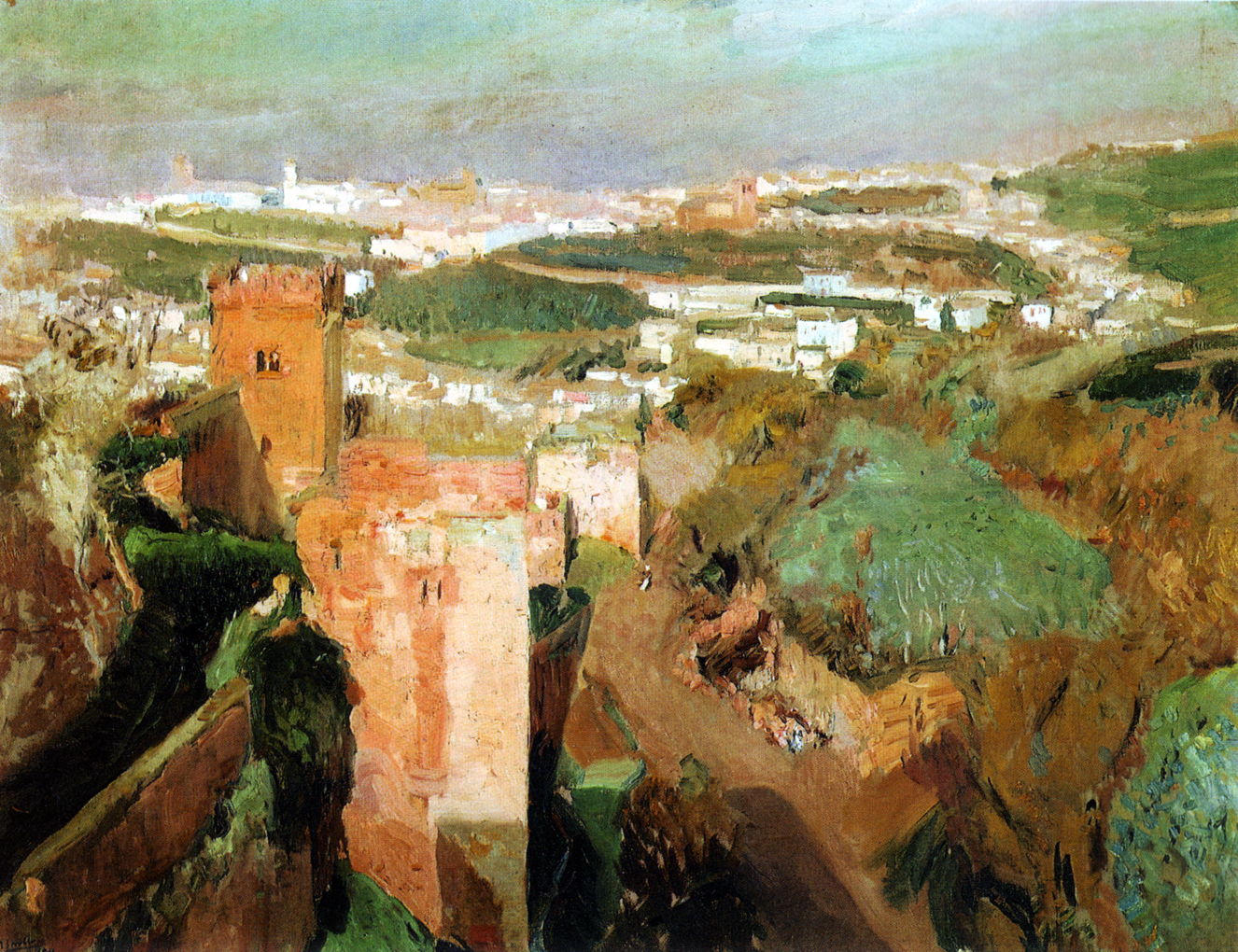
Joaquín Sorolla y Bastida (1863–1923), Los Picos Tower (date not known), further details not known. Wikimedia Commons.

Los Picos Tower is a virtuoso oil sketch looking along the precipitous walls and towers at the edge of the site, and beyond to the dazzling white buildings of the city.
sorollahallambassadors
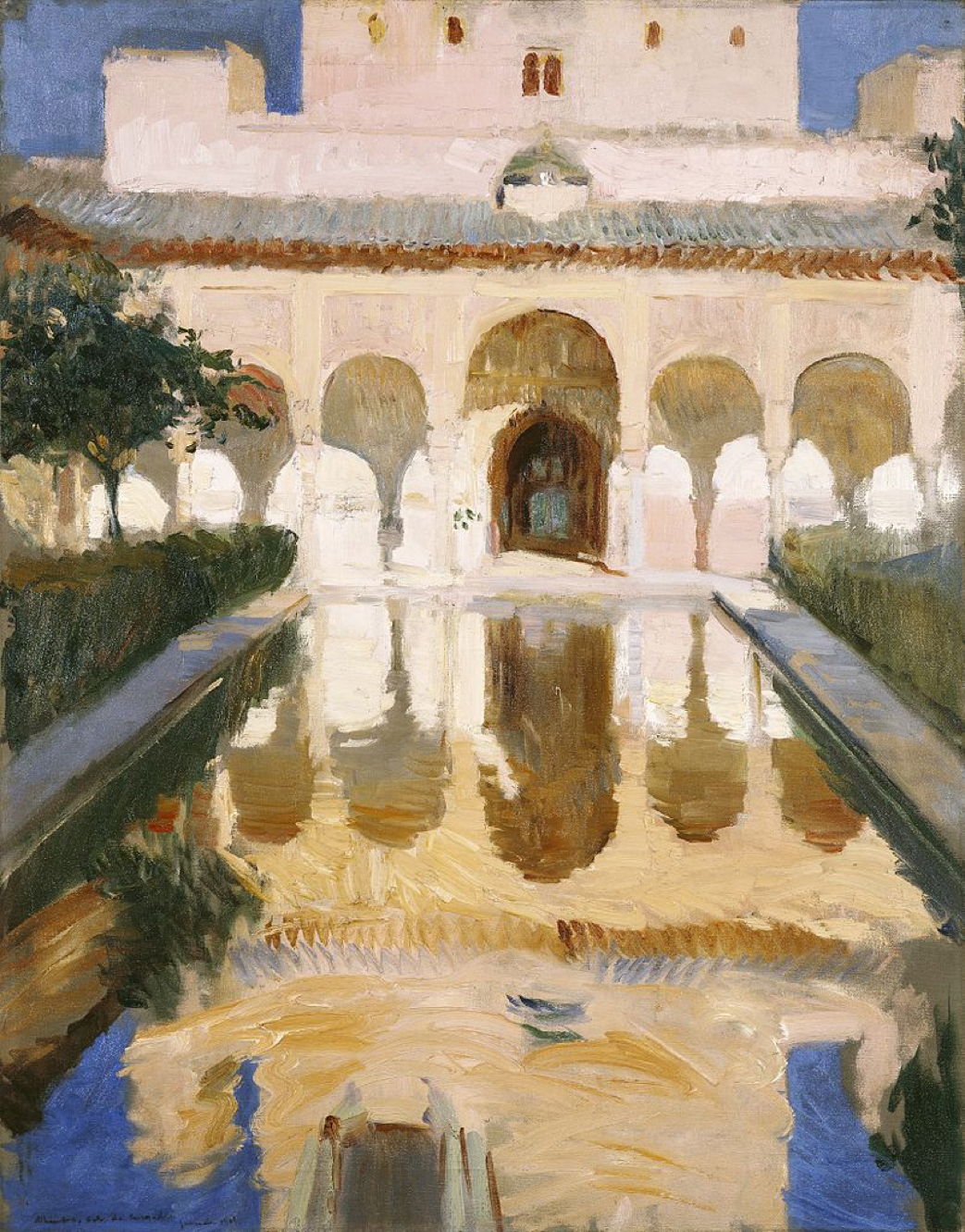
Joaquín Sorolla y Bastida (1863–1923), Hall of the Ambassadors, Alhambra, Granada (1909), oil on canvas, 104.1 x 81.2 cm, J. Paul Getty Museum, Los Angeles, CA. Wikimedia Commons.

Hall of the Ambassadors, Alhambra, Granada (1909) shows this classical view with some of Sorolla’s vigorous brushstrokes texturing the paint.

sorollatorreinfantas
Joaquín Sorolla y Bastida (1863–1923), Torre de las Infantas de la Alhambra (Tower of the Children) (1909), dimensions not known, Museo Sorolla, Madrid, Spain. Image by Quinok, via Wikimedia Commons.

Tower of the Children (1909) looks past another tower towards the distant mountains, the sunlight filtering through a curtain of trees.

sorollaalbaicin
Joaquín Sorolla y Bastida (1863–1923), Albaicin (date not known), further details not known. Wikimedia Commons.

In Sorolla’s Albaicin, he looks down from one of the Alhambra’s towers at the bleached white buildings below.
sargentingeneralife
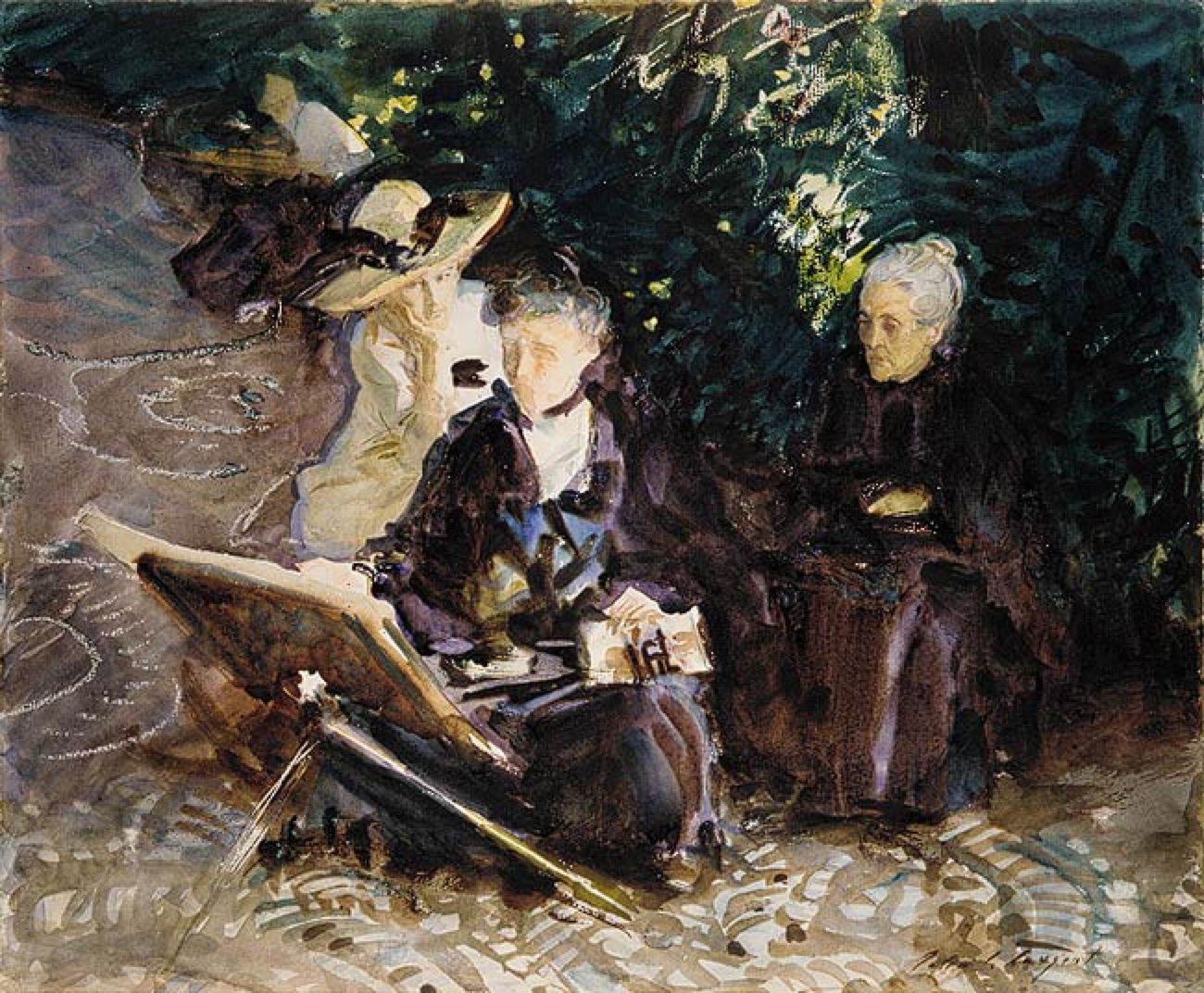
John Singer Sargent (1856–1925), In the Generalife (1912), watercolour and graphite on paper, 37.5 x 45.4 cm, The Metropolitan Museum of Art, New York, NY. Wikimedia Commons.

The only available image of Sargent’s paintings of the Alhambra I have able to find is this watercolour showing his sister Emily, also a keen artist, sketching In the Generalife (1912). Behind her is Jane de Glehn, and to the right is a Spanish friend known only as Dolores. The unusual highlight effect seen in bushes above them, and on parts of the ground, was produced by scribbling with a colourless beeswax crayon, which resists the watercolour paint.

Théo van Rysselberghe, Fountain at the Generalife in Granada (1913), oil on canvas mounted on cardboard, 65.8 x 46 cm, Private collection. WikiArt.

Théo van Rysselberghe had first visited Spain in 1881 or 82, when he too went to the Prado, and travelled on to Morocco. He visited Andalucia in company with John Singer Sargent in the Spring of 1884, but doesn’t appear to have painted the Alhambra until after his retirement to the Côte d’Azur in 1911. He then painted Fountain at the Generalife in Granada in 1913, in his late high-chroma style.

The last two paintings in my selection are both by the eclectic Valencian painter Antonio Muñoz Degrain, and demonstrate his wide range of styles.

degrainalhambrafromalbaicin
Antonio Muñoz Degrain (1840-1924), View of the Alhambra (1914), oil on canvas, 125 x 83 cm, Museo de Málaga. Wikimedia Commons.

Muñoz Degrain’s view of the Alhambra from Albaicin District from 1914 is remarkable for the rhythm established by the poplar trees around its base, which become an integral part of the fortified ridge.

degrainalhambra
Antonio Muñoz Degrain (1840-1924), View of the Alhambra (date not known), further details not known. Wikimedia Commons.

His View of the Alhambra is one of my favourite paintings of this motif, for its intriguing foreground details, and the poplars lit as white-hot pokers in the fiery light of the sunset.

What better way to end our weekend away from the chill and gloom of winter.

Reference

Wikipedia.

A painted weekend in the Alhambra 1767-1883

It’s time to head off for a weekend away from the January gloom in Granada, Andalusia, southern Spain, where we’ll visit the Alhambra. It’s one of the oldest, grandest, most fascinating and beautiful palaces in Europe.

It started as one of many hill forts used by the Romans in a series of campaigns to control a succession of tribal revolts, and stamp the Empire’s presence close to North Africa. It was rebuilt in 889 CE, but nothing palatial became of it until around 1250, when the ruling Nasrid emir started to turn it into something much grander.

At that time, much of the south of the Iberian peninsula wasn’t ruled by people from Europe to the north, but by Muslim dynasties who had swept up from the south. The Emirate of Granada was the last substantial part of Iberia to remain under Muslim rule, and in 1333 the Sultan of Granada, Yusuf I, decided to transform the Alhambra into a royal palace. In doing so, he and his successors built one of the most exquisite expressions of Arabic Muslim art and architecture along a ridge about half a mile (0.7 km) long overlooking the city of Granada.

mapalhambra
Openstreetmap and contributors, Map of the Alhambra, Spain (2013). © OpenStreetMap contributors, via Wikimedia Commons.

This plan from Openstreetmap and its contributors shows the modern site, as of 2013.

uhdealhambra
Constantin Uhde (1836–1905), Plan of the Nasrid Palaces, Alhambra (1892), illustration, further details not known. Wikimedia Commons.

Constantin Uhde’s plan of 1892 shows the layout of the Nasrid palaces:

  • Red is the site of the Palace of Comares and the Palaces of the Ambassadors.
  • Green is the Palace of the Lions.
  • Yellow is the Mexuar.
  • Blue is the Garden of Lindajar and later quarters of the Emir.

This article shows a selection of views of the palace up to 1883, and tomorrow’s sequel brings that up to the start of the First World War in 1914.

dehermosillaalhambra
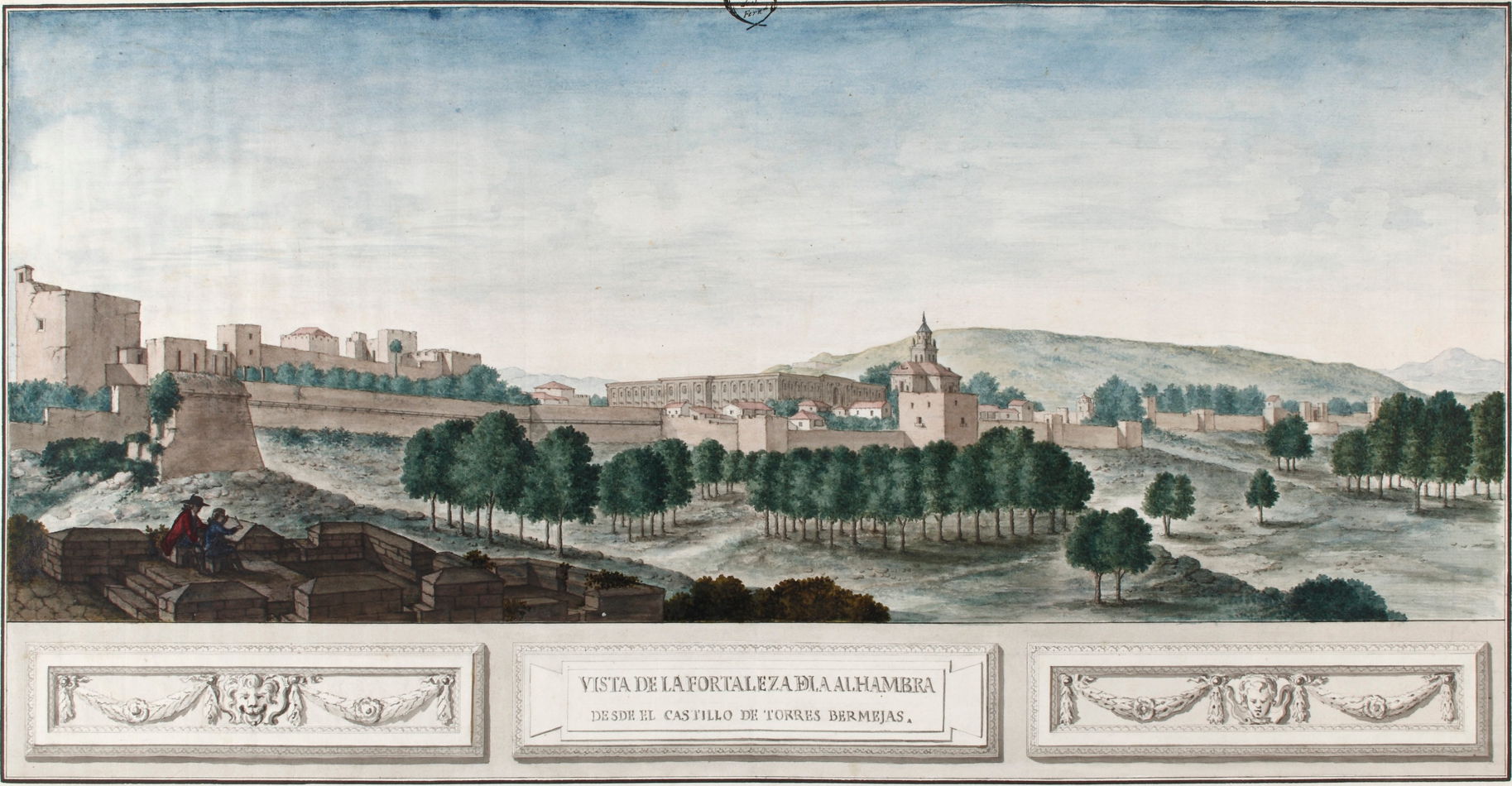
José de Hermosilla (1715-1776), View of the Alhambra from the Torres Bermejas Castle (1767), watercolour, dimensions not known, Real Academia de Bellas Artes de San Fernando, Madrid, Spain. Wikimedia Commons.

Early paintings of the Alhambra were mainly topographic views, painted in watercolour during the eighteenth century, such as José de Hermosilla’s View of the Alhambra from the Torres Bermejas Castle of 1767. These are similar to views of landmarks being produced in Britain at the time.

lewistorrecomares
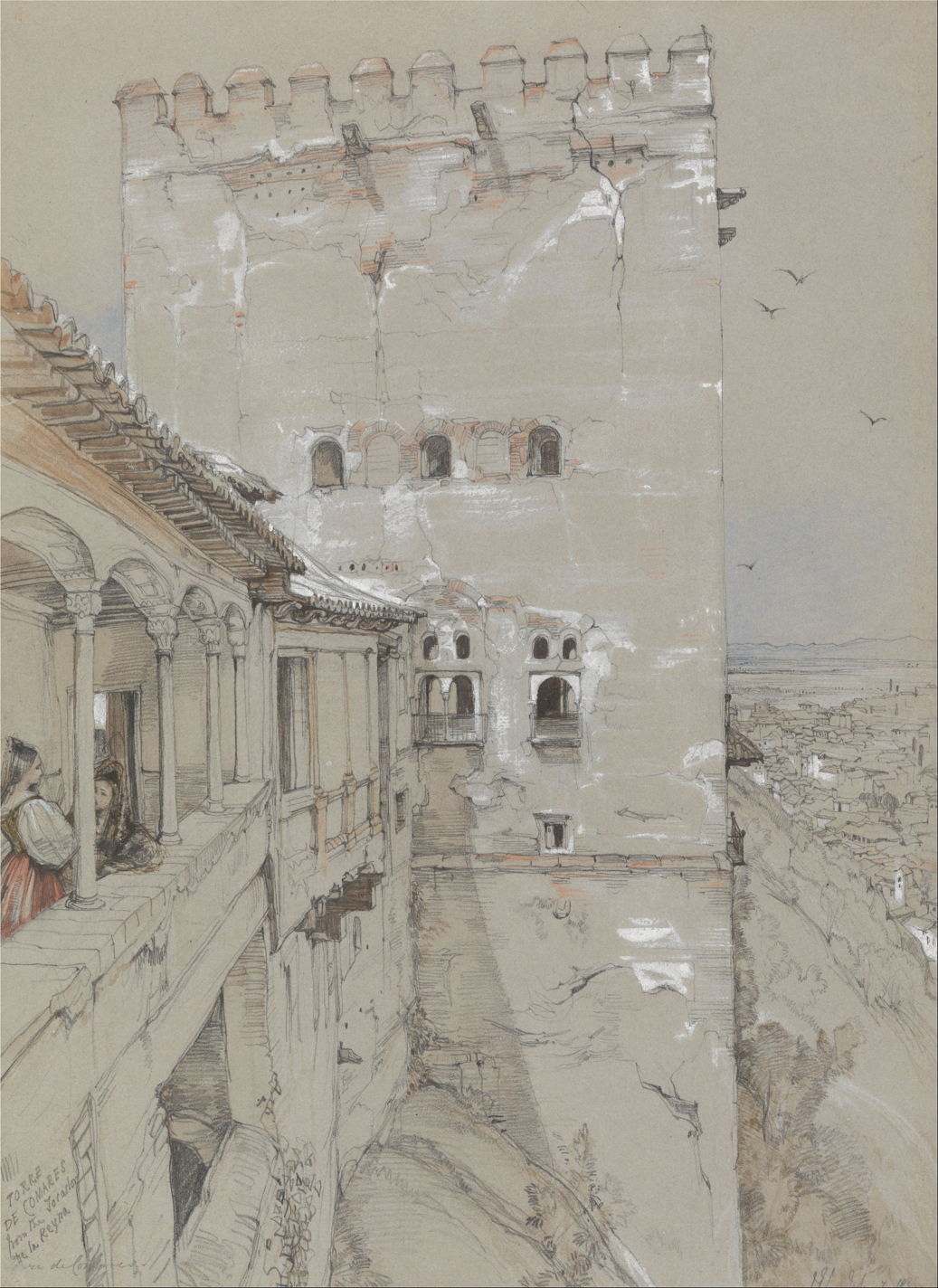
John Frederick Lewis (1805–1876), The Torre de Comares, Alhambra (1835), graphite, watercolour, white gouache and scratching out on medium, slightly textured, gray wove paper, 37.1 x 27 cm, Yale Center for British Art, New Haven, CT. Wikimedia Commons.

Others, like John Frederick Lewis in 1835, came to record details of the remains of the Alhambra’s buildings, as in The Torre de Comares, Alhambra, drawn carefully in graphite and only slightly highlighted and coloured with watercolour and gouache.

While every seriously aspiring landscape painter was flocking to paint en plein air in the Roman Campagna in the early nineteenth century, the Alhambra seems not to have been included in the circuit.

robertsalhambraabaicin
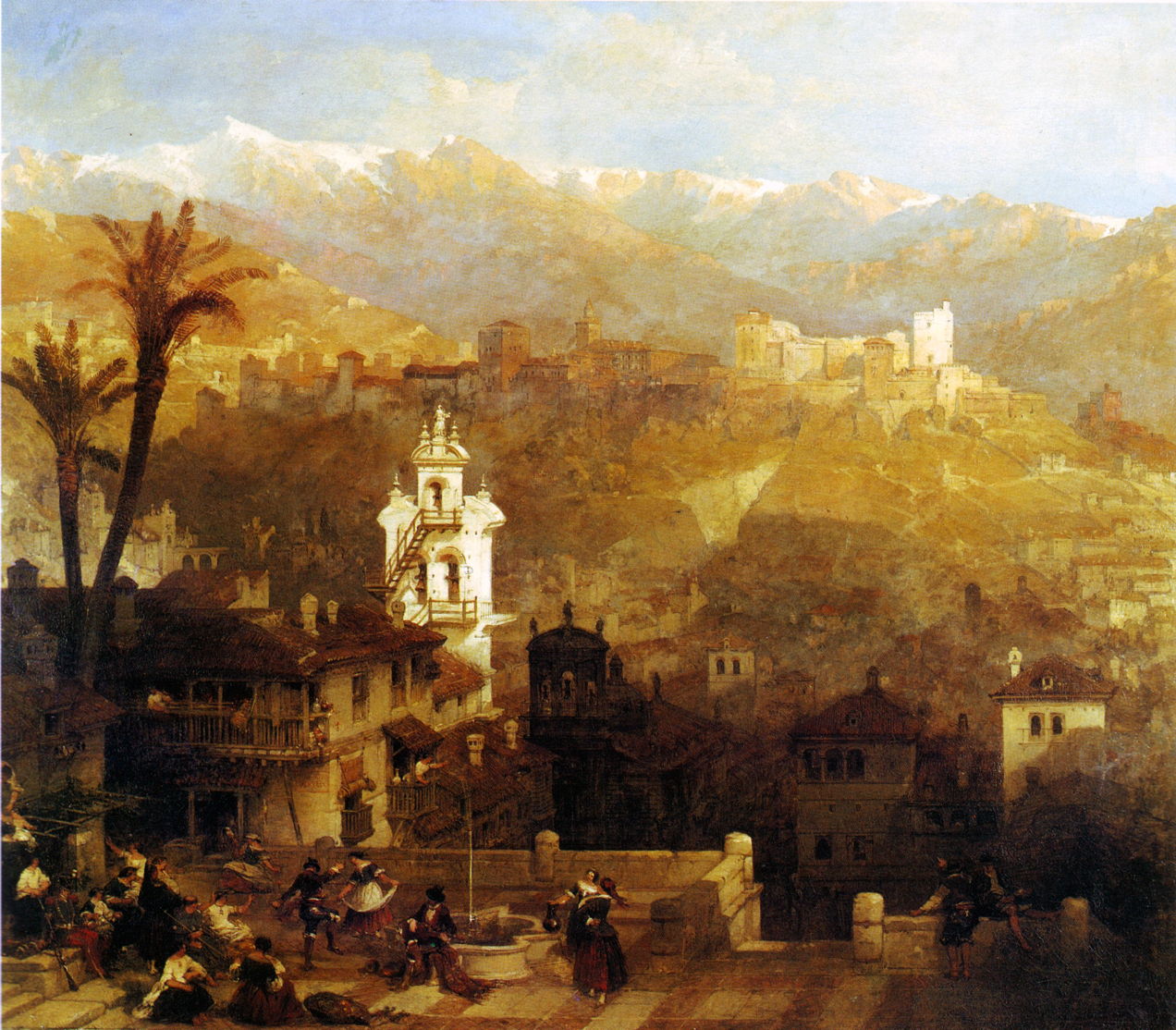
David Roberts (1796–1864), Alhambra and Albaicin (date not known), further details not known. Wikimedia Commons.

It was the vogue for Orientalist views in the middle of the nineteenth century that first attracted artists to paint the Alhambra in oils. This is David Roberts’ undated view of Alhambra and Albaicin. Roberts is much better-known for his sketches turned into prints from multiple tours of Egypt and the ‘near east’ made between 1838-40. This work probably originated in sketches made when he visited Spain in 1832, and would have then been painted in this form back in Britain after about 1833, and turned into a print by 1837.

zopatioalhambra
Achille Zo (1826–1901), Patio in the Alhambra (1860), media and dimensions not known, Musée des beaux-arts de Pau, Pau, France. Wikimedia Commons.

Achille Zo was a Basque painter who specialised in views of Spain during the 1860s, such as this Patio in the Alhambra from 1860. These were well received at the Salon in Paris, earning him a gold medal in 1868, following which he too turned to Orientalism.

lenbachalhambra
Franz von Lenbach (1836–1904), The Alhambra in Granada (1868), oil on canvas, 72.1 × 91.5 cm, Sammlung Schack, Bayerische Staatsgemäldesammlungen, Munich, Germany. Wikimedia Commons.

It was the fine collection of paintings of the Prado in Madrid that attracted many great artists to Spain. In 1867, Franz von Lenbach and a student of his travelled to Madrid to copy the masters there for his patron Baron Adolf von Schack. The following year, he painted two works in Granada: The Alhambra in Granada (1868) is a magnificent sketch including the backdrop of the distant mountains, and appears to have been painted in front of the motif.

lenbachtocador
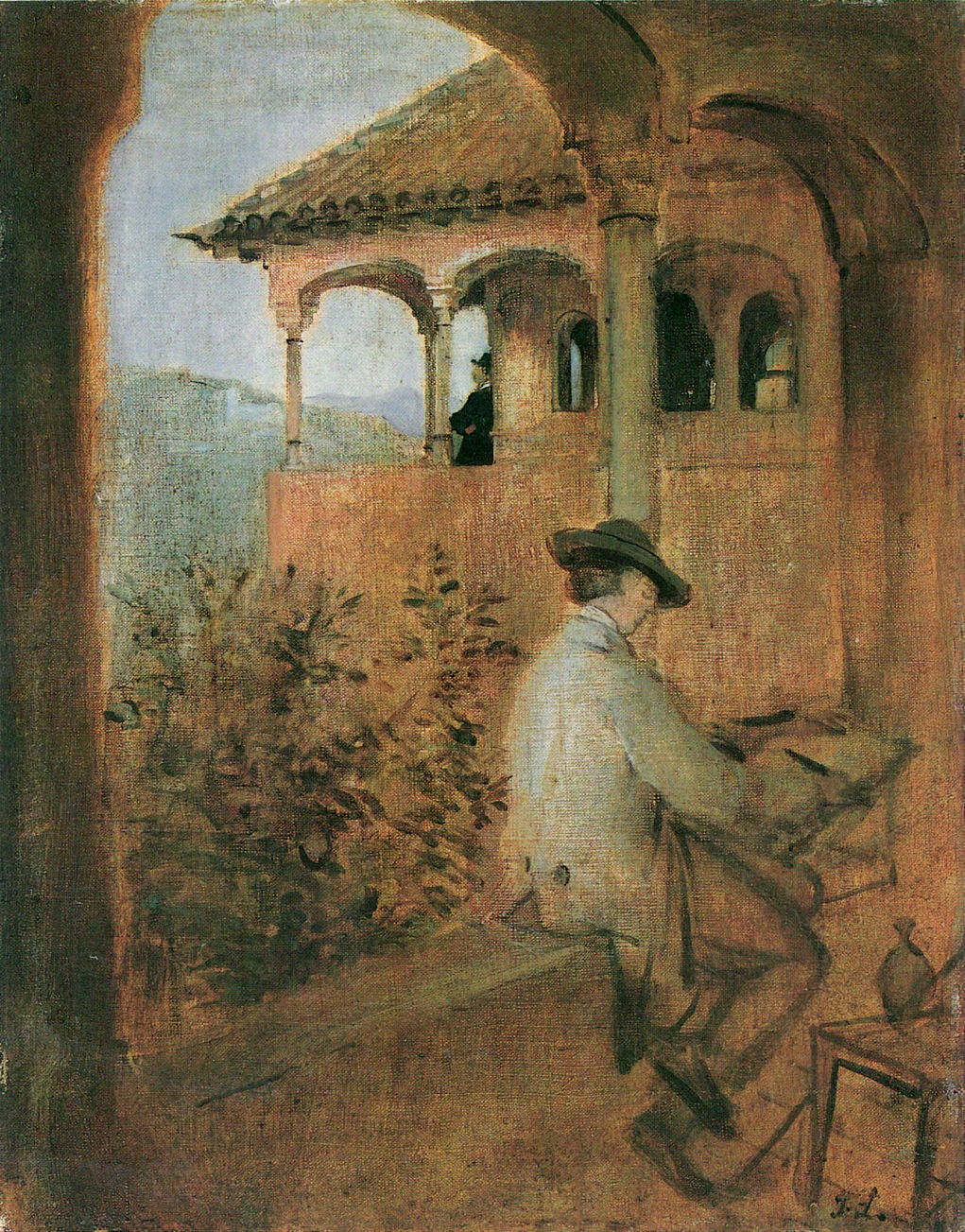
Franz von Lenbach (1836–1904), Tocador de la Reina (Queen’s Dressing Room) in the Alhambra (1868), oil on canvas, 33.1 × 26.2 cm, Sammlung Schack, Bayerische Staatsgemäldesammlungen, Munich, Germany. Wikimedia Commons.

Von Lenbach’s Tocador de la Reina shows the exterior of the Queen’s Dressing Room in the palaces, with his student sketching.

regnaultpatioalhambra
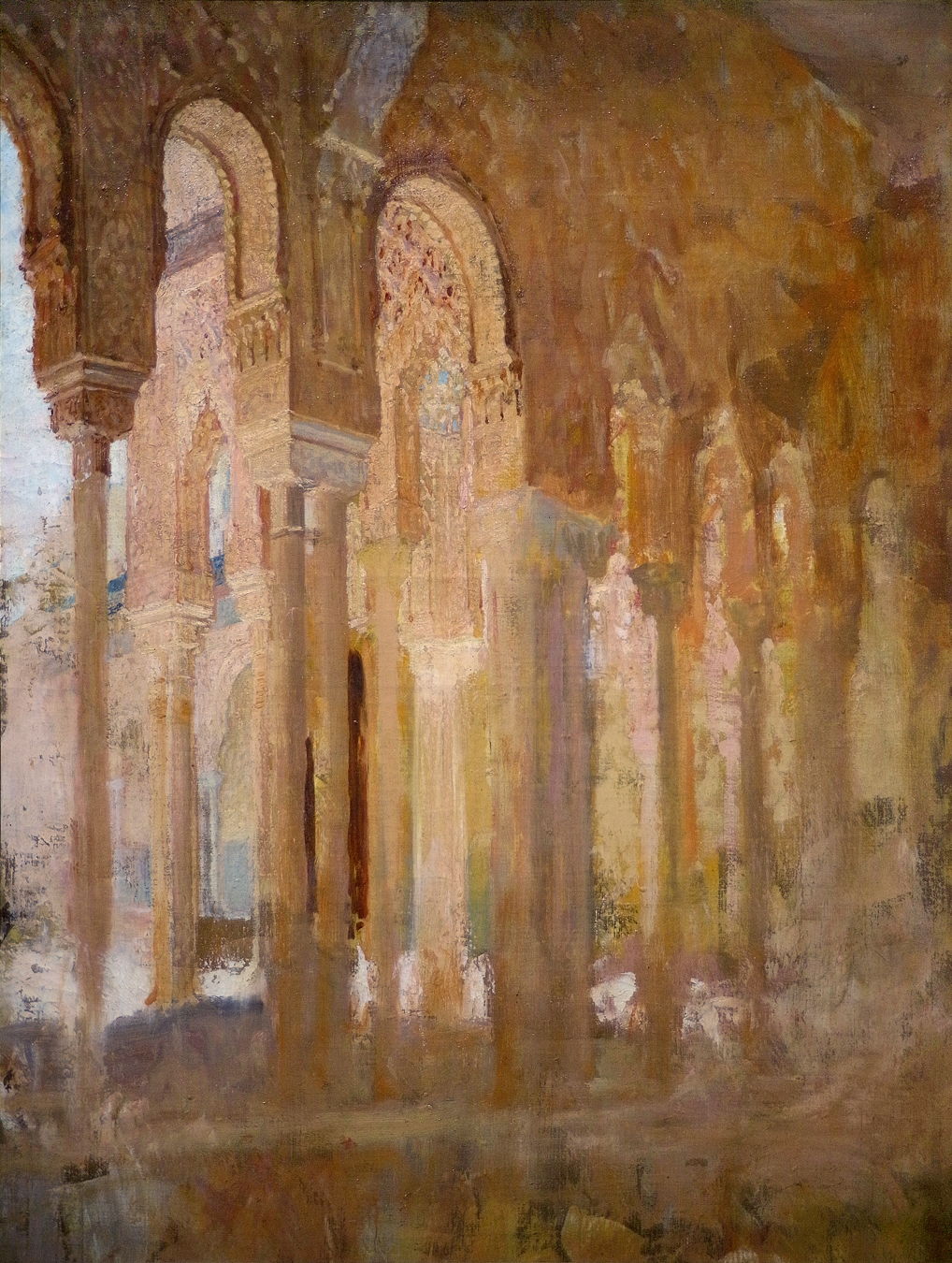
Henri Regnault (1843–1871), Colonnade of the Court of the Lions at the Alhambra (1869), oil on canvas, dimensions not known, Musée des Augustins de Toulouse, Toulouse, France. Wikimedia Commons.

Just two years before he was killed in the Franco-Prussian War, Henri Regnault toured Spain, and when he was in Granada he painted this view of the Colonnade of the Court of the Lions at the Alhambra (1869). I suspect this is unfinished, and he intended to complete the detail in its lower half.

ricotorredelasdamas
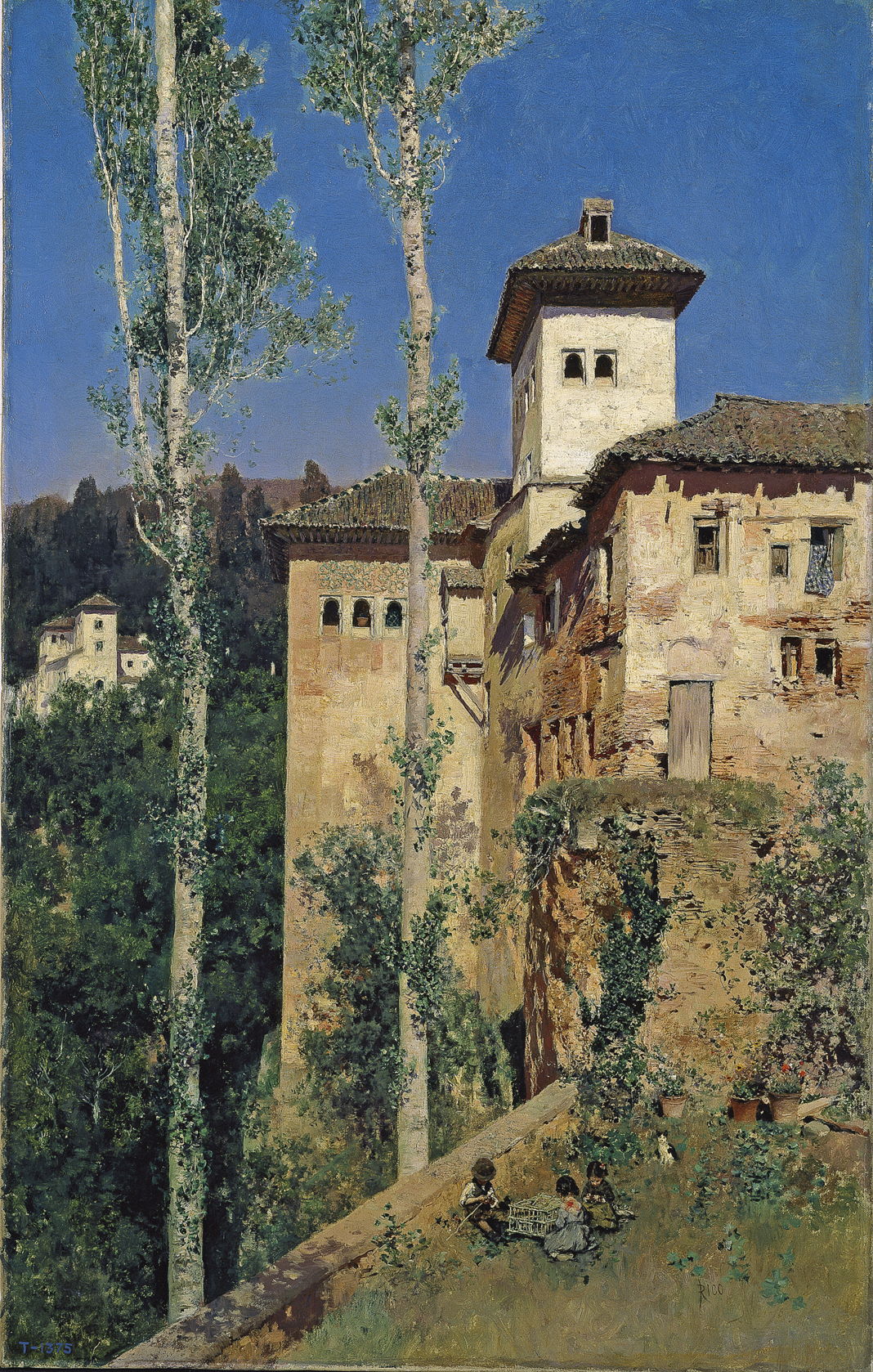
Martín Rico y Ortega (1833–1908), La Torre de las Damas en la Alhambra de Granada (The Tower of the Ladies in the Alhambra) (1871-72), oil on canvas, 62.5 x 39 cm, Museo Nacional del Prado, Madrid, Spain. Wikimedia Commons.

Martín Rico was one of the most important painters in Spain at this time. Influenced mainly by the Barbizon school, he painted this finely-detailed view of The Tower of the Ladies in the Alhambra in 1871-72. It captures the dilapidation the Alhambra had fallen into before more recent work to restore it to its former glory.

fortunypatioingranada
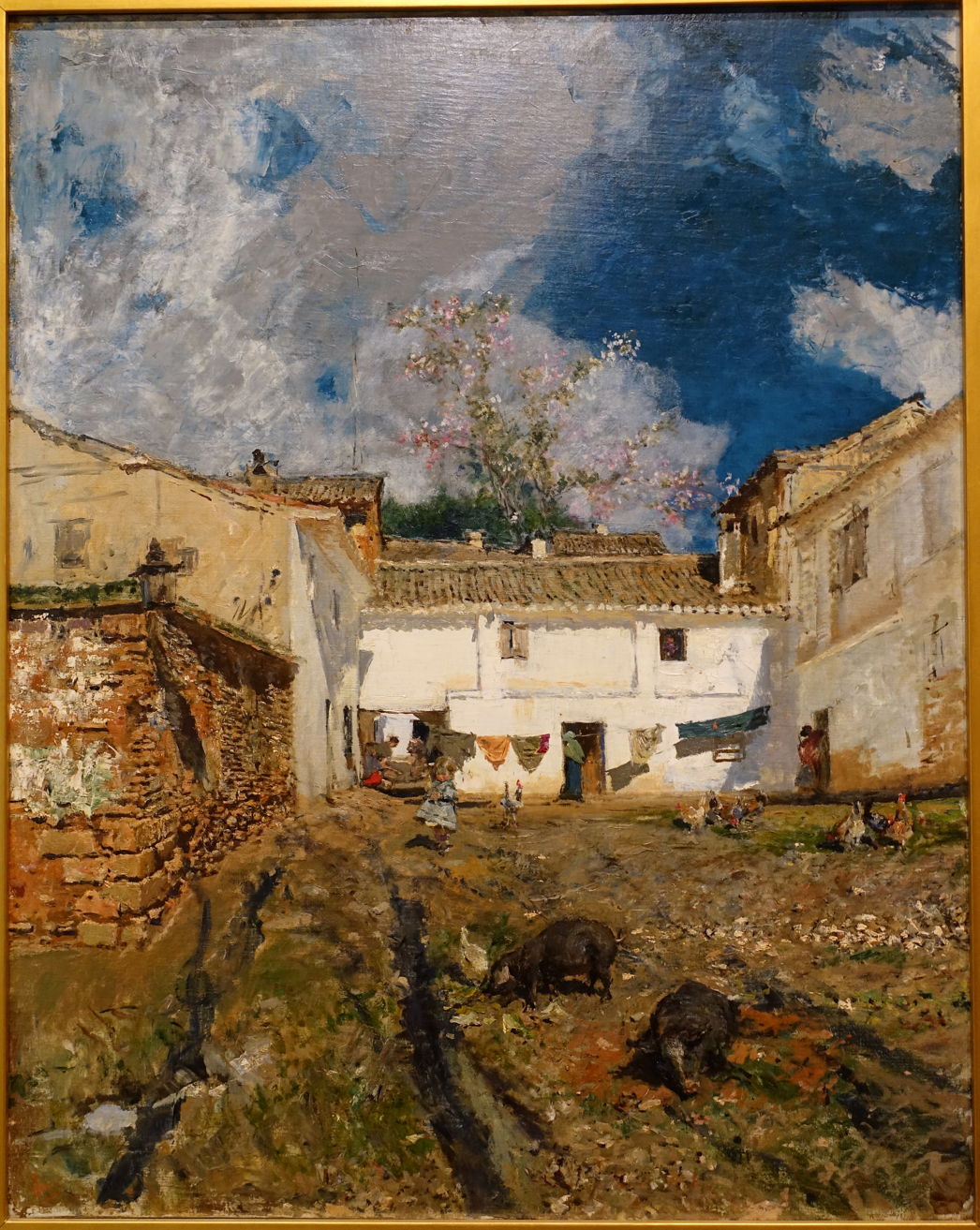
Marià Fortuny (1838–1874), Courtyard at Alhambra (Patio in Granada) (1873), oil on canvas, 111.4 x 88.9 cm, The Fogg Art Museum, Harvard University, Cambridge, MA. Wikimedia Commons.

If Marià Fortuny’s more Impressionist view of a Courtyard at Alhambra (Patio in Granada) from 1873 is to be believed, some parts of the Alhambra had been turned into smallholdings, with free-ranging chickens.

hansengranadaalhambra
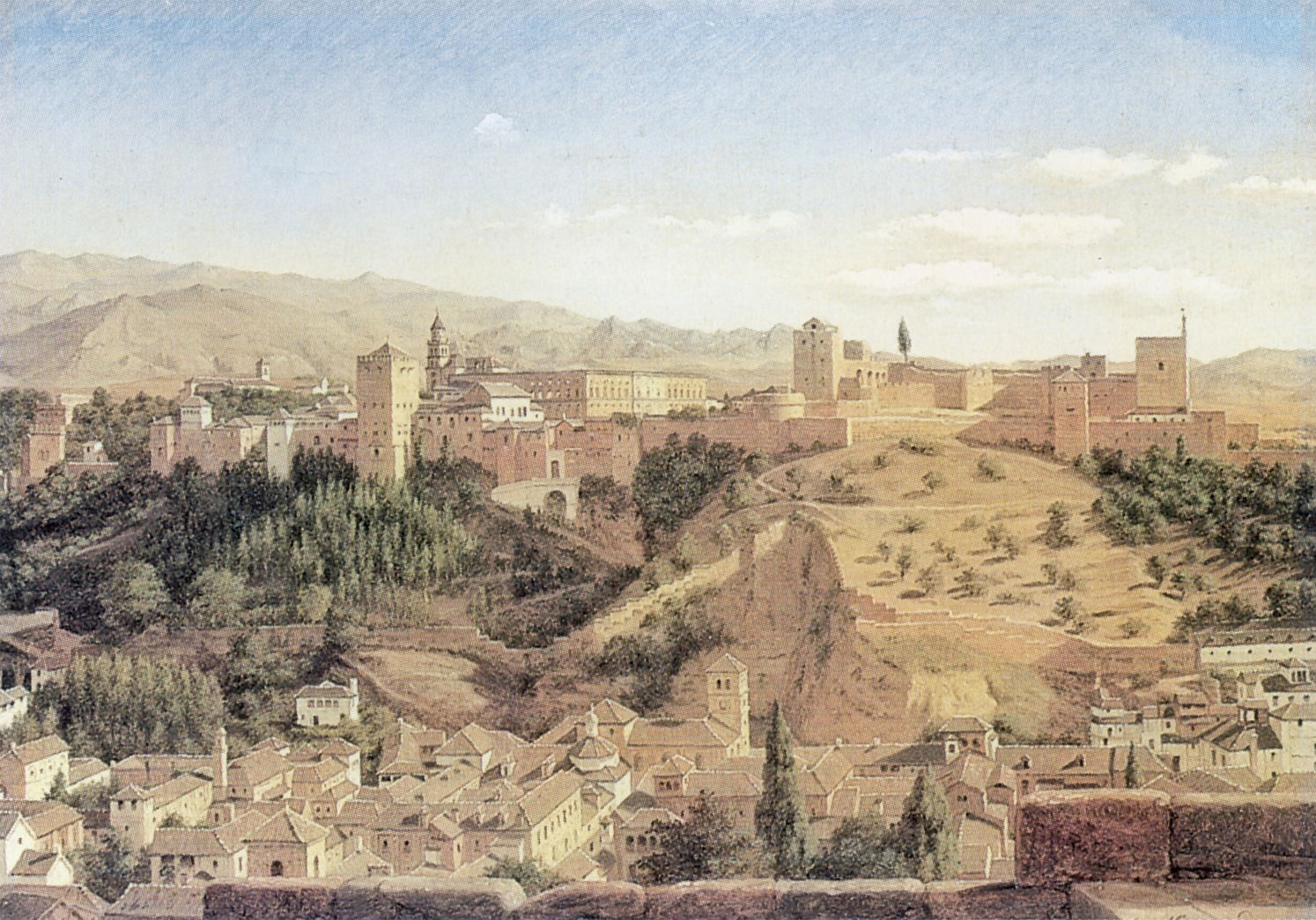
Heinrich Hansen (1821-1890), Granada with the Alhambra in the Nineteenth Century (date not known), further details not known. Image by Sir Gawain, via Wikimedia Commons.

More distant views of the ridge, such as Heinrich Hansen’s undated painting of Granada with the Alhambra in the Nineteenth Century, show its imposing grandeur.

williamsalbaicinfromalhambra
John Haynes Williams (1836-1908), Albaicin from the Alhambra (date not known), further details not known. Wikimedia Commons.

John Haynes Williams (or Haynes-Williams) recognised the merits of views painted from the Alhambra as a high point, in his undated Albaicin from the Alhambra.

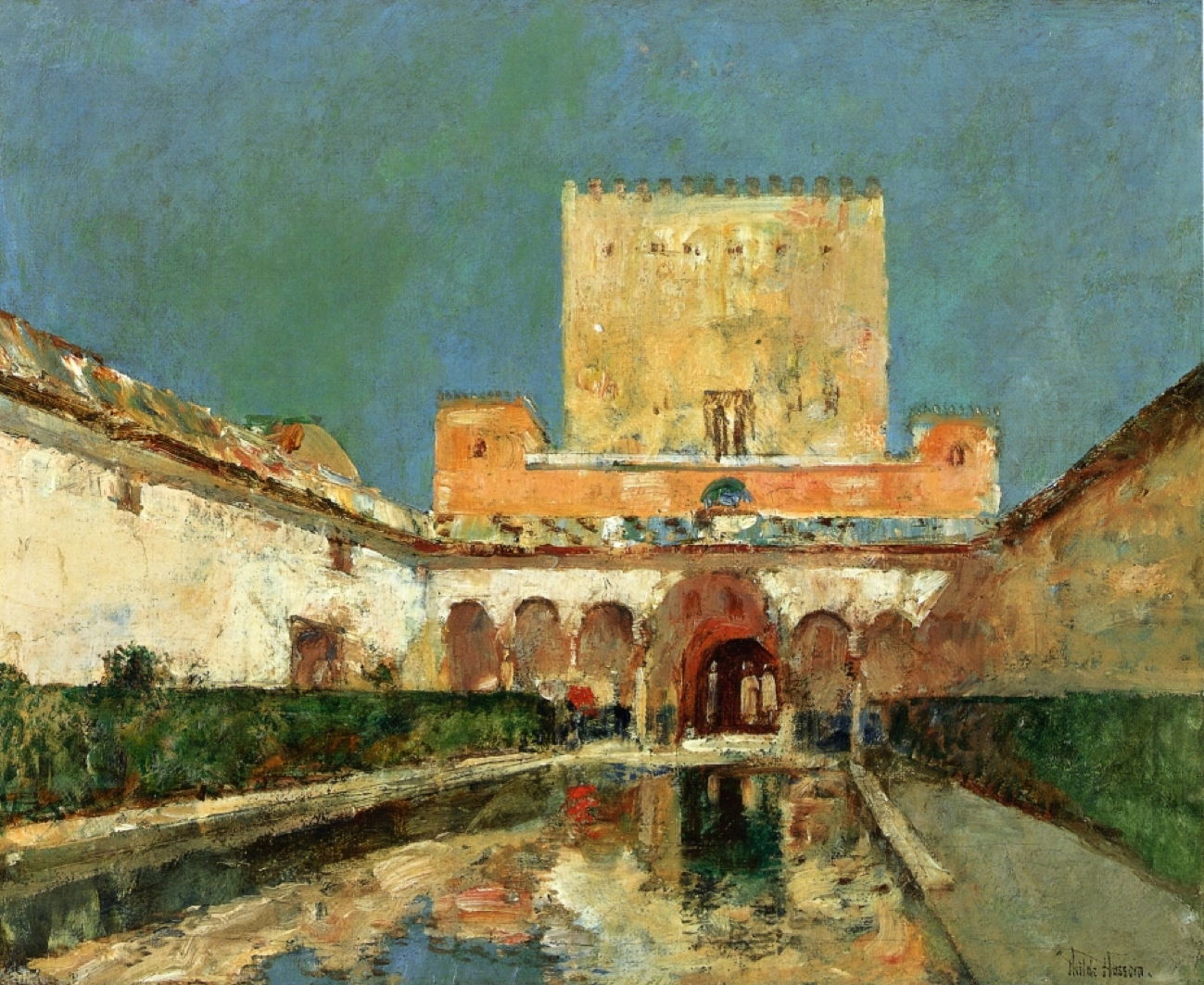
hassamalhambra
Childe Hassam (1859–1935), The Alhambra (1883), oil on canvas, 33 x 40.6 cm, Private Collection. Wikimedia Commons.

The late nineteenth century saw new visitors to copy masters at the Prado: those Americans who came to study painting in France and Germany. Among then, Childe Hassam visited during the summer of 1883, with his friend Edmund H Garrett, and sketch this view of The Alhambra then. This shows the Palace of the Ambassadors, and remains one of the most frequently painted parts of the site.

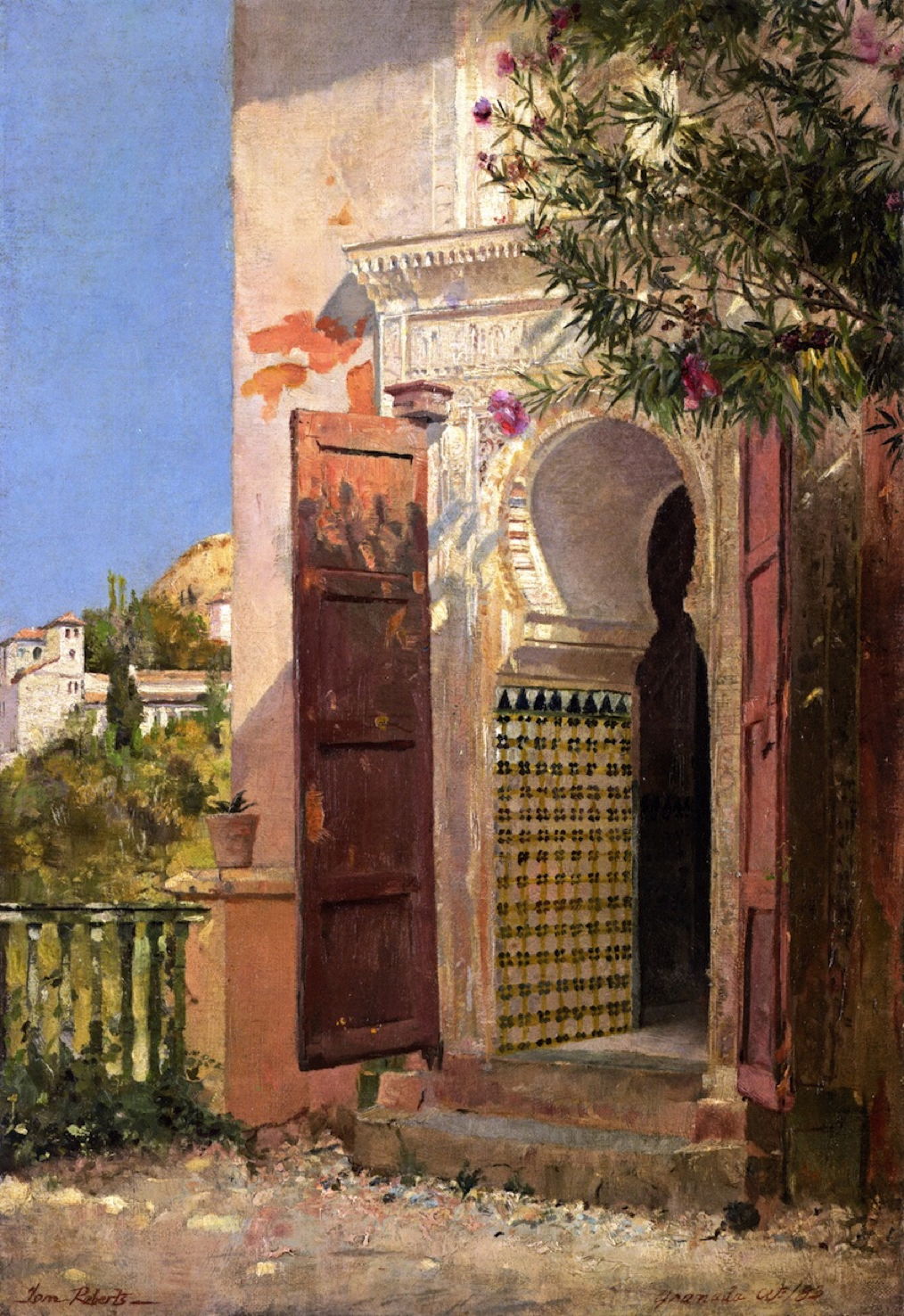
robertsmoorishdoorway
Tom Roberts (1856–1931), A Moorish Doorway, Alhambra (1883), further details not known. Wikimedia Commons.

From even further afield, the Anglo-Australian Tom Roberts visited Granada when he was in Spain in 1883, when he painted this detailed realist view of A Moorish Doorway, Alhambra. Roberts had migrated with his family in 1869, returned to Britain to study at the Royal Academy Schools from 1881, then went to Spain with the Australian John Peter Russell. He returned to Australia in 1884, becoming one of the early Australian Impressionists.

Reference

Wikipedia.

❌