Reading view

There are new articles available, click to refresh the page.

Japonisme in painting: 1889-1918

Hokusai’s woodcuts including The Great Wave of Kanagawa from 1831 may now be most strongly associated with the vogue for Japonisme that swept across Europe in the late nineteenth century, but the prints of others were equally important. Among those were the works of Utagawa Hiroshige (歌川広重) (1797–1858).
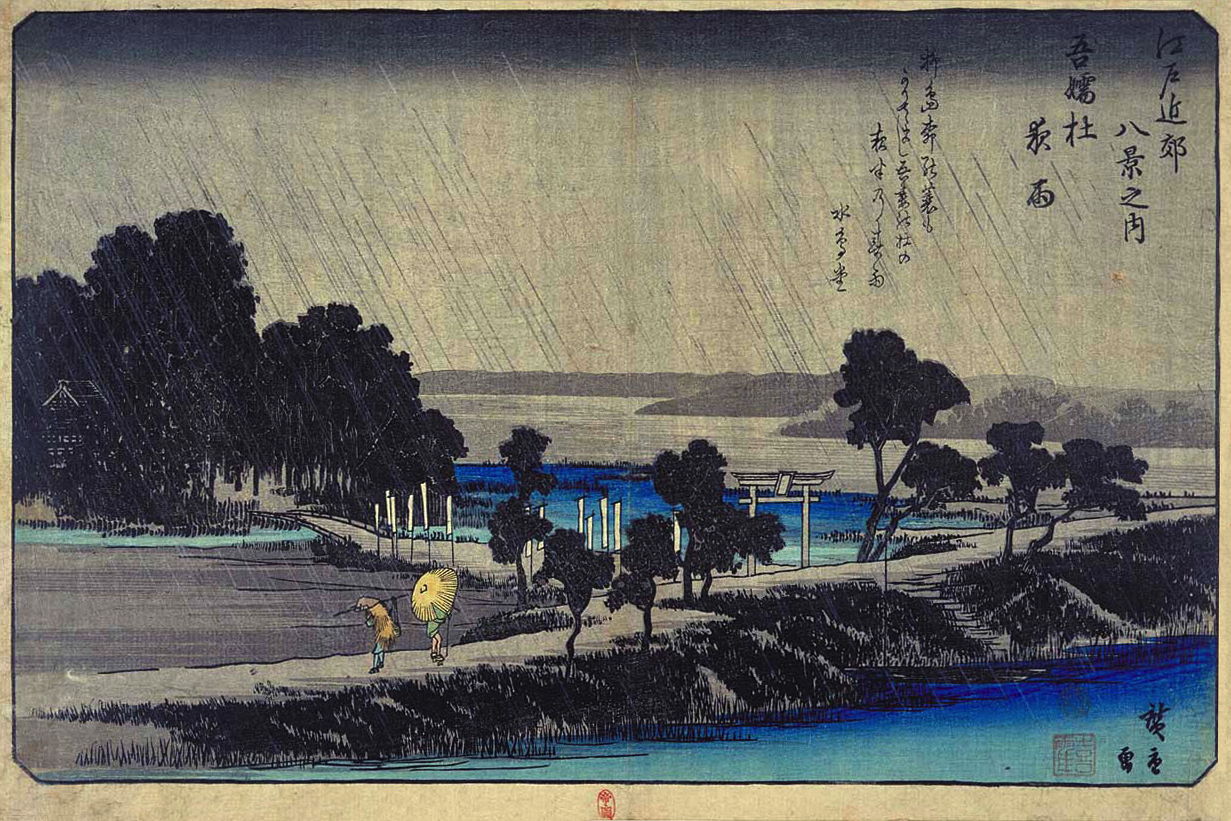
Utagawa Hiroshige (歌川広重) (1797–1858), Evening Rain at Azumi-no Mori (吾嬬杜夜雨) (Edo, 1837-8), woodblock print. Wikimedia Commons.

It’s this print by Hiroshige, Evening Rain at Azumi-no Mori (吾嬬杜夜雨) (Edo, 1837-8), that is now thought to have been influential in Vincent van Gogh’s Rain – Auvers (1890), shown below, that he painted just a few days before his death.

vangoghrainauvers
Vincent van Gogh (1853-1890), Rain – Auvers (1890), oil on canvas, 50.3 x 100.2 cm, National Museum of Wales, Cardiff, Wales. Wikimedia Commons.
bonnardstorkfrogs
Pierre Bonnard (1867-1947), Stork and Four Frogs (c 1889), distemper on red-dyed cotton fabric in a three paneled screen, 159.5 x 163.5 cm, Private collection. The Athenaeum.

Japonisme came to dominate Pierre Bonnard’s early paintings too. Probably the earliest of these is this exquisite three-panelled screen of The Stork and Four Frogs completed around 1889. To mimic the appearance of east Asian lacquerware, Bonnard painted this in distemper on red-dyed cotton fabric. Its story is, though, thoroughly European, based on the fable retold by Jean de la Fontaine of The Frogs who Demand a King.

As Europeans were enthralled by Japanese woodcuts, so more Japanese artists travelled to Europe to learn painting styles and techniques. The son of a samurai in Kagoshima (in the far south-west of Japan), Viscount Kuroda Seiki (黒田 清輝) (Kuroda Kiyoteru) moved to Tokyo, where he first learned English, then switched to French. He went to Paris in 1884 to study law, being supported by his brother-in-law, a member of the Japanese diplomatic mission in France. However after two years there, he changed to study painting in the atelier of Raphael Collin, where he met Kume Keiichirō, also a student of Collin’s; together they explored plein air painting. In 1890 he moved to the international artists’ colony at Grez-sur-Loing, south of Paris, which had been made popular by masters such as Jules Bastien-Lepage.

gauguinseaweedgatherers1
Paul Gauguin (1848–1903), Seaweed Gatherers I (1888-90), gouache and graphite on grey board, 27.6 × 32.4 cm, Private collection. Wikimedia Commons.

In France, Hokusai’s Great Wave found greater interest with Paul Gauguin and his circle who gathered first in Pont-Aven then Le Pouldu in Brittany. Gauguin’s gouache Seaweed Gatherers I (1888-90) shows two Breton women gathering seaweed on the beach. Behind them is a huge wave, its spume formed into a claw, which could only have come from Hokusai.

gauguinondine
Paul Gauguin (1848–1903), In the Waves, or Ondine (I) (1889), oil on canvas, 92.5 x 72.4 cm, Cleveland Museum of Art, Cleveland, OH. Wikimedia Commons.

In 1889, Gauguin painted two works showing Ondine in the sea among waves. The first, known now as In the Waves, or Ondine (I), also refers to Hokusai.
lacombevorhorgreenwave
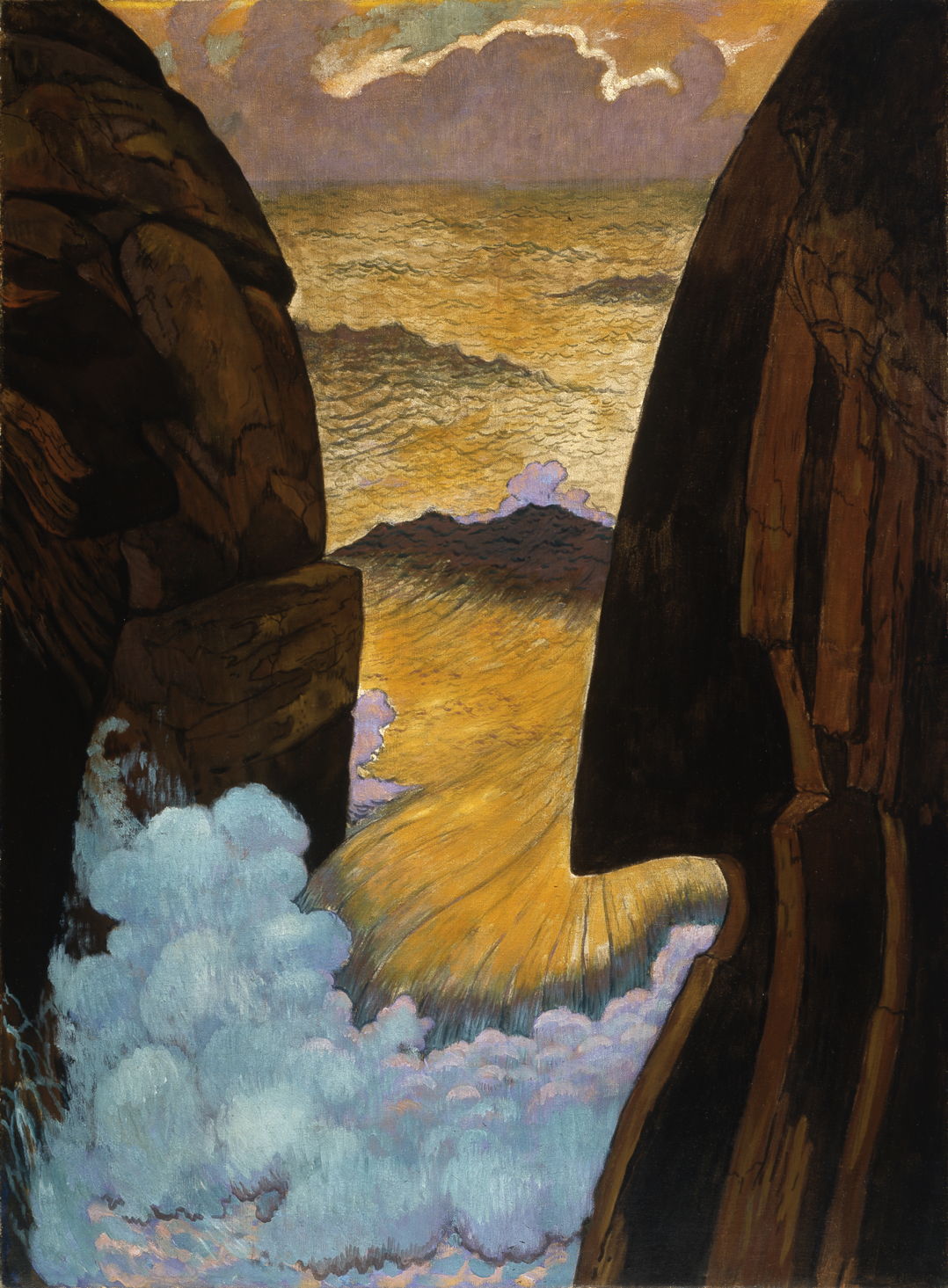
Georges Lacombe (1868–1916), Vorhor, The Green Wave (1896), egg tempera on canvas, 100 x 72 cm, Indianapolis Museum of Art, Indianapolis, IN. Image by Zambonia, via Wikimedia Commons.

The Nabi sculptor, and painter from Gauguin’s school, Georges Lacombe took Hokusai’s motif forward in several of his paintings. This is his treatment of Vorhor, The Green Wave in egg tempera, showing an Atlantic swell coming into the seacliffs of Vorhor near Camaret-sur-Mer in Brittany.
lacombevioletwave
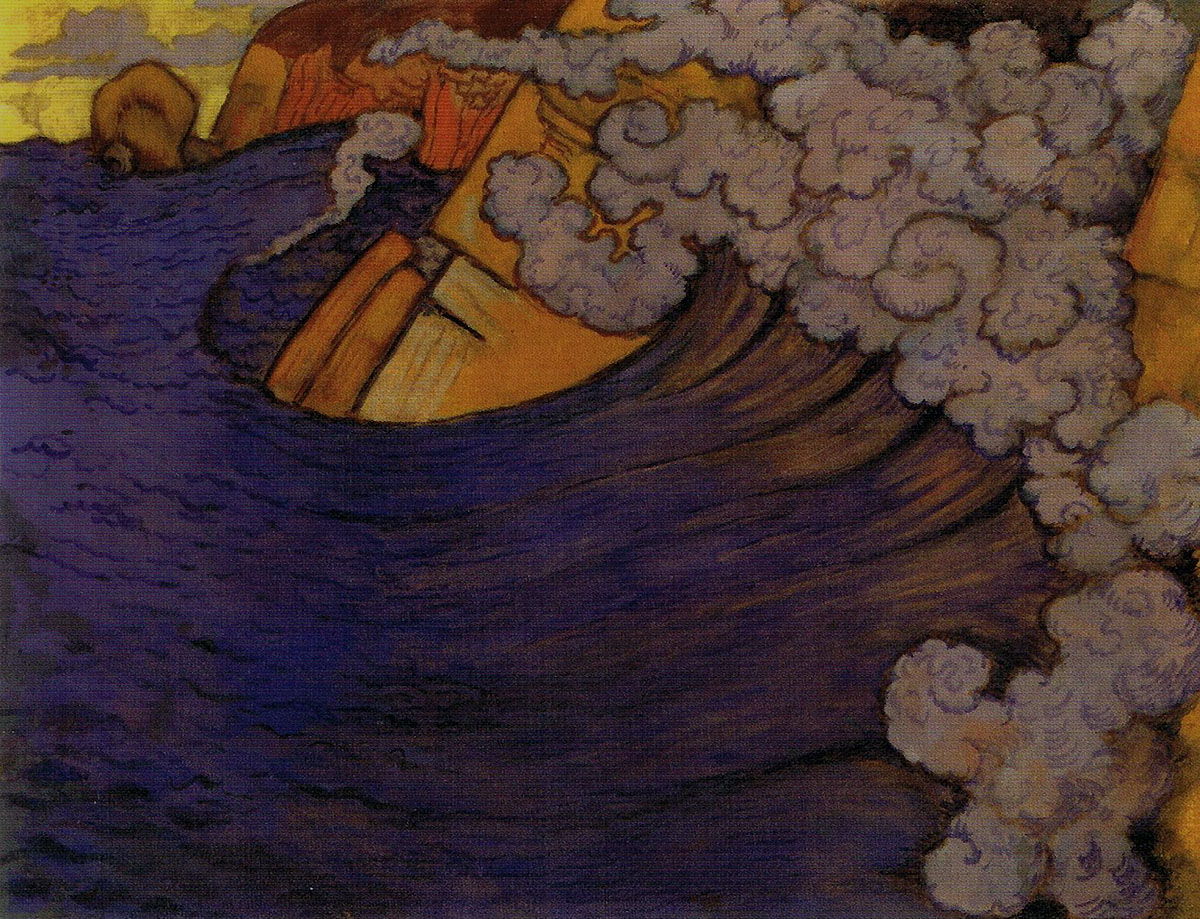
Georges Lacombe (1868–1916), The Violet Wave (1896-97), oil on canvas, 62.5 x 47.5 cm, Private collection. Wikimedia Commons.

Lacombe’s slightly later The Violet Wave also makes its influence abundantly clear.

bouguereauwave
William-Adolphe Bouguereau (1825–1905), The Wave (1896), oil on canvas, 121 x 160.5 cm, Private collection. Wikimedia Commons.

In that same year, even the notorious academic artist William-Adolphe Bouguereau joined Hokusai’s crowd of admirers, in The Wave.

As Japanese artists were studying in Europe, Westerners like Helen Hyde went to Japan. She made friends with an unrelated namesake, Josephine Hyde, and in 1899 the two travelled to Japan to learn Japanese print and painting techniques. Helen Hyde was soon making woodblock prints, which she learned from the Austrian Emil Orlik who was also living in Tokyo at the time.
hydeinteriordecoration
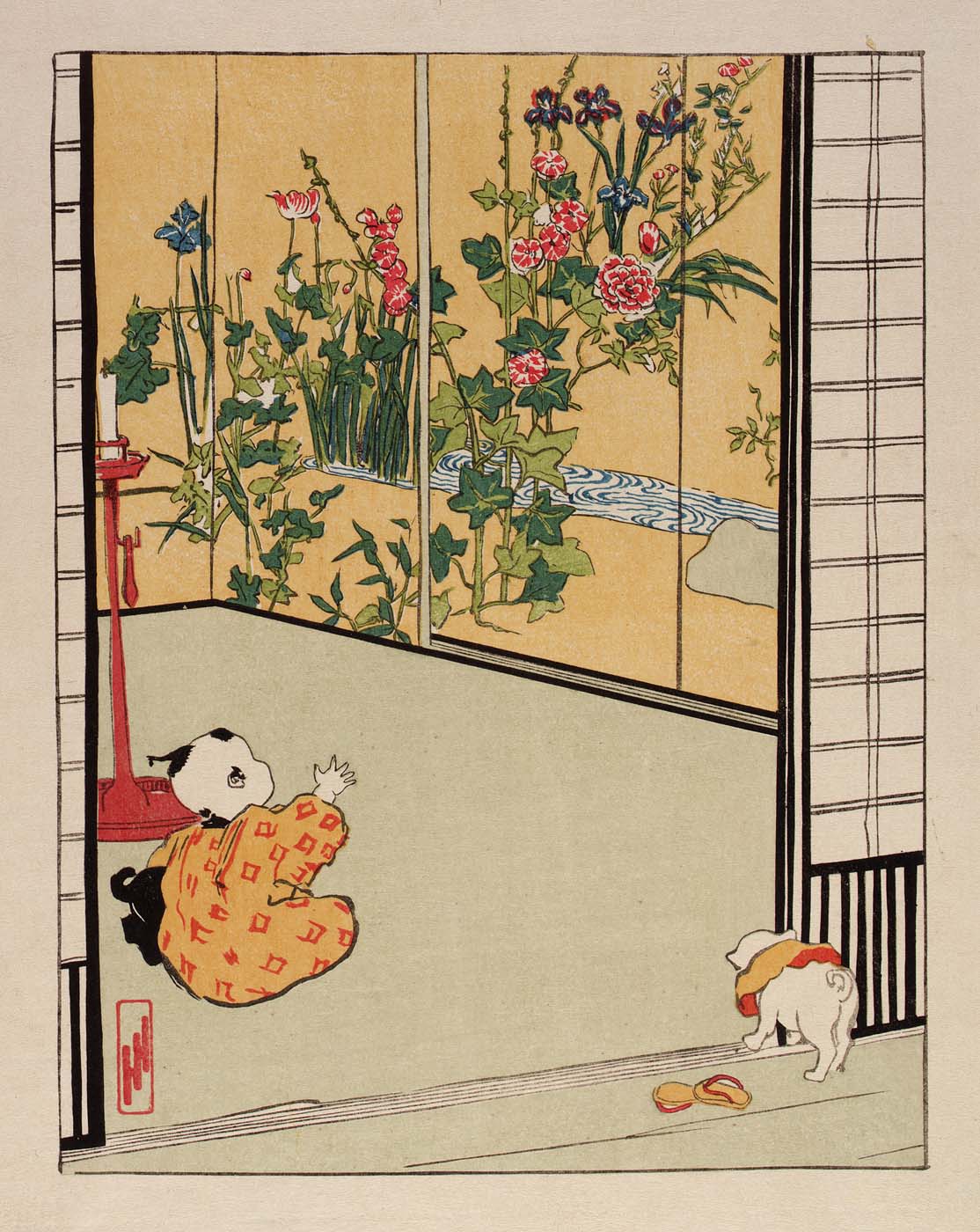
Helen Hyde (1868–1919), Interior Decoration (1900), print, dimensions not known, Smithsonian American Art Museum, Washington, DC. Wikimedia Commons.

Interior Decoration from 1900 shows how quickly Hyde learned the technique, and her fascination for Japanese art in everyday settings.
hydenewyearsdaytokyo
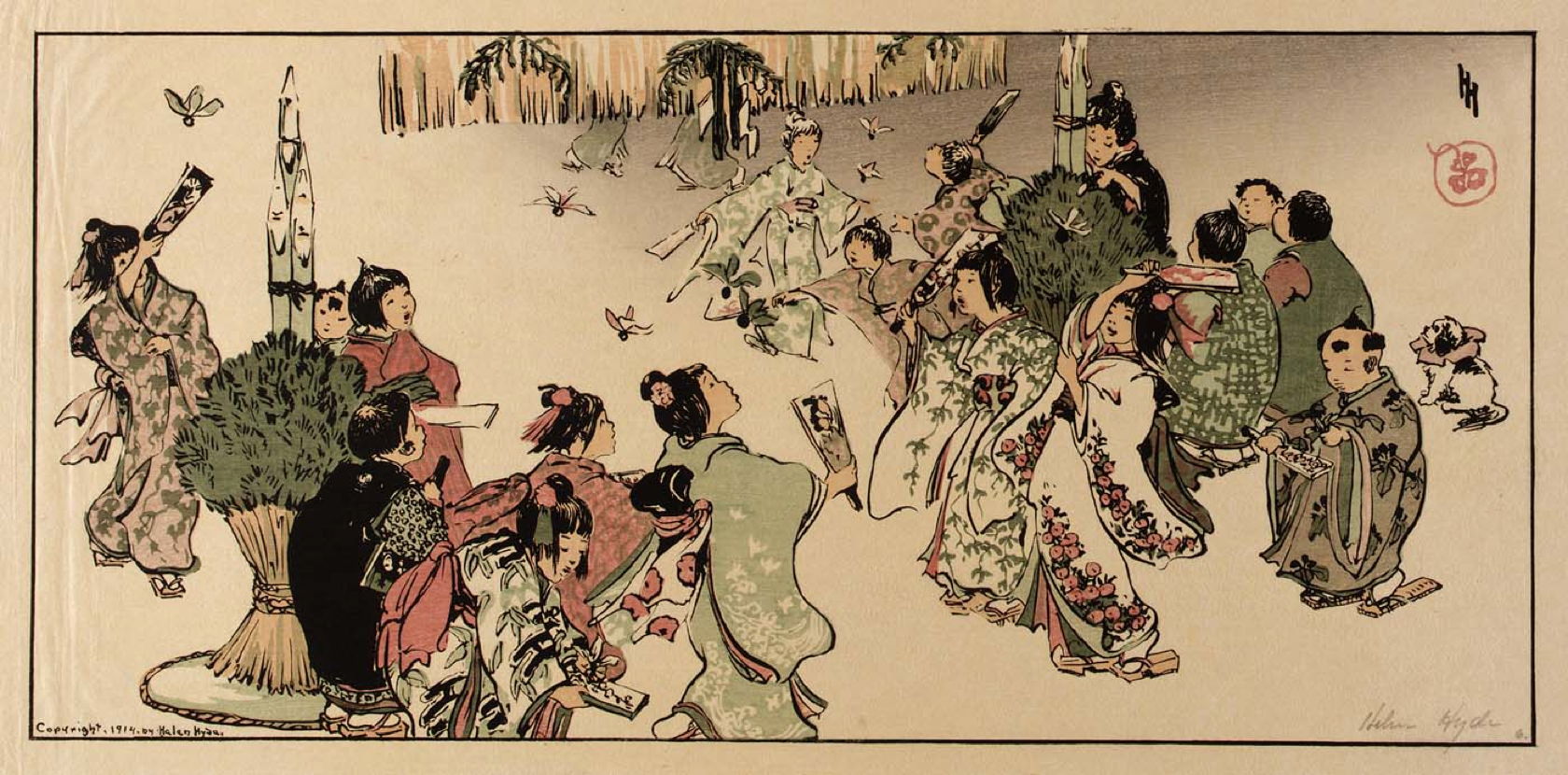
Helen Hyde (1868–1919), New Year´s Day in Tokyo (1912), print, dimensions not known, Smithsonian American Art Museum, Washington, DC. Wikimedia Commons.

Hyde’s New Year´s Day in Tokyo, from 1912, is grander in conception, and a carefully composed print of key elements in the Japanese New Year celebrations.

coopersummer
Colin Campbell Cooper (1856–1937), Summer (1918), oil on canvas, 127 x 153 cm, Private collection. Wikimedia Commons.

My final example was painted in 1918, at the end of the First World War, far from the mud and blood of Europe’s battlefields. Colin Campbell Cooper’s Summer (1918) is inspired by Japonisme, fortified here by the east Asian influence of California, and by Monet’s paintings of his garden at Giverny, itself based on a Japanese water garden.

Painting the spirits of water: Ondines and their curse

Not content with Naiads and other water nymphs, the alchemist and proto-scientist Paracelsus (1493-1541) invented his own elemental beings associated with water, Undines or Ondines. He also elaborated their nature: although they cunningly resemble beautiful young women, they aren’t human, so lack a soul. The only way they can enjoy an afterlife is thus to marry a human.

Although that might appear a beguiling option for both, any man who is unfaithful to their Ondine wife will die as a result. The children of a union between a man and an Ondine are humans, having a soul, but also have a trait linked to water, known as a watermark. This might be some anatomical abnormality that periodically has to be bathed in water, for example.

By the nineteenth century, this amalgam of classical Naiads and alchemical elements was becoming popular in artistic creation. In 1842, the year after his death from tuberculosis, Aloysius Bertrand’s (1807-1841) collection of prose poems Gaspard de la Nuit was published, featuring the poem Ondine. The collection inspired Maurice Ravel’s brilliant piano suite of the same name, of which the first piece is the ferociously difficult Ondine.

Undine, a novella by Friedrich de la Motte Fouqué (1777-1843), was published in 1811, and has since influenced a slightly different tradition. It gave rise to Hans Christian Andersen’s story of The Little Mermaid in 1837, which became extremely popular throughout Europe and North America.

maclisesceneundine
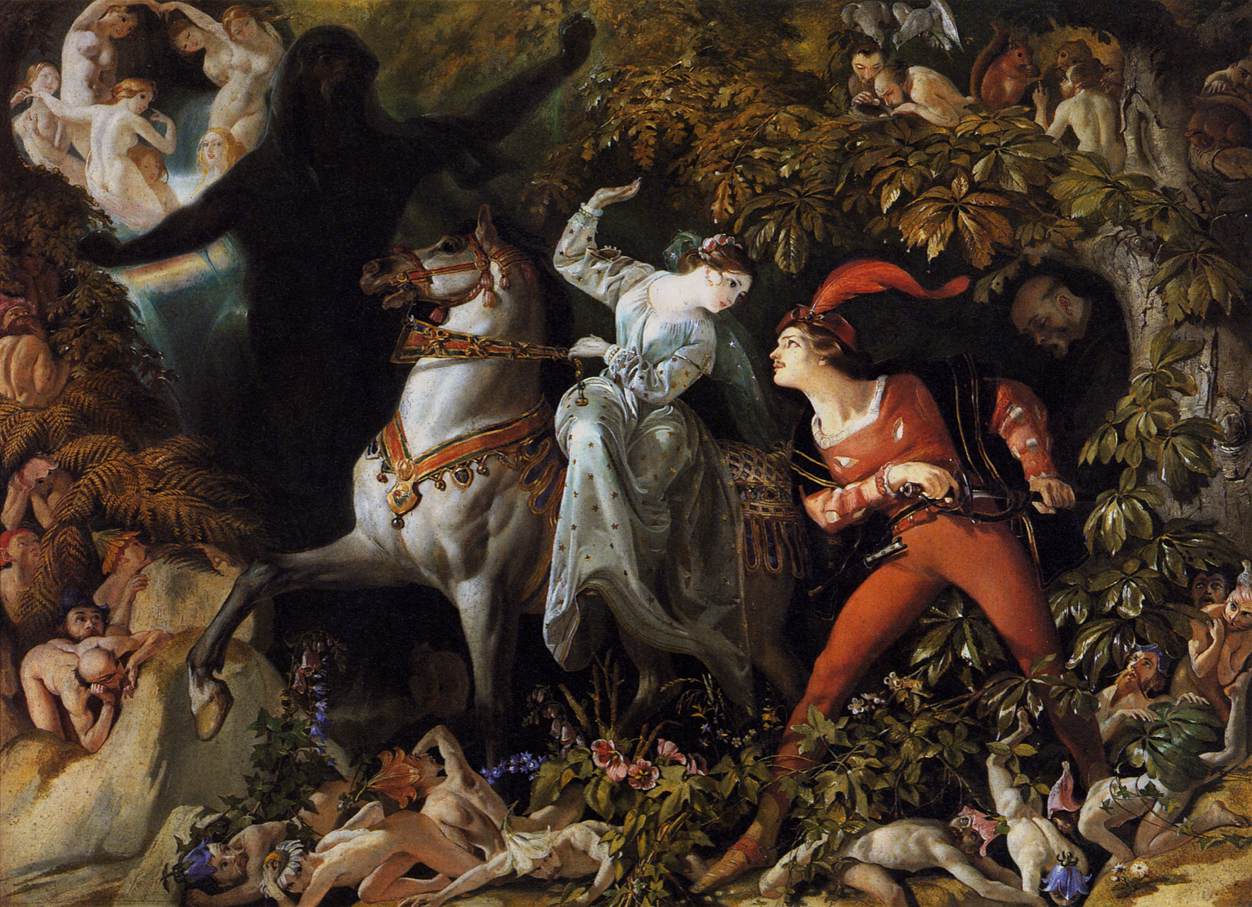
Daniel Maclise (1806–1870), A Scene from ‘Undine’ (1843), oil on canvas, 45 x 61 cm, The Royal Collection at Windsor Castle, Windsor, England. Wikimedia Commons.

In the 1840s, versions of Fouqué’s story had made their way to London in the form of a play. One of the first artists to commit this to canvas was the great ‘faerie painter’ Daniel Maclise, in his 1843 depiction of A Scene from ‘Undine’. Although there are other Undines frolicking in the water at the upper left, Maclise concentrates on the romance between Undine and the man who is to give her a soul, in exchange for his lifelong fidelity.

turnerundinegivingring
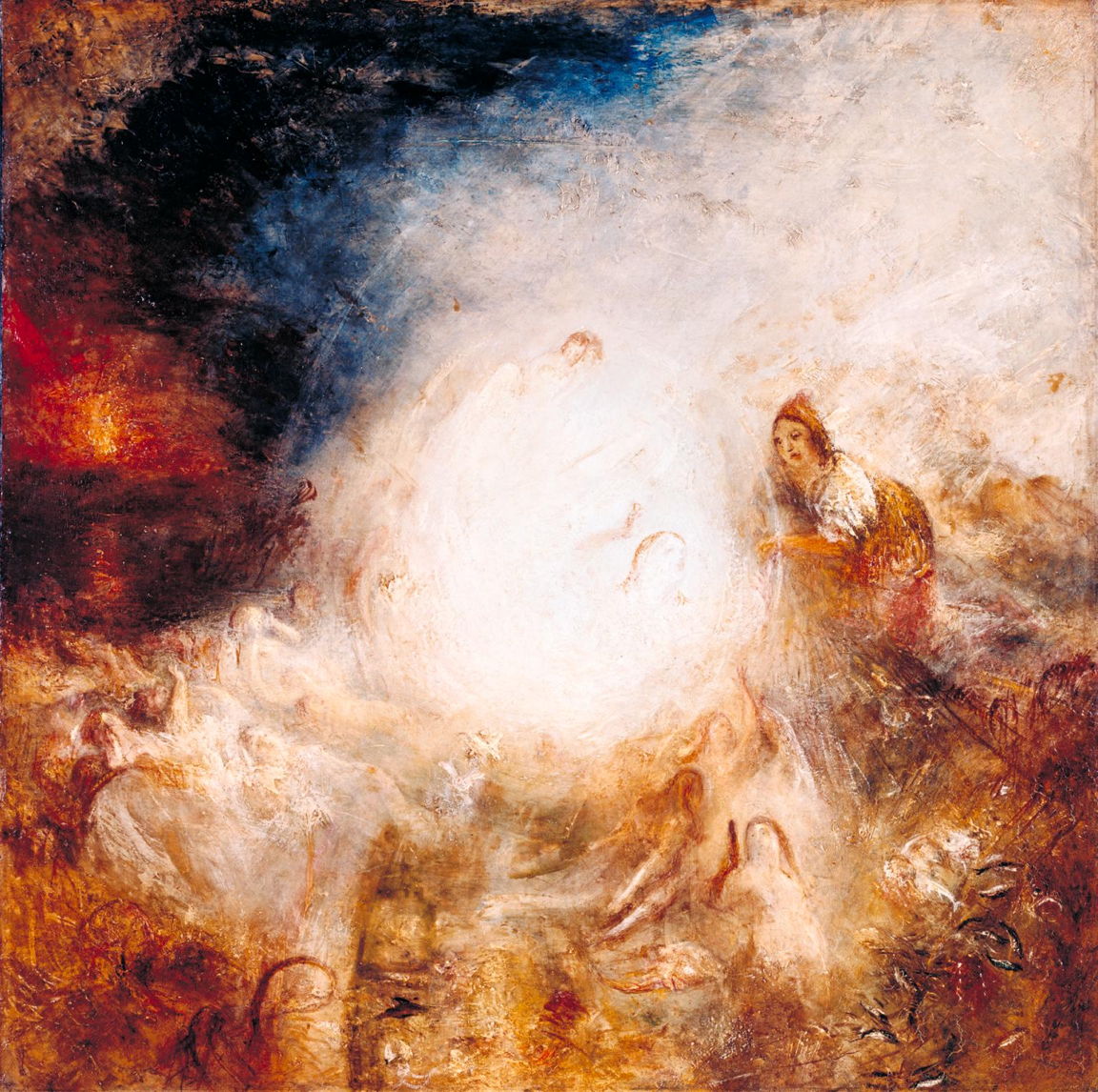
Joseph Mallord William Turner (1775–1851), Undine Giving the Ring to Massaniello, Fisherman of Naples (1846), oil on canvas, 79.1 x 79.1 cm, The Tate Gallery (part of the Turner Bequest 1856), London. © The Tate Gallery and Photographic Rights © Tate (2016), CC-BY-NC-ND 3.0 (Unported), https://www.tate.org.uk/art/artworks/turner-undine-giving-the-ring-to-massaniello-fisherman-of-naples-n00549

JMW Turner appears to have seen a similar stage production that inspired his Undine Giving the Ring to Massaniello, Fisherman of Naples of 1846. This is one of a pair of his paintings in which spiritual power and transformation are represented by brilliant light; the other, The Angel standing in the Sun, is a vision of the Last Judgement. Turner apparently shows Undine offering a wedding ring to a fisherman, although much of its detail has now been lost in the dazzling light. Around are other Undines in the waves.

waterhouseundine
John William Waterhouse (1849–1917), Undine (1872), oil on canvas, dimensions not known, Private collection. Wikimedia Commons.

Perhaps living up to his name, John William Waterhouse painted Undine in 1872, arising from a fountain, and modestly dressed. This was twenty years before he took to the nude Naiads of Hylas, shown in yesterday’s article.

lefebvreondine
Jules Lefebvre (1834–1912), Ondine (1882), oil on canvas, 151 x 92.5 cm, Szépművészeti Múzeum, Budapest, Hungary. Wikimedia Commons.

Jules Lefebvre had no qualms with turning his Ondine of 1882 into yet another classical nude, although her brilliant red hair is an unusual touch.

gauguinondine
Paul Gauguin (1848–1903), In the Waves, or Ondine (I) (1889), oil on canvas, 92.5 x 72.4 cm, Cleveland Museum of Art, Cleveland, OH. Wikimedia Commons.

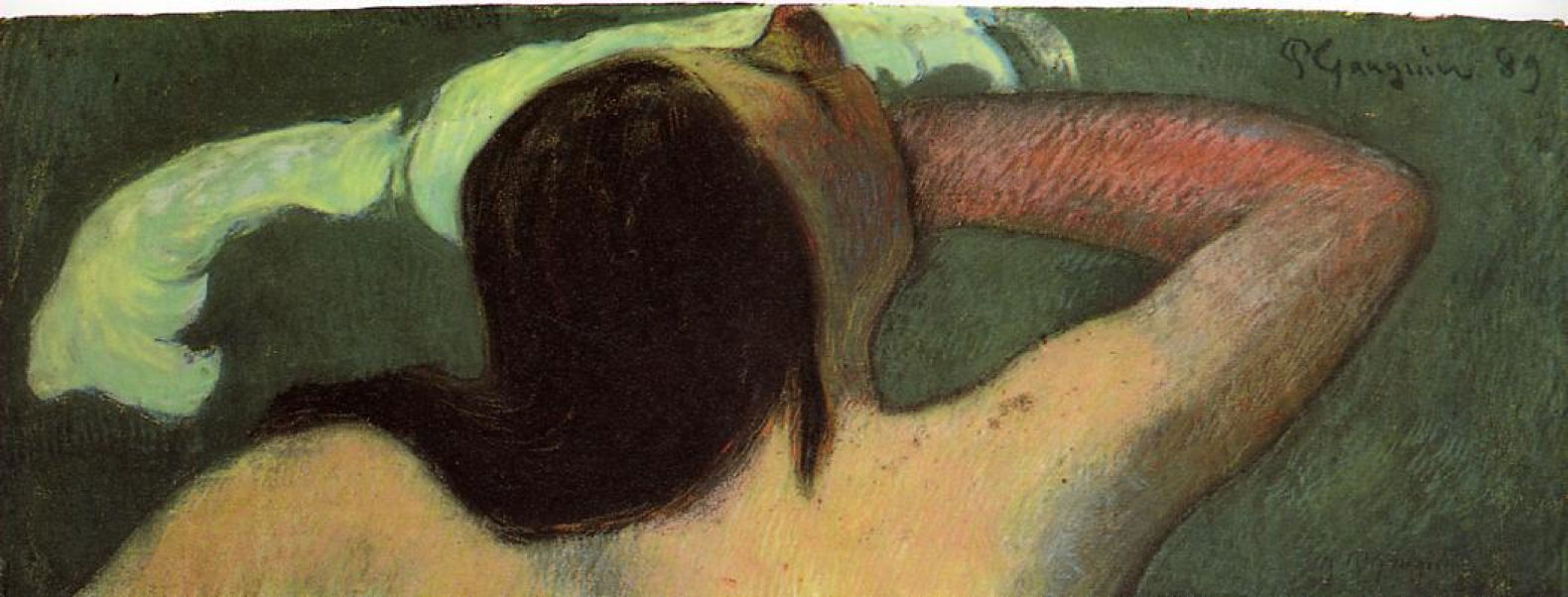
In 1889, Paul Gauguin painted two works in which Ondine is shown among waves in the seas. The first, known now as In the Waves, or Ondine (I) (above), appears the more complete. Ondine II, in pastel and gouache (below), seems likely to have been a study, and its lower edge appears to have been cut or cropped out. He may well have seen Lefebvre’s painting, as the fuller version also features red hair.

gauguinondineii
Paul Gauguin (1848–1903), Ondine II (1889), pastel and gouache on paper mounted on panel, 18 x 48.2 cm, Private collection. Wikimedia Commons.
tschautschenchantment
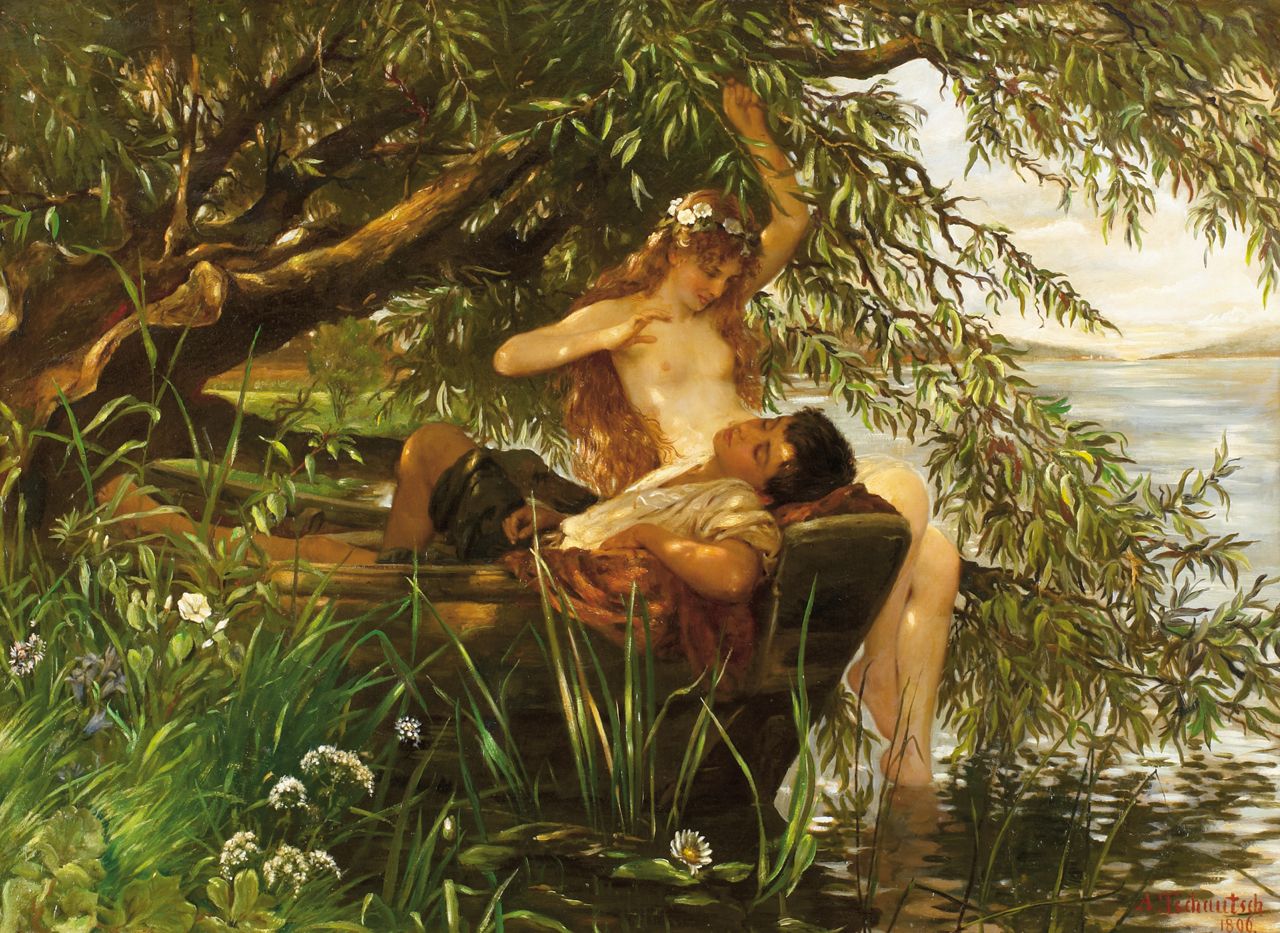
Albert Tschautsch (1843–1922), Enchantment (1896), oil on canvas, 96 x 134 cm, location not known. Wikimedia Commons.

With interest growing in the femme fatale, Ondine was revamped into a figure like Medea, who cast a spell on her husband. Albert Tschautsch’s Enchantment from 1896 is an example of this changing image.

wilhelmsonundine
Carl Wilhelmson (1866–1928), Undine (1899), oil on canvas, 39 x 46.5 cm, Göteborgs konstmuseum, Gothenburg, Sweden. Wikimedia Commons.

Carl Wilhelmson is one of the few who has succeeded in making Undine (1899) appear not quite physically there, as she shimmers among red tulips.

schieleondineii
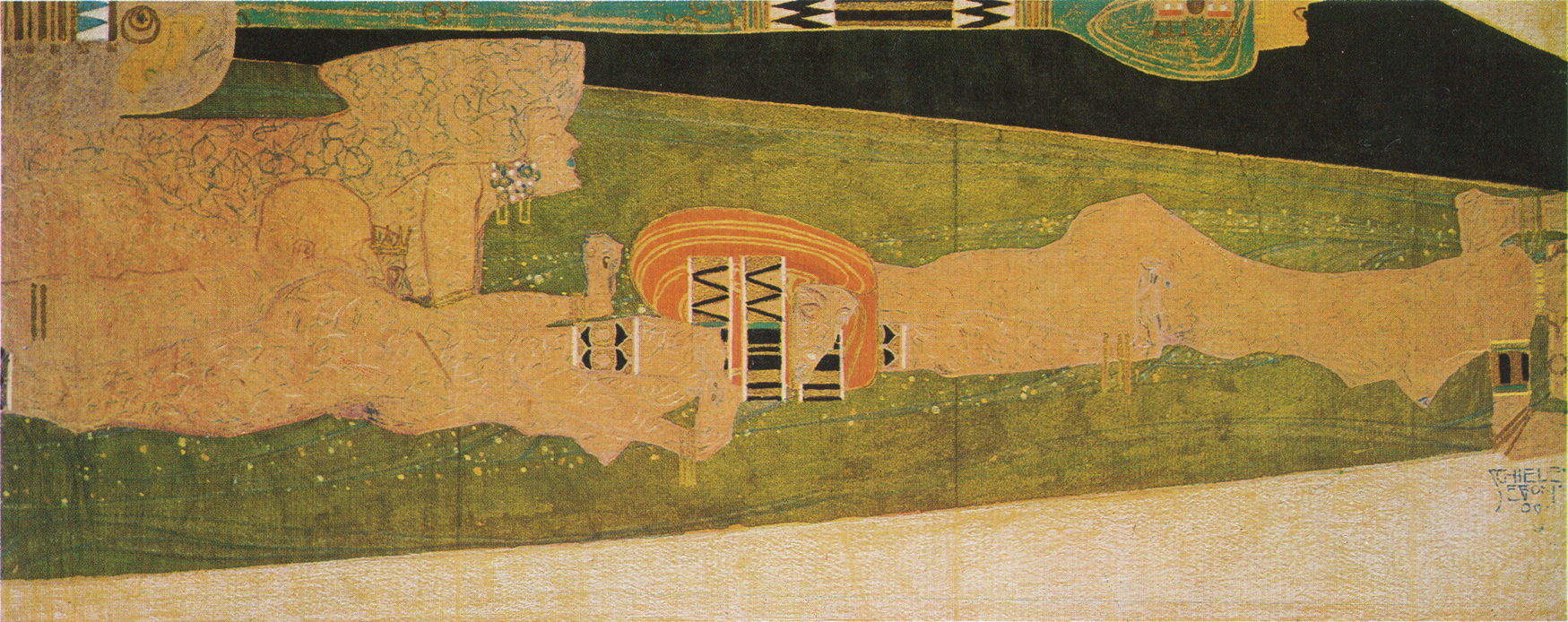
Egon Schiele (1890–1918), Undine II (1908), gouache, crayons, watercolour, white and gold paint on paper, 20.7 x 50.6 cm, Private collection. Wikimedia Commons.

Egon Schiele’s Undine II of 1908 was made in truly mixed media, including gouache, crayons, watercolour, white and gold paints, and a dash of Cubism too, it would appear. Although notoriously hard to read, I can see Undine at the upper left, propped up on her elbows. Nearer to the viewer is a bald-headed man, and there are other presumably female figures laid across the centre of the paper.

calbetondines
Antoine Calbet (1860–1942), Ondines (date not known), oil on canvas, 80.6 x 100.3 cm, Musée de Cambrai, Cambrai, France. Wikimedia Commons.

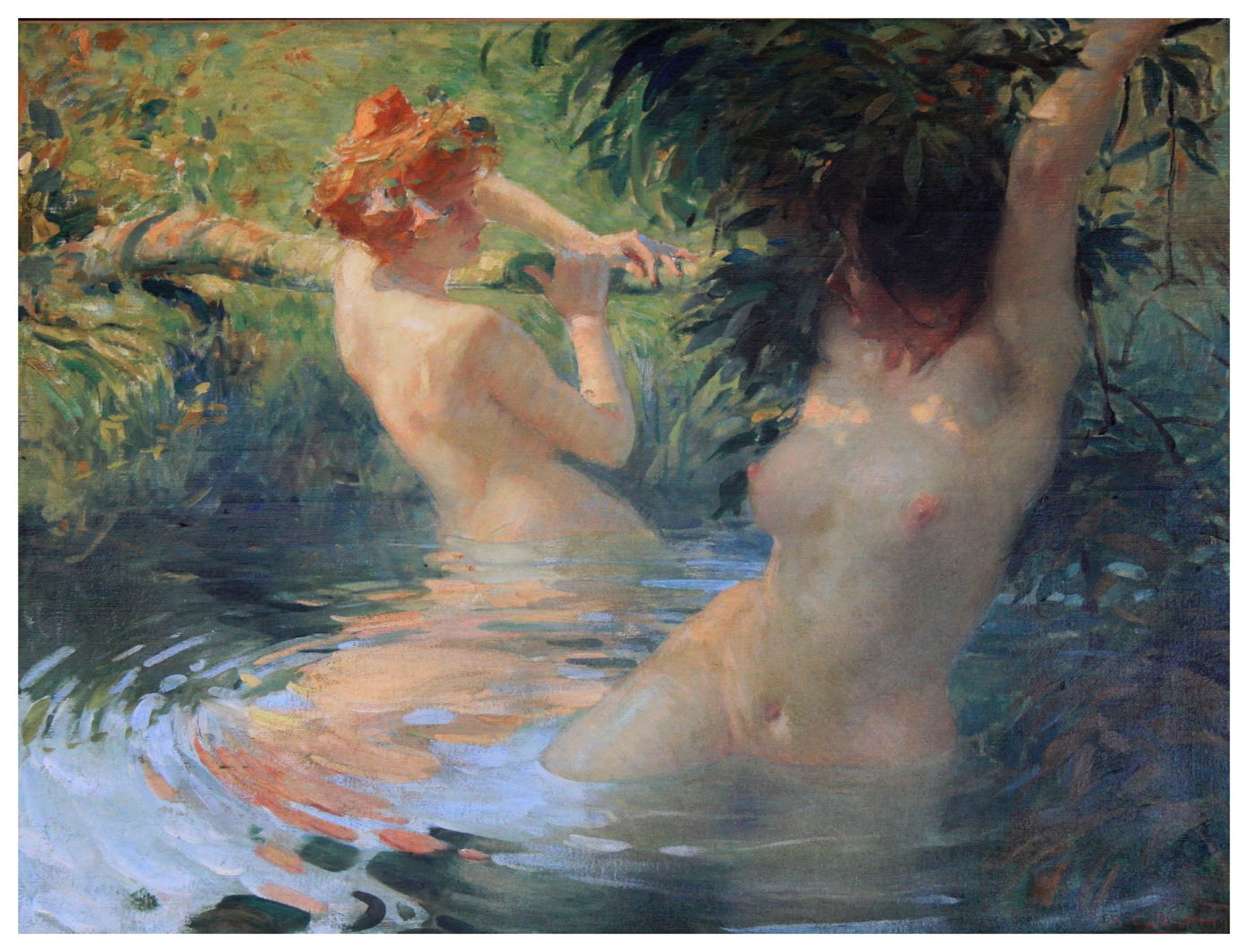
My final selection is an undated work from around the turn of the 19th-20th centuries by Antoine Calbet: Ondines, showing two nymphs in a rippled pool of water. One has red hair, which may refer to Gauguin’s version. His style is reminiscent of the great Swedish figurative painter Anders Zorn.

In 1939, Jean Giradoux based his play Ondine on Fouqué’s novella of 1811, and that has in turn been performed in a ballet by Hans Werner Henze (music) and Frederick Ashton (choreography). Ondine there tells her future husband Hans that she will be the breath of his lungs. After they are married, Hans reunites with his first love Bertha; when Hans later marries Bertha, he has to make a conscious effort to breathe. Ondine then kisses Hans, causing him to stop breathing and die, a femme fatale indeed.

There is a rare medical condition in which the automatic control of breathing fails, putting the patient at risk of stopping breathing when they fall asleep. This is known as congenital central hypoventilation syndrome, or Ondine’s curse. I’m confident that neither Paracelsus nor Giradoux had ever come across this condition, but their concepts and words proved extraordinarily prescient.

Painted stories of the Decameron: Brother Philippe’s Geese

Boccaccio’s Decameron consists of a hundred stories told ten each day for a total of ten days. But there’s a bonus, the hundred-and-first story buried in Filostrato’s introduction to the fourth day. In some ways, this is the best known of all these stories as it has made its way into the French language, through one of La Fontaine’s fables, and is generally known as Brother Philippe’s Geese. Filostrato, though, claims this isn’t a complete story, only part of one.

Filippo Balducci was a good man, knowledgeable, and deeply in love with his wife, who was equally in love with him. She died tragically young, when their only child, a son, was but two years old. Filippo was broken by this loss, and decided to withdraw from life to devote his remaining years to the service of God.

He therefore gave all his possessions to charity, and went to live in a cave on the slopes of Mount Asinaio with his young son. For many years, he kept his son in the cave, seeing only the walls around him, their meagre possessions, and his father. From time to time, Filippo travelled alone down to the city of Florence, where generous people gave him the small things that he needed to live, but his son always remained in their cave.

When Filippo’s son reached the age of eighteen, and his father was preparing to travel down to Florence again, the son asked his father if he could accompany him. He argued that the time would come when his father was no longer able to undertake the journey, so it was important that the younger man learned what to do. Filippo agreed, and the two went down to the city together.

The son had never seen another living thing apart from his father, and was taken aback when he saw the crowded buildings and bustle of Florence. He repeatedly asked his father about the new things which he saw, and what each was called.

The pair then came across a group of beautiful young ladies who had just been to a wedding. The son asked his father what they were, but Filippo just told him to keep looking at the ground, as they were evil. His son wasn’t content with that, and asked his father again what they were called. At a loss for words, Filippo said that they were goslings.

The son immediately lost interest in everything else in the city, and asked his father to get him one of those goslings. Filippo told him again that they were evil, to which his son said that he couldn’t see any evil in them, and pleaded again for them to take a gosling back so that he could pop things in its bill.

Filippo told his son that their bills are not where the son might think, and that they required a special diet, a very ribald remark that abruptly terminated Filostrato’s story.

La Fontaine’s fable, the first in his second book, is a faithful retelling of this abbreviated story, but omits the double entendre of the punchline, which is perhaps just as well given his readership when it was first published in 1668. As those fables became popular throughout France and Europe, they attracted the attention of artists, and this has been painted at least thrice now.

boucherbrotherphilippesgeese
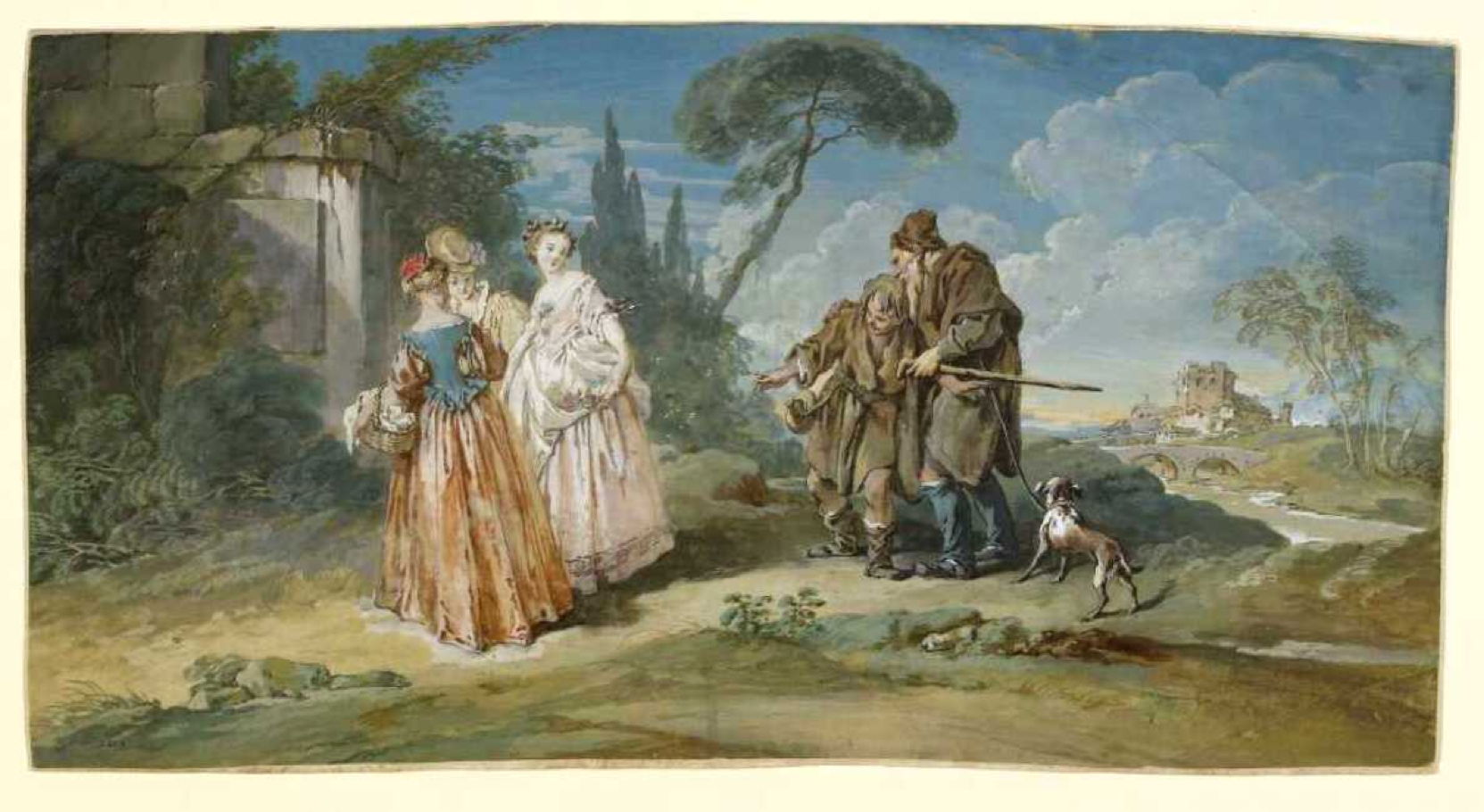
François Boucher (1703-1770), Brother Philippe’s Geese (c 1720-28), gouache, 21 x 42 cm, Musée des Beaux-Arts et d’Archéologie de Besançon, Besançon, France. The Athenaeum.

The first painting is this small gouache by François Boucher from about 1720-28, with its marked contrast in the dress between the reclusive pair and the goslings or geese.

lancretbrotherphilippesgeese
Nicolas Lancret (1690–1743), Brother Philippe’s Geese (c 1736), oil on copper, 27..3 x 35.2 cm, The Metropolitan Museum of Art (Purchase, Walter and Leonore Annenberg and The Annenberg Foundation Gift, 2004), New York, NY. Courtesy of The Metropolitan Museum of Art.

Then in about 1736, Nicolas Lancret painted it in oil on copper, as one of a pair, among a larger group of his paintings of La Fontaine’s fables. The father is shown here dressed as a monk, which is more in keeping with La Fontaine’s account than Boccaccio’s original, but the facial expressions are marvellous, particularly that of the son.

anonafterlancretgeese
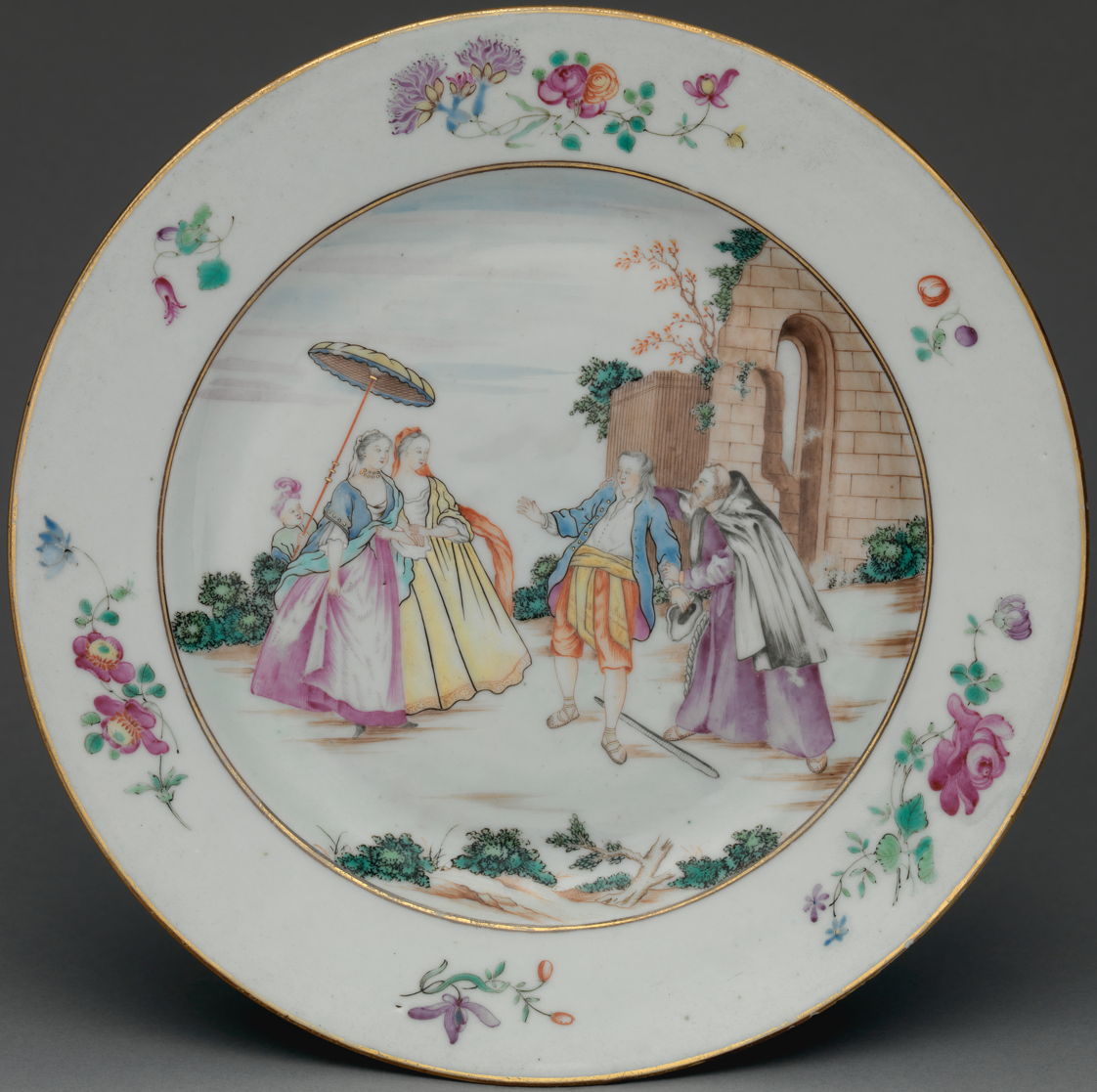
Artist not known, Scene from Brother Philippe’s Geese (1745), Chinese painted porcelain plate, 22.9 cm diam, The Metropolitan Museum of Art (Friends of European Sculpture and Decorative Arts Gifts, 2016), New York, NY. Courtesy of The Metropolitan Museum of Art.

That became so popular that it was reproduced in prints, such as those by Nicolas de Larmessin (1684–1755) in which the image is naturally reversed, but here seen unreversed on a porcelain plate exported from China in 1745.

subleyrasbrothephilippesgeese
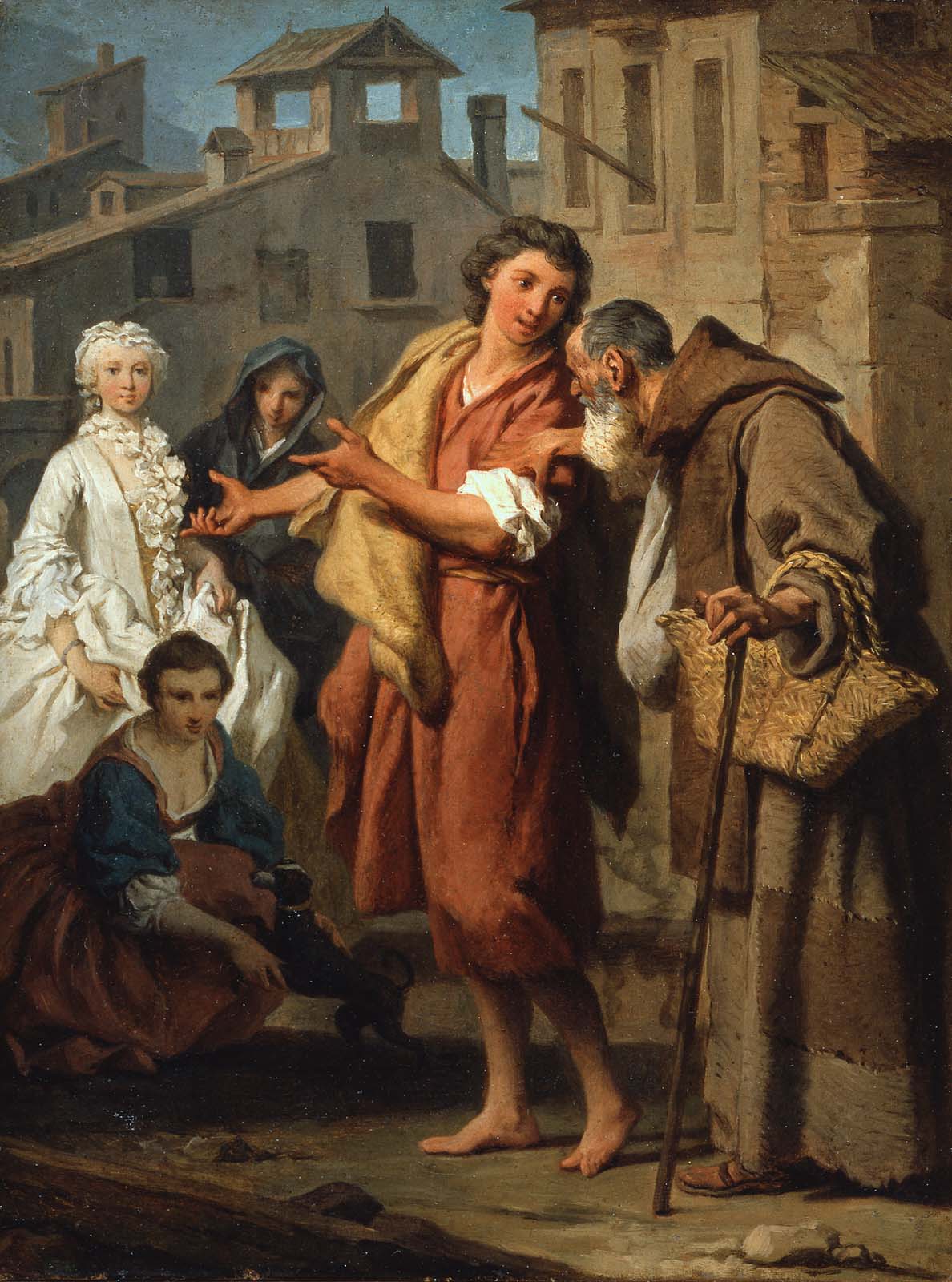
Pierre Hubert Subleyras (1699–1749), Brother Philippe’s Geese (c 1745), oil on canvas, 29.5 x 21.9 cm, The Museum of Fine Arts, Boston, MA. Courtesy of the Museum of Fine Arts, Boston.

At the same time, Pierre Hubert Subleyras painted a different composition telling the story, short of its punchline of course. He restores a thoroughly rustic appearance to the father and son, but surprisingly the young man isn’t staring in wonder at the goslings or geese.

anonbrotherphilippesgeese
Artist not known, Brother Philippe’s Geese (date not known), hand-coloured etching and engraving, dimensions not known, National Gallery of Victoria, Melbourne, Australia. Courtesy of the National Gallery of Victoria.

And here’s an undated hand-coloured print apparently based on another composition altogether.

The phrase Brother Philippe’s geese, which in modern English might be best rendered as Philip’s birds, then entered French idiom as a reference to young and pretty women. Abbreviated further to geese, its origins have often been misunderstood as being derogatory. It certainly seems to have been well-understood by Paul Gauguin.

When Gauguin stayed at Le Pouldu in Brittany from 1889, he and others were accommodated by Marie Henry in her inn. Gauguin and his colleagues decorated the interior for her with their paintings. In 1893, when Marie Henry rented the building out, she removed as much as possible of the paintings made there by Gauguin and others, but some were left behind. Over the years, they were covered with wallpaper and vanished, until they were rediscovered in 1924.

gauguingoose
Paul Gauguin (1848-1903), The Goose (1889), tempera on plaster, 53 x 72 cm, Musée des Beaux-Arts de Quimper / Kemper, mirdi an Arzoù-Kaer, Quimper, France. Wikimedia Commons.

Among them is this wonderful painting of a goose, intended as a complement to Marie Henry, in its allusion to the fable of La Fontaine, and its original telling as the hundred-and-first story in Boccaccio’s Decameron.

❌