Reading view

There are new articles available, click to refresh the page.

A weekend with Misia: 2

In 1904, Misia Natanson, née Godebska, patron and muse of artists in Paris, was in the process of transferring her affection from her first husband Thadée Natanson to Alfred Edwards, the publishing magnate who was providing him with capital in return.
bonnardmisiadog
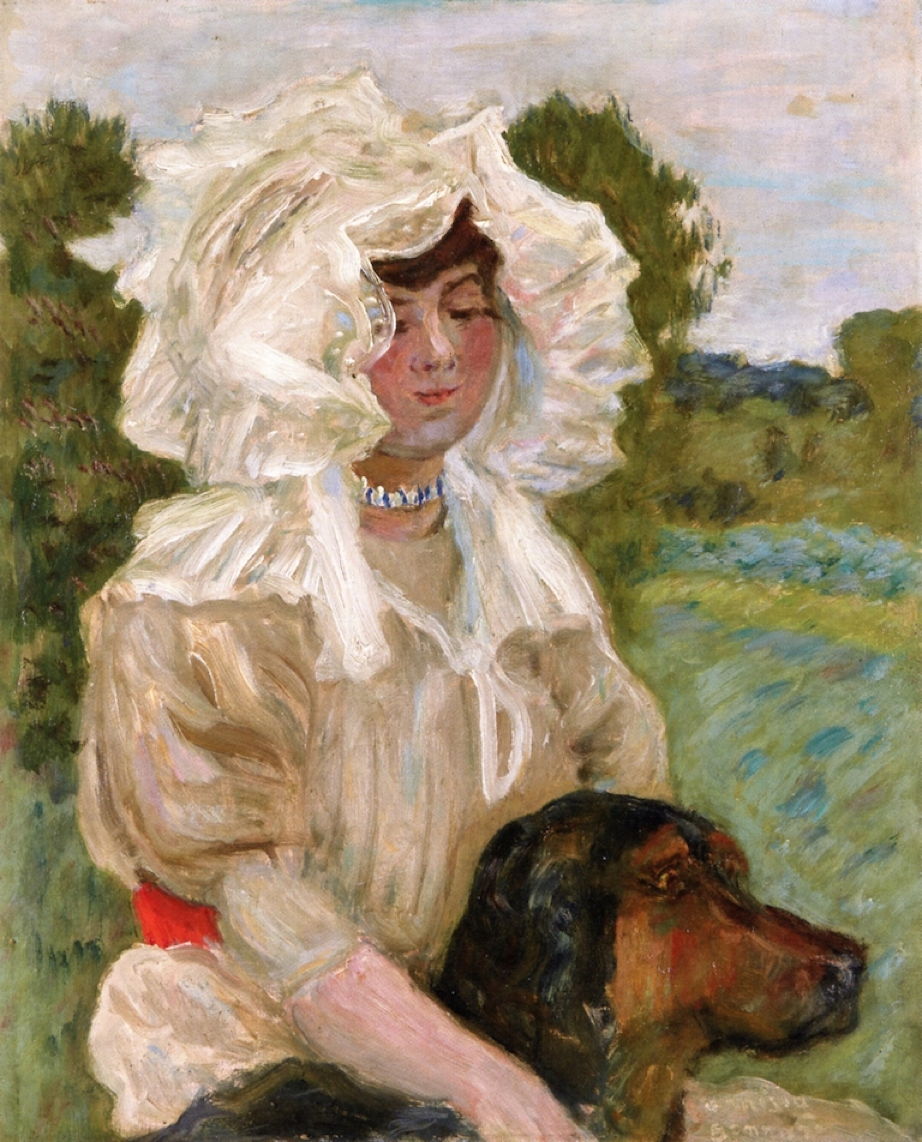
Pierre Bonnard (1867-1947), Misia Natanson and Her Dog (c 1904), oil on panel, 46 x 37 cm, Private collection. The Athenaeum.

Pierre Bonnard sees a completely different figure from those in Renoir’s portraits. In Misia Natanson and Her Dog from about 1904, she’s out in the country with her dog, wearing an ornate white lace hat, more like a character from a nursery rhyme than the mistress of a newspaper magnate.

The following year, Misia married Edwards, and her circle of artists and composers benefited from new patronage with even deeper pockets. Misia and her husband had a yacht, by which I mean a large, crewed vessel, not a dinky little dinghy. In the summer of 1905, they took Bonnard, Maurice Ravel, and others on the yacht’s maiden cruise to Belgium, the Netherlands and Germany.
renoirmisialapdogbarnes1906
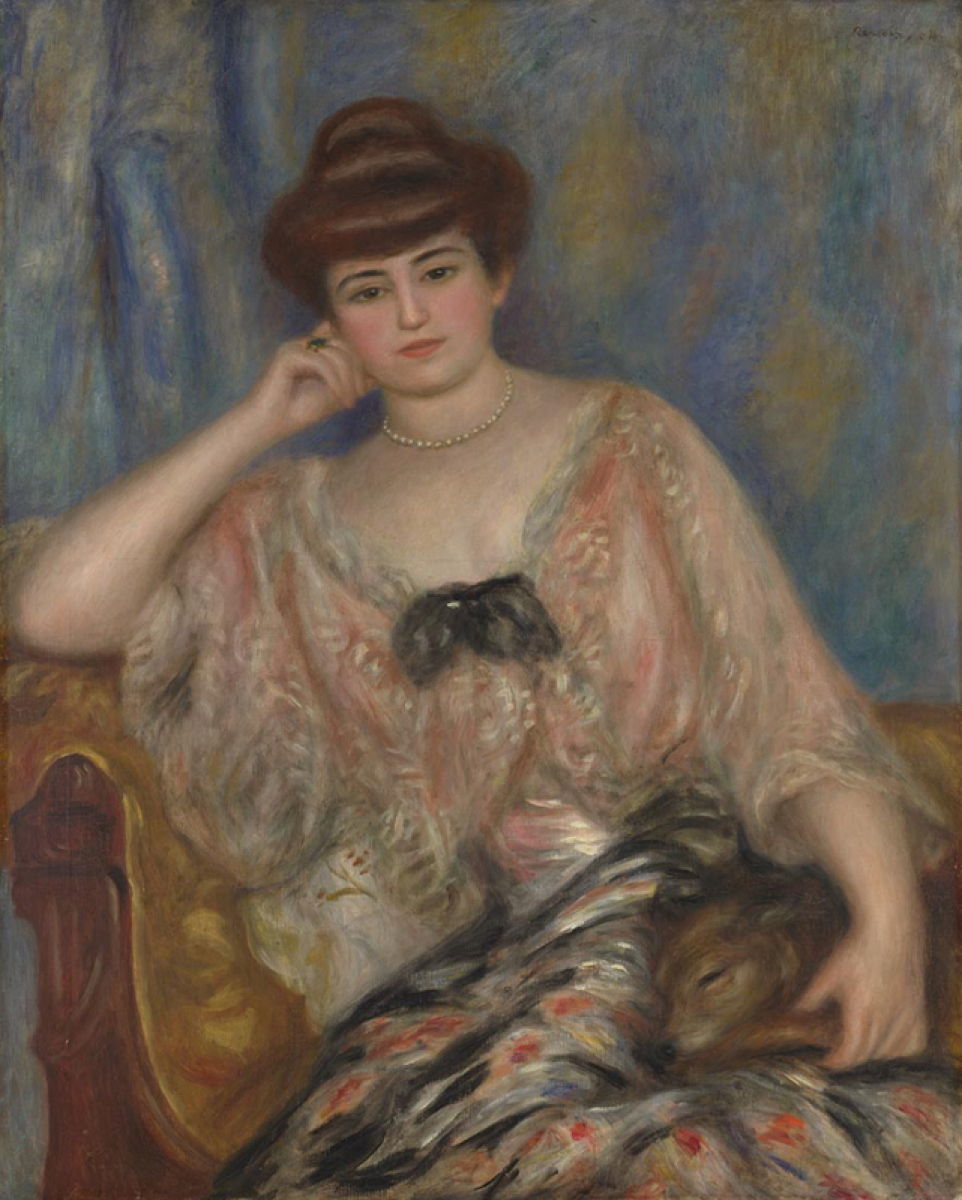
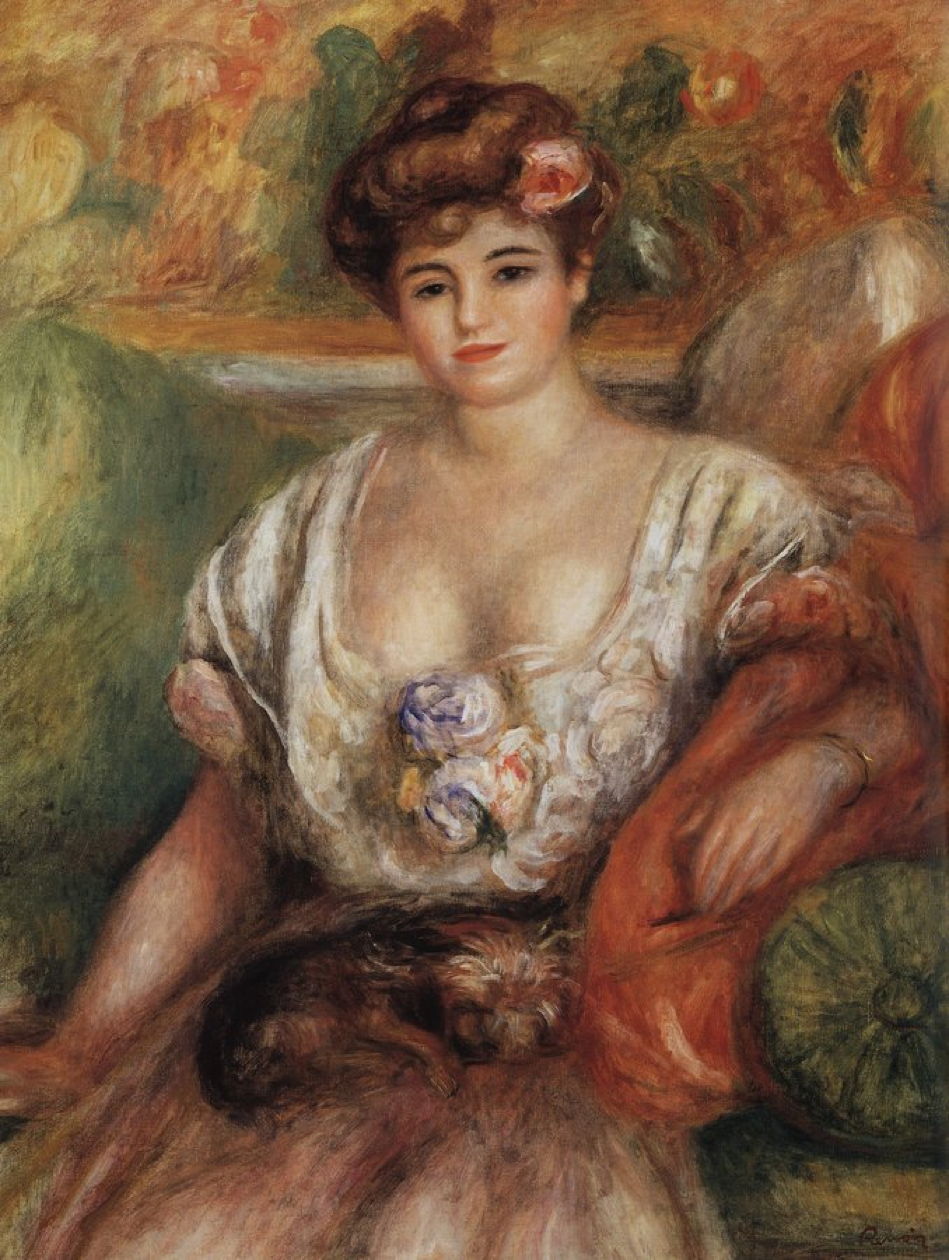
Pierre-Auguste Renoir (1841–1919), Misia Sert with a Lap Dog (Young Woman with a Lap-Dog) (c 1906), oil on canvas, 92.5 x 73.5 cm, Barnes Foundation, Philadelphia, PA. Wikimedia Commons.

Misia, though, looks no happier in Renoir’s third portrait of Misia Sert with a Lap Dog (Young Woman with a Lap-Dog) from after her second marriage in about 1906. And the dog has changed to a toy breed, probably a Brussels Griffon.

bonnardcasamisiasert
Pierre Bonnard (1867-1947), La Casa de Misia Sert (The House of Misia Sert) (1906), tempera on canvas, 38 x 46 cm, Musée d’Orsay, Paris. The Athenaeum.

Bonnard dedicated his painting of The House of Misia Sert (1906) to the former Misia Natanson, muse, close friend, and patron. This was made using tempera rather than oils.

He continued to keep company with Misia and her husband. Maurice Ravel dedicated two of his most beautiful compositions to her: The Swan from Histoires Naturelles, and The Waltz.

bonnardpleasure1906
Pierre Bonnard (1867-1947), Pleasure (1906), oil on cardboard, 250 x 300 cm, Private collection. The Athenaeum.

Works created for Misia extended beyond mere portraits. In Pierre Bonnard’s large painting of Pleasure or Games from 1906, one of four panels he made for Misia and Alfred Edwards’ apartment in Paris, decorative edging includes images of birds and monkeys, whose innocent playfulness is seen as being pleasurable.
bonnardmisia1908
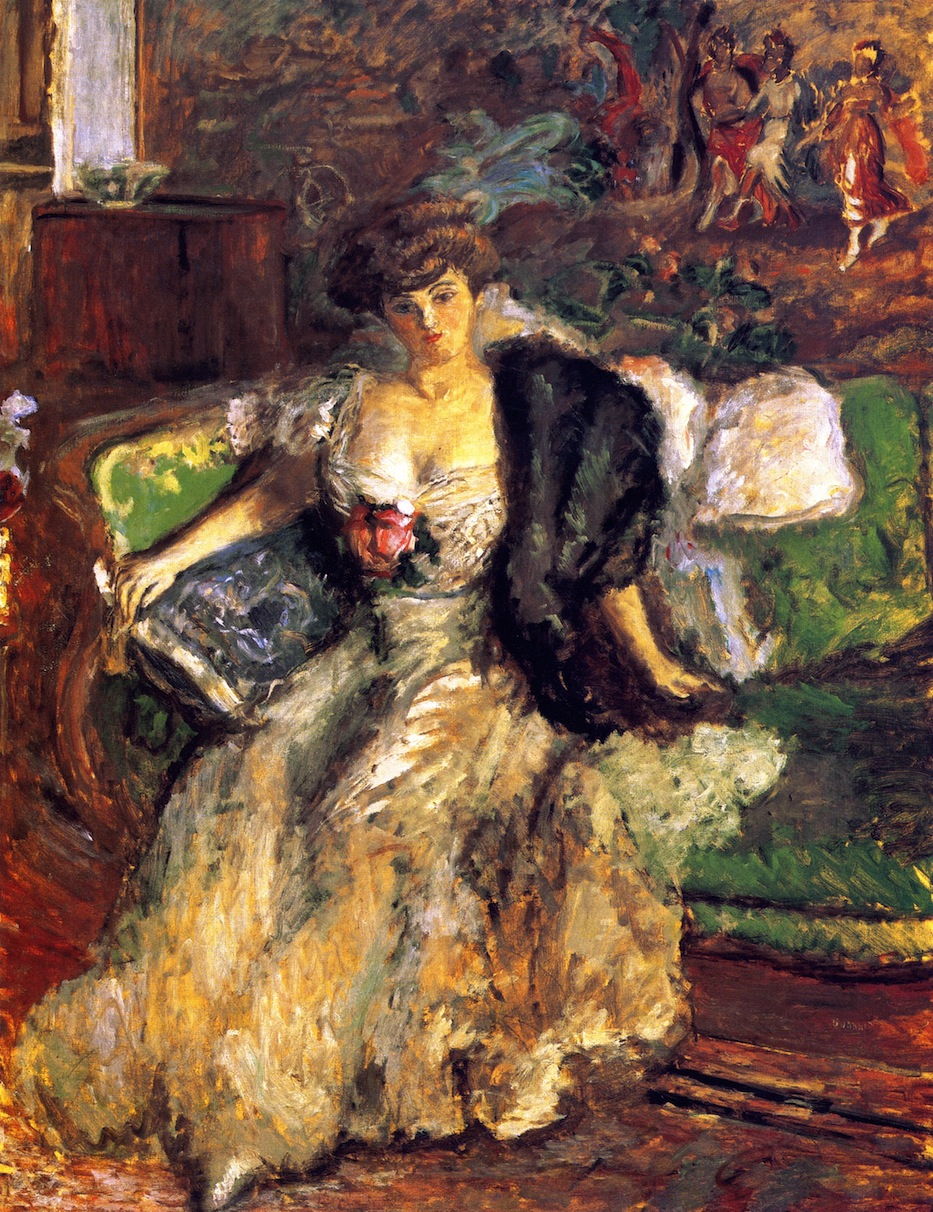
Pierre Bonnard (1867-1947), Misia (1908), oil on canvas, 145 x 114 cm, Museo Nacional Thyssen-Bornemisza, Madrid, Spain. The Athenaeum.

In 1908, Bonnard painted at least three portraits of Misia. Gone is the illusion of the shepherdess: she now sits in a lavishly-decorated room, with what appear to be Gobelin tapestries behind her.
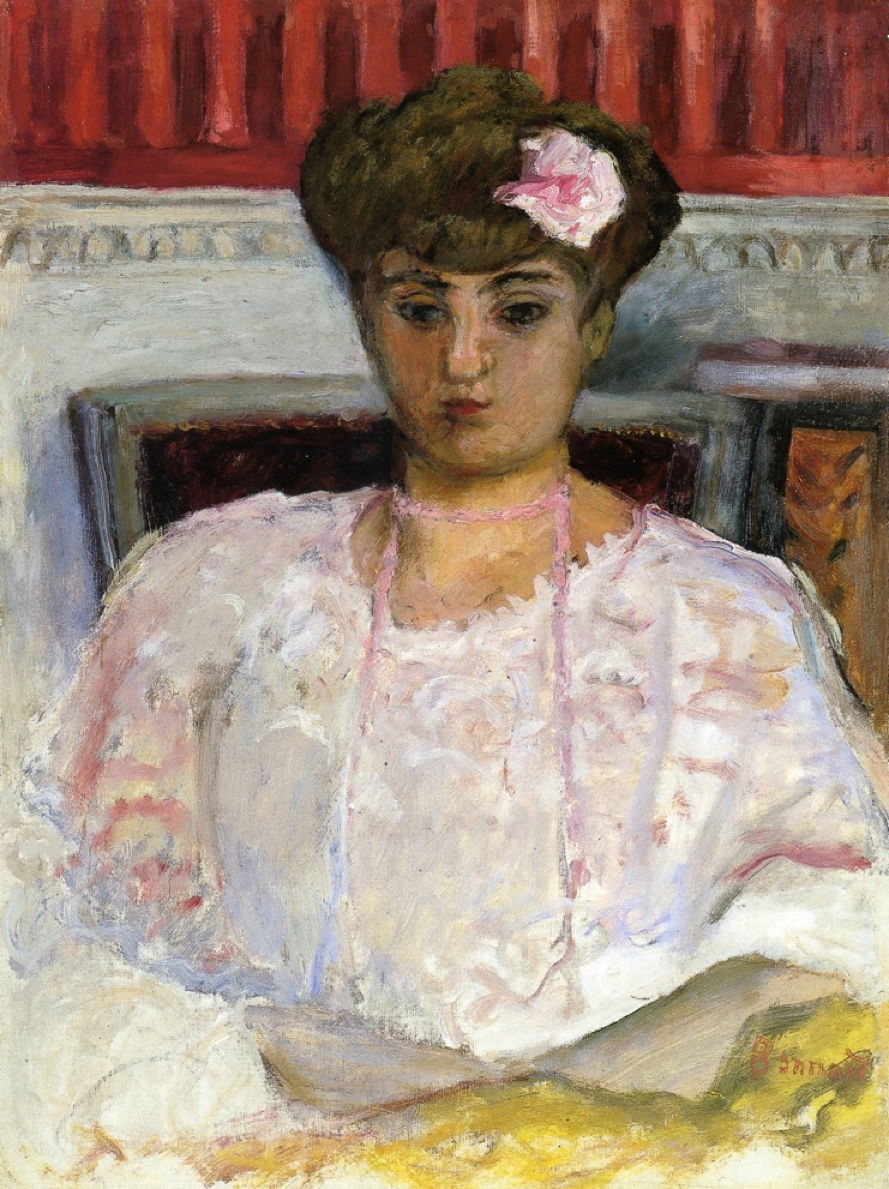
bonnardmisiapinkcorsage
Pierre Bonnard (1867-1947), Misia with a Pink Corsage (c 1908), oil on canvas, 157.2 x 117.9 cm, Private collection. The Athenaeum.

In Misia with a Pink Corsage, Bonnard closes in for a straight head-and-shoulders.
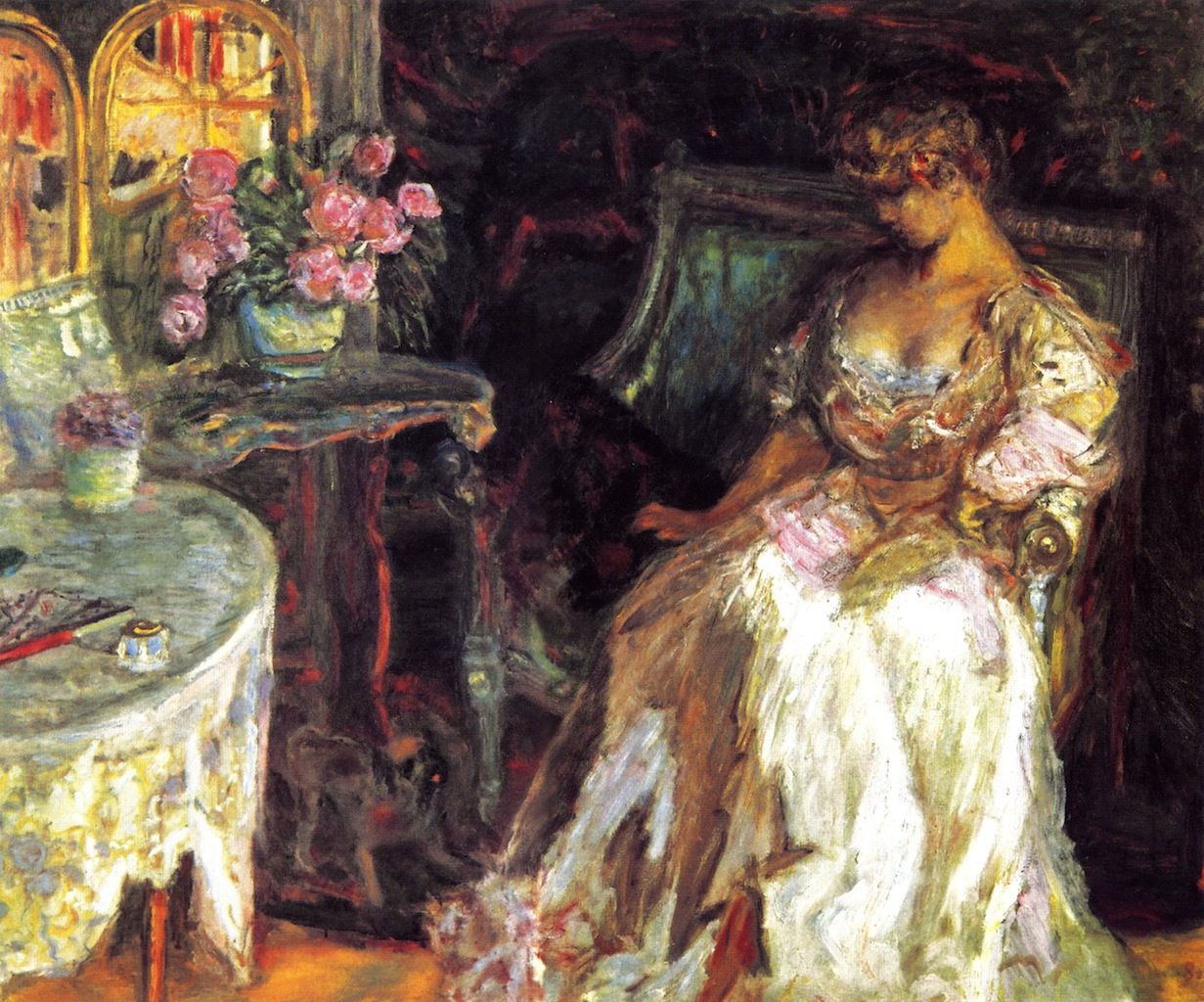
bonnardmisiaroses
Pierre Bonnard (1867-1947), Misia with Roses (1908), oil on cardboard, 114 x 146.5 cm, Private collection. The Athenaeum.

In Misia with Roses, she looks down at an almost unseen pet she is stroking beside her.

As could have been expected, Alfred Edwards proved unfaithful to Misia. She divorced him in 1909, by which time she was already in a relationship with the Spanish painter Josep Maria Sert (1874-1945). He had been on the periphery of the Nabis since moving to Paris in 1899.
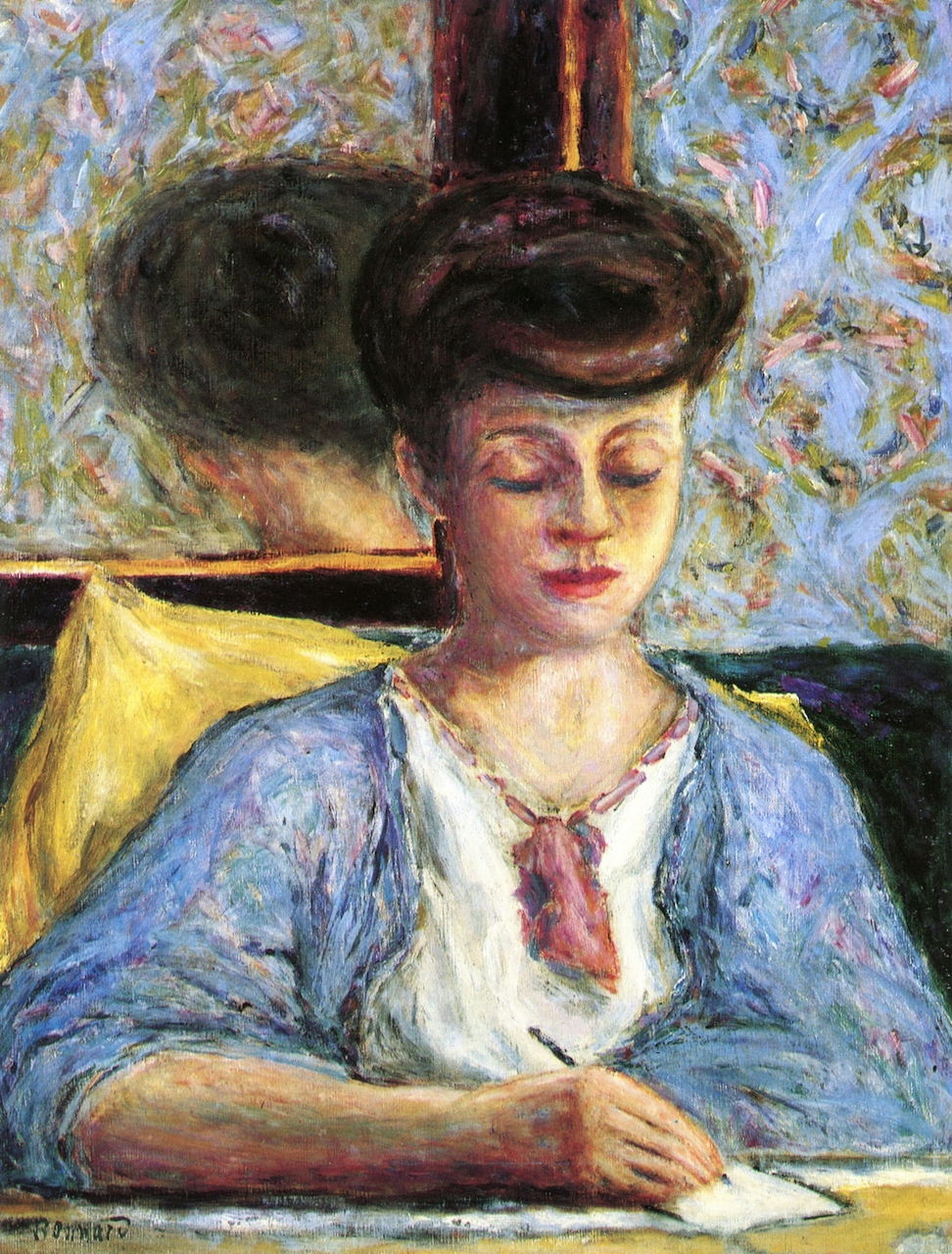
bonnardmisiawriting
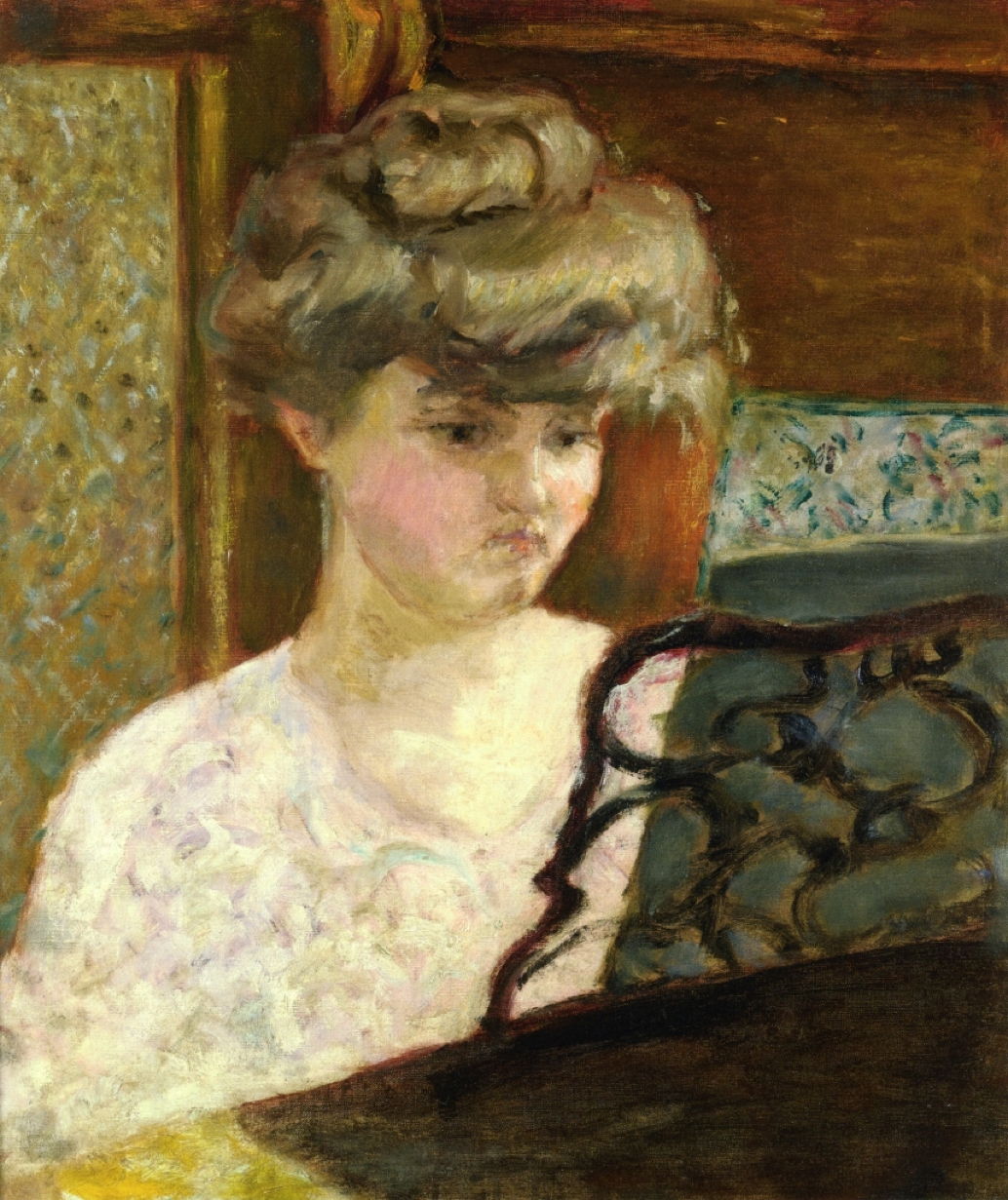
Pierre Bonnard (1867-1947), Misia Godebska Writing (c 1910), oil on canvas, 64.4 x 50 cm, Private collection. The Athenaeum.

The last portrait that I can find by Bonnard, of Misia Godebska Writing, was painted in about 1910. It’s back to head-and-shoulders, although here the artist has used a little mirror play to reveal her chignon, a feature that Bonnard seemed to like.

Misia didn’t marry Sert until 1920, by which time she was established as the cultural arbiter in Paris, and a close friend of Coco Chanel. Her husband, a friend of Salvador Dalí, specialised in murals, and strangely never appears to have painted her portrait. Instead, he spent over thirty years painting murals in the Vic Cathedral in Barcelona, and having affairs of his own. In 1927, Sert divorced Misia to marry the sculptor Isabelle Roussadana Mdivani (1906-1938), known for short as Roussy, who for a time had lived with the Serts in a ménage à trois.

The Serts had been strong supporters of Sergei Diaghilev’s Ballets Russes, which was based in Paris from 1909. Josep Maria Sert painted sets and designed costumes from 1914 onwards. Misia was also heavily involved, often raising money to save a production from seemingly overwhelming debts.

Léon Bakst had also been painting and designing for Diaghilev and his Ballets Russes. Diaghilev proved highly successful, and commissioned music from Igor Stravinsky, Claude Debussy, Sergei Prokofiev and other major composers of the day. Other painters who produced work for the Ballets included Vasily Kandinsky, Pablo Picasso and Henri Matisse. Coco Chanel also created costume designs.
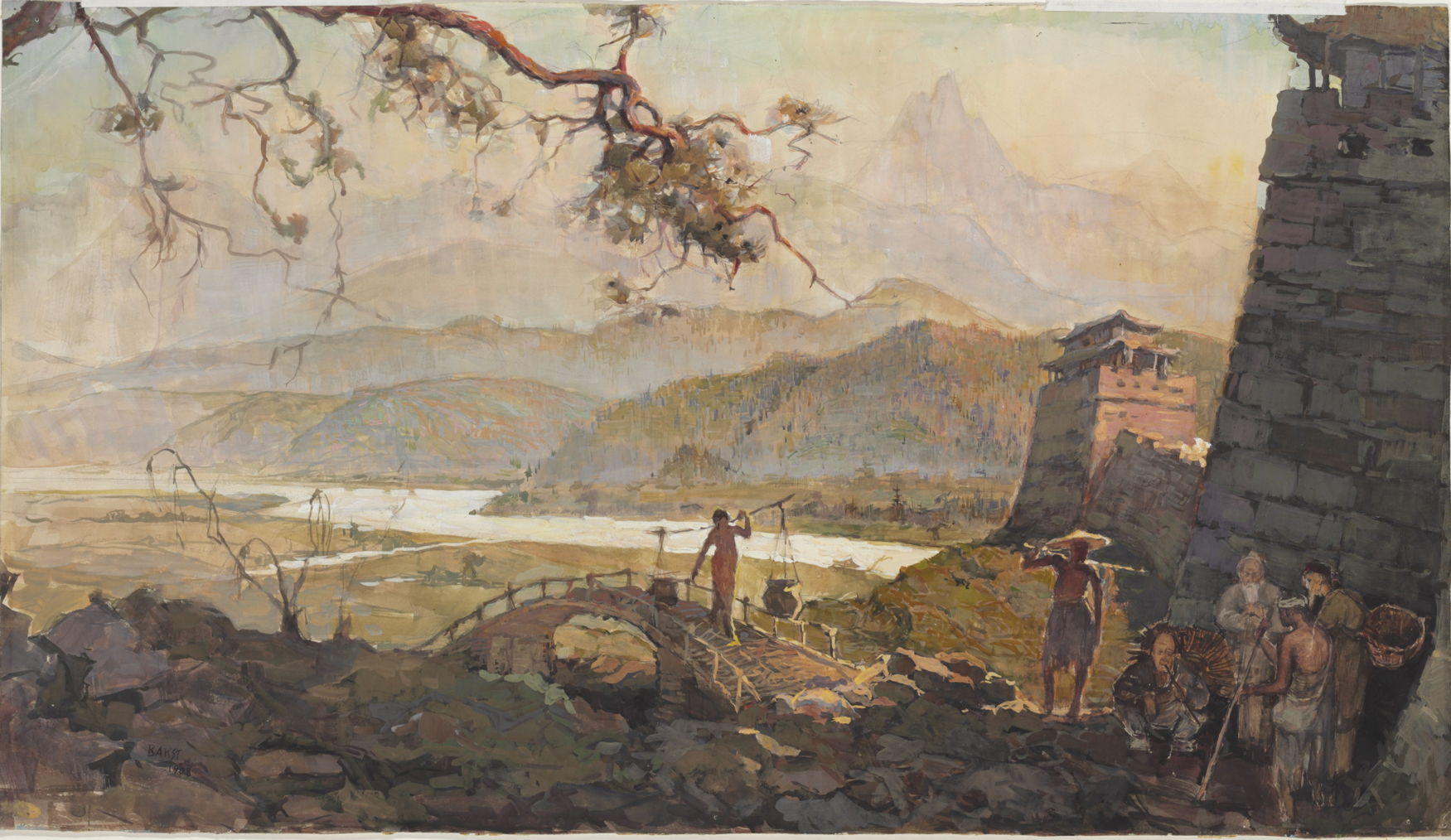
bakstlesorientales
Léon Bakst (1866–1924), Set design for ballet “Les Orientales” (1908), watercolour, pencil, gouache, 73.2 x 43 cm, scenic design for the Ballets Russes, location not known. Wikimedia Commons.

Misia remained close to Diaghilev, and in August 1929 she comforted him as he died in Venice of diabetes, then paid for his funeral from her own pocket.

Just before the Second World War, Roussy Sert died, and Misia and Josep Maria Sert reconciled, and sort of lived together in separate apartments in Paris. Misia’s reputation remained unblemished during the Nazi occupation of Paris, and she died there on 15 October 1950, at the age of 78.

Without Misia’s influence and support, a great deal of the painting, music, and ballet of the first half of the twentieth century simply wouldn’t have happened.

Reference

Wikipedia.

A weekend with Misia: 1

One of the myths about nineteenth and twentieth century art is that it freed itself from patronage that had bedevilled its past. What did change was that patrons of the arts were seldom royalty or nobility, although their power and influence were just the same. Between about 1895 and the late 1930s, one of the most important patrons in France was a Polish woman, born Maria Zofia Zenajda Godebska in 1872, but subsequently known as Misia Natanson, Edwards, or Sert. Her father was Cyprian Godebski, a major sculptor who was a professor at the Imperial Academy in Saint Petersburg. This weekend I tell a little of her story, with a succession of portraits by her many admirers.

Misia’s mother died shortly after the girl’s birth, so she was sent to her grandparents in Brussels. This took her from sculpture to music, as those grandparents had musical circles including Franz Liszt. She was brought up as a pianist, and when her father moved her to Paris, she studied under Gabriel Fauré.

Misia married for the first time at the age of twenty-one, to her cousin Thadée Natanson, who had socialist ideals and lived in artistic circles. The Natansons entertained Marcel Proust, Stéphane Mallarmé, André Gide and Claude Debussy. But they were closest to their painter friends: Claude Monet, Pierre-Auguste Renoir, Odilon Redon, Paul Signac, and Henri de Toulouse-Lautrec.

toulouselautrecmisia1895
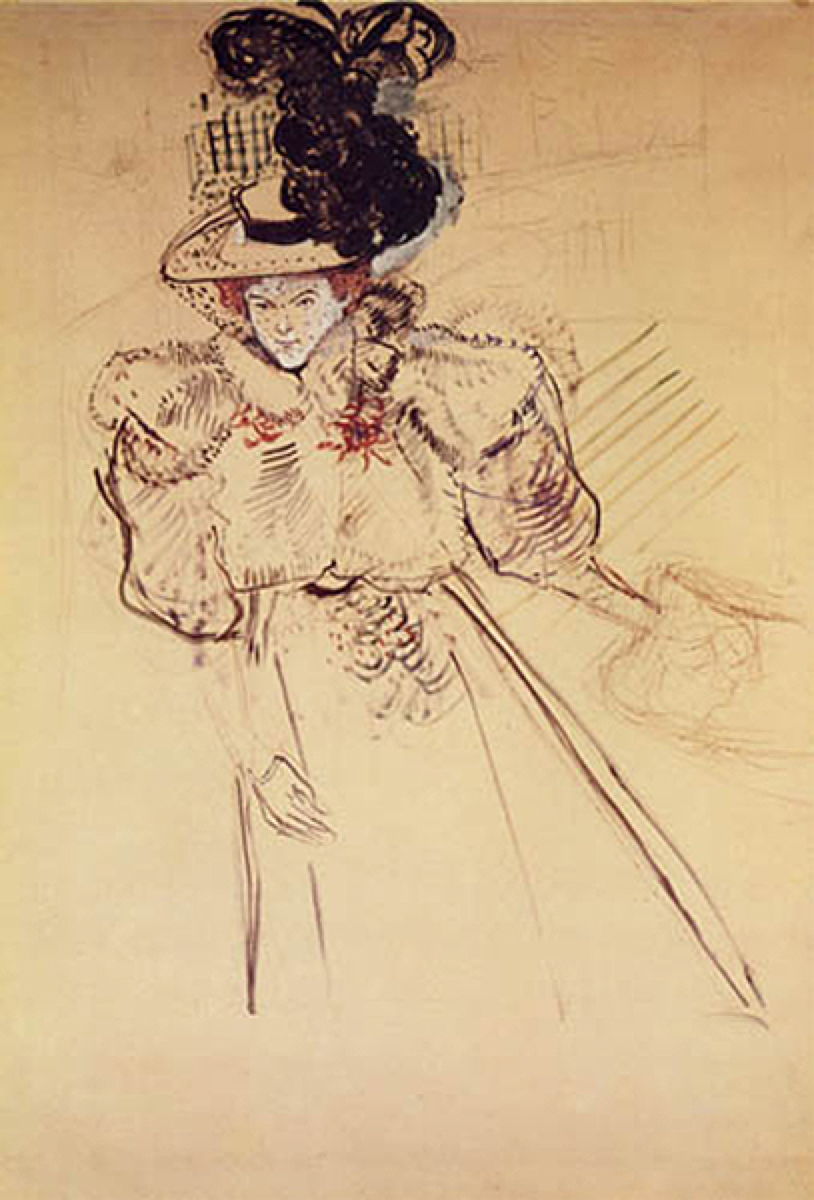
Henri de Toulouse-Lautrec (1864–1901), Portrait of Misia Natanson (Sert) (1895), further details not known. Wikimedia Commons.

It was probably Toulouse-Lautrec who first started to draw and paint Misia, as in his Portrait of Misia Natanson of 1895.

toulouselautrecrevueblanche1895
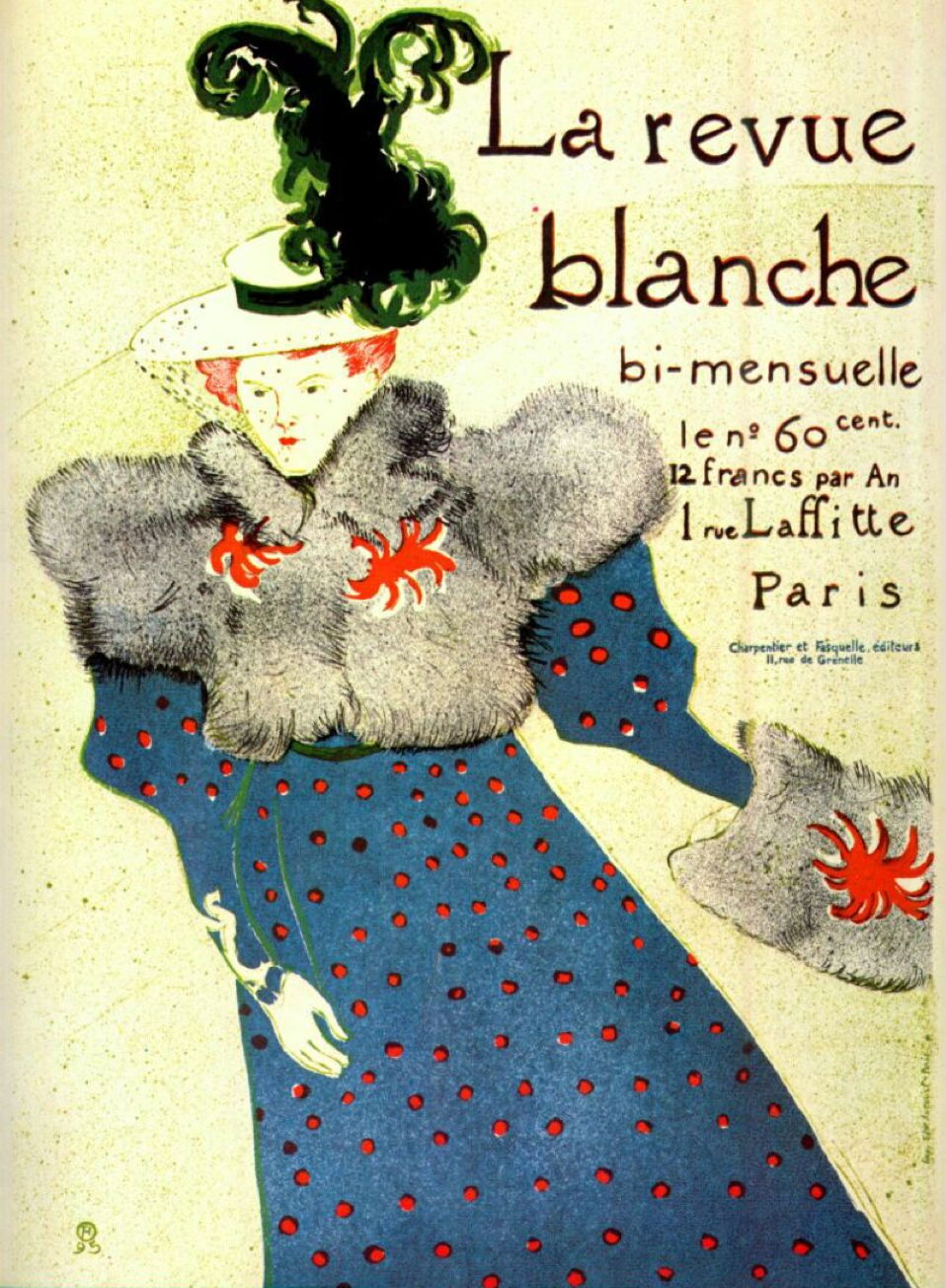
Henri de Toulouse-Lautrec (1864–1901), Poster for La revue blanche (1895), further details not known. Wikimedia Commons.

In 1895 he turned that into his Poster for “La revue blanche”, the arts magazine co-founded in 1889 by Misia’s husband, which was the platform that promoted the Nabis, including Pierre Bonnard.

toulouselautrecmisia1897
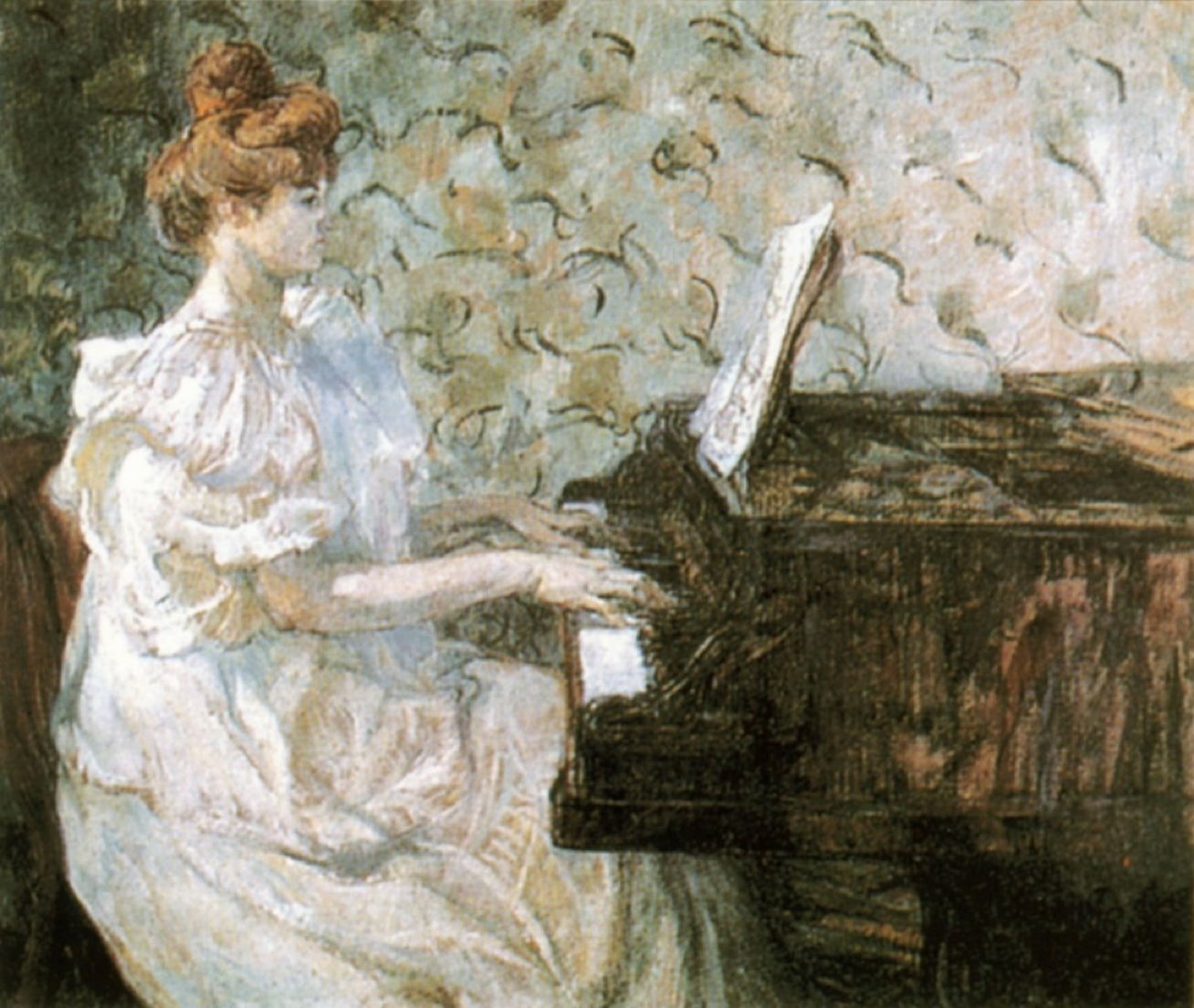
Henri de Toulouse-Lautrec (1864–1901), Misia Natanson (1897), media and dimensions not known, Musée des Beaux-Arts, Berne, Switzerland. Image by J Frey, via Wikimedia Commons.

Toulouse-Lautrec later painted Misia Natanson playing the piano in 1897.

The Nabis themselves painted Misia’s portraits, not just as their main patron, but in informal settings, as more of a friend and muse.

vuillardvallottonatmisias1897
Édouard Vuillard (1868–1940), Vallotton at the Natansons (1897), further details not known. Wikimedia Commons.

Édouard Vuillard’s Vallotton at the Natansons shows Misia watching Félix Vallotton painting in 1897, at the Natanson’s home.

vallottonmisiadressingtable
Félix Vallotton (1865–1925), Misia at Her Dressing Table (1898), distemper on cardboard, 36 x 29 cm, Musée d’Orsay, Paris. Wikimedia Commons.

Félix Vallotton provides a glimpse into her private life in his Misia at Her Dressing Table from 1898.

bonnardmisiabreakfast
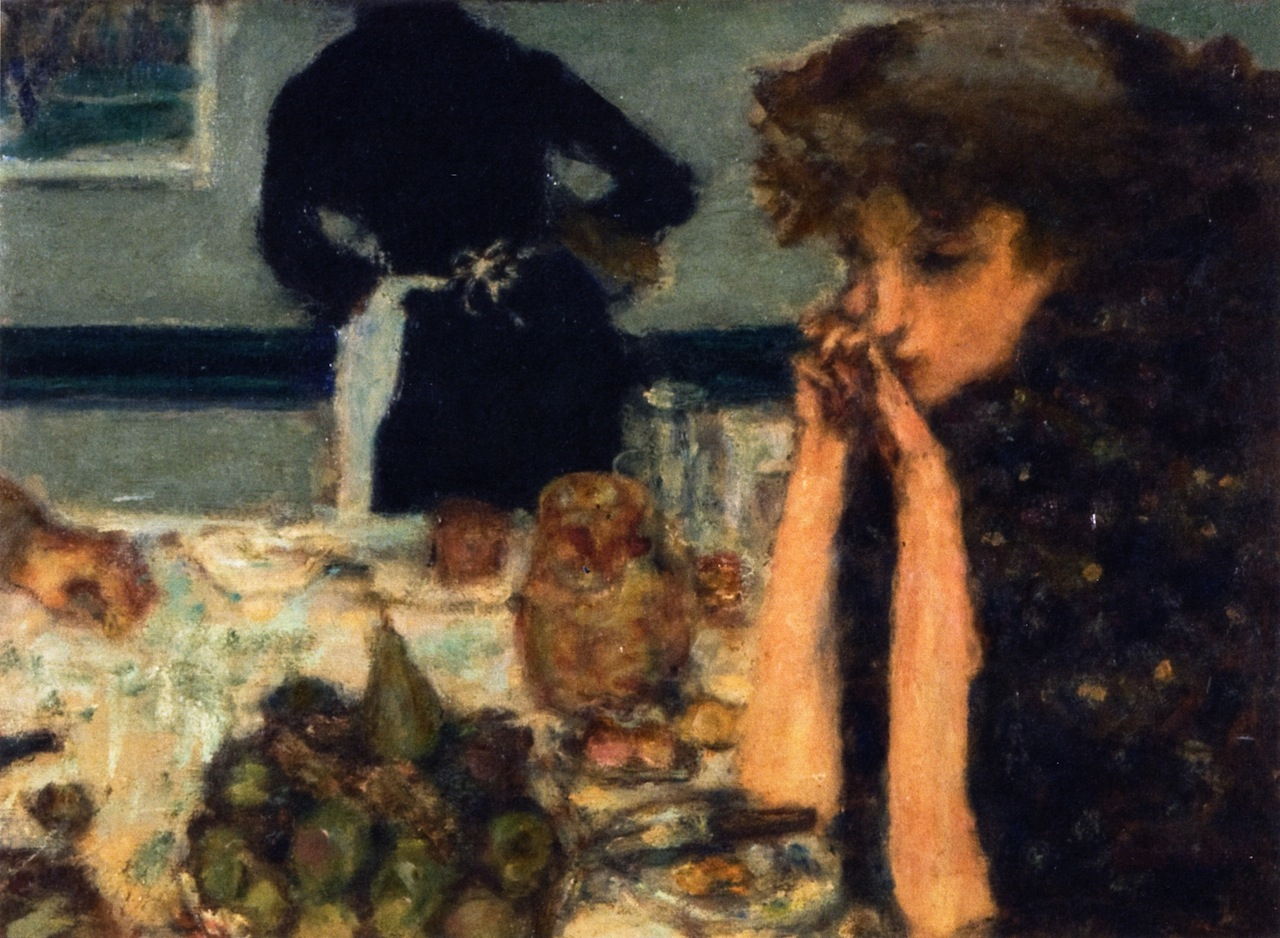
Pierre Bonnard (1867-1947), Misia Natanson at Breakfast (c 1899), oil on wood, 32 x 41 cm, Private collection. The Athenaeum.

In his turn, Pierre Bonnard painted Misia Natanson at Breakfast in about 1899, with one of the family’s maids at work in the background.

bonnardmisiapiano
Pierre Bonnard (1867-1947), Misia at the Piano (Portrait of Misia Natanson) (c 1902), oil on canvas, 46.2 x 39 cm, Private collection. The Athenaeum.

Bonnard’s Misia at the Piano from about 1902 shows Misia doing what she loved most.

At this time, Thadée Natanson needed more capital to support his publishing and other activities. He found a source in Alfred Edwards, a publishing magnate who had founded and published the major newspaper in Paris at the time, Le Matin. Unfortunately, Edwards and Misia fell in love, and Misia became Edwards’ mistress in 1903. As Natanson wanted his capital, so Edwards wanted Misia, and that became a condition of the deal between them.

renoirmisiang1904
Pierre-Auguste Renoir (1841-1919), Misia Sert (1904), oil on canvas, 92.1 x 73 cm, The National Gallery (Bought, 1960), London. Courtesy of and © The National Gallery, London.

Renoir painted this and the next portrait of Misia Sert while this was being settled, in 1904. Of the two, this is the better-known, as it hangs in the National Gallery in London. I can’t help feeling that she appears unhappy here.

renoirmisia1904
Pierre-Auguste Renoir (1841–1919), Portrait of Misia Sert (1904), oil on canvas, 55.5 × 66.5 cm, Tel Aviv Museum of Art, Tel Aviv, Israel. Wikimedia Commons.

In this second of Renoir’s portraits of Misia from 1904, now in Tel Aviv, she is as sumptuously dressed, but her head is buried in a book.

Reference
Wikipedia.

The Other Half: Painters and their models 1

Most figurative art, both painting and sculpture, is the product of a partnership between the artist and their model. This weekend I celebrate the contributions made by the latter, always seen but never credited. The partnership often extends beyond art into their personal lives, but is seldom acknowledged by either party. Ironically, we come to know the faces and bodies of those models far better than those of the artist, so at least the long-suffering model achieves some kind of immortality.

In many circumstances, models are called on to hold certain postures for uncomfortably long times.

whitenflatfootfronting
Kirsty Whiten, Flatfoot Fronting (2015), oil and varnish on canvas, 120 x 150 cm, the artist’s collection. © 2015 Kirsty Whiten.

Kirsty Whiten‘s models have had to be lithe, nimble, and patient to give her the time to capture such dynamic poses.

Ellen Altfest, Torso (2011), oil on canvas, 26 x 35.2 cm, ONE2 Collection, USA. Image courtesy White Cube © Ellen Altfest / White Cube.

But they are momentary in comparison with marathons spread over several months, as required by Ellen Altfest‘s highly detailed realism. In order to achieve this, she enforces a five minute break every thirty minutes of posing, but even then models may have to drop out because of the number of days required posing for each of her paintings.

Some artists have pondered their relationship with their models visually,

geromeworkingmarble
Jean-Léon Gérôme (1824–1904), The Artist’s Model (1895), oil on canvas, 50.8 x 39.6 cm, Dahesh Museum of Art, New York, NY. Wikimedia Commons.

Jean-Léon Gérôme’s The Artist’s Model (1895) is one of a series of works considering the artist – here, Gérôme in the role of a sculptor – the model, and the art work. Behind his model Emma Dupont is a completed polychrome statue of her putting her head through a hoop.

Like so many others, Emma Dupont arrived in Paris with her lover at the age of seventeen, only to be abandoned by him. Penniless, she was introduced to modelling by Alfred Stevens, and it was Fernand Cormon who first persuaded her to pose nude. She worked for several other artists before catching Gérôme’s eye, and quickly became his favourite. Over a period of about twenty years, she was frequently to be found naked in Gérôme’s studio, from which she made a comfortable living. No one knows if she had any closer relationship with him, or with any other artist.

One of the most famous of all artists’ models was a young Irish woman, Joanna Hiffernan, who appears in some of Whistler’s and Courbet’s paintings, and was a lover to both. Hiffernan seems to have been born in about 1843, and first met Whistler in 1860. She travelled with him to France in 1861, and posed there in a studio in Boulevard des Batignolles for one of his greatest paintings.

whistlersymphonywhite1
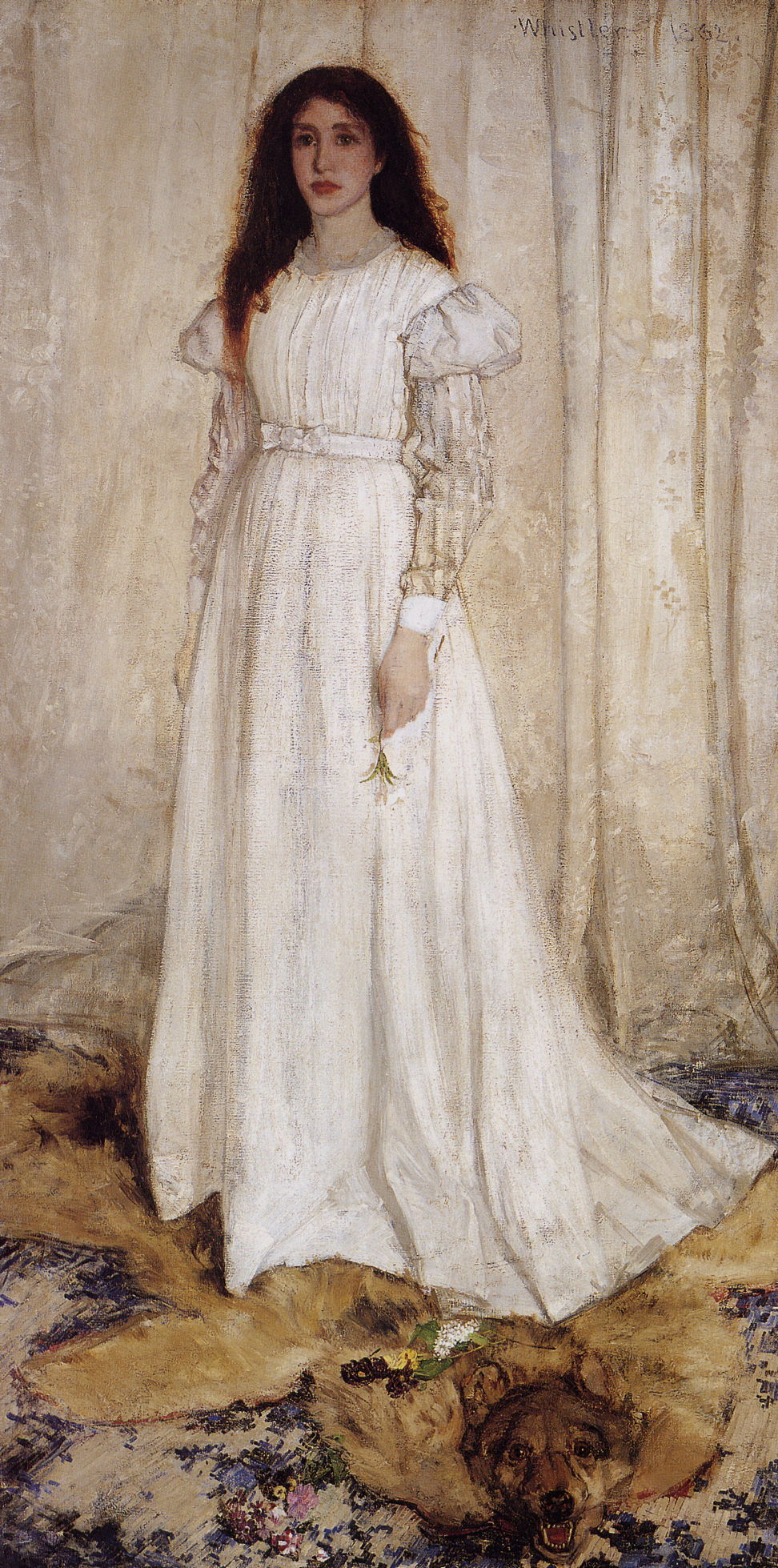
James Abbott McNeill Whistler (1834–1903), Symphony in White no 1: The White Girl – Portrait of Joanna Hiffernan (1862), oil on canvas, 214.6 × 108 cm, The National Gallery of Art, Washington, DC. Wikimedia Commons.

Whistler’s remarkable Symphony in White no 1: The White Girl (1862) shows her great beauty. But there was more to her than her looks: those who knew her remarked on her intelligence, the sympathy that she gave people, and the companionship that she provided the artist.

Attitudes towards artists’ models at the time weren’t even ambivalent: they were seen as little more than common prostitutes. When Whistler’s mother visited in 1864, Hiffernan had to be secreted away from her sight. At some time around 1865-66, she met Gustave Courbet, and when Whistler went off to Valparaiso for seven months in 1866, she returned to Paris and posed for Courbet.

courbetbeautifulirishgirl
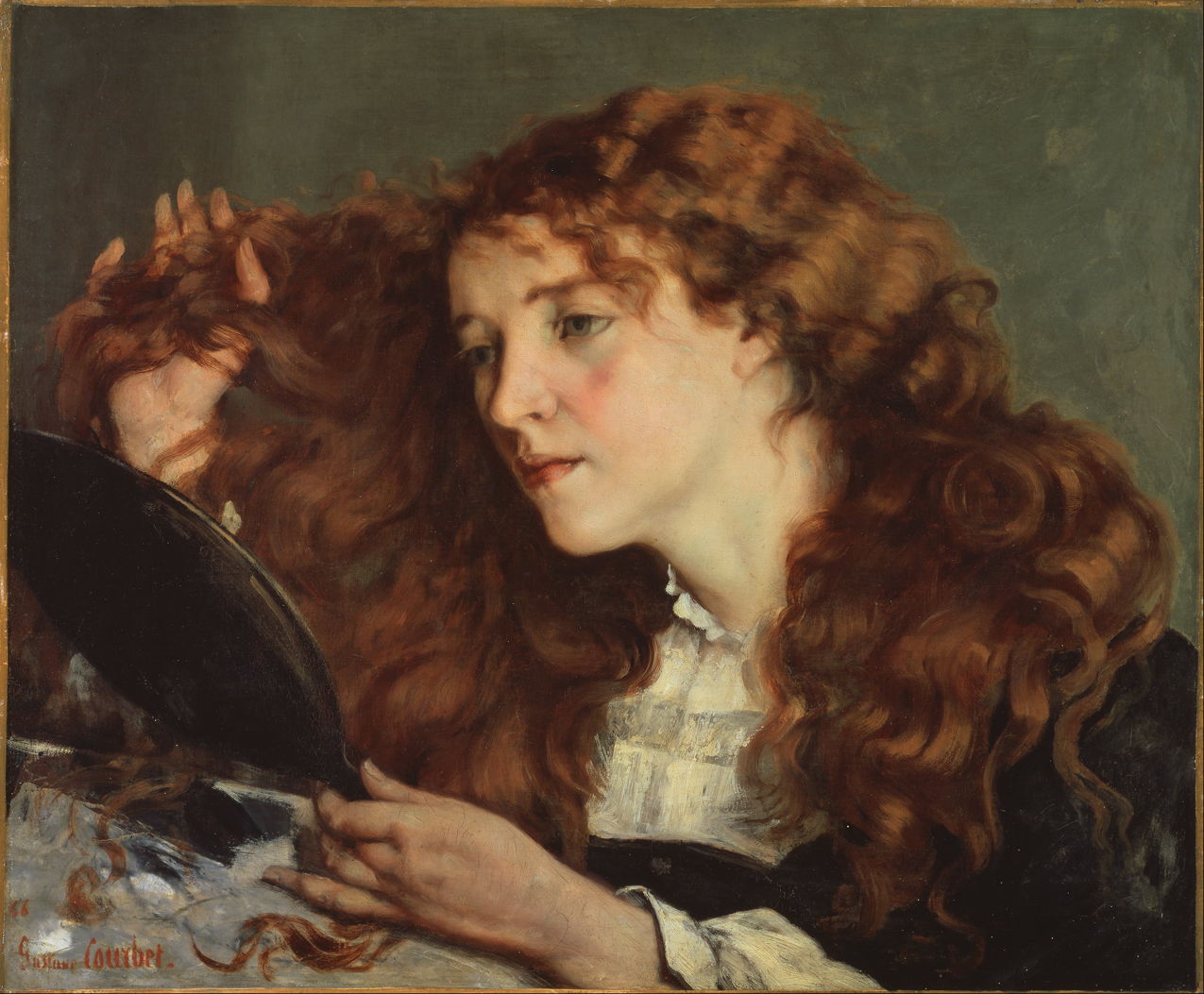
Gustave Courbet (1819–1877), Jo, the Beautiful Irish Girl (1866), oil on canvas, 54 x 65 cm, Nationalmuseum, Stockholm, Sweden. Wikimedia Commons.

Courbet’s initial modest portrait of Jo, the Beautiful Irish Girl (1866) was a harbinger of more to come.

courbetwomanparrot
Gustave Courbet (1819–1877), Woman with a Parrot (1866), oil on canvas, 129.5 x 195.6 cm, The Metropolitan Museum of Art, New York, NY. Wikimedia Commons.

Next she is the erotically-charged nude in Courbet’s Woman with a Parrot (1866), then in a lesbian embrace in The Sleepers (1866), and possibly even the explicit headless nude of The Origin of the World (1866). After they had separated, Hiffernan raised Whistler’s illegitimate son by another lover, and re-appeared to pay her last respects at Whistler’s funeral in 1903.

Less known but as well-featured is Lise Tréhot, born in 1848, who moved as a child to Paris, as the daughter of a shopkeeper selling lemonade and tobacco. An older sister became the lover of a now-forgotten artist Jules Le Coeur, who in turn introduced Lise to the young painter Pierre-Auguste Renoir in 1865, when he was twenty-four, and she was only seventeen.

renoirdianahuntress
Pierre-Auguste Renoir (1841–1919), Diana as Huntress (1867), oil on canvas, 197 × 132 cm, The National Gallery of Art, Washington, DC. Wikimedia Commons.

Renoir started painting Lise the following year, when she had just turned eighteen. Within another year, she posed nude for Renoir’s Diana as Huntress (1867), which was rejected by that year’s Salon. Over the next five years, she modelled for at least twenty paintings, and was in effect his only model for female figures during this formative period in his career. She also appears in two of Frédéric Bazille’s paintings.

renoirinsummer
Pierre-Auguste Renoir (1841–1919), In the Summer (The Bohemian) (1868), oil on canvas, 85 x 59 cm, Alte Nationalgalerie, Berlin, Germany. Wikimedia Commons.

One of Renoir’s best portraits of Tréhot is In the Summer (The Bohemian), painted in 1868 when she would have been twenty.

renoirodalisque
Pierre-Auguste Renoir (1841–1919), Odalisque (1870), oil on canvas, 69.2 × 122.6 cm, The National Gallery of Art, Washington, DC. Wikimedia Commons.

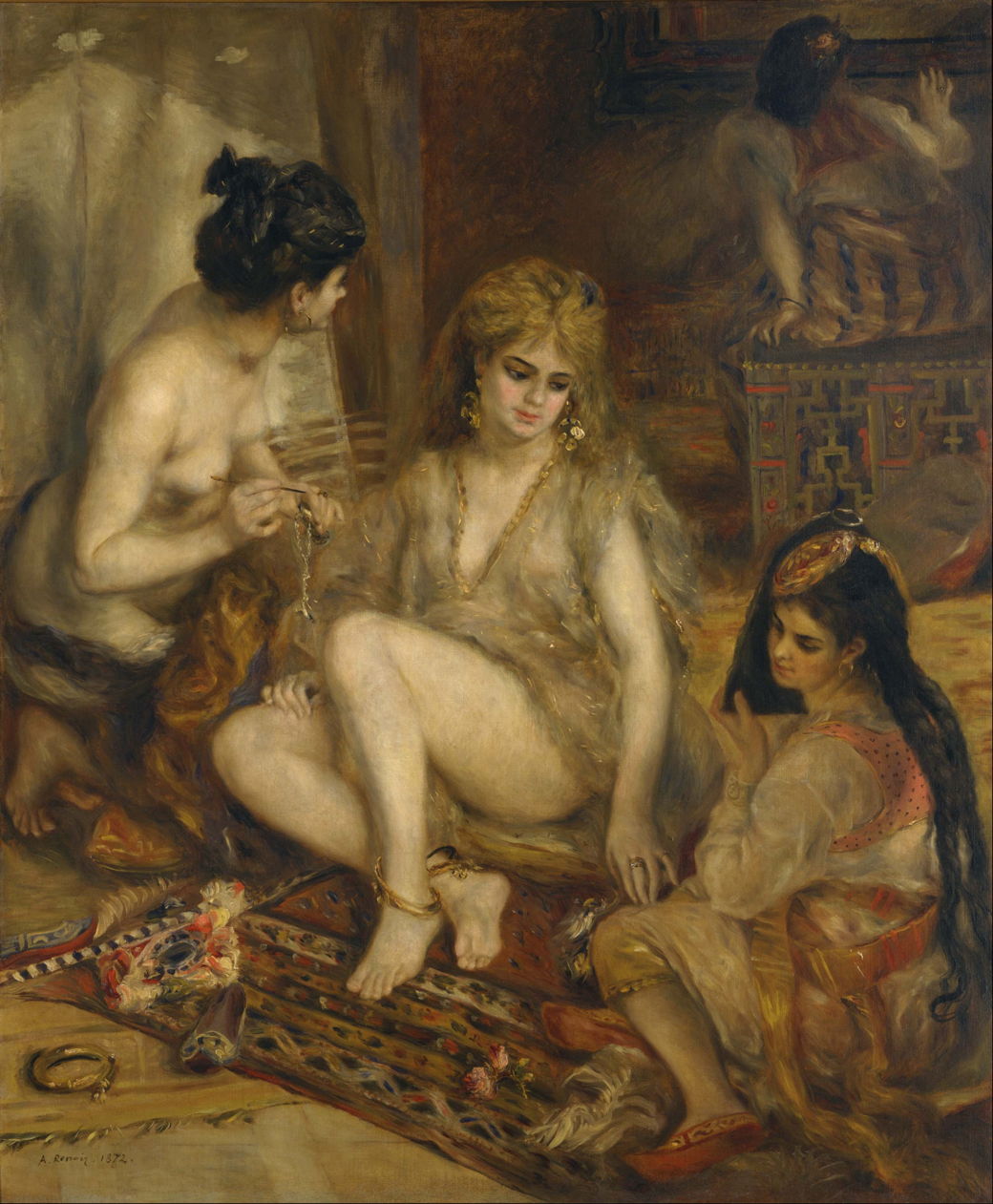
Later, Renoir posed her in an imaginary Algerian harem in his Odalisque (1870), another of those popular faux-Orientalist paintings.

renoirparisiennesalgeriancostume
Pierre-Auguste Renoir (1841–1919), Parisiennes in Algerian Costume, or Harem (1872), oil on canvas, 156 x 128.8 cm, National Museum of Western Art 国立西洋美術館 (Kokuritsu seiyō bijutsukan), Tokyo, Japan. Wikimedia Commons.

Probably the last of Renoir’s works to feature Tréhot is his Parisiennes in Algerian Costume, or Harem from 1872, where she appears as the woman at the right.

Renoir never mentioned her in any recorded source, but she’s thought to have given birth to their son at the end of 1868, and is recorded as having their daughter in the summer of 1870. Renoir supported her financially throughout the rest of his life, and Ambroise Vollard his dealer continued to do so after his death.

Renoir and Tréhot seem to have separated suddenly in 1872, and it’s thought they never met or spoke again after that. She married in 1883, raised her own family with her architect husband, and died in Paris in 1922.

Reference
Susan Waller’s superb article in Nineteenth-Century Art Worldwide.

Naturalists: Naturalism and Impressionism

There’s a popular and relatively recent myth that European painting in the late nineteenth century consisted almost entirely of Impressionist landscapes and their descendants in Post-Impressionism, or the dying embers of the Academic past. That oversimplification carefully omits many of the innovative artists of the day, who developed the social realism of Jean-François Millet and Gustave Courbet into what became Naturalism. Among its other key influences were Édouard Manet and the novelist and critic Émile Zola (1840-1902), who were also associated with Impressionism.

Impressionism was primarily a revolt against established ideas as to how paintings should be made, and how they should look. Although the term has been extended to other arts, it’s only really meaningful in the context of painting.

Naturalism arose first and became most extensive in literature. Among its great influences was the pioneering French physiologist Claude Bernard (1813-1878), whose writings were read avidly by Naturalists including Zola. Bernard’s approach to science stressed not only the importance of observation, but of experiment, forming the basis for his accounts of the working of the body, and the scientific foundations of medicine. Bernard’s Introduction to the Study of Experimental Medicine, published in 1865, convinced Zola to use an experimental approach to writing his novels. He thus watched people in life and filled notebooks with his observations. He then set characters up in the scenario for a novel, and they behaved according to his observations. He finally documented this imaginary experiment as his next novel.

Naturalist painting made no attempt to follow Zola’s experimental approach, but aimed to document ordinary people going about their normal daily activities in their normal surroundings, with a degree of objectivity rather than sentiment. Its style is a neutral realism showing as much fine detail as necessary for its purpose, and sometimes being almost photographic in quality.

Naturalism and Impressionism were by no means mutually exclusive, but served different purposes. Some of the finest artists of the last thirty years of the nineteenth century were exponents of both. Landscapes were predominantly approached as Impressions, while figurative paintings worked better using Naturalist techniques. Here are some examples from about 1883, when both were at their height.

blepagenothingdoing
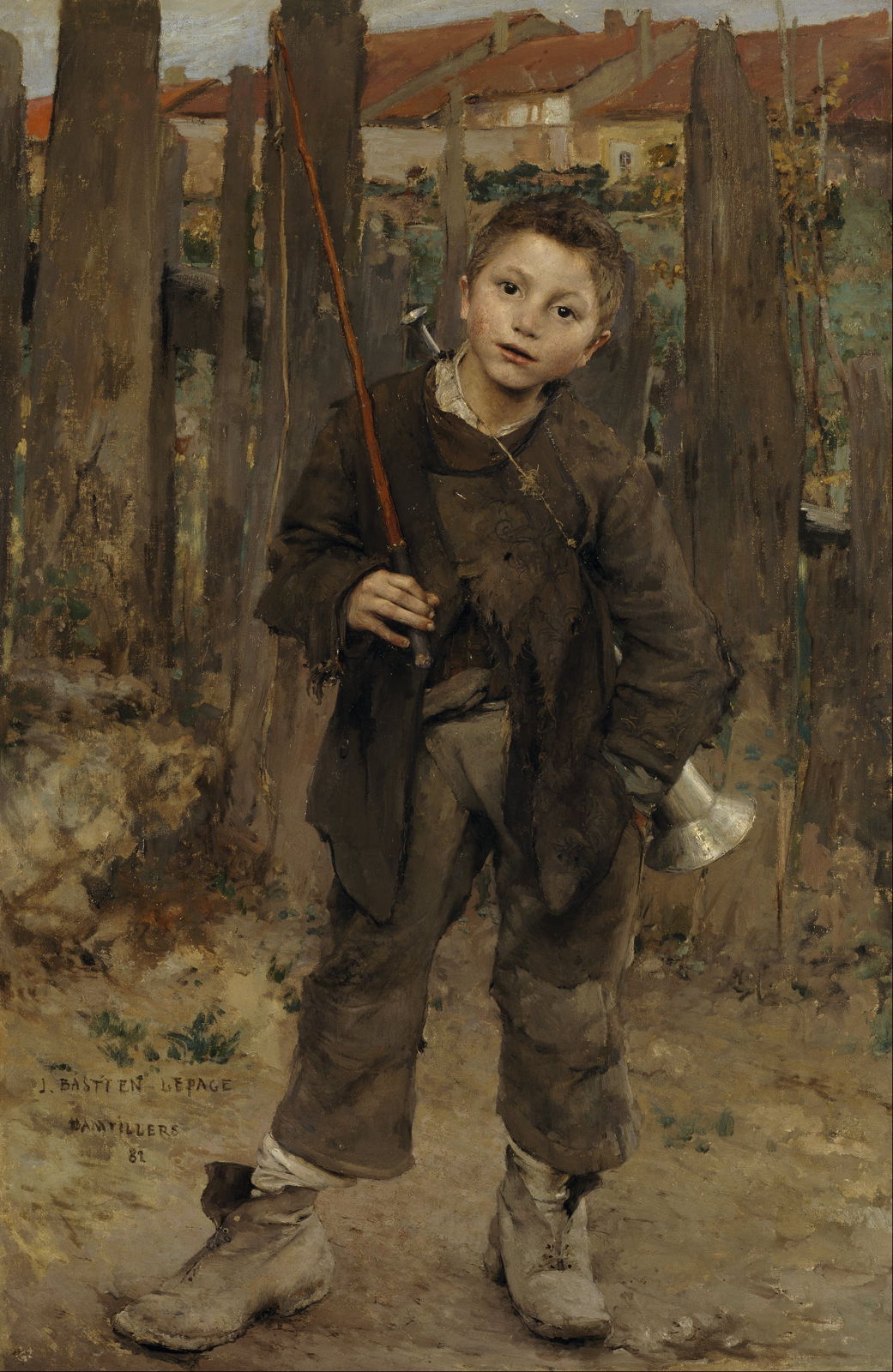
Jules Bastien-Lepage (1848–1884), Pas Mèche (Nothing Doing) (1882), oil on canvas, 132.1 x 89.5 cm, Scottish National Gallery, Edinburgh, Scotland. Wikimedia Commons.

At that time, it was Jules Bastien-Lepage who was having greatest impact at the Salon with his Naturalist portraits of the rural poor. Pas Mèche (Nothing Doing) (1882) catches this cheeky ploughboy equipped with his whip and horn, on his way out to work in the fields. His face is grubby, his clothing frayed, patched, and dirty, and his boots caked in mud and laceless. It has other traits of Bastien’s style, such as its high horizon almost shutting the sky out, and his careful control of detail. The boy’s face is meticulous, but the cottage gardens behind have been sketched in roughly.

bastienlepagechimneysweep
Jules Bastien-Lepage (1848–1884), The Little Chimneysweep (Damvillers) (1883), oil on canvas, 102 x 116 cm, location not known. Wikimedia Commons.

Bastien’s Little Chimneysweep (Damvillers) from the following year is unusual as its subject isn’t shown standing, face-on to the viewer, but sits and looks down at the kitten at the lower right. This young boy is also the dirtiest of Bastien’s waifs, his left hand still black with soot from his work. He appears to be living in a hovel, with the embers of a fire at the left edge, once again sketched loosely.

bashkirtseffumbrella
Marie Bashkirtseff (1858–1884), The Umbrella (1883), oil on canvas, 93 × 74 cm, State Russian Museum, Saint Petersburg. Wikimedia Commons.

Bastien’s combination of detailed realism blended with more painterly passages is seen in one of Marie Bashkirtseff best portraits, The Umbrella (1883). This girl’s tenacious stare at the viewer quickly becomes quite unnerving. This earned her an honourable mention in the Salon.

bulandtripot
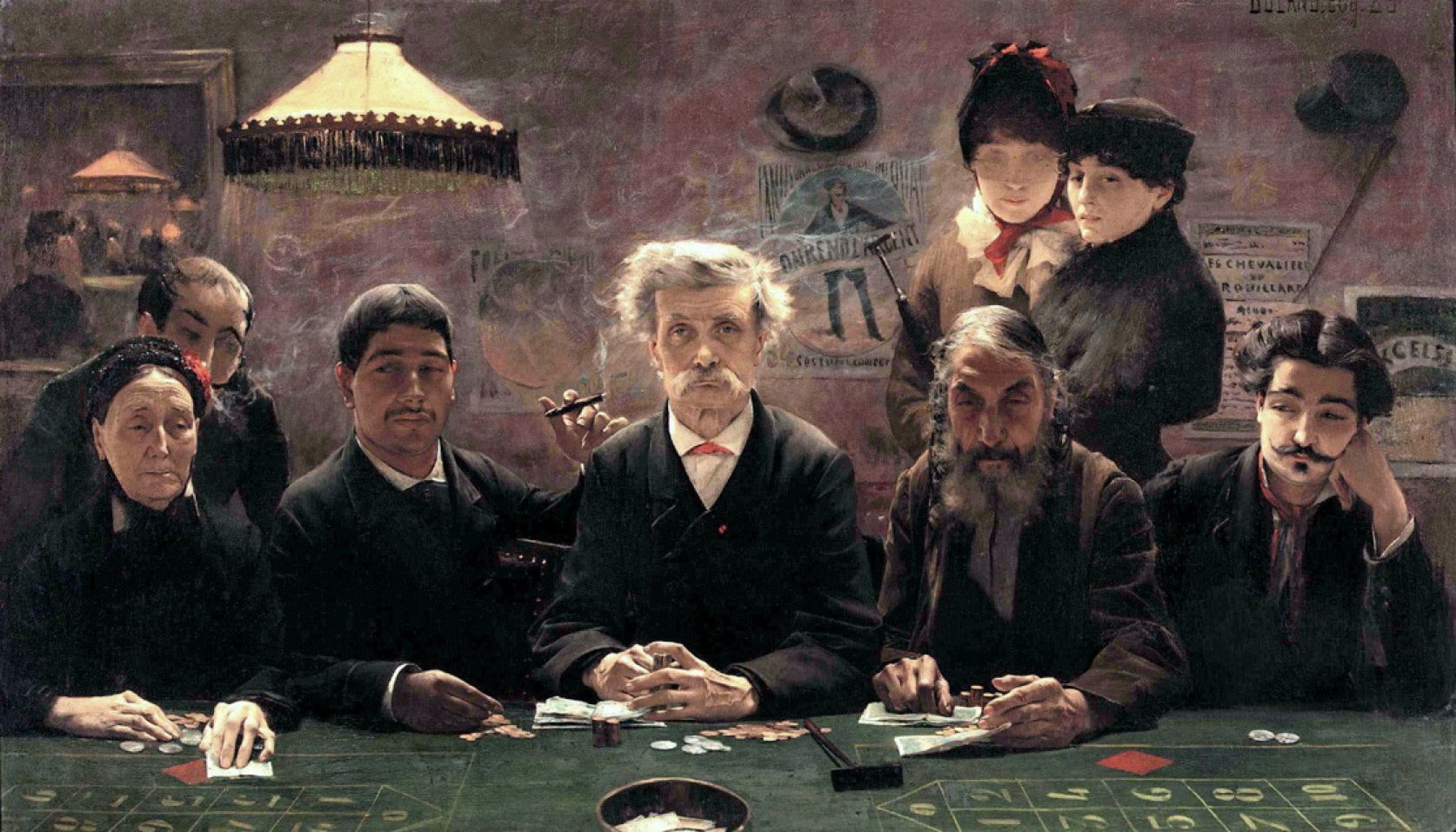
Jean-Eugène Buland (1852–1926), Le Tripot (The Dive) (1883), oil on canvas, 63.5 × 109.2 cm, location not known. Wikimedia Commons.

In the same year, Jean-Eugène Buland’s The Dive is set in a seedy, downmarket gambling den, as a group portrait of five hardened gamblers at their table. Each is rich in character, and makes you wonder how they came to be there. A little old widow at the left, for example, looks completely out of place, but is resolutely staking her money. Looking over her shoulder is a man, whose face is partially obscured. Is he, perhaps, a son, or a debtor? A young spiv at the far right is down to his last couple of silver coins, and looks about to lose them too. The air is thick with smoke, the walls in need of redecoration, and a pair of young streetwalkers prowl behind them, looking for a winner who will spend some of their cash on them.

pissarropoultrymarketontoise1882
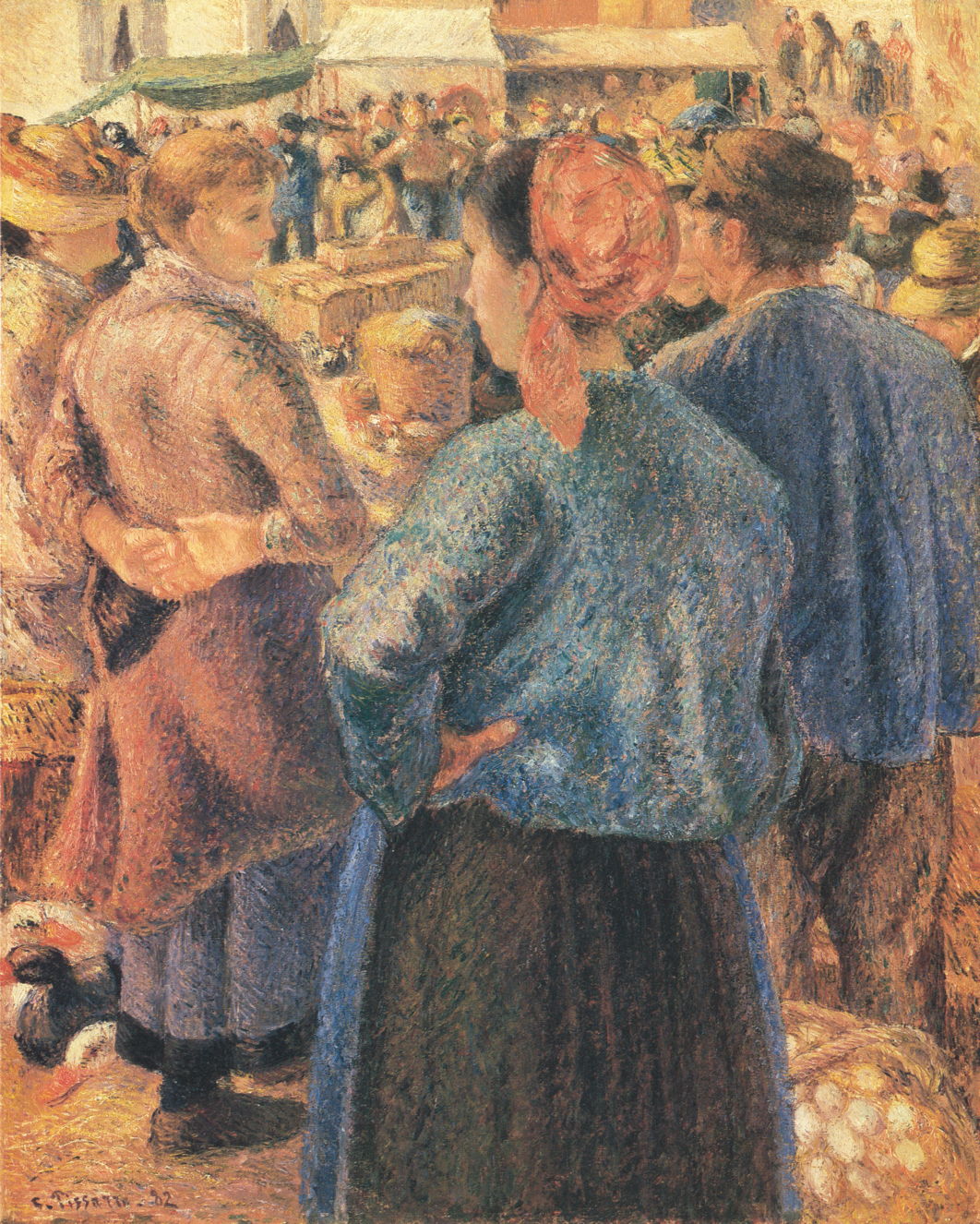
Camille Pissarro (1830–1903), The Poultry Market, Pontoise (1882), oil on canvas, 81 x 65 cm, Norton Simon Museum, Pasadena, CA. Wikimedia Commons.

Camille Pissarro was a fine figurative artist when he wanted, and had a particular liking for markets and fairs, which may seem strange for a landscape painter. He painted this scene from The Poultry Market, Pontoise twice in 1882: once using (glue?) distemper, and here in oils, where his use of tiny marks is evolving, particularly in the fabrics.

29.100.125
Pierre-Auguste Renoir (1841–1919), By the Seashore (1883), oil on canvas, 92.1 x 72.4 cm, Metropolitan Museum of Art, New York, NY. Wikimedia Commons.

For his portrait of his partner Aline Charigot in By the Seashore (1883), Pierre-Auguste Renoir most probably painted her in the studio, and took its background from the Normandy coast near Dieppe. This shows the growing divergence in his paintings during the 1880s, with landscapes becoming increasingly soft and high in chroma, while his figures remained realist and emphasised by his “dry” manner.

bashkirtseffautumn
Marie Bashkirtseff (1858–1884), Autumn (1883), oil on canvas, dimensions not known, State Russian Museum, Saint Petersburg. The Athenaeum.

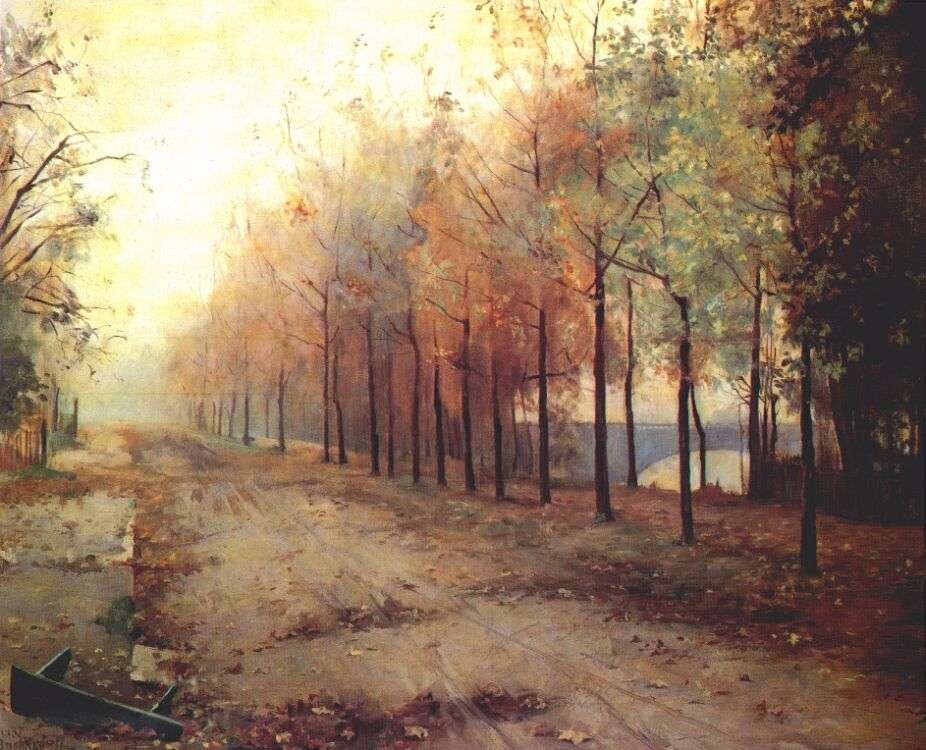
Bashkirtseff’s Autumn (1883) is a thoroughly Impressionist depiction of a row of trees on the bank of the River Seine in the centre of Paris, but is unusual in being devoid of people. The leaf litter, occasional rubbish, and fallen bench strengthen its feeling of desolation in the midst of the bustling city.

Gustave Caillebotte, The Plain at Gennevilliers, A Group of Poplars (1883), oil on canvas, 54.3 x 65 cm, Private collection. WikiArt.
Gustave Caillebotte (1848–1894), The Plain at Gennevilliers, A Group of Poplars (1883), oil on canvas, 54.3 x 65 cm, Private collection. WikiArt.

Gustave Caillebotte also painted in both styles, with several of his best-known works being Naturalist. The Plain at Gennevilliers, A Group of Poplars (1883) is more formally Impressionist, although it retains foreground detail and has a relatively high horizon.

sisleywillowsbanksorvanne1883
Alfred Sisley (1839–1899), Willows on the Banks of the Orvanne (1883), oil on canvas, 50 x 70 cm, Private collection. Wikimedia Commons.

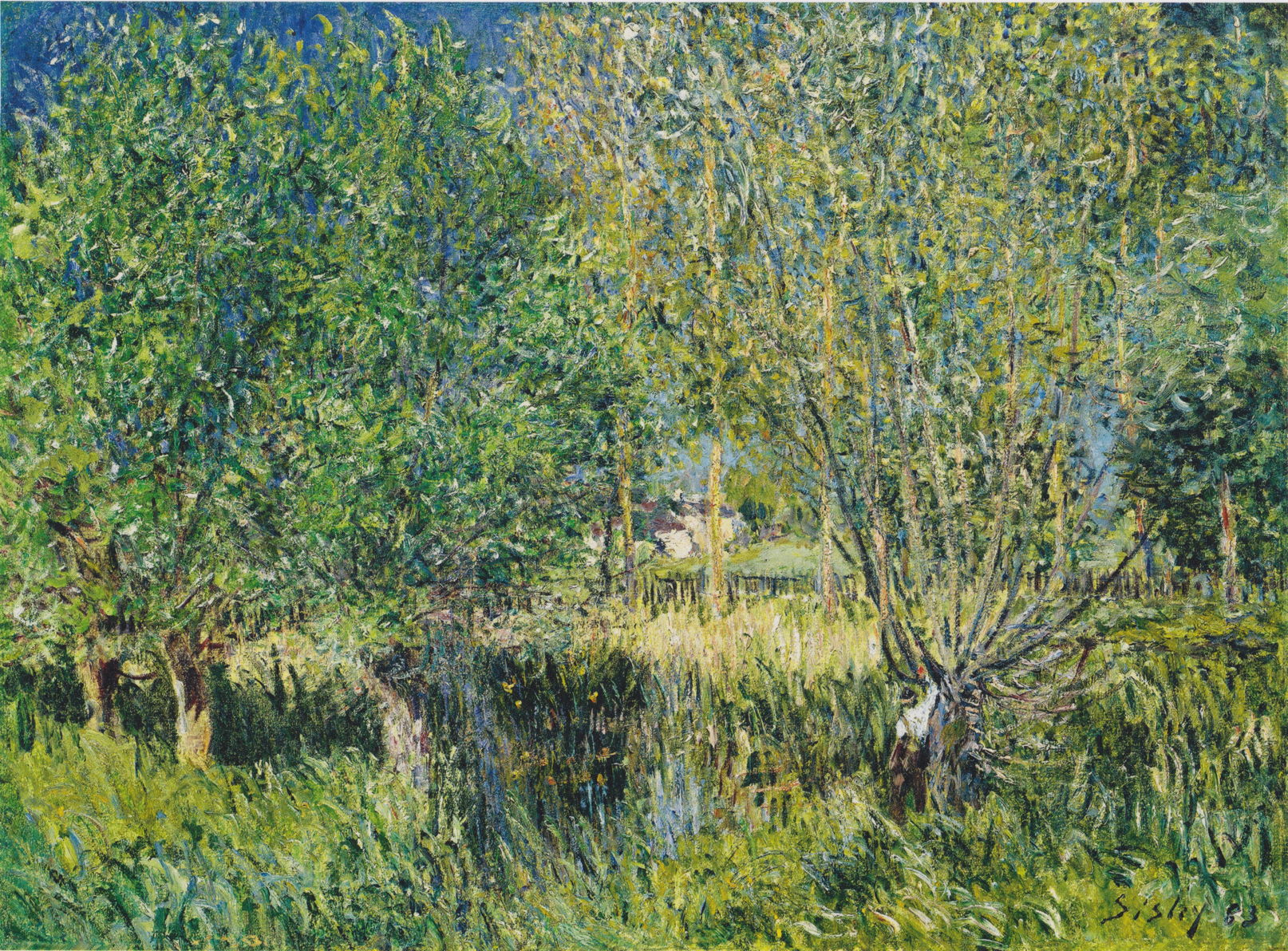
Alfred Sisley’s Willows on the Banks of the Orvanne (1883) is also more representative of Impressionism. An irregular row of pollarded willows, with well-developed heads, crosses the foreground, behind which there is the river Orvanne, reeds, and a tall stand of poplars. Behind this dense vegetation is a fence, field, and distant buildings, at the midpoint of the painting.

monetstormyseaetretat
Claude Monet (1840–1926), Stormy Sea in Étretat (1883), oil on canvas, 100 x 81 cm, Musée des Beaux-Arts, Lyon, France. Wikimedia Commons.

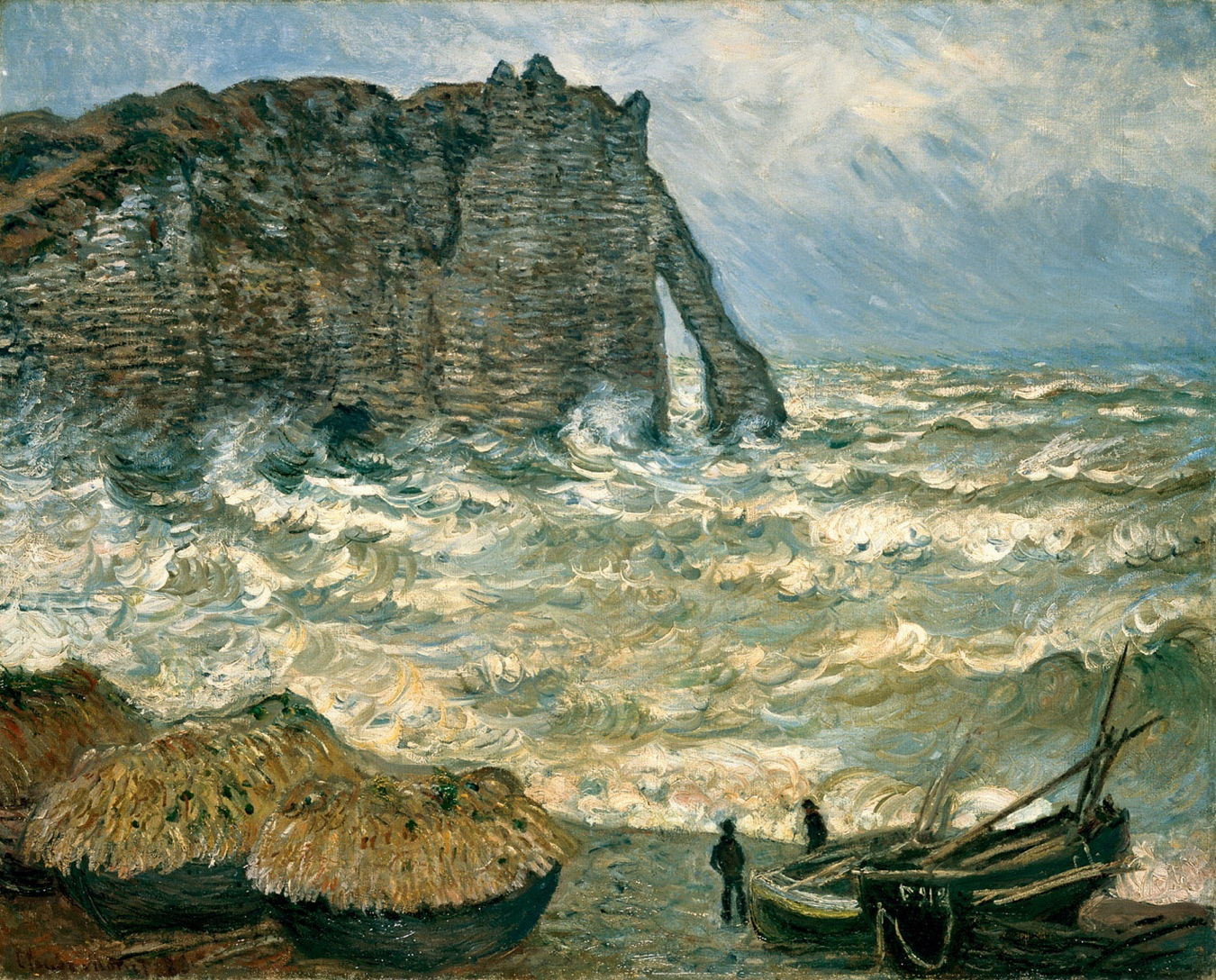
At the Impressionist end of the spectrum is Claude Monet’s Stormy Sea at Étretat (1883), painted from the beach directly in front of the the village, and a prototype for a small series.

renoirsunsetdouarnenez
Pierre-Auguste Renoir (1841–1919), Sunset at Douarnenez (c 1883), oil on canvas, 53.7 x 64.4 cm, location not known. Wikimedia Commons.

For all his realist figures, Renoir’s Sunset at Douarnenez, from around 1883, is a classical Impressionist view looking into the setting sun.

I hope this small collection of paintings demonstrates there was a great deal more to French and European painting in 1883 than Impressionism. In this series I will explore the artists and paintings that accompanied Impressionism, but have now been largely forgotten. I hope you’ll join me.

❌