Reading view

There are new articles available, click to refresh the page.

A weekend with Misia: 2

In 1904, Misia Natanson, née Godebska, patron and muse of artists in Paris, was in the process of transferring her affection from her first husband Thadée Natanson to Alfred Edwards, the publishing magnate who was providing him with capital in return.
bonnardmisiadog
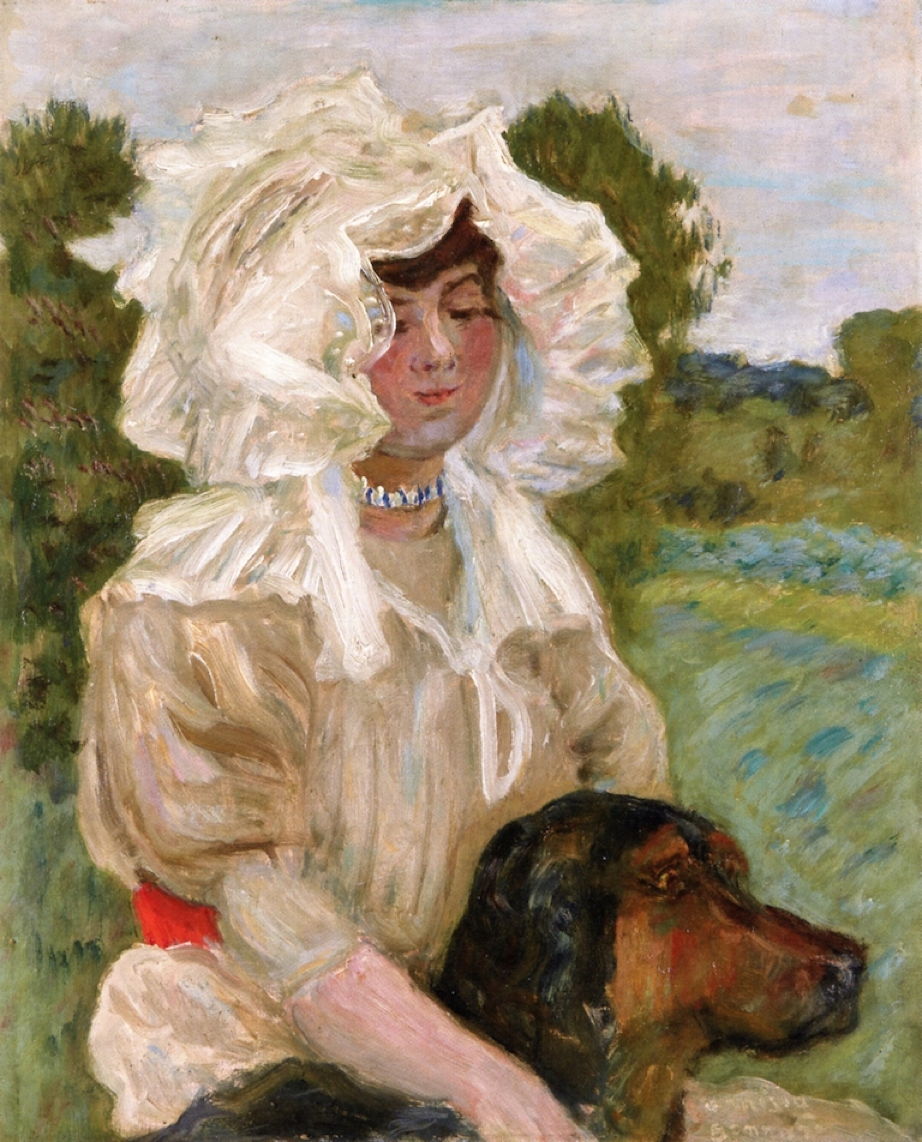
Pierre Bonnard (1867-1947), Misia Natanson and Her Dog (c 1904), oil on panel, 46 x 37 cm, Private collection. The Athenaeum.

Pierre Bonnard sees a completely different figure from those in Renoir’s portraits. In Misia Natanson and Her Dog from about 1904, she’s out in the country with her dog, wearing an ornate white lace hat, more like a character from a nursery rhyme than the mistress of a newspaper magnate.

The following year, Misia married Edwards, and her circle of artists and composers benefited from new patronage with even deeper pockets. Misia and her husband had a yacht, by which I mean a large, crewed vessel, not a dinky little dinghy. In the summer of 1905, they took Bonnard, Maurice Ravel, and others on the yacht’s maiden cruise to Belgium, the Netherlands and Germany.
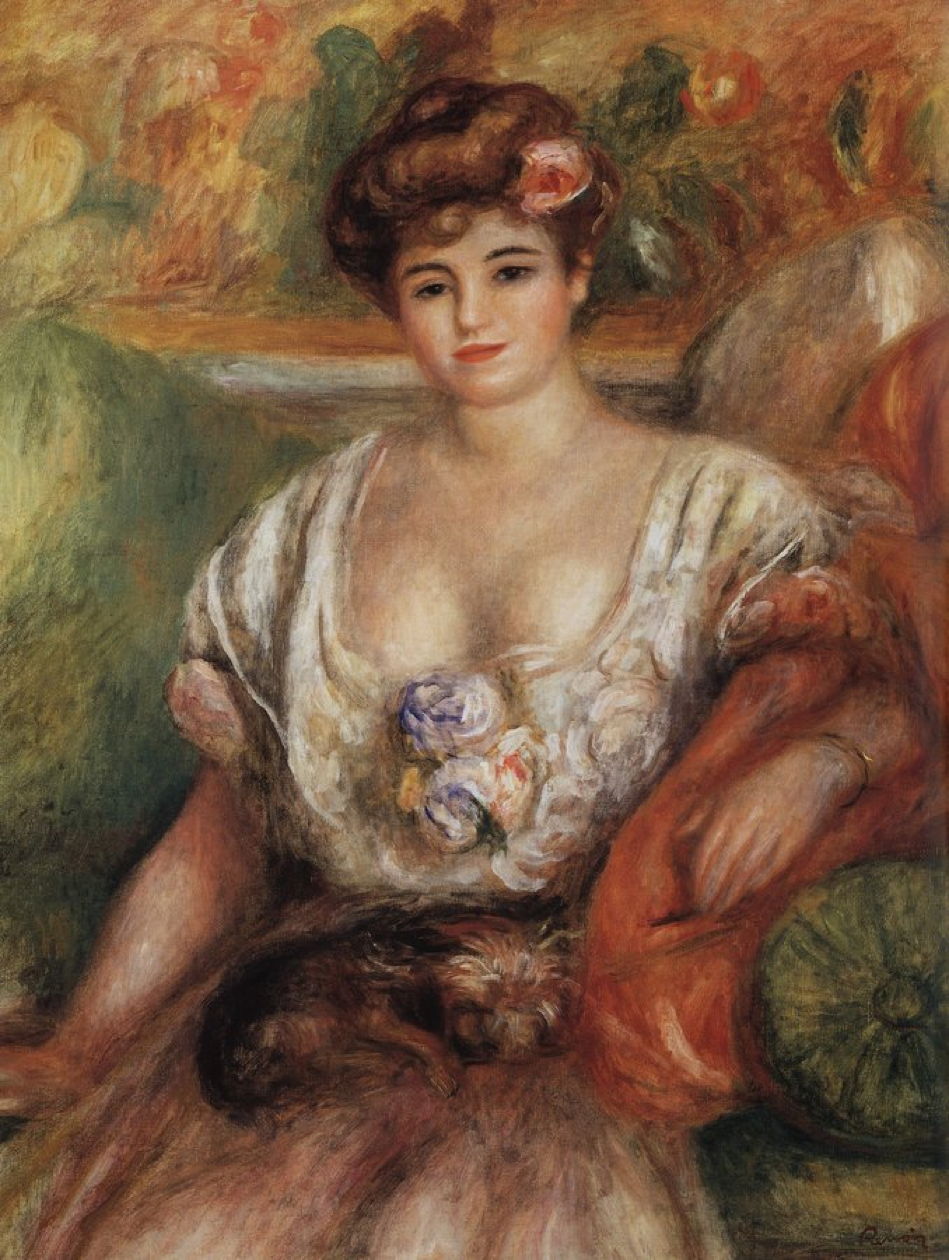
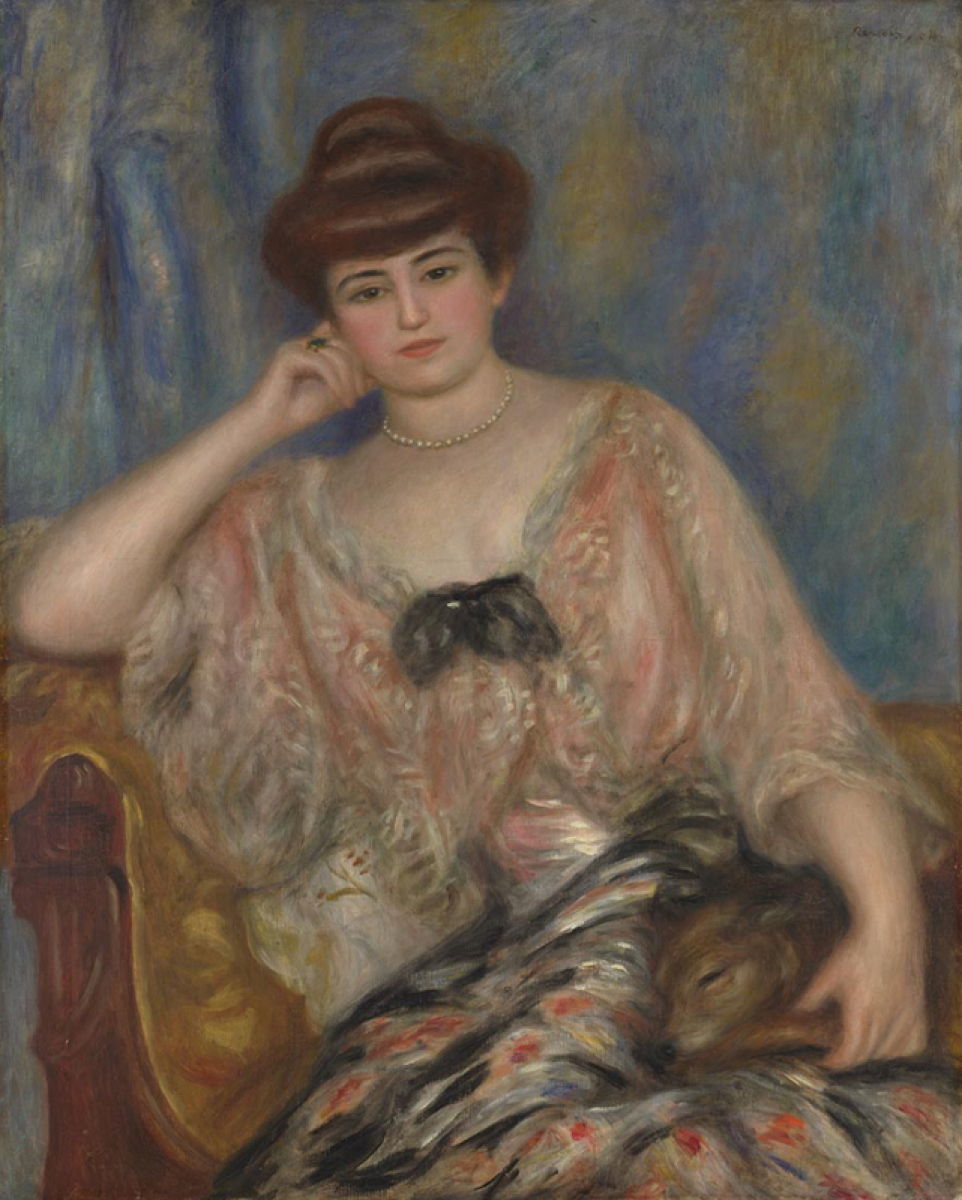
renoirmisialapdogbarnes1906
Pierre-Auguste Renoir (1841–1919), Misia Sert with a Lap Dog (Young Woman with a Lap-Dog) (c 1906), oil on canvas, 92.5 x 73.5 cm, Barnes Foundation, Philadelphia, PA. Wikimedia Commons.

Misia, though, looks no happier in Renoir’s third portrait of Misia Sert with a Lap Dog (Young Woman with a Lap-Dog) from after her second marriage in about 1906. And the dog has changed to a toy breed, probably a Brussels Griffon.

bonnardcasamisiasert
Pierre Bonnard (1867-1947), La Casa de Misia Sert (The House of Misia Sert) (1906), tempera on canvas, 38 x 46 cm, Musée d’Orsay, Paris. The Athenaeum.

Bonnard dedicated his painting of The House of Misia Sert (1906) to the former Misia Natanson, muse, close friend, and patron. This was made using tempera rather than oils.

He continued to keep company with Misia and her husband. Maurice Ravel dedicated two of his most beautiful compositions to her: The Swan from Histoires Naturelles, and The Waltz.

bonnardpleasure1906
Pierre Bonnard (1867-1947), Pleasure (1906), oil on cardboard, 250 x 300 cm, Private collection. The Athenaeum.

Works created for Misia extended beyond mere portraits. In Pierre Bonnard’s large painting of Pleasure or Games from 1906, one of four panels he made for Misia and Alfred Edwards’ apartment in Paris, decorative edging includes images of birds and monkeys, whose innocent playfulness is seen as being pleasurable.
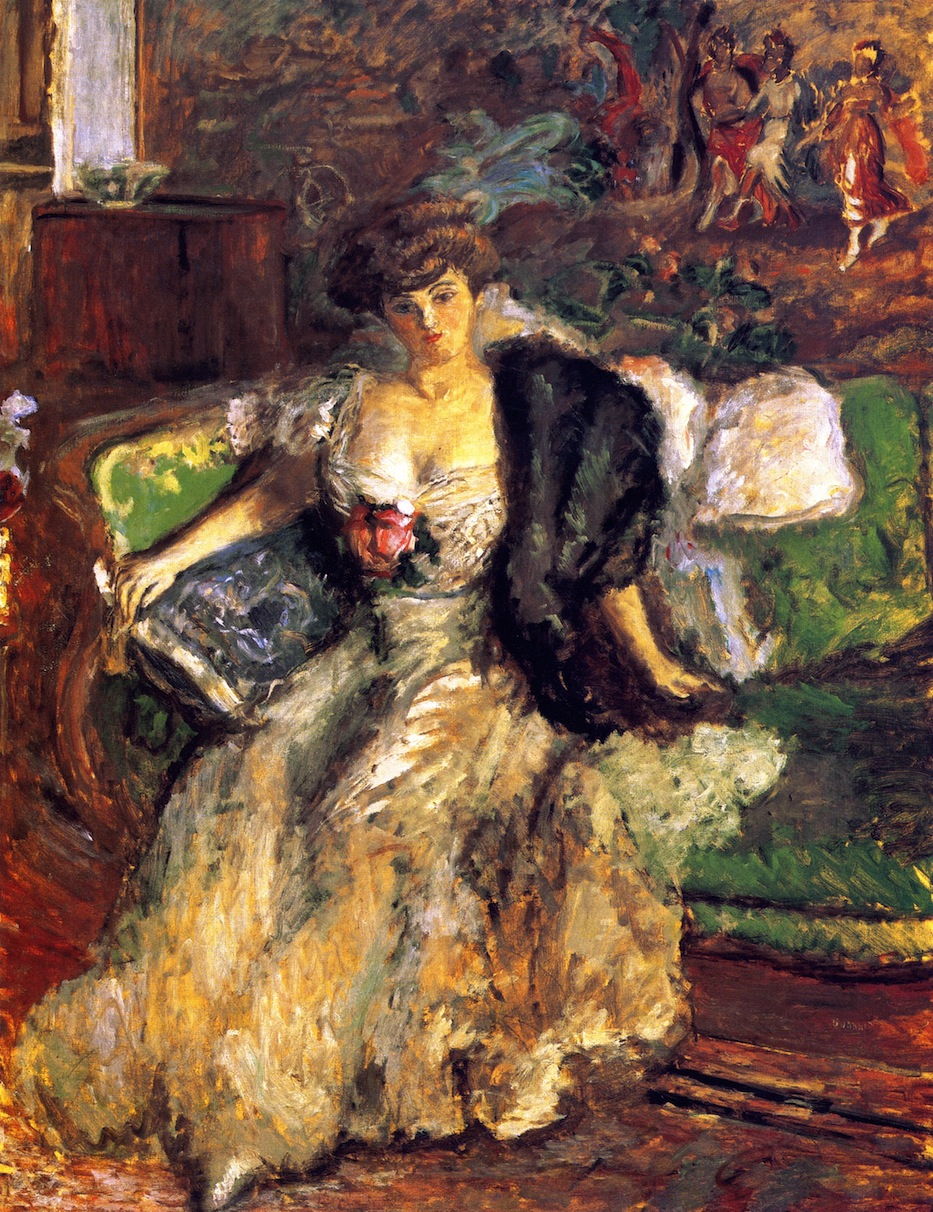
bonnardmisia1908
Pierre Bonnard (1867-1947), Misia (1908), oil on canvas, 145 x 114 cm, Museo Nacional Thyssen-Bornemisza, Madrid, Spain. The Athenaeum.

In 1908, Bonnard painted at least three portraits of Misia. Gone is the illusion of the shepherdess: she now sits in a lavishly-decorated room, with what appear to be Gobelin tapestries behind her.
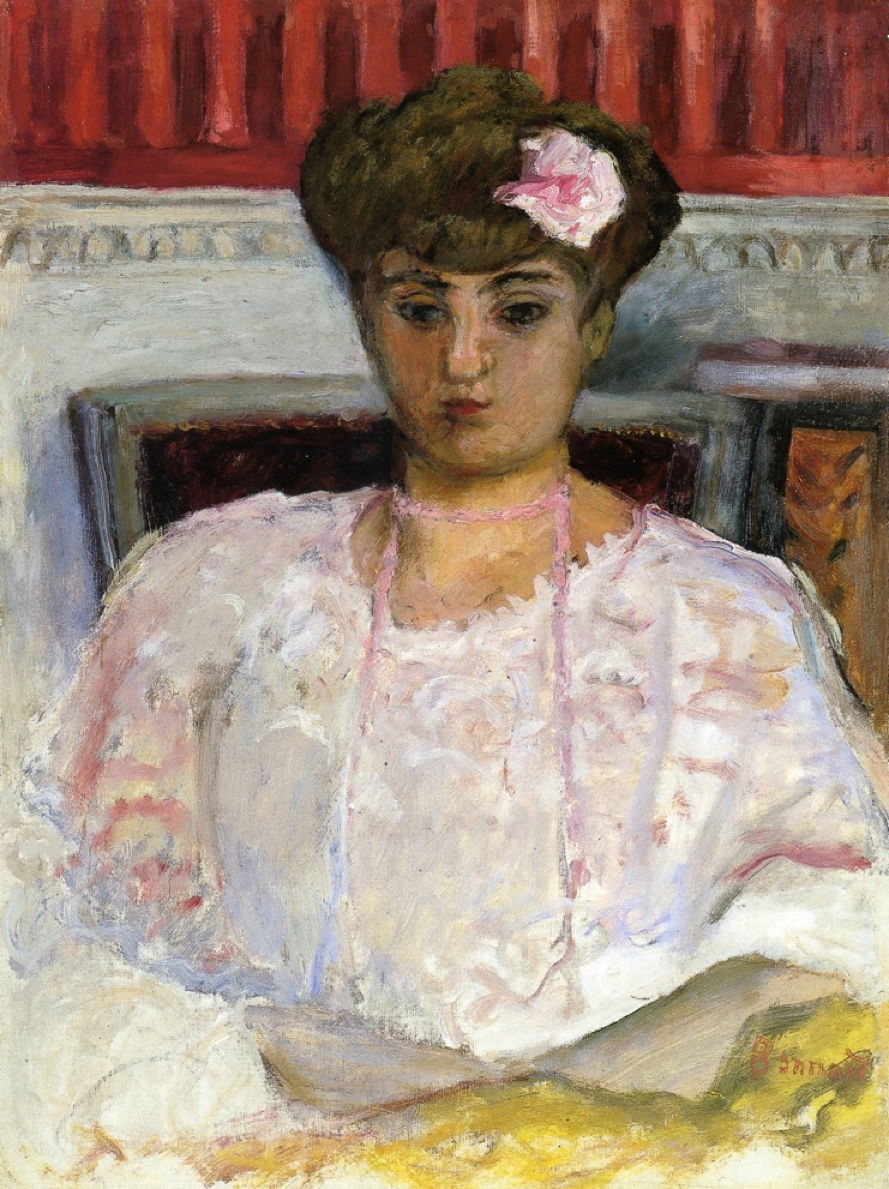
bonnardmisiapinkcorsage
Pierre Bonnard (1867-1947), Misia with a Pink Corsage (c 1908), oil on canvas, 157.2 x 117.9 cm, Private collection. The Athenaeum.

In Misia with a Pink Corsage, Bonnard closes in for a straight head-and-shoulders.
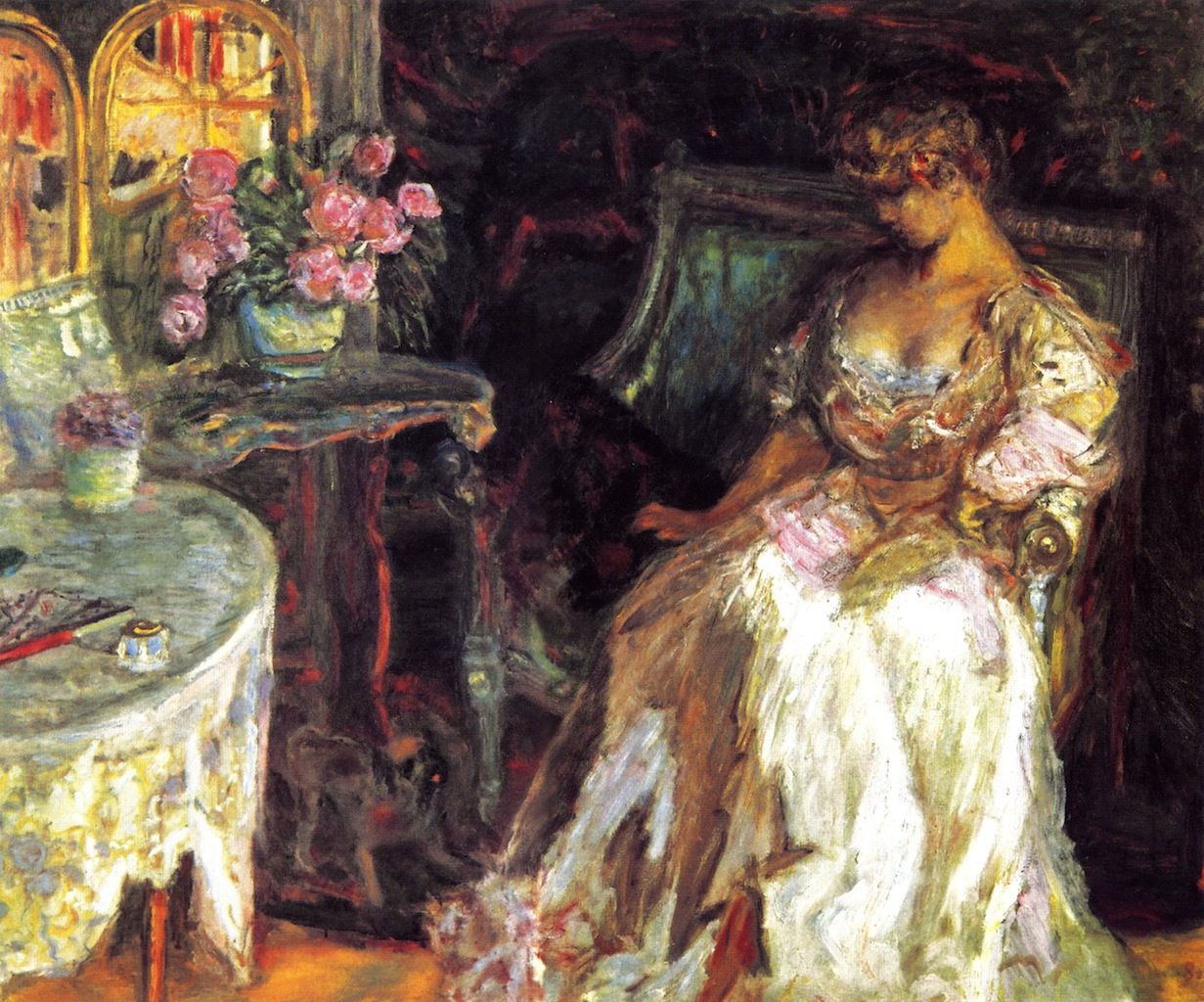
bonnardmisiaroses
Pierre Bonnard (1867-1947), Misia with Roses (1908), oil on cardboard, 114 x 146.5 cm, Private collection. The Athenaeum.

In Misia with Roses, she looks down at an almost unseen pet she is stroking beside her.

As could have been expected, Alfred Edwards proved unfaithful to Misia. She divorced him in 1909, by which time she was already in a relationship with the Spanish painter Josep Maria Sert (1874-1945). He had been on the periphery of the Nabis since moving to Paris in 1899.
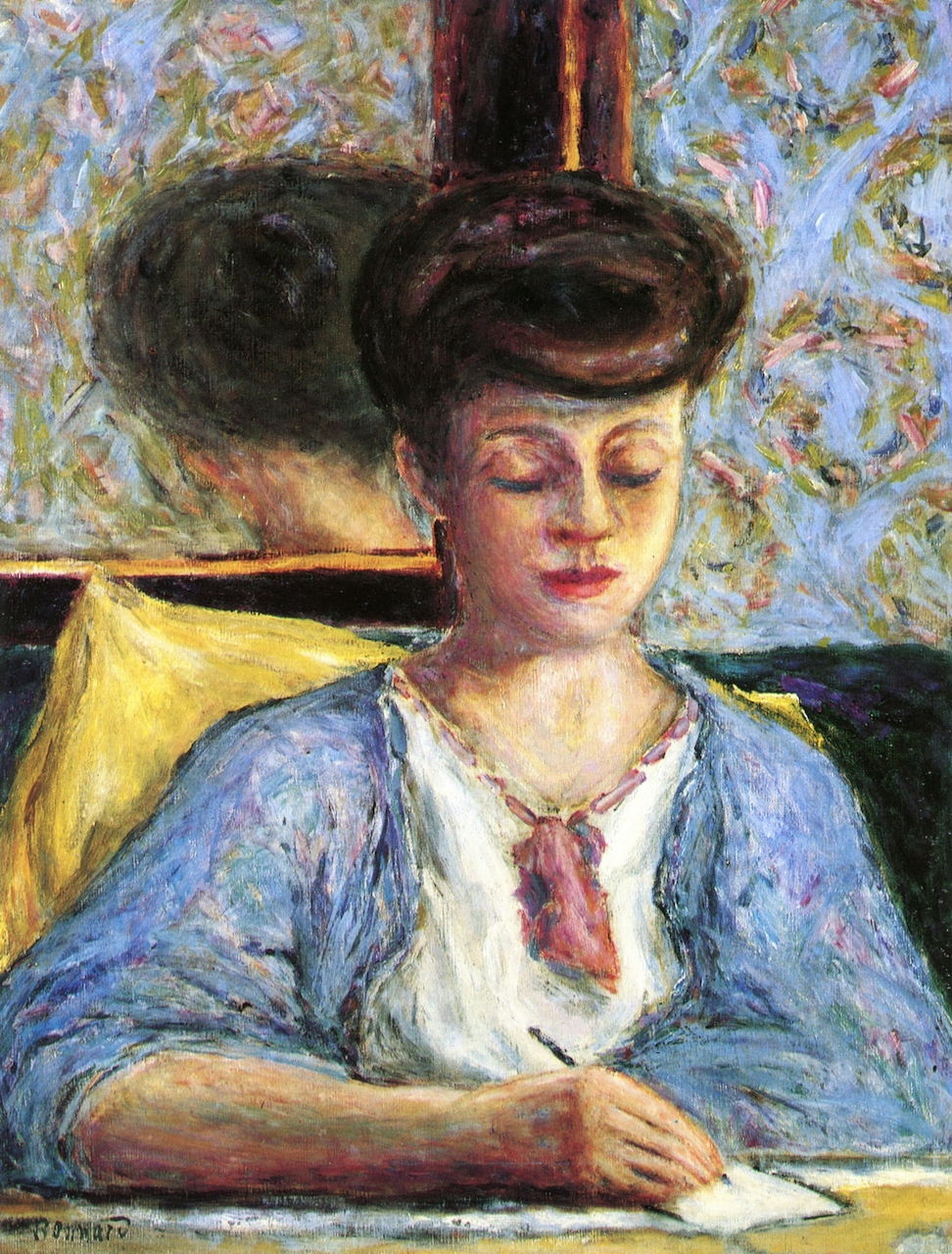
bonnardmisiawriting
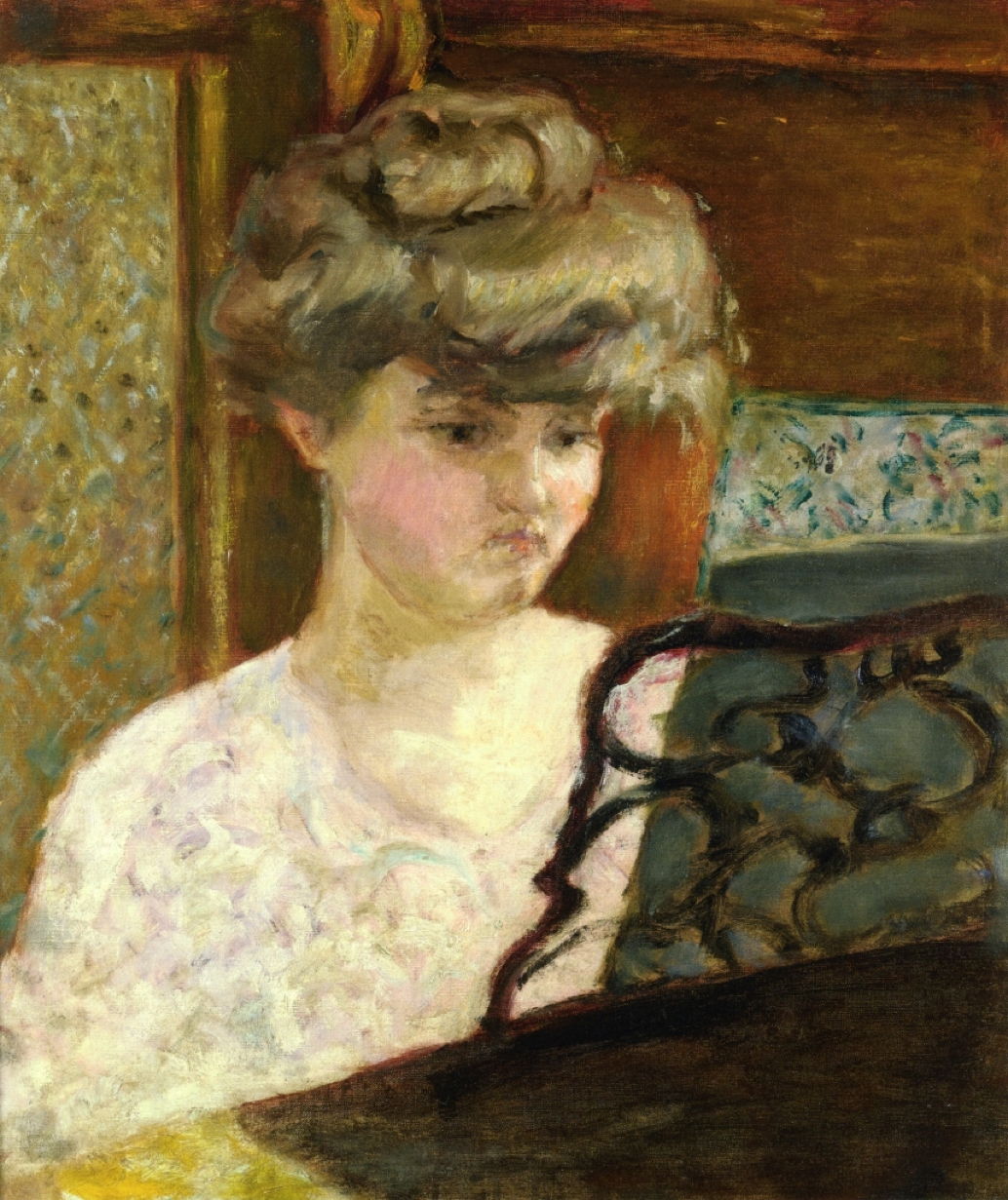
Pierre Bonnard (1867-1947), Misia Godebska Writing (c 1910), oil on canvas, 64.4 x 50 cm, Private collection. The Athenaeum.

The last portrait that I can find by Bonnard, of Misia Godebska Writing, was painted in about 1910. It’s back to head-and-shoulders, although here the artist has used a little mirror play to reveal her chignon, a feature that Bonnard seemed to like.

Misia didn’t marry Sert until 1920, by which time she was established as the cultural arbiter in Paris, and a close friend of Coco Chanel. Her husband, a friend of Salvador Dalí, specialised in murals, and strangely never appears to have painted her portrait. Instead, he spent over thirty years painting murals in the Vic Cathedral in Barcelona, and having affairs of his own. In 1927, Sert divorced Misia to marry the sculptor Isabelle Roussadana Mdivani (1906-1938), known for short as Roussy, who for a time had lived with the Serts in a ménage à trois.

The Serts had been strong supporters of Sergei Diaghilev’s Ballets Russes, which was based in Paris from 1909. Josep Maria Sert painted sets and designed costumes from 1914 onwards. Misia was also heavily involved, often raising money to save a production from seemingly overwhelming debts.

Léon Bakst had also been painting and designing for Diaghilev and his Ballets Russes. Diaghilev proved highly successful, and commissioned music from Igor Stravinsky, Claude Debussy, Sergei Prokofiev and other major composers of the day. Other painters who produced work for the Ballets included Vasily Kandinsky, Pablo Picasso and Henri Matisse. Coco Chanel also created costume designs.
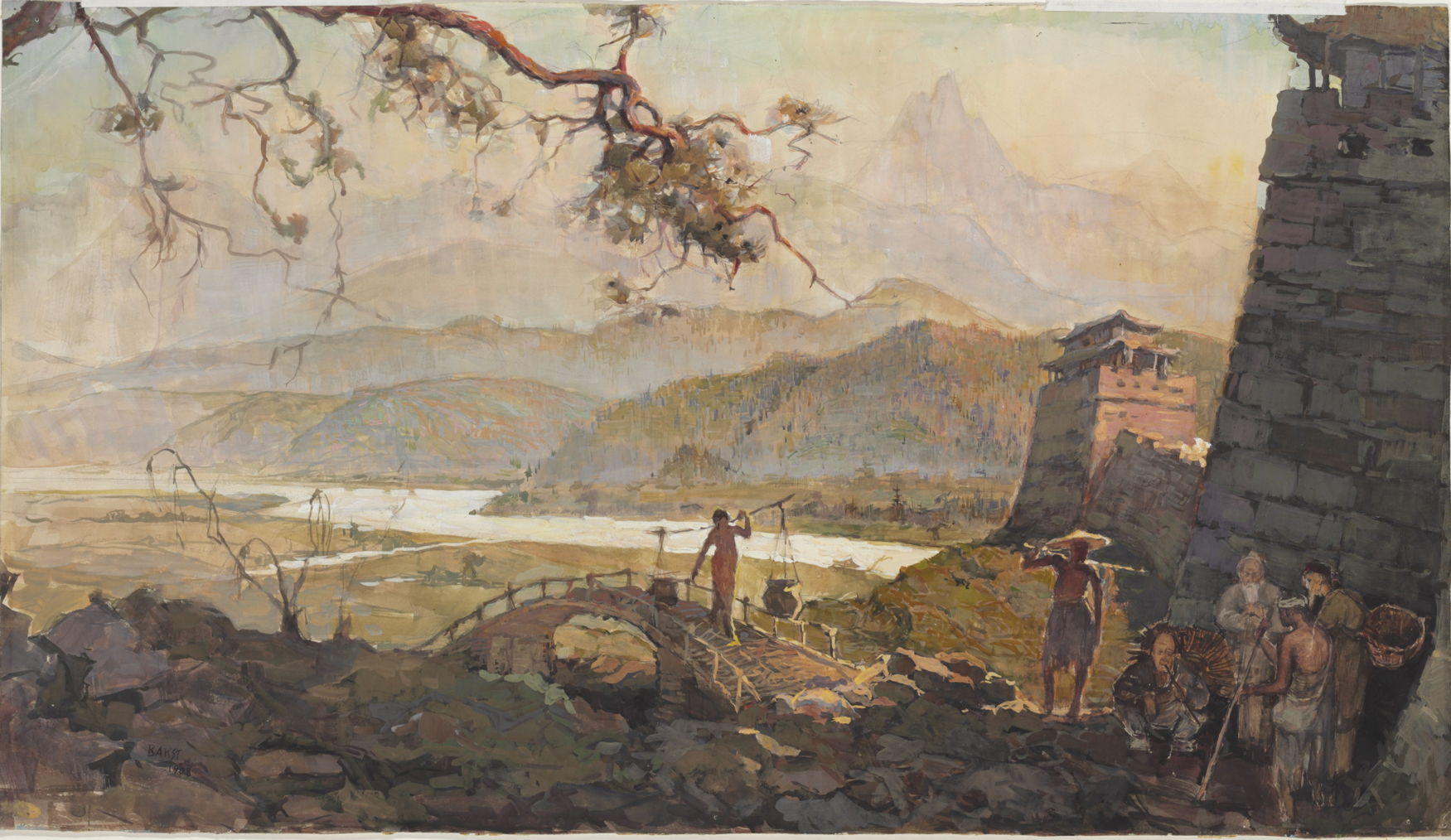
bakstlesorientales
Léon Bakst (1866–1924), Set design for ballet “Les Orientales” (1908), watercolour, pencil, gouache, 73.2 x 43 cm, scenic design for the Ballets Russes, location not known. Wikimedia Commons.

Misia remained close to Diaghilev, and in August 1929 she comforted him as he died in Venice of diabetes, then paid for his funeral from her own pocket.

Just before the Second World War, Roussy Sert died, and Misia and Josep Maria Sert reconciled, and sort of lived together in separate apartments in Paris. Misia’s reputation remained unblemished during the Nazi occupation of Paris, and she died there on 15 October 1950, at the age of 78.

Without Misia’s influence and support, a great deal of the painting, music, and ballet of the first half of the twentieth century simply wouldn’t have happened.

Reference

Wikipedia.

A weekend with Misia: 1

One of the myths about nineteenth and twentieth century art is that it freed itself from patronage that had bedevilled its past. What did change was that patrons of the arts were seldom royalty or nobility, although their power and influence were just the same. Between about 1895 and the late 1930s, one of the most important patrons in France was a Polish woman, born Maria Zofia Zenajda Godebska in 1872, but subsequently known as Misia Natanson, Edwards, or Sert. Her father was Cyprian Godebski, a major sculptor who was a professor at the Imperial Academy in Saint Petersburg. This weekend I tell a little of her story, with a succession of portraits by her many admirers.

Misia’s mother died shortly after the girl’s birth, so she was sent to her grandparents in Brussels. This took her from sculpture to music, as those grandparents had musical circles including Franz Liszt. She was brought up as a pianist, and when her father moved her to Paris, she studied under Gabriel Fauré.

Misia married for the first time at the age of twenty-one, to her cousin Thadée Natanson, who had socialist ideals and lived in artistic circles. The Natansons entertained Marcel Proust, Stéphane Mallarmé, André Gide and Claude Debussy. But they were closest to their painter friends: Claude Monet, Pierre-Auguste Renoir, Odilon Redon, Paul Signac, and Henri de Toulouse-Lautrec.

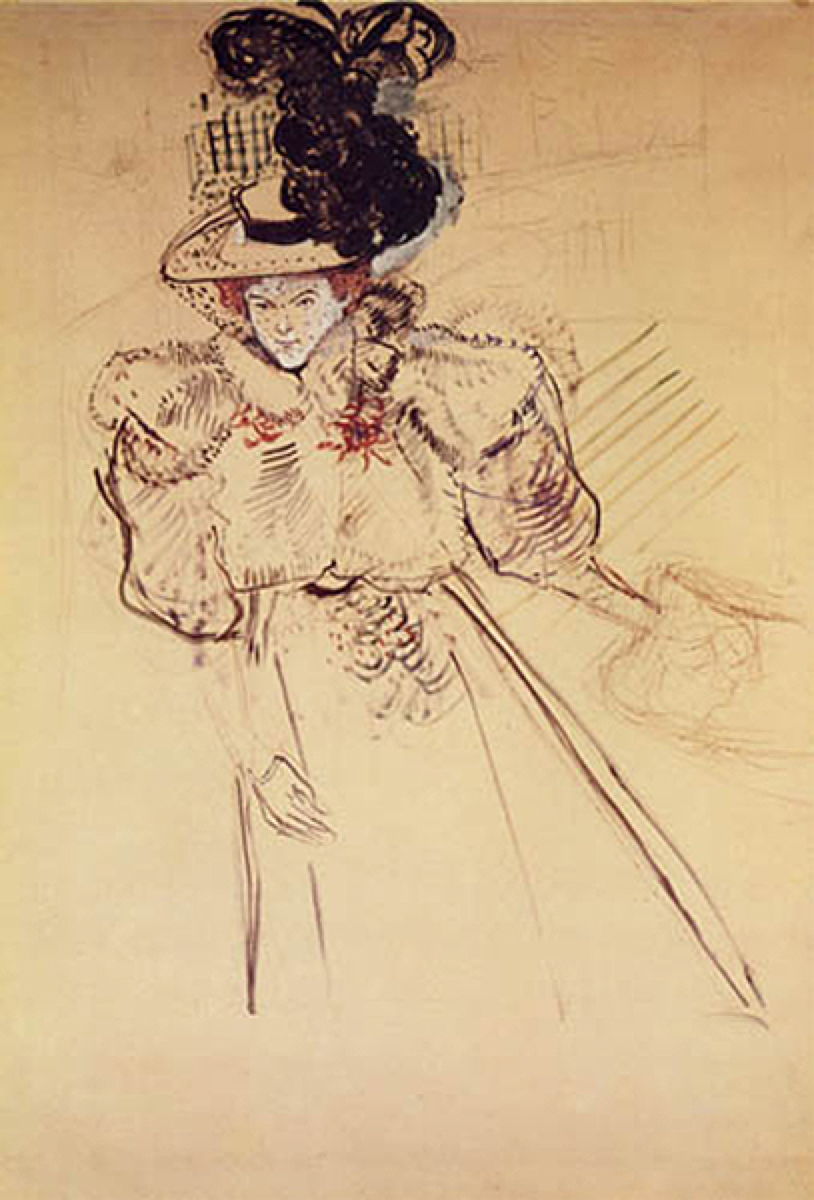
toulouselautrecmisia1895
Henri de Toulouse-Lautrec (1864–1901), Portrait of Misia Natanson (Sert) (1895), further details not known. Wikimedia Commons.

It was probably Toulouse-Lautrec who first started to draw and paint Misia, as in his Portrait of Misia Natanson of 1895.

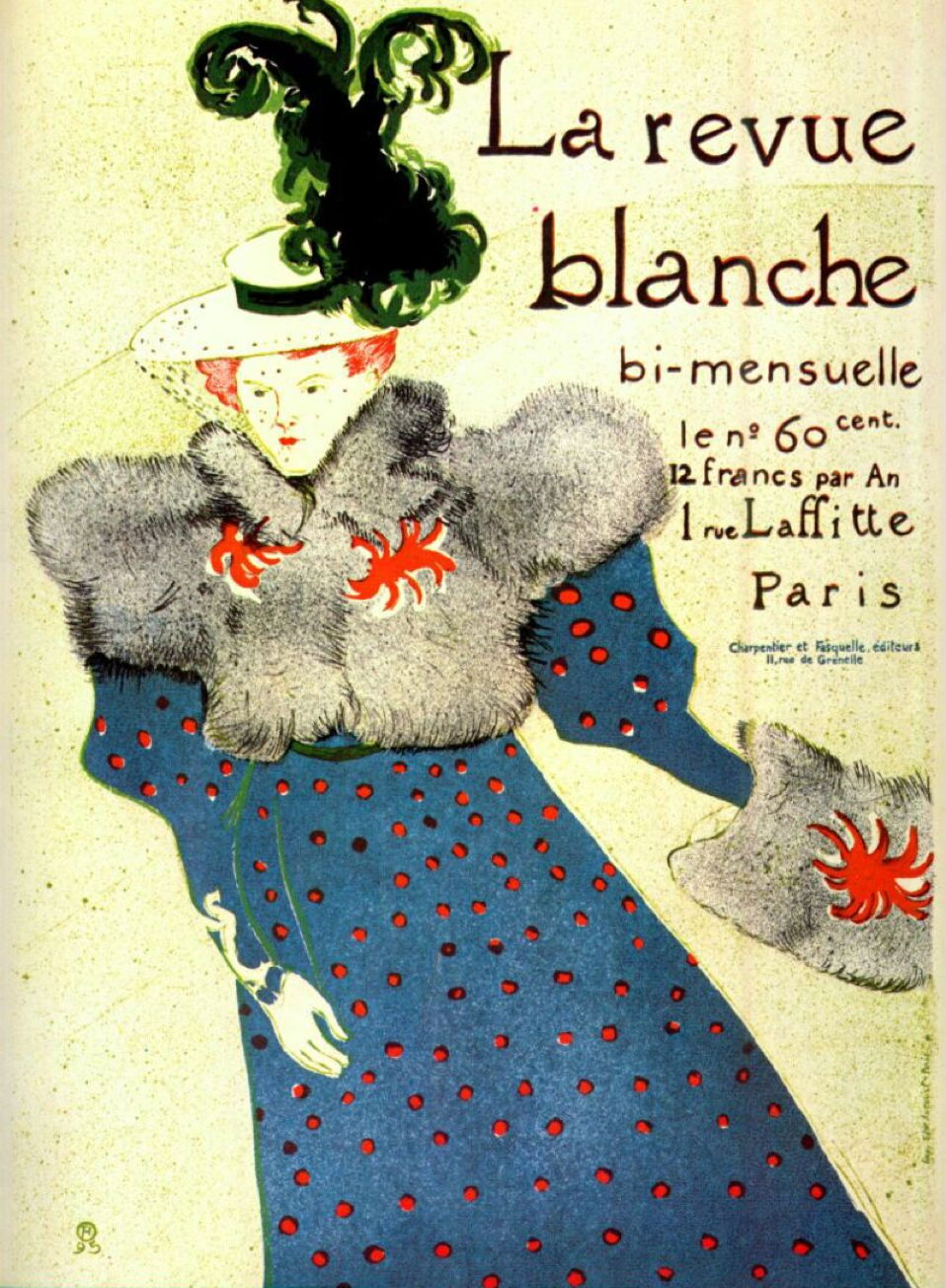
toulouselautrecrevueblanche1895
Henri de Toulouse-Lautrec (1864–1901), Poster for La revue blanche (1895), further details not known. Wikimedia Commons.

In 1895 he turned that into his Poster for “La revue blanche”, the arts magazine co-founded in 1889 by Misia’s husband, which was the platform that promoted the Nabis, including Pierre Bonnard.

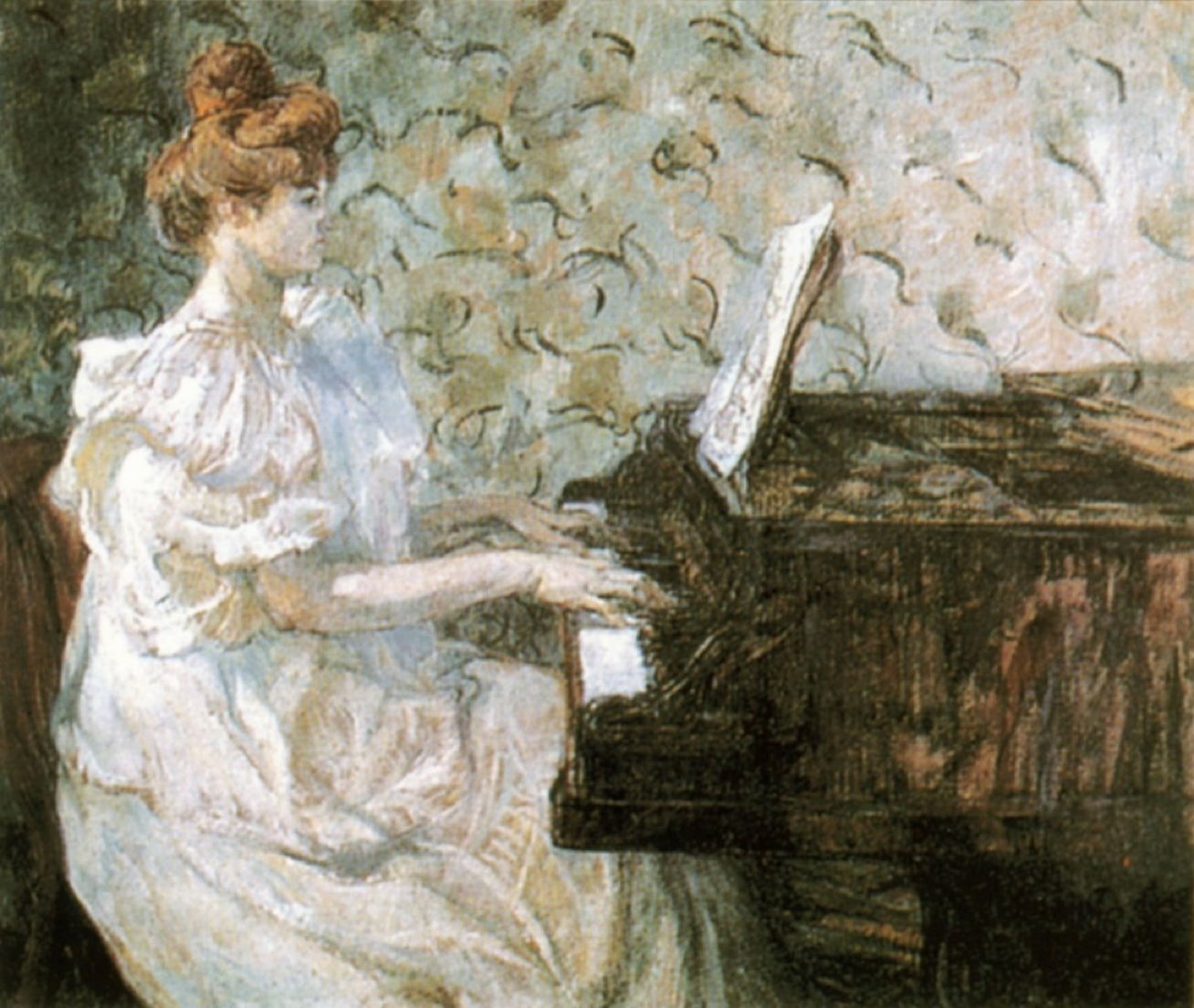
toulouselautrecmisia1897
Henri de Toulouse-Lautrec (1864–1901), Misia Natanson (1897), media and dimensions not known, Musée des Beaux-Arts, Berne, Switzerland. Image by J Frey, via Wikimedia Commons.

Toulouse-Lautrec later painted Misia Natanson playing the piano in 1897.

The Nabis themselves painted Misia’s portraits, not just as their main patron, but in informal settings, as more of a friend and muse.

vuillardvallottonatmisias1897
Édouard Vuillard (1868–1940), Vallotton at the Natansons (1897), further details not known. Wikimedia Commons.

Édouard Vuillard’s Vallotton at the Natansons shows Misia watching Félix Vallotton painting in 1897, at the Natanson’s home.

vallottonmisiadressingtable
Félix Vallotton (1865–1925), Misia at Her Dressing Table (1898), distemper on cardboard, 36 x 29 cm, Musée d’Orsay, Paris. Wikimedia Commons.

Félix Vallotton provides a glimpse into her private life in his Misia at Her Dressing Table from 1898.

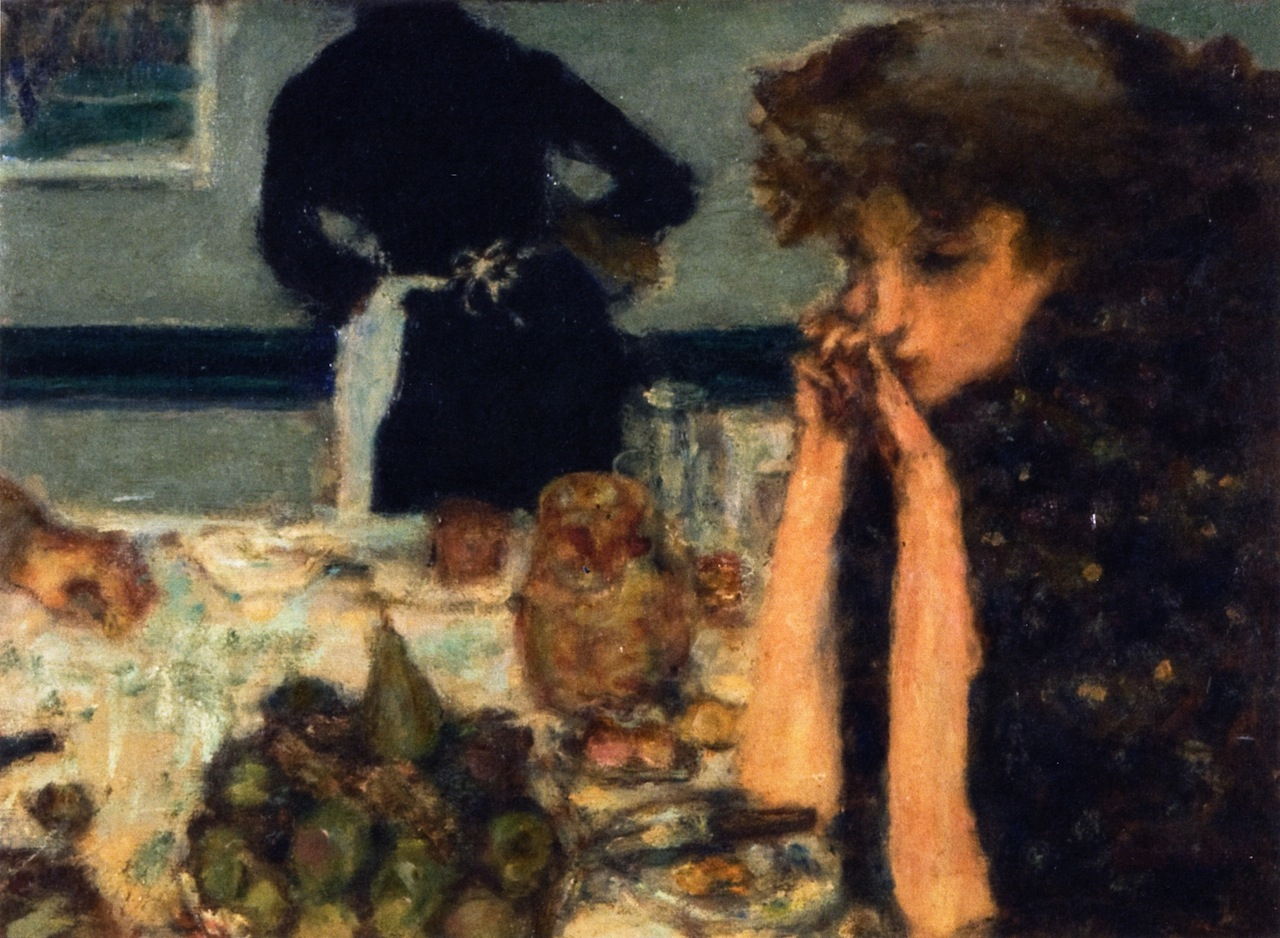
bonnardmisiabreakfast
Pierre Bonnard (1867-1947), Misia Natanson at Breakfast (c 1899), oil on wood, 32 x 41 cm, Private collection. The Athenaeum.

In his turn, Pierre Bonnard painted Misia Natanson at Breakfast in about 1899, with one of the family’s maids at work in the background.

bonnardmisiapiano
Pierre Bonnard (1867-1947), Misia at the Piano (Portrait of Misia Natanson) (c 1902), oil on canvas, 46.2 x 39 cm, Private collection. The Athenaeum.

Bonnard’s Misia at the Piano from about 1902 shows Misia doing what she loved most.

At this time, Thadée Natanson needed more capital to support his publishing and other activities. He found a source in Alfred Edwards, a publishing magnate who had founded and published the major newspaper in Paris at the time, Le Matin. Unfortunately, Edwards and Misia fell in love, and Misia became Edwards’ mistress in 1903. As Natanson wanted his capital, so Edwards wanted Misia, and that became a condition of the deal between them.

renoirmisiang1904
Pierre-Auguste Renoir (1841-1919), Misia Sert (1904), oil on canvas, 92.1 x 73 cm, The National Gallery (Bought, 1960), London. Courtesy of and © The National Gallery, London.

Renoir painted this and the next portrait of Misia Sert while this was being settled, in 1904. Of the two, this is the better-known, as it hangs in the National Gallery in London. I can’t help feeling that she appears unhappy here.

renoirmisia1904
Pierre-Auguste Renoir (1841–1919), Portrait of Misia Sert (1904), oil on canvas, 55.5 × 66.5 cm, Tel Aviv Museum of Art, Tel Aviv, Israel. Wikimedia Commons.

In this second of Renoir’s portraits of Misia from 1904, now in Tel Aviv, she is as sumptuously dressed, but her head is buried in a book.

Reference
Wikipedia.

On Reflection: Selfies

Until the middle of the nineteenth century almost every painter painted at least one reflection, that of their own face in a self-portrait. There’s even a gallery specialising in its unique collection, the Uffizi in Florence, Italy, where they go back six hundred years to Taddeo Gaddi in 1440-50 and Filippino Lippi in 1485. This article looks at a few of the more unusual ones that didn’t make it to the Uffizi.

courbetdesperate
Gustave Courbet (1819–1877), The Desperate Man (c 1843), oil on canvas, 45 x 54 cm, Private collection. Wikimedia Commons.

The most radical and impressive of Gustave Courbet’s early paintings is The Desperate Man from about 1843, in which the artist grimaces wildly at his own canvas. Augmented by his signature in bright red, it might as well have been his manifesto.

vanderwerffselfportrait
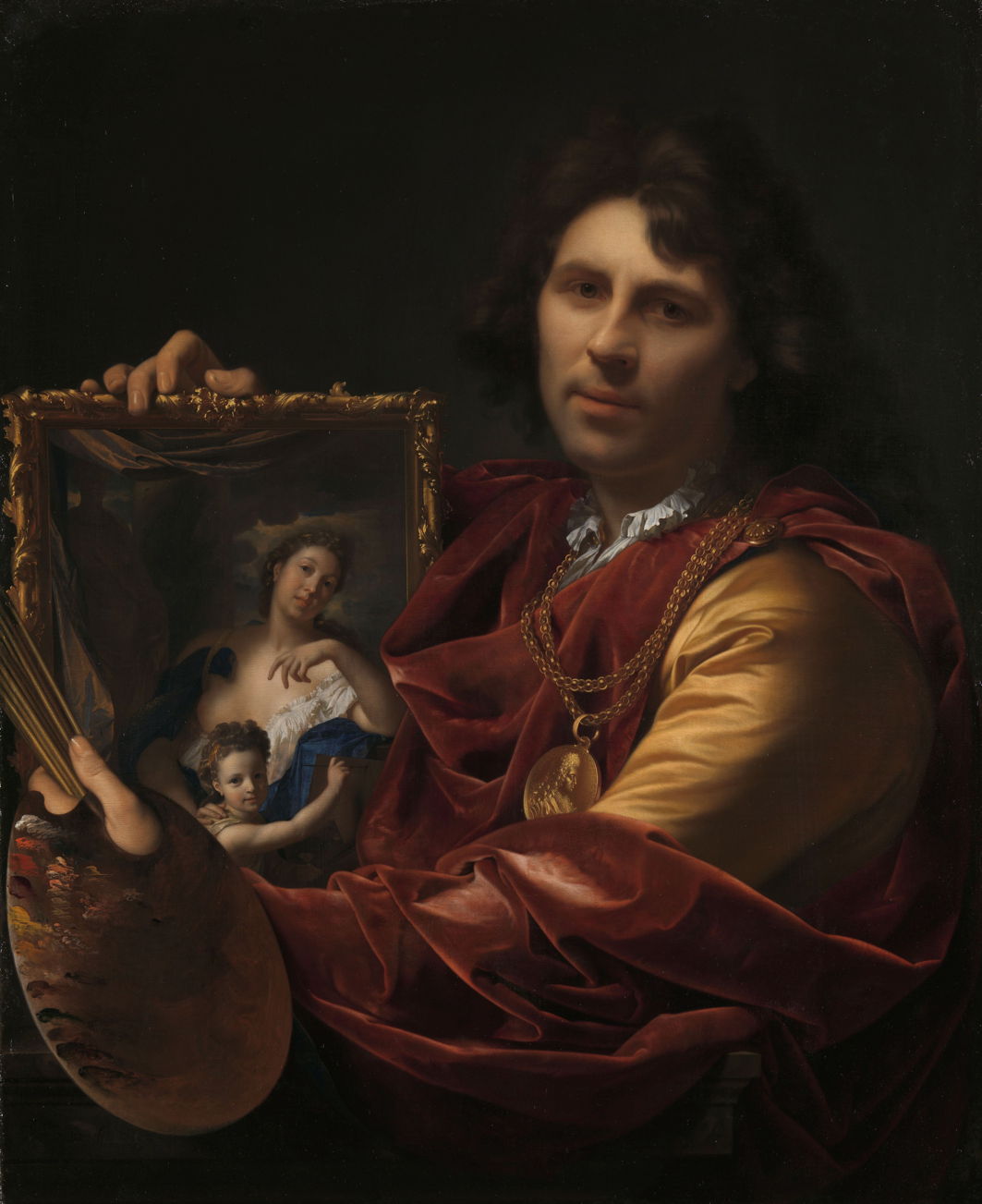
Adriaen van der Werff (1659–1722), Self-portrait with the Portrait of his Wife, Margaretha van Rees, and their Daughter Maria (1699), oil on canvas, 81 x 65.5 cm, Rijksmuseum, Amsterdam, The Netherlands. Wikimedia Commons.

Adriaen van der Werff’s Self-portrait with the Portrait of his Wife, Margaretha van Rees, and their Daughter Maria from 1699 is an ingenious family portrait. He holds his palette and brushes with his left hand, and around his neck is a medallion awarded by his patron, the Elector Palatine. His right hand supports a portrait of his wife Margaretha van Rees (1669-1732) and their daughter Maria (1692-1731).

corinthlastselfportrait
Lovis Corinth (1858–1925), Last Self-Portrait (1925), oil on canvas, 80.5 × 60.5 cm, Kunsthaus Zürich, Zürich. Wikimedia Commons.

Lovis Corinth’s Last Self-Portrait, painted just two months before his death, is unusual in showing him with his reflection in a mirror. He is balding rapidly, his cheeks sunken, and his eyes are bloodshot and tired.

bonnardinterior1905
Pierre Bonnard (1867-1947), Interior (c 1905), oil on canvas, 49.8 x 37.8 cm, Private collection. The Athenaeum.

Pierre Bonnard’s unusual composition in this Interior from about 1905 doesn’t show the woman’s back in the mirror, but a chair placed deliberately in front of the mirror and Bonnard himself, not painting but sat at a table.

Artemisia Gentileschi, Allegory of Painting (c 1638-9), oil on canvas, 98.6 x 75.2 cm, The Queen's Collection, England. Wikimedia Commons.
Artemisia Gentileschi (c 1593-1656), Allegory of Painting (c 1638-9), oil on canvas, 98.6 x 75.2 cm, The Queen’s Collection, England. Wikimedia Commons.

There’s more uncertainty as to whether Artemisia Gentileschi’s brilliant painting of the Allegory of Painting (c 1638-9) is a self-portrait. This striking angle of view can be accounted for if this was a self-portrait composed using two mirrors, one placed above and on the left of the painter, the other directly in front of her, where she is gazing so intently. If so, it was particularly ingenious because the reflection in the second mirror would have normal chirality (left and right would not be reversed).

However, it has been suggested that this isn’t a self-portrait, in which case her choice of view would have been most unusual. It’s believed to have been painted during her stay in London, possibly for King Charles I, as it appears to have passed straight into the Royal Collection, where it has remained ever since.

peetersflowersgoldcups
Clara Peeters (fl 1607-1621), Still Life with Flowers and Gold Cups of Honour (1612), oil on oak, 59.5 x 49 cm, Staatliche Kunsthalle Karlsruhe, Karlsruhe, Germany. Wikimedia Commons.

Clara Peeters’ still life with Flowers and Gold Cups of Honour from 1612 reveals multiple miniature self-portraits reflected in the gold cup at the right. These are shown more clearly in the detail below. To project the image of herself correctly for each of the facets I suspect she must have set up a convex mirror in the same alignment as that facet on the cup.

peetersflowersgoldcupsd1
Clara Peeters (fl 1607-1621), Still Life with Flowers and Gold Cups of Honour (detail) (1612), oil on oak, 59.5 x 49 cm, Staatliche Kunsthalle Karlsruhe, Karlsruhe, Germany. Wikimedia Commons.

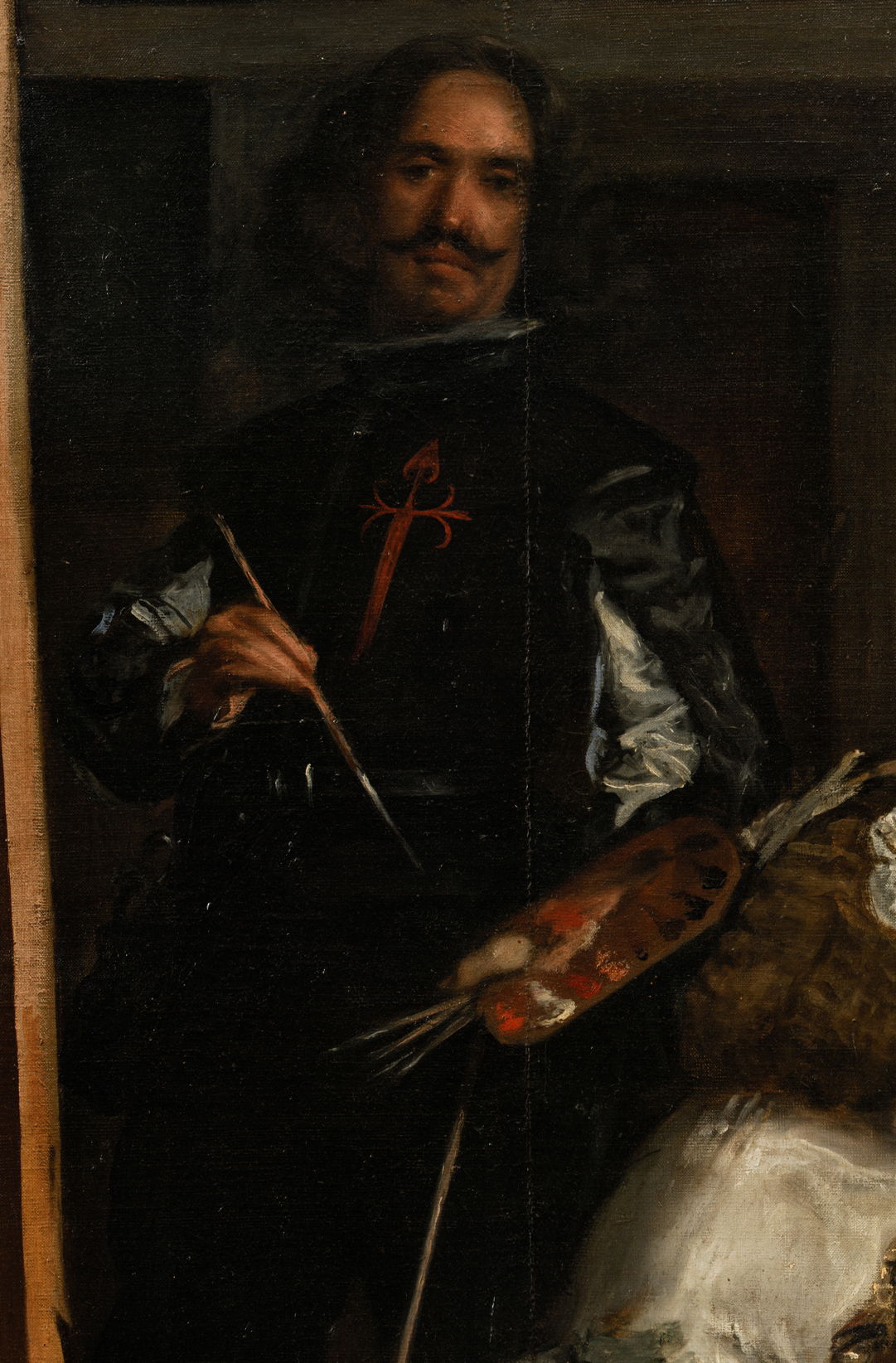
The most famous of all these elaborate self-portraits is surely that of Diego Velázquez in Las Meninas from about 1656-57.

velazquezlasmeninas
Diego Velázquez (1599–1660), Las Meninas (The Maids of Honour, Velázquez and the Royal Family) (c 1656-57) [119], oil on canvas, 318 x 276 cm, Museo Nacional del Prado, Madrid, Spain. Wikimedia Commons.

Like many of his mature works, this is a portrait, but unlike any of the others it’s a group portrait of eleven people and a dog in a room in the Alcázar Palace, which is depicted faithfully, according to palace inventories of the time.

velazquezlasmeninasd3
Diego Velázquez (1599–1660), Las Meninas (The Maids of Honour, Velázquez and the Royal Family) (detail) (c 1656-57) [119], oil on canvas, 318 x 276 cm, Museo Nacional del Prado, Madrid, Spain. Wikimedia Commons.

The largest figure, although out of the limelight and over to the left, is that of Velázquez himself. He looks towards the viewer, with a neutral face of concentration. His right hand holds a brush with his paint laid out on a wooden palette held by his left hand, which also clutches a bundle of other brushes. He is at work on the three metre (ten foot) high canvas in front him, which happens to be the same size as that on which he painted this work.

velazquezlasmeninasd4
Diego Velázquez (1599–1660), Las Meninas (The Maids of Honour, Velázquez and the Royal Family) (detail) (c 1656-57) [119], oil on canvas, 318 x 276 cm, Museo Nacional del Prado, Madrid, Spain. Wikimedia Commons.

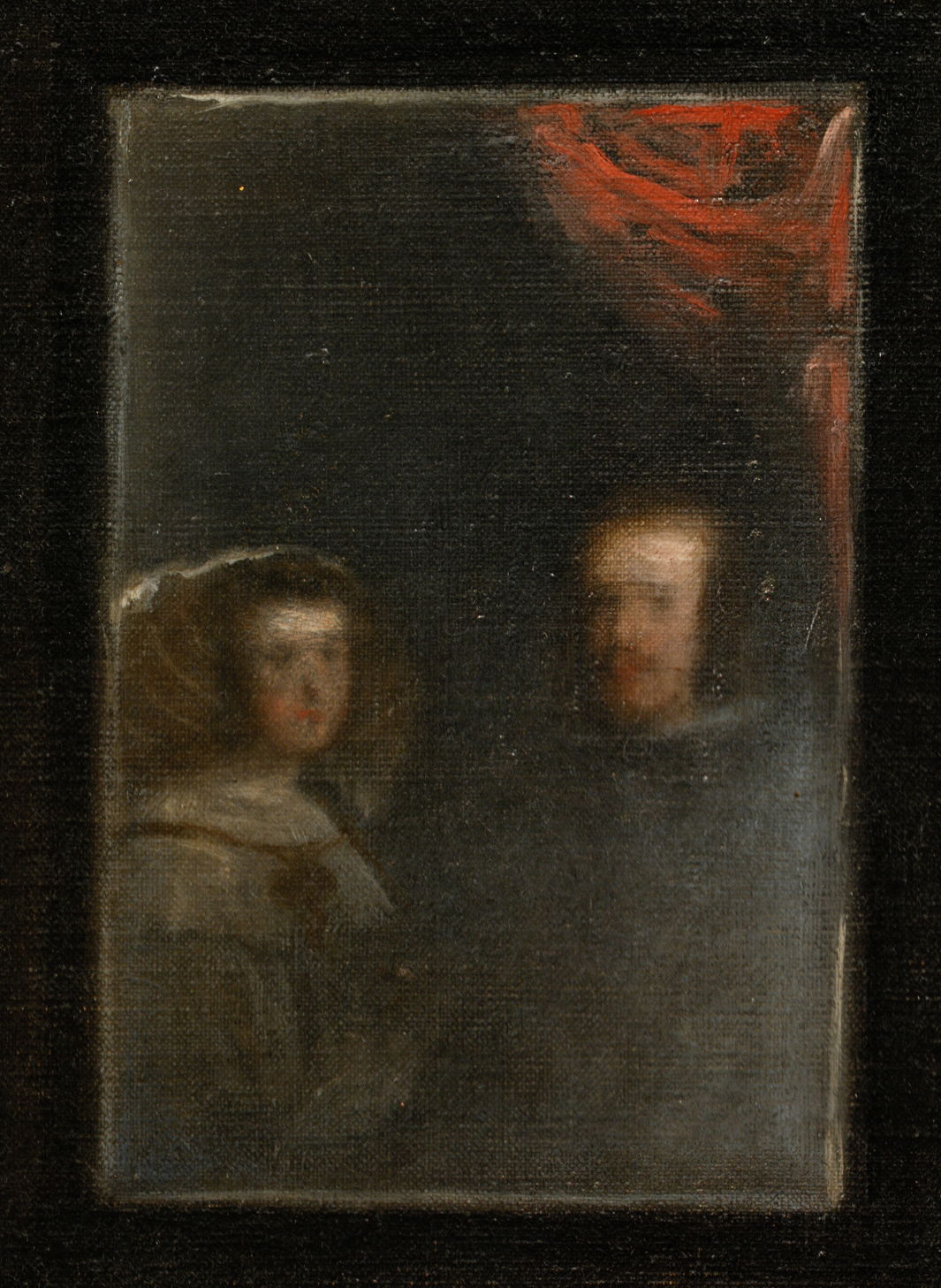
Two figures given a prominent and unusual place are the King and Queen, who are shown reflected in a rectangular plane mirror on the far wall. There has been dispute over whether the reflection shows the couple stood where the viewer is, or the mirror is reflecting their painted images on Velázquez’s canvas.

As the mirror is to the left of the centreline of the painting, it’s hard to see that its image of the royal couple could show them standing where the viewer is, and more likely that what appears there is part of Velázquez’s painting. However, the artist had previously been ‘creative’ in his use of reflections in the Rokeby Venus, and at least part of his body should here be obstructing a clear line of sight between what is on his canvas and the surface of the mirror.

On Reflection: Introduction

Many humans and animals are fascinated by reflections. Whether they’re images of themselves seen in mirrors, or an inverted copy of a landscape seen on the surface of a lake, we can spend embarrassingly long periods just staring at them. For visual artists, those reflections have been a technical challenge and, for those who rise to it, an opportunity to display their painting skills. This series sets out to describe and illustrate how, from the early Renaissance to the twentieth century, masters have painted reflections.

vaneyckarnolfiniportrait
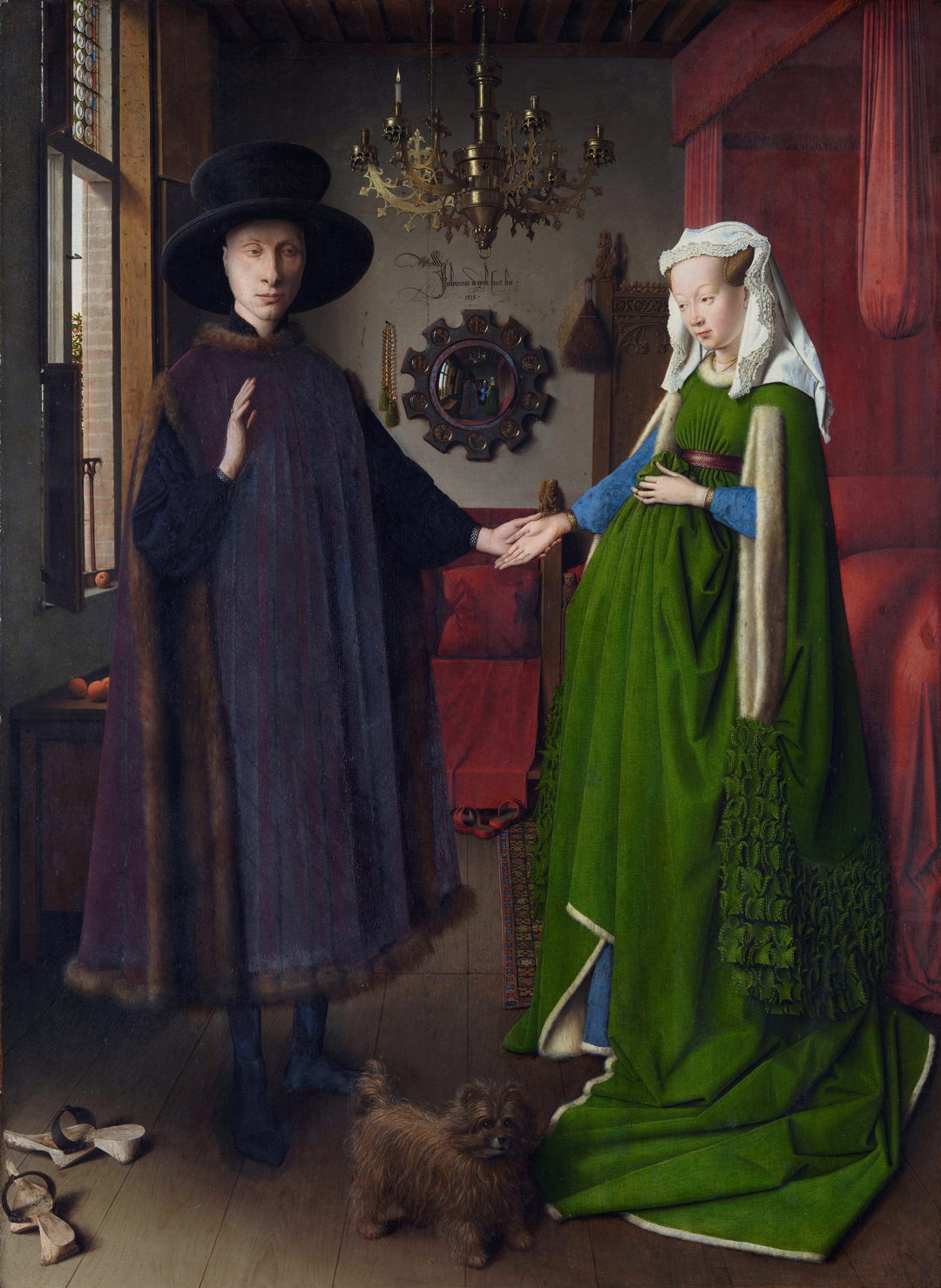
Jan van Eyck (c 1380/90-1441), Portrait of Giovanni Arnolfini (?) and his Wife (1434), oil on oak panel, 82 x 59.5 cm. The National Gallery, London. Wikimedia Commons.

Optical effects are one of the central themes in the Northern Renaissance, as seen in Jan van Eyck’s most famous painting The Arnolfini Wedding (or similar variations), completed in 1434. Between this newly-wed couple holding hands next to their marital bed, in the midline of the painting is a prominent circular convex mirror. The reflection is probably the first example of mirror-play in European art, as it shows a view of the room looking in the opposite direction, past the couple to another two figures, who might be the artist and another.

Jan van Eyck, Portrait of Giovanni(?) Arnolfini and his Wife (detail) (1434), oil on oak panel, 82.2 x 60 cm. National Gallery, London (WikiArt).
Jan van Eyck (c 1380-1441), Portrait of Giovanni(?) Arnolfini and his Wife (detail) (1434), oil on oak panel, 82.2 x 60 cm. National Gallery, London. WikiArt.
Jan van Eyck, The Madonna of Chancellor Rolin (detail) (c 1435) oil on panel, 66 x 62 cm. Musée du Louvre, Paris (WikiArt).
Jan van Eyck (c 1390–1441), The Madonna of Chancellor Rolin (detail) (c 1435) oil on panel, 66 x 62 cm. Musée du Louvre, Paris (WikiArt).

Look in the landscape behind Jan van Eyck’s Madonna of Chancellor Rolin, probably painted the following year, and you’ll see one of the earliest examples of the meticulously accurate depiction of reflections on water.

caravaggionarcissus
Caravaggio (Michelangelo Merisi da Caravaggio) (1571–1610), Narcissus (1594-96), oil on canvas, 110 × 92 cm, Galleria Nazionale d’Arte Antica, Rome. Wikimedia Commons.

In some paintings, reflections are essential to their narrative. Caravaggio’s brilliant Narcissus of 1594-96 uniquely combines chiaroscuro with reflections to provide just enough visual clues to tell this myth so effectively.

The optics of reflections appear to have confounded some painters, while others have deliberately flouted physics for effect, in this case what has become known as the Venus Effect.

velazquezvenus
Diego Velázquez (1599–1660), Venus at Her Mirror, The Toilet of Venus (Rokeby Venus) (1644-48) [101], oil on canvas, 122.5 x 177 cm, The National Gallery, London. Image by Diego Delso, via Wikimedia Commons.

Although often illustrated by one of Titian’s paintings of Venus, the canonical example must be Velázquez’ Venus at Her Mirror, also known as The Toilet of Venus or the Rokeby Venus, from 1644-48. It shows the goddess Venus, whose face is blurred in a false reflection in a mirror being held by her son Cupid. The theme was common, seen in paintings by Titian and Rubens, with Venus sat upright. Giorgione and others had posed her reclining and facing the viewer, making her pose here unusual. Most other paintings of Venus set her in a landscape: here she rests on luxurious even sensuous fabrics.

No matter how convincing her face might appear in the mirror, a moment spent placing yourself in the same position confirms that the image in the mirror is wholly imaginary, and optically incorrect.

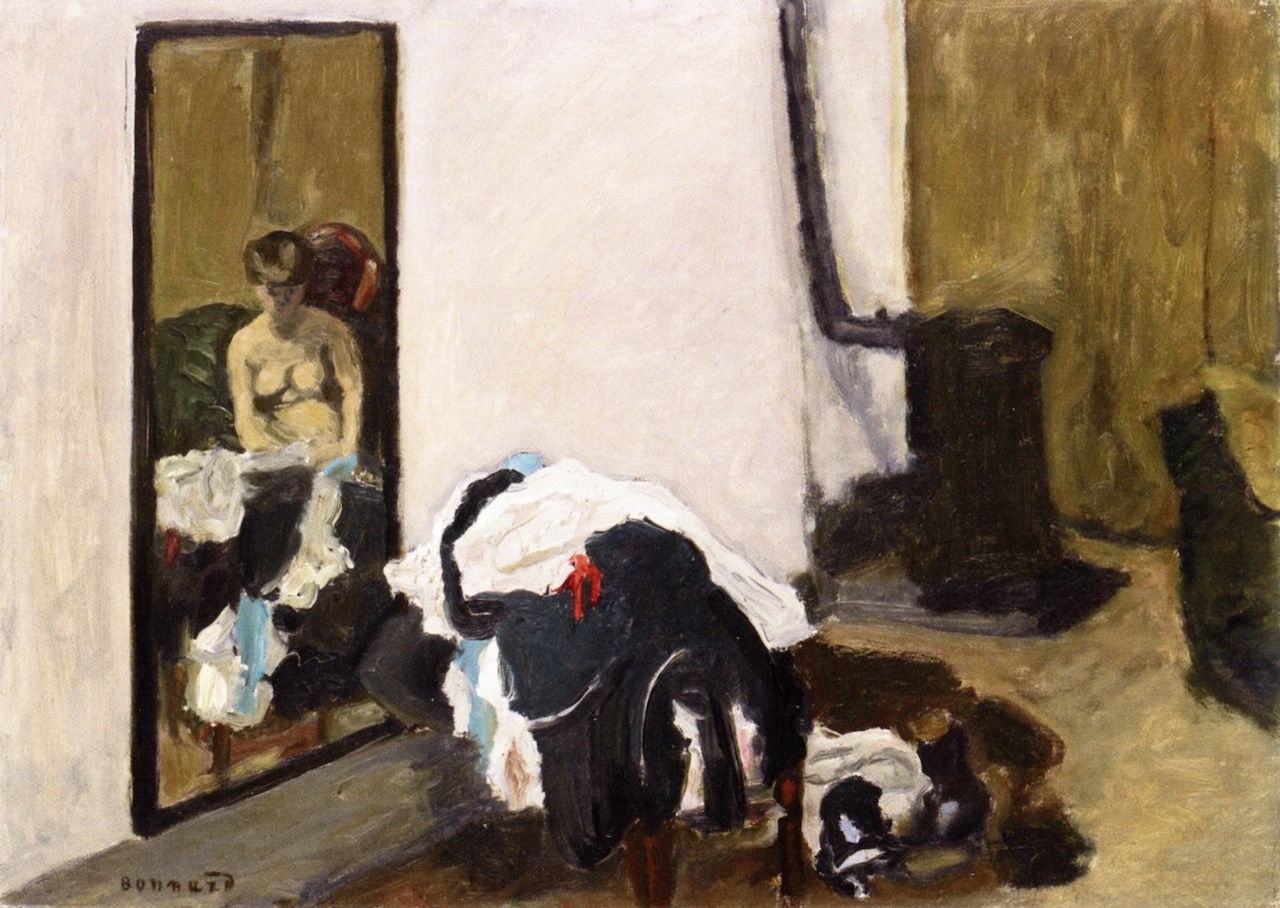
Pierre Bonnard is among the most prolific and inventive of mirror-players.

bonnardwomangettingdressed
Pierre Bonnard (1867-1947), Woman Getting Dressed (1906), oil on canvas, 42 x 58.7 cm, Private collection. The Athenaeum.

In his Woman Getting Dressed from 1906, it’s the mirror at the left that reveals the subject, who is sat beyond the right edge of the painting, getting dressed. Venus has here become a pile of discarded clothing.

As landscape painting became popular, many of the most proficient sought out locations where they could demonstrate their skills at getting them right. Others used reflections as their theme.

Vincent van Gogh, Starry Night over the Rhône (1888), oil on canvas, 72.5 x 92 cm, Musée d'Orsay, Paris. WikiArt.
Vincent van Gogh (1853–1890), Starry Night over the Rhône (1888), oil on canvas, 72.5 x 92 cm, Musée d’Orsay, Paris. WikiArt.

In the last two years of Vincent van Gogh’s life, he painted this landmark nocturne Starry Night over the Rhône (1888) with its many shimmering reflections.

ringaldertrunks
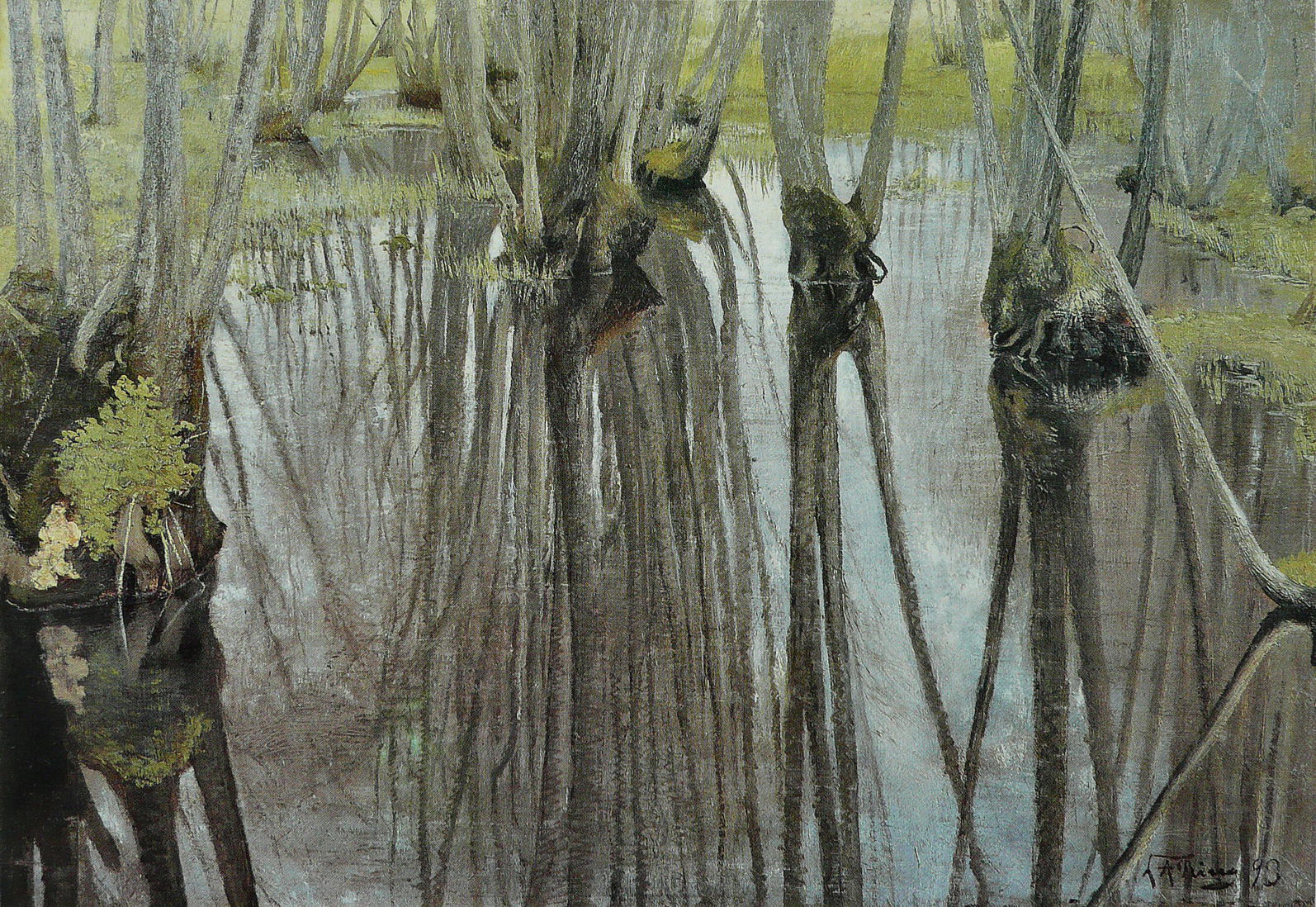
Laurits Andersen Ring (1854–1933), Alder Trunks (1893), oil on canvas, 52.9 x 73.5 cm, Collection of Her Majesty the Queen Margrethe II, Copenhagen, Denmark. Wikimedia Commons.

Alder Trunks from 1893 is one of Laurits Andersen Ring’s finest landscapes, and has earned its place in the Danish Royal Collection. He shows these old coppiced alders almost entirely in reflection.

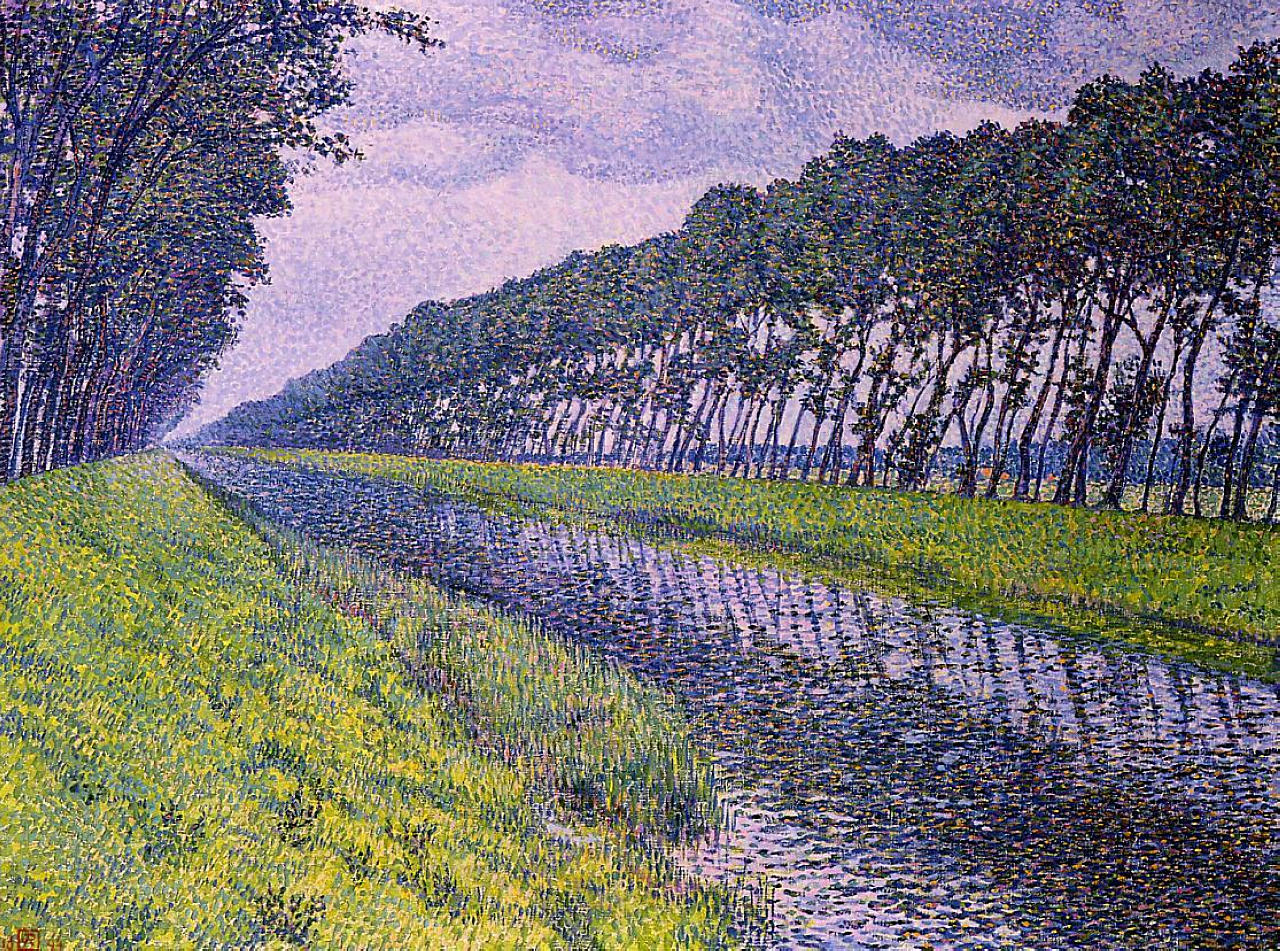
Théo van Rysselberghe (1862-1926), Canal in Flanders (1894), oil on canvas, 152.4 x 203.2 cm, Private collection. WikiArt.

Théo van Rysselberghe’s eye-catching geometry in his Canal in Flanders (1894) combines radical perspective projection, intense rhythm and meticulous broken reflections.

Reflections are also used by some of the Surrealists.

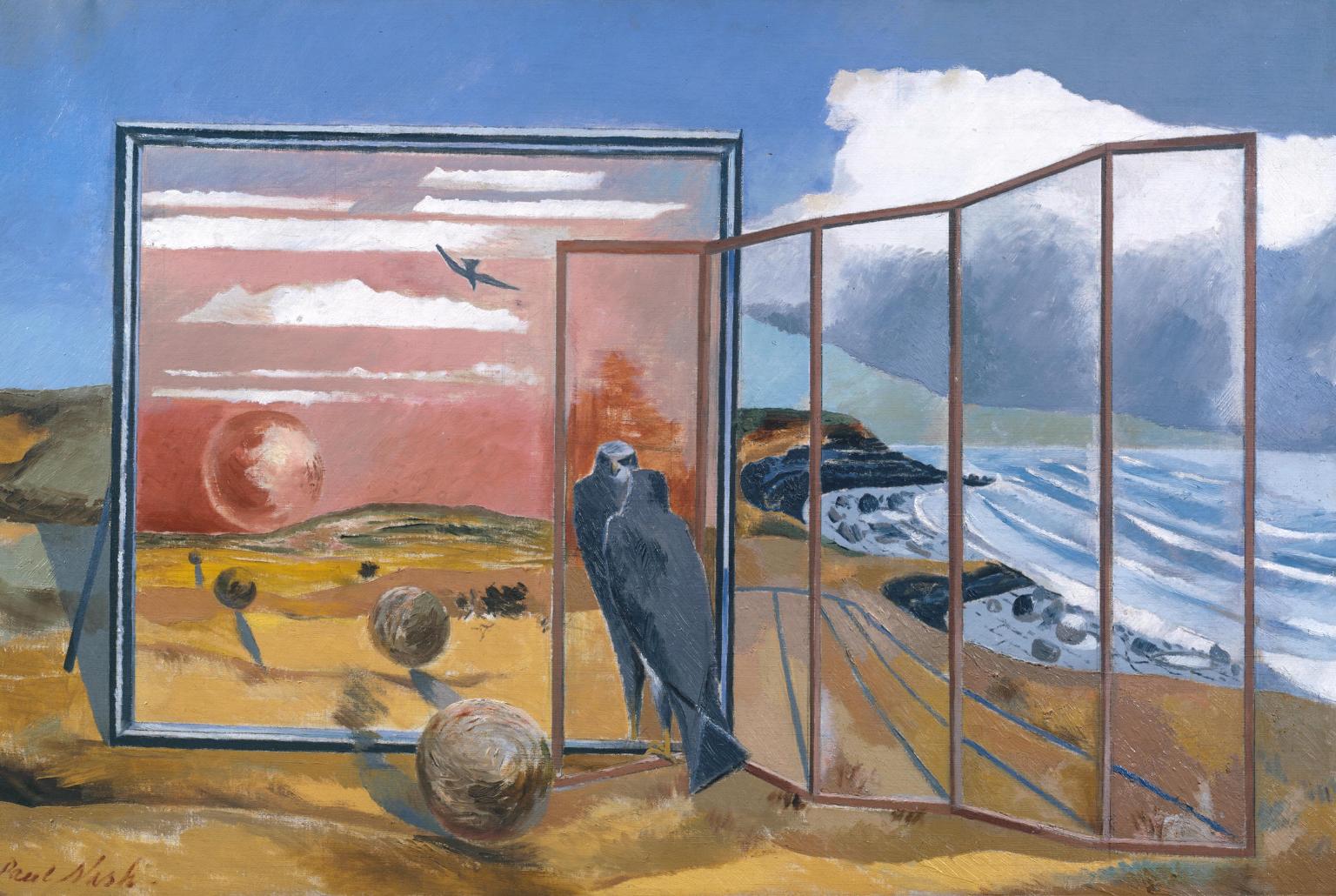
Landscape from a Dream 1936-8 by Paul Nash 1889-1946
Paul Nash (1892–1946), Landscape from a Dream (1936-38), oil on canvas, 67.9 x 101.6 cm, The Tate Gallery (Presented by the Contemporary Art Society 1946), London. © The Tate Gallery and Photographic Rights © Tate (2016), CC-BY-NC-ND 3.0 (Unported), http://www.tate.org.uk/art/artworks/nash-landscape-from-a-dream-n05667

Paul Nash’s Landscape from a Dream (1936-38) was inspired by Freud’s theories of the significance of dreams as reflections of the unconscious. This collection of incongruous objects is gathered on the Dorset coast, a landscape Nash associated with the praeternatural. Dominating the scene is a large framed planar mirror, almost parallel with the picture plane. Stood at the right end of the mirror is a hawk staring at its own reflection, which Nash explained is a symbol of the material world. To the left, the mirror reflects several floating spheres, referring to the soul. The reflection shows that behind the viewer is a red sun setting in a red sky, with another hawk flying high, away from the scene.

I hope you’ll join me in the reflections to come in this series.

Japonisme in painting: 1889-1918

Hokusai’s woodcuts including The Great Wave of Kanagawa from 1831 may now be most strongly associated with the vogue for Japonisme that swept across Europe in the late nineteenth century, but the prints of others were equally important. Among those were the works of Utagawa Hiroshige (歌川広重) (1797–1858).

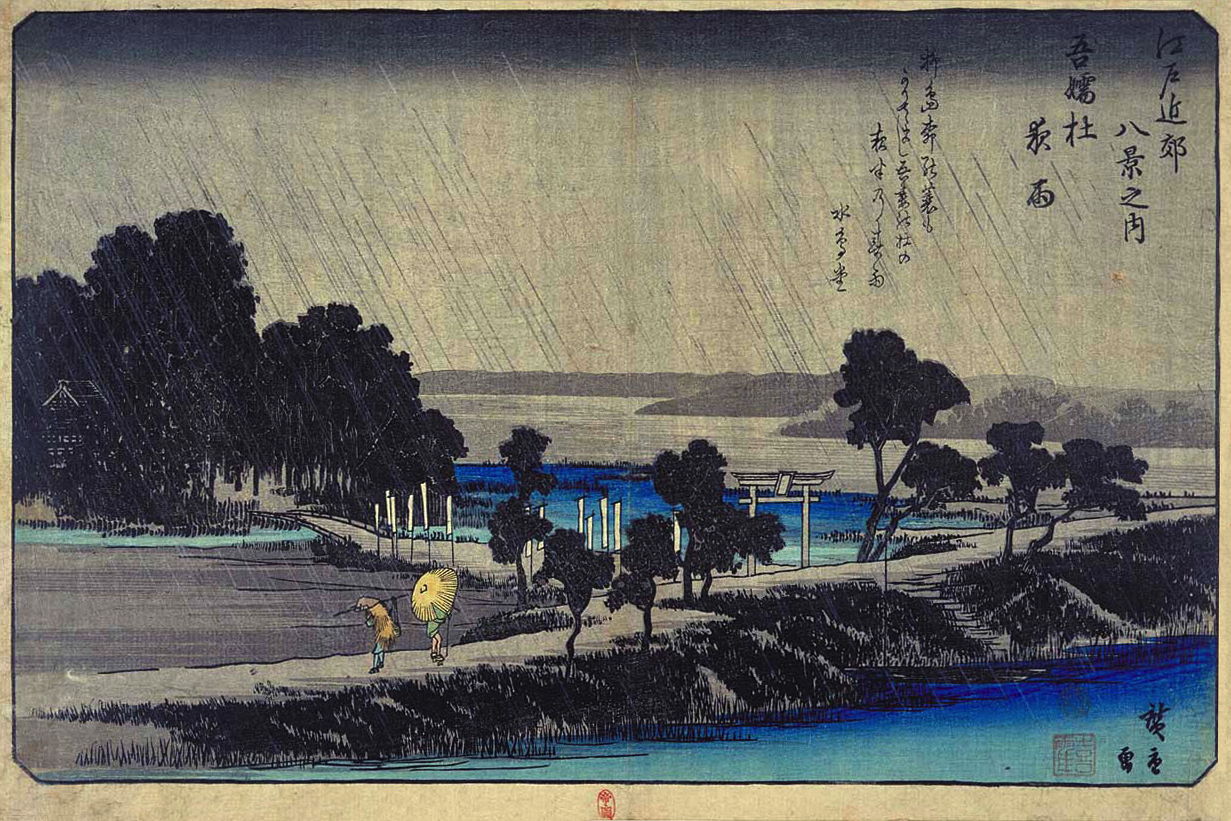
Utagawa Hiroshige (歌川広重) (1797–1858), Evening Rain at Azumi-no Mori (吾嬬杜夜雨) (Edo, 1837-8), woodblock print. Wikimedia Commons.

It’s this print by Hiroshige, Evening Rain at Azumi-no Mori (吾嬬杜夜雨) (Edo, 1837-8), that is now thought to have been influential in Vincent van Gogh’s Rain – Auvers (1890), shown below, that he painted just a few days before his death.

vangoghrainauvers
Vincent van Gogh (1853-1890), Rain – Auvers (1890), oil on canvas, 50.3 x 100.2 cm, National Museum of Wales, Cardiff, Wales. Wikimedia Commons.
bonnardstorkfrogs
Pierre Bonnard (1867-1947), Stork and Four Frogs (c 1889), distemper on red-dyed cotton fabric in a three paneled screen, 159.5 x 163.5 cm, Private collection. The Athenaeum.

Japonisme came to dominate Pierre Bonnard’s early paintings too. Probably the earliest of these is this exquisite three-panelled screen of The Stork and Four Frogs completed around 1889. To mimic the appearance of east Asian lacquerware, Bonnard painted this in distemper on red-dyed cotton fabric. Its story is, though, thoroughly European, based on the fable retold by Jean de la Fontaine of The Frogs who Demand a King.

As Europeans were enthralled by Japanese woodcuts, so more Japanese artists travelled to Europe to learn painting styles and techniques. The son of a samurai in Kagoshima (in the far south-west of Japan), Viscount Kuroda Seiki (黒田 清輝) (Kuroda Kiyoteru) moved to Tokyo, where he first learned English, then switched to French. He went to Paris in 1884 to study law, being supported by his brother-in-law, a member of the Japanese diplomatic mission in France. However after two years there, he changed to study painting in the atelier of Raphael Collin, where he met Kume Keiichirō, also a student of Collin’s; together they explored plein air painting. In 1890 he moved to the international artists’ colony at Grez-sur-Loing, south of Paris, which had been made popular by masters such as Jules Bastien-Lepage.

gauguinseaweedgatherers1
Paul Gauguin (1848–1903), Seaweed Gatherers I (1888-90), gouache and graphite on grey board, 27.6 × 32.4 cm, Private collection. Wikimedia Commons.

In France, Hokusai’s Great Wave found greater interest with Paul Gauguin and his circle who gathered first in Pont-Aven then Le Pouldu in Brittany. Gauguin’s gouache Seaweed Gatherers I (1888-90) shows two Breton women gathering seaweed on the beach. Behind them is a huge wave, its spume formed into a claw, which could only have come from Hokusai.

gauguinondine
Paul Gauguin (1848–1903), In the Waves, or Ondine (I) (1889), oil on canvas, 92.5 x 72.4 cm, Cleveland Museum of Art, Cleveland, OH. Wikimedia Commons.

In 1889, Gauguin painted two works showing Ondine in the sea among waves. The first, known now as In the Waves, or Ondine (I), also refers to Hokusai.

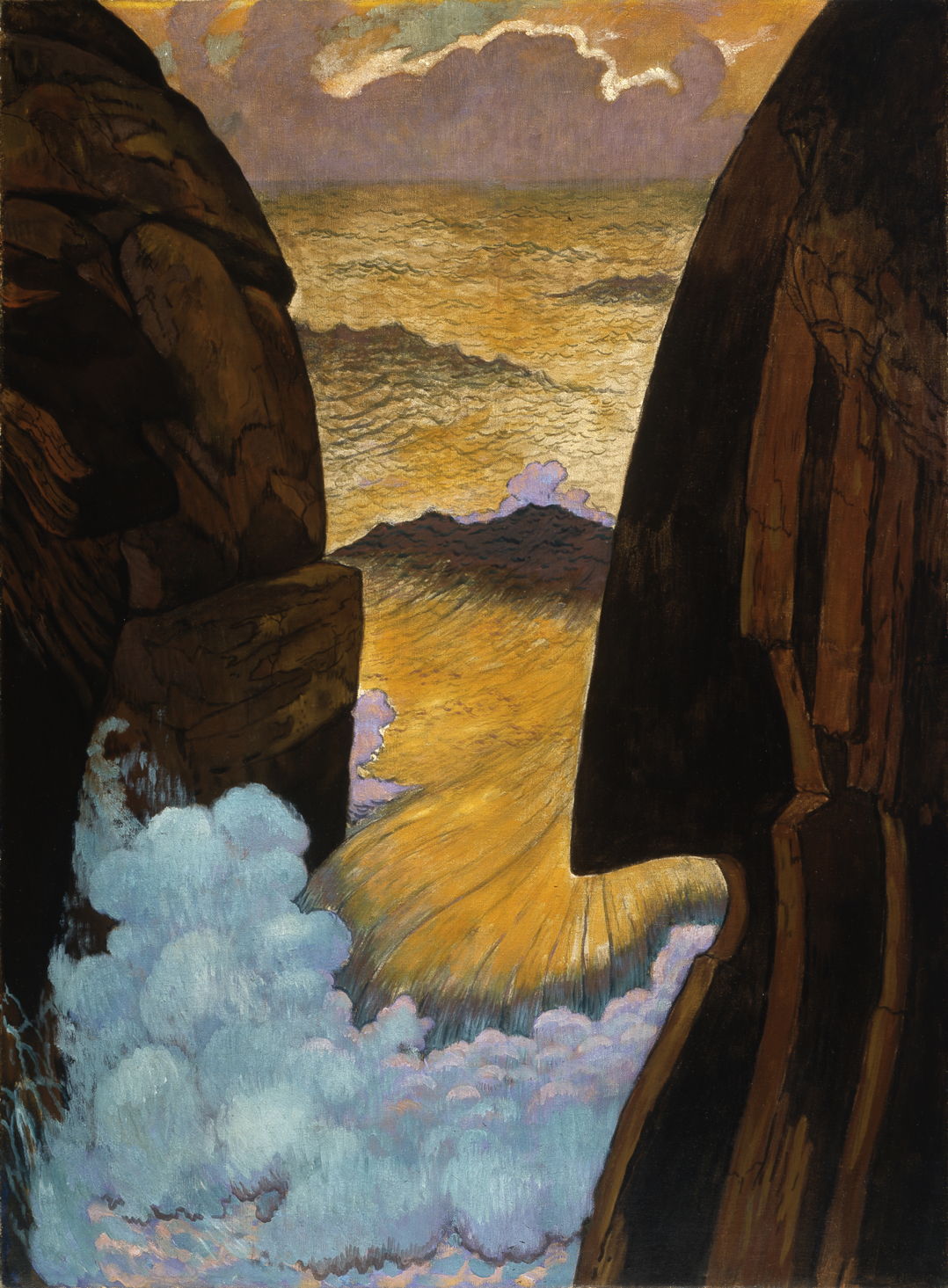
lacombevorhorgreenwave
Georges Lacombe (1868–1916), Vorhor, The Green Wave (1896), egg tempera on canvas, 100 x 72 cm, Indianapolis Museum of Art, Indianapolis, IN. Image by Zambonia, via Wikimedia Commons.

The Nabi sculptor, and painter from Gauguin’s school, Georges Lacombe took Hokusai’s motif forward in several of his paintings. This is his treatment of Vorhor, The Green Wave in egg tempera, showing an Atlantic swell coming into the seacliffs of Vorhor near Camaret-sur-Mer in Brittany.

lacombevioletwave
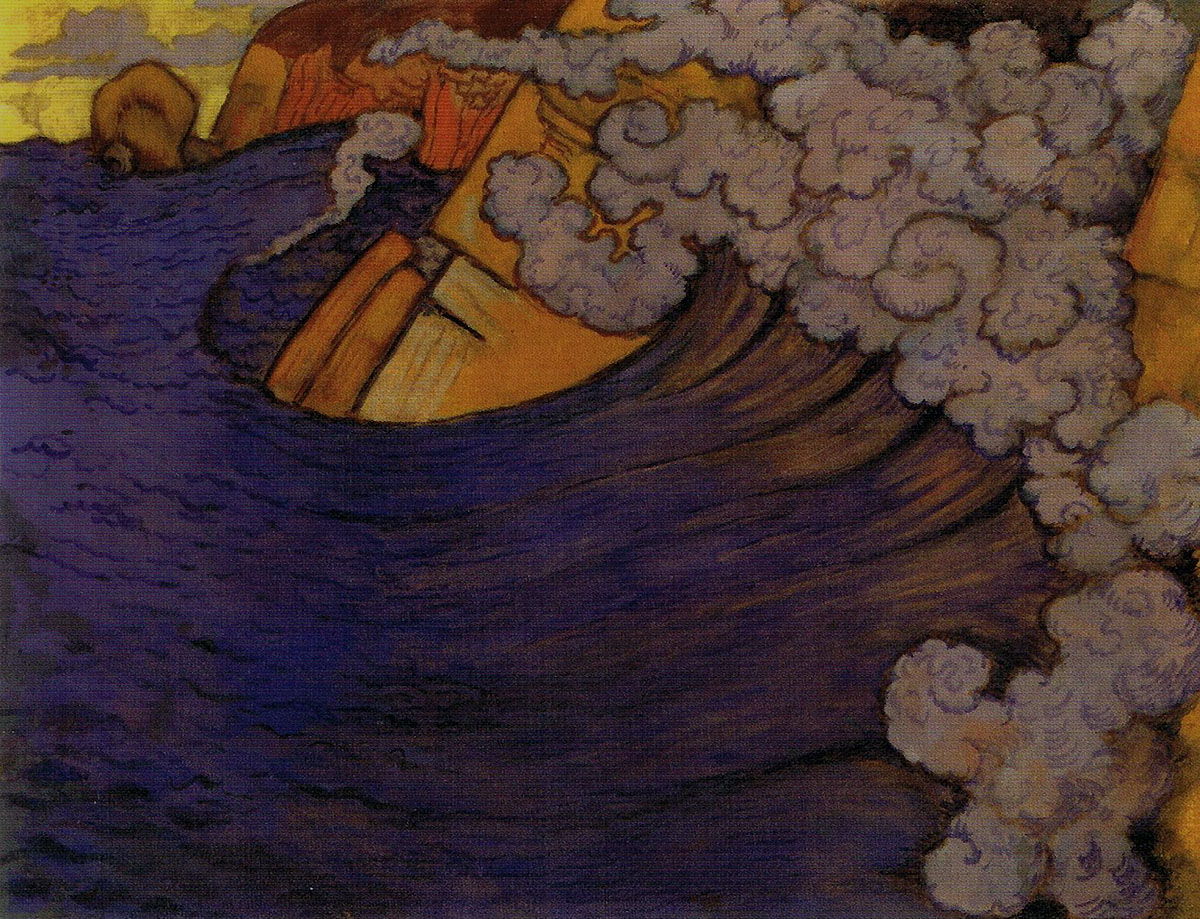
Georges Lacombe (1868–1916), The Violet Wave (1896-97), oil on canvas, 62.5 x 47.5 cm, Private collection. Wikimedia Commons.

Lacombe’s slightly later The Violet Wave also makes its influence abundantly clear.
bouguereauwave
William-Adolphe Bouguereau (1825–1905), The Wave (1896), oil on canvas, 121 x 160.5 cm, Private collection. Wikimedia Commons.

In that same year, even the notorious academic artist William-Adolphe Bouguereau joined Hokusai’s crowd of admirers, in The Wave.

As Japanese artists were studying in Europe, Westerners like Helen Hyde went to Japan. She made friends with an unrelated namesake, Josephine Hyde, and in 1899 the two travelled to Japan to learn Japanese print and painting techniques. Helen Hyde was soon making woodblock prints, which she learned from the Austrian Emil Orlik who was also living in Tokyo at the time.

hydeinteriordecoration
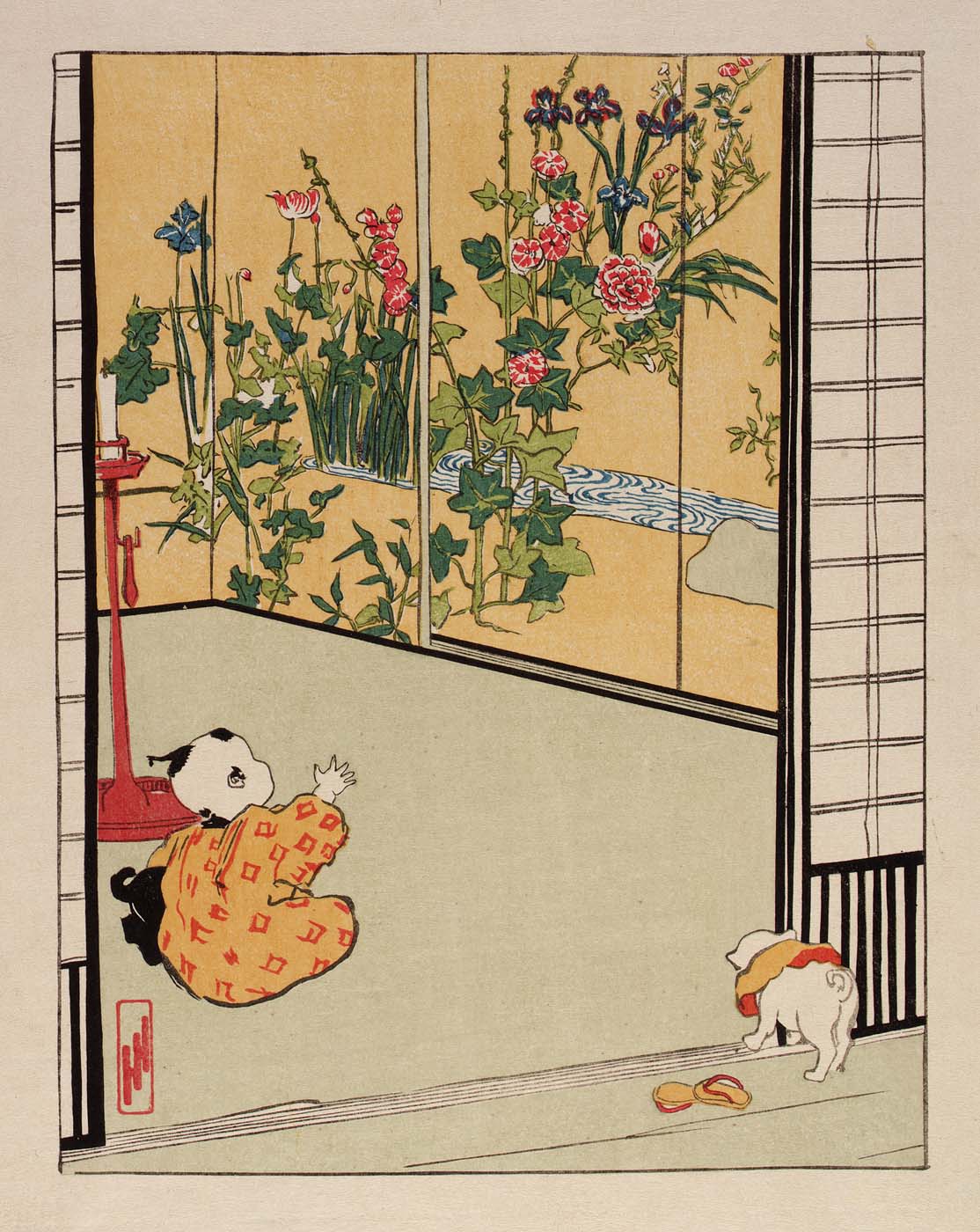
Helen Hyde (1868–1919), Interior Decoration (1900), print, dimensions not known, Smithsonian American Art Museum, Washington, DC. Wikimedia Commons.

Interior Decoration from 1900 shows how quickly Hyde learned the technique, and her fascination for Japanese art in everyday settings.

hydenewyearsdaytokyo
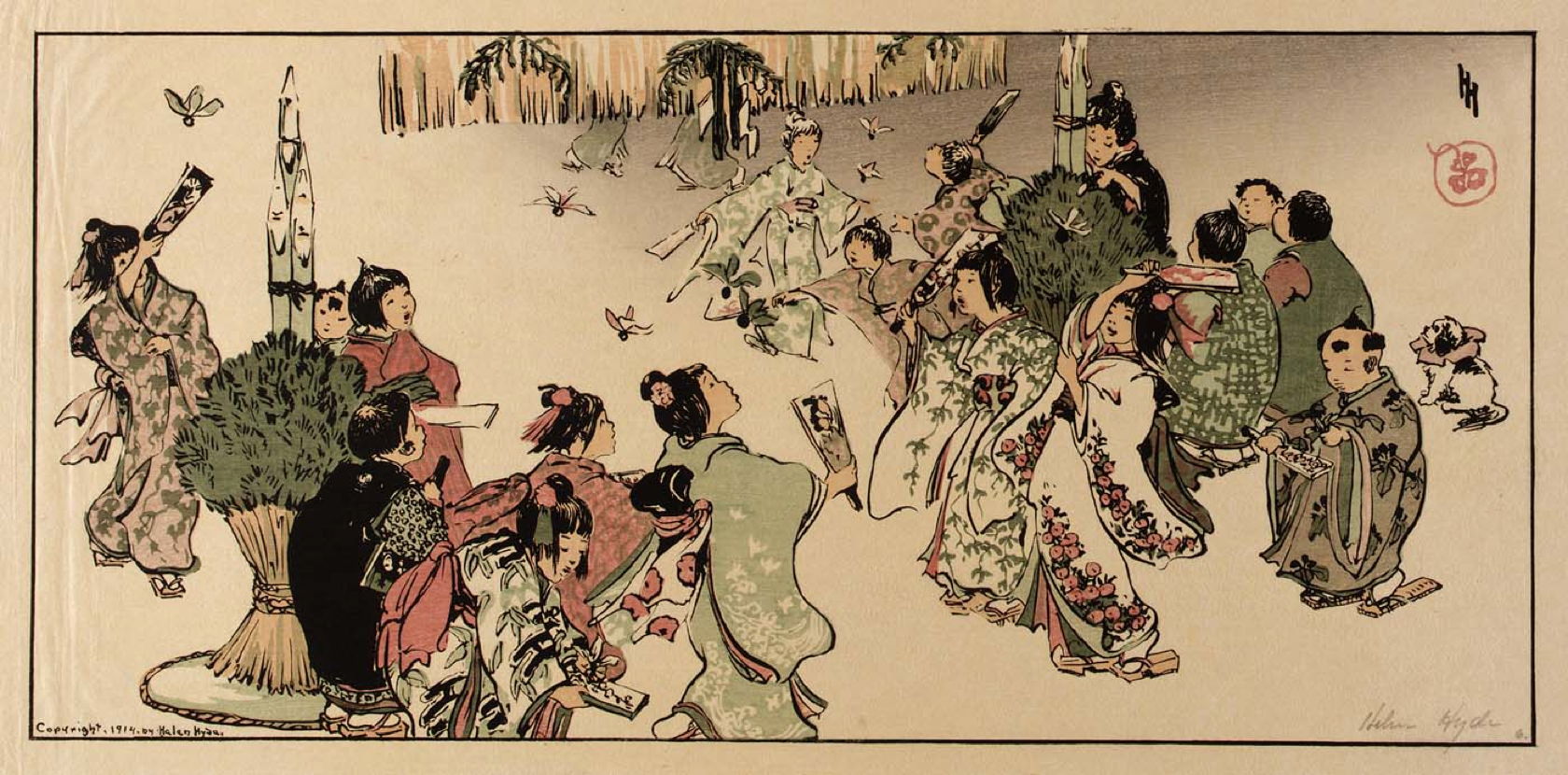
Helen Hyde (1868–1919), New Year´s Day in Tokyo (1912), print, dimensions not known, Smithsonian American Art Museum, Washington, DC. Wikimedia Commons.

Hyde’s New Year´s Day in Tokyo, from 1912, is grander in conception, and a carefully composed print of key elements in the Japanese New Year celebrations.

coopersummer
Colin Campbell Cooper (1856–1937), Summer (1918), oil on canvas, 127 x 153 cm, Private collection. Wikimedia Commons.

My final example was painted in 1918, at the end of the First World War, far from the mud and blood of Europe’s battlefields. Colin Campbell Cooper’s Summer (1918) is inspired by Japonisme, fortified here by the east Asian influence of California, and by Monet’s paintings of his garden at Giverny, itself based on a Japanese water garden.
❌