The modest drop marked the first decrease in homelessness in nearly a decade. The Housing and Urban Development report was published months later than usual.
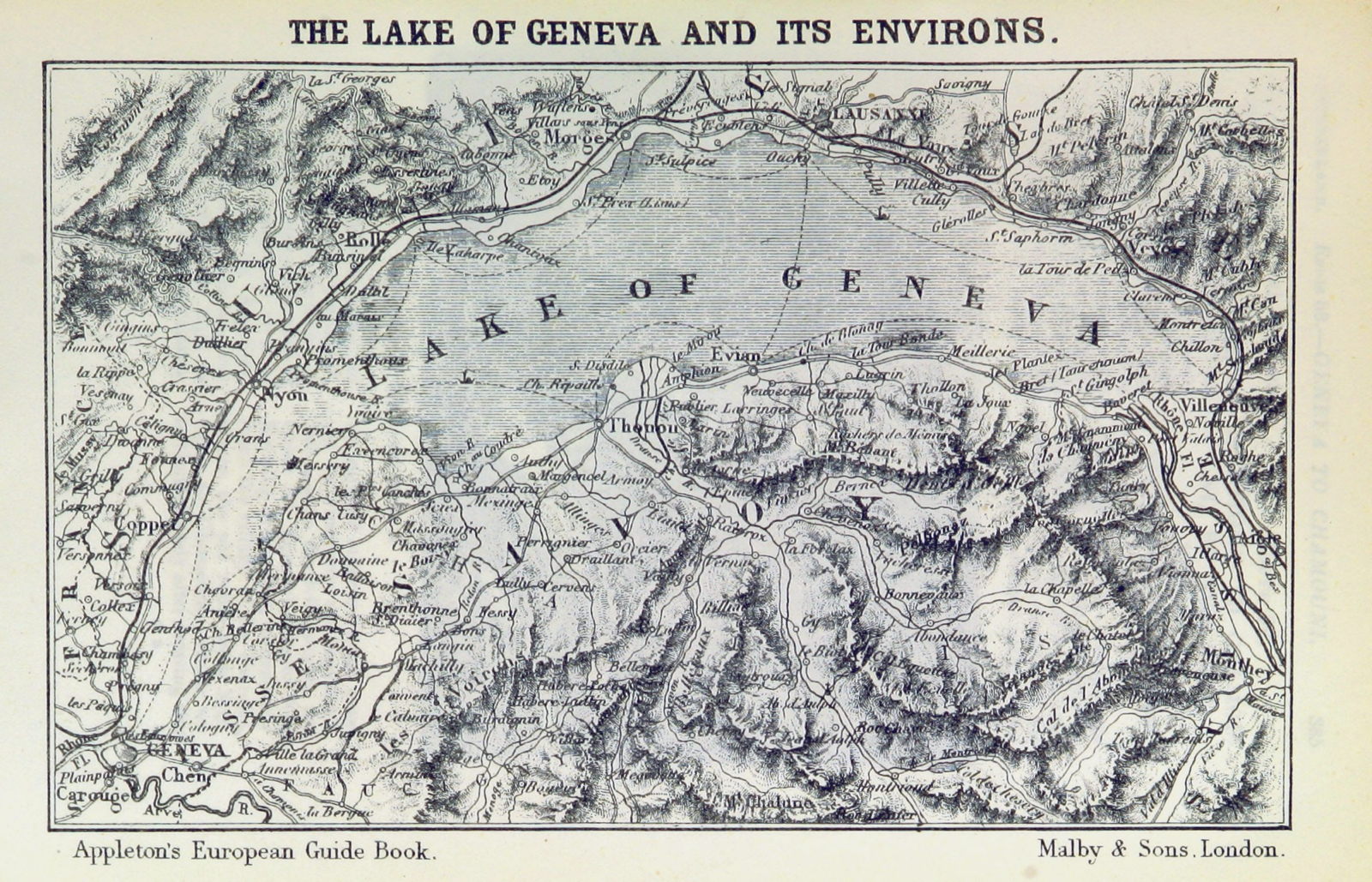
This weekend we’re off to visit Lake Geneva, also known by its French name of Lac Léman, the largest in Switzerland. It’s located in the far south-west of the country, where it forms much of its border with France. It makes a broad arc running north-east from the capital city of Geneva, with some of the highest peaks of the Alps to its south.
Daniel Appleton et al., Map of Lake Geneva (1877), p 521 in Appleton’s European Guide Book illustrated, 10th edition, D. Appleton & Co, New York. The British Library, London. Wikimedia Commons.
Today I start with a selection of paintings almost exclusively from the nineteenth century, when Switzerland was on the itinerary of the Grand Tour undertaken by aspiring young men of the upper class in both Europe and the Americas.
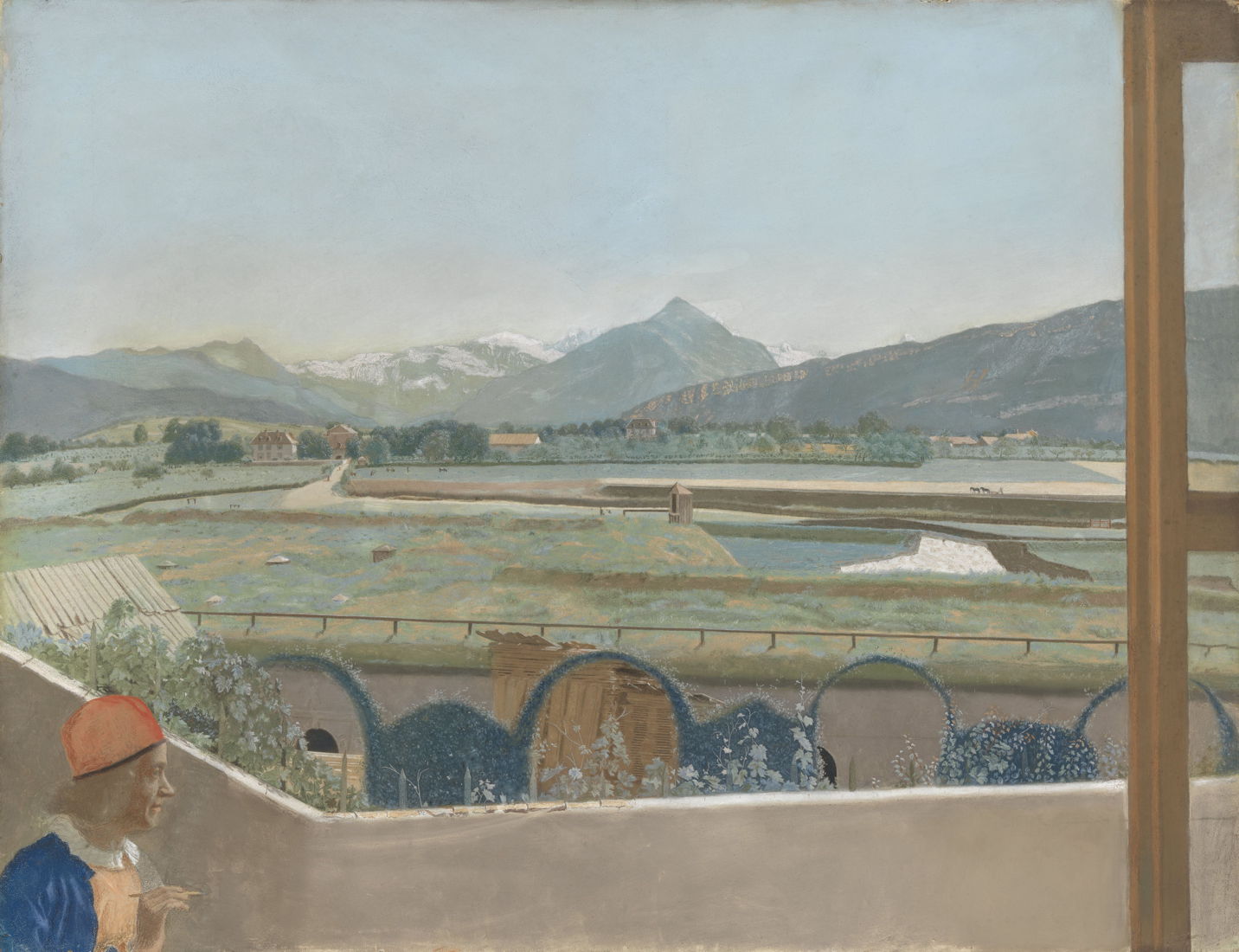
Jean-Étienne Liotard (1702-1789), View of the Mont Blanc Massif from the Artist’s Studio (1765-70), pastel on parchment, 46 x 59.7 cm, location not known. Wikimedia Commons.
The city of Geneva has long attracted artists, and it was here the eccentric pastellist Jean-Étienne Liotard was born and later kept his studio, and where he eventually retired. His View of the Mont Blanc Massif from the Artist’s Studio from 1765-70 reveals only a little of the southern extreme of the lake, with a cameo self-portrait.
Joseph Mallord William Turner (1775–1851), Lake Geneva and Mount Blanc (1802-05), watercolour, 90.5 x 128.6 cm, Yale Center for British Art, New Haven, CT. Wikimedia Commons.
JMW Turner was by no means the first to paint the lake, but his watercolour of Lake Geneva and Mount Blanc from 1802-05 is one of its earliest depictions by a major artist. This view looks south-east over the city of Geneva towards the Mont Blanc massif in the far distance.
Alexandre Calame (1810–1864), View of Bouveret (1833), oil on panel, 35 x 47.5 cm, location not known. Wikimedia Commons.
Alexandre Calame’s View of Bouveret from 1833 shows a grey heron fishing on the shore at the southern end of the lake, close to the border with France.
Alexandre Calame (1810–1864), View of Lake Geneva (Lac Léman) (1849), oil on wood, 67 x 86 cm, Villa Vauban, Musée d’art de la ville de Luxembourg, Luxembourg. Wikimedia Commons.
While Turner had toured the Alps once travel from England had become possible again in the early nineteenth century, Calame pioneered the painting of views like this of the lake, completed in his studio in 1849. It includes some of the distinctive sailing boats of the Swiss lakes, and a small bird in the shallows, but not a heron here.
John Ferguson Weir (1841-1926), Lake Leman (Lake Geneva), Switzerland (1869), oil on paper, 20.3 x 33 cm, Private collection. Wikimedia Commons.
In the middle of the nineteenth century, several major American artists visited Switzerland to develop their skills painting mountain views. Despite its finish, John Ferguson Weir’s Lake Leman (Lake Geneva), Switzerland may have been painted in front of the motif, on 11 June 1869.
Following Gustave Courbet’s release from prison for his involvement in the Paris Commune and destruction of the Vendôme Column in 1871, he was forced to flee to the safety of Switzerland, where he lived his remaining years there, unable to return to France.
Gustave Courbet (1819–1877), Sunset over Lac Leman (1874), oil on canvas, 55 x 65 cm, Musée Jenisch, Vevey, Switzerland. Image by Volpato, via Wikimedia Commons.
Courbet painted some of the finest landscapes of his career during his exile in Switzerland, like this Sunset over Lac Léman from 1874, the year of the First Impressionist Exhibition in Paris.
Gustave Courbet (1819–1877), Chillon Castle (1875), oil on canvas, dimensions not known, Private collection. Wikimedia Commons.
He became particularly obsessed with the island château at the extreme eastern end of Lake Geneva, Chillon Castle, here in 1875. This picturesque château dates back to a Roman outpost, and for much of its recorded history from about 1050 has controlled the road from Burgundy to the Great Saint Bernard Pass, a point of strategic significance. It has since been extensively restored, and is now one of the most visited mediaeval castles in Europe.
Gustave Courbet (1819–1877), Chillon Castle (1874-77), oil on canvas, 73 x 92 cm, location not known. Wikimedia Commons.
Chillon Castle from 1874-77 is another of the views he painted of the castle on the lake.
Gustave Courbet (1819–1877), Sunset on Lake Geneva (c 1876), oil on canvas, 74 x 100 cm, Kunstmuseum St. Gallen, St. Gallen, Switzerland. Wikimedia Commons.
Sunset on Lake Geneva from about 1876 is reminiscent of Courbet’s earlier seascapes with breaking waves, but now the water is calm once more.
In May 1877, the French government informed Courbet that the cost of rebuilding the Vendôme Column would be over 300,000 Francs, which he could pay in instalments of 10,000 Francs each year, starting on 1 January 1878. Courbet died in Switzerland the day before, on 31 December 1877, at the age of only 58.
As landscape painters increasingly came to rely on studies made in front of the motif, and their views came closer to reality, faithful depictions of reflections on water increased. But the fundamental challenges of painting accurate reflections remained. Both John Constable and JMW Turner started their careers drawing, trained in the Royal Academy Schools, and should have had a thorough grounding in 3D projection and reflections, as well as ample experience recording what they saw.
Several of Constable’s major works include reflected passages, painted slowly in the studio following extensive studies made of the motif.
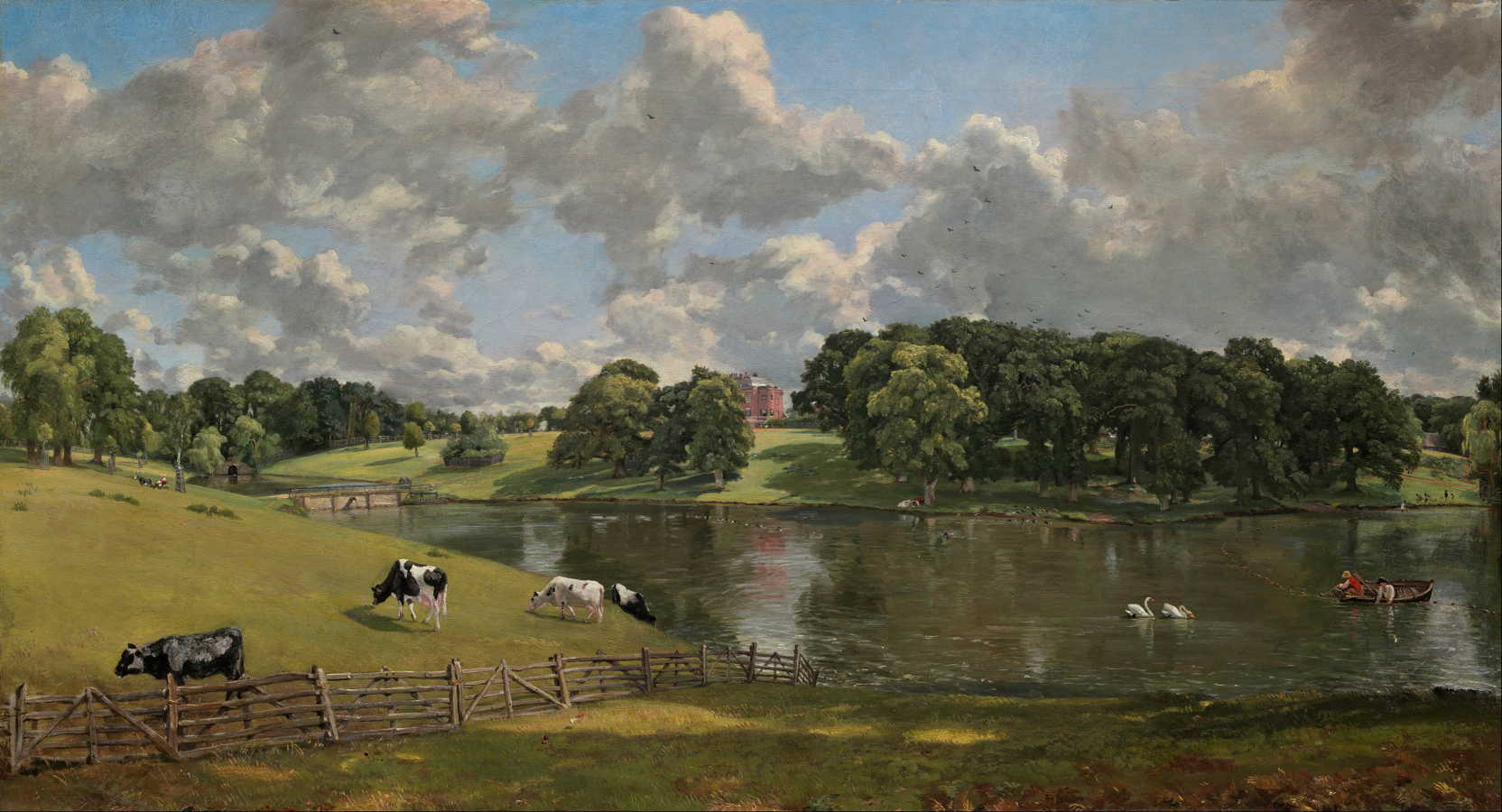
John Constable (1776–1837), Wivenhoe Park, Essex (1816), oil on canvas, 56.1 x 101.2 cm, The National Gallery of Art, Washington, DC. Wikimedia Commons.
Constable’s commissioned painting of the house and estate at Wivenhoe Park, Essex from 1816 is an oddly distant view of Major-General Francis Slater-Rebow’s country seat. Given the expanse of mirror-like lake, he might have been expected to include meticulous reflections. There are obvious anomalies, such as the brick-red reflection of the modest section of the house visible through a break in the trees in the centre of the canvas. The house is sufficiently distant that little or none of it would have been visible in reflection, let alone the two large areas of brick red stretching well over half way across the water. That was in all probability painted for effect.
John Constable (1776–1837), Wivenhoe Park, Essex (detail with reflection) (1816), oil on canvas, 56.1 x 101.2 cm, The National Gallery of Art, Washington, DC. Wikimedia Commons.
Reflections of the pair of swans and boatmen are also out of kilter. Constable may well have neither seen nor sketched them from life, and then struggled to envision their reflections in the studio.
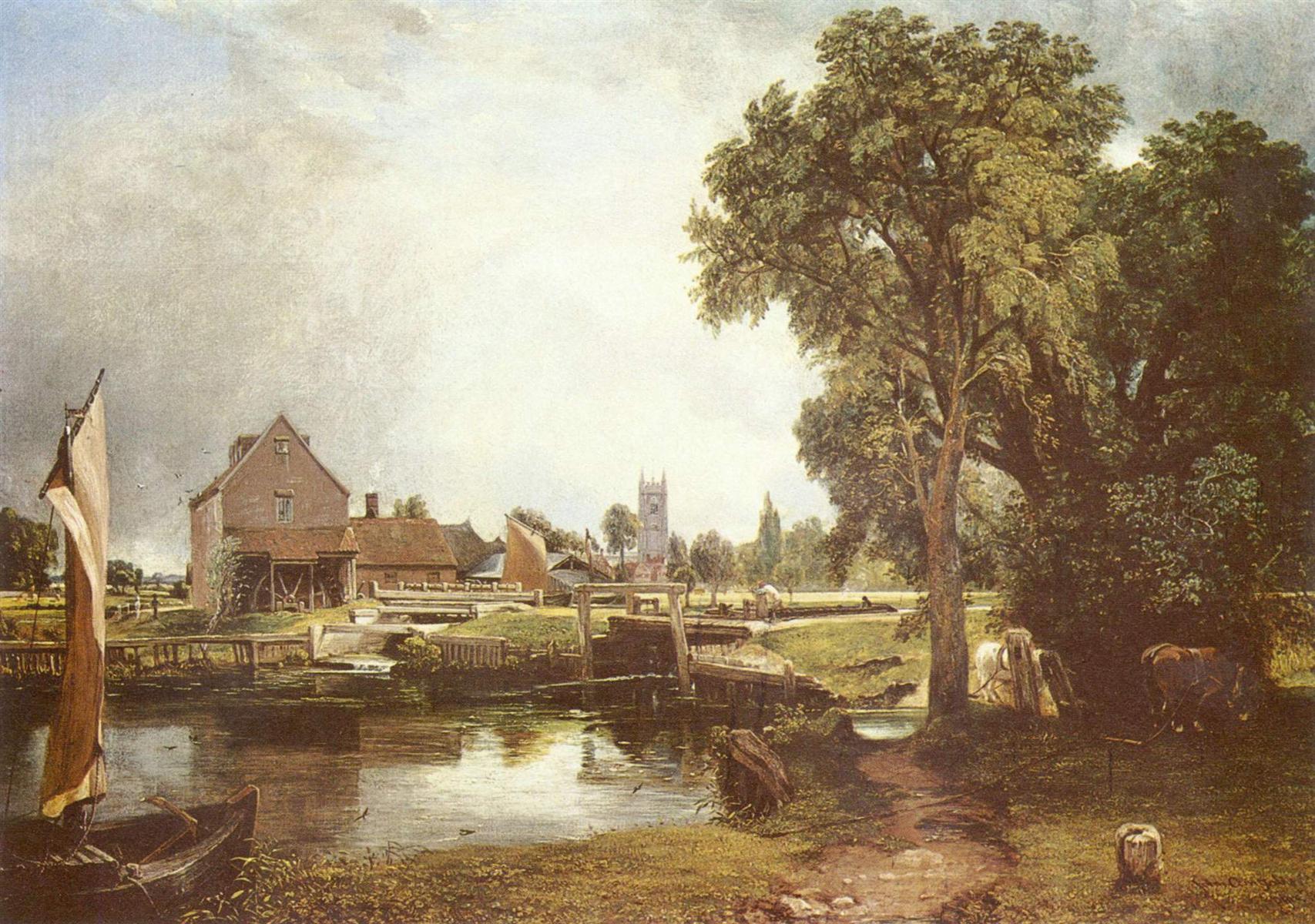
John Constable (1776–1837), Dedham Lock and Mill, 1820, oil on canvas, 53.7 x 76.2 cm, Victoria and Albert Museum, London. WikiArt.
Four years later, this painting of Dedham Lock and Mill (1820) is more familiar territory from the artist’s home ground. His family owned this lock on the River Stour, and he would have worshipped in the village church of Dedham seen in the distance. His reflections here appear accurate throughout.
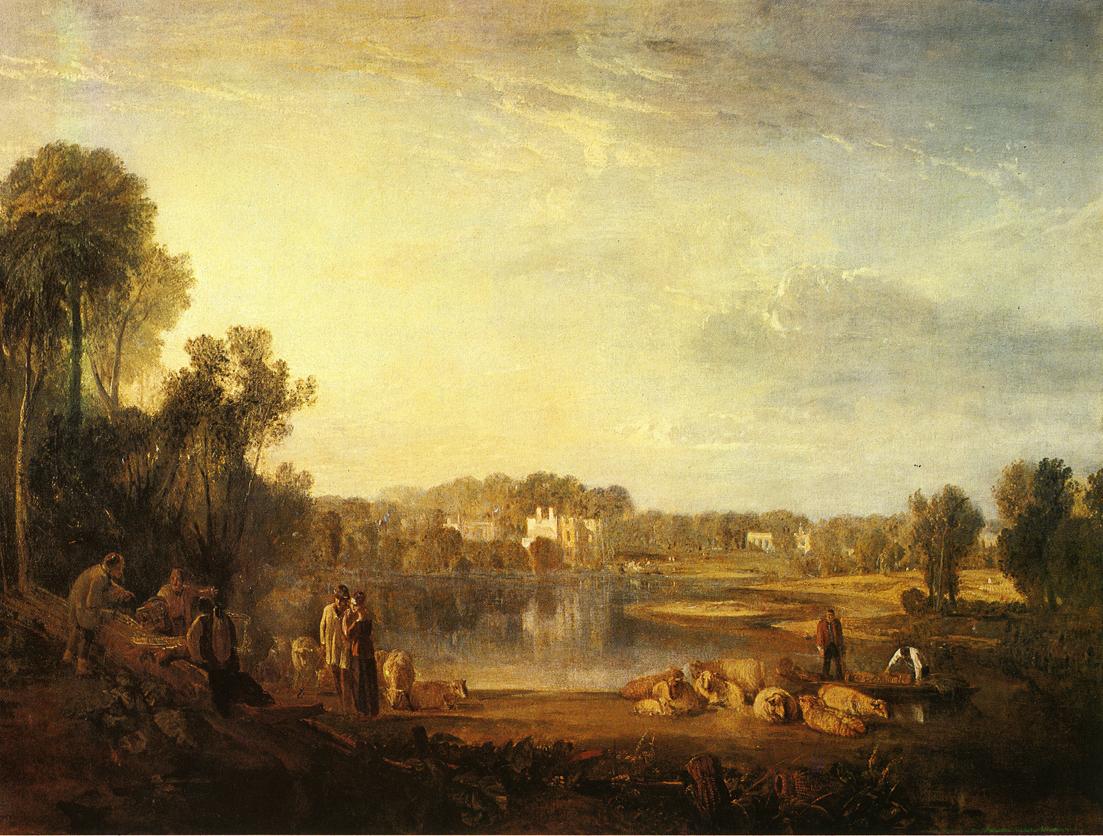
Joseph Mallord William Turner (1775–1851), Pope’s Villa, at Twickenham (1808), oil on canvas, 120.6 x 92.5 cm, Private Collection. WikiArt.
Turner’s approach to reflections changed over the course of his career. In Pope’s Villa, at Twickenham from 1808, he depicted complex and intricate reflections in careful detail.
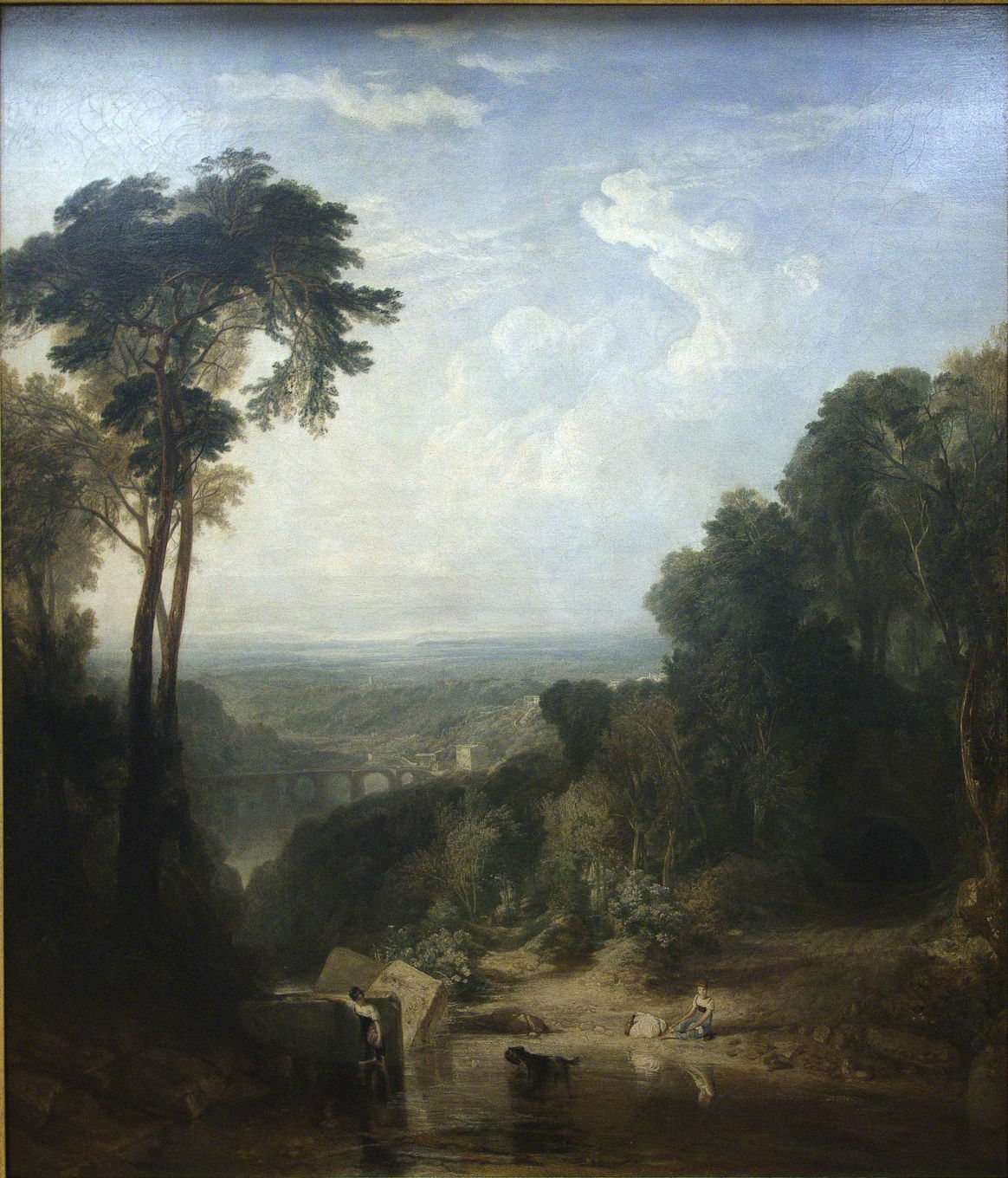
I’ve previously considered the relatively small anomalies in another of his early oil paintings, Crossing the Brook from 1815.
Joseph Mallord William Turner (1775-1851), Crossing the Brook (1815), oil on canvas, 193 x 165.1 cm, Tate Britain, London (N00497). EHN & DIJ Oakley.
These could be accounted for by the figures being staffage added in the studio without the benefit of plein air studies.
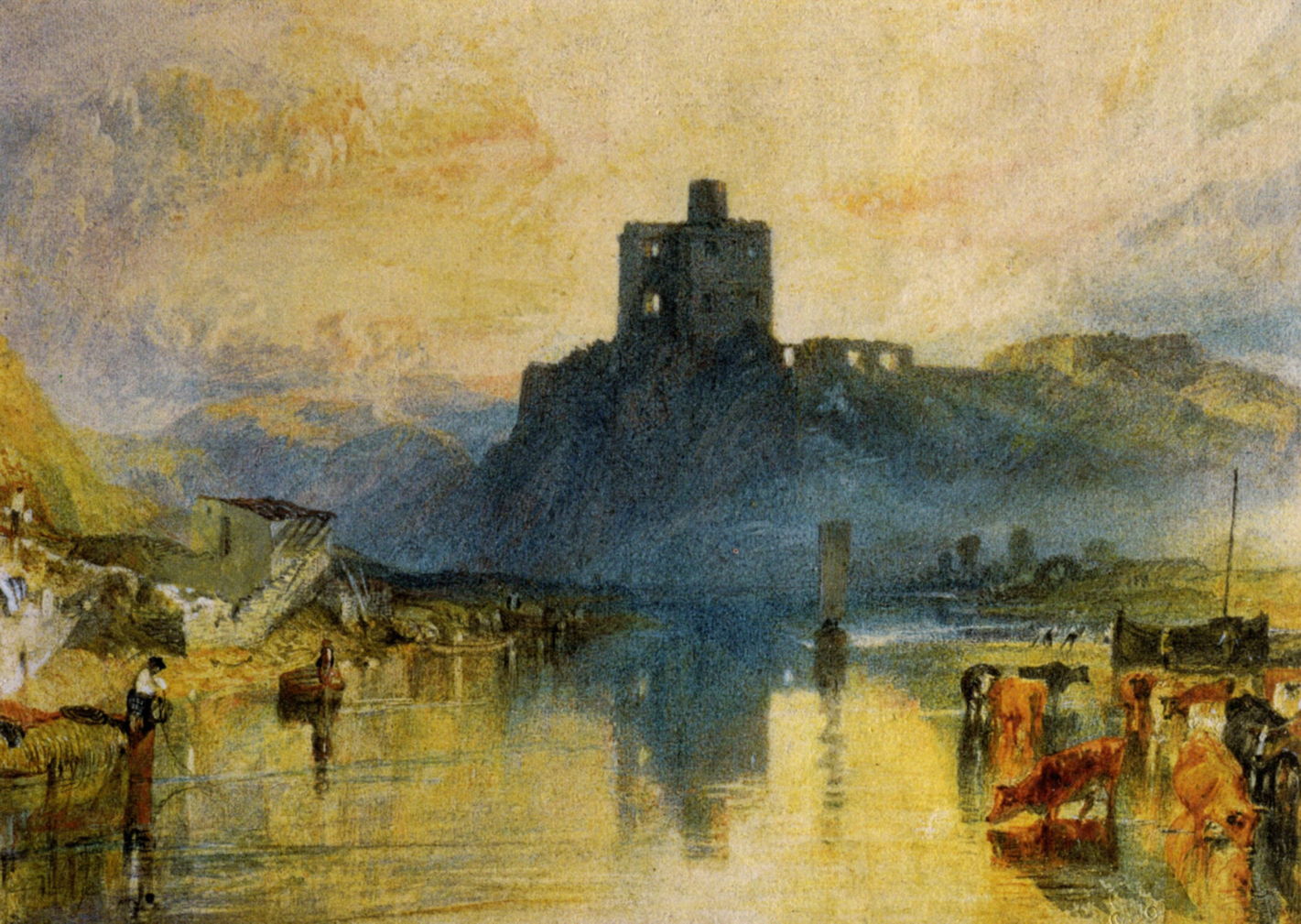
Joseph Mallord William Turner (1775–1851), Norham Castle, on the River Tweed (1823), watercolour on paper, 15.6 x 21.6 cm, British Museum, London. WikiArt.
Some of his later watercolours, such as Norham Castle, on the River Tweed (1823), have obvious quirks in their reflections: here the reflection appears to show another high point at the left edge of the castle that isn’t matched by an equivalent high point in the real castle.
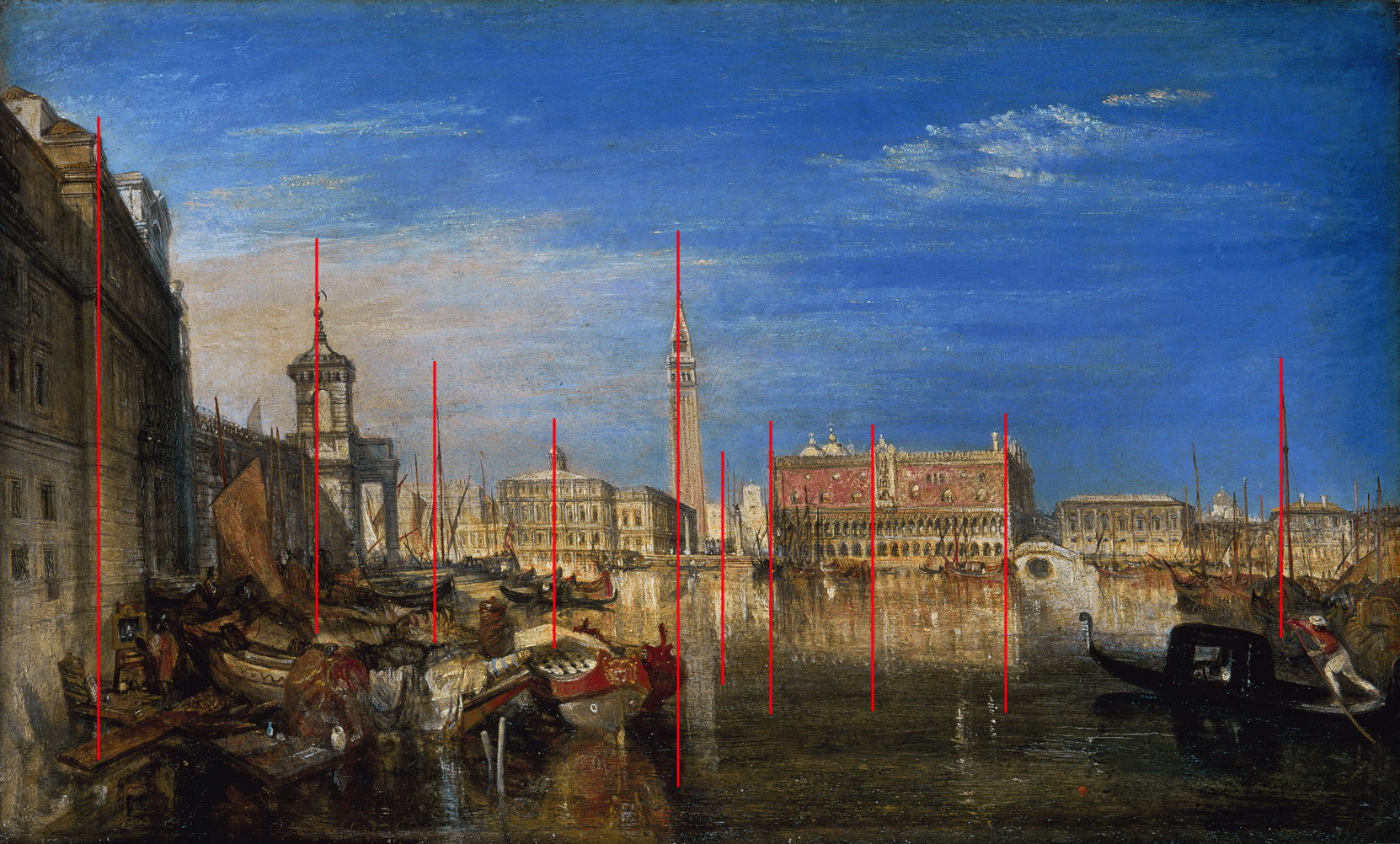
Joseph Mallord William Turner (1775–1851), Bridge of Sighs, Ducal Palace and Custom-House, Venice: Canaletti Painting (1833), oil on mahogany, 51.1 x 81.6 cm, Tate Britain, London (N00370). Wikimedia Commons. Perpendiculars have been superimposed to show failure in vertical alignment of the unreflected and reflected images.
Some of his paintings show other optical oddities. His Bridge of Sighs, Ducal Palace and Custom-House, Venice: Canaletti Painting (1833), his first oil painting of Venice, places all the buildings leaning to the left, with their reflections leaning in the opposite direction. Had this painting been on a canvas support, there might have been distortion applied by its stretching or subsequent treatment, but unusually Turner painted this on a mahogany panel. I have checked this image matches those from other sources, to ensure this isn’t a photographic artefact.
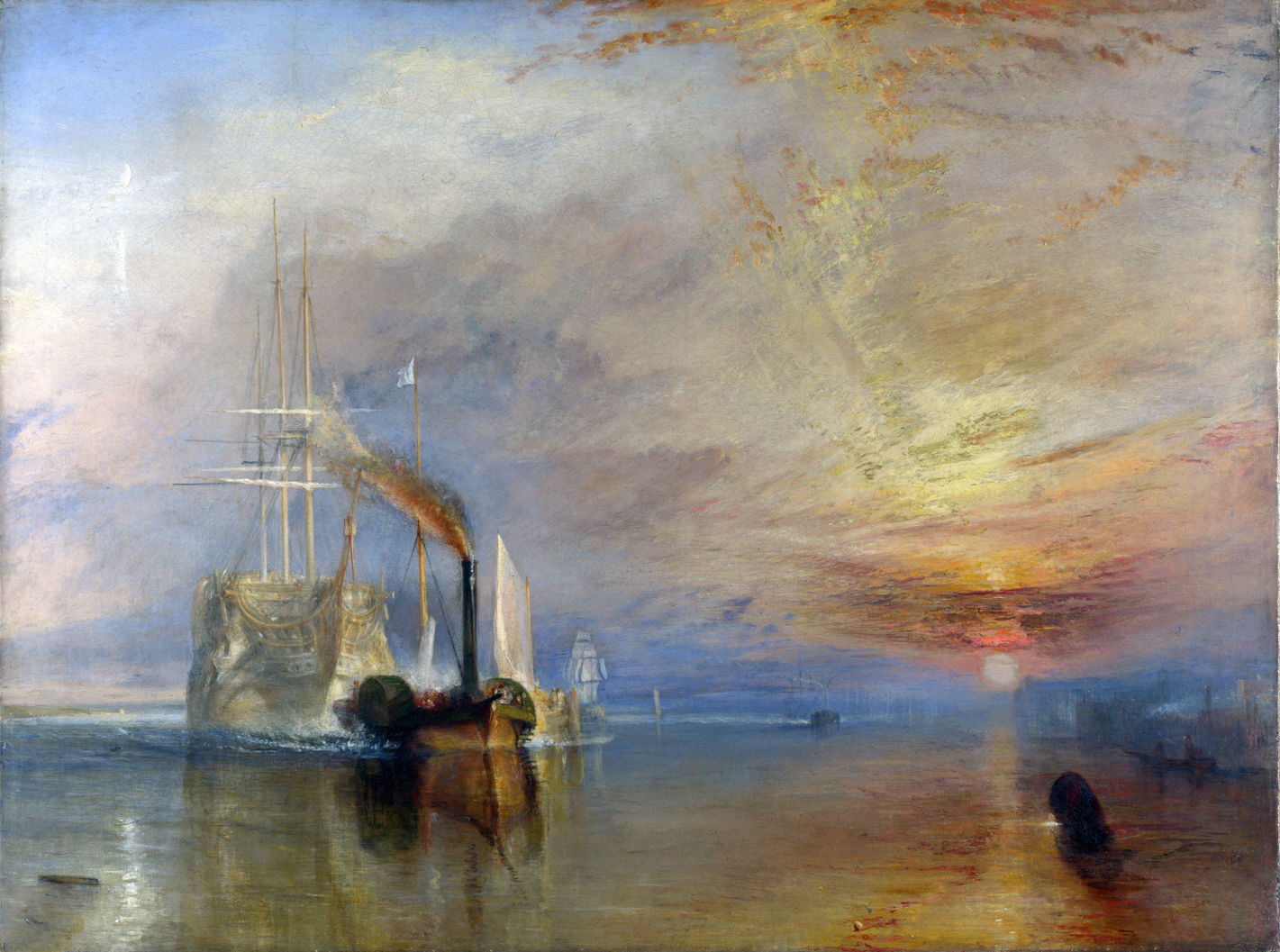
Joseph Mallord William Turner (1775–1851), The Fighting Temeraire tugged to her last Berth to be broken up (1839), oil on canvas, 90.7 × 121.6 cm, The National Gallery, London. Wikimedia Commons.
Turner’s famous Fighting Temeraire from 1839 breaks most of the optical rules of reflections, most obviously in the extraordinary reflected image of the tug’s prow. The tip of the bowsprit isn’t vertically aligned between original and reflection, and there’s gross vertical exaggeration, as there is in the ghostly reflection of the Temeraire under tow.
Joseph Mallord William Turner (1775–1851), Campo Santo, Venice (1842), oil on canvas, 62.2 x 92.7 cm, Toledo Museum of Art, Toledo. WikiArt.
Several of Turner’s later paintings appear founded in sound optical principles, then exaggerated for artistic effect. While many of the reflections in his Campo Santo, Venice from 1842 appear faithful, he has grossly exaggerated the vertical axis of the reflections of the white sails to the left of centre. But the effect is wonderful.
The Dogano, San Giorgio, Citella, from the Steps of the Europa, from the same year, takes a few gentle liberties with optics without becoming too obviously inaccurate. Again this is mainly in vertical scaling, and Turner has been careful to ensure good vertical alignment throughout.
Joseph Mallord William Turner (1775–1851), War. The Exile and the Rock Limpet (1842), oil on canvas, 79.4 x 79.4 cm, Tate Britain, London (N00529). WikiArt.
I have already pointed out some of the apparently deliberate optical anomalies seen in the reflections in Turner’s late oil painting War. The Exile and the Rock Limpet (1842).
Given Turner’s experience and record, I don’t think those discrepancies are errors, but are devices he has successfully used for their effect.

 Login
Login