Reading view

There are new articles available, click to refresh the page.

Hero or hooligan: Perseus 2

The legendary hero Perseus was the son of Danaë, conceived when Zeus/Jupiter impregnated her in a shower of gold. He had been sent by Polydectes on a mission to bring him the head of Medusa, and on his return with that secured in a kibisis, he stopped off in Ethiopia, where the princess Andromeda was awaiting sacrifice to the sea monster Cetus.

titianandromeda
Titian (Tiziano Vecelli) (1490–1576), Perseus and Andromeda (1553-9), oil on canvas, 179 × 197 cm, The Wallace Collection, London. Wikimedia Commons.

Titian’s Perseus and Andromeda (1553-59) shows the height of the action, remaining largely faithful to Ovid’s account of this story. All three actors are present, with Andromeda still shackled and Perseus attacking Cetus from the air using a sword with a curved blade.

veroneseperseus
Paolo Veronese (1528–1588), Perseus Rescuing Andromeda (1576-78), oil on canvas, 260 × 211 cm, Musée des Beaux-Arts, Rennes, France. Wikimedia Commons.

Paolo Veronese’s Perseus Rescuing Andromeda followed soon afterwards, in 1576-78. His composition is similar to Titian’s, and equally faithful to the text, but his additional attention to the details of Perseus and Cetus brings this to life.

burnejonesperseus8b
Edward Burne-Jones (1833–1898), The Perseus Series: The Doom Fulfilled (1888), oil on canvas, 155 × 140.5 cm, Staatsgalerie Stuttgart, Stuttgart. Wikimedia Commons.

In the ninth painting in Edward Burne-Jones’ series, The Doom Fulfilled (1888), Perseus is swathed in Cetus’ coils with their almost calligraphic form, brandishing his sword and ready to slaughter the monster and bring its terror to an end.

vallottonperseuskillingdragon
Félix Edouard Vallotton (1865-1925), Perseus Killing the Dragon (1910), oil on canvas, 160 x 233 cm, Musée d’art et d’histoire de Genève, Geneva. By Codex, via Wikimedia Commons.

In the early twentieth century, the former Nabi artist Félix Edouard Vallotton painted a series of narrative works, including his Perseus Killing the Dragon, from 1910, a thoroughly contemporary interpretation that is exceptionally free with Ovid’s account.

As with most classical myths, several variants of the story have developed over time. All painted accounts that I have seen follow the action-packed version in which Perseus slays Cetus with his sword, but some literary versions report that the sea monster was turned to stone by Medusa’s face, which would have made far duller paintings.

A more recent variant has the hero flying to Andromeda’s aid not with his winged sandals, but on the back of the winged horse Pegasus.

rubensperseusandromeda
Peter Paul Rubens (1577–1640), Perseus and Andromeda (c 1622), oil on canvas, 99.5 x 139 cm, Hermitage Museum, Saint Petersburg, Russia. Wikimedia Commons.

By the time that Rubens came to paint Perseus and Andromeda in about 1622, the newer revised version including Pegasus seems to have become popular. Andromeda is at the left, unchained from her rock where she had been placed as a delightful morsel for Cetus, which has just been killed by Perseus and now lies at the lower edge with its fearsome mouth wide open. Perseus is in the process of claiming Andromeda’s hand as his reward, for which he is being crowned with laurels. Although he clearly flew in on Pegasus, he is still wearing his winged sandals, and holds the polished shield reflecting Medusa’s face and snake hair.

pierodicosimofreeingofandromeda
Piero di Cosimo (1462–1521), Andromeda freed by Perseus (c 1510-15), oil on panel, 70 x 123 cm, Galleria degli Uffizi, Florence. Wikimedia Commons.

Piero di Cosimo uses multiplex narrative to show most of the story in his large Andromeda Freed by Perseus (c 1510-15). Centred on the great bulk of Cetus, Perseus stands on its back and is about to hack at its neck with his curved sword. At the upper right, Perseus is shown a few moments earlier, as he was flying past in his winged sandals. To the left of Cetus, Andromeda is still secured to the rock by red fabric bindings, not chains, and is bare only to her waist.

In the foreground in front of Cetus are Andromeda’s parents stricken in grief. Near them is a group of courtiers with ornate head-dress. But in the right foreground the wedding party is already in full swing, complete with musicians and dancers.

Perseus’ reward for rescuing Andromeda and saving the kingdom of Ethiopia was naturally the hand of the princess in marriage. There was only one obstacle, that she had already been promised to Phineus, who was clearly no match when it came to killing sea monsters. Whether or not Phineus was invited, he and his friends turned up at the wedding of Andromeda and Perseus, and trouble soon broke out. The punch-up turned lethal when the weapons came out, and Perseus decided it was time to show Medusa’s face to the unwelcome guests.

ricciperseusconfronts
Sebastiano Ricci (1659–1734), Perseus Confronting Phineus with the Head of Medusa (c 1705-10), oil on canvas, 64.1 × 77.2 cm, The J. Paul Getty Museum, Los Angeles, CA. Courtesy of J. Paul Getty Museum.

Sebastiano Ricci’s Perseus Confronting Phineus with the Head of Medusa (c 1705-10) shows the final moments of the battle, as Phineus cowers next to two of his henchmen who have almost completed the process of changing into stone. Although not shown here, Athena herself turned up to make sure that no one got the better of Perseus.

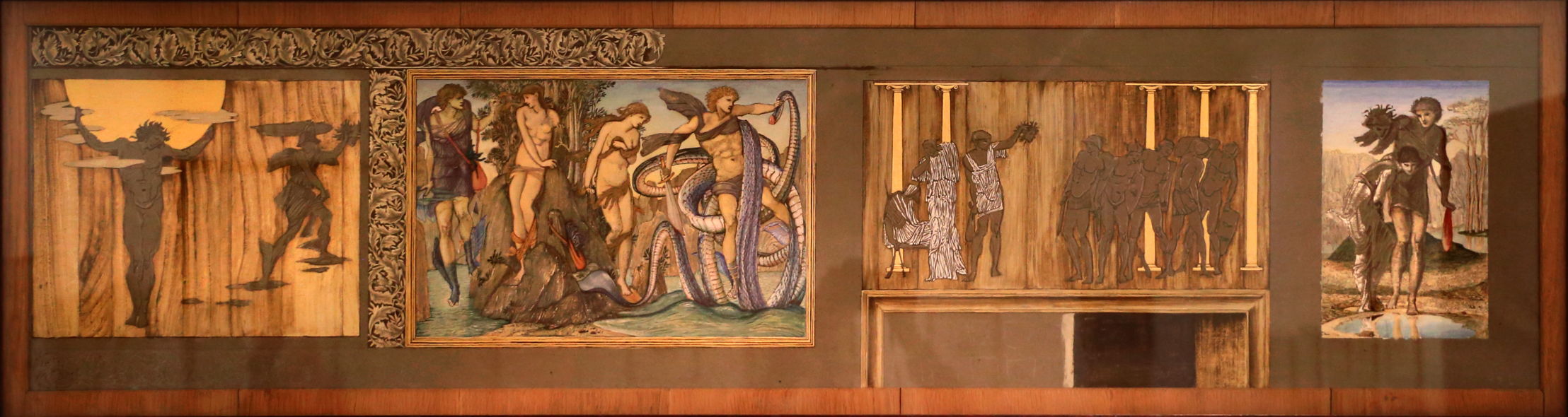
Edward Burne-Jones worked on many sketches and preliminary designs for his series, among which were gouache and gold layouts to show how his paintings would fit into their carved surrounds in his patron’s Music Room.
burnejonesperseusstudy
Edward Burne-Jones (1833–1898), Atlas Turned to Stone; The Rock of Doom and the Doom Fulfilled; The Court of Phineas; The Baleful Head (designs for The Story of Perseus) (1875-76), gouache, gold paint, graphite and chalk on paper, 36.7 x 148.7 cm, The Tate Gallery, London. Image by Sailko, via Wikimedia Commons.

This design shows an outline of the whole series, which had originally been intended to include Phineus and the wedding. The scenes shown are, from the left, Atlas Turned to Stone, The Rock of Doom and the Doom Fulfilled, The Court of Phineas, and The Baleful Head, shown below.
burnejonesperseus9b
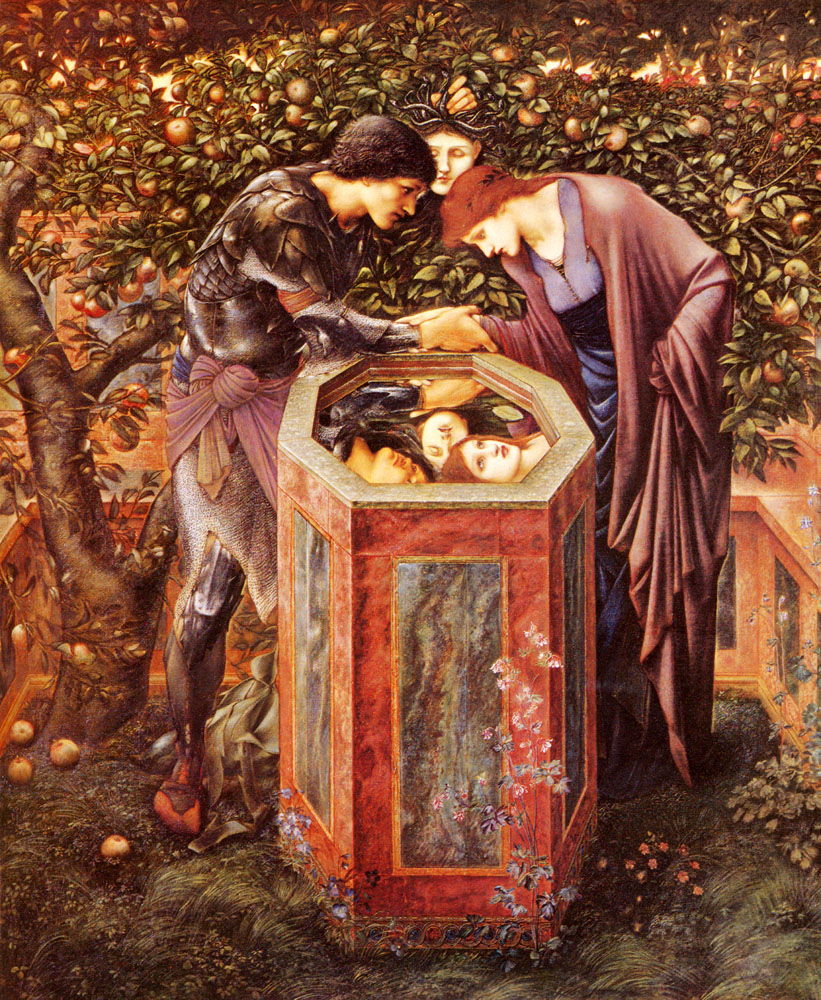
Edward Burne-Jones (1833–1898), The Perseus Series: The Baleful Head (1886-7), oil on canvas, 155 × 130 cm, Staatsgalerie Stuttgart, Stuttgart. Wikimedia Commons.

The tenth and final painting in Burne-Jones’ series, The Baleful Head (1885), shows Perseus and Andromeda, their right hands clenching one another’s wrists, looking at the image of Medusa’s face reflected in the surface of a well. This is set in a peaceful garden, with a fruit-laden apple tree behind, and flowers springing up from the grass beneath them.

Literary accounts take the couple on to live at Tiryns in Argos, from where Heracles/Hercules later undertook his Twelve Labours. They had seven sons and two daughters, and among their descendants were Heracles, Castor and Pollux, Clytemnestra, and the Achaemenid Persians.

When Perseus returned to Seriphos, he discovered Polydectes was still trying to seduce his mother Danaë. Perseus therefore used Medusa’s face to turn him to stone, and made Dictys king and his mother’s consort. His mission accomplished, Perseus returned the weapon and equipment loaned by the gods, and gave Athena the head of Medusa, which she then set in her shield as the Gorgoneion, more commonly referred to as the Aegis.
rubensjudgementparis
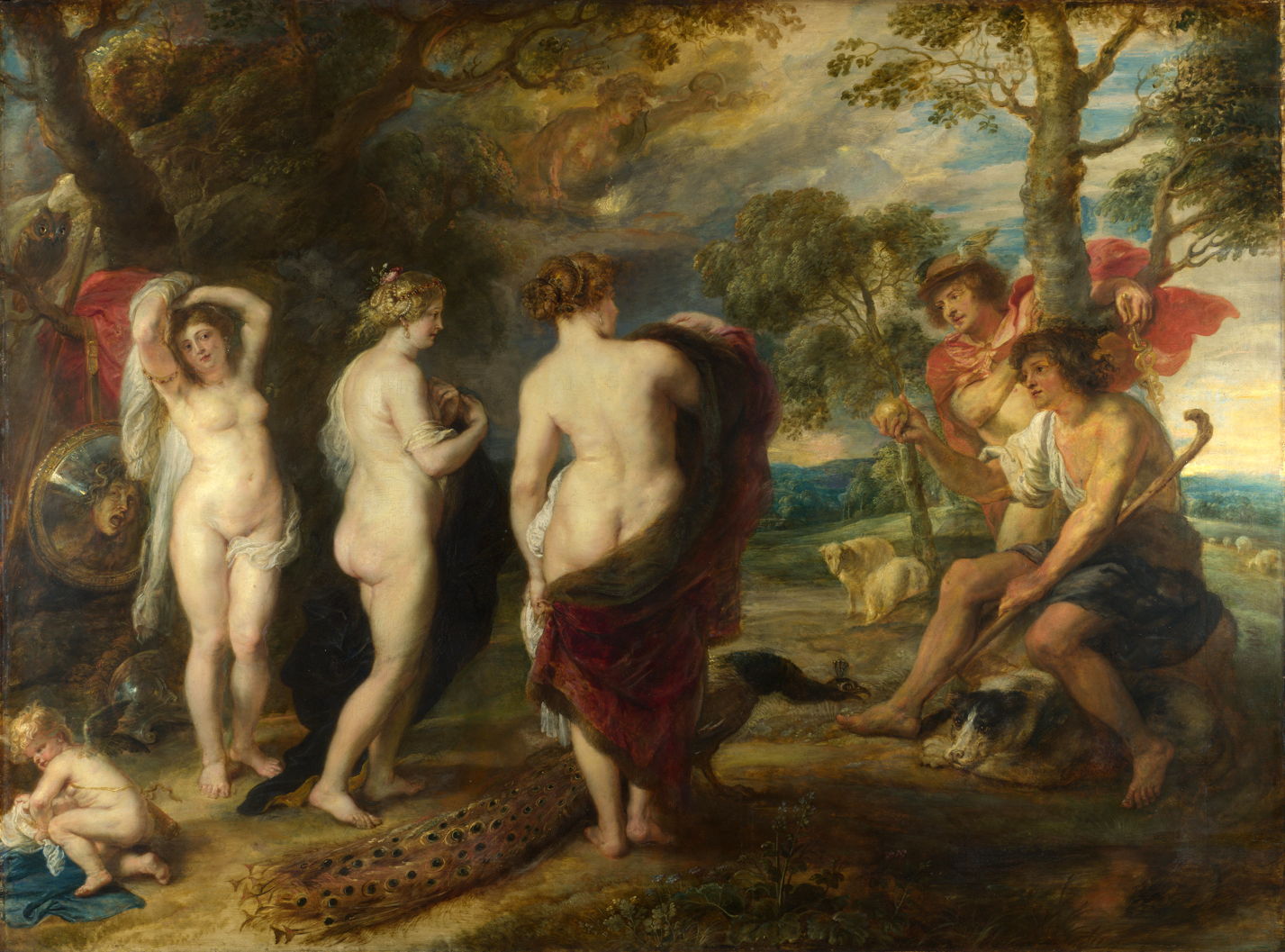
Peter Paul Rubens (1577–1640), The Judgement of Paris (1632-35), oil on oak, 144.8 x 193.7 cm, National Gallery, London. Wikimedia Commons.

Distinguishing the three goddesses taking part in The Judgement of Paris, shown in Rubens’ late account from 1632-35, often relies in part on the aegis. The three goddesses are, from the left, Athena with her shield, Aphrodite, and Hera with her peacock.

There was still one loose end to be tied, though: the prediction that Perseus would kill his father Acrisius. Various accounts are given of this, but consensus is that Perseus threw a quoit or discus that unintentionally struck Acrisius and killed him. Thereafter, he ruled a kingdom until he and Andromeda died. They were both catasterised into their own constellations, where they can still be seen today.

A weekend with Misia: 1

One of the myths about nineteenth and twentieth century art is that it freed itself from patronage that had bedevilled its past. What did change was that patrons of the arts were seldom royalty or nobility, although their power and influence were just the same. Between about 1895 and the late 1930s, one of the most important patrons in France was a Polish woman, born Maria Zofia Zenajda Godebska in 1872, but subsequently known as Misia Natanson, Edwards, or Sert. Her father was Cyprian Godebski, a major sculptor who was a professor at the Imperial Academy in Saint Petersburg. This weekend I tell a little of her story, with a succession of portraits by her many admirers.

Misia’s mother died shortly after the girl’s birth, so she was sent to her grandparents in Brussels. This took her from sculpture to music, as those grandparents had musical circles including Franz Liszt. She was brought up as a pianist, and when her father moved her to Paris, she studied under Gabriel Fauré.

Misia married for the first time at the age of twenty-one, to her cousin Thadée Natanson, who had socialist ideals and lived in artistic circles. The Natansons entertained Marcel Proust, Stéphane Mallarmé, André Gide and Claude Debussy. But they were closest to their painter friends: Claude Monet, Pierre-Auguste Renoir, Odilon Redon, Paul Signac, and Henri de Toulouse-Lautrec.

toulouselautrecmisia1895
Henri de Toulouse-Lautrec (1864–1901), Portrait of Misia Natanson (Sert) (1895), further details not known. Wikimedia Commons.

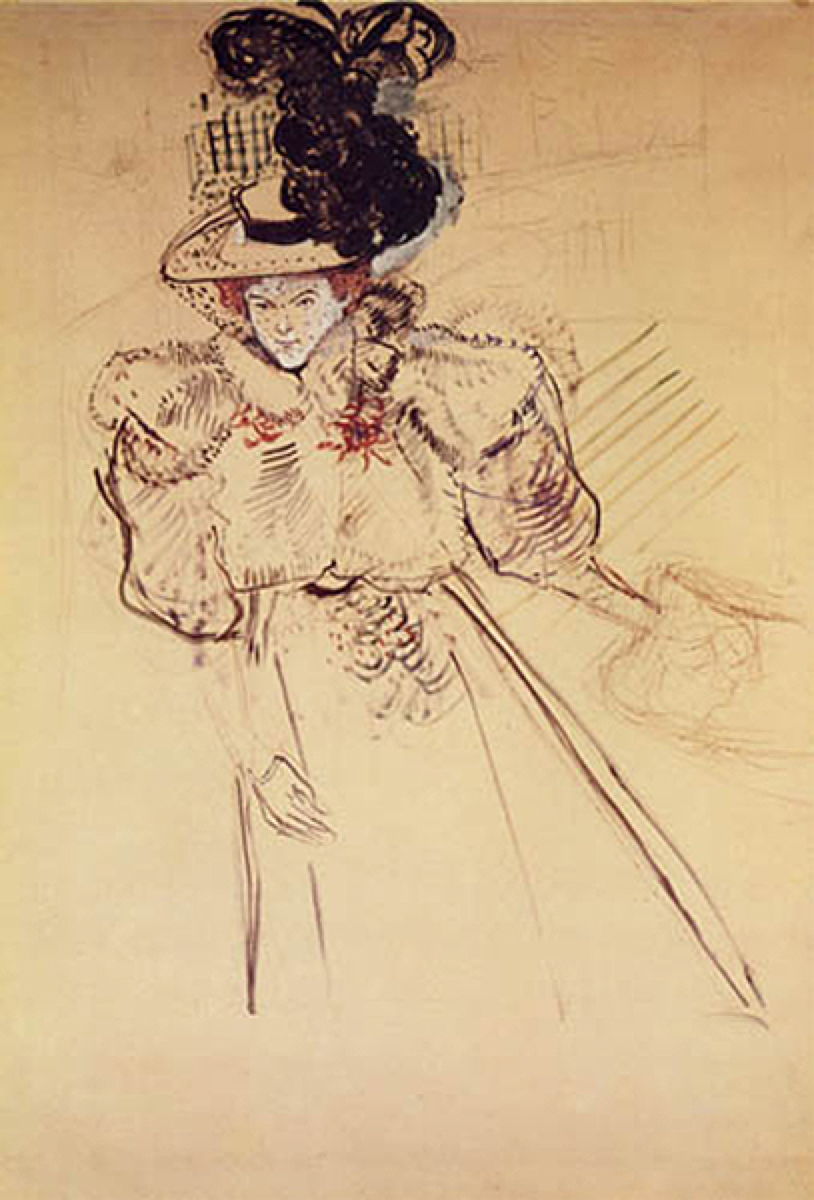
It was probably Toulouse-Lautrec who first started to draw and paint Misia, as in his Portrait of Misia Natanson of 1895.

toulouselautrecrevueblanche1895
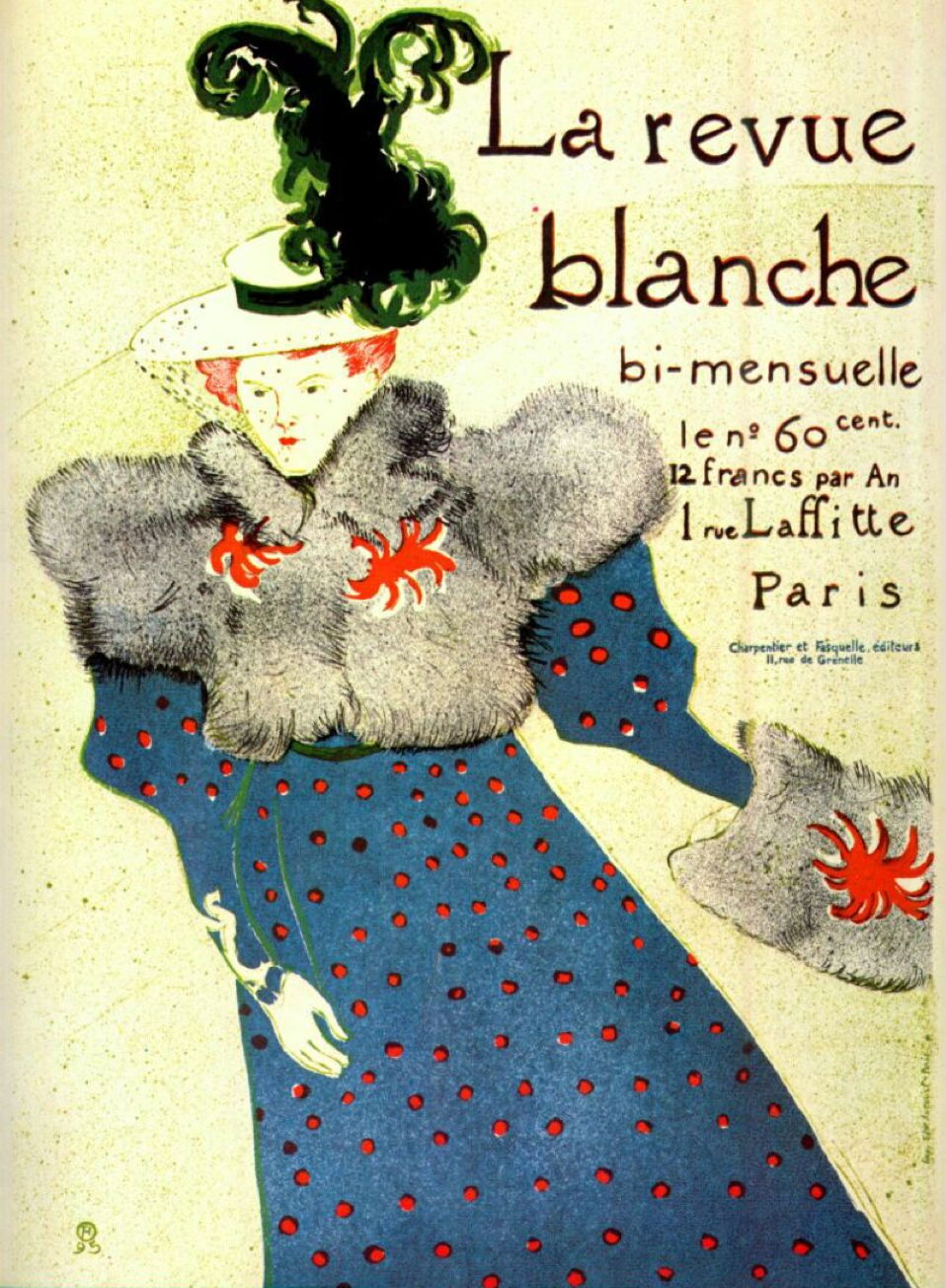
Henri de Toulouse-Lautrec (1864–1901), Poster for La revue blanche (1895), further details not known. Wikimedia Commons.

In 1895 he turned that into his Poster for “La revue blanche”, the arts magazine co-founded in 1889 by Misia’s husband, which was the platform that promoted the Nabis, including Pierre Bonnard.

toulouselautrecmisia1897
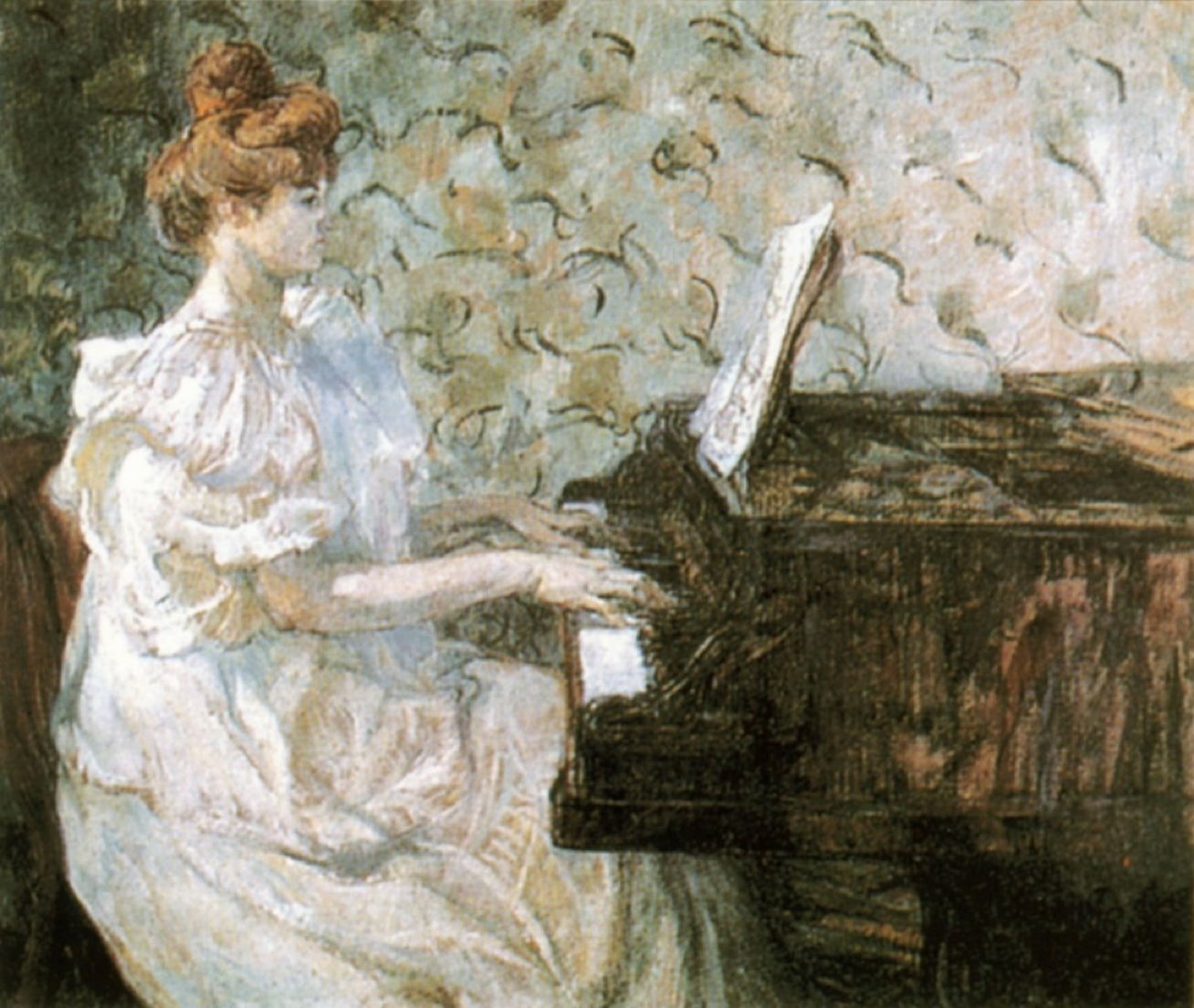
Henri de Toulouse-Lautrec (1864–1901), Misia Natanson (1897), media and dimensions not known, Musée des Beaux-Arts, Berne, Switzerland. Image by J Frey, via Wikimedia Commons.

Toulouse-Lautrec later painted Misia Natanson playing the piano in 1897.

The Nabis themselves painted Misia’s portraits, not just as their main patron, but in informal settings, as more of a friend and muse.

vuillardvallottonatmisias1897
Édouard Vuillard (1868–1940), Vallotton at the Natansons (1897), further details not known. Wikimedia Commons.

Édouard Vuillard’s Vallotton at the Natansons shows Misia watching Félix Vallotton painting in 1897, at the Natanson’s home.

vallottonmisiadressingtable
Félix Vallotton (1865–1925), Misia at Her Dressing Table (1898), distemper on cardboard, 36 x 29 cm, Musée d’Orsay, Paris. Wikimedia Commons.

Félix Vallotton provides a glimpse into her private life in his Misia at Her Dressing Table from 1898.

bonnardmisiabreakfast
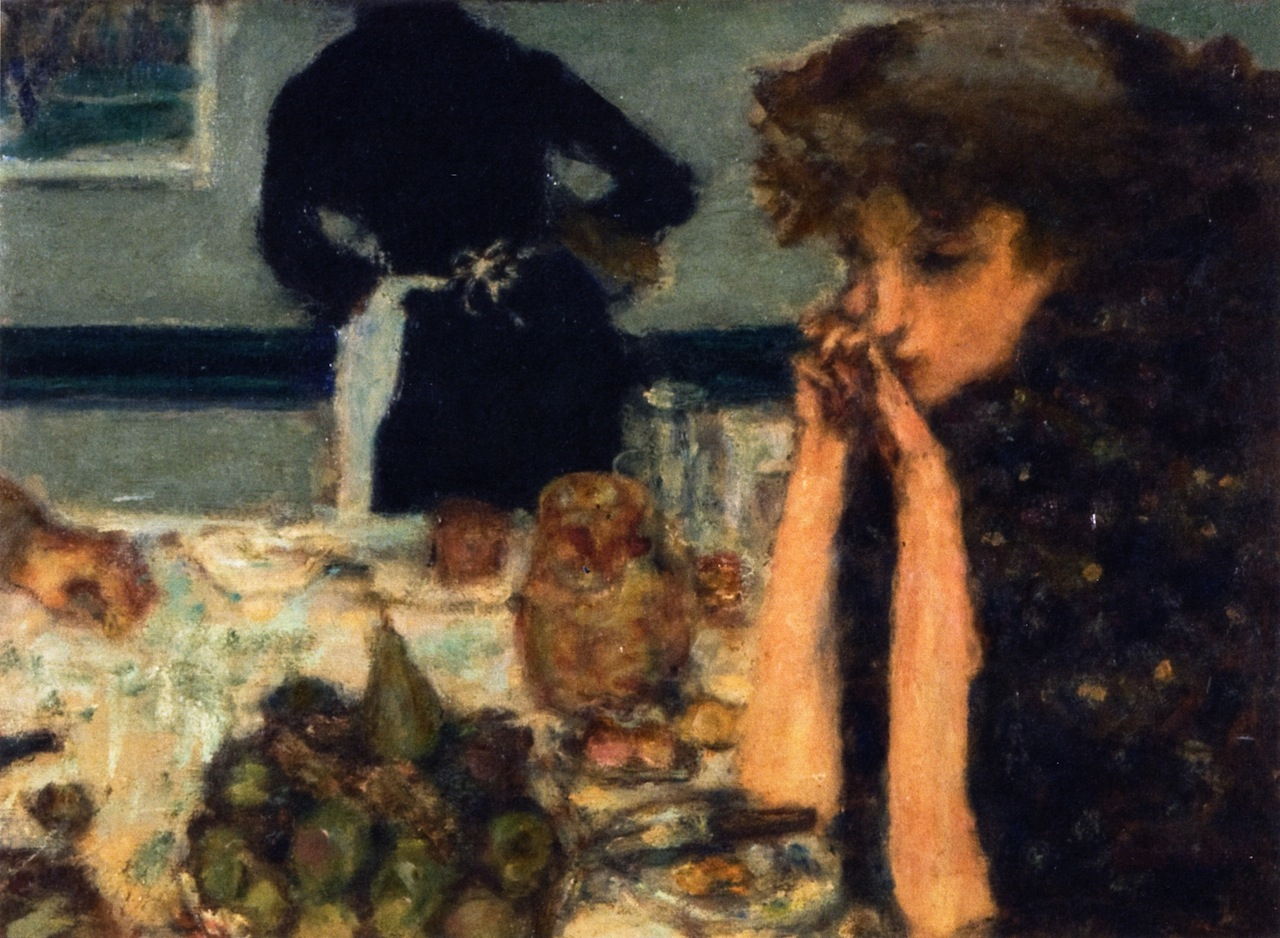
Pierre Bonnard (1867-1947), Misia Natanson at Breakfast (c 1899), oil on wood, 32 x 41 cm, Private collection. The Athenaeum.

In his turn, Pierre Bonnard painted Misia Natanson at Breakfast in about 1899, with one of the family’s maids at work in the background.

bonnardmisiapiano
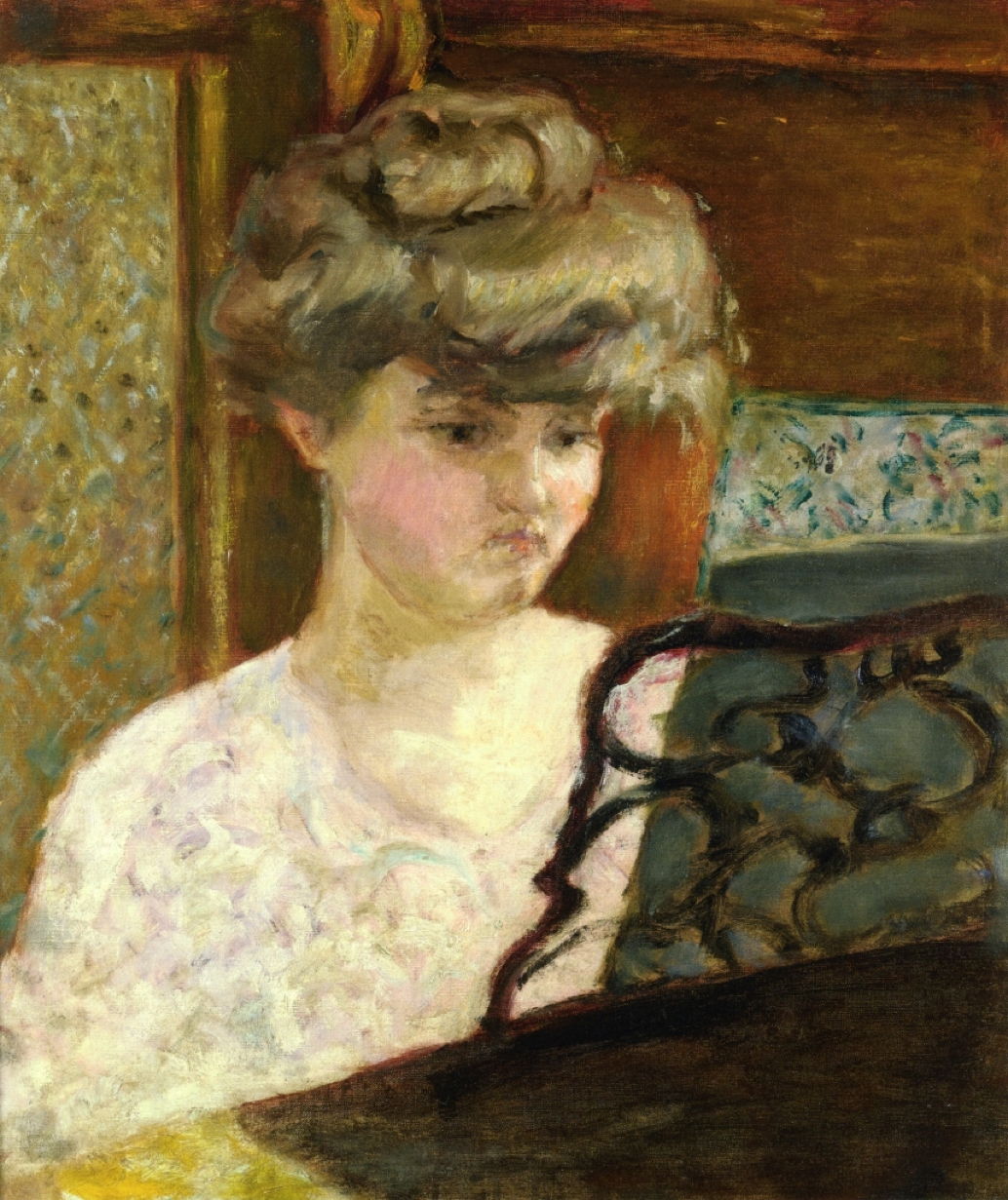
Pierre Bonnard (1867-1947), Misia at the Piano (Portrait of Misia Natanson) (c 1902), oil on canvas, 46.2 x 39 cm, Private collection. The Athenaeum.

Bonnard’s Misia at the Piano from about 1902 shows Misia doing what she loved most.

At this time, Thadée Natanson needed more capital to support his publishing and other activities. He found a source in Alfred Edwards, a publishing magnate who had founded and published the major newspaper in Paris at the time, Le Matin. Unfortunately, Edwards and Misia fell in love, and Misia became Edwards’ mistress in 1903. As Natanson wanted his capital, so Edwards wanted Misia, and that became a condition of the deal between them.

renoirmisiang1904
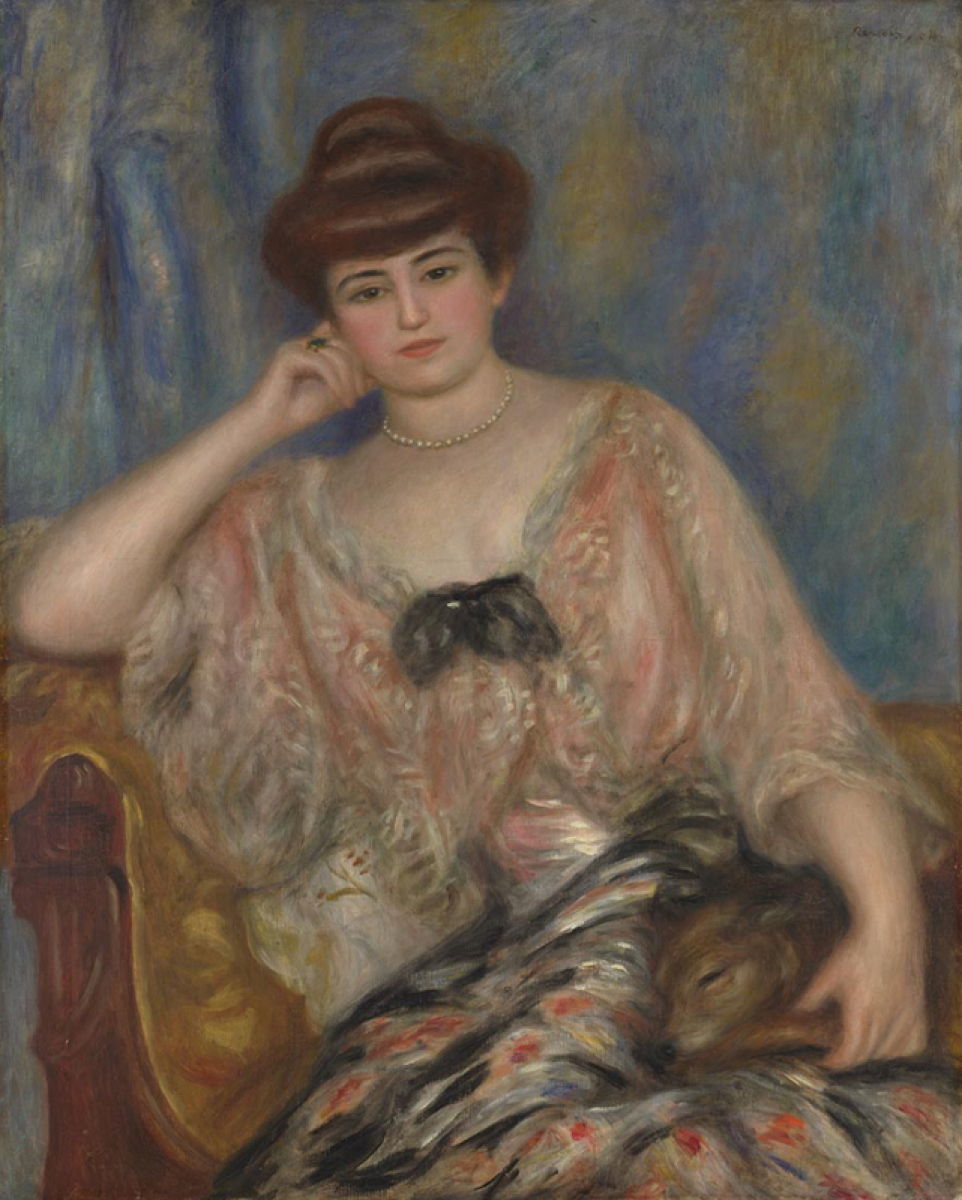
Pierre-Auguste Renoir (1841-1919), Misia Sert (1904), oil on canvas, 92.1 x 73 cm, The National Gallery (Bought, 1960), London. Courtesy of and © The National Gallery, London.

Renoir painted this and the next portrait of Misia Sert while this was being settled, in 1904. Of the two, this is the better-known, as it hangs in the National Gallery in London. I can’t help feeling that she appears unhappy here.

renoirmisia1904
Pierre-Auguste Renoir (1841–1919), Portrait of Misia Sert (1904), oil on canvas, 55.5 × 66.5 cm, Tel Aviv Museum of Art, Tel Aviv, Israel. Wikimedia Commons.

In this second of Renoir’s portraits of Misia from 1904, now in Tel Aviv, she is as sumptuously dressed, but her head is buried in a book.

Reference

Wikipedia.

❌