
Normal view

There are new articles available, click to refresh the page.
Before yesterdayMain stream

Medium and Message: Oil on paper

By: hoakley
9 December 2025 at 20:30

Centuries of experience with painting using oil paints have proved the importance of a robust support and a ground that isolates the paint layer from its support. Older use of wood panels with a gesso ground consisting largely of gypsum or chalk ensured the paint layer wouldn’t be subjected to mechanical stress, and would remain isolated from the underlying wood. Canvases became popular because of their relative lightness particularly in larger sizes, but still require an isolating ground layer both to protect the canvas from damage by the paint, and to prevent discolouration of the paint.

When sketching in oils in front of the motif became increasingly popular in the late eighteenth century, those paintings weren’t intended for public view, but as an aid for the artist when composing finished paintings in the studio. Rather than gather hundreds of small oil sketched on canvas or panels, the first plein air painters usually used paper or cardboard as support and ground. Subsequently, when their studios were sold off following their death, surviving oil sketches were usually laid on canvas for preservation and display.

Pierre-Henri de Valenciennes, (Title not known) (c 1783), oil on paper laid on canvas, c 18 x 28 cm, Musée du Louvre, Paris. © 2015 EHN & DIJ Oakley.
Pierre-Henri de Valenciennes (1750-1819), (Title not known) (c 1783), oil on paper laid on canvas, c 18 x 28 cm, Musée du Louvre, Paris. © 2015 EHN & DIJ Oakley.

Although he probably wasn’t the first to compile a library of oil sketches, those gathered by Pierre-Henri de Valenciennes when he was painting in the Roman Campagna in the 1780s are among the most brilliant. This untitled view of the countryside near Rome is thought to have been painted in about 1783.
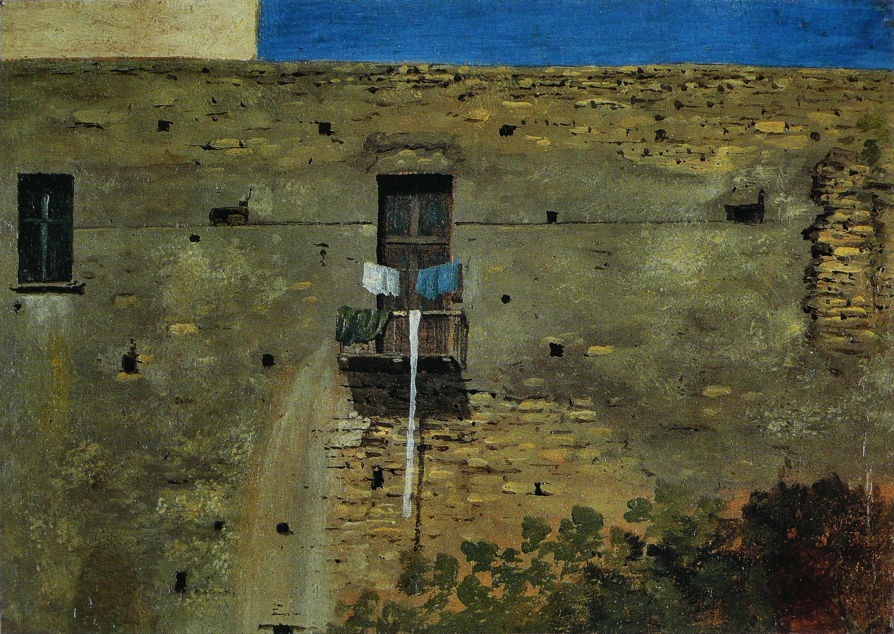
Thomas Jones, A Wall in Naples (c 1782), oil on paper laid on canvas, 11.4 x 16 cm, National Gallery, London. Wikimedia Commons.
Thomas Jones (1742-1803), A Wall in Naples (c 1782), oil on paper laid on canvas, 11.4 x 16 cm, National Gallery, London. Wikimedia Commons.

At about the same time, the Welsh painter Thomas Jones was doing the same thing in and around Naples as well. This tiny view of A Wall in Naples was painted in about 1782, and is now one of the gems in London’s National Gallery. Below is a detail.

Thomas Jones, A Wall in Naples (detail) (c 1782), oil on paper laid on canvas, 11.4 x 16 cm, National Gallery, London. Wikimedia Commons.
Thomas Jones (1742-1803), A Wall in Naples (detail) (c 1782), oil on paper laid on canvas, 11.4 x 16 cm, National Gallery, London. Wikimedia Commons.
Thomas Jones, The Capella Nuova outside the Porta di Chiaja, Naples (1782), oil on paper, 20 x 23.2 cm, Tate Britain, London. Wikimedia Commons.
Thomas Jones (1742-1803), The Capella Nuova outside the Porta di Chiaja, Naples (1782), oil on paper, 20 x 23.2 cm, Tate Britain, London. Wikimedia Commons.

Jones was taught by the Welsh artist Richard Wilson, but none of his oil sketches have survived. Jones’ Capella Nuova outside the Porta di Chiaja, Naples is another example that’s significantly larger, and now in the Tate Gallery.

Pierre-Henri de Valenciennes, (Title not known) (c 1783), oil on paper laid on canvas, c 18 x 25 cm, Musée du Louvre, Paris. © 2015 EHN & DIJ Oakley.
Pierre-Henri de Valenciennes (1750-1819), (Title not known) (c 1783), oil on paper laid on canvas, c 18 x 25 cm, Musée du Louvre, Paris. © 2015 EHN & DIJ Oakley.

Valenciennes went on to assemble a large library of his oil sketches that he used for his studio paintings following his return to Paris. He was admitted to the Academy in 1787, published an influential manual of perspective and painting in 1799, and became Professor of Perspective at l’École des Beaux-Arts in Paris in 1812.

Among the aspiring young landscape painters who followed in the footsteps of Valenciennes was Camille Corot, who was taught by Achille Etna Michallon, who in turn had been taught by Valenciennes. Corot painted in the Roman Campagna between 1825-28, using the same techniques of applying his oil paint direct to sheets of paper.

Jean-Baptiste-Camille Corot, View of Rome: The Bridge and Castel Sant'Angelo with the Cupola of St. Peter's (1826-7), oil on paper on canvas, 26.7 x 43.2 cm, Fine Arts Museums of San Francisco. WikiArt.
Jean-Baptiste-Camille Corot (1796-1875), View of Rome: The Bridge and Castel Sant’Angelo with the Cupola of St. Peter’s (1826-7), oil on paper on canvas, 26.7 x 43.2 cm, Fine Arts Museums of San Francisco. WikiArt.

Corot painted this View of Rome: The Bridge and Castel Sant’Angelo with the Cupola of St. Peter’s in 1826-27. This is one of the best-known bridges over the River Tiber, and not far from the centre of the city. The view is taken from the north-east of the bridge, on the ‘left’ bank, probably close to the Piazza di Ponte Umberto I, looking towards the south-west (‘right’ bank). The painting is sketchy rather than finely finished, and appears to have been painted en plein air onto a sheet of paper that has subsequently been laid on canvas.

Jean-Baptiste-Camille Corot, View of the Convent of S. Onofrio on the Janiculum, Rome (1826), oil on paper mounted on canvas, 22 x 33 cm, Fitzwilliam Museum, Cambridge, England. WikiArt.
Jean-Baptiste-Camille Corot (1796-1875), View of the Convent of S. Onofrio on the Janiculum, Rome (1826), oil on paper mounted on canvas, 22 x 33 cm, Fitzwilliam Museum, Cambridge, England. WikiArt.

This View of the Convent of S. Onofrio on the Janiculum, Rome is another from Corot’s first campaign in Rome.
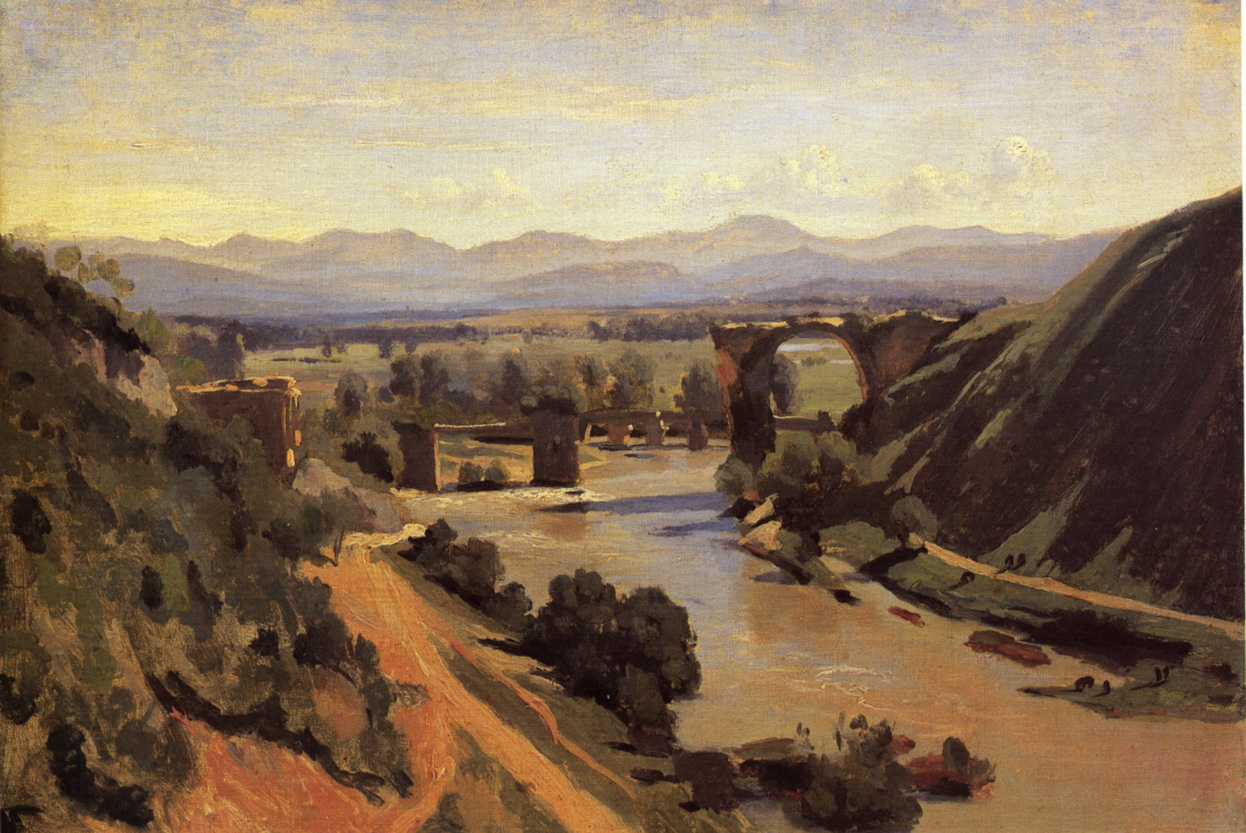
Jean-Baptiste-Camille Corot, The Bridge at Narni (1826), oil on paper, 34 x 48 cm, Musée du Louvre, Paris. WikiArt.
Jean-Baptiste-Camille Corot (1796-1875), The Bridge at Narni (1826), oil on paper, 34 x 48 cm, Musée du Louvre, Paris. WikiArt.

Corot’s years in Italy were formative in his own development, and one of the key elements he put in place to hand on to Camille Pissarro and other Impressionists. The Bridge at Narni is one of his finest oil sketches.
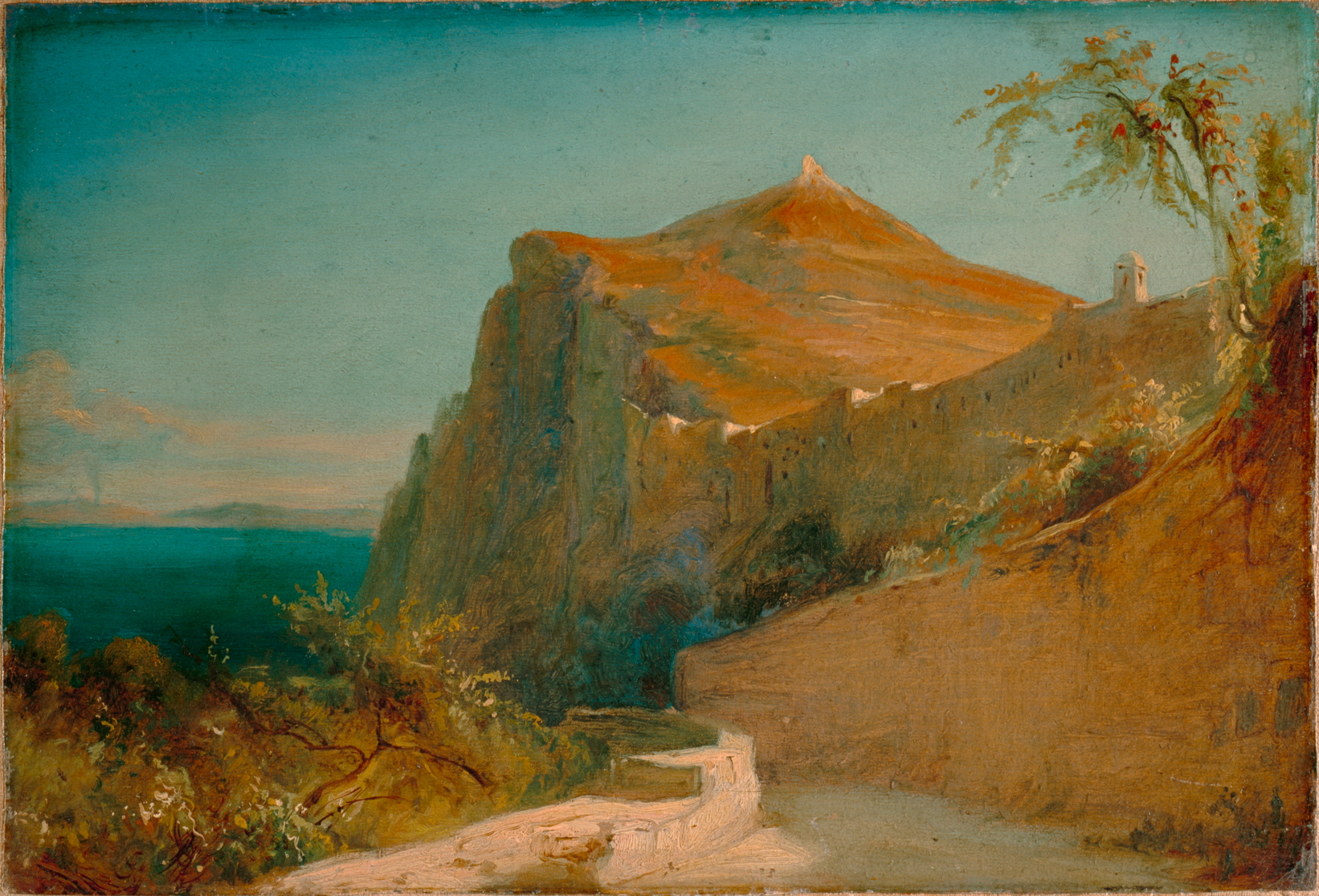
Carl Eduard Ferdinand Blechen, Tiberiusfelsen auf Capri (Tiberius Rocks, Capri) (1828-9), oil on paper mounted on canvas, 20.5 x 30 cm, Lower Saxony State Museum, Hanover. Wikimedia Commons.
Carl Eduard Ferdinand Blechen (1798-1840), Tiberiusfelsen auf Capri (Tiberius Rocks, Capri) (1828-9), oil on paper mounted on canvas, 20.5 x 30 cm, Lower Saxony State Museum, Hanover. Wikimedia Commons.

Others followed Valenciennes’ instructions, among them Carl Blechen, a brilliant German landscape painter who sketched the Tiberius Rocks, Capri during a visit in 1828-29, again on paper.

Carl Eduard Ferdinand Blechen, Galgenberg bei Gewitterstimmung (A Scaffold in a Storm) (c 1835), oil on paper mounted on board, 29.5 x 46 cm, New Masters Gallery, Dresden. Wikimedia Commons.
Carl Eduard Ferdinand Blechen, (1798-1840) Galgenberg bei Gewitterstimmung (A Scaffold in a Storm) (c 1835), oil on paper mounted on board, 29.5 x 46 cm, New Masters Gallery, Dresden. Wikimedia Commons.

Blechen’s late oil sketch of A Scaffold in a Storm was painted in about 1835, shortly before he succumbed to severe depression. This anticipates many elements of Impressionism: it appears to have been executed rapidly in front of the motif (although a view from his studio over Berlin and Brandenburg), with many brush-strokes plainly visible; details are composed of stylised marks; it is an everyday if not banal subject, with an informal composition.

However, the French Impressionists seldom if ever sketched in oils on paper, as their paintings made in front of the motif were intended to be sold to and viewed by the public, for which paper wasn’t considered suitable. Times had changed.

硅谷商战变厨艺大赛?小扎曾亲手煮汤挖人,OpenAI 说不慌都是演的

By: 张子豪
3 December 2025 at 15:40

鹬蚌相争,渔翁得利。有时候还挺希望我们用户就是那个渔翁,模型厂商打得越厉害,我们就有机会越快用到更好的模型。

2022 年 12 月 22 号,在 ChatGPT 发布三周后,为了应对 OpenAI 的威胁,Google 成了第一个发布「红色警报」的科技巨头。

昨天,在 Gemini 3 发布两周后,因为 Gemini 3 模型出现了大幅增长,OpenAI 发布了首个「红色警报」。

看到消息的时候,我就觉得 OpenAI 是不是有点过度反应了,很快就看到了一些评论说「骄兵必败」、还有「胜败乃兵家常事」。但转念一想,所谓的「红色警报」也许就是给投资人看的,毕竟 OpenAI 如果真的做不到第一,那个 2030 才能盈利的时间,只会拉得更长。

▲ Gemini 的 App 下载量快要追上 ChatGPT

根据最新透露的消息,OpenAI 在下周即将推出一款新的推理模型,内部评估表现要比 Gemini 3 更好。此外,他们还计划通过一个代号为「Garlic」的模型,来进行反击。

但更现实的情况,是 OpenAI 必然会发布比 Gemini 3 更好的模型,而 Google 也还有 Gemini 4、Gemini 5。

其实,回看过去这一年来硅谷的新闻,完全算得上是一出跌宕起伏的抓马大戏。年初被 DeepSeek R1 的横空出世而感到压力;年中则是小扎开启的疯狂「抢人模式」,天价薪酬刷新着所有人对 AI 人才的认知;到了年尾,又再次卷回到了朴素的模型比拼赛场。

在 OpenAI 研究主管 Mark Chen 的最新播客采访中,硅谷的战争更是进化到了魔幻的程度,他说小扎为了挖走 OpenAI 的核心大脑,甚至开始做汤,真的能喝的汤,然后亲自把汤送到研究员的家门口。

除了这些八卦,他也谈到了 OpenAI 对于 Gemini 3 的看法、Scaling 是否已经过时、还有 DeepSeek R1 对他们的影响、以及公司内部的算力分配、实现 AGI 的时间表等。

Mark Chen 的背景非常有意思,数学竞赛出身,MIT 毕业,去华尔街做过高频交易(HFT),2018 年加入 OpenAI,跟着 Ilya 一起做研究。和奥特曼更偏向于商人属性的特点不同,这些经历,让他身上也有一股非常明显的特质,极度厌恶失败,且极度信奉数学。

他坦言自己现在,完全没有社交生活,过去两周每天都工作到凌晨 1-2 点。

我们整理了这场长达一个半小时的采访,总结了下面这些亮点,或许能更好的看清硅谷这一年来的各种「战争」、以及 OpenAI 会做些什么努力,来继续保持自己在 AI 时代的第一。

关于 Gemini 3,我们真的「不慌」

OpenAI 真的怕 Google 吗?Mark 的评价很客观但也很犀利。他肯定了 Gemini 3 是个好模型,Google 终于找对路子了。但是他说看细节,比如 SWE-bench(这也是 Gemini 3 刷榜那张图片里,唯一一个没有拿到第一的基准测试)数据,Google 在数据效率上依然没有解决根本问题。

▲Gemini 3.0 Pro 在 SWE-Bench 上的表现,比 GPT-5.1 还差了 0.1%

而他自己则是非常自信的表示,OpenAI 内部已经有了针对性的应对模型,而且他们有信心在数据效率上做得更好。

Mark 甚至说,奥特曼前几天发那个说大家都要感到压力的备忘录,去吓唬大家,其实更多的是为了注入紧迫感,他说这是管理层的惯用手段,备忘录的目的在于管理层激励团队,而不是真的感到慌了。

我觉得Sam的工作之一就是要注入紧迫感和速度感。这是他的责任,也是我的责任。


作为管理者,我们的部分工作就是不断给组织注入紧迫性。

▲此前 The Information 报道,奥特曼在 Gemini 3 推出时,在公司内部发备忘录,提到会给 OpenAI 带来困难

他们目前最大的问题,还是算力分配。作为 OpenAI 的研究主管,他的一项工作就是决定如何将算力分配到公司内部不同的项目。

他和 Jakub Pachocki(OpenAI 首席科学家)一起,负责制定 OpenAI 的研究方向,同时决定每个项目能拿到多少算力。为了这件事,他们每隔 1–2 个月,都会做一次盘点。

他们把 OpenAI 所有在做的项目,放进一张巨大的表格里,大概有 300 个;然后努力把每一个项目都看懂,给它们排优先级;再根据这个优先级表去分配 GPU。

▲英伟达和 OpenAI 的百万 GPU 合作

他也提到,真正要用掉大部分的 GPU 的,甚至并不是训练那个最重要发布的模型,而是他们内部在探索下一代 AI 范式的各种实验。

所以,在他的眼里,Gemini 3 发布了、某家开源模型刷榜了、某个思考模型又拿了新高分了;这些你追我赶的 benchmark 赛车一点都不重要。反而,最应该避免的,恰恰是被这场竞赛牵着走。

他说,现在的模型发展,我们随时可以靠一点「小更新」,就在榜单上领先几周或几个月但如果把资源都砸在这些短线迭代上,就没有人去寻找下一代范式。而一旦有人真的找到了,整个领域后面十年的路线,都要沿着那条新路走。

小声哔哔几句,预言 OpenAI 下周要发布的模型,我想就是在计划之外,做了点小更新,然后刷新了几个榜单而已吧,就这还没慌吗。

提到榜单的时候,他说他有自己的一套私房题,用来测试模型是不是真的具备了顶级数学直觉。他举了一个 42 的数学难题,说目前的语言模型,包括 o1 这种思考模型能接近最优解,但从来没有完全破解它。

你想创建一个模 42 的随机数生成器。你手头有一些质数,是模数小于 42 的质数的随机数生成器。目标是,以最少的调用次数,组合出这个模 42 的生成器。

除了谈到 Gemini 3,主持人也问了他对于 DeepSeek 的看法。

和 Gemini 3 一样,Mark 承认 DeepSeek 的开源模型曾让他们感到压力,甚至怀疑自己是不是走错了路。

但结论是坚持自己路线,不要被对手的动作打乱节奏,专注自己的路线图。OpenAI 不会变成一个跟风的公司,他们要做的,就是定义下一个范式。

Ilya 的 Scaling 里面还有很多潜力,OpenAI 需要大规模预训练

近期关于 Scaling 失效的讨论纷纷扬扬,Ilya 先是在播客采访里面说,Scaling 的时代已经结束了,后面又在社交媒体上澄清,Scaling 会持续带来一些改进,并不是停滞不前。

所谓的 Scaling Law,就是按经典老故事走向,这几年建了巨大的算力基建,模型每 10 倍算力,本该有一波明显跃迁。但从 GPT-4 到 GPT-5,外界并没有看到预期中那种「质变式」的提升,所以才会有「Scaling Law 失效了」的讨论;而 Ilya 前段时间的访谈,则是进一步放大了这种观点。

Mark Chen 对这个观点,给出了坚决的反驳,「我们完全不同意」。他透露,过去两年 OpenAI 在推理上投入了巨量资源,导致预训练这部分稍显退化。之前关于 GPT-5 遇到了预训练的问题,其实也是因为他们把重心放在了推理上,而不是 Scaling Law 已死。

工作就是分配算力资源的他,再次重申算力永远不会过剩,如果今天多 3 倍算力,他可以立刻用完;如果今天多 10 倍算力,几周内也能全部吃满。对他来说,算力需求是真实存在的,看不到任何放缓迹象。

▲ OpenAI 的计算成本,计划到 2030 年花费约 4500 亿美元租用服务器,红色为推理计算成本、蓝色为研发(不包含现金业务)、黄色为可盈利的计算

他也提到,过去半年,他和 OpenAI 首席科学家 Jakub Pachocki 已经将重心重新拉回,要开始重塑预训练的统治力

他明确说他们会继续做规模化模型,而且已经有一批算法突破,专门就是为了让 Scaling 更划算,在相同算力下挖出更多性能,在更高算力下保持数据效率。

小扎的送来的真汤,抵不过 OpenAI 的鸡汤

最后就是访谈里提到的八卦了,Meta 今年没有别的新闻,媒体渲染了一整个季度的「OpenAI 人才/Apple 人才/Google 人才大量流失到 Meta」,Mark Chen 在播客里正面回应了这个话题,细节简直有点「颠」。

他说小扎真的很拼,为了挖人,小扎不仅手写邮件,还亲自去送鸡汤。人才战打到最后,居然演变成「谁煮的汤更好喝」的 Meta 游戏。

▲ Meta 花大价钱挖人组建的超级智能实验室名单

不过,在他的直接下属中,Meta 曾试图挖角一半的人,结果全部选择继续留下来。为什么不走?不是因为钱,因为Meta 给的钱显然更多,而是因为信仰

Mark 说,即使是那些跳槽去 Meta 的人,也没有一个人敢说「Meta 会比 OpenAI 先做出 AGI」。留在 OpenAI 的人,是因为他们真的相信这里才是 AGI 的诞生地。

他也提到自己从华尔街和玩扑克的经历里面学到,真正要守住的是核心人才,而不是每一个人在搞清楚,必须留下的是哪类人后,再把资源和关注度,全部压在这部分人身上。

他说他最强烈的情绪,其实就是想「保护研究的本能」。在 Barrett(OpenAI 研究副总裁)离职那阵子,他甚至直接睡在办公室睡了一个月,只为把研究团队稳住。

▲ Barret 目前和 Mira(OpenAI 前 CTO) 都在 Thinking Machines

那么 OpenAI 所信奉的 AGI 又是什么,主持人问他,Andrej Karpathy 在最近的一个播客里面说,AGI 大概还要 10 年,你是怎么想的。

Mark 先是调侃了一番 X 现在「惊」的各种文案,一下子是「AI 完了」、一下子又是「AI 又可以了」。他觉得,每个人对于 AGI 的理解都不同,即便在 OpenAI 内部,也很难有一个一致的定义。但他相信的是,OpenAI 在 AGI 道路上设置的目标。

  • 一年内: 改变研究的性质。现在的研究员是自己在写代码、跑实验。 一年后,研究员的主要工作是管理 AI 实习生。AI 应该能作为高效的助手,承担大部分具体工作。
  • 2.5 年内: 实现端到端的研究自动化。这意味着:人类只负责提出 Idea(顶层设计),AI 负责实现代码、Debug、跑数据、分析结果,形成闭环。

从 Copilot 到 Scientist,Mark 强调,OpenAI for Science 的目标不是自己拿诺贝尔奖,而是建立一套工具,让现在的科学家能一键加速,哪怕这需要重构整个科学评价体系,因为未来可能很难分清是人还是 AI 做的发现。

2 年半的时间很快,但这对于现在看来,是以周为单位迭代的 AI 行业来说,又是一场漫长的马拉松。

▲ 预测市场给出的,到 2025 年底前最好的 AI 模型会来自哪个公司,Google 排在第一名

无论是扎克伯格那锅真金白银的鸡汤,还是 OpenAI 想要定义未来的理想主义鸡汤,这场硅谷的「煮汤大戏」还远未结束。Mark Chen 播客里表现出来的从容,或许能消除一部分外界的焦虑,但用户还是会用脚投票,好的模型自己会说话。

#欢迎关注爱范儿官方微信公众号:爱范儿(微信号:ifanr),更多精彩内容第一时间为您奉上。

爱范儿 | 原文链接 · 查看评论 · 新浪微博


❌
❌