
 Login
Login
Commemorating the centenary of the death of Charles Angrand
One hundred years ago today, on 1 April 1926, Charles Angrand, a leading member of arts circles in Paris in the late nineteenth century and a well-known painter, died. Although his paintings have today almost lapsed into obscurity, his work is represented in many of the world’s leading collections. This article gives an all too brief summary of his career with some of the few of his paintings that remain accessible.
Angrand was born in Normandy, France, in 1854 and went on to train at the provincial academy in Rouen. He was unsuccessful in gaining admission to the École des Beaux-Arts in Paris, but moved to the city in 1882 to teach mathematics. At that time he was living close to the Café Guerbois and other places frequented by artists, and joined their circles.
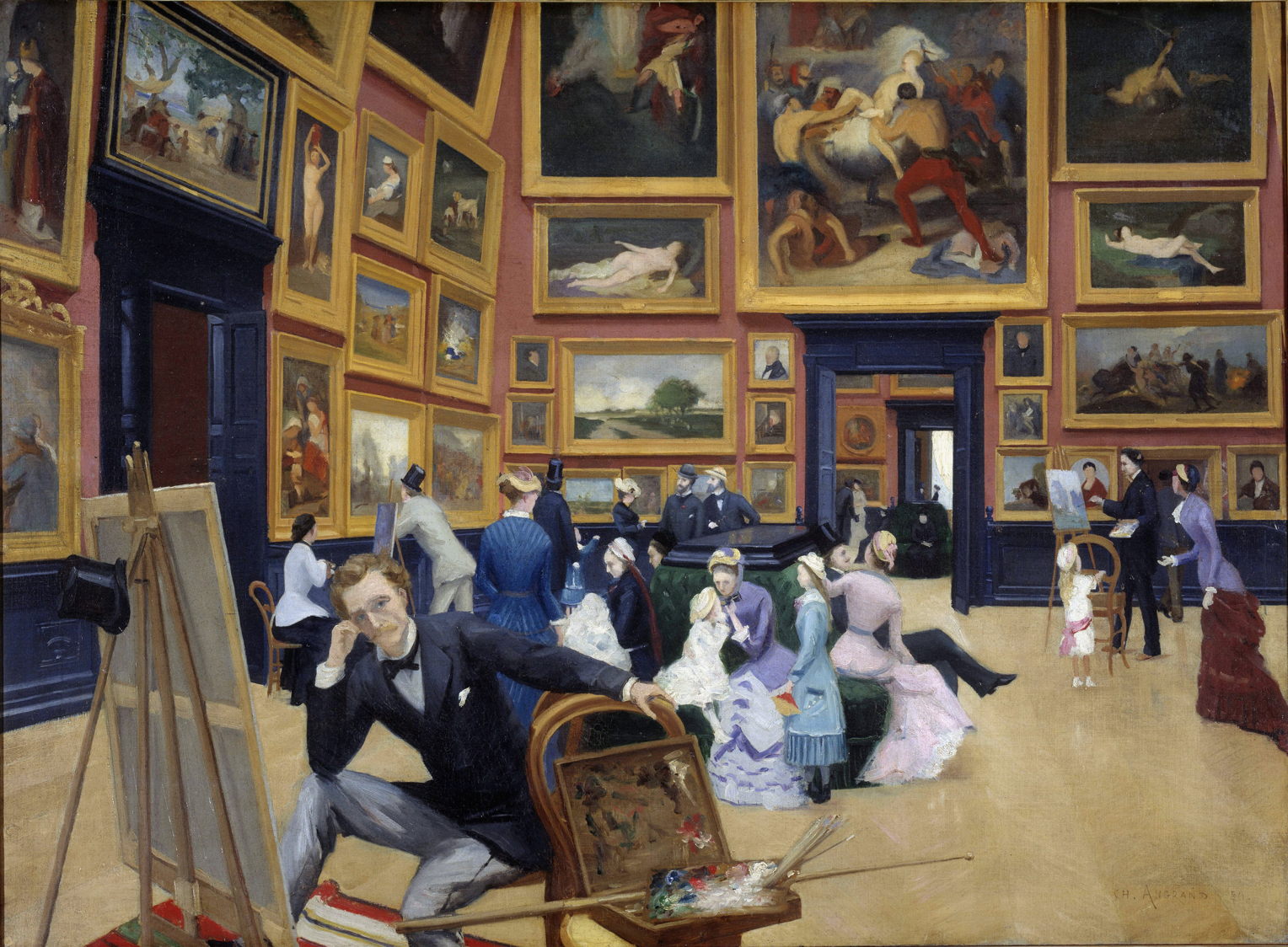
His early paintings, such as Interior of the Rouen Museum in 1880, appear to have been realist. This shows copyists at work in the Rouen Art Museum. The bored painter in the foreground is his friend Léon-Jules Lemaître (1849-1905), who later painted Angrand’s portrait in looser style.
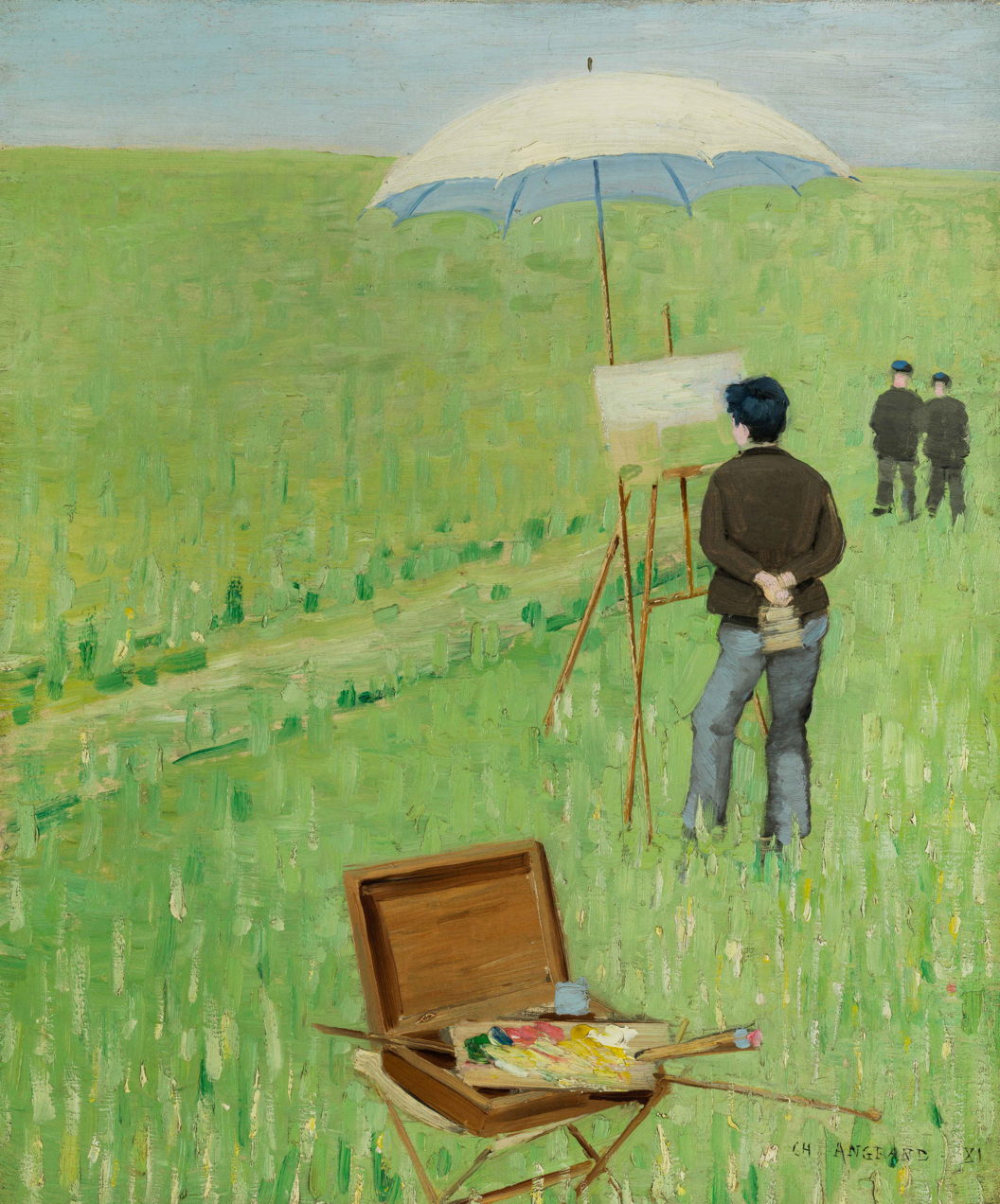
The following year, Angrand caught this Painter en plein air (1881) strangely separated from his palette and brushes in a field of green. His style steadily changed, as reflected in the brushstrokes visible in the green field. This painting is currently for sale from Leighton Fine Art Ltd. for £79,500.
In May 1884, he joined with Georges Seurat, Paul Signac, Henri Edmond Cross and others to form the Société des Artistes Indépendents, the core of the new Neo-Impressionist movement. The following year, Camille Pissarro joined them.
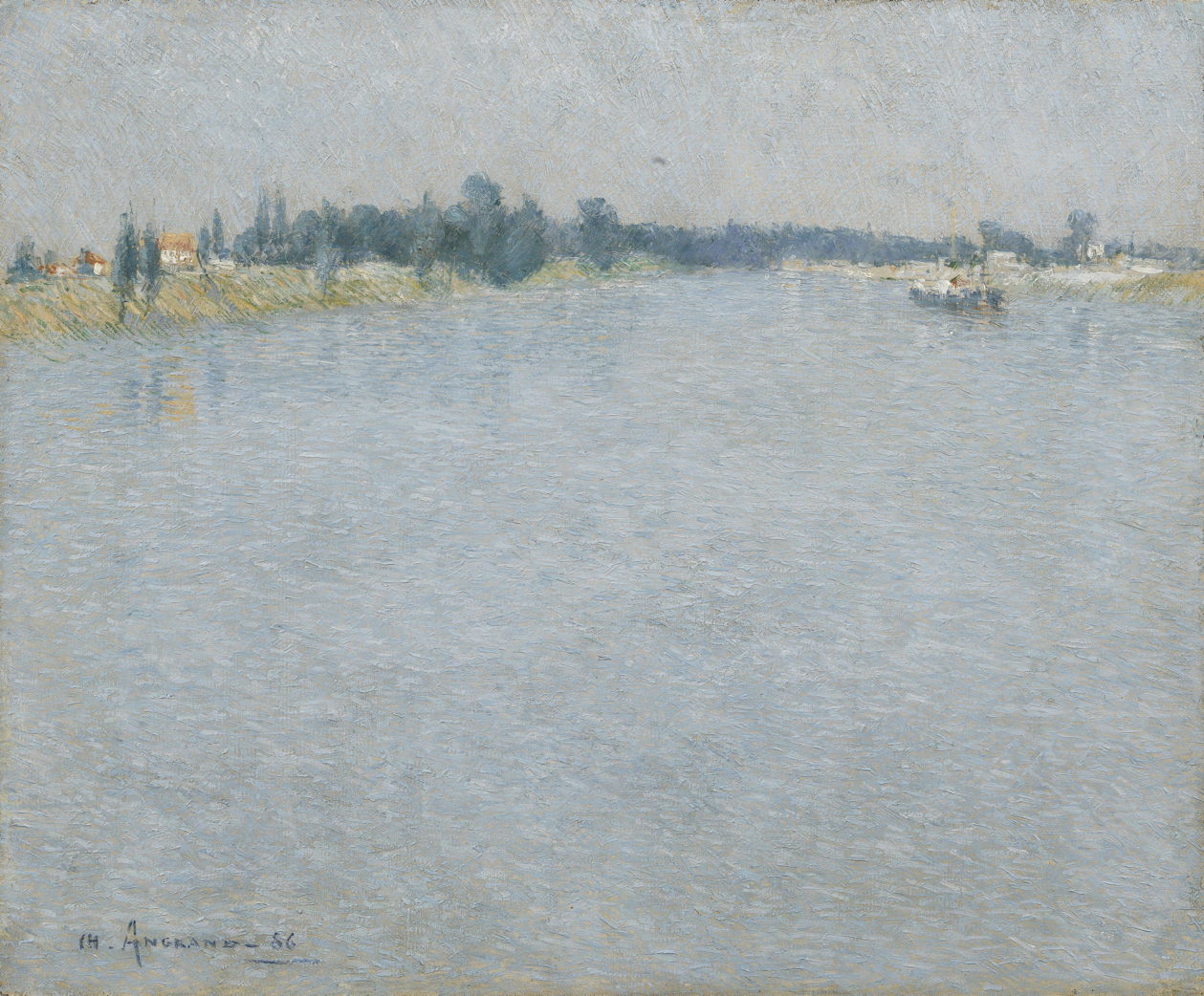
Angrand’s landscapes became more experimental. He painted this unusual view of The Seine, Morning (Saint-Ouen) in 1886, with its thin strip of bank in the distance, and most of the canvas filled by the river. Saint-Ouen is a suburb to the north of Paris.
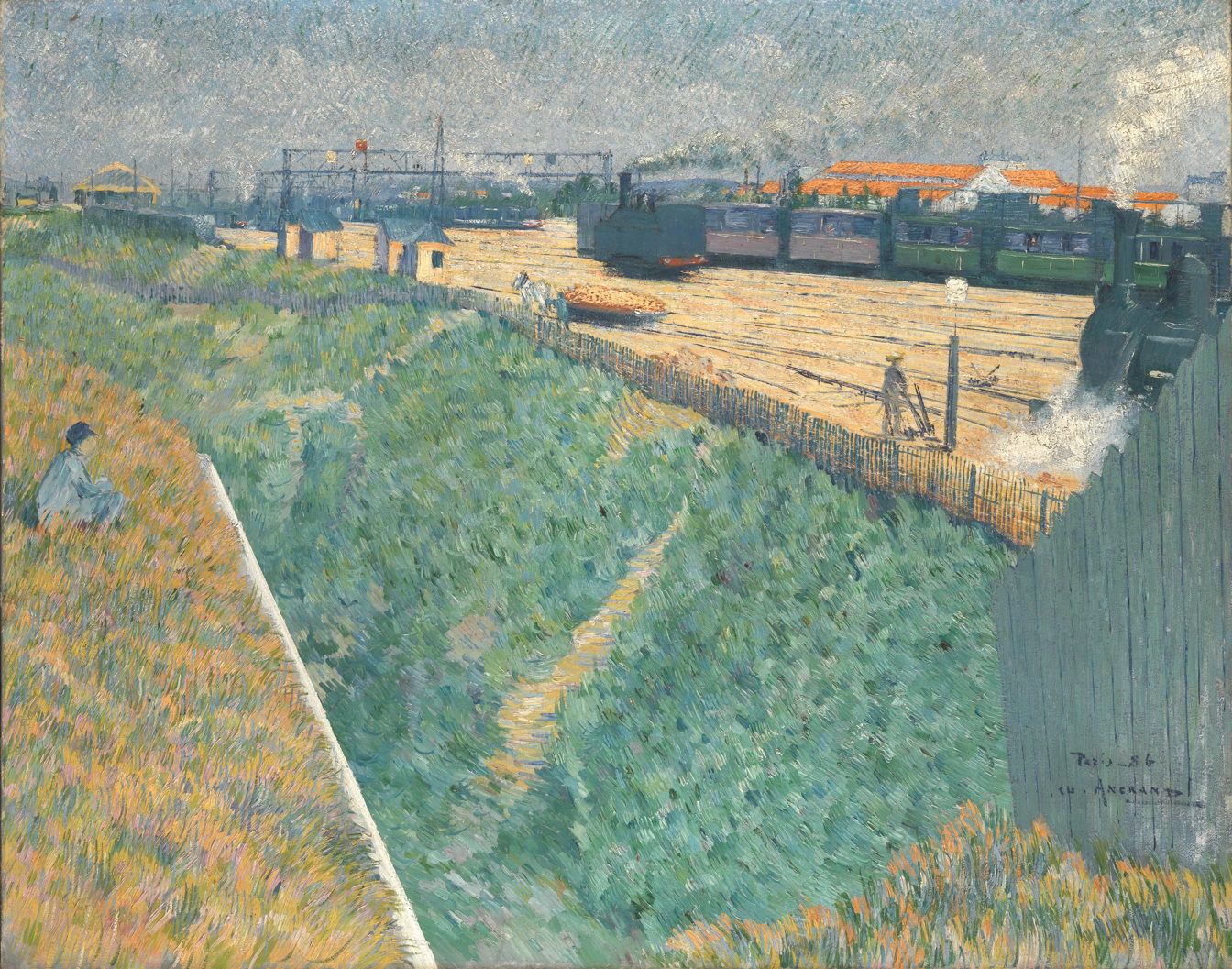
The Western Railway at its Exit from Paris, from the same year, shows the railway marshalling yards on the outskirts of the city.
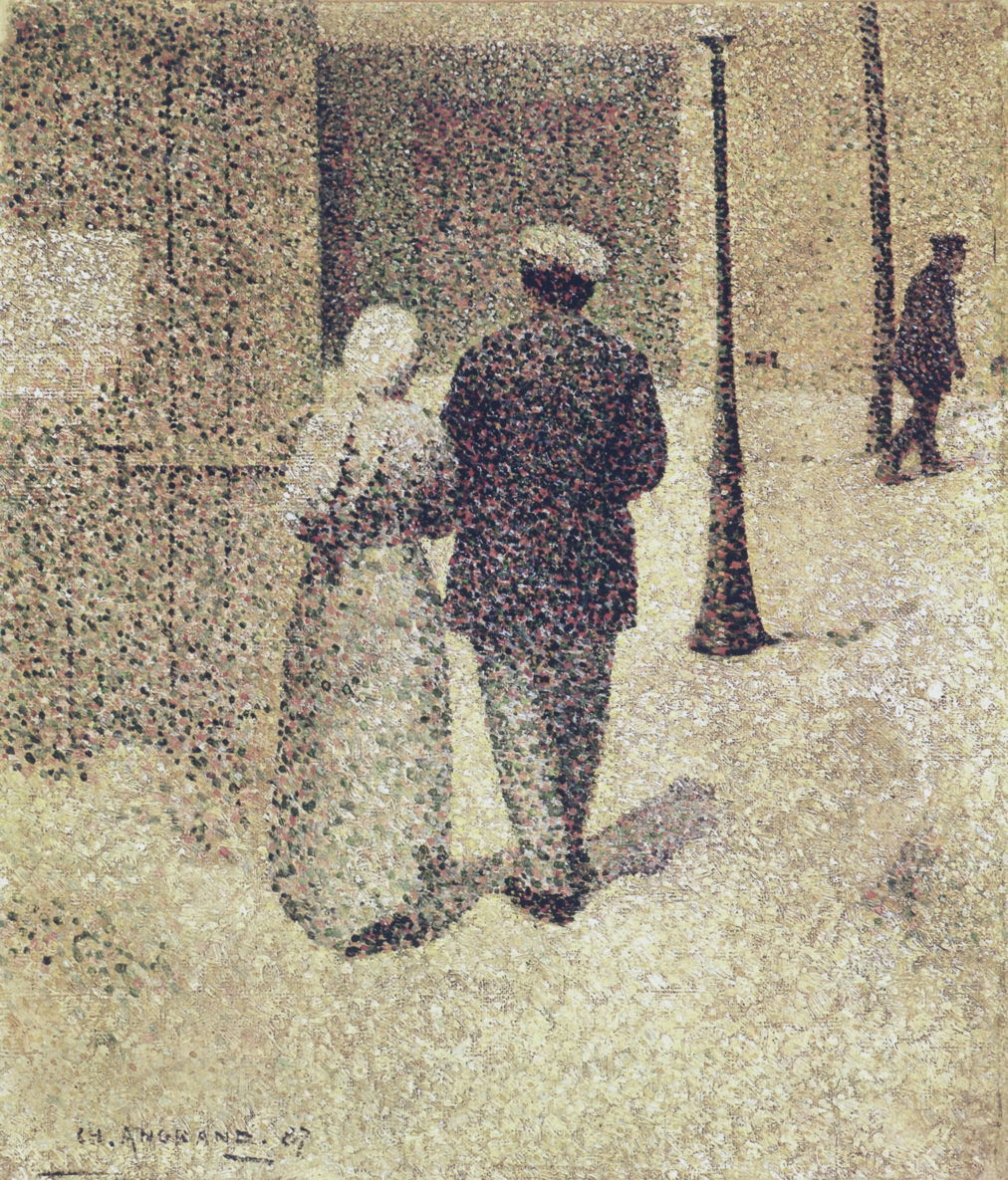
In 1887, Angrand changed from a late Impressionist style to early Divisionism, as seen in this Man and Woman in the Street (1887). His coarse dots are almost monochrome, with just a faint hint of colour.
In 1891 he exhibited alongside Les XX in Brussels.
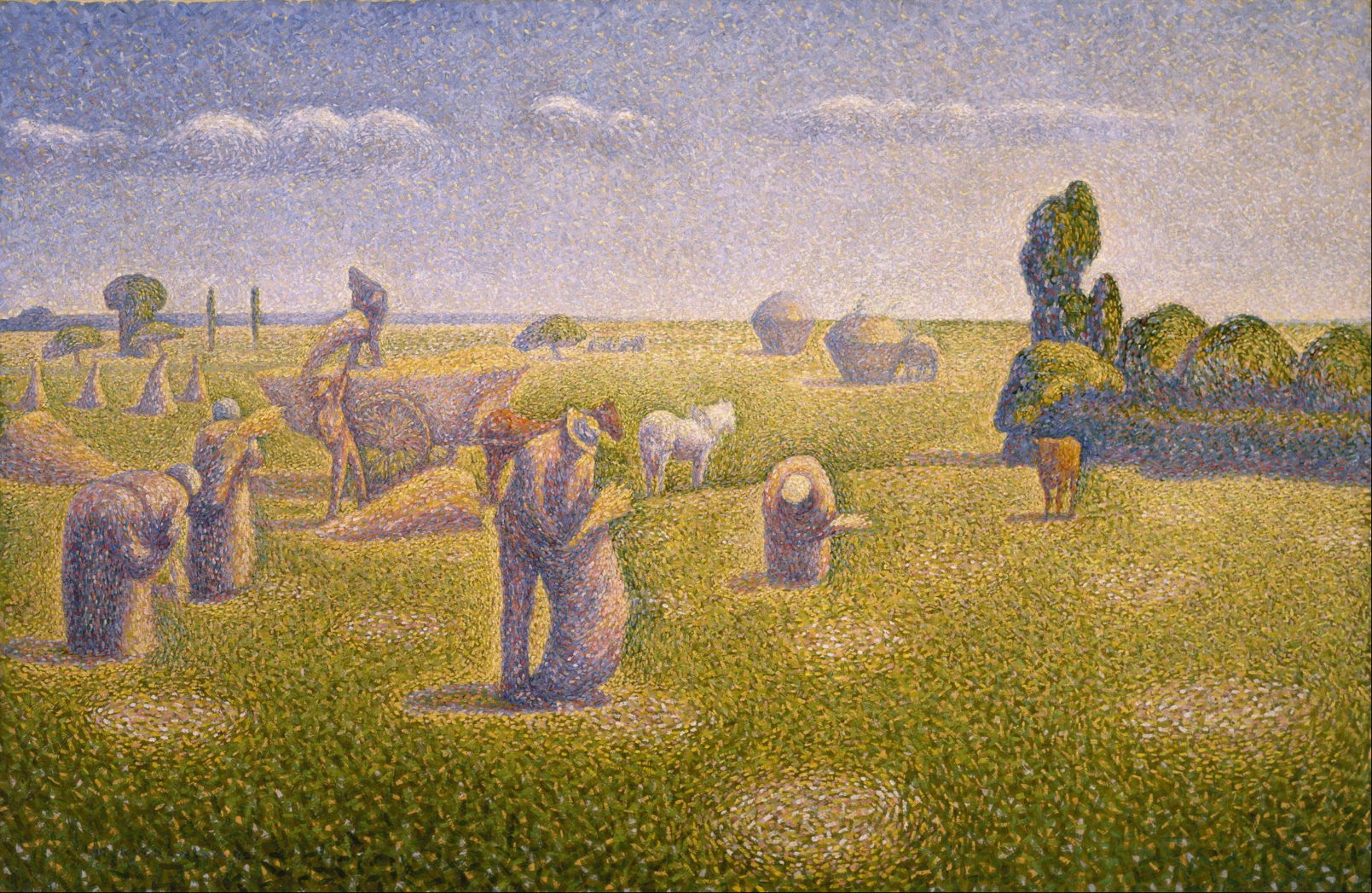
Angrand’s best-known painting today is The Harvesters from 1892, one of a series of rural scenes he appears to have painted in the countryside of Normandy. This is similar to those painted by Pissarro during his Divisionist period.
In the 1890s Angrand painted less and preferred using conté crayons and pastels. In 1896 he moved to Normandy, and became progressively more reclusive.
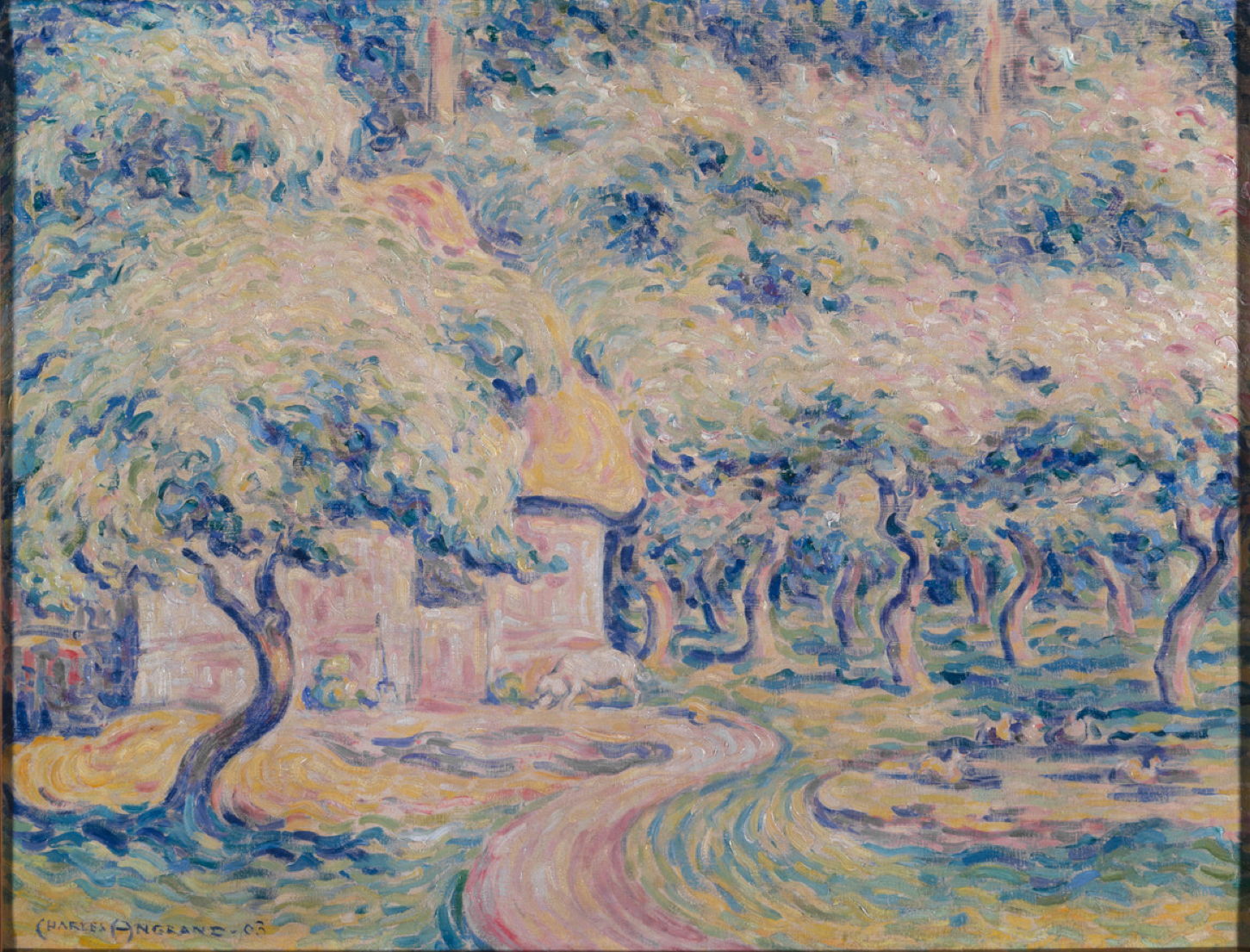
He painted Thatched Cottage in an Orchard in 1903. His swirling brushstrokes are reminiscent of Vincent van Gogh’s late paintings, but his strokes here are more broken.
In his later years, Angrand appears to have painted less, and he died in Rouen on 1 April 1926. Although his work was exhibited at the Salon des Indépendents the following year, and he had a solo retrospective at Musée Tavet-Delacour in Pontoise in 2006, I’m disappointed that none appears to have been organised to mark this centenary.
Reference

