Login
Login
Naturalists: Origins
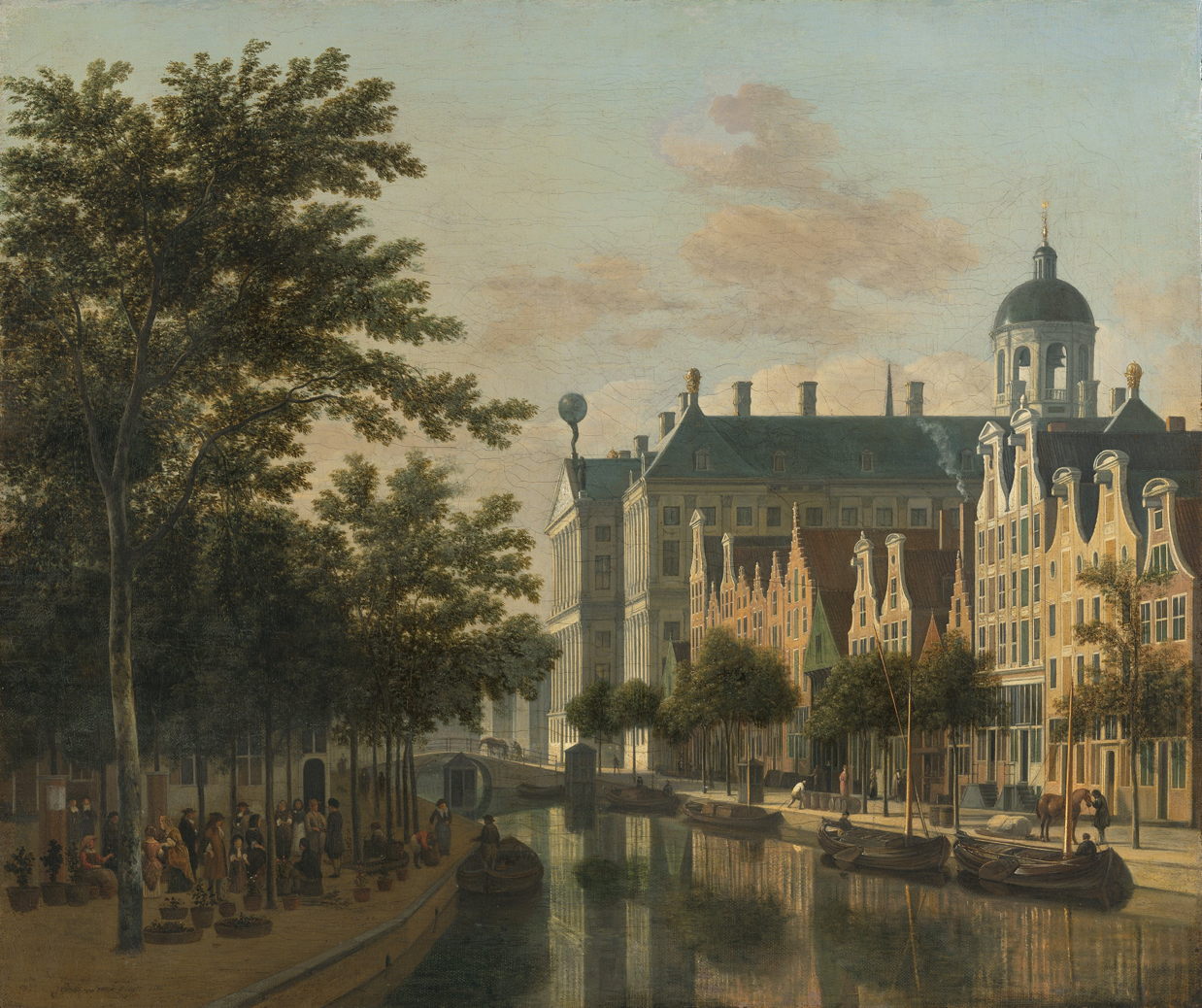
The new style of Naturalism took the Paris Salon by storm in 1883. As a complement rather than competitor to Impressionism, it found more favour among the establishment, critics and public who attended the Salon, and had roots going back to the genre paintings of the Dutch Golden Age.

The Dentist, painted in 1630, declares Jan Miense Molenaer’s interest in everyday life. A small crowd has gathered outside a church, where a fashionably dressed man is pulling a tooth from a local. The victim is dressed in tatters, with large holes at both his knees and worn-out shoes. These are ordinary, common people depicted objectively in their normal surroundings.

Gerard ter Borch’s late painting of A Boy with his Dog, also known as The Flea-Catcher (after 1666), shows this boy checking for and removing fleas from his pet in fairly barren surroundings.
Another strand of development was the controversial, even politicised, contemporary event. Géricault’s monumental painting of The Raft of the Medusa made in 1818-19 is perhaps the most important example.

This shows a well-known and scandalous story of the day, when over 130 people on board the French frigate Méduse died after they had abandoned ship onto a makeshift raft. Just fifteen of the 147 people on that raft survived thirteen days before being rescued, and gave harrowing stories of drowning, dehydration, and cannibalism.
Although Géricault undoubtedly painted what was in his mind’s eye, he undertook considerable research, interviewing survivors and making studies of material from the morgue in his efforts to make this as objective as he could. This quest for objectivity was a major theme of the nineteenth century, spilling over from the sciences into creative arts, underlying many of the changes seen in painting.
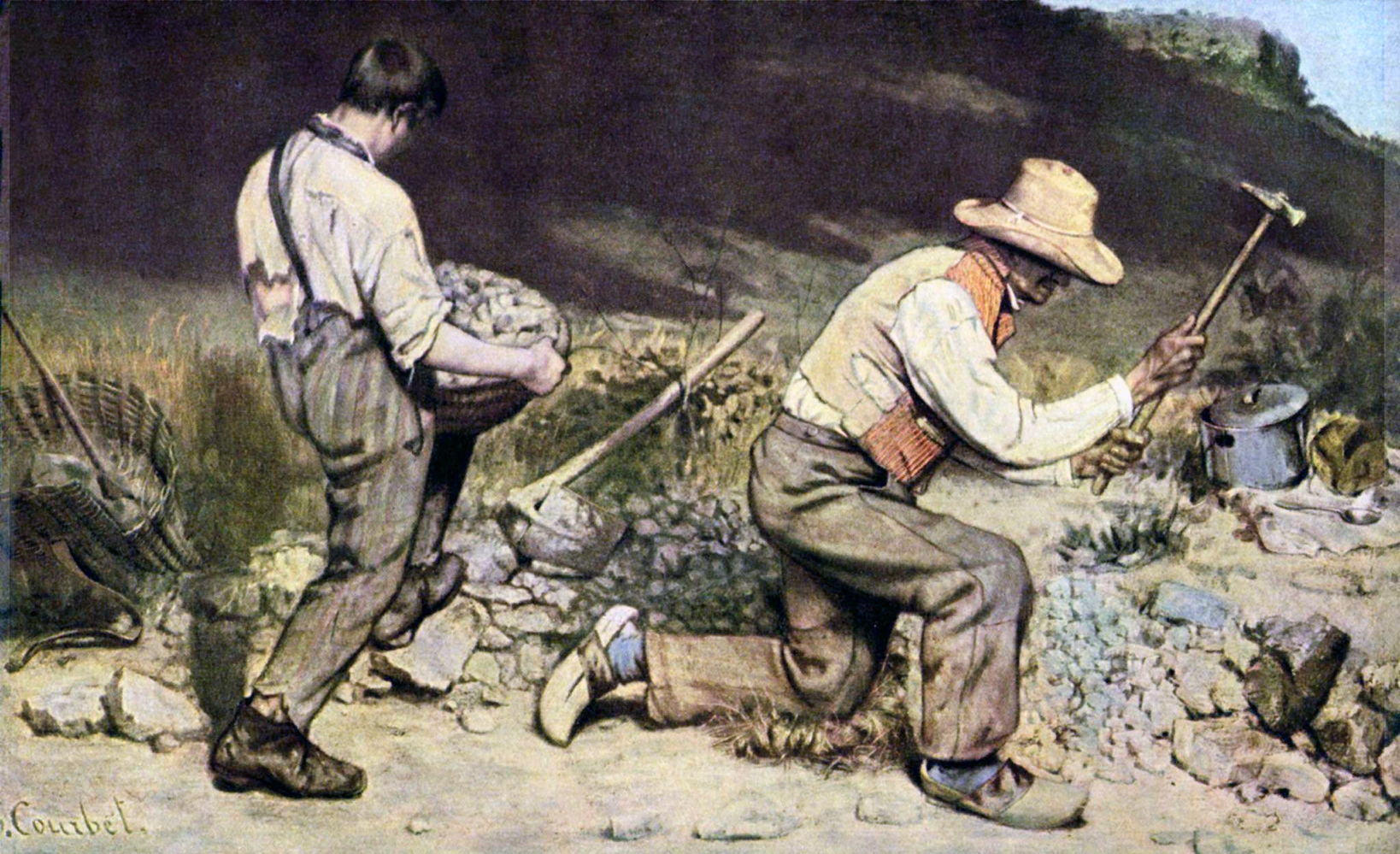
Gustave Courbet took it up in the middle of the century, most notably in The Stone Breakers (1849), which was later destroyed by fire during the Allied bombing of Dresden in 1945. This painting was exhibited at the Salon in 1850, and established him as the great-grandfather of Naturalism.

Shown in the same year was his monumental A Burial at Ornans (1849-50), a huge depiction in unemotional and objective terms of the funeral of the artist’s great uncle in the small provincial town of Ornans. The event had taken place in September 1848, but this painting gives the impression that it is a faithful record.
Courbet actually painted the work entirely in the studio, using those who were present as models. It shows a moment which could only have existed in the artist’s memory: like Géricault’s Raft of the Medusa, it doesn’t necessarily represent an image which ever existed in reality. But it has been carefully researched, imagined, composed, and painted to give the impression of accuracy and objectivity, rather than some Romantic fantasy.
At the same time, social realism was arriving on the farms of France, thanks to the paintings of Jean-François Millet.

Millet’s The Sower was completed in 1850 and shown at the Salon that year; it has since been recognised as his first real masterpiece. This farmworker is striding across a field, sowing seed for the summer’s crop. In the distance to the right, caught in the sunlight, is another worker ploughing with a pair of oxen.

Millet’s The Gleaners of 1857 is sparse, concentrating on just three figures. There are no distractions: it is about the rural poor, who made ends meet by salvaging scraps after the harvest had been cut. This is unavoidably about poverty, and the sector of the population who only just managed to survive each winter. At the time it smacked of socialism, and got the thumbs-down from the rich and middle classes when they saw it in the Salon that year.

Millet followed that with The Angelus, completed around 1857-59. This had been commissioned by the American collector Thomas Gold Appleton, as Prayer for the Potato Crop, but underwent modification before Millet gave it its present title. At some stage, it’s thought to have included a child’s coffin, but that was overpainted. It shows a couple, praying the Angelus devotion normally recited at six o’clock in the evening, over the potatoes they have been harvesting. It is dusk, and as the last light of the day fades, the bell in the distant church is ringing to mark the end of work, and the start of the evening.
Next to the man is his fork, which he has been using to lift potatoes from the poor, stony soil; his wife has been collecting them in a wicker basket, which now rests at her feet. Behind them is a primitive wheelbarrow with a couple of sacks of potatoes on it. In the gathering dark, viewers often misread the barrow and think that it contains a small child.
With the hostile reception of The Gleaners, Millet didn’t exhibit this painting until 1865, although he had sold it in 1860 for a meagre 1,000 francs. When sold in 1890, its price reached 750,000 francs.

Jules Breton was also important, more in his compositional devices than in any social realism. His Gleaners from 1854, which was highly successful at the Salon of 1855, is a marvellous painting, although hardly the story of people who spent most of their lives on the edge of survival. But its foreground detail, high horizon and widescreen effect were to be used very successfully by Jules Bastien-Lepage and others.
Another important artist in the late gestation of Naturalism was Édouard Manet, long considered to be a precursor of Impressionism, but who was thoroughly realist.
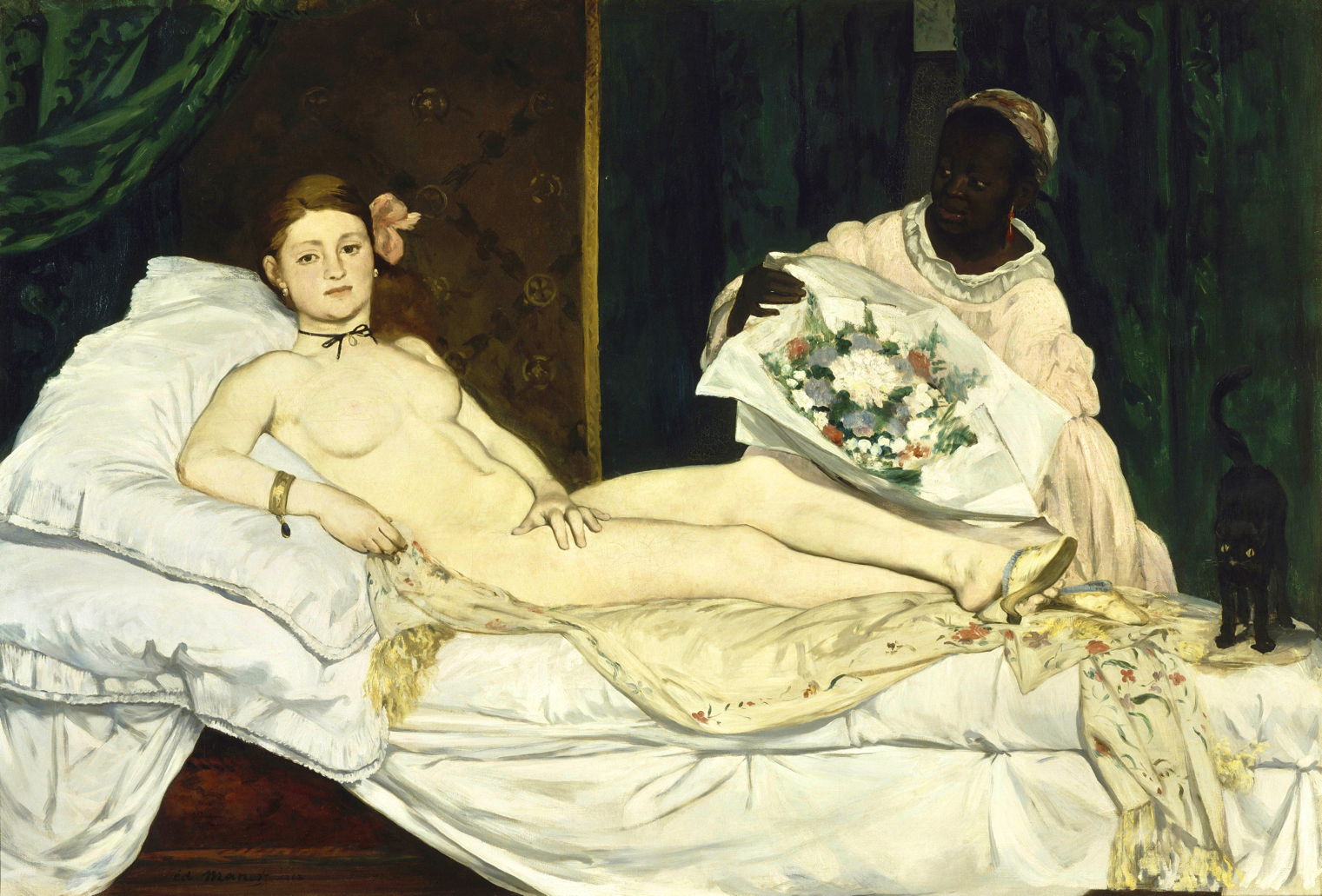
Manet’s Olympia (1863) shocked those seeing it at the 1865 Salon because here was an ordinary person, a ‘common prostitute’ indeed, seen in a role normally assigned to a mythical goddess such as Venus. And she was very much at her place of work, staring straight at the viewer.
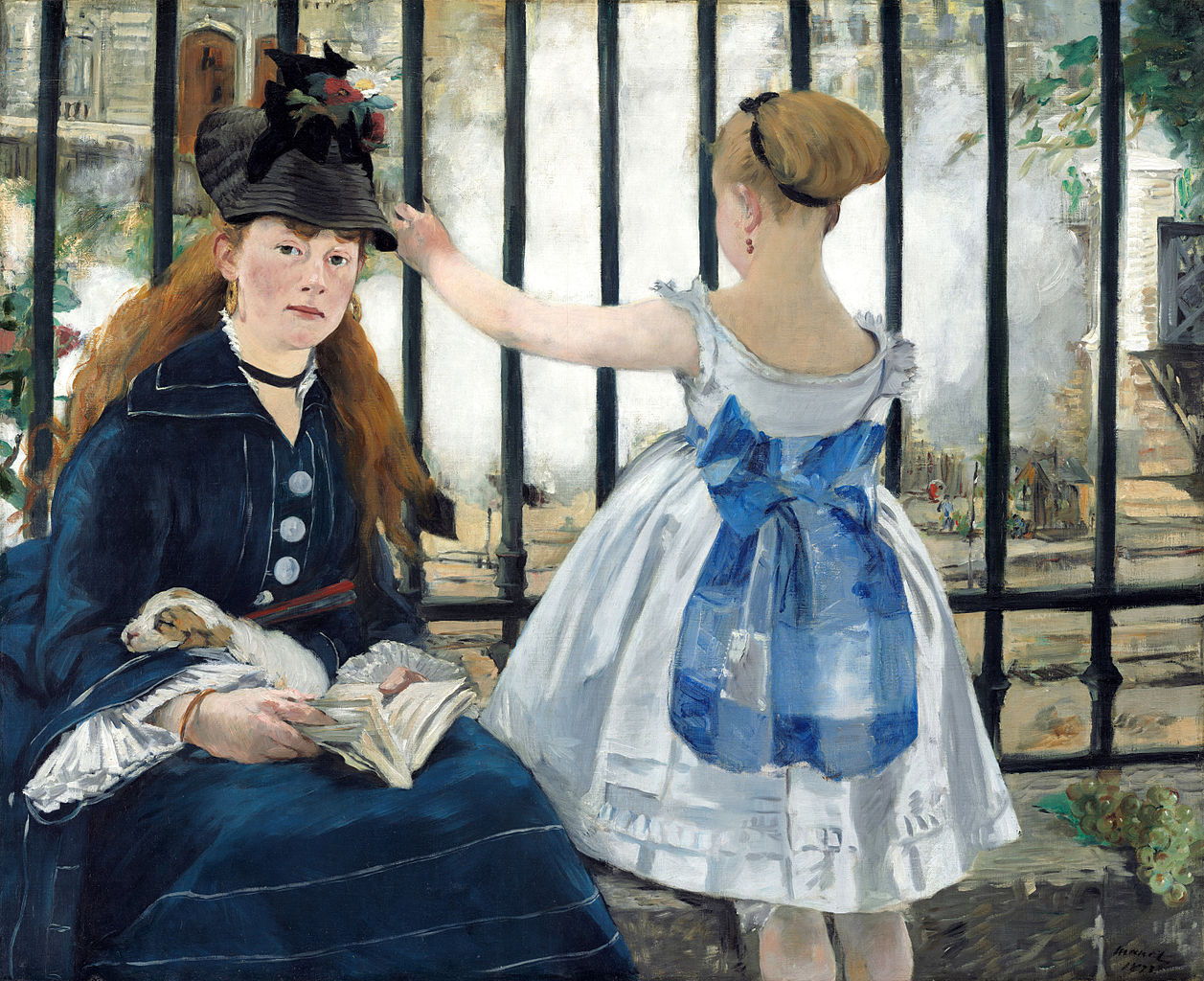
A decade later, Manet painted the same model, Victorine Meurent, in The Railway (popularly known as Gare Saint-Lazare) (1873). A genre symbol of modernity, it brought modern technology and urban life to what was at the time a largely unappreciative public.
The most immediate precursors to the Naturalist paintings of 1883 weren’t the early works of Jules Bastien-Lepage, but the paintings of the rural poor by Léon Augustin Lhermitte.

Lhermitte’s sketchy Procession near Ploumanac’h from 1879 shows a religious festival in Brittany, with a small stream of locals making their way along a track on the open hillside towards the church. Its unemotional bleakness is completely different from the dense processions being painted by Jules Breton.

Lhermitte’s founding masterpiece of Naturalism is The Harvesters’ Pay from 1882, which looks objectively at the economic and social aspects of the harvest. Four of the harvesters, bearing their heavy-duty scythes, await payment by the farmer’s factor, who holds a bag of coins for the purpose. In the centre of the painting, one of the workers is counting out his pay in front of his wife, who is feeding a young infant at her breast. To their left, another worker just sits and stares blankly into the distance, dead-beat tired and wondering whether his pittance was worth all that effort.
Most importantly, Lhermitte painted these in the early years of the Third Republic, a time when social concerns were sweeping across much of Europe.