Normal view

There are new articles available, click to refresh the page.
Before yesterdayMain stream

Painting Spring blossom 2

By: hoakley
19 April 2026 at 19:30

Following their popularisation in the nineteenth century, paintings of Spring blossom continued to flourish, reinforced perhaps by increasing urbanisation.

allinghambuckspenstreet
Helen Allingham (1848-1926), A Buckinghamshire house at Penstreet (c 1900), watercolour, 36 x 50.5 cm, Private collection. Wikimedia Commons.

Helen Allingham’s Buckinghamshire house at Penstreet (c 1900) shows a house in the hamlet of Penn Street, near the village of Penn, in Buckinghamshire, England. This remains a relatively unspoilt part of the Chilterns to the north-west of London.

metcalfdogwoodblossoms
Willard Metcalf (1858–1925), Dogwood Blossoms (1906), oil on canvas, dimensions not known, Florence Griswold Museum, Old Lyme, CT. Wikimedia Commons.

For Willard Metcalf, Dogwood Blossoms (1906) also provide the opportunity to explore the shimmering effects of dappled light, and how it can break the forms of large boulders.

bonnardearlyspring1908
Pierre Bonnard (1867-1947), Early Spring (1908), oil on canvas, 87.6 x 132.1 cm, The Phillips Collection, Washington, DC. The Athenaeum.

Pierre Bonnard painted Early Spring in 1908, shortly after his return to France from a visit to North Africa. The children are probably the artist’s friends from the Terrasse family, enjoying their garden as it comes into bloom in the improving weather.

bonnardsmallhousespringevening
Pierre Bonnard (1867-1947), The Small House, Spring Evening (1909),oil on canvas, 50.8 x 61.5 cm, Private collection. The Athenaeum.

The Small House, Spring Evening is an unusual landscape painted by Bonnard in 1909. It offsets the rich blossom on the trees at the left against the plain wall of a house, seen in failing light.
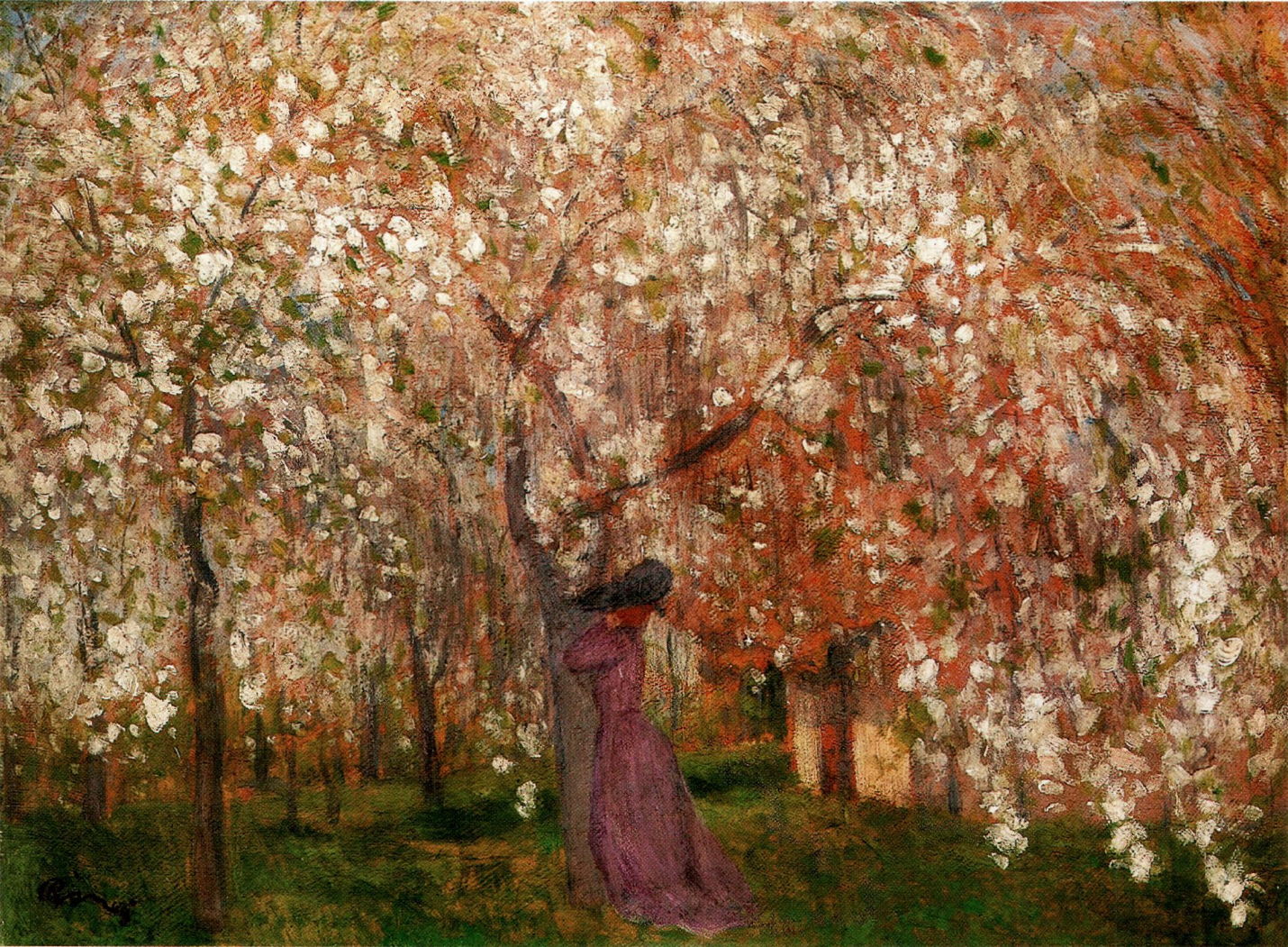
ripplsourcherry
József Rippl-Rónai (1861–1927), Sour Cherry Tree in Blossom (1909), oil on cardboard, 68 x 90 cm, Rippl-Ronai Museum, Kaposvár, Hungary. Wikimedia Commons.

József Rippl-Rónai was the founding father of modern painting in Hungary, and in 1909 painted this Sour Cherry Tree in Blossom, in which the flowers overwhelm the whole painting, just as they had for Samuel Palmer nearly eighty years earlier.

clairinonbalcony
Georges Clairin (1843–1919), On the Balcony (c 1910), oil on canvas, 110.8 × 94.9 cm, location not known. Wikimedia Commons.

One of the eclectic Georges Clairin’s later paintings from about 1910 brings an elegant group out among lush blossoms On the Balcony.
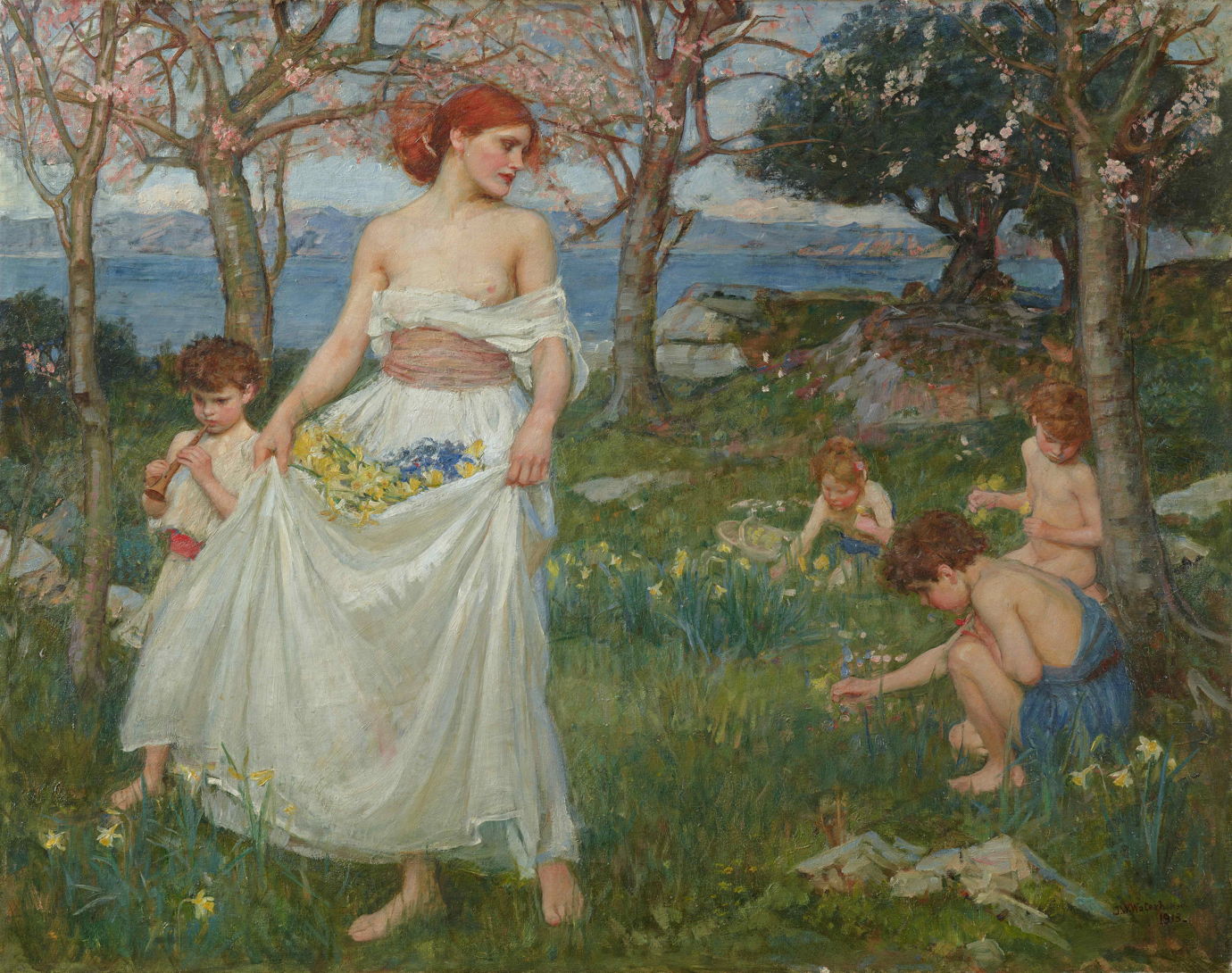
waterhousesongspringtime
John William Waterhouse (1849–1917), A Song of Springtime (1913), oil on canvas, 71.5 x 92.4 cm, Private collection. Wikimedia Commons.

John William Waterhouse’s A Song of Springtime from 1913 has lost much of the narrative from more classical accounts of Flora and the Spring, but still features plenty of cherry blossom. Flora appears with her breasts bared, and a skirtful of daffodils or narcissi, perhaps a cross-reference to Poussin’s figure of Narcissus in his Empire of Flora, and the Graces have been replaced by young children.
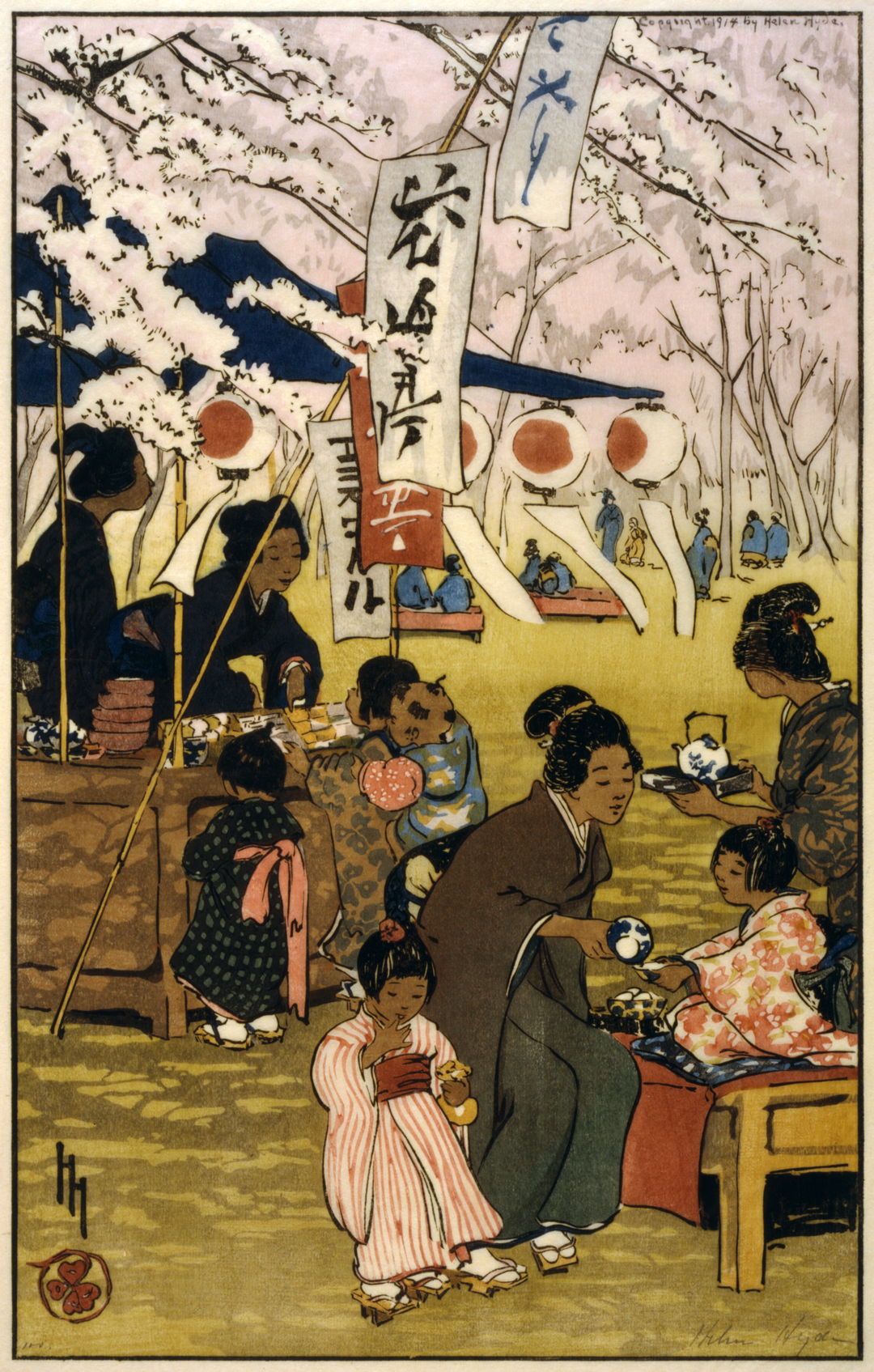
hydeblossomtimetokyo
Helen Hyde (1868–1919), Blossom Time in Tokyo (1914), colour woodcut print, dimensions not known, Library of Congress, Washington, DC. Wikimedia Commons.

By the First World War, Western artists weren’t just collecting and studying the art of south-east Asia, but some went to live in countries such as Japan. Among these was the American printmaker Helen Hyde, who demonstrates her mastery of colour woodcut prints in her Blossom Time in Tokyo, from 1914. This shows the tea ceremony taking place during the Spring viewing of blossom.

IF
Théo van Rysselberghe (1862–1926), Almond Trees in Blossom (Morning) (1918), oil on canvas, 46.5 x 65 cm, Private collection. WikiArt.

By the end of the war, Théo van Rysselberghe’s colours had become as strong as those of the Fauves. In Almond Trees in Blossom (Morning) the more delicate pinks of the flowers pale in comparison with his full reds and blues, even down to the blue horse pulling a plough.
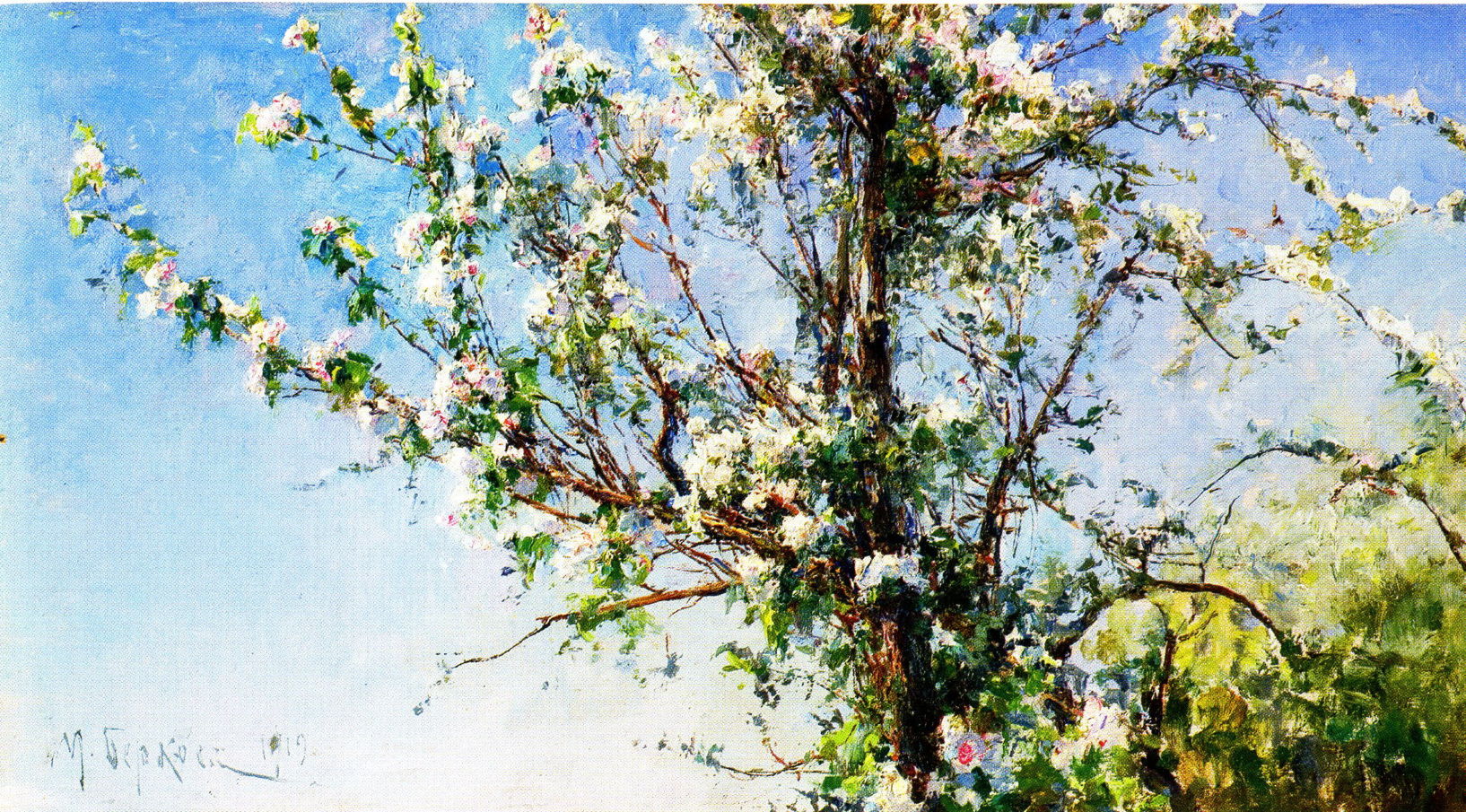
berkosapplebloom
Mykhaylo Berkos (1861–1919), Apple Tree in Blossom (1919), oil on wood, 23.5 x 43.8 cm, location not known. Image by Leonid Kulikov or Mykhailo Kvitka, via Wikimedia Commons.

The Ukrainian artist Mykhaylo Berkos painted this classic Impressionist motif of an Apple Tree in Blossom in 1919. But this was to be his last Spring, as he died of typhus just before Christmas that year, at the age of only 58.
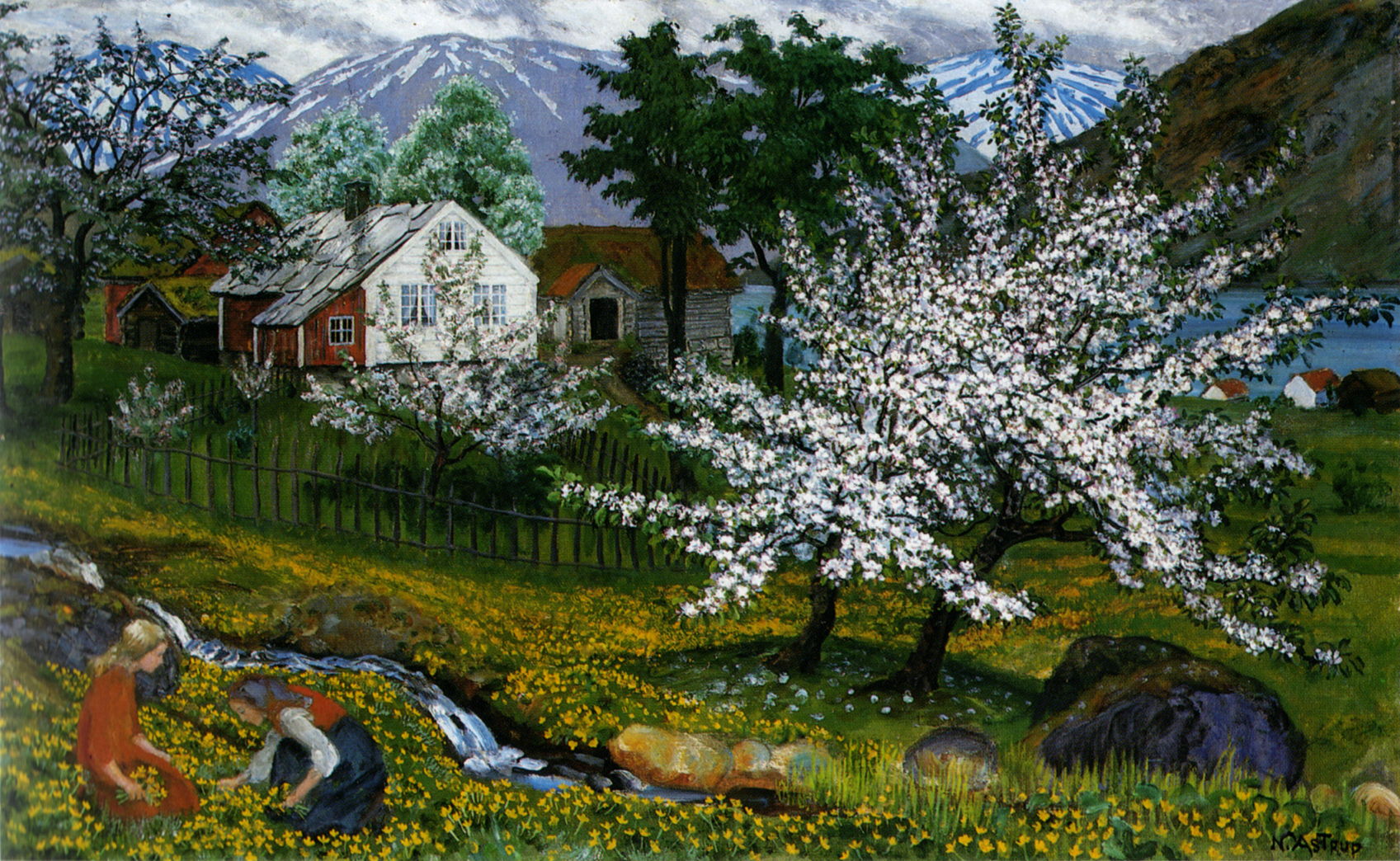
astrupappletreesinbloom
Nikolai Astrup (1880–1928), Apple Trees in Bloom (after 1920), oil on canvas, 54 x 88 cm, Private collection. Wikimedia Commons.

In the far north of Europe, the Norwegian Nikolai Astrup included blossom in many of his paintings of Spring and early summer in the fjords, as in his Apple Trees in Bloom, painted after 1920.
astrupappletreeblossom
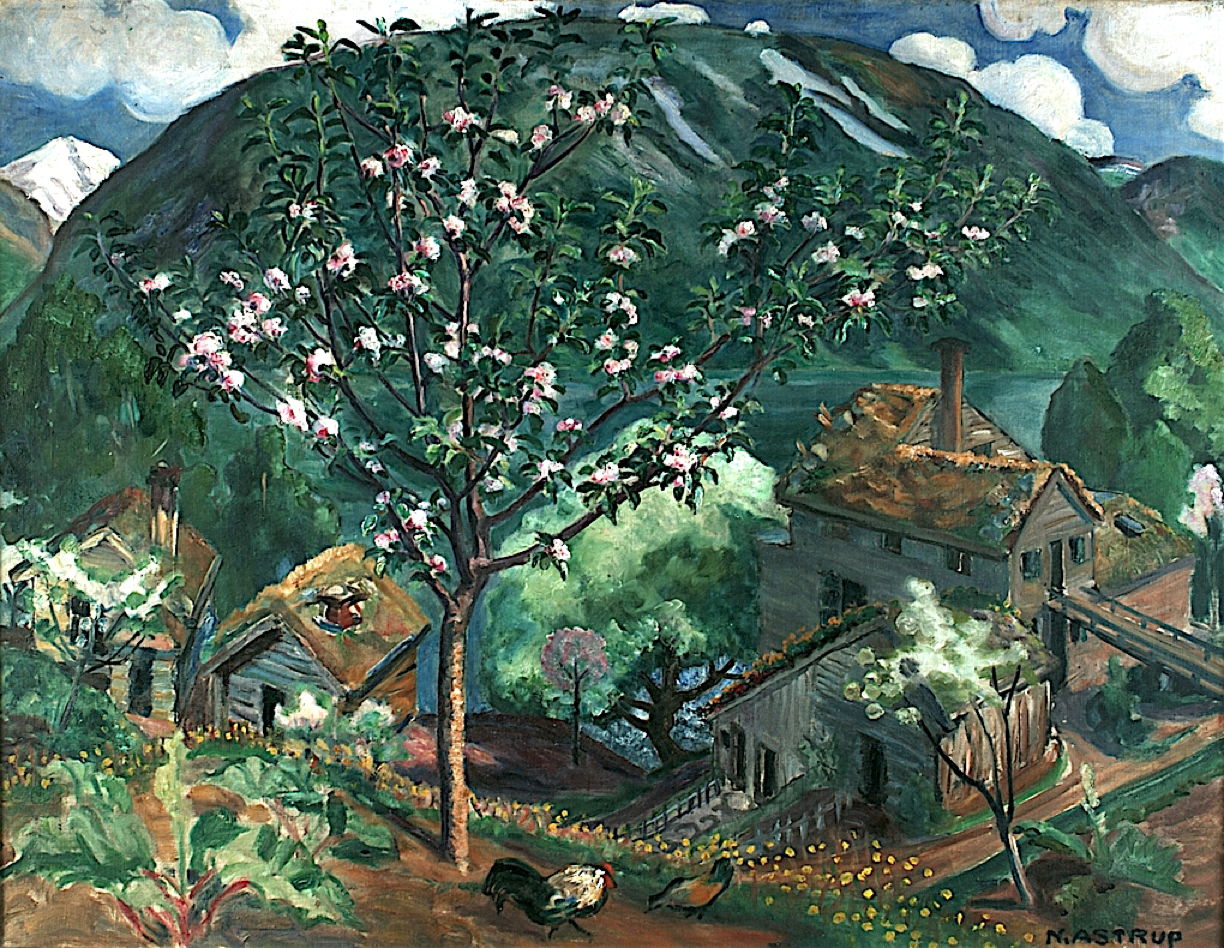
Nikolai Astrup (1880–1928), Apple Tree in Bloom (c 1927), oil on canvas, 78 x 100 cm, Bergen Kunstmuseum, KODE, Bergen, Norway. The Athenaeum.

In about 1927, Astrup painted Apple Tree in Bloom showing the trees in full blossom and marsh marigolds in flower.
bonnardopendoor1938
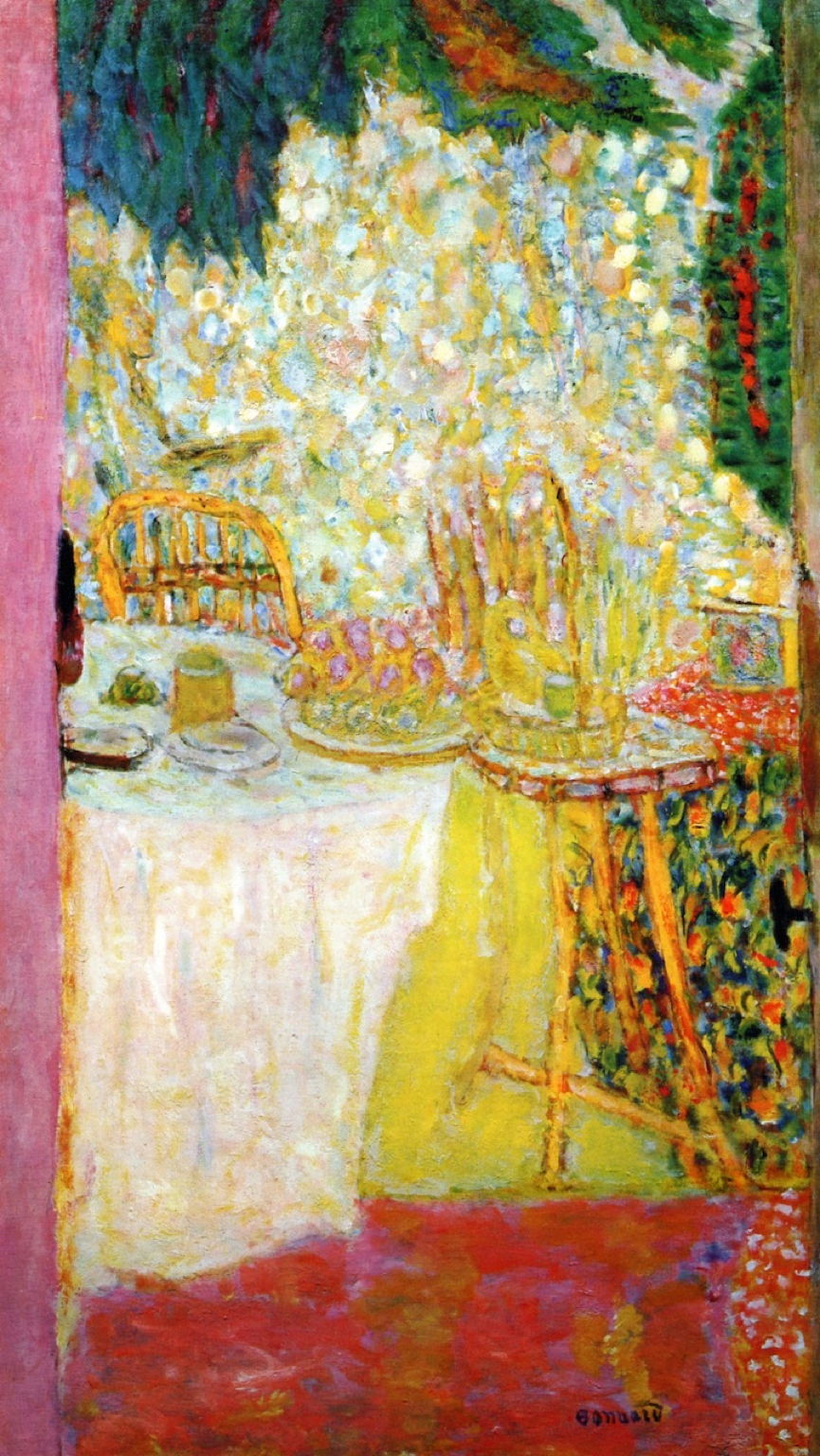
Pierre Bonnard (1867-1947), The Open Door (c 1937), media not known, 126.1 x 71.1 cm, Private collection. The Athenaeum.

In Pierre Bonnard’s Open Door from about 1937, we look out through the frame of French windows to a table that has escaped into the landscape, and dazzles against brilliant blossom beyond.

I wish you a happy blossom festival, and above all peace.

Painting Spring blossom 1

By: hoakley
18 April 2026 at 19:30

We still haven’t got New Year right, have we? Rather than putting it in the middle of winter, it should surely coincide with the arrival of Spring and blossom on trees. If you’re in a northern temperate latitude, now’s the time that you should be watching for the full flush of cherry and other flowering trees. In Washington DC its blossom festival extends a month from mid-March, in Japan rather later, and it’s even celebrated in Perth, in Western Australia, during the austral Spring.

This weekend I celebrate the end of the winter with two days of paintings of blossom on trees, today’s from the nineteenth century, and tomorrow from the twentieth.

palmerinshorehamgarden
Samuel Palmer (1805–1881), In a Shoreham Garden (c 1830), watercolour on paper, dimensions not known, Victoria and Albert Museum, London. Image courtesy of and © Victoria and Albert Museum, London.

Early in Samuel Palmer’s career, when he was living in Shoreham in Kent, he painted this watercolour of exuberant blossom In a Shoreham Garden, in about 1830.

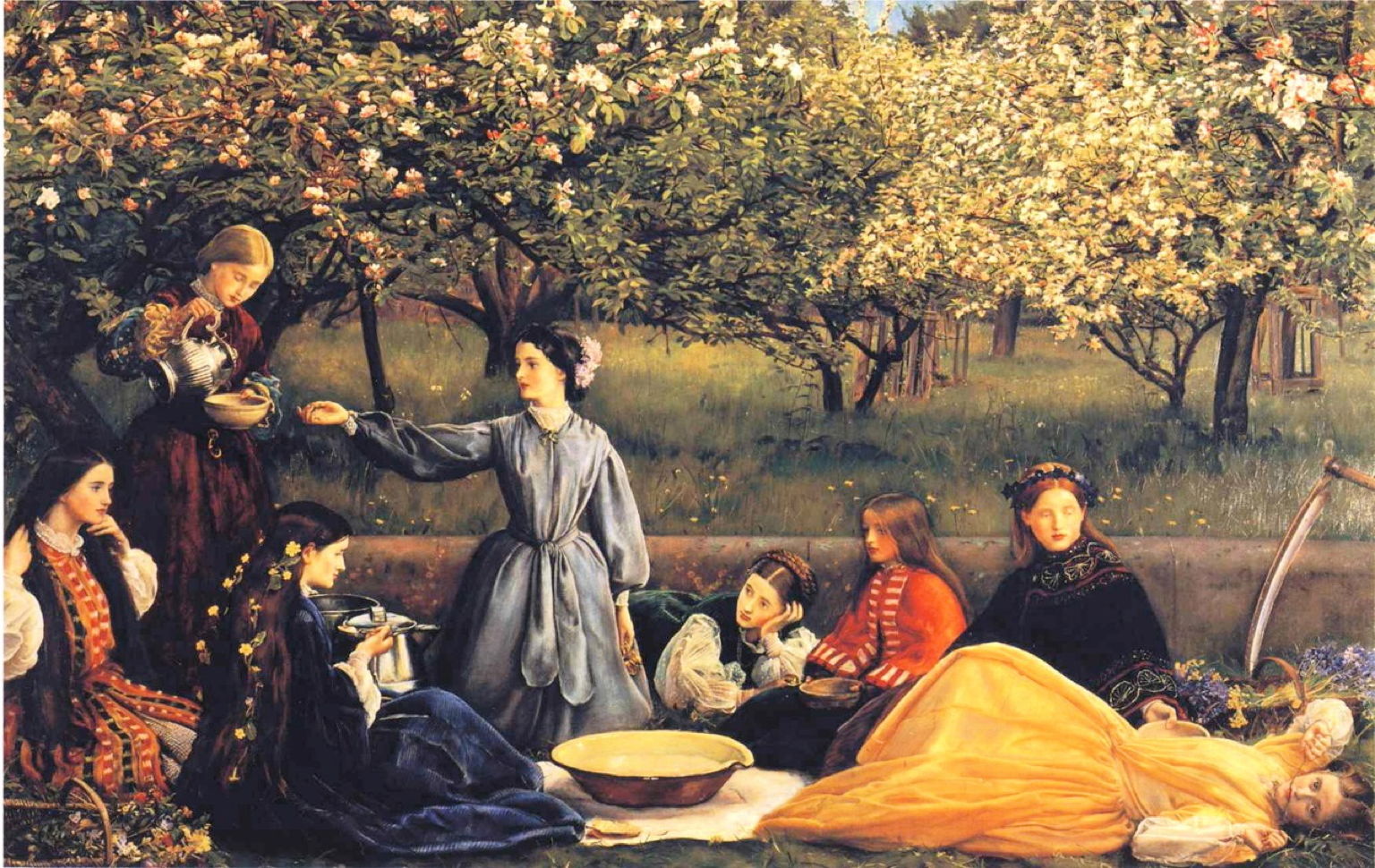
millaisspring
John Everett Millais (1829–1896), Spring (Apple Blossoms) (1856-59), oil on canvas, 110.4 x 172.7 cm, Lady Lever Art Gallery, Liverpool, England. Wikimedia Commons.

The Pre-Raphaelite movement emphasised painting from life; when John Everett Millais came to paint Flora and her Spring, in 1856-59, he added subtle allusions to Botticelli’s famous Primavera and classical myth. The blossom here is on apple trees, which are probably second only to May or Hawthorn in the English countryside at this time of year.

daubignyspring
Charles-François Daubigny (1817–1878), Spring Landscape (1862), oil on canvas, 133 x 240 cm, Alte Nationalgalerie, Berlin. Wikimedia Commons.

In the year that Charles-François Daubigny moved to Auvers-sur-Oise and founded the artists’ colony there, he painted this blossom-rich view of the Spring Landscape (1862). Vincent van Gogh was later to spend his final two months of painting near here.

milletspring
Jean-François Millet (1814–1875), Spring (1868-1873), oil on canvas, 86 x 111 cm, Musée d’Orsay, Paris. Wikimedia Commons.

In the closing years of Jean-François Millet’s life, he painted a commissioned series including this startling study of light, Spring (1868-73). This features a double rainbow at the upper left, with fleeting sunshine flooding the centre and dazzling on the abundant blossom. From the crops and seasonal flowers in the foreground to the inky black shower-clouds in the sky, this is a perfect summary of Spring in the countryside, and April showers.

sisleyterracestgermainspring
Alfred Sisley (1839–1899), The Terrace at Saint-Germain, Spring (1875), oil on canvas, 73.6 x 99.6 cm, Walters Art Museum, Baltimore, MD. Wikimedia Commons.

My favourite Impressionist painting of blossom has to be Alfred Sisley’s panorama of The Terrace at Saint-Germain, Spring, painted soon after he had moved to Marly-le-Roi in 1875.

haverswasherwomen
Alice Havers (1850–1890), Washerwomen (date not known), oil, dimensions not known, Walker Art Gallery, Liverpool, England. Wikimedia Commons.

Alice Havers’ Washerwomen, which given her tragically brief life must have been painted around 1880, shows a large orchard of fruit trees in blossom on the far side of the river.

By any measure, the nineteenth century master of blossom was Vincent van Gogh. Like several of his contemporaries, he had become a collector of Japanese woodcut prints, and was fascinated by one of their dominant themes, cherry blossom.

Vincent van Gogh (1853–1890), The Pink Orchard (1888), oil on canvas, 64 x 80 cm, Van Gogh Museum, Amsterdam. Wikimedia Commons.

Before he went to Arles, Vincent van Gogh had copied Utagawa Hiroshige’s woodblock print The Plum Orchard in Kameido. Shortly after his arrival there in 1888, the fruit trees came into flower, and he painted a triptych for his brother Theo’s apartment, including The Pink Orchard above, and The Pink Peach Tree below.

Vincent van Gogh (1853–1890), The Pink Peach Tree (1888), oil on canvas, 80.5 x 59 cm, Van Gogh Museum, Amsterdam. Wikimedia Commons.

Van Gogh’s approach to painting blossoming fruit trees is completely different from that of the Japanese prints. His trees are built anatomically, with trunk and branches drawn in outline, often using contrasting colour. Flowers are applied using impasto; sadly some of these have faded since, and some paint that now appears white or off-white was originally pinker.

Vincent van Gogh (1853–1890), View of Arles, Flowering Orchards (1889), oil on canvas, 72 × 92 cm, Neue Pinakothek, Munich. Wikimedia Commons.

Van Gogh’s View of Arles, Flowering Orchards (1889) is a complex composition, with trunks in the foreground, fruit trees in flower in the middle distance, and the town of Arles behind, integrating his previous explorations of each element.

larssonappleblossom1894
Carl Larsson (1853–1919), Apple Blossom (1894), watercolour, dimensions not known, Private collection. Wikimedia Commons.

Among Carl Larsson’s many intimate views of life at home is this watercolour of his daughter under the Apple Blossom from 1894. He uses his favourite colour contrast between the earth red of the barns behind with the pink of the girl’s bonnet, against the rich green vegetation around her.

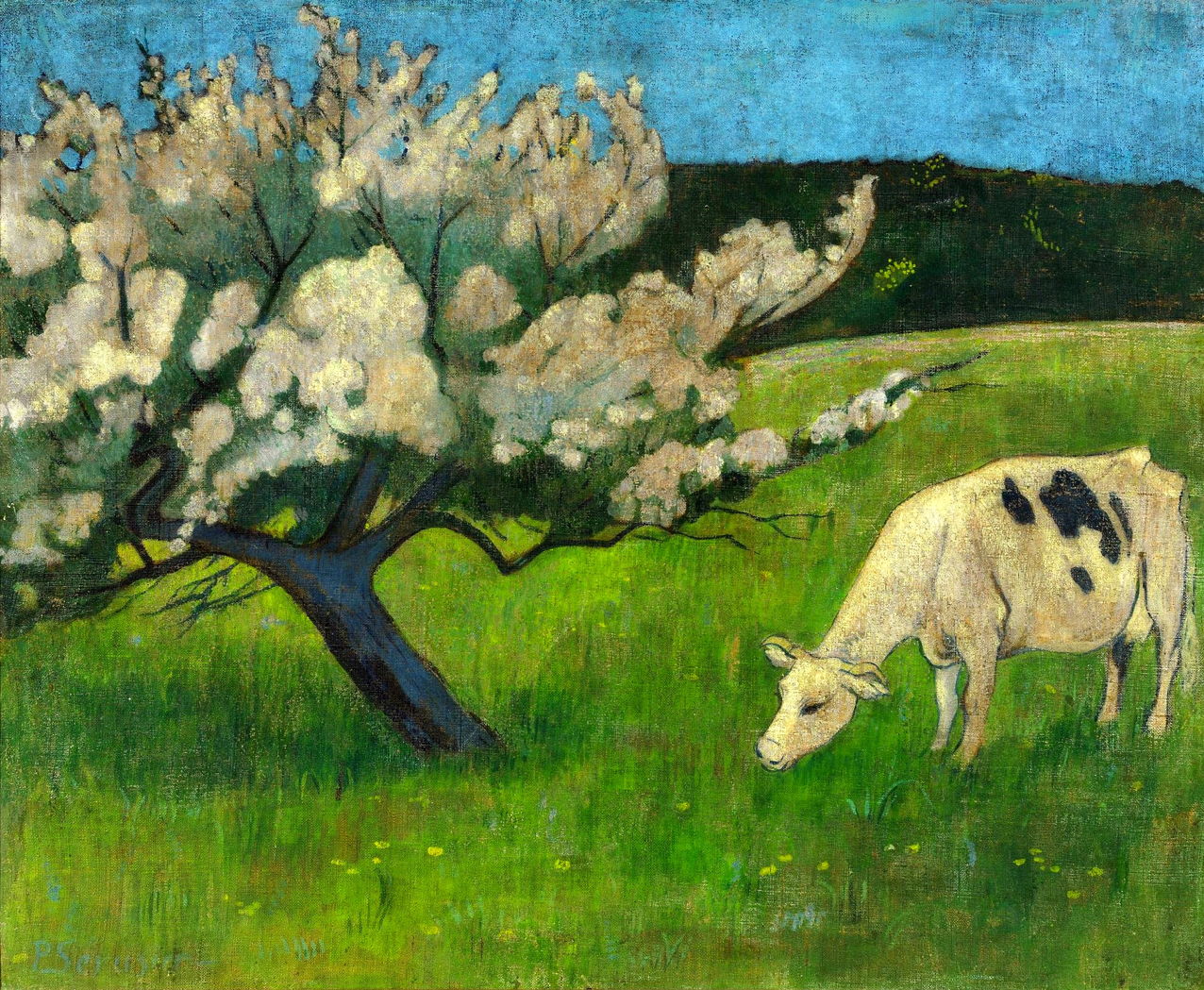
serusierwhitecow
Paul Sérusier (1864–1927), The White Cow (c 1895), tempera on canvas, 60 x 73 cm, Muzeum Narodowe w Warszawie, Warsaw, Poland. Wikimedia Commons.

Some sixty-five years after Palmer’s exuberant clouds of blossom, Paul Sérusier employed a similar technique in The White Cow, from about 1895.

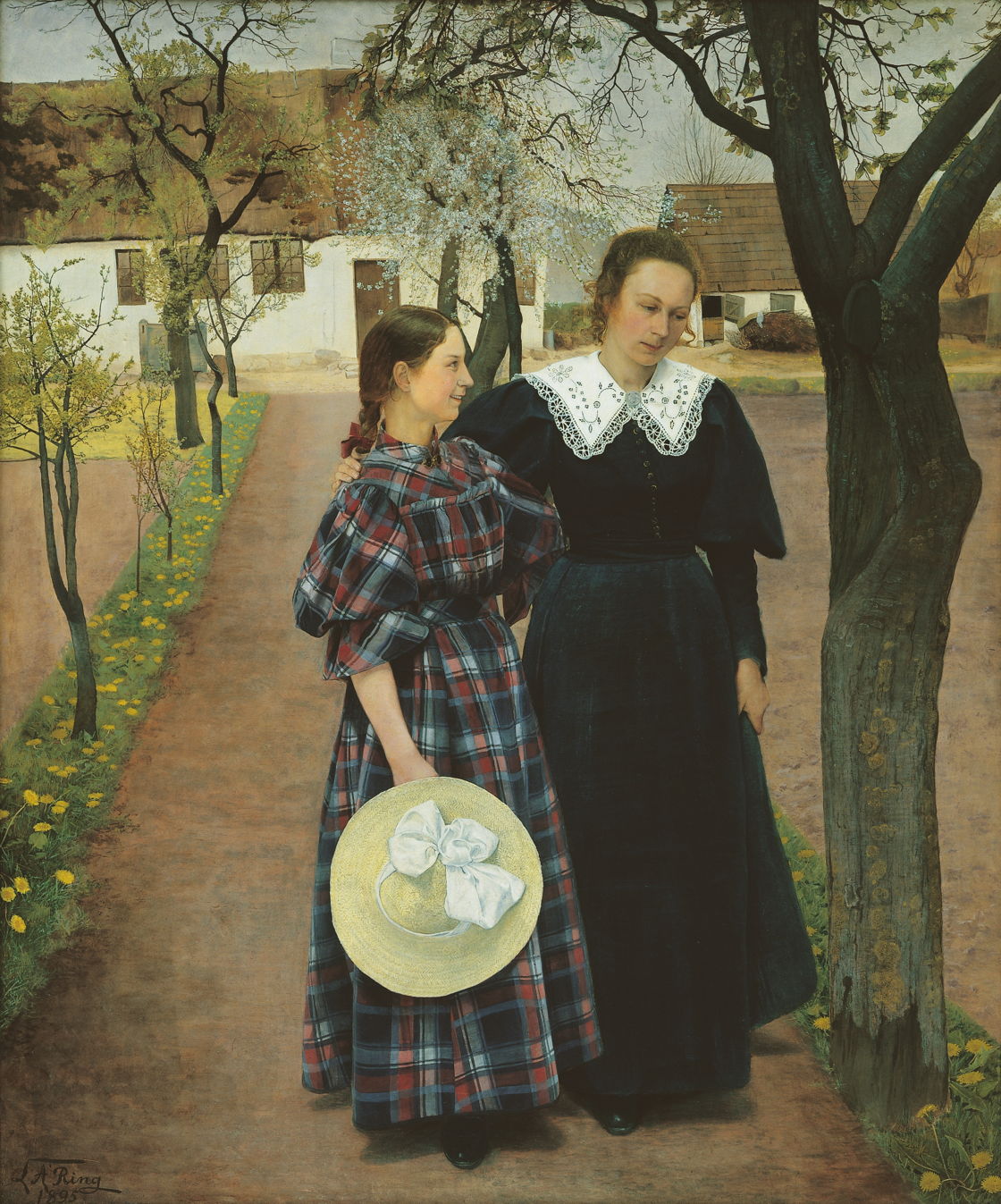
ringspringkahlers
Laurits Andersen Ring (1854–1933), Spring. Ebba and Sigrid Kähler (1895), oil on canvas, 189.5 x 159 cm, Den Hirschsprungske Samling, Copenhagen, Denmark. Wikimedia Commons.

Laurits Andersen Ring’s finely detailed double portrait of Spring. Ebba and Sigrid Kähler from 1895 appears to show a mother and her daughter talking in their garden, but the two are actually sisters. At the right is Sigrid, the year before her wedding, at the left is her sister Ebba, who was fifteen at the time. Ring uses a light touch with the blossom and Spring flowers to avoid overwhelming the figures.

❌
❌